
Novastar MRV416 LED Receiver Card
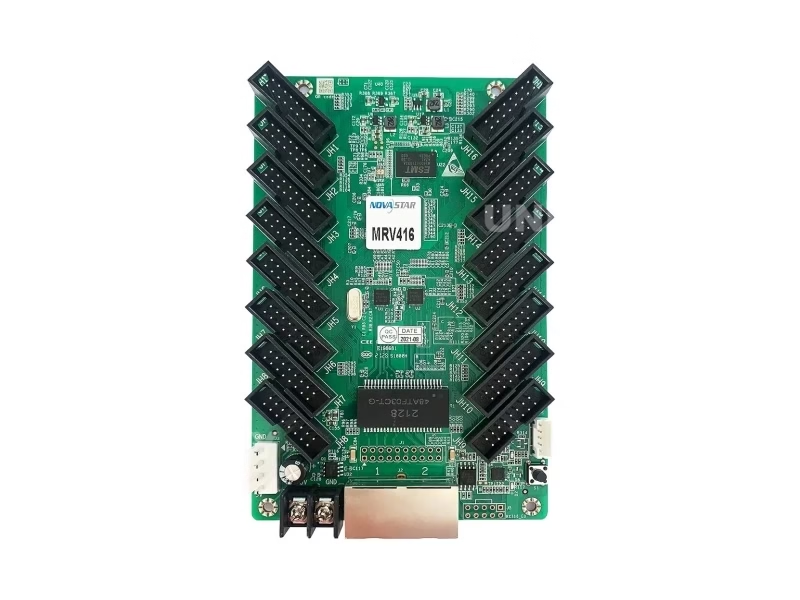
NovaStar’s 16-port flagship receiving card — 512×512@60Hz loading with PWM driver ICs, 16 HUB75E connectors, up to 32 groups of parallel RGB data, 18bit+ grayscale, Color Management, Low Latency down to 1 frame and 3D support. The most capable receiving card in NovaStar’s catalog for module-dense large walls.
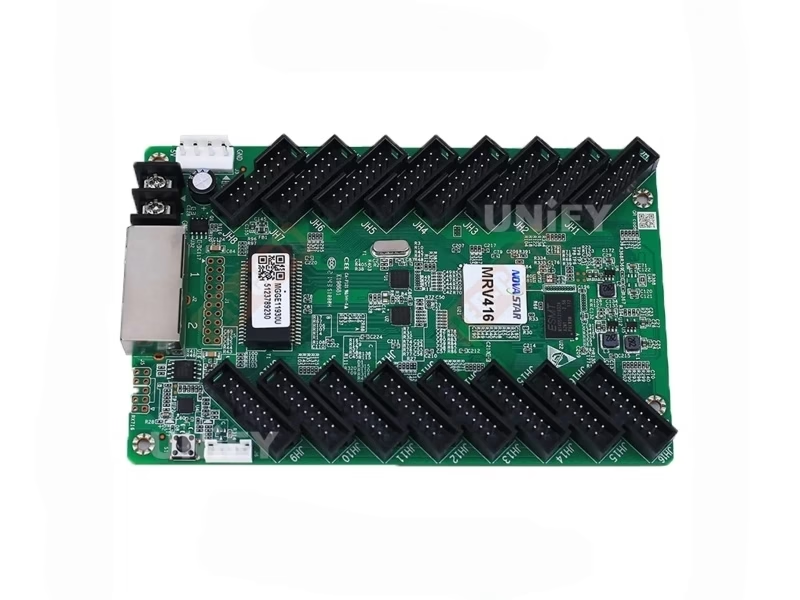
What Is the Novastar MRV416 LED Receiver Card?
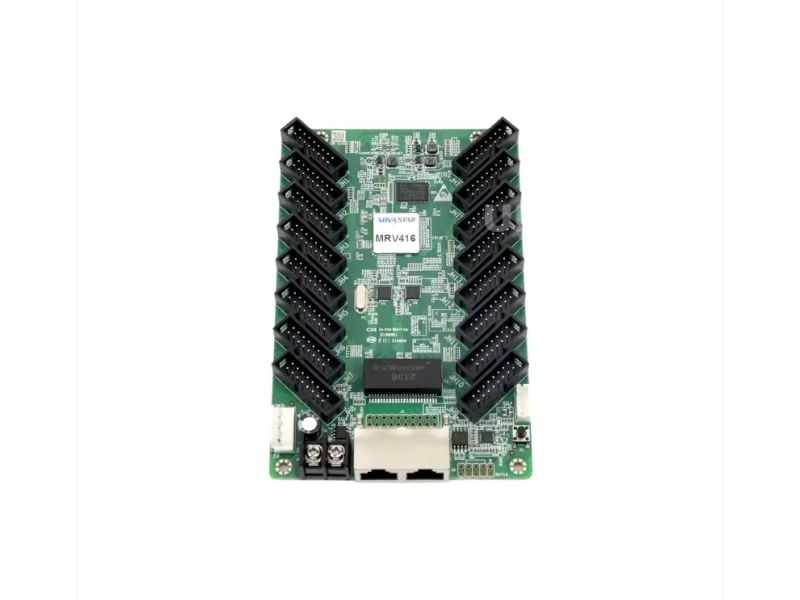
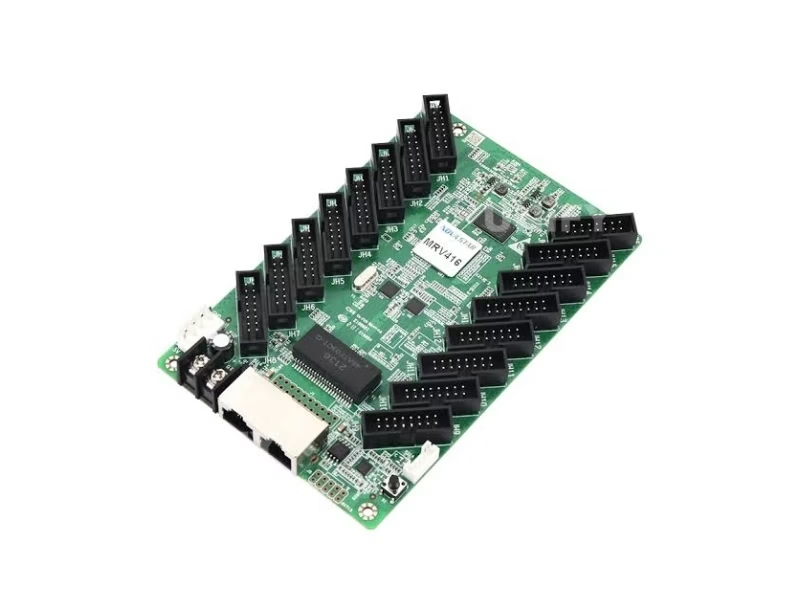
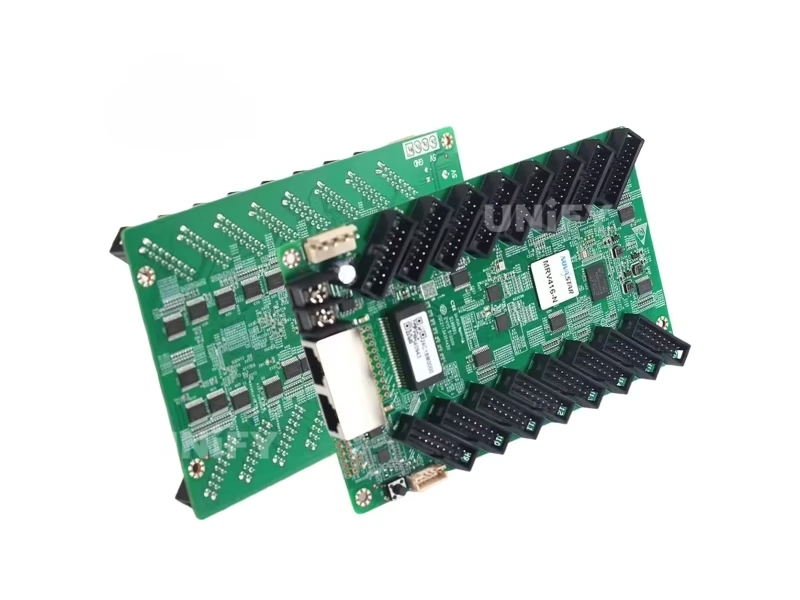
The Novastar MRV416 LED Receiver Card is NovaStar’s 16-port flagship receiving card and the highest-capability card in the current catalog. With 8bit video sources, a single card loads 512×512@60Hz with PWM driver ICs (512×384@60Hz with common ICs) and drives modules through 16 standard HUB75E connectors with up to 32 groups of parallel RGB data — the widest connectivity of any NovaStar receiving card. It carries the MRV-N platform’s full display stack: Color Management with standard and custom gamuts, 18bit+ grayscale, pixel-level calibration, multi-batch adjustment, Low Latency down to 1 frame, 3D, individual RGB gamma and 90° rotation. For the receiving card’s role in the control chain, see synchronous vs asynchronous LED control.
Naming clarification — MRV416 vs MRV416-N: The original MRV416 is the older generation, listed at 512×384 loading. The current version is the MRV416-N, first released 2024-09-19 with its own specification line now at V1.0.3 (2025-05-20). The MRV416-N official PWM loading is 512×512@60Hz — listings still quoting 512×384 predate the current platform.
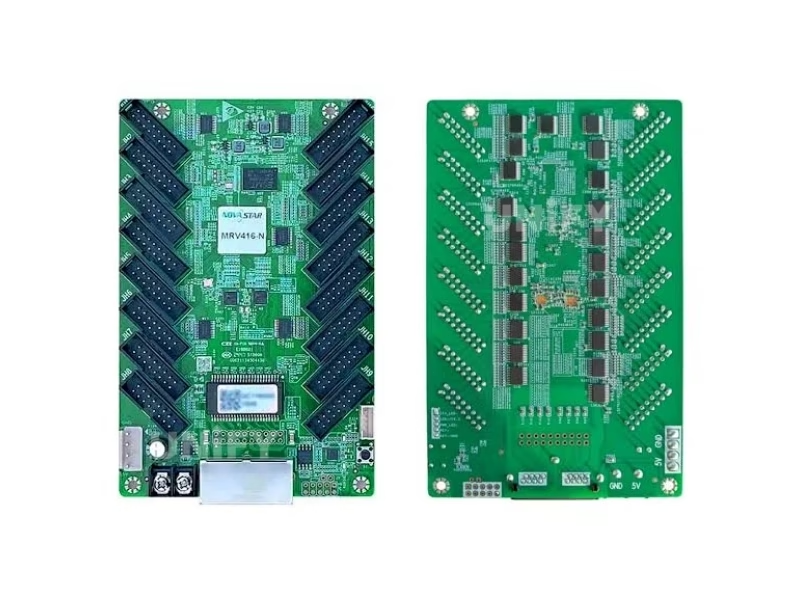
Novastar MRV416 LED Receiver Card Technical Specifications
All data from the official NovaStar MRV416-N specification V1.0.3 (2025-05-20) — the current revision.
Loading & Connectivity
Electrical, Physical & Environment
The –40°C storage rating covers cold-climate logistics, and 2.5W rated power means passive cooling only. See LED display power consumption.
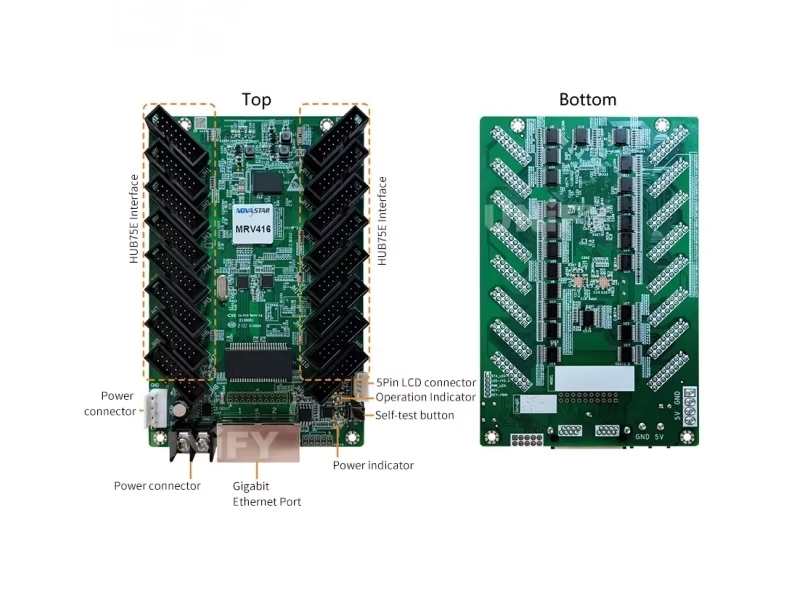
Key Features of the Novastar MRV416 LED Receiver Card
Color Management
Standard gamuts (Rec.709 / DCI-P3 / Rec.2020) plus custom color gamuts — precise color for broadcast and brand-critical content.
18bit+ Grayscale
Grayscale improved 4× to avoid grayscale loss at low brightness — smoother gradients on fine-pitch walls.
Pixel-Level Calibration
Brightness and chroma calibrated per pixel with NovaStar’s calibration system — consistent uniformity across the wall.
Quick Seam & Multi-Batch Adjustment
Dark/bright seams corrected instantly; multi-batch adjustment minimizes discrepancies between module production batches.
Low Latency (1 Frame)
Latency on the receiving card end reduced to 1 frame when enabled, with modules using driver ICs with built-in RAM. Default disabled.
3D Image Output
Working with a 3D-capable controller, the card outputs 3D image content for glasses-based 3D installations.
Individual RGB Gamma & 90° Rotation
Independent red/green/blue gamma controls low-grayscale non-uniformity; image rotates in 90° increments.
Mapping 1.1 & Monitoring
Cabinets display controller/card/Ethernet port info; temperature, voltage, bit errors and Ethernet disconnections monitored in real time.
Readback & Stored Image
Firmware and parameters read back locally; custom startup image or no-signal image stored on the card — never a black screen.
Loop Backup + Dual Program + Dual Parameters
Three-layer reliability: loop backup survives cable faults, two firmware copies prevent bricking, dual parameter areas allow instant restore. See LED display system redundancy.
Novastar MRV416 LED Receiver Card Port Economics: Why 16 Ports Win on Module-Dense Walls
On walls built from standard 320×160 mm modules, the connector count — not the pixel loading — decides how many cards the wall needs. Each HUB75E port attaches one module:
*128×64-pixel 320×160 mm modules (P2.5 class), 253 modules per 1920×1080 wall.
The math: a 1920×1080 wall on standard modules needs 16 cards at 16 ports, 22 cards at 12 ports, or 32 cards at 8 ports. The 16-port card halves the card count versus the entry tier — halving the failure surface, the Ethernet cascade points, the spare stock and the installation labor in one decision. For walls where modules are small and numerous, port count is the binding constraint and the MRV416-N is the economical flagship. For pixel-pitch math, see LED pixel pitch and LED screen resolution.
How to Configure the Novastar MRV416 LED Receiver Card in NovaLCT (RCFG Guide)
Five steps to first light:
Wire the card
Connect the card to the modules via the 16 HUB75E ribbon cables and to the sending controller via Gigabit Ethernet (either port works as input or output for cascading).
Install NovaLCT
Download NovaLCT software, connect your PC to the controller, and let NovaLCT detect the screen.
Load the correct RCFG file
Load the module’s RCFG/RCFGX configuration file from the module supplier — it defines driver IC type, scan mode and data routing. The IC type determines the loading figure (512×512 for PWM, 512×384 for common ICs). See LED display configuration and system debugging.
Send configuration to the card
Push the configuration to all receiving cards; enable Low Latency and Color Management only where the installation calls for them. Controller side: how to configure an LED sending card.
Verify with the self-test button
Disconnect the Ethernet cable, press the self-test button twice — the card displays a test pattern. If NovaLCT cannot detect the card, see NovaLCT cannot detect sending card: troubleshooting guide.
NovaStar Official — NovaLCT Performance Settings and Receiving Card Configuration Files tutorial
Novastar MRV416 LED Receiver Card vs DH7516-S, MRV412-N & MRV336 Comparison
The 16-port class in context. The MRV416-N column is highlighted.
Reading the table: the MRV416-N and DH7516-S share the 16-port/32-group profile, but the MRV416-N loads 33% more pixels per card (512×512 vs 512×384) and adds Color Management, Low Latency and multi-batch adjustment. The MRV412-N is the same platform at 12 ports. Legacy note: the MRV416 line is the market’s designated upgrade path for the discontinued MRV366.
How to Install & Maintain the Novastar MRV416 LED Receiver Card
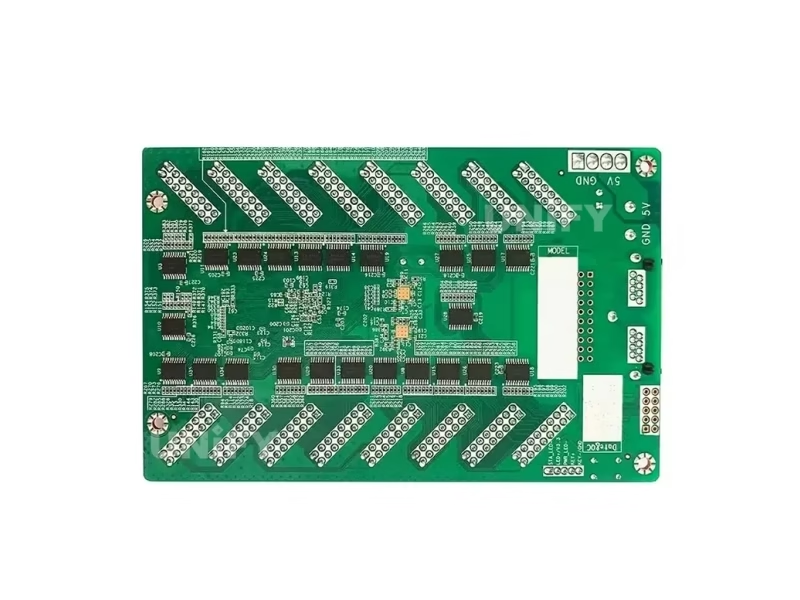
The card mounts onto the module or cabinet with GND-enabled mounting holes. Installation and replacement follow the standard four-step procedure:
Read back the card’s parameters
In NovaLCT, read back firmware and configuration parameters before any replacement and save them locally. See backup and restore LED display hardware settings.
Power down and swap the card
Unplug power and the 16 HUB75E cables, remove the screws, and mount the replacement. Both power connectors are equivalent.
Load the RCFG and configuration
Send the module’s RCFG file and the saved configuration to the card. Re-enable Low Latency or Color Management only where they were previously enabled.
Verify via indicator lights
The green running indicator confirms status at a glance — see the diagnostic table below. Full wall-level guidance in LED screen installation and LED screen maintenance.
NovaStar Official — Gear Up: Troubleshooting H Series – MVR Card Problem
Running Indicator Diagnostic Table
On top of the indicator table, V1.0.3 adds Ethernet cable disconnection counting — intermittent link faults are logged and visible in NovaLCT before they become screen faults. For cable-related issues, see LED display signal cable troubleshooting.
Novastar MRV416 LED Receiver Card Applications
Broadcast & Virtual Production
Color Management holds camera-fed walls in the intended gamut; Low Latency 1 frame serves live camera pipelines on RAM-IC modules.
Large Rental Walls
16 ports halve the card count on module-dense rental walls; multi-batch adjustment evens fleets built from mixed batches. See LED screen for events.
Control Rooms & CCTV
512×512 loading shrinks card counts on fine-pitch monitoring walls; 18bit+ keeps gradients banding-free. See control room LED display.
Retail & Brand Environments
Custom color gamuts hold brand colors consistent across store networks. See shopping mall LED display.
Why Source the Novastar MRV416 LED Receiver Card From an LED Display Factory
The MRV416’s naming history creates the same trap as its 12-port sibling: original MRV416 and current MRV416-N stock trade under identical search terms, with older datasheets quoting 512×384 loading and pre-2024 documentation. We supply the current MRV416-N from NovaStar’s authorized channel — blister packaging, 100 cards per factory box, verifiable serial numbers — and batch-test every shipment on live modules before dispatch.
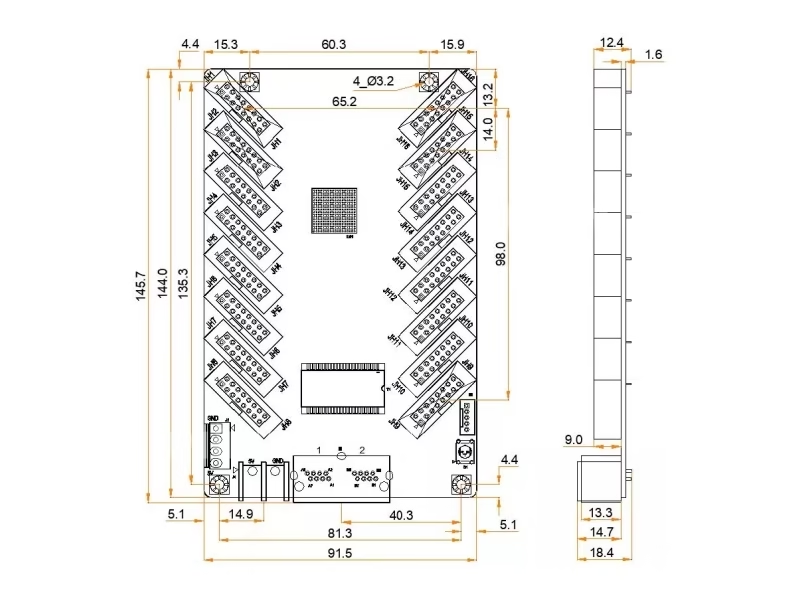
Three verification checks: (1) the specification version — MRV416-N line starts at V1.0.0 (2024-09-19), currently V1.0.3; (2) PWM loading 512×512@60Hz (a quote listing 512×384 describes the older generation); (3) 16 HUB75E connectors on the 145.6×91.5×19.3 mm board.
As a full-line LED screen manufacturer, we support Color Management calibration and Low Latency commissioning, and our engineers validate RCFG files against your actual modules. Visit our LED display factory and quality control of LED display pages.
Novastar MRV416 LED Receiver Card Price & Sourcing
Factory-direct pricing on the current MRV416-N platform:
Cards ship in original NovaStar packaging (blister pack, 100 pcs per box) with a 2-year warranty and NovaLCT support including Color Management and Low Latency commissioning. Typical dispatch is 1–3 working days from Shenzhen stock. Source from a verified LED screen manufacturer to guarantee the current MRV416-N platform, not older 512×384 stock. Pair the card with the MCTRL300, MCTRL660 PRO, or VX16s sending controller.
Novastar MRV416 LED Receiver Card FAQ
Novastar MRV416 LED Receiver Card Certifications
Every batch ships with NovaStar original packaging and full compliance documentation.
Ready to Source the Novastar MRV416 LED Receiver Card?
Factory-direct pricing, current MRV416-N stock, Color Management & Low Latency commissioning support.
unifyledscreen@gmail.com | +86-191-18802497
Novastar MRV416 LED Receiver Card Selection Guide: MRV416 vs MRV412 vs DH7516-S
Published: August 2026 | 12 min read | UnifyLED Engineering Team
Large LED walls live or die on a number most buyers never see: modules per card. Every standard 320×160 mm module plugs into one HUB75E port, so a card with 16 ports carries 16 modules while an 8-port card carries 8 — and on a wall built from hundreds of modules, that difference doubles or halves the card count before pixel loading ever enters the conversation. The MRV416 is NovaStar’s answer at the top of that scale: 16 ports, 32 data groups, and a loading figure that was quietly corrected upward in 2024. This guide explains the card, the correction, and the three-way choice between the MRV416-N, its 12-port sibling, and the DH7516-S.
Chapter 1 — The 16-Port Class: Where the Wall’s Arithmetic Lives
The 16-port/32-group profile is the top of NovaStar’s receiving card connectivity ladder: 16 standard HUB75E connectors, each attaching one module, with 32 parallel RGB data groups — two per connector — servicing the highest driver-IC density in the catalog. On module-dense walls the profile decides the card count by itself. A 1920×1080 wall on 128×64-pixel modules (P2.5 class) needs 253 modules: 32 cards at 8 ports, 22 cards at 12 ports, or 16 cards at 16 ports. The port count is the binding constraint throughout — pixel loading never gets the chance to matter because the connectors run out first.
That arithmetic is why the 16-port class exists as its own tier. Halving the card count versus the entry tier halves four costs at once: the cards themselves, the Ethernet cascade points, the spare stock held in the storeroom, and the installation labor for mounting and wiring. For a wall with a five-year service life, the port count decision compounds through every maintenance visit. When modules are small and numerous, port count is the wall’s real spec sheet.
The cascade topology follows the card count down. Sixteen cards daisy-chain into four short cascades of four; thirty-two cards mean eight cascades or longer chains, each hop adding a failure point and a place for an intermittent connection to hide. The MRV416-N’s disconnection detection is worth more on dense walls than it looks on paper: with fewer cards in the chain, a logged disconnection event localizes the fault to one of four cables instead of one of eight. Fewer cards does not just cost less — it fails more legibly.
Chapter 2 — MRV416 vs MRV416-N: The 2024 Platform and the Loading Correction
The MRV416-N is a new platform with its own specification line: V1.0.0 (2024-09-19), V1.0.1 (2025-01-02, certifications), V1.0.2 (2025-01-10, diagrams), V1.0.3 (2025-05-20, Ethernet disconnection detection). The original MRV416 predates all of it, and the generations trade under the same search terms — which is where the loading confusion comes from. The older generation is documented at 512×384; the MRV416-N official figure with PWM driver ICs is 512×512@60Hz, a 33% increase in usable pixels per card. Listings quoting 512×384 today are selling either old stock or old documentation.
The verification habit remains the cheapest tool in the buyer’s kit: every NovaStar specification carries a change-history table on page two. The MRV416-N line starts at V1.0.0 with a 2024 date; anything pre-2024 or quoting 512×384 describes the original generation. A supplier who can state the specification version in one sentence is behaving like an authorized channel; a supplier who cannot is telling you something about where the stock came from.
The correction also changes card-count math for the better. A wall planned at 512×384 per card needs a recalculated bill of materials at 512×512: on a 4K-class wall (3840×2160, 8.29M pixels), the 33% higher ceiling trims the card count from 22 to 16 — six fewer cards, six fewer cascade points, and a smaller spare stock, before counting the platform features. Teams that planned MRV416 walls from older documentation should rerun the numbers against V1.0.3; the savings belong to whoever does the recalculation first.
Chapter 3 — The Same-Profile Rival: MRV416-N vs DH7516-S
The DH7516-S shares the MRV416-N’s 16-port/32-group profile, which makes the comparison the most common one integrators run on module-dense walls. The differences, from the official specifications: loading — the MRV416-N loads 512×512@60Hz with PWM ICs versus the DH7516-S’s 512×384, a 33% ceiling advantage; platform features — the MRV416-N adds Color Management, Low Latency and multi-batch adjustment, none of which the DH7516-S lists; generation — both are current, with the DH7516-S older by a platform cycle. On a wall where neither the extra pixels nor the extra features are used, the cards are functionally interchangeable at the same wiring plan.
The honest selection rule mirrors the 12-port class: run the four capabilities against the content plan. Color-critical content, live camera feeds on RAM-IC modules, or walls extended with mixed module batches — the MRV416-N’s features are the reason to choose it. A standard wall playing standard content — either card serves, and price, availability and channel discipline decide. The wiring plans are identical, so the decision can stay open until procurement without design changes.
That interchangeability has one boundary worth stating plainly: wiring plans match, calibration does not. The two cards store and apply correction coefficients differently, so a wall mixed between MRV416-N and DH7516-S cards develops brightness boundaries at the section seams within weeks, exactly like mixed generations of any receiving card family. The rule holds: interchangeable wiring makes procurement flexible; it does not make mixed-card walls acceptable. Replace per wall or per complete section, archive the readbacks, and keep the two populations separated by a full maintenance window — never a single card swap.
Chapter 4 — The Sibling Choice: MRV416-N vs MRV412-N
The MRV416-N and MRV412-N are the same platform with one difference: 16 ports and 32 data groups versus 12 ports and 24 data groups. Every feature — Color Management, 18bit+, Low Latency, multi-batch adjustment, disconnection detection — is identical, and the version histories run in lockstep with the same release dates. The choice reduces to module math: count the modules, divide by 16 and by 12, and compare card counts against the project’s maintenance economics. On a 253-module wall the MRV416-N saves 6 cards; on a 100-module wall the MRV412-N’s 9 cards versus 7 is a smaller gap, and the 12-port card is often the economical default.
Two practical tiebreakers beyond the math. First, cabinet wiring: a cabinet designed around 12-module wiring may not have clean cable paths for 16-module cards, and re-cabling labor can erase the card savings — check the cabinet layout before standardizing on 16 ports. Second, spares philosophy: a fleet running both 12-port and 16-port cards needs two spare populations; consolidating on one profile simplifies the storeroom. Walls grow in both directions over their lives, so the decision belongs to the fleet plan, not the first wall.
Fleet consolidation deserves more weight than it usually gets, because receiving cards behave like batteries in a rental house: every distinct type multiplies the spare stock, the RCFG library and the technician training surface. A rental fleet that standardizes on the 16-port card across all walls carries one spare population and one wiring habit; a fleet mixing 8-, 12- and 16-port cards carries three, and the wrong spare turns up at the wrong gig with predictable results. The per-wall savings of choosing the 12-port card on smaller walls are real, but they compete against the fleet-level simplicity of one platform — and on rental fleets, simplicity wins more gigs than the last dollar of per-card cost.
Chapter 5 — Migrating from the MRV366: Readback First
The MRV416 line is the market’s designated upgrade path for the discontinued MRV366 — the 16-port card of the earlier MRV generation. The migration follows the family procedure with one extra caution: the MRV366’s RCFG files do not load on the MRV416-N, so the module supplier’s current RCFG must be in hand before the first card comes out. Read back the old card’s parameters, swap per section, load the new RCFG, push the configuration, and verify with the self-test button and indicator patterns. The official readback-and-update workflow:
NovaStar Official — SmartLCT Readback and Update of Receiving Card Parameters and Firmware
The section rule applies with full force across the generation gap: replace per wall or per complete section, never one card at a time. Legacy and current cards apply their calibration corrections differently, and a single new card in an old wall develops a visible brightness boundary within weeks on white content. Archive each section’s readback files before the swap — the archive is what turns the next replacement into a five-minute job. See backup and restore LED display hardware settings.
Chapter 6 — The Platform Features in Practice
The MRV-N platform’s four defining capabilities work the same way on the 16-port card as on its 12-port sibling, and they compound with the port count: a 16-port wall carries fewer cards, so platform features apply to fewer units. Color Management maps the wall to Rec.709, DCI-P3 or Rec.2020 gamuts — the difference between correct and shifted colors on broadcast and brand-critical content. Low Latency reduces the receiving card’s contribution to 1 frame, conditioned on RAM driver ICs and disabled by default. Multi-batch adjustment evens out module batches bought months apart. Disconnection detection logs intermittent Ethernet faults before they become visible faults. The calibration coefficient workflow underneath all of them:
None of these features replace the fundamentals — correct RCFG files, calibration at commissioning, readbacks before replacements, and the mixed-generation rule. They layer on top of a wall that is already correctly specified. The 16-port advantage is arithmetic; the platform features are judgment calls; the fundamentals are discipline.
One commissioning habit makes the platform features behave predictably: enable them deliberately, one per maintenance window, with the wall’s standard content running. Enable Color Management only after confirming the content’s production gamut; enable Low Latency only after confirming RAM driver ICs from the RCFG datasheet; apply multi-batch adjustment after module additions, not before. Features enabled speculatively are features that surprise — a wall that changed its color response overnight because someone toggled a gamut setting is a support ticket that never needed to exist. The MRV-N platform rewards the same discipline as every receiving card: change one variable, verify, document.
Chapter 7 — Buying: Platform Verification and Channel Discipline
The buying routine for the MRV416 repeats the family pattern with one addition. Verify the platform: specification version (MRV416-N line, 2024-09-19 or later), PWM loading 512×512, 16 HUB75E connectors on the 145.6×91.5×19.3 mm board. Verify the channel: original blister packaging in the 100-card factory carton, traceable serial numbers, and a supplier that answers version questions in one sentence. The addition: because the older MRV416 stock trades at overlapping prices, quotes should state the platform explicitly — “MRV416-N” in writing — before money moves.
Warranty and longevity follow the family standard: solid-state design, 2.5W rated power, passive cooling, with failures dominated by defects and installation damage rather than wear. A 2-year warranty with NovaLCT support is the practical baseline, and well-installed cards typically outlive the LED modules they drive — LED screen lifespan is driven by the modules. The –40°C storage rating closes the cold-climate logistics gap for northern projects, where cards staged through unheated winter warehouses sit below –25°C for weeks. On warranty claims, a supplier with batch records and traceable serial numbers resolves them in days; one without them resolves them in months. For the system view beyond the cards, LED screen maintenance covers the modules, power and controller layers sharing the same maintenance windows.
Conclusion
The Novastar MRV416 LED Receiver Card, in its current MRV416-N form, is the top of NovaStar’s receiving card line: 16 ports, 32 data groups, 512×512@60Hz loading, and the full MRV-N platform feature set. Its selection logic is arithmetic first — modules per card decides the card count on dense walls — and judgment second: the four platform capabilities earn their place only against the actual content plan. Against the DH7516-S it offers a higher ceiling; against the MRV412-N it offers more connectors. Verify the platform version, count the modules, run the content plan — and the 16-port flagship quietly disappears into the wall, the way good infrastructure does.
Explore the Complete Novastar LED Receiving Card & Controller Range
From legacy MRV cards and current MRV-N platforms to DH and A series, AT entry cards, sending controllers and software resources.
Download Novastar MRV416 LED Receiver Card Resources
Official NovaStar MRV416-N receiving card specifications — current revision V1.0.3.