
A960 Series · Energy-Saving Outdoor Fixed Display
960*960mm Outdoor LED Display — A960 Series
The A960 series — 960×960mm die-cast aluminum outdoor LED cabinets with common cathode energy saving, IP66 protection, front and rear maintenance, and 7680Hz refresh. Five pixel pitches from P4.44 to P10, engineered for billboards, 3D landmarks and stadium installations where power bills and maintenance access decide profitability.
Product Overview
What Is the 960*960mm Outdoor LED Display?
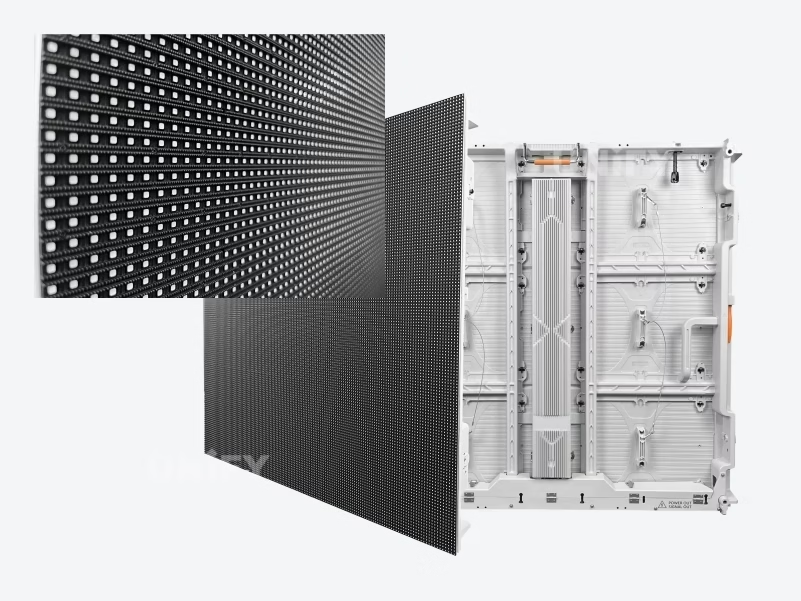
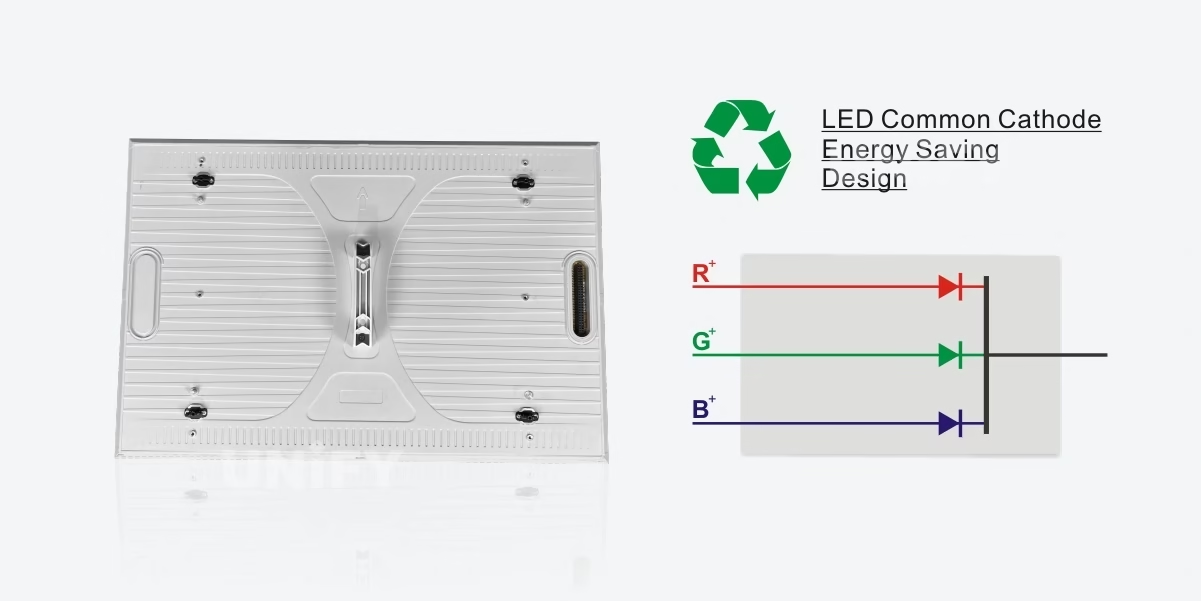
The 960*960mm Outdoor LED Display is the industry-standard cabinet format for permanent outdoor installations — a 0.92m² die-cast aluminum module that combines with any number of identical cabinets into billboards, building facades and 3D landmark screens. The A960 series builds that format around four operating-cost decisions: common cathode electronics that cut average power to ≤186W/m², IP66 sealing on both faces, full front and rear maintenance with butterfly locks, and broadcast-grade 7680Hz refresh across all five pixel pitches. For the category background, see outdoor LED display.
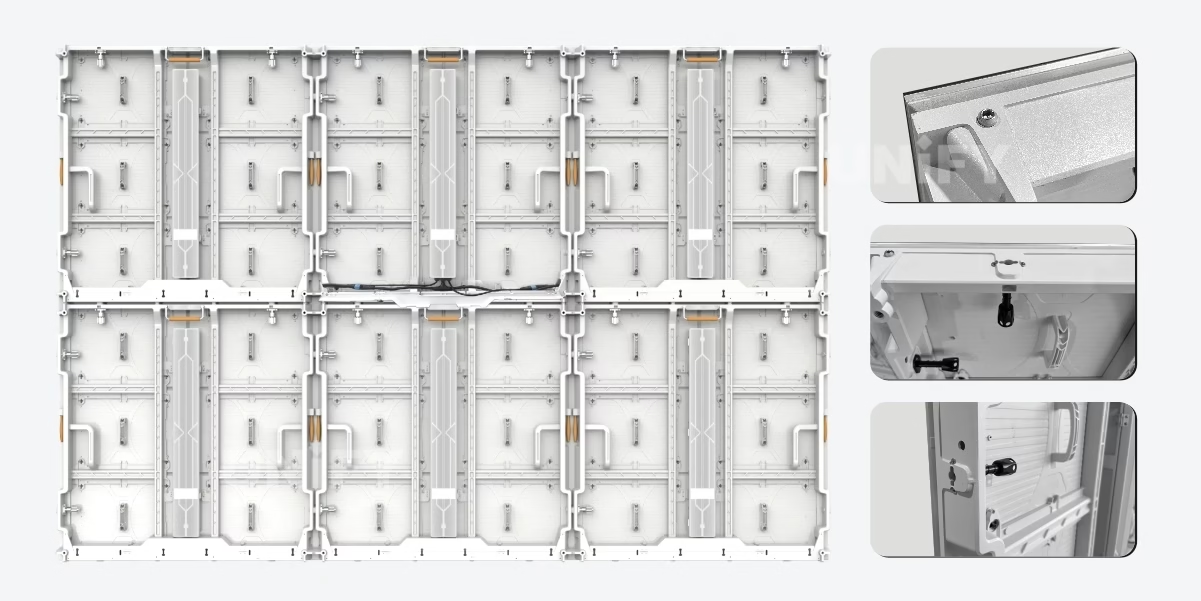
Five models, one platform: A9604.44 (P4.44), A9605.7 (P5.7), A9606.67 (P6.67), A9608 (P8) and A96010 (P10). Every model shares the same 960×960mm cabinet, 480×320mm modules, 25kg weight, IP66 rating and maintenance design — only pixel pitch, brightness and resolution change, which keeps installation, spare parts and servicing uniform across a fleet. For pitch math, see LED pixel pitch.
Specifications
960×960mm Outdoor LED Display Technical Specifications (A960 Series)
Every figure below is verified against the A960 Series 960*960mm outdoor LED display platform — five models, one cabinet specification.
Every figure below is verified against the A960 Series 960*960mm outdoor LED display platform — five models, one cabinet specification.
Series Matrix
Cabinet & System Specifications (All Models)
Power figures are verified values for the A960 platform with common cathode electronics — see LED display power consumption for how they translate into operating cost.
Product Details
960×960mm Outdoor LED Display Product Details Gallery
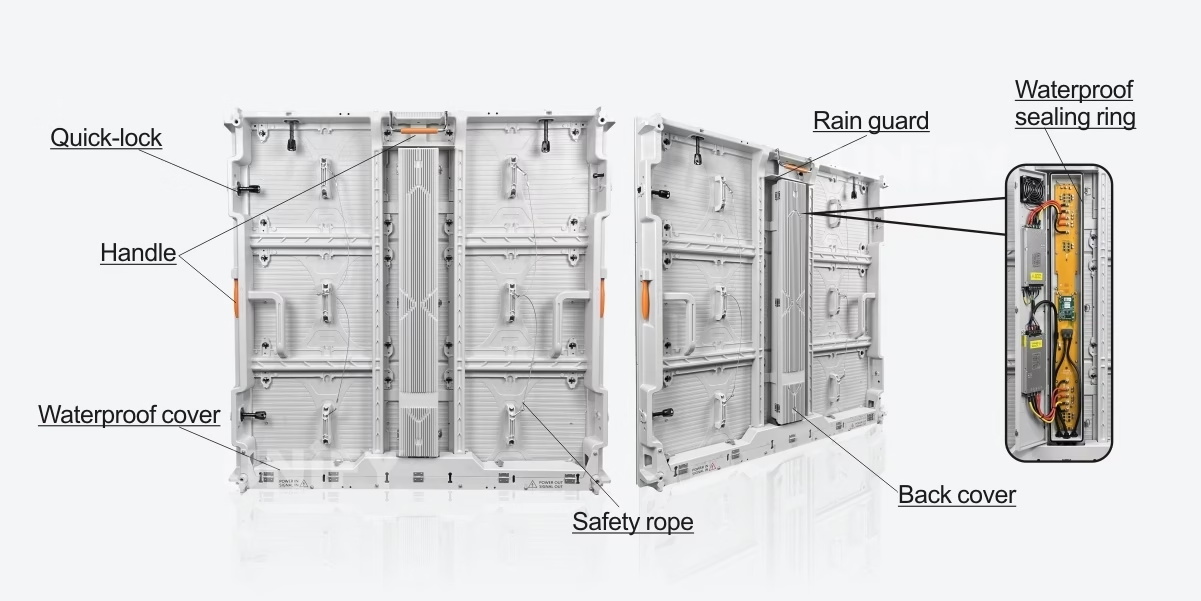
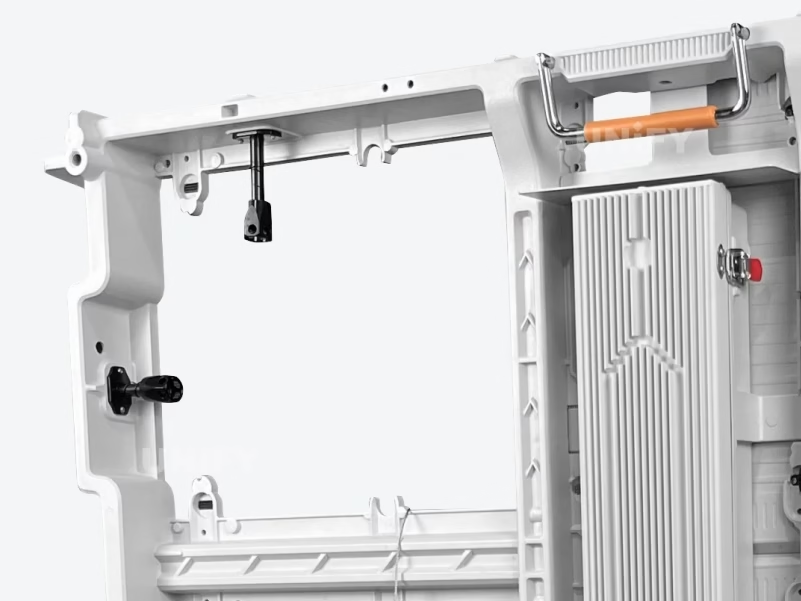
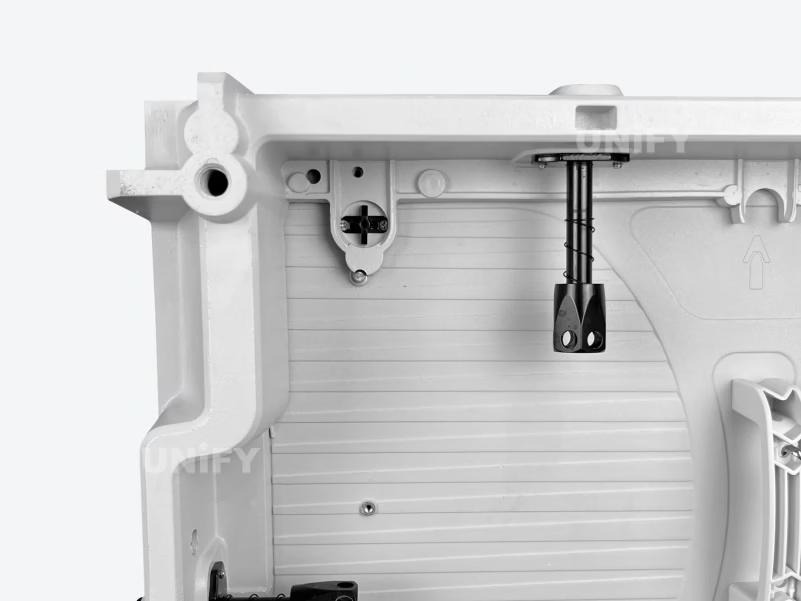
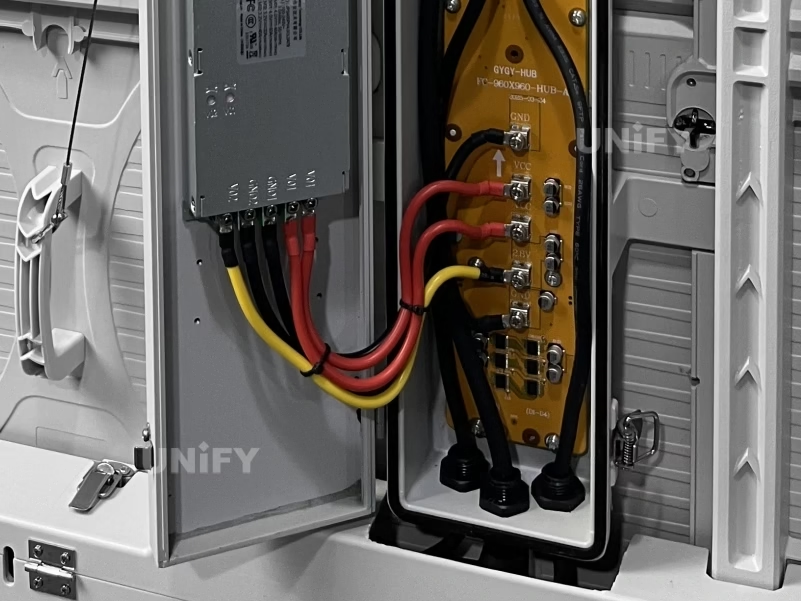
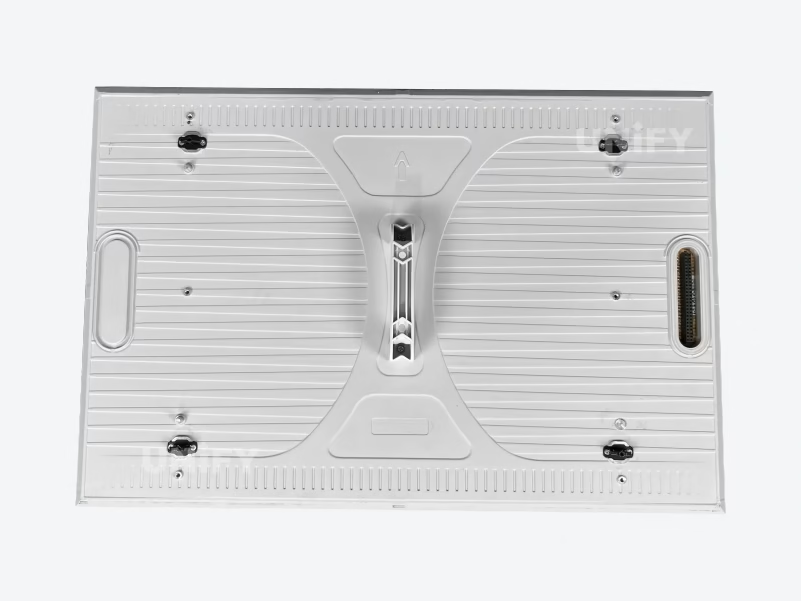
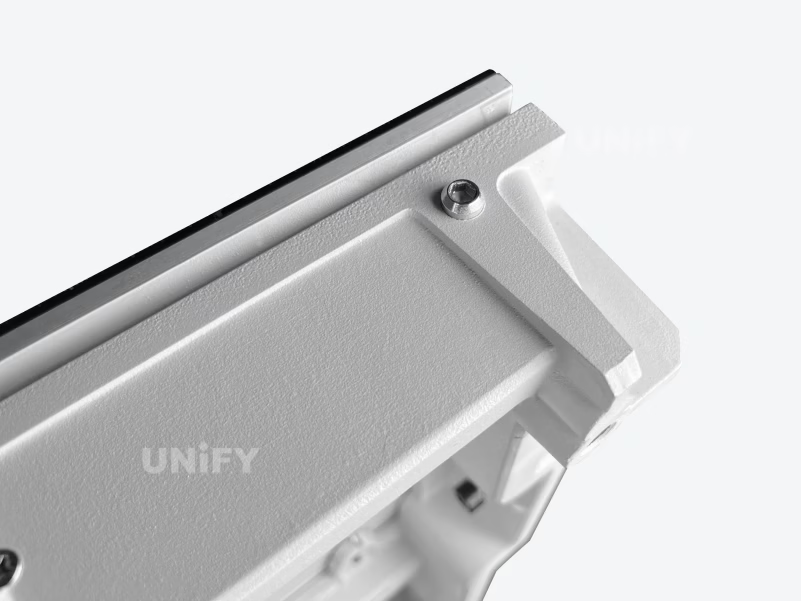
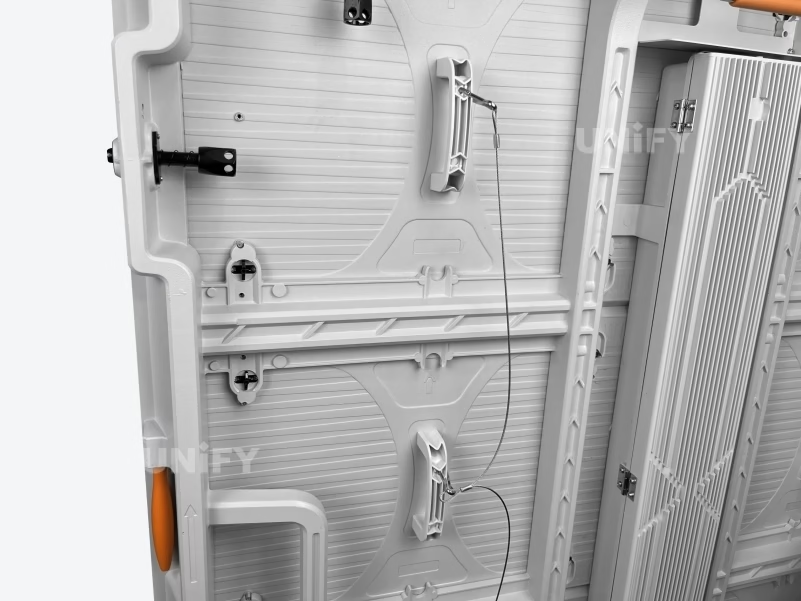
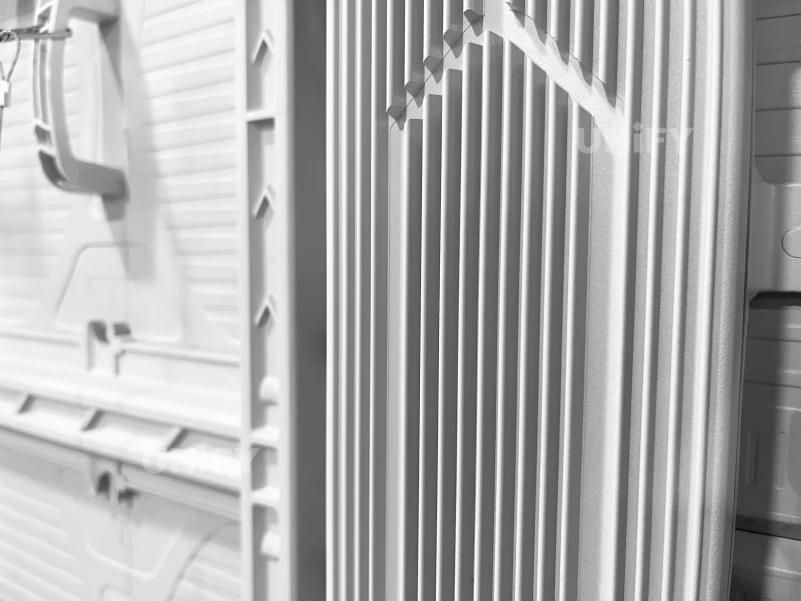
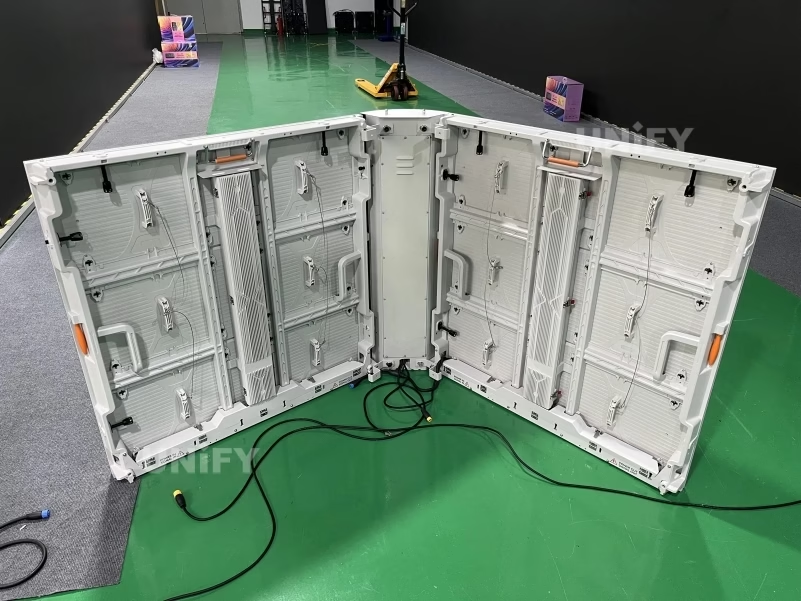
Eight engineering details that separate a 960*960mm outdoor LED display built to last from one built to a price — close-up photos of each:
Pain Points & Solutions
Pain Points: 7 Problems the 960*960mm Outdoor LED Display Solves
Seven operating problems decide the profitability of a 960*960mm outdoor LED display investment. Each is answered with the A960 Series’s specific engineering response:
Electricity Bills
Common cathode electronics cut average power to ≤186W/m². On a 500m² screen running 24/7, that is roughly 280,000 kWh less per year than a typical 250W/m² design — see the calculation below.
No Rear Access Space
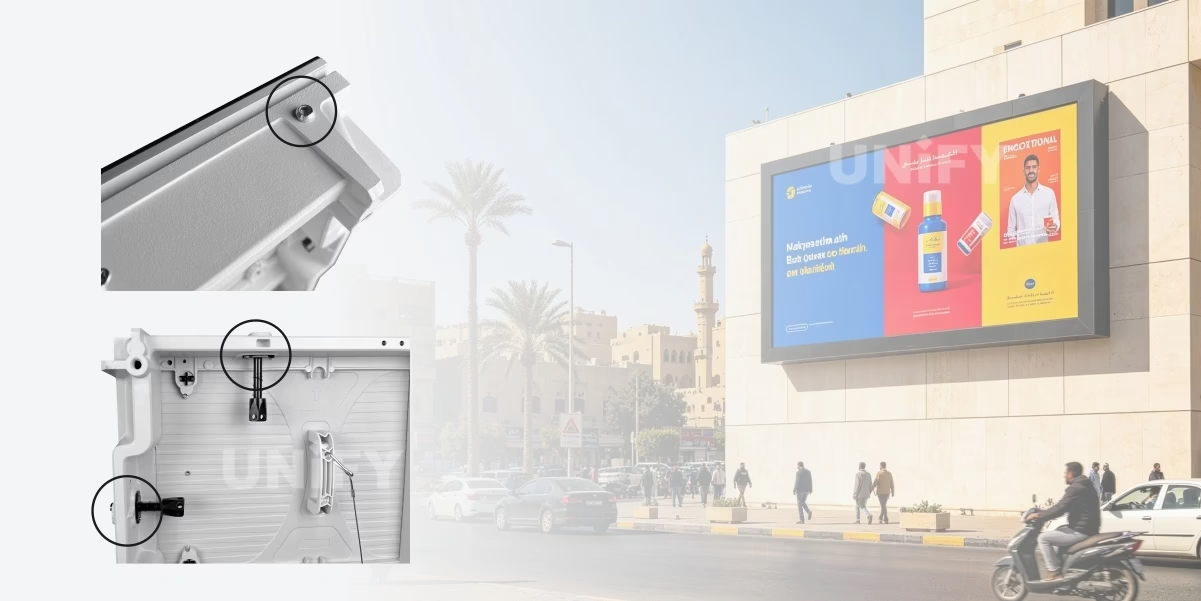
Full front and rear maintenance with ergonomic butterfly locks and positioning pins — one technician services the screen from the front, no catwalk, no rented scaffolding for every fault.
Warped Cabinets & Ugly Seams
Die-cast aluminum with CNC-machined hard connection holds flatness where iron and plastic cabinets warp — the seams stay invisible for the life of the screen.
Summer Heat Death
The hollow Cold Screen thermal design runs the cabinet cooler than traditional models; the platform is rated for –40°C to +60°C operation.
Fire & Drop Safety
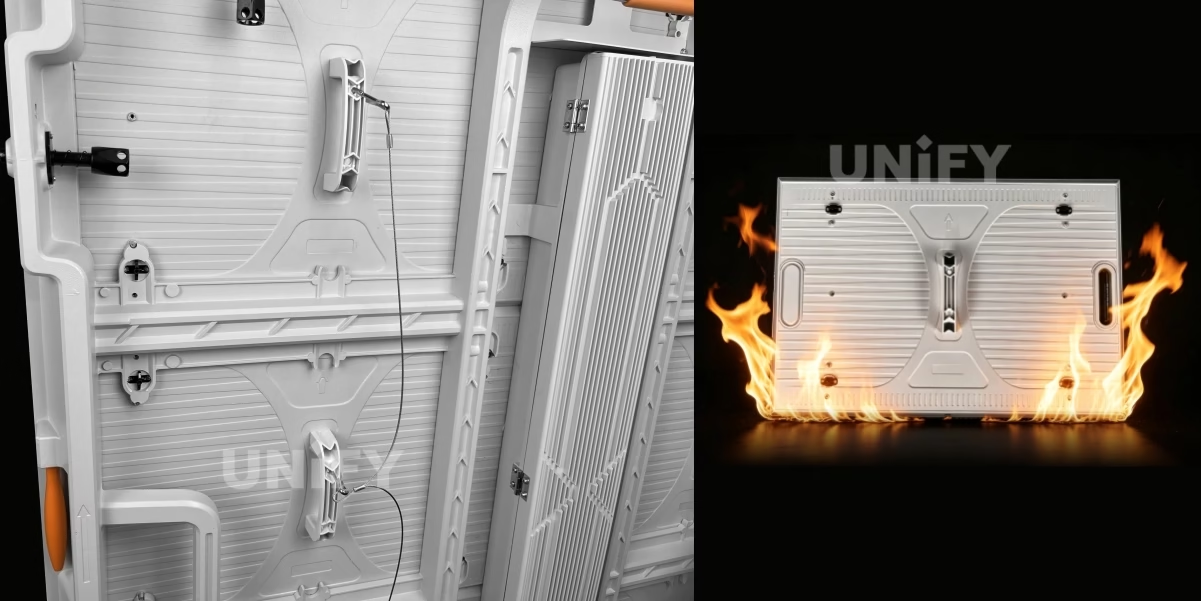
All-aluminum fireproof modules plus high-strength stainless steel safety ropes on every cabinet — two independent protections for public installations.
Black Lines on 3D Corners
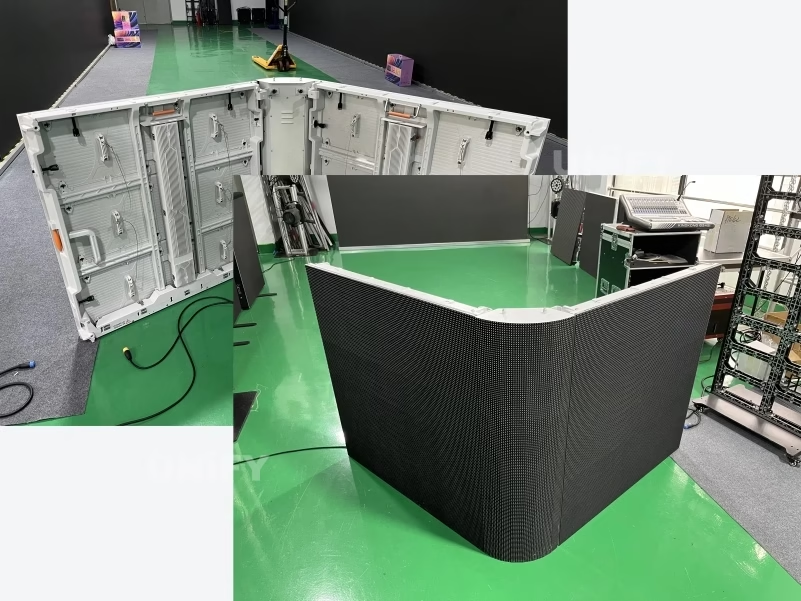
Flat 960×960 cabinets combine with 640×960 curved cabinets for 90° corner transitions with no black seam — the basis of naked-eye 3D landmarks.
Scan Lines on Camera
3840/7680Hz refresh with 14–16bit grayscale and 15000:1 contrast — clean on broadcast cameras and phone footage, which is how advertisers judge the screen.
960*960 Outdoor LED screen — Cold Screen: High-End Energy-Saving Outdoor LED Display A960 Series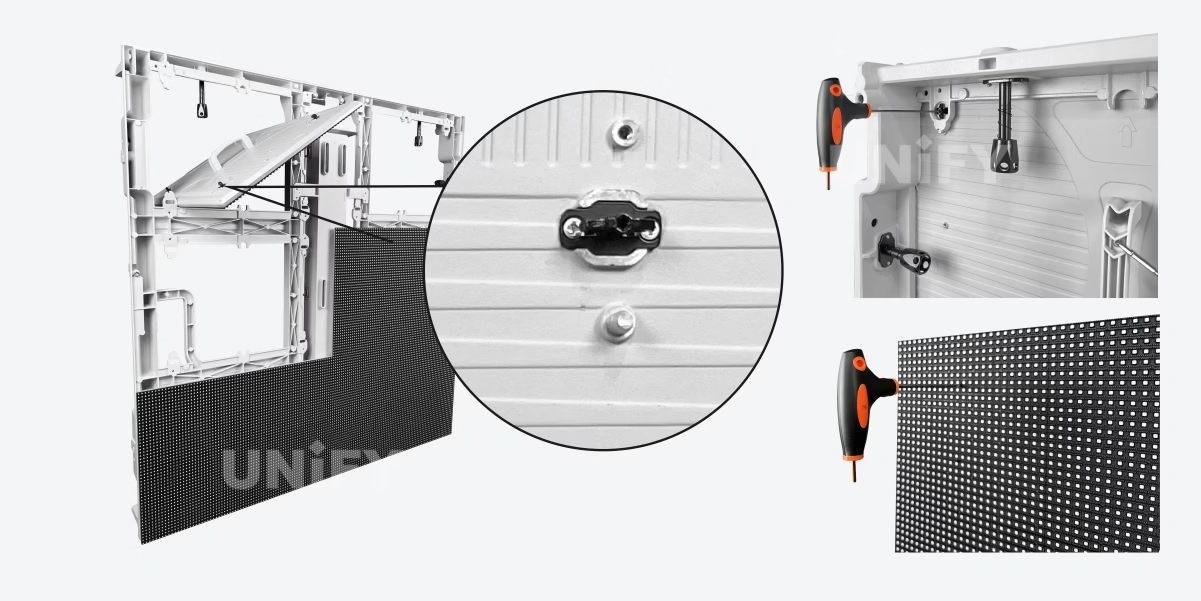
Energy Economics
How Much Power Does a 960×960mm Outdoor LED Display Use?
For a 960*960mm outdoor LED display running 24/7, power consumption is the largest lifetime cost — bigger than the hardware itself. The A960 Series common cathode design drives each RGB channel separately at its own voltage, cutting average consumption to ≤186W/m² versus the 250–300W/m² typical of conventional common-anode outdoor displays:
*At $0.10–$0.12 per kWh commercial tariff; average consumption figures, actual varies with content brightness. The field measurement, on camera:
960*960 Outdoor LED Display — Field Test: A960 Outdoor LED Display Power Consumption Save 60% Energy
The saving compounds with screen size and tariff: a 500m² landmark display recovers a six-figure sum over a five-year operating period on power alone, before counting the cooling-load reduction inside the building. See LED display power consumption for the full methodology.
Model Selection
A960 Series Model Gui
de: Choosing the Right 960×960mm Outdoor LED Panel
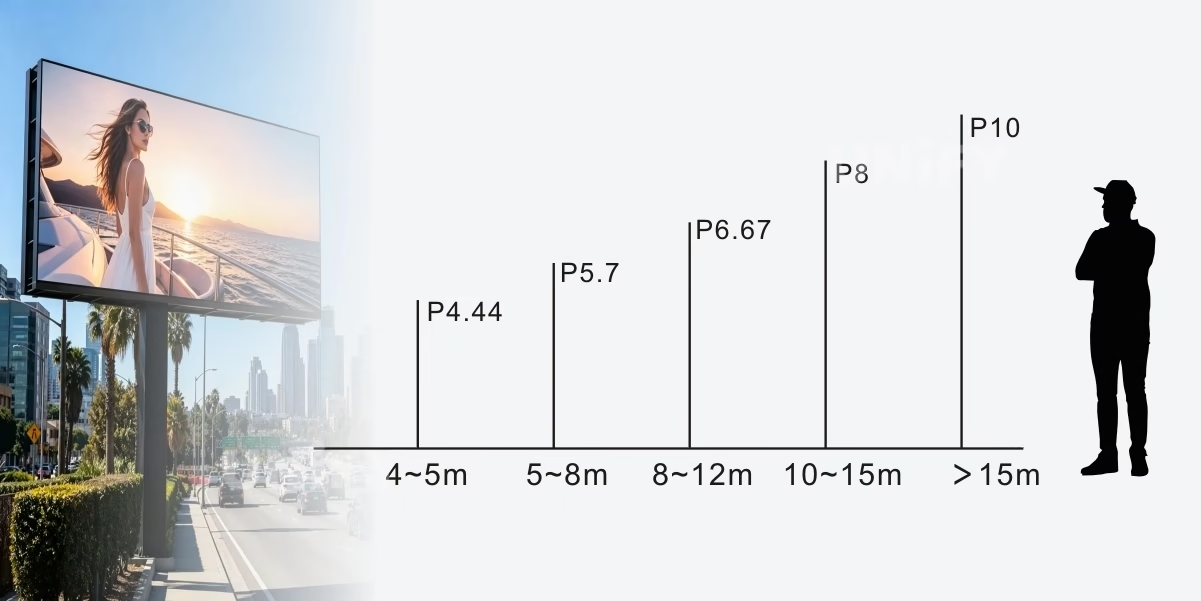
Pixel pitch follows viewing distance on any 960×960mm outdoor LED display — the five A960 Series models map to five outdoor profiles:
The selection rule: pixel pitch in millimeters roughly equals the minimum viewing distance in meters. For the full methodology see LED pixel pitch and LED display viewing distance.
Installation & Maintenance
How to Install & Maintain Your 960×960mm Outdoor LED Screen
The 960×960mm outdoor LED display’s maintenance design exists for one reason: every hour of technician time and every meter of scaffolding costs the operator money. Three design answers:
Front & rear service, one person
Butterfly locks release the module or cabinet from the front; precision positioning pins guarantee the replacement seats perfectly flat — no recalibration after a swap. Full wall-level guidance in LED screen installation.
No rear catwalk required
Wall-hung and facade installations maintain entirely from the front — the rear service path exists for rooftop and structure-mounted jobs where the back is reachable. No dedicated maintenance corridor means more rentable space.
Preventive maintenance is mechanical
Quarterly gasket inspection, annual lock lubrication, and connector checks — the entire procedure fits in LED screen maintenance‘s routine window.
960*960 Outdoor LED Wall — A960 LED Display Installation Guide Step-by-Step Wall Mounting Tutorial
960*960 Outdoor LED Display Screen — A960 LED Module Installation Guide
Safety & Weatherproofing
Fireproof, Anti-Drop & IP66: 960*960mm Outdoor LED Display Safety
A 960*960mm outdoor LED display in a public installation carries liability. The A960 Series addresses the two risks insurers and building owners ask about first:
Fireproof Construction
All-aluminum die-cast modules where conventional designs use plastic — the module itself does not support combustion, a documented requirement on building facades.
Anti-Drop Safety Ropes
High-strength stainless steel safety ropes tether every cabinet independently — if a mount ever fails, the cabinet hangs, it does not fall.
IP66 Both Faces
Waterproof gaskets and rain shields seal front and rear — dust-tight and protected against powerful water jets from any direction, not just rain on the front face.
IP65 vs IP66 — the practical difference: IP65 protects against low-pressure water jets; IP66 against powerful water jets from any direction. For outdoor screens, the difference matters in three real cases: pressure washing of facades, monsoon-season horizontal rain, and rooftop installations exposed to wind-driven spray. The A960 is rated IP66 on both faces. For the full rating system, see IP rating explained.
960*960 Outdoor LED screen — Extreme Fire Test: Plastic vs. A960 Aluminum LED Module
960*960 Outdoor LED Video Wall — A960 Outdoor LED Display Waterproof Test
3D Corner Splicing
3D Corner Splicing With the A960 Series 960×960mm Outdoor LED Screen
On a 960×960mm outdoor LED display, naked-eye 3D landmarks depend on one detail: the corner transition. A conventional billboard corner shows a black seam where the two faces meet; the A960 platform eliminates it by pairing flat 960×960 cabinets on the main faces with 640×960 curved cabinets on the corner — the image flows through a 90° turn without a visible break.
Because the curved cabinet shares the A960’s module platform, mounting frame and maintenance hardware, a 3D corner adds no new spare-parts population or service procedures — the same modules, the same locks, the same team. For project examples, see 3D LED billboard for outdoor.
Applications
960×960mm Outdoor LED Display Applications: Billboards, 3D Landmarks & Stadiums
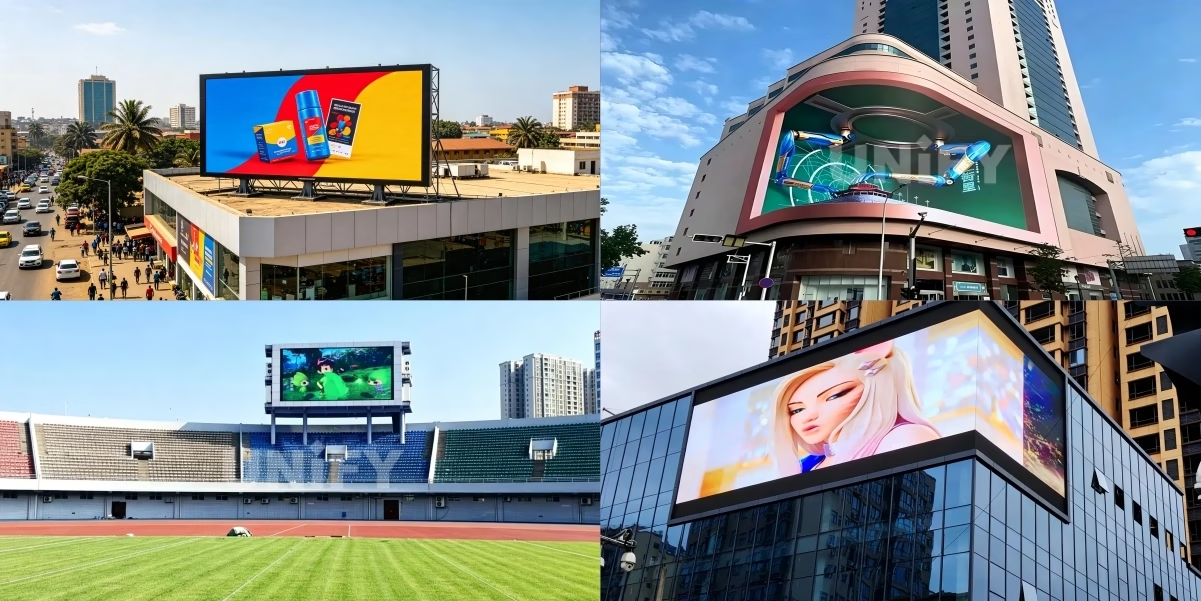
The 960*960mm outdoor LED display format serves four permanent outdoor profiles:
The 960*960mm outdoor LED display format serves four permanent outdoor profiles:
Digital Billboards
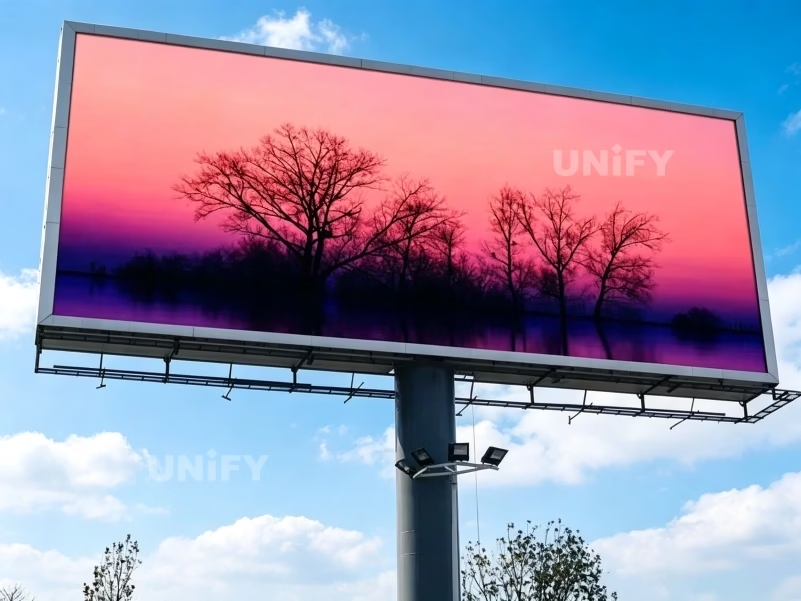
The core use case — roadside and rooftop advertising where 6500 nits holds contrast against direct sunlight. See outdoor LED billboard.
Naked-Eye 3D Landmarks
Flat-plus-curved corner splicing turns building corners into 3D canvases — the format cities pay premium CPM for.
Stadiums & Sports Venues
7680Hz refresh keeps replays clean on broadcast cameras; IP66 survives outdoor bowl exposure year-round.
Building Facades
Fireproof modules and safety ropes meet facade requirements; front maintenance avoids scaffold access.
Case Studies
960*960mm Outdoor LED Display Case Studies
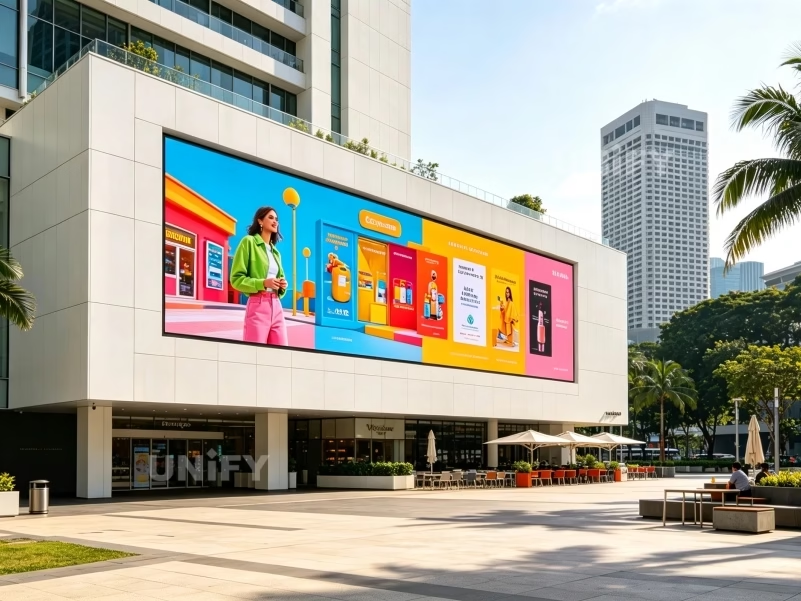
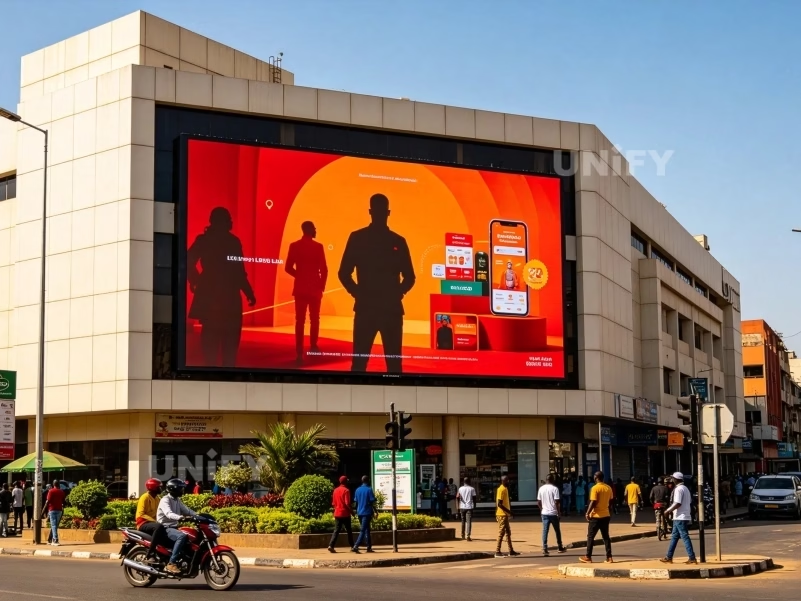
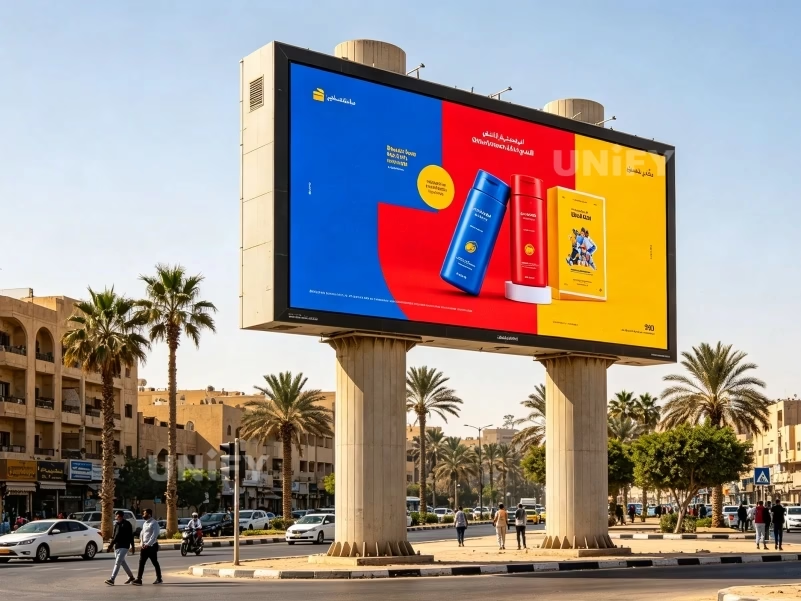
Field installations of the 960×960mm outdoor LED display platform — from city billboards to embedded building walls. More completed projects on our LED screen cases page.
Factory Strength
Why Source Your 960*960mm Outdoor LED Display From an LED Display Factory
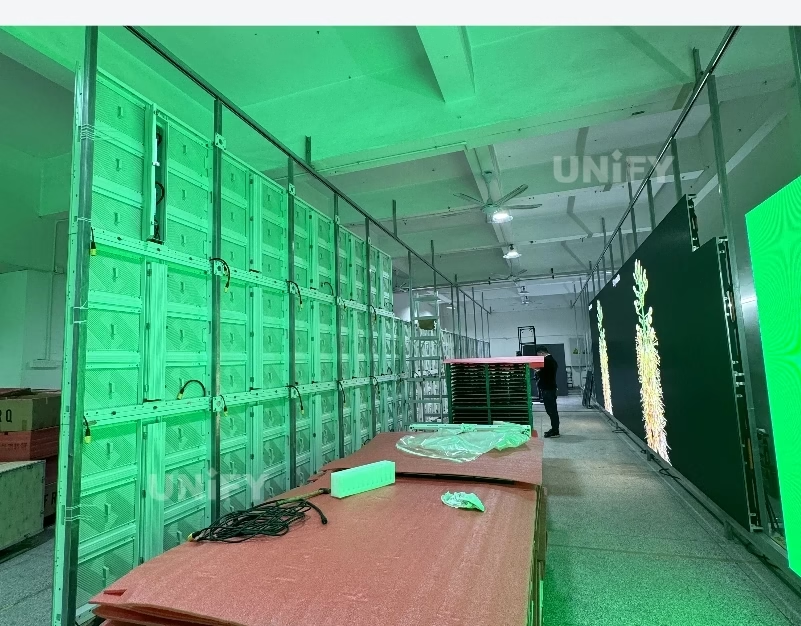
A 960*960mm outdoor LED display fails expensively — a billboard down for a week loses its advertising revenue twice over. Factory-direct sourcing shortens the two critical paths: production-to-installation time, and fault-to-repair time. Every A960 order ships after a full aging test on the production line, with power consumption verified per batch and spare modules packed from the same production run as the screen.
As a full-line LED screen manufacturer, we supply the structure, electrical design and commissioning guidance for the complete installation — not just the cabinets. Visit our LED display factory and quality control of LED display pages.
B2B Procurement
960*960mm Outdoor LED Display Price & Sourcing (A960 Series)
Market pricing for a 960*960mm outdoor LED display runs $350–$900 per cabinet depending on material (iron vs die-cast aluminum), brightness tier and channel. Factory-direct pricing on the A960 series follows screen size:
Every quote includes the 2-year warranty, verified power-consumption figures, spare modules from the same batch, and commissioning support. Source from a verified LED screen manufacturer to keep warranty and spare-parts paths short. See our outdoor portfolio: OK series, B series and LA series.
Get a Quote
Get a Quote for Your 960*960mm Outdoor LED Display
Tell us the screen size, pixel pitch and location — we return a dated production schedule with verified power figures and a structure drawing within 24 hours.
Prefer direct contact? WhatsApp: +86-191-18802497 · Email: unifyledscreen@gmail.com
FAQ
960*960mm Outdoor LED Display FAQ
Common questions buyers ask before ordering an outdoor LED screen — answered with the A960 Series specifications:
Related Products & Guides
Related 960×960mm Outdoor LED Display Products & Guides
More outdoor platforms from our catalog, and the articles that support a 960*960mm outdoor LED display project:
Buying & Pricing
Engineering
Operation
3D & Showcase
Ready to Source Your 960×960mm Outdoor LED Display?
A960 Series factory-direct pricing, verified power figures, structure and commissioning support for your 960*960mm outdoor LED display.
unifyledscreen@gmail.com | +86-191-18802497
Technical Deep-Dive
960×960mm Outdoor LED Display: The Complete A960 Series Buyer’s Guide
Published: August 2026 | 12 min read | UnifyLED Engineering Team
A 960×960mm outdoor LED display is bought once and paid for every month after — in electricity, in maintenance hours, and in the revenue lost while the screen is dark. The 960×960mm cabinet has become the industry’s standard building block for permanent outdoor installations because it makes those monthly costs calculable: standard modules, standard mounting, standard spares. This guide walks the decisions that determine whether a 960×960mm outdoor investment pays for itself — pitch selection, power economics, weatherproofing, maintenance design, safety, and the buying path that protects all of them.
Chapter 1 — Why 960×960mm Became the Outdoor Standard
The 960×960mm format — 0.92m² per cabinet — is where three practical forces meet. Structurally, one square meter divides cleanly into steel-framed billboard layouts, and the 960mm module fits standard mounting grids without custom fabrication. Electrically, the cabinet pairs with 480×320mm modules in four-per-cabinet layouts, keeping the wiring plan identical across every pixel pitch in a family. Commercially, a standard cabinet means interchangeable spares across a fleet and a secondhand market, which is why Hikvision, LEDFUL and the major Chinese manufacturers have all standardized on the format. When a buyer specifies 960×960mm, they are specifying a supply chain, not just a size.
The format’s discipline extends to project planning: screens are specified in cabinet counts (a 9.6m × 4.8m billboard is 10×5 = 50 cabinets), and every quote, structure drawing and spare-parts order uses the same unit. That unit-consistency is why the format survives — installers think in cabinets the way masons think in bricks.
Chapter 2 — Pixel Pitch Selection by Viewing Distance
Pixel pitch sets the screen’s minimum comfortable viewing distance, and outdoor projects get this wrong in one predictable direction: overbuying pitch for a viewing distance nobody uses. The working rule is pitch-in-millimeters equals minimum-viewing-distance-in-meters — P4.44 for 4–5m pedestrian zones, P6.67 for the 8–12m billboard band, P10 for highway distances beyond 15m. A billboard seen from 30m across a plaza gains nothing from P4.44 except a higher cabinet count, higher pixel count per controller, and a higher power bill; the money is better spent on brightness headroom at the right pitch. For the underlying math, see LED pixel pitch and LED display viewing distance.
Two adjustments refine the rule. First, content type: text-heavy advertising needs pitch one step finer than video-only content at the same distance, because letterforms reveal pixelation earlier than motion. Second, the 3D corner case: on a corner display the effective viewing distance varies across the two faces, and buyers commonly spec both faces at the closer face’s pitch — a defensible choice for brand landmarks, an expensive one for roadside 3D where one face is always at distance.
Resolution follows from the cabinet math, not from a catalog number. A 960×960mm cabinet holds 216×216 pixels at P4.44 and 96×96 at P10 — a 10×5-cabinet billboard (9.6m × 4.8m) is therefore 2160×1080 at P4.44 or 960×480 at P10. For a billboard seen from 30m, 960×480 is the correct resolution — spending for 2160×1080 at that distance buys nothing visible. The cabinet-count method of sizing a screen, with the resolution it produces at each pitch, is covered in LED screen resolution.
Chapter 3 — Power Economics: The Bill That Never Stops
Electricity is the largest lifetime cost of an outdoor screen, and it compounds silently. A 100m² billboard at a conventional 250W/m² average consumes roughly 219,000 kWh per year; at $0.10–$0.12 per kWh that is $22,000–$26,000 annually — over a five-year operating period, more than the screen often costs. Common cathode technology attacks the number at the circuit level: each RGB channel runs at its own voltage instead of one shared voltage, cutting average consumption to ≤186W/m² on the A960 platform — a 25–30% reduction that lands directly on the operator’s P&L. See LED display power consumption for the engineering behind the figures.
The procurement habit that captures the saving: request the average power figure in writing, not the maximum. Maximum power is a compliance number driven by full-white content at full brightness; average power is the operating number driven by real content. Screens quoting only maximum figures are hiding the number that pays the bill. The A960’s ≤186W/m² average is the figure to compare against, and it is the figure we verify per batch on the aging line.
Brightness interacts with the power bill more than most operators expect. A screen specified at 6500 nits for a north-facing wall runs its content at 60–70% brightness most days, and average consumption tracks that duty cycle — the common cathode platform saves at every step of the curve, from full load down to partial duty. The interaction between brightness setting, content and consumption is covered in LED screen brightness.
Chapter 4 — Weatherproofing: IP66 and What It Actually Covers
IP ratings confuse buyers because the second digit is the one that matters outdoors. IP65 protects against low-pressure water jets; IP66 against powerful jets from any direction. The gap shows up in three real cases: facade pressure-washing, monsoon horizontal rain, and rooftop wind-driven spray — all situations where a front-only IP65 screen survives but a marginal seal does not. The A960’s IP66 rating covers both faces, which matters more than it sounds: rear-face exposure on billboard structures is the most common ingress point in the field, because the back of the screen faces the wind and the rain it carries. The full rating system: IP rating explained.
Temperature is the second weather dimension. Outdoor cabinets endure a wider band than indoor hardware: the A960 platform is specified for –40°C to +60°C operation, and its hollow Cold Screen thermal design holds cabinet temperature below conventional models. The colder cabinet is a longevity feature, not a comfort feature — every 10°C of sustained temperature reduction roughly doubles the expected life of LED junctions, which is where outdoor screens die.
The cold-start question matters for northern installations: at –40°C the electronics must power on and run without warm-up behavior, and the cabinet materials must not become brittle. Die-cast aluminum answers both — the material’s thermal conductivity pulls heat out of the module plane in summer, and its mechanical properties hold in winter. That dual-duty is why the aluminum choice in a 960×960mm cabinet is not a premium option but the operating specification.
Chapter 5 — Maintenance Design: The Cost You Pay in Scaffolding
Maintenance cost is decided at purchase, not at failure. Rear-service-only screens require a maintenance corridor or scaffold access for every fault; front-service screens allow one technician with a ladder to reach modules and cabinets from the front. The A960’s front-and-rear design with butterfly locks and precision positioning pins makes a module swap a one-person, minutes-long job that returns the wall to flatness automatically — no re-alignment, no recalibration. The mechanism matters: positioning pins are physical registration, which is why the replacement module seats exactly where the old one sat. Field guidance: LED screen installation and LED screen maintenance.
The preventive schedule is mechanical and short: quarterly gasket inspection, annual lock lubrication, connector checks after storms. Screens that follow it typically run their full service life without major interventions; screens that do not accumulate the failures — corroded contacts, dried gaskets, seized locks — that turn a $50 part into a $5,000 crane call.
Spare strategy belongs to the same plan. Order spare modules from the same production batch as the screen, and hold a ratio of 3–5% plus two full cabinets — the modules for pixel-level repairs, the cabinets for structural damage after storms or vehicle strikes. A replacement module from a different batch seats and works, but its color profile drifts slightly from the wall’s population; the batch-matched spare is invisible. Factories that retain batch records can ship a year-three spare that matches a year-one screen — a capability worth asking about at purchase.
Chapter 6 — Safety and the 3D Corner: What Public Installations Demand
Building facades and public plazas introduce two requirements private billboards ignore. Fire: conventional outdoor modules use plastic housings that support combustion; the A960’s all-aluminum die-cast modules do not — the material choice is the fire strategy. Drop protection: every cabinet carries stainless steel safety ropes so a failed mount hangs rather than falls. Insurers and building owners ask about both; screens that answer both close permits faster.
The 3D corner is the format’s showpiece application. Flat 960×960 cabinets cover the two main faces; 640×960 curved cabinets wrap the 90° transition, so the image flows through the corner without the black seam that marks conventional corner billboards. The curved cabinet shares the flat cabinet’s module platform and hardware, which keeps the 3D build inside the same spare-parts and service population. For project context: 3D LED billboard for outdoor.
The 3D content pipeline deserves equal attention to the hardware. Naked-eye 3D depends on content authored for the corner geometry — the parallax illusion breaks when the source video was rendered for a flat screen. The hardware’s job is to make the corner physically invisible; the content’s job is to use it. Projects succeed when both are commissioned together, which is why the A960 platform ships with corner geometry documentation for the content studio.
Chapter 7 — Buying: Price Anchors, Factory Channels and the Two Numbers to Demand
Market pricing for 960×960mm outdoor cabinets spans $350–$900 per cabinet, and the spread is material: iron cabinets sit at the low end with weight and warping penalties, die-cast aluminum in the middle-to-high band with flatness and thermal advantages. The two numbers every buyer should demand in writing: average power consumption (the operating cost) and the warranty term with its actual repair path (the risk cost). A cheap cabinet that costs $3,000 more per year to power is not cheap.
Factory-direct sourcing shortens both critical paths — production-to-installation and fault-to-repair — and adds one capability resellers cannot: spare modules from the same production batch, so a module added in year three matches the screen’s color profile. The field demonstration of the platform’s installation and maintenance workflow:
Structure design closes the factory-channel argument. A billboard is a steel frame, a concrete footing and an electrical feed before it is a screen, and the cabinet supplier that designs the mounting structure, cable routes and service access alongside the cabinets removes the handoff gap where outdoor projects stall. The screen specification then ships as one package — cabinets, structure drawings, electrical schedule and commissioning procedure — from one party with one warranty chain.
Legidatech LED screen — 960*960mm Series Outdoor Advertising Screen Installation and Maintenance Guide
Warranty expectations follow the outdoor standard: 2 years with the repair path stated — who pays the technician, who ships the part, how fast. Lifespan is the platform’s real warranty: well-maintained outdoor installations typically serve 8–10 years, with LED screen lifespan driven by the LED junctions the thermal design protects. Brightness headroom closes the loop — 6500 nits holds contrast against direct sun, which is the difference between a screen readable at noon and a screen that only sells ads at dusk. See LED screen brightness. Refresh and grayscale carry the content-quality side of the same standard: 3840/7680Hz with 14–16bit grayscale keeps the image clean on broadcast cameras and phone footage alike — LED display refresh rate and LED display grayscale explain the two parameters behind the camera test.
Conclusion
The 960*960mm Outdoor LED Display is the format the industry converged on for a reason: standard cabinets make every downstream decision calculable. The A960 series applies the discipline through the whole decision chain — pitch matched to viewing distance, average power of ≤186W/m² that lands on the operator’s bill, IP66 on both faces, front maintenance without catwalks, aluminum fire safety with drop tethers, and a 3D corner on the same platform. Buy the right pitch for the real viewing distance, demand the average power figure in writing, and hold the warranty to its stated repair path — the monthly costs that make or break an outdoor screen are all decided in the specification phase. The rest is installation and aging tests, which is how it should be.