
UnifyLED: LED Screen Manufacturer — Factory-Direct LED Displays
13 Years of Export Experience · 13,000m² Factory (Shenzhen & Changsha) · CE / FCC / RoHS Certified · Shipped to 100+ Countries
Who Is UnifyLED — Your LED Screen Manufacturer in China
LED screen manufacturer UnifyLED (Shenzhen UnifyLED Technology Co., Ltd.) is a professional LED display production enterprise headquartered in Shenzhen with production facilities in both Shenzhen and Changsha, China. Unlike trading companies that source from third-party factories and resell at markup, UnifyLED owns and operates its own SMT production lines, module assembly workshops, aging test facilities, and quality control labs under one roof — giving B2B buyers direct factory pricing, full customization control, and end-to-end quality traceability.
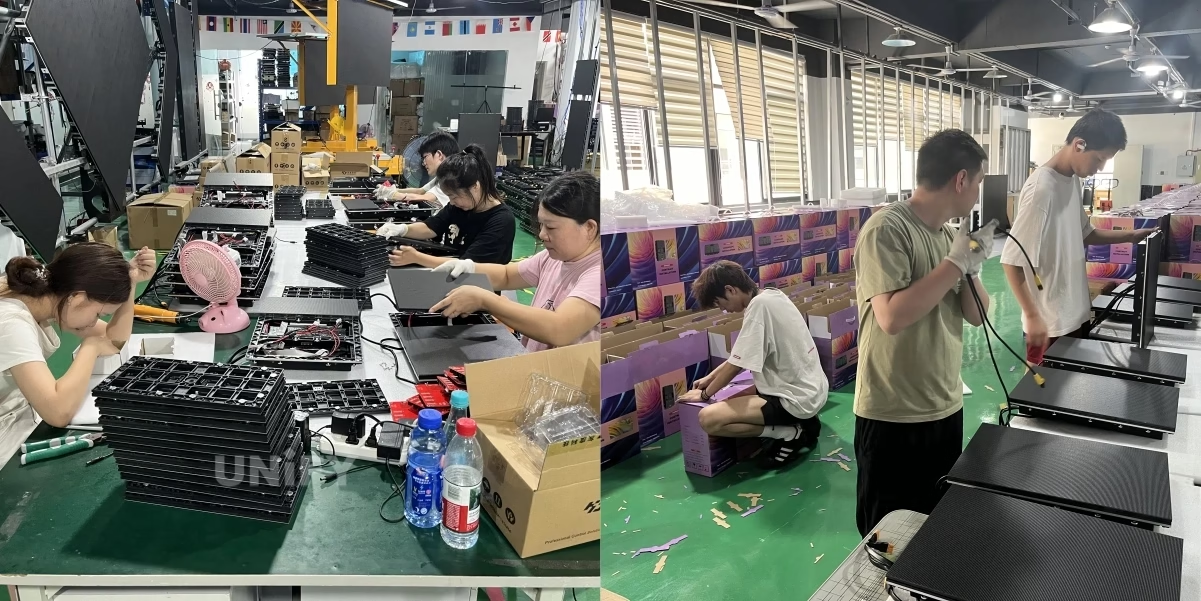
Since 2013, we have designed, manufactured, and exported indoor LED displays, outdoor LED billboards, rental LED screens, fine-pitch COB displays, and custom LED solutions to over 100 countries across Europe, North America, the Middle East, Southeast Asia, and Africa. Every display undergoes a mandatory 72-hour burn-in aging test and pixel-level calibration before leaving the factory — the same process we show you in the videos below.
Where Your LED Displays Are Manufactured — Inside a China LED Screen Factory
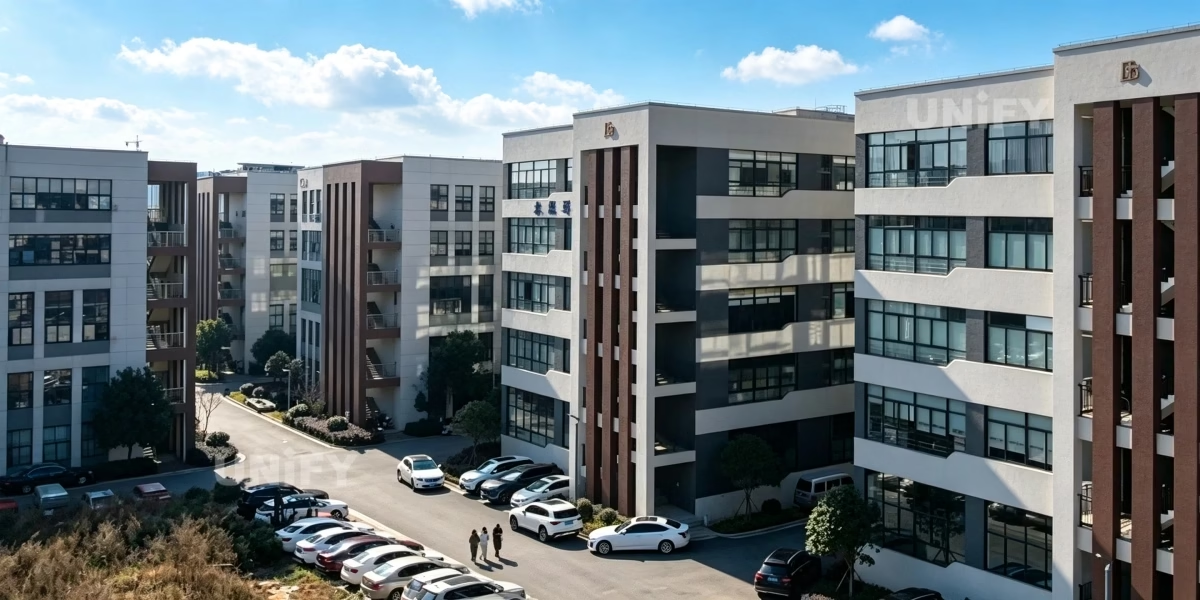
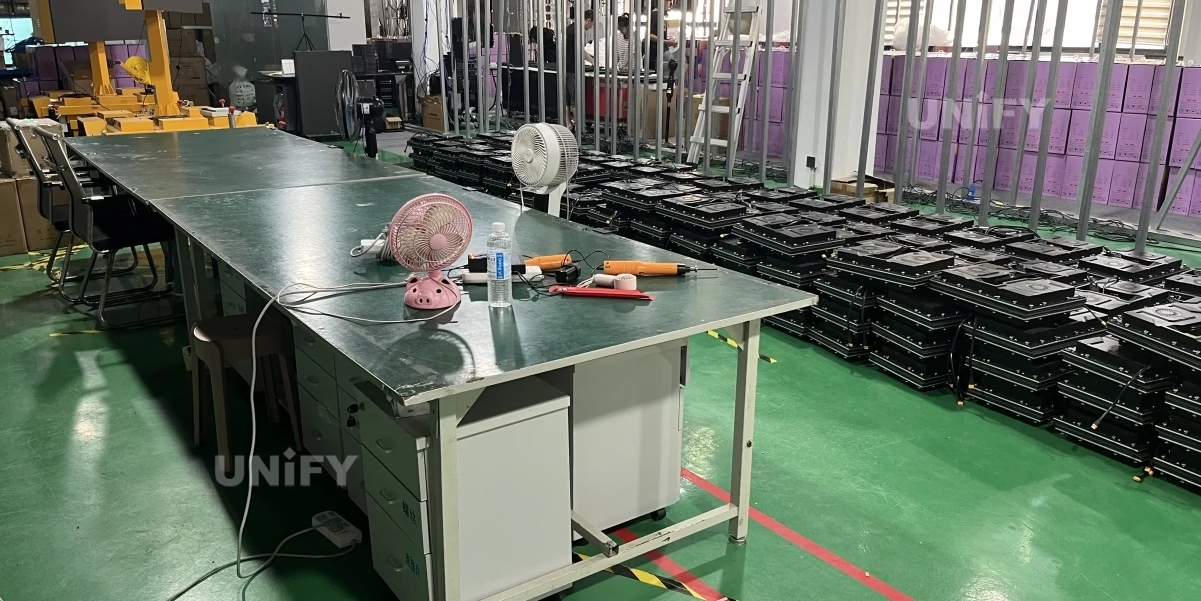
Our LED screen manufacturer production facilities are located in Shenzhen — major manufacturing hubs — a major manufacturing hub in central China with competitive labor costs and efficient logistics infrastructure. The factory operates within the Jinrong Wangcheng Technology Industrial Park with dedicated zones for SMT placement, module assembly, aging, calibration, and packaging.
Every B2B client is welcome to schedule a factory visit or live video inspection. We walk you through each production stage in real time — no hidden areas, no outsourced steps. That is how a transparent LED screen manufacturer builds trust.
Why B2B Buyers Choose UnifyLED as Their LED Display Manufacturer
We own our SMT lines and assembly workshops. No middlemen, no outsourced production — just direct factory pricing and full process control.
Every module burns in for 72 continuous hours before shipping. Dead pixels, color shifts, and stability issues are caught and eliminated at the factory — not at your installation site.
Custom pixel pitch, cabinet size, branding, control system, and mounting. We adapt our LED displays to your project specs — not the other way around.
Schedule a live video walkthrough or in-person factory visit. We show you every production stage — no hidden corners, no trade secrets.
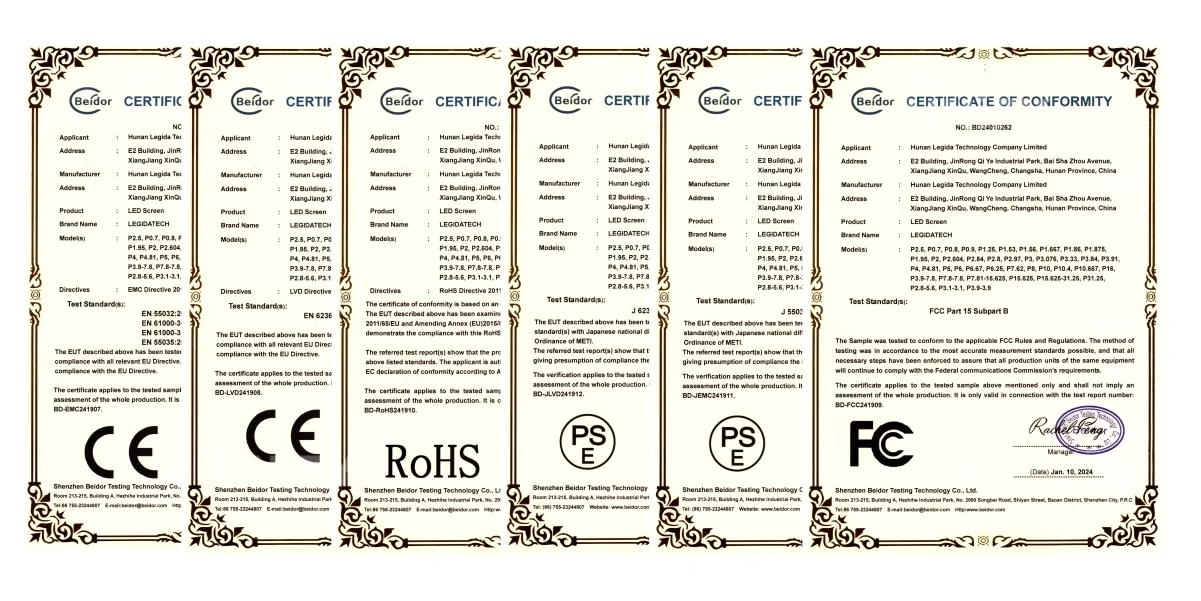
CE, FCC, RoHS certified. Our quality control process meets international standards for every export market.
Shipped to 100+ countries with proper export documentation, customs-ready packaging, and region-specific certification support.
How an LED Display Manufacturers Produces Screens — End-to-End Factory Process
A transparent LED screen manufacturer shows its work. Below is every major step an LED display goes through in our factory — supported by real video footage, not stock images.
Incoming Material Inspection — The First Quality Gate at Any Reliable LED Display Factory
Every batch of LED lamp beads (Nationstar, Kinglight), driver ICs (MBI, Chipone), power supplies (Meanwell, G-Power), and PCBs is inspected before entering the SMT line. We reject non-conforming materials at the gate — not after they are soldered onto boards. This is what separates a quality LED display manufacturer from a batch-and-ship trader.
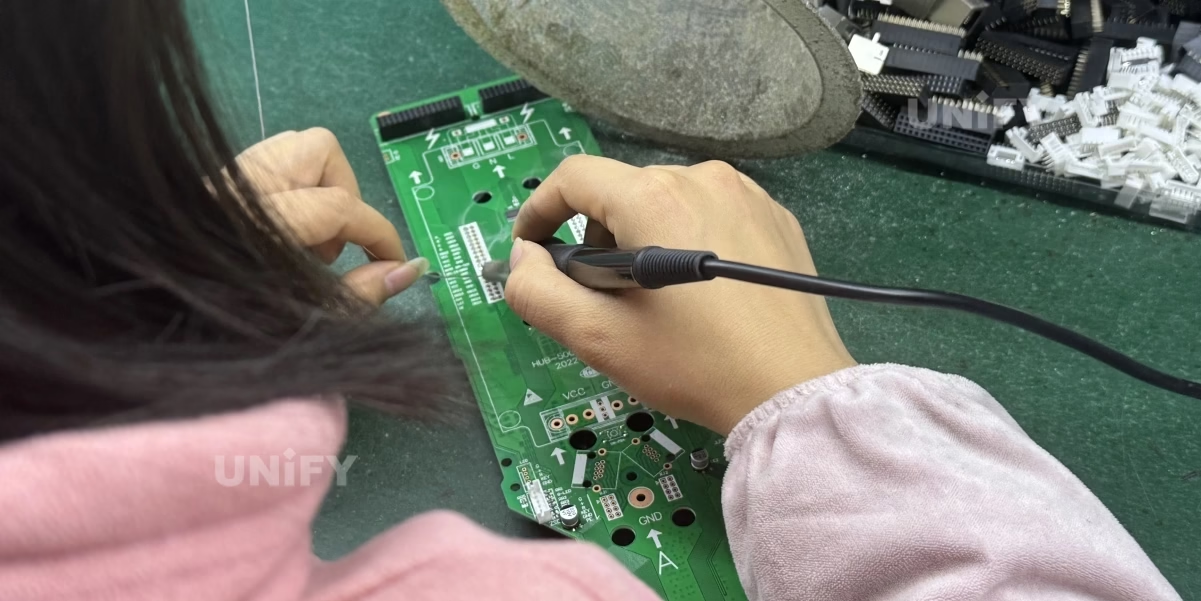
SMT Pick-and-Place — Precision Manufacturing at the Heart of LED Screen Production
High-speed SMT machines mount LED lamp beads and IC components onto PCBs with micron-level precision. Our in-house SMT line means we control placement accuracy, solder paste quality, and throughput — critical factors that determine long-term display reliability and color consistency.
Reflow Soldering
Populated PCBs pass through precisely temperature-controlled reflow ovens where solder paste melts and solidifies into permanent electrical and mechanical bonds. We monitor thermal profiles for every batch — insufficient heat causes weak joints; excessive heat damages LEDs. Consistent reflow is the hidden foundation of every durable LED screen.
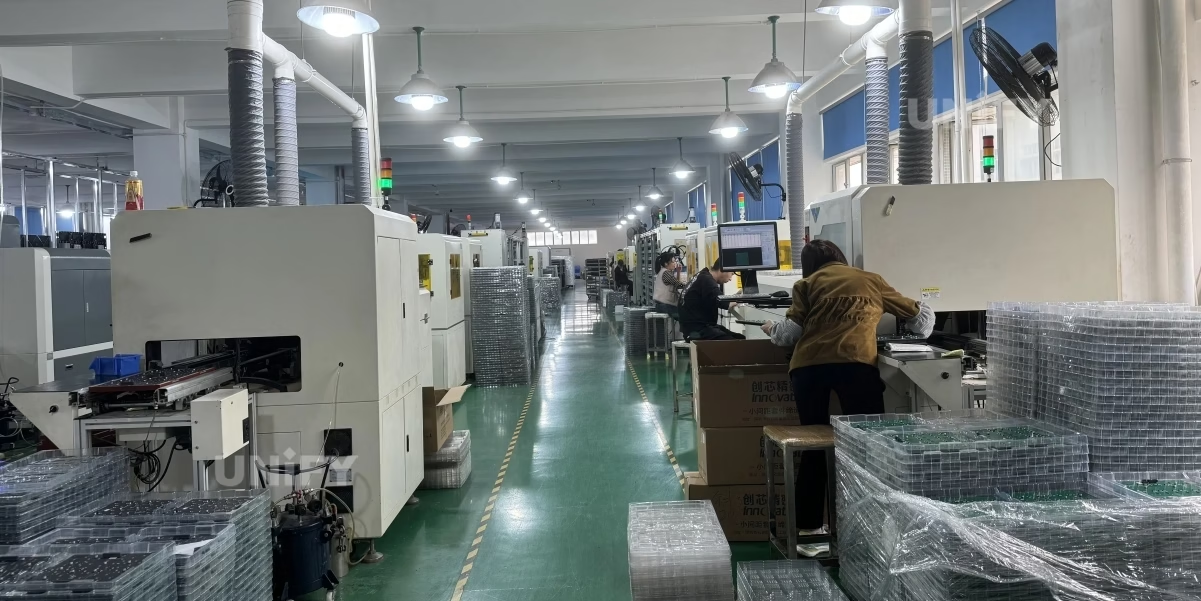
Module Assembly & Mask Installation
Soldered PCBs are fitted into plastic or die-cast aluminum module frames, sealed with waterproof gaskets (outdoor modules), and covered with LED masks for physical protection. Every module is visually inspected for alignment, gap uniformity, and mask fit before proceeding to aging. This is also where GOB (Glue-on-Board) encapsulation is applied for enhanced durability on fine-pitch modules.
72-Hour Burn-In Aging Test — How a Responsible LED Panel Manufacturer Eliminates Early Failures
This is the step most LED screen manufacturers supplier rush — and the step we never skip. Every single module runs continuously for 72 hours at full brightness before calibration. The aging process exposes early-life failures: dead LEDs, driver IC faults, color drift, and power supply instability. Modules that fail during aging are repaired and re-tested from zero. Only zero-defect modules advance to calibration. This is how we confidently back our displays with a 100,000-hour lifespan rating.
Pixel-Level Brightness & Color Calibration
After aging, each module undergoes pixel-by-pixel calibration using professional-grade spectroradiometer equipment (valued at over $60,000 USD). The system measures every individual LED’s brightness and chromaticity, then generates correction coefficients stored in the receiving card. The result: brightness uniformity ≥97%, chromaticity deviation within ±0.003Cx,Cy — numbers you can verify, not marketing claims. For a deep dive into calibration technology, read our guide on LED display grayscale and color processing.
Cabinet Assembly & Internal Wiring — Where an LED Video Wall Manufacturer Builds Structural Integrity
Calibrated modules are mounted into aluminum or die-cast cabinets. Receiving cards, power supplies, and signal cables are routed and secured — our hard-connection design eliminates the loose wiring common in budget builds. Every cabinet is checked for structural rigidity, electrical continuity, and cooling airflow before moving to final test. Learn more about LED screen cabinet types and construction.
Full-Screen Power-On Test — Final Quality Verification Before Your LED Display Ships
Assembled cabinets are connected into their final configuration and powered on. We cycle through white, red, green, blue, grayscale gradient, and video playback test patterns. This validates: (a) signal transmission across all receiving cards, (b) power distribution stability under full load, (c) seamless visual continuity at cabinet seams, and (d) refresh rate and frame synchronization at 3840Hz. Any artifact, flicker, or color banding triggers a rework.
Waterproof & Environmental Testing (Outdoor Displays)
Every outdoor LED screen receives IP65 water spray testing before shipment. Water jets are directed at module seams, cable entry points, and cabinet joints while the display is powered on. Any moisture ingress triggers immediate re-sealing. This test simulates years of rain exposure in minutes — and it is why our outdoor displays maintain stable operation from -40°C to 80°C. For more on outdoor protection standards, see our IP rating guide for LED displays.
Export-Grade Packaging & Shipping — How a Professional LED Screen Supplier Delivers Worldwide
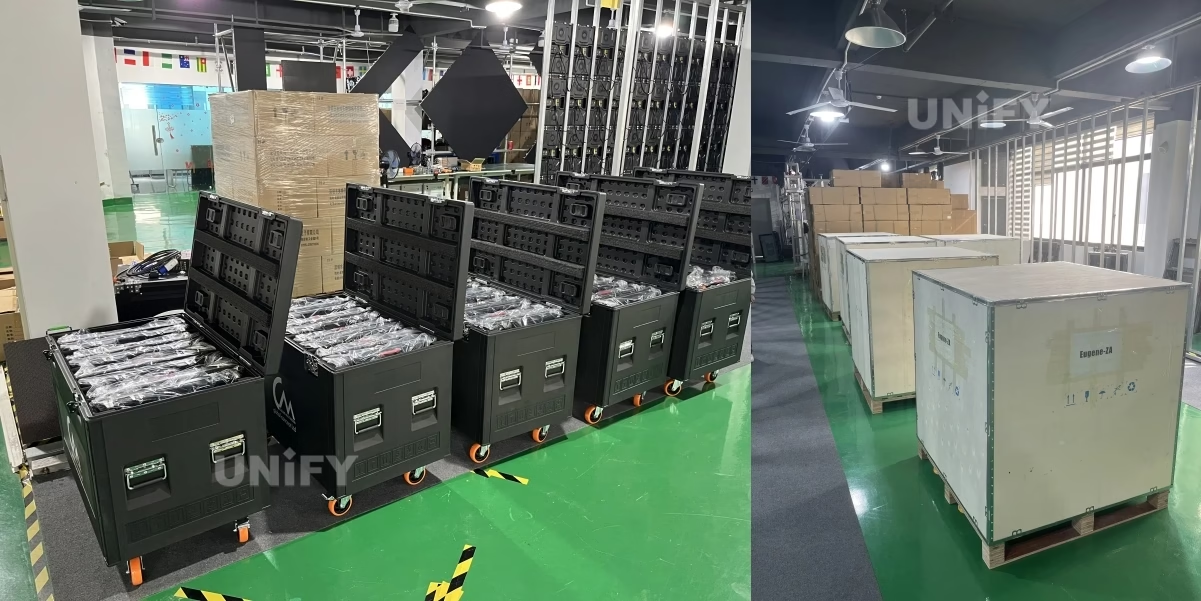
Tested and approved displays are packed into custom foam-lined flight cases or reinforced plywood export crates — depending on order size and shipping method (air freight, LCL sea, or FCL container). Each package is labeled with handling instructions, serial numbers, and customs documentation. We photograph the packed load before dispatch and share images with clients. For large installations, see our guide on LED screen installation methods.
What This LED Screen Display Manufacturer Produces
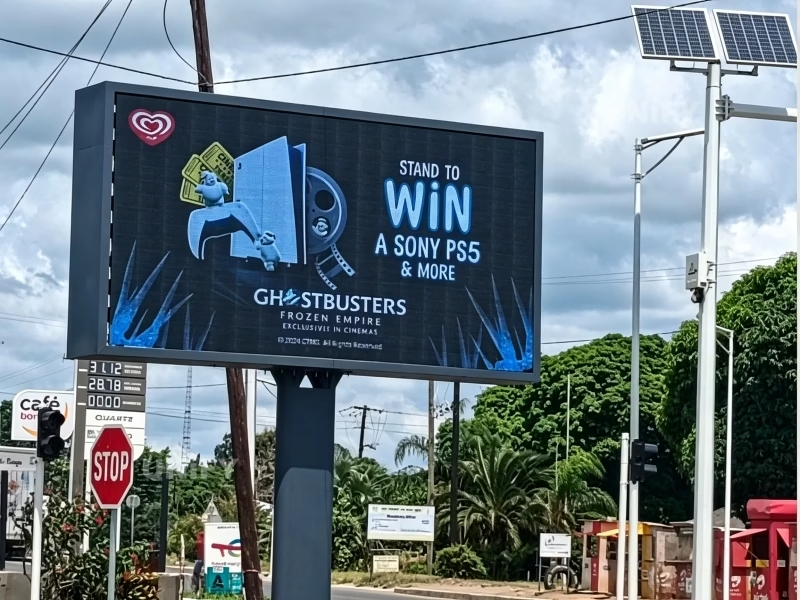
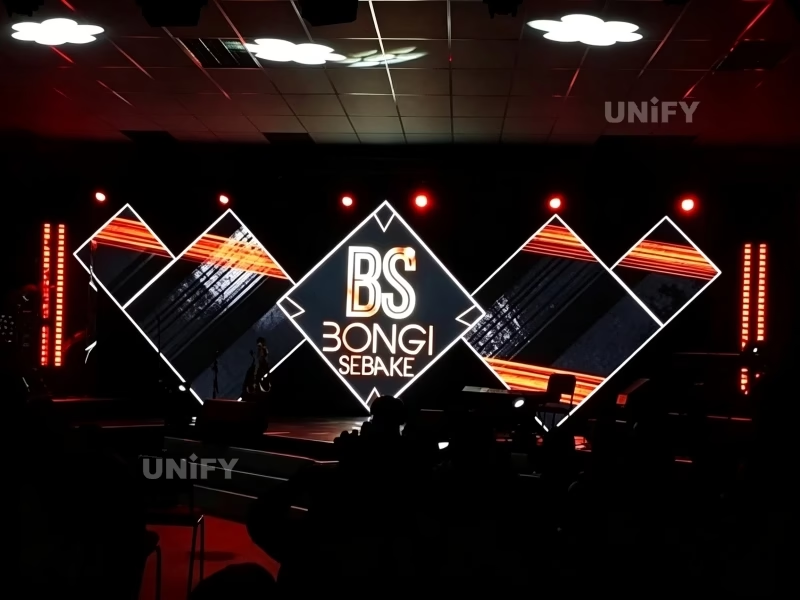
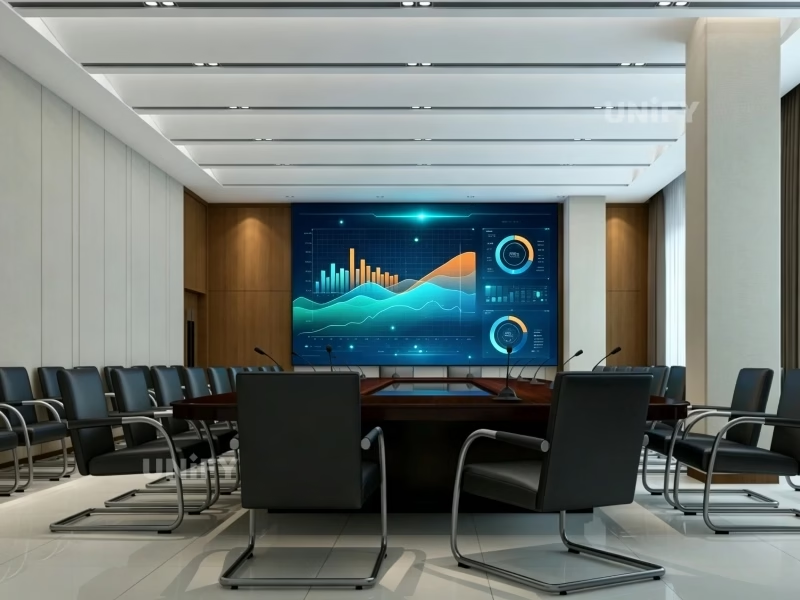
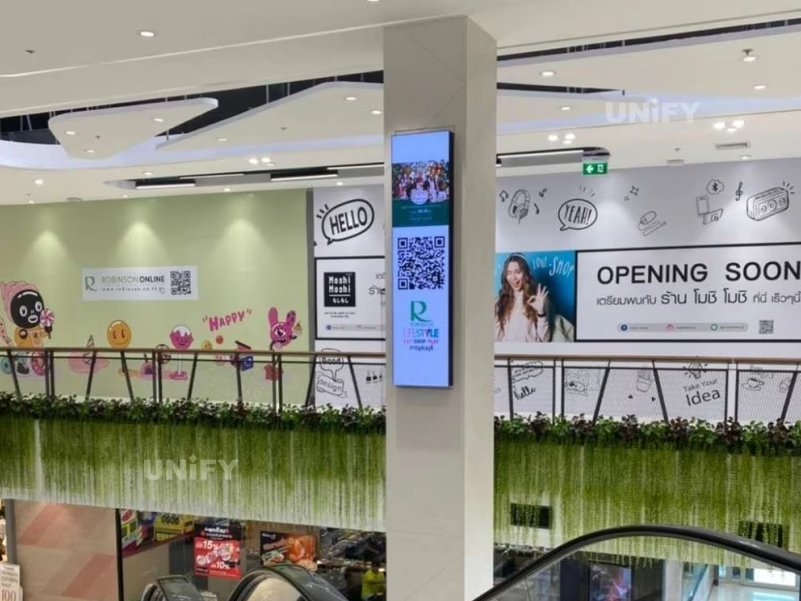
From P0.9 COB micro-pitch indoor displays to P10 IP65 outdoor billboards — our factory covers the full product spectrum. Click any category for detailed specs, pricing, and project references.
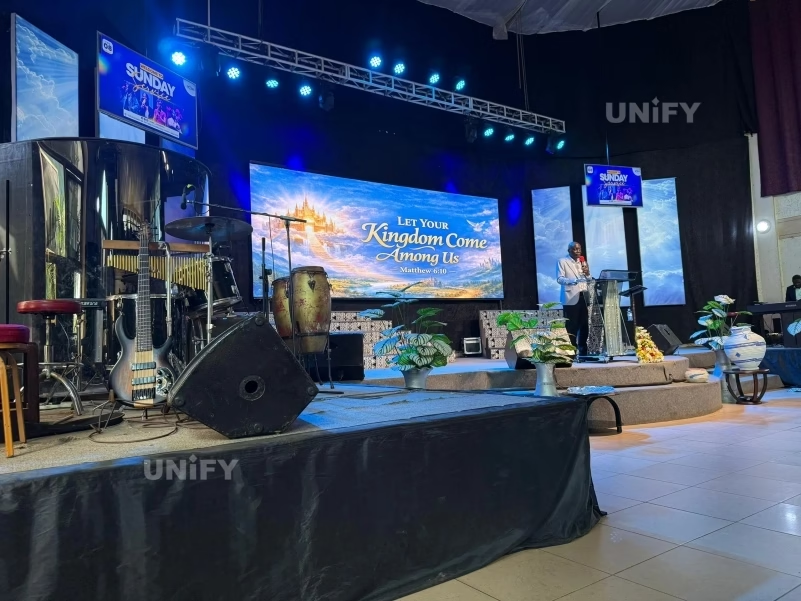
Product Line Showcase
Global Projects: LED Display Installations by a Trusted LED Screen Supplier
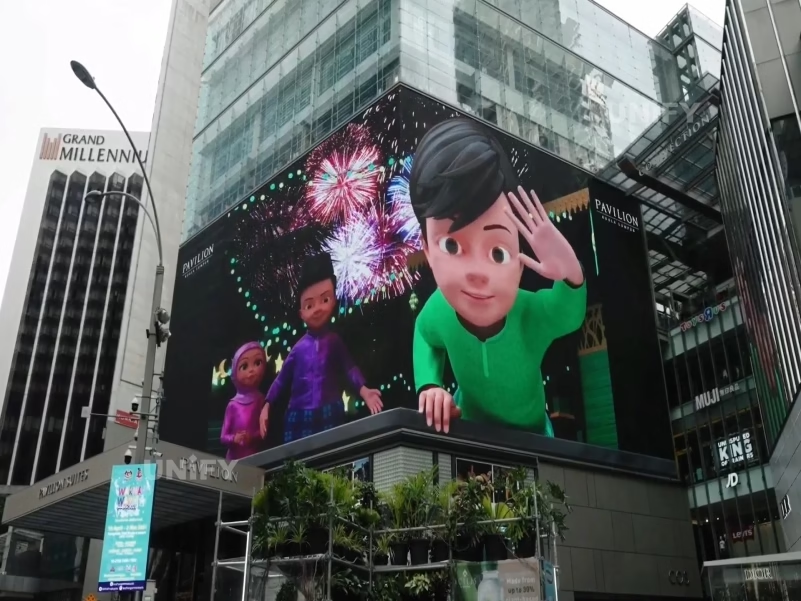
From UK churches to Mexican 3D billboards, from Singapore outdoor walls to US concert stages — our displays operate in 100+ countries across six continents.
For more installation examples, browse our LED screen case studies and solution case gallery.
Frequently Asked Questions About LED Screen Manufacturers
How to find a reliable LED screen manufacturer in China?
Look for manufacturers with: (1) in-house SMT production lines — not outsourced, (2) documented aging test procedures (72-hour minimum), (3) international certifications (CE, FCC, RoHS), (4) willingness to do live video factory tours, and (5) verifiable export track records. Always request a sample order before container-level commitment. UnifyLED checks all five boxes — schedule a video factory tour to verify for yourself.
What certifications should an LED display manufacturer have?
At minimum: CE (European safety/EMC), FCC (US electromagnetic compliance), and RoHS (hazardous substance restriction). For outdoor displays, IP65/IP66 testing reports matter. ISO 9001 indicates systematic quality management. UnifyLED holds all four — request our certification documents with your quotation.
Can I visit UnifyLED’s factory before placing an order?
Absolutely. We welcome factory visits at our Shenzhen, Guangdong facility. Can’t travel? We offer live video walkthroughs via WhatsApp or Zoom — we show you every production stage in real time, from SMT to packaging. This is how a professional LED screen manufacturer builds trust with B2B buyers.
What is the MOQ for custom LED displays from UnifyLED?
Our standard MOQ is 1 square meter for most indoor and outdoor modules. For fully customized cabinets, colors, or control system configurations, MOQ varies by project complexity. Sample orders are welcome — we encourage testing before bulk purchase. Contact our sales team for specific MOQ details on your project.
How does 72-hour aging test improve LED display quality?
The 72-hour continuous burn-in forces early-life failures to surface at the factory rather than at the customer’s installation site. Common defects caught include: dead LEDs, intermittent driver IC connections, color temperature drift, and power supply instability under sustained load. Only modules passing this stress test proceed to calibration — which is why our LED screen lifespan consistently reaches the rated 100,000 hours.
UnifyLED vs other LED screen manufacturers — what is the difference?
Three differences: (1) Total transparency — we show our full production process on video, not just a catalog PDF. (2) Mandatory 72-hour aging — many manufacturers skip or shorten this step to save time; we never do. (3) Factory-direct pricing — you communicate directly with our engineering and sales team in Changsha, bypassing trading company markups. See our full comparison on the About UnifyLED page.
The Complete Guide to Choosing an LED Screen Manufacturer in 2026 — Factory Evaluation, Quality Control & Total Cost of Ownership
Published: July 2026 · 15 min read · By UnifyLED Engineering Team
Introduction: Why Choosing the Right LED Display Manufacturer Determines Your Project’s Success
Selecting the right LED screen manufacturer is the single most consequential decision in any LED display project — more than pixel pitch selection, more than control system brand, more than cabinet material. The manufacturer you choose determines: (a) whether the brightness spec on the datasheet matches reality after six months of operation, (b) whether dead pixels appear in week one or year five, (c) whether your outdoor display survives its first monsoon season, and (d) whether you have a responsive technical partner or a silent supplier who disappears after the wire transfer clears.
China produces an estimated 80%+ of the world’s LED displays, with over 2,000 factories clustered primarily in Shenzhen and surrounding Guangdong province. Among these, fewer than 10% own their SMT production lines. The rest are assemblers — they buy pre-made modules from third parties, mount them into generic cabinets, and sell under their own brand with no real control over upstream quality. This guide arms B2B buyers with the technical criteria to separate genuine manufacturers from assemblers before placing a purchase order.
1. Factory-Owned Production vs. Third-Party Assembly: How to Verify a Genuine LED Screen Factory
A genuine LED display manufacturer owns at minimum: SMT pick-and-place machines (the cost of a single entry-level SMT line starts around $150,000 USD), reflow soldering ovens, aging racks capable of powering hundreds of modules simultaneously, and calibration equipment. If a supplier cannot show you video footage of their own SMT line in operation, they are almost certainly outsourcing PCB assembly — which means they have no control over solder quality, LED placement accuracy, or component authenticity.
How to verify: Request a live video call — not a pre-recorded tour — and ask to see the SMT floor in real time. Ask what brand and model of SMT machines they use (Yamaha, Panasonic, Samsung, and Juki are the top four). Ask to see a batch tracking label on a production PCB. Genuine manufacturers can show you this in 30 seconds. Assemblers will make excuses.
2. The Aging Test: How a Professional LED Panel Manufacturer Ensures Long-Term Reliability
LED lamp beads follow a well-known failure pattern called the bathtub curve: a small percentage fail early due to manufacturing defects (infant mortality), then the vast majority operate stably for years, then wear-out failures begin near the end of rated life. A 72-hour burn-in aging test at full brightness catches nearly all infant-mortality failures before shipping. Skipping or shortening this step — which cost-pressured manufacturers frequently do — pushes those early failures onto the customer’s installation site, where a single dead module means either accepting degraded image quality or paying for replacement hardware and technician labor.
UnifyLED’s aging standard is 72 continuous hours at full white brightness — the most electrically stressful condition. Modules are arranged on racks, powered on, and monitored. Any module showing dead pixels, color shift, or driver instability is pulled, repaired, and restarts the 72-hour clock from zero. For more detail, read our guide on basic debugging of LED displays.
3. Pixel-Level Calibration: What Separates a Premium LED Video Wall Manufacturer from the Rest
Raw LED modules come off the SMT line with measurable brightness and color differences between individual LEDs — even within the same batch of lamp beads. Professional calibration uses a spectroradiometer to measure each pixel’s output and compute per-pixel correction coefficients stored in the receiving card. The result: brightness uniformity ≥97% across the entire display surface, and chromaticity deviation within ±0.003Cx,Cy on the CIE 1931 color space. Without this step — or with low-cost camera-based “calibration” — you get visible seams, color patches, and banding on solid-color backgrounds. UnifyLED uses the same $60,000+ calibration equipment as premium-tier manufacturers. See our in-depth explanation of LED display grayscale and how it affects image quality.
4. Certifications That Matter When Vetting a China LED Screen Manufacturer for International Projects
Not all certifications carry equal weight. Here is what B2B buyers should prioritize when evaluating a China LED screen manufacturer:
CE (LVD + EMC directives): Required for EU market entry. The LVD (Low Voltage Directive) covers electrical safety; EMC covers electromagnetic emissions and immunity. Ask for the full test report — not just the certificate cover page.
FCC Part 15: Required for US market entry. Covers radio-frequency emissions from digital devices. Class A is for commercial/industrial use; Class B is stricter (residential). Most LED displays target Class A.
RoHS (Directive 2011/65/EU): Restricts lead, mercury, cadmium, and other hazardous substances in electronic components. Mandatory for EU and increasingly required by other regions.
ISO 9001:2015: Certifies that the manufacturer operates a documented quality management system. Not a product certification, but a strong signal of organizational maturity.
5. Total Cost of Ownership: What Your LED Display Supplier’s Quote Doesn’t Tell You
The most expensive LED screen is the one you have to repair twice a year. When comparing supplier quotations, factor in: power consumption differences (a common-cathode design can save 20-30% on electricity vs. common-anode over a 5-year operating life), spare parts availability and cost (are modules $45 or $95 each?), warranty terms (does the warranty cover parts only, or parts + labor + shipping?), and estimated failure rate (ask the supplier for their post-aging defect rate — honest manufacturers track and share this number). For a breakdown of cost factors, see outdoor LED screen pricing considerations.
6. 2026 Supply Chain Realities Every LED Screen Manufacturer and Buyer Must Navigate
The LED display supply chain has experienced significant shifts in 2026. Driver IC foundry capacity has been competing with AI chip demand at leading-edge fabs, creating periodic shortages and price volatility for certain IC models — particularly the high-channel-count devices used in fine-pitch displays. Raw material costs for aluminum cabinets, PCB substrates, and LED encapsulation compounds have also fluctuated. Working with a manufacturer that maintains buffer inventory of critical components is increasingly important for reliable lead times. For the latest analysis, read our report on the LED driver IC shortage and supply chain dynamics in 2026.
7. After-Sales Support: The True Test of an LED Display Manufacturer’s Commitment to B2B Clients
The difference between a good and a great LED screen manufacturer often emerges after the container ships. Does the supplier provide English-language installation guides with clear diagrams? Do they offer remote troubleshooting via video call? What is the typical response time for technical questions — hours or days? UnifyLED maintains a dedicated English-speaking project management team and publishes detailed technical resources covering everything from LED display installation procedures to common troubleshooting steps. Before committing to any manufacturer, send a technical question via email or WhatsApp and measure the quality and speed of the response. It is the most predictive test of what your post-sale experience will be.
Conclusion: Partner with a Transparent LED Screen Manufacturer That Proves Its Quality with Video Evidence
Choosing an LED screen manufacturer is ultimately a trust decision masked as a technical evaluation. The manufacturer who shows you their SMT line on video, walks you through their aging test data, shares calibration reports, and welcomes factory inspections is the manufacturer who has nothing to hide — and nothing to hide means nothing to worry about when your project deadline depends on a container of displays arriving on time and working flawlessly. UnifyLED has operated on this principle since 2013: full transparency, factory-direct pricing, and rigorous quality control backed by video evidence — not just brochure claims. Contact our team to start your project quotation or schedule a live factory video tour.
Get Your Factory-Direct LED Display Quote
Tell us your project requirements — indoor/outdoor, pixel pitch, screen size, quantity — and receive a detailed quotation within 24 hours. Includes factory video tour invitation.