
System Redundancy Setup for LED Displays: Why Backup Matters
A single failed power supply. A single crashed sending card. A single receiving card that stops responding. In a non-redundant LED display, any one of these failures takes the entire display—or a significant section of it—offline until a technician arrives with a replacement. In a mission-critical installation—a broadcast studio on air, a control room monitoring infrastructure, a live event with an audience of thousands—that downtime is not acceptable. LED display system redundancy is the engineering discipline of ensuring that no single component failure can cause a visible outage.
As a LED screen manufacturer, we configure redundancy for broadcast, control room, and live event installations regularly. For the architecture context, see our guide to control system architecture.
What Are the Three Levels of LED Display System Redundancy?
Level 1: Dual Power Supplies per Cabinet
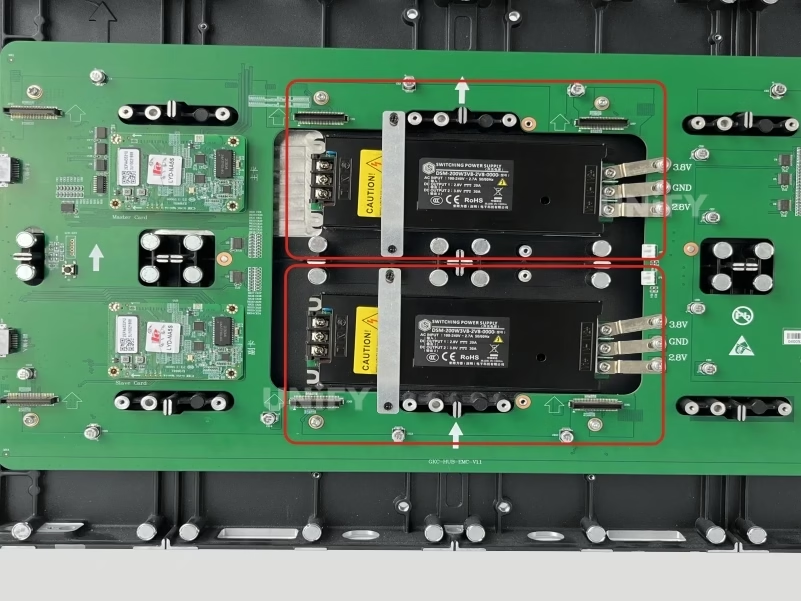
Two AC-DC power supplies in each cabinet, connected in parallel, each capable of powering the entire cabinet’s load independently. If one supply fails, the other carries the full load without interruption. The display continues operating normally—no flicker, no brightness drop, no content interruption. The failed supply is replaced during the next scheduled maintenance window. This is the minimum recommended redundancy for any commercial installation where downtime has a financial cost. The incremental hardware cost—one additional power supply per cabinet—is modest relative to the total display investment.
Level 2: Dual Sending Cards (Hot Backup)
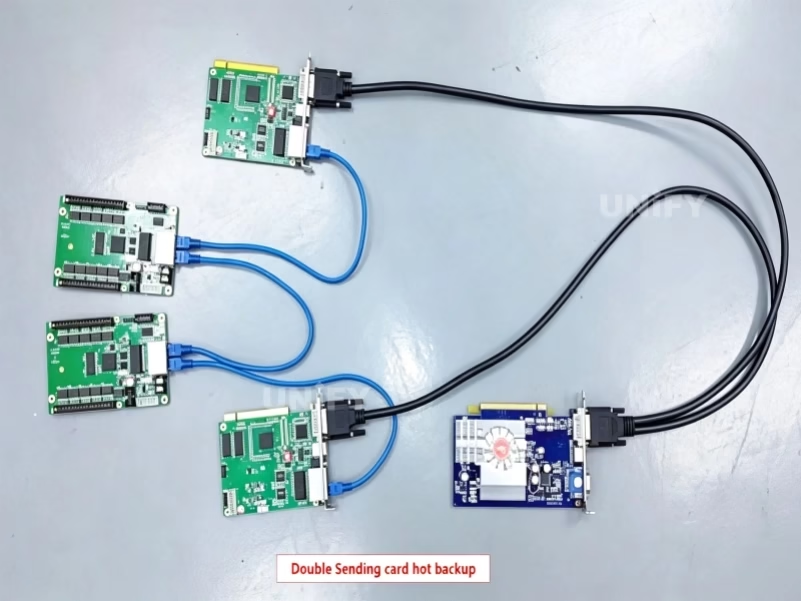
Two identical sending cards receive the same video input through a signal splitter or loop-through connection. The primary card processes and transmits data to the receiving cards. The backup card runs in parallel, synchronized, ready to assume control. If the primary card fails, the backup takes over within 1–2 seconds. The audience may see a brief flicker or momentary freeze, but the display returns to normal operation without technician intervention. The failed card is replaced after the event or during the next maintenance window. This configuration requires both cards to have identical configuration, identical firmware, and identical output mapping.
Level 3: Dual Receiving Cards per Cabinet
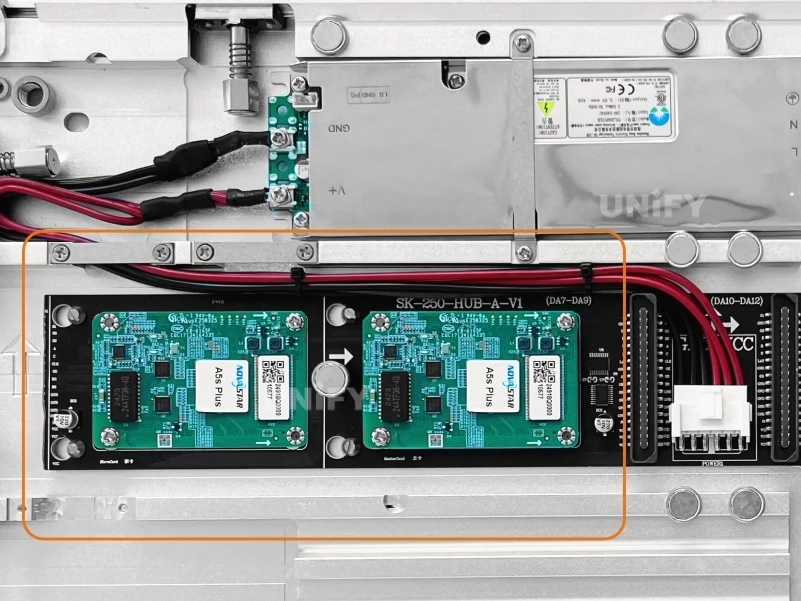
Two receiving cards in each cabinet, both capable of independently driving all modules in that cabinet. If the primary card fails, the backup takes over seamlessly—in many configurations, without any visible interruption. This is the highest level of pixel-level redundancy and the highest cost: it doubles the receiving card count for the entire installation. Reserved for broadcast studios, 24/7 control rooms, and installations where physical access for maintenance is extremely difficult or entirely impossible during operation—such as displays mounted on building exteriors or integrated into architectural structures where access requires specialized equipment.
When Should You Deploy Each LED Display Redundancy Level?
| Installation Type | Minimum Redundancy | Recommended Redundancy |
|---|---|---|
| Corporate lobby, retail signage | Dual PSU per cabinet | Dual PSU |
| House of worship, education | Dual PSU per cabinet | Dual PSU + spare sending card on site |
| Live event, rental staging | Dual PSU + dual sending card | Dual PSU + dual sending card |
| Broadcast studio | Dual PSU + dual sending card | All three levels |
| 24/7 control room | All three levels | All three levels + generator backup |
FAQ: LED Display System Redundancy and Backup Strategies
Test each redundancy level by deliberately failing the primary component. Unplug one power supply in a cabinet—the display should continue without interruption. Disconnect the primary sending card—the backup should take over within 2 seconds. Disconnect the primary receiving card in a test cabinet—the backup should maintain the image. Test during commissioning, not during a live event. Document the results.
Yes. The incremental cost of one additional power supply per cabinet is typically $30–$80—a small fraction of the total display cost. The cost of a single service visit to replace a failed power supply—labor, travel, downtime—exceeds the hardware cost of dual supplies for the entire display. Dual power supplies are the most cost-effective redundancy investment in any LED display installation.
Why LED Display System Redundancy Matters for Mission-Critical Installations
LED display system redundancy is insurance. Dual power supplies per cabinet is the baseline—the cost is trivial and the protection is significant. Dual sending cards protect against the most impactful single failure—a dead sending card takes the entire display offline. Dual receiving cards are reserved for installations where downtime is simply not acceptable, at any cost. Match the redundancy level to the cost of downtime for your specific application, not to a generic checklist.
Email: legidatechled@gmail.com | WhatsApp: +86-191-18802497