
Mooncell vs Colorlight vs Novastar: Which LED Control System Should You Choose in 2026?
The Mooncell vs Colorlight vs Novastar LED control system comparison is the question every integrator faces when a project outgrows the brand they started with — or when a creative wall arrives that a rectangle-first ecosystem cannot map cleanly. This guide compares the three ecosystems tier by tier using official specification data, with every figure traceable to a named document, and ends with a decision framework that lands on specific models. Data sources: the official Mooncell specification sheets (V4.x series), Colorlight official specifications, Novastar product documentation, and street prices cross-verified across three public channel sets.
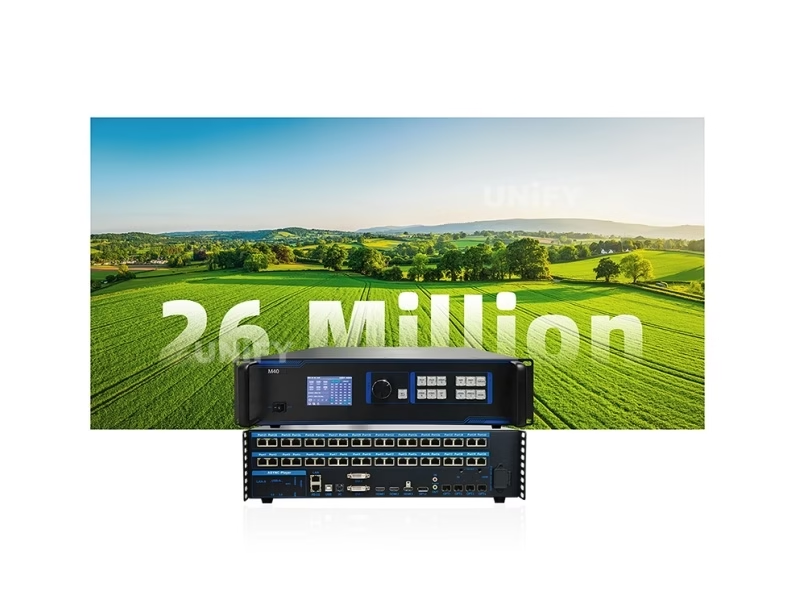
Short answer: Mooncell, Colorlight and Novastar LED control systems are three closed ecosystems with different strengths. Novastar is the market leader for standard rectangular walls — the broadest lineup, the most spare parts, the highest prices. Colorlight is the price-performance player — the cheapest route into each pixel class with strong cloud signage. Mooncell is the creative specialist — the only one of the three with dedicated irregular-shape controllers, a 26M-to-130M video splicer line and proven sphere/dome/floor solutions, at prices between Colorlight and Novastar. The decision is project shape and budget, not brand loyalty.
What Is the Difference Between Mooncell, Colorlight and Novastar LED Control Systems?
The Mooncell LED control system is a Shenzhen-born control ecosystem built around creative geometry: irregular-shape controllers, video splicers and media servers that other brands do not make, alongside standard processors, sending controllers and receiving cards that compete directly with the incumbents. The Colorlight LED control system is a price-performance ecosystem from Shenzhen: X-series processors and i-series receiving cards that undercut the market leader in every pixel class, with the LEDVISION configuration tool and C-Cloud remote platform. The Novastar LED control system is the industry’s default: the MCTRL sending controllers, VX all-in-one processors and A/MRV receiving cards that most of the world’s LED screen factories install, with the NovaLCT configuration tool and VNNOX cloud platform.
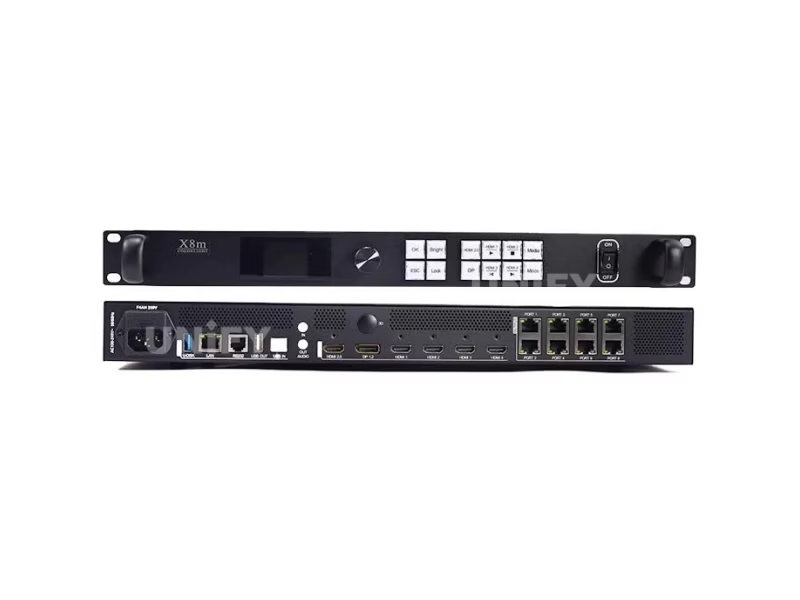
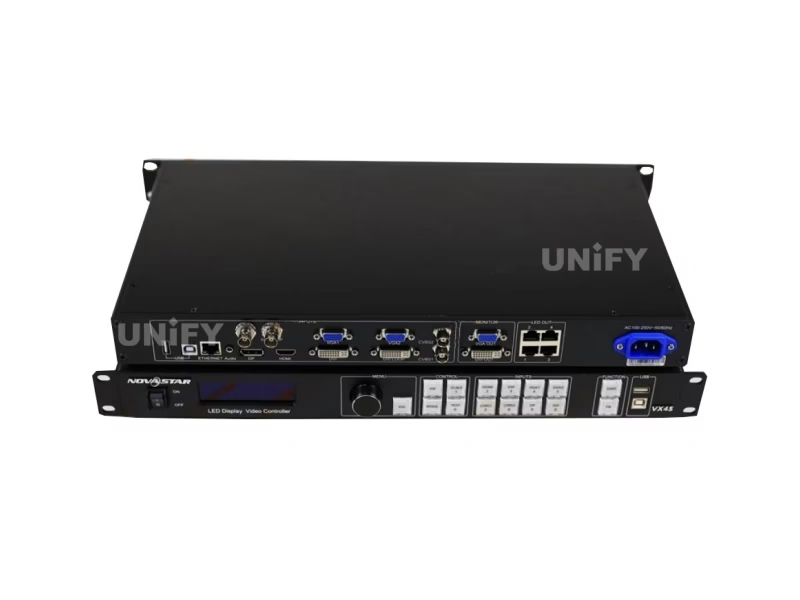
How Do Mooncell vs Colorlight vs Novastar 2-in-1 Video Processors Compare Tier by Tier?
The 2-in-1 processor — video processing and sending in one chassis — is the heart of most serious installations, and the three ecosystems line up into the same pixel tiers. Every figure below carries its official source:
Three numbered observations from the table:
- The 13M rung is a Mooncell gap-filler. The MVB20E-G loads 13 million pixels over 20 ports with the stage features — ambient-light auto brightness, active 3D, Genlock — that no listing copy on the other brands documents at this class.
- Mooncell out-loads the flagships. The M40’s 26M with fiber exceeds the Colorlight X20’s 11.5M and sits above most Novastar units below the MCTRL4K class.
- Colorlight is the price entry. At every tier below the flagship, Colorlight’s street price runs lowest — the price-performance position holds.
How Do the Sending Controllers of Mooncell, Colorlight and Novastar LED Control Systems Compare?
For projects that keep the processor and the sending stage separate, the sending controller carries the wall. The Mooncell MTB line spans seven rungs across two official hubs — the entry V30 Pro/MTB200S (1.3M, 2 ports), the MTB400E (2.6M, 4 ports, HDMI 1.4 + DVI, $195) and the flagship MTB2000E (10.4M scaled / 8.29M pixel-to-pixel, 20 ports, HDR10, flexible wiring, $1,010–$1,080). Against them: the Novastar MCTRL300 (2 ports, DVI-only input — the input limitation that matters in the field, $150–$300), the MCTRL660 (6 ports with fiber, $300–$600) and the MCTRL4K (4K canvas); and the Colorlight X2 (1.3M, HDMI + DVI, $145–$350) with the X4 (2.3M, 4 ports, $324–$380) as the workhorse. The MTB2000E’s 20 ports and 8192×8192 canvas exceed the sending class of both rivals — a full-4K sending canvas without cascading.
How Do Mooncell vs Colorlight vs Novastar Receiving Cards Compare?
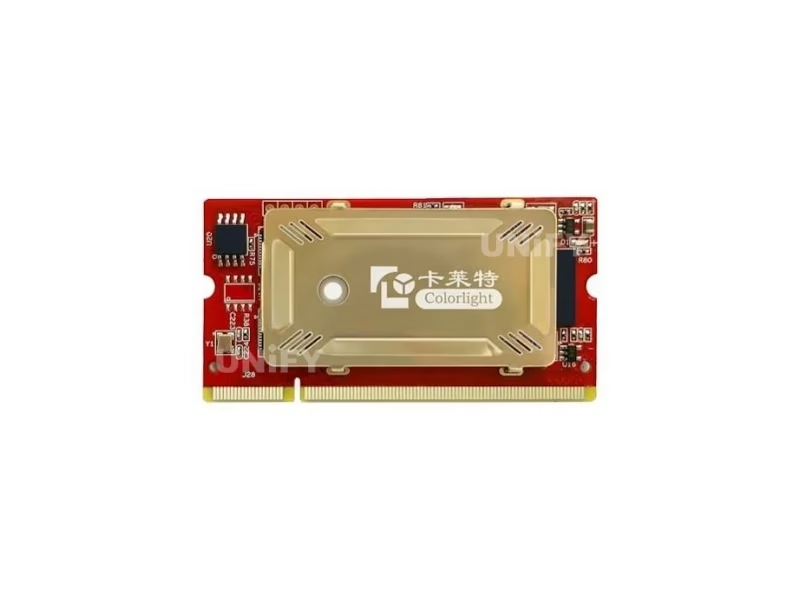
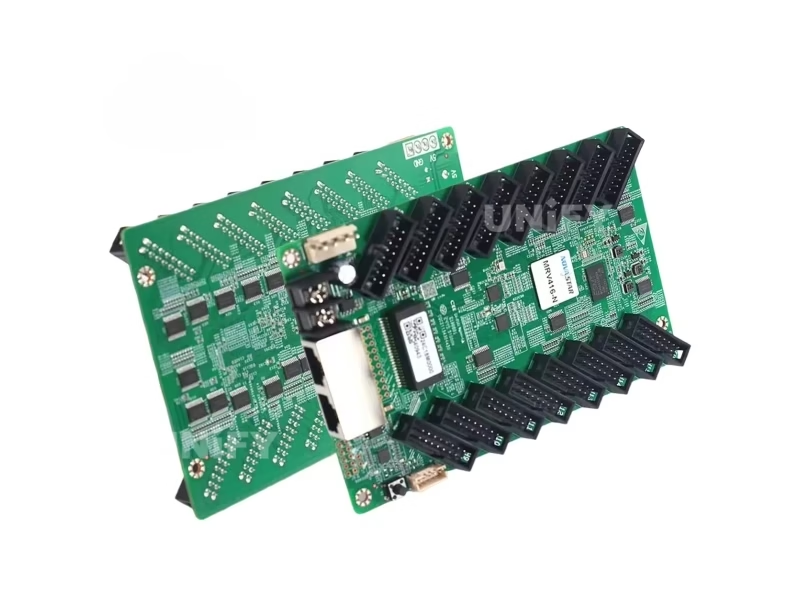
The receiving card is the component every cabinet carries, and the three brands diverge here in grayscale depth, interface and price:
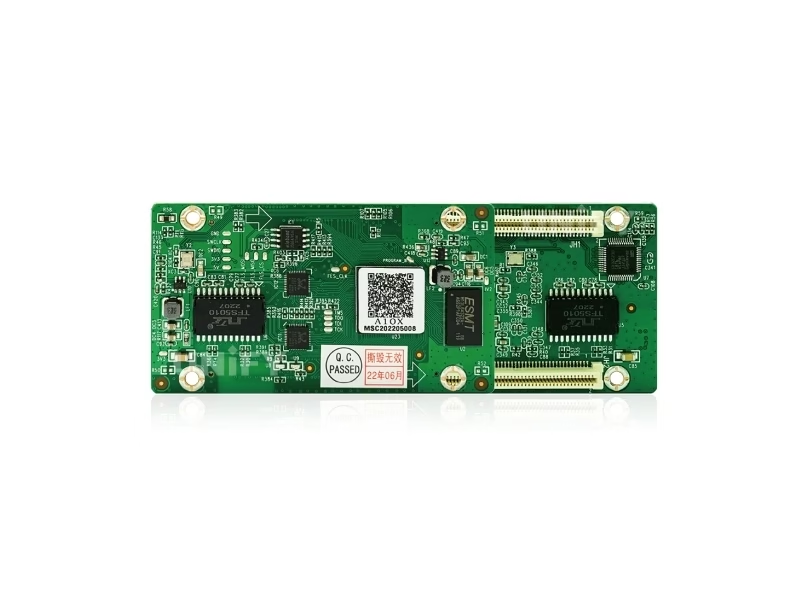
The reading: the Mooncell A10X answers the 22-bit compact tier, the A712 answers the HDR10+HLG HUB75E tier at $12.70 — below the Colorlight volume cards — and Colorlight’s i-series covers high-refresh and dual-mode niches. The cross-brand receiving-card decision is covered in depth on the Colorlight receiving card selection guide and the Novastar receiving card guide.
Where Do Mooncell, Colorlight and Novastar LED Control Systems Differ on Video Splicers and Media Players?
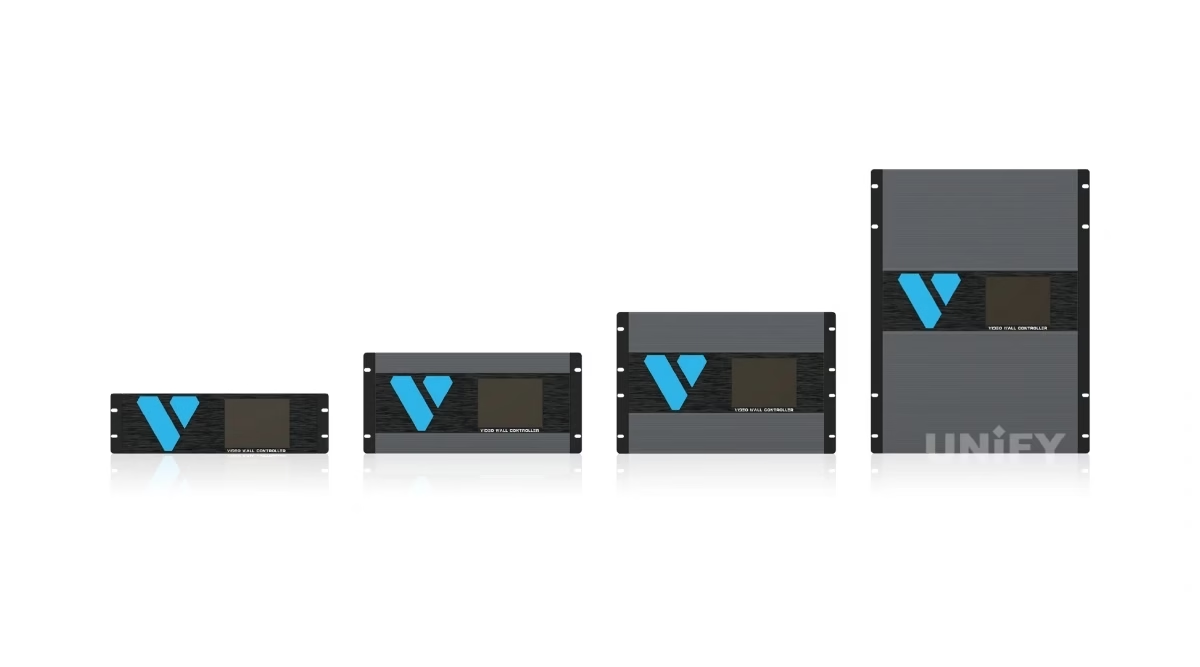
Above the processor tiers, the three ecosystems diverge — and Mooncell is the only one of the three with a modular video splicer line. The Mooncell V Series Video Splicer (V4.1) spans four chassis — V300 (3U, 40 ports, 26M pixels), V500 (5U, 60 ports, 39M, redundant power), V700 (7U, 100 ports, 65M) and V1400 (14U, 200 ports, 130M) — with 4:4:4 color, HDR10, frame sync, Genlock cascading, eight modular input boards from DVI to 3G-SDI, and hot backup. Every rung divides exactly at 655,360 pixels per port. Neither Novastar nor Colorlight fields a modular splicer at this scale; command-center and broadcast walls above the 2-in-1 class are the V Series’s home.
On the media-player side, Mooncell fields the Mooncell C2 LED display control system — an 8K-decoding multimedia server for synchronized shows — and the Mooncell MB401 Networked Player (4K HDMI output, Android 11, 64GB storage, remote cluster control, $225). Novastar answers with the Taurus TB player series, Colorlight with the A200/EP11 cloud players under C-Cloud — the signage story where Colorlight’s cloud deployment is the most mature of the three.
Which LED Control System Handles Creative Displays Best: Mooncell, Colorlight or Novastar?
This is the decisive difference between the three brands, and it is where the ecosystems stop being interchangeable. Mooncell builds dedicated hardware and software for non-rectangular screens:
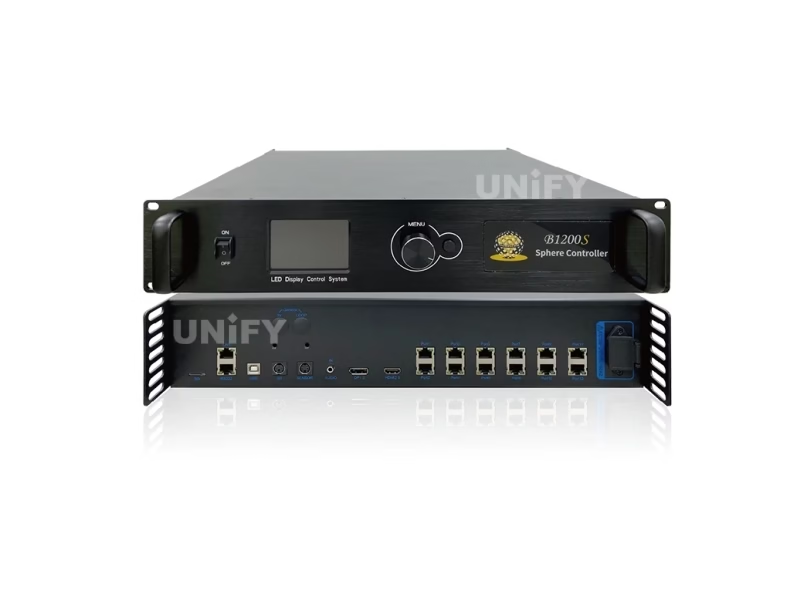
The Mooncell B1200S Creative LED Controller (12 ports, 7.8M, arbitrary pixel mapping) and the Mooncell MB400S (networked player for spheres, rings and domes) are built for the geometry — not worked around it.
Arbitrary pixel mapping, irregular module cropping and 360° wrap handling keep content continuous across spheres, domes and rings — with official solution recipes for hemisphere, floor, ring and naked-eye 3D screens.
Novastar and Colorlight can both drive creative screens — through generic tools, cropping and manual mapping. For a sphere, dome or floor screen, Mooncell reaches the result faster and with less on-site risk.
How Do Mooncell, Colorlight and Novastar Software Ecosystems Compare: AutoLED vs NovaLCT vs LEDVISION?
Software is where installers feel the brand difference daily, and all three ecosystems are free:
The practical reading of the software layer: AutoLED’s irregular-screen workflow and M3 Studio’s splicer control are capabilities the other two ecosystems route around — a triangle-module mapping that Mooncell documents as a 13-minute official tutorial is a manual exercise on the other brands. NovaLCT’s ubiquity, by contrast, means a technician who has configured any LED wall in the world has touched it; LEDVISION’s C-Cloud deployment is the most turnkey of the three for signage fleets. Software familiarity is a legitimate tiebreaker when the hardware tiers are otherwise matched.
The full configuration sequence — wiring, network mapping, module configuration, correction — is covered step by step in the LED display configuration and system debugging guide, which applies across all three brands.
How Much Do Mooncell vs Colorlight vs Novastar LED Control Systems Cost in 2026?
Price transparency, stated plainly: the figures below are street prices cross-verified across three public channel sets in August–September 2026 — our published product pages, distributor listings and public retailer guides. They are indicative unit prices, not factory quotes:
The pattern: Mooncell prices sit between Colorlight and Novastar at most tiers — the A712 at $12.70 undercuts Colorlight’s volume cards, the MTB400E at $195 sits under the MCTRL300 band, and the MTB2000E at about $1,050 carries 20 ports for less than the Colorlight X16. The LED display warranty page covers what to hold any supplier to on spares and RMA.
Why Can’t You Mix Hardware Across Mooncell, Colorlight and Novastar LED Control Systems?
No — and this applies between all three brands. Each control system is a closed ecosystem: the sending card, the receiving cards and the configuration software must come from the same manufacturer. Mixing a Mooncell sending controller with Novastar receiving cards causes recognition failures, flicker or dead sections; the same is true for any other pairing. Converting a screen from one brand to another means replacing both the cards and the configuration file — the LED sending card configuration guide shows why the protocol layer is per-brand. Budget the ecosystem decision as a permanent one per wall.
Which Mooncell vs Colorlight vs Novastar Spec Claims Should You Verify?
Comparison articles in this space repeat claims without sources. Three are worth pinning down before they enter a tender:
- Refresh-rate and bit-depth claims. Figures like “480 Hz” or “20-bit” circulate without a named document. The verifiable numbers are the ones in the official sheets: the Mooncell A10X’s 22-bit grayscale (V4.0), the Colorlight i5A-905’s 16,000 Hz static refresh (official spec), the Novastar receiving-card classes documented on the DH7516-S and MRV328 pages.
- The 13M tier is missing from most comparisons. Several published three-brand articles skip the Mooncell MVB20E-G entirely — the 13M/20-port rung with stage features — which leaves a gap exactly where a mid-arena wall sits.
- Splicer capacity is rarely documented. Where a splicer line exists, its rungs divide exactly at 655,360 per port — verify the arithmetic of any 40-to-200-port claim against the official sheet rather than a marketing summary.
How Do You Decide Between Mooncell, Colorlight and Novastar LED Control Systems?
Five questions settle the decision, and each answer lands on specific models:
The LED video processor category page maps the wider class, and the synchronous vs asynchronous LED control guide covers the mode decision that precedes the brand decision.
What Do Buyers Ask About Mooncell vs Colorlight vs Novastar LED Control Systems?
Conclusion: Mooncell vs Colorlight vs Novastar — Which LED Control System Should You Choose?
The Mooncell vs Colorlight vs Novastar LED control system decision comes down to three sentences. Standard fixed and rental walls with budget pressure point to Colorlight — the price entry at every tier. Standard walls where reliability, spares and ecosystem maturity dominate point to Novastar — the industry default. Creative, irregular, splicer-scale or stage-feature walls point to Mooncell — the only one of the three with dedicated irregular-shape controllers, a modular 26M-to-130M splicer line, and documented stage features like ambient-light sensing and Genlock on its 13M processor. Every figure in this guide is traceable to an official specification sheet; pin the sheet to the tender and the wall will match the drawing.
Buying a control system as part of a complete wall? Talk to us — we are the LED screen manufacturer behind unifyled.com, and we configure, test and warrant the control system inside the display we ship.