
Mooncell · Receiving Card · Small Form-Factor
Mooncell A10X LED Receiving Card
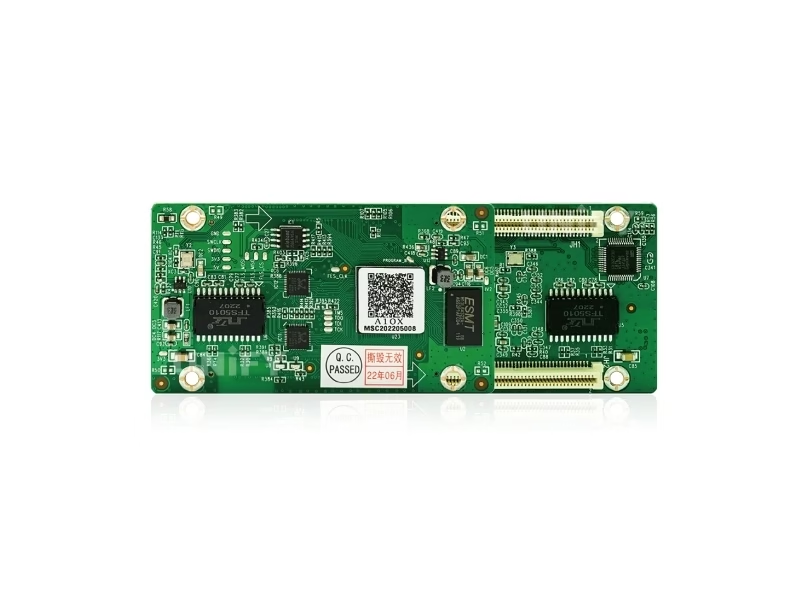
The Mooncell A10X LED Receiving Card is the compact workhorse of Mooncell’s receiving-card family: 512×640 pixels at 60 Hz in PWM mode, 32 groups of RGB parallel data, 22-bit grayscale and MCU-based dual-card backup on an 80×45 mm board that draws just 3 W.
Product Overview
What Is the Mooncell A10X LED Receiving Card?
The Mooncell A10X LED Receiving Card is a small-form-factor receiving card developed independently by Mooncell: it decodes Gigabit Ethernet data from a sending controller and drives LED modules through 32 groups of RGB parallel data on a 120-pin connector. One A10X handles up to 512×640 pixels at 60 Hz in PWM mode, applies 22-bit grayscale and pixel-by-pixel brightness and chromaticity correction, and supports cascade of up to 1,000 cards per network port. Mooncell positions the A10X with three words — compact size, high loading capacity, ultra-stable performance — and this page uses the official A10X Specification V4.0 as its data source.
Short answer: The Mooncell A10X is a small LED receiving card (80×45 mm, 20.2 g, 3 W) with a maximum load of 512×640 pixels at 60 Hz in PWM mode (512×512 conventional), 32 groups of RGB parallel data, 22-bit grayscale, 8/10/12-bit input, pixel-level calibration, RGB-independent Gamma, loop backup, dual power backup, FPGA dual-program startup and optional dual-card hot backup and smart-module monitoring via customization. It costs around $27 in distributor listings and sits above the A4X/A8X (512×384, 18-bit) and alongside the M10D (512×512, 22-bit) in the Mooncell family.
In the Mooncell control chain the A10X is the pixel-level stage: a Mooncell MVB20E-G 2-in-1 LED Video Processor, Mooncell M40 2-in-1 LED Video Processor or a sending card feeds the Gigabit network, and each cabinet’s A10X turns that data stream into row/column signals for its LED module. On the playback side, the Mooncell C2 LED display control system schedules content, and the LED video processor category page maps the wider class. The specification sheet: V4.0 first released June 2025 on hardware revision A10X V4.0.0; earlier V3.7 copies still circulate on third-party sites, so verify against V4.0.
Specifications
What Are the Mooncell A10X LED Receiving Card Specifications?
Data from the official Mooncell A10X Receiving Card Specification V4.0 (first release June 19, 2025; hardware A10X V4.0.0).
Display, Correction & Interface
Backup, Monitoring & Physical
Data Verification
Where Do Published Mooncell A10X Specs Disagree — and What Does V4.0 Say?
The A10X is documented inconsistently across the web. Three conflicts matter to a buying decision, and all three are resolved by the official V4.0 sheet:
Mooncell’s A4X/A8X/A10X/M10D hub page lists the A10X at 512×512 — a pre-V4.0 value. The official A10X Specification V4.0 (June 2025) documents 512×640 @ 60 Hz in PWM mode and 512×512 conventional. V4.0 is the current data source.
Marketing copy says rotation “at any angle.” The V4.0 sheet is precise: rotation in multiples of 90° (0/90/180/270) via AutoLED. Design around quarter-turn rotation and you stay inside the documented spec.
Some reseller pages claim the backup card takes over “instantly.” The V4.0 sheet lists receiving-card hot backup as a customization with an active/passive mechanism: the main card runs, and the standby starts when the main fails. Budget it as an option, not a default.
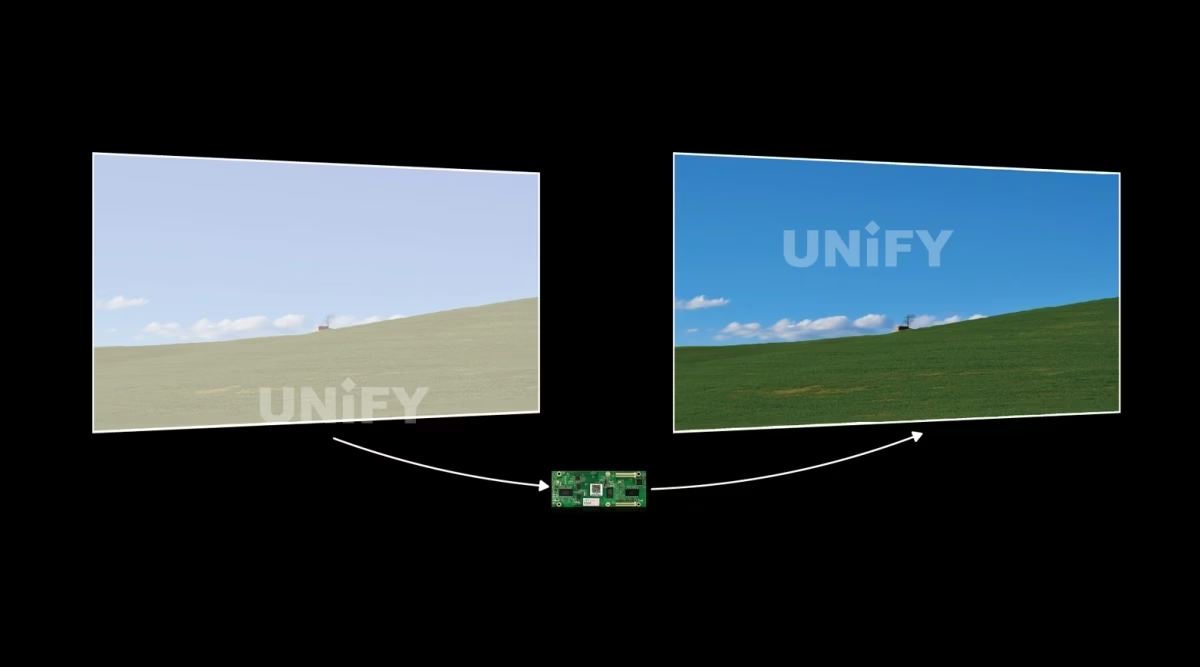
Standard on every A10X are the redundancy features the sheet does not mark “customized”: loop backup, dual power supply backup, FPGA dual-program startup and the full AutoLED maintenance set. If a quote omits scan range or correction load, ask — the V4.0 table is the reference.
Loading Capacity
How Many Pixels Can the Mooncell A10X LED Receiving Card Drive?
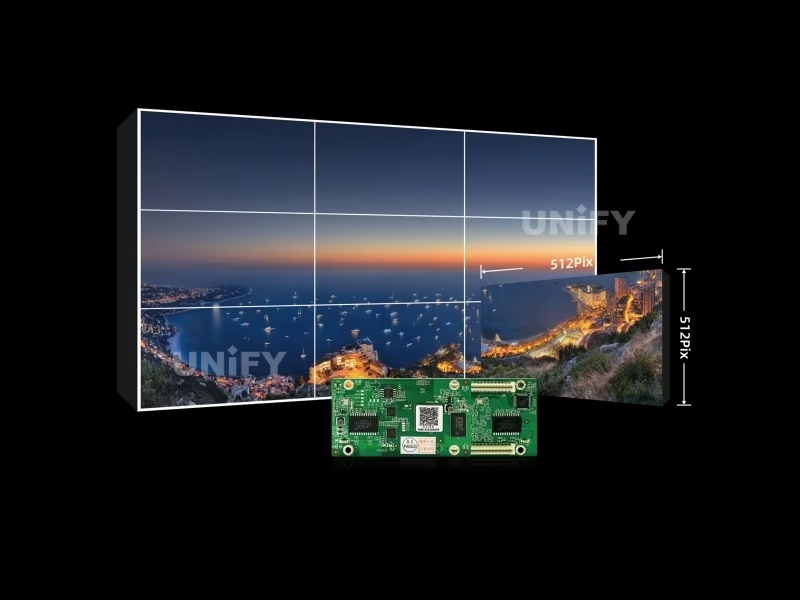
One A10X drives 327,680 pixels in PWM mode — 512 × 640 = 327,680 — or 262,144 pixels in conventional mode (512 × 512). Chromaticity correction keeps the load at 512×512; brightness correction keeps the PWM load at 512×640. With up to 1,000 cards cascaded per network port, a single sending controller chain can cover tens of millions of pixels, each cabinet carrying one A10X.
The practical rule for integrators: one A10X per cabinet for nearly all indoor and outdoor box designs, and a per-card pixel budget of 512×640 (PWM) or 512×512 (conventional, or after chromaticity correction) when a cabinet combines modules of different sizes — the V4.0 sheet supports a single card driving multiple modules of varying specifications within its load. For the sending side of the chain, the LED sending card configuration guide covers port math in the same units.
Redundancy
How Does the Mooncell A10X LED Receiving Card Survive Field Failures?
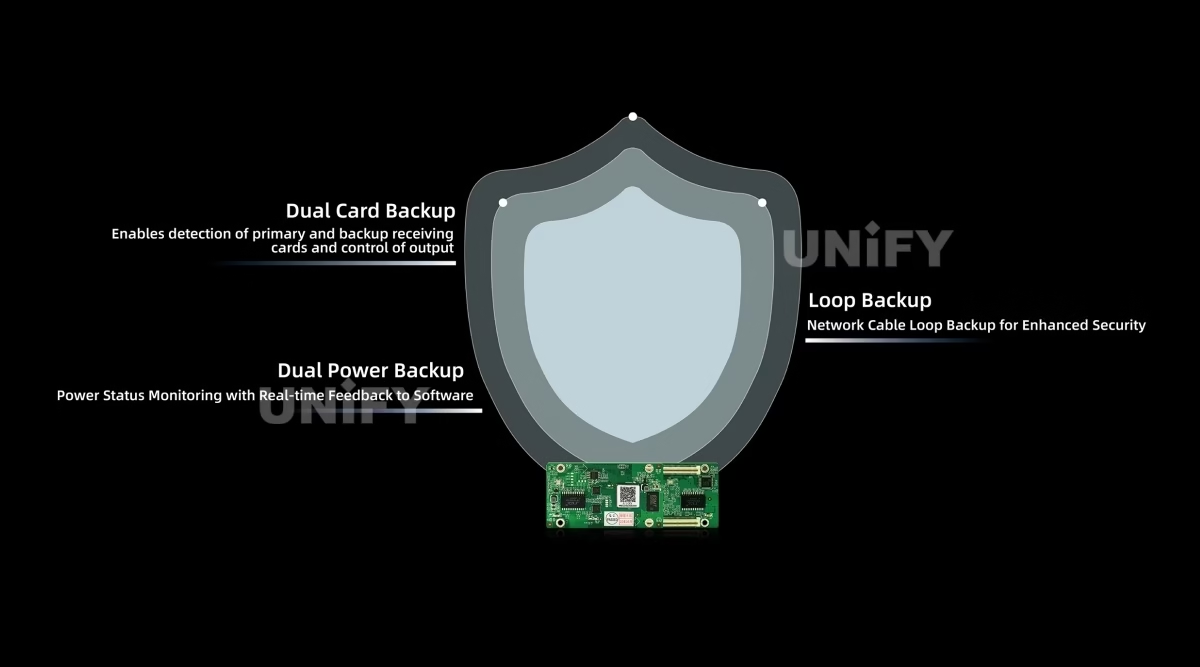
The A10X layers four independent protection mechanisms, and it is worth separating what ships standard from what is a customization:
Main and standby network cables loop through the card chain. If one series line fails, the other keeps the screen alive — the classic gigabit loop protection for rental rigs.
Power status is detected on both inputs and fed back to the software, so a failing PSU is visible in monitoring before it takes a section of the wall down.
If the FPGA main program fails to configure at power-on, the card enters a standby BOOT program and keeps communicating — a self-recovery path that makes field firmware updates far less risky.
MCU-based active/passive backup: the main card runs, the standby starts when the main fails. Ordered as a customization — the same mechanism Mooncell shows in its dual-card setup tutorial below.
Official Mooncell tutorial — dual-card dual-backup setup.
For the system-level picture of redundancy — backup sending cards, cascade failover and spare-card discipline — see the LED display system redundancy & backup guide.
Core Features
What Does the Mooncell A10X LED Receiving Card Bring to a Wall?
Six capabilities define the A10X’s image quality and workflow — the grayscale and input math first, then the tools that keep the wall uniform and maintainable.
Enabling 22-bit in software multiplies grayscale by 64, recovering the gray steps lost when brightness drops — clean low-gray transitions without the “pitting” that plagues dark scenes.
8/10/12-bit source input with per-pixel brightness and chromaticity correction, RGB-independent Gamma and multi-layer calibration — the upgrade that separates the A10X from the 18-bit A4X/A8X tier.
Signal output from the sending device stays under 1 ms and the receiving card keeps a 1-frame delay — synchronized motion for stage, sports and broadcast content.
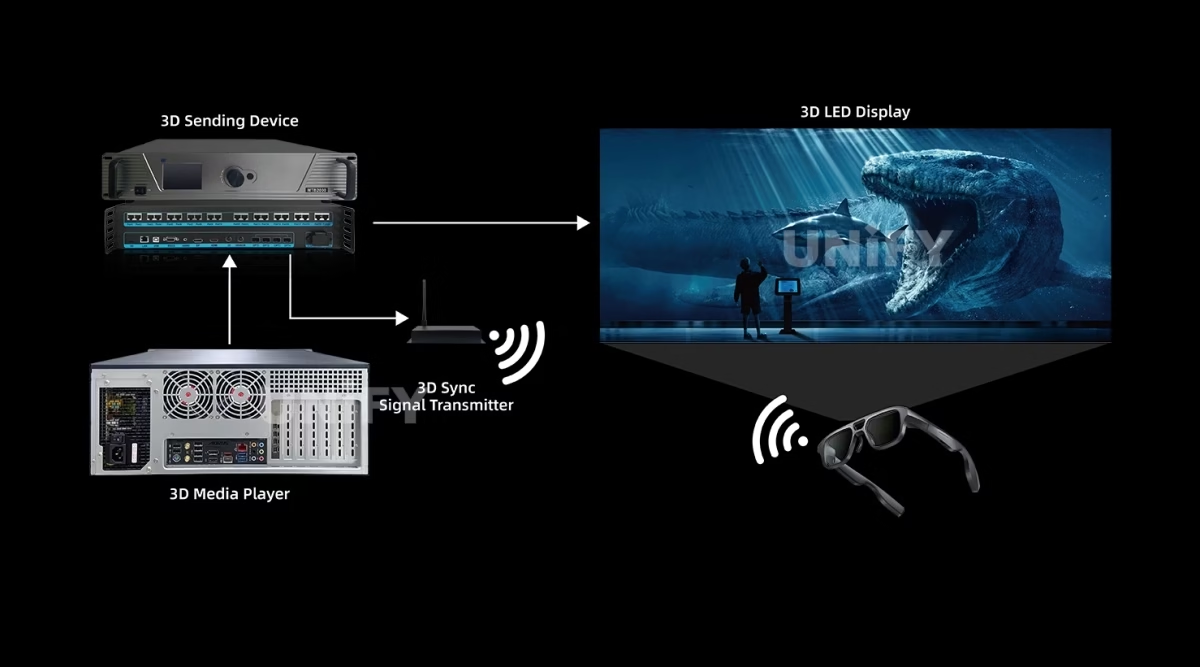
3D picture with 3D glasses via a connected 3D signal transceiver, and picture rotation in 90° multiples (0/90/180/270) plus pixel-level scaling for odd cabinet geometries.
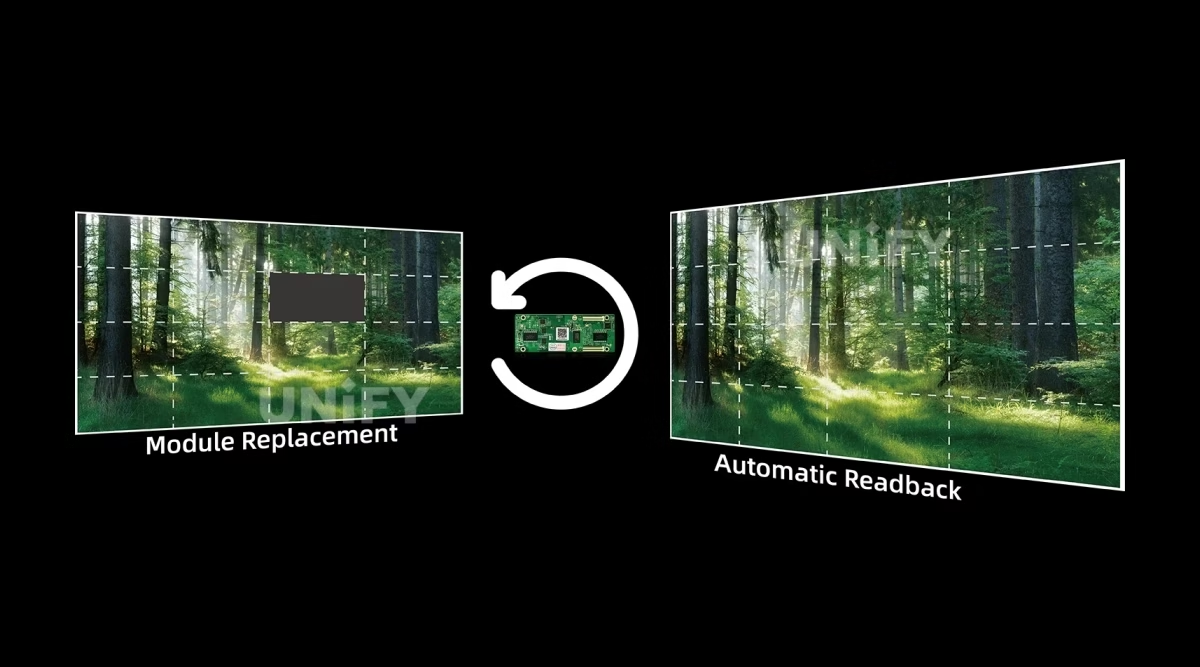
AutoLED’s network-port debugging shows each card’s position and serial number on the target box, and configuration parameters read back for local saving — fast replacement, no re-commissioning from scratch.
Communication signal quality of each network cable is monitored in real time, so a marginal cable is flagged before it becomes an intermittent black section.
Model Selection
Which Mooncell A10X Receiving Card Do You Need: A4X, A8X, A10X or M10D?
Mooncell’s small-format receiving-card family is a four-rung ladder documented on its A4X/A8X/A10X/M10D hub. The A10X sits on the third rung, where 22-bit grayscale, 12-bit input, multi-layer calibration and the smart-module option begin:
The deciding differences are grayscale and input depth: standard full-color cabinets running 18-bit grayscale work on the A4X/A8X; walls that need 22-bit low-gray smoothness, 12-bit sources or module-level monitoring move to the A10X (or the M10D in the same class). All four cards share 32 groups of RGB parallel data, loop backup, dual-card backup and cabinet monitoring. For the other major brands’ lineups, compare against the Colorlight receiving card selection guide.
Software & Commissioning
How Do You Configure and Maintain the Mooncell A10X LED Receiving Card with AutoLED?
Every A10X maintenance workflow runs in Mooncell’s AutoLED software — the same tool across the whole Mooncell family, from sending cards to processors. The commissioning layer that matters for the A10X:
Network-port debugging prints each card’s position and serial number on the target box — find a dead cabinet in a 200-card wall in seconds, without crawling the structure.
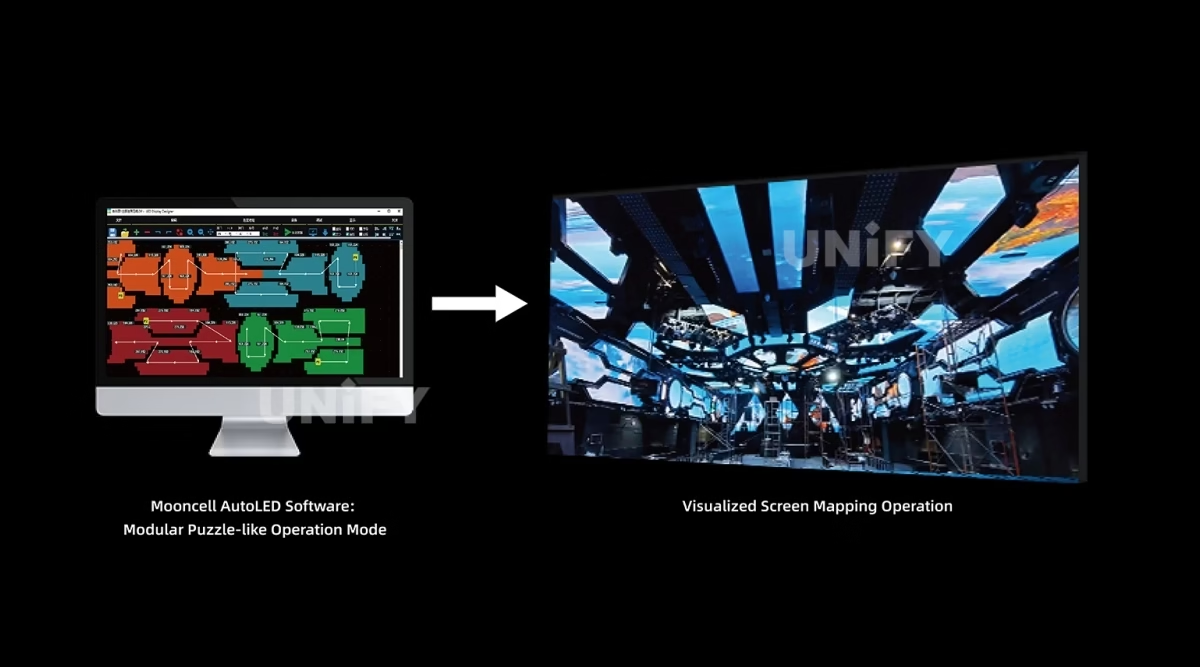
Output data is detected and edited per pin group, so non-standard modules and mixed cabinet geometries are mapped without custom hardware.
The advanced layout and complex-connection editors build arbitrary box arrangements fast — the answer for irregular and curved screens.
Parameters read back from the card and save locally — a replacement card inherits the wall’s exact configuration, cutting re-commissioning to minutes.
Official Mooncell AutoLED tutorial — cabinet configuration.
Firmware upgrades run online through AutoLED — pull cloud resources or import upgrade files, with the FPGA dual-program startup as the safety net if a power cut interrupts an update:
Official Mooncell tutorial — receiving-card firmware upgrade via AutoLED.
The full commissioning sequence — wiring, network mapping, module configuration, correction — is covered step by step in the LED display configuration and system debugging guide.
Monitoring Options
What Does the Smart-Module Option Add to the Mooncell A10X LED Receiving Card?
The A10X is the entry point in the Mooncell family for the smart module — a Flash-plus-MCU daughter board that gives the receiving card module-level awareness without a separate monitoring card:
Temperature, voltage and cable communication status are monitored at each module and reported to AutoLED — a failing PSU or connector is visible at cabinet level, not discovered on site.
The Flash stores correction coefficients; on lamp-board replacement, module auto-calibration reads the new board’s ID and correction factor at power-on and saves it — no re-correction campaign.
Connected to the HUB board, the LCD shows temperature, voltage, single-run time and total run time per card — useful for rental fleets tracking card usage and preventative replacement.
Because the smart module lives on the A10X, integrators skip a separate monitoring card and reclaim cabinet space — the small-form-factor argument extended to the monitoring layer.
All smart-module functions are customization options per the V4.0 sheet — specify them at order time, and confirm the firmware supports the exact module generation you plan to install.
Field Troubleshooting
How Do You Diagnose a Mooncell A10X LED Receiving Card by Its Status LED?
The A10X’s status LED (U9) is a four-state diagnostic instrument — the official V4.0 sheet defines each pattern, and each maps to a distinct fix:
When the LED says the card is fine but the screen section is dark, the fault is almost always the signal chain or the module wiring, not the card — work through the LED display signal cable troubleshooting and basic debugging of LED displays guides before swapping hardware.
Applications
Where Does the Mooncell A10X LED Receiving Card Fit Best?
The A10X is a one-card-per-cabinet part: the form factor suits narrow-frame cabinets, the 3 W draw suits dense power layouts, and the redundancy options suit anywhere a dark section costs money.
P1.25–P5 fine-pitch cabinets; 22-bit grayscale and pixel calibration for close-range viewing
P3.91–P16 weatherproof boxes; −20°C to 70°C operating range and dual power backup
Loop backup, dual-card hot backup and LCD run-time tracking for touring fleets
Low-noise low-gray scenes benefit from 22-bit; 1-frame latency keeps camera and content in sync
Rental deployment details — cabinet locking, quick-connect wiring and spare-card logistics — are covered in the rental LED display screen and LED screen for events guides.
Cross-Brand Comparison
How Does the Mooncell A10X LED Receiving Card Compare with Colorlight?
The A10X is a Mooncell receiving card — it pairs with Mooncell sending hardware and AutoLED. Against Colorlight’s parallel lineup, the honest comparison is price tier and form factor, not feature count:
Three numbered differences decide between them:
- Ecosystem. A Mooncell wall should run Mooncell receiving cards — the A10X is the compact member with 22-bit and smart-module options; i5A-905 and i9+ belong to Colorlight’s i5A-905 and i9+ pages.
- Price. The A10X (~$27) sits above Colorlight’s volume tier (~$10–$18 for i5A-905) and below dual-mode cards like the i5A-F (~$37–$55) — a mid-tier position justified by 22-bit grayscale and 12-bit input.
- Form factor. At 80×45 mm and 20.2 g the A10X is built for narrow-frame cabinets and light power budgets (3 W) — a different physical design goal than the i5A-905’s 137×48 mm board.
Pricing
How Much Does a Mooncell A10X LED Receiving Card Cost?
Price transparency, stated plainly: the A10X appears in third-party distributor listings at $27.00 per card (EagerLED stock listing, reviewed September 2026). The same channel prices Colorlight E80 at $11.30, E320 at $16.10 and the dual-mode i5A-F at $42.20 — placing the A10X in the mid tier. Factory-direct tiers for B2B buyers:
A receiving card is a consumable: the per-wall budget is card count × price, and the LED display warranty page explains what to hold the supplier to on spares and RMA. Ask for a factory-direct quote at your quantity — every LED screen manufacturer margin structure is different, and we publish ours.
FAQ
What Do Buyers Ask About the Mooncell A10X LED Receiving Card?
What Assurance Comes With the Mooncell A10X LED Receiving Card?
Every A10X ships with Mooncell original packaging and compliance documentation.
Ready to Specify the Mooncell A10X LED Receiving Card?
Factory-direct pricing, genuine Mooncell stock, AutoLED pre-configured batches and 2-year warranty.
unifyledscreen@gmail.com | +86-191-18802497
Technical Deep-Dive
What Should Engineers Know Before Buying the Mooncell A10X LED Receiving Card?
Published: September 2026 | 12 min read | UnifyLED Engineering Team
The Mooncell A10X LED Receiving Card is the card integrators order by the hundreds without reading the sheet twice — small, cheap to power, and quietly capable of 512×640 in PWM mode. This guide is written for engineers and procurement teams specifying the compact receiving-card tier in 2026, using the official Mooncell A10X Specification V4.0 as the data source, with the grayscale math, the redundancy story and the version-conflict fixes that listing copy gets wrong.
Short answer: The Mooncell A10X LED Receiving Card is a small-form-factor receiving card with a 512×640 @ 60 Hz PWM load (512×512 conventional), 32 groups of RGB parallel data on a 120-pin connector, 22-bit grayscale, 8/10/12-bit input, pixel-level calibration, RGB-independent Gamma, loop backup, dual power backup, FPGA dual-program startup and optional dual-card hot backup and smart-module monitoring. It costs around $27 in distributor listings and sits above the A4X/A8X (512×384, 18-bit) and alongside the M10D (512×512, 22-bit) in the Mooncell family.
Chapter 1 — Definition: The Compact Workhorse
The Mooncell A10X LED Receiving Card is a synchronous receiving card developed independently by Mooncell: it decodes Gigabit Ethernet data from a sending controller, applies grayscale processing and calibration, and drives LED modules through 32 groups of RGB parallel data. It is the pixel-level stage of the synchronous vs asynchronous LED control split — live video in, composed rows and columns out. One A10X per cabinet is the standard topology for indoor and outdoor box designs.
The physical design goal is stated by the numbers: 80×45 mm, 20.2 g, 3 W rated power. Narrow-frame cabinets keep getting narrower and LED pitch keeps dropping, so the card that fits the frame and draws almost nothing from the power budget is a design win before any feature debate. The MCU on board is the second design story — it is what enables the dual-card backup mechanism, the smart-module interface and the strong LED driver chip compatibility that Mooncell lists as a family characteristic. The revision history matters to procurement: V4.0 first released June 19, 2025 on hardware A10X V4.0.0, while V3.7 copies still circulate on third-party file hosts — verify any sheet against V4.0 before it enters a tender.
Chapter 2 — Loading: 512×640, Verified
One A10X drives 327,680 pixels in PWM mode: 512 × 640 = 327,680. In conventional mode the ceiling is 512×512, or 262,144 pixels. The correction table is the part most listing copy misses — after chromaticity correction the load stays at 512×512 in both modes, and brightness correction holds the PWM load at 512×640. Plan the wall on the corrected figure and the calibration will never force a re-cut of the module layout.
Cascade and scan are generous: up to 1,000 cards per network port and 1–128 scan lines, which the spec table confirms against the 1–64 figure that appears in one third-party summary. Practical formats: a 1920×1080 wall takes 7 cards in PWM mode (8 conventional); a 3840×2160 wall takes 26 (32 conventional); nearly every single cabinet — P2.5 indoor or P5 outdoor — takes exactly 1 card. Because a single card can drive multiple modules of different sizes within its load, mixed-module cabinets are a normal configuration rather than a workaround. The sending-side port math lives in the LED sending card configuration guide in the same units.
The PWM-versus-conventional choice deserves a sentence of its own, because it changes the module map. PWM mode buys 128 pixels of extra height per card (512×640 against 512×512) at the cost of a shorter brightness-correction window: brightness correction keeps the 512×640 load, but chromaticity correction drops it to 512×512. A wall that ships with factory calibration applied (the common case for a finished project) should plan the layout on 512×512 per card, then treat the extra 128 rows as headroom for uncalibrated staging stock. Rental fleets in particular should standardize the card count per cabinet size before the first batch is ordered, so a single spare card type covers the whole fleet.
Chapter 3 — 22-Bit Grayscale and 12-Bit Input, Explained
“22-bit” is a claim that needs its math stated. Enabling 22-bit in the software multiplies the LED screen’s grayscale by 64 — every brightness step that was lost when the screen dimmed below peak gets recovered, low-gray transitions turn smooth, and the “pitting” artifact of dark scenes disappears. For a church or stage wall that runs dark backgrounds for hours, this is the difference between a clean fade and visible stepping. The input side supports 8, 10 and 12-bit sources; 12-bit is the A10X/M10D exclusive in the Mooncell A-series ladder, which is what lets the card feed a 12-bit pipeline end to end.
Correction is the second half of image quality: pixel-by-pixel brightness and chromaticity correction eliminates the color differences between modules that make an assembled wall look patchwork; RGB-independent Gamma adjustment handles low-gray unevenness and white-balance drift per channel; multi-layer calibration stacks correction data so a card swap does not reset the wall’s uniformity. Latency closes the real-time story — as low as 1 frame at the receiving card on built-in-RAM driver ICs, with the sending side output under 1 ms per Mooncell’s product page — which is the number that matters for camera-facing and broadcast content. Rotation in 90° multiples (0/90/180/270) plus pixel-level scaling covers vertical signage and odd cabinet geometries; the marketing “any angle” wording should be read as these quarter-turn steps.
Chapter 4 — Keeping the Wall Alive: Redundancy, Verbatim
Four protection layers exist on the A10X, and the separation between standard and custom is the detail most reseller pages blur. Standard: loop backup, where main and standby network cables run through the card chain and either keeps the screen alive if one series line fails; dual power supply backup, where power status is detected and fed back to software so a failing PSU surfaces in monitoring; and FPGA dual-program startup, where a failed main-program configuration boots a standby BOOT program instead of a dead card — the safety net that makes online firmware upgrades safe on site. Custom: receiving-card hot backup (dual-card, active/passive — the main card runs, the standby starts when the main fails), smart module, module auto-calibration, voltage and temperature detection and the LCD module. The active/passive wording matters: some pages promise an “instant” takeover that the official sheet does not describe. Specify the option at order time and confirm the mechanism in the quotation. The system-level redundancy picture — backup sending cards, cascade failover, spare discipline — is in the LED display system redundancy & backup guide.
Chapter 5 — The Four-Rung Ladder: A4X, A8X, A10X or M10D
Mooncell’s small-format receiving cards form a ladder with two price floors and two 22-bit rungs. A4X and A8X: 512×384 load, 18-bit grayscale, 8/10-bit input — the entry tier for standard full-color cabinets where grayscale depth is not the priority. A10X: 512×512 (512×640 PWM), 22-bit grayscale, 8/10/12-bit input, multi-layer calibration, smart-module option — the subject of this page. M10D: 512×512, 22-bit, 8/10/12-bit — the same class with a different board layout. All four share 32 groups of RGB parallel data, loop backup, dual-card backup and cabinet monitoring. The deciding questions are grayscale depth and input bit depth; when a tender specifies 22-bit or 12-bit, the answer is A10X or M10D before anything else.
Chapter 6 — Commissioning and Maintenance in AutoLED
The A10X is configured in AutoLED, Mooncell’s single software across sending cards, receiving cards and processors. The five-step workflow: install AutoLED and connect over LAN or USB; run network-port debugging to detect the card’s position, serial number and connection line on the target box; create the cabinet configuration — resolution, scan mode, data interface — in the advanced layout editor, which also handles complex box arrangements and irregular screen structures; apply RGB-independent Gamma, pixel-level calibration and 22-bit enabling; then read the configuration back and save it locally. Readback is the maintenance superpower: a replacement card inherits the exact configuration, so a field swap is minutes instead of a re-commission. Communication monitoring and cable-quality error detection run continuously, flagging a marginal network cable before it becomes an intermittent black section. Firmware upgrades run online — pull cloud resources or import upgrade files — and the full sequence is covered step by step in the LED display configuration and system debugging guide. When a card misbehaves, the status LED reads the diagnosis: uniform slow flash is the healthy idle, uniform flash means live DVI input, constant off means no Gigabit signal (check the cable, port and sending output), and three interval flashes mean the loop topology is live.
Official Mooncell tutorial — AutoLED online upgrade.
Monitoring is the layer that makes the maintenance story continuous rather than reactive. Communication monitoring watches every card’s working state in AutoLED in real time; error detection measures the signal quality of each network cable so a degrading link is replaced on schedule instead of during a show; and the smart-module option extends the same visibility down to module-level temperature, voltage and cable status — with the LCD variant showing per-card run times for rental fleets that rotate hardware. Between the status LED at the hardware layer and AutoLED at the software layer, a fault on an A10X wall is located in minutes, and the fix is a card swap that inherits the saved configuration.
Chapter 7 — What the A10X Costs, and What It Costs Per Wall
The A10X trades at around $27.00 per card in third-party distributor listings (EagerLED, stock listing reviewed September 2026). The same channel gives a usable price ladder: Colorlight E80 at $11.30, E320 at $16.10, and the dual-mode i5A-F at $42.20 — the A10X sits in the mid tier, above Colorlight’s volume receiving cards and below dual-mode cards. Across the brands, the street band for compact receiving cards runs from about $10 to $55, and the spread inside a model is volume and support terms, not hardware differences. A per-wall budget is the honest math: a 26-card 4K wall at $27 runs to about $700 in receiving hardware, before sending hardware and processors — see the Colorlight receiving card selection guide for the same arithmetic on the other brand. Factory-direct tiers shift the price with volume and pre-configuration; ask for a quote at your card count and compare like for like — our factory-direct pricing is published on request, with pre-configured batches, dual-card backup options and a spare-card program for project tiers.
Two procurement details round out the cost picture. First, batch discipline: receiving cards ship 100 per box with a 3.5 kg gross weight, and replacement cards should be bought in the same firmware batch as the installed wall where possible — AutoLED upgrades online, but a fleet at two firmware revisions needs the older revision’s upgrade files kept on file. Second, spares: for a 26-card 4K wall, two spare cards (about 8% of the fleet) cover the realistic field failure rate for years; the warranty page covers what the supplier must hold on RMA turnaround and dead-on-arrival replacement.
Conclusion
The Mooncell A10X LED Receiving Card is the compact rung of the Mooncell ladder with real headroom: 512×640 in PWM mode, 22-bit grayscale, 12-bit input and a redundancy stack that runs from loop and dual-power backup as standard to dual-card hot backup as a customization. It fits the frame, it fits the power budget, and it fits the AutoLED workflow that the rest of the Mooncell family already uses. When the tender says 22-bit, 12-bit or compact, the A10X is the card to specify — and the V4.0 sheet is the reference to pin to it.
Buying in bulk? Talk to us — we are the LED screen manufacturer behind unifyled.com, and receiving cards ship from stock with 2-year warranty and engineering support on the AutoLED configuration.
Related Pages
Explore the Mooncell Control Ecosystem
Mooncell MVB4S Pro 2-in-1 LED Video Processor
Mooncell MVB12E 2-in-1 LED Video Processor
Mooncell MVB20E-G 2-in-1 LED Video Processor
Mooncell M40 2-in-1 LED Video Processor
Colorlight receiving card selection guide
Novastar MRV328 LED receiver card
23 pages · English · first release June 19, 2025 · hardware A10X V4.0.0