
Colorlight Ultra-4K Series · 8-Port Processor
Colorlight X8m LED Video Processor
The Colorlight X8m LED Video Processor is Colorlight’s Ultra-4K processing platform: dual 4K60 inputs (DP1.2 + HDMI2.0), four 2K HDMI inputs, a 5.24-million-pixel loading capacity across 8 Gigabit Ethernet ports, up to 6 independent windows with Genlock synchronization, and 128 preset scenes — the processor tier for broadcast, concerts and control-room LED walls.
Product Overview
What Is the Colorlight X8m LED Video Processor?
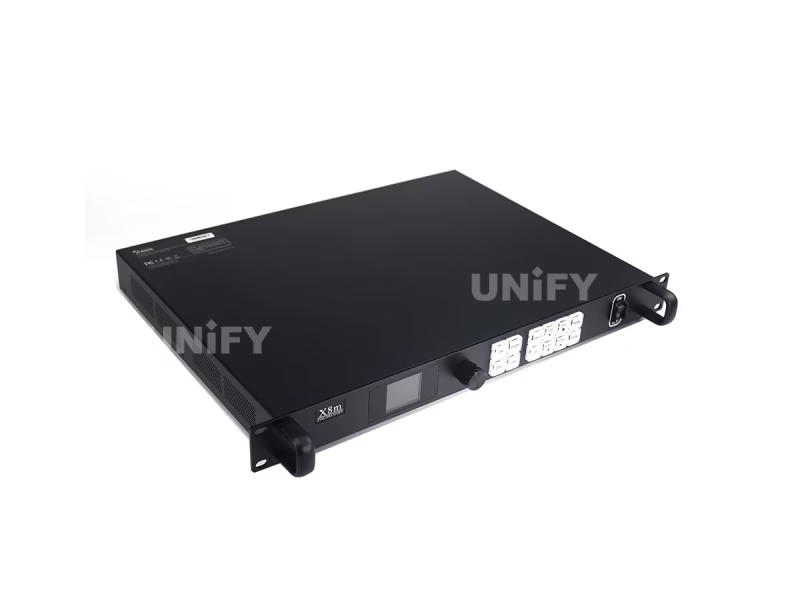
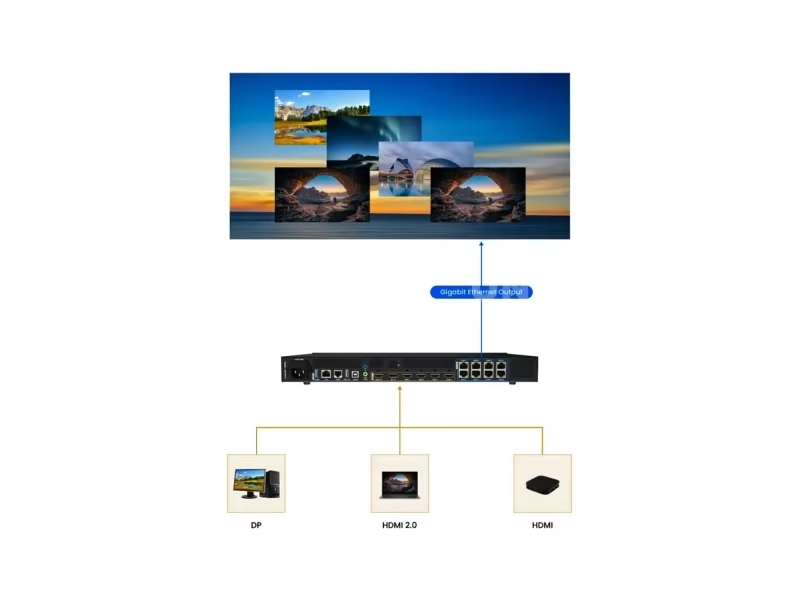
The Colorlight X8m LED Video Processor is an Ultra-4K LED video controller in a 19-inch 1U chassis: it receives up to two 4K60 signals plus four 2K signals, processes them into up to six independent windows with Genlock synchronization, and drives up to 5.24 million pixels through 8 Gigabit Ethernet outputs. In the Colorlight lineup it stands one tier above the 4-port Colorlight X4 LED Video Controller (2.3M pixels) and below the 12-port X12m — the tier where input processing, multi-window layouts and broadcast-grade synchronization enter the spec sheet.
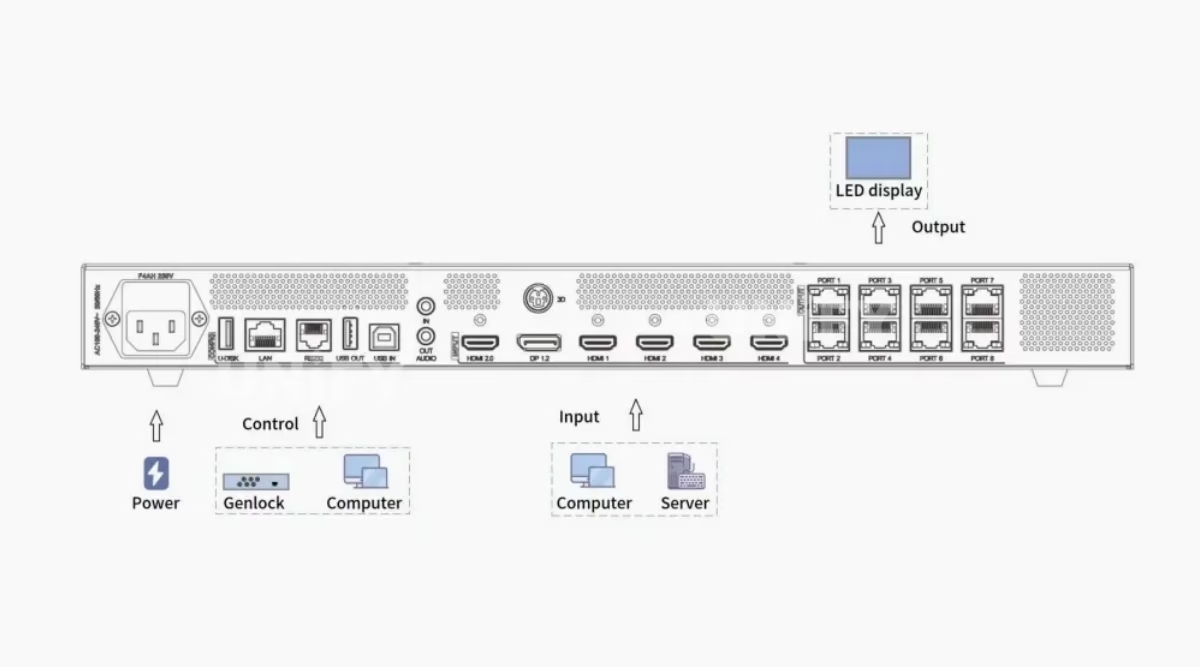
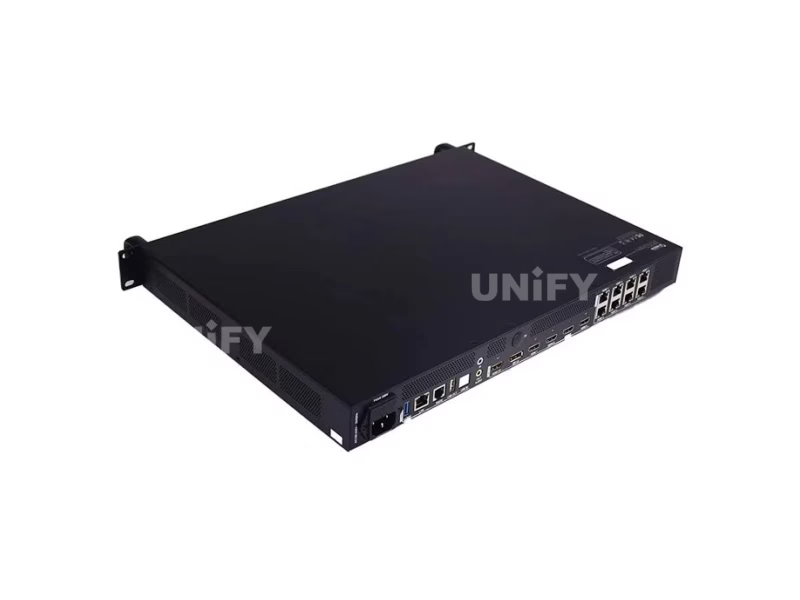
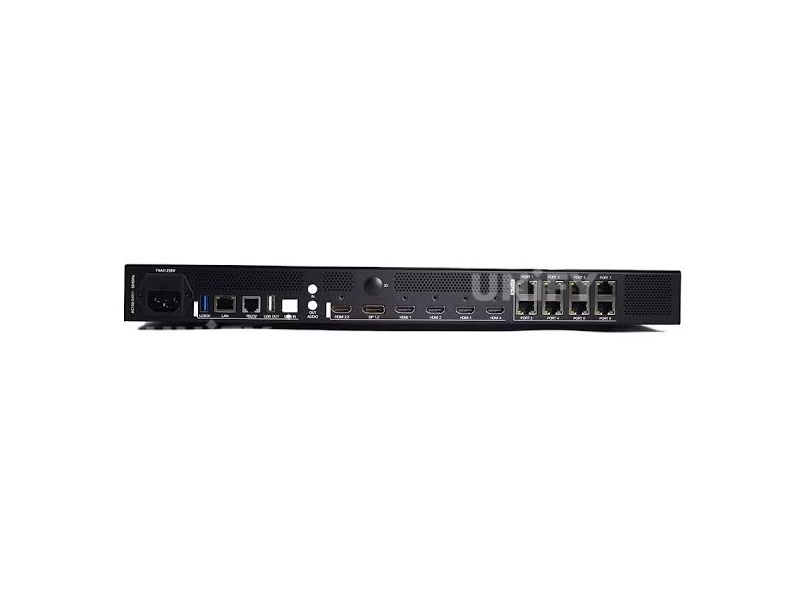
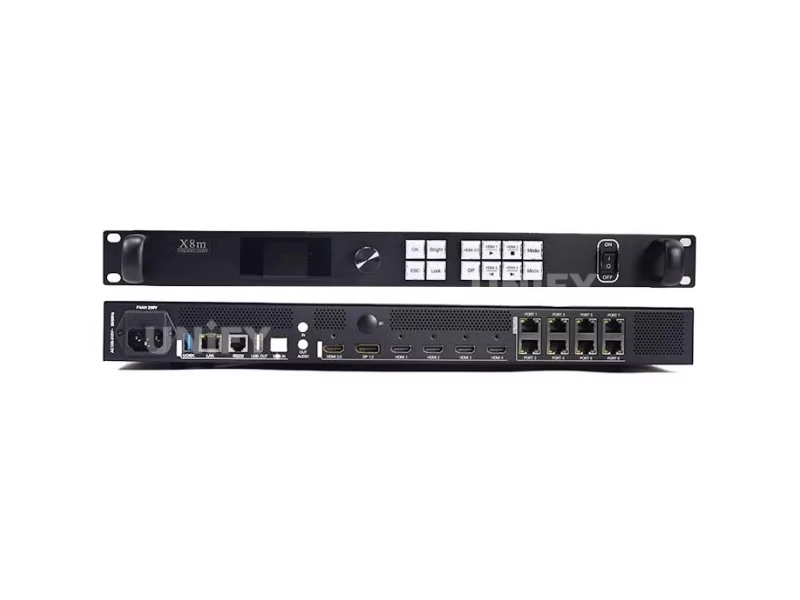
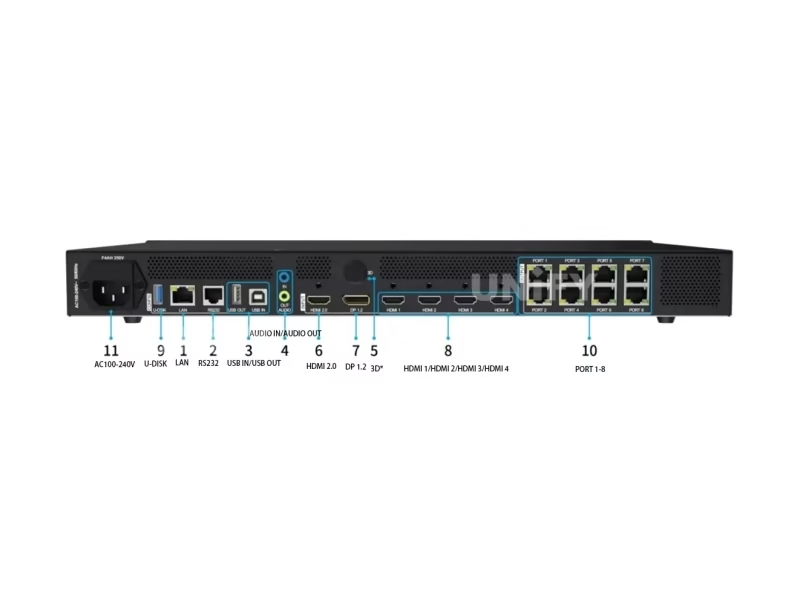
Short answer: The Colorlight X8m is a 1U Ultra-4K processor with 1× DP1.2 and 1× HDMI2.0 4K60 inputs, 4× HDMI1.4 2K inputs, a USB drive port, 8 Gigabit Ethernet outputs, a 5.24-million-pixel loading capacity (8bit@60Hz) and a 16,384×8,192 maximum canvas. It runs up to 6 independent windows, offers three Genlock modes, stores 128 preset scenes, and is controlled via front panel, LEDVISION, the VideoStation web interface, RS232 or app.
“Ultra-4K” defined — the number everyone gets wrong: Ultra-4K describes the input side. The X8m accepts 4096×2160@60Hz signals, processes them, and maps the result onto a 5.24M-pixel output canvas — a single 4K frame is 8.85M pixels, so a 4K source is scaled to the wall’s real resolution, not reproduced pixel-for-pixel. The output ceiling is 5.24M pixels (a 3840×1360 canvas at 8bit@60Hz). Listings that equate 4K with 8.85M of output capacity misunderstand the architecture — the correction table below documents the numbers in full. The LED video processor category page explains where this device class sits in the control chain.
Colorlight’s official introduction of the 4K controller family:
Colorlight Official — X20 4K Controller introduction video, 4K processor family
Specifications
What Are the Colorlight X8m LED Video Processor Specifications?
All data from the official Colorlight X8m Specification V1.0 and the X8m/X12m Quick Start Guide V1.0.
Inputs (Official V1.0)
Outputs & Processing (Official V1.0)
Physical & Electrical (Official V1.0)
Exclusive — Data Verification
Why Do Colorlight X8m LED Screen Processor Spec Sheets Disagree?
In August 2026 listings and articles we reviewed, the X8m’s three headline numbers appear in at least four different versions. Verified against the official Specification V1.0:
Why these errors cost money: A wall planned against “8.85M output” is 69% beyond the X8m’s real 5.24M ceiling — the project arrives at site needing two processors instead of one. A 120Hz broadcast wall specified at 5.24M is actually capped at 2.62M. And an HDR content plan discovered to be unsupported at commissioning is a processor replacement, not a settings fix. Verify against Specification V1.0 — or ask the supplier to state the revision they quote. Projects that genuinely need HDR belong to a different class: see 4K60 HDCP HDR LED controllers.
Exclusive — Refresh-Rate Economics
How Does Refresh Rate Change the X8m LED Video Processor’s Loading Capacity?
The X8m’s 5.24M figure is an 8bit@60Hz number. Pushing the wall to higher refresh rates spends bandwidth that would otherwise carry pixels — the official trade-off table:
The rule for specification: start from the refresh rate the cameras require, then check the resulting pixel ceiling. A broadcast studio wall running 120Hz is a 2.62M-pixel project regardless of what the 60Hz headline says — which changes the processor count, the port plan and the budget. The same logic applies to the per-port figures: 655,360 pixels per Gigabit port at 60Hz drops to 320,000 at 120Hz.
The capacity framework behind these numbers, from Colorlight’s official course:
Colorlight Official — Controller Pixel Capacity course video
Model Selection
How Does the Colorlight X8m LED Video Processor Compare to the X12m?
The X8m and X12m share one platform — same inputs, same windows, same Genlock — and differ on output ports and total loading. Official Quick Start Guide V1.0 data:
The decision in three numbered differences:
- Port count. 8 versus 12 Gigabit ports. The X12m splits the canvas into 12 independently routed regions — valuable when the wall’s physical layout maps onto many separate cable runs.
- Loading class. 5.24M versus 7.86M — the X12m adds 50% more pixels for walls that exceed the X8m’s ceiling.
- Everything else is the same platform. Inputs, six windows, Genlock, 128 presets and control methods are identical — so the choice is purely capacity and cabling, never features.
Colorlight’s official X12 family introduction:
Colorlight Official — X12 professional controller introduction video
For the smaller tiers in the same series: the 2-port Colorlight X2 LED Video Controller (1.3M pixels) and the 4-port Colorlight X4 LED Video Controller (2.3M pixels) complete the X series chain from entry walls to this processor tier.
Multi-Window Processing
How Do the X8m LED Video Processor’s 6 Windows and Genlock Work?
Six independent windows, one layer per window, with overlap — the X8m composites multi-source content directly on the processor. The official layer combinations:
1× 4K + 4× HD → 5 layers
One 4K60 source plus four HD sources on the same wall — the standard broadcast package.
2× 4K → 2 layers
Two 4K60 inputs side by side or stacked — dual-camera feeds at full input quality.
6× HD → 6 layers
Six HD windows on one canvas — control rooms monitoring six feeds on one wall.
Genlock — the broadcast-grade detail. The X8m synchronizes in three modes: internal V-Sync (the processor is the clock), signal-source input (the wall follows the incoming source’s timing), and auto-Genlock by layer (each layer locks to its own source). For camera-facing walls, Genlock removes the rolling bands and frame tears that make LED walls unusable on broadcast cameras — this is the feature that separates the processor tier from the transport tier below it.
Layer mechanics. Every window navigates and resizes freely with a 64×64-pixel minimum, crops in real time, and switches sources without reconfiguration. Combined with 128 preset scenes, an operator can store an entire show’s window layouts and recall them with one key — the X series’ front-panel Mode key cycles saved presets directly.
Sizing Guide
How Big a Screen Can the Colorlight X8m LED Video Processor Drive?
5.24 million pixels at 60Hz with a 16,384×8,192 canvas translates into these real formats:
The port arithmetic that supports it: 8 ports × 655,360 pixels = 5,242,880 theoretical, with 5.24M as the official total — a wall’s port plan divides the canvas into eight regions of up to 650,000 pixels each. The 16,384×8,192 canvas bound matters for aspect extremes: ultra-wide strips and portrait towers can be taller or wider than the pixel ceiling implies, as long as total pixels stay inside 5.24M. Redundancy support on the outputs adds the failure-isolation layer broadcast installations expect.
On-Device Operation
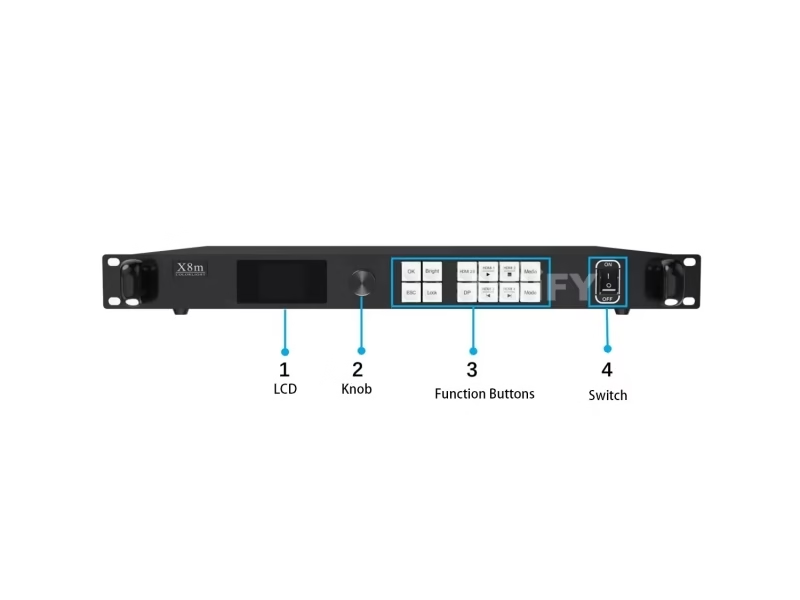
How Do You Operate the Front Panel of the Colorlight X8m LED Display Processor?
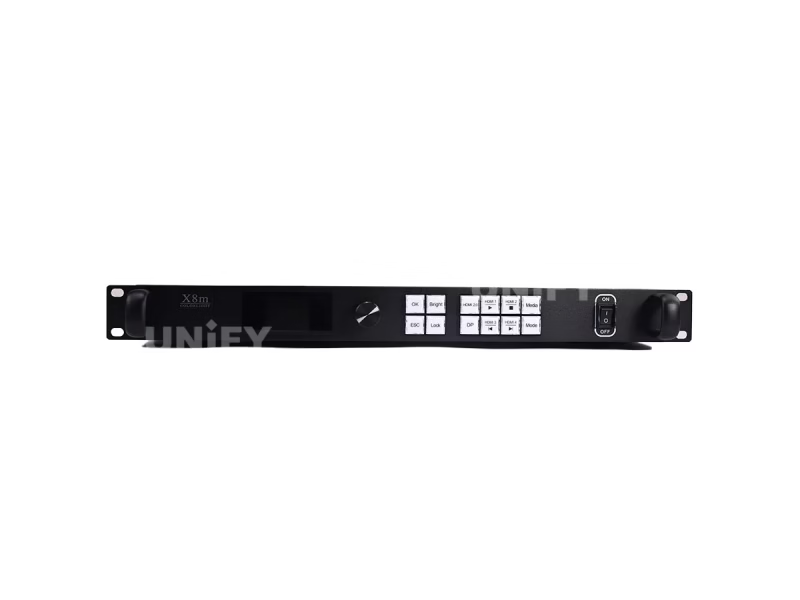
The X8m carries the most complete front panel in the X series. Beyond the LCD, knob and OK/Bright/ESC keys shared with smaller models, the processor adds three controls that matter in live operation:
LOCK key — the anti-tamper control
Locks the front-panel buttons. For installed walls in public or staffed spaces, the Lock key prevents the 3 AM brightness change nobody remembers making.
MEDIA key — U-disk playback control
Starts media playback from the USB drive port. The six source keys double as play/pause/stop/previous/next during playback — a complete standalone player on the front panel.
MODE key — preset scene recall
Cycles the 128 saved preset scenes. A rental house can walk into a venue, power the wall, and step through the client’s approved layouts with one key.
The six source keys (HDMI 2.0 / DP / HDMI 1–4) switch inputs instantly, and the knob edits parameters with one-second auto-save. The LCD shows the operation menu and system information, with the power switch on the far side of the panel.
Control Architecture
How Do You Control the Colorlight X8m LED Video Processor?
Four independent control paths cover every deployment profile:
💻 LEDVISION (PC)
Full configuration: screen setup, device detection, input/output windows, presets and tours. The commissioning tool for every Colorlight project.
🌐 VideoStation (Web)
Browser-based management over LAN — window layouts and presets from any device on the network, no software install. Change the factory-default credentials on first login.
🎛 RS232 Central Control
RJ11 (6P6C) port speaks RS232 protocol — AMX, Crestron and building automation systems drive the wall without a PC or browser.
📱 App + Front Panel
Mobile app control plus the LCD front panel — daily operation for non-technical staff and show-floor technicians.
Colorlight’s official walkthrough of the two software control paths:
Colorlight Official — ISLE 2025 LEDVISION and VideoStation introduction video
The web-based interface in detail:
Colorlight Official — Introduction to the Web Control Interface tutorial video
Standalone Playback
How Does U-Disk Playback Work on the Colorlight X8m LED Video Processor?
The front USB port turns the X8m into a standalone player — content loads from a USB drive without a PC, a media server or a network. The practical value is content updates by hand: a store manager swaps a USB stick to change the campaign; a rental tech ships the wall with the content pre-loaded.
Official format support:
Playback controls live on the front panel — the six source keys become play/pause/stop/previous/next in media mode, and the MEDIA key starts playback directly. For scheduled or network-driven content, the LAN port and app control take over; the USB path exists for the environments where neither is available.
Applications
Where Is the Colorlight X8m LED Video Processor Used?
Broadcast & Studio
Genlock removes camera flicker; 120Hz mode serves high-frame-rate walls; precise color temperature matches studio lighting. The X8m’s native territory.
Concerts & Rental
128 presets hold the show’s layouts; 6 windows mix cameras and playback; MODE key recalls scenes on stage. See LED screen for events.
Control Rooms & Corporate
6×HD windows monitor six feeds on one wall; RS232 integrates with Crestron/AMX; Lock key protects installed settings.
Retail & Signage
U-disk playback updates campaigns without a PC; OSD (optional) overlays store information; 16,384-pixel width covers fascia strips.
Factory Strength
Why Buy the Colorlight X8m LED Video Processor From an LED Display Factory?
A processor purchase from a parts-only channel ends at the box. Buying through a full-line LED screen manufacturer adds the three things processor-tier projects depend on:
1. Verified hardware against Specification V1.0. Every X8m we ship comes from Colorlight’s authorized channel, is tested on live LED modules before dispatch, and carries serial-number traceability. The spec chaos documented above — four versions of the loading figure — is what happens when hardware moves through unverified channels.
2. Commissioning that finishes the processor layer. Our engineers configure the X8m with LEDVISION end to end — the 8-port plan, the window layouts, the Genlock mode and the preset scenes — against your actual wall and receiving cards. Our quality control of LED display process applies the same rigor to every batch.
3. Lifecycle economics. The control layer typically outlives the LED modules it drives — LED screen lifespan is set by the modules, not the electronics. We back the X8m with a 2-year warranty and keep spares for the project’s operating life, so a failed unit is replaced, not debated.
B2B Procurement
How Much Does the Colorlight X8m LED Video Processor Cost?
Price transparency, stated plainly: in August 2026 listings we reviewed, the X8m traded between $612 and $755 depending on vendor and configuration — the spread is channel margin and volume tier, not hardware differences. Factory-direct tiers for B2B buyers:
For context: the LED display control system market reached US$659 million in 2025, projected at 13.6% CAGR to US$1.59 billion by 2032 (QYResearch, Global LED Display Control System Market Report 2026). Processor-tier pricing scales with volume like the rest of the category — ask for a factory-direct quote at your quantity.
FAQ
What Do Buyers Ask About the Colorlight X8m LED Video Processor?
What Certifications Does the Colorlight X8m LED Video Processor Carry?
Every batch ships with Colorlight original packaging and compliance documentation.
Ready to Source the Colorlight X8m LED Video Processor?
Factory-direct pricing, genuine stock, 8-port LEDVISION commissioning and 2-year warranty.
unifyledscreen@gmail.com | +86-191-18802497
Technical Deep-Dive
What Should Engineers Know Before Buying the Colorlight X8m LED Video Processor?
Published: August 2026 | 14 min read | UnifyLED Engineering Team
The Colorlight X8m LED Video Processor marks the step in the X series where a controller stops being a transport device and becomes a processing platform. That step changes what buyers need to verify — because the X8m’s three headline numbers (5.24M pixels, Ultra-4K, six windows) circulate in more wrong versions than any model below it, and because one negative specification (no HDR) quietly decides projects. This guide resolves all of it against the official X8m Specification V1.0 and the X8m/X12m Quick Start Guide V1.0.
Short answer: The Colorlight X8m is a 1U Ultra-4K processor with DP1.2 + HDMI2.0 4K60 inputs, 4× HDMI1.4 2K inputs, a USB drive port, 8 Gigabit Ethernet outputs, a 5.24-million-pixel loading capacity at 8bit@60Hz (2.62M at 120Hz), up to 6 independent windows with three Genlock modes, and 128 preset scenes. It does not support HDR. Market pricing runs $612–$755; the 12-port X12m is the same platform with 7.86M pixels. For 1.3M and 2.3M projects, the smaller X2 and X4 pages cover the tiers below.
Chapter 1 — Definition: Processor, Not Transport
The Colorlight X8m LED Video Processor is an Ultra-4K LED video controller: it receives 4K and 2K video signals, processes them into up to six independent windows with Genlock synchronization, and transmits the composite over 8 Gigabit Ethernet outputs to the receiving cards. The word “processor” is doing real work here — this is the first tier in the X series with window layers, presets and Genlock, the features that separate a show wall from a sign. Below it, the X2 and X4 transport pixels; the X8m composes them.
“Ultra-4K” deserves the precision most listings skip. The term describes the input side: the DP1.2 and HDMI2.0 ports accept 4096×2160@60Hz, and the processor maps that source onto a 5.24M-pixel output canvas. A 4K frame contains 8.85M pixels — nearly 70% more than the X8m’s output ceiling — so the processor scales the source to the wall’s real resolution. That architecture is deliberate: walls are built to the venue, not to a broadcast raster, and the processor’s job is fitting 4K content onto whatever shape the wall is. The LED video processor category page covers where this device class sits in the chain. Colorlight’s own 4K-controller concept, from the family introduction:
Colorlight Official — InfoComm 2018 Colorlight Explains X16 4K Controller video
Chapter 2 — Loading: 5.24M Pixels and the Refresh-Rate Triangle
The X8m’s official loading capacity is 5.24 million pixels at 8bit@60Hz — and the number is conditional in a way most spec sheets bury. Push the output to 120Hz and the ceiling drops to 2.62M; push 240Hz and it drops to 1.31M. The per-port figures follow the same curve: 650,000 pixels at 60Hz, 320,000 at 120Hz, 160,000 at 240Hz. Higher refresh spends bandwidth that would otherwise carry pixels — there is no free lunch in the Gigabit link budget.
The engineering consequence: a broadcast studio wall running 120Hz is a 2.62M-pixel project regardless of what the 60Hz headline says. The specification sequence that avoids site surprises: fix the refresh rate the cameras require, check the resulting pixel ceiling, then count processors. The same discipline applies at the port level — an 8-port plan splits the canvas into regions of up to 650,000 pixels each at 60Hz, and the port budget halves at 120Hz.
The format arithmetic: 5.24M pixels at 60Hz runs a 3840×1360 full-load canvas, two side-by-side 1080p regions (4.15M), or roughly a 29 m² P2.5 wall (2880×1632 ≈ 4.7M). The 16,384×8,192 canvas bound matters for aspect extremes — ultra-wide fascia and portrait towers stretch well beyond the typical aspect, as long as total pixels stay inside the ceiling. Above 5.24M, the step is the X4-class cascade or the X12m’s 7.86M — there is no X8m setting that adds pixels.
Two output-side details complete the capacity picture. First, redundancy: the official specification lists redundancy support on the Ethernet outputs, which matters to the same broadcast and control-room projects that pick this tier — a redundant path keeps the wall on air while a port or cable is replaced. Second, the physical link budget: the official maximum CAT5e run is 100 meters per port, and exceeding it produces the same intermittent frame drops that look like a faulty receiving card. Both details belong in the cabling plan at design time, not at site.
Chapter 3 — Six Windows and Three Genlock Modes
The X8m composites up to six independent windows, one layer per window, with overlap. The official combinations: one 4K plus four HD sources yields five layers — the standard broadcast package; two 4K sources yield two layers at full input quality; six HD sources yield six layers — the control-room monitoring wall. Every window navigates and resizes freely down to a 64×64 minimum, crops in real time, and switches sources without reconfiguration. Combined with 128 preset scenes, a full show’s layouts load with one recall.
Genlock is the feature that earns the processor label. The X8m synchronizes three ways: internal V-Sync (the processor is the clock), signal-source input (the wall follows the incoming source’s timing), and auto-Genlock by layer (each layer locks to its own source). For camera-facing walls, Genlock removes the rolling bands and frame tears that make an unsynchronized LED wall unusable on broadcast cameras. This single feature is what separates the processor tier from the transport tier below it — and why rental companies spec the X8m for televised events.
The layer mechanics deserve one practical note. Windows overlap — the composite order follows the layer stack, and the 64×64-pixel minimum means true picture-in-picture granularity stops at a small tile, not at a pixel. For show walls, the workflow that follows from this: build the layout once in LEDVISION, store it as a preset scene, and recall it from the front-panel Mode key. Operators who never see the layer editor can still switch the entire show state with one key — which is how presets become a training program rather than a feature list.
Chapter 4 — X8m vs X12m vs the X Series Below
Within the X series, the X8m sits above the 4-port X4 and below the X12m, and the boundaries are clean numbers:
- Capacity ladder. X2: 1.3M. X4: 2.3M. X8m: 5.24M. X12m: 7.86M. Each step roughly doubles or adds 50% — pick the tier by the wall’s pixel count, not by price.
- Feature breakpoint. Windows, presets and Genlock start at the X8m. Below it, the X2/X4 transport and switch; the X8m composes and synchronizes.
- Port count. 2, 4, 8 and 12 Gigabit outputs respectively — the port plan scales with the canvas, and the X12m exists for walls whose physical cabling maps onto more than eight regions.
- Platform identity. The X8m and X12m share one platform — inputs, windows, Genlock, control. The difference is outputs and total load, nothing else.
The two smaller pages complete the selection chain: Colorlight X2 LED Video Controller for 1.3M projects and Colorlight X4 LED Video Controller for 2.3M. Read the three pages together and the X series decision reduces to one question: how many pixels, at what refresh rate.
Chapter 5 — The Spec Errors and the Negative Spec
In August 2026 listings and articles we reviewed, the X8m’s loading figure appears as 5.2M, 5.24M, 5,242,880 and 5,222,400. The official value is 5.24M. The 5,222,400 variant comes from a published article computing 3840×1360 — real total 5,222,400 — and labeling it 5,242,880; the error is arithmetic, but it propagates into wall designs. The second error is conceptual: “Ultra-4K” read as “4096×2160 output” implies an 8.85M canvas the X8m does not have. Both errors cost the same thing — a wall planned 69% beyond the real ceiling and a second processor nobody budgeted.
The negative specification matters more than either error: the X8m does not support HDR, interlaced signals, or 10bit/12bit depth, per official Specification V1.0. Listings rarely volunteer negative specs, and an HDR content plan discovered at commissioning is a processor replacement, not a settings fix. The practical rule: if HDR is in the project brief, the X8m is out of scope — see 4K60 HDCP HDR LED controllers for that class. If HDR is not in the brief, the X8m’s silence on the subject is a non-issue.
Chapter 6 — Control Architecture: Four Paths to the Same Wall
The X8m answers to four control paths, and deployment profiles map onto them directly. LEDVISION on PC is the commissioning tool — screen setup, device detection, input/output windows, presets and tours. The VideoStation web interface covers browser-based management over LAN: window layouts and presets from any device, no installation. RS232 on the RJ11 port integrates AMX, Crestron and building automation. The mobile app and the front panel — with its Lock, Media and Mode keys — cover daily operation and show-floor work.
Two habits protect the configuration across all four paths. First, change the web interface’s factory-default credentials on first login — published defaults are the first thing a network scanner tries. Second, after every commissioning or change, read the configuration back and store the file with the project documentation; a stored configuration turns a swap into a load, not a rebuild. The control system software and hardware guide covers the documentation set in full.
One operational path sits apart from the rest: the U-disk. The front USB port plays H.264/H.265 video up to 4096×2160@60Hz and images up to 4096×2160 directly, with the six source keys doubling as playback controls and the Media key starting playback. For environments with no reliable network — a store, a stadium concourse, a touring show — a USB stick is the entire content pipeline: swap it, press Media, done. It is the X8m’s answer to the asynchronous-player question, without adding a second device to the rack.
Chapter 7 — Price and Total Cost of Ownership in 2026
The X8m’s street price in August 2026 listings spans $612 to $755, and the spread is channel economics — the same processor sits at both ends. What changes is what comes with it: test reports, pre-loaded configurations, Genlock commissioning support, warranty handling and spare-stock access. At processor-tier prices, the difference between a box and a commissioned system is the difference between the two ends of that range.
The market context: the LED display control system market reached US$659 million in 2025, projected at a 13.6% CAGR to US$1.59 billion by 2032 (QYResearch, Global LED Display Control System Market Report 2026). Within the video wall controller segment, Futuresource Consulting measured US$316 million in 2024 growing at 17% annually toward US$693 million by 2029 — with third-party controllers holding 84.5% of market value and Novastar and Colorlight together commanding roughly three-quarters of that third-party segment. Processor-tier hardware inside that duopoly keeps spare availability and software support alive for the wall’s whole life.
Lifecycle costs favor the control layer. The X8m ships with a spare fuse, an operating range of −20°C to +50°C, and certifications spanning CE, FCC, IC and UKCA; the control layer typically outlives the LED modules it drives, and LED screen lifespan is set by the modules, not the electronics. A 2-year warranty with genuine-channel stock means the realistic failure path — a defective unit at commissioning — resolves in days.
Chapter 8 — When the X8m Beats Novastar for the Chain
Colorlight and Novastar define the third-party LED controller market together, and processor-tier buyers in both ecosystems compare the X8m against Novastar’s all-in-one and processor lines — the VX16s and NovaPro UHD Jr pages document the mirror side. The X8m’s structural arguments: the front-panel Lock/Media/Mode keys for staff-operated walls, the three-mode Genlock for camera-facing installations, and the platform identity shared with the X12m — upgrade paths that keep configuration files valid.
The ecosystem rule from the smaller pages applies unchanged: the sending processor follows the receiving cards. If the project’s cards, spares and maintenance team speak Colorlight, the X8m is the processor tier of that ecosystem; if they speak Novastar, the Novastar LED display controller range is the mirror decision. Mixing chains is unsupported by both vendors — the processor decision is a chain decision, and it compounds every year the wall operates.
Conclusion
The Colorlight X8m LED Video Processor is the X series’ processing tier: 5.24M pixels at 60Hz across 8 Gigabit ports, six windows with three-mode Genlock, 128 presets, and four control paths — with a 120Hz ceiling of 2.62M and no HDR support, both of which the spec sheet says plainly. Specify it with the conditional numbers in hand: the refresh-rate triangle, the real 5.24M figure, the negative specs. Verify every listing against Specification V1.0. And buy it through a verified LED screen manufacturer that tests hardware on live modules and commissions the window layouts, Genlock mode and presets against your actual wall. Choose it when the project needs composition and synchronization, not just transport — and the processor layer becomes the part of the show nobody thinks about, which is exactly what it is for.
LED Control System Range
Which LED Video Processors Should You Compare With the Colorlight X8m?
The complete Colorlight X series chain plus Novastar processor-tier comparisons on UnifyLED.
Novastar Processor Tier
Guides & Resources
Where Can You Download Colorlight X8m LED Video Processor Resources?
Both official documents behind every figure on this page — the X8m Specification V1.0 and the X8m/X12m Quick Start Guide V1.0 — plus the free LEDVISION software.