
Mooncell · MTB Series · Flagship Sending Controller
Mooncell MTB2000E Master Controller
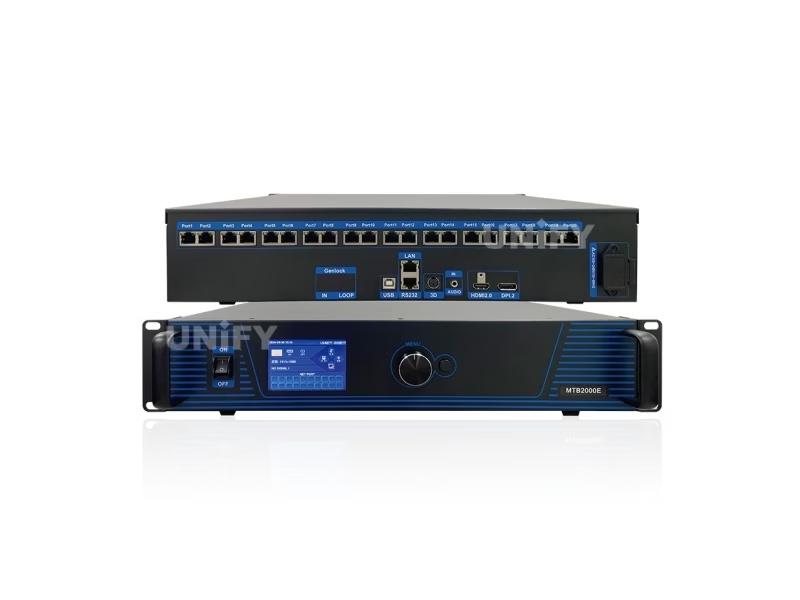
The Mooncell MTB2000E Master Controller is the flagship sending controller of the MTB series: 20 Gigabit Ethernet ports, a 10.4-million-pixel load, full 4K×2K@60Hz processing, HDR10, active 3D, lossless scaling and an 8192×8192 canvas.
Product Overview
What Is the Mooncell MTB2000E Master Controller?
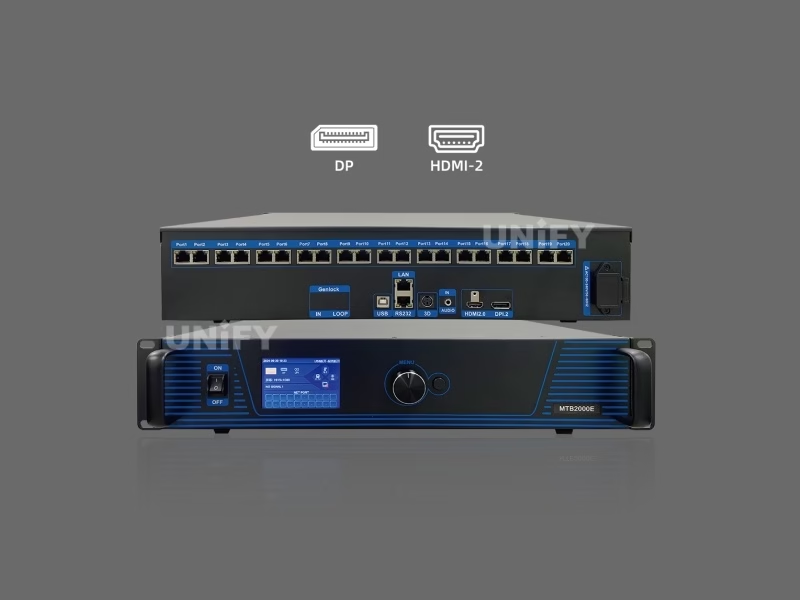
The Mooncell MTB2000E Master Controller is the flagship sending controller of Mooncell’s MTB series: it takes HDMI 2.0 or DP 1.2 video, performs full 4K×2K@60Hz image processing, and drives LED receiving cards through 20 Gigabit Ethernet ports with a combined load of up to 10.4 million pixels. HDR10, active 3D, lossless scaling, flexible network wiring and automatic data recovery ride on the same platform, inside an 8192×8192 canvas ceiling. Mooncell’s official page titles it the MTB2000E Sending Controller; the market sells it as a Master Controller. This page uses the official MTB2000E Specification V4.0 (July 2025) as its data source.
Short answer: The Mooncell MTB2000E is the 20-port flagship sending controller of the MTB series: 10.4M pixel load (10.40M scaled / 8.29M pixel-to-pixel per Mooncell’s hub), HDMI 2.0 + DP 1.2 input at 4K60, audio over the network cable, HDR10, lossless scaling, flexible wiring, active 3D at 120 Hz, loop and dual-master backup, automatic data recovery, RS232 central control and an 8192×8192 canvas. It lists at $1,010–$1,080 across distributors, sits at the top of the seven-rung MTB ladder, and shares the 20-port 10.4M platform with the BS-Series B2000ES for creative walls.
The MTB ladder is the context that matters: seven rungs across Mooncell’s two sending-controller hubs, from the 1.3M V30 Pro to this unit. The MTB400E (2.6M, 4 ports, $195) is the entry of the HDMI era; the MTB800E (5.2M, 8 ports) and MTB1200E (7.8M, 12 ports) step up; the MTB2000E tops the ladder at 10.4M and 20 ports. A documented variant, the MTB2000E-D, carries its own V4.0 specification for interactive floor LED projects. This page covers the base MTB2000E.
In the Mooncell control chain the MTB2000E is the top sending stage: a PC or media server feeds HDMI/DP, and the twenty Gigabit outputs drive Mooncell receiving cards — the A712 (HUB75E) or A10X (120-pin) — inside the cabinets. The M40 carries the family’s 26M class with fiber; the MTB2000E is the 10.4M sending flagship.
Specifications
What Are the Mooncell MTB2000E Master Controller Specifications?
Data from the official Mooncell MTB2000E Sending Controller Specification V4.0 (first release July 21, 2025; hardware ST2000 V2.0.0), plus Mooncell’s MTB800E/MTB1200E/MTB2000E hub page for the processing features it documents.
Loading, Input & Output
Backup, Front Panel & Physical
Data Verification
Where Do Published Mooncell MTB2000E Specs Disagree — and What Does V4.0 Say?
Three conflicts circulate around the MTB2000E, and all three resolve cleanly against the official record:
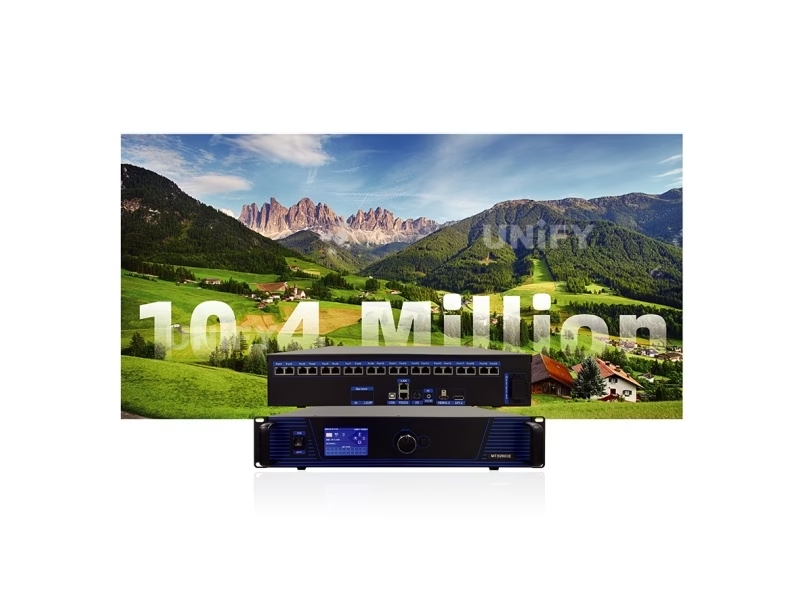
20 ports × 655,360 = 13,107,200 is the theoretical port sum — it matches no official configuration. Mooncell rates the unit 10.40M (scaled) / 8.29M (pixel-to-pixel), the same dual quote carried by the BS-Series B2000ES. Plan on the official figures.
Some channel listings add 4× optical fiber and an HDMI loop-out. Neither appears in the V4.0 sheet nor in Mooncell’s MTB800E/MTB1200E/MTB2000E hub — treat them as unverified channel copy. This page documents the official interface set.
The MTB2000E-D is a documented variant with its own V4.0 specification, aimed at interactive floor LED projects — same 10.4M capacity and 20 Gigabit outputs. Specify which variant a quote covers.
The V4.0 sheet plus the two official MTB hubs are the reference set for this page; where channel copy disagrees, the official record wins.
Model Selection
Which Mooncell MTB2000E Do You Need: MTB400E, MTB800E, MTB1200E or MTB2000E?
Mooncell’s MTB series spans seven rungs across two official hubs — the V30 Pro/MTB200S/MTB400E/MTB600E hub and the MTB800E/MTB1200E/MTB2000E hub. The MTB2000E tops the ladder:
All rungs share independent Gamma, multi-device splicing, audio transmission and loop backup. The ladder’s step changes: HDMI 2.0 + DP input and the 8192 canvas arrive at the MTB800E; 3D, RS232 and the LCD front panel ride the high tier. The deciding variables are the pixel budget and the port count — and the MTB2000E is the only rung that carries 20 ports.
Canvas & Loading
How Big a Canvas Can the Mooncell MTB2000E Drive?
The 8192×8192 canvas is the MTB series’ top ceiling — double the 4096 of the MTB400E rung in each axis, which is four times the area. The loading math and what it means at common pitches:
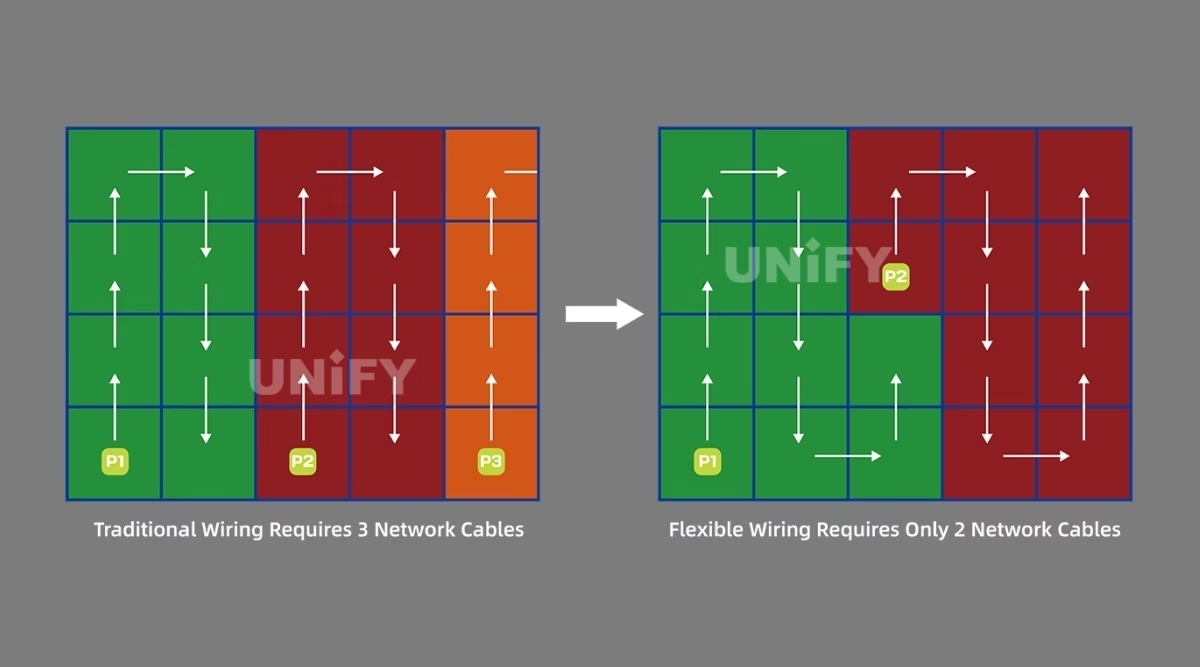
The practical read: the canvas ceiling bounds the aspect ratio and the pixel budget bounds the wall size. Flexible wiring is the multiplier — because each network cable’s load is counted by the actual loaded pixels rather than the traditional rectangular area, an irregular or sparsely-populated wall keeps more ports in service. The sending-side planning guide covers port math in the same units: how to configure an LED sending card.
Processing Features
What Do HDR10, Lossless Scaling, Flexible Wiring and Auto Recovery Do on the Mooncell MTB2000E?
Four processing features from Mooncell’s MTB hub page separate the flagship from the sending tier below it — and the last two change how a wall is planned and serviced:
Wide luminance range, high color depth and wide color gamut on the sending stage — HDR content reaches the wall without being flattened at the input.
Arbitrary scaling and windowing with the aspect ratio unchanged — a source maps to a non-native canvas without distortion, which is what makes mixed-ratio shows possible on one wall.
Each network cable’s pixel count is calculated from the actual loaded LED pixels, not the traditional rectangular area — raising network-port utilization and avoiding wasted cables on irregular layouts.
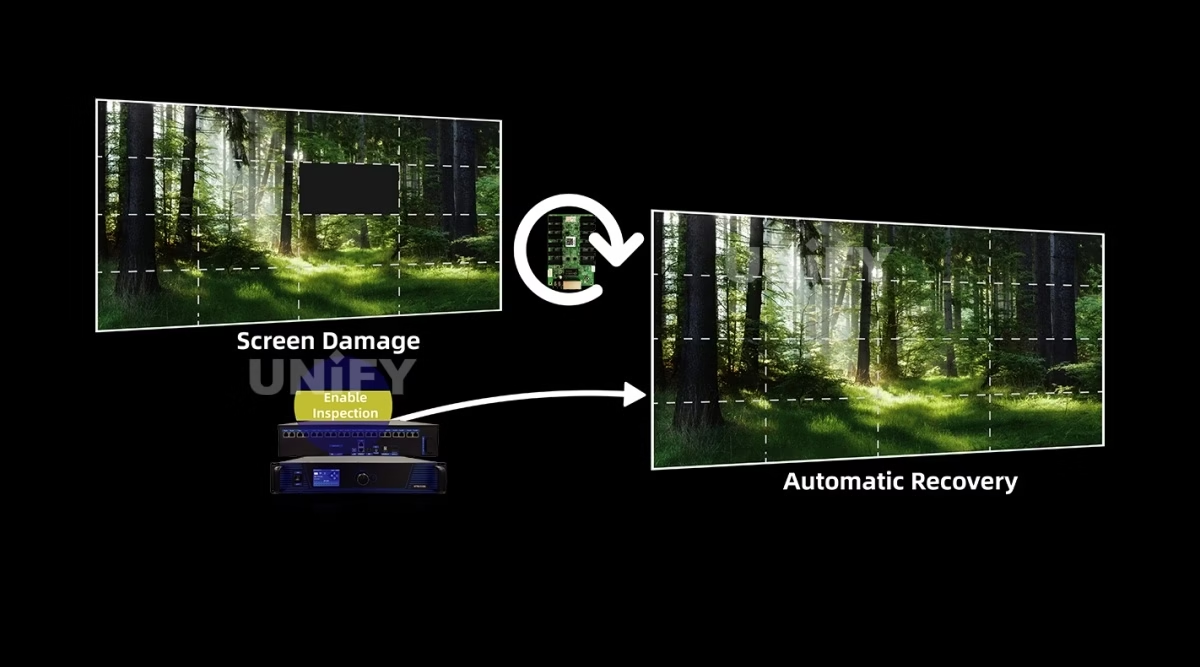
Configuration data saved in the internal flash is read back to inspect screen parameters — eliminating re-debugging after a controller swap and making after-sales maintenance a plug-and-play job.
Together with FAST MAPPING, front-panel brightness and independent Gamma, they are the feature set the low tier of the MTB ladder does not carry — the practical argument for the flagship beyond port count.
3D & Control
How Do 3D, 120 Hz and RS232 Work on the Mooncell MTB2000E?
Three upgrades mark the flagship tier over the MTB400E rung:
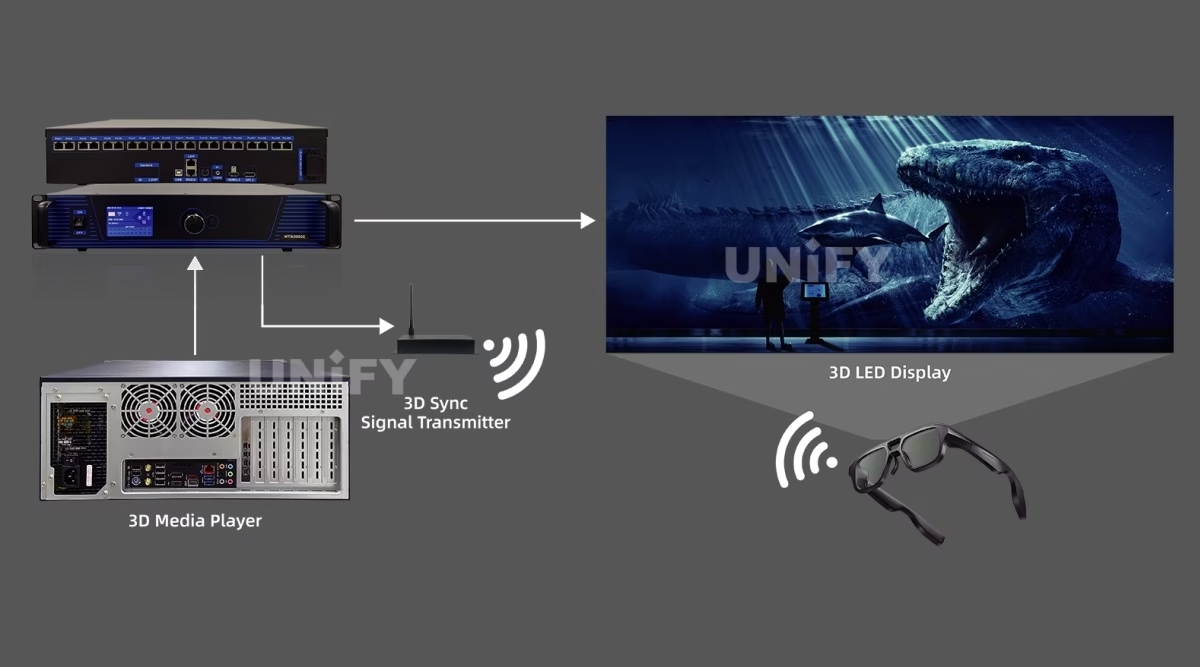
Active 3D display with a 3D transceiver interface — shutter signals reach the glasses through the connected transmitter, and the 120 Hz input feeds the alternating left/right pipeline.
Beyond 30/50/60 Hz, the flagship accepts 120 Hz sources — the rate 3D content is mastered at, and headroom for high-refresh walls.
The RS232 serial port connects central-control equipment — the integration path that venue control rooms and automation systems expect, arriving on the MTB2000E alongside USB and LAN.
Specify the 3D transceiver and the ST_EXT extension board (cascaded brightness + light-sensor auto adjustment) at order time — both are options.
Redundancy & Monitoring
How Does the Mooncell MTB2000E Keep a 10.4M Wall Alive?
At 10.4M pixels, the sending controller is the single point the whole wall shares — the MTB2000E answers with standard backup plus a recovery path that survives hardware swaps:
Network-port loop backup between the outputs — a failed series line keeps the wall alive, the same gigabit loop protection used across the family.
A second MTB2000E stands by as the backup master — the same dual-master mechanism documented on the B1200S and MTB400E pages, applied at the flagship tier.
Configuration data in internal flash reads back to inspect screen parameters — a swapped controller inherits the wall’s setup without re-debugging.
Host software watches sending-card parameters and status; configuration readback saves the exact setup; Gigabit error-rate detection flags a marginal cable early.
For the system-level redundancy picture — backup sending hardware, cascade failover, spare discipline — see the LED display system redundancy & backup guide.
Core Features
What Does the Mooncell MTB2000E Master Controller Bring to a Project?
Six capabilities define the MTB2000E for flagship installations — the load first, then the processing stack, then the reliability layer.
Twenty Gigabit ports — the top rung of the MTB ladder — with 10.4M scaled / 8.29M pixel-to-pixel loading and an 8192×8192 canvas.
Full 4K processing with HDMI 2.0 + DP 1.2 input and GPU customization to 8192×8192 — the source maps to the wall exactly.
HDR10 with wide color gamut plus arbitrary scaling and windowing with the aspect ratio kept — flagship-grade processing at the sending stage.
Active 3D with transceiver interface and 120 Hz frame-rate input — the 3D pipeline the low MTB rungs do not carry.
Load counted by actual pixels instead of rectangular area, and configuration recovered from internal flash — planning and service advantages unique to the flagship tier.
Ethernet loop and dual-master backup, plus RS232 central control — the reliability and integration stack of the flagship tier.
Software & Commissioning
How Do You Configure the Mooncell MTB2000E?
Configuration runs in AutoLED, Mooncell’s single software across the family — with the flagship’s processing features on top:
The FAST MAPPING workflow shortens the cabinet-to-canvas mapping pass — a flagship convenience on 20-port installs where a slow mapping loop costs real hours.
Save the configuration to internal flash, and a replacement unit reads it back automatically — the after-sales path that removes on-site re-debugging.
Multiple controllers connect to one PC over USB; each unit’s canvas is set within its 8192×8192 ceiling, and the host software manages them as one wall.
Official Mooncell video — processing without custom films.
The full commissioning sequence — wiring, network mapping, module configuration, correction — is covered step by step in the LED display configuration and system debugging guide.
On-Site Operation
How Do You Operate the Mooncell MTB2000E Without a Laptop?
The flagship adopts the LCD-panel operating surface — the same interaction model as the BS-Series B1200S, and a step up from the MTB400E’s digital display:
Shows device status and menu parameters — load state, input status and configuration options at a glance.
Select menus, adjust parameters and confirm with the knob; ESC returns — the full control surface without a keyboard.
Direct brightness adjustment from the panel, plus the ST_EXT path for cascaded and light-sensor automatic control.
Applications
Where Does the Mooncell MTB2000E Master Controller Fit Best?
The MTB2000E answers the wall that outgrows the mid tier — 10.4M-class canvases with production-grade processing needs. Four application classes cover most of the demand:
20-port walls with 120 Hz and 3D for show-critical production rigs
Multi-canvas walls with RS232 central-control integration into venue automation
HDR10 and lossless scaling for camera-facing walls with mixed-ratio content
Small-pixel-pitch walls where per-port loading discipline and flexible wiring matter most
Official Mooncell case sharing — 5D immersive rooms.
Official Mooncell showcase — special-shaped LED screens.
For event and staging contexts around these walls, the LED screen for events guide covers the deployment planning around the display itself.
Cross-Series Comparison
How Does the Mooncell MTB2000E Compare with the Mooncell B2000ES?
Mooncell ships two 20-port, 10.4M flagships — one in the MTB sending line and one in the BS creative line. The honest comparison is the wall shape, not the hardware:
Three numbered differences decide between them:
- Wall shape. The MTB2000E drives rectangular walls with HDR and scaling; the B2000ES maps any geometry — spheres, domes, rings — with arbitrary pixel mapping.
- Fiber. The BS hub documents optional 4×10G fiber on the B2000ES; the MTB2000E’s official record lists 20 Gigabit ports only.
- Processing priorities. HDR10, lossless scaling and flexible wiring serve production walls; Genlock and audio-over-network serve creative productions. Choose by what the content demands.
Pricing
How Much Does a Mooncell MTB2000E Cost?
Price transparency, stated plainly: distributor listings reviewed September 2026 range from $1,010 (Leeman LED Display) to $1,070.07 (EagerLED) and $1,080 (LED Controller Hub). Same-channel reference points: the MTB400E at $195, the MTB800E at about $533 and the Novastar VX4S at $1,499 — the MTB2000E sits between the mid-tier sending boxes and the processor flagships. Factory-direct tiers for B2B buyers:
A per-wall budget is the honest math: a 10.4M wall at about $1,050 runs to about $1,100 in sending hardware, before receiving cards — see the LED display warranty page for what to hold the supplier to on spares. Ask for a factory-direct quote at your quantity — we are the LED screen manufacturer behind unifyled.com.
FAQ
What Do Buyers Ask About the Mooncell MTB2000E Master Controller?
What Assurance Comes With the Mooncell MTB2000E Master Controller?
Every MTB2000E ships with Mooncell original packaging and compliance documentation.
Ready to Specify the Mooncell MTB2000E Master Controller?
Factory-direct pricing, genuine Mooncell stock, cascade pre-configuration and 2-year warranty.
unifyledscreen@gmail.com | +86-191-18802497
Technical Deep-Dive
What Should Engineers Know Before Buying the Mooncell MTB2000E Master Controller?
Published: September 2026 | 12 min read | UnifyLED Engineering Team
The Mooncell MTB2000E Master Controller is the top rung of Mooncell’s sending ladder — the 20-port, 10.4M unit that sits between the mid-tier sending boxes and the processor flagships, and the one where HDR10, lossless scaling, flexible wiring and automatic data recovery stop being optional ideas. This guide is written for engineers and project managers specifying 10.4M-class walls in 2026, using the official Mooncell MTB2000E Specification V4.0 (July 2025) and Mooncell’s two MTB hubs as the data sources, with the loading math, the processing stack and the channel errors that project documentation gets wrong.
Short answer: The Mooncell MTB2000E is the 20-port flagship sending controller of the MTB series: 10.4M pixel load (10.40M scaled / 8.29M pixel-to-pixel), HDMI 2.0 + DP 1.2 input at 4K60, audio over the network cable, HDR10, lossless scaling, flexible wiring, active 3D at 120 Hz, loop and dual-master backup, automatic data recovery, RS232 central control and an 8192×8192 canvas. It lists at $1,010–$1,080 across distributors, tops the seven-rung MTB ladder, and shares the 20-port 10.4M platform with the BS-Series B2000ES.
Chapter 1 — Definition: The Top Rung of the Sending Ladder
The Mooncell MTB2000E Master Controller is a sending controller: it receives video over HDMI 2.0 or DP 1.2, performs full 4K×2K@60Hz image processing, and drives LED receiving cards through 20 Gigabit Ethernet ports with a 10.4-million-pixel load. It is the top rung of the synchronous vs asynchronous LED control split for PC-driven walls — live video in, composed rows and columns out. Mooncell’s official page calls it the MTB2000E Sending Controller; the market calls it a Master Controller; both describe this unit.
The family picture is a seven-rung ladder across two official hubs: V30 Pro and MTB200S (1.3M, 2 ports), MTB400E and MTB600E (2.6M, 4/6 ports), MTB800E (5.2M, 8 ports), MTB1200E (7.8M, 12 ports) and the MTB2000E (10.4M, 20 ports). The step changes are real: HDMI 2.0 + DP input and the 8192 canvas arrive at the MTB800E; 3D, RS232 and the LCD front panel ride the high tier. The MTB400E page covers the entry of the HDMI era; this page covers the flagship. The hardware behind the MTB2000E is platform ST2000, revision V2.0.0, on the V4.0 sheet first released July 21, 2025; a combined user manual for the MTB2000E/MTB1200E/MTB800E (V2.0) appeared January 2026.
Chapter 2 — Loading: 10.4M, Verified Against the 13.1M Claim
The 13.1M figure is the first thing to clear from a tender: 20 ports × 655,360 = 13,107,200 is the theoretical port sum, and it matches no official configuration. Mooncell rates the unit 10.40M with scaling and 8.29M pixel-to-pixel — and 8.29M is exactly 3840×2160, the 4K canvas. The same dual quote appears on the BS-Series B2000ES page, which is the cross-series confirmation that the 20-port platform is rated 10.4M, not 13.1M. Plan walls on the scaled figure for mixed content or the pixel-to-pixel figure for 4K-native masters.
The canvas ceiling is 8192×8192 — double the MTB400E rung in each axis, four times the area — with per-port loads of 1280×512 and an offset range to 8192. Practical formats: a 4K wall (8.29M) fits the unit pixel-to-pixel with headroom for scaling; a 5120×2048 super-wide (10.49M) is the scaled ceiling; the 8192×8192 ceiling itself (67.1M) is bounded by the 10.4M load, so the canvas bounds the aspect ratio and the load bounds the wall size. At P3.91, the 4K wall is 15.0 × 8.4 m and the 10.4M canvas is 20.0 × 8.0 m — a stadium-class band. The sending-side planning guide covers port math in the same units: how to configure an LED sending card.
Chapter 3 — The Processing Stack: HDR10, Lossless Scaling, Flexible Wiring, Auto Recovery
Four processing features from Mooncell’s MTB hub page separate the flagship from the sending tier below it. HDR10 brings a wide luminance range, high color depth and wide color gamut to the sending stage — HDR content reaches the wall without being flattened at the input. Lossless scaling performs arbitrary scaling and windowing with the aspect ratio unchanged, which is what makes mixed-ratio shows possible on one wall — a 16:9 master and a 9:16 feed on the same canvas without distortion.
Flexible wiring changes planning math: each network cable’s pixel count is calculated from the actual loaded LED pixels rather than the traditional rectangular area. On an irregular or sparsely-populated wall, ports that a rectangular calculation would waste stay in service — the same argument that carries the creative controllers, now applied to standard walls. Automatic data recovery reads configuration saved in internal flash to inspect screen parameters, which eliminates re-debugging after a controller swap: a replacement unit inherits the wall’s setup, and after-sales maintenance becomes a plug-and-play job. Together with FAST MAPPING, front-panel brightness and independent Gamma, these are the features the low MTB rungs do not carry — the practical argument for the flagship beyond port count.
One planning number shows why flexible wiring matters at this scale. A rectangular wall of 10.4M pixels at 1280×512 per port needs exactly 16 fully-loaded ports — leaving four ports of the 20 for headroom or spares. An irregular wall with the same physical LED count but a jagged bounding rectangle might exceed the rectangular calculation while staying under the actual-pixel count; flexible wiring keeps the same 16-port budget honest instead of forcing a second unit. For integrators, that is the difference between quoting one MTB2000E or two — the kind of number that decides a bid before the controller is ever discussed.
Chapter 4 — Reliability and the Recovery Path
At 10.4M pixels the sending controller is the single point the whole wall shares, and the MTB2000E answers with standard backup plus a recovery path that survives hardware swaps. Ethernet loop backup runs between the network ports, so a failed series line keeps the wall alive; dual-master backup stands a second unit by — the same mechanism documented on the B1200S and MTB400E pages, now at the flagship tier. Automatic data recovery is the service-layer story: configuration in internal flash reads back on a replacement unit, removing the most expensive step of a field swap. Host software monitors sending-card parameters and status continuously, configuration readback saves the exact setup, and Gigabit error-rate detection flags a marginal cable before it becomes a dark section. The system-level picture is in the LED display system redundancy & backup guide.
Chapter 5 — The Flagship vs the Creative Flagship
Mooncell ships two 20-port, 10.4M flagships — the MTB2000E in the sending line and the B2000ES in the BS creative line — and the honest comparison is the wall shape, not the hardware. Both rate 10.40M scaled / 8.29M pixel-to-pixel, both take HDMI 2.0 + DP 1.2, both carry an 8192×8192 ceiling. The differences: the BS hub documents optional 4×10G fiber on the B2000ES while the MTB2000E’s official record lists 20 Gigabit ports only; the B2000ES maps any geometry with arbitrary pixel mapping, Genlock and audio-over-network for creative productions, while the MTB2000E brings HDR10, lossless scaling and flexible wiring to rectangular production walls. A sphere or dome points to the B2000ES; a rectangular 10.4M wall points to the MTB2000E. Above both, the M40 carries the family’s 26M class with fiber.
The MTB2000E-D deserves its own paragraph because it surfaces in searches beside the base unit. Mooncell documents it with its own V4.0 specification, aimed at interactive floor LED display projects — the same 10.4M pixel capacity and 20 Gigabit outputs, with the floor-specific configuration story around the 3D and interaction chain. When a quote says MTB2000E, confirm whether it covers the base unit or the -D variant: the hardware class is shared, the project context is not, and the official interactive-floor case that Mooncell shares pairs a special receiving card with the master control at the sending stage.
Chapter 6 — Commissioning and the Front Panel
Configuration runs in AutoLED with the flagship’s conveniences on top. The workflow: install AutoLED and connect over USB; select the source (HDMI 2.0 or DP 1.2); set the canvas within the 8192×8192 ceiling; map the modules — FAST MAPPING shortens the cabinet-to-canvas pass on 20-port installs where a slow mapping loop costs real hours; save the configuration to internal flash so a replacement unit recovers it automatically. Cascades connect multiple controllers to one PC over USB, each unit’s canvas set within its ceiling and the host software managing them as one wall. The complete sequence is covered in the LED display configuration and system debugging guide.
On site, the flagship adopts the LCD-panel operating surface — LCD 320×240, rotary knob and ESC — the same interaction model as the BS-Series B1200S and a step up from the MTB400E’s digital display. Direct brightness adjustment runs from the panel, with the ST_EXT path for cascaded and light-sensor automatic control. Specify the 3D transceiver and the ST_EXT board at order time; both are options.
Official Mooncell video — the control system in the field.
Spec-sheet detail for the tender, in the same honest tone: the MTB2000E runs on AC 100–240 V at 70 W, works from −20°C to 60°C at 10–90% RH non-condensing, stores at −20°C to 70°C, measures 481.6 × 398.6 × 99.3 mm at 4.7 kg net (6.4 kg gross), ships one unit per carton with power cord, USB, DP and HDMI cables, the certificate, and two hangers plus four M3 screws in the box. Audio rides the network cable without the P1-only constraint of the MTB400E rung, and the front panel — LCD 320×240, knob, ESC — mirrors the BS-Series interaction model, so a crew that knows the B1200S panel knows this one. Those figures are the V4.0 sheet’s; a channel listing that adds fiber or an HDMI loop-out should be reconciled against the sheet before the drawing is cut.
Chapter 7 — What the MTB2000E Costs, Honestly
Distributor listings reviewed September 2026 range from $1,010 (Leeman LED Display) to $1,070.07 (EagerLED) and $1,080 (LED Controller Hub). The honest frame: the MTB400E at $195 and the MTB800E at about $533 price the ladder below it, and the Novastar VX4S at $1,499 prices the processor class above — the MTB2000E sits in the gap where 20-port sending meets 4K processing without windowing. A per-wall budget is the honest math: a 10.4M wall at about $1,050 runs to about $1,100 in sending hardware, before receiving cards. Two channel errors deserve a warning: fiber and HDMI loop-out appear in some listings but in neither the V4.0 sheet nor the official MTB hub — treat them as unverified; and the MTB2000E-D variant, documented for interactive floor projects, should be confirmed by name in a quote. Factory-direct tiers shift the price with volume, cascade pre-configuration and 3D/ST_EXT bundles; ask for a quote at your unit count.
Conclusion
The Mooncell MTB2000E Master Controller is the 20-port flagship of the sending ladder: 10.4M pixels of verified load, 4K×2K@60Hz processing, HDR10, lossless scaling, flexible wiring, active 3D, loop and dual-master backup and automatic data recovery — on an 8192×8192 canvas at a $1,010–$1,080 street price. It is the unit to specify when a rectangular wall outgrows the mid tier, and the V4.0 sheet plus the two official MTB hubs are the references to pin to it.
Buying in bulk? Talk to us — we are the LED screen manufacturer behind unifyled.com, and flagship sending controllers ship from stock with 2-year warranty and cascade engineering support.
Related Pages
Explore the Mooncell Control Ecosystem
Mooncell MB400S Creative LED Controller
Mooncell B1200S Creative LED Controller
Mooncell A10X LED Receiving Card
Mooncell A712 LED Receiving Card
Mooncell C2 LED display control system
Mooncell MVB4S Pro 2-in-1 LED Video Processor
Mooncell MVB12E 2-in-1 LED Video Processor
Mooncell MVB20E-G 2-in-1 LED Video Processor
Mooncell M40 2-in-1 LED Video Processor
10 pages · English · first release July 21, 2025 · hardware ST2000 V2.0.0 · user manual V2.0 (Jan 2026) covers MTB800E/MTB1200E/MTB2000E