
Fine-Pitch Outdoor · P3.0 & P3.076
P3 Outdoor LED Display Collection
Two module formats on the 3mm class — the 320×160mm P3.076 production standard and the 192×192mm exact-pitch square. Over 5,500 nits against direct sun, IP65-sealed fronts, iron waterproof cabinets, and a control stack from NovaStar, Colorlight, Huidu or Mooncell.
Definition
What Is a P3 Outdoor LED Display?
Short answer: A P3 outdoor LED display is a weatherproof video wall whose LEDs sit 3mm apart, giving about 111,000 pixels per square meter. It is the workhorse pitch for outdoor walls viewed from roughly 3 to 8 meters — storefronts, plazas, roadside screens at signals, stadium perimeters. “P3” covers two shipping formats: exact P3.0 on 192×192mm boards (64×64 pixels) and the industry-standard P3.076 on 320×160mm boards (104×52). Both run ≥5,500 nits behind an IP65 front and work with any mainstream receiving card.
A P3 outdoor LED display is a fixed-installation video wall assembled from SMD modules with a 3mm-class center-to-center pixel distance — 111,111 pixels per square meter on exact P3.0, and 105,625 on the P3.076 variant whose pitch follows from the 320×160mm module grid. The two formats produce walls that look identical at viewing distance; they differ in board size, cabinet pairing and module arithmetic, which is why this page treats them as one family with two solutions.
The pitch places the P3 class in the middle of the outdoor range: coarse enough to stay affordable per square meter, fine enough that text promotions and faces still read at sidewalk distance. For the type-level background, see outdoor LED display categories and the outdoor LED module buying guide; run your own wall through the LED screen calculator.
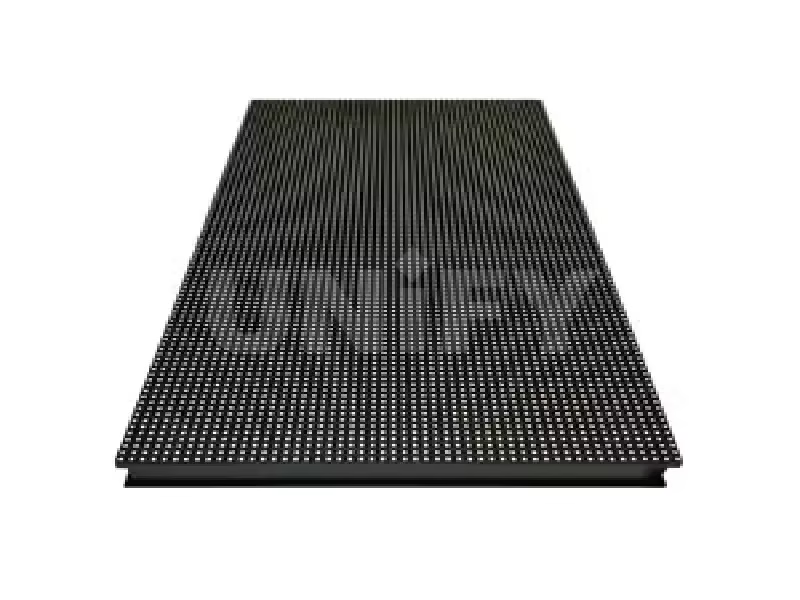
One arithmetic fact anchors the class: a 3×2m P3 wall resolves 960×600 pixels — comfortable for 1080p-style content on a footprint that costs roughly 30% less per square meter than the P2.5 class. If your closest viewer stands under 3 meters, step up to the P2.5 outdoor collection; past 8 meters, coarser pitches deliver the same perceived quality for less.
Module Options
Which Module Sizes Does a P3 Outdoor LED Display Use?
Two formats cover the class. Both produce a 3mm-class wall; they differ in board size, cabinet pairing and IC count. Parameters come from our production sheets — IC counts are the total devices fitted per module (driver + decode + row transistors), and they scale with scan mode.
① P3.076 · 320×160mm — The Production Standard
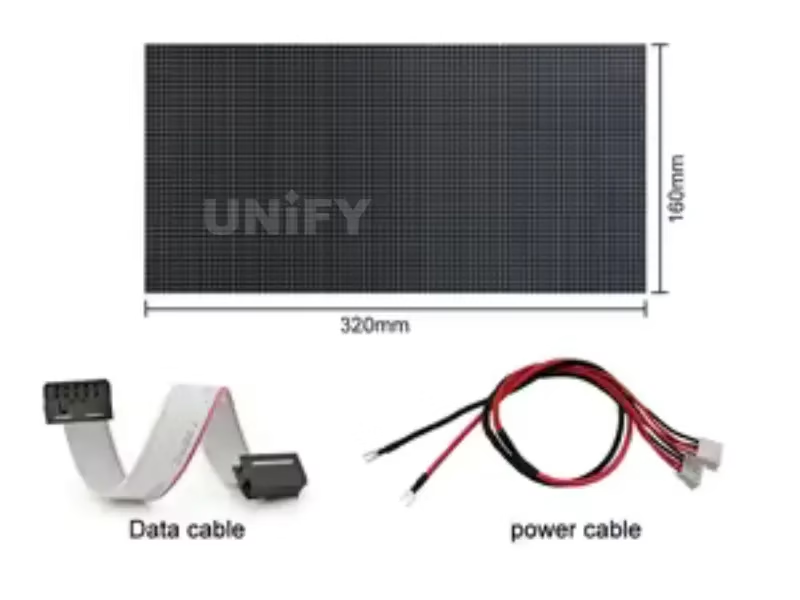
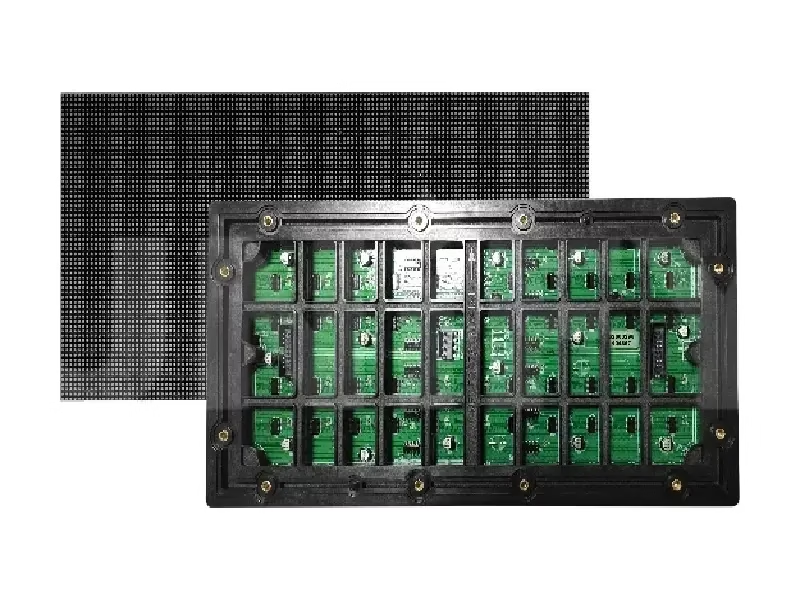
The module most of the industry ships for outdoor 3mm-class walls: 104×52 pixels per board, 19.5 boards per square meter, and the 960×960mm waterproof iron cabinet family as its native home — eighteen boards fill a 960×960, twenty-four fill a 1280×960, eight fill a 640×640, and a magnesium-aluminum option (960×960 / 1280×960, internal soft-connection wiring) covers premium builds. Rear maintenance is standard, and front-service builds with lock-catch modules are available on request for walls without rear access. The same board suite also accepts P2.5 through P10 modules, so a wall built today can change pitch later by swapping modules, not cabinets.
| Pixels per module | 104×52 = 5,408 dots |
| ICs fitted (total) | 42–84 · driver ICs from Chipone, Macroblock, SM Micro or Fuman |
| LED type | SMD1415 · Grade 1 (Nationstar, high stability) / Grade 2 (Xinda, value) |
| PCB | 1.6mm FR-4 fiberglass board |
| Maintenance | Rear standard · front-service (lock-catch) available on request |
| Cabinets | 1280×960mm (×24) · 960×960mm (×18) · 640×640mm (×8) waterproof iron — A960 series · OK series; magnesium-aluminum option (960×960 / 1280×960, internal soft-connection) |
| Brightness | 5,500–6,500 nits (copper/alloy wire) · 7,000–10,000 nits (gold-wire high-brightness build) |
| Scan & refresh | 1/13 scan · 1,920Hz standard / 3,840Hz high-refresh |
| Uniformity | Wavelength screening + system-level per-pixel correction |
| Density / viewing | 105,625 px/㎡ · view from ~3m |
② P3.0 · 192×192mm — The Exact-Pitch Square
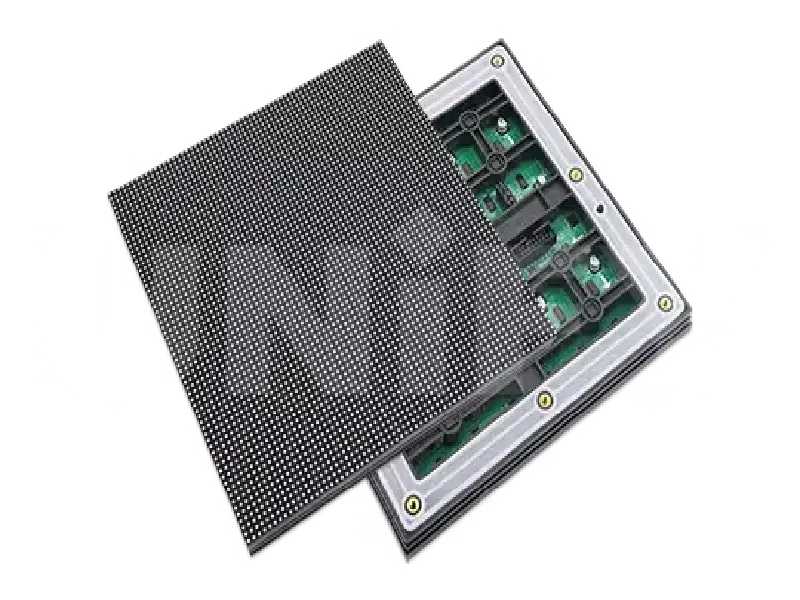
The square board family that hits 3.0mm exactly: 64×64 pixels per module, 27 boards per square meter, and its own cabinet pairing — nine boards fill a 576×576mm iron cabinet, sixteen fill a 768×768mm. The granular grid suits odd wall proportions and keeps spare units small and cheap. Rear maintenance standard; the format is the traditional choice for fixed signage walls where cabinet dimensions follow the architecture.
| Pixels per module | 64×64 = 4,096 dots |
| ICs fitted (total) | 48 · driver ICs from Chipone, Macroblock, SM Micro or Fuman |
| LED type | SMD1415 / SMD1921 · Grade 1 (Nationstar) / Grade 2 (Xinda) |
| PCB | 1.6mm FR-4 fiberglass board |
| Maintenance | Rear standard |
| Cabinets | 576×576mm iron (×9) · 768×768mm iron (×16) |
| Brightness | 5,500–6,500 nits (copper/alloy wire) · 7,000–10,000 nits (gold-wire high-brightness build) |
| Scan & refresh | 1/16 scan · multi-tier refresh supported (higher tiers increase load) |
| Uniformity | Lamp binning for chromaticity control + system per-pixel luminance/chromaticity compensation |
| Density / viewing | 111,111 px/㎡ · view from ~3m |
Watch It Built
What Does a P3 Outdoor LED Display Look Like in Production?
Board Build
How Thick Is the PCB in a P3 Outdoor LED Display Module?
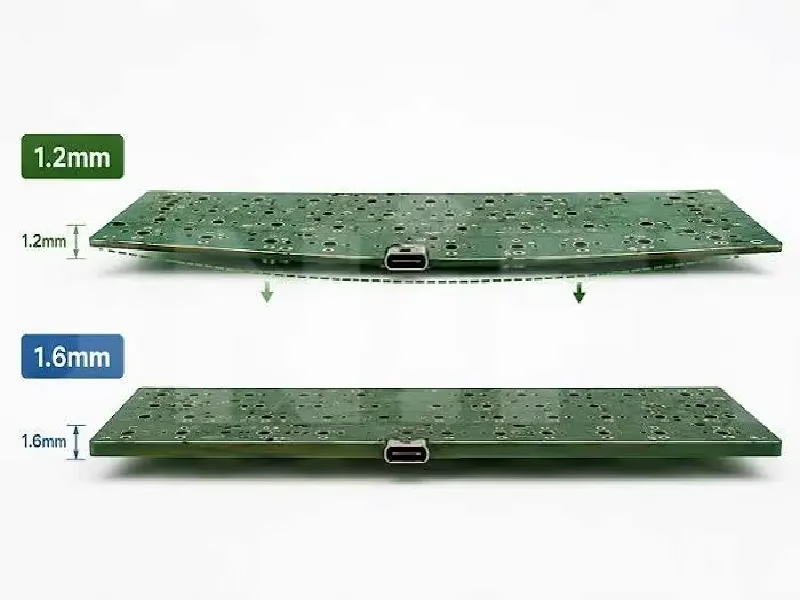
The PCB in a P3 outdoor LED display module is a 1.6mm fiberglass (FR-4) board. At 3mm pitch the LED count per board is roughly half that of the P2.5 class, so a standard 2-layer 1.6mm board carries the current comfortably — the thickness matters for flatness across 5,408 solder joints while the board swings from −30°C nights to 60°C+ surface temperatures in direct sun.
FR-4 Fiberglass
The glass-epoxy class that self-extinguishes and resists warpage; the board stays flat against the mask so the 1/13 scan stays aligned at every temperature extreme.
Conformal Coating
The solder side carries a three-proof varnish against moisture, salt and dust; roadside and coastal installs step up to a full GOB pour over the lamp face.
Cabinet Material Matters
Board quality pairs with the cabinet: waterproof iron for the 960×960 and 576/768 families, aluminum where weight or corrosion resistance leads. Watch the fire-test video above.
Spec note: brightness ships in two production tiers — 5,500–6,500 nits on copper/alloy-wire lamps, 7,000–10,000 nits on gold-wire high-brightness builds — verifiable at full white before shipment.
What Contrast and Grayscale Does a P3 Outdoor LED Display Reach?
Two numbers decide how “real” the picture looks before brightness ever enters the conversation: the contrast ratio and the grayscale depth. Both are component choices — mask and lamp on one side, driver IC on the other — and both are specified in writing on our P3 Outdoor LED Display production sheets.
Black mask — 5,000:1
Spraying the module mask with black ink lifts the contrast ratio to about 5,000:1. Blacks stop washing out under ambient light, and colors read closer to true — the difference between a wall that looks like a mirror in daylight and one that disappears into the picture.
SMD vs DIP — and the black-face option
SMD packaging out-contrasts legacy DIP by geometry — less exposed reflective surface per lamp. Step up to black-face 1415 lamps and contrast climbs further. The trade-off: at the same current a black-face lamp is dimmer than a white one, so the power run needs heavier-gauge wire and the build costs more. The payoff outdoors is no-glare, mirror-free daylight performance and truer color.
Grayscale — 8 / 12 / 16-bit
Grayscale depth ships in 8-bit, 12-bit and 16-bit per color, and the number is decided by the driver IC — not the lamp. Higher bit depth shows first in dark gradients: a wall that dims after midnight needs 16-bit, or night content bands where the shading should be smooth.
Contrast and brightness pull against each other — a black-face, black-masked wall reads deeper but needs the brightness tier to match. The brightness guide covers how we balance the two on export builds.
Power
Which Power Supply Brands Does a P3 Outdoor LED Display Use?
A P3 outdoor LED display runs on 5V switching supplies from three brands we fit in production: Chuanglian Power, MEAN WELL and G-Energy. Each 960×960mm cabinet carries its own supply rated 5V 40A (200W) or 5V 60A (300W), so a failed unit takes down about one square meter of wall — not the whole face.
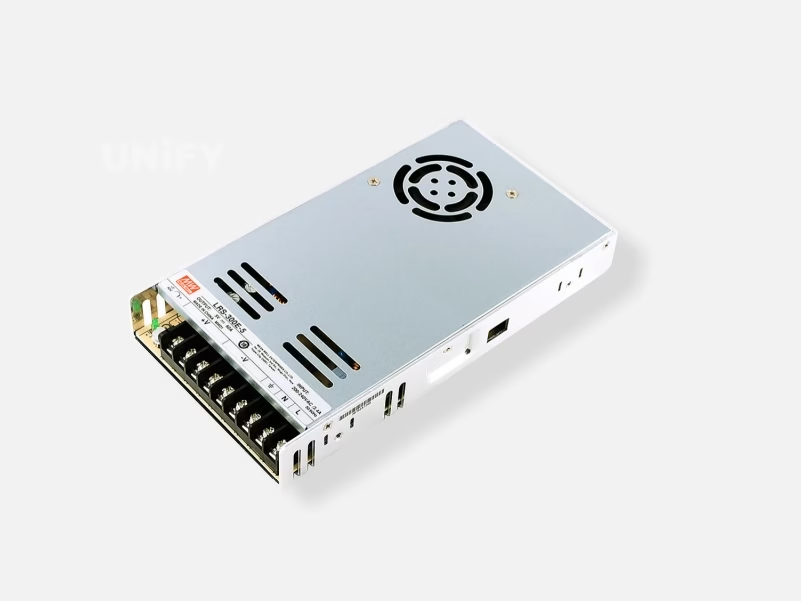
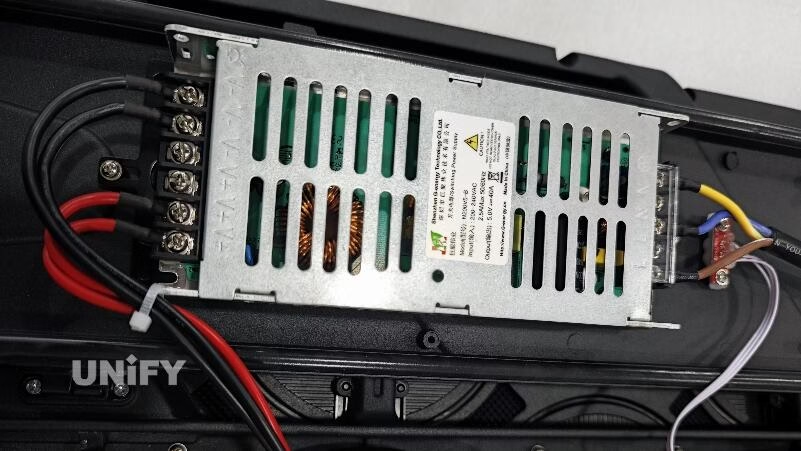
Budget check: a P3 outdoor wall draws roughly 400–500W per square meter on mixed content and peaks near 650–800W on full white — lower than the P2.5 class because the pixel count per square meter is about a third smaller. Watch the field-test video above for measured numbers, and size the feed with headroom for inrush.
Control Stack
Which Control Systems Work With a P3 Outdoor LED Display?
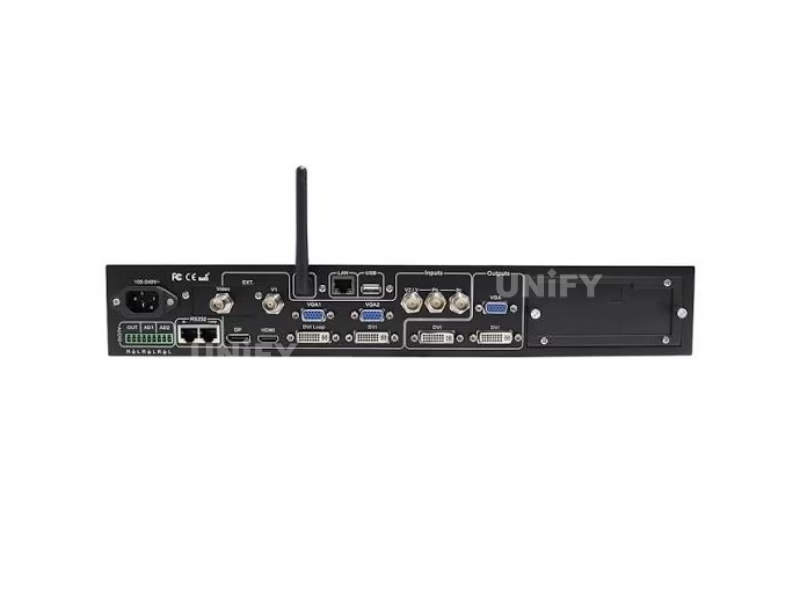
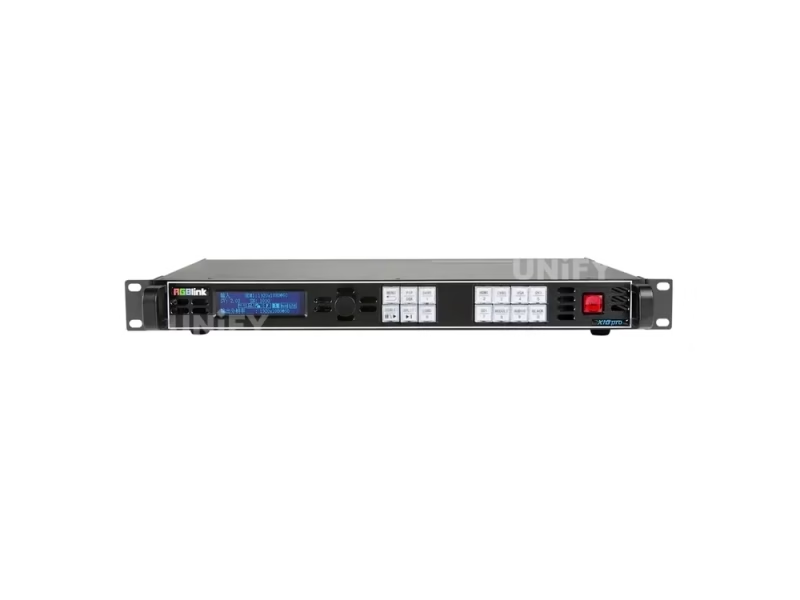
These HUB75 modules work with every mainstream receiving card. Six hardware ecosystems fit these modules — four control platforms plus two video-processing lines. Pick one ecosystem and stay in it, because sending cards and receiving cards must come from the same family: Two control modes fit every ecosystem: synchronous systems drive large-area walls and TV-broadcast scenarios in real time, while asynchronous players serve small-area monitoring-style screens from a phone app — both support cloud-platform management.
NovaStar

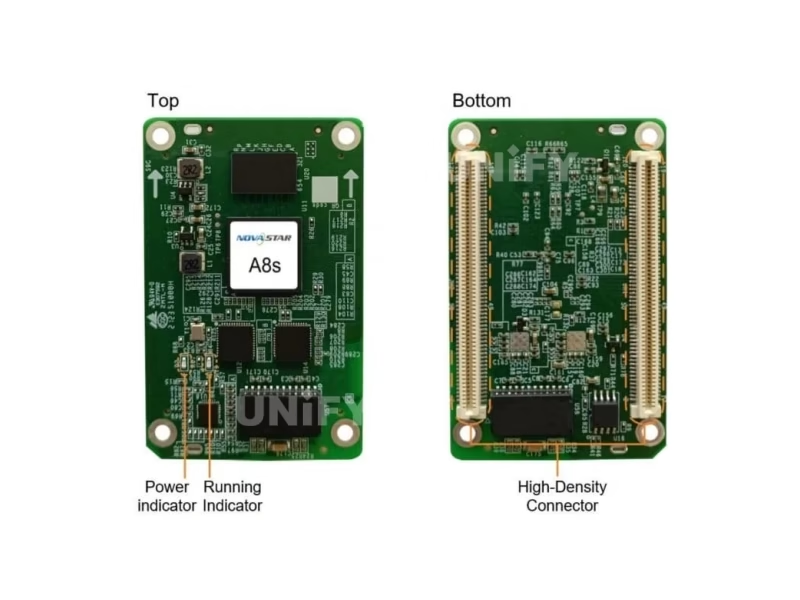
The broadcast-grade default. A8s-class receivers pair with MCTRL/VX senders; calibration and brightness-ramping tools are the industry benchmark.
Best for: premium fixed installs, camera-facing walls
Colorlight
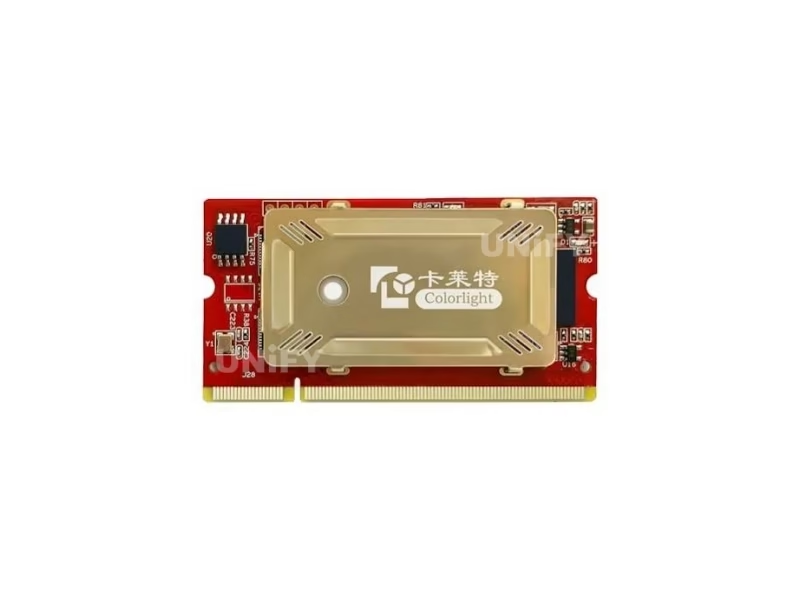
The value-performance leader. The i6-class and i5A family cover fixed walls; X-series processors handle the front end.
Best for: billboard and signage budgets
Huidu

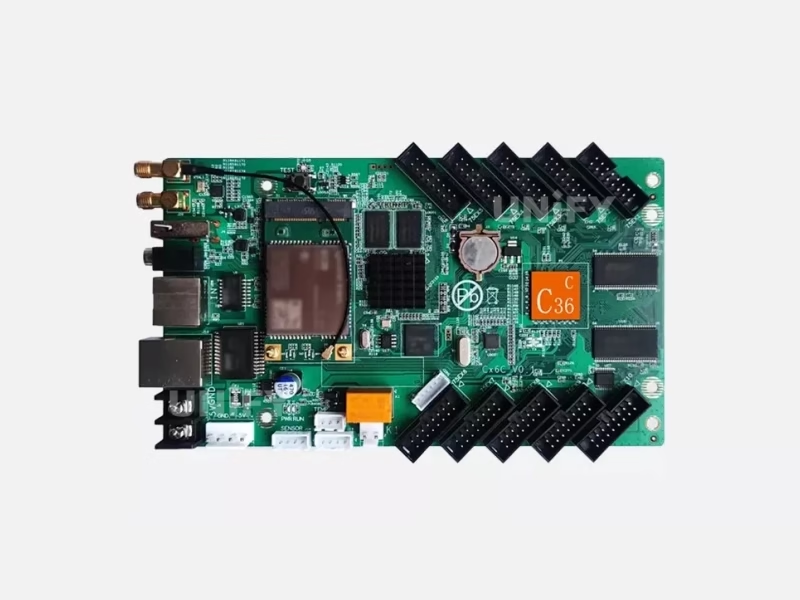
The asynchronous specialist — C36C-class cards play scheduled content from a phone app with no PC attached.
Best for: unattended signage, storefront screens
Mooncell

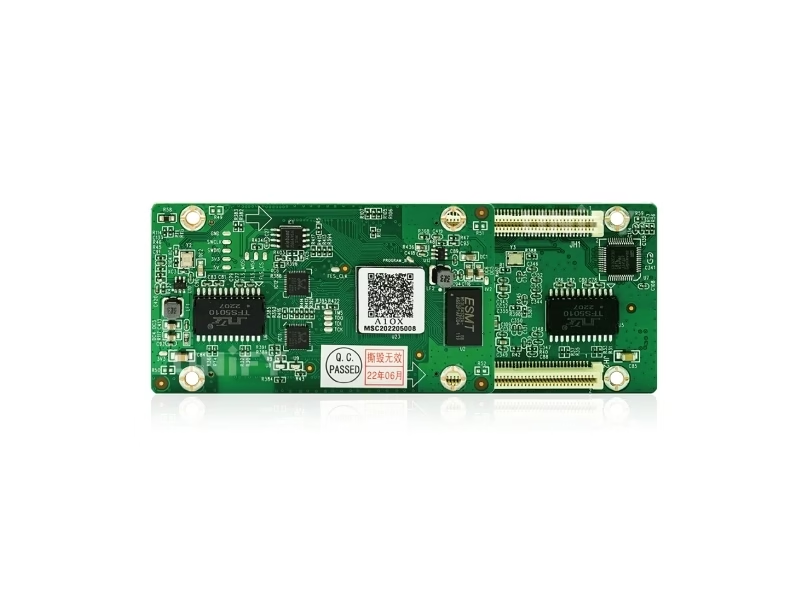
The rising third force — A10X-class receivers and 2-in-1 processors at aggressive price points.
Best for: cost-controlled fixed installs


Synchronous Control (Sync)
Real-time playback driven by a sending card or video processor — what plays on the source plays on the wall instantly. The stable choice for large-area walls and television-broadcast scenarios, and both ecosystems support cloud monitoring on top.
Best for: large walls, live video, TV broadcast
Asynchronous Control (Async)
An onboard player stores and schedules content from a phone app — no PC attached, runs unattended, updates over 4G/WiFi; cloud group control comes standard. The economical brain for smaller P3 walls and monitoring-style displays.
Best for: storefront & roadside signs, monitoring screens, scheduled playback
Watch: receiver mapping settings (Colorlight official)
Every cabinet in a P3 wall carries one receiving card; mapping it correctly is a two-minute job once seen. One rule above all: keep sender and receivers on the same platform — a NovaStar sender will not drive Colorlight receivers.
Hardware we stock across all six control and processing ecosystems — each card links to its own spec page:
How Far Can You View a P3 Outdoor LED Screen?
Pitch sets the floor of the viewing range. Route yourself before you budget:
What Is the Difference Between P3.0, P3.076 and P3.91?
Three pitches share the “P3” shorthand and buyers mix them up constantly. The table settles it — and the routing rule follows:
The routing rule: buying for a fixed wall on a budget — P3.0 or P3.076 on this page. Buying for a rental fleet that tours — P3.91 outdoor on die-cast cabinets. The 0.076mm difference between the first two is invisible at any viewing distance; the 0.834mm jump to P3.91 is a rental-versus-fixed decision, not a sharpness decision.
How Does P3 Compare With Other LED Display Pixel Pitches?
Density grows with the square of the pitch; the 1080p column lists the smallest 16:9 wall that reaches 1920×1080 on each pitch:
Pitch family detail pages: P1.5 · P1.8 · P2 · P2.5 · P2.6 · P2.9 · P4.81 · pixel pitch explained
Price Transparency
How Much Does a P3 Outdoor LED Display Cost?
Market reference ranges for 2026, compiled from a September 2026 scan of factory listings and module e-commerce prices (module prices scanned from retail listings, converted at 19.5 boards per square meter and checked against complete-wall quotes):
Reference: our own outdoor LED display price guide puts HD commercial fixed walls (P3/P4) at $800–1,200/㎡ — the P3 class sits near the top of the outdoor value band because LED chips alone take 35–45% of module cost. Control hardware adds $500–2,000 per project; steel and installation typically add 20–30% locally. Treat all figures as a market scan, not a quote.
Applications
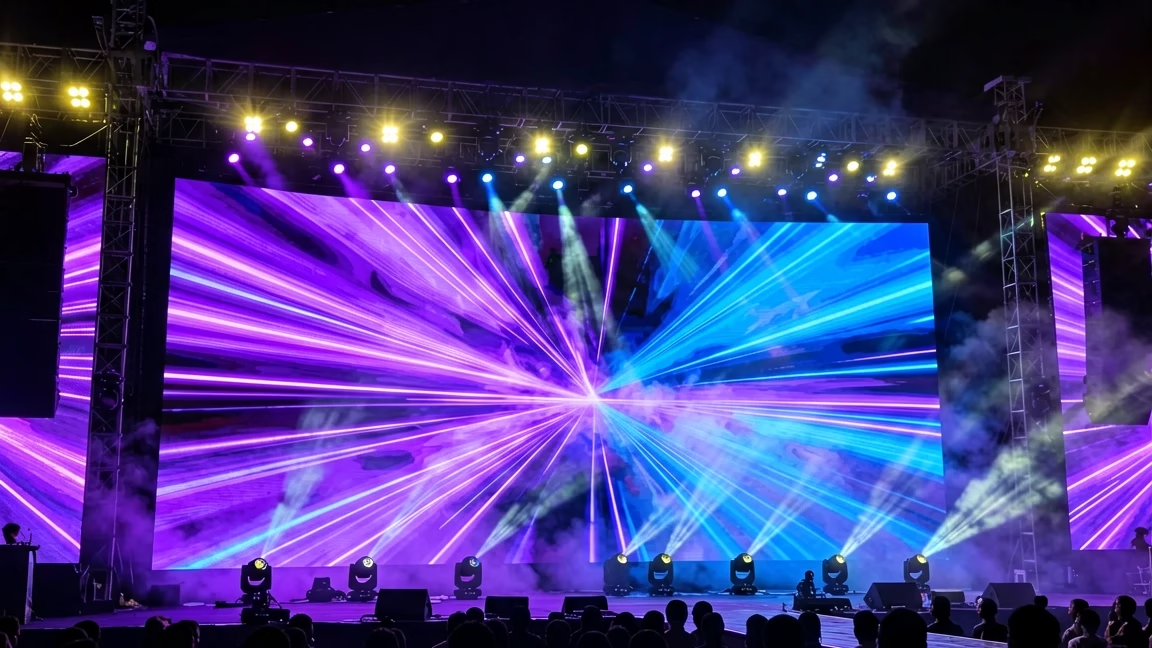
Where Does a P3 Outdoor LED Display Deliver the Most Value?
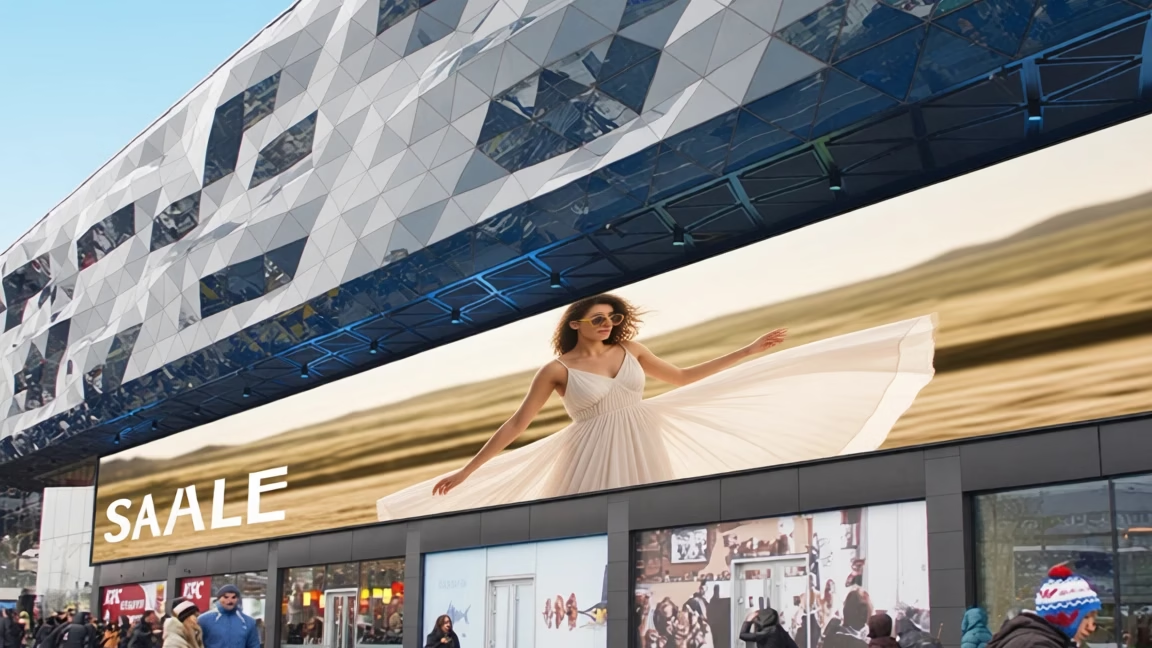
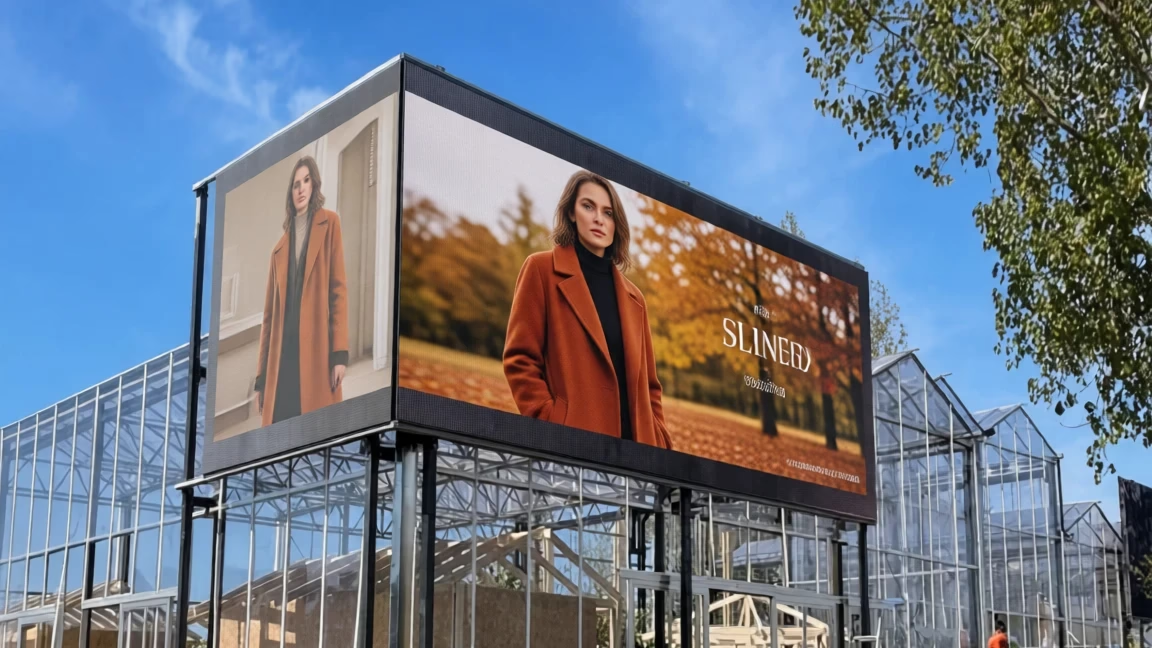
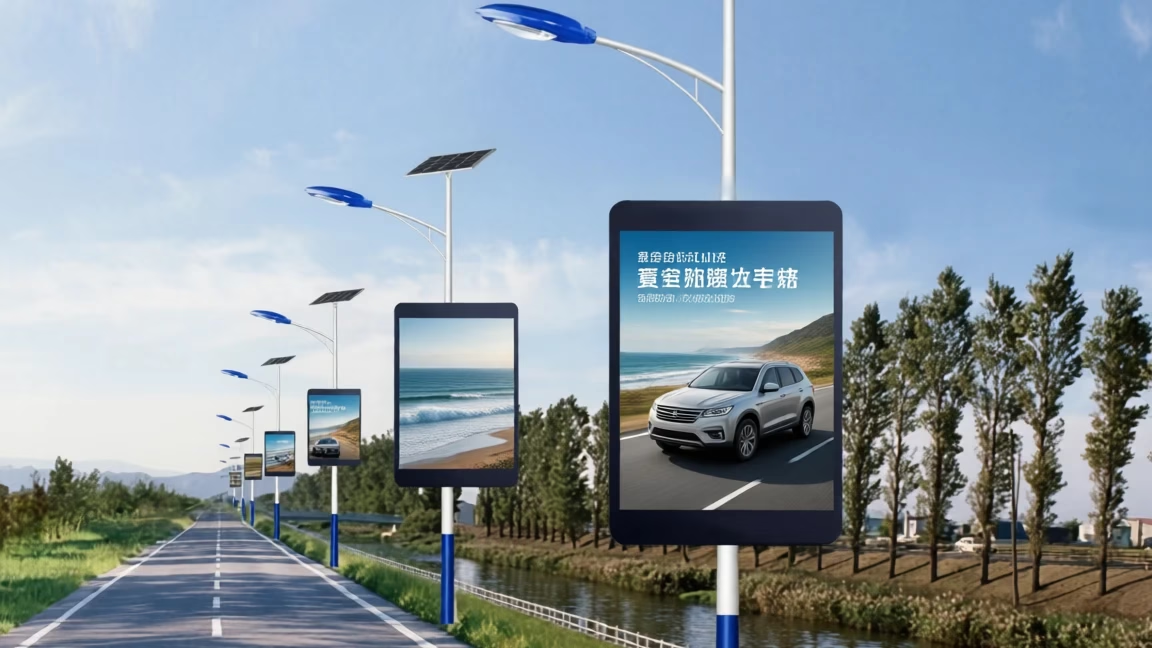
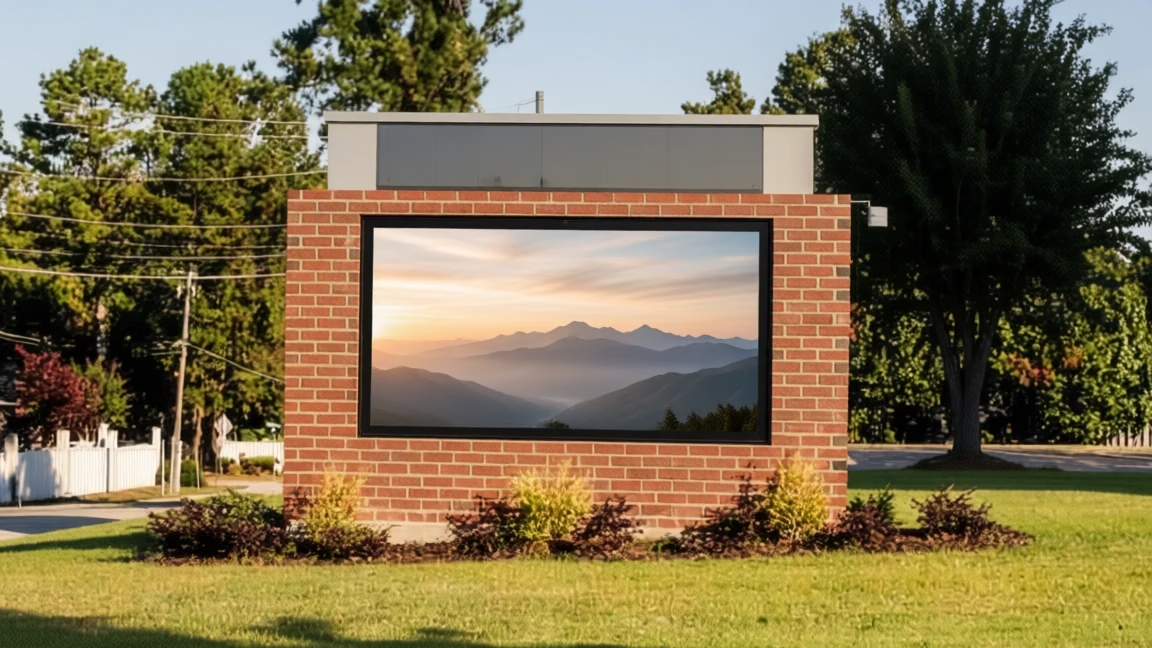
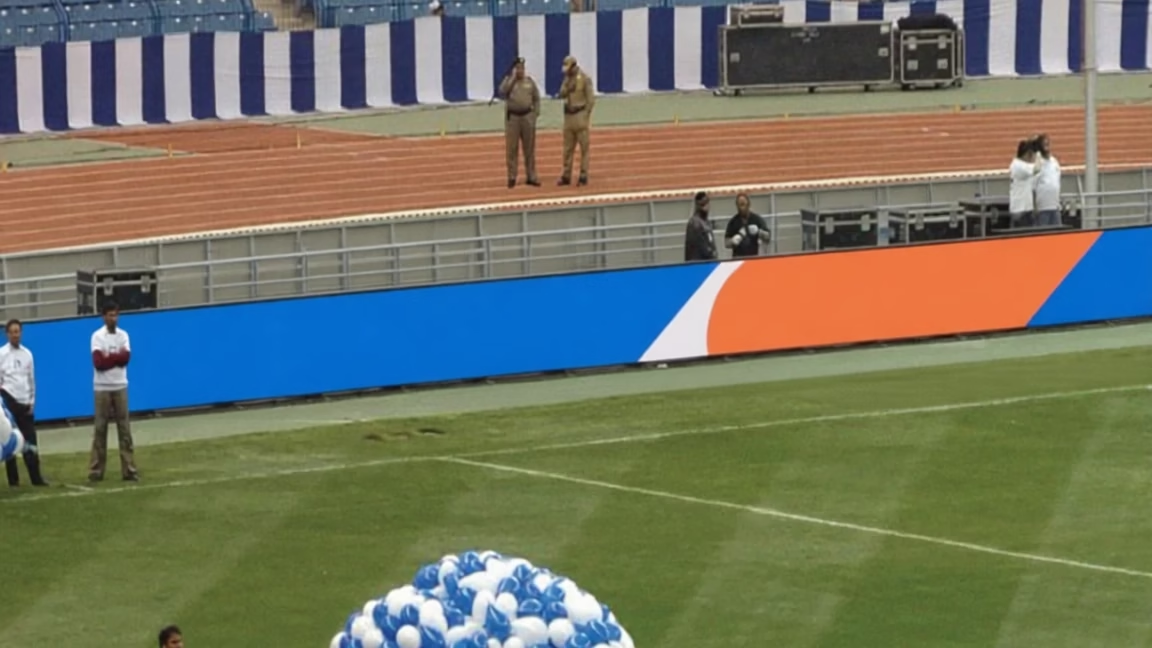
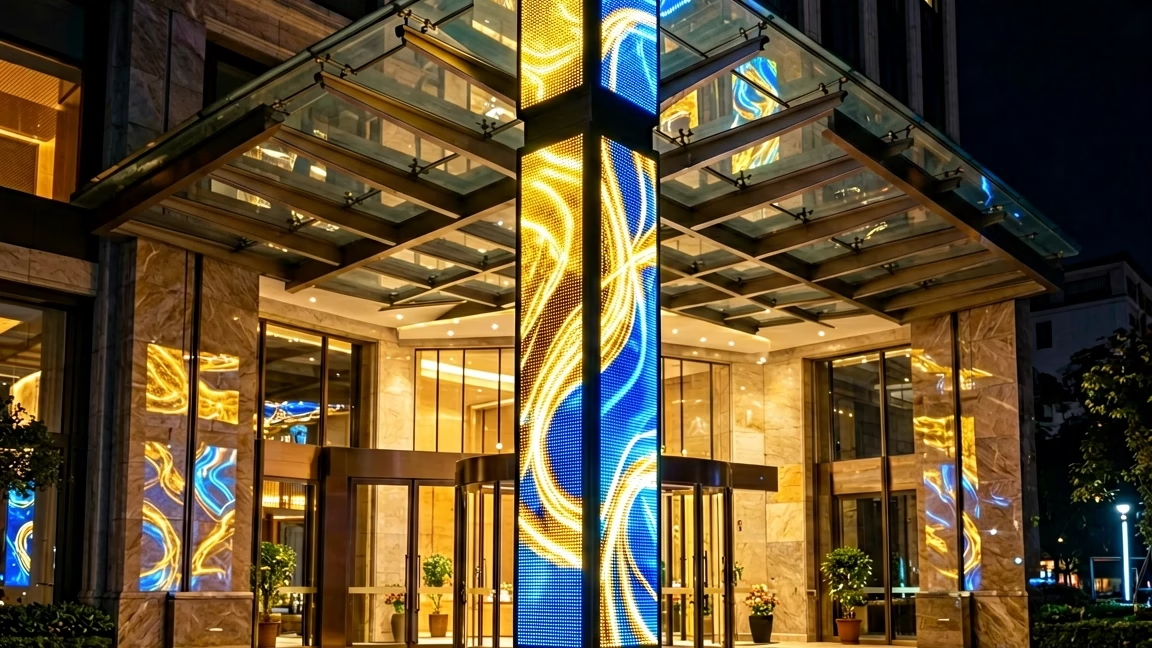
Eight placements where the 3–8m viewing band makes 3mm the right buy:

Projects
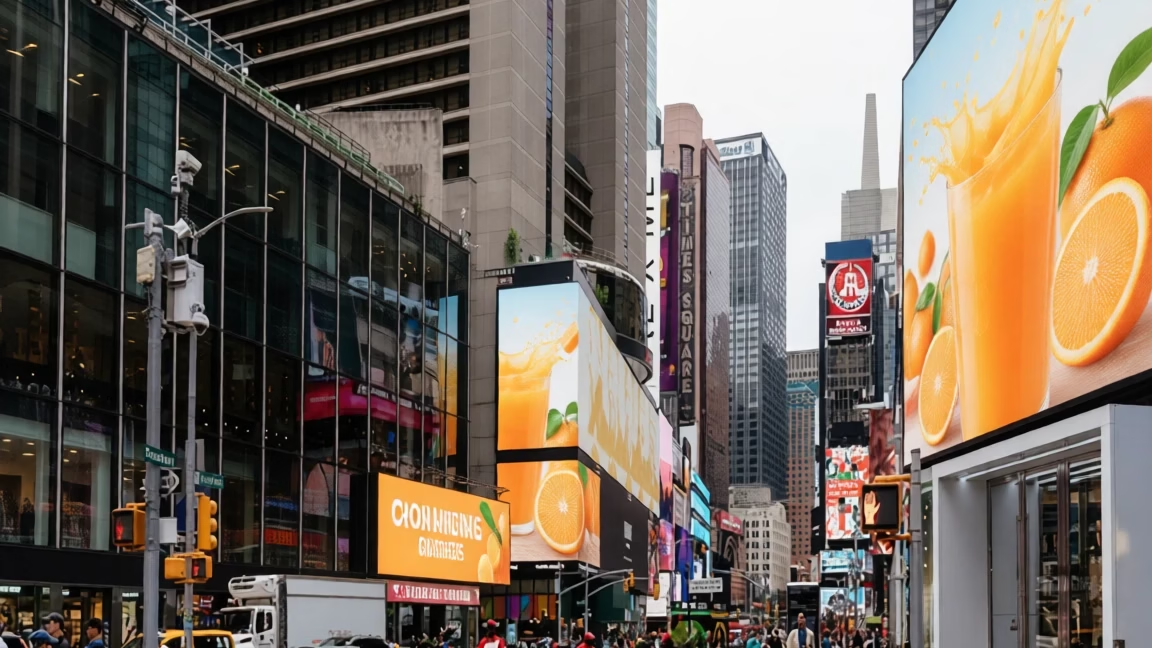
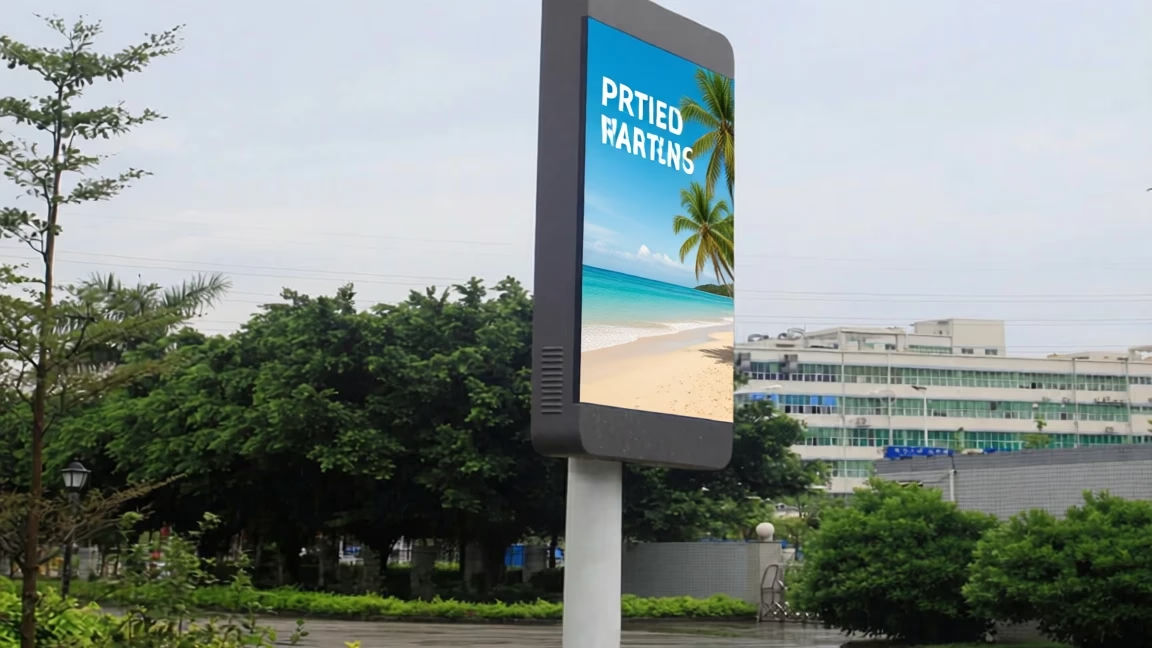
What Have Real P3 Outdoor LED Display Projects Looked Like?
P3 outdoor LED display projects share a familiar look — close to the viewer, readable in daylight, mounted where the audience passes. The three typical placements below show what a finished build looks like; ask us for named references in your market:

FAQ
P3 Outdoor LED Display: Frequently Asked Questions
What is the difference between P3.0 and P3.076?
P3.0 is the exact 3.0mm pitch on 192×192mm square boards (64×64 pixels); P3.076 is the pitch that results from fitting 104×52 pixels onto the industry-standard 320×160mm board. On a finished wall the two are visually identical — a 0.076mm difference is far below what any viewer can resolve. Choose by cabinet format and spares strategy: P3.0 pairs with 576×576 and 768×768mm cabinets, P3.076 with the 960×960mm family.
How many modules and cabinets make one square meter of P3 outdoor LED display?
The 320×160mm P3.076 board: 19.5 per square meter. The 192×192mm P3.0 board: 27.1 per square meter. In cabinets: a 960×960mm iron cabinet is 18 P3.076 boards and about 1.08 cabinets per square meter; a 576×576mm takes 9 boards (3.0 per ㎡) and a 768×768mm takes 16 (1.7 per ㎡).
Is P3.076 different enough from P3.91 to matter?
Yes, but not for sharpness alone. P3.076 packs 105,625 pixels per square meter against P3.91’s 65,412 — about 60% more picture information. The practical question is duty: P3.076 on iron cabinets is a fixed-installation build, while P3.91 lives on lightweight die-cast rental cabinets. Buy P3.076 for a wall that stays put; buy P3.91 if the wall tours.
Can a P3 outdoor LED display be read in direct sunlight?
Yes, provided brightness is spec’d at 5,000–5,500 nits or above with a matte mask. Our production sheets quote >5,000–5,500 nits for the P3.076 outdoor board, and the UV-stabilized mask holds contrast at noon. Ask any supplier to state nits in writing and demo a unit at full white outdoors; under 4,500 nits will disappoint.
How much power does a P3 outdoor LED display use?
Plan for roughly 400–500W per square meter on mixed content and 650–800W peak on full white — about a third less than the P2.5 class because the pixel count is smaller. Each 960×960mm cabinet carries its own 5V 40A or 60A supply (Chuanglian Power or MEAN WELL), so failure domains stay cabinet-sized. Real-world bills depend on brightness settings and content mix more than hardware.
What control system does a P3 outdoor LED display need?
Any of the four mainstream platforms — NovaStar, Colorlight, Huidu or Mooncell — drives these HUB75 modules. The rule that matters: sending card and receiving cards must come from the same family, chosen once for the whole fleet. For unattended signs, Huidu async cards run scheduled content from an app; for camera-facing walls, NovaStar remains the reference.
How much does a P3 outdoor LED display cost per square meter in 2026?
Market scans put a standard fixed-install P3 outdoor wall (cabinets, modules, power, basic control) at $700–1,100 per square meter factory-direct, with GOB protection adding $100–200 and front-service lock-catch builds adding 10–15%. Module-only purchases run $25–50 per 320×160mm board. Our price guide breaks down the full cost stack.
Can I upgrade the pitch later without replacing the cabinets?
On the 320×160mm format, yes — that board suite shares the same mounting holes and suite across P2.5, P3.076, P3.33, P4, P5, P6.67, P8 and P10, so a wall can change pitch by swapping modules while the cabinets, structure and power stay in service. It is the cheapest upgrade path in LED display hardware, and the reason we recommend the 320×160 format for walls that may need finer or coarser resolution later.
Full Guide
P3 Outdoor LED Display: The P3.0 vs P3.076 Buying Guide
A P3 outdoor LED display is the mid-band workhorse of outdoor video: 3mm between pixels, about 111,000 pixels per square meter, readable from a sidewalk and affordable by the tens of square meters. This guide covers the decisions that decide whether one performs for a decade — module format, scan electronics, board build, power architecture, control ecosystem and total cost.
Where does the 3mm pitch fit outdoors?
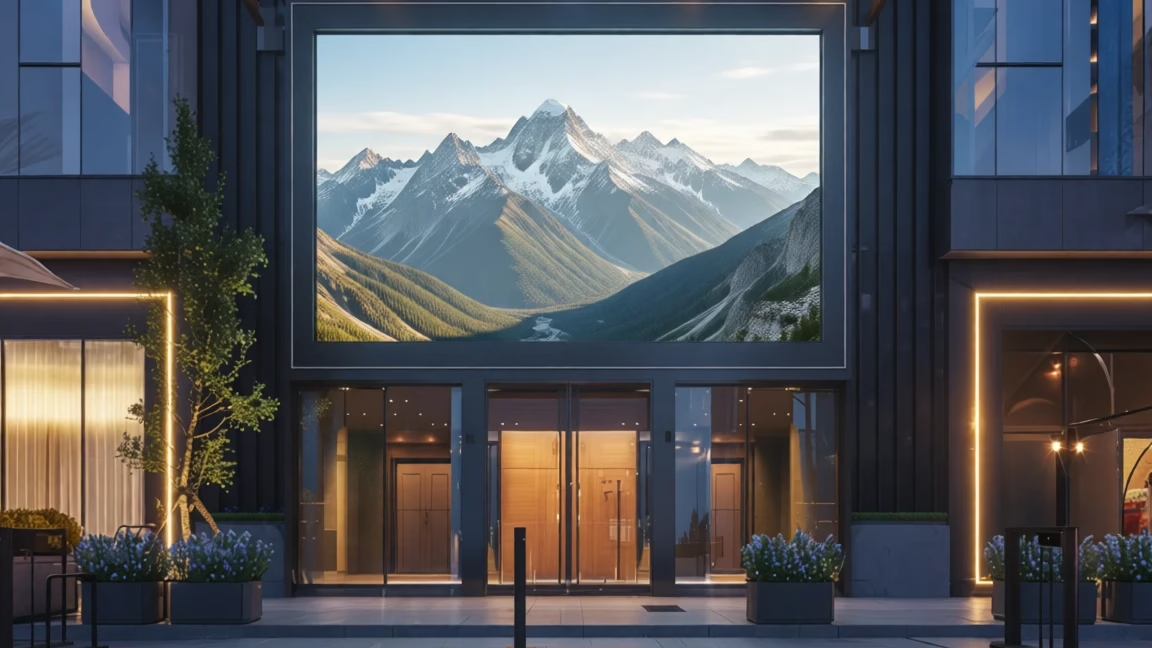
Every outdoor pitch owns a viewing band. P10 owns the highway; P6 owns the rooftop; P2.5 owns the shop window. The 3mm class owns the 3-to-8-meter band — the distance at which most commercial life actually happens: a customer walking a storefront, a queue outside a mall, cars stopped at a signal for thirty seconds, a courtyard audience at a school entrance.
At 3m the pixel grid disappears; at 8m a P3 wall still renders text promotions sharply, which is exactly where coarser outdoor pitches start to fail. Stand closer than 3m and the grid shows; stand past 8m and you are paying for pixels nobody can resolve. That band logic is why the P3 class is the volume leader for fixed outdoor signage: it is the coarsest pitch that still reads as “high definition” at commercial distances, and the finest pitch that still prices like outdoor hardware rather than indoor fine pitch.
Survival engineering follows from the same geometry. A 3mm outdoor lamp must throw 5,000–5,500 nits against noon sun and shed the resulting heat through a sealed front — so the SMD1415 lamp runs on an aluminum substrate path into the board, the mask is UV-stabilized matte plastic that cannot yellow, and the cabinet behind breathes through a drained, filtered rear while the face holds IP65. None of that is visible in a photograph, and all of it is why two walls with identical pixel counts can age completely differently within three summers.
P3.0 or P3.076 — does the 0.076mm matter?
On paper they are different pitches; on a wall they are the same picture. P3.0 packs 111,111 pixels per square meter, P3.076 packs 105,625 — a 5% difference that no viewer can detect at any distance the pitch is rated for. The real difference is industrial.
P3.076 exists because the 320×160mm board is the industry’s standard outdoor module: 104×52 pixels is what the grid gives you when the board is 320mm wide, and the format brings the whole ecosystem with it — the 960×960mm iron cabinet family, mounting holes shared across every pitch from P2.5 to P10, and the deepest spare-parts bench in the industry. P3.0 on 192×192mm boards exists because square 192mm cabinets — 576×576 and 768×768mm — follow architectural dimensions cleanly, and the smaller board makes a cheaper spare. Buy P3.076 for ecosystem depth and future pitch swaps; buy P3.0 when cabinet dimensions follow the building, not the catalog.
What do scan rate, ICs and refresh do at 3mm?
A P3.076 board runs a 1/13 scan across 42–84 total ICs depending on configuration — thirteen-channel classes of the grid lit at any instant, switched fast enough that the eye reads a steady image. The IC count on a datasheet is the board’s total device population, not a quality score; what matters is that the numbers reconcile. Our 320×160 outdoor board quotes 5,408 dots at 1/13 scan, which works out to roughly 416 driven channels — 26 sixteen-channel drivers plus row decode, about 42 devices on the board, doubling to 84 on reinforced configurations.
Refresh is the spec to police: 1,920Hz looks fine to pedestrians but bands on every phone camera; 3,840Hz clears phone footage and most professional work. Outdoor P3 walls get photographed — storefronts and plazas are exactly where people raise a phone — so we treat 3,840Hz as the default. And calibration is finished at the factory, not on site: every module is mapped point-by-point against a reference camera before it ships, because a 105,000-pixel-per-square-meter surface shows batch mismatch ruthlessly.
What does a P3 outdoor wall cost to run?
Power is the running cost that surprises buyers. Plan for 400–500W per square meter on mixed content and 650–800W peak on full white — the P3 class runs about a third cheaper than P2.5 simply because it drives two-thirds the LEDs. A 20㎡ wall at 450W average burns about 9kW per operating hour; at commercial tariffs that is roughly $1–2 per hour, or $30–60 per month on a 12-hour daily schedule. Content mix and brightness scheduling move the bill more than any hardware choice — a wall that dims to 40% after midnight costs a fraction of one that never sleeps.
The hardware side is unglamorous and decisive: each cabinet carries its own 5V 40A or 60A supply from Chuanglian Power or MEAN WELL, keeping failure domains cabinet-sized, and conformal-coated terminals resist the corrosion that ends most outdoor walls long before their LEDs do. Failed supplies cause more service calls than failed LEDs — brand-name supplies are the cheapest insurance in the build.
Which control ecosystem should you standardize on?
These modules work with every mainstream receiving card — NovaStar, Colorlight, Huidu and Mooncell all drive them — and they are not interchangeable with each other. Sending and receiving hardware must come from one family, so the platform you pick is the platform your whole fleet inherits. NovaStar is the reference for camera-facing and premium walls; Colorlight delivers most of that performance for signage budgets; Huidu owns the unattended-async niche; Mooncell closes the price gap on fixed installs.
Standardize once, and buy spare receiving cards with the wall. The support call you want to avoid is the one where a three-year-old card fails, the platform has moved a generation, and the wall is dark on a Friday. Fleets that keep two spare receivers per screen size recover in minutes.
What does the total cost of a P3 outdoor LED display look like?
Budget a standard fixed wall at $700–1,100 per square meter factory-direct (September 2026 market scan), then add what dealers quote separately: control hardware at $500–2,000 per project, freight near $200–400 per cubic meter, and local steel plus installation running 20–30% of screen value. GOB protection adds $100–200 per square meter and pays for itself where traffic or coastal salt threatens the lamp face. Remember where the money goes inside the module: LED chips alone take 35–45% of module cost, which is why pitch — the decision that sets how many chips you buy — is the primary price lever in outdoor LED.
Two lines hide in plain sight. Spare modules: 3% of quantity sounds like a rounding error until the first scaffolding bump ends a board. And the mask: a UV-stabilized matte mask is the difference between a wall that still reads black in year five and one that reads warm gray. Specify both in writing.
Warranty terms are part of the cost stack too, not marketing decoration. A 2–3 year warranty backed by a factory that actually stocks the boards it shipped is worth more than a paper 5-year promise from a trading company — the difference shows up the first time a batch of modules fails in month fourteen and someone has to answer the phone. Ask where the spare parts ship from, how fast, and whether receiving cards from the original build are still purchasable; those three answers tell you more about a supplier than any datasheet.
The 6-point buying checklist for a P3 outdoor LED display
- Band check first — closest viewer 3–8m is the P3 band; under 3m step to P2.5, past 8m take P3.91 or P4.81 and bank the difference.
- Pick the format by cabinet, not by pitch — 0.076mm is invisible; 576/768 versus 960×960 cabinet families is the real choice.
- Brightness in writing — 5,000–5,500+ nits on the datasheet and a full-white outdoor demo.
- Refresh 3,840Hz — for anything people will photograph or film.
- Named components — brand power supplies, stated scan mode, UV-stabilized mask, conformal-coated boards.
- One control family — choose the platform, buy spares with the wall, keep sender and receivers matched for life.
Work the list in order and the buying decision reduces to arithmetic. A P3 outdoor LED display is not the finest wall you can buy — it is the one built for the 3-to-8-meter band where most outdoor audiences actually stand, at a price that lets you say yes to the square meters the site needs.
Related P3 Outdoor LED Display Resources
P2.5 Outdoor LED Display Collection →
P4 Outdoor LED Display Collection →
P5 Outdoor LED Display Collection →
P6 Outdoor LED Display Collection →
P10 Outdoor LED Display Collection →
OK Series Outdoor Billboard →
P2.5 LED Module →
P3.91 Outdoor LED Display Guide →
P4.81 Outdoor LED Module →
Outdoor LED Display Price Guide →
LED Screen Calculator →
Outdoor LED Module Buying Guide →
Rental LED Display Solutions →
Outdoor LED Screen Rental →
P3 Outdoor LED Display Screen Quick Guide →
Spec Your P3 Outdoor LED Display With Our Engineers
Send us the wall size, the closest viewing distance and the install surface. You get a module-level quote with brightness, scan mode, cabinet material and control stack itemized — factory-direct, with 3% spare modules included.
UnifyLED — LED screen manufacturer · unifyledscreen@gmail.com · Changsha / Shenzhen, China