
P6.67 & P6 · Long-View Outdoor
P6 Outdoor LED Display Collection
One class, two formats: the 6.67mm cabinet workhorse on 320×160mm and 320×320mm boards, and the exact 6mm square on 192×192mm. Up to 10,000 nits with gold-wire lamps, iron and magnesium-aluminum cabinets, and front-service options on the big-board format.
Definition
What Is a P6 Outdoor LED Display?
Short answer: A P6 outdoor LED display is a long-view weatherproof video wall in the 6mm class — 22,500 pixels per square meter on the mainstream 6.67mm format, 27,778 on exact 6mm. It is the workhorse pitch for roadside billboards, rooftop advertising and pole-mounted screens where viewers stand 6–15 meters out. “P6” covers two shipping formats that the market mixes constantly: the 320×160mm, 320×320mm and 480×320mm boards (P6.67, 48×24, 48×48 and 72×48 pixels) and the 192×192mm square (exact P6, 32×32) — this page separates them so you buy the right one.
A P6 outdoor LED display is a fixed-installation video wall assembled from SMD2727 lamps on a 6mm-class grid — the coarsest pitch we still call “high definition” outdoors. The class exists because outdoor audiences are usually far: past 6 meters the eye cannot resolve the difference between 6mm and 6.67mm, and both cost far less per square meter than the finer P4 and P5 classes.
The catch is naming. Because the 320×160mm board divides into the 960×960mm cabinet at exactly 6.67mm, most of the industry’s “P6” listings — and most of the walls on the road — are actually P6.67. Exact 6.0mm lives on the 192×192mm square family. Neither is better; they serve different walls. For the category background, see outdoor LED display types and the outdoor LED module guide; run your wall through the LED screen calculator.
One number anchors the class: 22,500 pixels per square meter on the mainstream format — a 6×3m billboard resolves 432×216 with lamps big enough to hold 7,000–10,000 nits of gold-wire brightness. If your closest viewer stands under 4 meters, the P4 outdoor collection is the right buy; past 15 meters, the P8 class banks the difference.
Module Options
Which Module Sizes Does a P6 Outdoor LED Display Use?
Four formats cover the class — two P6.67 boards, one exact-P6 square and an extra-large engineering board. IC counts are total devices fitted per module (driver + decode + row transistors) and scale with scan mode; brightness tiers follow the lamp wire material.
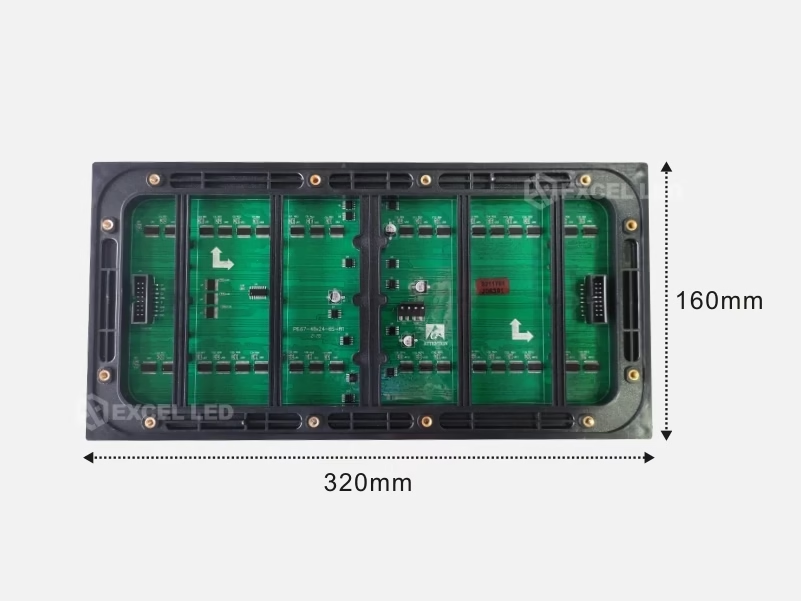
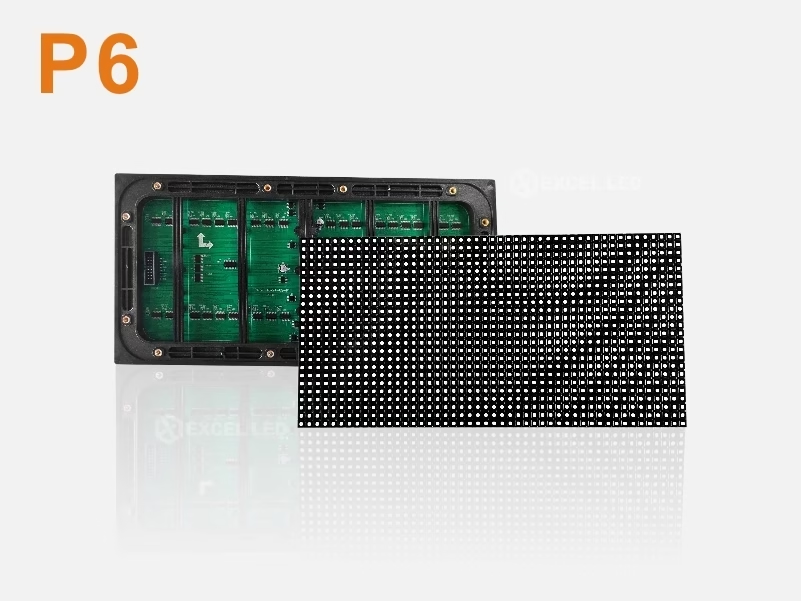
① 320×160mm — The P6.67 Mainstream Board
The board behind most “P6” walls on the road: 48×24 pixels, 19.5 boards per square meter, and the widest cabinet spread in the class — iron cabinets from compact 320×480mm up to 1280×960mm, plus magnesium-aluminum cabinets with soft-link connection for easier wall alignment. Rear maintenance standard; the 1/4-scan tier steps refresh up for camera-facing installs.
| Module size | 320×160mm |
| Pixel resolution | 48×24 = 1,152 dots (P6.67) |
| Scan mode | 1/6 scan (standard) or 1/4 scan (high-refresh tier) |
| Driver IC brands | ChipOne and peers |
| ICs fitted (total) | 36 |
| Lamp | SMD2727 · Grade 1 (premium) / Grade 2 (value) |
| Brightness | 5,500–6,500 nits (copper/alloy wire) · 7,000–10,000 nits (gold wire) |
| Maintenance | Rear standard |
| Cabinets | Iron: 1280×960mm (×24) · 960×960mm (×18) · 640×640mm (×8) · 320×480mm (×3) — magnesium-aluminum: 960×960mm, 1280×960mm (soft-link) |
| Uniformity | Wavelength & brightness binning + sending-end per-pixel correction |
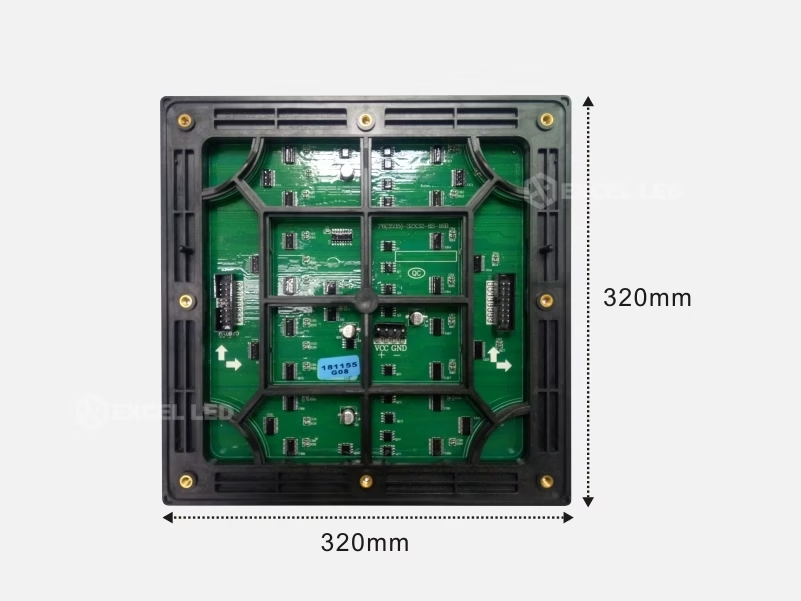
② 320×320mm — The P6.67 Big Board
Four ①-boards worth of pixels in one module: 48×48, 9 boards per 960×960mm cabinet, half the mounting events per wall. It is the only format in the class with a front-service option — useful on street-side cabinets where the rear sits against a wall — and it pairs with a die-cast aluminum 960×960mm cabinet on hard-link connection. All other parameters follow the P6 common standard (SMD2727, same brightness tiers, same correction pipeline).
| Module size | 320×320mm |
| Pixel resolution | 48×48 = 2,304 dots (P6.67) |
| Scan mode | 1/6 or 1/4 scan (as ①) |
| Driver IC brands | ChipOne and peers |
| ICs fitted (total) | 72 |
| Lamp | SMD2727 · Grade 1 / Grade 2 |
| Brightness | 5,500–6,500 nits (copper/alloy wire) · 7,000–10,000 nits (gold wire) |
| Maintenance | Front service or rear standard |
| Cabinets | Iron: 640×960mm (×6) · 960×960mm (×9) · 960×1280mm, 1280×960mm (×12) — die-cast aluminum: 960×960mm (hard-link) |
| Uniformity | Wavelength & brightness binning + sending-end per-pixel correction |
③ 192×192mm — The Exact-P6 Square
The traditional square board that hits 6.0mm exactly: 32×32 pixels, 27 boards per square meter, sixteen boards filling a 768×768mm iron cabinet into a 128×128-pixel face. This is the format legacy signage factories standardized on, and the one to specify when the wall dimensions follow the building rather than the catalog. Runs a 1/8 scan on 24–48 total ICs with SMD1921 or SMD2727 lamps; rear maintenance standard.
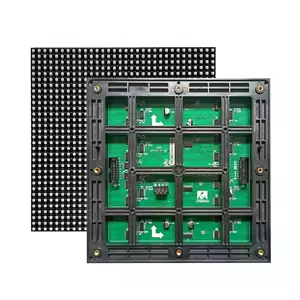
| Module size | 192×192mm |
| Pixel resolution | 32×32 = 1,024 dots (exact P6) |
| Scan mode | 1/8 scan |
| Driver IC brands | ChipOne and peers |
| ICs fitted (total) | 24–48 (scan-dependent) |
| Lamp | SMD1921 or SMD2727 |
| Brightness | 5,500–6,500 nits (copper/alloy wire) · 7,000–10,000 nits (gold wire) |
| Maintenance | Rear standard |
| Cabinets | Iron: 768×768mm (×16) |
| Uniformity | Wavelength & brightness binning + sending-end per-pixel correction |
④ 480×320mm — The Extra-Large P6.67 Board
The oversized engineering format: 72×48 pixels — 3,456 dots, the largest board in the class — on a 1.6mm fiberglass plate, building big faces from fewer pieces. Nine boards fill a 1440×960mm iron cabinet and six fill a 960×960mm, so landmark-width walls go up with half the mounting events of the mainstream board. All other parameters follow the P6.67 common standard: SMD2727 lamps in Grade 1/Grade 2 sorting, the 1/6 or 1/4 scan tiers, dual brightness tiers and the full correction pipeline. Rear maintenance standard.
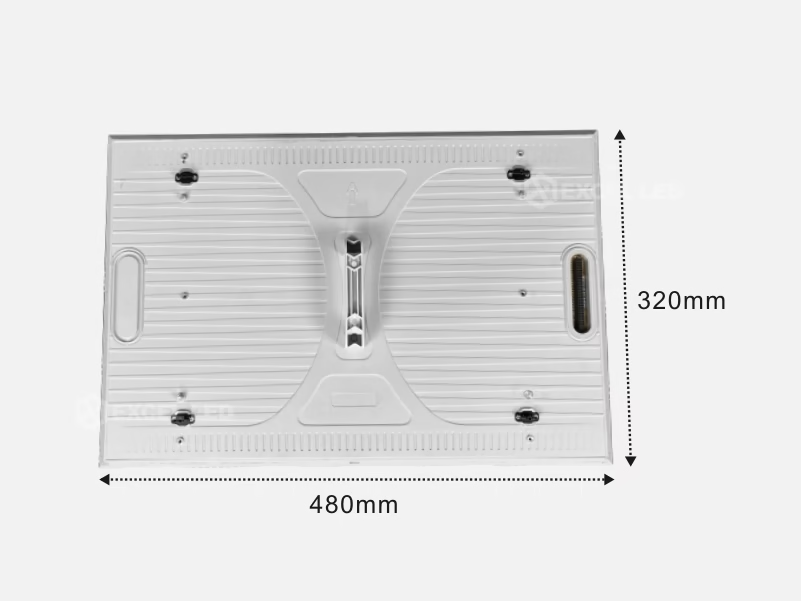
| Module size | 480×320mm |
| Pixel resolution | 72×48 = 3,456 dots (P6.67) |
| Scan mode | 1/6 or 1/4 scan (as ①) |
| Driver IC brands | ChipOne and peers |
| ICs fitted (total) | ~108 (3× the 320×160 board) |
| Lamp | SMD2727 · Grade 1 / Grade 2 |
| Brightness | 5,500–6,500 nits (copper/alloy wire) · 7,000–10,000 nits (gold wire) |
| Maintenance | Rear standard |
| Cabinets | Iron: 960×960mm (×6) · 1440×960mm (×9) |
| Uniformity | Wavelength & brightness binning + sending-end per-pixel correction |
Watch It Built
What Does a P6 Outdoor LED Display Look Like in Production?
Board & Image Quality
What Runs Under the Lamps of a P6 Outdoor LED Display?
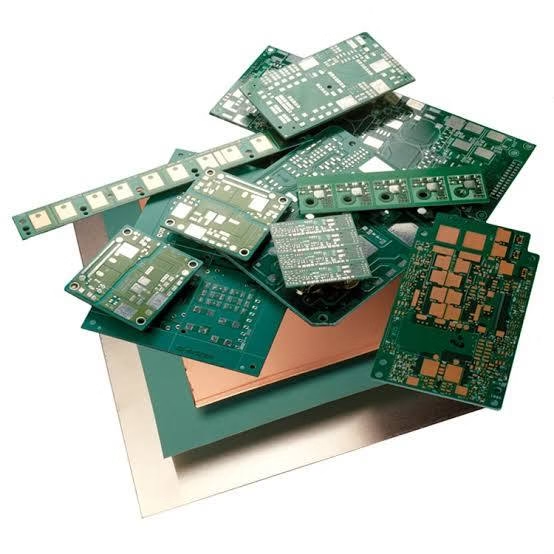
Every board in this class sits on a 1.6mm fiberglass (FR-4) PCB — at 1,152 lamps per mainstream board, the solder density is light enough that a 2-layer 1.6mm board carries the full current with margin, and its job is staying flat through −30°C nights and 60°C+ sun-facing surfaces so every one of those joints stays seated.
Black-Face SMD2727
The black housing absorbs stray light — contrast reads around 5000:1 on a masked wall, and SMD packaging beats DIP on viewing angle and mixed-color smoothness. Black lamps cost more and meter slightly dimmer; the image reads better.
Gray Scale by Driver IC
8-bit, 12-bit or 16-bit gray scale is decided by the driver IC generation, not the lamp — the ChipOne-class drivers behind this class hold smooth low-brightness gradients on big billboards.
Conformal Coating
Three-proof varnish on the solder side as standard; roadside and coastal walls step up to a full GOB pour over the lamp face.
The waterproof-test video above shows the sealed front mask under a hose — the same IP65 face every cabinet in this class ships with.
Contrast & Grayscale
What Contrast and Grayscale Does a P6 Outdoor LED Display Reach?
Contrast on a P6 outdoor LED display comes from the lamp housing before it comes from the electronics: the SMD2727 black-face package absorbs stray sunlight instead of reflecting it, and paired with a UV-stabilized matte mask the wall holds roughly a 5000:1 contrast ratio in ambient light. On a billboard class this matters more than raw brightness — a wall that reads 7,000 nits against a gray washed-out face still loses to a 5,500-nit wall with a true black face at dusk.
Grayscale is decided by the driver IC generation, not the lamp. The ChipOne-class drivers fitted on these boards carry 8-bit as the baseline, 12-bit on the value tier and 16-bit processing on the high-refresh tier — the difference shows in what buyers notice least and audiences notice most: smooth low-brightness gradients, skin tones at dusk and text edges on dark backgrounds. Because the 1/6 and 1/4 scan tiers share the same driver family, a wall can step up refresh without losing gray depth.
Both numbers should be verified the same way at purchase: ask for a full-white and a low-gray demo side by side, and for the correction report that follows the wavelength and brightness binning — a wall with honest binning paperwork will show banding-free gradients at 5% brightness, which is where cheap modules fall apart.
Power
Which Power Supply Brands Does a P6 Outdoor LED Display Use?
A P6 outdoor LED display runs on 5V switching supplies from three brands we fit in production: Chuanglian Power, MEAN WELL and G-Energy. Each cabinet carries its own 5V 40A (200W) supply, keeping failure domains cabinet-sized — a dead unit takes down roughly one square meter, not the wall.
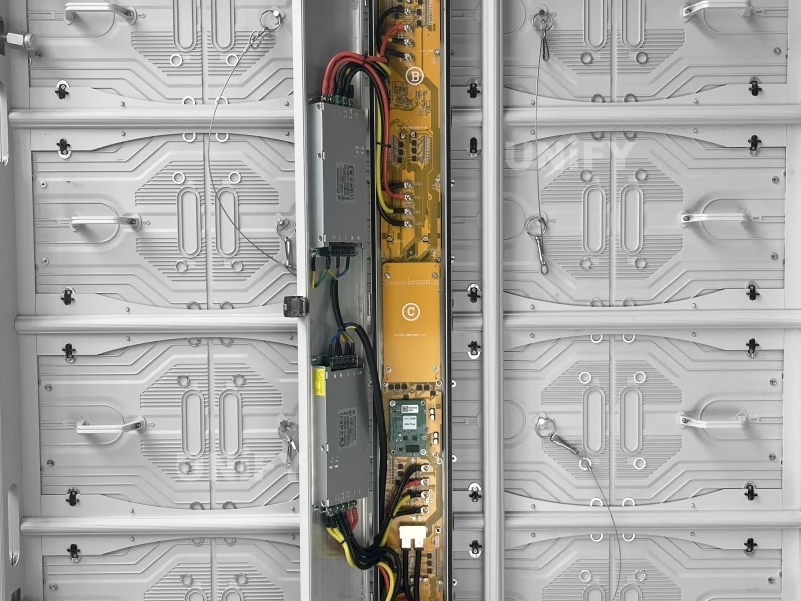
Budget check: at 22,500 pixels per square meter, a P6.67 wall averages 200–300W/㎡ on mixed content and peaks near 350–450W on full white — the lightest bill in our outdoor collection. On the gold-wire high-brightness tier, budget closer to the peak. Size the feed with headroom for inrush.
Control Stack
Which Control Systems Work With a P6 Outdoor LED Display?
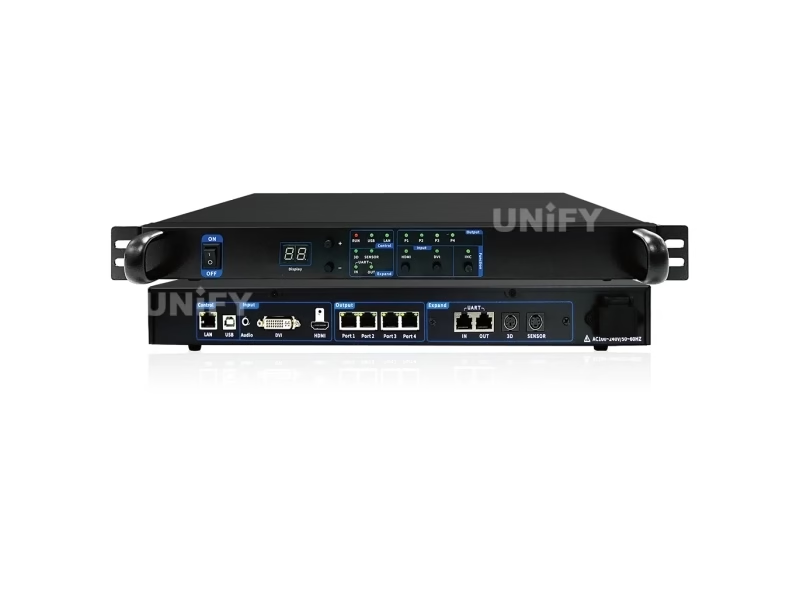
Six hardware ecosystems fit these HUB75 modules — four control platforms plus two video-processing lines. Pick one ecosystem and stay in it, because sending cards and receiving cards must come from the same family. Two control modes fit every ecosystem: synchronous cards drive large-area billboards and camera-facing walls in real time, while asynchronous cards serve unattended screens with app-based scheduling and cloud-server publishing:

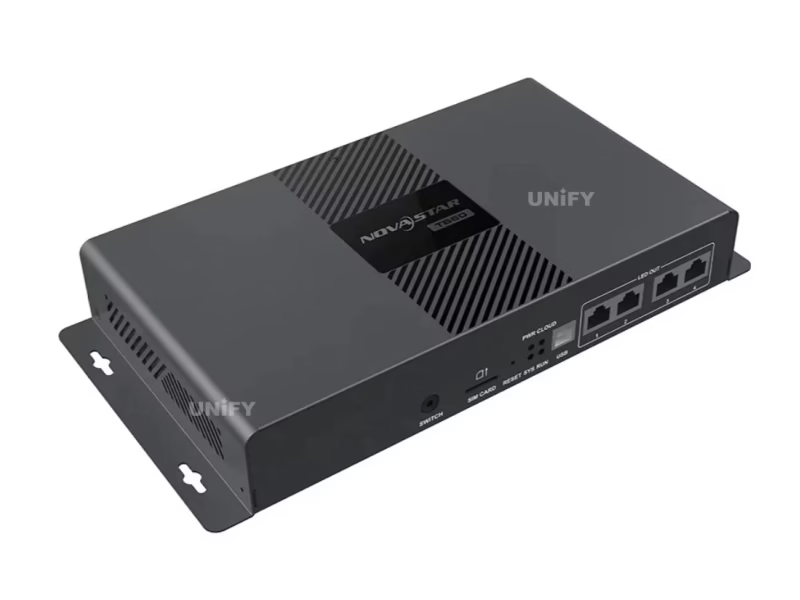
NovaStar
The synchronous broadcast-grade default — MCTRL/VX senders with A-series receivers, calibration and brightness-ramping as the industry benchmark.
Best for: premium billboards, camera-facing walls
Colorlight
The value-performance leader — i5A/i9 receivers and X-series processors cover fixed billboard walls end to end.
Best for: billboard and signage budgets

Huidu
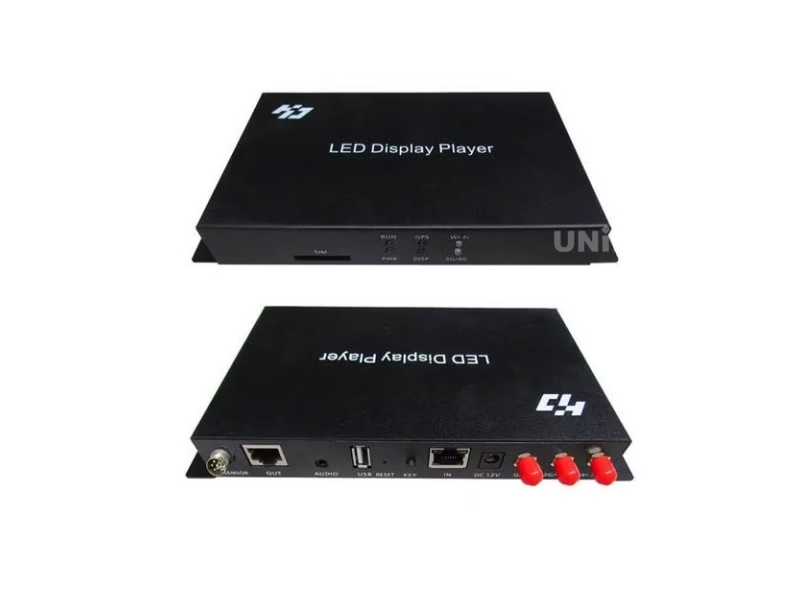
The asynchronous specialist with cloud push — A/C-class players update content from a cloud server or a phone, no site PC needed.
Best for: unattended roadside and pole screens

Mooncell
The rising third force — A-series receivers and 2-in-1 processors at aggressive price points.
Best for: cost-controlled fixed installs

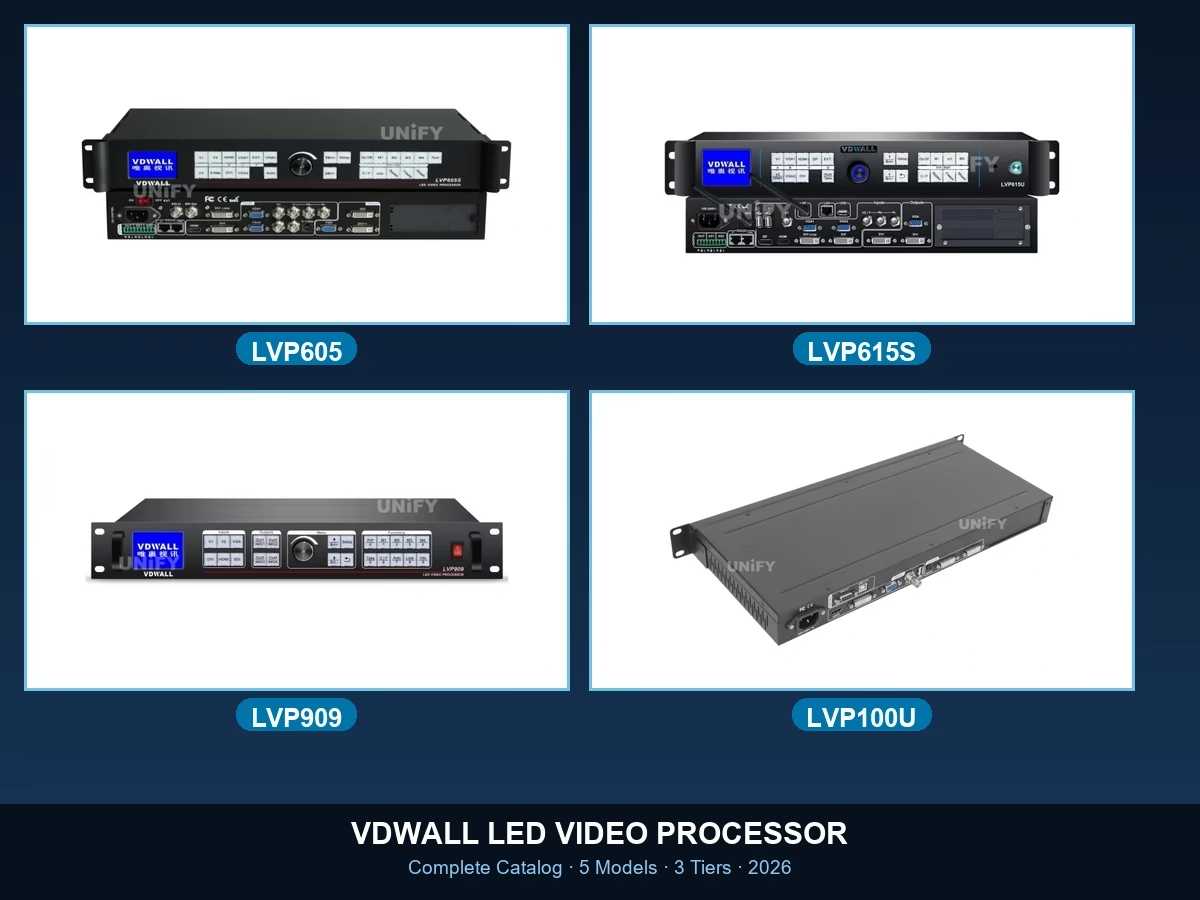
VDWALL
The touring-grade processor line — the LVP family drives large fixed billboards and event walls with proven field reliability.
Best for: large-format billboard walls
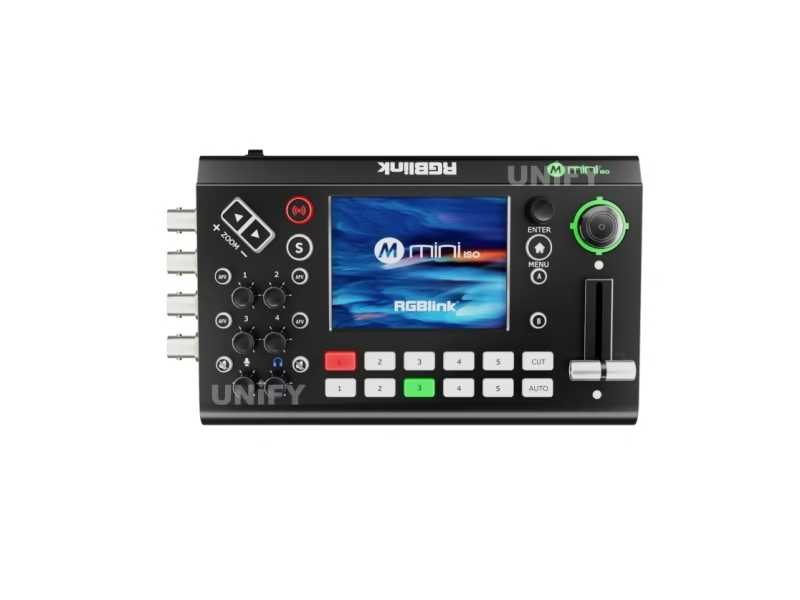
RGBlink
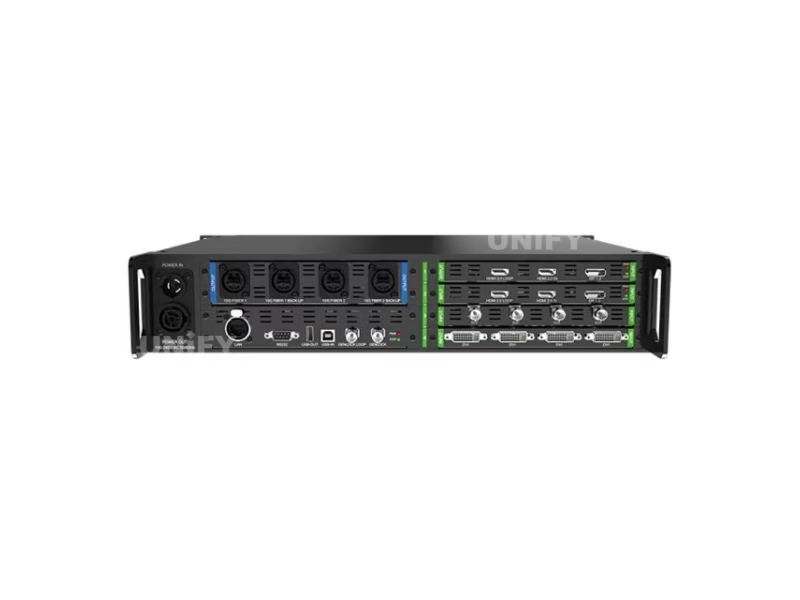
Switcher-processor hybrids with broadcast I/O — the mini and X families bridge live production and the wall.
Best for: live production & streaming
Watch: manual seam correction (Colorlight official)
This is the correction pipeline behind the “sending-end per-pixel correction” line in our spec tables — calibration data loads into the receiving cards so a wall built from hundreds of modules reads as one seamless image.
Adapted hardware across the six control and processing ecosystems we carry — each card links to its own spec page:
How Far Can You View a P6 Outdoor LED Screen?
Pitch sets the floor of the viewing range. Route yourself before you budget:
P6.67 or Exact P6 — Which 6mm-Class Do You Actually Need?
This is the confusion this page exists to settle. Most “P6” product listings — and most “P6” walls on the road — are actually 6.67mm boards, because the 320×160mm module tiles the 960×960mm cabinet perfectly at that pitch. Exact 6.0mm lives on the 192×192mm square family. The decision is architectural, not visual:
The 3 differences that decide it:
- Cabinet ecosystem — P6.67 carries the 960×960 iron/magnesium-aluminum/die-cast spread and every spare-part bench; exact P6 rides the 768×768 family alone.
- Spec compliance — if a tender or drawing says “6.0mm”, only the 192×192 board satisfies it; buying a 6.67mm wall against a 6mm spec is a change order waiting to happen.
- Nothing you can see — past 6 meters the 0.67mm difference is invisible on a running wall; the choice is cabinets and paperwork, never image quality.
P6 or P8 — Which Outdoor Pitch Should You Buy?
This is the money question on long-view walls, and it reduces to one measurement — your closest viewer:
The routing rule: viewer inside 6–10m — P6 pays for itself in sharper promotions and finer text; nobody closer than 10–12m — P8 banks the difference and still reads perfectly.
How Does P6 Compare With Other LED Display Pixel Pitches?
Density grows with the square of the pitch; the 1080p column lists the smallest 16:9 wall that reaches 1920×1080 on each pitch:
Pitch family detail pages: P4 · P5 · P8 · P10 · pixel pitch explained
Price Transparency
How Much Does a P6 Outdoor LED Display Cost?
Market reference ranges for 2026 (module prices scanned from retail listings, converted at 19.5 boards per square meter and checked against complete-wall quotes):
Reference: our own outdoor LED display price guide puts billboard-class walls (P5/P6/P8) at $550–900/㎡ across the market — factory-direct P6 sits inside that band. Control hardware adds $500–2,000 per project; freight near $200–400 per cubic meter; local steel and installation running 20–30% of screen value. All figures are a market scan, not a quote.
Applications
Where Does a P6 Outdoor LED Display Deliver the Most Value?
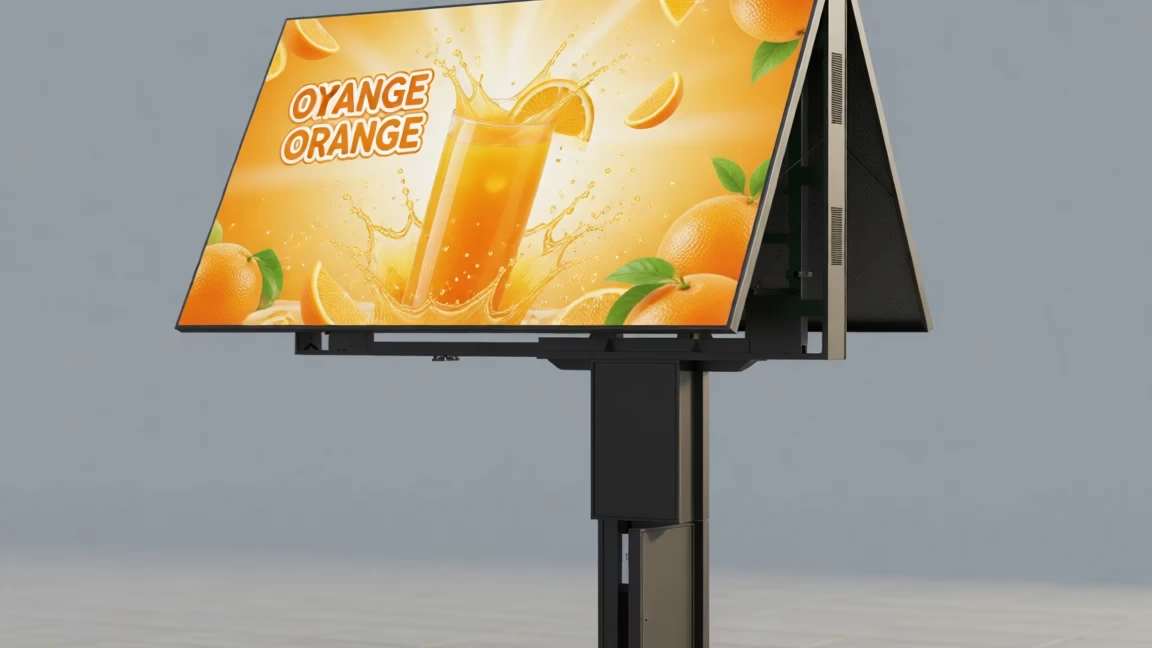
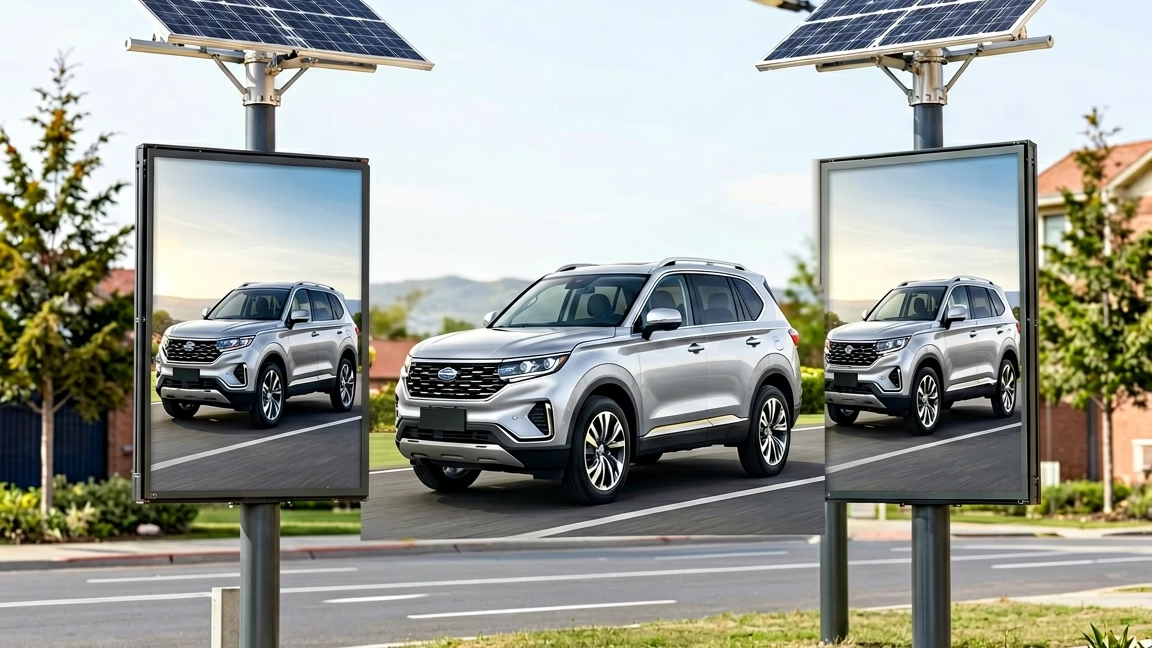
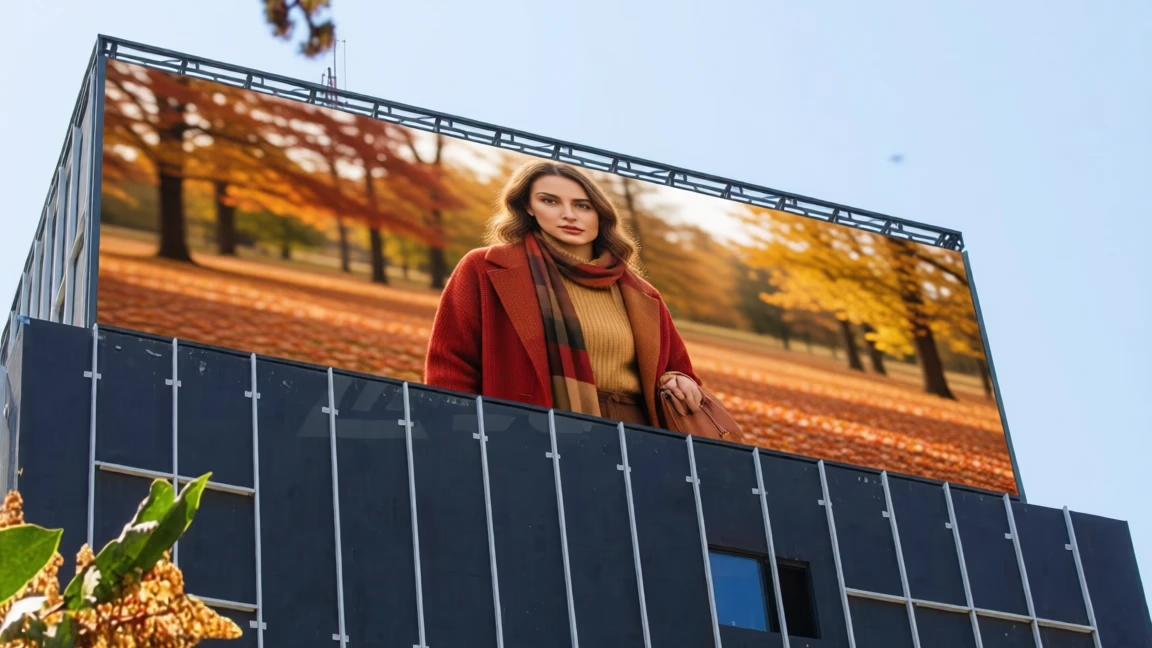
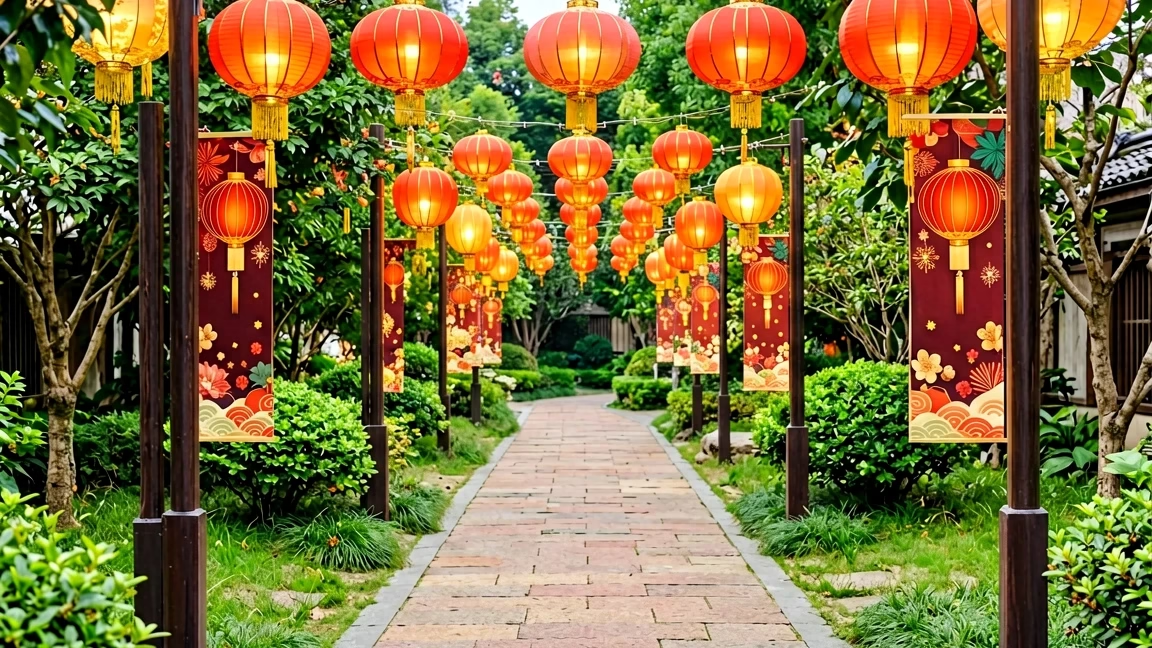
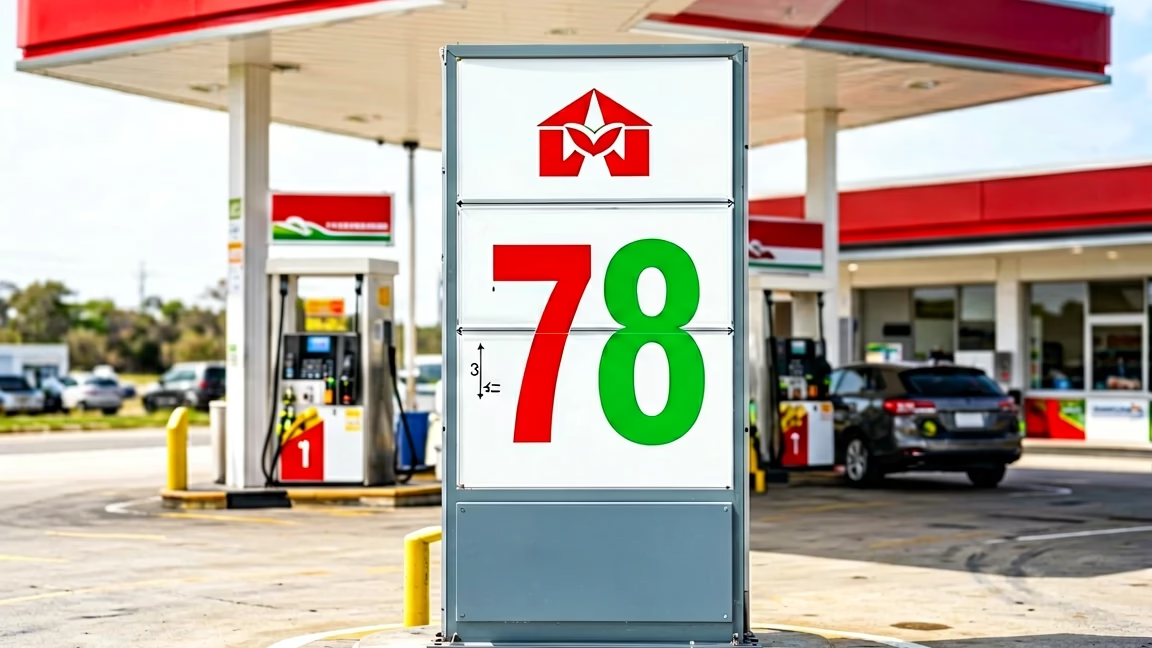
Eight placements where the 6–15m viewing band makes the 6mm class the smart buy:



Projects
What Have Real P6 Outdoor LED Display Projects Looked Like?
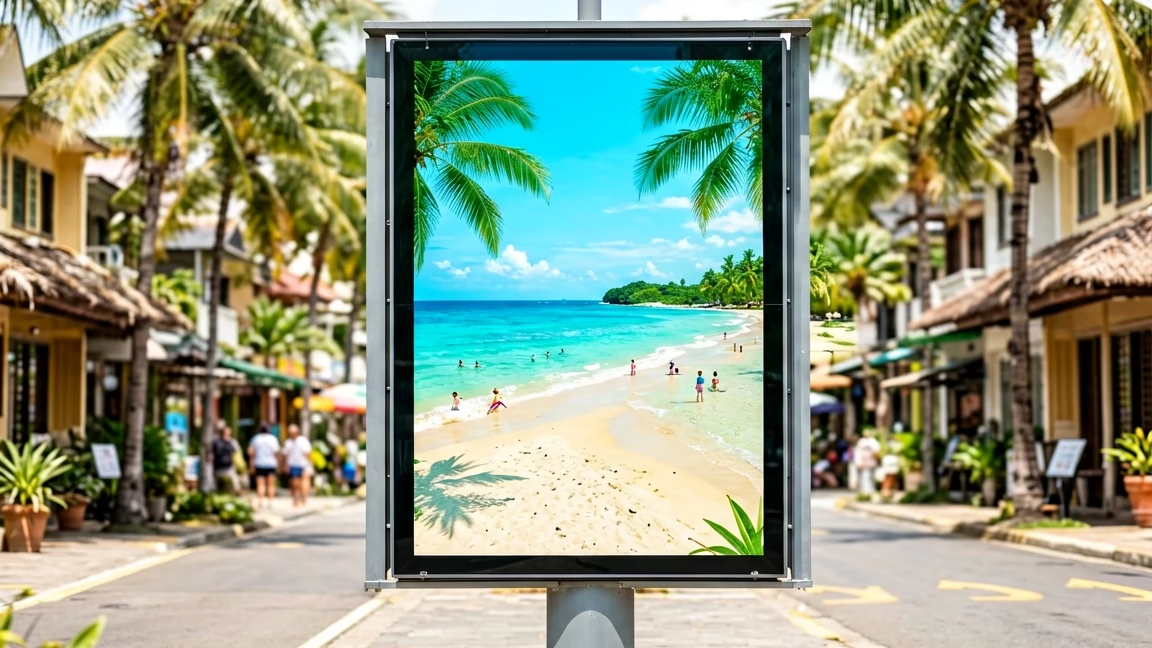
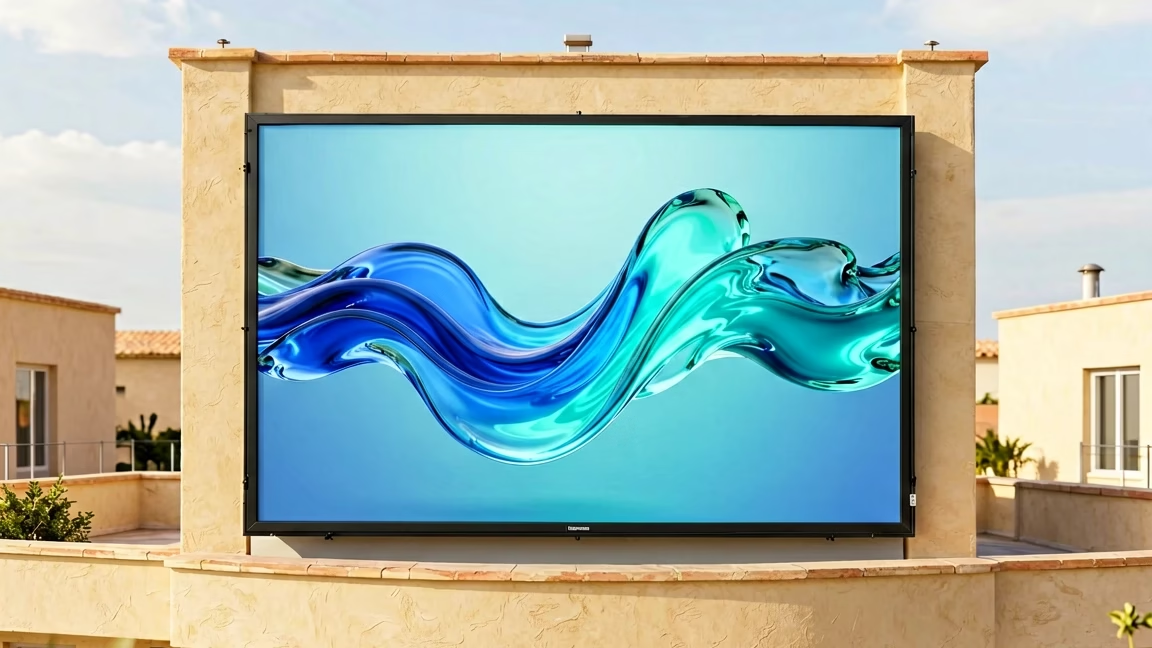
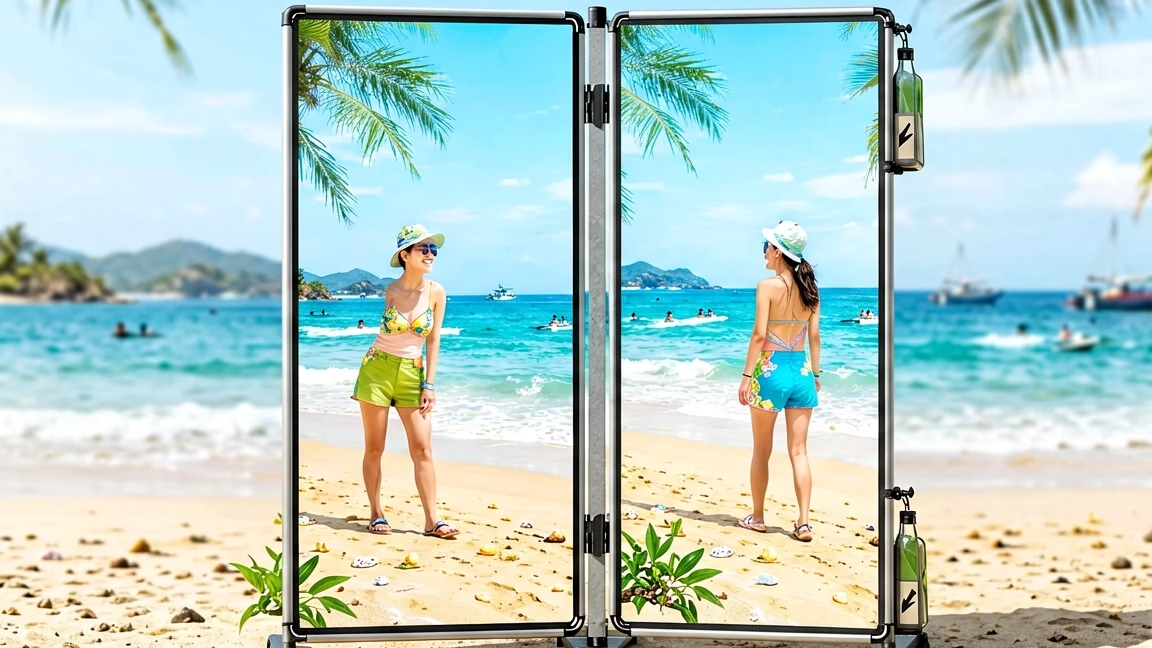
P6-class projects share a familiar look — long sight lines, high brightness tiers, steel that outlives three lamp generations. The three typical placements below show what a finished build looks like; ask us for named references in your market:
FAQ
P6 Outdoor LED Display: Frequently Asked Questions
What is the difference between P6 and P6.67?
Exact P6 is a 6.0mm pitch on 192×192mm square boards (32×32 pixels). P6.67 is the pitch that results from fitting 48×24 pixels onto the industry-standard 320×160mm board — and because that board tiles the 960×960mm cabinet perfectly, most “P6” walls and listings on the market are actually P6.67. Past 6 meters the two look identical on a running wall; the choice is cabinet ecosystem and spec paperwork, not image quality.
How many modules and cabinets make one square meter of P6 outdoor LED display?
The 320×160mm board: 19.5 per square meter. The 320×320mm board: 9.8. The 480×320mm engineering board: 6.5. The 192×192mm board: 27.1. In cabinets: a 960×960mm iron cabinet takes 18 of the 320×160 boards or 9 of the 320×320 boards (about 1.08 cabinets per square meter), and a 768×768mm cabinet takes 16 of the 192×192 squares.
Why do brightness specs range from 5,500 to 10,000 nits?
The range tracks the lamp wire. Copper/alloy-wire lamps sit at 5,500–6,500 nits — ample for shaded and north-facing walls. Gold-wire lamps handle the heat of 7,000–10,000 nits and hold their color under sustained full-white duty, which is what sun-facing billboards need. Same module, same board — the tier is a wire-material decision you make at order time.
How much does a P6 outdoor LED display cost per square meter in 2026?
Market scans put a standard fixed-install P6.67 wall (cabinets, modules, power, basic control) at $450–800 per square meter factory-direct, with the gold-wire high-brightness tier adding 10–20% and front-service big-board builds adding 10–15%. Module-only purchases run $15–30 per 320×160mm board. Our price guide breaks down the full cost stack.
How is a P6 outdoor LED display maintained and repaired?
Standard walls are rear-maintained: the cabinet rear panel opens, and a module unplugs from its power and data pigtails in minutes — keep 3% spare modules and a matching receiving card on site and any fault is a same-day fix. The 320×320mm big-board format adds a front-service option for cabinets whose rear sits against a wall or parapet. The repair queries we see most — dead columns, color drift on one module — are module-level swaps, not wall-level problems.
How much power does a P6 outdoor LED display use?
Plan for roughly 200–300W per square meter on mixed content and 350–450W peak on full white — the lightest bill in our outdoor collection because the LED count is a fraction of the fine-pitch classes. Gold-wire high-brightness builds run closer to the peak. Each cabinet carries its own 5V 40A supply (Chuanglian Power, MEAN WELL or G-Energy), so failure domains stay cabinet-sized.
What control system does a P6 outdoor LED display need?
Any of the four mainstream platforms — NovaStar, Colorlight, Huidu or Mooncell — drives these HUB75 modules, with VDWALL and RGBlink processors covering the front end, in synchronous or asynchronous architectures. For unattended billboards and pole screens, Huidu-class async players push scheduled content from a cloud server with no site PC; for premium and camera-facing walls, NovaStar remains the reference. The one rule: sending card and receiving cards must come from the same family.
IP65 or IP67 — how weatherproof does a P6 outdoor LED display need to be?
IP65 — protected against water jets from any direction — is the outdoor standard and covers rain, frost and hose washing. IP67 adds short-duration immersion, which matters for ground-set and floor screens, not for wall and pole builds. Sealing only the front is deliberate: the cabinet rear breathes through a drained, vented path, because trapping both sides is what actually kills walls with condensation.
Full Guide
P6 vs P6.67 Outdoor LED Display: Which 6mm-Class Do You Actually Need?
A P6 outdoor LED display is the long-view workhorse of outdoor advertising — 6mm-class pixels, 22,500–27,778 pixels per square meter, readable across a street or from the far lane of traffic. This guide settles the question the market keeps muddling: whether you need exact 6mm, or the 6.67mm cabinet standard that trades under the same name, and what each choice costs to buy and to run.
Why the market calls two pitches “P6”
The confusion is arithmetic, not marketing. The outdoor cabinet industry standardized on the 960×960mm iron box decades ago, and the module that tiles it cleanly is the 320×160mm board. Put a 48×24 grid on that board and the pitch works out to 6.67mm — not 6.0, because 320 does not divide by 6 into whole pixels. Exact 6.0mm instead lives on the 192×192mm square, sixteen of which fill a 768×768mm cabinet.
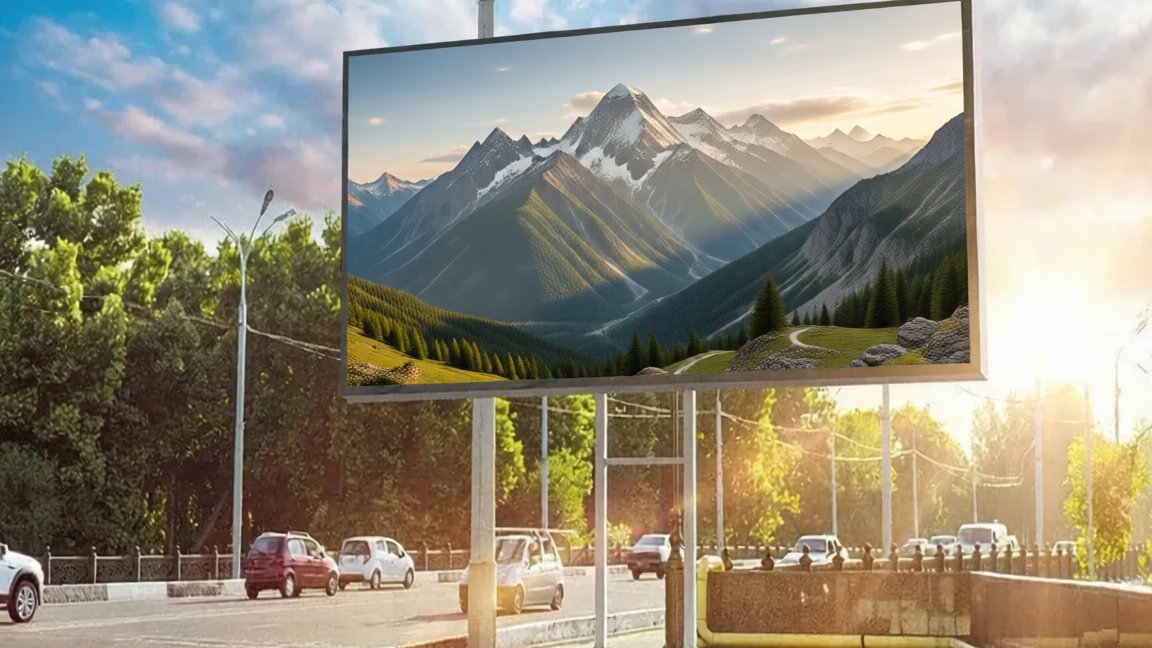
Both are legitimate products with different strengths. The 6.67mm format carries the deepest ecosystem in the coarse-pitch world — iron, magnesium-aluminum and die-cast cabinets, the biggest spare-part bench, and the volume pricing that comes from being the industry’s default billboard board. The exact-6mm square serves the walls whose paperwork says 6.0: legacy specs, tenders, and buildings whose dimensions follow the 192mm grid. What neither difference touches is what you see: past 6 meters, a running wall at 6.67mm and one at 6.0mm are indistinguishable, which is why the market stopped caring about the distinction long before search engines did.
Inside the boards: scan, ICs and brightness tiers
The mainstream 320×160mm board runs a 1/6 scan on 36 total ICs — ChipOne-class drivers plus row decode and transistors — with a 1/4-scan tier available when the wall will face cameras and needs the higher refresh. The 320×320mm big board doubles the device count to 72 for its doubled grid, and the 192×192mm square runs a 1/8 scan on 24–48 ICs. On a datasheet the IC figure is the board’s whole device population, not a quality score; what matters is that scan mode and IC count reconcile.
Brightness is where this class earns its spread. Copper and alloy-wire lamps sit at 5,500–6,500 nits — right for shaded walls, north faces and budget billboards. Gold-wire lamps take the heat of 7,000–10,000 nits and hold their color under sustained full-white duty, which sun-facing highway walls demand. Every module then goes through wavelength and brightness binning plus sending-end per-pixel correction, so a wall built from hundreds of boards reads as one image — the correction video above shows the pipeline on real hardware.
Cabinets: where the two formats really diverge
Pick P6.67 and you inherit the widest cabinet menu in the coarse-pitch world. Iron boxes run from the compact 320×480mm that hangs off light poles up to 1280×960mm for long billboard faces; magnesium-aluminum cabinets on soft-link connection shave weight and help walls self-align; a die-cast aluminum 960×960mm box on hard-link connection serves premium and front-serviced builds — the 320×320mm big board is the only format in the class that offers front service, which matters when a cabinet’s rear sits against steelwork.
Pick exact P6 and the menu is one line: 768×768mm iron, sixteen boards a box. That is not a weakness so much as a signal — the 192mm square is a legacy-spec product, bought when a drawing says 6.0mm or when a wall extension must match an older P6 installation board-for-board. If neither applies, the 6.67mm ecosystem is the rational default, and the price difference funds a brighter lamp tier.
Cabinet choice also decides your steel bill. The 960×960mm iron box is the shape every local fabricator has bent before, so quotes come fast and cheap; the 1280×960mm long boxes cut the cabinet count on wide billboard faces, which trims both steel and install hours; and the magnesium-aluminum soft-link cabinets, at roughly two-thirds the weight of iron, pay for themselves on rooftops where load limits and crane time dominate the quote. Ask for the steel drawing with the cabinet quote — a factory that ships CAD structure files saves your local engineer days.
Power, control and the running bill
At 22,500 lamps per square meter the wall sips power: roughly 200–300W per square meter on mixed content, peaking near 350–450W on full white — the lightest bill in our outdoor collection. Each cabinet carries one 5V 40A supply from Chuanglian Power, MEAN WELL or G-Energy, so a failed unit dims a cabinet, not a wall. On a 100㎡ billboard at 250W average, the electricity bill runs about $18–36 a day on commercial tariffs — real money at billboard scale, which is why brightness scheduling after midnight is standard practice on networked walls.
Control splits by duty. Synchronous walls — premium billboards with scheduled video and camera-facing sites — run NovaStar or Colorlight front ends. Unattended walls — pole screens, gates, fuel boards — run Huidu-class asynchronous players that pull content from a cloud server: the operator updates a playlist from a desk and the wall fetches it over 4G. Mooncell closes the price gap on fixed installs; VDWALL and RGBlink carry the live-production front end. One rule holds everywhere: sending and receiving hardware must come from one family, chosen once for the whole fleet.
What does the total cost of a P6 outdoor LED display look like?
Budget a standard fixed wall at $450–800 per square meter factory-direct (September 2026 market scan), then add what dealers quote separately: control hardware at $500–2,000 per project, freight near $200–400 per cubic meter, and local steel plus installation running 20–30% of screen value. The gold-wire high-brightness tier adds 10–20% and earns it back on any sun-facing face; the front-service big board adds 10–15% and repays itself the first time a module needs swapping on a wall with no rear walkway. Remember where the money goes inside the module: LED chips take 35–45% of module cost, which is why pitch — the decision that sets how many chips you buy — remains the primary price lever outdoors.
Two lines hide in plain sight. Spare modules: 3% of quantity sounds like a rounding error until the first storm ends a board, and then it is the cheapest insurance in the project. And the mask: a UV-stabilized matte mask is the difference between a wall that still reads black in year five and one that reads warm gray. Specify both in writing, along with warranty terms and where the spares ship from — those answers tell you more about a supplier than any datasheet.
One operational note belongs here: the cloud-push async architecture is only as good as the SIM plan behind it. Walls in deep road cuttings and industrial parks routinely drop 4G, so specify dual-SIM players or scheduled offline playback as standard, and test the fallback before handover — the cheapest troubleshooting call is the one the wall makes for itself by switching to its cached playlist instead of going dark.
The 6-point buying checklist for a P6 outdoor LED display
- Settle the name first — exact 6.0mm only when a spec or an existing wall demands it; otherwise the 6.67mm ecosystem wins on cabinets, spares and price.
- Brightness tier by orientation — 5,500–6,500 nits copper/alloy for shaded walls; 7,000–10,000 nits gold wire for sun-facing billboards.
- Refresh by audience — 1/4 scan and higher refresh wherever phones and cameras point at the wall.
- Front service where the rear is blind — the 320×320mm big board is the only format in the class that offers it.
- Named components — brand power supplies, stated scan mode, wavelength-binned lamps, conformal-coated boards.
- One control family — sync for premium walls, async cloud-push for unattended screens; buy spares with the wall.
Work the list in order and the 6mm class reduces to arithmetic. A P6 outdoor LED display is not the sharpest wall you can buy — it is the one that turns a billboard budget into the most square meters of readable, weatherproof advertising, whether that wall says 6.0 on the drawing or 6.67 on the board.
Related P6 Outdoor LED Display Resources
P3 Outdoor LED Display Collection →
P4 Outdoor LED Display Collection →
P10 Outdoor LED Display Collection →
P5 Outdoor LED Display Collection →
960×960mm Outdoor Cabinet — A960 Series →
OK Series Outdoor Billboard →
Outdoor LED Display Price Guide →
LED Screen Calculator →
Outdoor LED Module Buying Guide →
Outdoor LED Screen Rental →
P6 Outdoor LED Display Screen Quick Guide →
Spec Your P6 Outdoor LED Display With Our Engineers
Send us the wall size, the closest viewing distance and the install surface. You get a module-level quote with brightness tier, scan mode, cabinet material and control stack itemized — factory-direct, with 3% spare modules included.
UnifyLED — LED screen manufacturer · unifyledscreen@gmail.com · Changsha / Shenzhen, China