
RGBlink · X Series · Broadcast-Grade LED Video Processor
RGBlink X1 Gen2 LED Video Processor
The RGBlink X1 Gen2 LED Video Processor is the second-generation broadcast processor of the X1 line (order code 110-0002-01-0): dual HDMI inputs with loop-through, dual DVI outputs to 2048×1152, clean TAKE switching, PIP/PBP compositing and an open API — a 25 W, 1U processor that feeds any common LED control system, from Novastar to Mooncell.
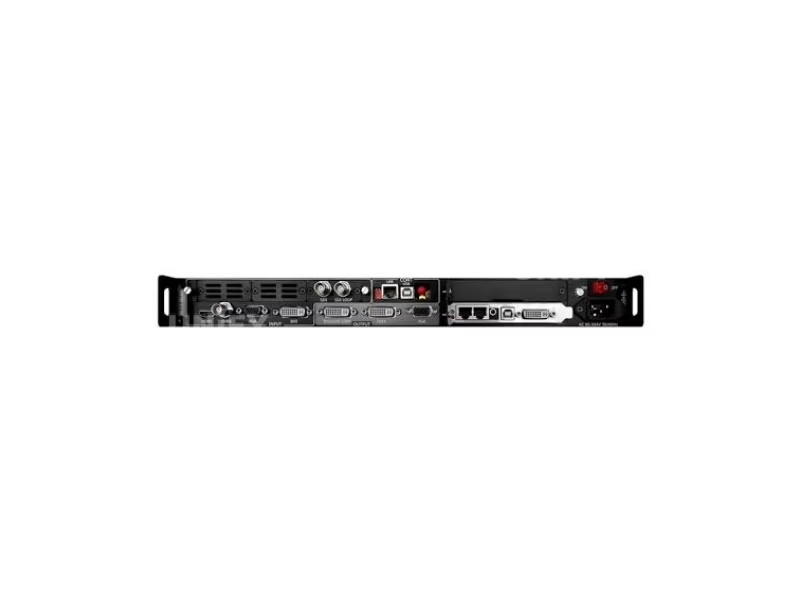
Product Overview
What Is the RGBlink X1 Gen2 LED Video Processor?
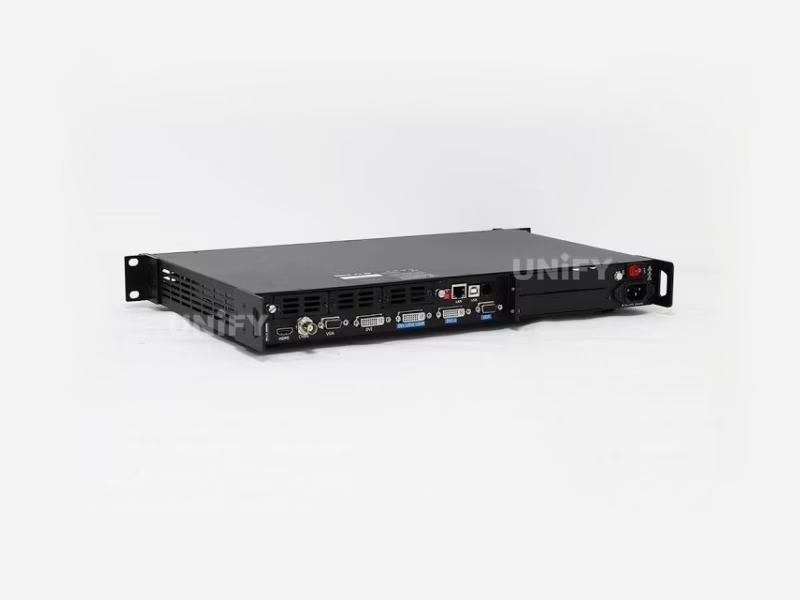
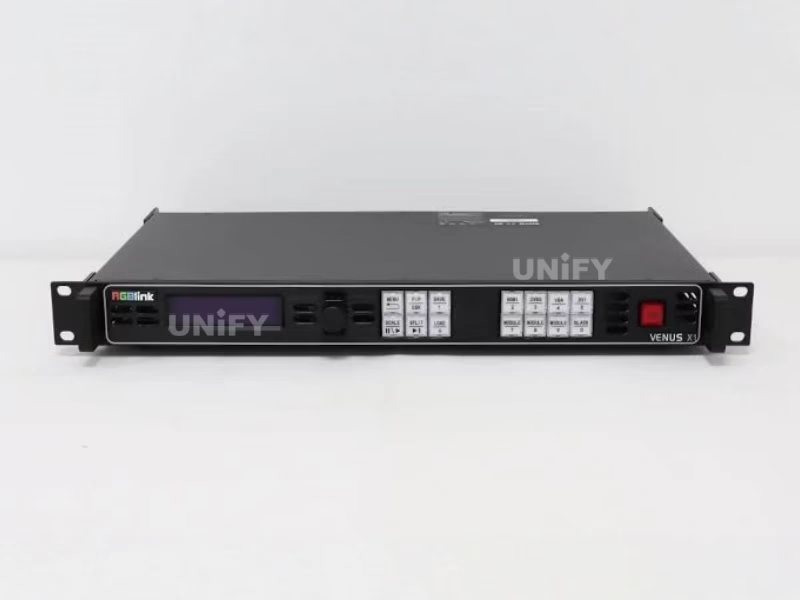
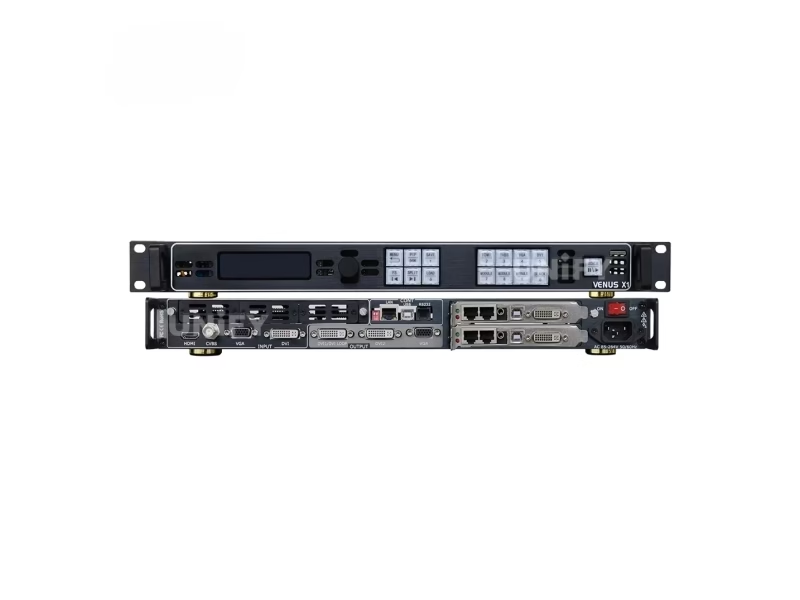
The RGBlink X1 Gen2 LED Video Processor is the second generation of RGBlink’s broadcast-grade X1 processor line, released in September 2024 after what RGBlink itself describes as seven years of X1 iteration — the Gen2 refines and enhances the platform on market feedback. It is a dedicated LED display processor: dual HDMI inputs with loop-through, DVI, VGA and CVBS inputs feed an engine that switches cleanly between sources with TAKE, composites PiP, PBP and customized layouts, keys DSK and chroma layers, and drives dual DVI outputs at resolutions to 2048×1152@60 or user-defined formats. It embeds and de-embeds audio with sync control, detects VESA and SMPTE input standards automatically, carries on-board test patterns, and is compatible with the common LED control systems — Novastar, Colorlight, Linsn, Mooncell and RGBlink — whose sending stages take its DVI program. Official data on this page comes from the X1 Gen2 Specification V1.0 (August 2024) and Product Brochure V1.0 (September 2024) downloaded from RGBlink’s product page.
Short answer: The RGBlink X1 Gen2 (order code 110-0002-01-0) is a broadcast-grade LED video processor: two HDMI inputs with loop-through plus DVI, VGA and CVBS; two DVI outputs as standard at resolutions to 2048×1152@60 and 2560×816@60 or user-customized; clean TAKE switching, PiP/PBP with customized layouts, DSK and chroma keying, dual-format EDID management and on-board test patterns; embedded/de-embedded audio with sync; RS232 and USB control with an open API for third-party integration and multi-unit cascading; VESA and SMPTE auto detection; AC-powered at 25 W in a 1U, 3.1 kg rack body — at a $500 street price. It feeds Novastar, Colorlight, Linsn, Mooncell and RGBlink LED control systems directly over DVI, and the sibling X1-S Gen2 (110-0002-02-0) adds SDI input with loop-through for studio and rental signal chains.
Position in RGBlink’s processing family is worth stating precisely, because this site now covers the whole range. The mini-ISO, mini-edge SDI and mini-pro v3 are stream consoles; the M1 NDI is a rack NDI switcher; the VSP 628PRO is a sender-card engineering processor at $2,800. The X1 Gen2 at $500 is the lightweight broadcast processor that sits in front of an existing LED control system: it scales, switches and formats for the sending stage rather than hosting one, which makes it the value entry point for walls that already own their Novastar, Colorlight, Linsn or Mooncell infrastructure — the architecture question this page answers in its LED section.
The generation story matters to buyers because the X1 name spans two very different machines. The original X1 (VENUS X1 era, order code 110-0001 family, documented in manuals dated 2021) was a modular processor with three plug-in input slots, an internal sender-card bay for Linsn, NovaStar or Mooncell cards, LAN control and a 65 W draw. The X1 Gen2 reviewed here standardizes dual HDMI with loop-through, drops the module and sender-card bays in favor of fixed inputs and dual DVI outputs, adds PiP/PBP layouts, clean TAKE and an open API, and cuts power to 25 W. The documents this page uses are the Gen2 documents; the older manual remains a reference for the original machine, and the comparison section below lays out the differences in full.
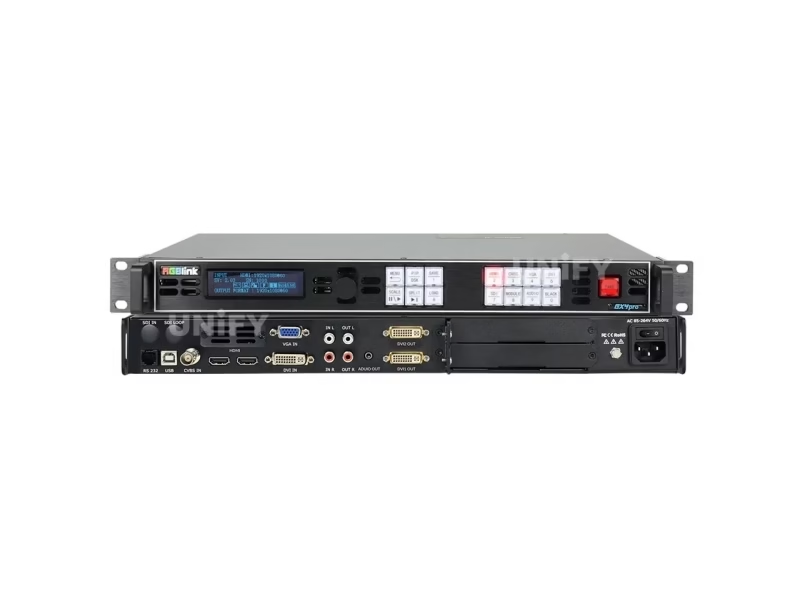
Official RGBlink video — X1 Gen2.
Specifications
What Are the RGBlink X1 Gen2 LED Video Processor Specifications?
Data from the official RGBlink X1 Gen2 Specification V1.0 (August 2024).
Video, Audio & Control
Generation Check
What Do Official X1 Gen2 Documents Say That Older X1 Pages Get Wrong?
Three points deserve the official-document treatment. First, the generation: most English documentation indexed for “X1 processor” describes the original VENUS-era X1 — a modular machine with three plug-in input slots, an internal sender-card bay for Linsn, NovaStar and Mooncell cards, LAN control and 65 W of power. The X1 Gen2 (September 2024) is a different architecture: dual HDMI with loop-through as standard, fixed DVI/VGA/CVBS inputs, dual DVI outputs to 2048×1152, an open API, and a 25 W draw — RGBlink’s own release note frames it as the seven-year iteration of the X1. Quotes should pin the order code: 110-0001 for the original, 110-0002-01-0 for the Gen2.
Why the iteration took the shape it did is worth reading before purchase, because it explains what the Gen2 will and will not do. The original X1’s plug-in input modules and sender-card bay answered a 2017 market where every wall had different connectors and the processor often doubled as the sender; by 2024 the LED control ecosystem had consolidated around standard sending stages from five vendors, and RGBlink’s seven-year refinement traded the module bays for a fixed, well-chosen input set, added the compositing and API layers a broadcast room expects, and cut the power and weight in half. The Gen2 is therefore not an upgrade path for original-X1 owners with a drawer of modules — it is the current answer for walls built on today’s control systems, and the module-era machine remains what its documentation says it is. Buyers choosing between a used original and a new Gen2 should let the sending architecture, not the price, make the call.
Second, the documentation reality: RGBlink publishes a full specification and brochure for the X1 Gen2 but, as its download page states, no dedicated Gen2 user manual — the original X1 manual remains the operating reference, and this page does not present it as a Gen2 document. Third, the output ceiling: the Gen2’s DVI outputs resolve to 2048×1152@60 and 2560×816@60 — broadcast-era resolutions for LED walls, not 4K; a 4K program requirement belongs higher in RGBlink’s X-series processing range, and the 2048×1152 figure is the honest headline for this unit.
LED Architecture
How Does the X1 Gen2 Feed an LED Display Control System?
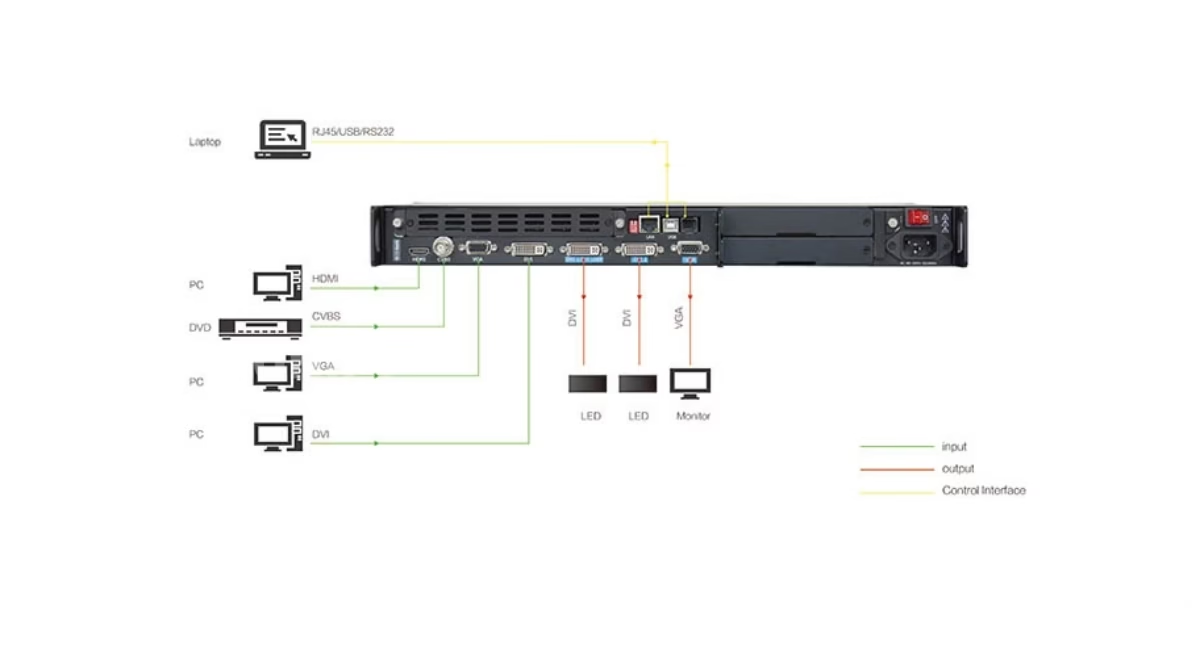
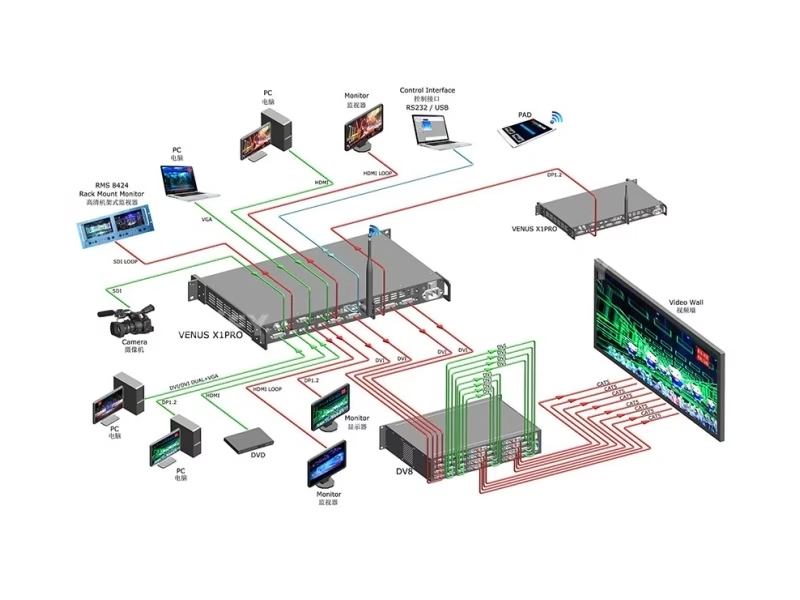
The X1 Gen2 is dedicated to LED display processing, and its output architecture assumes an existing LED control chain: the dual DVI outputs carry the scaled, switched program into the sending stage of a Novastar, Colorlight, Linsn, Mooncell or RGBlink LED control system, which converts it to the network signals that drive the wall’s receiving cards. The processor does the broadcast work — format conversion, clean switching, compositing, keying, audio sync — and the control system does the sending work, which is why RGBlink states compatibility with those five ecosystems on the product page and why a venue that already owns its sending infrastructure adds the X1 Gen2 rather than replacing it.
The architecture contrast with the processors this site has reviewed is the buying decision. The VSP 628PRO ($2,800) hosts a Linsn, NovaStar, Colorlight or Mooncell sender card inside itself and drives receiving cards directly — processor and sender in one box for walls starting from scratch. The X1 Gen2 ($500) assumes the sender exists in the control system downstream and delivers it a clean, correctly formatted DVI program — the value pick for walls that already own their sending stage. The M1 NDI ($1,920) sits upstream as a production switcher. A complete LED event chain on this site now spans all three stages — switcher, processor, sender or control system — and the screen from the rental or fixed ranges closes it.
A worked example makes the architecture concrete. A house of worship running a 3.9 mm indoor wall on a Novastar system already owns the sending stage and the receiving cards inside its cabinets; the missing layer is broadcast switching between the media server, the camera feed and the sermon computer, plus a wide-band format the Novastar sender can take. The X1 Gen2 slots into that chain at $500: the sources enter over HDMI, the processor switches and formats, and the dual DVI outputs feed the Novastar sender the venue already commissioned — no sender card to buy, no second configuration surface, and the wall’s existing spares and training stay valid. A rental house starting from a blank rack with no ecosystem commitment makes the opposite choice and buys the VSP 628PRO with its sender bay; the two answers meet the same LED wall from different starting points.
Inputs & Switching
What Inputs and Switching Does the X1 Gen2 Offer?
The Gen2 input set is built for live rooms: two HDMI inputs with loop-through are the standard, so a media server or camera feed passes to a downstream monitor without a splitter; DVI-I, VGA and CVBS round out the wired coverage for computers and legacy sources. The unit auto-detects VESA and SMPTE input standards, which removes the format guessing from setup — plug in a laptop at a VESA rate or a camera at an SMPTE rate and the processor locks on. Switching is clean TAKE: sources change without a black frame, and the transition can carry effects where a show wants them. On-board test patterns replace a signal generator for wall verification, and HDCP compliance keeps protected HDMI sources in the chain.
Output planning follows the wall geometry: each of the two DVI outputs configures from the SMPTE and VESA tables or a user-customized format, with the headline figures at 2048×1152@60 and 2560×816@60 — the wide-LED-band formats a stage or signage wall needs, and the ceiling that separates this broadcast-era processor from 4K-class units higher in the range. Two outputs also mean a main wall and an overflow or preview display can run from one processor with independent formats.
Compositing
What Compositing and Keying Does the X1 Gen2 Bring?
The Gen2’s picture layer is a broadcast toolbox in a 1U box. PiP places any source in any window position and size; PiP-by-PiP layouts split the canvas across multiple live sources for sports and event walls; and customized PiP layouts save the exact arrangement a show needs. DSK keys downstream graphics — lower thirds, logos — over the program, and chroma key removes backgrounds for virtual-set presenters. EDID management covers both DVI and HDMI inputs, so source devices negotiate the intended resolution instead of defaulting to a random laptop rate, and audio follows video through embedded and de-embedded paths with synchronization control — the detail that keeps a media server’s sound locked to its picture on the wall.
The processing claims carry the usual engineering caveat stated plainly: at this price the unit is a broadcast-grade scaler for 1080p-era and wide-band LED canvases, not a 4K processor — and for the wall resolutions it targets, the 25 W draw and 1U footprint are the rack-value arguments: three X1 Gen2s in a rack consume less power than one legacy 65 W predecessor and give three independent processing chains.
Audio
How Does the X1 Gen2 Handle Audio?
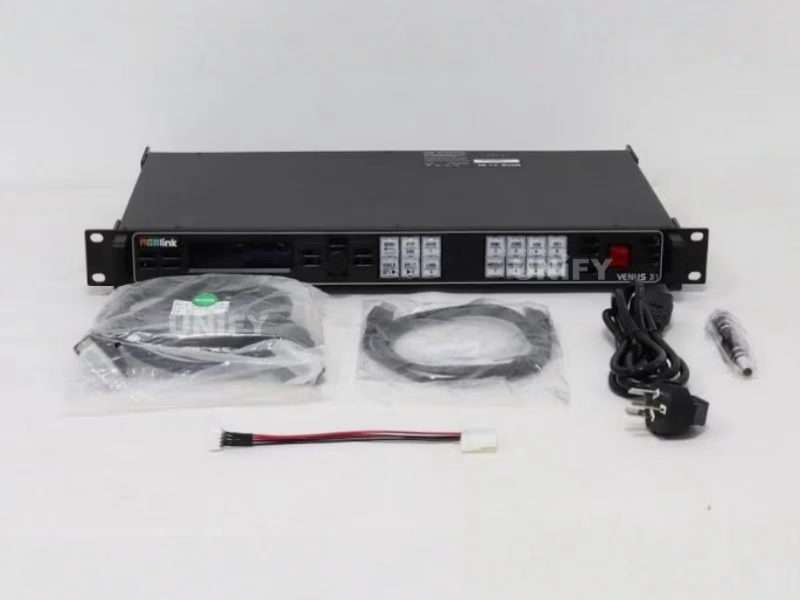
Audio on the X1 Gen2 follows the broadcast pattern: two RCA pairs carry analog in and out, a 3.5 mm stereo jack feeds local monitoring, and embedded audio rides the HDMI and DVI paths with de-embedding available at the analog outputs — the flexible path for a media server feeding HDMI with sound while the venue audio system takes the balanced analog feed. Audio and video synchronization is a listed feature rather than an afterthought, which matters when program cuts and audio follows the same source changes on a live wall.
Control & Integration
How Do You Control and Cascade the X1 Gen2?
Control on the X1 Gen2 runs four ways. The front panel operates the unit directly. RS232 over the RJ11 port and USB-B connect it to the Windows control environment and RGBlink’s XPOSE platform for full configuration. And the open API is the integrator story: third-party control systems — a venue’s automation, a broadcast master control, a custom show controller — drive the processor over its control interface without proprietary middleware, which is the capability that puts the X1 Gen2 in installed systems rather than on a demo bench. Multiple units cascade for uniform control, so a wall running several processors for separate zones or large canvases configures as one system from one control point.
Setup & Operation
How Do You Install and Operate the RGBlink X1 Gen2?
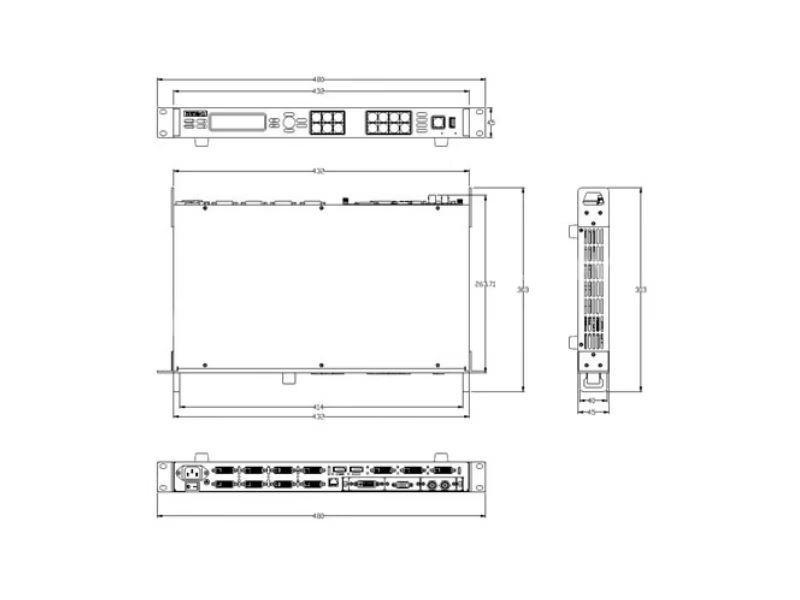
Installation is a rack hour. The X1 Gen2 mounts in a 19-inch rack at 1U and 3.1 kg; the IEC inlet takes AC from 85 to 264 V at 50/60 Hz with a 25 W maximum draw — a processor whose power budget is trivial on a venue UPS. Signal wiring follows the rear panel: HDMI sources into the two HDMI-A ports with the loop outputs feeding monitors, DVI-I, VGA and CVBS for the computer and legacy paths, and the dual DVI outputs into the LED control system’s sending stage. RS232 and USB-B connect control; the RCA pairs and 3.5 mm jack handle audio. Firmware updates arrive through the USB path, and RGBlink’s update cadence is current — firmware V2.40 shipped in April 2025 for a processor released in September 2024.
Operation is the broadcast desk pattern: sources auto-detect, the operator composes on the layout, TAKE switches cleanly, and the on-board test patterns verify the wall before content runs. Cascaded units configure as one system, and the open API hands the show to the venue’s control system where one exists. The documentation note stands: RGBlink publishes the Gen2 specification and brochure but no dedicated Gen2 manual — the operating chapters of the original X1 manual cover the same family of workflows, and this page flags the difference rather than blurring it.
X1-S Gen2
X1 Gen2 or X1-S Gen2: Do You Need the SDI Ports?
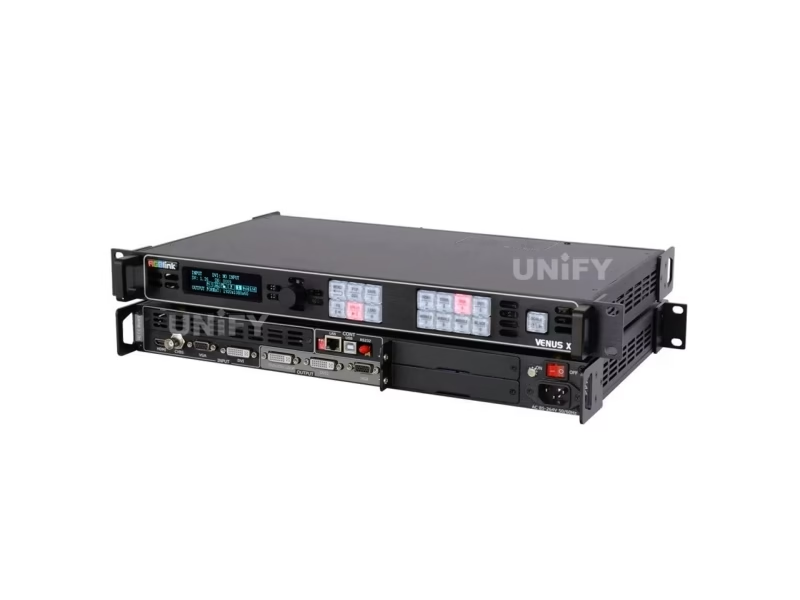
The sibling X1-S Gen2 (order code 110-0002-02-0) is the same Gen2 engine with the studio addition: two BNC 3G-SDI ports providing SDI input with loop-through, alongside the identical HDMI, DVI, VGA and CVBS set and the same dual DVI outputs. The SDI question is the only decision between them — a studio or rental chain whose cameras and routers speak SDI buys the X1-S and takes the SDI feed natively at the broadcast frame rates from 480i through 1080p60; a signage, church or event room whose sources are HDMI, computers and media servers buys the X1 Gen2 and saves the difference. Both carry the same broadcast features, the same 25 W envelope and the same open-API control story.
Where It Works
Where Does the RGBlink X1 Gen2 Fit in LED-Fronted Production?
A rental processor ahead of 500×500 rental LED screens and stage LED walls: PiP layouts for event feeds, clean TAKE for show switching, and a 3.1 kg unit that flies with the cases.
Fixed outdoor LED screens on an existing Novastar or Colorlight system: the X1 Gen2 adds broadcast switching and wide-band output to the sender the venue already runs — a 25 W addition to the rack.
A sanctuary wall plus overflow displays from one processor with dual DVI outputs and independent formats — the church LED display stage covered by a $500 broadcast processor.
Any LED screen for events brief where the sending system is already specified — the X1 Gen2 sits between the sources and the sender, doing the broadcast work at an entry price.
The processor is the middle stage of the LED signal chain this site documents end to end — switchers, processors, sending systems, receiving cards — and the X1 Gen2 is the broadcast entry point for walls that own their control infrastructure.
Comparison
X1 Gen2, VSP 628PRO or M1 NDI: Which RGBlink Processor Drives Your Wall?
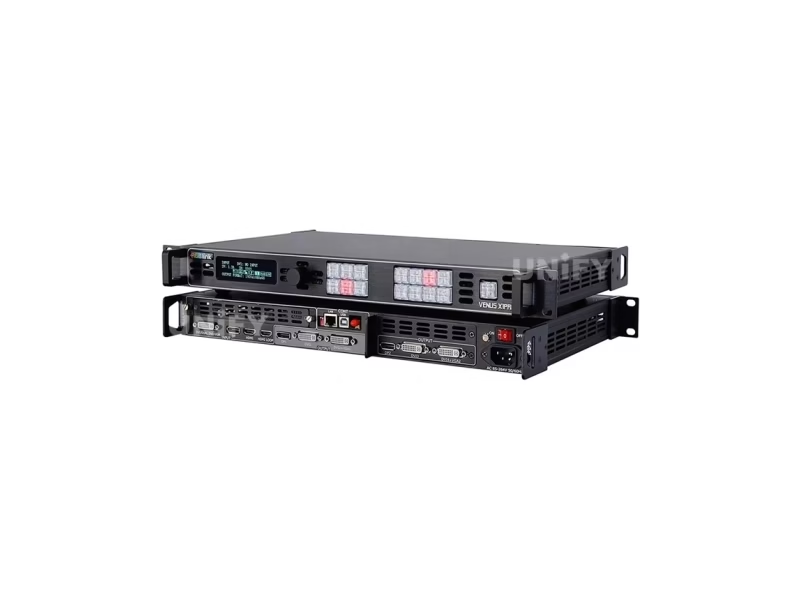
RGBlink’s processing range now spans three architectures, and the X1 Gen2 fills the value slot between them:
The RGBlink M1 NDI ($1,920) stays upstream as the NDI production switcher whose outputs feed processors like this one, and the portable mini-ISO, mini-edge SDI and mini-pro v3 remain the stream-desk consoles. Above the X1 in RGBlink’s own X-series framing sits the GX4pro with its no-gap scaling, for walls whose processor needs include multi-source edge processing at larger scale.
Pricing
How Much Does a RGBlink X1 Gen2 LED Video Processor Cost?
Price transparency, stated plainly: the RGBlink X1 Gen2 lists at $500.00 at B&H Photo Video (authorized dealer, special order with 2–4 week availability, September 2026; order code 110-0002-01-0), with US specialty resellers carrying the same unit at the same level. The value frame is the family ladder: at $500 the X1 Gen2 is the broadcast entry point below the $1,920 M1 NDI and the $2,800 VSP 628PRO — the processor to add when the LED control system already exists. Factory-direct tiers for B2B buyers:
Budget the system, not just the processor: the X1 Gen2 assumes the sending stage exists, so a wall quote pairs it with the venue’s Novastar, Colorlight, Linsn, Mooncell or RGBlink control system — and for walls that need everything in one box, the VSP 628PRO remains the sender-card answer. Genuine unit, 2-year warranty and factory support ship with every order; ask for a factory-direct quote at your quantity — we are the LED screen manufacturer behind unifyled.com.
FAQ
What Do Buyers Ask About the RGBlink X1 Gen2 LED Video Processor?
What Assurance Comes With the RGBlink X1 Gen2 Processor?
Every X1 Gen2 ships with RGBlink original packaging, current firmware and compliance documentation.
Ready to Spec the X1 Gen2 for Your LED Wall?
Factory-direct pricing, genuine RGBlink stock, current firmware pre-loaded and 2-year warranty.
unifyledscreen@gmail.com | +86-191-18802497
Technical Deep-Dive
What Should Engineers Know Before Buying the RGBlink X1 Gen2 LED Video Processor?
Published: September 2026 | 12 min read | UnifyLED Engineering Team
The RGBlink X1 Gen2 LED Video Processor is the second-generation broadcast processor of the X1 line — a 25 W, 1U unit that switches, scales and formats sources for an existing LED control system. This guide is written for engineers, integrators and procurement teams in 2026, using the official X1 Gen2 Specification V1.0 (August 2024) and Product Brochure V1.0 (September 2024) as data sources, with the generation story, the architecture decision and the family comparison that distributor pages skip.
Chapter 1 — Definition and the Seven-Year Iteration
The RGBlink X1 Gen2 (order code 110-0002-01-0) is a broadcast-grade LED video processor: two HDMI inputs with loop-through plus DVI, VGA and CVBS; dual DVI outputs at resolutions to 2048×1152@60 and 2560×816@60 or user-customized; clean TAKE switching, PiP/PBP with customized layouts, DSK and chroma keying, dual-format EDID management, on-board test patterns and embedded/de-embedded audio with sync; RS232 and USB control with an open API and multi-unit cascading; all in a 25 W, 3.1 kg 1U body that feeds Novastar, Colorlight, Linsn, Mooncell and RGBlink LED control systems. It is the value entry point of the processor range this site reviews — VSP 628PRO at $2,800 and M1 NDI at $1,920 above it.
The generation story is the first thing procurement should pin down, because the X1 name covers two machines. RGBlink’s own release note frames the Gen2 as the iteration that happened after seven years of the X1: the original VENUS-era X1 (110-0001 codes) carried three plug-in input slots, an internal sender-card bay for Linsn, NovaStar and Mooncell cards, LAN control and a 65 W draw; the Gen2 standardized dual HDMI with loop-through, fixed the input set, moved to dual DVI outputs at 2048×1152, added PiP/PBP layouts, clean TAKE and an open API, and cut power to 25 W. Most English documentation indexed for the X1 still describes the original machine, and a buyer searching specs will land on the wrong generation unless the order code is pinned — 110-0001 for the original, 110-0002-01-0 for the Gen2.
Chapter 2 — The Architecture: Processor In Front of the Sender
The X1 Gen2 assumes an LED control system exists downstream. Its dual DVI outputs carry the scaled, switched program into the sending stage of a Novastar, Colorlight, Linsn, Mooncell or RGBlink control system, which converts it to the network signals driving the wall’s receiving cards. The processor does the broadcast work — format conversion, clean switching, compositing, keying, audio sync — and the control system does the sending work, which is why RGBlink’s compatibility list names those five ecosystems and why a venue that owns its sending infrastructure adds a $500 processor instead of replacing it.
The architecture decision against the VSP 628PRO is a question of what the wall already owns. The 628PRO hosts a Linsn, NovaStar, Colorlight or Mooncell sender card inside itself and drives receiving cards directly — processor and sender in one box, priced at $2,800, for walls starting from scratch or requiring genlock splicing at scale. The X1 Gen2 delivers a clean, correctly formatted DVI program to a sender the venue already runs — the value path for signage, church and event rooms whose control stage is specified. The M1 NDI sits upstream as the production switcher whose outputs feed processors of either kind. A complete LED chain on this site now quotes across all three stages, and the screen from the rental or fixed ranges closes it.
Chapter 3 — Inputs, Outputs and the Broadcast Ceiling
The input set is built for live rooms: two HDMI with loop-through as standard — a media server or camera feed passes downstream without a splitter — plus DVI-I, VGA and CVBS for computers and legacy sources. Auto-detection of VESA and SMPTE standards removes format guessing from setup; clean TAKE switching changes sources without a black frame; on-board test patterns verify walls without a signal generator; and HDCP compliance keeps protected HDMI sources in the chain. Audio rides the same path: RCA analog in and out, a 3.5 mm monitor jack, and embedded audio with de-embedding at the outputs, synchronized to the program.
The output ceiling belongs in the spec conversation with precision: the dual DVI outputs resolve to 2048×1152@60 and 2560×816@60 — broadcast-era and wide-band LED formats, not 4K. Each output configures independently from the SMPTE and VESA tables or a user-customized format, so a main wall and an overflow display run different formats from one processor. A 4K program requirement belongs higher in the range; a 1080p-era or wide-band wall is exactly the X1 Gen2’s canvas, and the 25 W draw makes the rack math trivial — three units draw less than one 65 W predecessor.
Output planning deserves the same precision on multi-zone rooms. The two DVI outputs configure independently, so a sanctuary install runs the main wall at its native wide format on output one while output two feeds an overflow display or a confidence monitor at a standard rate — one processor covering two display zones with two formats. The customized-resolution path is where the unit earns its keep on nonstandard walls: LED canvases are rarely 16:9, and the user-defined output table accepts the exact pixel counts a stage wall or LED band needs, from tall portrait panels to the 2560×816 strips common in venue fascias. EDID management on both the DVI and HDMI inputs keeps every source negotiating the intended rate, which is the quiet difference between a wall that wakes up right and a wall that spends show mornings on laptop-display settings.
Chapter 4 — Compositing, Keying and Integration
The picture layer is a broadcast toolbox in a 1U box: PiP in any window position and size, PBP layouts splitting the canvas across live sources, customized PiP layouts saved per show, DSK for downstream graphics and chroma key for virtual-set presenters. EDID management covers both DVI and HDMI inputs, keeping source devices negotiating the intended resolution instead of defaulting to a laptop rate. The on-board test patterns, the auto-format detection and the audio-sync path together make commissioning a wall a one-afternoon job rather than a debugging project.
Integration is where the Gen2 earns its installed-system role. RS232 over RJ11 and USB-B connect the Windows environment and RGBlink’s XPOSE platform; the open API lets third-party systems — venue automation, broadcast master control, custom show controllers — drive the processor without proprietary middleware; and multiple units cascade for uniform control across zones or large canvases. RGBlink ships current firmware for the unit — V2.40 in April 2025 for a September 2024 release — and lists it as configurable from XPOSE today, which is the support posture a fixed install wants.
Chapter 5 — X1-S Gen2 and the SDI Decision
The sibling X1-S Gen2 (110-0002-02-0) is the same engine with the studio addition: two BNC 3G-SDI ports providing SDI input with loop-through beside the identical HDMI, DVI, VGA and CVBS set and the same dual DVI outputs. The SDI question is the only decision between the two: a studio or rental chain whose cameras and routers speak SDI buys the X1-S and takes SDI natively from 480i through 1080p60; a signage, church or event room whose sources are HDMI, computers and media servers buys the X1 Gen2. Both carry the broadcast feature set, the 25 W envelope and the open-API story — the choice is connector grammar, nothing else.
The connector grammar question has a latency and topology side worth stating. An SDI chain arrives with the broadcast frame rates native — 1080i50, 1080p59.94 — and the X1-S takes them as-is with loop-through for the router or monitor downstream; an HDMI chain arrives with HDCP protection on some sources and the Gen2’s HDCP compliance keeps those feeds switching. For a room whose camera infrastructure is IP rather than SDI — the NDI trend this site documents on the M1 NDI page — neither X1 variant takes NDI natively, and the production switcher upstream handles the network grammar before the processor sees a standard signal: the clean division of labor across the RGBlink family, where each box does the stage it was built for and the chain quotes together.
Chapter 6 — The Buying Math
The X1 Gen2 lists at $500 at B&H Photo Video (special order, 2–4 weeks, September 2026) — order code 110-0002-01-0 — and the budget belongs with the system it feeds: the sending stage is assumed, so a wall quote pairs the processor with the venue’s Novastar, Colorlight, Linsn, Mooncell or RGBlink control system. The family ladder frames the value: $500 buys the broadcast entry point; $1,920 buys the NDI production switcher upstream; $2,840 buys the sender-card engineering processor for walls from scratch. Acceptance testing before a wall goes live is short: connect the source mix, confirm auto-detection and clean TAKE, set the wide-band custom format on the DVI output, verify the wall through the test patterns, and save the layout — the ten-minute test that separates a commissioned installation from a service call.
A closing note on documentation honesty: RGBlink publishes the Gen2 specification and brochure but, as its download page states, no dedicated Gen2 user manual — the operating chapters of the original X1 manual cover the same family of workflows and remain the practical reference, and this page flags the difference rather than blurring it. The official documents are the reference for every number here, and where an older X1 page differs — the modules, the sender bay, the power — the Gen2 documents win.
The spares and support plan closes the engineering case. The X1 Gen2’s fixed input set and dual DVI outputs keep the field-replaceable surface small — a spare unit at $500 is a practical redundancy strategy for a fleet of walls, because the processor is the cheapest link in the chain and the one most worth doubling. RGBlink’s firmware cadence (V2.40, April 2025), its XPOSE support and the open API’s documented integration path give an installed system a software future rather than a frozen box, and the seven-year lineage means the operating knowledge base — from the original X1’s manual to the Gen2 documents — is settled and searchable. For an integrator standardizing processor spares across many venues, the $500 price and the 25 W draw make the X1 Gen2 the unit to stock on the shelf.
Conclusion
The RGBlink X1 Gen2 LED Video Processor is the second-generation broadcast processor of the X1 line: dual HDMI with loop-through, dual DVI outputs to 2048×1152 and 2560×816, clean TAKE switching, PiP/PBP compositing, DSK and chroma key, EDID management, test patterns, synchronized audio and an open API — a 25 W, 1U processor at $500 that feeds Novastar, Colorlight, Linsn, Mooncell and RGBlink LED control systems. It is the value entry point for walls that own their sending stage, the seven-year iteration RGBlink describes, and the processor to specify where broadcast switching meets an existing LED infrastructure.
Planning an LED wall with an existing control system? Talk to us — we are the LED screen manufacturer behind unifyled.com, and processors, control systems and screens ship together with 2-year warranty and engineering support.
Related Pages
Build the LED Signal Chain End to End
RGBlink M1 NDI Modular Production Switcher
RGBlink mini-ISO 10-Channel All-in-One Switcher
RGBlink mini-edge SDI 10-Channel All-in-One Switcher
RGBlink mini-pro 3rd Generation mini Streaming Switcher
LED video processor
LED display configuration & debugging
500×500 rental LED screen
Outdoor LED screen
English · August 2024 · connectors, resolutions, power and physical sheet · order codes 110-0002-01-0 / 02-0
English · September 2024 · feature overview and connector map