
Outdoor Rental · Festival Classic · Up to 6,000+ nits
P3.91 Outdoor Rental LED Display Collection
The festival classic, rebuilt outdoors: the same 250×250mm module at 65,536 pixels per square meter, delivering 4,500–5,500 nits on copper wire and 6,000+ on the gold-wire boost — with loop-redundant synchronous control, common-cathode cooling and both cabinet formats rigged for walls above a hundred square meters.
What Is a P3.91 Outdoor Rental LED Display?
Short answer: A P3.91 outdoor rental LED display is the festival classic of the outdoor family — the same 250×250mm module as its indoor twin at 65,536 pixels per square meter, delivering 4,500–5,500 nits on copper wire and 6,000+ on the gold-wire boost. Loop-redundant synchronous control, common-cathode cooling and both cabinet formats rigged past a hundred square meters make it the big-stage default.
A P3.91 outdoor rental LED display keeps the indoor twin’s 3.90625mm spacing — 256 dots to the metre — and hardens everything else. Lamps are SMD1921 outdoor packages on a 1.6mm board, scanned 1/8 so exactly eight of the 64 rows light at any instant — a native even divide. Cabinets come in both 500×500mm and 500×1000mm formats, structurally rated for walls beyond a hundred square meters, ground-stacked or flown. Control runs loop-redundant synchronous — the dual-path signal architecture big concerts insist on — with cloud-based central control over the fleet.
The buying line sits near 4m, and the pitch pays you back for distance: 65,536 lamps per square meter is 42% fewer than the outdoor P2.976, which is why this is the wall that lets promoters build bigger for less. Indoors, the P3.91 indoor rental collection carries the same pixels; the full twin decision sits in the comparison section, and our stage backdrop guide covers the show-day context.
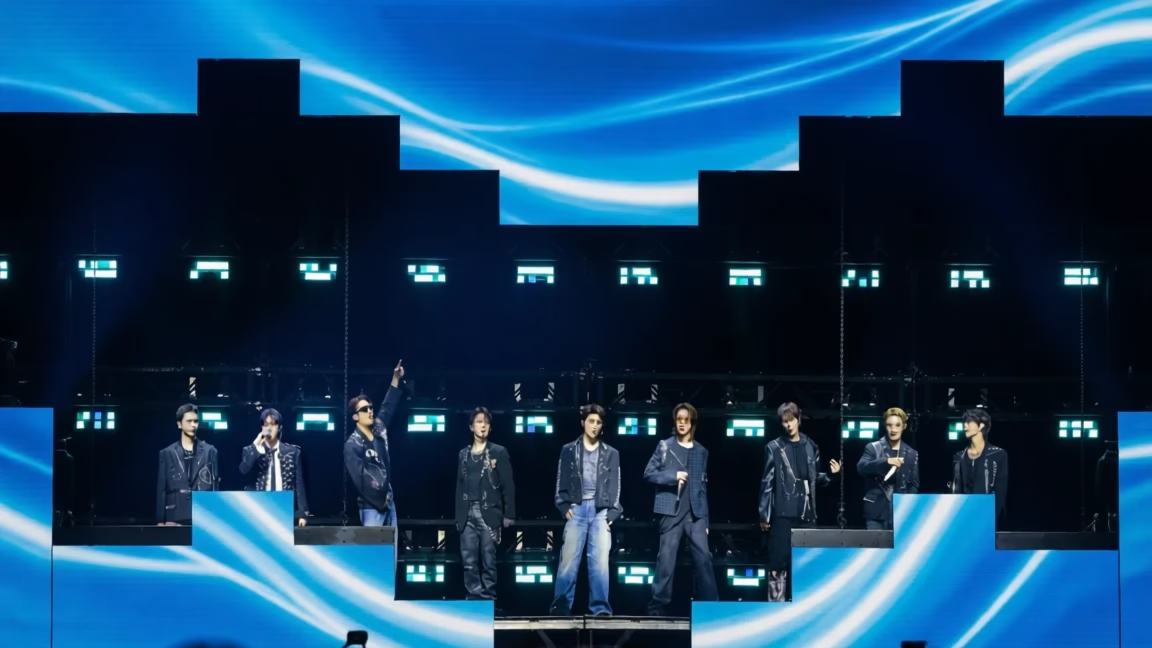
Which Module and Cabinet Sizes Does a P3.91 Outdoor Rental LED Display Use?
One production module — 250×250mm — in two outdoor die-cast cabinet formats, both structurally rated for the big builds this pitch exists for: hundred-square-meter festival mains flown over stages, stadium-scale walls stacked on shoulders. The classic screw rear service carries advanced waterproof gaskets; a custom front-flip service is available for platform-serviced rigs.
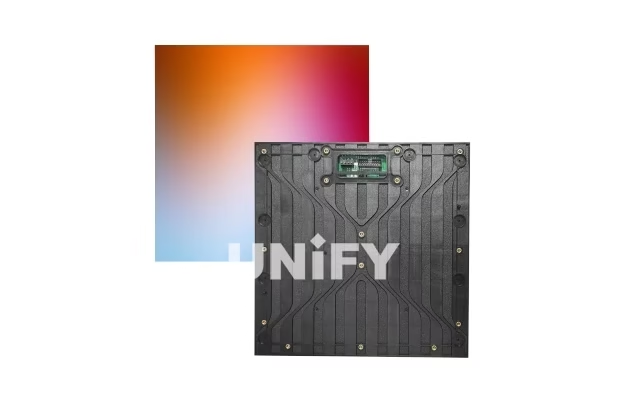
The 250×250mm Outdoor Module
Same geometry as the indoor twin — 64×64 pixels, 4,096 dots — with SMD1921 outdoor lamps on a 1.6mm board, 96 driver ICs per module, scanned 1/8 with eight of the 64 rows lit. Consistency-selected stock keeps the big face even at 6,000 nits.
500×500mm Outdoor Cabinet — the Festival Standard
Four modules per box in conventional die-cast aluminum with the structure to fly. The format festival crews know best — every flight case cut for it, every rigger certified on it, every odd stage wing fillable with it.
| Parameter | Spec |
|---|---|
| Module Size | 250×250mm |
| Pixel Resolution | 64×64 = 4,096 dots/module |
| Scan Mode | 1/8 scan (8 rows lit) |
| Driver IC Brands | Chipone (ICND series) |
| IC Count | 96 per module |
| Lamp | SMD1921 — Grade 1 (extreme stability, long life) / Grade 2 (high value), tiered at order time |
| Brightness | 4,500–5,500 nits (copper wire) / 6,000+ nits (gold-wire boost) |
| Maintenance | Classic screw rear service with advanced waterproof gaskets; custom front-flip service available |
| Cabinet | 500×500mm outdoor die-cast aluminum, 4 modules/box, rated for 100㎡+ flown or stacked builds |
| Uniformity | Consistency-selected lamps + per-pixel & per-color correction after assembly |
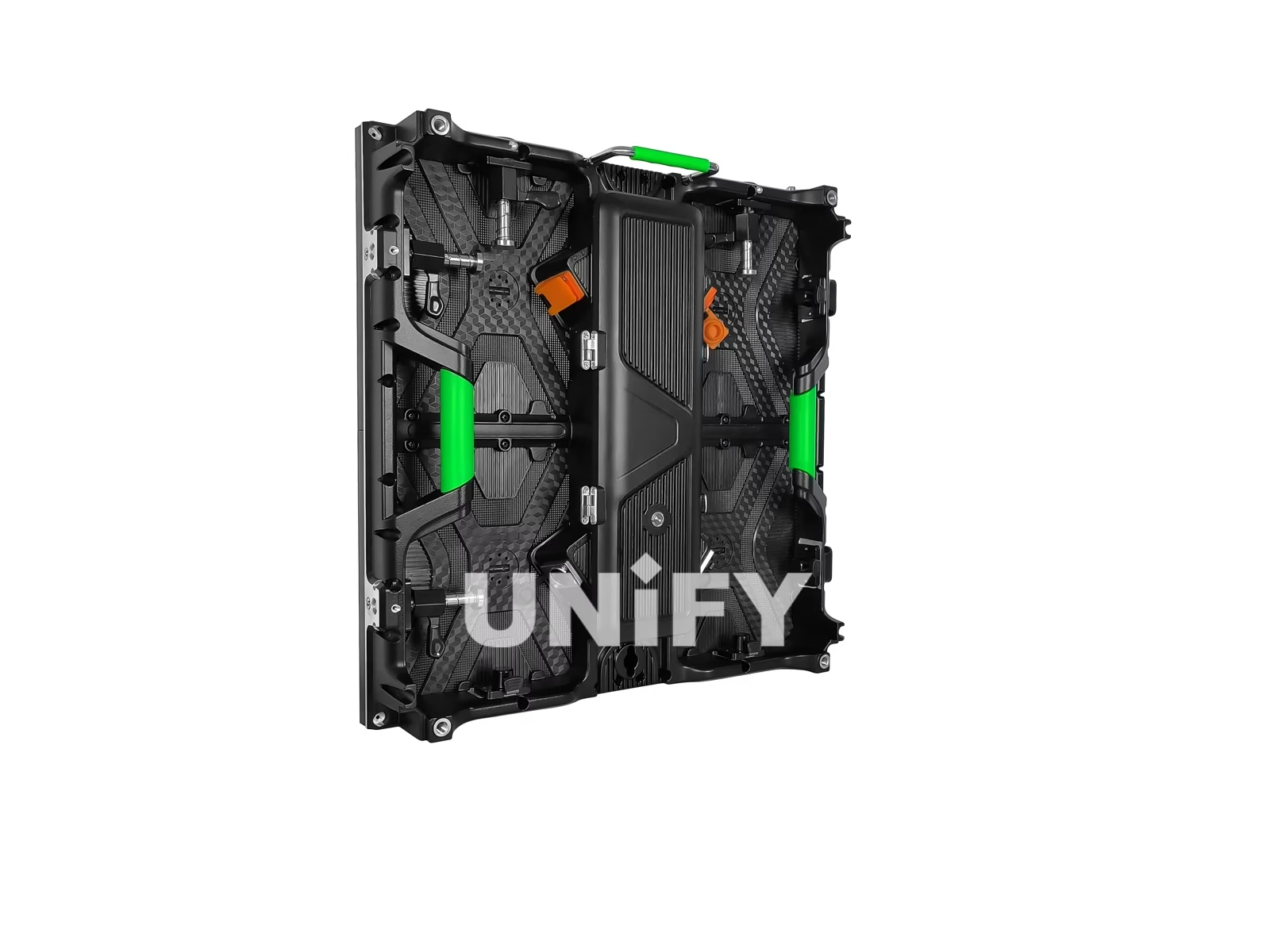
500×1000mm Outdoor Cabinet — Hundred-Square-Meter Speed
Eight modules per box, the format that makes a 75㎡ festival main wall a 150-box one-morning build. Flown or stacked, at the family’s lowest price per square meter — this is the box that turns “bigger” from a budget problem into a line item.
| Parameter | Spec |
|---|---|
| Module Size | 250×250mm |
| Pixel Resolution | 128×256 per cabinet (32,768 dots) |
| Scan Mode | 1/8 scan |
| Driver IC Brands | Chipone (ICND series) |
| IC Count | 384 per cabinet |
| Lamp | SMD1921 — Grade 1 (extreme stability, long life) / Grade 2 (high value), tiered at order time |
| Brightness | 4,500–5,500 nits (copper wire) / 6,000+ nits (gold-wire boost) |
| Maintenance | Classic screw rear service with advanced waterproof gaskets; custom front-flip service available |
| Cabinet | 500×1000mm outdoor die-cast aluminum, 8 modules/box, rated for 100㎡+ flown or stacked builds |
| Uniformity | Consistency-selected lamps + per-pixel & per-color correction after assembly |
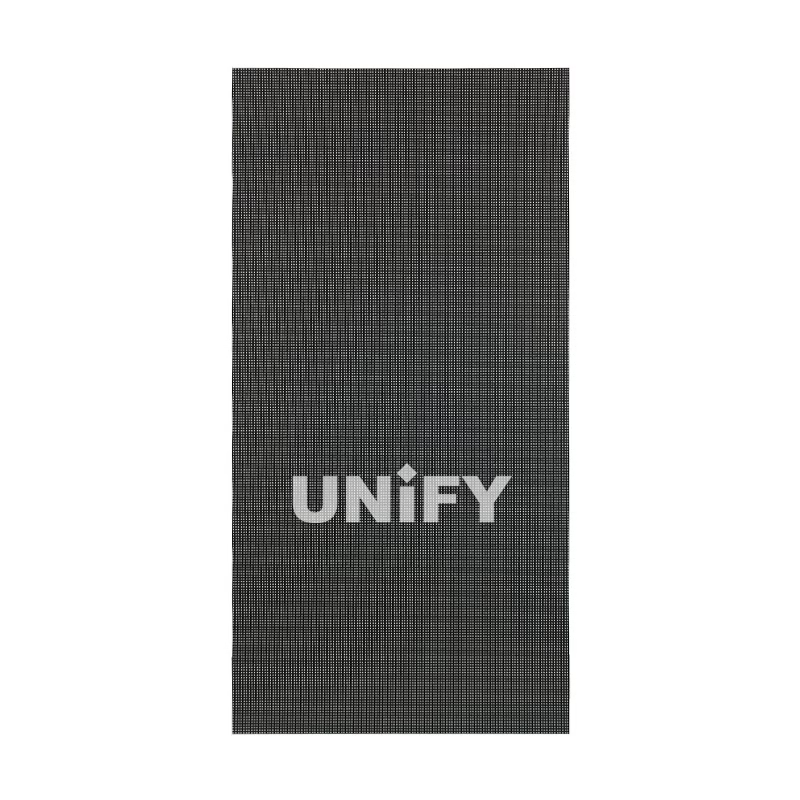
How Is Display Quality Built Into a P3.91 Outdoor Rental LED Display?
The service story is classic outdoor: screw rear service with advanced waterproof gaskets — the seal travels with every module, so a rear panel change never compromises the weather barrier — and a custom front-flip service for stages where the face must be reached from the platform. Lamps are SMD1921 outdoor packages: Grade 1 stock qualified for extreme stability and long life, Grade 2 domestic stock where the quote leads. Every lamp is consistency-selected before assembly, and the finished wall receives per-pixel and per-color correction — the two passes that keep a hundred-square-meter face even at 6,000 nits.
Refresh is a two-tier choice matched to the camera contract: 3,840Hz high refresh for filmed shows and livestreams, 1,920Hz standard for rooms without cameras — priced as options, so the band’s floor stays honest. Our refresh rate guide covers the shutter math for both tiers.
How Much Power Does a P3.91 Outdoor Rental LED Display Use?
Two supply paths ship with this collection. The conventional 5V rail is the classic build. The upgrade is common-cathode precision drive — red, green and blue channels supplied individually, so each color gets exactly the voltage it needs and the difference leaves as usable light instead of heat. On a sealed outdoor wall running 4,500–6,000+ nits, that precision cuts the heat the cabinets must shed — which is why big festival walls spec it. The technology is explained on our common-cathode page, and 65,536 lamps per square meter — 42% fewer than the outdoor P2.976 — keeps the base draw low. The power consumption guide carries the arithmetic.
| Supply Brand | Typical Rail | Role in the Cabinet |
|---|---|---|
| Chuanglian Power | 5V / common-cathode | Rental-fleet standard; both rails available in the 500-series footprint |
| MEAN WELL | 5V | Specifier-preferred option where brand approval is written into the tender |
| G-Energy | 5V / common-cathode | High-efficiency line for the 6,000+ nits gold-wire build |
All three brands mount in the same tray; the common-cathode option is the one to specify for generator-fed festival sites watching their heat and fuel.
Which Control Systems Drive a P3.91 Outdoor Rental LED Display?
Big concerts write the spec: synchronous control with strong, stable loading — and on this collection, loop-redundant architecture: the signal runs a dual path, so a failed cable or card on the primary loop hands off to the backup without the audience seeing a frame drop. NovaStar and Colorlight systems lead, both manageable from the cloud across the fleet; senders and receiving cards stay on one platform per wall.
NovaStar

The festival-reference stack: an NovaStar TB1-class controller box drives the wall with the redundant loop architecture big productions contract for.
Colorlight

Receiving cards such as the Colorlight i5A-F pair with the sending range for stable festival loading and cloud-managed fleets.
Huidu

The Huidu C16C control card runs standalone schedules with cloud publishing — the PC-free path for walls that work all week.
Mooncell

The Mooncell MTB2000E master controller carries large festival walls with automatic recovery and flexible wiring for the truck run.
VDWALL

The VDWALL LVP909 product line — scaling and switching with the touring pedigree festival rental houses stock.
RGBlink

The RGBlink X1 Gen2 processor handles scaling and switching for mid-size festival stages in a compact rack.
P3.91 Outdoor or Indoor — Which Twin Does Your Job Need?
Twins by module and pixel math, different by weather and scale. The tables settle which twin, then place both in the family.
1) The twin decision — six dimensions
| Dimension | P3.91 Outdoor (this page) | P3.91 Indoor |
|---|---|---|
| Pixel density | 65,536 px/㎡ (identical) | 65,536 px/㎡ (identical) |
| Brightness | 4,500–5,500 / 6,000+ nits | 800–1,200 nits |
| Weather protection | Outdoor gasketed build, waterproof service | Indoor build, magnetic front |
| Scale rating | 100㎡+ flown or stacked | Mid-size rooms |
| Control | Sync with loop redundancy + cloud | Sync + async dual mode |
| Price per ㎡ | $500–850 — the family floor | $550–900 |
When to choose which:
- Festival mains, stadium builds, any wall past 50㎡ outdoors — the outdoor twin; scale and weather are its whole design brief.
- Indoor halls at 4–15m — the indoor twin, with dual-mode control and the finer service story.
- Generator-fed sites watching fuel — the outdoor twin with common-cathode drive cuts heat and load.
- Broadcast contracted — the outdoor twin’s loop-redundant sync is the architecture festival TV riders specify.
2) Route by viewing distance and venue
| Condition | Right Product |
|---|---|
| Outdoors, 4–15m, big walls, weather | This P3.91 outdoor collection |
| Outdoors, finer detail at 3m+, budget open | P2.976 outdoor rental / P2.604 outdoor |
| Indoors, 4–15m, no weather | P3.91 indoor rental |
| Outdoors, budget first, beyond 8m | P5 / P6 outdoor |
3) Where P3.91 Outdoor sits in the pitch family
| Pixel Pitch | Pixel Density | Smallest 1080p Wall | Min Viewing Distance |
|---|---|---|---|
| P1.5 | 444,444 px/㎡ | 2.88 × 1.62m | 1.5m |
| P1.8 | 308,642 px/㎡ | 3.46 × 1.94m | 1.8m |
| P1.953 indoor rental | 262,144 px/㎡ | 3.75 × 2.11m | 2m |
| P2.604 indoor rental | 147,456 px/㎡ | 5.00 × 2.81m | 2.6m |
| P2.604 outdoor rental | 147,456 px/㎡ | 5.00 × 2.81m | 2.6m |
| P2.976 indoor rental | 112,896 px/㎡ | 5.71 × 3.21m | 3m |
| P2.976 outdoor rental | 112,896 px/㎡ | 5.71 × 3.21m | 3m |
| P3.91 indoor rental | 65,536 px/㎡ | 7.50 × 4.22m | 4m |
| P3.91 outdoor — this page | 65,536 px/㎡ | 7.50 × 4.22m | 4m |
| P2.5 outdoor | 160,000 px/㎡ | 4.80 × 2.70m | 2.5m |
| P3 outdoor | 111,111 px/㎡ | 5.76 × 3.24m | 3m |
| P4 outdoor | 62,500 px/㎡ | 7.68 × 4.32m | 4m |
| P5 outdoor | 40,000 px/㎡ | 9.60 × 5.40m | 5m |
How Much Does a P3.91 Outdoor Rental LED Display Cost?
Short answer: market listings for P3.91 outdoor rental walls price at roughly $500–850 per square meter FOB (2026-09 market listing scan) — the lowest entry in the entire rental family, indoor or outdoor. At 16 modules per square meter that is about $31–53 per 250×250mm module.
What moves a quote inside that band:
- Lamp grade. Grade 1 SMD1921 (extreme stability, long life) sits at the top; Grade 2 domestic stock moves the price down without changing geometry.
- Brightness tier. The 6,000+ nits gold-wire boost costs more than the 4,500–5,500 nits copper build — daylight main stages take the boost.
- Supply scheme. The common-cathode precision drive adds supply cost and pays it back in generator fuel and cabinet heat.
- Structure scale. Hundred-square-meter flown builds quote with engineering: rigging plots, wind loads and box counts by design.
- Order size. Volume pricing typically opens above 50㎡.
Buying vs renting — the market arithmetic: rental rates run $55–110/㎡ per day for the screen alone, $125–195/㎡ full-service (2026-09 market breakdown); around 15 event-days a year is where buying wins — and at this entry price, festival crews cross it fastest.
Worked example: a 15×5m festival main wall (75㎡) at band midpoint lands near $50,000 FOB — 1,200 modules in 150 of the 500×1000mm cabinets, loop-redundant control included. The screen size guide and our engineers will sanity-check the count.
Where Does a P3.91 Outdoor Rental LED Display Deliver the Most Value?
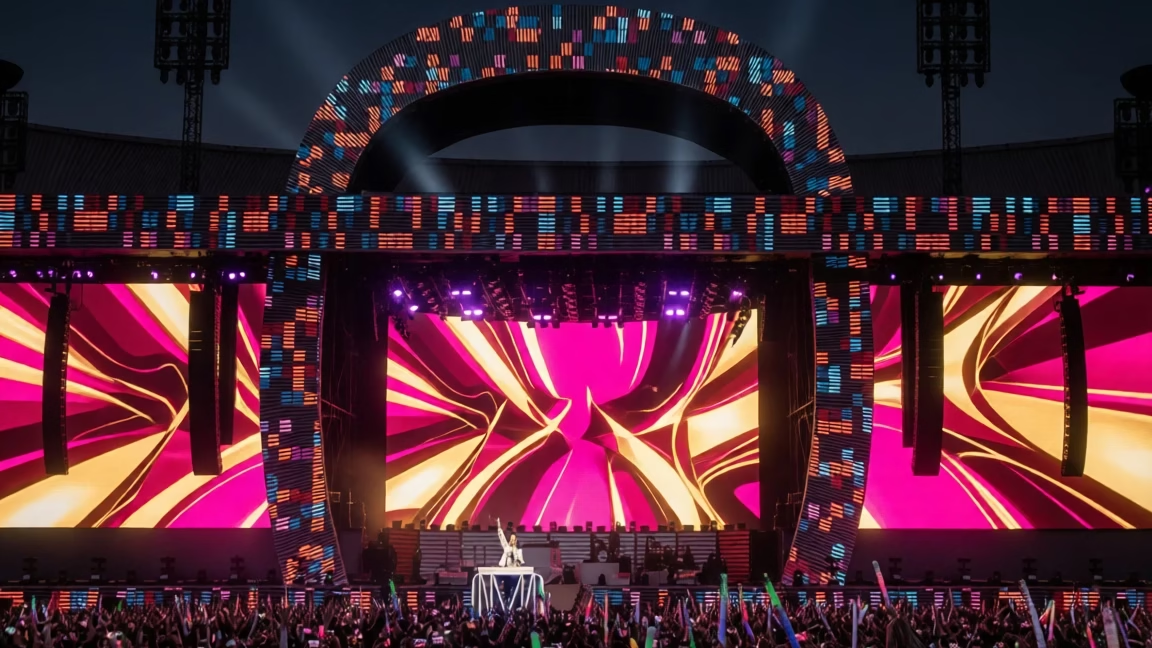
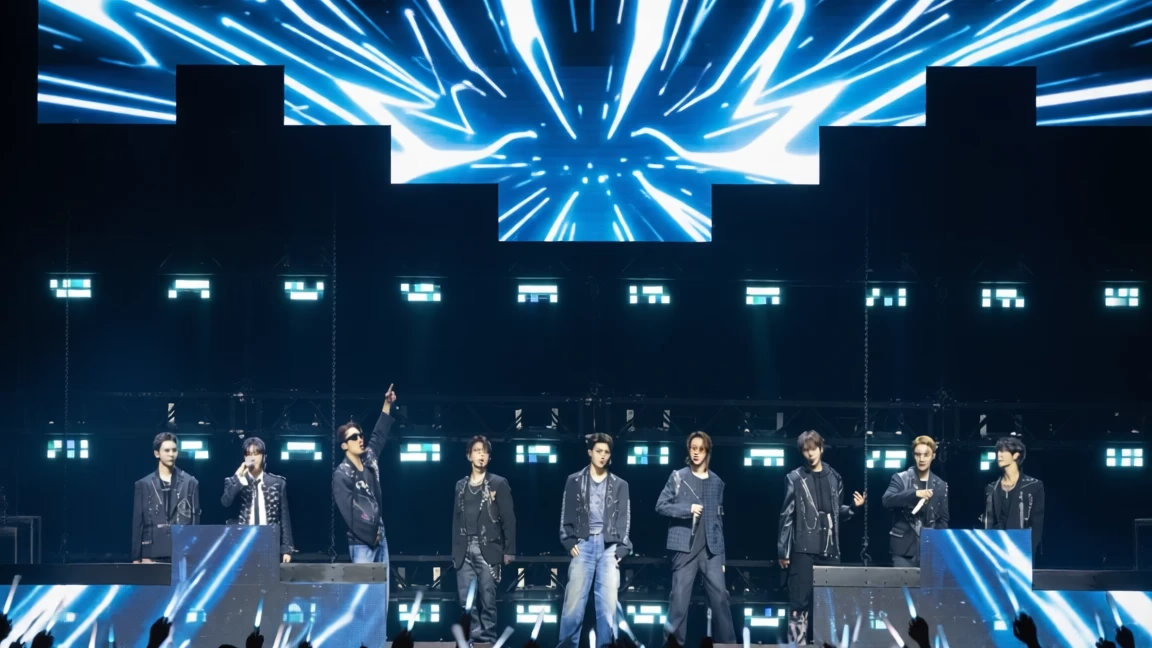
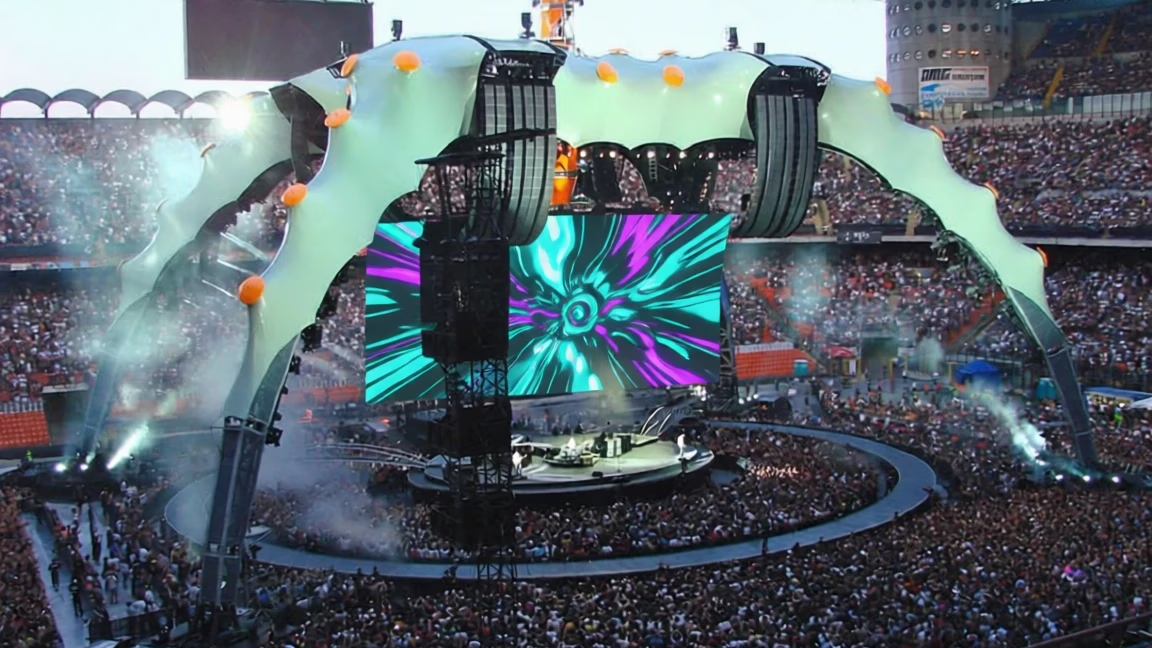
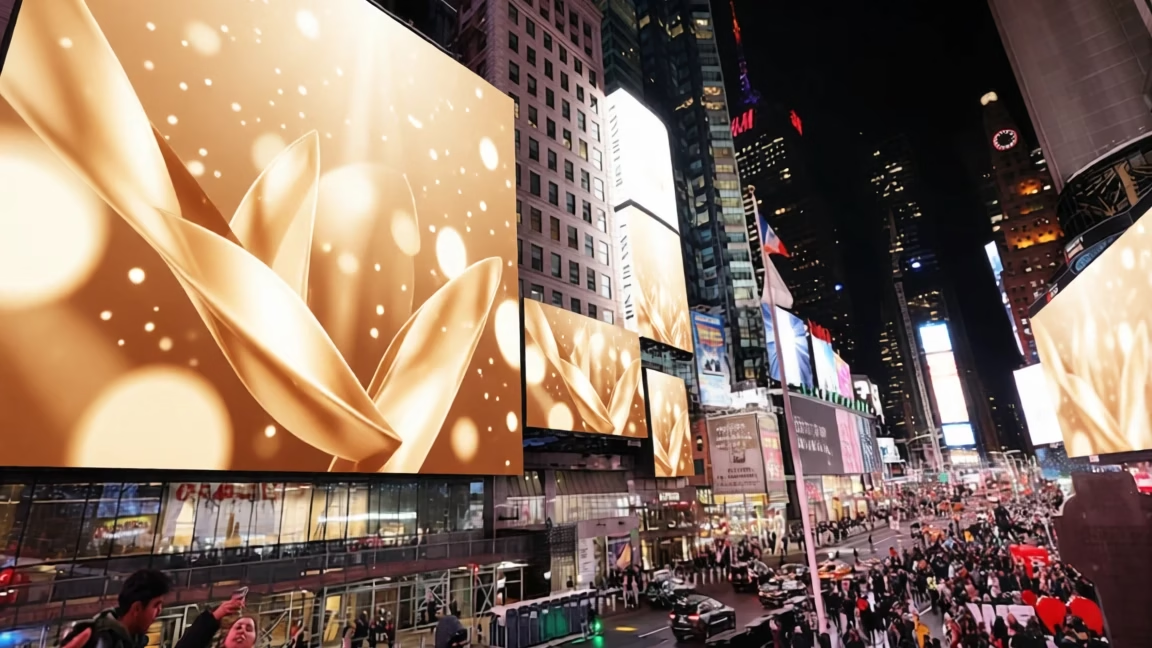
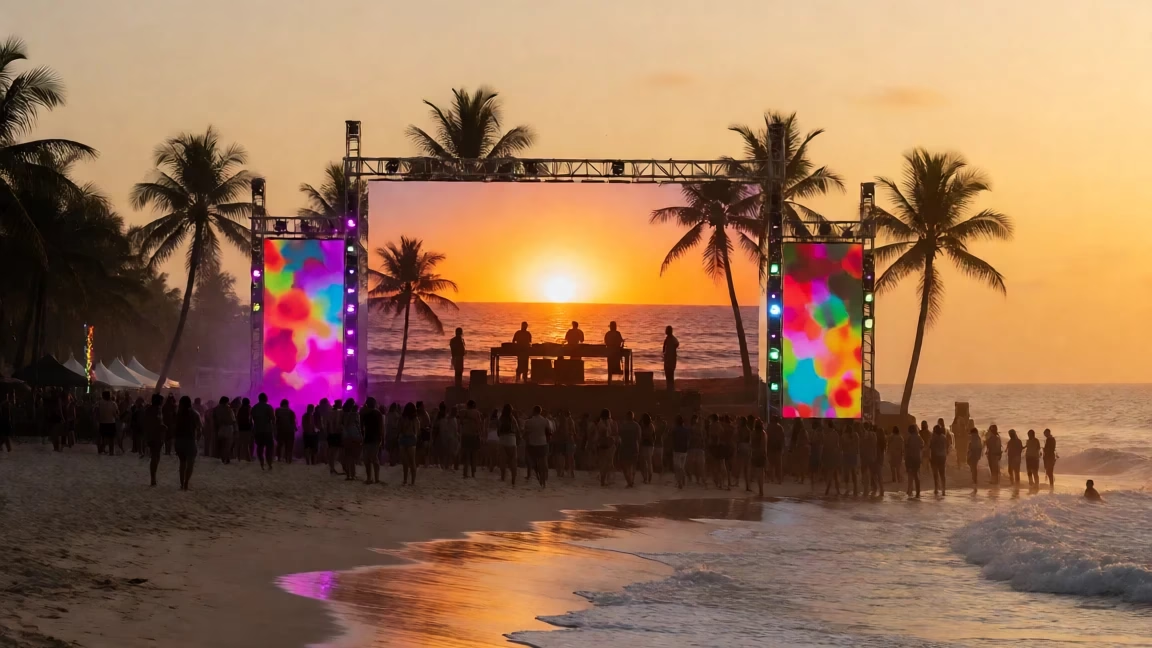
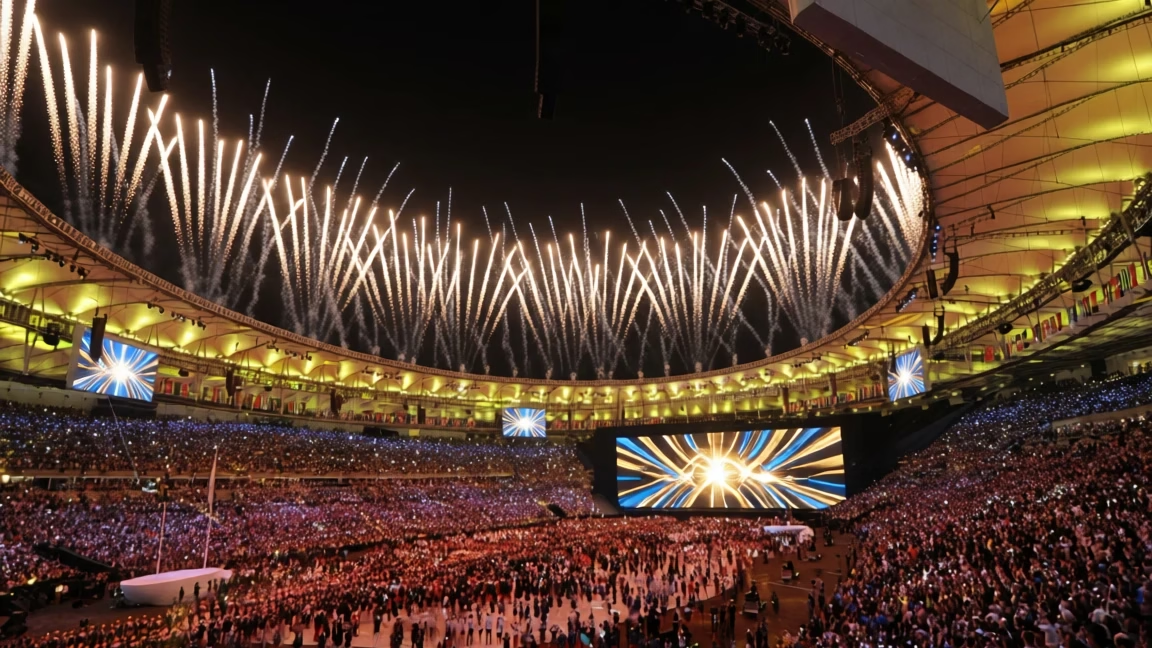
The festival-classic band: outdoor walls from 4m out, built at scale, where loop-redundant control and 6,000+ nits are contract terms. Eight scenes where this collection headlines.


What Have P3.91 Outdoor Rental LED Display Builds Looked Like?
Reference configurations our production floor has shipped in this spec — the outdoor packages our crews load most often:
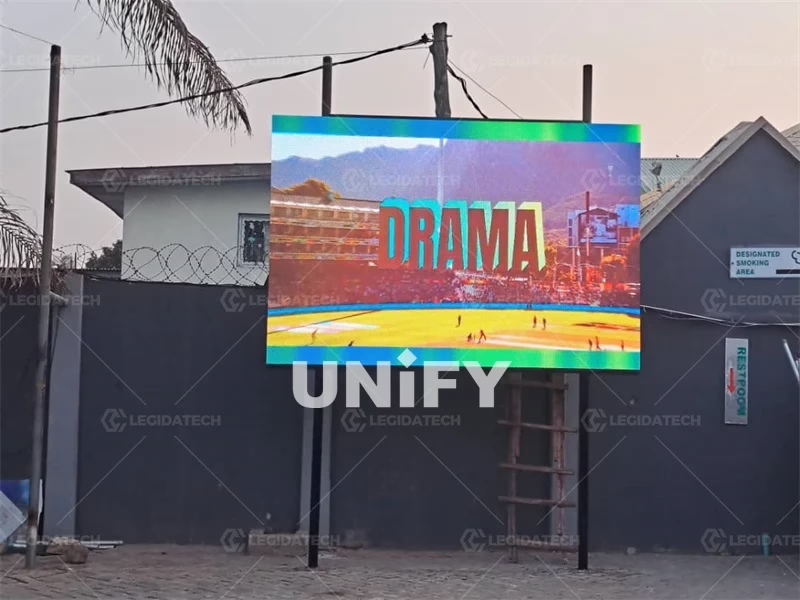
Nigeria · Metastar 3×2m
3 × 2m · Metastar Series
A Metastar Series 3×2m outdoor wall installed in Nigeria — the same build covered in our Nigeria project article, running on the IP65 outdoor fleet.
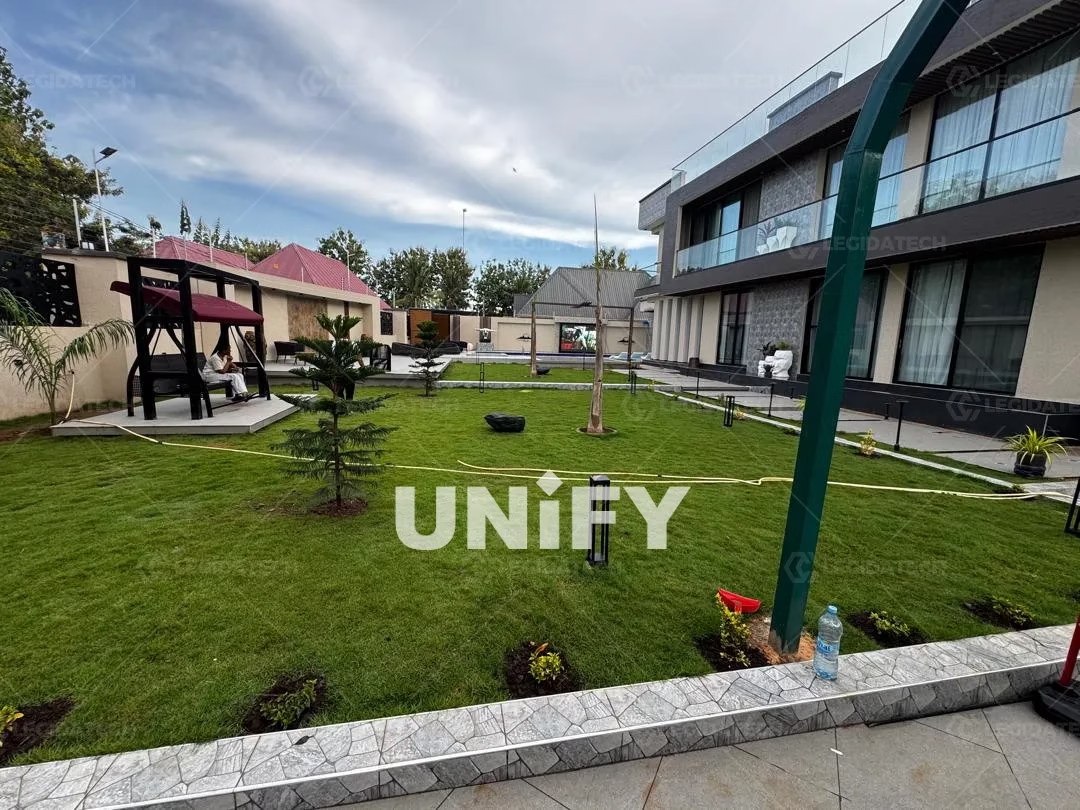
Tanzania · 3×2m
3 × 2m Rental Build
A 3×2m P3.91 outdoor rental screen deployed in Tanzania — the classic festival-classic package, sealed and touring-ready.
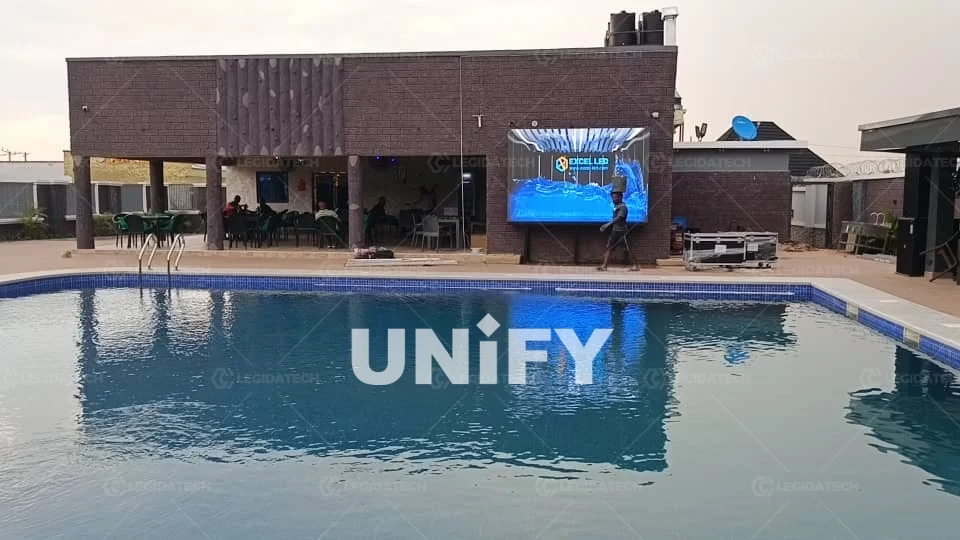
Abuja, Nigeria · Metastar 3×2m
3 × 2m · Abuja Install
A METASTAR P3.91 3×2m wall installed in Abuja, Nigeria — the compact festival-classic package with the full outdoor sealing stack.
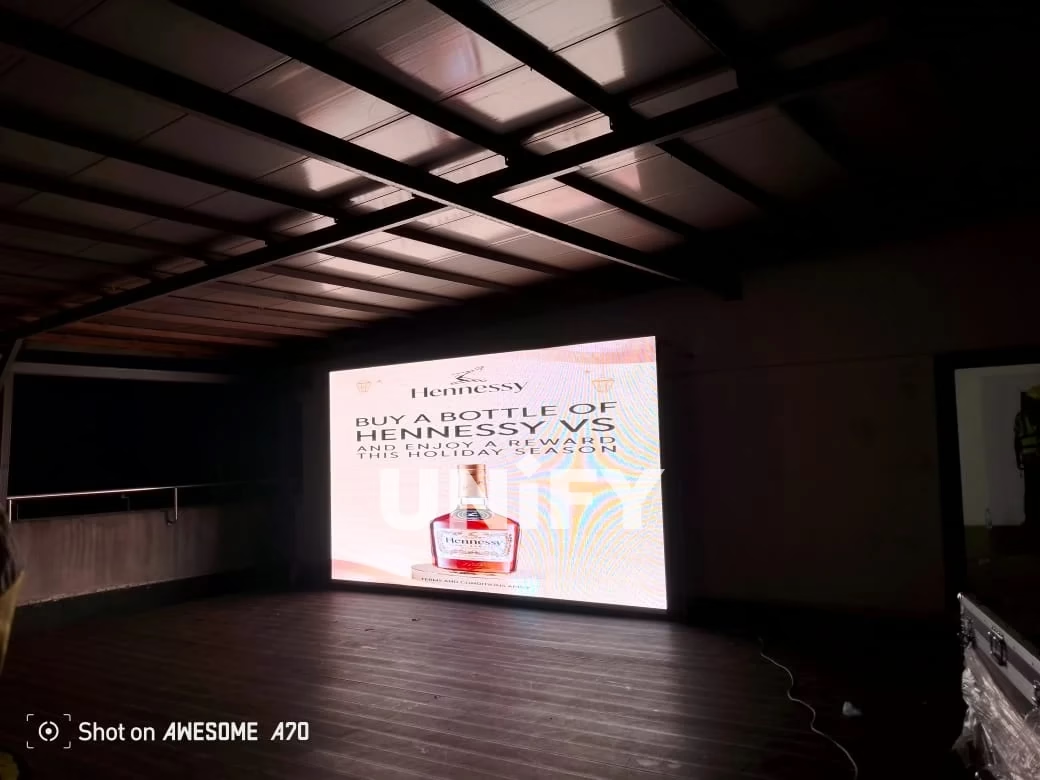
Lagos, Nigeria · 3.5×2m
3.5 × 2m · 500×1000 Build
A 3.5×2m screen built from 500×1000mm cabinets installed in Lagos, Nigeria — the long-format cabinet proving out on a compact wall.
Named project case studies with site photography follow once client sign-offs clear — ask us for references in your region meanwhile.
P3.91 Outdoor Rental LED Display: Frequently Asked Questions
What viewing distance does a P3.91 outdoor rental LED display need?
The pixel floor is about 4m — the same as its indoor twin, at 65,536 pixels per square meter — but festival and stadium audiences read from much farther out, which is what the 4,500–6,000+ nits brightness is for. Big-field and big-square applications sit naturally in the 4–15m band and beyond.
How does the P3.91 outdoor compare with the P3.91 indoor twin?
Identical pixels, different envelope. The outdoor build runs roughly five times the brightness (4,500–6,000+ vs 800–1,200 nits), gasket-seals the service path, rates the cabinets for 100㎡+ flown builds, and adds loop-redundant synchronous control. The indoor twin answers with magnetic front service and dual sync/async modes. Pick by weather and scale — the pixels are identical.
What does loop-redundant control actually do on show day?
The signal runs a dual path: if a cable is crushed in a gate rush or a card fails on the primary loop, the backup path takes over without a visible frame drop. Big concerts and broadcast riders specify this architecture by name — it is the difference between a flicker nobody can prove and a headline set remembered for one.
Why does common-cathode matter on an outdoor wall?
Because red, green and blue LEDs need different voltages, and supplying each channel individually stops the difference from becoming heat. On a sealed outdoor wall running 6,000+ nits, common-cathode drive cuts the heat the cabinets must shed — cooler components, longer lamp life, and a smaller generator line for fuel-conscious festival sites.
Should I spec 3,840Hz or 1,920Hz refresh?
Match the cameras. The 3,840Hz high-refresh tier is the pick whenever broadcast, livestream or filmed content is contracted; the 1,920Hz standard build is flicker-free to the eye and prices at the band’s floor. This collection offers both as an order-time choice.
Can these cabinets build a wall over 100 square meters?
Yes — that is the structural design brief. Both cabinet formats are rated for walls beyond a hundred square meters, ground-stacked or flown, with rigging plots and wind-load engineering quoted per design. The 500×1000mm format is the speed play: a 75㎡ main wall is 150 boxes, one morning, one crew.
How many cabinets make a 1080p P3.91 outdoor wall?
A native 1920×1080 image on this pitch is 7.5 × 4.22m — about 31.6㎡. The width is exactly fifteen 500mm columns; the height rounds on the cabinet grid to a 7.5 × 4.5m wall (1920×1152 pixels, 60 of the 500×1000mm cabinets), with the processor scaling the small difference.
How much does a P3.91 outdoor rental LED display cost?
Roughly $500–850 per square meter FOB (2026-09 market listing scan) — about $31–53 per 250×250mm module at 16 modules per square meter, the lowest entry in the rental family. Lamp grade, the 6,000+ nits boost, common-cathode drive and structural engineering move a quote inside that band; the 15-events-a-year buy-vs-rent crossover applies.
Same Pitch, Two Lives — How Do You Choose Between the Indoor and Outdoor P3.91 Rental Twins?
P3.91 built the rental industry indoors, and it runs the biggest shows outdoors — two lives on one 250×250mm module. The indoor and outdoor twins share 65,536 pixels per square meter and a 7.5 × 4.22m native 1080p canvas; what differs is scale, weather and the control architecture that keeps a headline set on air. This guide is the decision walkthrough.
Scale first: the outdoor twin is rated for a different kind of big
Indoor P3.91 walls live in mid-size rooms; outdoor P3.91 walls headline festivals. The structural difference is contractual, not cosmetic: the outdoor cabinets are rated for walls beyond a hundred square meters, flown above stages or stacked on structural shoulders, with rigging plots and wind-load engineering quoted per design. At 256 dots per metre the pitch also gives the scale away cheaply — 65,536 lamps per square meter is 42% fewer than the outdoor P2.976 and 85% fewer than indoor P1.953, which is how a 75㎡ festival main wall quotes at the family’s floor price. When the brief says “biggest,” this is the pitch that says yes.
The pixel math lands cleanly at scale too: a native 1080p frame is 7.5 × 4.22m — the width exactly fifteen cabinet columns — and real festival walls round to 7.5 × 4.5m (1920×1152) or grow outward to 3360×1536 on a 15×5m canvas. At this distance-driven pitch, resolution is never the constraint; structure and budget are, which is the right way round for a promoter.
Brightness and heat: 6,000 nits up, common-cathode down
Outdoor daylight is the hardest lighting director in the business. The outdoor twin answers with 4,500–5,500 nits on copper-wire drive and 6,000+ nits on the gold-wire boost — roughly five times the indoor tier and the highest ceiling in the rental family. Brightness at that level generates heat, and heat is the enemy of lamp life on a wall that works all summer. The common-cathode option attacks it at the source: red, green and blue channels supplied individually, each at exactly the voltage it needs, so the surplus leaves as light instead of heat. Festival sites running generators feel it twice — cooler cabinets and a smaller fuel line. The drive principle is on our common-cathode page, and refresh is specified the same order-time way: 3,840Hz when cameras are contracted, 1,920Hz when they are not.
Loop redundancy: the architecture a headline set demands
The control difference between the twins is architectural. The indoor twin runs dual modes — sync for show days, async with cloud publishing for the quiet weeks. The outdoor twin runs loop-redundant synchronous control: the signal path is doubled, so a crushed cable in a gate rush or a failed card on the primary loop hands off to the backup without the audience seeing a frame drop. Festival broadcast riders specify this by name. Both twins support cloud-based central control — one dashboard for every wall in the fleet — but on the outdoor twin it rides over an architecture designed for the one take that matters. Our sync vs async guide maps the modes.
Service, lamps and the ownership arithmetic
The outdoor service story is classic and proven: screw rear service with advanced waterproof gaskets — the seal travels with every module — plus a custom front-flip option for platform-serviced stages. Lamps are consistency-selected SMD1921 in Grade 1 (extreme stability, long life) or Grade 2 (high value), and the finished wall receives per-pixel and per-color correction. Then the arithmetic: at $500–850 per square meter FOB against $55–110/㎡ daily rental, the fifteen-event crossover lands earliest of any pitch in the family — the floor price that made P3.91 the industry’s volume line indoors now does the same for outdoor fleets. Send us the site, the wall size and the show calendar, and the quote comes back module-level with the brightness tier, supply scheme and cabinet mix itemized.
The short version: a P3.91 outdoor rental LED display is the festival classic — 65,536 pixels per square meter at 4,500–6,000+ nits, loop-redundant synchronous control, common-cathode cooling, and cabinets rated past a hundred square meters — at the lowest per-square-meter price in the family. It is the pitch that turns “biggest show of the year” into a build plan.
Related P3.91 Outdoor Rental LED Display Resources
P2.976 Outdoor Rental LED Display Collection →
P2.604 Outdoor Rental LED Display Collection →
500×500mm Rental LED Display Collection →
500×1000mm Rental LED Display Collection →
Stage LED Backdrop Guide →
Stage LED Display R Series →
P3.91 Rental vs Fixed Guide →
P3.91 Outdoor LED Display to UK Case →
Common-Cathode LED Technology →
Spec Your P3.91 Outdoor Rental LED Display With Our Engineers
Send us the site, the wall size and the show calendar. The quote comes back itemized — lamp grade, brightness tier, supply scheme, cabinet mix, loop-redundant control stack — factory-direct, with 3% spare modules in every order.
UnifyLED — LED screen manufacturer · unifyledscreen@gmail.com · Changsha / Shenzhen, China
Browse our guides: P2.6 vs P3.91 Rental LED Screen