
Huidu VP Series vs Novastar MCTRL vs Colorlight X2: Which LED Video Processor Fits?
UnifyLED · LED Control System Guide · Updated August 2026
The Huidu VP series vs Novastar MCTRL vs Colorlight X2 question comes up on every synchronous LED wall over one million pixels — and the answer is a class-by-class comparison, not a brand verdict. This guide lines up the three processor families at four loading classes, walks the shared per-port math, compares 4K input tiers and price, and corrects the one spec error that keeps circulating in vendor tables.
Short answer: In the 1.3M class the Huidu HD-VP210 (USD 115) is a 3-in-1 box — processor, sending card and USB player — where the MCTRL300 and X2 are sending-box class devices; in the 2.3M class the HD-VP410 brings four ports at USD 179–199; in the 3.9M-5.2M class the HD-VP620 adds 4K input at mid-range price while the HD-VP830 adds SDI and three windows; the Novastar MCTRL4K tops the flagships at 8.8M. All three families share the same 655,360-pixels-per-port math.
How Do the Huidu VP vs Novastar MCTRL vs Colorlight X Processor Lines Compare by Class?
The three families line up almost rung-for-rung; the differences are packaging, inputs and price. The class table (Huidu figures from official specs on this site; MCTRL and X figures from official documentation and verified listings):
The 1.3M class: three different answers to the same budget
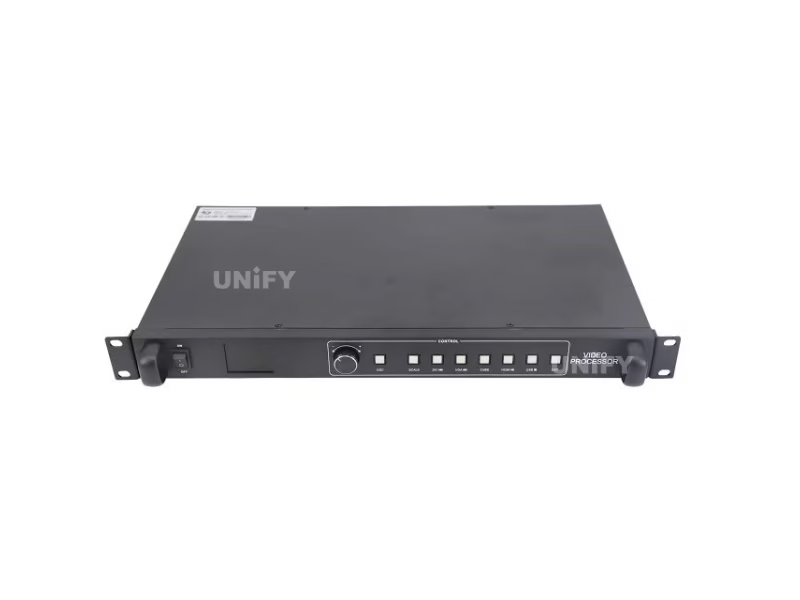
The HD-VP210 is a 3-in-1: single-picture processor, sending card and USB media player in one 1U box, with five inputs (HDMI, DVI, VGA, CVBS, USB) and seven templates. The MCTRL300 is a sending box that assumes a separate processor upstream, priced at USD 919 in verified listings — the same 1.3M budget, but the Novastar premium buys the ecosystem and the support network. The X2 sits between on price. For a wall that just needs processing plus sending in one box, the VP210 is the only 3-in-1 in the class.
The class table also shows what each family is built around. Huidu packs more function per box at every rung — the VP line folds the sending card in, so a fixed installation buys one device instead of two. Novastar spreads the function across the ecosystem — the MCTRL300 is designed to sit behind a separate video processor, which is why its verified price (USD 919) reflects the system role, not the component. Colorlight splits the difference, with the X series tuned for flexible input layouts on rental walls. The right question per class is not “which brand” but “how many boxes does this installation want” — the answer that separates the three at every rung.
The 2.3M class: the four-port rung
The HD-VP410 doubles the ports to four and carries 1920×1200 at USD 179–199; the MCTRL660 and X4 answer with the same port count in their ecosystems. The MCTRL300 vs MCTRL660 comparison on this site covers the Novastar side of this rung in detail.
The 3.9M-5.2M class: where the families diverge
The HD-VP620 (3.9M, six ports, 4K input at USD 340–500) and HD-VP830 (5.2M, eight ports, SDI, three windows, USD 560) face the X8m at 5.2M and the MCTRL4K at 8.8M — the Novastar flagship priced at USD 28,018 in verified listings, a different procurement tier entirely.
Huidu Official — how to set up the HD-VP410 controller for a P2.5 LED display
Huidu Official — introduction of the all-in-one LED controller HD-VP410
What Loading Math Do the Huidu VP, Novastar MCTRL and Colorlight X Processors Share?
All three families run on the same per-port arithmetic: 655,360 pixels per Gigabit port. Huidu’s official documents print it — V2.1 on the HD-VP620 (“650,000 per port”), V2.0 on the HD-VP830 (655,360) — and the class conventions line up across the brands: MCTRL300 at 1.3M from two ports, MCTRL4K at 8.8M from sixteen, X8m at 5.2M. The rule for any wall: count the pixels, divide by 655,360, and the port class answers itself — the same rule the HD-VP210 page derives in full. It is the only loading math an integrator needs across all three brands.
Which Processor Line Handles 4K Input Best: Huidu VP, Novastar MCTRL or Colorlight X?
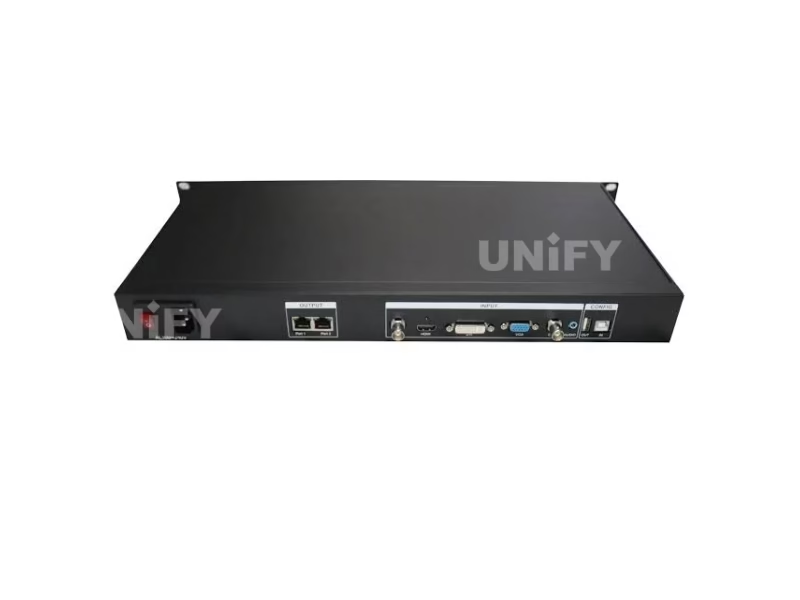
4K input is where the price ladder shows its shape. Huidu puts 4K on the HD-VP620 at mid-range (HDMI 2.0 plus DisplayPort 1.2, both 3840×2160@60, USD 340–500) — the cheapest documented 4K input path in the three families. Colorlight’s X8m answers at 5.2M. Novastar’s 4K lives on the MCTRL4K flagship: DP 1.2, HDMI 2.0, 16 ports, HDR10/HLG support — at a verified listing price of USD 28,018. The decision is not “which brand does 4K” but “which tier of 4K does the project budget allow”: mid-range 4K (VP620) for a 3.9M wall, flagship 4K (MCTRL4K) for an 8.8M mission-critical installation.
Two practical notes on the 4K tier. First, 4K input only pays off on walls that can resolve it — the VP620’s 3.9M budget at P2.5 is a 6.5 m × 3.75 m screen, where a 3840×2160 source lands pixel-for-pixel; on coarser P4/P5 walls, the 1080p inputs carry most traffic and the 4K capability is headroom for the future. Second, count the sources before buying: the VP620 documents two 4K inputs (HDMI 2.0 and DP 1.2) while the MCTRL4K adds dual-link DVI and 16 outputs — the input count is the second specification to check after the loading class, because a studio wall with three 4K sources outgrows the VP620’s two regardless of budget.
What Do the Huidu VP vs Novastar MCTRL vs Colorlight X Processors Cost per Class?
The price spread is the honest picture of what the brands sell:
The Novastar premium is not a quality accusation — it buys the benchmark reliability, the global support network and the feature depth that broadcast contracts demand. But for an advertising wall or a fixed installation where a dark screen is an annoyance rather than a contract breach, the Huidu VP line delivers the same loading math at a fraction of the price. The upcoming Huidu price report in this series will table the full ranges.
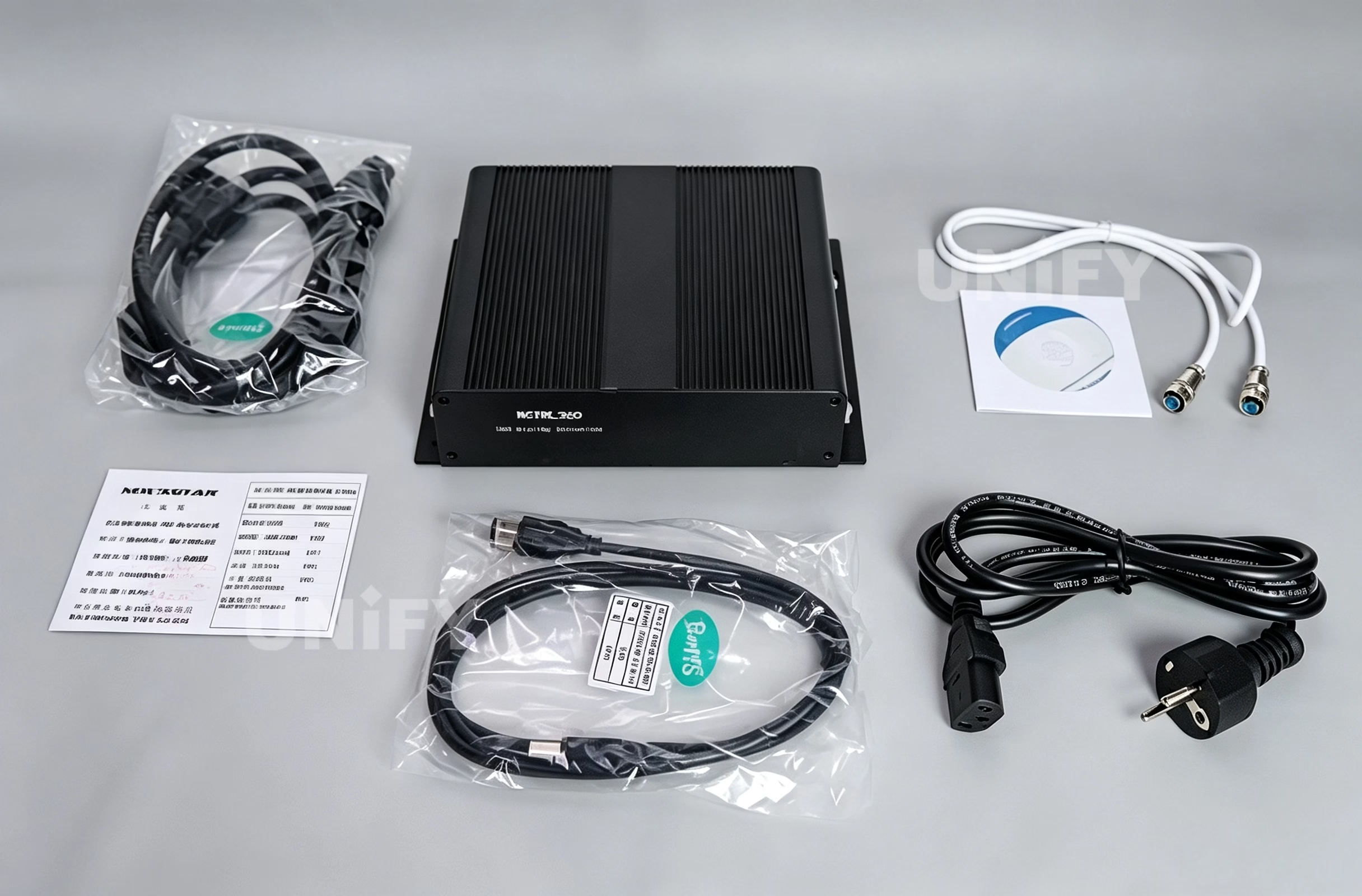
The cost comparison should also include the receiving-card chain, because the processor price is the smaller half of the ecosystem spend. A 1.3M wall behind a VP210 runs Huidu R-series receiving cards; the same wall behind an MCTRL300 runs Novastar cards. The card price difference is modest per unit, but a fifty-cabinet wall multiplies it — and the protocol lock means the card brand follows the processor brand no matter what. When comparing USD 115 against USD 919, add the receiving-card total for the actual wall before judging the gap; the processor is the door, and the ecosystem is the room.
Where Do the Huidu VP vs Novastar MCTRL vs Colorlight X Lines Fit by Application?
Application settles the class, and the class settles the brand within it. Fixed advertising and retail walls in the 1.3M-2.3M range — the Huidu VP210/VP410 3-in-1 boxes are the cost answer, and the official P2.5 setup video above shows the VP410 in the field. Rental and event systems that assemble and disassemble constantly — the Colorlight X family is tuned for that rhythm, documented in the X series selection guide. Broadcast, stadiums and mission-critical walls — the Novastar MCTRL line, with the MCTRL4K at the top and the MCTRL vs VX vs TB guide mapping the Novastar line-up. The official NovaStar VX1000 introduction below shows the flagship-class workflow on the NovaStar side.
NovaStar Official — VX1000 introduction video
Colorlight Official — X100 Pro video processor
What Spec Errors Circulate in Huidu VP vs Novastar MCTRL vs Colorlight X Comparisons?
The most visible vendor table on this topic — a single-brand comparison published by a components retailer — lists the HD-VP210 as “DVI ×1, VGA ×1, 2 Ethernet ports, async + sync support.” The official Huidu Specification V1.0 says otherwise: the VP210 carries five inputs — HDMI, DVI, VGA, CVBS and USB Type A — and it is a purely synchronous processor; there is no async mode on the VP line. The “async + sync” confusion comes from the A-series dual-mode players (A5/A6L), which are a different architecture entirely. The verification habit is the same one this site applies to every brand: read the official document, not the vendor table.
The same vendor table also understates the VP210’s template count — the official V1.0 documents seven user templates, which the table omits entirely. The pattern across this site has been consistent: every brand’s specs get distorted in vendor tables by copy-paste and model merging, and the cure is the same in every case — pull the official document for the exact model number on the label. The VP410 page on this site documents the same lesson for the “2.6M” figure that circulates for the four-port unit, and the HD-A3 page documents it for the “four output ports” that do not exist on the async box.
Huidu Official — how synchronous mode works in Huidu LED player box
How to Choose the Right Huidu VP vs Novastar MCTRL vs Colorlight X LED Video Processor: Final Verdict
The Huidu VP series vs Novastar MCTRL vs Colorlight X2 decision, compressed:
Unify LED is an LED screen manufacturer in Changsha, China, supplying all three processor families at factory level — tell us the wall class, the input types and the consequence of failure, and we will quote the right processor from the right family. The three-brand overview in the Huidu vs Colorlight vs Novastar guide and the architecture decision in the Huidu control system guide sit behind this one — and the next guide in this series covers the HDPlayer software that runs the Huidu side of the wall.
One final decision aid: sketch the wall on paper before opening any catalog. Write the pixel resolution (width × height in pixels), divide by 655,360 to get the port class, list the input types and how many are live at once, and note the failure consequence — a dark screen on a shop wall costs a day of display, a dark screen in a control room costs an operation. With those four lines written, the right processor family names itself, and the vendor table becomes a confirmation sheet instead of a source of truth. The same four-line sketch works for the async side of the decision — the architecture guide covers it — and for the receiving cards, the ecosystem follows the processor. Sketch first, compare second, quote third: that order is the one that keeps a synchronous wall from becoming a troubleshooting case, and the troubleshooting guide later in this series covers what happens when the order is skipped. For the receiving-card side of the same wall, the Novastar receiving card guide and the Colorlight receiving card guide on this site complete the chain, and the Huidu product pages document the R-series pairing for the VP line.
Related: browse the full Huidu LED controller catalog — 12 models across four product lines, free HDSet / HDPlayer / HD Show software, cloud remote control without a subscription, and factory-direct pricing.