
How Many Power Supplies Does an LED Screen Need?
Ask ten screen builders how many power supplies an LED screen needs and you will hear “one per cabinet” from half of them and a formula from the other half. Both are right — the formula is where “one per cabinet” comes from. This page gives you the count in three moves: one sizing formula, the 80% loading ceiling behind it, and three worked examples (an indoor wall, an outdoor rental face, a stage build) you can copy with your own numbers. The same math, applied to the CZCL LED display power supply family, is what our own quotes are built on.
Short answer
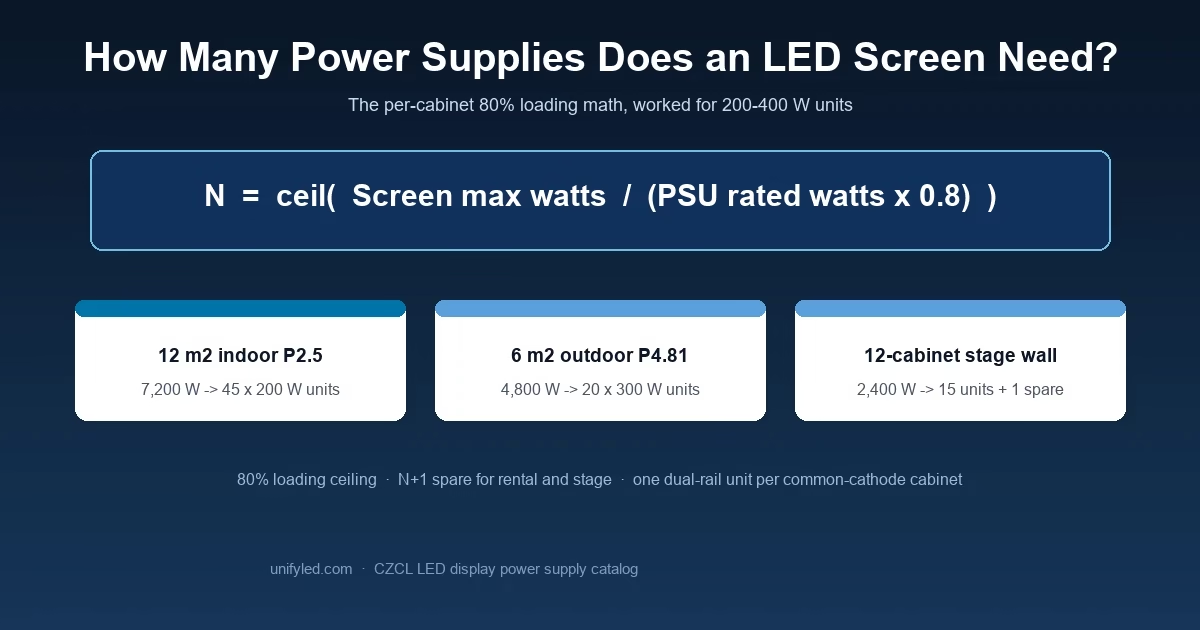
A typical indoor cabinet needs one 200 W-class power supply; outdoor and high-brightness screens run one 300–400 W unit per one to two cabinets. The exact count comes from N = ⌈screen max watts ÷ (PSU rated watts × 0.8)⌉ — the 0.8 is the 80% loading ceiling every switching supply should live under, and the ceiling brackets mean you always round up. Add one spare unit (N+1) for rental, stage and continuously running outdoor screens, and size the AC side at roughly 1 A of mains current per 200 W supply.
How Do You Calculate How Many Power Supplies an LED Screen Needs?
The count falls out of one division with three inputs you can read off a datasheet. Sizing runs at maximum brightness, not average program material — a screen has to survive full white during commissioning tests, and the average draw that shows on your electricity bill sits far lower (typically 30–60% of peak, per LEDScreenParts’ power calculation guide).
Input 1 · Screen max watts
Two routes: multiply area by max power density, or sum each cabinet’s maximum. Published planning ranges put indoor LED screens at 450–650 W/m² maximum and outdoor at 650–1,000 W/m² (LEDLightsWorld sizing guide) — your module datasheet always wins over a range.
Input 2 · PSU usable watts
Rated watts × 0.8. CZCL’s own datasheets ask for at least 30% headroom (a 100 W device gets a 130 W-plus supply), which lands loading at about 77% — the industry-standard 80% ceiling is the stricter, safer reading.
Input 3 · The ceiling function
Round up, always. A screen that needs 2,400 W cannot run on 14.9 units — the fifteenth supply is not an option, it is the answer. Then decide whether the site earns an N+1 spare.
On paper the formula is the whole story: N = ⌈Ptotal ÷ (PPSU × 0.8)⌉. In practice the count also answers to wiring reality — a 5 V rail carries high current at low voltage, so long thin cables eat margin through voltage drop, which is why supplies sit inside cabinets close to the modules rather than in one remote rack. The LED display power consumption guide walks the brightness-to-watts side in detail; this page stays on the count.
How Many LED Cabinets Can One Power Supply Feed?
Flip the formula around and it becomes the rule of thumb: divide a unit’s usable watts by a cabinet’s maximum draw. Two numbers do the feeding:
| Typical module (planning values) | Average draw | Maximum draw |
|---|---|---|
| Indoor P2.5 (320 × 160 mm) | ~10–15 W | ~25–30 W |
| Rental P3.91 (250 × 250 mm) | ~15–20 W | ~35–45 W |
| Outdoor P4.81 (250 × 250 mm) | ~20–30 W | ~50–60 W |
| Receiving card (Novastar / Colorlight class) | ~3–5 W | ~5 W |
Planning values for installer-grade math — average reflects normal program material, maximum reflects full-white test patterns. Verify against your module datasheet before ordering.
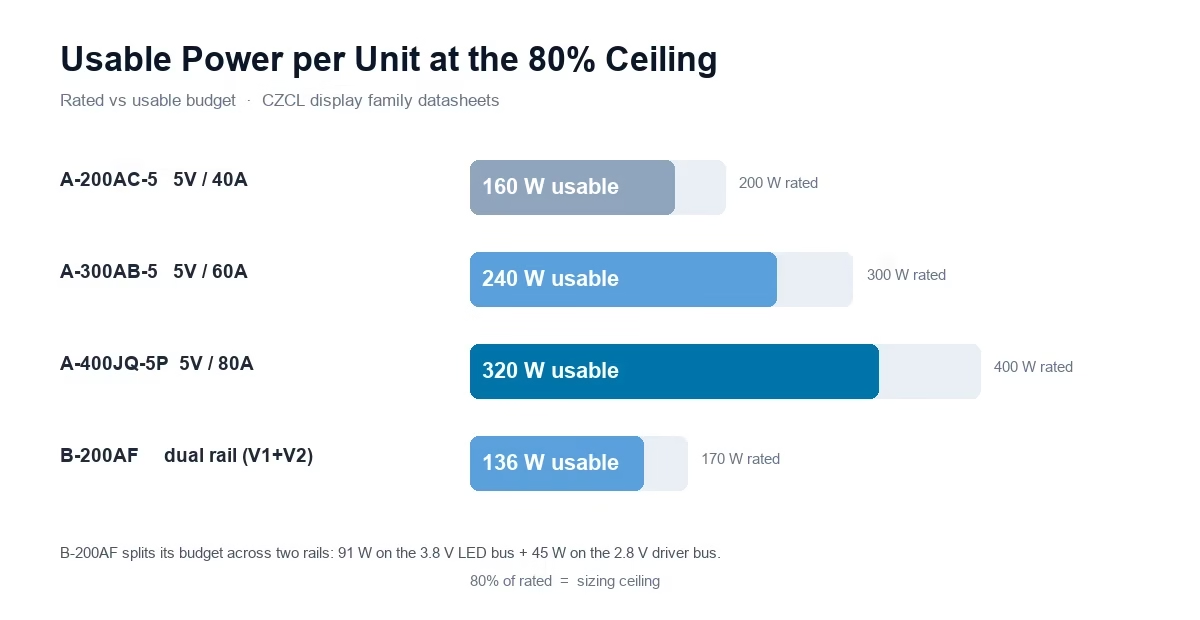
A 500 × 500 mm indoor cabinet carries four P2.5-class modules plus its receiving card: roughly 50–65 W average, 105–125 W at full white. Against the usable budgets below, that is why the one-supply-per-cabinet habit exists — and why bigger units cover more:
| Unit | Rated | Usable at 80% | Full-white cabinets fed |
|---|---|---|---|
| CZCL A-200AC-5 | 200 W / 40 A | 160 W / 32 A | ~1.3 indoor cabinets |
| CZCL A-300AB-5 | 300 W / 60 A | 240 W / 48 A | ~2 indoor cabinets |
| CZCL A-400JQ-5P | 400 W / 80 A | 320 W / 64 A | ~2.5 indoor cabinets |
| CZCL B-200AF | 3.8 V / 30 A + 2.8 V / 20 A | 91 W + 45 W (two rails) | 1 common-cathode cabinet (two buses) |
How Many Power Supplies Does an Indoor LED Screen Need?
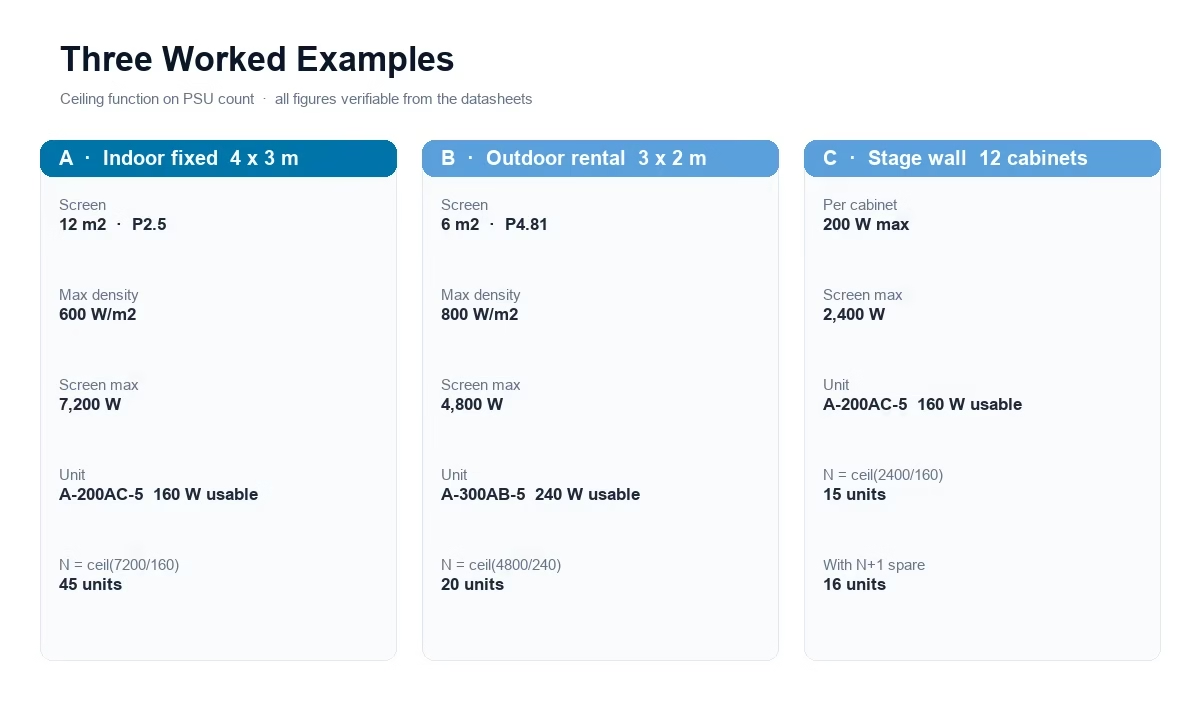
Take a 4 × 3 m fixed-installation P2.5 wall — 12 m² in 48 standard 500 × 500 mm cabinets. At a 600 W/m² maximum density, the screen tops out at 7,200 W. Run the formula against the A-200AC-5’s 160 W usable budget:
N = ⌈7,200 ÷ 160⌉ = 45 supplies — forty-eight cabinets, forty-five units, and the arithmetic says what installers already do: one A-200AC-5 per cabinet, with three cabinets doubling up. Sizing against the 400 W A-400JQ-5P instead gives ⌈7,200 ÷ 320⌉ = 23 units, at the price of concentrating more load per point of failure. Average draw on normal content runs 30–60% of those peaks — that gap is your electricity bill, not your purchase order.
How Many Power Supplies Does an Outdoor LED Screen Need?
Outdoor faces run brighter and hotter, and both facts cost you margin. A 3 × 2 m P4.81 rental face — 6 m² in twelve 500 × 500 mm cabinets — peaks near 800 W/m², so 4,800 W at full white. Against the fan-cooled A-300AB-5’s 240 W usable budget:
N = ⌈4,800 ÷ 240⌉ = 20 supplies for twelve cabinets — about 0.83 units per cabinet, with the bigger rail absorbing the brightness overhead. Two outdoor cautions sit on top of the arithmetic: supplies derate above their comfort temperature (the A-300AB-5 works to +60°C, the A-400JQ-5P to +70°C, both on published derating curves), and the datasheets require a 400 × 400 × 3 mm auxiliary aluminum plate at continuous full load. A sun-struck cabinet at 100% white is the worst case you are sizing for — plan the count for it.
What About Dual-Rail Common-Cathode Screens?
Common-cathode screens split their wiring into two buses — a 3.8 V LED rail and a 2.8 V driver rail — and the count math splits with them. The CZCL B-200AF feeds both buses from one chassis: rail V1 offers 114 W × 80% = 91 W usable, rail V2 offers 56 W × 80% = 45 W usable. Size each bus against its own budget and the practical answer lands at one B-200AF per common-cathode cabinet — the architecture the supply exists for. The common cathode LED technology explainer covers why the two rails cannot be merged or substituted with a 5 V unit.
How Do You Size the AC Side: Breakers, Cables and Circuits?
The DC count answers how many supplies; the AC side answers what feeds them — the question behind every “how many outlets does my wall need” thread on the rental forums. The chain is short: a 200 W-class supply draws roughly 1.0–1.1 A of mains current at 230 V (400 W-class: about 2.0–2.1 A), and a standard 16 A circuit carries about 3.7 kW at 230 V before derating. Worked through:
| AC planning step | Math | Result |
|---|---|---|
| Supplies per 16 A circuit | 3,680 W ÷ (200 W ÷ 0.88 efficiency) | ~14–15 units of 200 W class |
| 45-supply indoor wall | 45 × 1.1 A = 49.5 A | Four 16 A circuits, staggered |
| 20×10 ft outdoor wall (18.6 m²) | 18.6 × 800 W = 14.9 kW ÷ 230 V | ~65 A → three 16 A circuits + headroom |
Leave 20% spare on every circuit for inrush — each supply gulps a cold-start surge (40–70 A for a millisecond) at switch-on, which is why big walls power up in sections rather than all at once. For the PFC-equipped A-400JQ-5P, the 0.95 power factor trims the harmonic component of that current — the reason it is the pick for long feeder runs and generator sites.
What Happens If You Get the Count Wrong?
Too few supplies announce themselves quickly: the rail sags under full white, corners of the screen dim, dead pixel groups appear, and camera-facing walls flicker frame by frame. Each of those signatures maps to a supply problem more often than a module problem — our uneven brightness troubleshooting and LED screen flickering guides both start at the rail measurement for exactly that reason. Too many supplies rarely hurt the screen, but they bill you twice: once at purchase, once in every maintenance visit that has to trace more junctions.
When a wrong count or a failed unit takes one down, the swap is a ten-minute job with the cabinet powered down and the harness mapped — the workflow, and the meter checks that confirm the replacement, are in the LED display power supply diagnostics and replacement guide:
When Should You Add N+1 Redundancy?
The formula’s output is the minimum that runs the screen; some sites should buy one more unit than the math says. Three signals justify the spare: rental and stage builds where a dark cabinet is a show-stopping event; outdoor screens running continuously through summer peaks; and any install where a single supply failure waits on a lift or a scaffold to fix. On hiccup-mode units (the A-300AB-5 and A-400JQ-5P fold back and self-recover from transient faults), the spare covers the faults that do not self-heal — and on stage builds, physical access is the redundancy that matters:
True N+1 with automatic failover needs current-sharing supplies, not spare units — CZCL’s current-sharing series handles that tier, and the trade (cost per cabinet versus minutes of downtime) is a quote conversation, not a formula. For everything else, the ceiling function plus one spare answers the question this page started with — and if you would rather send the cabinet list than run the math, our engineers return the count per cabinet with the quote: LED screen manufacturer, full power-to-control chain.
How Many Power Supplies Does an LED Screen Need: Frequently Asked Questions
How many power supplies does one LED cabinet need?
Most indoor 500 × 500 mm cabinets run on one 200 W-class unit (their full-white draw sits near 105–125 W against a 160 W usable budget). Outdoor and high-brightness cabinets with bigger modules land at one 300–400 W unit per one to two cabinets.
Can I use one large power supply instead of many small ones?
Not practically on a 5 V screen. At 5 V, current — not power — is the constraint: a 4 kW wall would need an 800 A bus that no single supply or sane cable lug serves. Distributed supplies close to the modules keep cable runs short and voltage drop small.
Should I size by maximum or average power?
Both, for different decisions: the count is sized at maximum (full white must not sag), while energy bills and heat load use the average — typically 30–60% of peak on normal content.
Why load a power supply to only 80%?
The last 20% is headroom for inrush current, voltage sag on weak grids, hot summers and component aging. CZCL’s datasheets say the same thing as a 30% headroom rule; the 80% ceiling is the stricter version and the one that keeps failure rates low.
How many amps does an LED screen actually draw from the wall?
Roughly 1.1 A of mains current per 200 W supply at 230 V. A 45-supply indoor wall pulls about 50 A across several 16 A circuits; a 20×10 ft outdoor face at full brightness needs around 65 A — three 16 A circuits with headroom, powered up in sections for inrush.
Do receiving cards need their own power supply?
No — they ride the same 5 V rail at 3–5 W each, which is already inside the cabinet budget. Only racks of control equipment in a separate processor room justify a dedicated small supply.
Send the cabinet list instead of running the math
Get the Supply Count and Model Mix Per Cabinet
📱 / WhatsApp: +86-191-18802497 · Shenzhen, China · GMT+8
Related LED Display Power Reading
Keep Reading the CZCL Power Supply Series
The companion guides to this article – count math, selection flow, pricing and head-to-head verdicts.