
The Distance Champion · Outdoor Classic
P10 Outdoor LED Display Collection
Three module formats on the 10mm classic — the 160×160mm engineering square with DIP or SMD lamps, the nationwide-standard 320×160mm board with energy-saving power options, and a 320×320mm common-cathode big board with dedicated front service. Up to 10,000 nits, the lowest power bill in the family, and the lowest price per square meter we ship.
Definition
What Is a P10 Outdoor LED Display?
Short answer: A P10 outdoor LED display is the most cost-effective long-view video wall in the industry — 10,000 pixels per square meter on the 10mm classic pitch, readable from 10 meters to past 20. It runs the largest, toughest lamps in the family (DIP direct-insert or SMD3535), supports energy-saving 4.2V/3.8V and common-cathode power architectures, and costs less per square meter than any other outdoor pitch we ship. Three module formats cover it: 160×160mm, 320×160mm and 320×320mm.
A P10 outdoor LED display is a fixed-installation video wall built from large-lamp modules on a 10mm grid — the pitch that carried outdoor LED from its DIP origins to today’s nationwide billboard networks. At 10,000 pixels per square meter it is the coarsest standard pitch we ship, and that is precisely its strength: fewer, larger, cooler-running lamps mean the highest brightness ceiling, the longest service life and the lowest cost per square meter of readable advertising face.
The audience geometry is simple: past 10 meters the pixels vanish, and highway, rooftop and tower walls are read from 10 meters to across the district. For the category background, see outdoor LED display types and the outdoor LED module guide; run your wall through the LED screen calculator.
One number anchors the class: 10,000 pixels per square meter — a 6×3m billboard resolves 192×96 with lamps big enough to hold 10,000 nits against the harshest sun. If your closest viewer stands under 8 meters, the P8 outdoor collection is the right buy; this page is for the walls distance itself defends.
Module Options
Which Module Sizes Does a P10 Outdoor LED Display Use?
Three formats cover the class — the engineering square, the nationwide standard board and a high-spec common-cathode big board. IC counts are total devices fitted per module; brightness tiers follow the lamp wire material.
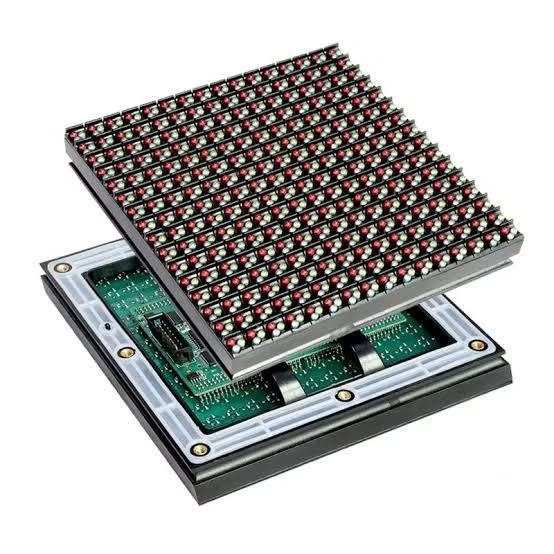
① 160×160mm — The Classic Engineering Square
The board that built the outdoor LED industry: 16×16 pixels, 39 boards per square meter, thirty-six filling a 960×960mm iron cabinet. It offers the full lamp choice — DIP direct-insert for legendary toughness or SMD3535 surface-mount for a wider viewing cone — and on building-facing ads a front-flip cover option is available. Rear maintenance standard; every module passes strict spectral and luminance binning plus full-wall per-pixel correction on NovaStar or Colorlight hardware.
| Module size | 160×160mm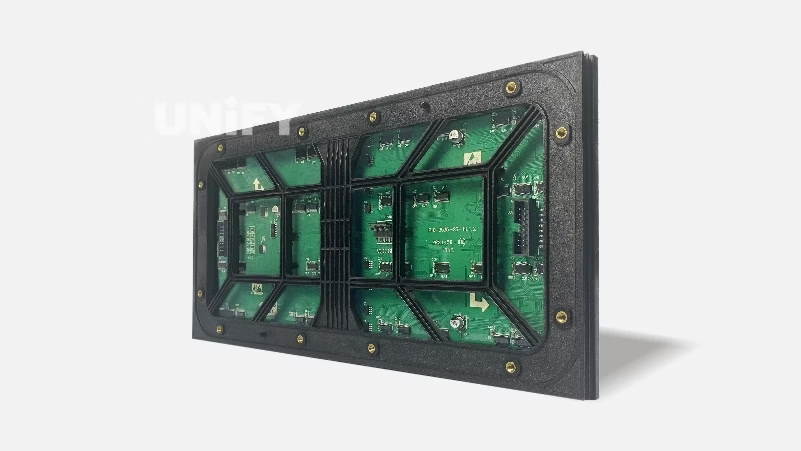 |
| Pixel resolution | 16×16 = 256 dots (P10) |
| Scan mode | 1/4 scan (primary) |
| Driver IC brands | ChipOne and mainstream peers |
| ICs fitted (total) | 16 |
| Lamp | DIP direct-insert or SMD surface-mount (SMD3535) · Grade 1 (stability) / Grade 2 (value) |
| Brightness | 5,500–6,500 nits (copper/alloy wire) · 7,000–10,000 nits (ultra-bright gold wire) |
| Maintenance | Rear standard · front-flip cover available for building ads |
| Cabinets | Iron: 640×640mm (×16) · 960×960mm (×36) |
| Uniformity | Strict spectral & luminance binning + full-wall per-pixel correction (NovaStar/Colorlight) |
② 320×160mm — The Nationwide Standard Board
The 320×160mm board is the national standard across every coarse outdoor pitch, and at P10 it runs 32×16 pixels on a 1/2 scan — 24 ICs in the standard tier, 48 in the high-refresh tier that stops camera flicker at the cost of a slightly heavier load. This format adds the family’s energy-saving crossroads: a conventional 5V supply, or 4.2V/3.8V energy-saving supplies that cut the power bill on walls that never sleep. Iron cabinets from 640×640mm to 1280×960mm, magnesium-aluminum soft-link options, rear maintenance standard and front-service builds on request.
| Module size | 320×160mm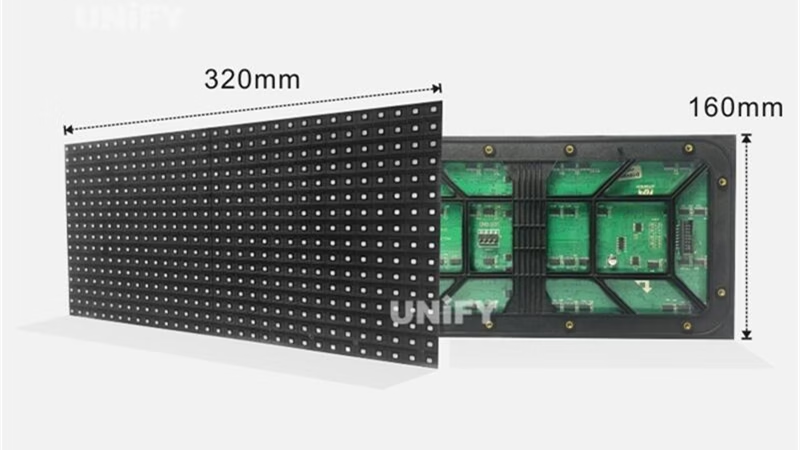 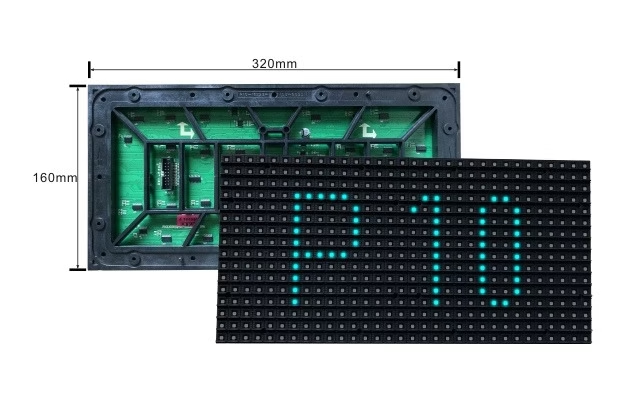 |
| Pixel resolution | 32×16 = 512 dots (P10) |
| Scan mode | 1/2 scan |
| Driver IC brands | ChipOne and peers |
| ICs fitted (total) | 24 (standard refresh) / 48 (high refresh) |
| Lamp | DIP or SMD surface-mount · Grade 1 / Grade 2 |
| Brightness | 5,500–6,500 nits (copper/alloy wire) · 7,000–10,000 nits (ultra-bright gold wire) |
| Maintenance | Rear standard · front-service available on request |
| Power options | 5V conventional · 4.2V/3.8V energy-saving supplies on request |
| Cabinets | Iron: 1280×960mm (×24) · 960×960mm (×18) · 640×640mm (×8) · 320×480mm (×3) — magnesium-aluminum: 960×960mm, 1280×960mm (soft-link) |
| Uniformity | Wavelength & brightness screening at assembly + hardware per-pixel correction |
③ 320×320mm — The Common-Cathode Big Board
The high-spec custom board: 32×32 pixels, 9.8 boards per square meter, on a dedicated front-service design — the only format in the class that services entirely from the face. It ships standard with common-cathode technology (red, green and blue channels powered individually and precisely), which cuts power draw and heat dramatically while the cool-screen design eliminates localized color and temperature drift. Iron cabinets from 640×960mm to 1280×960mm, plus a premium die-cast aluminum 960×960mm cabinet on hidden-wiring hard-link connection.
| Module size | 320×320mm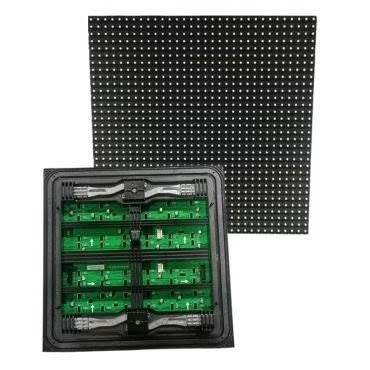 |
| Pixel resolution | 32×32 = 1,024 dots (P10) |
| Scan mode | High-refresh configuration |
| Driver IC brands | ChipOne common-cathode dedicated drivers and peers |
| ICs fitted (total) | 48 |
| Lamp | SMD surface-mount (SMD3535) · custom DIP on request · Grade 1 / Grade 2 pairing |
| Brightness | 5,500–6,500 nits (copper/alloy wire) · 7,000–10,000 nits (ultra-bright gold wire) |
| Power | Common-cathode standard — RGB channels powered individually and precisely |
| Maintenance | Dedicated front-service design |
| Cabinets | Iron: 640×960mm (×6) · 960×960mm (×9) · 960×1280mm, 1280×960mm (×12) — die-cast aluminum: 960×960mm (hidden-wiring hard-link) |
| Uniformity | Common-cathode cool-screen technology against localized color/heat drift + per-pixel per-color correction |
Watch It Built
What Does a P10 Outdoor LED Display Look Like in Production?
Board Build
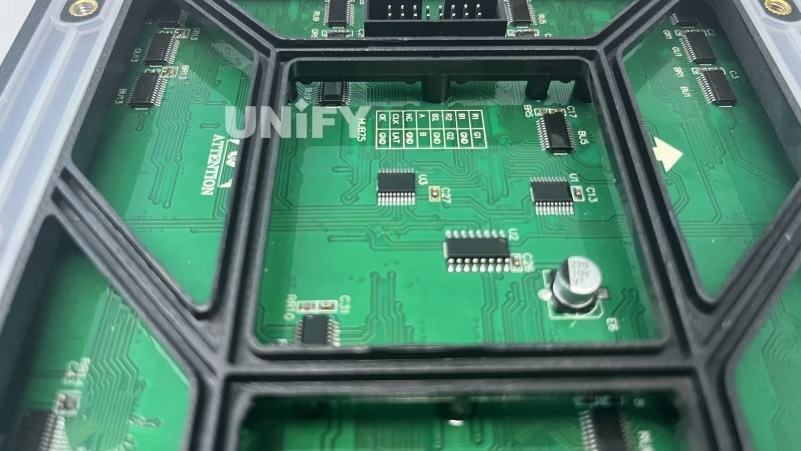
How Thick Is the PCB in a P10 Outdoor LED Display Module?
The PCB in a P10 outdoor LED display module is a 1.6mm fiberglass (FR-4) board. At 10mm pitch even the densest board in the class carries only 1,024 lamps, and the engineering square carries just 256 — the lightest solder load we ship. The board’s job here is mechanical: holding large DIP lamps rigid against wind vibration on steel structures twenty meters up, decade after decade, which is why the 1.6mm standard has survived every attempt to thin it.
FR-4 Fiberglass
Self-extinguishing glass-epoxy class with the mechanical stiffness that large DIP lamps demand — the board holds the lamps, the structure holds the board.
Conformal Coating
Three-proof varnish on the solder side standard; highway and coastal walls step up to a full GOB pour over the lamp face.
Energy-Saving Rails
The 320×160mm board accepts 5V, 4.2V or 3.8V supply architectures, and the big board ships common-cathode standard — the power story below has its own section.
Contrast & Grayscale
What Contrast and Grayscale Does a P10 Outdoor LED Display Reach?
Contrast at P10 splits by lamp technology, and the split is the reason both still exist. DIP lamps throw the rawest brightness and, in their reflective package, hold a punchy high-contrast look at distance; SMD3535 black-face lamps absorb stray light for a cleaner 5000:1-class contrast with a matte mask, and hold their image quality to wider angles. On a 10mm grid the lamps are large enough that either choice reads boldly — the decision is climate and angle, which the SMD vs DIP section below settles in full.
Grayscale follows the driver: the ChipOne-class ICs on these boards run 8-bit baseline, 12-bit value and 16-bit processing tiers, and the common-cathode big board pairs its dedicated drivers with per-pixel per-color correction. On a 10,000-pixel face, grayscale quality shows most in dusk operation — the hours when billboards earn their premium rates — and this is where the common-cathode cool-screen design pulls away: no localized heat drift means no color patches sweeping across the face as the evening session heats up.
Verify at purchase with a low-gray gradient demo at 5% brightness alongside the binning report — on the sparsest grid in the family, a mixed batch without honest spectral and luminance sorting shows as obvious patches within the first summer.
Power
Which Power Supply Brands Does a P10 Outdoor LED Display Use?
A P10 outdoor LED display runs on 5V switching supplies from three brands we fit in production: Chuanglian Power, MEAN WELL and G-Energy — and it is the one pitch where the supply voltage itself becomes an efficiency choice, with 4.2V and 3.8V energy-saving rails available on the standard board and common-cathode architecture standard on the big board.
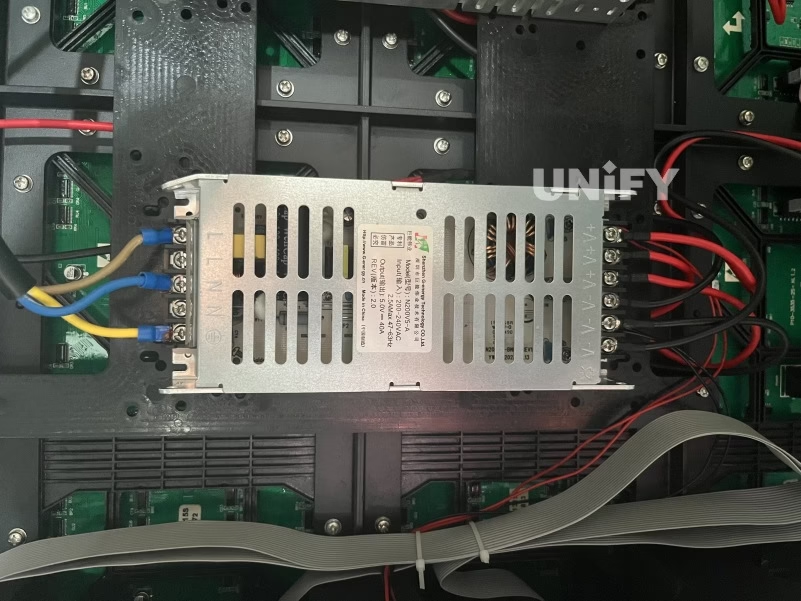
Budget check: at 10,000 pixels per square meter, a P10 wall averages 120–200W/㎡ on mixed content and peaks near 250–350W on full white — and the common-cathode big board runs about 30% below that again. This is the lowest electricity bill in the outdoor family; the section below runs the full numbers.
Control Stack
Which Control Systems Work With a P10 Outdoor LED Display?
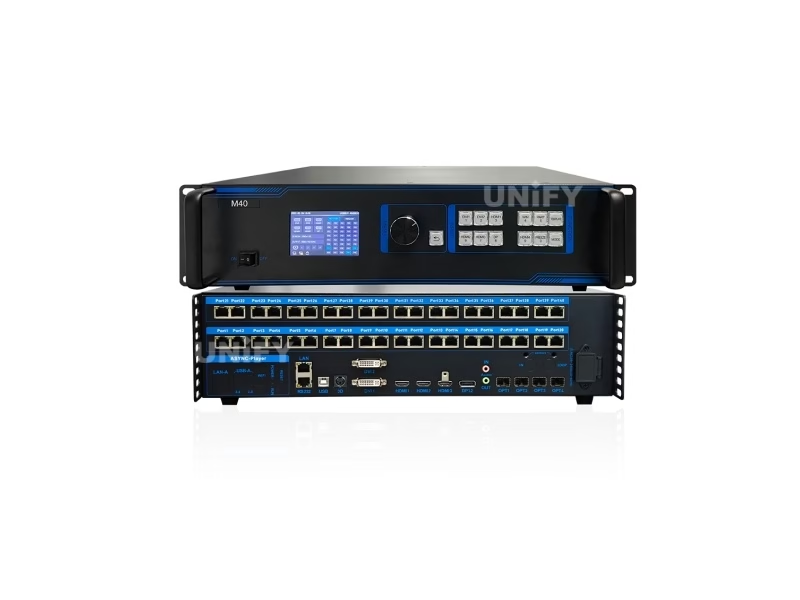
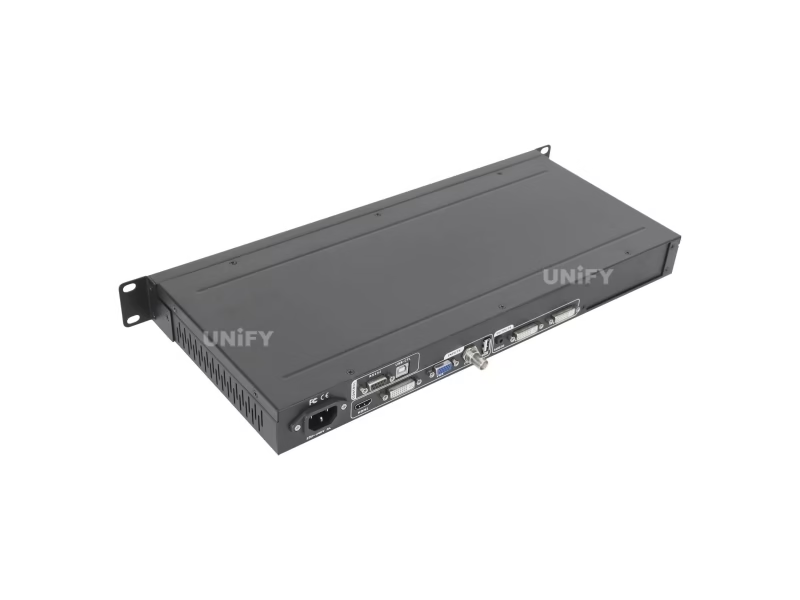
Six hardware ecosystems fit these HUB75 modules — four control platforms plus two video-processing lines. Pick one ecosystem and stay in it, because sending cards and receiving cards must come from the same family. Both control modes support cloud publishing and phone-based centralized control on this class: synchronous systems carry the stable heavy load for live-signal walls, while asynchronous systems handle monitoring-style and standalone playback from the cloud:

NovaStar
The broadcast-grade default — MCTRL senders and T-series players drive nationwide billboard networks; full-wall per-pixel correction runs on its receiving cards.
Best for: networked billboards, live-signal walls
Colorlight
The value-performance leader — X-series processors and i5A receivers cover coarse-pitch walls end to end.
Best for: billboard and signage budgets

Huidu
The asynchronous specialist with phone-app and cloud-platform centralized control — A-class players publish schedules to fleets of unattended walls.
Best for: unattended roadside and rooftop screens

Mooncell
The rising third force — M-series controllers and players at aggressive price points.
Best for: cost-controlled fixed installs

VDWALL
The touring-grade processor line — the LVP family drives large billboard faces with proven field reliability.
Best for: large-format billboard walls
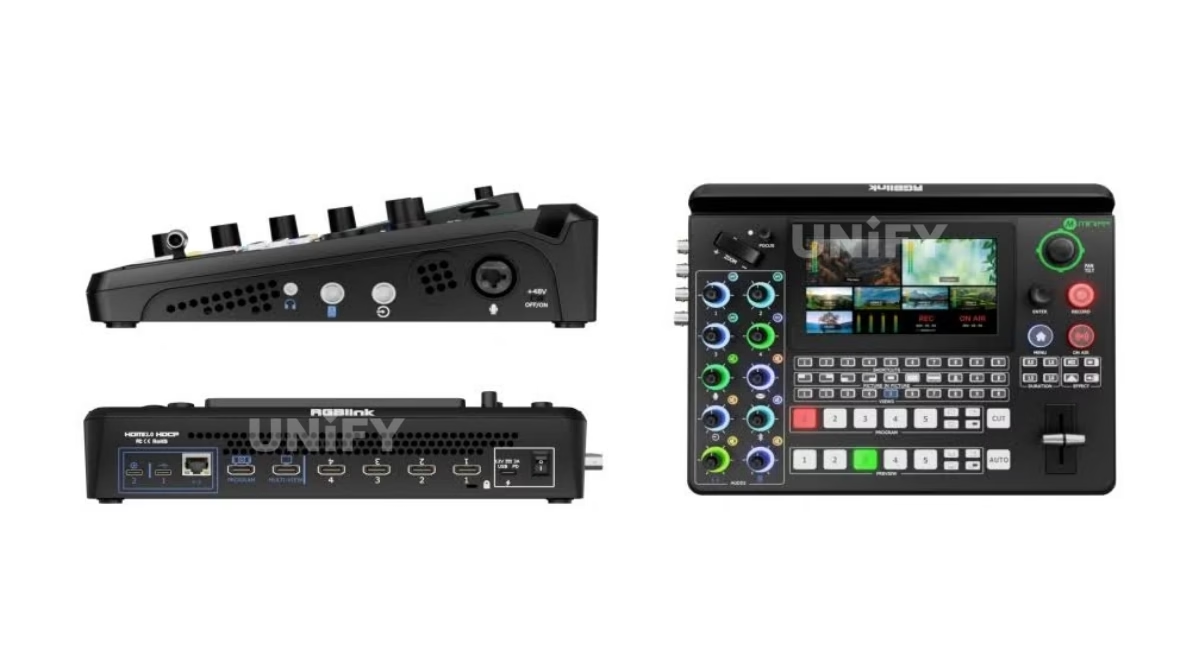
RGBlink
Switcher-processor hybrids with broadcast I/O — the mini and X families bridge live production and the wall.
Best for: live production & streaming
Watch: P10 LED display shipped to Uganda — 5.76×3.84m complete wall
A full P10 project walkthrough — cabinets, wiring and commissioning on site. The control choice should be made once for your whole fleet, because sending and receiving cards must stay in one family for life.
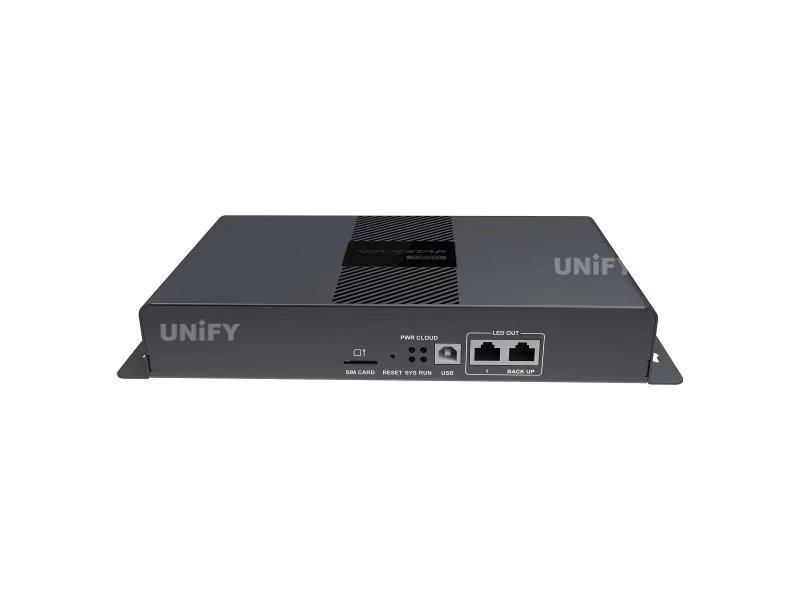
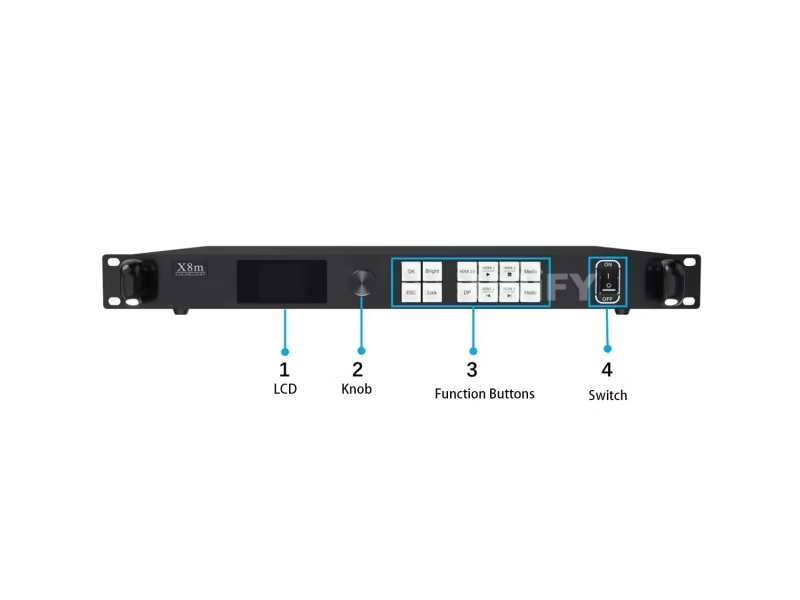
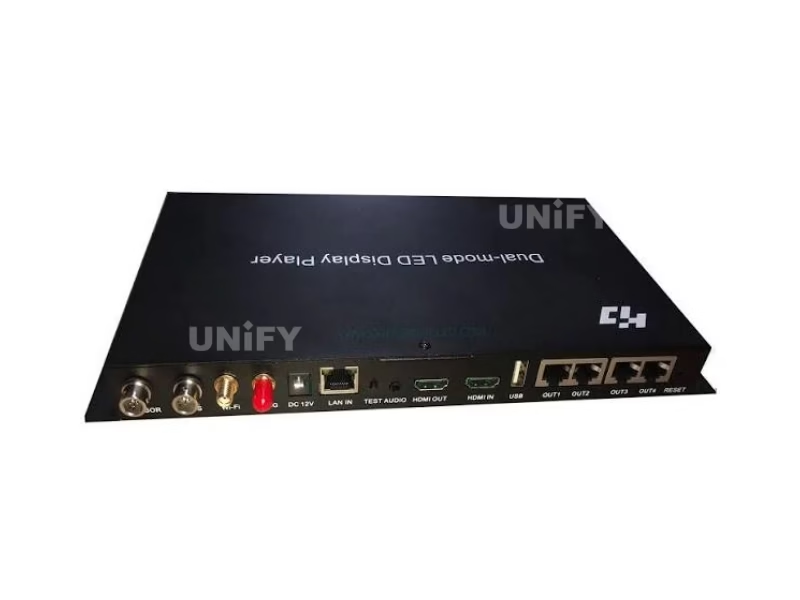
Adapted hardware across the six control and processing ecosystems we carry — each card links to its own spec page:
How Far Can You View a P10 Outdoor LED Screen?
Pitch sets the floor of the viewing range. Route yourself before you budget:
DIP or SMD — Why DIP Still Lives at P10
P10 is the last pitch where the industry’s original lamp technology still holds real market share, and the reasons are engineering, not nostalgia:
The routing rule: new walls with mixed content and wide audiences — SMD3535 wins on image quality. Extreme-sun faces, coastal and high-vibration sites, and every legacy network extension — DIP remains the toughness pick, and our engineering square carries both as order options.
P8 or P10 — Which Outdoor Pitch Should You Buy?
The last pitch decision on the coarse end, and it reduces to one measurement — your closest viewer:
The routing rule: viewer inside 8–12m — P8 keeps text whole; nobody closer than 12m — P10 banks the difference and adds the energy-saving power options P8 does not carry.
How Does P10 Compare With Other LED Display Pixel Pitches?
Density grows with the square of the pitch; the 1080p column lists the smallest 16:9 wall that reaches 1920×1080 on each pitch:
Pitch family detail pages: P4 · P5 · P6 · P8 · P8 module · pixel pitch explained
Price Transparency
How Much Does a P10 Outdoor LED Display Cost?
Market reference ranges for 2026 (module prices scanned from retail listings and checked against complete-wall quotes; module-per-㎡ varies by format — 39.1 boards for the 160×160mm square, 19.5 for the 320×160mm board):
Reference: our own outdoor LED display price guide puts DIP-class walls (P10/P16) at $450–750/㎡ across the market — factory-direct P10 sits at the floor of the entire outdoor family. Control hardware adds $500–2,000 per project; freight near $200–400 per cubic meter; local steel and installation running 20–30% of screen value. All figures are a market scan, not a quote.
Applications
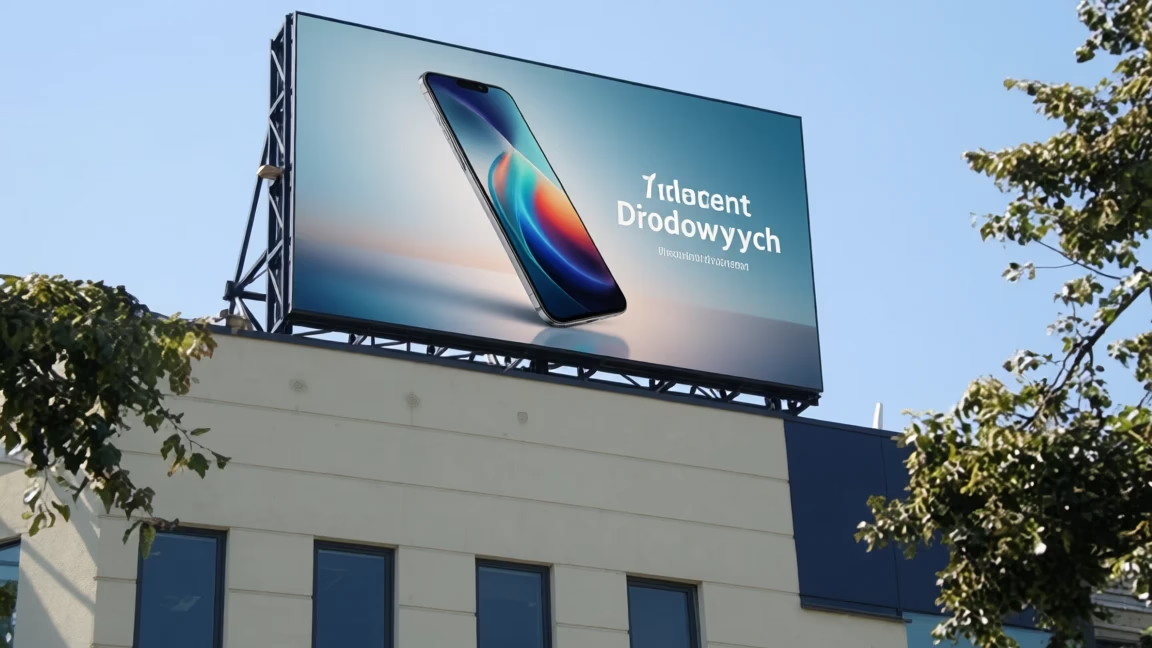
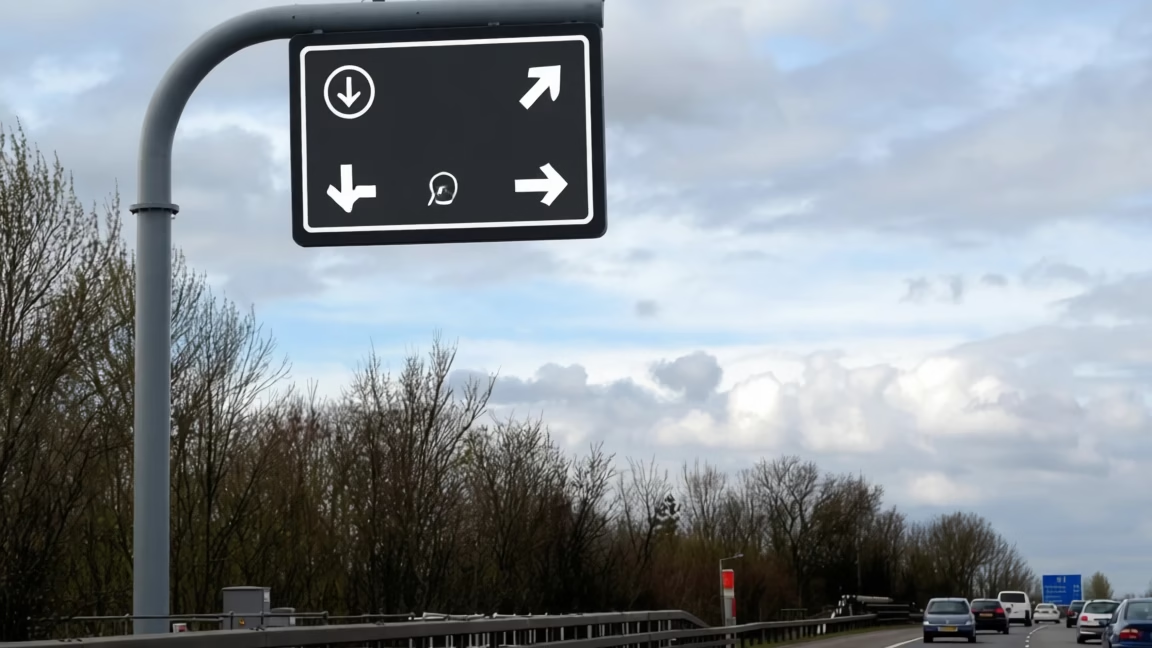
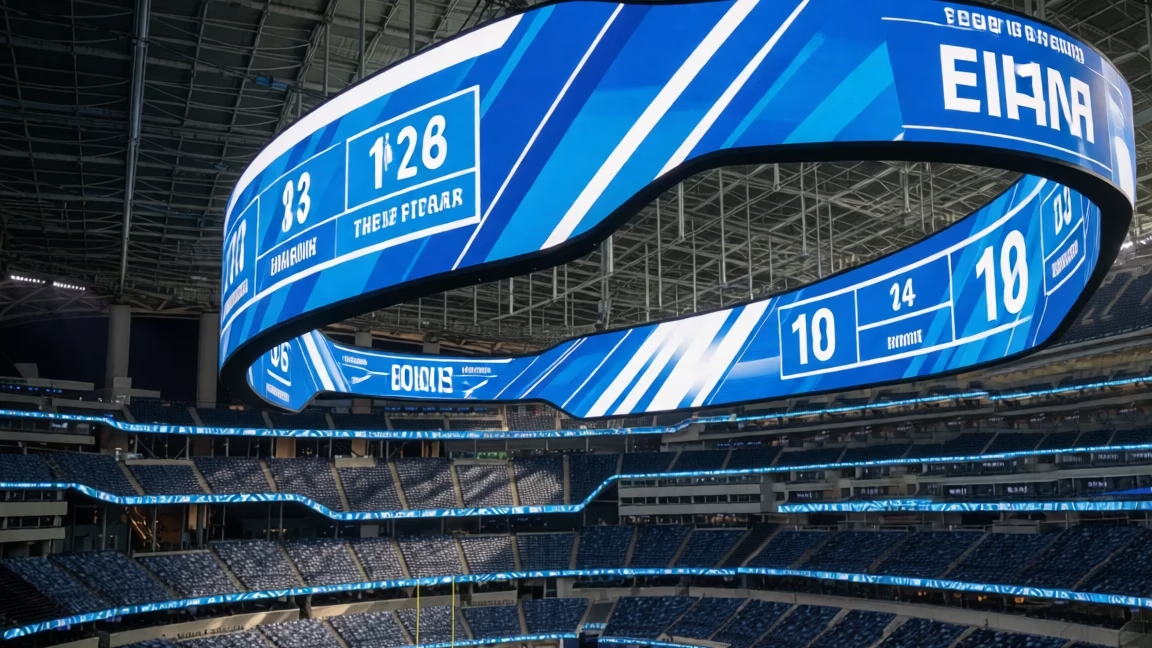
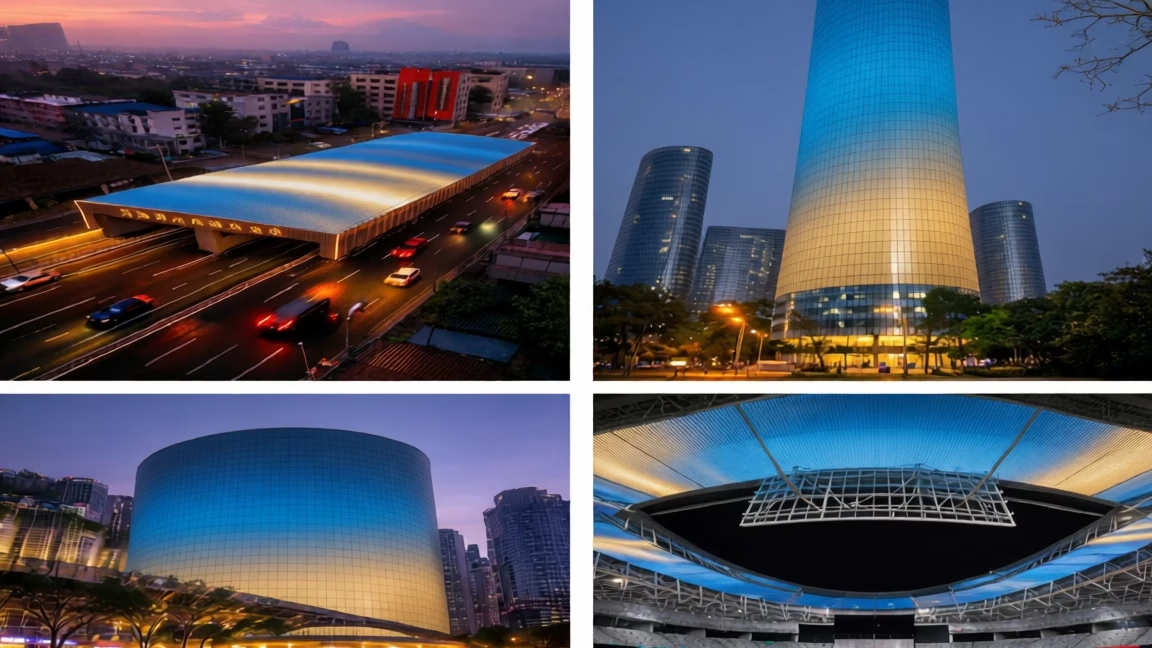
Where Does a P10 Outdoor LED Display Deliver the Most Value?
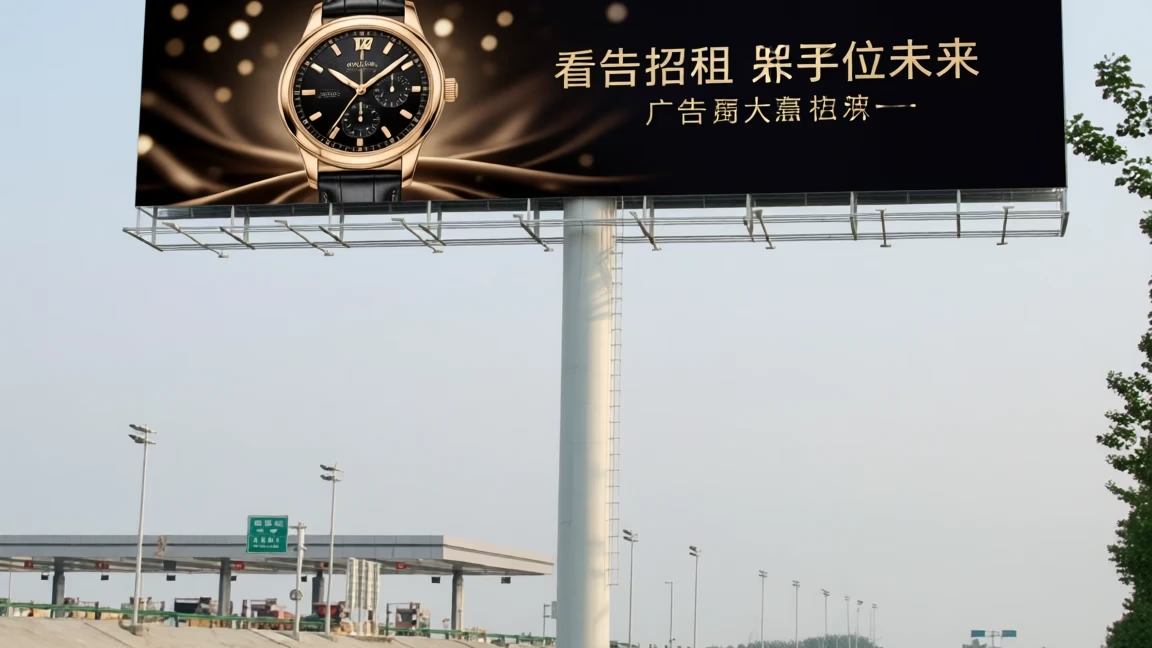
Eight placements where the 10m+ viewing band and the family’s lowest running cost make P10 the smart buy:



Projects
What Have Real P10 Outdoor LED Display Projects Looked Like?
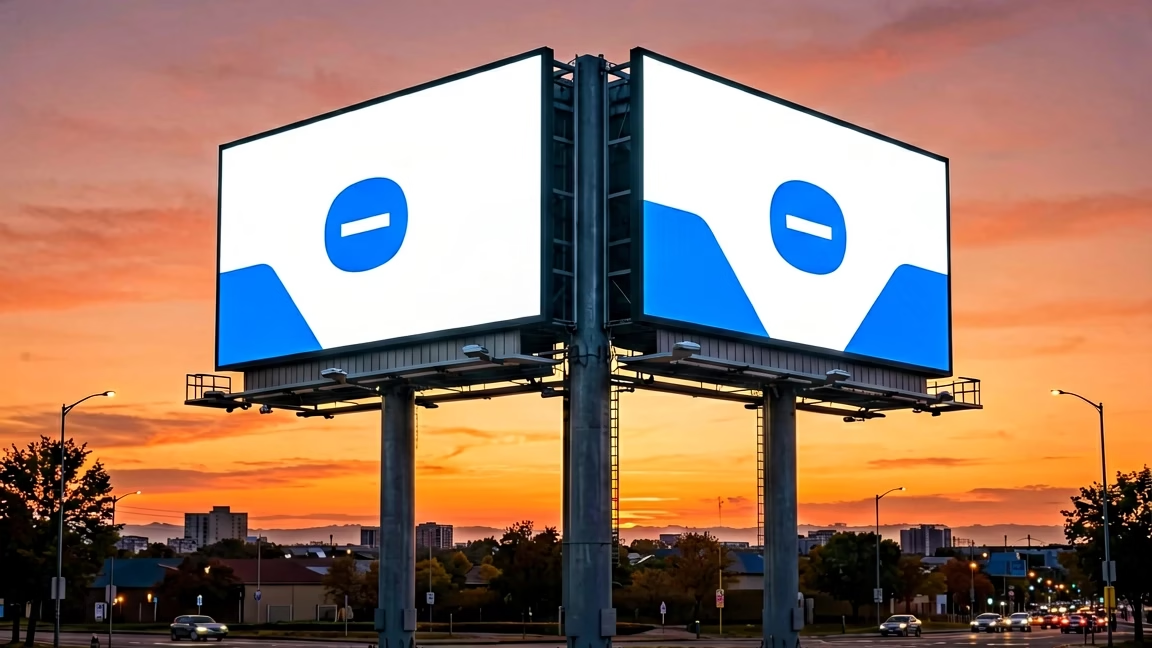
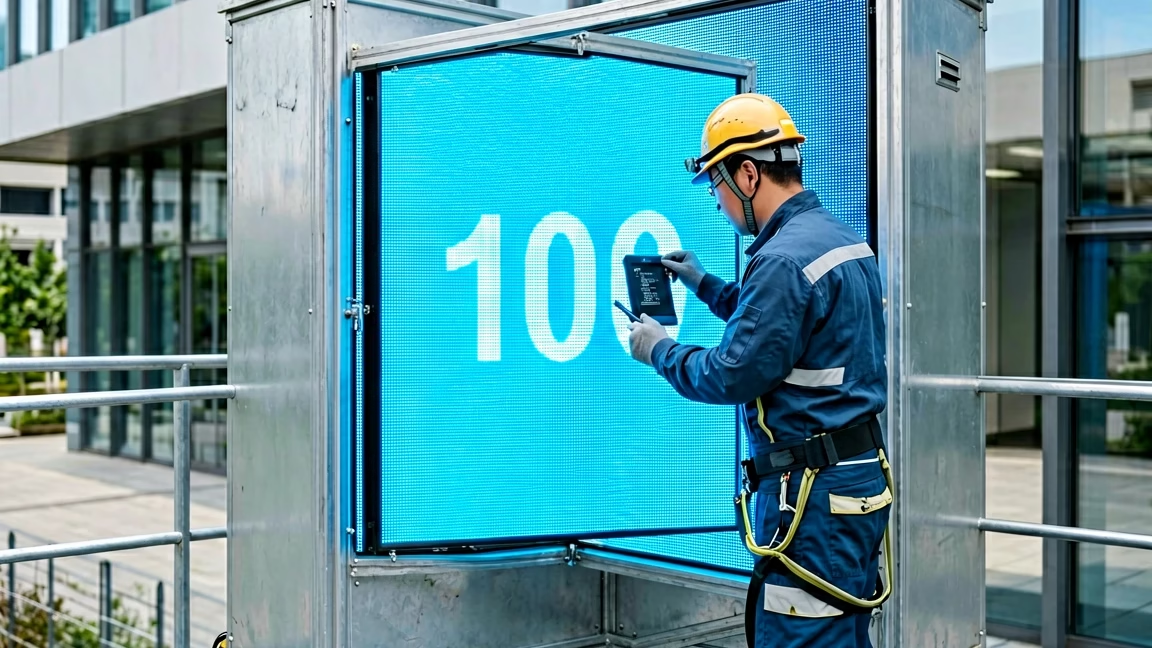
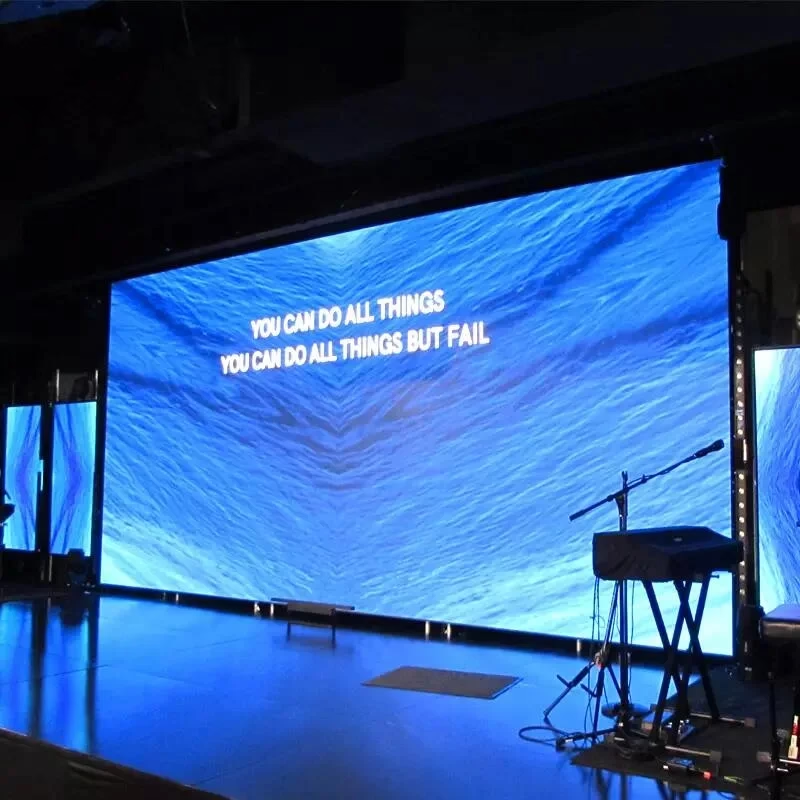
P10-class projects share a familiar look — tall steel, giant faces, lamps chosen for the climate. The three typical placements below show what a finished build looks like; ask us for named references in your market:

FAQ
P10 Outdoor LED Display: Frequently Asked Questions
Why do P10 walls still use DIP lamps when everything else moved to SMD?
Because at 10mm pitch the DIP advantages still outweigh the costs. The three separate sealed lamps throw the highest per-lamp brightness in the industry and shrug off water, heat and vibration without relying on the mask — which is why DIP walls from fifteen years ago are still running. SMD3535 answers back with wider viewing angles and smoother mixing, so the modern default is SMD for mixed content and DIP for extreme-sun, harsh-climate and legacy-spec walls. Both ship on our boards as order options.
How many modules and cabinets make one square meter of P10 outdoor LED display?
The 160×160mm engineering square: 39.1 per square meter. The 320×160mm standard board: 19.5. The 320×320mm big board: 9.8. In cabinets: a 960×960mm iron cabinet takes 36 squares, 18 standard boards or 9 big boards (about 1.08 cabinets per square meter); a 640×640mm cabinet takes 16 squares and a 1024×1024mm takes 16 long boards.
How energy-efficient is a P10 outdoor LED display?
It is the most efficient outdoor class we ship, three ways. The standard wall draws roughly 120–200W per square meter on mixed content simply because 10,000 lamps is a light load. The 320×160mm board accepts 4.2V or 3.8V energy-saving supplies that cut the bill about 30% further. And the 320×320mm big board ships common-cathode standard — red, green and blue powered individually — which drops draw and heat again while eliminating localized color drift. On a 100㎡ 24/7 wall, the savings compound into thousands of dollars a year.
How much does a P10 outdoor LED display cost per square meter in 2026?
Market scans put a standard fixed-install P10 wall (cabinets, modules, power, basic control) at $350–650 per square meter factory-direct — the floor of the outdoor family. The 4.2V/3.8V energy-saving build adds 8–12% upfront and returns about 30% of the power bill; the common-cathode big board adds 10–15%. Our price guide breaks down the full cost stack.
P8 or P10 — which should I buy for a highway billboard?
Measure the closest lane. Traffic that passes within 8–12 meters reads P8’s finer text; if the nearest viewer never closes inside 12 meters, P10 delivers the same perceived impact at the family’s lowest cost — and adds the energy-saving power options P8 does not carry. On pure distance plays, P10 wins the arithmetic every time.
What control system does a P10 outdoor LED display need?
Any of the four mainstream platforms — NovaStar, Colorlight, Huidu or Mooncell — drives these HUB75 modules, with VDWALL and RGBlink processors covering the front end. Both modes support cloud publishing and phone-based centralized control: synchronous systems carry the stable heavy load for live-signal walls, and asynchronous players handle monitoring-style and standalone playback from the cloud. The one rule: sending card and receiving cards must come from the same family.
How much power does a P10 outdoor LED display use?
Plan for roughly 120–200W per square meter on mixed content and 250–350W peak on full white; the common-cathode big board runs about 30% below that. Each cabinet carries its own supply (Chuanglian Power, MEAN WELL or G-Energy), and DIP builds draw more per lamp than SMD. Brightness scheduling after midnight moves the bill more than any hardware choice.
How long does a P10 outdoor LED display last?
Rated to 100,000 hours at half brightness — and P10 holds the family longevity record because its large lamps run far below their thermal limits. Walls from the early DIP era are still in daily service. What ends outdoor walls early is water at the connections and heat in the supplies, so cabinet drainage, brand-name supplies and conformal-coated boards matter more than any lamp datasheet. We back production walls with a 2–3 year warranty and 3% free spare modules.
Full Guide
P10 Outdoor LED Display: DIP, SMD and the Economics of Distance
A P10 outdoor LED display is where outdoor LED began and where the money math still works hardest — 10mm between lamps, 10,000 pixels per square meter, readable across a highway and priced so the billboard pays for itself in months. This guide covers what makes the class different from every finer pitch: the DIP-versus-SMD lamp decision that only P10 still offers, three board formats, the energy-saving power architectures unique to this class, and the total cost from factory gate to first invoice.
Why P10 is where outdoor LED economics work hardest
Every pitch owns a viewing band, and P10 owns the longest: 10 meters to past 20, the geometry of highways, rooftops and towers. Within that band the pitch costs nothing in quality — the eye cannot resolve 10mm lamps from 10 meters, let alone from 40 — while the cost curve falls relentlessly in your favor. P10 carries a quarter of the lamps of P4 and a third of P6’s load, and LEDs are 35–45% of module cost, so the savings compound exactly where billboard buyers feel them: per square meter, per face, per site.
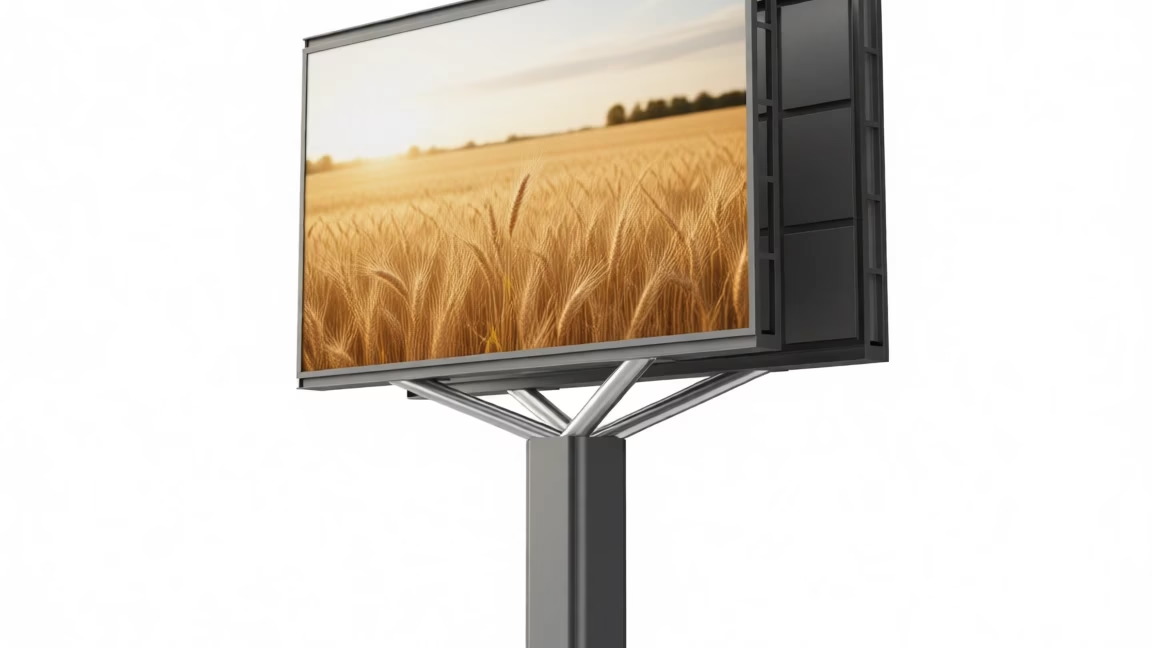
The class also carries the family’s toughness record. Large lamps running far below their thermal limits, sealed DIP packages that shrug off monsoons, and iron cabinets bolted to steel that outlives three lamp generations — P10 walls from the industry’s first decade are still in daily service, which is why national billboard networks still standardize on the pitch. Distance defends the image; the hardware defends the investment.
DIP or SMD — why the oldest debate is still alive at P10
Every pitch finer than P10 settled this debate in SMD’s favor years ago. P10 is the exception, and the reasons are physical. DIP — direct-insert — mounts three separate lamp legs through the board, each in its own sealed package: the waterproofing is built into the lamp, the brightness per lamp remains the industry’s highest, and the mechanical construction tolerates vibration and abuse that would crack a surface-mounted lens. SMD3535 answers with a single black lens holding three chips: wider viewing angles, smoother color mixing, and a contrast-friendly face that modern content rewards.
The market has split accordingly. New mixed-content billboards default to SMD3535 on the 320×160mm standard board. Extreme-sun faces, coastal and high-vibration sites, and every legacy network extension still specify DIP — and on the 160×160mm engineering square, DIP remains the native format, thirty-six boards filling a 960×960mm cabinet in the same rhythm the industry learned fifty years ago. Our production line carries both on every board format, priced as options rather than upgrade penalties, because the right answer is the site’s, not the catalog’s.
The power story: where P10 leaves every finer pitch behind
Power is the quiet reason billboard networks keep choosing 10mm. The standard wall draws roughly 120–200W per square meter on mixed content and peaks near 250–350W on full white — and because the lamps are large and lightly loaded, they convert more of that power into light instead of heat. On a 100㎡ face running 20 hours a day, the difference between P6 and P10 is measured in thousands of dollars of electricity per year before a single lamp fails.
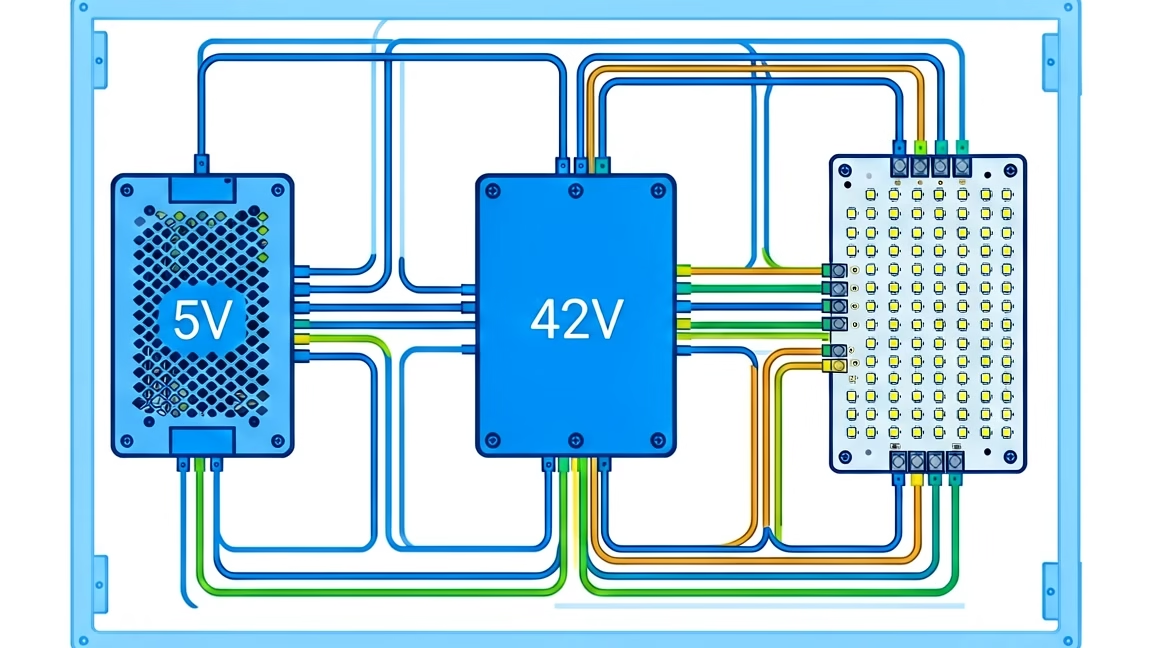
The class then goes further than any finer pitch can. The 320×160mm standard board accepts 4.2V and 3.8V energy-saving supplies — the low-rail architecture that drives LEDs closer to their physical requirement — cutting consumption about 30% more. The 320×320mm big board ships common-cathode standard: red, green and blue channels powered individually and precisely, with the cool-screen design eliminating the localized heat drift that shows as color patches on cheaper walls. Three formats, three levels of energy advantage, all standard on this page’s specification.
Control: sync, async and the cloud, all standard
P10 walls run both control modes, and on this class both reach the cloud. Synchronous systems — NovaStar and Colorlight front ends — carry the stable heavy load for live-signal walls: broadcast feeds, sports venues, control-room networks. Asynchronous systems — Huidu and Mooncell players — publish schedules from a cloud server or a phone app and play for months unattended, which is how most nationwide billboard fleets actually operate. VDWALL and RGBlink cover the live-production front end. The platforms are not interchangeable: sending and receiving hardware must come from one family, chosen once for the whole fleet.
Standardize, and buy spare receiving cards with the wall. The support call you want to avoid is the one where a legacy card fails, the platform has moved a generation, and the wall is dark before a national holiday. Fleets that keep two spare receivers per screen size swap and recover in minutes.
What does the total cost of a P10 outdoor LED display look like?
Budget a standard fixed wall at $350–650 per square meter factory-direct (September 2026 market scan) — the floor of the outdoor family — then add what dealers quote separately: control hardware at $500–2,000 per project, freight near $200–400 per cubic meter, and local steel plus installation running 20–30% of screen value. The 4.2V/3.8V energy-saving build adds 8–12% upfront and returns about 30% of the power bill; on a 100㎡ 24/7 wall in a high-tariff market, that trade pays for itself within the first year. The common-cathode big board adds 10–15% and brings front service plus the cool-screen advantage standard.
Two lines hide in plain sight. Spare modules: 3% of quantity is the cheapest insurance in the project until the first storm ends a board. And the mask: a UV-stabilized matte mask is the difference between a wall that still reads black in year five and one that reads warm gray. Specify both in writing, along with warranty terms and where the spares ship from — those answers tell you more about a supplier than any datasheet.
The 6-point buying checklist for a P10 outdoor LED display
- Band check first — closest viewer 10m and beyond is the P10 band; under 8m step to P8 and bank nothing but regret.
- Settle DIP vs SMD by site — SMD3535 for modern mixed content; DIP for extreme sun, punishing climates and legacy network extensions.
- Brightness tier by orientation — 5,500–6,500 nits copper/alloy for shaded faces; 7,000–10,000 nits ultra-bright gold wire for full-sun highways.
- Take the energy-saving power options — 4.2V/3.8V supplies on the standard board, common cathode on the big board; the family’s lowest running cost is standard here.
- Named components — brand power supplies, stated scan mode, wavelength-binned lamps, conformal-coated boards.
- One control family, cloud-ready — sync for live-signal walls, async cloud-publishing for unattended fleets; buy spares with the wall.
Work the list in order and the buying decision reduces to arithmetic. A P10 outdoor LED display is not the sharpest wall you can buy — it is the one that turns a distance-dominated site into the most square meters of readable advertising per dollar, with lamps tough enough that your successor will still be maintaining the wall you bought.
Related P10 Outdoor LED Display Resources
P3 Outdoor LED Display Collection →
P4 Outdoor LED Display Collection →
P5 Outdoor LED Display Collection →
P6 Outdoor LED Display Collection →
P8 Outdoor LED Display Collection →
P10 Outdoor LED Module →
Common Cathode Technology →
Outdoor LED Display Price Guide →
LED Screen Calculator →
Outdoor LED Module Buying Guide →
Outdoor LED Display Types →
P10 Outdoor LED Display Screen Quick Guide →
Spec Your P10 Outdoor LED Display With Our Engineers
Send us the wall size, the closest viewing distance and the install surface. You get a module-level quote with lamp technology, brightness tier, power architecture and control stack itemized — factory-direct, with 3% spare modules included.
UnifyLED — LED screen manufacturer · unifyledscreen@gmail.com · Changsha / Shenzhen, China