
P3.91 LED Display Rental vs Fixed: The Complete Decision Guide for B2B Buyers
Published: July 2026 | Reading time: 14 min | UnifyLED Engineering Team
The P3.91 LED display occupies a unique position in the market: it is the most widely deployed pixel pitch that spans both the rental and fixed-installation segments simultaneously. At 3.91mm between pixel centers — yielding 65,536 pixels per square meter in a standard 128×128 module configuration — P3.91 delivers sufficient resolution for HD content at viewing distances of 3.9 meters and beyond, making it equally viable for a touring stage backdrop that assembles in two hours and a corporate lobby wall that operates 12 hours a day for a decade. The P3.91 LED display rental vs fixed decision is not about which is better — it is about which architecture matches your operational model, budget structure, and deployment frequency. This guide provides the engineering comparison, cost analysis, and decision framework to make that determination with data, not intuition.
For event professionals, the rental model offers flexibility without capital lock-in. For integrators and venue owners, the fixed model delivers long-term ROI and architectural integration. For many businesses, a hybrid approach — owning a rental-ready P3.91 inventory used for both internal events and client deployments — maximizes asset utilization. See our LED screen for events guide for application-specific configuration advice.
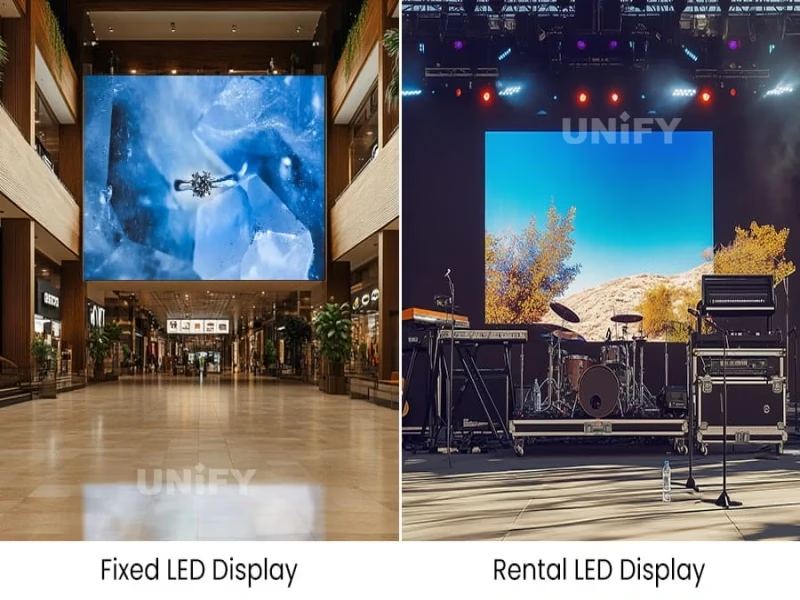
What Defines P3.91 LED Display Rental vs Fixed? Key Differences Explained
Both rental and fixed P3.91 displays use the same core technology — SMD LED modules at 3.91mm pitch, typically 128×128 pixel resolution per module, driven by constant-current driver ICs at 3840Hz refresh rate. The differentiation occurs entirely at the cabinet and system-integration level. Understanding these architectural differences is essential because they determine not just purchase price but total cost of ownership, deployment speed, and operational lifespan.
1.1 Cabinet Architecture — Die-Cast Rental vs Steel/Aluminum Fixed
Rental P3.91 cabinets are universally die-cast aluminum — molten aluminum injected into precision-machined steel molds — producing a frame with ±0.1mm dimensional tolerance and approximately 6.5–7.5 kg weight per 500×500mm panel. Die-casting is expensive per unit but essential for rental because it provides the dimensional accuracy needed for fast-lock alignment across hundreds of assembly/disassembly cycles without deformation. Fixed P3.91 cabinets, by contrast, commonly use extruded aluminum profiles or rolled steel frames, weighing 5–7 kg per panel but optimized for one-time permanent mounting rather than repeated handling. The fixed cabinet prioritizes slim profile (under 50mm depth for indoor models) and seamless architectural integration over impact resistance and quick-connect features. For a deeper look at LED screen cabinet types, see our dedicated technical overview.
1.2 Weight, Portability & Assembly Speed
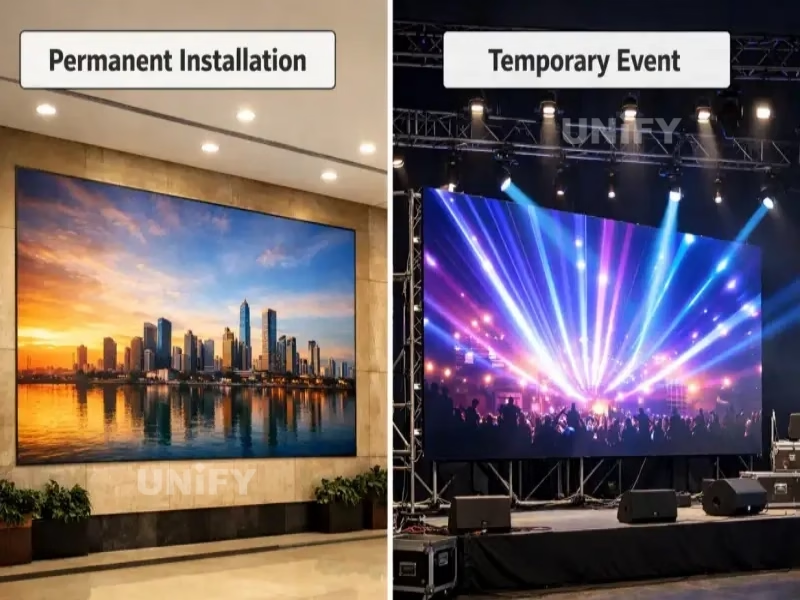
A standard 500×500mm P3.91 rental cabinet weighs 6.5–7.5 kg with modules installed. A single technician can carry two cabinets simultaneously, and a 6m×4m (96-cabinet) wall can be assembled by a 3-person crew in approximately 2–3 hours using fast-lock mechanisms. Fixed P3.91 cabinets of the same dimensions weigh 5–7 kg but are typically installed once by a professional integration team over 1–3 days, including structural mounting, cable routing through conduit, and architectural trim work. The assembly speed difference is not a quality indicator — it reflects fundamentally different design priorities: rental optimizes for setup/teardown cycles; fixed optimizes for permanent structural integration.
1.3 Maintenance Access — Front vs Front/Rear Service
Rental P3.91 cabinets universally support both front and rear module access — essential because rental walls are frequently assembled in configurations where rear access is physically impossible (against a venue wall, inside a stage set, or suspended mid-air). Magnetic module attachment allows a technician to remove and replace any module from the front in under 10 seconds using a simple suction tool. Fixed P3.91 installations may offer front-service-only access (common in flush-mounted indoor walls) or rear-only access (common in outdoor billboard configurations), depending on the mounting environment. The key operational difference: rental cabinets must support rapid field module replacement without disassembling the wall; fixed cabinets can tolerate longer service procedures because downtime is scheduled rather than event-critical. See LED screen maintenance for preventative maintenance schedules.
How Do P3.91 LED Display Rental vs Fixed Compare Technically? Head-to-Head Analysis
2.1 Brightness & Calibration Consistency
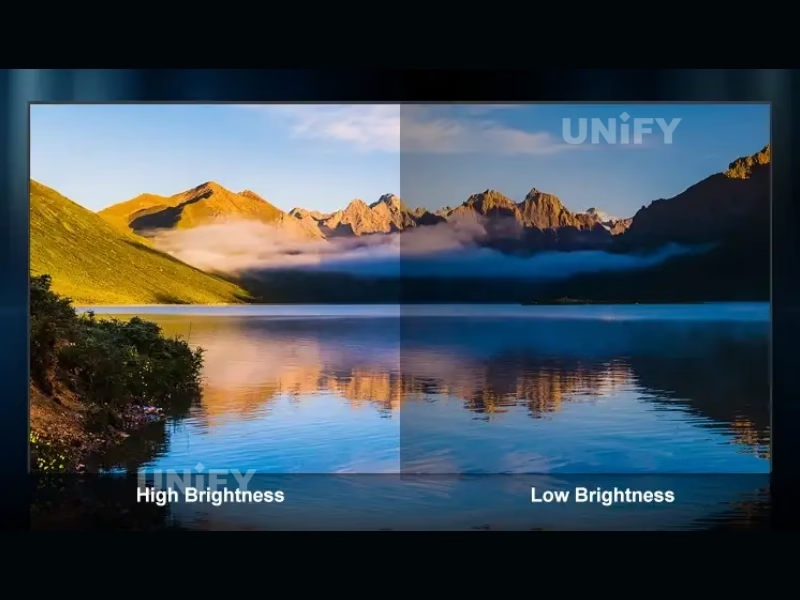
Both rental and fixed P3.91 modules use the same LED packaging (SMD 2121 or SMD 1921) and deliver comparable brightness: 800–1,200 nits for indoor models, 4,500–6,000 nits for outdoor. The operational difference is in calibration frequency. Rental inventory must be recalibrated more often — typically before each major tour or every 20–30 event cycles — because repeated assembly/disassembly introduces microscopic alignment shifts that affect module-to-module brightness uniformity. Fixed installations, once calibrated during commissioning, typically maintain acceptable uniformity for 12–18 months before requiring recalibration, because the cabinets are never physically disturbed. See LED screen brightness for calibration methodology.
What Is the True Cost of P3.91 LED Display: Rental vs Fixed? 5-Year TCO Analysis
The P3.91 rental vs fixed decision is ultimately a financial one. The following analysis uses industry-average pricing for mid-tier P3.91 indoor displays in 2026, assuming a 24 m² (6m×4m) configuration. All figures in USD.
3.1 Initial Investment Per Square Meter
3.2 5-Year TCO — The Full Picture
Rental P3.91 (owned, deployed 20 events/year): Hardware $38,000 + Flight cases $4,800 + Annual recalibration $800 × 5 = $4,000 + Spare modules/repairs $1,500/year × 5 = $7,500 + Technician labor $400/event × 100 events = $40,000 + Storage warehouse $300/month × 60 = $18,000. 5-Year TCO: approximately $112,300. Revenue potential at $2,500/event rental rate × 100 events = $250,000. Net 5-year return: approximately $137,700.
Fixed P3.91 (owned, 12h/day operation): Hardware $32,000 + Structural mounting $7,200 + Annual maintenance contract $1,200 × 5 = $6,000 + Electricity at 270W/m² × 24m² × 12h × 365d × 5yr × $0.12/kWh = $17,000 + Controller/system updates $2,000. 5-Year TCO: approximately $64,200. No direct revenue from operation — value is in brand presence, advertising, or operational function. See LED display power consumption for energy cost calculation methodology.
Rental P3.91 breaks even after approximately 20–25 events for a fully owned inventory. After break-even, each additional event generates approximately $2,100 in net margin (rental rate minus technician labor and transport). Fixed P3.91 has no direct payback mechanism — it is a capital investment amortized over the installation’s 7–10 year lifespan, producing value through advertising revenue, brand presence, or operational function rather than per-event rental fees. The LED screen flickering prevention and maintenance costs differ between the two models as well.
When to Choose P3.91 LED Display Rental vs Fixed? Application Scenarios Guide
4.1 When Rental Wins
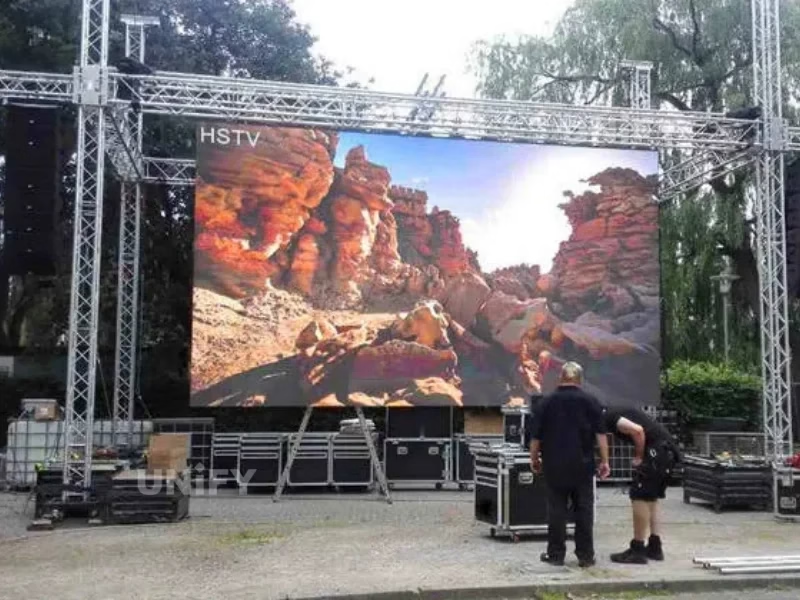
Live events, concerts, and touring productions — where the screen assembles for 4–72 hours and must strike in under 2 hours. Trade shows and exhibitions — where booth configurations change every 3–5 days. Corporate AV rental companies — where asset utilization rate (days rented ÷ days owned) is the primary KPI. Hybrid venues — hotels, convention centers, and houses of worship that host variable-format events requiring different screen sizes each week. In all these scenarios, the rental architecture’s fast-lock assembly, flight-case compatibility, and front-service access directly generate revenue by minimizing setup labor and maximizing deployable event days per year.
4.2 When Fixed Wins
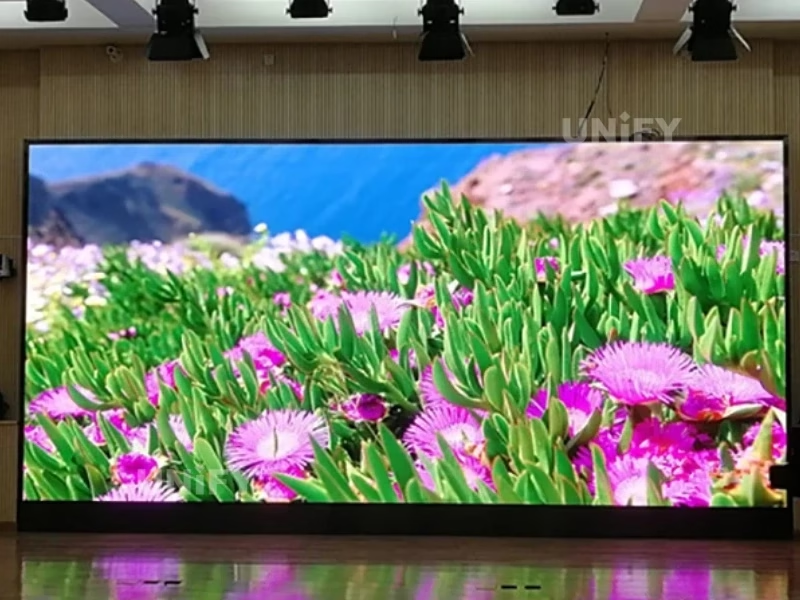
Retail stores and shopping malls — continuous brand messaging with zero setup/teardown. Corporate lobbies and boardrooms — architectural integration, ultra-slim profile, permanent cable routing. Control rooms and NOC environments — 24/7 operation where downtime is not an option. Stadiums and sports venues — permanent structural mounting with enhanced weatherproofing (IP68 for coastal/marine environments). In these scenarios, the fixed architecture’s lower per-square-meter cost, permanent structural integration, and maintenance-on-schedule rather than maintenance-on-demand model produce lower total cost over the installation lifespan.
4.3 The Hybrid Approach
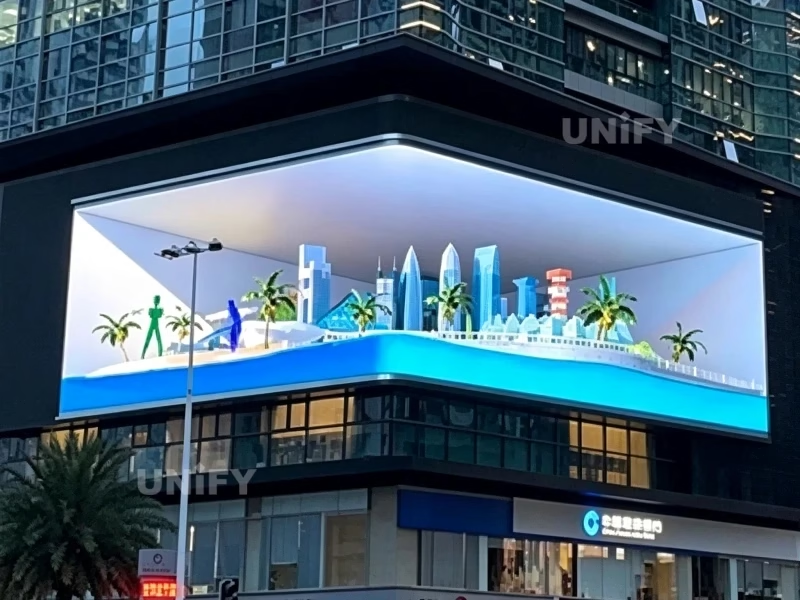
A growing number of AV integrators and event production companies own P3.91 rental-grade inventory that serves double duty: deployed as rental stock for client events at $2,000–$3,500 per event, and installed semi-permanently (3–12 months) in corporate venues at a reduced monthly rate. This hybrid model maximizes asset utilization — the same cabinets that generate rental revenue 15–20 events per year can fill gaps with medium-term installations at 60–70% of the per-event rental rate. The key requirement: the inventory must be rental-grade (die-cast aluminum, fast-locks, flight cases) because it will be assembled and disassembled regardless of deployment duration. Fixed-grade cabinets cannot survive this utilization pattern. For event-specific configuration guidance, see our LED screen for events resource.
How to Decide: P3.91 LED Display Rental vs Fixed Decision Matrix (4 Questions)
Rather than evaluating every specification, answer these four questions. They will direct you to the correct P3.91 architecture more reliably than any specification comparison table. The video below demonstrates rental cabinet assembly so you can assess whether the setup workflow matches your operational capacity.
UnifyLED — UnifyLED — Rental LED Display Installation Demo Magic Series 500x1000mm Cabinet
How many times will this display be assembled and disassembled?
More than 5 times per year → Rental. Fixed cabinets are not engineered for repeated assembly. The bolted connections and permanent brackets will develop play and misalignment after 10–15 reassembly cycles. Rental fast-locks are rated for 500+ cycles.
Will the display generate direct per-event revenue?
Yes → Rental. If each deployment invoices a client, the rental architecture’s higher hardware cost is recovered through per-event billing. Break-even typically at 20–25 events. No → Fixed. If the display serves brand presence, advertising, or operational function, the lower per-square-meter fixed cost and longer maintenance intervals produce better long-term ROI.
Does the screen size need to change between deployments?
Yes → Rental. Rental cabinets with 500×500mm granularity can reconfigure from a 4m×3m conference screen to a 8m×5m concert wall using the same inventory. Fixed installations are dimensionally permanent — changing the display size requires structural demolition and reconstruction.
Is ultra-slim depth (under 50mm) or architectural integration required?
Yes → Fixed. Fixed cabinets achieve flush wall mounting with sub-50mm depth because they eliminate the fast-lock hardware, rear handles, and connector plate housings required for rental portability. If the display must disappear into the architecture, fixed is the only option. For more on installation methods, see LED screen installation.
FAQ: P3.91 LED Display Rental vs Fixed – Common Questions
Why the P3.91 LED Display Rental vs Fixed Decision Impacts Your ROI
The P3.91 LED display rental vs fixed decision distills to one operational question: will this display move? If the answer is yes — if it will be assembled, disassembled, transported, and reconfigured — buy rental-grade P3.91 with die-cast aluminum cabinets, fast-lock mechanisms, and flight cases. The higher per-square-meter hardware cost is recovered through per-event billing, and the architecture is engineered for exactly this use pattern. If the answer is no — if the display will occupy one location for years, operating daily as digital signage, brand presence, or operational infrastructure — buy fixed P3.91. The lower hardware cost, slimmer profile, and maintenance-on-schedule model produce better long-term ROI for permanent installations.
For the growing number of organizations that need both — deployable rental inventory for events and medium-term installations for client venues — the hybrid model works, but only with rental-grade hardware. Fixed cabinets do not survive rental duty cycles. Invest in rental-grade P3.91 inventory, maximize asset utilization across both rental and semi-permanent deployments, and plan for payback within 15–18 months at 20 events per year. The P3.91 pixel pitch will remain the industry’s most versatile workhorse for the foreseeable future — the cabinet architecture you choose determines whether it generates profit or consumes capital.
Need Help Choosing Between Rental & Fixed P3.91?
UnifyLED provides both rental-grade and fixed-installation P3.91 LED displays — factory-direct pricing, global delivery, and free technical consultation to match your operational model.
Get a Free Consultation & Quote
legidatechled@gmail.com | +86-191-18802497