
Fine-Pitch Indoor · Rental & Staging
P2.604 Indoor Rental LED Display Collection
One 250×250mm module — 96×96 pixels, 147,456 dots per square meter — in die-cast aluminum cabinets with quick locks and corner guards. 800–1,000 nits on copper-alloy wire, 1,000–1,200 nits on the gold-wire boost, and a hot-swap control box that changes a receiver in seconds between shows.
Definition
What Is a P2.604 Indoor Rental LED Display?
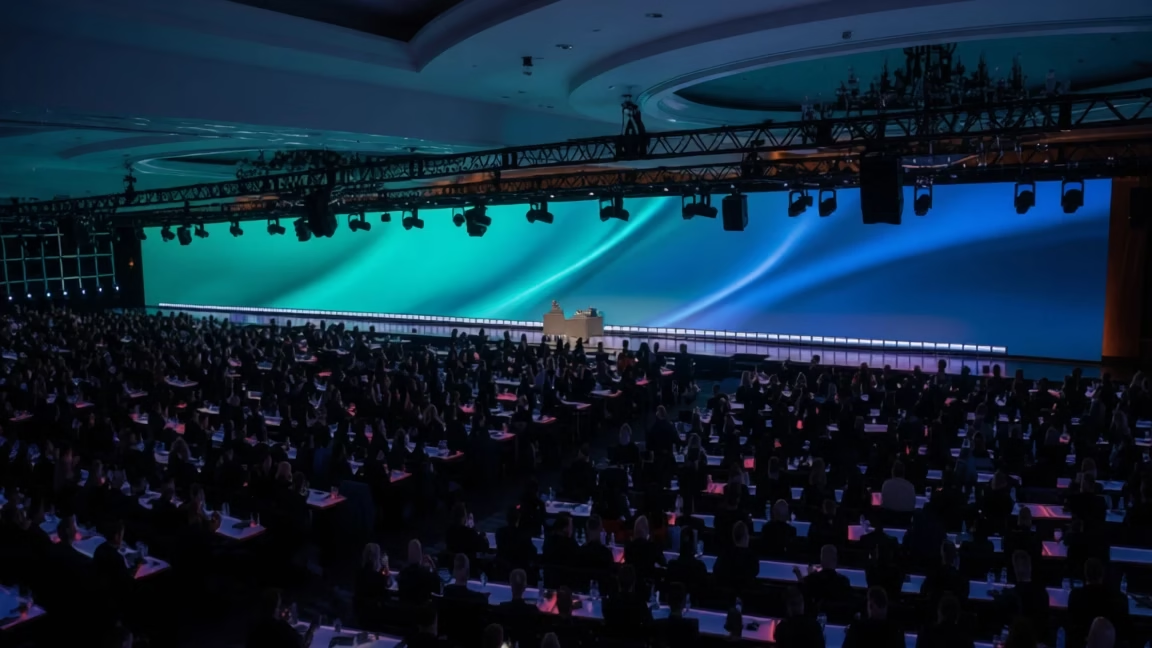
Short answer: A P2.604 indoor rental LED display is a mid-pitch rental video wall built from 250×250mm modules — 96×96 pixels, 9,216 dots per module — seated in die-cast aluminum 500×500mm or 500×1000mm cabinets with quick locks and corner guards. At 147,456 pixels per square meter it reads cleanly from about 2.6m, and its native 1080p wall is 5.0 × 2.81m — the value workhorse for conference halls, church auditoriums and mid-hall stages where the closest viewer is a few metres out.
A P2.604 indoor rental LED display spaces its LEDs 2.604mm apart — 384 pixels to the metre, 147,456 pixels in every square meter. Each 250×250mm module carries 9,216 dots on a high-TG fiberglass PCB in 1.6mm or 2.0mm thickness, locks into the cabinet with magnetic front service, and pairs with an independently removable control box: pull the box, swap the receiver, re-seat it — hot-plug, no screws, measured in seconds on the show floor. One cabinet takes 4 modules at 500×500mm or 8 at 500×1000mm, so a 6×3.5m conference wall is either 84 small cabinets or 42 large ones.
The buying line sits at about 2.6m. Below that, the pixel structure starts to show and the finer P1.953 indoor rental wall earns its premium; from 2.6m out to roughly 10m, P2.604 delivers the same perceived picture for a meaningfully lower cost per square meter. That band covers the majority of rented rooms — conference halls, houses of worship, school auditoriums, exhibition floors — which is why this pitch is the volume line of the indoor rental family, sitting between P1.8 modules and the outdoor range that starts at P3 outdoor.
Module & Cabinet Builds
Which Module and Cabinet Sizes Does a P2.604 Indoor Rental LED Display Use?
The collection runs one production module — 250×250mm, the high-end indoor rental standard size — in two die-cast aluminum cabinets. Both cabinets share quick-lock latches and bump-guard corners, and both accept the same module, so a fleet mixes them freely on one wall.

The 250×250mm Module
One module geometry across the collection: 96×96 pixels, 9,216 dots, pure-black SMD face. Sixteen modules build one square meter — four fill a 500×500mm cabinet, eight fill a 500×1000mm — and every module releases magnetically from the front while its control box unplugs beside it.
500×500mm Die-Cast Cabinet — the Rental Workhorse
Four 250×250mm modules per box, quick locks on every edge, and bump-guard corners that take the knocks of a transport case. The most flexible format for rental fleets: it fits doorways, fills odd room widths, and lets one technician reposition a single box mid-load-in.
| Parameter | Spec |
|---|---|
| Module Size | 250×250mm |
| Pixel Resolution | 96×96 = 9,216 dots/module |
| Scan Mode | 1/32 scan (3 rows lit, ICN2053-class) |
| Driver IC Brands | Chipone (ICND series) / Hongxin high-refresh IC |
| IC Count | 54 per module |
| Lamp | SMD1515 / SMD2121 pure-black — Nationstar · Sinda (Grade 1) / value-grade domestic (Grade 2) |
| Brightness | 800–1,000 nits (copper/alloy wire) / 1,000–1,200 nits (gold-wire boost) |
| Maintenance | Magnetic front service + independent hot-swap control box (second-level receiver swap); rear service standard |
| Cabinet | 500×500mm die-cast aluminum, 4 modules/box, quick locks + bump-guard corners, stack + rig |
| Uniformity | Strict binning + factory & on-site per-pixel calibration (NovaStar / Colorlight) |
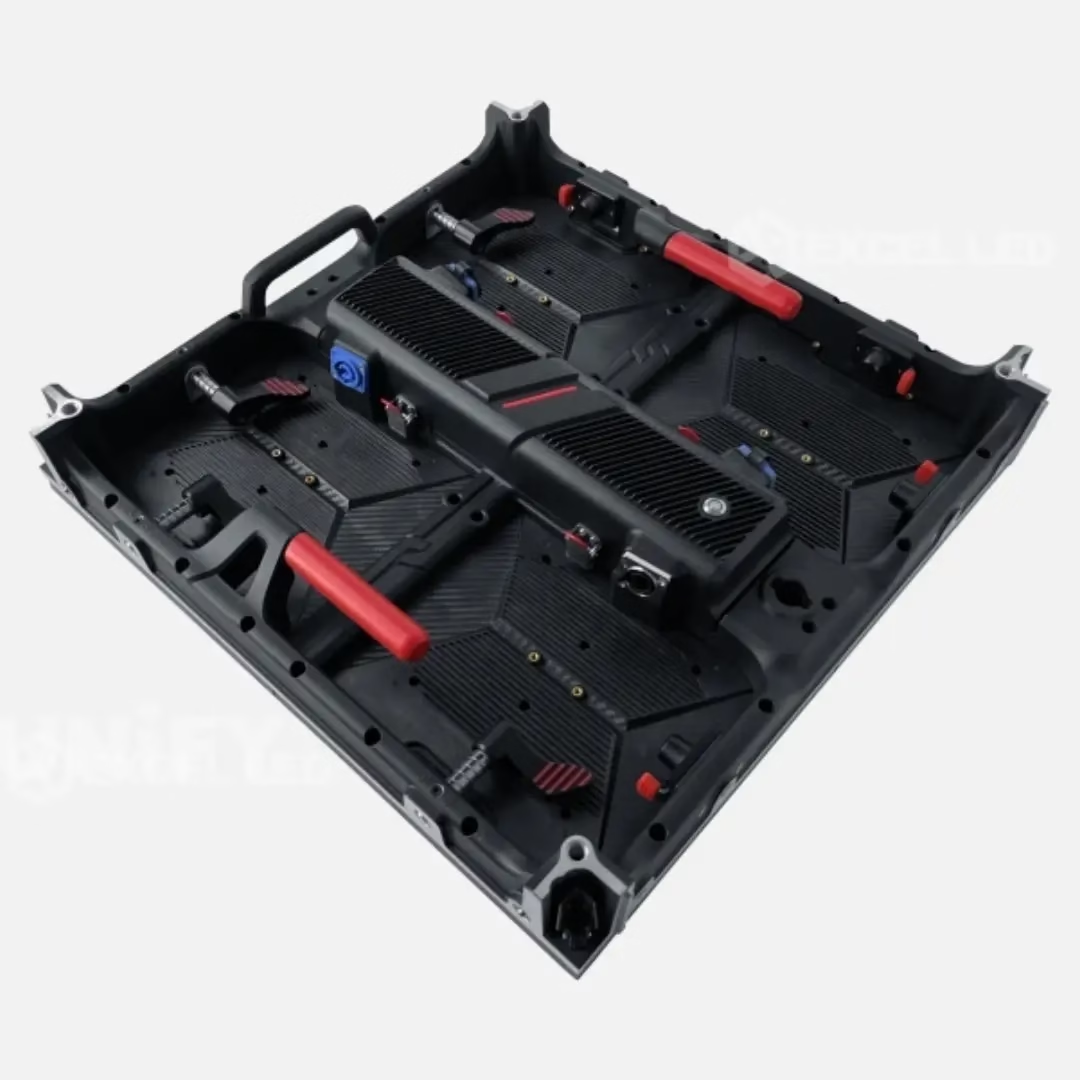
500×1000mm Die-Cast Cabinet — Fast Large-Area Builds
Eight modules, quick locks, bump-guard corners. Doubling the box area halves the lock count and rigging points per square meter — an 8×4m auditorium wall is 64 cabinets instead of 128, which is what keeps a one-morning build realistic. It mixes freely with the 500×500mm cabinet on the same wall.
| Parameter | Spec |
|---|---|
| Module Size | 250×250mm |
| Pixel Resolution | 192×192 per cabinet (36,864 dots) |
| Scan Mode | 1/32 scan (ICN2053-class) |
| Driver IC Brands | Chipone (ICND series) / Hongxin high-refresh IC |
| IC Count | 108 per cabinet |
| Lamp | SMD1515 / SMD2121 pure-black — Nationstar · Sinda (Grade 1) / value-grade domestic (Grade 2) |
| Brightness | 800–1,000 nits (copper/alloy wire) / 1,000–1,200 nits (gold-wire boost) |
| Maintenance | Magnetic front service + independent hot-swap control box (second-level receiver swap); rear service standard |
| Cabinet | 500×1000mm die-cast aluminum, 8 modules/box, quick locks + bump-guard corners, ground stack or flown |
| Uniformity | Strict binning + factory & on-site per-pixel calibration (NovaStar / Colorlight) |
Build Quality
How Is Display Quality Built Into a P2.604 Indoor Rental LED Display?
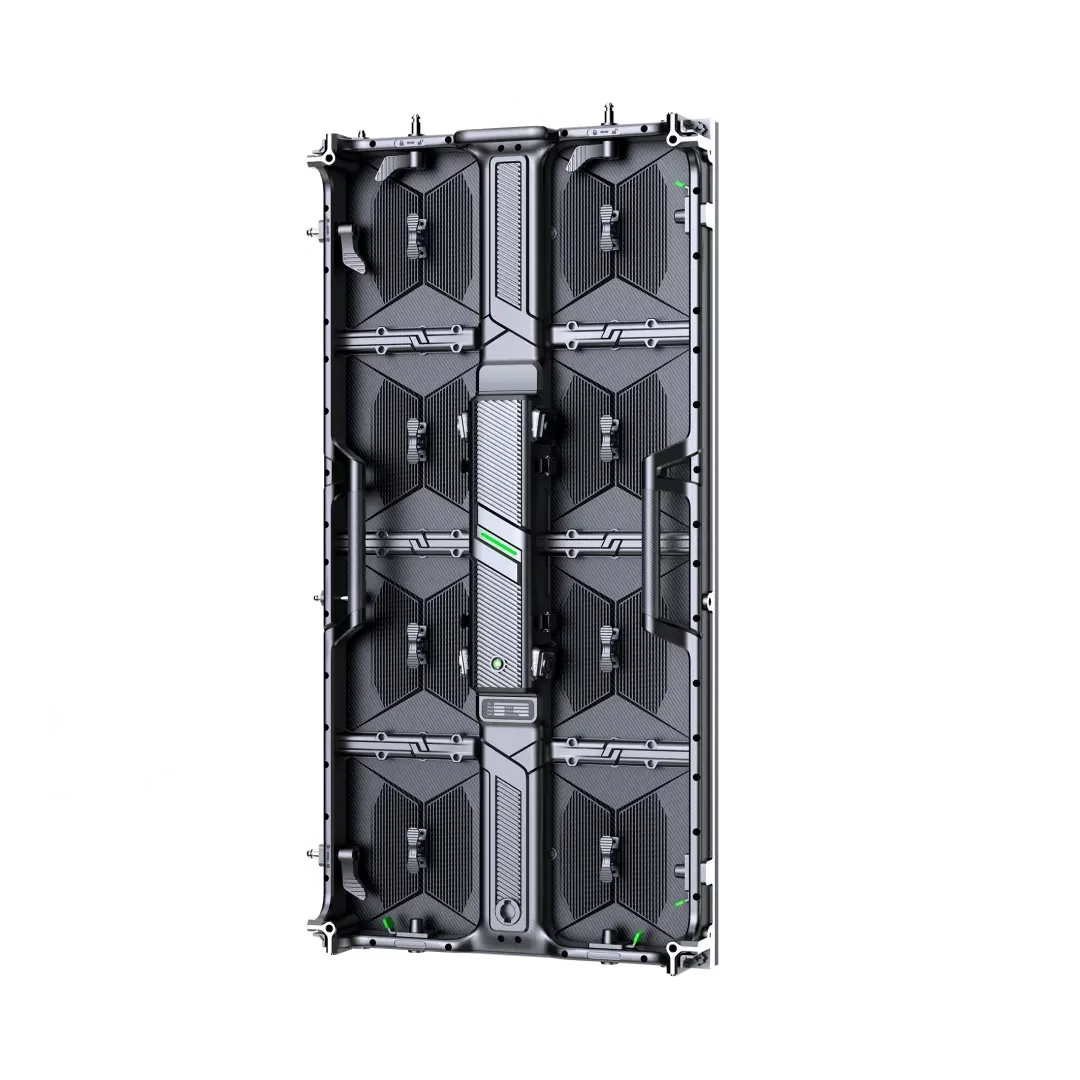
The board comes first: every module runs on a high-TG fiberglass PCB in 1.6mm or 2.0mm. High-TG (high glass-transition) laminate holds its shape through the heat cycles of rental duty — a fleet wall powers up and down dozens of times a season, and ordinary boards gradually warp at the connectors long before the LEDs fade. Lamps are SMD1515 or SMD2121 pure-black, sourced in two grades: Grade 1 from Nationstar or Sinda for stability-critical builds, and value-grade domestic lamps where the budget leads.
Brightness on this collection is a wire decision before it is a driver decision. The 800–1,000 nits tier runs copper/alloy bonding wire; step up to gold-wire and the module carries more current safely, landing at 1,000–1,200 nits for bright halls and camera-heavy stages — with gold’s corrosion resistance extending color stability across years of duty cycles. Internally the cabinet uses pin-header hard connections or high-grade soft flat cable, so there are no loose pull-to-fit harnesses to work loose in a flight case. Every lamp is sorted for brightness and wavelength before assembly, and the finished wall is calibrated per-pixel with NovaStar or Colorlight equipment, in the factory and again on site — the standard 3,840Hz refresh keeps the whole wall flicker-free on camera and in livestream frames.
Power & Thermal
How Much Power Does a P2.604 Indoor Rental LED Display Use?
Power scales with lamp count and brightness tier, and P2.604 carries 44% fewer lamps per square meter than the P1.953 wall — the same wall area runs meaningfully cooler and draws less from the room. Consumption follows the brightness tier you specify: the 800–1,000 nits copper-wire build idles well below the 1,000–1,200 nits gold-wire boost. The high-TG board keeps that heat moving through the die-cast shell instead of pooling at the connectors, and the whole line runs fanless — no fan noise on a recorded session, no filters to service between rentals.
| Supply Brand | Typical Rail | Role in the Cabinet |
|---|---|---|
| Chuanglian Power | 5V | Rental-fleet standard; compact footprint for 500-series cabinets |
| MEAN WELL | 5V | Specifier-preferred option where brand approval is written into the tender |
| G-Energy | 5V | High-efficiency line for gold-wire boost builds |
For the brightness-to-power relationship in detail — and how a dimmed banquet hour differs from a bright exhibition afternoon — see our LED screen brightness guide.
Control Stack
Which Control Systems Drive a P2.604 Indoor Rental LED Display?
Rental walls run synchronous control: a sending unit and video processor output live video frame-by-frame to the receiving card in every cabinet — the low-latency path stage crews want, with no buffering between the switcher and the wall. Four control brands and two video-processing houses cover every scenario; senders and receiving cards must stay on one platform — NovaStar hardware does not drive Colorlight receivers. Cloud and phone-based central control sits on top for multi-screen venues: one operator, one dashboard, every wall in the building.
NovaStar

The broadcast-reference stack. An NovaStar controller such as the compact MCTRL300 sender pairs with per-cabinet receiving cards for 16-bit grayscale and per-pixel calibration — the combination rental houses standardize on.
Colorlight
Strong on staging value: the Colorlight controller line spans sender boxes to the X8m-class wall processors, with the same calibration pipeline and cloud-managed fleets.
Huidu

Three-in-one processors that pack sending, processing and playback into one flight-case unit — the Huidu HD-VP620 class is what corporate AV teams run their own events on.
Mooncell

Two-in-one processors such as the Mooncell M40 merge sending and processing for mid-size walls, with automatic recovery that suits a fleet moved every week.
VDWALL

Video processing for the signal path in front of the wall: scaling, switching and input handling on the VDWALL LVP615S-class processors that rental stock already knows.
RGBlink
Switching and multi-window processing in one box — the RGBlink Mini Pro puts camera feeds beside playback beside speaker notes without a separate switcher.
The hot-swap control box behind every cabinet is the rental floor’s quiet advantage: a receiver that fails between shows is replaced in seconds — unplug the box, seat the spare, done — instead of opening the cabinet on a loading dock.
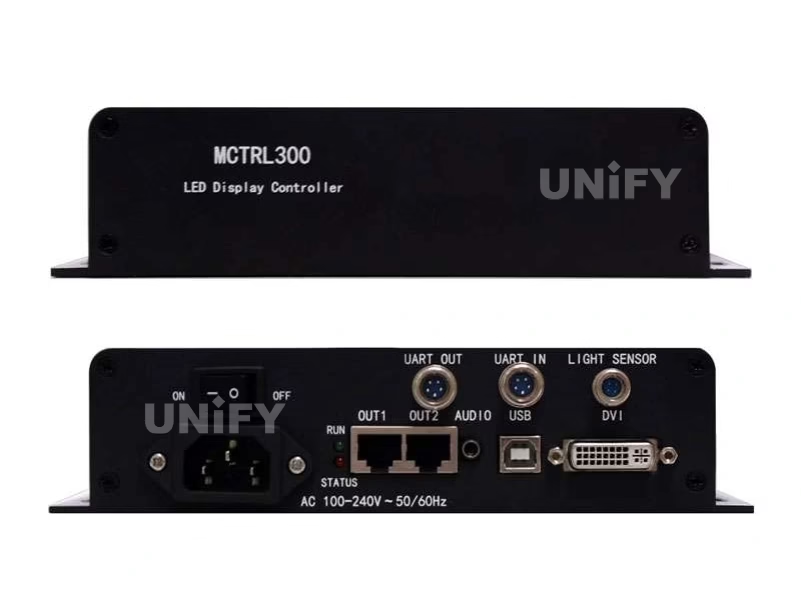
NovaStar MCTRL300
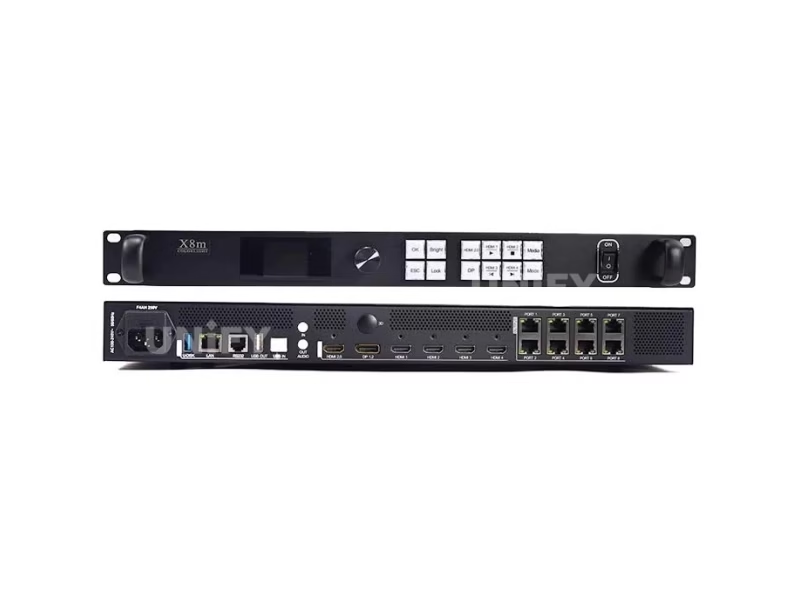
Colorlight X8m
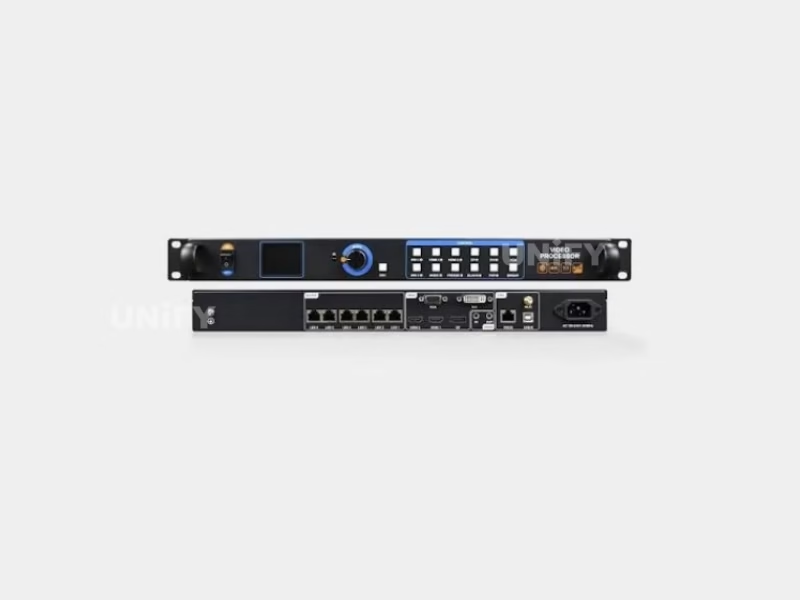
Huidu HD-VP620
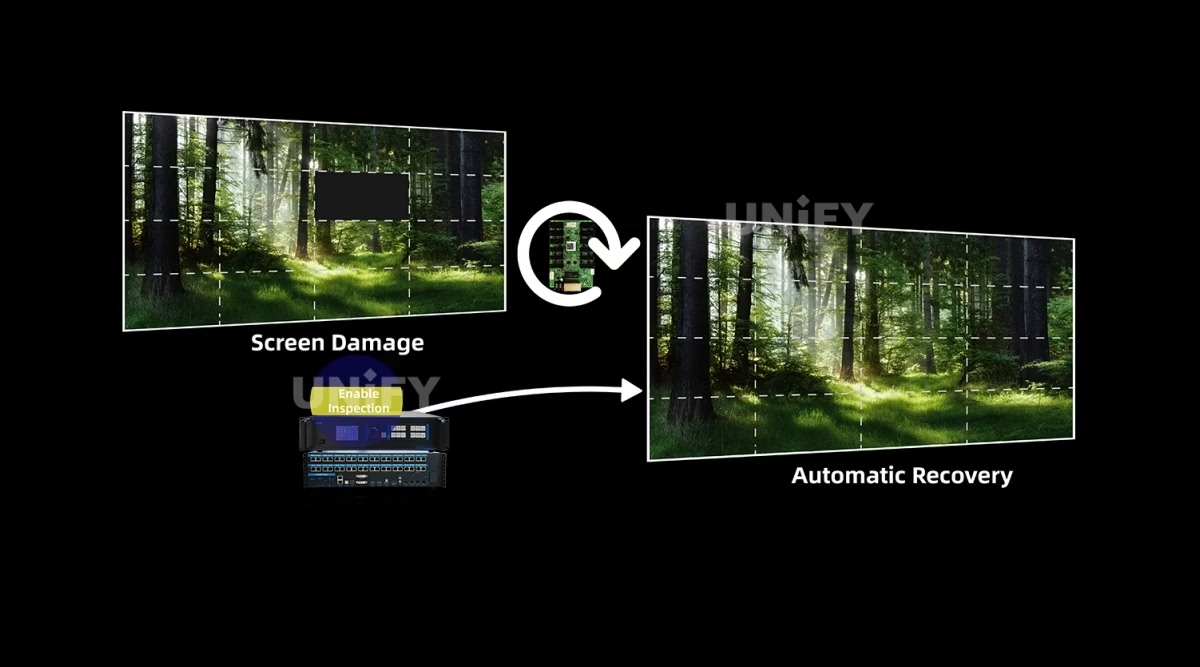
Mooncell M40
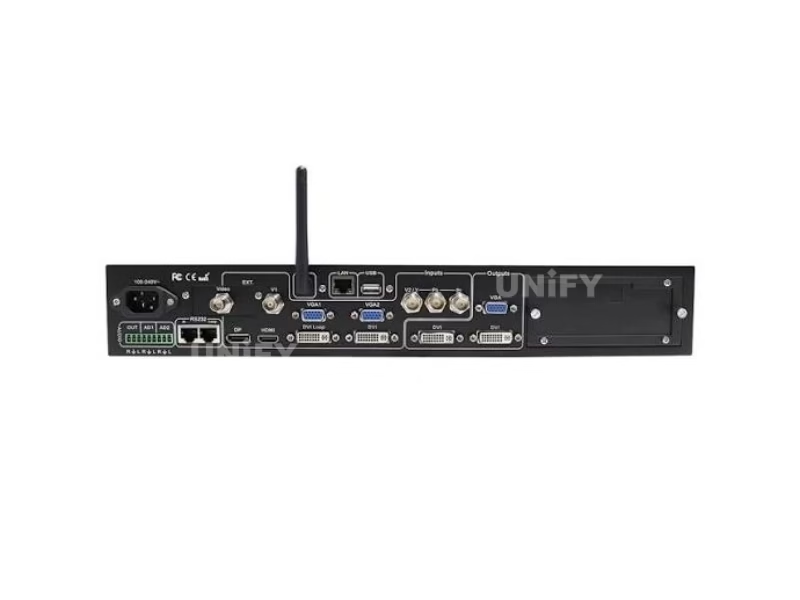
VDWALL LVP615S
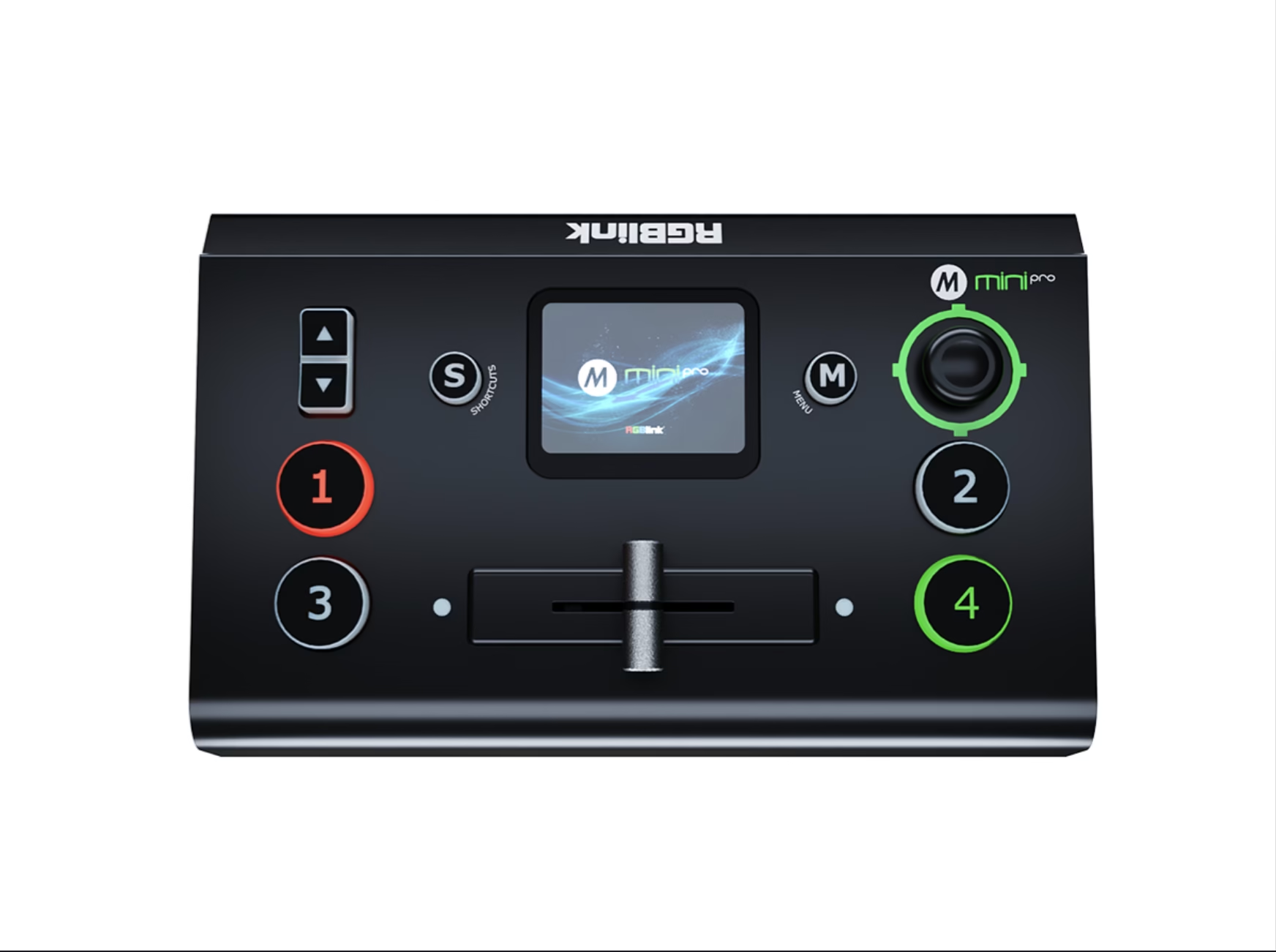
RGBlink Mini Pro
Comparison
P2.604 or P1.953 — Which Indoor Rental Pitch Fits Your Room?
Both pitches ride the same 250×250mm module and the same cabinet family — the logistics are identical, so the choice comes down to the closest viewer and the budget line. Three tables do the deciding.
1) Route by viewing distance first
| Closest Viewer | Right Product |
|---|---|
| Under 2.6m — head tables, camera close-ups, control rooms | P1.953 indoor rental or fixed P1.5 / P1.8 modules |
| 2.6–10m — conference halls, worship, auditoriums ✓ | This P2.604 indoor rental collection |
| Outdoors in daylight — even briefly | Sunlight-rated walls — P3 outdoor / P4 outdoor |
| Beyond 10m, budget first — arena backs, festivals | Coarser outdoor pitches — P5 / P6 outdoor |
2) P2.604 vs P1.953 on the same cabinet family
| Dimension | P2.604 (this page) | P1.953 |
|---|---|---|
| Pixel density | 147,456 px/㎡ | 262,144 px/㎡ |
| Native 1080p wall | 5.0 × 2.81m | 3.75 × 2.11m |
| Minimum viewing distance | ≈2.6m | ≈2m |
| Refresh | 3,840Hz standard | 3,840Hz / 7,680Hz tier |
| Relative cost per ㎡ | Lower — the volume line | Higher (≈1.8× the lamp count) |
| Pick it when | Mid-hall viewing, large walls, tighter budget | Cameras at close range, ≤2.6m clearance |
3) Where P2.604 sits in the pitch family
| Pixel Pitch | Pixel Density | Smallest 1080p Wall | Min Viewing Distance |
|---|---|---|---|
| P1.5 | 444,444 px/㎡ | 2.88 × 1.62m | 1.5m |
| P1.8 | 308,642 px/㎡ | 3.46 × 1.94m | 1.8m |
| P1.953 indoor rental | 262,144 px/㎡ | 3.75 × 2.11m | 2m |
| P2.604 — this page | 147,456 px/㎡ | 5.00 × 2.81m | 2.6m |
| P2.604 outdoor rental | 147,456 px/㎡ | — (outdoor) | 2.6m+ |
| P2.5 outdoor | 160,000 px/㎡ | 4.80 × 2.70m | 2.5m |
| P3 outdoor | 111,111 px/㎡ | 5.76 × 3.24m | 3m |
| P4 outdoor | 62,500 px/㎡ | 7.68 × 4.32m | 4m |
| P5 outdoor | 40,000 px/㎡ | 9.60 × 5.40m | 5m |
| P6 outdoor | 27,778 px/㎡ | 11.52 × 6.48m | 6m |
| P8 outdoor | 15,625 px/㎡ | 15.36 × 8.64m | 8m |
| P10 outdoor | 10,000 px/㎡ | 19.20 × 10.80m | 10m |
Pricing
How Much Does a P2.604 Indoor Rental LED Display Cost?
Short answer: market listings for P2.604 rental walls price at roughly $1,050–1,800 per square meter FOB (2026-09 market listing scan, module-level). At 16 modules per square meter that is about $66–113 per 250×250mm module before cabinet, control and structure add-ons.
The spread inside that band is option-driven, and every driver is visible in the build:
- Lamp grade. Grade 1 Nationstar/Sinda lamps sit at the top of the band; value-grade domestic lamps move the module price down without changing geometry.
- Brightness tier. The gold-wire 1,000–1,200 nits boost costs more than the copper-wire 800–1,000 nits base — wire material is a real line item on this pitch.
- 3,840Hz standard. Market standard builds at 1,920Hz run 8–12% cheaper than camera-safe high-refresh — this collection ships high-refresh as standard, so the band above already includes it.
- Cabinet hardware. Quick locks and bump-guard corners cost a little more per box than plain cabinets and pay for themselves in transport survival.
- Order size. Above roughly 50㎡, volume pricing typically opens a 3–5% discount (2026-09 market breakdown).
Buying vs renting — the market arithmetic: rental rates run $55–110/㎡ per day for the screen alone, or $125–195/㎡ per day full-service with crew and calibration (2026-09 market breakdown). The usual decision rule: if annual rental spend × 3 years approaches the purchase price, buying wins — most fleets cross that line around 15 events per year.
Worked example: a 6×3.5m wall (21㎡) at band midpoint lands near $30,000 FOB — 84 modules in 21 of the 500×500mm cabinets, or 42 of the 500×1000mm ones. The LED screen calculator will sanity-check the count before you commit.
Applications
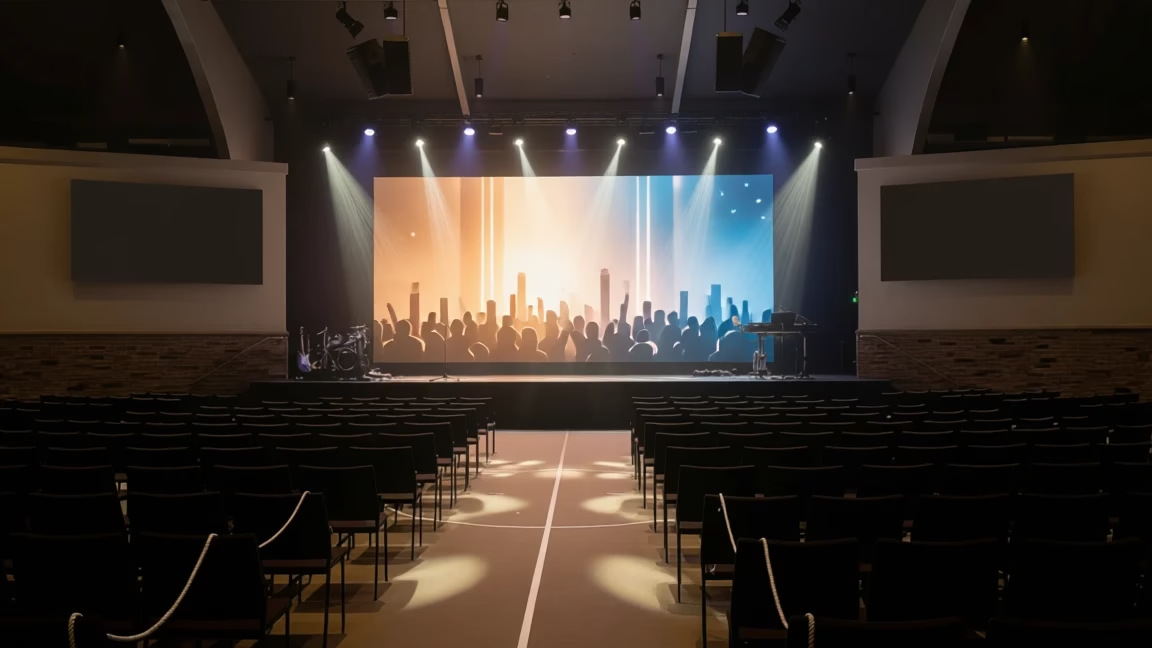
Where Does a P2.604 Indoor Rental LED Display Deliver the Most Value?
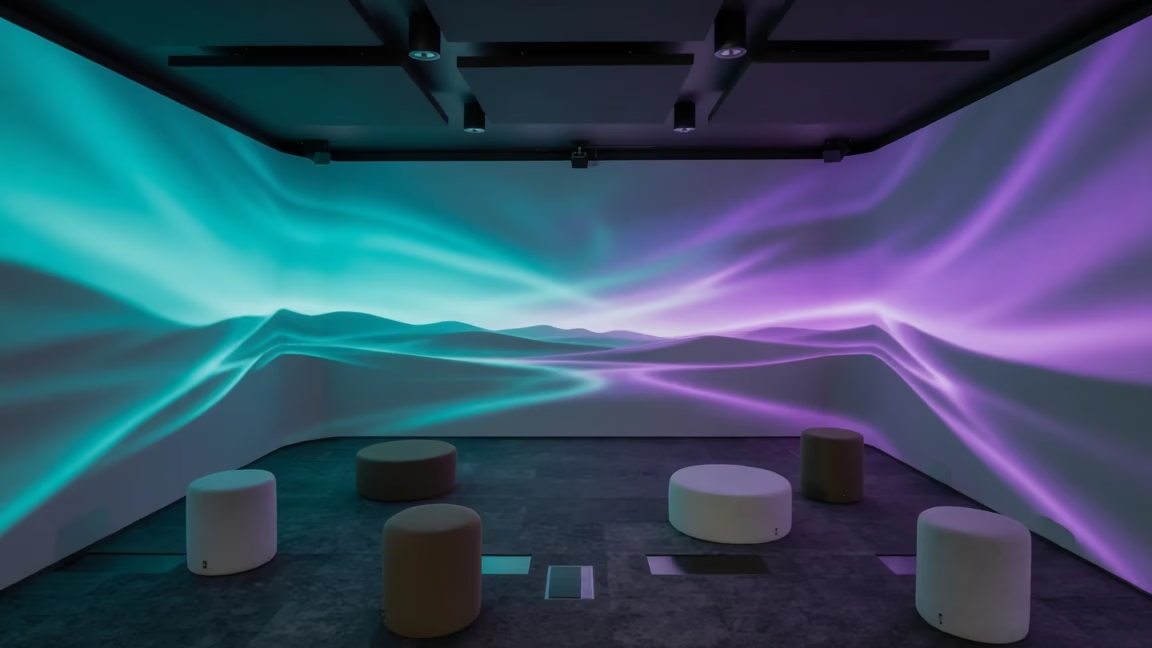
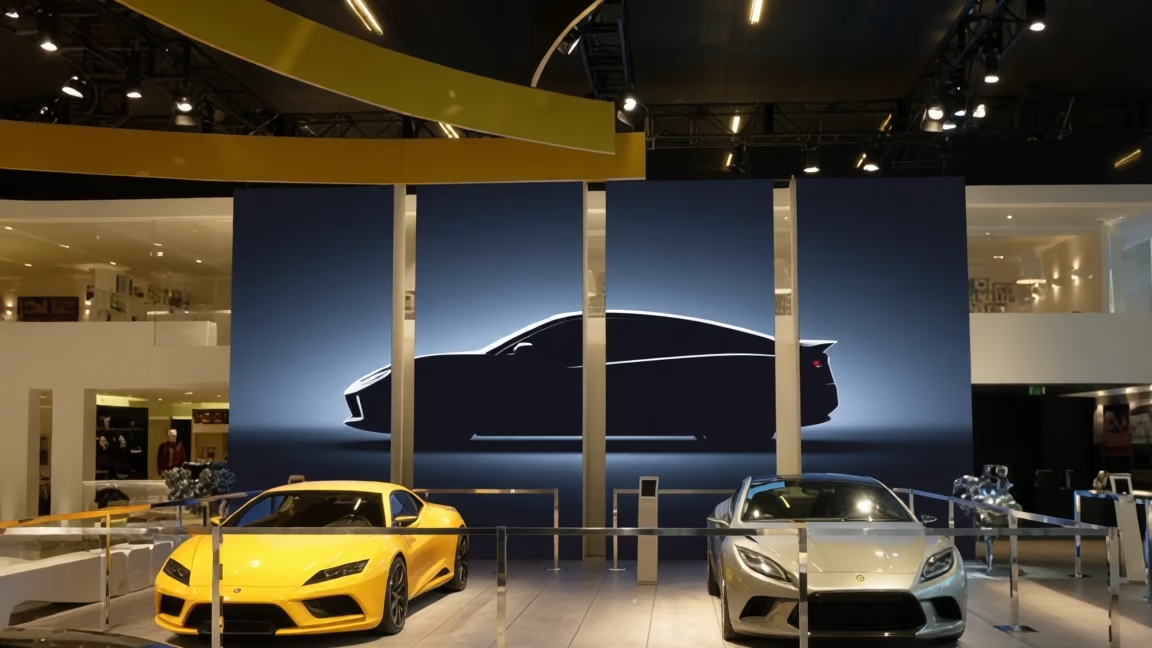
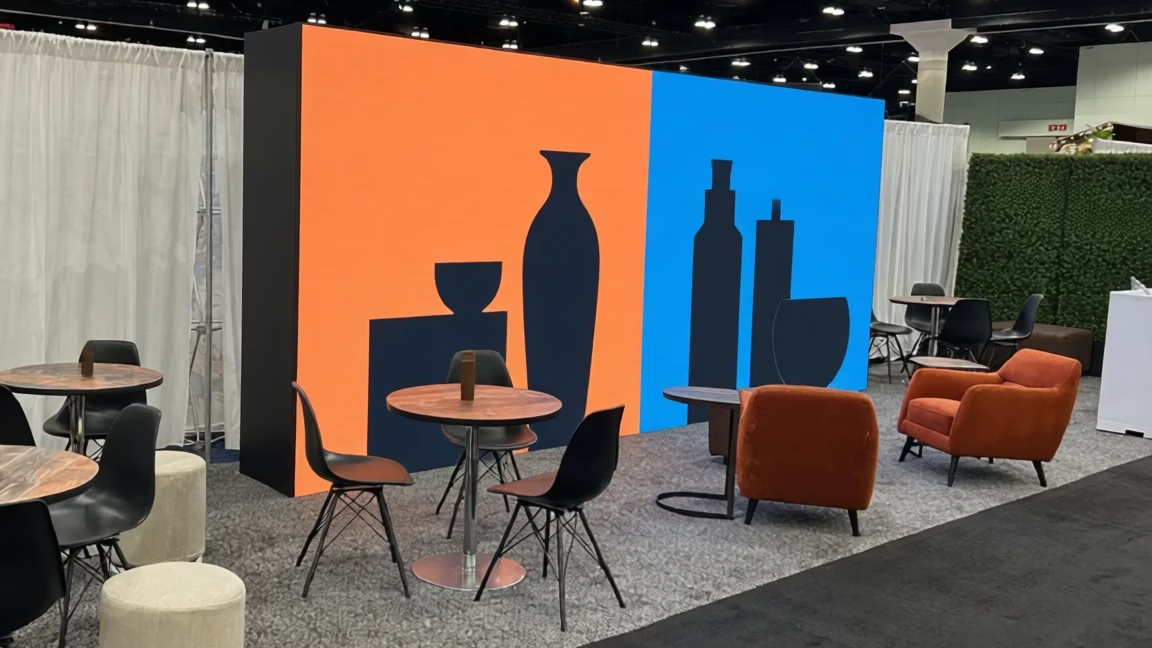
Every scene below shares one shape: a room where the closest viewer is 2.6–10m out and the wall is big enough that per-square-meter price decides the bid. That is the P2.604 band — resolution where it counts, budget where it shows.




Reference Projects
What Have P2.604 Indoor Rental LED Display Builds Looked Like?
Reference configurations our production floor has shipped in this spec — typical rental packages with the cabinet mix our crews actually load:

Conference Package
6 × 3.5m · 21㎡
84 × 250×250mm modules in 42 of the 500×1000mm cabinets. 800–1,000 nits copper-wire build, 3,840Hz standard. A morning build for a hall that runs conferences all season.

Church Package
5 × 3m · 15㎡
60 modules in 30 of the 500×1000mm cabinets — long-room sightlines covered, sermon text readable from the last pew. Hot-swap control boxes as the Sunday-morning insurance.

Auditorium Package
8 × 4m · 32㎡
128 modules in 64 of the 500×1000mm cabinets, ground-stacked on a stage truss run. Gold-wire 1,000–1,200 nits boost where stage light spills onto the wall.

Native-1080p Package
5 × 3m · 15㎡ (1920×1152)
The cabinet-grid-rounded 1080p wall: native 5.0 × 2.81m trims to 5 × 3m on the 500mm grid, 30 of the 500×1000mm cabinets, content mapped near pixel-for-pixel.
Named project case studies with site photography follow once client sign-offs clear — ask us for references in your region meanwhile.
FAQ
P2.604 Indoor Rental LED Display: Frequently Asked Questions
What viewing distance does a P2.604 indoor rental LED display need?
Plan for a minimum of about 2.6m and a working band of 2.6–10m. At 2.604mm pitch and 147,456 pixels per square meter, the wall reads as clean video from roughly two and a half metres out — conference halls, worship rooms and auditoriums sit comfortably inside that band. Closer than 2.6m, the finer P1.953 wall is the better buy.
How does P2.604 compare with P1.953 for rental fleets?
Same module size, same cabinets, different economics. P2.604 carries 147,456 px/㎡ against P1.953’s 262,144 — about 44% fewer lamps per square meter — so it prices meaningfully lower while native 1080p grows from a 3.75 × 2.11m wall to 5.0 × 2.81m. Fleets standardize on P2.604 for volume rooms and keep a P1.953 batch for camera-close work.
Why does wire choice change the brightness tier?
Bonding wire sets how much current each LED can safely carry. Copper/alloy wire builds reach 800–1,000 nits; gold-wire builds carry more current and land at 1,000–1,200 nits, with gold’s corrosion resistance extending color stability over years of duty cycles. On this collection the tier is specified at order time — it is a wire decision, not a settings change.
What is a high-TG PCB and why does it matter for rental?
High-TG laminate keeps its mechanical strength at higher temperatures than standard fiberglass. A rental wall powers through heat cycles dozens of times a season, and ordinary boards gradually warp at connector points long before the LEDs age. The 1.6mm/2.0mm high-TG board is why these modules survive fleet life.
How does the hot-swap control box work on show day?
Each cabinet carries its control electronics in an independent box that unplugs from outside the module. If a receiver fails between shows, a technician unplug-swaps the box in seconds — no cabinet teardown, no soldering, no rear access. Combined with magnetic front service for modules, it keeps a fleet’s downtime measured in minutes.
Is 3,840Hz refresh enough for live filming?
Yes — 3,840Hz is the camera-safe standard that market builds charge an 8–12% premium to reach, and this collection ships it as standard. It holds broadcast shutter speeds and livestream frames free of scan lines and banding. For specialist slow-motion work, tell us the camera spec and we will match the driver IC to it.
How many cabinets make a 1080p P2.604 wall?
A native 1920×1080 image on this pitch is 5.0 × 2.81m — about 14.1㎡. Because 500mm cabinets build in half-metre steps, that usually rounds to a 5 × 3m wall: 1920×1152 pixels, 30 of the 500×1000mm cabinets, with the processor scaling the small remainder. The LED screen calculator works out any target size.
How much does a P2.604 indoor rental LED display cost — and should I rent instead?
Purchase sits at roughly $1,050–1,800 per square meter FOB (2026-09 market listing scan). Rental rates run $55–110/㎡ per day for the screen alone, or $125–195/㎡ full-service with crew. The market rule of thumb: about 15 events a year is where buying beats renting — below that, rent.
Engineering Guide
How Do You Balance Resolution and Rental Budget With a P2.604 Indoor Rental LED Display?
Every rental quotation is a negotiation between two numbers: the resolution the room can perceive and the price the client will sign. The P2.604 indoor rental LED display exists precisely on that negotiation line — 147,456 pixels per square meter, a 2.6-metre viewing floor, and a per-square-meter cost that lets fleets say yes to bigger walls. This guide walks the four decisions that turn those numbers into a working package.
The mid-hall economics of 147,456 pixels
Start from the room, as always. Measure where the nearest viewer stands. Under about 2.6m — head tables, camera positions at the stage lip — the pixel structure of this pitch becomes visible and the finer P1.953 wall justifies its premium. From 2.6m to about 10m, P2.604 and a finer pitch look the same to everyone in the room, and P2.604 costs roughly two-thirds as much per square meter. That ratio is the whole business case: on a 30㎡ wall it buys either the same wall for less, or ten more square meters of wall for the same budget. Conference halls, worship auditoriums and school stages — the majority of rented rooms — all sit inside this band, which is why P2.604 is the volume line of the indoor rental family.
The 384-pixels-per-metre grid also sizes content cleanly. A native 1080p frame is 5.0 × 2.81m — and because 500mm cabinets build in half-metre steps, real walls usually round to 5 × 3m and 1920×1152 pixels, with the processor absorbing the small difference. Larger walls simply grow outward from that canvas: a 6×3.5m conference wall shows 2304×1344, and a two-wall stage package shows more pixels than most content pipelines deliver. On this pitch, resolution stops being the constraint; budget and rigging become the constraint, which is the right way round for a rental business.
Brightness is a wire decision — spec it at order time
This collection runs two brightness tiers, and the difference is physical: the bonding wire on each LED. Copper and copper-alloy wire carries the current for 800–1,000 nits — the banquet-and-conference band, and the tier most fleets should buy in volume. Gold wire carries more current safely and resists corrosion over years of duty cycles, landing at 1,000–1,200 nits for halls where stage light or daylight spills onto the wall. The choice is made when the modules are built, not at the venue, so the fleet question is simple: what share of your bookings run in bright rooms? Gold-wire stock earns its premium in exhibition halls and camera-heavy stages; copper-wire stock wins on volume. Internally, pin-header hard connections or high-grade flat cable keep both tiers serviceable — no loose harnesses to fail in a flight case.
Fleet durability: high-TG boards, guard corners and the hot-swap box
Rental economics are decided between shows, not during them. Three hardware choices on this collection are fleet insurance. The high-TG fiberglass board — 1.6mm or 2.0mm — holds its shape through the power and heat cycles that warp ordinary boards at their connectors. Bump-guard corners on every die-cast cabinet take the knocks of loading docks and flight cases; the factory impact tests that knock a cabinet over and power it back on exist precisely because transport is where walls die. And the independent control box means a failed receiver is a seconds-long unplug-and-reseat between shows instead of a cabinet teardown on the dock. Add magnetic front service for modules and a wall’s worst-case service event is a suction-pull and a box swap, measured in minutes. Run the rest of the pre-show checklist with our engineers, or start from the viewing distance guide.
Design content for the mid-hall canvas
At 384 dots per metre, type on a P2.604 wall reads differently than the same slide projected. A character 40 pixels tall stands a little over 104mm on the wall — legible from the back of a mid-size hall, comfortable from the middle — so conference decks and lyric slides need larger type than a laptop preview suggests. Build graphics at the wall’s native size rather than inside a 16:9 template: a 6×3.5m wall is 2304×1344, and artwork composed at that size fills the canvas instead of floating inside black bars the processor has to scale.
Two habits keep the wall looking calibrated all day. First, keep live camera and playback in the same color space end to end — the processor handles conversion better than a mismatched chain does, and mid-hall audiences notice tint shifts between the stage feed and the playback reel. Second, plan the safe zone around the room’s real sightlines: side walls seen from an angle need larger central content than the flat-on main wall, and cabinet-grid awareness at design time avoids splitting a logo across two modules on show day. None of this is specialist work; it is the same discipline as print design, applied to a canvas that happens to emit light.
Plan the cabinet mix before the truck loads
The same wall builds two ways, and the right mix is a logistics answer. A 6×3.5m wall is 84 of the 500×500mm cabinets or 42 of the 500×1000mm ones — the long format halves the lock count, the data runs and the rigging points, which is why flown festival shapes and one-morning conference builds lean on it; the small format halves the weight per lift and fits the doorways the long box may not. Most fleets carry both and mix them on one wall: a long-box field with small-box columns filling the odd half-metre at the edge, because the room always has one. Count the build in cabinets, not in modules — the crew lifts cabinets, the quote prices modules, and the calculator connects the two before anyone commits to a truck.
Buy or rent: the fifteen-event line
The market prices the decision for you. Renting the screen alone runs $55–110 per square meter per day; full-service with crew and calibration runs $125–195. Purchase sits at $1,050–1,800 per square meter FOB (2026-09 market listing scan). The crossover is arithmetic: around fifteen event-days a year, three years of rental spend catches the purchase price, and everything after that is margin. Below that line, rent; above it, a P2.604 fleet — with 3,840Hz refresh standard, calibration in the factory and on site, and 3% spare modules in every order — is the asset that pays. Send us the wall size, the room and the event calendar, and the quote comes back module-level with the wire tier, cabinet mix and control stack itemized.
The short version: a P2.604 indoor rental LED display is the volume workhorse of the indoor rental family — 147,456 pixels per square meter, clean from 2.6m out, a 5.0 × 2.81m native 1080p canvas, brightness specified by wire tier at order time, and fleet-grade hardware from high-TG boards to hot-swap control boxes. At roughly two-thirds the per-square-meter cost of the finer pitch, it is how rental businesses say yes to bigger walls.
Related P2.604 Indoor Rental LED Display Resources
Spec Your P2.604 Indoor Rental LED Display With Our Engineers
Send us the wall size, the closest viewing distance and the room. The quote comes back itemized line by line — lamp grade, wire tier, cabinet mix, control stack — factory-direct, with 3% spare modules in every order.
UnifyLED — LED screen manufacturer · unifyledscreen@gmail.com · Changsha / Shenzhen, China
Browse our guides: P2.6 vs P3.91 Rental LED Screen