
Fine-Pitch Indoor · Rental & Staging
P3.91 Indoor Rental LED Display Collection
The classic value pitch of the indoor rental family: one 250×250mm module — 64×64 pixels, 65,536 dots per square meter — in die-cast aluminum cabinets. Choose 1,920Hz or 3,840Hz refresh to match the budget, run synchronous or PC-free asynchronous control with cloud publishing, and cut power draw with the optional 3.8–4.2V supply.
Definition
What Is a P3.91 Indoor Rental LED Display?
Short answer: A P3.91 indoor rental LED display is the classic value pitch of the indoor rental family — 250×250mm modules carrying 64×64 pixels (4,096 dots) inside die-cast aluminum 500×500mm or 500×1000mm cabinets. At 65,536 pixels per square meter it reads cleanly from about 4m, and it is the entry point where big rental walls stop being expensive: dual refresh tiers, sync or PC-free asynchronous control and an optional energy-saving supply are all on the spec sheet.
A P3.91 indoor rental LED display spaces its LEDs 3.90625mm apart — 256 pixels to the metre. Each 250×250mm module carries 4,096 dots driven by 48 driver ICs on a 1.6mm fiberglass board, scanned 1/16 so exactly four of the 64 rows light at any instant. The modular design serves from both faces — magnetic or screw-fixed front access and full rear service — so load-in crews and venue technicians share the same maintenance path.
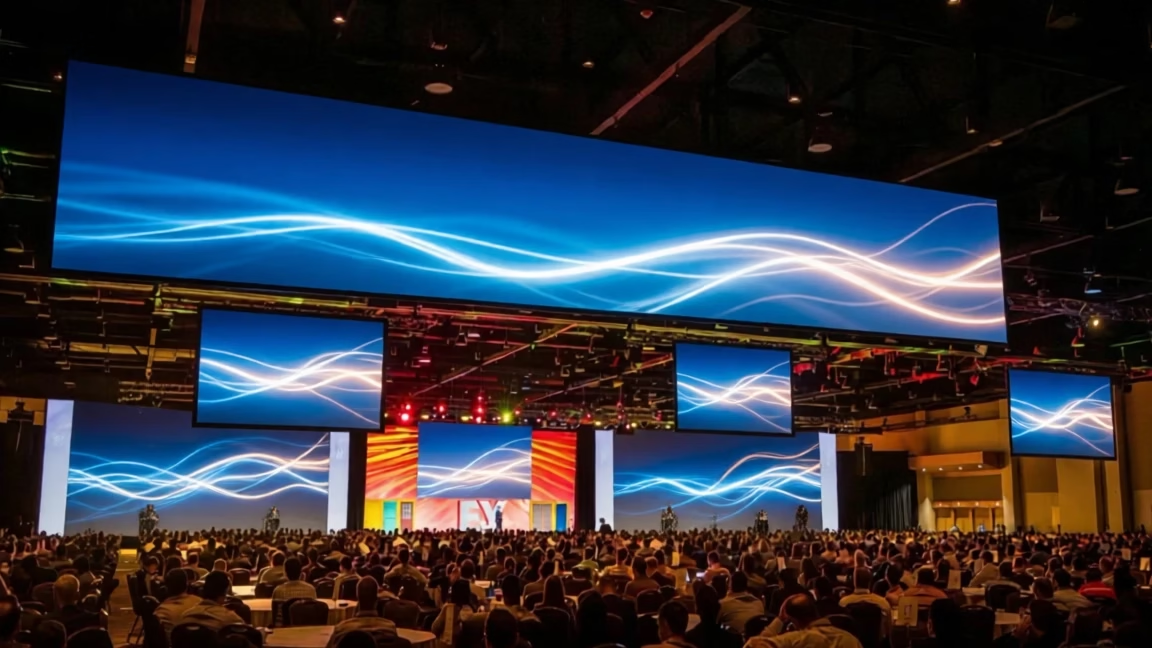
The buying line sits near 4m. Inside that radius, step up to P2.976, P2.604 or P1.953; from 4m to about 15m, P3.91 delivers the picture the room perceives at the family’s lowest cost per square meter — grand stages, trade-fair halls, community events and every job where the wall is big and the budget is real. The pixel pitch guide explains the trade in full.
Module & Cabinet Builds
Which Module and Cabinet Sizes Does a P3.91 Indoor Rental LED Display Use?
One production module — 250×250mm, the size that built the rental industry — in two die-cast aluminum cabinet formats. Everything on this collection is modular: modules, power supplies and control boxes all come out without special tools, which is what keeps a value fleet earning season after season.
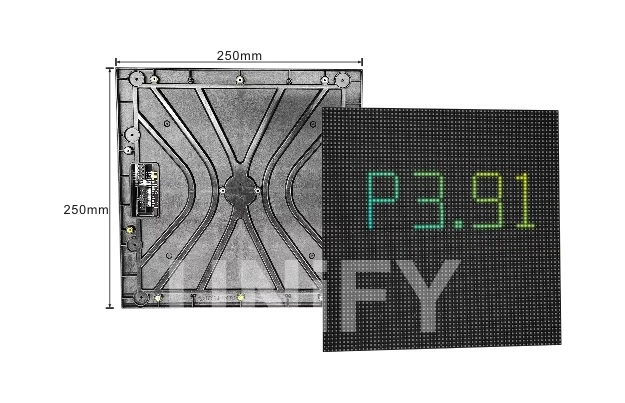
The 250×250mm Module
One module geometry across the collection: 64×64 pixels, 4,096 dots, SMD2121 face. Sixteen modules build one square meter — four fill a 500×500mm cabinet, eight fill a 500×1000mm — and the modular design means any of them services from the front or the back.
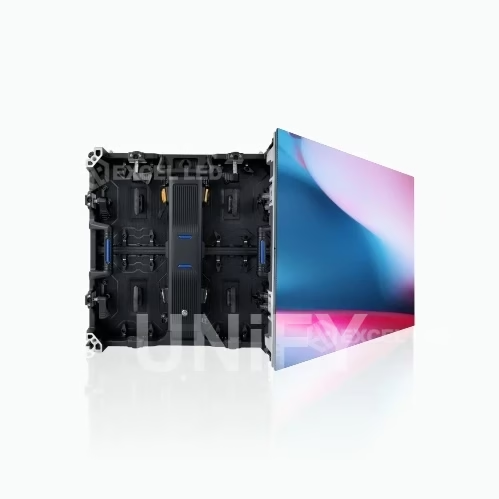
500×500mm Die-Cast Cabinet — the Classic Rental Box
Four modules per box, die-cast aluminum frame, handles where crews expect them. The format that fits every flight case cut for 500-series rental, every doorway and every odd room width — which is why it still moves in the highest volume of any cabinet size.
| Parameter | Spec |
|---|---|
| Module Size | 250×250mm |
| Pixel Resolution | 64×64 = 4,096 dots/module |
| Scan Mode | 1/16 scan (4 rows lit) |
| Driver IC Brands | Chipone (ICND series) |
| IC Count | 48 per module |
| Lamp | SMD2121 — Grade 1 / Grade 2 domestic brands, tiered at order time |
| Brightness | 800–1,200 nits (copper/alloy wire) |
| Maintenance | Modular design — front and rear dual service for fast load-in/load-out handling |
| Cabinet | 500×500mm die-cast aluminum, 4 modules/box, stack + rig |
| Uniformity | Consistency-selected lamps against mottling + per-pixel & per-color correction after assembly |
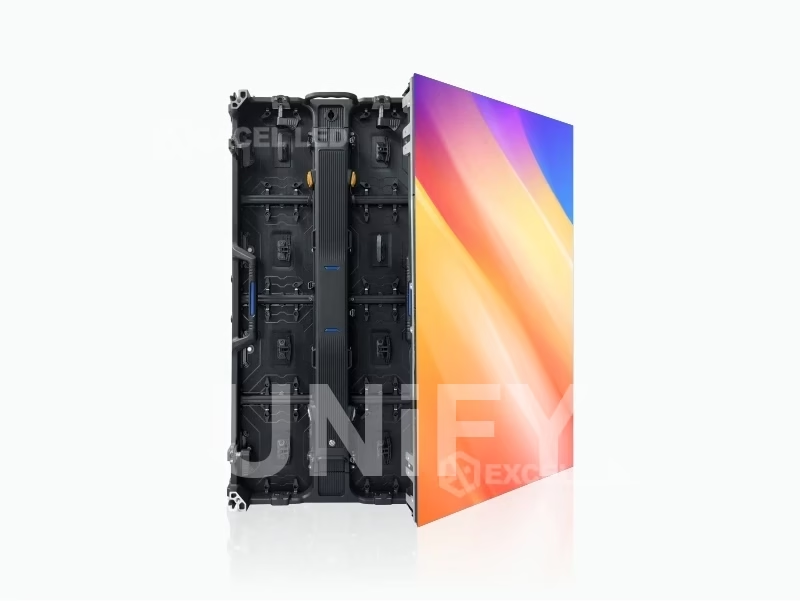
500×1000mm Die-Cast Cabinet — Big Walls, Fast Builds
Eight modules per box. On a value pitch the box count matters twice: it sets the build speed and it sets the price. A 12×5m grand-stage wall is 120 of these boxes — one morning with a small crew — at the lowest per-square-meter figure in the indoor family.
| Parameter | Spec |
|---|---|
| Module Size | 250×250mm |
| Pixel Resolution | 128×256 per cabinet (32,768 dots) |
| Scan Mode | 1/16 scan |
| Driver IC Brands | Chipone (ICND series) |
| IC Count | 192 per cabinet |
| Lamp | SMD2121 — Grade 1 / Grade 2 domestic brands, tiered at order time |
| Brightness | 800–1,200 nits (copper/alloy wire) |
| Maintenance | Modular design — front and rear dual service for fast load-in/load-out handling |
| Cabinet | 500×1000mm die-cast aluminum, 8 modules/box, ground stack or flown |
| Uniformity | Consistency-selected lamps against mottling + per-pixel & per-color correction after assembly |
Build Quality
How Is Display Quality Built Into a P3.91 Indoor Rental LED Display?
The failure mode this build is engineered against is mottling — the patchy, blotchy look a wall develops when its lamps drift apart. The countermeasure starts before assembly: consistency-selected SMD2121 lamps, binned so every module starts from the same brightness and wavelength window. After the wall is built, per-pixel and per-color correction through the control system trims whatever the binning left behind — the two passes together are why a P3.91 wall keeps a single, even face instead of a quilt.
Refresh is a choice, not an upgrade trap: the standard build runs 1,920Hz for rooms without cameras, and the 3,840Hz high-refresh tier is there when broadcast or livestream is on the call sheet — priced as an option, so budget builds don’t pay for frames they never film. Both tiers ride the same SMD2121 lamps on a 1.6mm fiberglass board, and both are camera-flicker-free at their rated shutter ranges. Our refresh rate guide walks the choice in detail.
Power & Thermal
How Much Power Does a P3.91 Indoor Rental LED Display Use?
Two supply schemes ship with this collection. The standard build runs a 5V rail. The energy-saving option drops the drive to 3.8–4.2V — the common-cathode approach, where the LED return path sits on a lower rail and the driver wastes less voltage as heat: cooler cabinets in sealed rooms and a smaller power drop for the same brightness. How that works is on our common-cathode technology page. Lamp count does the rest: 65,536 lamps per square meter is 42% fewer than the P2.976 wall, so the same coverage draws measurably less from the room.
| Supply Brand | Typical Rail | Role in the Cabinet |
|---|---|---|
| Chuanglian Power | 5V / 3.8–4.2V | Rental-fleet standard; both rails available in the 500-series footprint |
| MEAN WELL | 5V | Specifier-preferred option where brand approval is written into the tender |
| G-Energy | 5V / common-cathode | High-efficiency line for the energy-saving build |
All three brands mount in the same tray, so a fleet can standardize on one or mix by project tender — the power supply selection guide walks the choice, and the power consumption guide covers the wattage arithmetic.
Control Stack
Which Control Systems Drive a P3.91 Indoor Rental LED Display?
This collection runs both control modes. Synchronous systems deliver the strong, stable live path for stages and broadcast days; asynchronous systems play standalone — no PC on site, content pushed from a phone or the cloud, ideal for semi-permanent installs and venues without an operator. Every configuration in the family supports cloud publishing, so a fleet manager can push schedules to every wall from one dashboard. The trade-offs live in our sync vs async guide; senders and receiving cards stay on one platform per wall.
NovaStar

Both modes in one ecosystem: the NovaStar TB1 controller box plays asynchronous schedules with cloud publishing, and the synchronous range takes over when the broadcast truck arrives.
Colorlight

The Colorlight X16-class controllers carry the heavy synchronous loads, with cloud-managed fleets across the line.
Huidu

Three-in-one processors such as the Huidu HD-VP210 pack sending, processing and playback in one case — the compact way to run a value fleet.
Mooncell

The networked Mooncell C2 control system publishes from the cloud and manages walls remotely — asynchronous convenience with fleet oversight.
VDWALL

The classic rental processor line — the VDWALL LVP605 series is the unit most rental techs learned on, and stock is everywhere.
RGBlink

The compact RGBlink X1 Gen2 processor handles scaling and switching for mid-size walls without crowding the rack.
Comparison
P3.91 or P2.976 — Which Indoor Rental Pitch Fits Your Room?
Same module size, same cabinet family — the logistics are identical, so the decision is distance, cameras and budget. The tables below make the call.
1) Start from the viewing distance
| Closest Viewer | Right Product |
|---|---|
| Under 4m — mid-hall detail, conference close rows | P2.976 / P2.604 / P1.953 |
| 4–15m — grand stages, fair halls, community events ✓ | This P3.91 indoor rental collection |
| Outdoors in daylight — even briefly | Sunlight-rated walls — P4 / P5 outdoor |
| Beyond 15m, budget first | Coarser outdoor pitches — P6 / P8 outdoor |
2) P3.91 vs P2.976 on the same cabinet family
| Dimension | P3.91 (this page) | P2.976 |
|---|---|---|
| Pixel density | 65,536 px/㎡ | 112,896 px/㎡ |
| Native 1080p wall | 7.5 × 4.22m | 5.71 × 3.21m |
| Minimum viewing distance | ≈4m | ≈3m |
| Refresh | 1,920Hz / 3,840Hz optional | 3,840Hz standard |
| Supply options | 5V or 3.8–4.2V energy-saving | 5V |
| Relative cost per ㎡ | Lowest — the entry classic | Higher |
3) Where P3.91 sits in the pitch family
| Pixel Pitch | Pixel Density | Smallest 1080p Wall | Min Viewing Distance |
|---|---|---|---|
| P1.5 | 444,444 px/㎡ | 2.88 × 1.62m | 1.5m |
| P1.8 | 308,642 px/㎡ | 3.46 × 1.94m | 1.8m |
| P1.953 indoor rental | 262,144 px/㎡ | 3.75 × 2.11m | 2m |
| P2.604 indoor rental | 147,456 px/㎡ | 5.00 × 2.81m | 2.6m |
| P2.976 indoor rental | 112,896 px/㎡ | 5.71 × 3.21m | 3m |
| P3.91 — this page | 65,536 px/㎡ | 7.50 × 4.22m | 4m |
| P2.5 outdoor | 160,000 px/㎡ | 4.80 × 2.70m | 2.5m |
| P3 outdoor | 111,111 px/㎡ | 5.76 × 3.24m | 3m |
| P4 outdoor | 62,500 px/㎡ | 7.68 × 4.32m | 4m |
| P5 outdoor | 40,000 px/㎡ | 9.60 × 5.40m | 5m |
| P6 outdoor | 27,778 px/㎡ | 11.52 × 6.48m | 6m |
| P8 outdoor | 15,625 px/㎡ | 15.36 × 8.64m | 8m |
| P10 outdoor | 10,000 px/㎡ | 19.20 × 10.80m | 10m |
Pricing
How Much Does a P3.91 Indoor Rental LED Display Cost?
Short answer: market listings for P3.91 rental walls price at roughly $500–900 per square meter FOB (2026-09 market listing scan) — the lowest entry point in the indoor rental family. At 16 modules per square meter that is about $31–56 per 250×250mm module.
What moves a quote inside that band:
- Lamp grade. Grade 1 SMD2121 stock sits at the top of the band; Grade 2 domestic lamps move the price down without changing geometry.
- Refresh tier. The 3,840Hz high-refresh build adds the high-refresh driver ICs; the 1,920Hz standard build is the band’s floor and suits rooms without cameras.
- Supply scheme. The 3.8–4.2V energy-saving option adds supply cost and pays it back in sealed-room heat and power draw.
- Wall size. Volume pricing typically opens above 50㎡.
- Package contents. Control, spares and flight cases quote separately from modules — the four-part structure our quotes itemize.
Buying vs renting — the market arithmetic: rental rates run $55–110/㎡ per day for the screen alone, $125–195/㎡ full-service (2026-09 market breakdown). At this entry price the buy crossover comes early — around 15 event-days a year, and fleets that work weekly recover the hardware fast.
Worked example: a 12×5m grand-stage wall (60㎡) at band midpoint lands near $42,000 FOB — 960 modules in 120 of the 500×1000mm cabinets, or 240 of the 500×500mm ones. Run the count through the screen size guide before you commit.
Applications
Where Does a P3.91 Indoor Rental LED Display Deliver the Most Value?
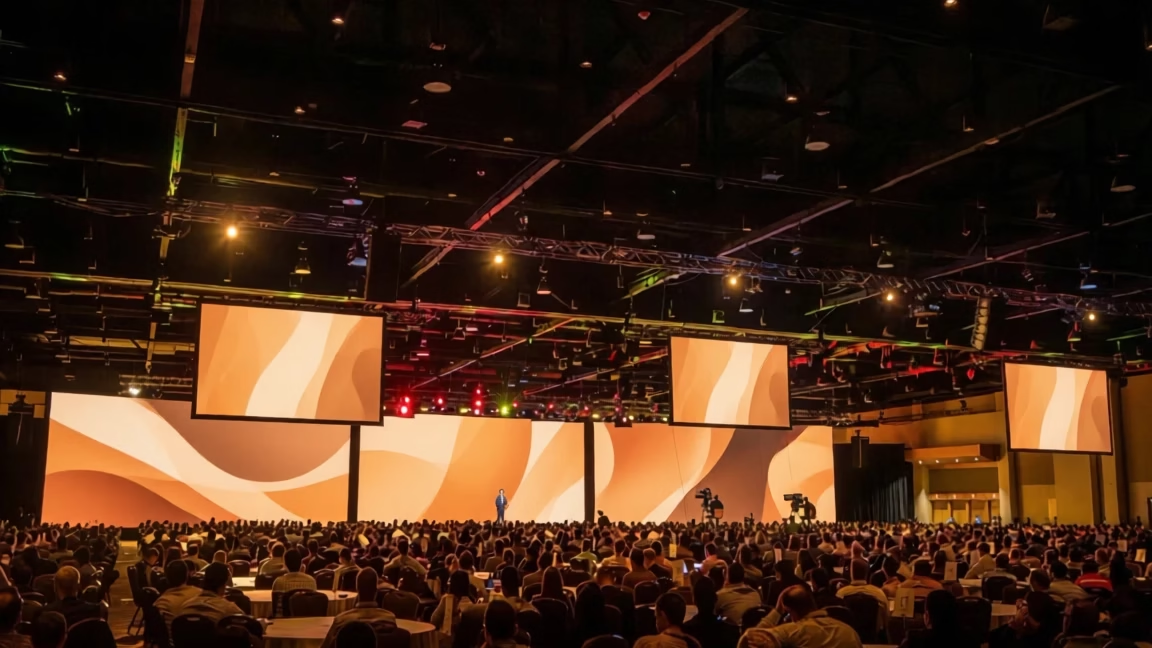
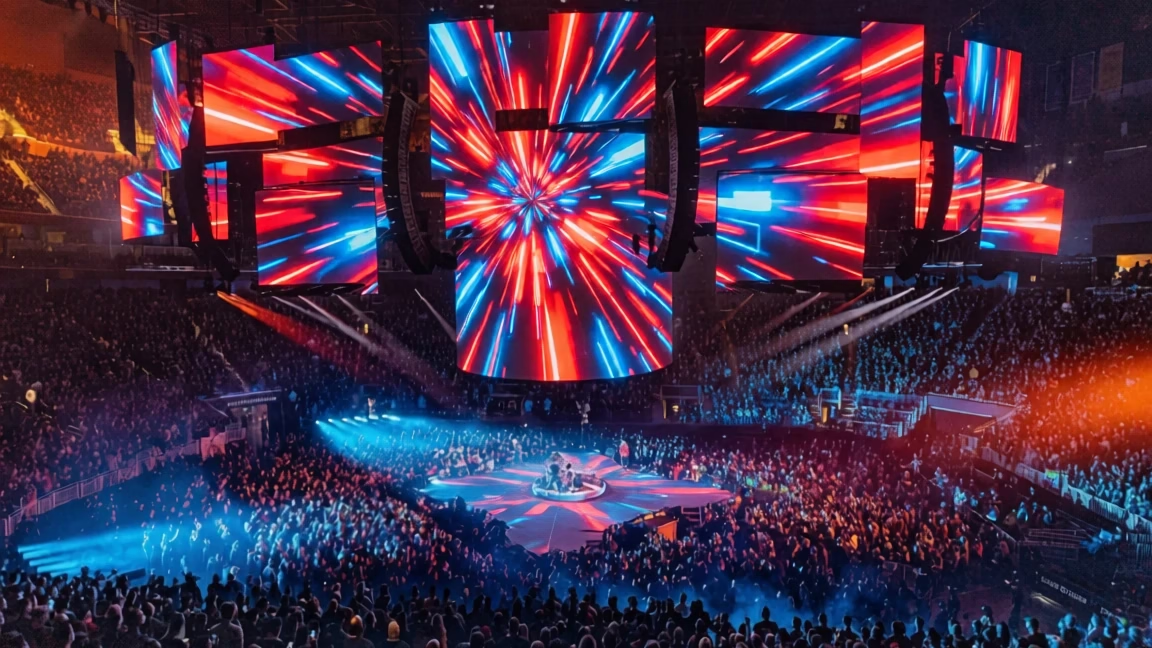
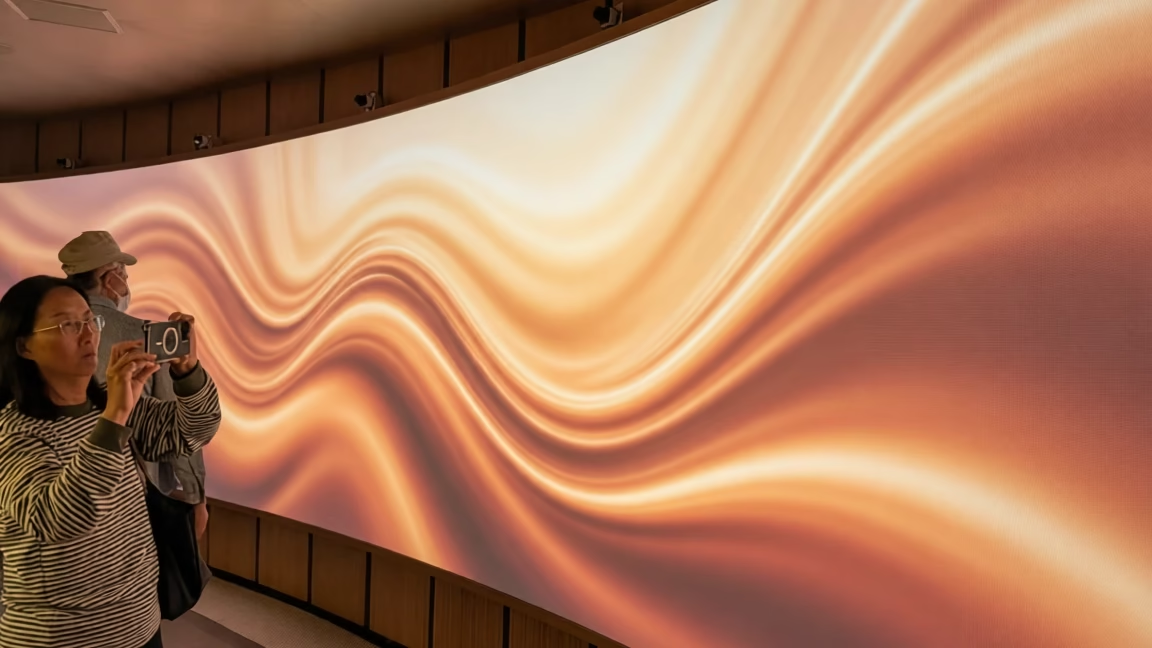
The P3.91 band runs 4–15m — the grand rooms where walls go big, audiences stay far and budgets decide. Eight scenes where this collection is the default answer.


Reference Projects
What Have P3.91 Indoor Rental LED Display Builds Looked Like?
Shipped-and-installed P3.91 projects our production floor has delivered — real walls, real clients:
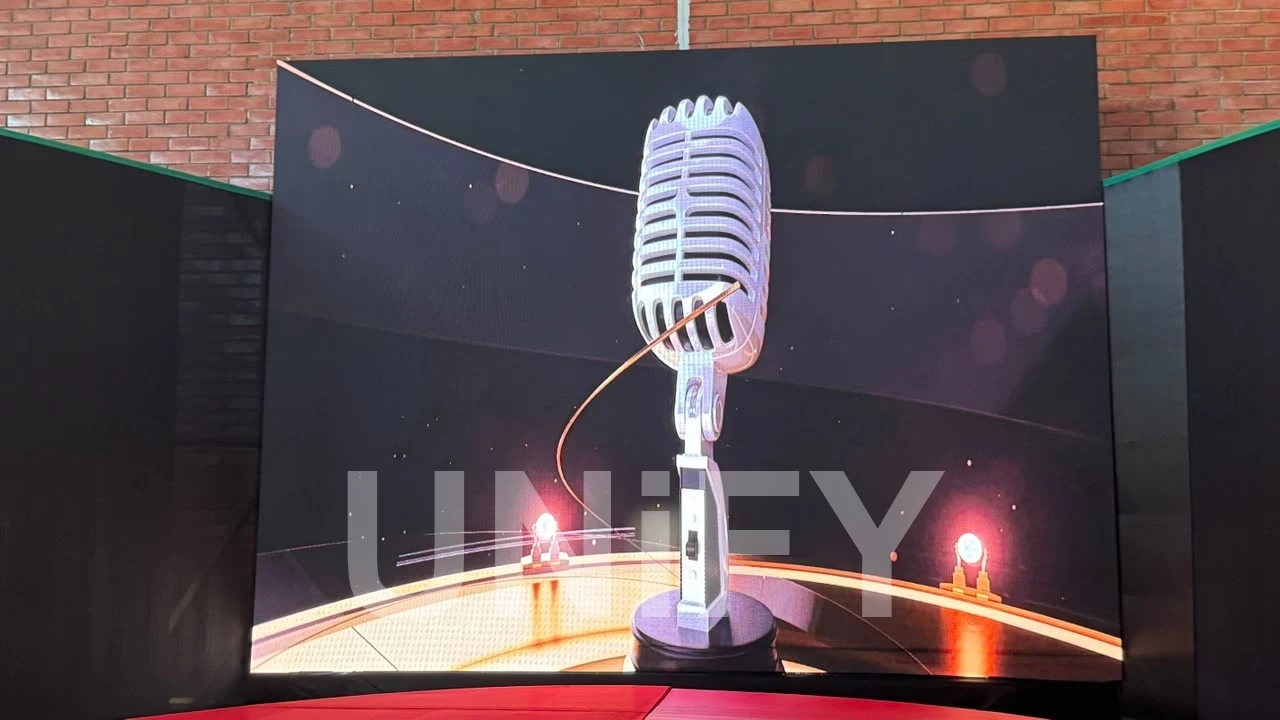
Burkina Faso · R Series
12㎡ · 500×1000 Cabinets
An Indoor R Series wall for a client project in Burkina Faso — twelve 500×1000mm cabinets (96 modules), front-and-rear service and the 3,840Hz tier included.

USA · Hector Project
5 × 4m · 20㎡
A 5×4m wall shipped to Hector in the USA — 80 modules in twenty 500×1000mm cabinets, staged in a theatre-style venue.

Washington USA · DJ Booth
12 × 500×500 Cabinets
The ENOVA Series build: twelve 500×500mm cabinets behind a Washington USA DJ booth — asynchronous playback with cloud publishing for the venue calendar.

Iran · Masoud Aghaie
30㎡ Event Installation
A 30sqm P3.91 wall installed for Masoud Aghaie in Iran — banquet seating facing a full-width stage screen for a corporate celebration.
All four projects above are shipped-and-installed UnifyLED references — ask us for client contacts in your region.
FAQ
P3.91 Indoor Rental LED Display: Frequently Asked Questions
What viewing distance does a P3.91 indoor rental LED display need?
Plan for a minimum of about 4m and a working band of 4–15m. At 3.90625mm pitch and 65,536 pixels per square meter, the wall reads as clean video from roughly four metres out — grand stages, fair halls and community events all sit inside that band. Closer than 4m, step up to P2.976 or finer.
How does P3.91 compare with P2.976 for rental fleets?
P3.91 carries 65,536 px/㎡ against P2.976’s 112,896 — 42% fewer lamps — and prices roughly one tier lower again. Its native 1080p canvas is larger (7.5 × 4.22m), and it trades the always-on 3,840Hz refresh for a two-tier choice, plus sync/async dual control modes. It is the fleet’s volume-and-entry line; the finer pitches cover the camera-close premium jobs.
Should I order 1,920Hz or 3,840Hz refresh?
Match it to the cameras. Rooms without filming run perfectly on the 1,920Hz standard build — that is the band’s floor price. When broadcast, livestream or staged photography is contracted, take the 3,840Hz tier; it is priced as an option on this collection, so you pay for frames only when you shoot frames.
Synchronous or asynchronous control — which do I need?
Both are supported. Synchronous is the strong, stable live path for stages with a switcher and a broadcast day. Asynchronous plays standalone with no PC on site — content pushed from a phone or the cloud — which suits community halls, concourses and any wall that runs a schedule without an operator. Many fleets spec walls that do both: sync rig on show days, async schedule the rest of the week.
What does the 3.8–4.2V energy-saving supply change?
Heat and draw. Dropping the drive rail to 3.8–4.2V — the common-cathode approach — means the driver wastes less voltage as heat, so cabinets run cooler and the wall draws less power for the same brightness. In sealed halls that is the difference between a comfortable room and an HVAC struggle; the technology is explained on our common-cathode page.
How many cabinets make a 1080p P3.91 wall?
A native 1920×1080 image on this pitch is 7.5 × 4.22m — about 31.6㎡. The width works out to exactly fifteen 500mm columns; the height rounds on the cabinet grid to a 7.5 × 4.5m wall (1920×1152 pixels, 60 of the 500×1000mm cabinets), with the processor scaling the small difference.
Front or rear service — which side do crews use?
Either — the modular design serves from both faces. Front access handles show-floor swaps without pulling the wall off the rig; rear access suits warehouses and stacked configurations where the face is blocked. That dual path is one reason value fleets stay on the road instead of in the workshop.
How much does a P3.91 indoor rental LED display cost?
Roughly $500–900 per square meter FOB (2026-09 market listing scan) — about $31–56 per 250×250mm module at 16 modules per square meter. Lamp grade, the 3,840Hz refresh tier and the energy-saving supply move a quote inside that band; the 15-events-a-year buy-vs-rent crossover applies.
Engineering Guide
Why Is P3.91 the Entry Classic of the Indoor Rental Family?
Every rental fleet remembers its first P3.91 wall. The pitch that built the indoor rental industry still moves more cabinets than any finer option — because at 64×64 pixels per module it hits the point where big walls become affordable, and everything about this collection is arranged to keep them that way. This guide walks the four decisions that make the entry classic earn.
The economics of 4,096 dots
At 65,536 lamps per square meter, a P3.91 wall carries 42% fewer lamps than P2.976 and 75% fewer than P1.953 — and lamps are where the money lives. The saving compounds through the whole bill: fewer driver ICs, less current per cabinet, smaller supply rating, lighter transport. On a 60㎡ grand-stage wall that is the difference between quoting $42,000 and quoting $100,000-plus — same coverage, same rigging plan, same audience perception at a 4-metre floor. The viewing distance guide explains why perception flattens beyond 4m: past that line the audience literally cannot spend the difference, so the fleet does.
The pixel grid lands on a coincidence of its own: 256 dots to the metre puts a native 1080p frame at precisely 7.5 metres wide — fifteen cabinet columns with nothing left over. The height needs a half-box trim (4.22m native rounds to 4.5m on the grid, 1920×1152 pixels), but the full-width fit is why P3.91 grand-stage walls look so clean: content designed at 1920 pixels wide lands column-perfect.
Two refresh tiers — a budget lever, not an upsell
Most collections ship one refresh tier and charge for the next. This one makes refresh a specifying decision: the 1,920Hz standard build covers every room without a camera — community halls, trade-fair aisles, concourse walls — at the band’s floor price. The 3,840Hz tier exists for the days a broadcast contract appears, and because it is priced as an option, a fleet can hold a mixed inventory: mostly standard walls, a few high-refresh for the filmed jobs. Ask the question at quote time — “will anyone point a camera at this?” — and the answer sets the tier. Our refresh rate guide covers the shutter math.
Sync, async and the cloud in between
The dual control modes are where this collection quietly out-serves its price class. Synchronous systems take the stage day: strong, stable live video from a switcher, no buffering, broadcast-ready. Asynchronous systems run the other 300 days: no PC on site, content scheduled from a phone or pushed from the cloud, the wall playing its playlist to an empty hall and a Tuesday-morning market alike. Every configuration in the family supports cloud publishing, so a fleet spread across a city updates from one dashboard — and the wall that ran yesterday’s trade fair becomes tomorrow’s community-hall noticeboard without a site visit. The sync vs async guide maps which mode fits which job.
Two supply rails and the mottling fix
Power follows the same both-roads logic. The 5V rail is the classic build; the 3.8–4.2V option applies the common-cathode principle — LED return on a lower rail, less voltage burned as heat — for sealed halls and generator-fed venues, cutting draw for the same brightness with the tech explained on our common-cathode page. Against mottling, the build pairs consistency-selected SMD2121 lamps — binned before assembly so the wall starts even — with per-pixel and per-color correction after it, the two passes that keep a value wall reading as one surface rather than a quilt of panels.
Map the fleet before the first order
A P3.91 fleet earns by covering the volume jobs, so buy the mix the calendar actually shows. Count the past year’s rooms by closest-viewer distance and size: the 4–8m mid-size jobs (18–32㎡) that fill most weekends, the 60㎡ grand stages that anchor the season, the async-schedule installs that rent quietly all month. Standard-walls in 500×1000 cabinets carry the volume; a small high-refresh batch covers the filmed dates; the energy-saving supply suits the installs that run all day. Because every pitch in the family shares the 250×250mm module and 500-series cabinets, the P3.91 fleet also blends with finer-pitch stock on mixed jobs — one spare-module pool, one flight-case family, one crew trained once.
The ownership arithmetic
At $500–900 per square meter FOB, the crossover against $55–110/㎡ daily rental arrives around fifteen event-days a year — and because this is the family’s floor price, it is where most fleets cross. From there the economics only improve: 42% fewer lamps than P2.976 means fewer spares to stock, the modular front-and-rear service means most faults are fixed on site, and the dual control modes mean the same wall earns on show days and on the quiet weeks in between. Send us the room, the wall size and the calendar — the quote comes back module-level with the refresh tier, supply scheme and cabinet mix itemized.
The short version: a P3.91 indoor rental LED display is the entry classic — 65,536 pixels per square meter, clean from 4m out, a 7.5 × 4.22m native 1080p canvas whose width fits fifteen cabinet columns exactly, dual refresh and dual control modes priced as choices rather than traps. It is the pitch that turns a big-wall budget into a big-wall reality.
Related P3.91 Indoor Rental LED Display Resources
P2.604 Indoor Rental LED Display Collection →
P1.953 Indoor Rental LED Display Collection →
500×500mm Rental LED Display Collection →
500×1000mm Rental LED Display Collection →
Rental LED Display Solutions →
Stage LED Backdrop Guide →
LED Screens for Events →
Common-Cathode LED Technology →
LED Screen Maintenance Guide →
Spec Your P3.91 Indoor Rental LED Display With Our Engineers
Send us the room, the wall size and the event calendar. Your quote arrives itemized — lamp grade, refresh tier, supply scheme, cabinet mix, control stack — factory-direct, with 3% spare modules included on every order.
UnifyLED — LED screen manufacturer · unifyledscreen@gmail.com · Changsha / Shenzhen, China
Browse our guides: P2.6 vs P3.91 Rental LED Screen · Rental vs Fixed LED Display
Browse our guides: Panel Weight for Truss Limits