
Outdoor Rental · IP65 · All-Rounder
P2.976 Outdoor Rental LED Display Collection
The all-rounder of the outdoor rental family: the same 250×250mm module at 112,896 pixels per square meter, rebuilt for weather — 4,000–5,000 nits on copper wire, 5,000–6,000 on the gold-wire boost, strictly potted boards, and both 500×500mm and 500×1000mm cabinets in the same IP65 fleet.
Definition
What Is a P2.976 Outdoor Rental LED Display?
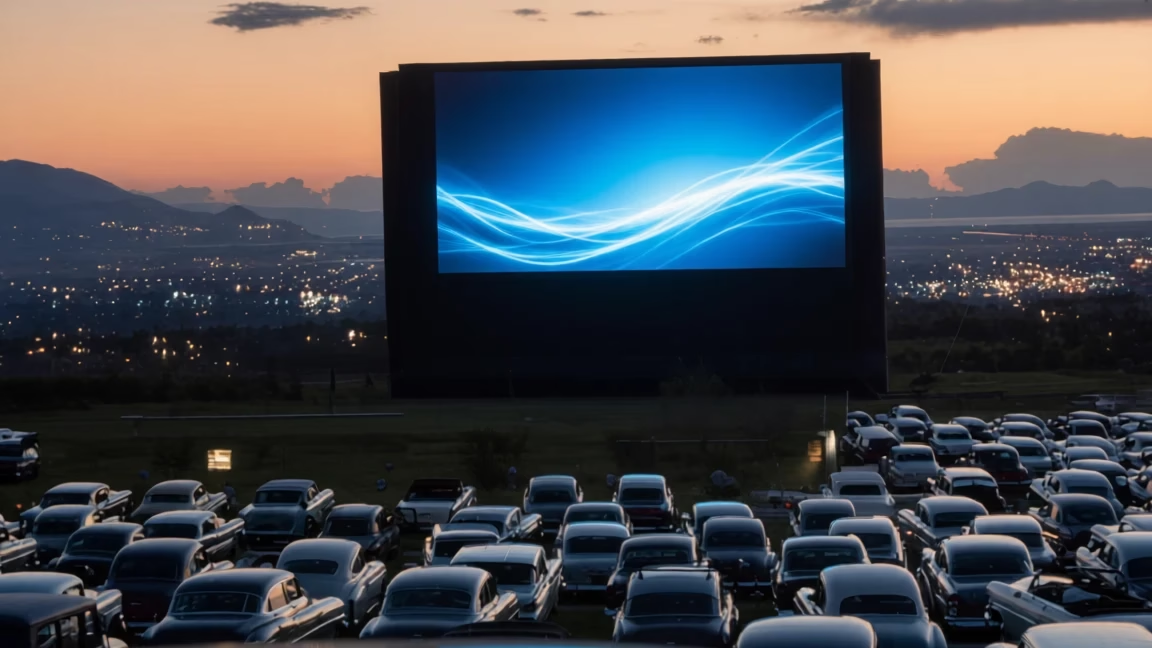
Short answer: A P2.976 outdoor rental LED display is the all-rounder of the outdoor rental family — the same 250×250mm module as its indoor twin at 112,896 pixels per square meter, re-engineered with 4,000–6,000 nits, strictly potted 1.6/2.0mm boards and IP65 cabinets in both 500×500mm and 500×1000mm formats. It is the outdoor wall that does everything: stages, festivals, stadiums and long-run plaza installs.
A P2.976 outdoor rental LED display keeps the indoor twin’s 2.976mm pixel spacing — 336 dots to the metre — and upgrades everything the weather touches. Boards come in 1.6mm or 2.0mm fiberglass with strict waterproof potting on every component; lamps are SMD1921 outdoor-rated packages; and the scan runs 1/14 or 1/21 — both dividing the 84 rows evenly (6 or 4 rows lit), a native match that keeps the wall efficient at 3,840Hz standard refresh. Unlike the single-cabinet outdoor P2.604, this collection ships both cabinet formats sealed and braced.
The buying line is the daylight test. If the wall works outdoors, this build answers with roughly double the indoor twin’s brightness tier for a price below the finer-pitch outdoor P2.604 — 23% fewer lamps per square meter buys the same perceived picture past 3m. Indoors, the P2.976 indoor rental collection carries the same pixels in a lighter cabinet. Our outdoor LED screen guide covers the wider outdoor picture.
Module & Cabinet Builds
Which Module and Cabinet Sizes Does a P2.976 Outdoor Rental LED Display Use?
One production module — 250×250mm — in two IP65-sealed die-cast cabinet formats, the pairing that makes this the all-rounder: the 500×500mm box for flexible fills and the 500×1000mm box for speed at scale, both with strictly potted boards and waterproofed rear service.
The 250×250mm Outdoor Module
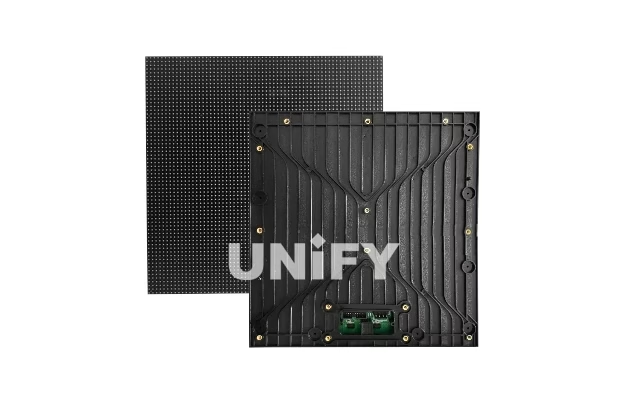
Same geometry as the indoor twin — 84×84 pixels, 7,056 dots — on a strictly potted 1.6/2.0mm board. SMD1921 outdoor lamps, 63 or 96 driver ICs per module depending on the drive scheme, scanned 1/14 or 1/21 — both native even divides of the 84-row grid.
500×500mm Outdoor Cabinet — the Flexible All-Rounder
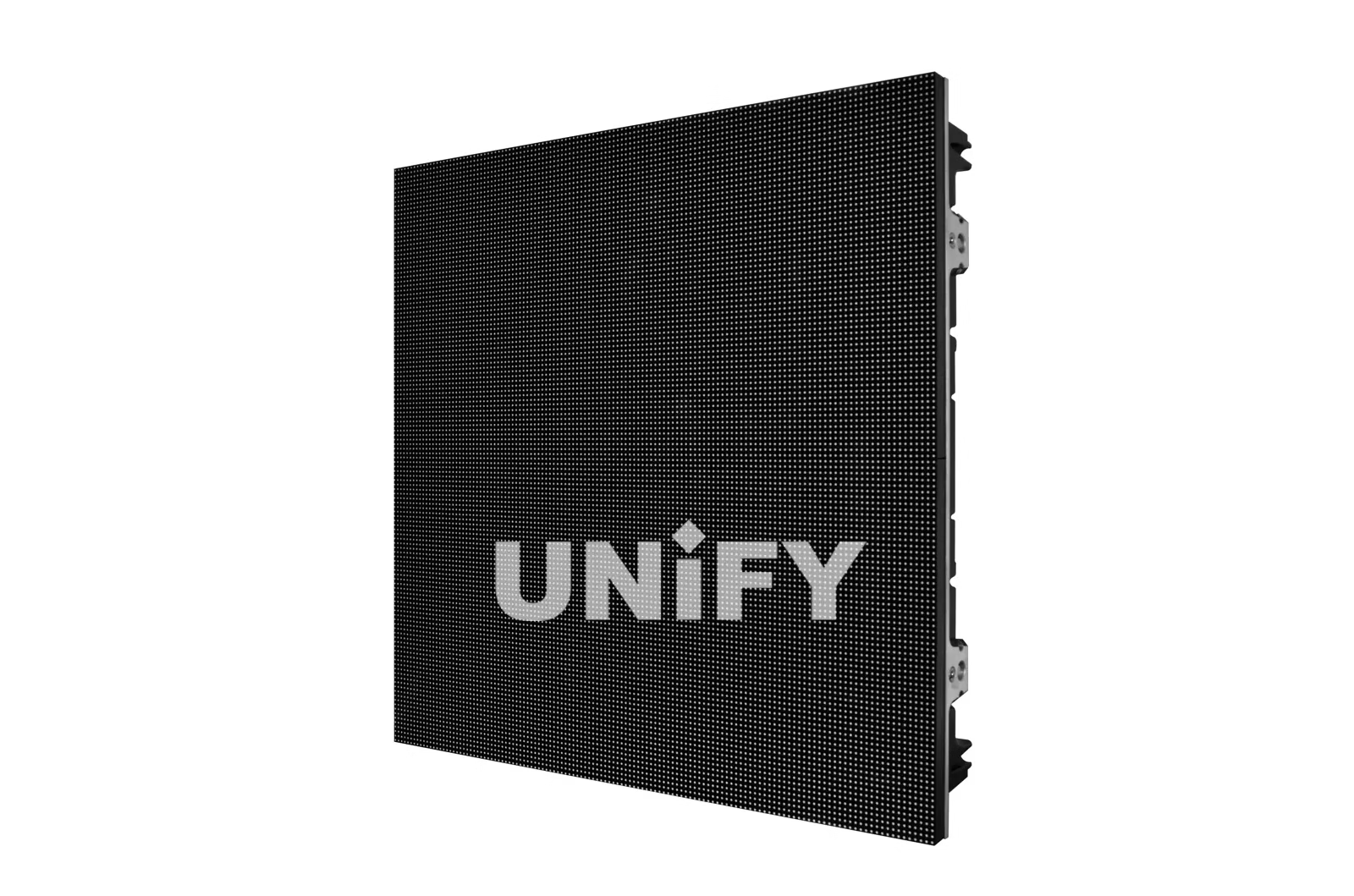
Four modules per box, IP65-sealed die-cast aluminum, waterproofed rear service. The format that fills odd festival footprints and stacks into tight stage wings — every box seals, braces and cases identically across the fleet.
| Parameter | Spec |
|---|---|
| Module Size | 250×250mm |
| Pixel Resolution | 84×84 = 7,056 dots/module |
| Scan Mode | 1/14 or 1/21 scan (both even divides of 84 rows) |
| Driver IC Brands | Chipone (ICND series) / Hongxin high-refresh IC |
| IC Count | 63 or 96 per module (by drive scheme) |
| Lamp | SMD1921 outdoor waterproof — Grade 1 (Nationstar-class) / Grade 2 domestic, tiered at order time |
| Brightness | 4,000–5,000 nits (copper/alloy wire) / 5,000–6,000 nits (gold-wire boost) |
| Maintenance | Waterproof-sealed rear service standard; custom waterproof front service (individually gasketed modules) available |
| Cabinet | 500×500mm outdoor die-cast aluminum, IP65, 4 modules/box, stack + rig |
| Uniformity | Strict wavelength & brightness control with UV-aging resistance + full-wall per-pixel compensation (NovaStar / Colorlight) |
500×1000mm Outdoor Cabinet — Speed at Scale, Sealed
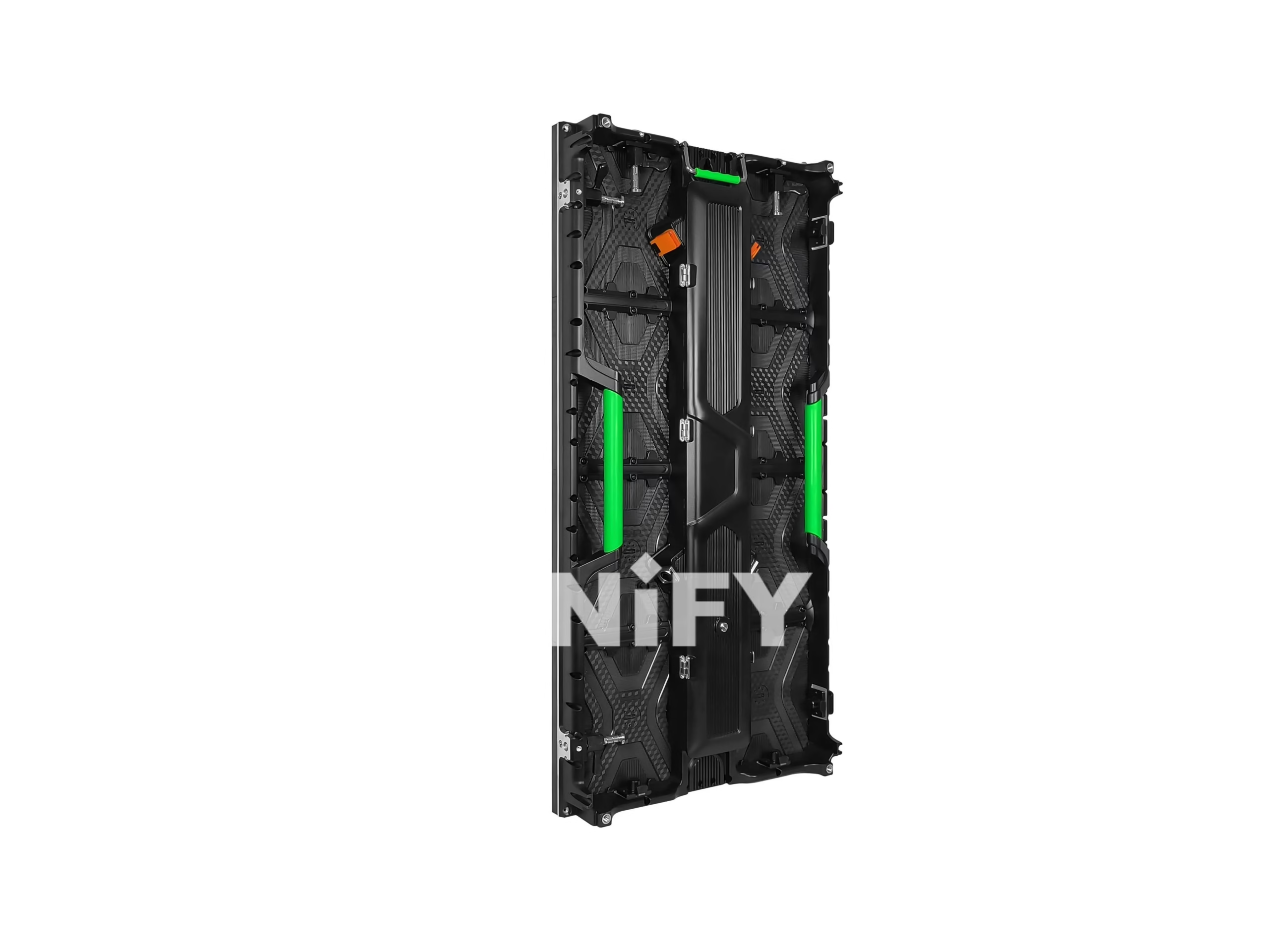
Eight modules per box with the same IP65 stack — the pairing no other outdoor pitch in the family offers at this density. A 10×4m stadium wall is 40 of these boxes: one morning, one crew, one sealing standard end to end.
| Parameter | Spec |
|---|---|
| Module Size | 250×250mm |
| Pixel Resolution | 168×168 per cabinet (28,224 dots) |
| Scan Mode | 1/14 or 1/21 scan |
| Driver IC Brands | Chipone (ICND series) / Hongxin high-refresh IC |
| IC Count | 252 or 384 per cabinet (by drive scheme) |
| Lamp | SMD1921 outdoor waterproof — Grade 1 (Nationstar-class) / Grade 2 domestic, tiered at order time |
| Brightness | 4,000–5,000 nits (copper/alloy wire) / 5,000–6,000 nits (gold-wire boost) |
| Maintenance | Waterproof-sealed rear service standard; custom waterproof front service (individually gasketed modules) available |
| Cabinet | 500×1000mm outdoor die-cast aluminum, IP65, 8 modules/box, ground stack or flown |
| Uniformity | Strict wavelength & brightness control with UV-aging resistance + full-wall per-pixel compensation (NovaStar / Colorlight) |
Weatherproof Build
How Is a P2.976 Outdoor Rental Wall Built to Survive Weather?
The boards are the fortress: 1.6mm or 2.0mm fiberglass with strict waterproof potting on every component — a poured seal that leaves no path for water even after seasons of thermal cycling. Lamps are SMD1921 outdoor-rated packages, binned to Grade 1 (Nationstar-class) or Grade 2 domestic stock, and the whole face is tuned for UV-aging resistance: wavelength and brightness are controlled at selection so the wall’s color point survives a summer of sun, with full-wall per-pixel compensation through NovaStar or Colorlight equipment holding it there.
Maintenance follows the weather too: waterproof-sealed rear service is the standard path, and a custom waterproof front service — each module individually gasketed — is available for rigs where the face must be serviced from the platform. The 3,840Hz high refresh is standard, holding the wall clean on camera through the brightest daylight slots. Our IP rating guide and maintenance guide cover the standards behind the seals.
Power & Thermal
How Much Power Does a P2.976 Outdoor Rental LED Display Use?
Brightness sets the budget: 4,000–6,000 nits is the outdoor working band, roughly double the indoor twin’s ceiling, so supply capacity plans to the outdoor number. Every supply in the fleet is a fully waterproofed, rain-rated unit — sealing is a property of the power system itself, not an afterthought. The power consumption guide carries the wattage arithmetic by brightness tier.
| Supply Brand | Typical Rail | Role in the Cabinet |
|---|---|---|
| Chuanglian Power | 5V | Rental-fleet standard; fully waterproofed outdoor units for the 500-series shell |
| MEAN WELL | 5V | Specifier-preferred option where brand approval is written into the tender |
| G-Energy | 5V | High-efficiency line for the 5,000–6,000 nits gold-wire build |
All three brands mount in the same tray in rain-rated form, so a fleet can standardize on one or mix by tender without touching the cabinet design.
Control Stack
Which Control Systems Drive a P2.976 Outdoor Rental LED Display?
Synchronous control leads: a sending system pushes live video frame-by-frame to the receiving card in every cabinet, and the architecture hooks directly into any video splicer/processor for multi-screen shows. Fiber-optic runs carry the signal long distances — festival main stage to delay tower without loss — and cloud publishing manages schedules across the fleet. Senders and receiving cards stay on one platform per wall.
NovaStar

The 4K-class NovaStar MCTRL4K sender drives big outdoor walls with hardware calibration and fiber long-haul options.
Colorlight

The Colorlight Z6 Pro-class processors pair with per-cabinet receiving cards for stable outdoor loading and cloud fleet management.
Huidu

Three-in-one processors such as the Huidu HD-VP620 pack sending, processing and playback in one flight case for corporate outdoor rigs.
Mooncell

The creative-class Mooncell B1200S controller handles irregular outdoor builds with automatic recovery for weekly-moving fleets.
VDWALL

The VDWALL LVP605 series remains the processor most rental techs learned on — scaling and switching with deep parts availability.
RGBlink

The RGBlink X2 multi-output processor scales and switches outdoor stage content without crowding the rack.
Comparison
P2.976 Outdoor or Indoor — Which Twin Does Your Job Need?
Twins by module and pixel math, different by weather envelope. The tables settle which twin, then place both in the family.
1) The twin decision — six dimensions
| Dimension | P2.976 Outdoor (this page) | P2.976 Indoor |
|---|---|---|
| Pixel density | 112,896 px/㎡ (identical) | 112,896 px/㎡ (identical) |
| Brightness | 4,000–5,000 / 5,000–6,000 nits | 800–1,000 / 1,000–1,200 nits |
| Weather protection | IP65, strict potting, rain-rated supplies | Indoor build, no sealing |
| Lamp package | SMD1921 outdoor waterproof | SMD1515 / SMD2121 |
| Scan / signal | 1/14 or 1/21; fiber long-haul + cloud | 1/32 or 1/26; gigabit copper |
| Price per ㎡ | $550–950 — bigger lamps, lower cost | $700–1,100 |
When to choose which:
- Sun, rain or a touring calendar — the outdoor twin; the indoor build has no sealing to give.
- Sealed halls, worship rooms, conference centers — the indoor twin; you save the sealing and get the finer lamp finish.
- Long signal runs — stage-to-delay-tower fiber is an outdoor-twin architecture.
- One fleet for both worlds — many operators run the two twins side by side: same pixel math, two envelopes, zero re-training.
2) Route by viewing distance and venue
| Condition | Right Product |
|---|---|
| Outdoors, sun on the face, 3m+ | This P2.976 outdoor collection |
| Outdoors, finer detail needed, budget open | P2.604 outdoor rental |
| Indoors, 3–10m, no weather | P2.976 indoor rental |
| Outdoors, budget first, beyond 5m | P3.91 outdoor rental / P4 / P5 outdoor |
3) Where P2.976 Outdoor sits in the pitch family
| Pixel Pitch | Pixel Density | Smallest 1080p Wall | Min Viewing Distance |
|---|---|---|---|
| P1.5 | 444,444 px/㎡ | 2.88 × 1.62m | 1.5m |
| P1.8 | 308,642 px/㎡ | 3.46 × 1.94m | 1.8m |
| P1.953 indoor rental | 262,144 px/㎡ | 3.75 × 2.11m | 2m |
| P2.604 indoor rental | 147,456 px/㎡ | 5.00 × 2.81m | 2.6m |
| P2.604 outdoor rental | 147,456 px/㎡ | 5.00 × 2.81m | 2.6m |
| P2.976 indoor rental | 112,896 px/㎡ | 5.71 × 3.21m | 3m |
| P2.976 outdoor — this page | 112,896 px/㎡ | 5.71 × 3.21m | 3m |
| P3.91 indoor rental | 65,536 px/㎡ | 7.50 × 4.22m | 4m |
| P2.5 outdoor | 160,000 px/㎡ | 4.80 × 2.70m | 2.5m |
| P3 outdoor | 111,111 px/㎡ | 5.76 × 3.24m | 3m |
| P4 outdoor | 62,500 px/㎡ | 7.68 × 4.32m | 4m |
| P5 outdoor | 40,000 px/㎡ | 9.60 × 5.40m | 5m |
| P6 outdoor | 27,778 px/㎡ | 11.52 × 6.48m | 6m |
Pricing
How Much Does a P2.976 Outdoor Rental LED Display Cost?
Short answer: market listings for P2.976 outdoor rental walls price at roughly $550–950 per square meter FOB (2026-09 market listing scan) — below the finer outdoor P2.604, because 23% fewer lamps per square meter outweighs the weatherproofing bill. At 16 modules per square meter that is about $34–59 per 250×250mm module.
What moves a quote inside that band:
- Lamp grade. Grade 1 Nationstar-class SMD1921 sits at the top; Grade 2 domestic stock moves the price down without changing geometry.
- Brightness tier. The 5,000–6,000 nits gold-wire boost costs more than the 4,000–5,000 nits copper base — main stages take the boost.
- Drive scheme. The 96-IC configuration prices above the 63-IC standard; both scan the same grid evenly.
- Cabinet format mix. 500×1000mm-heavy packages land lower per square meter on large simple walls.
- Order size. Volume pricing typically opens above 50㎡.
Buying vs renting — the market arithmetic: rental rates run $55–110/㎡ per day for the screen alone, $125–195/㎡ full-service (2026-09 market breakdown); around 15 event-days a year is where buying wins.
Worked example: a 10×4m stadium wall (40㎡) at band midpoint lands near $30,000 FOB — 640 modules in 80 of the 500×1000mm cabinets, or 160 of the 500×500mm ones. The screen size guide and our engineers will sanity-check the count.
Applications
Where Does a P2.976 Outdoor Rental LED Display Deliver the Most Value?
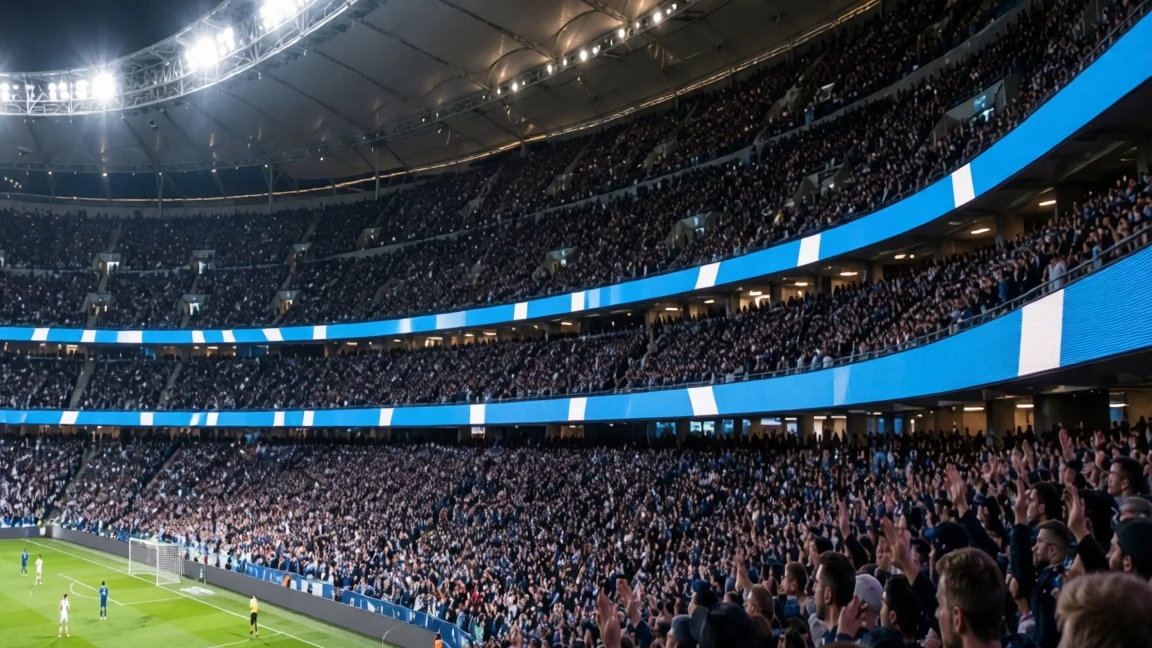
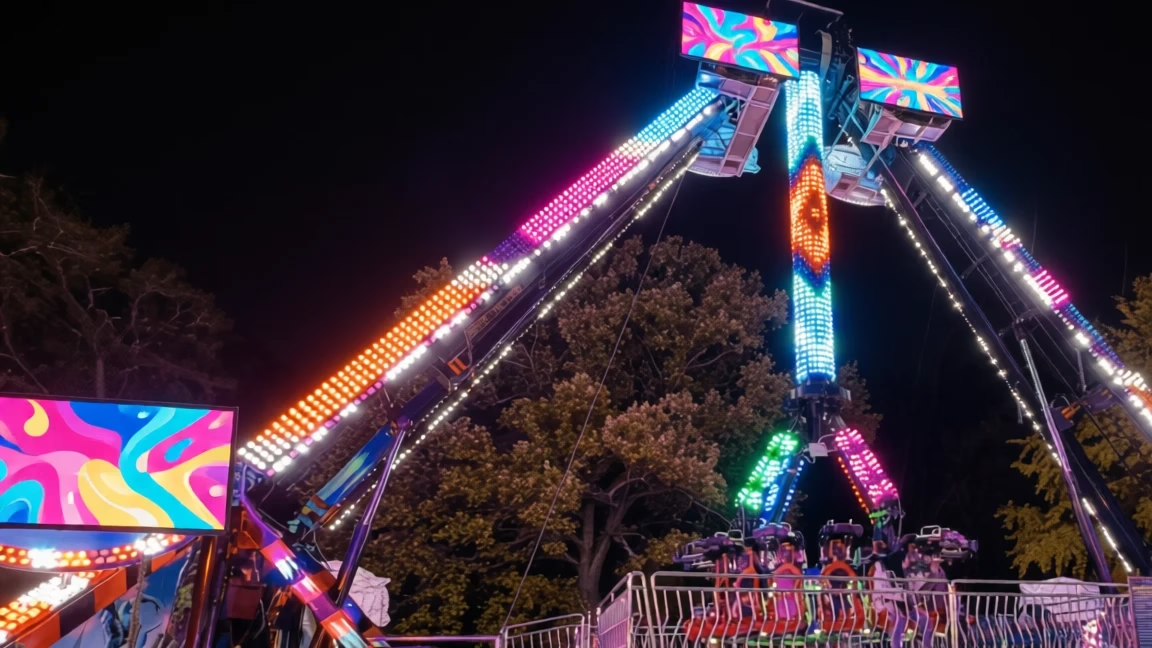
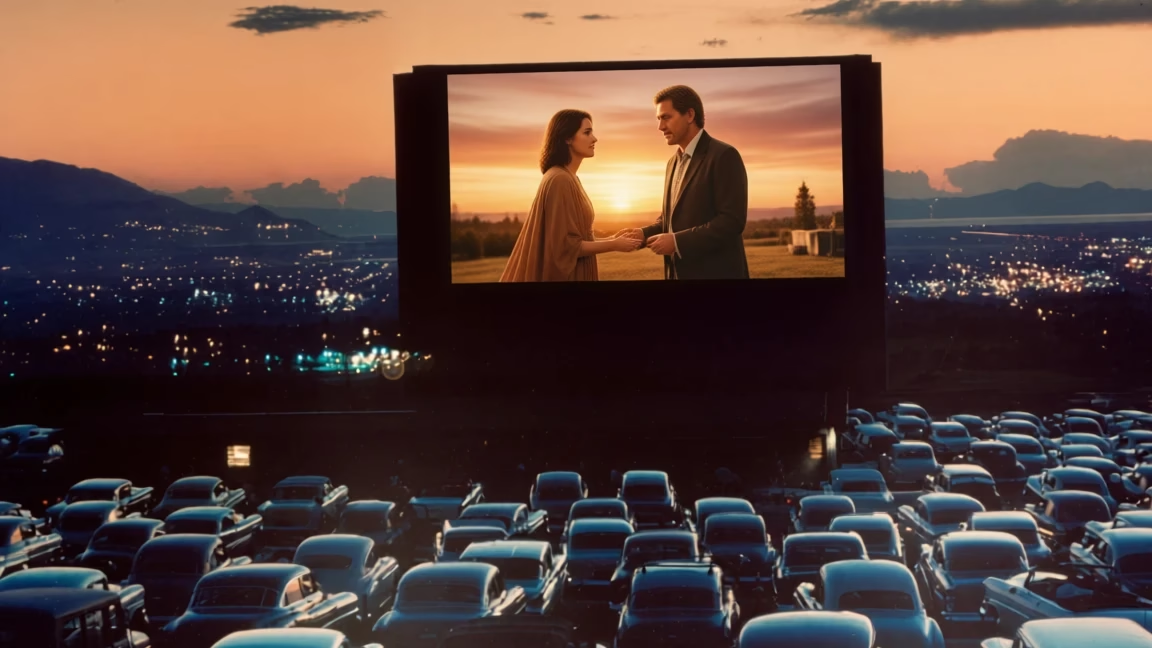
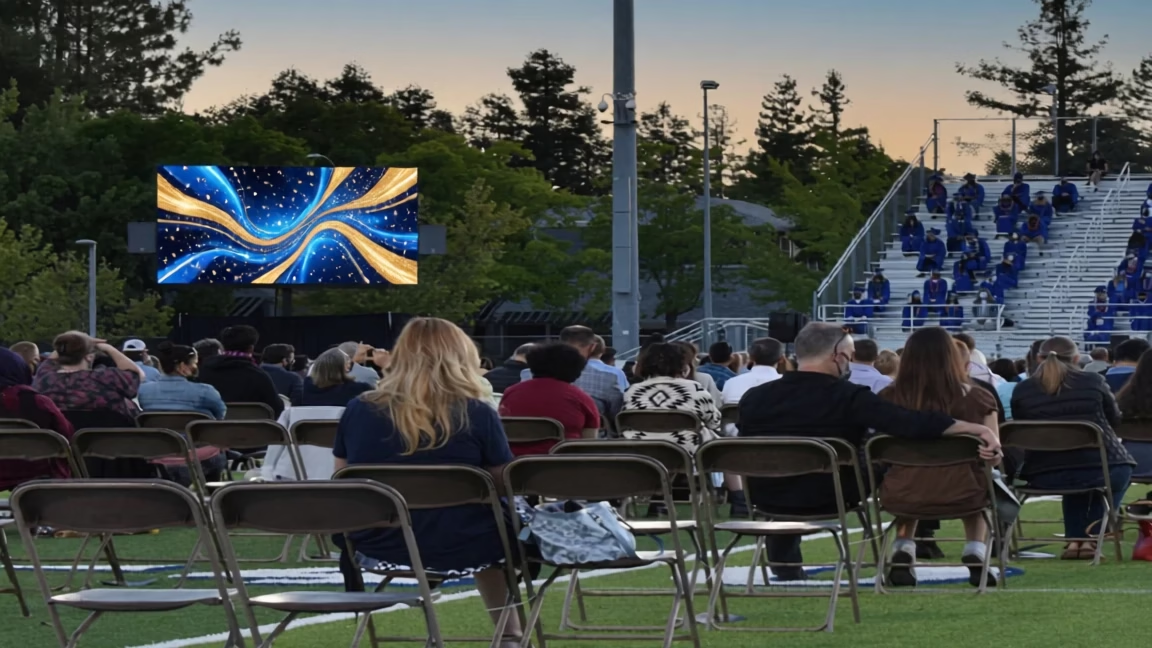
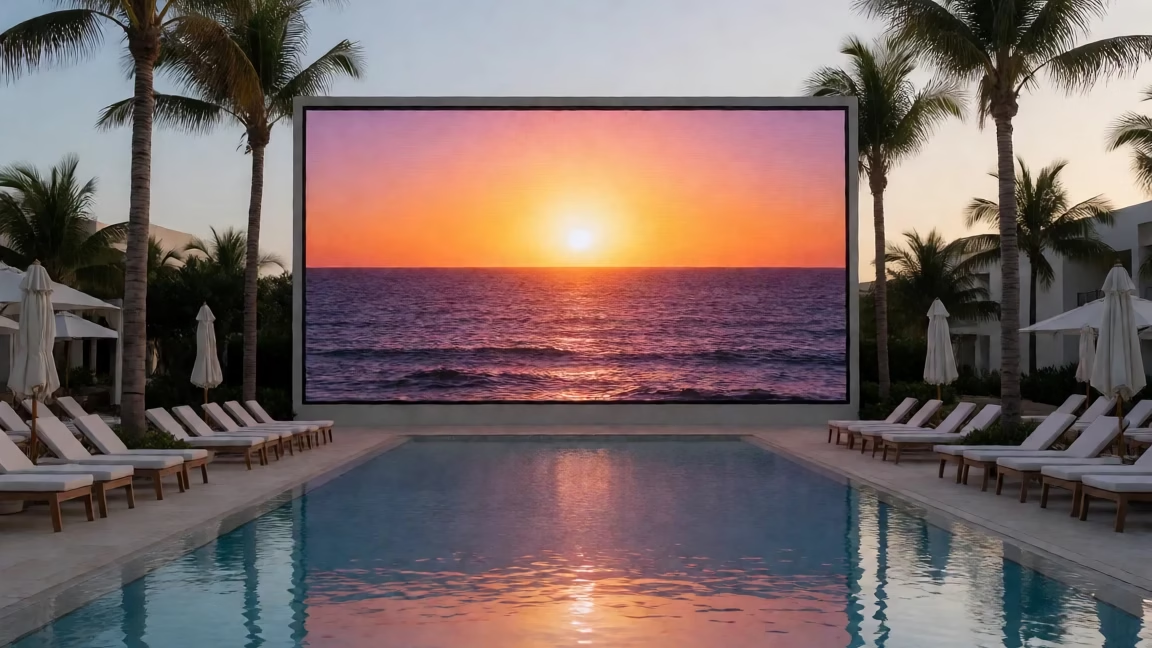
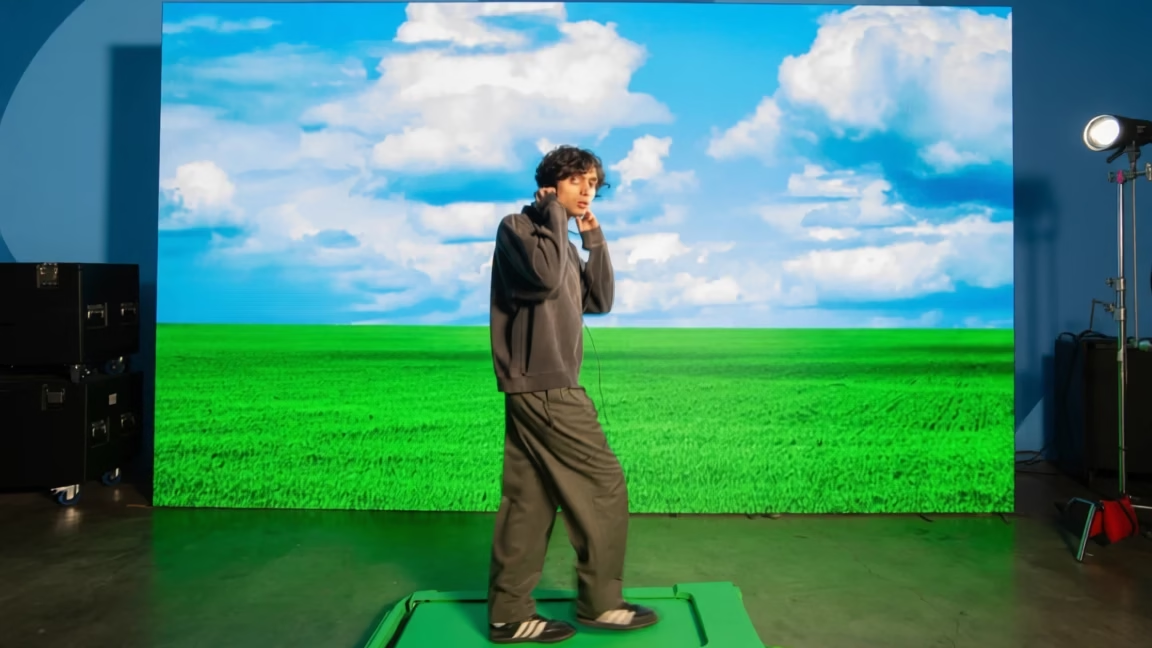
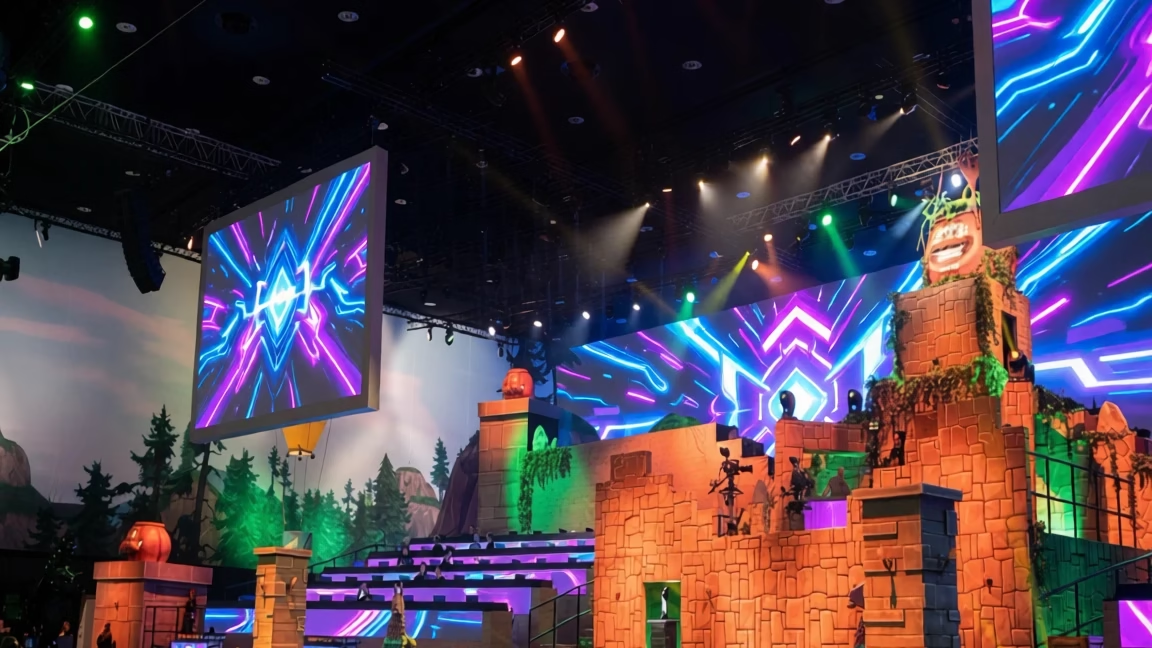
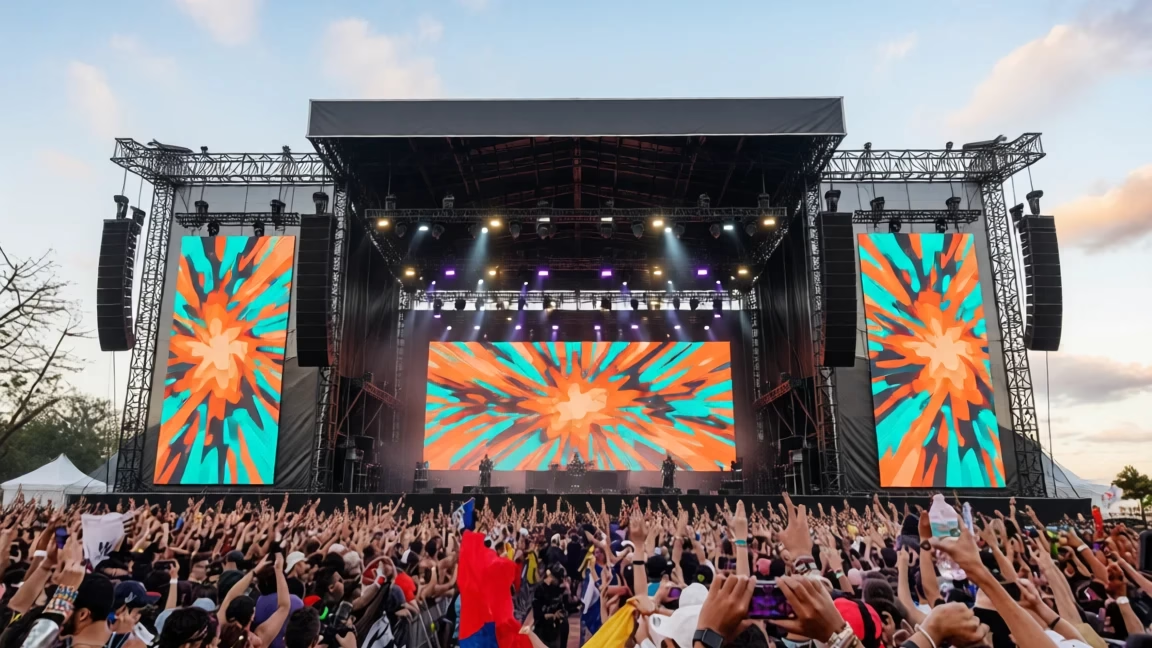
The all-rounder’s band: outdoor rooms from 3m out, any weather, any shape — the eight scenes where this collection is the default answer.
Reference Projects
What Have P2.976 Outdoor Rental LED Display Builds Looked Like?
Reference configurations our production floor has shipped in this spec — the outdoor packages our crews load most often:
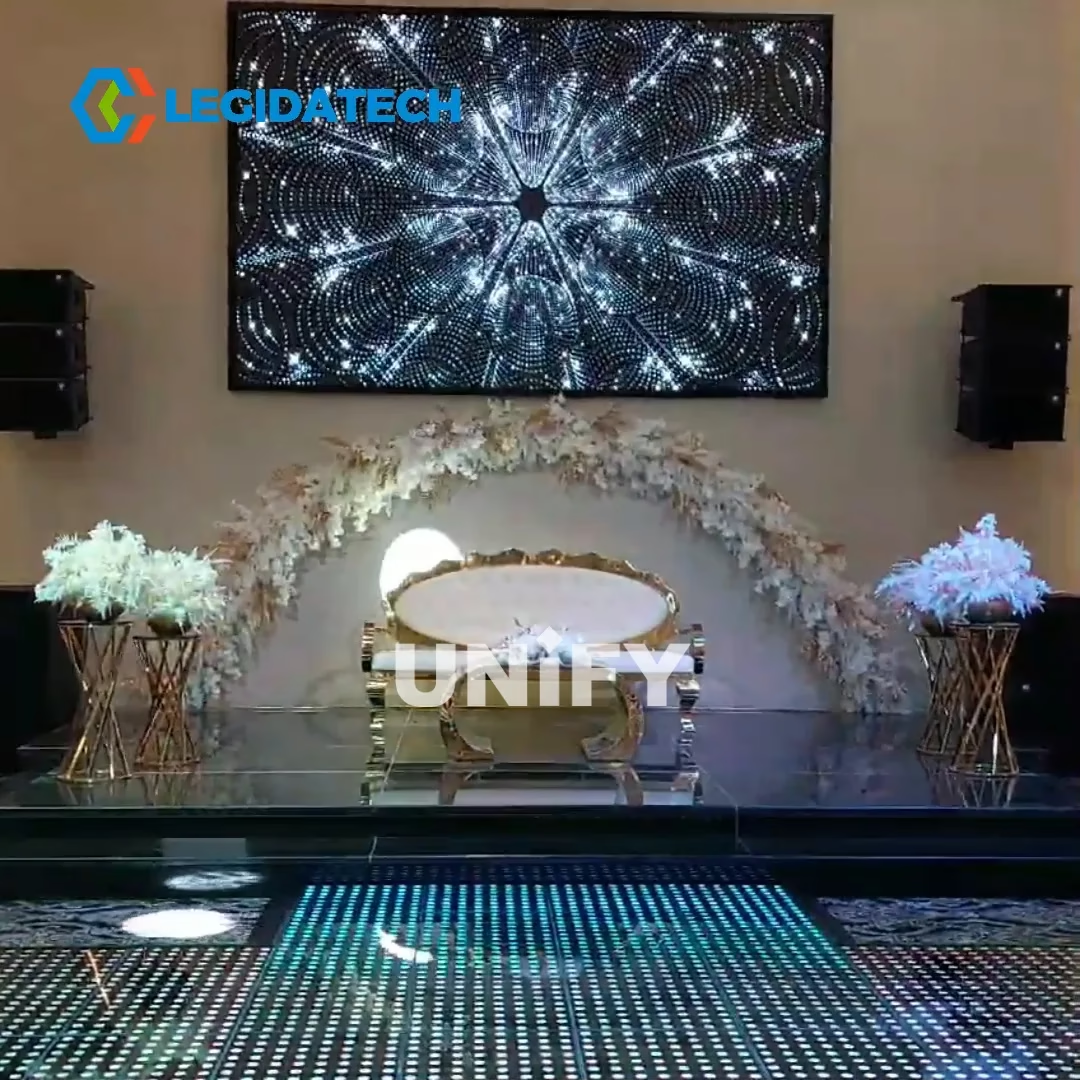
Jordan · H Series
H Series Rental Build
An H Series P2.976 rental build delivered in Jordan — the same 250×250mm modules from the IP65 outdoor fleet, supporting stage and floor applications.
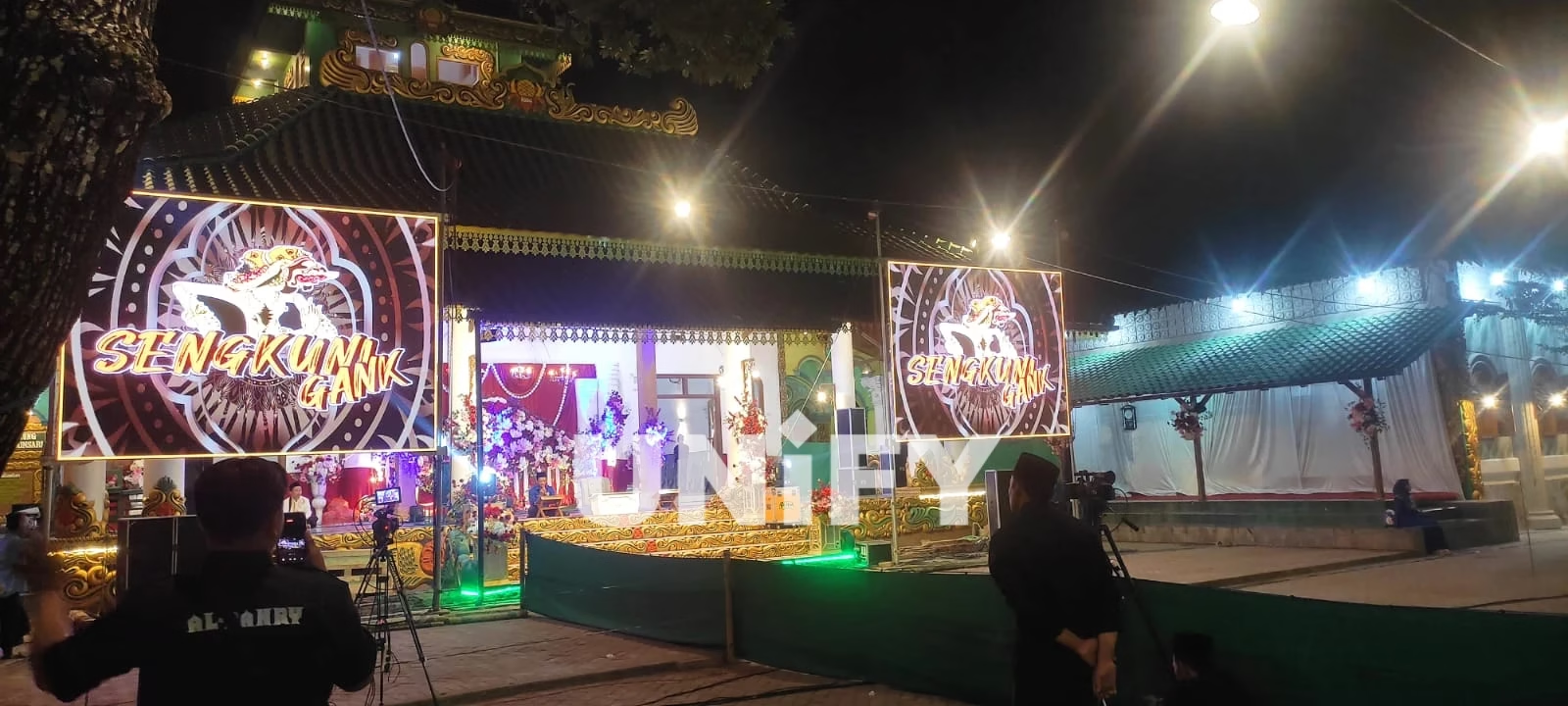
Indonesia · Curved Metastar 36㎡
36㎡ Curved · Night Event
Twin curved Metastar walls running a 36sqm outdoor night event in Indonesia — the IP65 fleet held the stage through the full program.
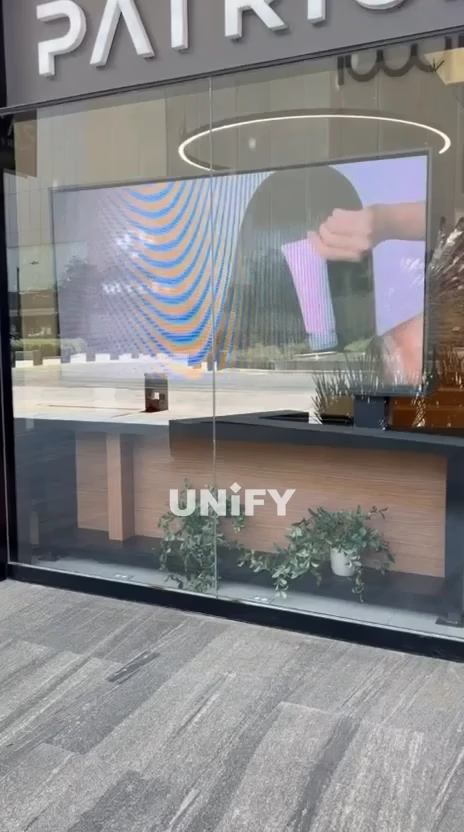
Mexico · R Series 21m
R Series · 21m Outdoor
A 21-metre R Series outdoor rental run in Mexico — showroom-window application, rigged and sealed for continuous outdoor duty.
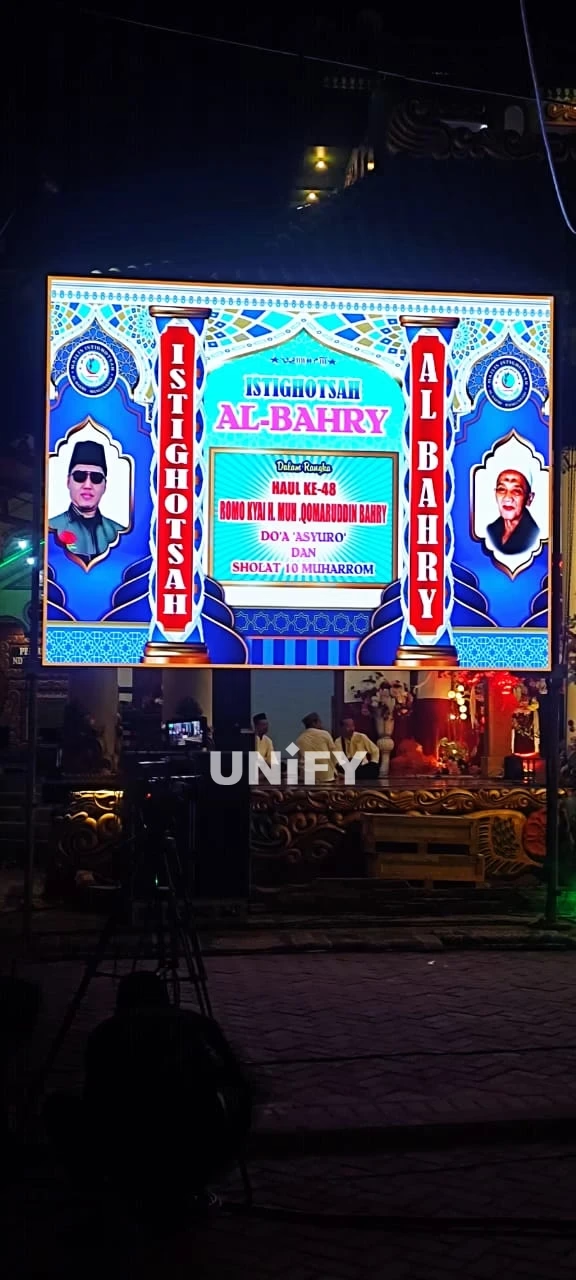
Indonesia · Ari Curved 36㎡
36㎡ Curved · EX202506003
A 36sqm curved Metastar build (EX202506003) delivered for Ari in Indonesia — curved-lock geometry from the standard outdoor fleet.
Named project case studies with site photography follow once client sign-offs clear — ask us for references in your region meanwhile.
FAQ
P2.976 Outdoor Rental LED Display: Frequently Asked Questions
What viewing distance does a P2.976 outdoor rental LED display need?
The pixel floor is about 3m — the same as its indoor twin, at 112,896 pixels per square meter — but outdoor walls are usually read from farther out in full sun, which is what the 4,000–6,000 nits brightness buys. Festival fields, stadium bowls and plaza crowds all sit comfortably in the 3–15m working band.
How does the P2.976 outdoor compare with the P2.976 indoor twin?
Identical pixels, different envelope. The outdoor build roughly doubles the brightness ceiling (4,000–6,000 vs 800–1,200 nits), seals everything IP65 with potted boards and rain-rated supplies, swaps the lamp to SMD1921, and adds fiber long-haul plus cloud publishing — and it quotes below the indoor twin, because the larger outdoor lamps cost less. Pick by weather, never by quality.
Why does the outdoor twin offer 1/14 and 1/21 scan?
Because both divide the 84-row grid evenly — 6 rows lit at 1/14, 4 rows at 1/21 — and each scheme pairs with a different driver-IC count (63 or 96 per module). Fleets can match scan to the control platform they already run without accepting an uneven multiplex, which is what keeps the wall cool and flicker-free at 3,840Hz.
Should I spec 4,000–5,000 nits or the 5,000–6,000 nits tier?
Match the sun exposure. The copper-wire 4,000–5,000 nits build covers overcast climates, shaded rigs and evening-heavy programs. The gold-wire 5,000–6,000 nits boost is for main stages with direct sun on the face — the slots where a wall either reads or disappears.
What does “strict waterproof potting” mean in practice?
Every driver component on the board is encapsulated in a poured compound — not just surface-coated — so water has no path to the circuit even if a gasket ages. Combined with IP65 cabinets and rain-rated power supplies, it is the difference between a wall that tolerates weather and one that is built around it.
Can the signal reach a delay tower without loss?
Yes — fiber-optic long-haul is part of this collection’s control architecture. Festival main stage to delay tower, or venue wall to truck, runs over fiber without quality loss, and cloud publishing keeps the schedule synced across every wall on site from one dashboard.
How many cabinets make a 1080p P2.976 outdoor wall?
A native 1920×1080 image on this pitch is 5.71 × 3.21m — about 18.4㎡. On the 500mm cabinet grid that usually rounds to a 5.5 × 3.5m or 6 × 3.5m wall (2016×1176 pixels at 6×3.5m, 42 of the 500×1000mm cabinets), with the processor scaling the small difference. The screen size guide works out any target.
How much does a P2.976 outdoor rental LED display cost?
Roughly $550–950 per square meter FOB (2026-09 market listing scan) — about $34–59 per 250×250mm module at 16 modules per square meter. Lamp grade, the gold-wire brightness tier, the 96-IC drive scheme and cabinet-format mix move a quote inside that band; the 15-events-a-year buy-vs-rent crossover applies.
Engineering Guide
Same Pitch, Two Lives — How Do You Choose Between the Indoor and Outdoor P2.976 Rental Twins?
The indoor and outdoor P2.976 twins share everything geometric — the same 250×250mm module, the same 112,896 pixels per square meter, the same 5.71 × 3.21m native 1080p canvas. What differs is everything the weather touches, and the differences are the whole decision. This guide walks the walkthrough our engineers run with clients choosing between them.
Brightness is the first question, sealing is the second
Ask where the sun will be. An indoor wall tops out around 1,200 nits because the room caps ambient light; outdoors, direct sun measures tens of thousands of lux, and the outdoor twin answers with 4,000–5,000 nits on copper wire or 5,000–6,000 on the gold-wire boost — roughly double the indoor ceiling at the base tier. If daylight ever hits the face, the indoor build is not an option at any price; if it never does, the outdoor build is paying a sealing and brightness bill for a room that never rains. That is the entire decision in one question, and the price table makes the honest answer cheap: the outdoor twin quotes $550–950 per square meter against the indoor twin’s $700–1,100, because the larger SMD1921 lamps cost less than micro packages even after the waterproofing bill.
Sealing runs deeper than a gasket on this collection. The boards — 1.6mm or 2.0mm — carry strict waterproof potting on every component, the lamps are SMD1921 outdoor packages, and the power supplies themselves are rain-rated units rather than indoor supplies tucked behind a cover. Maintenance splits the same way: waterproof-sealed rear service is the standard path, and a custom front-service option with individually gasketed modules exists for rigs that must service from the platform. Our IP rating guide explains what the numbers guarantee.
Two scans, both native: the 84-row dividend
The 84-row grid gives this collection an unusual flexibility: it scans 1/14 (6 rows lit) or 1/21 (4 rows lit), and both divide evenly — no uneven multiplexing, no hot rows, no forced ratio. Each scheme pairs with its own driver-IC count, 63 or 96 per module, so a fleet can match the scan to the control platform it already standardizes on without giving up efficiency. At either scan the wall holds 3,840Hz standard refresh — flicker-free on broadcast cameras and on the crowd’s phones — because the scan was designed around the geometry rather than forced onto it. When a supplier quotes this pitch with a scan that does not divide 84, ask what the uneven rows are doing to your heat map.
Fiber, splicers and the long haul
Outdoor shows spread out. The main stage sits 200 metres from the delay towers; the truck parks where the cable plan allows; the plaza wall reports to an office across the site. This collection’s control architecture is built for that geography: synchronous senders drive the wall live, hook directly into any video splicer or processor for multi-screen shows, and ride fiber-optic long-haul runs without loss — the stage-to-tower link that copper gigabit cannot make. Cloud publishing then manages the quieter weeks, pushing schedules from a dashboard to every wall in the fleet. One platform covers the show day and the season.
The ownership arithmetic
At $550–950 per square meter FOB against $55–110/㎡ daily rental rates, the fifteen-event crossover lands early — and the two-cabinet fleet makes the owned inventory work harder: 500×500mm boxes fill the odd footprints, 500×1000mm boxes speed the big simple walls, and both seal identically. A 10×4m stadium wall (40㎡) at band midpoint lands near $30,000 FOB — 640 modules in 80 of the long cabinets, with 3% spare modules in the same flight-case family. Send us the venue, the wall size and the weather it must survive, and the quote comes back module-level with the brightness tier, scan scheme and cabinet mix itemized.
The short version: a P2.976 outdoor rental LED display is the family’s all-rounder — 112,896 pixels per square meter at 4,000–6,000 nits, IP65 in both cabinet formats, potted boards and rain-rated supplies, dual native scans and fiber long-haul — at a price below its finer outdoor sibling and below its own indoor twin. Choose by weather; the pixels are already identical.
Related P2.976 Outdoor Rental LED Display Resources
P2.604 Outdoor Rental LED Display Collection →
P3.91 Outdoor Rental LED Display Collection →
500×500mm Rental LED Display Collection →
500×1000mm Rental LED Display Collection →
Outdoor LED Screen Guide →
IP Rating Guide →
Sync vs Async LED Control →
LED Screens for Events →
Outdoor LED Screen Price Guide →
Spec Your P2.976 Outdoor Rental LED Display With Our Engineers
Send us the venue, the wall size and the weather it must survive. The quote comes back itemized — lamp grade, brightness tier, scan scheme, cabinet mix, control stack — factory-direct, with 3% spare modules in every order.
UnifyLED — LED screen manufacturer · unifyledscreen@gmail.com · Changsha / Shenzhen, China