
NovaStar VX4S-N — The Complete B2B Buyer’s Guide
Published July 2026 · UnifyLED Engineering Team · 13 min read
1. Why the VX4S-N Replaced the VX4S — And What Changed
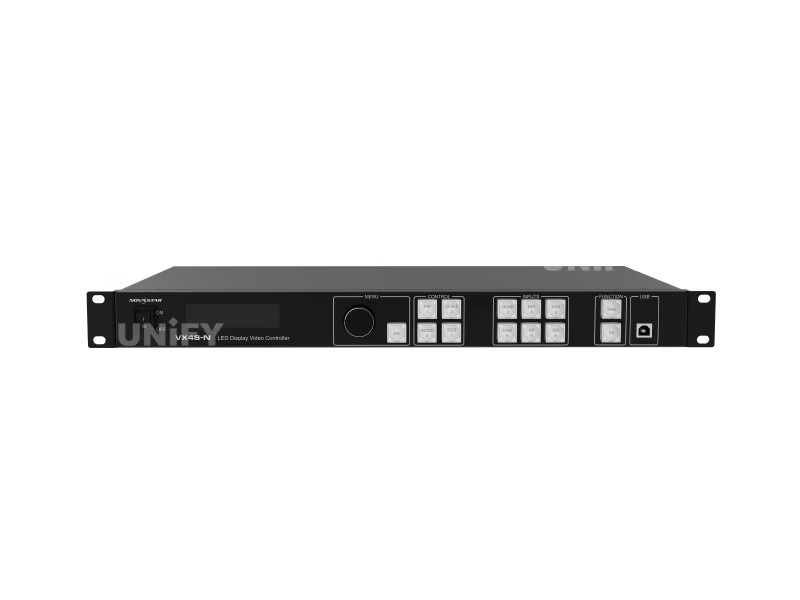
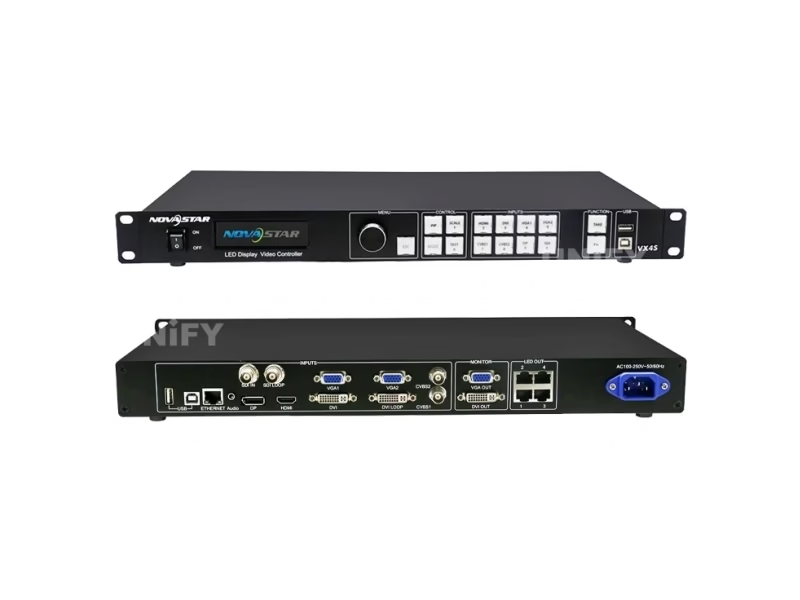
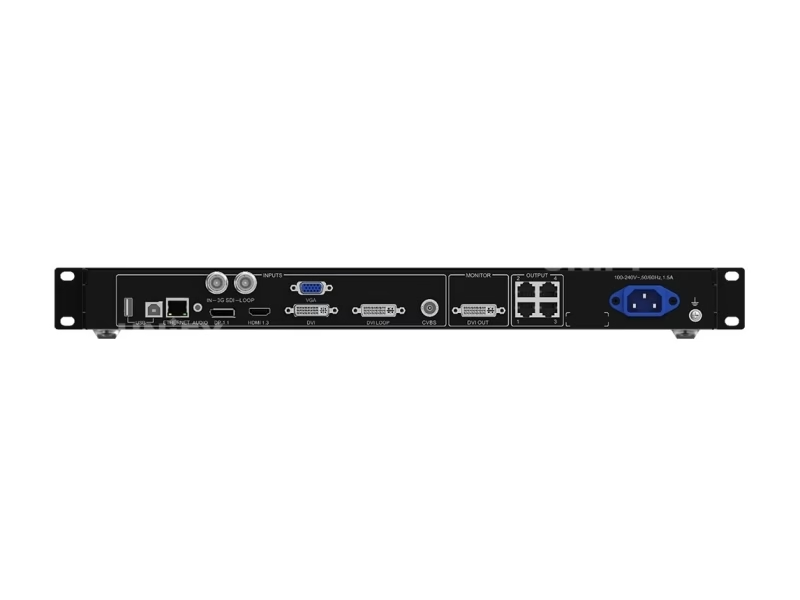
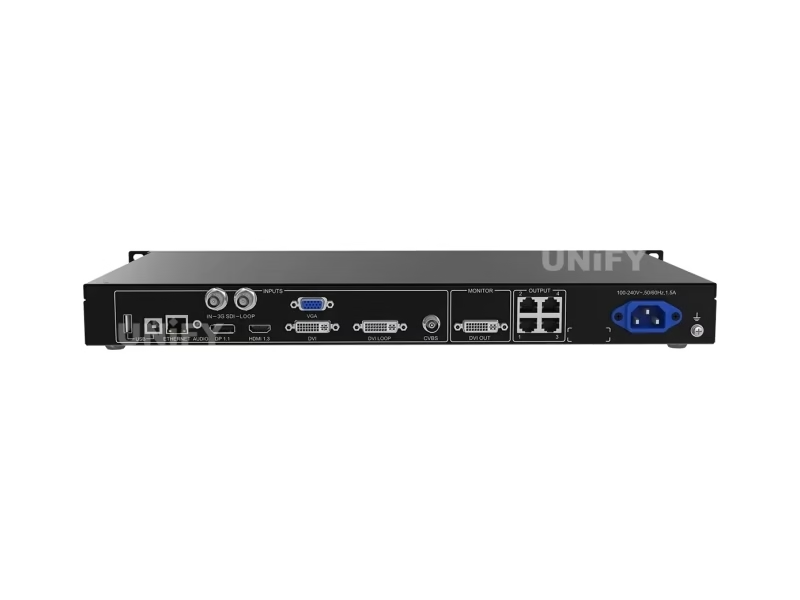
The NovaStar VX4S-N LED Display Controller is the direct successor to the discontinued VX4S. NovaStar made two hardware changes: single CVBS and VGA inputs (down from dual on VX4S) and DVI-only monitoring output (replacing VGA+DVI). Everything else — the Nova G4 engine, 2.3M pixel capacity, PIP, smart knob-based configuration, and all six input types — remains identical. For B2B buyers, the VX4S-N delivers the same operational capability at a lower unit cost ($1,049 vs. the VX4S’s original $1,200+).
The practical implication: if you are replacing a failed VX4S in an existing installation, the VX4S-N is a drop-in replacement. If you are planning new deployments, the VX4S-N is the current-production model with full NovaStar support and firmware updates. See our LED video processor guide for broader controller comparisons.
2. Nova G4 Engine — What the Silicon Actually Does
The Nova G4 is NovaStar’s fourth-generation image processing ASIC, and it is the single most important component inside the VX4S-N. Unlike general-purpose FPGAs used in competing controllers, the G4 is purpose-built for LED display processing. Its key capabilities: 10-bit color depth processing (1.07 billion colors vs. 16.7 million at 8-bit), hardware-based deinterlacing for SDI inputs, flicker-free output (no scanning lines even at low refresh rate settings), and real-time color gamut mapping.
The G4 engine’s color gamut mapping is particularly relevant for B2B buyers deploying mixed batches of LED cabinets. LED modules from different production runs can exhibit slight color temperature variations (typically 200–500K). The G4’s per-pixel calibration compensates for these variations automatically — a feature that, in separate-component architectures, would require an external color processor costing $500–$1,500.
3. Input/Output Architecture — Real-World Signal Flow
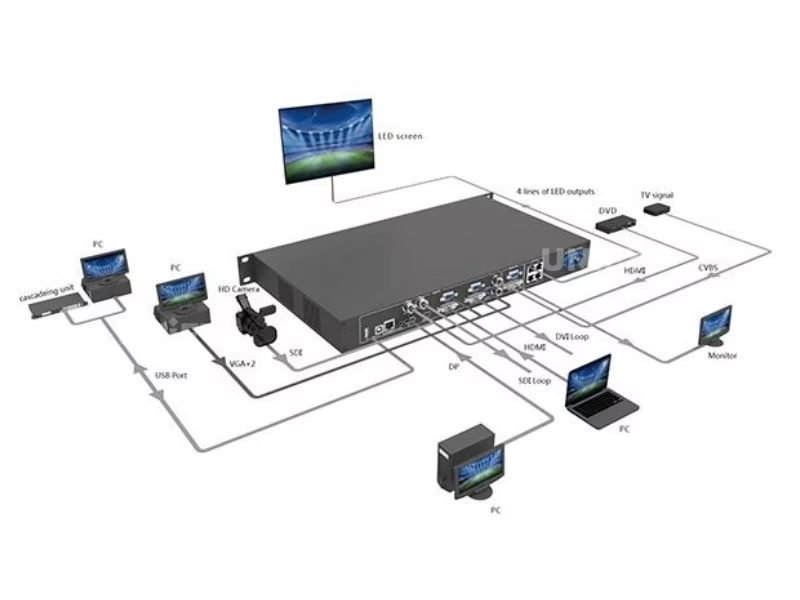
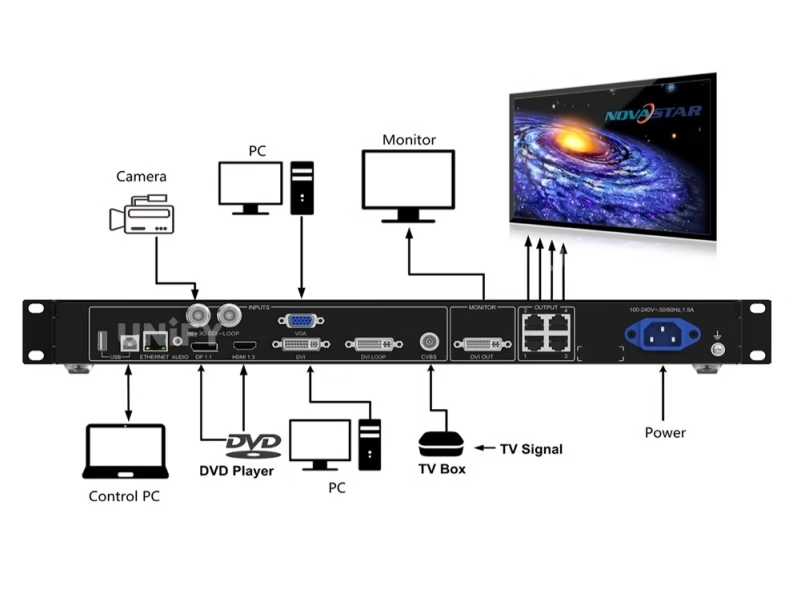
The VX4S-N’s six input types each serve a distinct role in production environments. A typical conference setup: PTZ camera via 3G-SDI (broadcast-grade, up to 100m cable runs), presenter laptop via HDMI, backup media player via DP, legacy DVD player via CVBS, and a secondary PC via VGA. The DVI input with loop-through allows daisy-chaining to a second display or recorder without an external splitter.
On the output side, the four Ethernet ports each carry independent data streams to LED receiving cards. The total 2.3M-pixel budget must be distributed across ports — a common mistake is overloading one port while underutilizing others. The DVI OUT monitoring port provides a real-time confidence feed of what the LED screen is displaying, invaluable for troubleshooting without needing to look at the actual LED wall.
4. PIP & Multi-Layer Workflow — Two Sources, One Screen
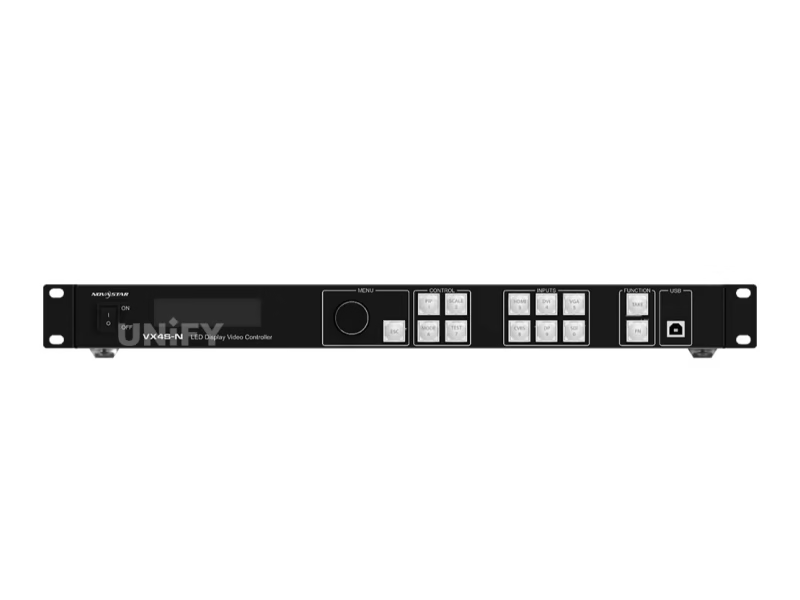
The VX4S-N supports one main layer and one PIP layer with independently adjustable position and size. Short-press an input button to assign the main source; long-press to assign the PIP source. The TAKE button instantly swaps them — critical during live events when you need to switch between a full-screen presentation and a speaker-plus-slides layout without menu navigation.
For permanent installations requiring more than two layers, upgrade to the VX6s (3 layers) or VX1000 (2 layers + BKG). For conference LED display solutions, the VX4S-N’s PIP capability covers the most common use case: content on the main layer, speaker on PIP.
5. Total Cost of Ownership — VX4S-N vs. Separate Components
Separate Components: Entry-level video scaler ($300–$600) + sending card ($120–$300) + configuration hardware + cabling = $420–$900 before operational overhead of managing 2–3 separate devices.
VX4S-N: Single $1,049 device consolidating all three functions. 5-year electricity at 25W × 8h/day × $0.12/kWh ≈ $44. The 25W power draw is among the lowest in its class — less than half the VX1000’s 70W and comparable to a small LED light bulb. For a rental company operating 10+ controllers on a single generator circuit at outdoor festivals, this power efficiency directly reduces generator rental costs.
The real TCO advantage is operational. One device to rack, cable, and configure. For technicians, one manual, one firmware update procedure, one support contact. With LED display lifespan expectations of 100,000 hours, controller longevity directly impacts project ROI over the deployment lifetime.
6. Smart Configuration — When You Cannot Bring a PC
The VX4S-N’s defining operational advantage is the no-PC configuration workflow. The front-panel OLED display shows device status, IP address, input source format, and PIP status at a glance. Rotating the knob navigates menus; pressing confirms. The ESC button exits. Four dedicated shortcut buttons (PIP, SCALE, MODE, TEST) plus ten input source buttons provide one-touch access to the most frequently used functions.
The 4-step wizard — Input Settings → Screen Settings → Brightness → Output Settings — can be completed in under 30 seconds by a trained technician. For rental staging companies, this means the local venue AV tech can reconfigure the controller for each event’s specific screen layout without needing the touring engineer to be on site. The key lock function (long-press knob + ESC) prevents accidental changes once configured. See our LED Academy for step-by-step tutorials.
7. Image Mosaic — Multi-Unit Cascading for Large Screens
When a single VX4S-N’s 2.3M-pixel capacity is insufficient, multiple units can be cascaded via USB (Type-B output → Type-A input). Two mosaic modes: Equal Division assigns identical pixel loads to each unit (simplest, best for regular grid layouts), and Unequal Division assigns custom load areas (useful for irregular screen shapes or mixed-resolution walls).
Important constraints: each cascaded unit requires its own video input source. The system does not split a single input across multiple VX4S-N units — you must use an external DA (distribution amplifier) if all units need the same source. For installations requiring single-source multi-unit distribution, the VX6s or VX1000 with built-in loop-through may be more appropriate.
8. Color Calibration & White Balance
The VX4S-N supports NovaStar’s pixel-level calibration technology via NovaCLB software. The calibration pipeline: (1) measure each LED pixel with a supported colorimeter at multiple brightness levels, (2) NovaCLB computes per-pixel correction coefficients targeting D65/6500K, (3) coefficients are uploaded to receiving card memory for hardware-level correction — zero added latency, persists through power cycles.
White balance calibration and color gamut mapping can be performed directly from the VX4S-N’s on-device menu for basic adjustments, or via NovaLCT for advanced per-module tuning. For fine-pitch LED displays where viewers stand close to the screen, this calibration capability is the difference between a visibly uniform image and one with perceptible color patches.
9. Firmware & Software Ecosystem
The VX4S-N is managed through NovaStar’s software suite: NovaLCT for screen configuration and receiving card management, SmartLCT for alternative configuration workflows, and NovaCLB for calibration. All three are free downloads from novastar.tech, Windows 10/11 compatible. The device communicates via USB Type-B or Ethernet (TCP/IP). Firmware updates are applied through NovaLCT — always back up rcfgx files before updating, as firmware updates can reset receiving card configurations to defaults.
10. Sourcing Strategy — Factory Direct vs. Distributor
B2B buyers choose between regional distributors (local stock, local warranty, $1,049–$1,100 per unit) and factory-direct from a LED screen manufacturer that is also a NovaStar partner (15–30% lower pricing, pre-shipment configuration, integrated ecosystem support).
Key questions: Does the supplier test each VX4S-N with a live LED screen before shipping? Can they provide the complete system (cabinets + controller + receiving cards) pre-configured? Our quality control process documentation details our testing — we encourage direct comparison.
— Is the VX4S-N Right for Your Project?
The NovaStar VX4S-N LED Display Controller occupies a specific, well-defined position: it is the most cost-effective current-production all-in-one controller in NovaStar’s lineup, purpose-built for projects that need broadcast-grade inputs, 2.3M-pixel capacity, and no-PC configuration — without paying for 4K capability or multi-layer compositing that may never be used. For B2B buyers deploying LED screens in the 2MP range for stage, broadcast, conference, and rental applications, the VX4S-N represents the optimal intersection of capability, reliability, and cost.
When evaluating controllers, move beyond the spec sheet. Ask: Can I configure this without a PC in the field? How many watts does it draw on my generator? Does my supplier test each unit before shipping? At UnifyLED, we answer these questions with specific, verifiable data.