
Mooncell · MP Series · Networked Media Player
Mooncell MB401 Networked Player
The Mooncell MB401 Networked Player is the 4K HDMI media player of Mooncell’s MP series: Android 11 with a quad-core CPU, 64GB storage, H.265 4K decoding, 12-window playback and remote cluster control for digital signage and LED walls.
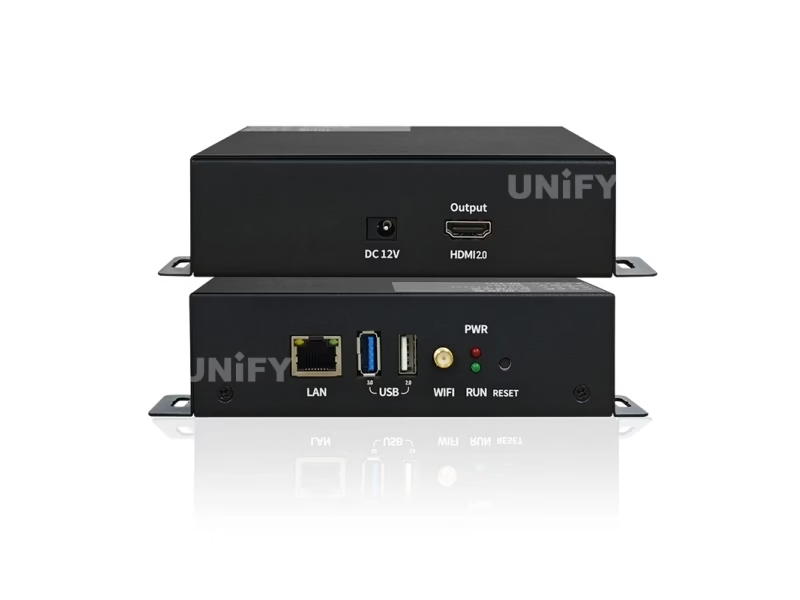
Product Overview
What Is the Mooncell MB401 Networked Player?
The Mooncell MB401 Networked Player is a networked media player with 4K HDMI output from Mooncell’s MP series: an Android 11 unit with a quad-core CPU, 4GB DDR3, 64GB eMMC storage and H.265 hardware decoding of 4K@60 sources. It plays up to 12 windows, supports remote cluster control over the internet, LAN and Wi-Fi, synchronizes multiple screens, and connects to a monitor or an LED video processor through its HDMI 2.0 output. Mooncell’s product page titles it the MB401 Networked Player; the official specification sheet is titled MP401. Both names describe this unit, and this page uses the official MP401 Specification V4.0 (July 2025) as its data source.
Short answer: The Mooncell MB401 is a 4K HDMI networked media player: Android 11, quad-core CPU, 4GB DDR3, 64GB eMMC, H.265/H.264/VP9 4K decoding, one HDMI 2.0 output (3840×2160 max), up to 12 playback windows (4K×2 / 1080P×6 / 720P×10 / 360P×20), remote cluster control over internet/LAN/Wi-Fi, multi-screen sync, scheduled playback and automatic brightness — in a 15 W, 0.52 kg box. It lists at $225 in distributor stock, sits at the 4K rung of the MP series (MP1/MP2/MP4/MP401), and connects to a monitor or an LED video processor rather than driving receiving cards directly.
The MP series is the signage side of the Mooncell family: MP1 (65K pixels, 1 LED output) and MP2 cover small asynchronous walls, MP4 (2.6M, dual-mode) carries the big-canvas rung, and the MB401 tops the ladder as the 4K HDMI rung. Where the Mooncell MB400S Creative LED Controller drives irregular walls directly from its network ports, the MB401 plays content out over HDMI into a LED video processor or monitor — the architecture difference that decides which player a project needs.
In the Mooncell control chain the MB401 is the content stage: a signage fleet’s programs live on the player’s 64GB storage, deploy through the cluster, and reach the wall through a processor and Mooncell receiving cards — the A712 (HUB75E) or A10X (120-pin).
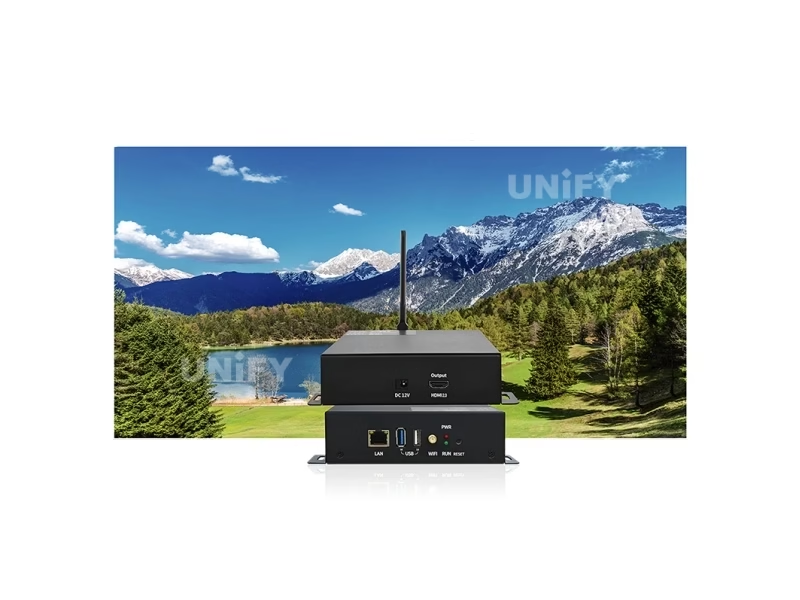
Specifications
What Are the Mooncell MB401 Networked Player Specifications?
Data from the official Mooncell MP401 Commercial LED Display Controller Series Specification V4.0 (first release July 31, 2025; hardware MP401 V1.0).
Platform, Output & Playback
Interfaces, Electrical & Physical
Data Verification
Where Do Published Mooncell MB401 Specs Disagree — and What Does V4.0 Say?
Three conflicts circulate around the MB401, and all three resolve cleanly against the official record:
Mooncell’s product page titles the unit MB401 Networked Player; the specification sheet and the series table use MP401. Same hardware — the page name and the spec name differ, and both appear on this page.
A distributor page lists 2 kg. The V4.0 sheet lists 0.524 kg net (1.02 kg gross with packaging) — a signage player of this class weighs half a kilo. Plan mounts on the sheet figure.
The MP-series table lists the MP2 at 1.3 thousand pixels — a loading figure that fits no player class. Treat it as an unverified hub cell; the MP401 figures on this page come from the V4.0 sheet.
The V4.0 sheet is the reference for every number on this page; where channel copy or hub cells disagree, the sheet wins.
Architecture
How Does the Mooncell MB401 Connect to an LED Display?
The MB401’s architecture is the first thing to understand, because it is what separates this player from the rest of the Mooncell family:
The MB401 plays content — video, images, text, web pages, clocks — from its 64GB storage, arranged in up to 12 windows, and sends the composed picture out over HDMI 2.0.
The HDMI output connects to a monitor or an LED video processor — the processor handles scaling, EDID and the network outputs that drive the wall’s receiving cards.
The contrast with the MB400S is the family’s two-player architecture: the MB400S combines player and sending card in one box and drives receiving cards directly from its Gigabit ports; the MB401 plays through HDMI and lets a processor own the wall. Signage that feeds an existing processor points to the MB401; a self-contained creative wall points to the MB400S. The asynchronous LED media player selection guide compares this class across brands.
Model Selection
Which Mooncell MB401 Do You Need: MP1, MP2, MP4 or the MB401?
Mooncell’s MP series spans four rungs on its MP hub. The MB401 is the 4K HDMI rung — the only one that plays out over HDMI rather than driving LED outputs:
All four rungs share multi-window playback, independent Gamma, audio transmission, loop backup, 4G options and USB/LAN/Wi-Fi control. *The MP2 loading figure on the hub is inconsistent with the player class and should be verified against its own sheet. The deciding question for the MB401: does the wall take an HDMI source into a processor, or does the player drive LED outputs directly? HDMI-first projects point to the MB401.
Playback Capability
How Many Windows and Formats Can the Mooncell MB401 Play?
The playback matrix is the commercial heart of the MB401 — the V4.0 sheet defines it precisely:
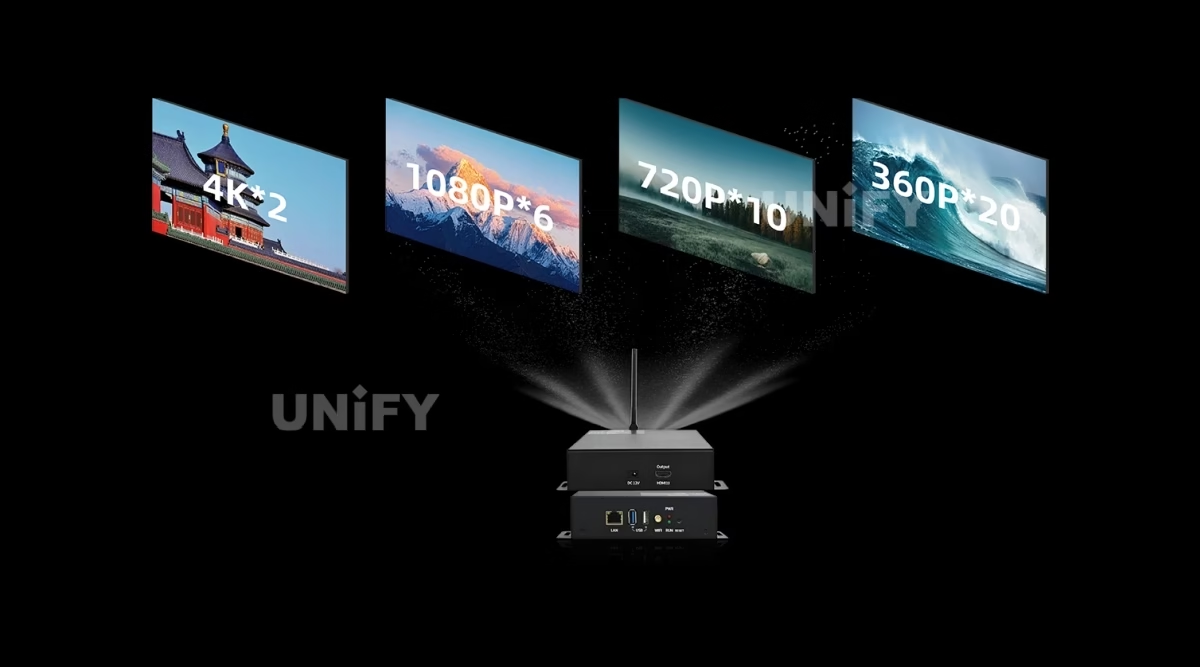
Video windows support 4K×2, 1080P×6, 720P×10 or 360P×20 — the window budget scales down as resolution scales up, with free size, position and overlay on every window.
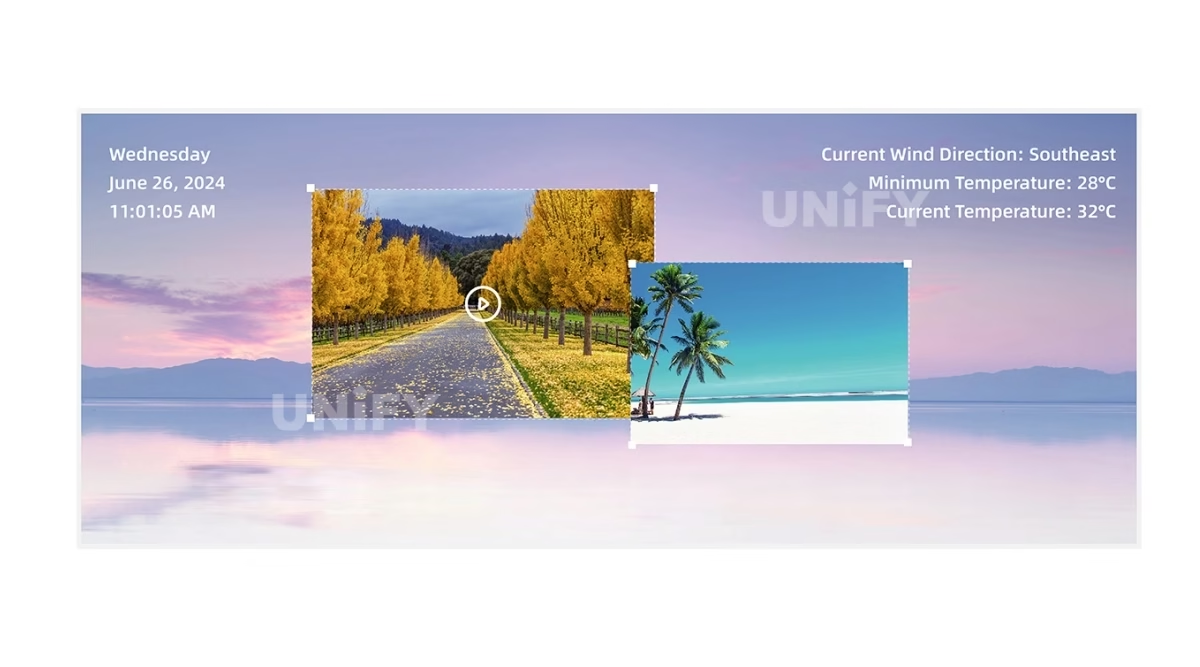
True-color OSD at any position with transparent, semi-transparent and opaque effects; video/graphic hybrid mode puts text and graphics over video.
Video, images, text, documents, clocks, streaming media, web pages, weather, timers and promotional windows — the full digital-signage content set out of the box.
MPG/MOV/MP4/FLV/MKV video, MPEG-1 Layer III/AAC audio, JPG/PNG/GIF images and single/static/multi-line TXT — decoded in hardware on the Android 11 platform.
Cluster & Management
How Does Remote Cluster Control Manage a Mooncell MB401 Signage Fleet?
For a chain of signage players — the same promo in ten showrooms, screens across a venue network — the MB401’s cluster layer replaces site visits:
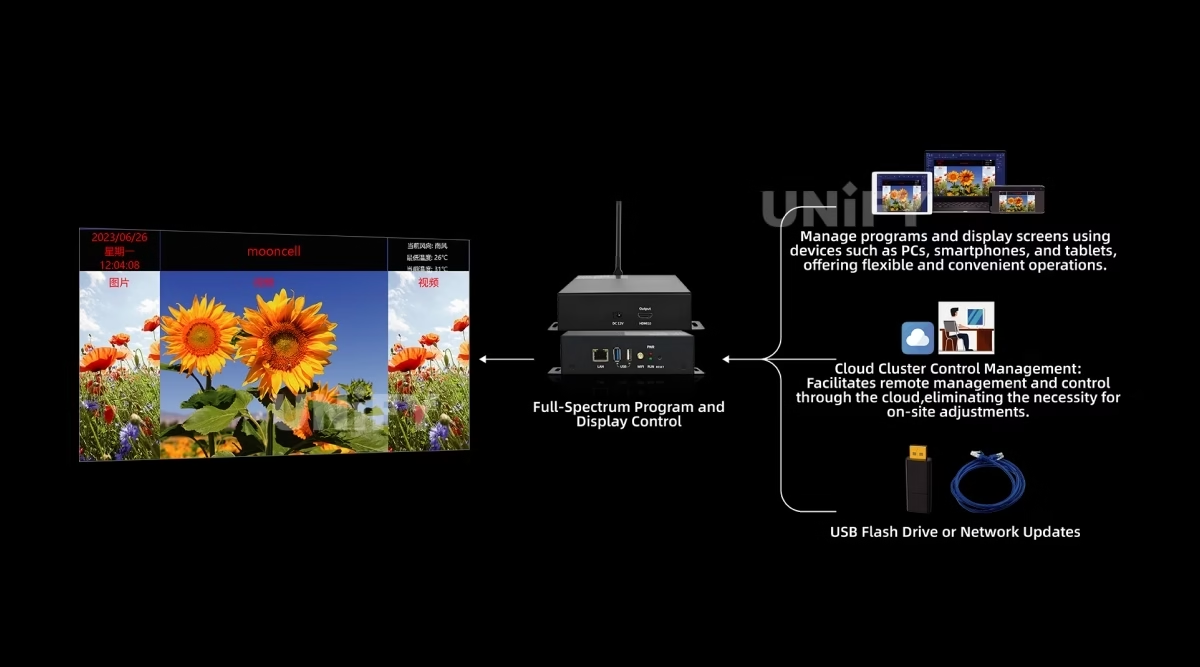
Remote cluster control over internet, LAN and Wi-Fi deploys programs to many players at once — program and parameter management from PC, phones, tablets and the cloud platform.
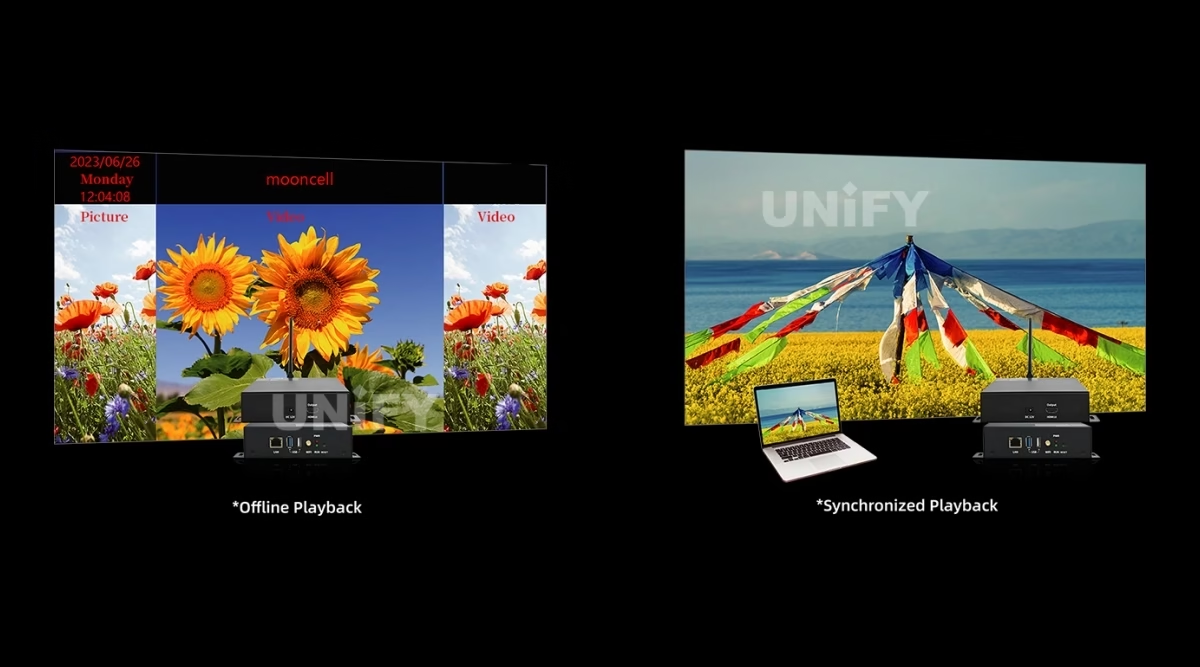
Multi-screen synchronized playback keeps a wall of players showing the same frame — the video-wall story without a media server.
Real-time brightness adjustment, display switching, system parameters, program playback control and wireless program transmission — all from a phone.
Scheduled playback and timed power on/off, configured centrally through the management system; automatic brightness by time or ambient light keeps the wall legible all day.
Platform
What Does Android 11 with 64GB Storage Mean on the Mooncell MB401?
The MB401 is the newest platform in Mooncell’s player family, and the storage story is the headline:
The current-generation Android release on a quad-core CPU with 4GB DDR3 — the headroom for multi-window compositing, web-page content and simultaneous decoding of several streams.
Eight times the storage of the MB400S rung — a full 4K content library, weeks of scheduled programming and web-page caches live on the player without a server.
H.265/H.264/VP9 4K decoding at 60 fps plus 1080p60 H.265/H.264 encoding — the codec set that covers streaming platforms, file-based content and web playback.
Against the MB400S (Android 7.1, 2GB/8GB), the MB401 is the next generation of the player platform — the signage-side step the creative player has not taken yet.
Core Features
What Does the Mooncell MB401 Networked Player Bring to a Signage Project?
Six capabilities define the MB401 for commercial display — the output first, then the playback engine, then the management layer.
3840×2160 over HDMI 2.0 into a monitor or an LED video processor — the 4K rung of the MP series, and the only one that plays out over HDMI.
H.265/H.264/VP9 4K decoding at 60 fps in hardware — smooth 4K playback at roughly half the bitrate of H.264.
Up to 12 windows — 4K×2, 1080P×6, 720P×10 or 360P×20 — with free size, position, overlay and true-color OSD at any position.
Programs deploy to many players over internet, LAN and Wi-Fi — cluster, program and parameter management from PC, phones, tablets and the cloud.
4GB DDR3 and 64GB eMMC hold a full content library and weeks of schedules — with USB 3.0 plug-and-play for instant updates.
Multi-screen synchronized playback and automatic brightness by time or ambient light — a signage fleet that runs itself.
Installation
How Do You Install and Self-Check the Mooncell MB401?
The MB401 is a three-step install, and the front panel self-checks without a laptop:
Connect the 12V DC adapter (5.5×2.1mm). PWR shows steady green; Run flashes while the Android OS runs normally. Wire the 100M LAN for program delivery, attach the Wi-Fi antenna.
Connect the HDMI 2.0 output to a monitor or an LED video processor. USB 2.0 + USB 3.0 accept Android mice, keyboards and USB drives for playback and updates.
Programs deploy via USB plug-and-play, LAN transmission or the cloud cluster; parameters set from PC, phone or tablet. Reset restores factory settings.
Official Mooncell video — video linkage player testing.
The full commissioning sequence — wiring, network mapping, module configuration, correction — is covered step by step in the LED display configuration and system debugging guide.
Applications
Where Does the Mooncell MB401 Networked Player Fit Best?
The official application set — advertising media, digital signage, exhibition halls and showrooms — covers the commercial display field. Four project classes carry most of the demand:
Promo windows, weather and clock content on a schedule — the classic cluster-managed ad fleet
Retail and corporate signage walls driven through processors — 4K content, 12 windows, multi-screen sync
Web pages, streaming media and documents on wall displays — content that changes with the exhibit
5D/6D rooms and bars where the player feeds immersive video into the venue’s LED processor chain
Official Mooncell video — KA Series products for 5D/6D rooms.
Official Mooncell video — interactive floor LED with video processor and receiving cards.
For event and staging contexts around these walls, the LED screen for events guide covers the deployment planning around the display itself.
Family Comparison
How Does the Mooncell MB401 Compare with the Mooncell MB400S?
Mooncell ships two networked players that answer different questions — the MB401 for signage through a processor, the MB400S for walls driven directly. The honest comparison is architecture, not spec sheets:
Three numbered differences decide between them:
- Signal chain. The MB401 plays through HDMI into an existing processor; the MB400S combines player and sending card and drives receiving cards directly.
- Geometry. Rectangular signage points to the MB401; sphere, ring and dome walls to the MB400S — the creative geometry lives in the MB400S.
- Platform generation. Android 11 with 64GB makes the MB401 the newer signage platform; the MB400S answers with the octa-core headroom its sending role needs.
Pricing
How Much Does a Mooncell MB401 Cost?
Price transparency, stated plainly: the MB401 appears in distributor listings at $225.00 (EagerLED, stock 10,000, reviewed September 2026). Same-channel reference for 4K media players: the Colorlight A4K at $340–$460, the Huidu HD-A5 at $157 and the Huidu HD-H8 at $543 — the MB401 sits in the middle of the 4K signage band. Factory-direct tiers for B2B buyers:
A per-wall budget is the honest math: a signage player at $225 plus the processor chain that follows it — see the LED display warranty page for what to hold the supplier to on spares. Ask for a factory-direct quote at your quantity — we are the LED screen manufacturer behind unifyled.com.
FAQ
What Do Buyers Ask About the Mooncell MB401 Networked Player?
What Assurance Comes With the Mooncell MB401 Networked Player?
Every MB401 ships with Mooncell original packaging and compliance documentation.
Ready to Specify the Mooncell MB401 Networked Player?
Factory-direct pricing, genuine Mooncell stock, cloud pre-configuration and 2-year warranty.
unifyledscreen@gmail.com | +86-191-18802497
Technical Deep-Dive
What Should Engineers Know Before Buying the Mooncell MB401 Networked Player?
Published: September 2026 | 12 min read | UnifyLED Engineering Team
The Mooncell MB401 Networked Player is the signage side of the Mooncell family — the 4K HDMI media player that feeds processors and monitors instead of driving receiving cards directly. This guide is written for engineers and procurement teams specifying 4K signage players in 2026, using the official Mooncell MP401 Specification V4.0 (July 2025) as the data source, with the architecture story, the window math and the naming details that distributor pages get wrong.
Short answer: The Mooncell MB401 (specification model MP401) is a 4K HDMI networked media player: Android 11, quad-core CPU, 4GB DDR3, 64GB eMMC, H.265/H.264/VP9 4K decoding, one HDMI 2.0 output (3840×2160 max), up to 12 playback windows (4K×2 / 1080P×6 / 720P×10 / 360P×20), remote cluster control over internet/LAN/Wi-Fi, multi-screen sync, scheduled playback and automatic brightness — in a 15 W, 0.52 kg box at a $225 street price. It tops the MP series (MP1/MP2/MP4/MP401) and connects to a monitor or an LED video processor rather than driving receiving cards directly.
Chapter 1 — Definition and the Naming Pair
The Mooncell MB401 Networked Player is a networked media player with 4K HDMI output: it plays content — video, images, text, documents, clocks, streaming media, web pages, weather and timers — from its 64GB storage in up to 12 windows, and sends the composed picture out over HDMI 2.0 to a monitor or an LED video processor. It is the content stage of the synchronous vs asynchronous LED control split for signage — scheduled programs on a player, mapped to the wall downstream.
The naming pair follows the family pattern: Mooncell’s product page titles the unit the MB401 Networked Player, the specification sheet is titled MP401, and the MP-series hub table lists MP401 — same hardware, page name versus spec name, both used on this page. The hardware behind it is platform MP401, revision V1.0, on the V4.0 sheet first released July 31, 2025.
Chapter 2 — The Architecture: Player into Processor
The architecture is the first thing to understand, because it separates the MB401 from the rest of the Mooncell family. The MB401 plays content and sends it over HDMI 2.0 — the output connects to a monitor, or to an LED video processor that handles scaling, EDID and the network outputs driving the wall’s receiving cards — the A712 (HUB75E) or A10X (120-pin) inside the cabinets. The MB401 is a content stage, not a sending controller.
The family contrast is the two-player architecture: the MB400S combines player and sending card in one box and drives receiving cards directly from its Gigabit ports, with Android 7.1, 2GB/8GB and octa-core headroom for the sending role; the MB401 plays through HDMI with Android 11, 4GB/64GB and a quad-core CPU. Signage that feeds an existing processor points to the MB401; a self-contained creative wall — sphere, ring, dome — points to the MB400S. The asynchronous LED media player selection guide compares this class across brands.
The signal-chain decision deserves a procurement reading, because it decides the whole control budget. A signage wall with an existing processor — a venue that already owns a 2-in-1 like the MVB12E or an MTB400E sending controller — adds the MB401 as the content stage and keeps the existing sending hardware. A wall with no processor faces a choice: the MB401 plus a processor, or the MB400S player that includes the sending stage in the same box. The MB401 route wins where the processor is already owned, where HDMI-based monitors are part of the install, or where the fleet spans mixed signage and video walls under one cluster; the MB400S route wins where the wall is irregular and the sending stage must be self-contained.
Chapter 3 — Windows and Formats: The Playback Matrix
The window math is the commercial heart: up to 12 playback windows with free size, position and overlay, and video windows that scale 4K×2, 1080P×6, 720P×10 or 360P×20 — the window budget trades down as resolution trades up, which is the arithmetic behind a storefront wall that runs one 4K hero plus five 1080P supporting windows, or a menu wall that splits into ten 720P tiles. True-color OSD displays at any position with transparent, semi-transparent and opaque effects, and the video/graphic hybrid mode puts text and graphics over video.
Formats cover the signage reality: MPG/MOV/MP4/FLV/MKV video with H.265/H.264/VP9 4K decoding at 60 fps in hardware, MPEG-1 Layer III and AAC audio, JPG/PNG/GIF images, single/static/multi-line TXT — plus documents, clocks, streaming media, web pages, weather, timers and promotional windows. The 64GB eMMC holds a full 4K content library and weeks of scheduled programming on the player, and the USB 3.0 port updates it plug-and-play. Against the 8GB of the MB400S rung, the MB401 is the storage-class player of the family.
Chapter 4 — Remote Cluster Control and the Signage Fleet
For a chain of signage players — the same promo in ten showrooms, screens across a venue network — the MB401’s cluster layer replaces site visits. Remote cluster control over internet, LAN and Wi-Fi deploys programs to many players at once: cluster, program and parameter management from PC, phones, tablets and the cloud platform. Multi-screen synchronized playback keeps a wall of players showing the same frame — the video-wall story without a media server. Wireless control covers real-time brightness adjustment, display switching, system parameters, program playback control and wireless program transmission from a phone. Scheduling rounds it out: scheduled playback and timed power on/off, configured centrally through the management system, with automatic brightness by time or ambient light keeping the wall legible all day.
The operating reality behind the cluster layer is worth stating plainly: a signage fleet is a permanent install with a changing content calendar, and the MB401 is built so the calendar changes without a ladder. Program updates arrive three ways — USB plug-and-play for the on-site technician, LAN transmission for the network path, and the cloud platform for the fleet operator — and every update lands on the same Android 11 playback engine. Timed power on/off pairs with scheduled playback, so a showroom wall powers up with the building and the first program of the day; automatic brightness by time or ambient light keeps the wall legible across a day of changing light. The wireless control set — real-time brightness, display switching, system parameters, playback control, wireless program transmission — means a manager changes the promo from a phone before the store opens.
Chapter 5 — The Four-Rung MP Ladder
Mooncell’s MP series spans four rungs: MP1 (65K pixels, 1 LED output, asynchronous), MP2 (hub figure 1.3K — inconsistent with the player class and worth verifying against its own sheet), MP4 (2.6M, 2 LED outputs, dual-mode with a 15360×15360 canvas) and the MB401 (4K HDMI, asynchronous, 64GB). All four share multi-window playback, independent Gamma, audio transmission, loop backup, 4G options and USB/LAN/Wi-Fi control. The deciding question is the output: walls that take an HDMI source into a processor point to the MB401 — the only 4K HDMI rung of the series.
Two details round out the field picture. First, the front-panel indicators are a complete health read: PWR steady green confirms power, and the Run LED flashing confirms the Android OS is alive — a steady-on or steady-off Run LED points to an OS fault before any cable is touched. Second, the wide temperature envelope matters more on signage than on show gear: the −20°C to 60°C operating range with 0–80% RH non-condensing covers ventilated enclosures and semi-outdoor installs that consumer Android sticks cannot survive, and the 15 W draw at 12 V keeps the power budget trivial on a multi-player fleet. The 0.524 kg net weight (1.02 kg gross) makes mount planning simple — a bracket, a shelf or a VESA-style fix behind the display — and the included Ethernet cable, Wi-Fi antenna, HDMI cable and 12V/2A adapter mean the box arrives ready to wire.
Chapter 6 — Installation and Operation
The MB401 is a three-step install. Power: the 12V DC adapter (5.5×2.1mm) with the PWR indicator steady green and the Run LED flashing while Android runs. Network: the 100M LAN carries program delivery and terminal control, the Wi-Fi antenna improves wireless signal strength, and the optional 4G module covers sites with no network path. Video: the HDMI 2.0 output connects to a monitor or processor, and the USB 2.0 + USB 3.0 ports accept Android mice, keyboards and USB drives for playback and updates. Programs deploy three ways — USB plug-and-play, LAN transmission or the cloud cluster — and Reset restores factory settings. The complete sequence is covered in the LED display configuration and system debugging guide.
Official Mooncell video — 5D/6D immersive rooms.
Chapter 7 — What the MB401 Costs, Honestly
The MB401 lists at $225.00 in distributor stock (EagerLED, stock 10,000, reviewed September 2026). The honest frame is the 4K signage band on the same channel: the Colorlight A4K at $340–$460, the Huidu HD-A5 at $157 and the Huidu HD-H8 at $543 — the MB401 sits mid-band, above the dual-mode value cards and below the premium media players. One distributor table lists the weight at 2 kg against the V4.0 sheet’s 0.524 kg net (1.02 kg gross); cabinet and mount planning should use the sheet. The player itself is the cheap end of a signage wall — the processor and receiving cards that follow it carry the bigger line items, and the LED display warranty page covers what to hold the supplier to on spares. Factory-direct tiers shift the price with volume, cluster pre-configuration and 4G bundles; ask for a quote at your fleet size.
Fleet math for the tender: a ten-store signage chain at $225 per player runs to about $2,250 in player hardware before the processor and receiving-card line items — and the cluster layer is what makes that spend manageable, because ten players deploy one program instead of ten site visits. Spares are cheap at this price point: one player per ten installed covers the realistic failure rate for years, and the USB plug-and-play path means a swapped unit inherits the program without a technician at the wall. The V4.0 sheet is the reference for every number on this page; where a distributor page differs — the weight, the naming, the window math — the sheet wins.
And a final word on naming discipline, because it is the first thing a buyer hits in search: the product page says MB401, the specification sheet says MP401, and the same hardware carries both names through Mooncell’s own channels. Quotes should name the unit one way or the other and pin the V4.0 sheet to it — the sheet is the reference, the name is the channel’s habit. The same discipline applies to the rest of the family, where the MTB2000E and MTB400E pages follow the same product-page-versus-spec-sheet pattern.
Conclusion
The Mooncell MB401 Networked Player is the 4K HDMI rung of the MP series: 12-window playback, H.265 4K decoding on Android 11 with 64GB storage, remote cluster control, multi-screen sync and automatic brightness — in a 15 W, 0.52 kg box at a $225 street price. It is the unit to specify when signage content feeds a processor and the wall is rectangular, and the V4.0 sheet is the reference to pin to it.
Planning a signage fleet? Talk to us — we are the LED screen manufacturer behind unifyled.com, and networked players ship cloud pre-configured with 2-year warranty and signage engineering support.
Related Pages
Explore the Mooncell Control Ecosystem
Mooncell MTB400E Master Controller
Mooncell MTB2000E Master Controller
Mooncell B1200S Creative LED Controller
Mooncell A10X LED Receiving Card
Mooncell A712 LED Receiving Card
Mooncell C2 LED display control system
Mooncell MVB4S Pro 2-in-1 LED Video Processor
Mooncell MVB12E 2-in-1 LED Video Processor
Mooncell MVB20E-G 2-in-1 LED Video Processor
Mooncell M40 2-in-1 LED Video Processor
10 pages · English · first release July 31, 2025 · hardware MP401 V1.0 · product page name MB401