
P1.25 · Indoor Fine Pitch
P1.25 Indoor Fine Pitch LED Display Collection
The 1.25mm class for rooms where the closest viewer sits 1.5–3 meters out: 640,000 pixels per square meter on SMD1010 black-face boards, 3840Hz flicker-free refresh for cameras, and full front service through magnetic suction tooling — die-cast aluminum cabinets from 400×300mm up to a 16:9 native-FHD build.
Definition
What Is a P1.25 Indoor Fine Pitch LED Display?
Short answer: A P1.25 indoor fine pitch LED display is a fixed-installation small-pitch video wall built from 1.25mm-pitch SMD1010 modules — 640,000 pixels per square meter — sized for rooms where the closest viewer stands 1.5–3 meters away. Three module formats cover the class (320×160mm, 200×150mm and 250×250mm), every one is serviced from the front through magnetic suction tooling, and the 3840Hz refresh keeps the wall flicker-free on camera. At this density a wall just 2.4×1.35m carries true native 1920×1080.
A P1.25 indoor fine pitch LED display is a direct-view LED video wall assembled from 1.25mm-pitch lamps on high-flatness fiberglass boards — the pitch where “small pitch” turns into “fine pitch.” Past roughly 2.0mm, an indoor wall behaves like a big screen; at 1.25mm it behaves like a monitor: die-cast aluminum cabinets replace sheet steel, maintenance flips to full front service because the wall often sits against a wall, and lamp-level decisions — gold wire versus copper-alloy wire, SMD versus GOB versus COB — start to matter more than headline brightness.
The class sits in the middle of the fine-pitch ladder. Below it, P0.9 walls buy pixels for viewers inside 1.5 meters and pay a COB-class premium; above it, P1.56 banks budget for rooms read from beyond 3 meters. Industry buying guides put the P1.25 sweet spot at 2–3 meters — close enough that text stays sharp at a desk-side meeting table, far enough that you are not paying for pixels the eye cannot resolve. For rental and staging duty at the neighboring pitch, see the P1.953 indoor collection; run any wall size through the LED screen calculator.

One number anchors the class: 640,000 pixels per square meter — identical across all three module formats on this page, and the reason a 2.4×1.35m wall resolves native Full HD. If viewers can walk up to 1 meter from the wall, ask us about finer pitches and COB builds; if nobody sits closer than 3 meters, the P2.604 indoor collection banks the difference.
Module Options
Which Module Sizes Does a P1.25 Indoor Fine Pitch LED Display Use?
Three boards plus one 16:9 engineering build cover the class. Specs are quoted from our own production sheets, last reviewed September 2026 — IC counts are total devices fitted per module (driver + decode + row transistors) and reconcile with scan mode; the lamp row separates gold-wire from copper-alloy-wire tiers.
① 320×160mm — The Volume Standard
The board that leads China’s domestic fine-pitch market by volume: 256×128 = 32,768 dots, 19.5 boards per square meter, and the widest cabinet menu in the class — die-cast aluminum 640×480mm and 640×640mm boxes on magnetic front service. The 1/64 scan drives the full grid through 96 ICs, and the pure-copper power and signal harnesses keep a closed room quiet and cool. This is the default answer for boardrooms, control rooms and studio walls.
| Module size | 320×160mm |
| Pixel resolution | 256×128 = 32,768 dots (P1.25) |
| Scan mode | 1/64 scan |
| Driver IC brands | Chipone ICND2163-class, 16-channel PWM |
| ICs fitted (total) | 96 |
| Lamp | SMD1010 black-face · gold wire (premium, 800-nit tier) / copper-alloy wire (value) |
| Brightness | 600–800 nits |
| Maintenance | Full front service — magnetic suction tool, module pulls from the face |
| Cabinets | Die-cast aluminum 640×480mm (×6 boards, 512×384 px) · 640×640mm (×8 boards, 512×512 px) |
| Uniformity | Strict wavelength & brightness binning + control-system hardware per-pixel correction |

② 200×150mm — The High-End Small Board
The premium small-format board: 160×120 = 19,200 dots on a compact 200×150mm plate, 33.3 boards per square meter, paired with a 400×300mm die-cast cabinet for tight walls and custom aspect ratios. Modules connect through hard-pin (hard-connection) sockets or pure-copper soft cable, the surface takes an optional GOB coat for touch-prone rooms, and front service stays magnetic. For native 16:9 FHD and 4K walls, this board’s engineering sibling — the 150×168.75mm plate on a 600×337.5mm cabinet — is detailed below.
| Module size | 200×150mm |
| Pixel resolution | 160×120 = 19,200 dots (P1.25) |
| Scan mode | 1/40 scan |
| Driver IC brands | Chipone ICND-series, 16-channel PWM |
| ICs fitted (total) | 90 |
| Lamp | SMD1010 black-face · gold wire / copper-alloy wire · GOB optional |
| Brightness | 600–800 nits |
| Maintenance | Full front service — magnetic suction tool |
| Cabinets | Die-cast aluminum 400×300mm (×4 boards, 320×240 px) |
| Uniformity | Strict wavelength & brightness binning + control-system hardware per-pixel correction |
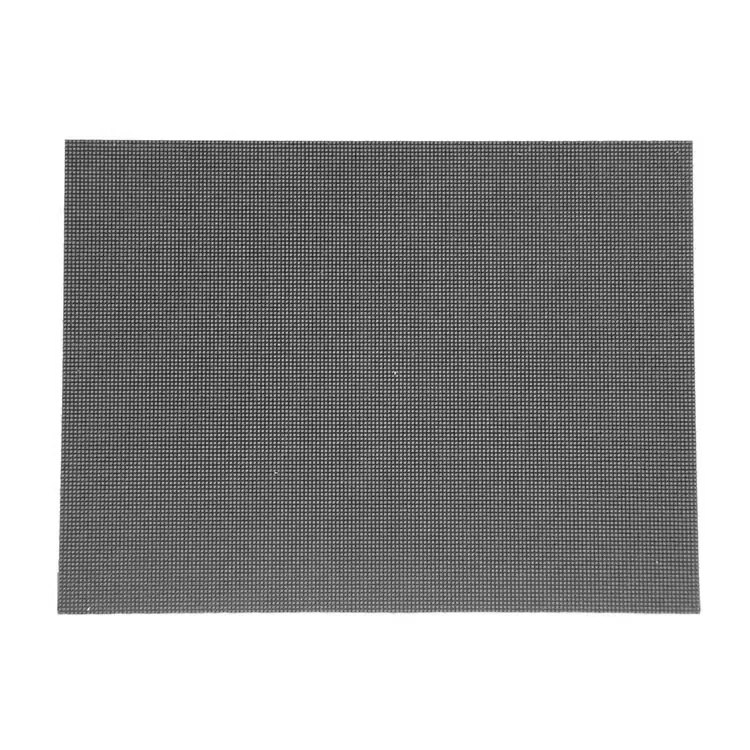
③ 250×250mm — The Square Small-Cabinet Board
The square board for the 500-series cabinet standard: 200×200 = 40,000 dots — the densest single plate in the class — four boards filling a 500×500mm die-cast cabinet into a 400×400-pixel face. Square boards keep cabinet counts low on mid-size walls and line up with the 500×500 and 500×1000 cabinet grid many integrators already stock. GOB coating optional; front service magnetic; same SMD1010 lamp tiers and correction pipeline as the rest of the class.
| Module size | 250×250mm |
| Pixel resolution | 200×200 = 40,000 dots (P1.25) |
| Scan mode | 1/50 scan |
| Driver IC brands | Chipone ICND-series, 16-channel PWM |
| ICs fitted (total) | 150 |
| Lamp | SMD1010 black-face · gold wire / copper-alloy wire · GOB optional |
| Brightness | 600–800 nits |
| Maintenance | Full front service — magnetic suction tool |
| Cabinets | Die-cast aluminum 500×500mm (×4 boards, 400×400 px) |
| Uniformity | Strict wavelength & brightness binning + control-system hardware per-pixel correction |
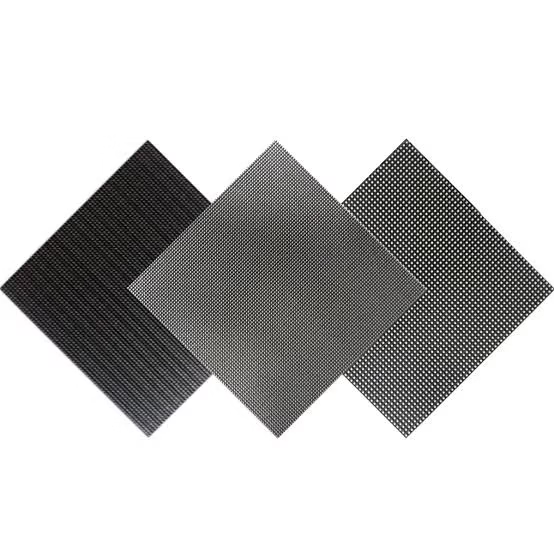
④ Native FHD and 4K Walls — the 150×168.75mm Board on a 600×337.5mm 16:9 Cabinet
The engineering build for buyers who want the wall’s pixel grid to land exactly on broadcast formats. A 150×168.75mm board (120×135 = 16,200 dots) tiles the 600×337.5mm die-cast cabinet — a true 16:9 box — eight boards to a face, and the cabinet resolution comes out at exactly 480×270 pixels. From there the arithmetic is clean:
Native Full HD
16 cabinets in a 4×4 array → 1920×1080 pixels on a wall just 2.4×1.35m (3.24㎡) — a boardroom wall that maps 1:1 to a 1080p signal with zero scaling.
Native 4K
64 cabinets in an 8×8 array → 3840×2160 pixels at 4.8×2.7m (12.96㎡) — the control-room and studio flagship size.
Scan mode and IC count on the 16:9 build are fixed per order sheet rather than catalog, because the 168.75mm plate is an engineered configuration — every other parameter (SMD1010 black-face lamps, gold-wire tier, magnetic front service, the full correction pipeline) follows the class standard. On the mainstream boards, Full HD is reached by scaling rather than native mapping: a 640×640mm cabinet carries 512×512 pixels, so a 3-cabinet-wide wall sits at 1536 pixels — fine on video, and the reason native-FHD buyers specify the 16:9 build. Ask for it in the quote form and we will price the cabinet array with the wall.
Watch It Built
What Does a P1.25 Indoor Fine Pitch LED Display Look Like in Real Rooms?
Board & Image Quality
How Is the Picture of a P1.25 Indoor Fine Pitch LED Display Actually Built?
Every board in this class sits on a 1.6mm high-flatness fiberglass (FR-4) PCB, stepping to 2.0mm on the larger cabinets. At 32,768 lamps on a single 320×160mm plate, solder density is high enough that plate rigidity — not lamp quality — is what keeps seams invisible at a 2-meter viewing distance: a board that flexes shows as a brightness ripple across the wall. The power and signal harnesses are national-standard pure copper, not copper-clad aluminum, because in a sealed room the harness resistance becomes cabinet heat over a 12-hour duty day.
SMD1010, and the Wire Inside It
The black-face SMD1010 package absorbs stray light — contrast reads around 5000:1 and viewing angles hold at 160°. Inside each lamp, the bond wire is the tier decision: gold-wire lamps hold the 800-nit tier and their color through years of duty; copper-alloy-wire lamps are the value tier for budget rooms. Same board, same lens — the wire is the difference.
16-Bit Grayscale, 3840 Hz Refresh
Grayscale depth comes from the driver IC generation, not the lamp — the Chipone-class 16-channel PWM drivers carry 16-bit processing, which is what keeps dark scenes smooth on a wall watched from 2m. The 3840Hz refresh clears camera banding, so phones and broadcast cameras both see a steady frame.
Binning + Per-Pixel Correction
Lamps are sorted through strict wavelength and brightness binning before assembly, then the control system applies hardware per-pixel (dot-to-dot) correction at the factory and on site. That pipeline is why a wall built from hundreds of boards reads as one image — and why our spec sheets quote binning and correction as line items, not fine print.

Encapsulation
SMD, GOB or COB — Which Encapsulation Should Your P1.25 Indoor Fine Pitch LED Display Use?
Below P2.0 the lamp face becomes the durability question, and the market answers it three ways. This is application logic, not a technology ranking — each option is the right buy for a different room:
The 3 differences that decide it:
- Traffic and touch — hands, luggage and cleaning crews reach the wall: GOB or COB. A sealed boardroom nobody touches: SMD1010 at base cost.
- Camera duty — 3840Hz handles flicker on all three builds; COB’s lamp-free face reads smoothest in close-up broadcast and virtual-production shots.
- Service model — SMD and GOB walls swap a module from the front in minutes; COB repairs leave the site, so the spare-parts clause matters more than the module price.
Power
Which Power Supply Brands Does a P1.25 Indoor Fine Pitch LED Display Use?
A P1.25 indoor fine pitch LED display runs on 5V switching supplies from three brands we fit in production: Chuanglian Power, MEAN WELL and G-Energy. Each cabinet carries its own 5V 40A (200W) supply, so failure domains stay cabinet-sized — a dead unit dims roughly a third of a square meter, not the room. For closed rooms that run 12–24 hours a day, the 4.2V common-cathode energy-saving build trims consumption 30–40% and sheds less heat into the space.
Brand-level power catalogs: LED display power supply hub · Mean Well guide · G-Energy guide
Budget check: at 640,000 lamps per square meter, plan for roughly 150–250W/㎡ on mixed content and 400–600W/㎡ at full white. A 10㎡ control-room wall running 24/7 at an average 200W/㎡ draws about 17,500 kWh a year — roughly $1,750 on commercial tariffs — and a 4.2V common-cathode build cuts that by about a third. Add brightness scheduling for after-hours lobby duty and the bill drops further.
Control Stack
Which Control Systems Work With a P1.25 Indoor Fine Pitch LED Display?
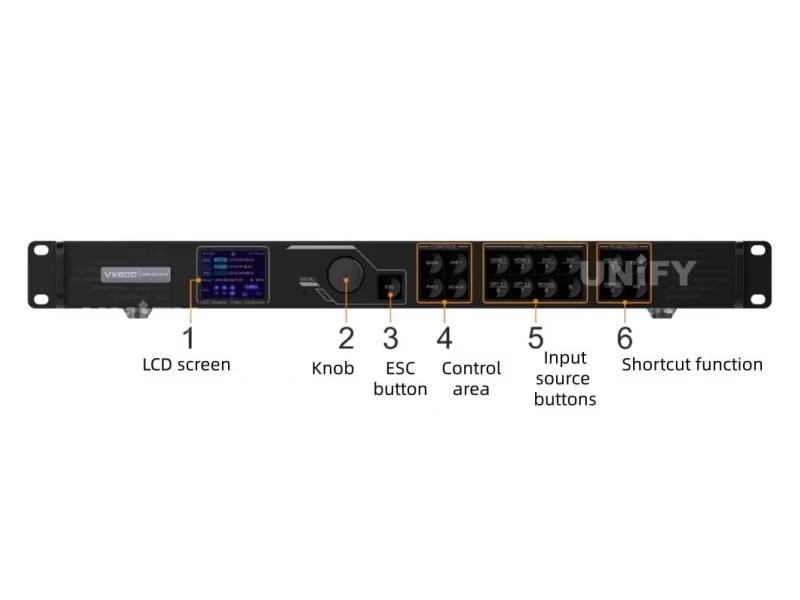
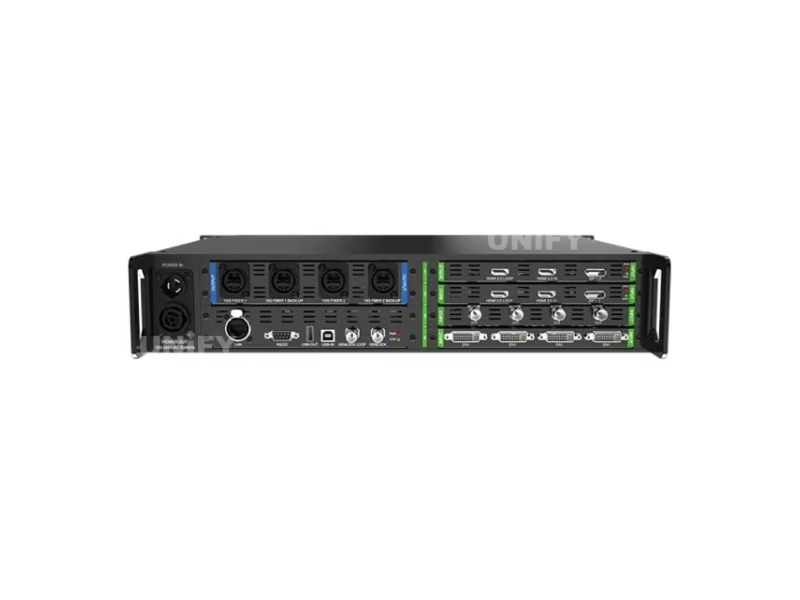
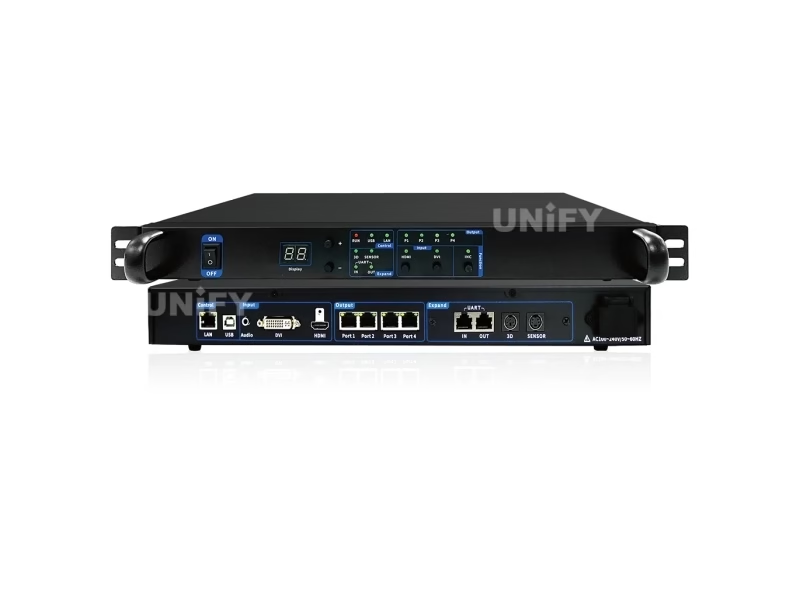
Six hardware ecosystems drive these fine-pitch modules — four control platforms plus two video-processing lines. Two control modes split the duty: synchronous racks run boardrooms, control rooms and studios in real time with per-pixel correction and low-gray tuning, while asynchronous players serve lobby and retail walls with app-based scheduling and cloud publishing. One rule holds everywhere: sending and receiving hardware must come from the same family, and on a fine-pitch wall the receiving-card generation matters — low-gray performance and correction data live in the card, so spec current-gen hardware.

NovaStar
The calibration benchmark — VX-class all-in-one controllers and A-series receivers carry the correction pipeline fine-pitch walls are judged by.
Best for: boardrooms, control rooms, studios

Colorlight
The value-performance leader — Z6-class 4K processors and i-series receivers cover fine-pitch walls end to end.
Best for: meeting room and retail budgets

Huidu
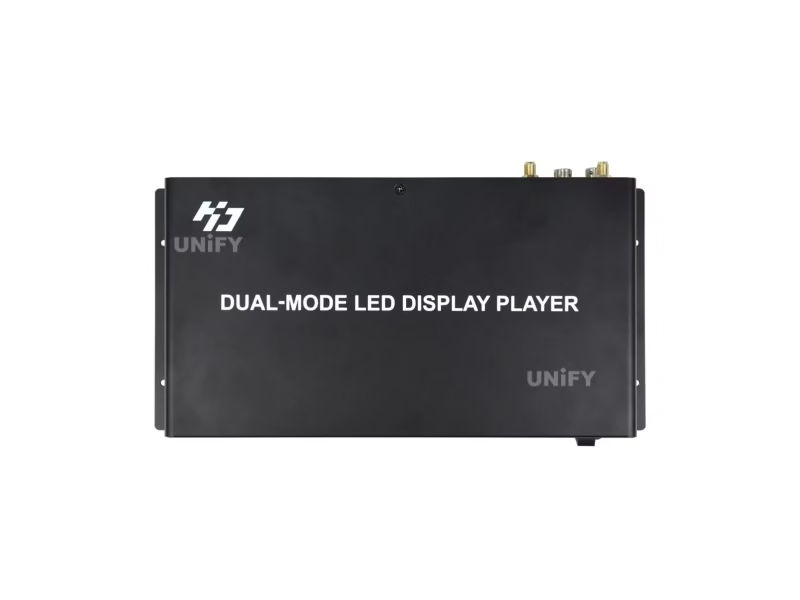
The dual-mode specialist — A6L-class players switch between synchronous and cloud-asynchronous duty, updating lobby walls from a phone.
Best for: unattended lobby and retail walls

Mooncell
The rising third force — MTB-class master controllers and 2-in-1 processors at aggressive price points for fixed installs.
Best for: cost-controlled fixed installs

VDWALL
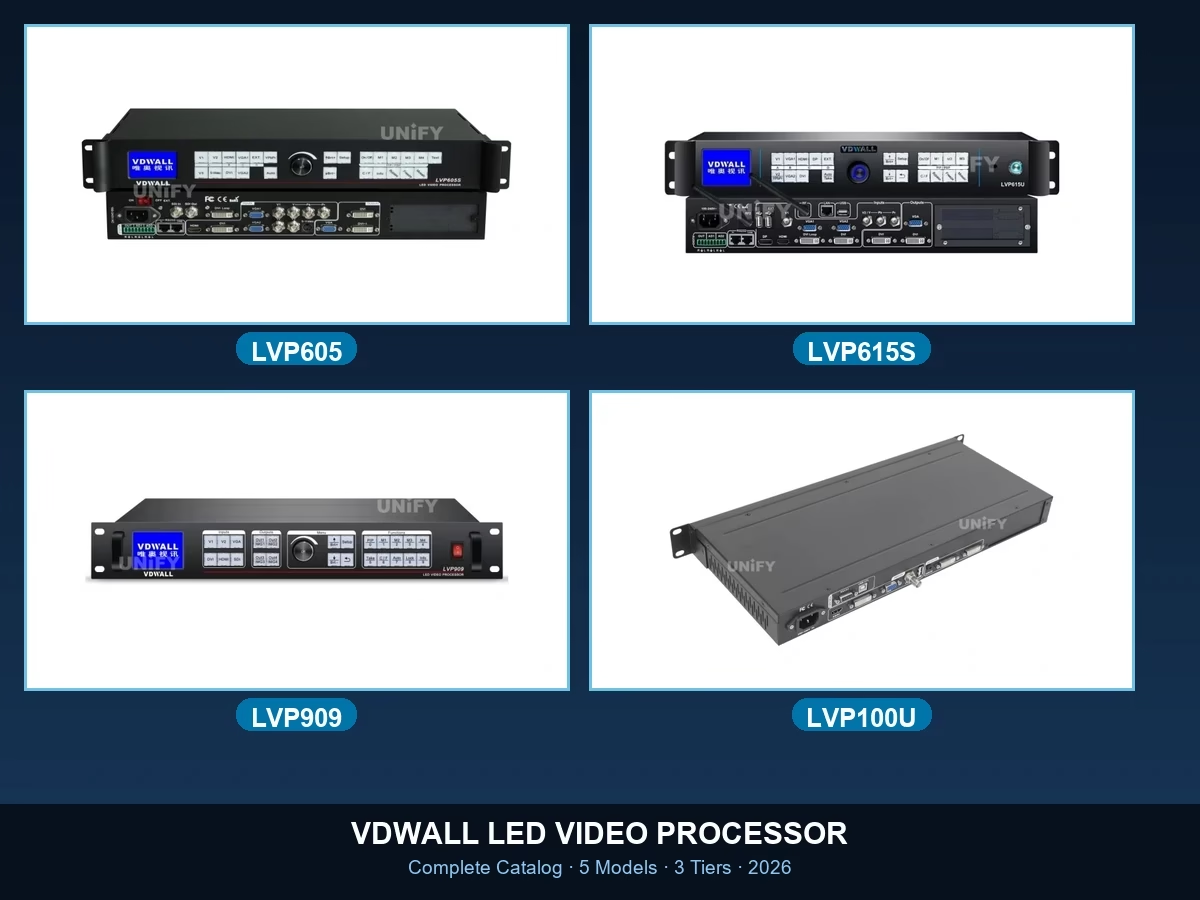
The touring-grade processor line — LVP processors drive large conference walls with proven field reliability.
Best for: large-format conference walls

RGBlink
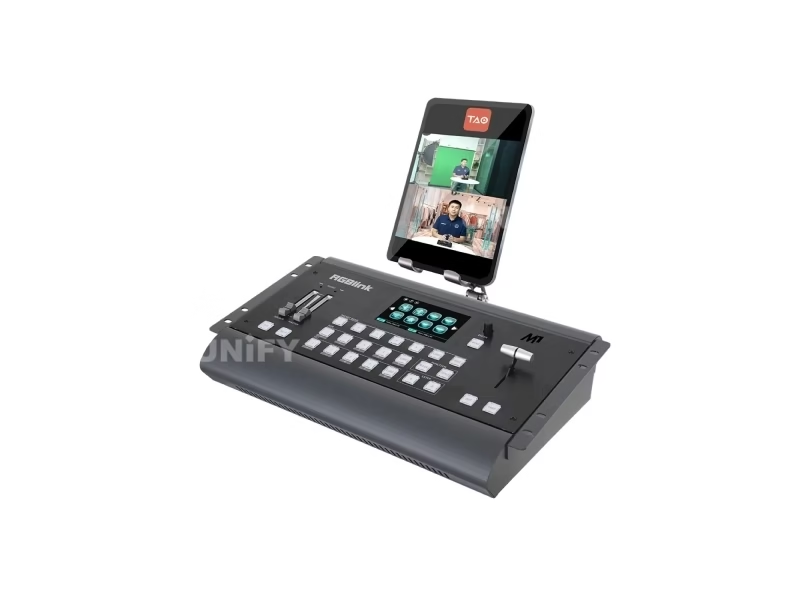
Switcher-processor hybrids with broadcast I/O — NDI-class production switchers bridge live cameras and the wall.
Best for: broadcast & streaming studios
Watch: X4m video controller (Colorlight official)
A 4K-class processor walkthrough — the hardware tier that feeds a fine-pitch wall its signal, scales any source to the cabinet grid and drives the correction pipeline behind the “per-pixel correction” line in our spec tables.
Hardware we fit across the six ecosystems — each card links to its own spec page:
How Close Is Too Close for a P1.25 Indoor Fine Pitch LED Display?
Pitch sets the floor of the viewing range, and indoors the floor is a furniture decision. Route yourself before you budget:
P0.9, P1.25 or P1.56 — Which Fine Pitch Step Fits Your Room?
This is the money question inside the fine-pitch class, and it reduces to one measurement — the distance to your closest viewer:
The 3 differences that decide it:
- Pay for distance you actually have — stepping up to P0.9 for a room viewed at 2.5m buys pixels the eye cannot resolve there; stepping down to P1.56 for a 2m table shows grain on text and faces.
- Encapsulation follows foot traffic, not fashion — P0.9 walls default to COB because their rooms get touched; P1.25 lets you choose SMD, GOB or COB per room.
- Bins and correction beat the last 0.3mm — within the class, wavelength binning, per-pixel correction and refresh decide the picture more than the pitch step itself.
Fine Pitch LED or LCD Video Wall — Which Should a Control Room Buy?
Control-room and boardroom buyers price both technologies, so here is the honest comparison:
The routing rule: walls past roughly 2–3 meters wide, rooms where one continuous image matters (command walls, briefing screens, studio sets) — fine pitch LED wins and the seam lines alone justify it. Small standard-size walls under ~110 inches on tight budgets — LCD still buys the picture. Pitch family detail: pixel pitch explained.
Price Transparency
How Much Does a P1.25 Indoor Fine Pitch LED Display Cost?
Market reference ranges (module prices scanned from live retail listings, converted at 19.5 boards per square meter and checked against complete-wall quotes — September 2026 market listing scan):
Reference: control hardware adds $500–2,000 per project, and local mounting steel plus installation run 20–30% of screen value. Inside the module, LED chips and the driver IC set take the largest cost share — which is why pitch, the decision that sets lamp count, remains the primary price lever. All figures are a market scan, not a quote.
Applications
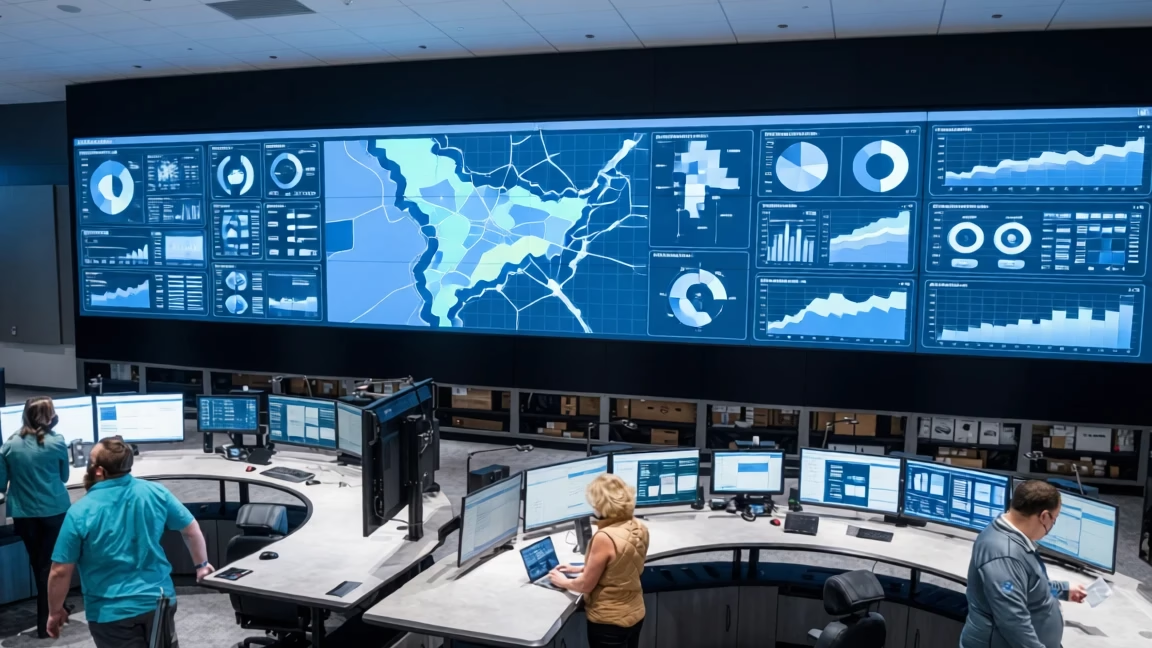
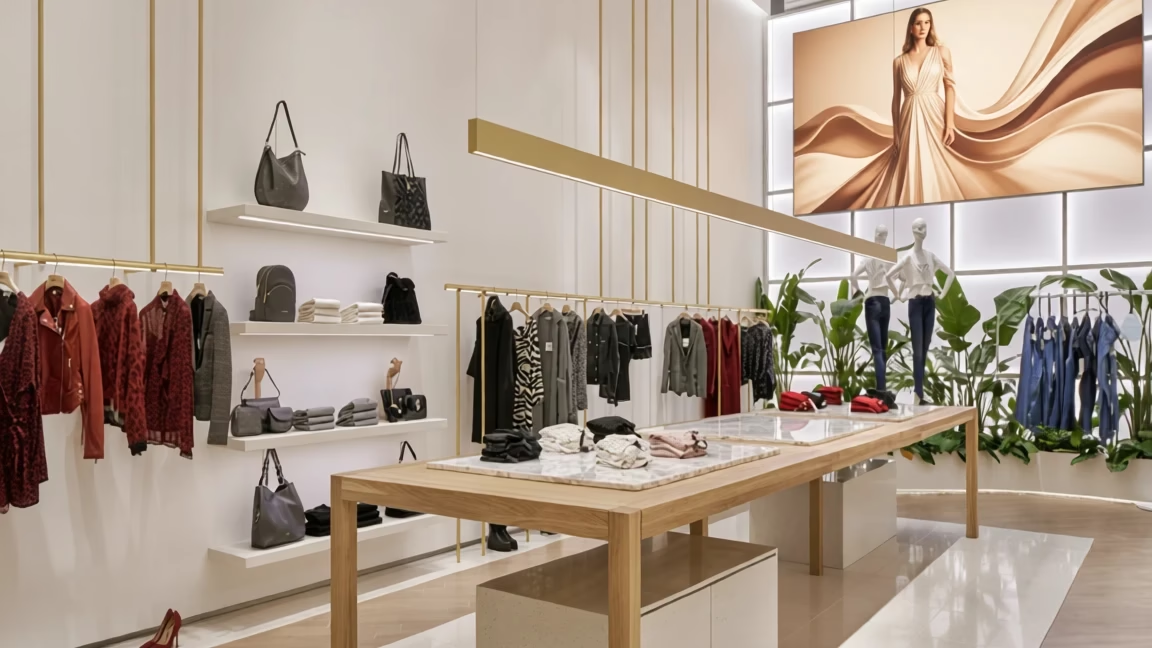
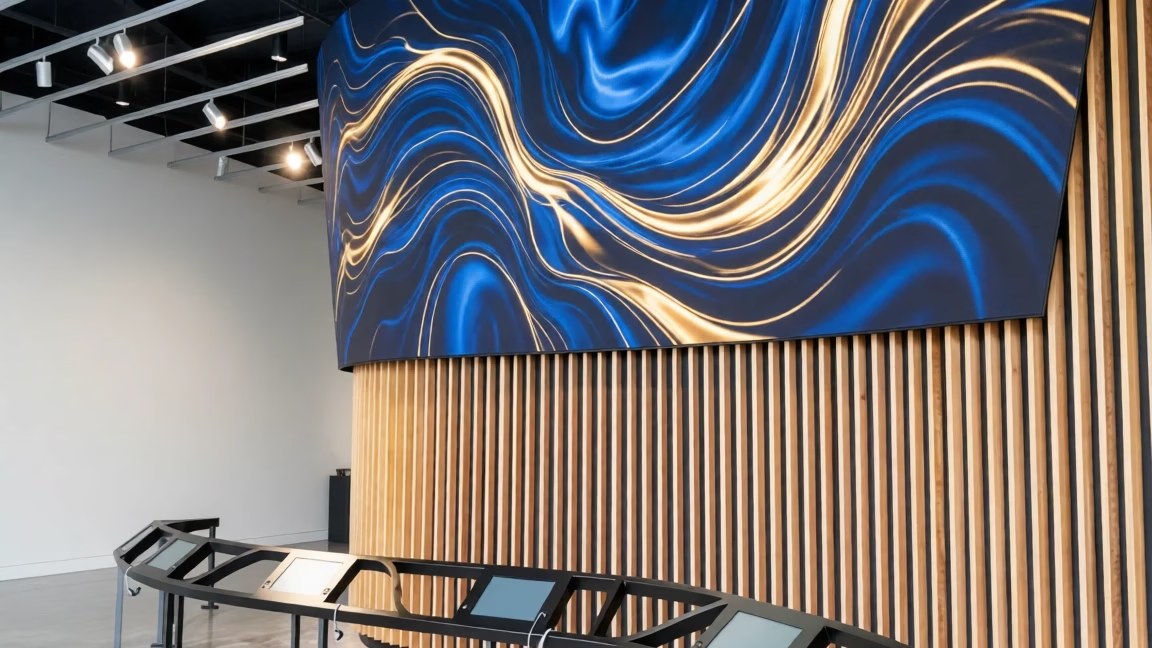
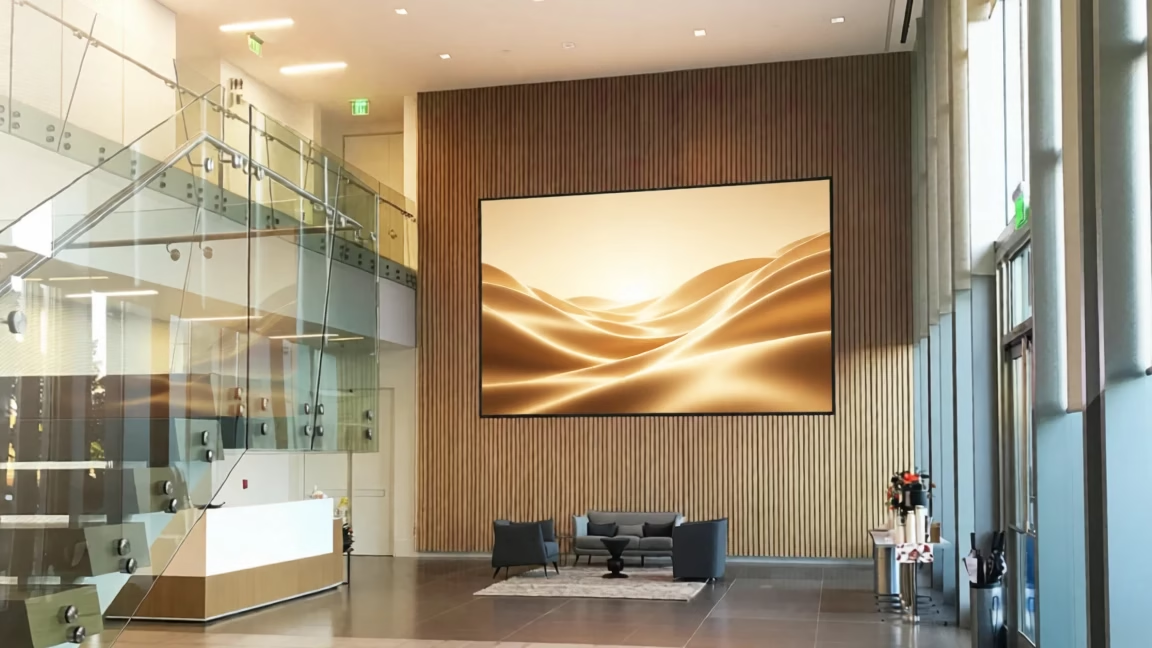
Where Does a P1.25 Indoor Fine Pitch LED Display Deliver the Most Value?
Eight placements where the 1.5–3m viewing band makes the 1.25mm class the smart buy:




Projects
What Have Real P1.25 Indoor Fine Pitch LED Display Projects Looked Like?
Reference placements for this class — boardroom, control room, studio and lobby builds. Ask us for named references in your market:


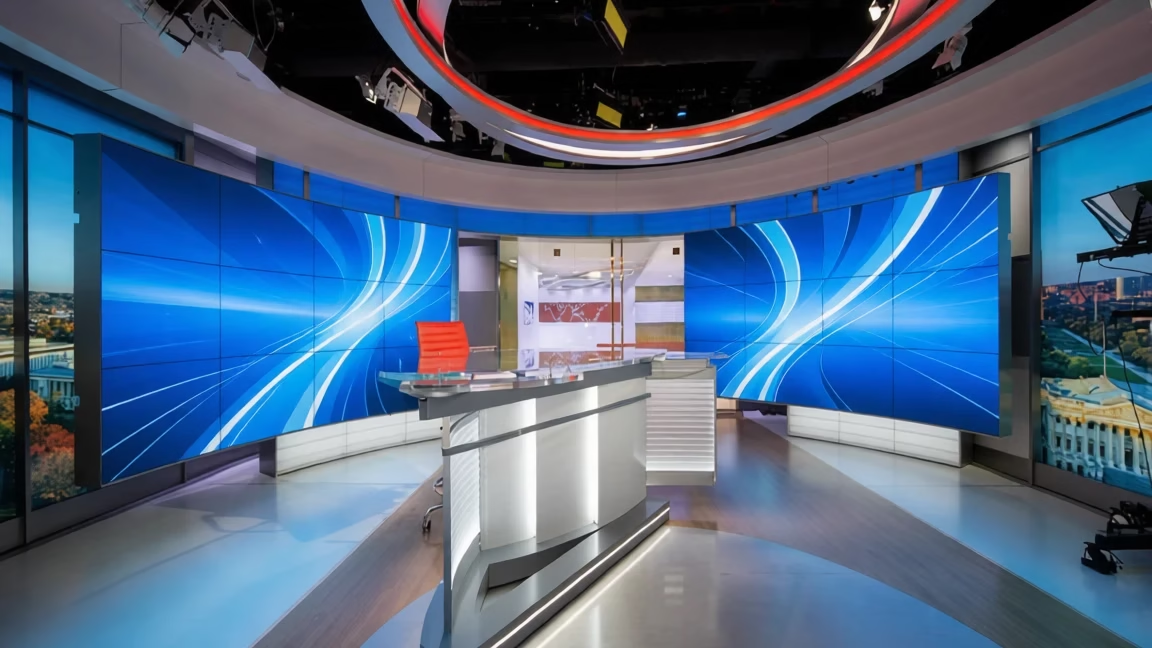
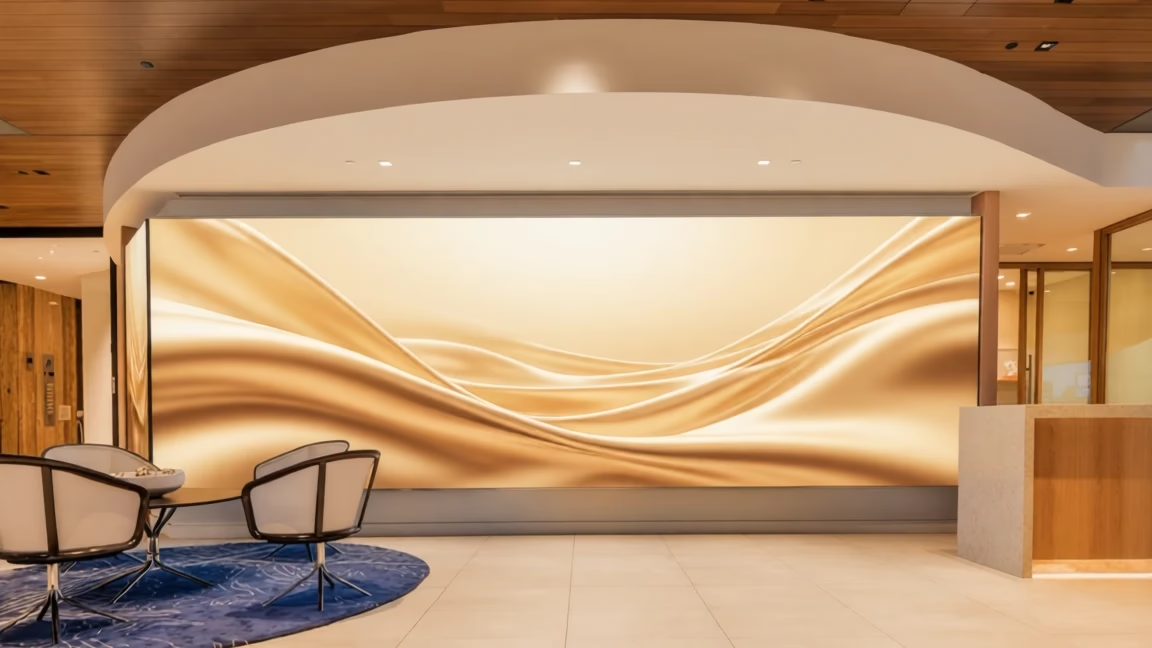
FAQ
P1.25 Indoor Fine Pitch LED Display: Frequently Asked Questions
What viewing distance does a P1.25 indoor fine pitch LED display need?
Plan for a closest viewer no nearer than about 1.5 meters, with the comfortable band at 2–3 meters — the range industry buying guides treat as the P1.25 sweet spot. Under 1.5m, finer pitches and COB builds earn their premium; past 3 meters, P1.56-class walls or our P2.604 indoor collection deliver the same perceived picture for less money.
How big does a P1.25 indoor fine pitch LED display need to be for native Full HD?
On the 16:9 engineering build — 150×168.75mm boards in 600×337.5mm die-cast cabinets — sixteen cabinets in a 4×4 array give exactly 1920×1080 on a wall of 2.4×1.35m (3.24㎡). Native 4K takes 64 cabinets in an 8×8 array: 4.8×2.7m, 12.96㎡. On the mainstream boards the wall is built from 512-pixel-class cabinets, so 1080p content is scaled to the wall rather than mapped 1:1 — fine for video, and the reason buyers who need native mapping specify the 16:9 build.
SMD, GOB or COB — which encapsulation should I order?
Follow the room, not the ranking. SMD1010 at base cost suits closed boardrooms and control rooms nobody touches. GOB (+10–15%) adds a transparent protective coat for lobbies, retail and exhibition traffic. COB (+40–60%) seals the face completely for 24/7 mission-critical walls and reads smoothest in close-up camera work — at the cost of bench-based repairs, so contract your spares up front.
Will a P1.25 indoor fine pitch LED display flicker on camera?
No — the class runs 3840Hz refresh, past the threshold where cameras and phones record banding or rolling dark bars. The field check takes ten seconds: point a phone camera in slow-motion mode at a running wall and look for scanning lines; a properly driven 3840Hz wall shows a clean frame. That is what makes this class safe for in-room cameras, livestreams and studio work.
Gold wire or copper-alloy wire lamps — does the wire material matter indoors?
It is the tier decision on every board we quote. Gold-wire bonds carry the 800-nit tier and hold lamp color through years of long-duty cycles; copper-alloy-wire lamps sit in the value tier and are the honest choice for budget rooms with moderate hours. Same board, same driver, same correction — ask which wire is fitted before you compare two “600–800 nit” quotes.
How much power does a P1.25 indoor fine pitch LED display use?
Plan for roughly 150–250W/㎡ on mixed content and 400–600W/㎡ at full white. A 10㎡ wall running 24/7 at an average 200W/㎡ draws about 17,500 kWh a year — near $1,750 on commercial tariffs. The 4.2V common-cathode energy-saving build cuts that by 30–40% and sheds less heat into a sealed room; brightness scheduling trims the after-hours bill further.
How is a P1.25 indoor fine pitch LED display maintained?
Full front service, standard: a magnetic suction tool pulls any module from the face in minutes, so the wall can sit flush against building structure with no rear walkway. Keep 3% spare modules and a matching receiving card on site and the common faults — a dead module, color drift on one board — are same-day swaps. This is the practical difference from outdoor walls, which mostly service from behind.
How much does a P1.25 indoor fine pitch LED display cost per square meter?
September 2026 market scans put a standard SMD1010 fixed wall (boards, die-cast cabinets, power, basic control) at $1,600–2,800 per square meter factory-direct, with module-only purchases at $90–120 per 320×160mm board. GOB adds 10–15% and COB 40–60%. A complete native-FHD 16:9 wall of 3.24㎡ lands around $5,200–9,100. Control hardware adds $500–2,000 per project; all figures are a market scan, not a quote.
Full Guide
Why Is P1.25 the Default Fine Pitch LED Display for 2–3 Metre Rooms?
A P1.25 indoor fine pitch LED display is the pitch the fine-pitch class settles on when the buyer cannot say exactly how close people will stand — meeting rooms where a presenter walks up to the wall, control rooms where an operator leans in, lobbies where a visitor stops two steps from the face. This guide walks the reasoning from both sides: the arithmetic that makes 1.25mm the safe middle of the ladder, and the hardware decisions — wire, bins, encapsulation, power — that decide whether a given P1.25 wall actually earns the class name.
The arithmetic behind the 2–3 metre rule
At 1.25mm pitch the wall packs 640,000 pixels into every square meter — three module formats on this page (320×160mm, 200×150mm, 250×250mm) all land on exactly that number, which is not a coincidence but the definition of the class. Density is what converts into format freedom: 640,000 px/㎡ means a 2.4×1.35m wall carries 1,152×648 pixels, and the 16:9 engineering build maps 1920×1080 onto the same footprint with zero scaling. Native 4K arrives at 4.8×2.7m — 12.96㎡ of wall, roughly one parking space, displaying four times the pixels of a cinema screen at a third of its viewing distance.
The ladder bounds follow from the eye, not the datasheet. Industry buying guides put P0.9 walls at viewing inside 1.5 meters, P1.25 at 2–3 meters, and P1.56 past 3 meters — and the cost curve between them is steep, because lamp count per square meter rises with the square of the pitch ratio. Step up from P1.25 to P0.9 for a room nobody uses inside two meters and you pay a COB-class premium for resolution the eye cannot resolve at that distance. Step down to P1.56 for a wall read across a meeting table and grain appears on 12-point text before it appears on video. P1.25 holds both edges: sharp enough for desk-side inspection, priced like a mid-class wall. That balance — not any single spec — is why it outsells its neighbors in boardroom and control-room programs.
What the spec sheet hides: wire, bins and refresh
Two P1.25 walls with identical density can look different from two meters away, and the differences hide in three line items. First, the wire inside the lamp: gold-wire SMD1010 lamps hold the 800-nit tier and their color calibration through years of duty, while copper-alloy-wire lamps trade some of that stability for cost — an honest choice for a meeting room used two hours a day, a false economy in a 24/7 control room. Second, the bins: strict wavelength and brightness sorting before assembly is what keeps one corner of the wall from drifting warm against the other. Third, the correction: control-system hardware per-pixel calibration, loaded at the factory and refreshed on site, is what makes 300 boards read as one image instead of 300 tiles.
Refresh is the item cameras expose. The 3840Hz standard on this class clears the banding that phones and broadcast cameras pick up at lower scan rates — but refresh is generated by the driver IC generation and the receiving card, not promised by the lamp, so it belongs in the purchase order by name. Our engineers run three checks before a P1.25 wall ships: a dark-screen uniformity pass with the wall blacked, a phone slow-motion capture to confirm the scan, and an eight-hour burn to catch color drift while the wall is still ours to fix. Any supplier who ships without those three checks is selling you the discovery process.
SMD today, GOB and COB where the room demands
Below P2.0, the lamp face becomes a durability decision, and the market splits it three ways. SMD1010 — discrete lamps on the board — is the mature, serviceable default and the right answer for closed rooms. GOB pours a transparent coat over the lamps and buys lobby-and-retail durability for 10–15% over base. COB integrates the LEDs under a single sealed face: nothing to knock off, the smoothest surface in close-up shots, and a 40–60% premium with bench-based repairs. The choice tracks foot traffic, not fashion — a boardroom nobody touches and an airport lounge someone cleans nightly should not carry the same line item. On this collection every module format is orderable in all three encapsulations, which is worth confirming with any supplier whose catalog only shows one.
Power, heat and the closed room
Fine pitch runs cooler than its lamp count suggests — small lamps, high scan, and die-cast aluminum cabinets acting as heat spreaders. Budget 150–250W/㎡ on mixed content and 400–600W/㎡ at full white; a 10㎡ control-room wall at an average 200W/㎡ draws near 17,500 kWh a year. The 4.2V common-cathode build trims that 30–40% and keeps the heat out of a sealed room, which your HVAC planner will notice before you do. Front service completes the indoor picture: modules pull from the face with a magnetic suction tool, so the wall mounts flush against structure with no rear walkway — the installation pattern that makes fine pitch possible in retrofitted boardrooms and control rooms in the first place.
Budgeting a P1.25 indoor fine pitch LED display
September 2026 market scans put module-only purchases at $90–120 per 320×160mm board — GOB-listed modules scanned at $93–116 — which converts to roughly $1,750–2,350/㎡ of modules, and complete standard walls at $1,600–2,800/㎡ factory-direct. Add control hardware at $500–2,000 per project and local steel plus installation at 20–30% of screen value. For a concrete anchor: the native-FHD 16:9 wall of 3.24㎡ — sixteen cabinets, 1920×1080, the exact size most boardrooms want — lands around $5,200–9,100 complete. Against that, two line items repay themselves quietly: 3% spare modules, which turn the first dead board from a service call into a ten-minute swap, and a single control family chosen for the whole wall, because mixed sending and receiving hardware is the most expensive “compatibility feature” in the industry.
The 6-point buying checklist for a P1.25 indoor fine pitch LED display
- Measure the closest viewer — 1.5–3m keeps you on this pitch; inside 1.5m ask about finer/COB, past 3m bank the budget on a coarser class.
- Name the wire tier — gold wire for 12h+ duty and the 800-nit tier; copper-alloy wire for budget rooms, stated in the quote.
- Match encapsulation to traffic — SMD1010 closed rooms, GOB touched walls, COB 24/7 mission-critical faces.
- Put 3840Hz and the receiving-card generation in the order — refresh lives in the ICs and cards, not the lamp.
- Native FHD or 4K? — specify the 16:9 build (600×337.5mm cabinets) when the wall must map broadcast formats 1:1.
- Front service and 3% spares in writing — magnetic suction tooling and the spare stock are what turn faults into non-events.
Work the list in order and the fine-pitch decision reduces to arithmetic. A P1.25 indoor fine pitch LED display is not the finest wall money can buy — it is the pitch that pays for itself in rooms where people get close, the image has to survive cameras, and the wall has to live flush against the building for the next decade.
Related P1.25 Indoor Fine Pitch LED Display Resources
P2.604 Indoor Rental LED Display Collection →
P2.976 Indoor Rental LED Display Collection →
P3.91 Indoor Rental LED Display Collection →
P1.25 Indoor Flexible LED Display →
LED Screen Calculator →
LED Display Power Supply Hub →
LED Control System Hub →
Pixel Pitch Explained →
Outdoor LED Display Price Guide →
Spec Your P1.25 Indoor Fine Pitch LED Display With Our Engineers
Send us the room, the closest viewing distance and the wall size. You get a module-level quote with lamp wire tier, encapsulation (SMD/GOB/COB), scan mode, cabinet format — including the native-FHD 16:9 build — and control stack itemized, with 3% spare modules included.
UnifyLED — LED screen manufacturer · unifyledscreen@gmail.com · Changsha / Shenzhen, China
Browse our guides: Indoor LED Display Buying Guide