
Huidu LED Controller
The full Huidu LED controller catalog — 12 models across four product lines: single-dual color W cards, three-in-one VP video processors, A-series players and C-series control cards, with HDSet, HDPlayer and HD Show software and factory-direct pricing.
What Is the Huidu LED Controller?
The Huidu LED controller is the control-system family from Shenzhen Huidu Technology — one of the three mainstream LED control ecosystems alongside NovaStar controllers and Colorlight controllers. The catalog on this page covers four product lines on one software chain — W-series single-dual color cards, VP-series three-in-one video processors, A-series players and C-series control cards, all configured with HDSet and played with HDPlayer or HD Show.
Short answer: a Huidu LED controller is the control hardware that drives an LED screen — sending cards and video processors for live video walls, players and control cards for offline signage, single-dual color cards for storefront text. Choose Huidu when the project wants a full catalog on one software chain (HDSet/HDPlayer/HD Show), cloud remote control without a subscription fee, and factory-direct pricing. The four-line quick reference below matches every project to a model.
Huidu Controller — Huidu Technology Showroom Real Shot
Which Huidu LED Controller Runs Single and Dual-Color Displays?
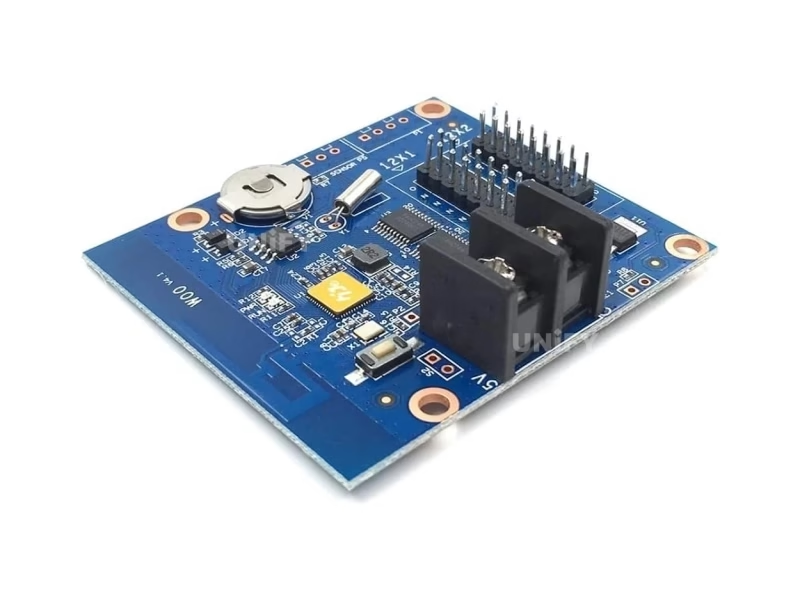
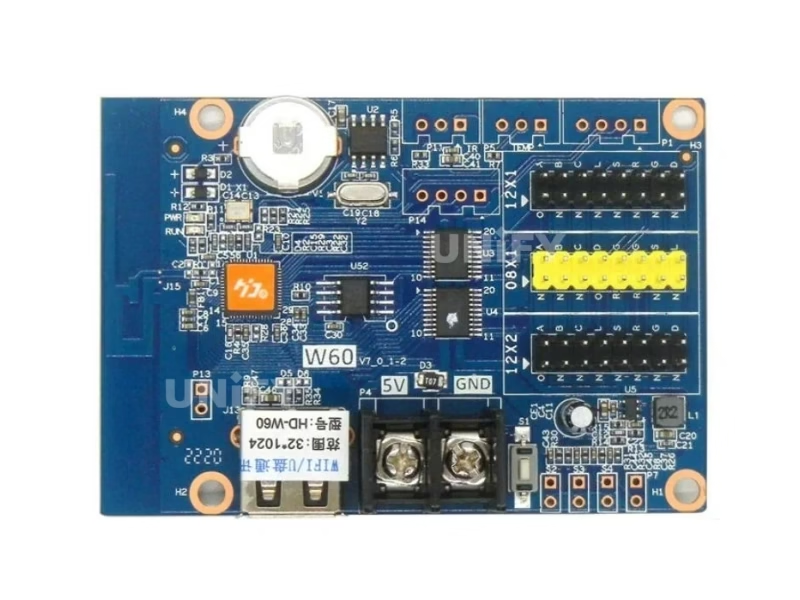
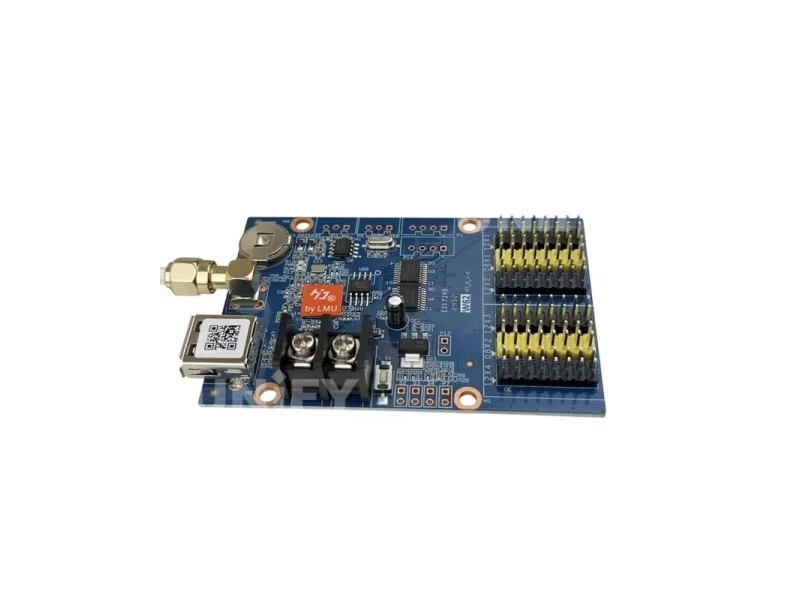
The W series drives storefront text, bar signs and window displays — Wi-Fi programmed, no computer on site:
Which Huidu LED Controllers Are the VP-Series Video Processors?
The VP series is the three-in-one line — video processing, sending card and scene management in one box, for live video walls and stage screens:
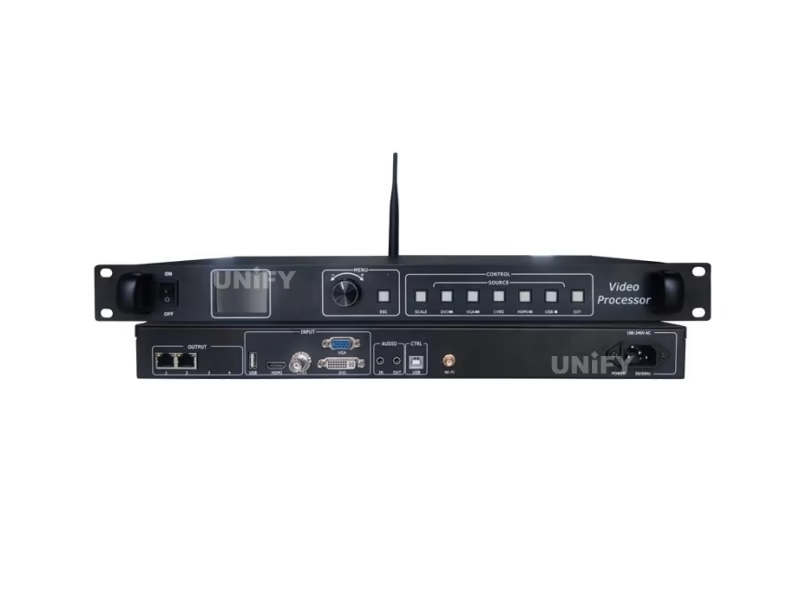
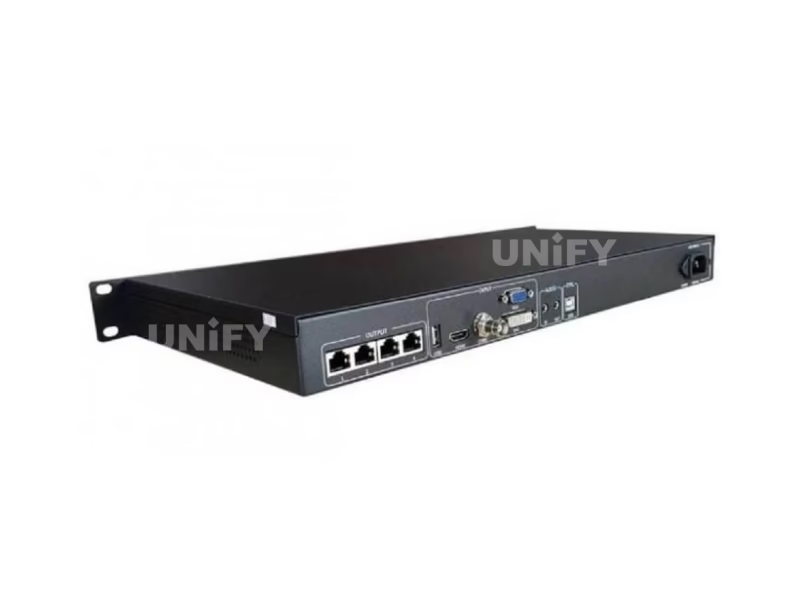
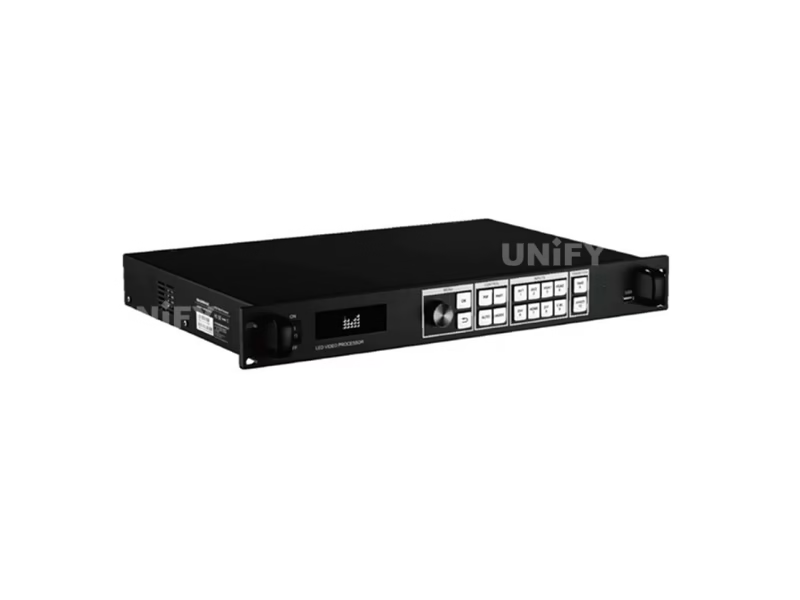
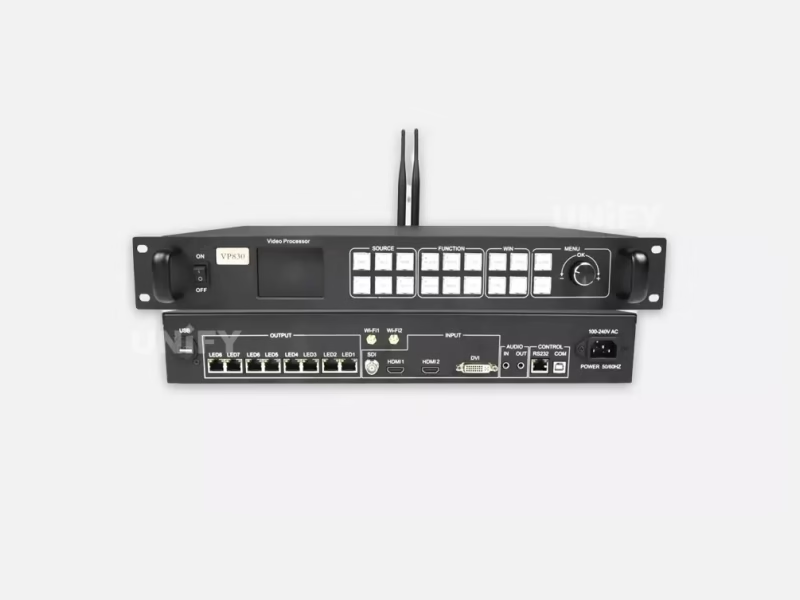
Huidu Controller — Major Upgrade Huidu VP Series LED Video Processors
Which Huidu LED Controllers Play Programs Offline?
The A-series players and C-series control cards run content from U-disk, Wi-Fi or the Huidu cloud — no computer, no subscription:
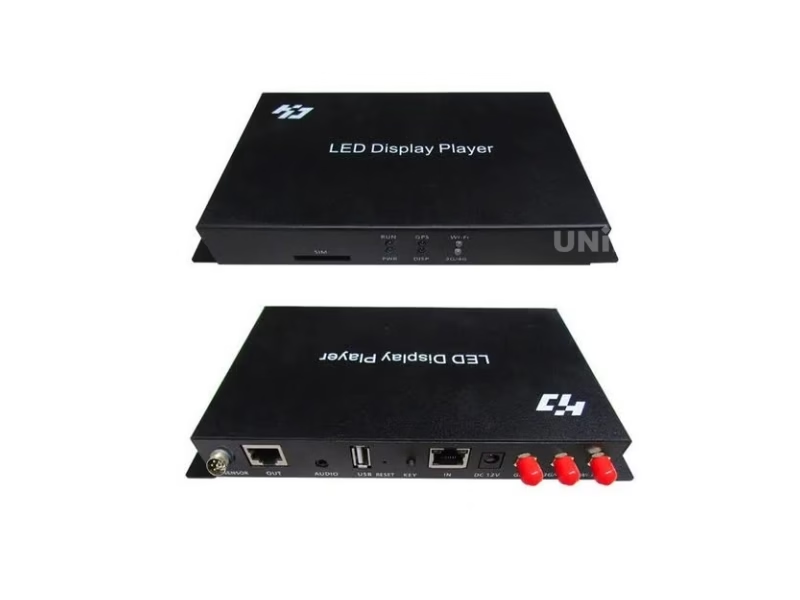
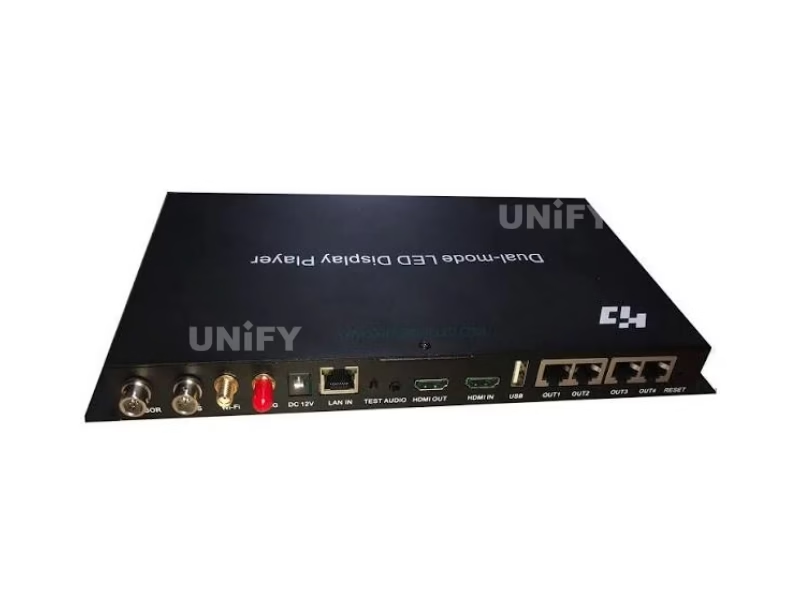
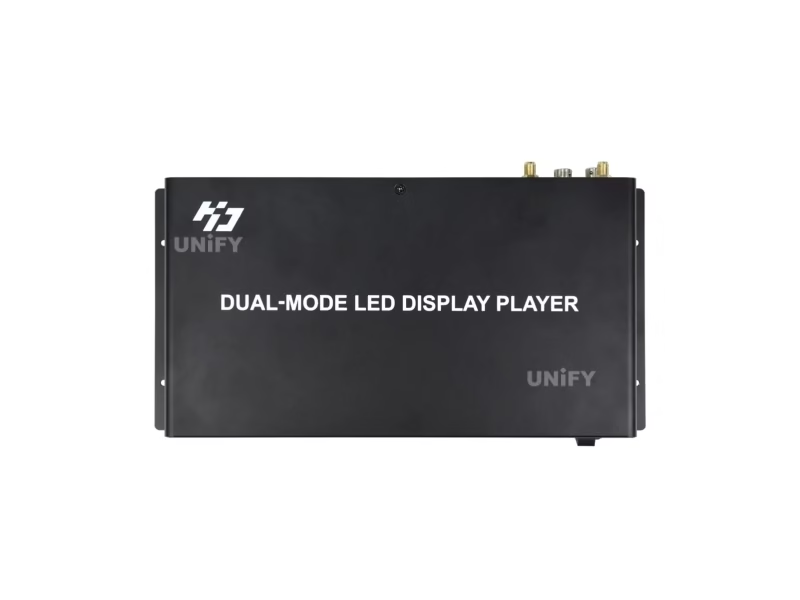
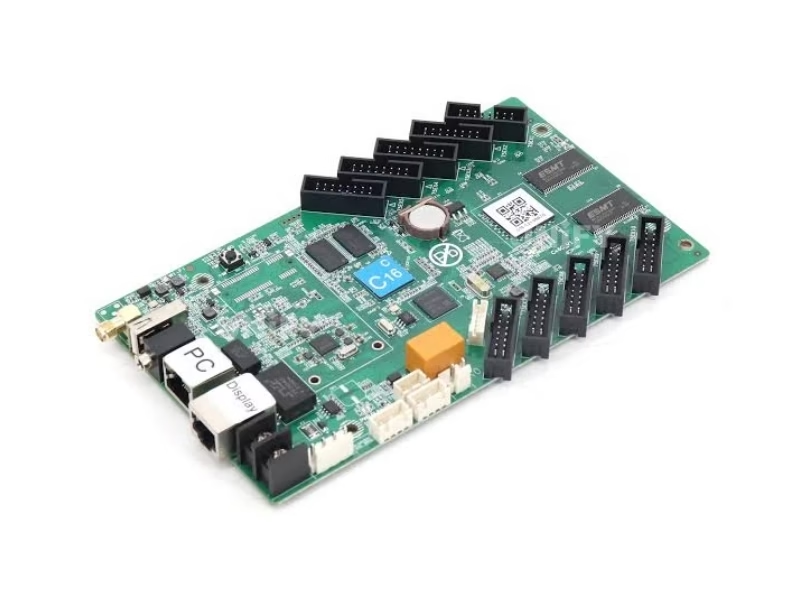
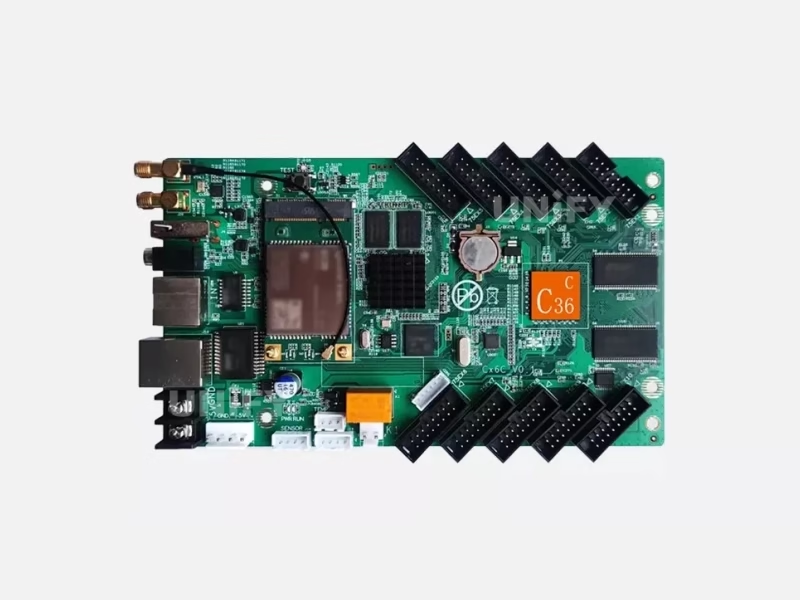
Huidu Controller — Unveiling New C16H Huidu Asynchronous Controller Supporting HDMI input
How Do You Choose a Huidu LED Controller for Your Project?
Four routes, one table — match the project to the line, then to the model:
The software chain is one across all four routes: HDSet configures the screen, HDPlayer plays and schedules programs, and HD Show drives synchronous shows. The deeper selection logic is in how to choose a Huidu LED control system.
Huidu Controller — LED Displays Can Do More Than You Think Synchronous and Asynchronous
How Does the Huidu LED Controller Compare With Colorlight and NovaStar?
The three mainstream control ecosystems at a glance:
The model-by-model comparison is in Huidu vs Colorlight vs NovaStar, and the processor-level matchup in VP vs MCTRL vs X2.
Where Do You Get Huidu LED Controller Software and Support?
Software
Buying & Comparison
Troubleshooting
What Should You Ask Before Buying a Huidu LED Controller?
What Certifications Do Huidu LED Controllers Carry?
The honest position on documentation: Huidu’s official product documents do not publish a public certification list, and we do not print certification marks that were never filed. The certification documents applicable to your model ship with the quotation and the order — ask for the exact certificates the project requires, and we confirm them in writing before the order closes.
Ready to Source Huidu LED Controllers?
Factory-direct quotes for all 12 models, with software setup support and same-batch spares.
unifyledscreen@gmail.com | +86-191-18802497
How Does the Huidu LED Controller System Work?
Published: August 2026 | 12 min read | UnifyLED Engineering Team
Every LED screen runs on the same five-layer pipeline: a source, a sending layer, a receiving layer, a software layer, and the LEDs themselves. The Huidu LED controller family is one of the three ecosystems that fill every layer of that pipeline, and this guide walks the architecture the way a systems integrator reads it — layer by layer, model by model, with the selection and procurement decisions in plain arithmetic. A full-line LED screen manufacturer ships the whole chain — screens, controllers and software setup — from one factory, which is the procurement shortcut this guide assumes.
Short answer: the Huidu LED controller system works as four hardware lines on one software chain — W-series cards drive single-dual color text, VP-series processors drive live synchronous walls, A-series players and C-series cards run offline programs, and HDSet, HDPlayer and HD Show configure, schedule and play them all. Four key differences separate the buying routes: signal type (live vs scheduled), screen width in pixels, control distance, and budget tier.
Chapter 1 — The Pipeline: One Chain, Five Layers of the Huidu LED Controller System
Every control system is the same five layers wearing different nameplates: the source (a camera, a media server, a U-disk), the sending layer (a sending card or an integrated processor), the receiving layer (receiving cards on the cabinets), the software layer (configuration and playback), and the LED modules. The Huidu catalog covers the sending layer in three forms — dedicated processors, integrated three-in-one boxes, and asynchronous players — and covers the software layer with three free tools. The architecture decisions below all live in these five layers.
The receiving layer deserves its own note, because it is the compatibility question every buyer asks first. Huidu sending hardware drives standard receiving cards across the industry ecosystem, so an existing cabinet fleet does not need a card swap to move onto the Huidu chain — the engineering team verifies the HUB interface pairing against the module datasheet before shipping, which turns the compatibility question into a paperwork step instead of a hardware risk.
Chapter 2 — The Single-Dual Color Layer: W-Series Huidu LED Controllers
Single-dual color control is a product category that earns its simplicity. A W-series card is a small Wi-Fi controller that stores text and simple graphics programs on board and drives a storefront sign with nothing but power — no computer, no sending card, no operating staff. The W00 opens the range, the W60 adds the fuller feature set, and the W62 extends it with six HUB ports and an external antenna for long-range sites. The buying logic is the display width in pixels against the card’s loading range, plus the Wi-Fi distance the site demands — everything else in this category is text effects and scheduling, and both are software features, not hardware differences.
The field habit that keeps a W-series network healthy: keep the U-disk path working even on Wi-Fi-first sites, because the first rainy season will test every outdoor antenna in the fleet. A store network runs on the second connection — when the Wi-Fi drops, the U-disk update from the shop counter keeps the sign selling. Cards that ship with both paths configured are the ones that never go dark for a week waiting for a technician.
Chapter 3 — The Synchronous Layer: VP-Series Huidu LED Controllers
A three-in-one video processor is a single box that merges the video processor, the sending card and the scene management into one unit — HDMI, DP and SDI sources go in, Gigabit network ports go out to the receiving cards. The VP line runs VP210, VP410, VP620 and VP830 in ascending capacity and input depth. Four key differences between the VP models decide the purchase:
- Loading capacity: the pixel ceiling of each model — match it to the wall’s total resolution, not the screen size.
- Input depth: from dual-gigabit entry models to 4K HDMI 2.0, DP and SDI on the production tiers.
- Scene features: PIP/POP dual-picture and three-window layouts arrive on the higher models.
- Control interfaces: Wi-Fi, RS232 and IR appear on the flagships for rack and remote control.
The synchronous route is where Huidu competes hardest on value: the VP boxes undercut the broadcast-tier processors of the other two ecosystems while covering the same signal chain, which is the reason the VP vs MCTRL vs X2 comparison reads the way it does.
The capacity headroom habit applies here harder than anywhere: the wall’s pixel map grows by the row every season, and a processor sized exactly for today’s wall becomes the bottleneck at the first expansion. Buy one tier of headroom — the price difference between two adjacent VP models is smaller than the cost of re-quoting and re-installing the control rack when the wall outgrows the box.
The broadcast habit that protects a live show: run the primary source on the main input and keep the backup source wired to the second input, with the scene preset switching rehearsed before doors open. A processor with two live inputs turns the worst moment of a show — a dead camera line — into a one-button scene change. That input redundancy is the difference between an event controller and a broadcast controller, and it is the reason the mid-tier VP models carry the production work on this catalog.
Chapter 4 — The Offline Layer: A-Series and C-Series Huidu LED Controllers
Asynchronous control is the category that runs signage without a signal. An A-series player is an Android-based box that stores the program library, schedules playback and publishes remotely through the Huidu cloud — no subscription fee, which is the deciding line item for store networks with dozens of screens. A C-series card does the same job in card form for cabinet integration. The A5 and A6L add dual mode — the same unit switches between live synchronous input and scheduled asynchronous playback, which is the feature a venue buys when its screen shows the game at seven and the sponsor reel at nine.
The publishing workflow that makes a store network cheap to run: one operator, one program library in HDPlayer, cloud publishing to every site, and per-site schedules that the store managers never touch. The subscription question is the first line of the cost model — a platform that bills per screen per month changes the arithmetic of a forty-site network overnight, which is why the subscription-free cloud is a procurement criterion, not a footnote.
Chapter 5 — The Software Layer: HDSet, HDPlayer and HD Show for Huidu LED Controllers
HDSet is the configuration tool — it maps the receiving cards, sets the module data groups and locks the screen geometry. HDPlayer is the playback and scheduling tool for asynchronous and dual-mode units. HD Show is the synchronous show software for VP processors. All three are free downloads from the Huidu system download page, and the operational walkthroughs live in the HDPlayer software guide. The software layer is the reason the four hardware lines feel like one system: one configuration habit serves every model in the catalog.
The training dividend of the single chain shows up in the crew plan: a technician who can configure a W62 can configure a VP830, because the data-group logic, the smart-setting routine and the schedule editor are the same tools on every model. Integrators standardize on one control ecosystem for exactly this reason — the software habit compounds across every project, and the Huidu chain is the shortest learning curve of the three ecosystems for a new technician.
Chapter 6 — Selection in Practice: Three Huidu LED Controller Project Profiles
Profile one — a bar chain with forty storefront signs: W62 cards with external antennas, HDPlayer scheduling, cloud publishing, one operator. Profile two — a live event company running a P2.5 stage wall: a VP620 with SDI from the camera switcher, scene presets per act, HD Show on the control laptop. Profile three — a retail mall with a mix of scheduled walls and a live atrium screen: C36C cards on the schedule, an A6L dual-mode player on the atrium, one HDPlayer library for everything. The three profiles share one buying pattern: match the route to the signal first, then pick the model on pixel width and control distance.
The one failure pattern to avoid: buying a synchronous processor for a scheduled sign, or an asynchronous card for a live wall. Both mistakes read the same way in the quotation — the wrong route costs the whole control system twice, because the software chain cannot bridge the signal type. The quick reference table above exists to kill that mistake at the quoting stage.
The commissioning check that closes every profile: configure the smart setting against the module datasheet, run the test pattern across every HUB port, send one program through the cloud and one through the U-disk, and record the wall on a phone camera at 240fps. The 240fps recording is the cheapest broadcast-camera simulation available — flicker that survives the phone will not survive a real broadcast camera, and catching it at commissioning costs nothing.
The mixed-generation rule keeps an existing fleet healthy: Huidu hardware ships compatible with the standard receiving cards already on the cabinets, so a venue upgrading control does not need to re-open every panel. New sending hardware on old receiving cards runs at the old cards’ ceiling, not the new box’s — set expectations in the quotation, and schedule the card refresh as a second phase when the budget allows. The ecosystem’s tolerance for mixed generations is the quiet reason Huidu fleets stay on Huidu for the second purchase.
Chapter 7 — Procurement: Verified Huidu LED Controller Prices and the 2026 Reality
Verified market listings scanned in August 2026 put the Huidu range on a consistent price ladder — entry W-series cards at the bottom rung, C-series cards and A-series players in the middle band, VP-series processors at the top, with each model’s verified price published in Huidu LED control card price 2026. The procurement habit that protects every order: confirm the loading range against the wall’s pixel map before payment, request certification documents in writing if the project files require them, and order same-batch spare units with the fleet. A verified LED screen manufacturer ships the controllers with the software setup and the documentation to prove it.
The financing habit rounds out the discipline: control hardware depreciates fast because it sits at the center of every upgrade cycle, so buy the capacity the next wall will need, not the wall you have. A processor sized for the current screen retires the day the screen grows; a processor sized with one headroom tier survives the first expansion and half the second.
The sample-order check that protects the fleet purchase: one unit of the target model, configured end-to-end on a bench cabinet, a cloud publish, a U-disk publish, and a 72-hour continuous run with the schedule cycling. The sample order also tests the supplier’s documentation habit — batch numbers, the software download package and the receiving-card pairing sheet — which predicts how the full fleet will be supported. One sample unit costs less than the cheapest day of downtime it can prevent.
Conclusion: The Huidu LED Controller Standard
The Huidu LED controller family earns its place as the value tier of the three-horse LED control market because it runs the whole pipeline on one chain: four hardware lines for the four signal routes, three free software tools for the whole catalog, and a subscription-free cloud for the remote sites. The integrator who matches the route to the signal, sizes the model to the pixel map, and buys one capacity tier ahead — runs screens that keep their picture, their schedule and their place in the budget through every expansion. The controller is the platform; the route discipline is the system.
The three-horse market rewards the buyer who reads all three catalogs before writing one purchase order — the NovaStar and Colorlight hubs sit beside this one for exactly that comparison. The decision is the route, then the model, then the price — and the Huidu chain answers all three on one software habit.
The Complete LED Screen Display Control System Catalog
All six brands in one place: NovaStar · Colorlight · Mooncell · VDWALL · RGBlink
The master page — LED screen display control system — routes every project profile to a brand with 2026 verified prices.