
Huidu VP Series · 2-in-1 Video Processor + Sending Card · 4K Input
Huidu HD-VP620 Three-in-one LED Video Processor
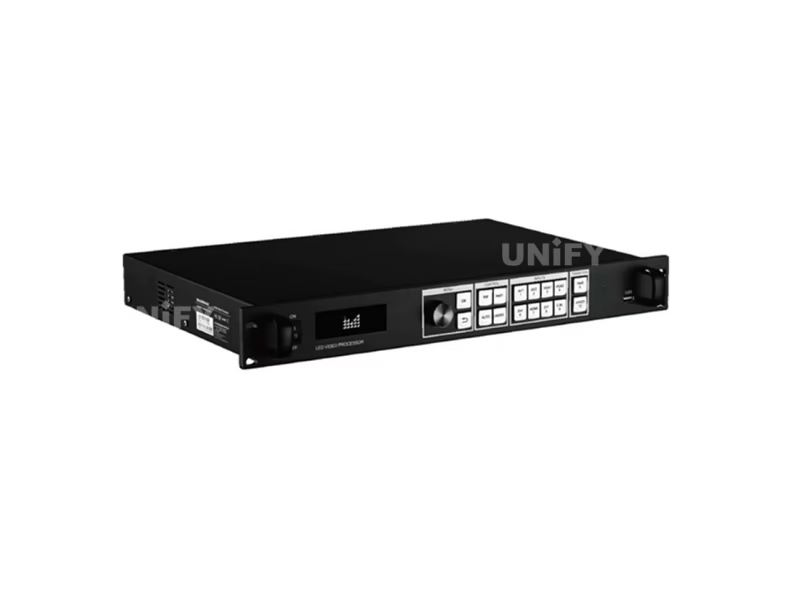
The Huidu HD-VP620 LED Video Processor — sold under the three-in-one name, but officially a two-in-one 4K controller from Shenzhen Huidu Technology: a video processor and synchronous sending card in one 1.5U chassis, driving up to 3.9 million pixels across six Gigabit outputs with 4K@60 input, dual-window PIP/POP and Wi-Fi as standard.
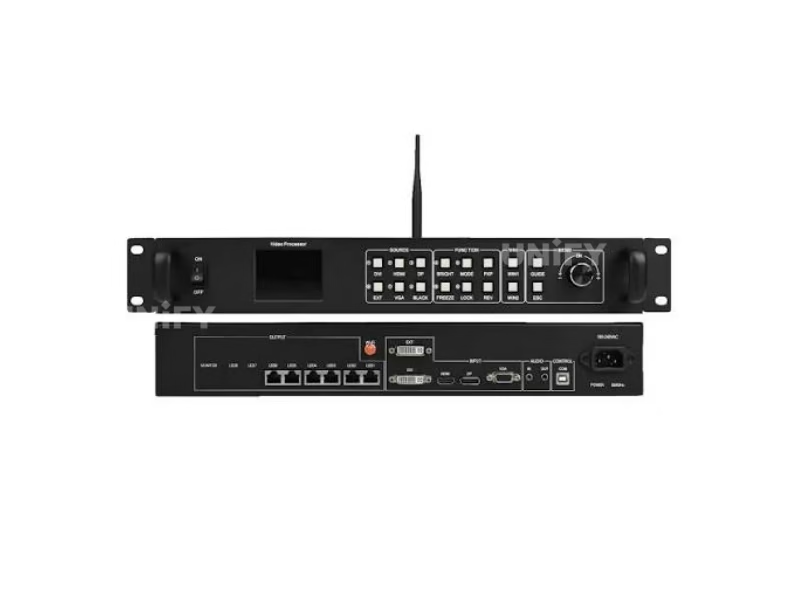
Product Overview
What Is the Huidu HD-VP620 LED Video Processor?
The HD-VP620 is a 2-in-1 LED video processor with a built-in synchronous sending card, officially classified by Huidu Specification V2.1 as a “two-in-one all-in-one” controller: it combines video processing and sending-card output in a 1.5U chassis, drives up to 3,900,000 pixels across six Gigabit ports, takes 4K@60 input over HDMI 2.0 and DisplayPort 1.2, and ships with Wi-Fi as standard. The “three-in-one” label used by some marketplaces is a mislabel — the VP620 has no USB media player, which is the third function that defines the HD-VP210 and HD-VP410 as three-in-one units.
Short answer: The Huidu HD-VP620 is a two-in-one LED video processor and synchronous sending card in one 1.5U box: 3.9 million pixels across six Gigabit outputs (the official document states 650,000 pixels per port), 4K@60 input over HDMI 2.0 and DP 1.2, five input channels with an EXT port that takes DVI or SDI, dual-window PIP/POP, eight scene presets, Wi-Fi and a mobile app as standard — powered from 100–240 VAC and set up through the free HDSet software.
The VP620 is the third rung of Huidu’s VP ladder: the HD-VP210 (1.3M), the HD-VP410 (2.3M) and the HD-VP620 (3.9M) — the step buyers take for 4K sources, dual-window layouts and larger canvases. Like the whole VP series it is a synchronous device, processing live input rather than playing stored programs; the synchronous vs asynchronous LED control guide draws that line, and the LED video processor knowledge base sits behind the whole class. Data on this page: the official Huidu HD-VP620 Specification V2.1 (Chinese, 2024 revision), with marketplace confusion corrected below.
Huidu Official — all-in-one video processor HD-VP620 product video
Specifications
What Are the HD-VP620 LED Video Processor Specifications?
Specifications from the official Huidu HD-VP620 Specification V2.1 (Chinese, current revision — V2.1 updates the maximum loading). Note the honest rows: the official document does not publish power draw, dimensions, weight, retail price or a certificate list — marketplace figures are flagged as such.
Core Specifications (Official V2.1)
Software: HDSet (Windows) and HDplayer; LEDART mobile app for Wi-Fi control. Official downloads mirrored on our Huidu system software downloads page.
Classification — Exclusive
Is the HD-VP620 a 2-in-1 or 3-in-1 LED Video Processor?
The “three-in-one” name sells, so most listings use it — including the Alibaba title and our own page title, which follows the search demand. The official documents tell a different story, and the difference matters when you plan content:
The family comparison makes the line sharp: the HD-VP210 and HD-VP410 are true three-in-one units — processor + sending card + USB media player with a Type-A port for direct file playback. The VP620 drops the USB player and spends the budget on what a 3.9M wall actually needs: 4K inputs, SDI, dual windows and Wi-Fi. If your content plan depends on playing files from a flash drive, the VP210/VP410 family is the right read; if you feed the wall from live PCs, cameras or a media server, the VP620 is the stronger box.
Huidu Official — VP620 TWO-IN-ONE LED wall processor controller video tutorial
Comparison
Which Huidu Video Processor Fits: HD-VP620, HD-VP410 or HD-VP210?
The full VP ladder, official documents for all three models:
Table A — VP Series Ladder (Official Specs)
Table B — VP620 vs VP620A vs VP820A (marketplace + official site, not V2.1)
Variant data cross-verified from hdwell.com, huidu.cn and marketplace listings, captured 2026-08-25 — not from the VP620 V2.1 document.
Three-line selection guide: up to 1.3M pixels, the HD-VP210 covers it with USB playback included; up to 2.3M, the HD-VP410 is the documented step; cross 2.3M, need 4K or SDI input, or want dual-window and Wi-Fi control — the VP620 is the rung. Cross-brand alternatives: Colorlight X8m, Novastar VX1000.
Core Features
What Does the HD-VP620 LED Video Processor Do?
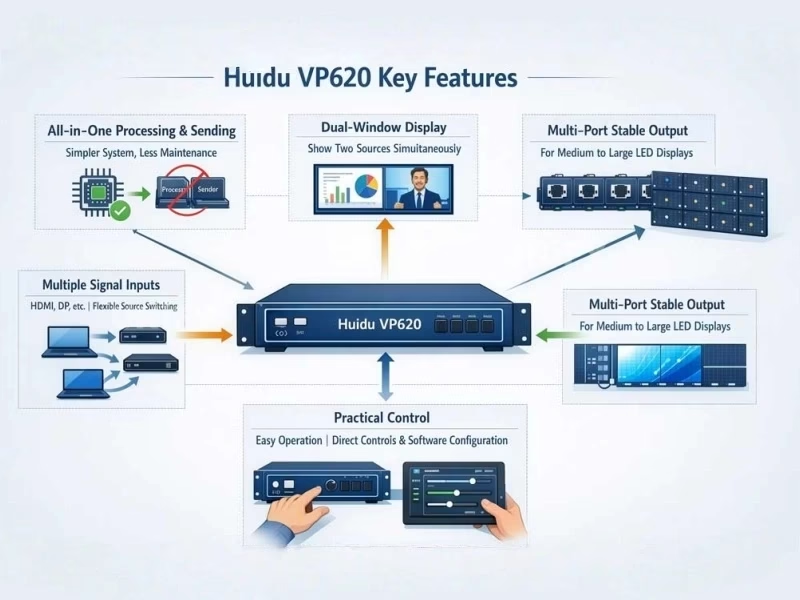
Six functions from the official V2.1 define how the VP620 behaves on a 3.9M-class wall:
🖥️ Dual 4K@60 inputs
HDMI 2.0 and DisplayPort 1.2 both take 3840×2160@60Hz with point-to-point display — the first 4K-class inputs in the VP family.
🔗 Six Gigabit outputs
650,000 pixels per port per the official document — 6 × 650,000 = 3.9M, the loading budget stated as a per-port hardware fact.
🪟 Dual-window PIP + POP
Picture-in-picture and picture-out-of-picture layouts with the WIN key to select and PXP menu to arrange — two sources, one canvas.
📶 Wi-Fi standard + app
Built-in Wi-Fi with an external antenna connector and LEDART mobile app control — no laptop required for everyday operations.
🎥 EXT with SDI option
The EXT port ships as DVI or SDI (SD/HD/3G-SDI over BNC, up to 1920×1080@60) — the broadcast-friendly input the VP210/410 lack.
⌨️ Front-panel shortcuts
One-key black screen (BLACK), freeze (FREEZE), brightness (BRIGHT), preset recall (MODE), dual-window layout (PXP) and key lock (LOCK) — all on the panel.
Interface
Which Ports Are on the HD-VP620 LED Video Processor?
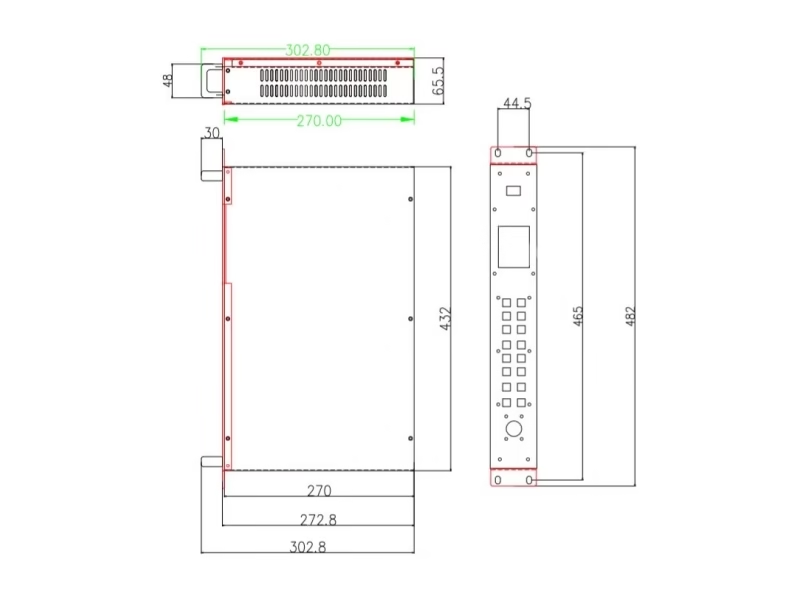
Front and rear panel layout from the official V2.1:
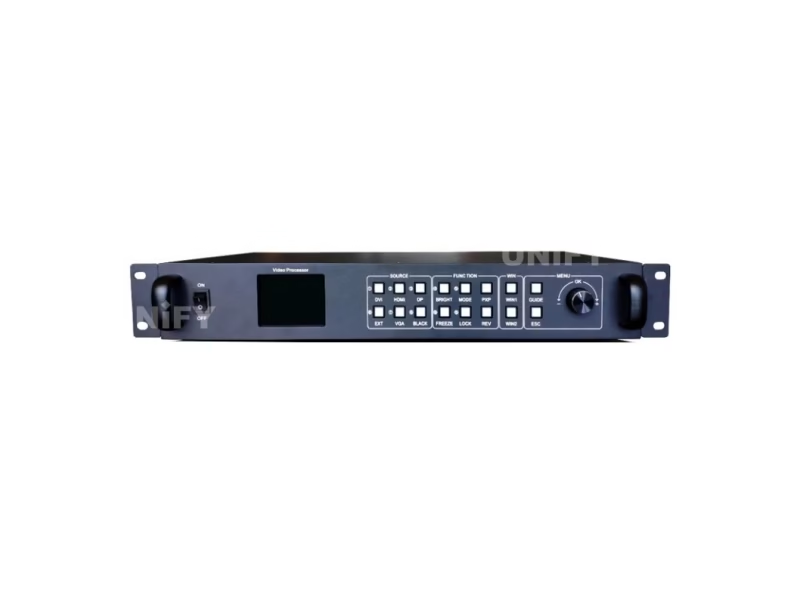
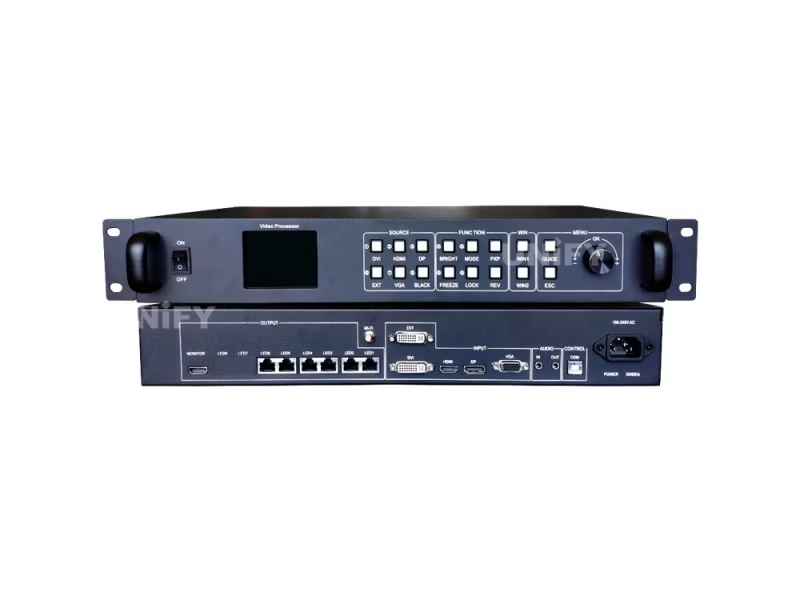
Front Panel
- Power switch — controls AC input.
- LCD display — menu and screen parameters.
- SOURCE — input selection; doubles as digit entry in resolution setup; BLACK one-key black screen.
- FUNCTION — BRIGHT brightness, MODE preset recall, PXP dual-window layout, FREEZE freeze, LOCK key lock.
- WIN — select an open picture window.
- MENU — rotary select + press confirm; GUIDE smart navigation, ESC exit.
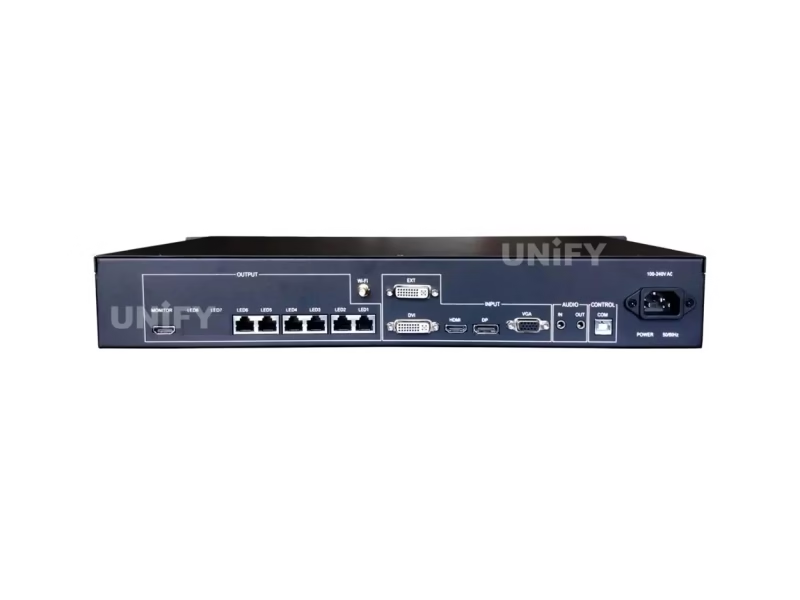
Rear Panel
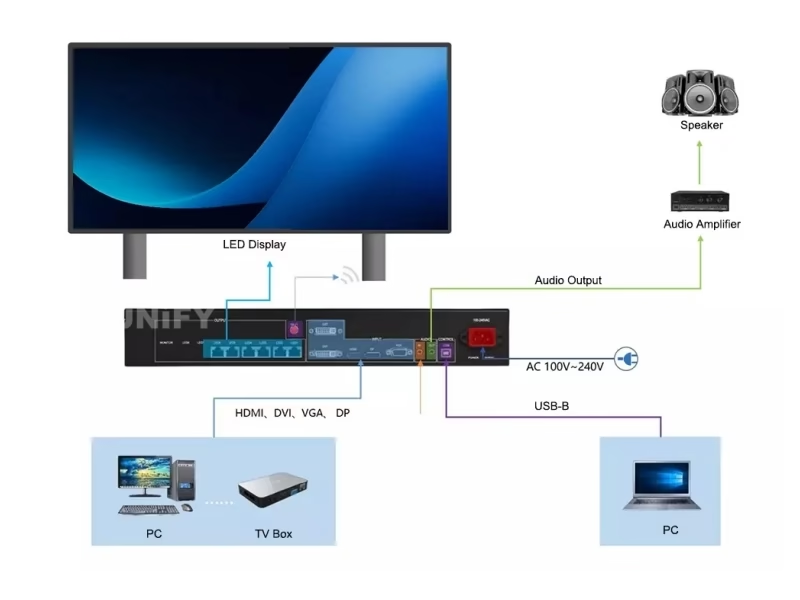
- HDMI / DP / DVI / VGA — four video inputs; HDMI and DP take 4K@60.
- EXT — DVI or SDI (BNC), SD/HD/3G-SDI up to 1920×1080@60.
- AUDIO IN / OUT — TRS 3.5 mm stereo input and output (output drives an amplifier).
- LAN × 6 — Gigabit outputs to receiving cards, 650,000 pixels per port.
- USB-B — PC debugging with HDSet.
- Wi-Fi antenna connector — strengthens the built-in Wi-Fi signal.
- Power inlet — AC 100–240 V, 50/60 Hz.
Loading Capacity
How Big a Screen Can the HD-VP620 LED Video Processor Drive?
3,900,000 pixels is the area budget; 8000 wide and 4000 high are single-direction limits — the two constraints work together. At 8000 wide the height stops at 3,900,000 ÷ 8000 = 487; at 4000 high the width stops at 975. A typical 16:9 plan sits near 2600×1500. Translated into real screens (UnifyLED conversion):
The extreme shapes use the single-direction limits: an 8000×487 ultra-wide fascia at P4 is 32.00 m × 1.95 m; a 975×4000 portrait tower at P4 is 3.90 m × 16.00 m.
The 650,000-per-port fact — straight from the official document. V2.1 states “each network port controls 650,000 pixels”; six ports × 650,000 = 3,900,000, the exact loading budget. This is the same per-port ceiling we derived on the HD-VP210 page (655,360 pixels per Gigabit port) — Huidu’s own document now confirms the industry figure in print.
Screen power planning belongs to our LED display power consumption guide.
Setup Tutorial
How Do You Set Up the Huidu HD-VP620 LED Video Processor?
Channel A — 4K input and point-to-point. Connect the 4K source to HDMI (2.0) or DP (1.2); set the input resolution with the SOURCE and FUNCTION digit keys, and the VP620 displays 3840×2160@60 point-to-point on the wall — no scaling loss on native-4K content.
Channel B — dual-window layout. Press WIN to select the window you are arranging, then PXP to open the dual-window layout menu — picture-in-picture or picture-out-of-picture. Each window carries its own source, size and position; the eight presets in MODE recall whole layouts between shows.
Channel C — Wi-Fi and mobile control. The VP620 ships with Wi-Fi as standard. Fit the external antenna for long-distance links, pair the device to your network, and run the LEDART mobile app to switch sources, recall presets and adjust brightness from the floor — the official wireless-configuration video below walks the pairing, and the app demo shows the workflow on the VP820, the same family.
Huidu Official — wireless LED screen configuration for the video processor
Huidu Official — how to use the LEDART app to control the VP820 controller
Channel D — smart navigation and shortcuts. GUIDE walks a first-time installer through the setup screens; BLACK blanks the wall instantly; FREEZE holds a frame; BRIGHT calls the brightness menu; LOCK disables the panel for permanent installations.
Full cabling and mounting context: our LED screen installation guide, plus the sending card configuration guide for the parameter side.
Applications
Where Is the HD-VP620 LED Video Processor Used?
The official V2.1 lists the venues: hotels, shopping malls, conference rooms, exhibitions and broadcast studios — any venue that needs synchronous playback of live sources. Unlike the VP210/VP410, the VP620 has no USB media player, so plan content from HDMI/DP sources, media servers or the SDI input rather than flash drives.
- Hotel lobbies and shopping malls — 4K signage plus a second window for live promotions, managed over Wi-Fi from a phone.
- Conference rooms and auditoriums — dual-window PIP puts the presenter and the slides on one wall; eight presets reload layouts between sessions.
- Exhibitions and rental shows — 1.5U rack-mount, quick preset recall, BLACK and FREEZE for stage control.
- Broadcast studios and event staging — the EXT port takes SD/HD/3G-SDI, the camera-chain input the VP210/410 cannot accept.
- Entertainment venues — the official 5D KTV project below pairs a VP620A with R712 receiving cards in Southeast Asia.
Huidu Official — live project of the Huidu LED controller VP620
Huidu Official — 5D KTV on-site debugging with VP620A and R712
Factory & Quality Control
How Is the HD-VP620 LED Video Processor Supplied and Guaranteed?
Unify LED buys Huidu processors at factory level, tests each unit before dispatch and backs them with a 2-year warranty:
- Factory-direct pricing — no distributor markup; bulk discounts from 5 pcs.
- 100% functional test before dispatch — every unit powered and run against a test panel through all six Gigabit ports.
- 2-year warranty — free replacement for manufacturing defects; field care in our LED screen maintenance guide.
- Certificate copies on request — V2.1 lists no certificates, so we supply the VP series CE/FCC/RoHS documentation with every order.
Pricing
How Much Does the Huidu HD-VP620 LED Video Processor Cost?
Published prices verified 2026-08-25:
The 4K-class VP620 prices roughly three to four times the VP210 (USD 115) and about double the VP410 (USD 179–199) — the step buys 4K inputs, six ports, dual windows and Wi-Fi, the features a 3.9M wall needs. The 2-in-1 packaging still replaces a separate video processor plus sending card; the market ranges for those are USD 300–800, so the all-in-one math holds at this tier too. Our 2026 LED display price report tracks the wider market.
Factory-direct pricing from Unify LED applies from single units; request a quote for your quantity and destination.
FAQ
HD-VP620 LED Video Processor: Frequently Asked Questions
Q1. Is the HD-VP620 a 2-in-1 or 3-in-1 processor? Officially a 2-in-1: video processor plus synchronous sending card, per Huidu Specification V2.1. The “3-in-1” label on some listings adds a USB media player that does not exist on the VP620 — that function defines the HD-VP210 and HD-VP410 instead.
Q2. How many pixels can the HD-VP620 drive? 3,900,000 pixels, with horizontal max 8000 and vertical max 4000. The three limits work together: at 8000 wide the height stops at 487; at 4000 high the width stops at 975. A typical 16:9 plan sits near 2600×1500.
Q3. Does the HD-VP620 support 4K input? Yes — HDMI 2.0 and DisplayPort 1.2 both take 3840×2160@60Hz with point-to-point display. DVI and VGA stay at 1080p class; EXT takes DVI or SDI (SD/HD/3G-SDI) up to 1920×1080@60.
Q4. Does the HD-VP620 have Wi-Fi? Yes — it is standard, with an external antenna connector and the LEDART mobile app for wireless control. That is a VP620 advantage: the VP210 and VP410 need their H variants for Wi-Fi.
Q5. What is the EXT port for? EXT is an expansion input that ships as DVI or SDI (one of two, DVI by default). The SDI option runs SD/HD/3G-SDI over BNC up to 1920×1080@60 — the broadcast-friendly input for studios and live events.
Q6. What is the difference between HD-VP620 and HD-VP620A? Same six ports and 3.9M loading; the VP620A carries 16 scene presets instead of 8, per the official 620A page. Above both, the VP820A adds eight ports and 5.2M pixels.
More controller questions: our LED display FAQ and warranty terms.
Certifications
Which Certificates Does the HD-VP620 LED Video Processor Carry?
The official V2.1 document does not list certificates; the VP series carries CE, FCC and RoHS per Huidu’s series documentation, and we supply copies with every order — request them explicitly rather than assuming they ship automatically.
Get HD-VP620 Bulk Pricing from the Factory
Genuine Huidu processors, 100% pre-tested, 2-year warranty, shipped worldwide. Tell us your pixel budget, input sources and destination — quote within 24 hours.
Deep Blog
Huidu HD-VP620 LED Video Processor: The Complete Buying Guide (2026)
The Huidu HD-VP620 LED Video Processor is the third rung of Huidu’s VP ladder and the first 4K-class controller in the family — and it is also the VP model whose official classification (two-in-one) contradicts its most popular listing title (three-in-one). This guide rebuilds the VP620 from the official Huidu Specification V2.1, explains the 3.9M ceiling through the 650,000-pixel-per-port figure the document prints, and answers what 4K, SDI, dual-window and standard Wi-Fi actually buy on a wall.
Chapter 1 — The VP Ladder: Where the HD-VP620 Sits
Huidu’s VP series climbs three rungs on one 1U-class architecture: the HD-VP210 at 1.3M pixels with two ports, the HD-VP410 at 2.3M with four, and the HD-VP620 at 3.9M with six. Each step keeps the panel workflow and the HDSet software, and each step changes what the wall can be: 1.3M is a 5.12 m × 4.10 m P4 screen, 2.3M is 7.68 m × 4.80 m, and 3.9M reaches 10.40 m × 6.00 m at P4 — or a 26 m × 15 m fascia at P10. The choice is a pixel-budget question first, and only then a feature question.
Chapter 2 — Two-in-One vs Three-in-One: The Classification Truth
The official V2.1 document is unambiguous: the HD-VP620 is a “two-in-one synchronous all-in-one” — a video processor and a sending card in one chassis. The “three-in-one” label comes from the VP210/VP410 family, whose third function is a USB media player with a Type-A port for direct playback; the VP620 has no such port. Why do listings say 3-in-1 anyway? Because the term carries search volume, and sellers apply the family name to every model. The buying consequence is real: if your content plan includes playing files from a flash drive, the VP210/VP410 are the models that do that; the VP620 expects live inputs from PCs, cameras or a media server — and compensates with 4K, SDI, dual windows and Wi-Fi, none of which the lower rungs offer. Buy by function, not by the name in the title.
The classification also drives the accessory list. A three-in-one VP210/VP410 order pairs naturally with a USB drive for content updates; a VP620 order should pair with a media server or a player PC, and — where the venue runs cameras — an SDI card or router for the EXT port. Quoting the wrong content path is the most common integration error on this model: integrators hand the client a flash drive, and there is nowhere to plug it in. Specify the source chain in the same email as the processor, and the 2-in-1 architecture stops being a surprise.
Chapter 3 — The 3.9M Ceiling: 650,000 Pixels Per Port, in Print
V2.1 states it directly: “each network port controls 650,000 pixels.” Six ports × 650,000 = 3,900,000 — the loading budget is the per-port hardware figure multiplied by six, not a marketing number. This is the same ~650,000-pixel-per-port ceiling that the industry uses for a single Gigabit link to a receiving-card chain, the figure we derived on the HD-VP210 page (655,360 per port) — Huidu’s document now confirms it in print. The three constraints work together: 3.9M is the area budget, 8000 is the max width, 4000 is the max height. At full 8000 width the height stops at 487; at full 4000 height the width stops at 975; a typical 16:9 plan lands near 2600×1500. Listings that quote “8000×4000” without the area budget describe a screen that does not exist.
The per-port figure also sets expectations on cabling. Six ports × 650,000 means the practical topology is six vertical slices of the canvas — each port feeds a column of receiving-card chains, and HDSet assigns the split by width. A 2600×1500 plan splits into roughly 433 pixels of width per port; an 8000-wide fascia splits into ~1,333 per port, each still under the 650,000-pixel per-port ceiling. Installers who split by height instead find one port running hot while the rest idle — the six-port math works only when the split follows the cabinet columns.
Chapter 4 — 4K and SDI: The Inputs the Lower Rungs Lack
The VP620 is the first VP model with 4K-class inputs: HDMI 2.0 and DisplayPort 1.2 both accept 3840×2160@60Hz and display point-to-point, meaning a native-4K source renders at full resolution without the scaling loss of a 1080p-class processor. The EXT port adds the second differentiator: it ships as DVI or SDI, and the SDI option runs SD/HD/3G-SDI over BNC up to 1920×1080@60 — the input a broadcast chain expects. For studios, event staging and any install fed by a camera or video router, the EXT/SDI option is the reason to step past the VP410. DVI and VGA stay 1080p-class, which is fine for presentation laptops.
A practical 4K note: the point-to-point claim holds when the wall resolution matches the source resolution or an integer scale of it. Feed a 3840×2160 source to a wall whose native canvas is 3840×2160 and every pixel lands on a real LED; feed it to a 2600×1500 canvas and the processor scales — correctly, but not pixel-perfect. The two 4K inputs matter most on walls that can actually resolve 4K: P2 and finer pitches, where the 3.9M budget and a 4K source meet. On coarser P4/P5 walls, the 1080p inputs carry most of the traffic and the 4K capability is headroom for the future — still worth having, still not wasted.
Chapter 5 — Dual Windows and the Front-Panel Shortcuts
Dual-window output is the VP620’s layout superpower: PIP puts a small window over the main picture, POP places two windows side by side, and the WIN key plus the PXP menu handle arrangement — two sources, one canvas, no external scaler. The eight MODE presets store whole layouts, so a conference venue recalls “presenter + slides” in two knob presses. The front panel adds the operator layer: BLACK blanks the wall instantly for breaks or stage direction, FREEZE holds a frame, BRIGHT opens the brightness menu, LOCK disables the panel against tampering, and GUIDE walks a first-time installer through the screens — the manual workflow on the panel, no laptop required.
The dual-window layout deserves a planning note. PIP and POP are layout modes, not processing magic: each window takes one input and the canvas area is shared, so a 2600×1500 wall running POP shows two sources at reduced scale unless the windowed plan is baked into the pixel budget. The common pattern is a main window at full canvas with a PIP thumbnail — content, ticker or camera — in a corner; that keeps the primary source at native scale and uses the second window as an overlay. Stage directors use the same layout with FREEZE on the thumbnail to hold a logo or a countdown while the main source runs live.
Chapter 6 — Wi-Fi as Standard: The Management Difference
Wi-Fi ships on every VP620 — no H-variant required, unlike the VP210/VP410 where Wi-Fi is a variant feature. Fit the external antenna, pair the unit to the site network, and the LEDART mobile app switches sources, recalls presets and adjusts brightness from the floor. For a hotel or mall running content rotation across multiple walls, that wireless management layer is the difference between a phone call to the rack and a two-tap change from reception. The official wireless-configuration video and the LEDART app demo on the VP820 (same family, same app) show the workflow end to end.
Two Wi-Fi field notes. First, antenna placement: the connector is only as good as the mount — run the antenna clear of the steel cabinet and the 2.4 GHz link reaches across the venue; bolted flat against the rack it performs barely better than a PCB trace. Second, security: an app-controllable processor on the site network should sit on a management VLAN with a rotated password, because the same Wi-Fi that lets reception change content lets a stranger change it too. The VP620’s key lock is the panel-side answer; the network-side answer is yours to configure at install.
Chapter 7 — The VP620 Against the Site’s Other Controllers
In the 3.9M synchronous class the VP620 competes with the Colorlight X8m and the Novastar VX1000; the MCTRL300 anchors the class below. Huidu’s edge on this rung is the combination: 4K inputs, SDI option, dual windows, Wi-Fi standard and the documented panel workflow in one box.
The ecosystem angle matters as much as the processor. Huidu pairs the VP620 with its own receiving-card family — the official 5D KTV project runs R712 cards, the church project on the VP410H page runs R732 — and the six-port split is plug-and-play when the receiving cards come from the same ecosystem, because HDSet knows the data-group layout without guesswork. On the cabling side, the six ports and their receiving-card chains follow the cabinet columns, and the installation guide on this site covers the rack side; the receiving card selection guide gives the cross-brand comparison for integrators who standardize on one ecosystem. On the asynchronous side, the HD-W62 family covers stored-program fascia signage — the sync vs async guide draws the line.
Huidu Official — HDSet operation for the VP series processors VP1620 VP1220 VP820 VP620
Chapter 8 — Price, Warranty and the Buying Checklist
Verified August 2026 pricing: USD 372 at eager-led, ~USD 370 at reiled, USD 500 at toolboom/all-spares/lvphub, USD 340–778 across B2B aggregates, factory-direct on request. The 4K-class VP620 runs three to four times the VP210 and about double the VP410 — the step buys the features a 3.9M wall needs. The 2-in-1 packaging still replaces a separate video processor plus sending card (USD 300–800 market range), so the all-in-one math holds at this tier. Unify LED is an LED screen manufacturer in Changsha, China, supplying processors alongside modules, cabinets, power supplies and controllers as one assembly — the VP620 ships tested against the receiving cards it is specified for, with a 2-year warranty and certificate copies on request.
Final checklist for the procurement email: (1) state the pixel budget and shape — the 3.9M area plus the 8000/4000 single-direction limits decide the VP620 vs the VP820A tier; (2) list the input sources — 4K over HDMI 2.0 or DP, 1080p over DVI/VGA, and whether the EXT port must be SDI; (3) confirm the variant — VP620 (8 presets) vs VP620A (16 presets); (4) state the receiving-card model and count so the six-port split is planned in HDSet before dispatch; (5) ask for the VP series CE/FCC/RoHS copies explicitly, since V2.1 omits them; (6) order one spare per ten installed — the processor is the cheapest component in the signal chain and the spare beats the site visit.
Two of those items deserve expansion. On the variant question: the difference between the VP620 and the VP620A is eight presets — write the model letter on the order so the warehouse ships the right firmware set. On the receiving-card count: state the model and the chain layout so the six-port split is drawn in HDSet before dispatch; the cabling plan (which port feeds which cabinet column) should travel with the shipment so the site crew wires to the same topology.
Conclusion. The Huidu HD-VP620 LED Video Processor is the 4K-class rung of Huidu’s VP ladder: 3.9 million pixels across six Gigabit outputs, the 650,000-pixel-per-port figure printed in the official document, dual 4K@60 inputs with an SDI option, dual-window PIP/POP, eight presets and Wi-Fi as standard. Call it two-in-one like Huidu does, plan content from live sources, match the pixel budget to the shape, and the VP620 carries the 3.9M class on one box.
LED Control System Range
Which LED Controllers Should You Explore Next?
Huidu, Colorlight and Novastar control products, receiving card guides and free software resources on UnifyLED.
Novastar Sending Controllers
Colorlight Controllers
Guides & Resources
Where Can You Download HD-VP620 Resources?
The official Huidu HD-VP620 Specification V2.1 (Chinese) — the data source for every figure on this page.
Related: browse the full Huidu LED controller catalog — 12 models across four product lines, free HDSet / HDPlayer / HD Show software, cloud remote control without a subscription, and factory-direct pricing.