
How Chinese LED Displays Powered the 2026 World Cup: Stadium-by-Stadium Project Data and Procurement Lessons
On June 12, 2026, Estadio Azteca in Mexico City opened the largest FIFA World Cup in history: 48 teams, 104 matches, 16 host cities across the United States, Canada, and Mexico. When the final whistle blew in July, one supply chain fact was impossible to miss — the World Cup LED displays at nearly every major venue were designed, manufactured, and integrated by Chinese companies: more than 2,200 m² at the Azteca, a 4,290.6 m² visual system at AT&T Stadium, and a 600 m² center-hung funnel at BC Place. One month on, this retrospective breaks down the project data, the engineering thresholds, and what the tournament means for stadium LED procurement worldwide.
Short answer: Chinese LED manufacturers supplied nearly every major display system at the 2026 FIFA World Cup — more than 2,200 m² at Estadio Azteca, 4,290.6 m² at AT&T Stadium, a 600 m²-plus center-hung funnel at BC Place, and nearly 1,000 m² of venue and fan-festival screens across the three host countries, running at 10,000-nit-class brightness and refresh rates from 3,840 Hz to 15,000 Hz. Hangjianet research shows more than 60% of mid-to-high-end outdoor LED tenders now require refresh of 3,840 Hz or above. The tournament reset the reference standard for stadium-grade LED displays, and its orders are already visible in supplier earnings.
What Did the World Cup 2026 LED Display Projects Deliver? A Stadium-by-Stadium Data Breakdown
TrendForce and LEDinside count at least nine Chinese display-related companies across screen systems, control hardware, packaging, referee displays, and AI viewing terminals. The headline projects, cross-verified across TrendForce, LEDinside, and OFweek reporting:
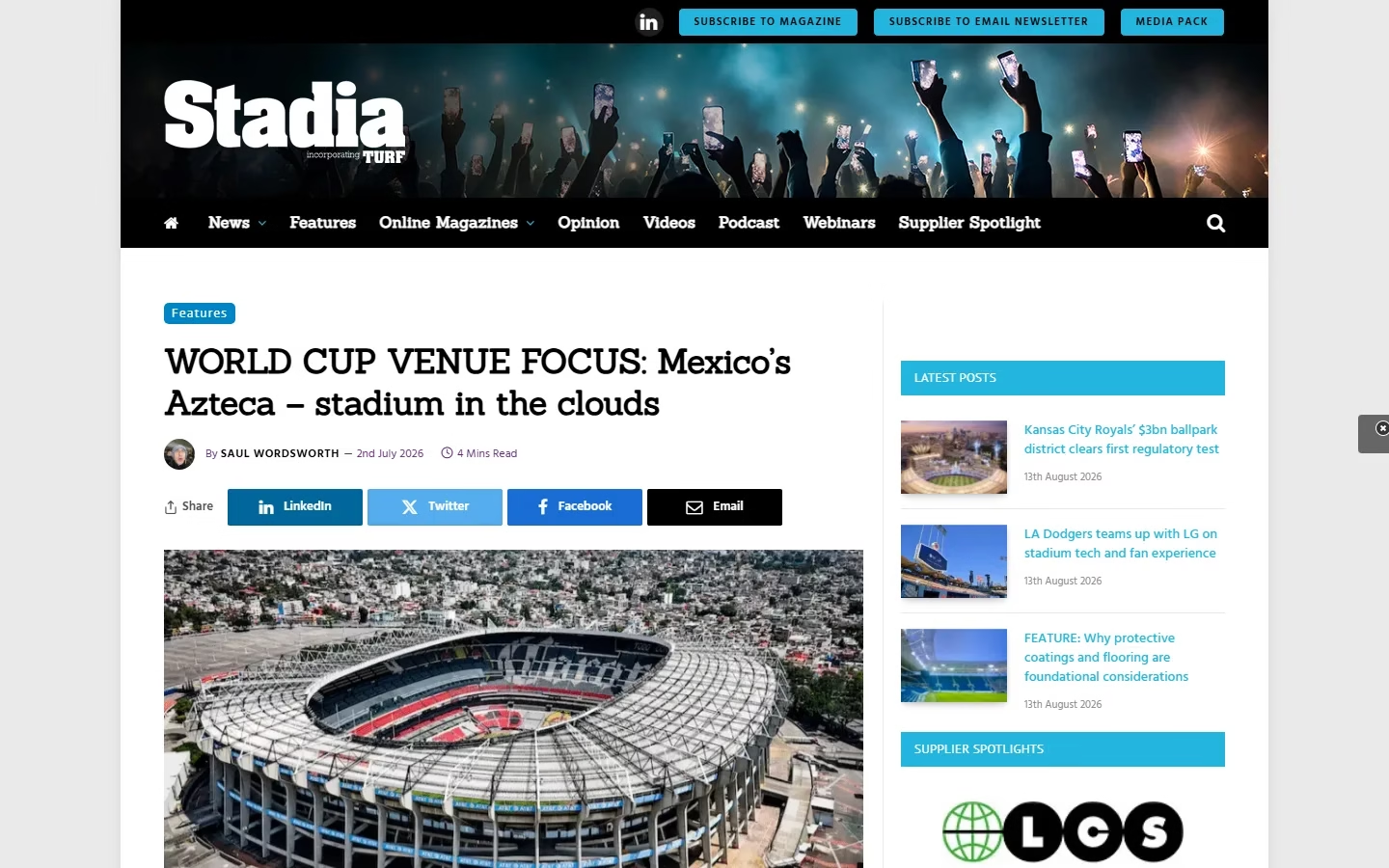
Leyard at Estadio Azteca — more than 2,200 m², exclusive. The Azteca is the only stadium to have hosted three World Cups (1970, 1986, 2026), and Leyard won the entire venue LED mandate — the first time a Chinese company has exclusively delivered the full LED display system of a top-tier World Cup stadium. The system divides into four zones: north-south main screens of roughly 400 m² combined, two inner arc surround screens exceeding 1,000 m², an exterior façade screen of 649.44 m², and four plaza pillar screens over 100 m². Engineered for high-altitude sun and UV with IP65 protection and star-topology signaling, it passed FIFA acceptance on first submission and remains Mexico City digital infrastructure, its exterior screen now an advertising asset.
Yuanheng Optoelectronics at AT&T Stadium — 4,290.6 m² “visual hub.” AT&T Stadium hosted the tournament’s most matches, including a semifinal. Yuanheng delivered the complete central display matrix — center-hung screens plus ring canopy displays totaling 4,290.6 m², per Hangjianet statistics — the first time a Chinese company has supplied the entire core display system of a 100,000-seat stadium.
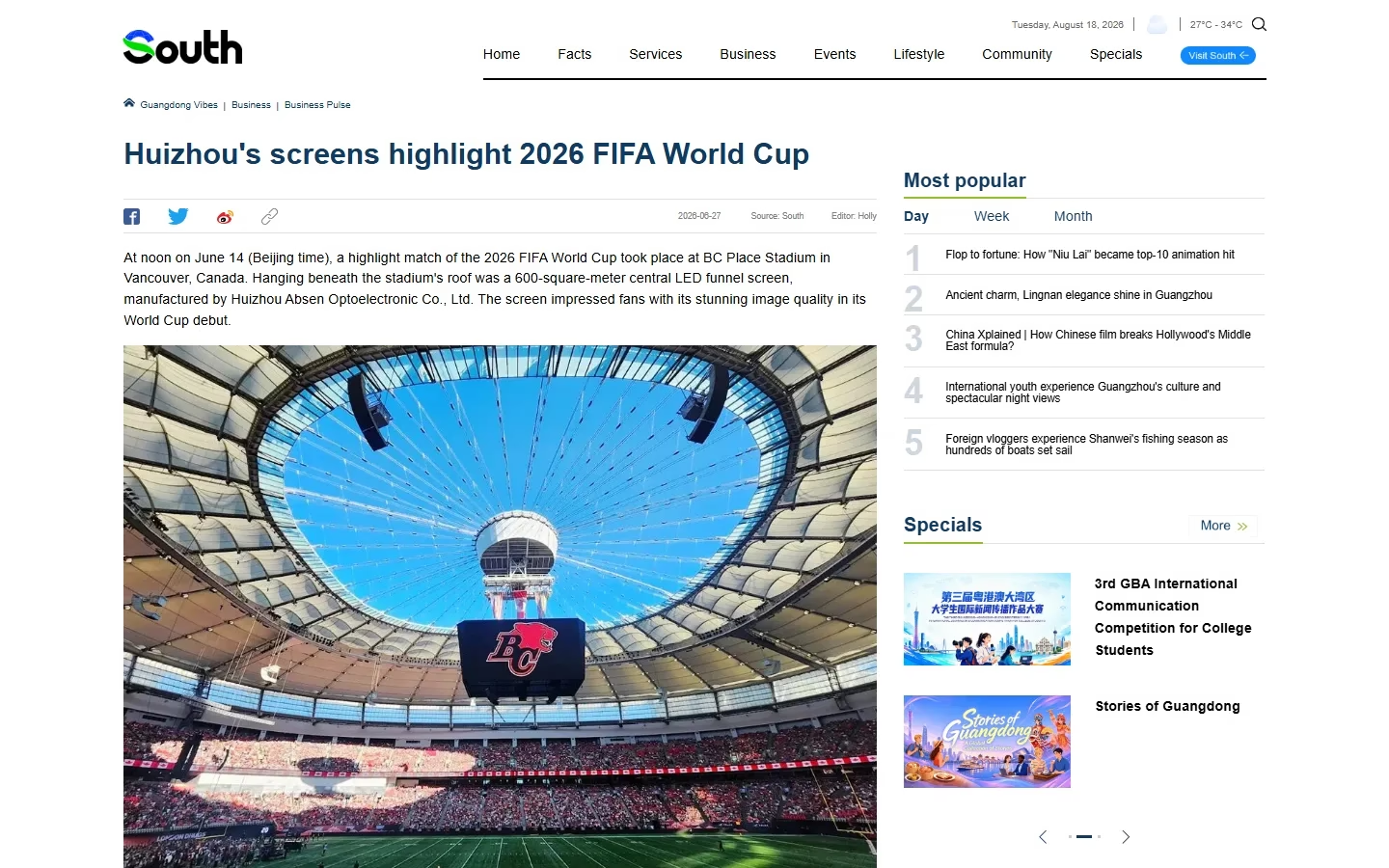
Absen at BC Place — Canada’s largest center-hung system. A center-hung LED funnel is a roof-suspended, multi-sided display system built to serve every seat in the bowl with live video, scores, and advertising. Absen’s funnel at BC Place in Vancouver spans more than 600 m² and debuted on June 14, serving seven matches including knockout rounds. Published specifications: 10,000-nit brightness, 17,000:1 contrast, 15,000 Hz-plus refresh, 16-bit grayscale, and 110% NTSC color gamut, built on the A25 outdoor series. Power draw runs under 1 kWh/m²/day through Absen’s dual-voltage and IDES energy-saving architecture; modules swap in 10 seconds and power boxes in one minute. Absen’s total tournament scope passed 1,100 m², adding 300 m²-plus of flexible LED at Akron Stadium and roughly 200 m² of studio screens for broadcaster TV Azteca. The company has now served five World Cups, with a locked 2030 order for a 2,570 m² 360° dome at Prince Moulay Abdellah Stadium in Morocco.
Unilumin, Aoto, and the supporting layer. Unilumin supplied nearly 1,000 m² of venue and fan-zone LED across the three host countries, including Guadalajara Stadium and the Dallas fan-festival centerpiece below. Aoto handled pitch-side advertising and timing systems for its third consecutive World Cup and built a 270° XR virtual studio in Mexico. NovaStar provided video display control for the opening and closing ceremonies and core venue screens — its fourth consecutive World Cup. Upstream, Kinglight 2727-series beads reached 10,000-nit-class brightness, Nationstar supplied 1921 black-series devices, and Chipone provided driver ICs. Hisense served as VAR display technology partner with RGB-Mini LED panels in the video operation room — a $150 million sponsorship — and Rokid supplied CCTV’s AI viewing glasses.
Five differences separate tournament-grade work from conventional outdoor installation:
- Brightness: 10,000-nit-class panels, versus 5,000–6,000 nit on conventional outdoor screens.
- Refresh rate: 3,840 Hz-plus, reaching 15,000 Hz at BC Place, versus the 1,920 Hz legacy standard.
- System scope: full-venue visual systems — bowl screens, surround rings, façades, plaza pillars — versus standalone screen supply.
- Verification: FIFA technical acceptance across hundreds of indicators, versus standard factory QC.
- Service life: permanent post-tournament digital infrastructure with advertising revenue, versus single-event installation.
How Are World Cup-Grade LED Displays Engineered?
A World Cup-grade outdoor LED display is a display system that passes FIFA technical acceptance across hundreds of indicators — brightness, contrast, refresh, heat dissipation, response, protection, emergency response — before a match is broadcast. Three 2026 thresholds now define the category.
Sunlight-class brightness. Stadium-grade brightness is the luminance at which a screen stays readable in direct sunlight during a live broadcast. The 2026 venues ran 10,000-nit-class panels — double the 5,000–6,000 nit baseline of standard outdoor LED displays — on high-reliability packaging rated for humidity, UV, and temperature cycling.
Broadcast-grade refresh. A high-refresh LED display is one whose scan rate keeps broadcast and phone cameras free of flicker and scan lines — 3,840 Hz and above for stadium work. Hangjianet research finds more than 60% of mid-to-high-end outdoor LED tenders now specify 3,840 Hz or above, with event-grade projects at 3,840–7,680 Hz and BC Place publishing 15,000 Hz-plus. The 1,920 Hz standard is fading from specifications.
Redundancy and serviceability. The Azteca system pairs star-topology signaling with IP65 protection built for 2,200-meter-plus altitude and intense UV; Absen’s funnel adds anti-fall module ropes, dual power and signal backup, and smart modules that report voltage and temperature for early fault location. The BC Place service benchmark — 10-second modules, 1-minute power boxes — now appears in buyers’ tender language for outdoor fixed LED displays.
Energy economics shifted in parallel: Absen reports BC Place draws under 1 kWh/m²/day, projecting that a 300 m² screen saves roughly 1.44 million RMB over five years — a line operators now weigh against purchase price.
How Did World Cup 2026 LED Display Demand Spread Beyond the Stadium?
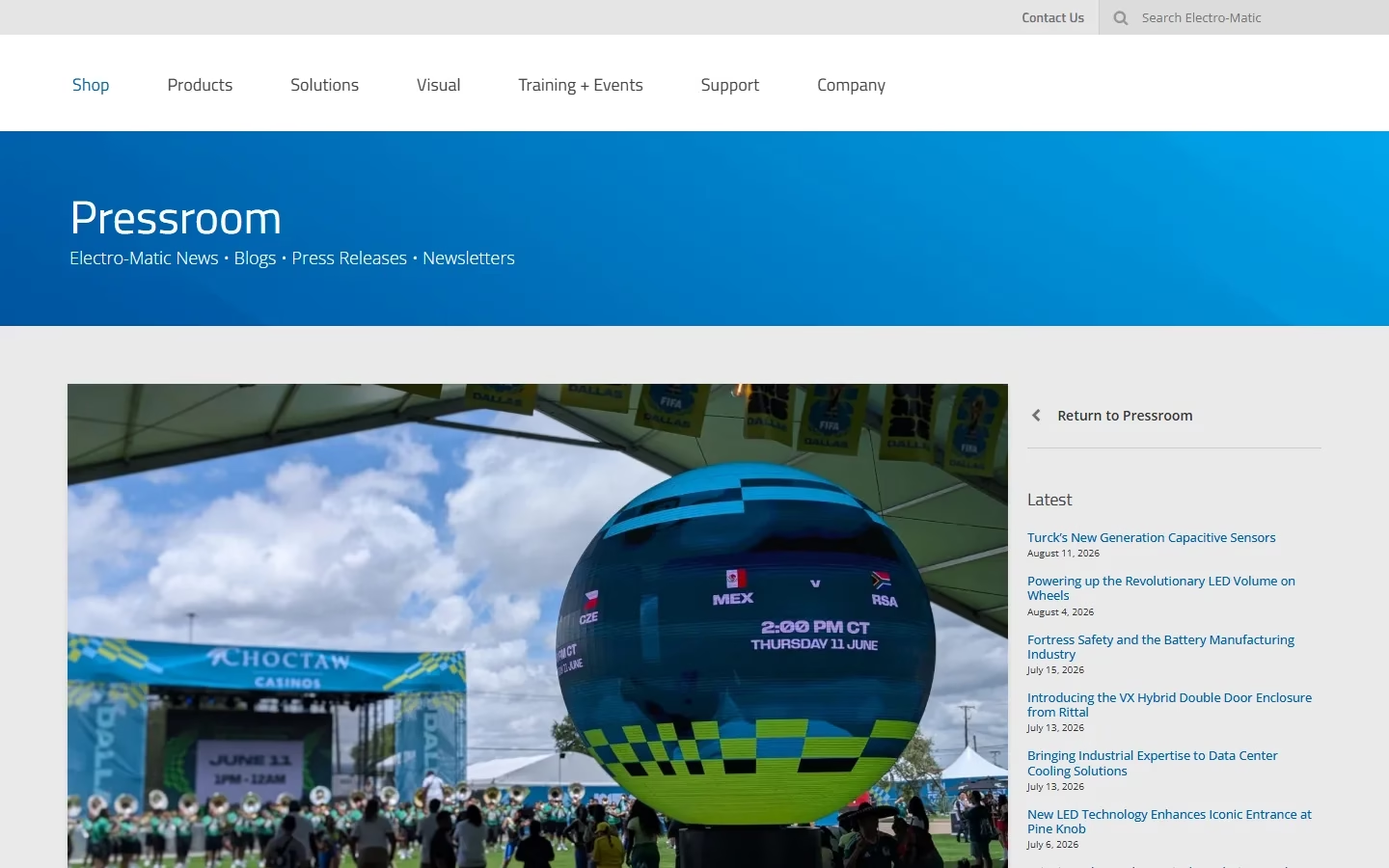
The tournament’s display demand did not stop at the stadium gates. A fan-festival LED sphere is a spherical LED display that wraps live and interactive content around a 360° viewing surface. The defining example is the Dallas FIFA Fan Festival: a 5-meter interactive LED sphere on 3.9 mm outdoor technology, roughly 3.7 million pixels and about 13,000 pounds, assembled and commissioned in seven days; fans scanned QR codes to push their own photos onto the sphere in near real time. Beside it, a 14 × 8 m main-stage wall (2,912 × 1,664, over 4.8 million pixels) backed broadcasts and performances — 8.5 million-plus pixels across the two installations at Fair Park, a 35,000-visitor venue.
Broadcast demand ran through the same channel: TV Azteca’s 200 m² studio package, BBC Salford’s 12 × 3 m studio wall, and Aoto’s 270° XR studio in Mexico. The economics are measurable: Meituan data reported by industry media show orders at shopping districts with outdoor screens or open-air viewing rose more than 180% quarter-on-quarter during the 2022 Qatar World Cup — the data point behind China’s “Hundred Cities, Thousand Screens” ultra-HD policy now entering its revenue phase. Rental LED screens and LED poster displays now form a second-viewing revenue layer around any major event.
What Did the 2026 World Cup Change for the LED Display Industry?
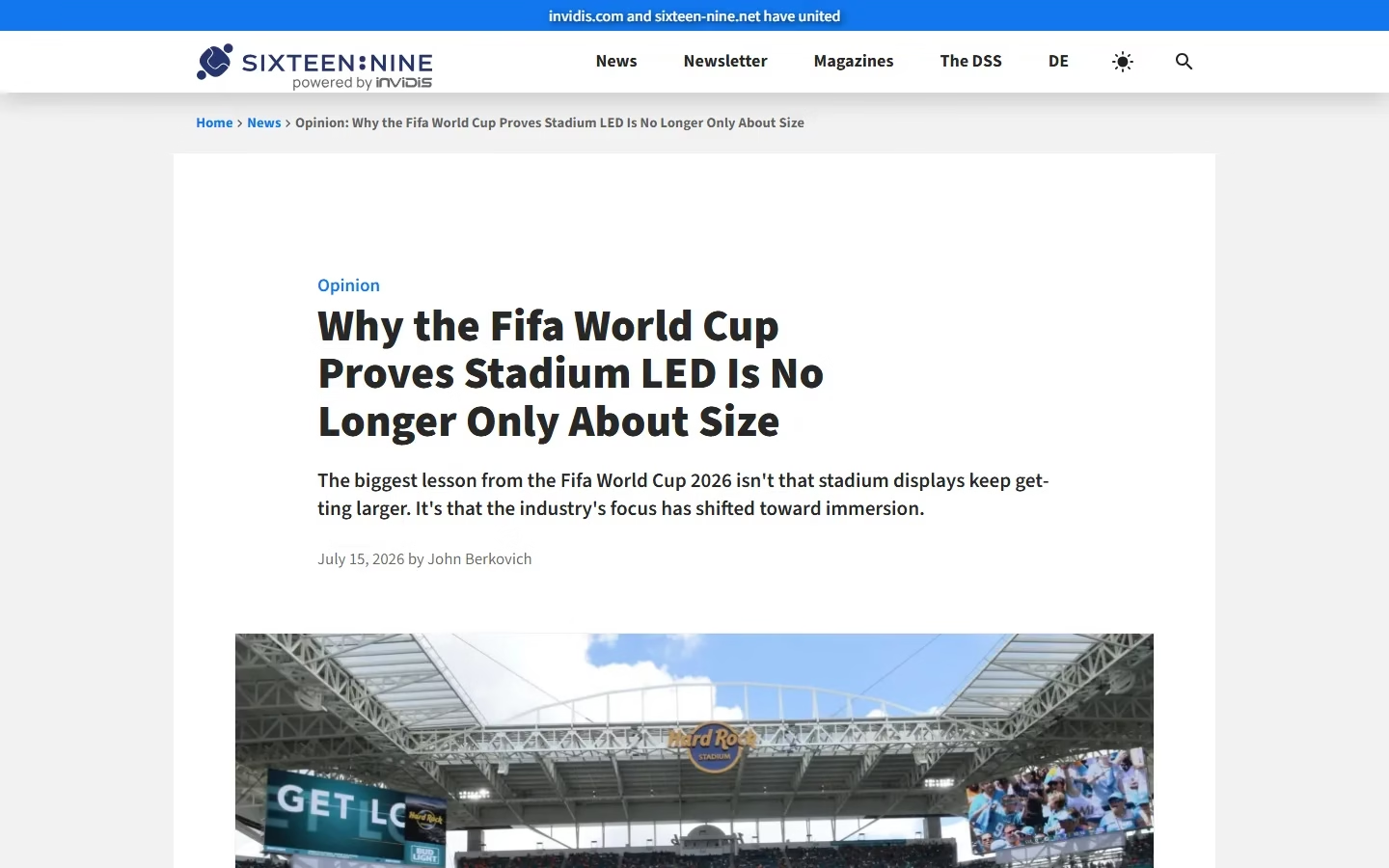
OFweek’s post-award analysis frames the shift in three stages: hardware export, brand globalization, and full-scenario system supply — selling venue visual systems with design, integration, and lifecycle service attached. Invidis reaches a parallel conclusion: size is no longer the differentiator. The 2026 venues ran as connected digital environments — videoboards, halo rings, ribbons, façades, and plazas as one system — with the real investment behind the screens in fiber, IP production, and control rooms.
The financial evidence arrived in August: Absen (SZSE: 300389) pre-announced H1 2026 net profit of 136–160 million RMB, up 17.11%–37.78% year-on-year, overseas business around 76% of revenue, and World Cup orders entering their Q3 delivery peak. Its KLCOB V3 launch claims a 40% cut in full-lifecycle cost for Micro LED aimed at XR studios and stadiums.
This demand cycle landed on the steepest cost inflation the industry has seen in a decade. As documented in our reports on the 2026 LED display price surge, the driver IC shortage, and the August price hike wave, input costs for ICs, PCBs, and packaging rose 10–80% through 2026. Stadium buyers face a double constraint: tournament-level specifications on one side, rising component costs on the other — which is why supplier selection, not specification writing alone, decided the 2026 venues.
How Should Buyers Spec a Stadium LED Display After the 2026 World Cup? Unifyled’s Playbook
A factory-direct LED manufacturer is a supplier that runs its own SMT, assembly, calibration, and aging lines, quoting project owners without reseller markup. That structure matters more in 2026 than any prior cycle: the World Cup’s project data maps directly onto what procurement teams should now demand. Five checks from the tournament’s published specifications:
- Specify 3,840 Hz minimum refresh for any broadcast-facing or camera-captured screen.
- Verify sunlight brightness: 8,000–10,000 nits for south-facing or high-altitude venues, not the legacy 5,000–6,000 nit baseline.
- Require IP65 protection and redundancy: star-topology signal paths, dual power and signal backup, anti-fall retention for suspended structures.
- Ask for the service record, not just the spec sheet: FIFA-scale acceptance history, local support teams, and hot-swap serviceability (10-second modules, 1-minute power boxes).
- Lock component pricing at quote: with driver ICs and PCB inputs up 10–80% year-on-year, verify your supplier pre-stocked components or holds price corridors with upstream partners.
Unifyled operates as a source manufacturer for LED stadium screens and stadium LED display systems, with the same advantages that carried stable suppliers through the 2026 price wave: pre-stocked receiving cards, hub cards, and constant-current driver ICs at pre-escalation pricing; long-term volume agreements with PCB fabricators and packaging houses; and in-house SMT, calibration, and aging lines that remove a layer of markup. For buyers planning venue projects through the 2030 tournament cycle — including the 2034 World Cup stadium program in Saudi Arabia — the World Cup 2026 specification set is the procurement baseline, and factory-direct pricing corridors are the hedge against the next input-cost spike.
Lock In Current Pricing — Submit Your RFQ Today
The 2026 World Cup reset stadium specifications worldwide while component costs continue climbing through Q3. Locking specifications and pricing early protects project margins and delivery schedules. Unifyled invites stadium operators, system integrators, and distributors to submit a no-obligation RFQ at current pricing — covering outdoor fixed LED displays, 3D LED billboards, perimeter systems, and full-venue visual solutions — with documented cost breakdowns and firm validity periods.
Contact: unifyledscreen@gmail.com | WhatsApp: +86-191-18802497 | RFQ Form: unifyled.com/contact
References & Sourced From: World Cup 2026 LED Display Coverage
This analysis draws on primary-source reporting and industry research from the following publications. All project figures have been cross-verified across at least two independent sources where available.
- TrendForce — “2026世界杯背后的8家中国LED显示相关企业” (June 12, 2026). trendforce.cn
- LEDinside — “2026世界杯背后的9家中国LED显示相关企业” (June 12, 2026). ledinside.cn
- OFweek Display (中家说Display) — “2200㎡世界杯主场大单落地,为何又是利亚德?” (June 15, 2026). display.ofweek.com
- Hangjianet (行家说Display) — World Cup LED display industry topic; outdoor LED tender refresh-rate research (2026). hangjianet.cn
- News GD (南方英文网) — “Huizhou’s screens highlight 2026 FIFA World Cup”. info.newsgd.com
- Stadia Magazine — “World Cup venue focus: Mexico’s Azteca — stadium in the clouds” (2026). stadia-magazine.com
- invidis — “Opinion: Why the FIFA World Cup Proves Stadium LED Is No Longer Only About Size” (July 2026); “LED: Unilumin Lights Up World Cup Fan Festival” (July 2026). invidis.com
- Electro-Matic — “Bringing Advanced LED Display Solutions to the 2026 World Cup” (2026). electro-matic.com
- Shenzhen Stock Exchange listed-company announcement — Absen (300389) H1 2026 earnings pre-announcement (August 16, 2026), via Eastmoney. eastmoney.com
- 南方+ / 深圳侨报 — “五赴世界杯!’中国屏’闪耀美加墨” (June 2026). nfnews.com
- Meituan consumption data — Qatar World Cup 2022 outdoor-screen district order growth, as reported by industry media (河北盈科). hbying.cn
- 钛媒体 — “这届世界杯,’中国队’球没进,厂进了” (2026). tmtpost.com
Editorial disclaimer: This report has been compiled by the Unifyled Editorial Team from publicly available industry sources, official company announcements, and third-party research. Project data and company actions referenced herein reflect information available as of August 18, 2026. This article does not constitute financial or procurement advice. Readers should verify current specifications and pricing directly with manufacturers before making purchasing decisions.
Author: Unifyled Editorial Team | Published: August 2026 | Category: LED Industry News, Stadium LED Displays
Related: COB LED Display Price 2026: The Price War Explained · LED Cinema Screen 2026: Direct-View LED Overtakes Projection · LED All-in-One Display Market 2026 · LED Display Industry H1 2026 Earnings Roundup · CIOE 2026 LED Display Recap: Micro LED From Lab to Production Line