
LED Display Industry Price Hike August 2026: Full Supply Chain Analysis & Procurement Strategy
Who Is Raising Prices in the 2026 LED Display Industry Price Hike — And by How Much?
The price adjustment cycle has unfolded in three overlapping phases, each with escalating breadth and magnitude.
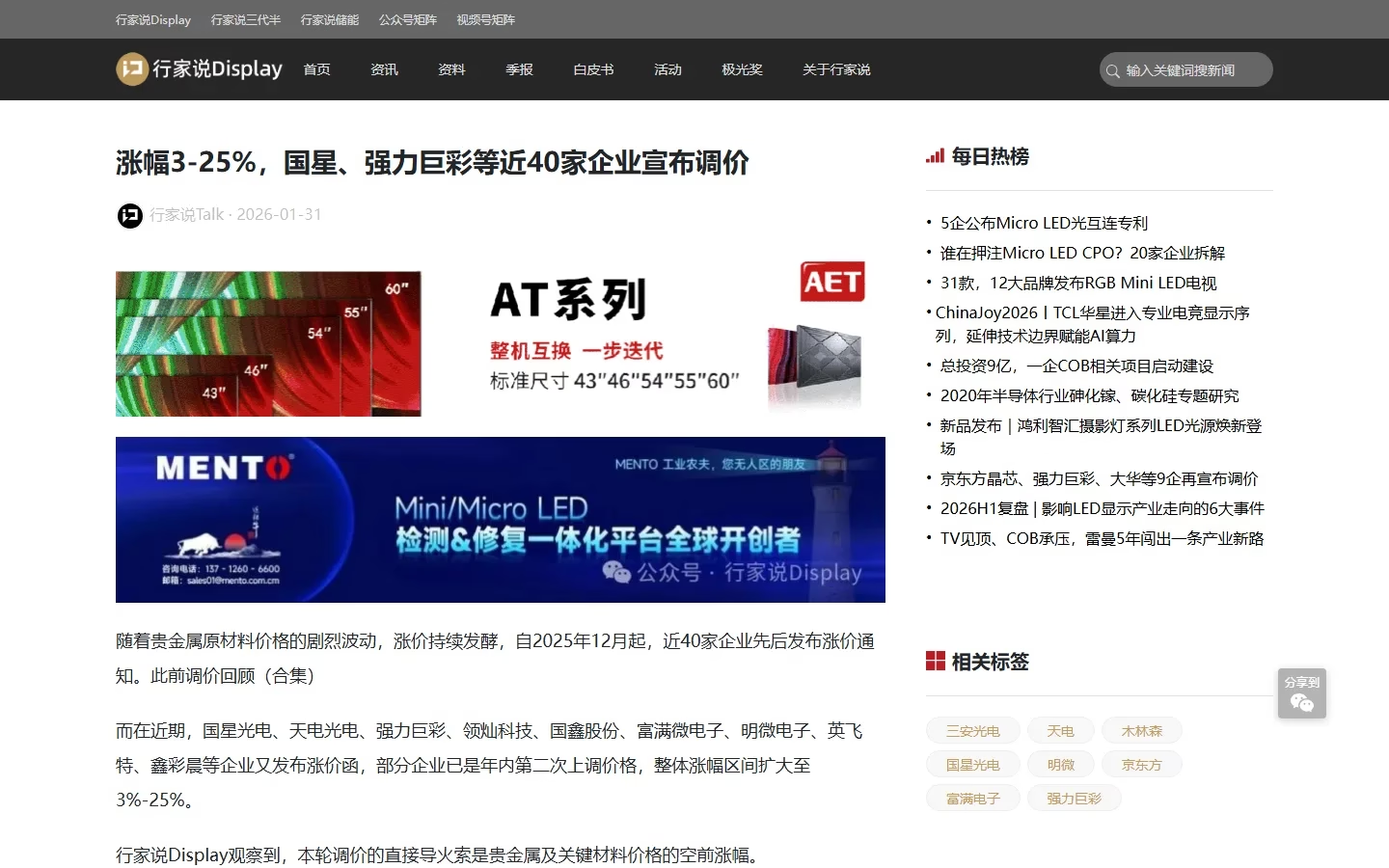
Phase One (December 2025 – February 2026): Nearly 40 companies initiated the first wave. Major Chinese LED manufacturers — Mulinsen, San’an Optoelectronics, Nationstar, and Qiangli Jucai — led with increases of 3% to 25%. Tiandian Optoelectronics revealed that precious metal costs had surged 102% since January 2025, forcing a 5–25% adjustment. Nationstar adjusted its entire RGB line. Fullhan Micro raised driver IC prices more than 10%. Infineon (Inventronics) added 5–15% on power supply lines effective March 1.
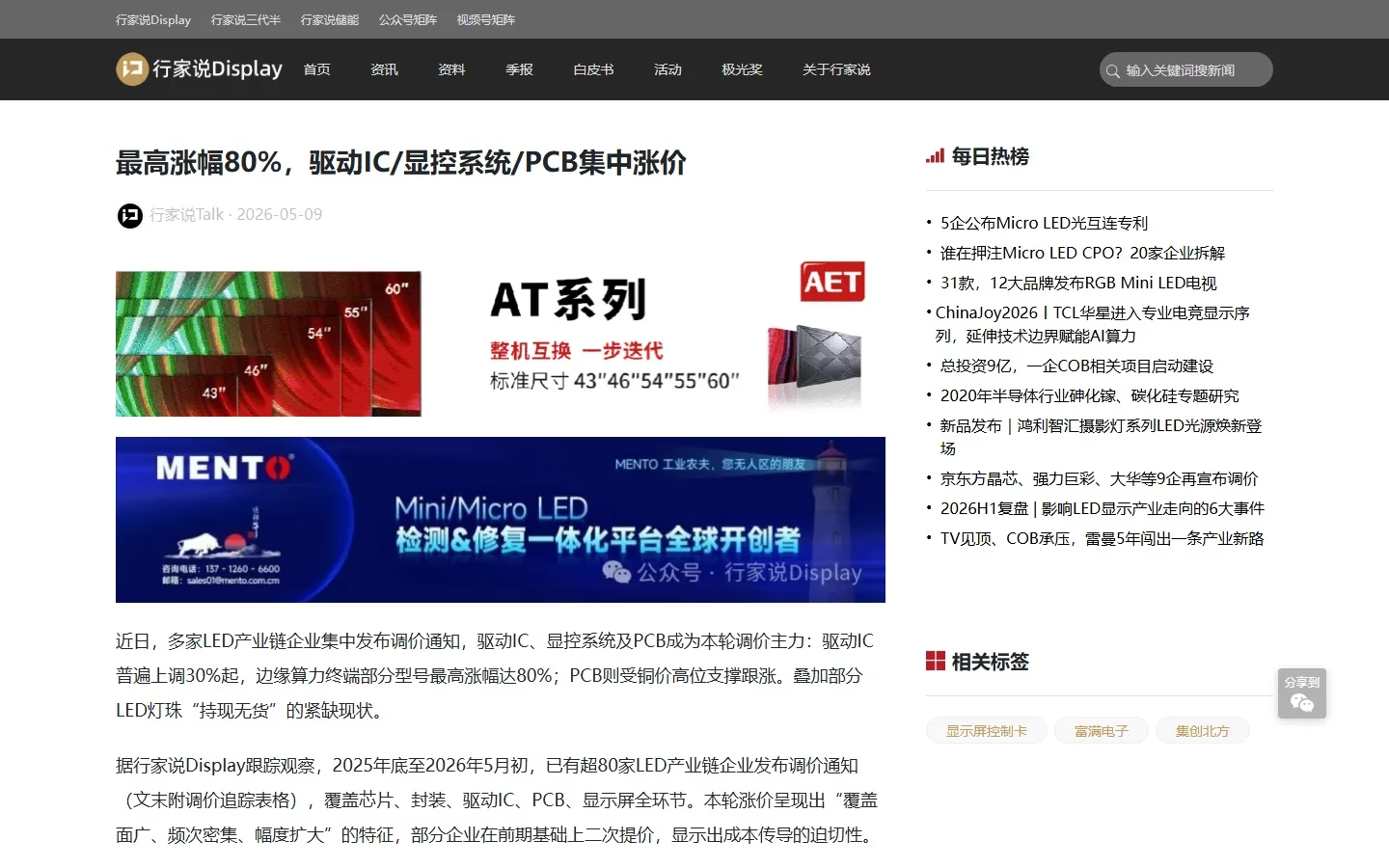
Phase Two (May 2026): The second wave centered on driver ICs and control systems with far greater intensity. On May 6, Chipone (集创北方) announced a blanket 30%+ increase on all LED driver products, citing wafer and packaging cost escalation beyond internal absorption capacity. On May 7, Fullhan Micro and Lipshen (利普芯) each announced identical determinations: all LED driver chip products rising more than 30%, effective immediately. Analysts termed this the “driver IC second wave,” with scale clearly exceeding Q1 levels.
Colorlight (卡莱特) issued three separate price notifications within six weeks: server products up to 50%; edge-computing terminals (AX/AI/CM series) 20–80%; receiving cards 6–25% across key models (5A-75B, 5A-75E, K5+, E120, E80). Skyworth Commercial Display (创维商用) announced an 8–20% increase — specifying that unpaid orders already placed would execute at new pricing.
Phase Three (June – August 2026): The ripple continued outward. Haijia Group raised all LED modules by 10–15%. Baco Optoelectronics pushed through 5–10% on COB/LED products after reporting 30%+ increases in PCB and IC input costs. Royal Display implemented 10–15% in June. Hisense Commercial Display joined on July 13 (5–15%), alongside BOE Jingxin and Dahua Technology. Internationally, Infineon and Texas Instruments each confirmed second-round price hikes effective July 1 — covering PMICs, MOSFETs, and power management devices. MacMic planned a 10% IGBT increase; Jiangsu JieJie Microelectronics prepared 10–20% hikes for MOSFET and IGBT products.
In the PCB segment, Guangdong Kingboard Laminates — one of the world’s largest CCL producers — raised FR-4 prices by 10% and PP material by 20% on May 27, its second increase in 30 days. Fujian Lihao, Weilibang, and Laizhou Pengzhou each added 3–8 RMB per sheet across HB, 22F, CEM-1, and FR-4 series. Jiangxi Heying Circuit applied a flat 8% across all PCB products.
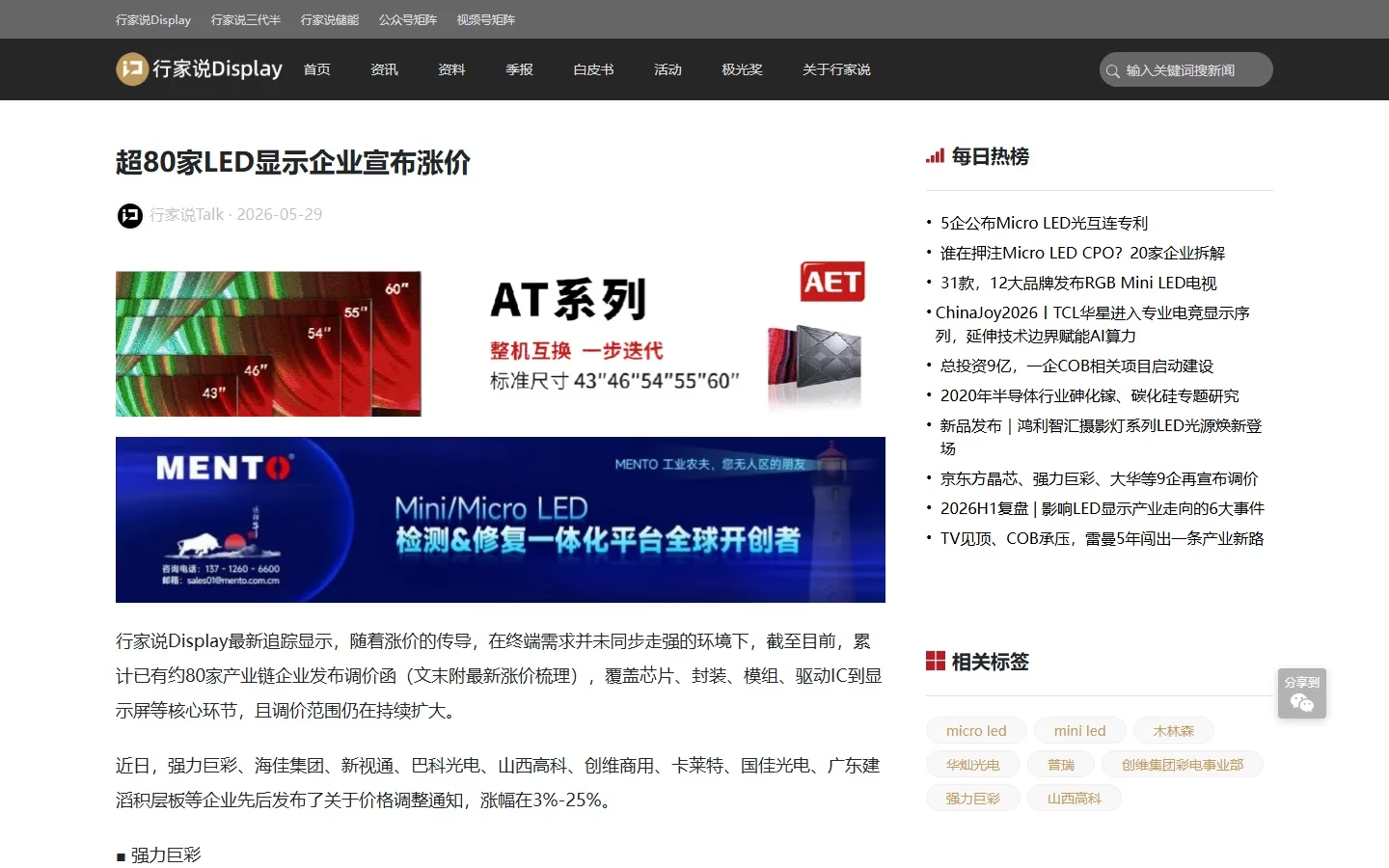
The cumulative tally, tracked by industry research platform Hangjianet, stands at more than 80 supply chain enterprises issuing formal price revision notices between December 2025 and August 2026, covering LED chips, packaging, driver ICs, PCBs, control systems, power supplies, and finished displays. The defining characteristics: broad coverage, dense frequency, escalating magnitude. Several companies — Qiangli Jucai, Fullhan Micro, Colorlight, Skyworth — have adjusted prices twice or more within six months.
Why Are LED Display Prices Surging in August 2026? Three Structural Forces Driving the Industry Price Hike
The simultaneous, cross-tier nature of these increases points to structural forces rather than isolated supply-demand mismatches. Three compounding drivers distinguish this cycle from the episodic adjustments of 2021–2022 and early 2025.
1. Precious Metals and Industrial Commodities at Historical Extremes
Gold, silver, and copper are structural cost determinants in LED manufacturing. Gold forms the bonding wires inside every LED package. Silver is the primary conductive element in die-attach paste. Copper is the foil laminated onto every PCB substrate.
All three reached price levels without precedent in 2026. Gold breached $5,000 per troy ounce. Silver posted a 170% year-on-year increase. Copper — the single most visible commodity input for LED supply chain costs — has traded above $10,000 per metric ton throughout 2026, with LME spot prices pushing past $13,000 during spring supply disruptions.
The arithmetic is definitive. Silver paste alone accounts for more than 30% of LED packaging costs; gold, silver, and copper together exceed 70% of total packaging material expenditure. Copper foil constitutes 27–40% of PCB board cost depending on layer count. When copper doubles relative to the baseline most manufacturers used for their 2024 quotes, margin absorption becomes mathematically impossible.
2. AI Infrastructure Consuming Mature-Node Wafer Capacity
The global semiconductor industry’s aggressive pivot toward AI has directly cannibalized the mature-node fabrication capacity on which LED driver ICs depend. According to TrendForce data, the wafer fab capacity ratio dedicated to LED driver chips has collapsed from approximately 30% in 2024 to roughly 15% in 2025. TSMC and Samsung have both reduced 8-inch wafer output, redirecting these lines toward higher-margin AI-related orders — HBM controller dies, PMICs for GPU subsystems, and high-speed interconnect silicon.
The effect on LED driver IC availability and pricing has been direct and severe. Lipshen’s May 2026 price notification states the mechanism plainly: “Wafer fabs globally are continuously shifting capacity toward the artificial intelligence sector, driving sustained increases in both foundry pricing and packaging and testing costs for LED driver chips.” Chipone’s notice echoes the same diagnosis. Texas Instruments posted approximately 90% YoY growth in Q1 2026 data center revenue, confirming that AI demand is expanding beyond GPUs into power management and high-voltage MOSFETs — the very devices competing with LED driver ICs for fab allocation.
3. CCL Substrate Costs and the Glass Fiber Bottleneck
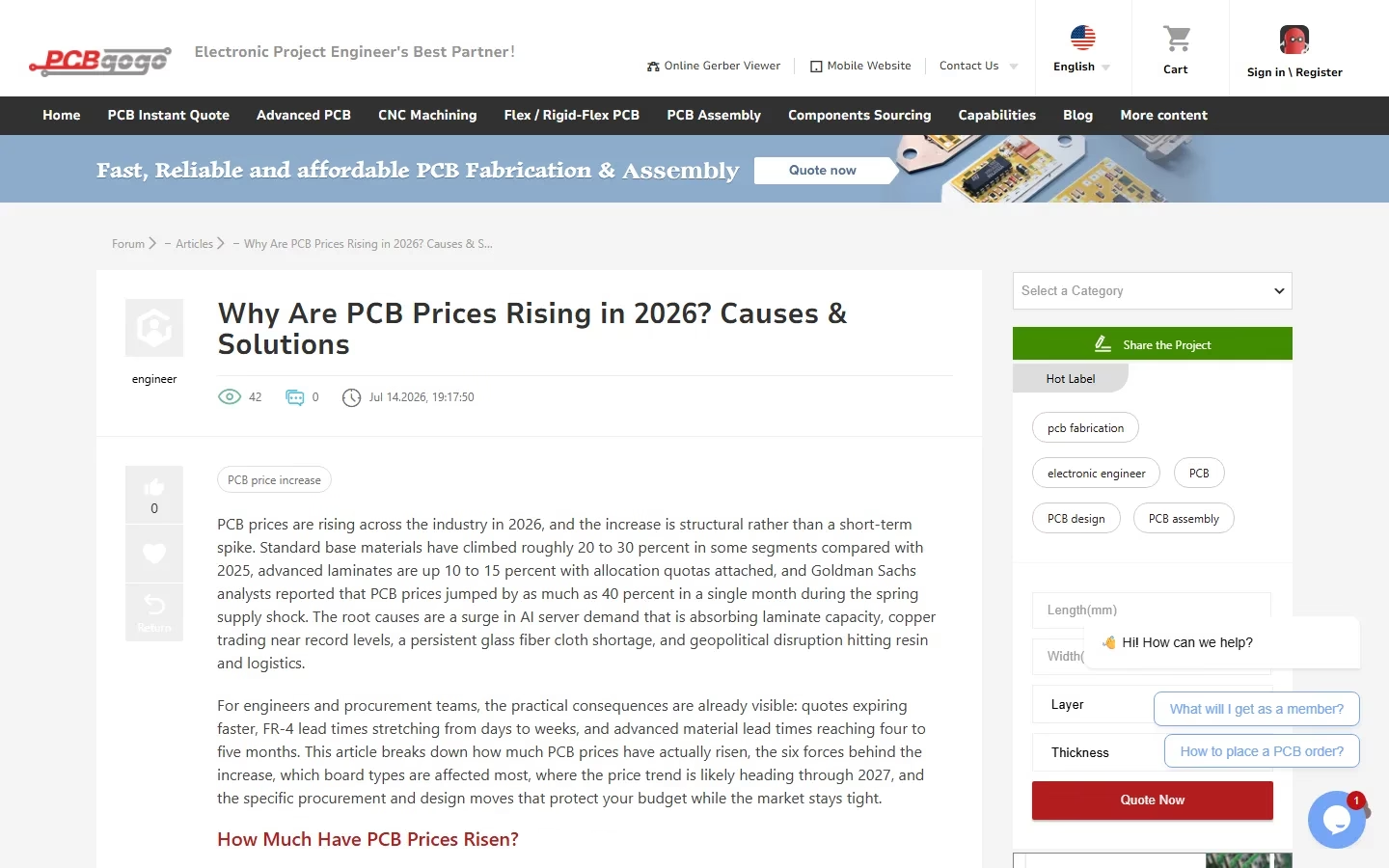
The third force operates in PCB substrates. Copper-clad laminate (CCL) — the base material for every LED display module PCB — faces a compounding cost shock: record copper foil pricing, a persistent global shortage of glass fiber cloth, and epoxy resin inflation linked to petrochemical and energy costs.
Standard FR-4 base materials have climbed 20–30% versus 2025 levels. Advanced laminates are up 10–15%, with allocation quotas attached. Goldman Sachs analysts estimated that PCB prices rose as much as 40% from March to April 2026 during the spring supply disruption, as reported by Reuters.
Kingboard Laminates — the global CCL volume leader — implemented two increases within 30 days, each at 10% for laminates and 10–20% for PP. That downstream PCB fabricators followed within 72 hours demonstrates how compressed the cost pass-through cycle has become.
How Is the 2026 LED Display Industry Price Hike Reshaping Global Procurement and Project Budgets?
For international buyers, distributors, and project integrators sourcing from China’s LED display supply base, the operational implications of this cycle are concrete and immediate.
Quote validity windows have compressed dramatically. Skyworth’s policy — executing unpaid orders at new pricing — signals a broader shift. Where 30-day quote validity was standard in 2024, multiple manufacturers now issue quotes with 7-day or even 24-hour windows. Project cost estimates prepared more than a week before purchase order issuance carry material execution risk.
Project budgets conceived in late 2025 are systematically undershooting. A P3.91 outdoor fixed display budgeted at $850/m² in Q4 2025 may now require $935–$975/m² — a 10–15% gap that compresses integrator margins or forces end-client renegotiation. For price-sensitive markets like the Philippines, where projects are quoted months in advance, this mismatch has become a principal deal-level risk.
Low-cost suppliers are becoming high-risk suppliers. Hangjianet’s analysis identifies a widening bifurcation: enterprises with balance-sheet capacity to pre-stock materials, sign long-term wafer agreements, and partially absorb cost increases maintain relative stability. Smaller manufacturers relying on spot-market IC, PCB, and packaging procurement face both higher input costs and longer lead times — making them less reliable as supply partners regardless of quoted price.
The China Electronics Industry Association has characterized this cycle as the formal end of the decade-long downward price trend in the domestic LED display industry. The era of continuous year-on-year price reduction — a structural feature since approximately 2012 — is being replaced by competition on technology, packaging innovation, and supply chain resilience rather than price alone.
What Can LED Display Buyers Do to Navigate the 2026 Industry Price Hike? Unifyled’s Supply Chain Strategy
As a source-manufacturer with direct control over procurement, production, and quality assurance, Unifyled has approached the 2026 price surge with a structurally different playbook from reseller-dependent competitors.
Pre-stocked core components. Recognizing the trajectory of driver IC allocation as early as Q3 2025, Unifyled secured forward purchase agreements for critical IC lines — receiving cards, hub cards, and constant-current driver ICs — at pre-escalation pricing. This inventory buffer insulates current production from spot-market IC pricing, which has risen 30%+ for several key part numbers.
Strategic supplier agreements. Unifyled maintains long-term supply agreements with major Chinese PCB fabricators and LED packaging houses, including volume-committed pricing corridors that moderate raw material cost pass-through — a structure available only to manufacturers with consistent order flow rather than project-by-project procurement.
Vertical integration. By operating in-house SMT lines for LED module production, Unifyled eliminates one layer of margin markup. The cost structure of a factory-direct module — where the manufacturer controls purchasing, assembly, calibration, and aging testing under one roof — provides insulation against the compounding markup that characterizes multi-tier distribution during supply crunches.
Real-time pricing transparency. Unifyled’s sales engineering team provides project-specific quotations with clearly stated validity periods and documented cost-component breakdowns. Buyers receive a line-item basis for each cost driver rather than an opaque lump sum — enabling informed decisions rather than guesswork.
Lock In Current Pricing — Submit Your RFQ Today
The price trajectory through H2 2026 points to continued upward pressure. Industry analysts project precious metal prices remaining high through Q3 2026, and driver IC allocation is unlikely to improve before new fab capacity arrives in 2027. Each month of procurement delay carries tangible cost risk.
Unifyled invites global buyers, distributors, and project integrators to submit requirements for a no-obligation quotation at current pricing. Whether sourcing outdoor fixed LED displays, rental LED screens, indoor fine-pitch LED walls, or LED poster displays, our engineering team delivers detailed proposals with validated lead times and firm pricing.
Contact: unifyledscreen@gmail.com | WhatsApp: +86-191-18802497 | RFQ Form: unifyled.com/contact
References & Sourced From
This analysis draws on primary-source reporting, official company price adjustment notices, and industry research from the following publications and organizations. All data points have been verified against original documentation where available.
- Hangjianet Display (行家说Display) — “超80家LED显示企业宣布涨价” (May 29, 2026); “最高涨幅80%,驱动IC/显控系统/PCB集中涨价” (May 9, 2026); “涨幅3-25%,国星、强力巨彩等近40家企业宣布调价” (January 31, 2026); “跨越三年:拆解LED显示屏产业三次涨价” (December 2025). hangjianet.com
- MileStrong — “The LED Display Industry’s New Price Wave: Why Costs Are Rising Across the Board” (June 2, 2026). mile-strong.com
- TrendForce — “Infineon Announces Second 2026 Price Hike Effective July 1 Amid Rising Supply Chain Costs, Strong Demand” (May 27, 2026); “TI Reportedly Raises Power Component Prices 5–15% in July” (May 12, 2026). trendforce.com
- PCBGoGo — “Why Are PCB Prices Rising in 2026? Causes & Solutions” (2026). pcbgogo.com
- Leye Display — “China LED Supply Chain Price Surge 2026: Buyer Procurement Guide” (2026). leyedisplay.com
- ArchLED — “Increased by more than 30%, three LED driver chip companies announce price adjustments” (May 2026). archled.net
- Utmel — “2026 Semiconductor and Electronic Components Price Trends” (March 2026). utmel.com
- AccurisTech — “Why Electronic Component Costs Are Rising in 2026 — and How to Manage Them” (May 20, 2026). accuristech.com
- LED-100 (LED大屏网) — Industry news archives. led-100.com
- Commercial Times (工商時報) — Texas Instruments and MacMic price increase reporting (May 2026), cited via TrendForce. ctee.com.tw
- TechNews — Infineon price increase reporting (May 2026), cited via TrendForce. technews.tw
- Goldman Sachs — PCB price movement estimate (March–April 2026), cited via Reuters and PCBGoGo.
- China Electronics Industry Association — Industry cycle characterization statement, cited via MileStrong.
Editorial disclaimer: This report has been compiled by the Unifyled Editorial Team from publicly available industry sources, official company notices, and third-party research. Price data and company actions referenced herein reflect information available as of August 7, 2026. This article does not constitute financial or procurement advice. Readers should verify current pricing directly with manufacturers before making purchasing decisions.
Author: Unifyled Editorial Team | Published: August 2026 | Category: LED Industry Analysis, Supply Chain Intelligence