
LED Display Industry H1 2026: Who Made Money, Who Didn’t, and What the Numbers Tell Buyers
The LED display industry’s H1 2026 earnings season closed at the end of August, and the filings describe a market that no longer moves as one block. More than 20 listed companies across the supply chain — from chip houses to packaging equipment makers to screen brands — have disclosed half-year figures through reports compiled by Hangjia Display (行家说) and OFweek. The pattern inside those numbers is a K-shaped split: profit is pooling at the tooling end of the chain, export-weighted companies are compounding gains, and general-purpose screen vendors selling into the domestic market are absorbing the opposite side of the price cycle. This roundup consolidates the H1 2026 LED display industry data, explains the transmission chain behind the split, and closes with a five-point checklist for procurement teams picking suppliers for the second half of the year.
Short answer: The H1 2026 LED display industry results split into two curves. Upstream equipment and material suppliers took the largest profit growth in the sector: Xinyichang’s net profit rose 1,706.70% year over year, GKG Precision’s 104.69%, and Hongban Technology’s 124.74%, as COB and MIP production upgrades reached purchasing scale. Screen brands divided: Absen lifted revenue 8.48% with LED display gross margin up 5.25 points to 36%, and Aoto Electronics grew 32.83% on film-grade projects, while Leyard’s revenue fell 18.34% and Liantronics stayed loss-making under domestic price pressure. For buyers, the filings identify which suppliers hold the engineering capacity, export channels, and certified scene experience to hold price and delivery terms through the current capacity shuffle.
How Did the LED Display Industry Perform in H1 2026?
More than 20 half-year disclosures give the LED display industry its most complete mid-year scorecard since the 2024 downturn. The two tables below sort them by chain position. Figures are RMB, rounded, as reported in company filings and compiled by Hangjia Display and OFweek.
Table A — Upstream: equipment, PCB, driver ICs, chips, packaging
| Company (Ticker) | Segment | H1 2026 Revenue | YoY | Net Profit | Key H1 2026 Signal |
|---|---|---|---|---|---|
| Xinyichang (688383) | Equipment | RMB 547M | +36.05% | RMB 47.3M, +1,706.70% | Semiconductor equipment now over 40% of revenue |
| GKG Precision (301338) | Equipment | RMB 733M | +61.53% | RMB 137M, +104.69% | Packaging equipment revenue +174.72%, entering SIP/COB/COG/MIP |
| Hongban Technology (603459) | PCB | RMB 2.09B | +22.46% | RMB 539M, +124.74% | COB direct-view PCB lines at full capacity |
| Maxwell (300751) | Equipment | RMB 2.91B | -30.95% | RMB 252M | Semiconductor & display unit +94.66% |
| Mingwei Electronics (688699) | Driver IC | RMB 484M | +69.26% | RMB 85.0M, back to profit | MIP-matched and transparent-display driver ICs in development |
| NovaStar (301589) | Control systems | RMB 1.77B | +15.13% | RMB 332M, +12.81% | Overseas revenue +35.49%; cloud publishing +74.66% |
| Zhaochi (002429) | Chips & modules | RMB 9.18B | +8.22% | RMB 391M, -40.86% | MLED modules shipping 30,000 sqm/month; RMB 111M FX loss |
| BOE HC Semitek (300323) | Chips | RMB 4.18B | +65.15% | RMB 2.1M, turnaround | Zhuhai Micro LED wafer fab ramping MPD/COW/AR |
| Sanan Optoelectronics (600703) | Chips | RMB 6.47B | +8.97%* | RMB -98M | LED chip revenue +11.81%; Micro-MiP share rising |
| Nationstar (002449) | Packaging | RMB 1.35B | — | — | MIP ultra-fine-pitch panels in batch delivery |
| Hongli (300219) | Packaging | RMB 2.27B | +11.98% | RMB 41.5M, +166.84% | Mini COB direct-view parts entered Leyard and Dahua chains |
*Sanan’s reported revenue fell 28.04% under the new tax-accounting treatment for precious-metal recycling; +8.97% is the company’s restated comparison basis from the filing.
Table B — Screen brands and end-market players
| Company (Ticker) | Position | H1 2026 Revenue | YoY | Net Profit | Key H1 2026 Signal |
|---|---|---|---|---|---|
| Hisense Visual (600060) | Brand, TV + LED | RMB 28.24B | +3.71% | RMB 1.20B, +13.23% | LED display revenue +37%; first LED digital signage line; COB G-series all-in-one |
| Absen (300389) | Brand, export-led | RMB 1.97B | +8.48% | RMB 145M, +24.56% | LED display gross margin 36%, +5.25 pp; finance costs +233.04% on FX |
| Unilumin (300232) | Brand, export-led | RMB 3.55B | -2.92% | RMB 32.2M, -73.40% | New orders RMB 4.44B; Q2 revenue +53.58% QoQ; overseas 56.96% of revenue |
| Leyard (300296) | Brand | RMB 2.87B | -18.34% | RMB 69.2M, -59.74% | Q2 revenue +20% QoQ; gross margin near 30%; MIP glass-substrate route |
| Aoto Electronics (002587) | Brand, film/venue | RMB 416M | +32.83% | RMB 13.7M, +64.22% | LED cinema screens: 208 ordered, 118 delivered, ~50 cities; 131 XR stages |
| HiteVision (002955) | Brand, education | RMB 1.42B | +1.56% | RMB 11.3M, -74.65% | 135″/163″/216″ COB all-in-one LED launched; commercial line +46.46% |
| KTC (001308) | ODM brand | RMB 7.09B | +2.16% | RMB 315M | Innovation display products +16.33% |
| Xinasheng (871672) | Brand, export-led | RMB 146M | -23.15% | RMB 9.6M | Overseas 94.7% of revenue at 32.33% GM vs 17.12% domestic |
| Liantronics (300269) | Brand | RMB 162M | — | RMB -26.3M | Two expense lines cut 17.28%; pivot to scene services |
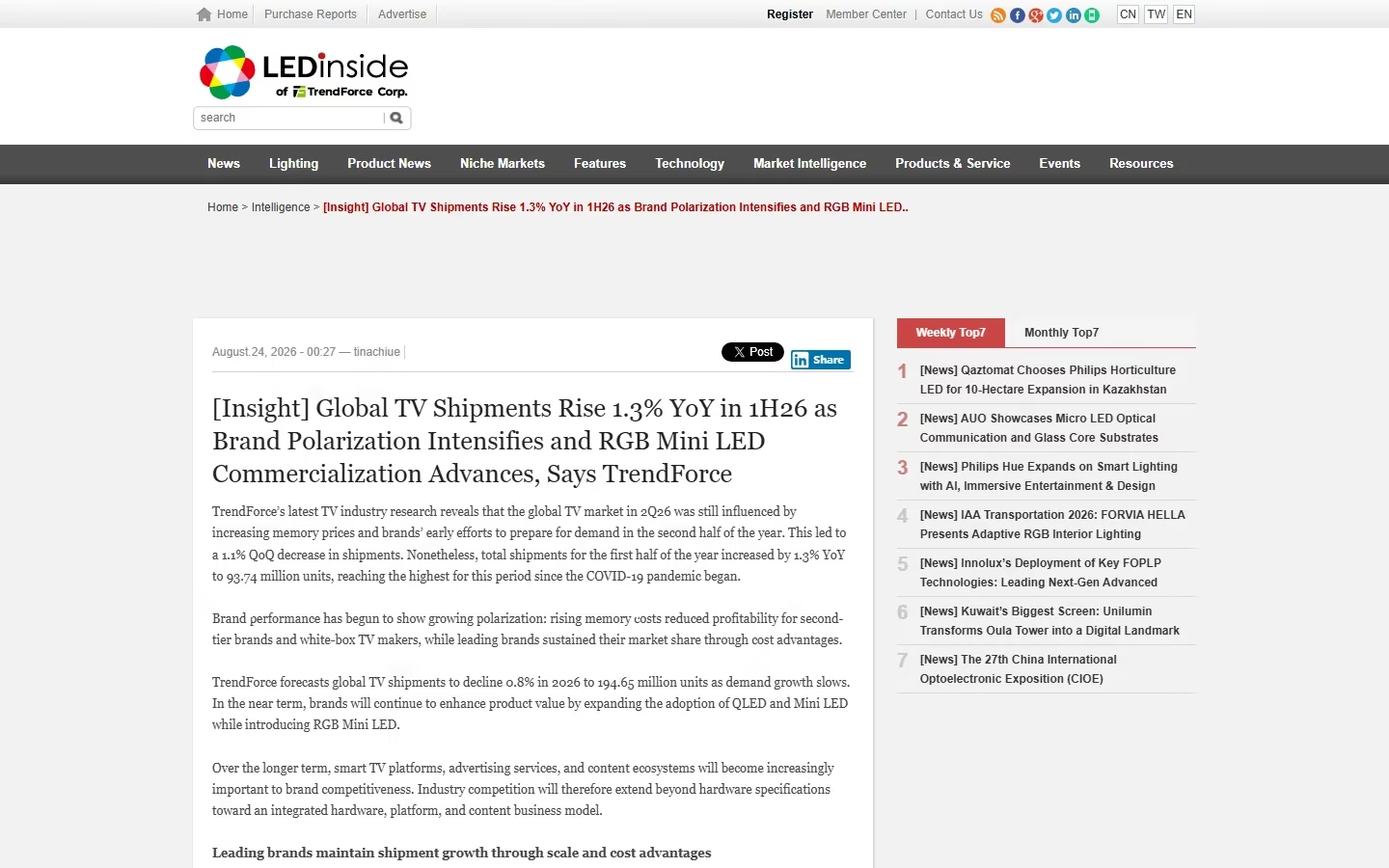
Demand, in aggregate, did not collapse: TrendForce put 1H26 global TV shipments 1.3% higher year over year, and out-of-home media spending kept growing worldwide. The divergence inside the LED display industry therefore came from positioning — who sells the tools for a packaging transition, who owns export channels, and who competes in undifferentiated domestic volume. Five signals summarize the filings:
- Profit pooled upstream first. The three largest net-profit growth rates in the sector sit in equipment and PCB — Xinyichang (+1,706.70%), GKG Precision (+104.69%), Hongban (+124.74%) — not in screen brands.
- Export exposure decided margin. NovaStar’s overseas revenue rose 35.49%; Unilumin drew 56.96% of revenue from abroad; Xinasheng’s overseas gross margin (32.33%) ran almost double its domestic margin (17.12%).
- Currency became a P&L line. Absen’s finance costs rose 233.04% on exchange losses; Zhaochi booked a RMB 111 million FX loss; Leyard and Unilumin both flagged currency drag.
- The packaging transition turned into revenue. Nationstar reported batch delivery of MIP ultra-fine-pitch panels, Hongban’s COB direct-view PCB ran at full capacity, and GKG’s packaging equipment revenue rose 174.72%.
- Scene-specific demand outgrew general demand. Aoto’s LED cinema screens (208 ordered, 118 delivered), NovaStar’s dome-theater projects, HiteVision’s 216-inch COB all-in-one, and Hisense’s +37% LED display line all grew faster than the general screen market.
Why Is the LED Display Industry’s H1 2026 Profit Boom Led by Equipment Makers?
The mechanism is a capex hand-off. Moving a production line from SMD assembly to COB bonding or MIP placement forces screen factories to buy new bonding equipment, new PCB formats, new driver ICs, and new inspection tools — before those factories earn a single yuan of margin from the finished panels. The suppliers who sell that tooling booked the sector’s best H1 2026 numbers.
Xinyichang is a Shenzhen-based supplier of LED and semiconductor packaging equipment. Its H1 2026 revenue rose 36.05% to RMB 547 million and net profit multiplied 1,706.70% year over year to RMB 47.26 million, with semiconductor equipment contributing more than 40% of revenue; its customer list spans panel makers, LED chip houses, and screen brands including BOE, TCL CSOT, HKC, Unilumin, Sanan Optoelectronics, Nationstar, Tianma, Ledman, Aoto, Samsung, and Everlight (Hangjia Display, August 21).
GKG Precision is a maker of solder-paste printing and advanced packaging equipment. H1 2026 revenue rose 61.53% to RMB 733 million and net profit 104.69% to RMB 137 million; packaging equipment revenue jumped 174.72% as GKG’s die bonders entered SIP, COB, COG, and MIP lines, while AI-server demand kept its solder-printing business growing 49.84% (Hangjia Display, August 21).
Hongban Technology is a PCB manufacturer serving direct-view LED and IC-substrate applications. Its COB direct-view PCB lines ran at full capacity through H1 2026, supplying Zhaochi and Unilumin; revenue rose 22.46% to RMB 2.09 billion and net profit 124.74% to RMB 539 million, with new Jiangxi capacity scheduled to start in Q3. Mingwei Electronics is a display driver IC designer whose revenue rose 69.26% to RMB 484 million as it returned to profit, expanding into MIP-matched drivers and transparent-display drivers. Maxwell’s semiconductor and display equipment unit grew 94.66% year over year.
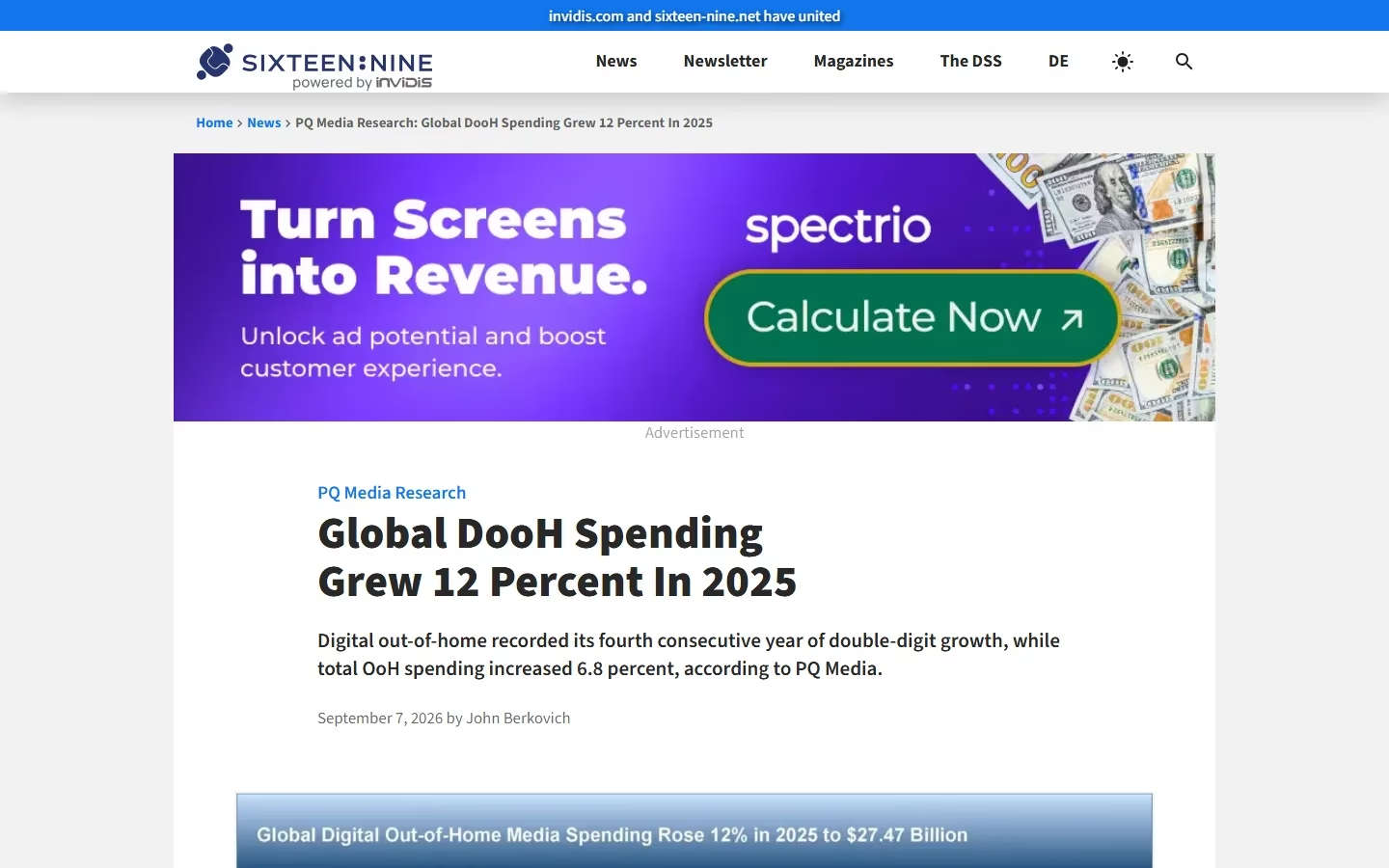
The tooling boom rests on real end demand. PQ Media research, reported by invidis in September 2026, put global DOOH spending growth at 12% for 2025, and venue, retail, and studio builds keep adding LED surface area. Chip-side evidence points the same direction: Zhaochi ran its LED chip output at full utilization — 1.17 million four-inch wafers per month — and its MLED display module line shipped 30,000 square meters in a single month. Upstream, the driver-IC supply squeeze documented in the 2026 shortage cycle (LED driver IC shortage 2026) and the materials price run of mid-2026 (August 2026 price hike roundup) both pushed buyers toward vendors with locked capacity. Equipment makers collect the bill for a packaging transition before screen brands collect the margin — that sequencing is the mechanism behind the H1 2026 LED display industry profit spread.
How Did Overseas Markets Shape LED Display Industry H1 2026 Results?
NovaStar is a Shenzhen-based supplier of LED display control systems and video processing hardware. H1 2026 revenue rose 15.13% to RMB 1.77 billion with net profit of RMB 332 million, up 12.81%; overseas revenue rose 35.49% to RMB 475 million, led by Latin America and Southeast Asia, and cloud-based information publishing revenue grew 74.66%. Its project list reads as a map of the immersive-build market: the Qianjiang Tiangong Nova dome theater, the Shenzhen Longgang flying-dome cinema, the Cloud Dream Ferris-wheel sphere display, and the LED dome at the Shanghai Science and Technology Museum.
Unilumin is a Shenzhen-based LED display manufacturer with 56.96% of H1 2026 revenue from more than 160 countries. Total revenue slipped 2.92% to RMB 3.55 billion and net profit fell 73.40% to RMB 32.2 million, with a non-GAAP loss of RMB 84.7 million — but the order book points forward: new orders reached RMB 4.44 billion, and Q2 alone produced RMB 2.15 billion of revenue, up 53.58% quarter over quarter with RMB 115 million of Q2 net profit. The company’s “LED+AI” program is the stated second curve.
Absen is a Shenzhen-based LED display exporter with a project track record across international markets. Revenue growth accelerated from +7.52% in Q1 to +8.48% for the half at RMB 1.97 billion, and its LED display gross margin rose 5.25 points to 36% — the strongest proof in this earnings season that premium positioning survives a price war. The cost side shows the export trade-off: finance costs rose 233.04% on exchange losses, sales expense rose 23.95% to deepen both domestic and overseas channels, and R&D spending rose 8.86% to RMB 88.4 million, adding 43 patents and a CNAS-accredited laboratory focused on Micro LED, AI image processing, and low-carbon operation (Hangjia Display, August 25).
Xinasheng is an outdoor-screen exporter that makes the margin split explicit: 94.7% of its H1 2026 revenue came from abroad at a 32.33% gross margin, while domestic sales carried a 17.12% gross margin. Total revenue fell 23.15%, and the company attributed the decline to weak domestic demand, industry overcapacity, and price competition — the domestic price war, not export demand, is the drag on this business.
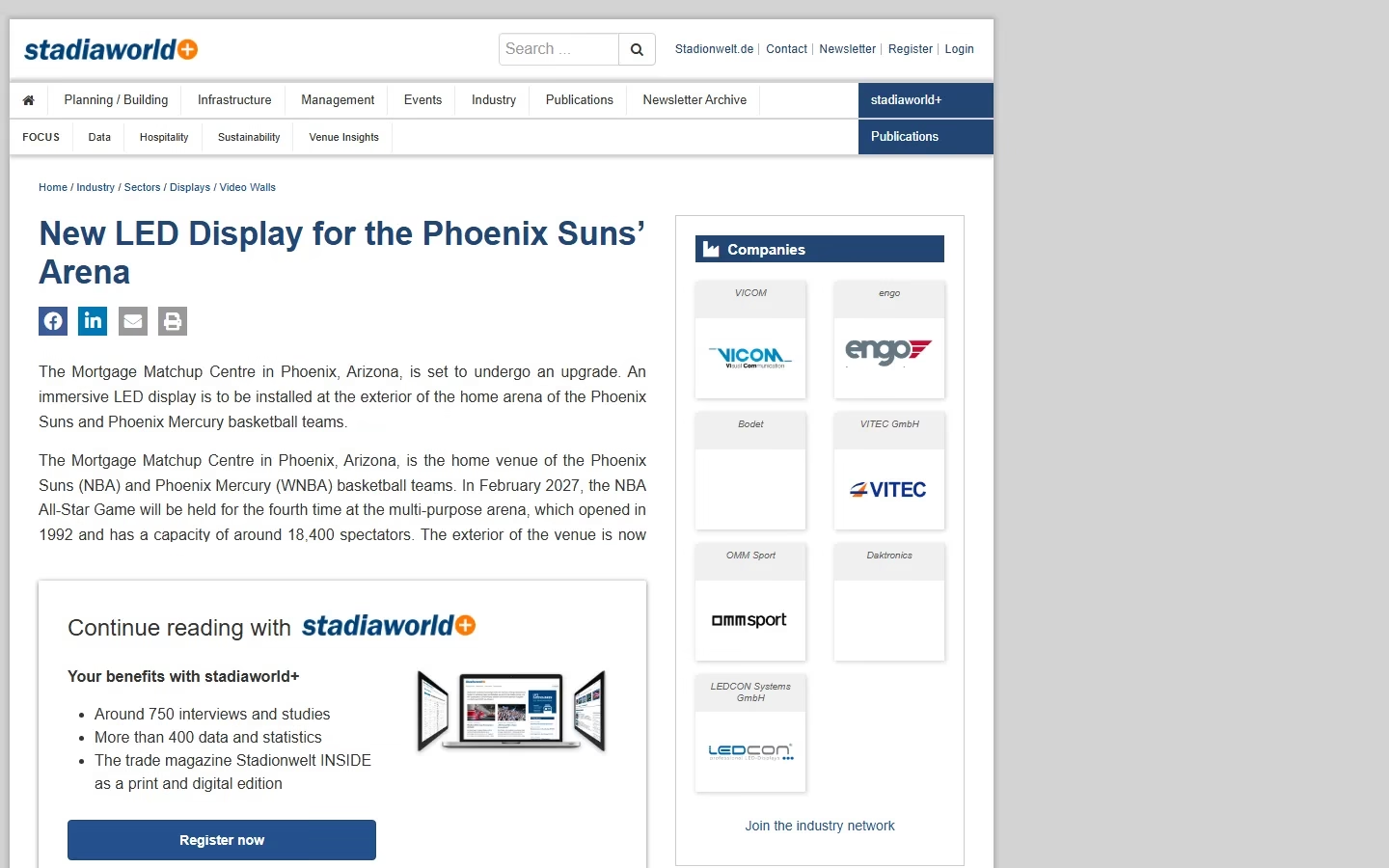
Demand from international venues stayed active through the half: the Phoenix Suns’ Mortgage Matchup Centre commissioned an immersive exterior LED build (stadiaworld, August 2026), following the stadium-scale programs documented in the World Cup 2026 LED project roundup and the Saudi 2034 stadium pipeline. The counterweight is currency. Absen’s finance costs (+233.04%), Zhaochi’s RMB 111 million FX loss, and the currency drag flagged by Leyard and Unilumin show exchange rates moving from a footnote to a profit line at export-weighted firms. For buyers, that argues for quotes with stated validity windows and staged payment terms in H2 2026 negotiations.
Which LED Display Industry Technologies Turned a Profit in H1 2026?
MIP moved from roadmap to batch delivery. MIP (Micro-LED in Package) is a packaging route that places miniature full-color LED packages onto the board as discrete parts, instead of bonding bare dies directly onto the PCB as COB does. Nationstar reported batch delivery of MIP ultra-fine-pitch panels in H1 2026; Leyard continued its glass-substrate MIP route; Sanan Optoelectronics stated that its Micro-MiP share in commercial large-screen displays held firm; and driver-IC designer Mingwei expanded its MIP-matched driver portfolio. A packaging route only reaches “batch delivery” language in filings after months of yield work — its arrival on the cost curve is the single most consequential supply-chain event in this reporting season.
COB moved up the size ladder. COB (Chip on Board) is a packaging method that bonds bare LED dies directly onto the substrate, removing discrete packages and enabling finer pitches and higher protection ratings. HiteVision launched 135-inch, 163-inch, and 216-inch COB all-in-one LED displays for education and premium meeting spaces, and Hisense Visual — whose LED display revenue grew 37% — introduced its first LED digital signage line alongside a COB G-series all-in-one and new rental products. The 2026 COB price war and the LED all-in-one market analysis both describe the demand pool these launches are contesting; the H1 2026 filings show incumbents responding with size, not discounts.
Film-grade and immersive scenes produced the strongest brand-side growth. Aoto Electronics is a Shenzhen-listed LED display and sports-venue systems company. Its H1 2026 revenue rose 32.83% to RMB 416 million with net profit up 64.22%; LED video display systems revenue rose 60.04% to RMB 294 million, lifting that line to 70.69% of total revenue. Inside it, the film division grew 19.55% to RMB 133 million: the company had signed 208 LED cinema screens with 118 delivered across nearly 50 cities by June 30 — the project base documented in our LED cinema screen report and the cinema format comparison — and its XR/virtual-production stage count reached 131 worldwide, with clients including Nvidia, Tencent, Microsoft, Amazon, China Film Group, and Toho. At August’s BIRTV2026 forum the company presented the first Golden Curtain awards for works shot on its LED stages, and a RMB 265 million private placement will fund Micro LED COB manufacturing capacity. Film-grade certification and stage engineering, not panel price, are the moat these numbers describe.
AI became an attach layer rather than a slogan. Absen credited AI image processing in its R&D priorities; Unilumin branded its second curve “LED+AI”; HiteVision tied its education hardware to AI courseware; and equipment maker Xinyichang named AI-driven semiconductor demand as the reason its own order book doubled its profit growth rate. None of these filed a separate AI revenue line yet, which is itself the takeaway: treat AI claims as a product roadmap signal, not a booked segment.
What Should Display Buyers Do After the LED Display Industry’s H1 2026 Results?
The filings read as a supplier-screening manual. Five checks translate the H1 2026 LED display industry data into procurement actions:
- Read R&D trajectory and gross margin together. Absen raised R&D 8.86% and gross margin 5.25 points in the same half. A vendor cutting R&D while discounting is signaling capacity stress; a vendor holding both is signaling a defensible position.
- Verify export infrastructure, not export claims. The 32.33%-versus-17.12% margin spread at Xinasheng shows where the durable business sits. Ask shortlisted vendors for overseas service networks, spare-part depots, and named warranty terms rather than export percentages.
- Ask the packaging-generation question. With Nationstar shipping MIP in batch, Hongban’s COB PCB at full capacity, and equipment lead times tightening upstream, ask each vendor what share of current output is COB or MIP, and what the driver-IC roadmap looks like for the generation after the one you buy.
- Buy certified scene records for specialized builds. Aoto’s 208 LED cinema screens and 131 XR stages, and NovaStar’s dome-theater installations, took years of certification and engineering to stack. For cinema, XR, or stadium work, weigh delivered-project lists over catalog specs.
- Contract for currency and lead-time volatility. Finance costs that move +233.04% in one half (Absen) will find their way into quotes. Fix validity windows, stage payments, and state the exchange-rate mechanism in the contract.
For procurement teams, the H1 2026 LED display industry filings reduce to one instruction: buy from the companies the tooling boom is crowding toward, not from the ones the price war is pushing out. As a source LED screen manufacturer, Unify LED ships factory-direct indoor, outdoor, rental, and COB LED displays with full engineering support, factory-audit access, and export documentation — request a specification sheet and a project reference list to compare against the checks above.
References & Sourced From: LED Display Industry H1 2026 Earnings Coverage
- Hangjia Display: “Net profit up as much as 1,706.7% — 6 LED display companies report H1 results” (NovaStar, Nationstar, Zhaochi, Xinyichang, Xinasheng, GKG), August 21, 2026 — eet-china.com
- Hangjia Display: “Absen, HKC and 12 companies report H1 results” (Absen, Liantronics, HKC, BOE HC Semitek, Silan, Hongli, Tianma, Mingwei, KTC, Maxwell, Huigu, Xinxawei), August 25, 2026 — eet-china.com
- Hangjia Display via OFweek: “Sanan, Hisense and 10 companies report H1 results” (Hisense Visual, Sanan, Jingke, Changhong, TPV, WG Tech, HiteVision, Nanjiguang, Infovision, Hongban), August 27, 2026 — display.ofweek.com
- Hangjia Display via OFweek: “Why Aoto Electronics grew against the trend”, August 24, 2026 — display.ofweek.com
- Leyard 2026 semi-annual report summary, CNINFO, August 19, 2026 — static.cninfo.com.cn
- Unilumin 2026 semi-annual report abstract (revenue RMB 3.551B, -2.92%; net profit RMB 32.23M, -73.40%) — xueqiu.com / company filing
- TrendForce via LEDinside: “Global TV Shipments Rise 1.3% YoY in 1H26 as Brand Polarization Intensifies and RGB Mini LED Commercialization Advances”, August 24, 2026 — ledinside.com
- PQ Media via invidis: “Global DooH Spending Grew 12 Percent In 2025”, September 2026 — invidis.com
- stadiaworld: “New LED Display for the Phoenix Suns’ Arena”, August 2026 — stadiaworld.com
- LEDinside: “Absen is re-pricing LED with technology innovation”, August 27, 2026 — ledinside.cn
Figures compiled from company H1 2026 filings as reported by the sources above; RMB amounts rounded. This article is industry analysis for display buyers and does not constitute investment advice.