
P1.86 · Indoor Fine Pitch
P1.86 Indoor Fine Pitch LED Display Collection
The honest-name pitch: 172×86 pixels on the 320×160mm board lands at exactly 1.860mm — about 288,900 pixels per square meter on SMD1515 black-body lamps, built for rooms read from 3–5 meters. Die-cast cabinets, vacuum-lifter front service and 3840Hz camera-safe refresh come standard.
Definition
What Is a P1.86 Indoor Fine Pitch LED Display?
Short answer: A P1.86 indoor fine pitch LED display is an indoor fixed video wall made from 1.86mm-pitch SMD1515 boards — about 288,900 pixels per square meter — intended for rooms whose nearest reader sits 3–5 meters away. Three board formats cover the class (320×160mm, 200×150mm and 250×250mm), all mounted in die-cast aluminum cabinets that service entirely from the front, and the 3840Hz refresh keeps cameras steady. Unlike several “1.5-class” names on the market, this pitch is exact: 172 pixels across a 320mm board measures a true 1.860mm.
A P1.86 indoor fine pitch LED display is the density step where meeting-room walls stop being a luxury: lamp count drops another third below the 1.53mm tier, the per-square-meter price follows, and the picture still resolves dashboards, spreadsheets and video calls cleanly across a conference table. It shares the fine-pitch platform — die-cast cabinets, front service, per-pixel correction — with the finer collections, so nothing about ownership gets harder as the pitch widens.
Its position on the ladder is worth noting. At 288,900 px/㎡ this class is actually denser than the P1.953 rental format (262,144 px/㎡) while selling in the same “sub-2mm” conversation — the crossover decision between them is laid out in the comparison section below. For finer work inside 3 meters, see the P1.53 fine pitch collection; for wider rooms, the P2.604 indoor class takes over. Size any wall with the LED screen calculator.
The class measures itself with one figure: about 288,900 pixels per square meter. A wall 3.4×1.9m carries roughly 1,830×1,030 pixels — more than Full HD of working resolution for a briefing room, at the lightest fine-pitch bill in the family. If someone will read from 2 meters away, step to the P1.53 collection; past 5 meters, P2.604 banks the difference.
Module Options
Which Module Sizes Does a P1.86 Indoor Fine Pitch LED Display Use?
Three boards, one platform. Figures come from our production sheets, reviewed September 2026 — the mainstream board’s scan and IC set reconcile as built; the two smaller formats are order-engineered and marked per sheet. Lamp rows state the bond wire, because that is the tier decision on every quote.
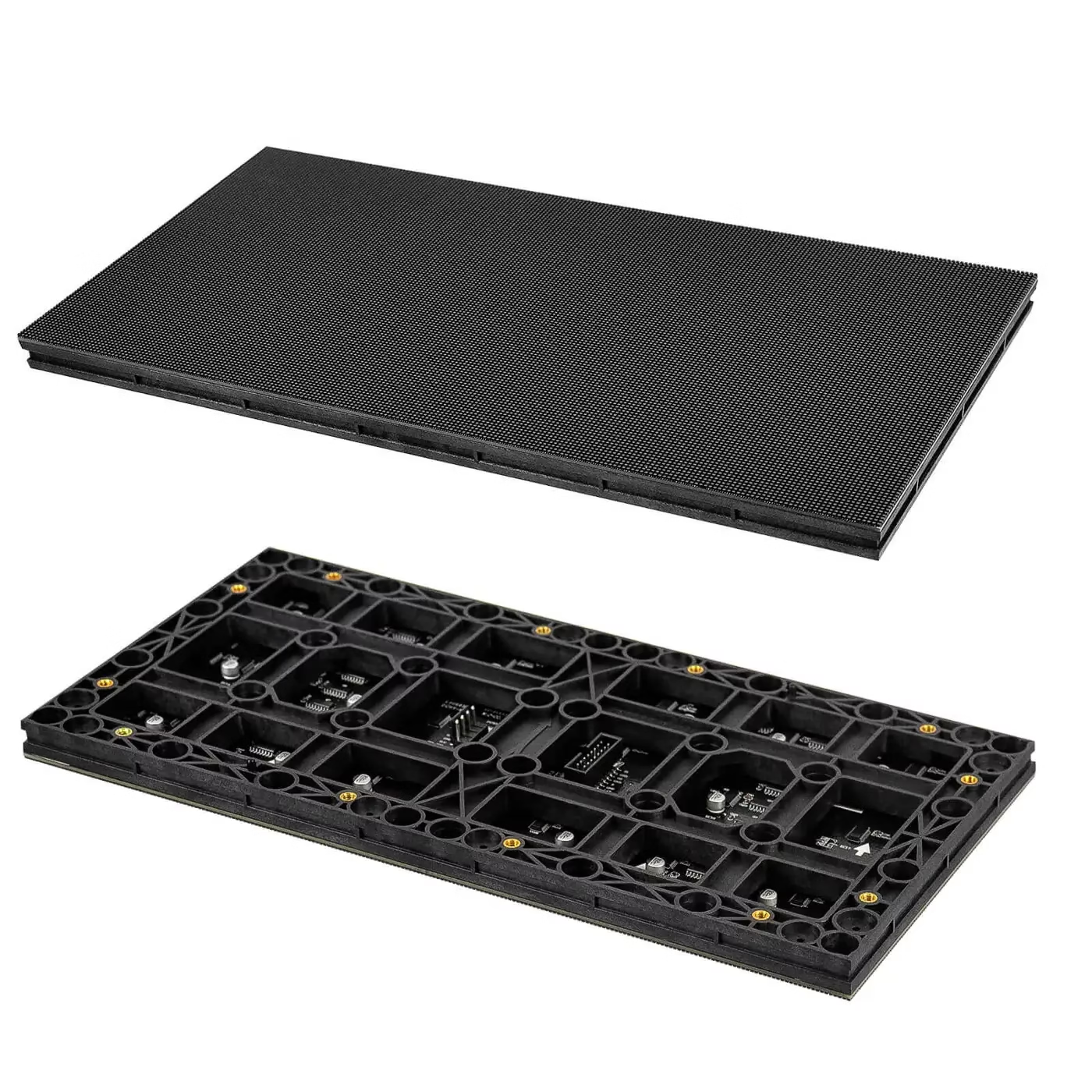
① 320×160mm — The Volume Standard
The board that leads China’s domestic volume at this pitch: 172×86 = 14,792 dots at a true 1.860mm, 19.5 boards per square meter, mounted in the family’s 640×480mm and 640×640mm die-cast aluminum cabinets. The 1/43 scan runs the grid through 66 fitted devices (drivers plus row decode per the production sheet), and national-standard pure-copper harnesses keep a sealed room cool. Default choice for briefing rooms, operations walls and studio sets at this pitch.
| Module size | 320×160mm |
| Pixel resolution | 172×86 = 14,792 dots (exact 1.86mm) |
| Scan mode | 1/43 scan |
| Driver IC brands | Chipone PWM driver family, 16-channel |
| ICs fitted (total) | 66 (drivers + row decode, per production sheet) |
| Lamp | SMD1515 black-body lamps · gold-wire bonding (premium tier) / copper-alloy-wire (value) |
| Brightness | ≈800 nits |
| Maintenance | Front access only — a vacuum lifter pulls any board from the face |
| Cabinets | Die-cast aluminum 640×480mm (×6 boards, 344×258 px) · 640×640mm (×8 boards, 344×344 px) |
| Uniformity | Wavelength- and brightness-sorted lamps; dot-level correction stored in the receiver |
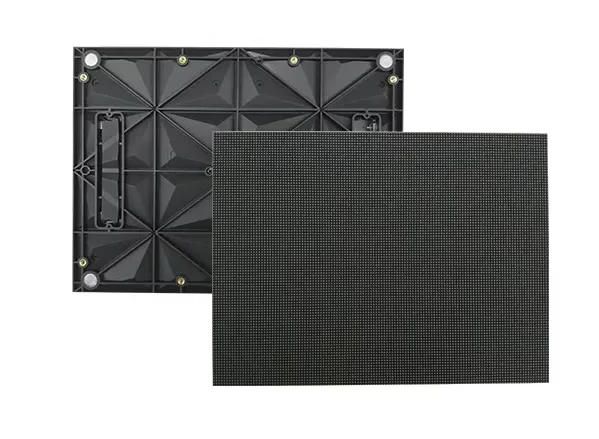
② 200×150mm — The High-End Small Board
The compact premium board: 107×80 ≈ 8,560 dots on a 200×150mm plate, about 33.3 boards per square meter, housed in a 400×300mm die-cast cabinet (214×160 pixels a face) for tight walls and off-ratio installations. Boards join through hard-pin sockets or pure-copper soft cable, the face accepts an optional GOB pour, and service stays front-only. Scan and IC set follow the order sheet on this engineered format.
| Module size | 200×150mm |
| Pixel resolution | 107×80 ≈ 8,560 dots (P1.86) |
| Scan mode | Per production sheet (order-engineered format) |
| Driver IC brands | Chipone PWM driver family, 16-channel |
| ICs fitted (total) | ≈38 (scaled from the mainstream board) |
| Lamp | SMD1515 black-body lamps · gold-wire / copper-alloy-wire bonding · GOB optional |
| Brightness | ≈800 nits |
| Maintenance | Front access only — vacuum lifter |
| Cabinets | Die-cast aluminum 400×300mm (×4 boards, 214×160 px) |
| Uniformity | Wavelength- and brightness-sorted lamps; dot-level correction stored in the receiver |
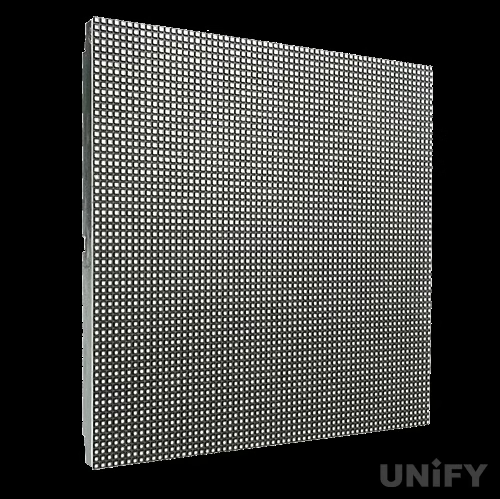
③ 250×250mm — The Square Small-Cabinet Board
The square board for the 500-series cabinet grid: 134×134 ≈ 17,956 dots on a 250×250mm plate — the densest single plate in the class — four to a 500×500mm die-cast cabinet for a 268×268-pixel face. Scan configuration is fixed per order sheet on this grid; lamps, binning and the correction pipeline follow the class standard. GOB optional; service front-only; the same wire tiers as the rest of the collection.
| Module size | 250×250mm |
| Pixel resolution | 134×134 ≈ 17,956 dots (P1.86) |
| Scan mode | Per production sheet (order-engineered grid) |
| Driver IC brands | Chipone PWM driver family, 16-channel |
| ICs fitted (total) | ≈80 (scaled from the mainstream board) |
| Lamp | SMD1515 black-body lamps · gold-wire / copper-alloy-wire bonding · GOB optional |
| Brightness | ≈800 nits |
| Maintenance | Front access only — vacuum lifter |
| Cabinets | Die-cast aluminum 500×500mm (×4 boards, 268×268 px) |
| Uniformity | Wavelength- and brightness-sorted lamps; dot-level correction stored in the receiver |
④ P1.86 or P1.953 — Where the Two Classes Cross
These two pitches sit close enough on the ladder that buyers meeting both names in one tender assume they are neighbors in price and picture. They are not, and the crossing point surprises people:
P1.86 — denser and fixed-first
288,900 px/㎡ on an exact 1.860mm grid — 10% more density than P1.953. Built for permanent walls: die-cast cabinets, front-only service, engineered for rooms read from 3–5 meters.
P1.953 — the rental workhorse
262,144 px/㎡ on the 500-series rental cabinet family, optimized for fast build-and-strike duty. The right buy when the wall travels, not when it hangs for a decade.
The rule that falls out of the arithmetic: the wall that never moves buys P1.86 — more density on the fixed-install platform for comparable money. The wall that tours twice a month buys P1.953 for its cabinet ecosystem, flight cases and build speed, and accepts the lower density as the toll. Comparing them purely on pixels-per-square-meter misses the point: they share a number range, not a job.
Watch It Built
What Does a P1.86 Indoor Fine Pitch LED Display Look Like in Real Rooms?
Board & Image Quality
How Is the Picture of a P1.86 Indoor Fine Pitch LED Display Actually Built?
Boards in this class ride a 1.6mm high-flatness FR-4 plate — 2.0mm on the bigger cabinets. With 14,792 lamps on one 320×160mm board, the plate’s stiffness is what keeps a 3-meter viewing line free of brightness ripple: flex shows up as a wave across the face long before anything fails. Harnesses are national-standard pure copper on both power and signal, because a sealed room turns every ohm into heat across a long duty day.
SMD1515 and Its Bond Wire
The black-body SMD1515 lamp soaks up room spill instead of reflecting it — contrast sits near 5000:1 with a 160° cone. The tier hides inside the lamp: gold-wire bonds take the ≈800-nit rating and keep calibration across years, copper-alloy wire trades a little of that for price. Boards and drivers stay identical either way.
16-Bit Gray, 3840 Hz, No Excuses
Dark-scene smoothness comes from the PWM driver generation — the Chipone-class parts here run 16-bit processing, so low-brightness gradients hold up on a wall watched at 3m. The 3840Hz refresh puts the wall past every camera artifact: webcams, lecture capture and broadcast rigs all read a clean frame.
Sorted Lamps, Corrected Dots
Every lamp is sorted on wavelength and brightness before it reaches the line, and the receiver stores dot-level correction — loaded at the factory, refreshed on site at handover. That pairing is what turns several hundred boards into one continuous picture, and it is itemized in our quotes rather than buried in fine print.
Encapsulation
SMD, GOB or COB — What Should the Face of a P1.86 Indoor Fine Pitch LED Display Be?
At this pitch the face is a facilities decision as much as a picture one. All three builds ship on every board here; the room picks the line:
Three questions settle it:
- Does anything reach the face? — cleaning crews, luggage, exhibit props: GOB at minimum, COB where contact is daily.
- How close do cameras work? — 3840Hz already covers flicker at any distance; only sub-two-meter camera work argues for COB’s flat face.
- Who repairs it? — SMD and GOB fix at the wall in minutes; COB travels to a bench, so the spare-parts clause carries the uptime promise.
Power
Which Power Supply Brands Does a P1.86 Indoor Fine Pitch LED Display Use?
Production fits three brands of 5V switching supply in this class: Chuanglian Power, MEAN WELL and G-Energy. Every cabinet carries its own 5V 40A (200W) unit, so a failure dims one cabinet — never a wing of the wall. On rooms that run around the clock, the 4.2V common-cathode build drops the draw 30–40% and keeps the sealed space cooler.
Brand-level power catalogs: LED display power supply hub · Mean Well guide · G-Energy guide
Budget check: a mainstream board peaks near 15W — around 290W/㎡ at full white — with mixed content landing at 100–170W/㎡. A 10㎡ wall on 24/7 duty at 140W/㎡ consumes roughly 12,300 kWh a year, about $1,200 on commercial tariffs; the 4.2V build takes a third off, and night-time scheduling takes more.
Control Stack
Which Control Systems Work With a P1.86 Indoor Fine Pitch LED Display?
Six ecosystems drive these boards — four control platforms plus two video-processing lines. Synchronous racks own briefing rooms, operations walls and studios with real-time correction and low-gray tuning; asynchronous players run lobby and signage walls from the cloud. Keep one family across the wall, and put the receiving-card generation in the order — correction data and low-gray behavior live in the card, not the lamp.

NovaStar
The calibration reference — current receiving cards and VX senders define how fine-pitch walls are judged.
Best for: executive rooms, NOCs, studios

Colorlight
Value-performance leader — 4K processors and i-series receivers cover the class end to end.
Best for: sharp meeting-room budgets

Huidu
Cloud-first players — A-class units push playlists to lobby and signage walls without a site PC.
Best for: unattended walls, scheduled content

Mooncell
The value third force — 2-in-1 processors and networked players at keen prices for fixed installs.
Best for: budget-tight fixed walls

VDWALL
Touring-grade processors — the LVP line carries big conference canvases with field-proven reliability.
Best for: wide conference-room faces

RGBlink
Broadcast-adjacent switchers — bridge cameras, NDI flows and the wall in one rack.
Best for: studios and live streams
Watch: X Series video processor (Colorlight official)
The processor tier that feeds fine-pitch walls — source scaling, low-latency switching and the correction pipeline behind the dot-level line in our tables.
Hardware we fit across the six ecosystems — NovaStar MRV412 receiving card · Colorlight processor lineup · Huidu player family · Mooncell MVB4S Pro 2-in-1 processor · VDWALL LVP series · RGBlink switcher family
How Far Should the Nearest Viewer Sit From a P1.86 Indoor Fine Pitch LED Display?
The floor of the viewing range is a furniture decision indoors. Route the room before the budget:
P1.53, P1.86 or P1.953 — Reading the Sub-2mm Ladder Honestly
Three names crowd the sub-2mm shelf, and two of them hide rounding in the name. The honest comparison:
Three takeaways that settle it:
- Distance first — inside 3 meters the P1.53 class earns its keep; at 3–5 meters P1.86 and P1.953 both read perfectly and the decision moves to duty.
- Duty second — a wall that never moves buys P1.86: more density on the fixed platform. A wall that tours buys P1.953 for its rental cabinets and build speed.
- Trust the true pitch, not the label — this class lands on exactly 1.860mm (172 pixels across 320mm), while several “1.5-class” names round a coarser grid down. Ask for the pixel grid, not the marketing name.
Fine Pitch LED or LCD Video Wall — Which Should an Operations Floor Buy?
Operations and briefing buyers price both, so here is the straight comparison:
The routing rule: command walls, briefing canvases and anywhere one unbroken image matters — fine pitch LED, and at this pitch the premium over LCD is the family’s narrowest. Small fixed-size walls on tight budgets — LCD still buys the picture. Ladder background: pixel pitch explained.
Price Transparency
How Much Does a P1.86 Indoor Fine Pitch LED Display Cost?
Market reference ranges (board prices scanned from live listings, converted at 19.5 boards per square meter and cross-checked against complete-wall quotes — September 2026 market listing scan):
Reference: control runs $500–2,000 extra per project; local steel and installation add 20–30% of screen value. Inside the board, LED chips plus the driver set dominate cost — pitch, which fixes lamp count, is still the single biggest lever. Every number here is a market scan, never a quote.
Applications
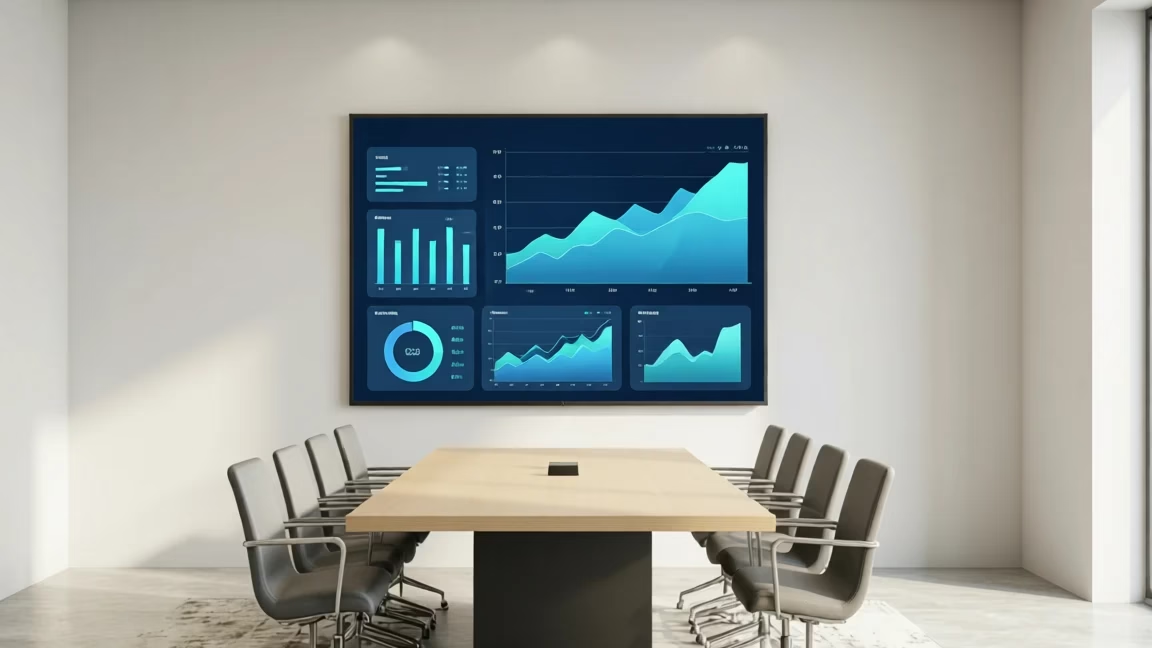
Where Does a P1.86 Indoor Fine Pitch LED Display Deliver the Most Value?
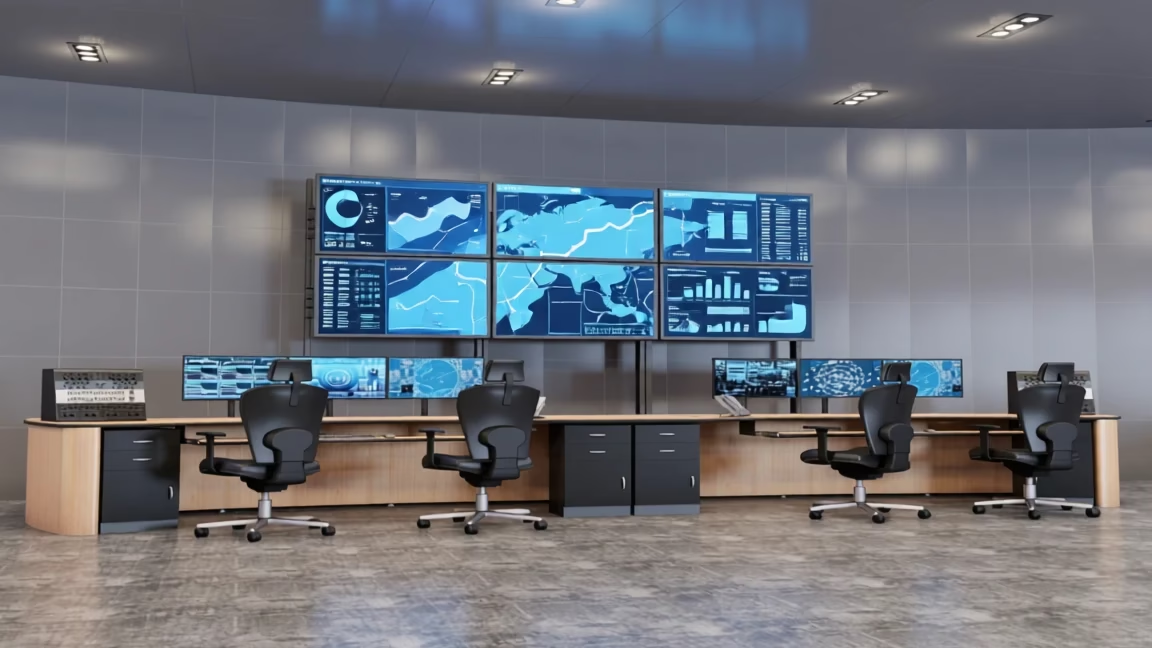
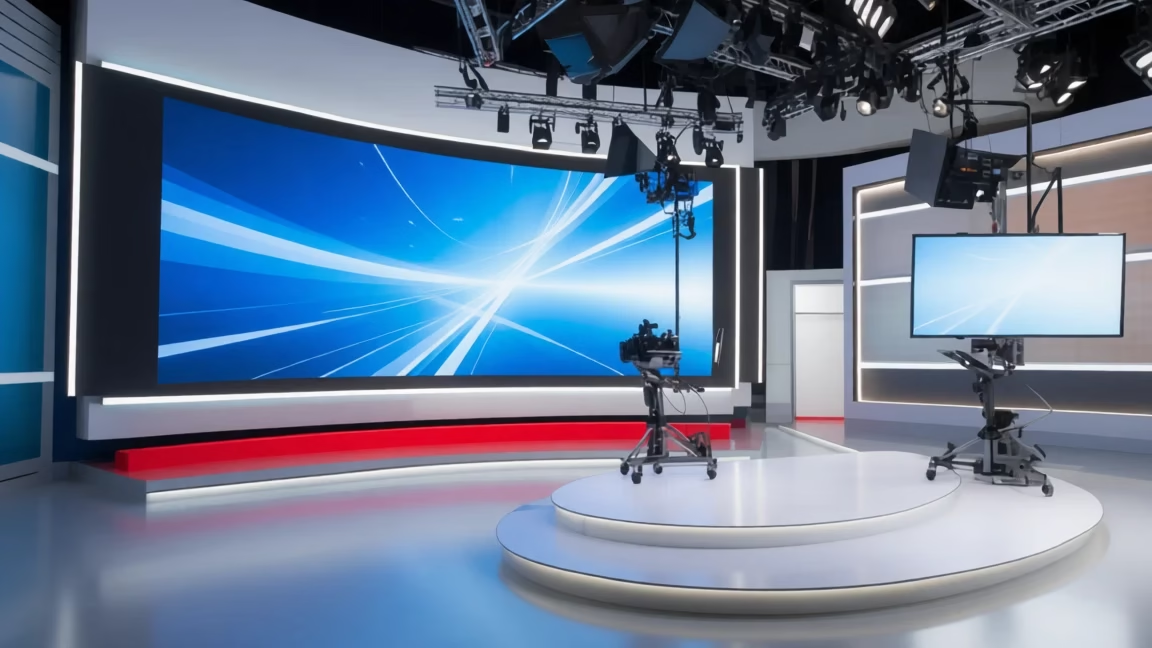
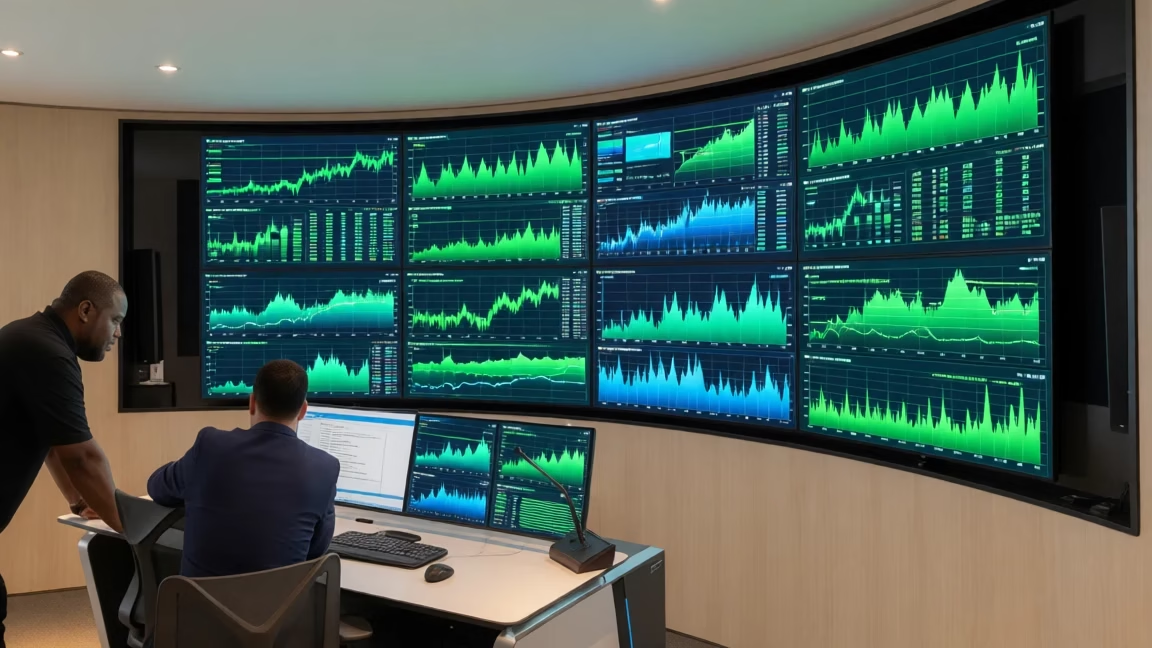
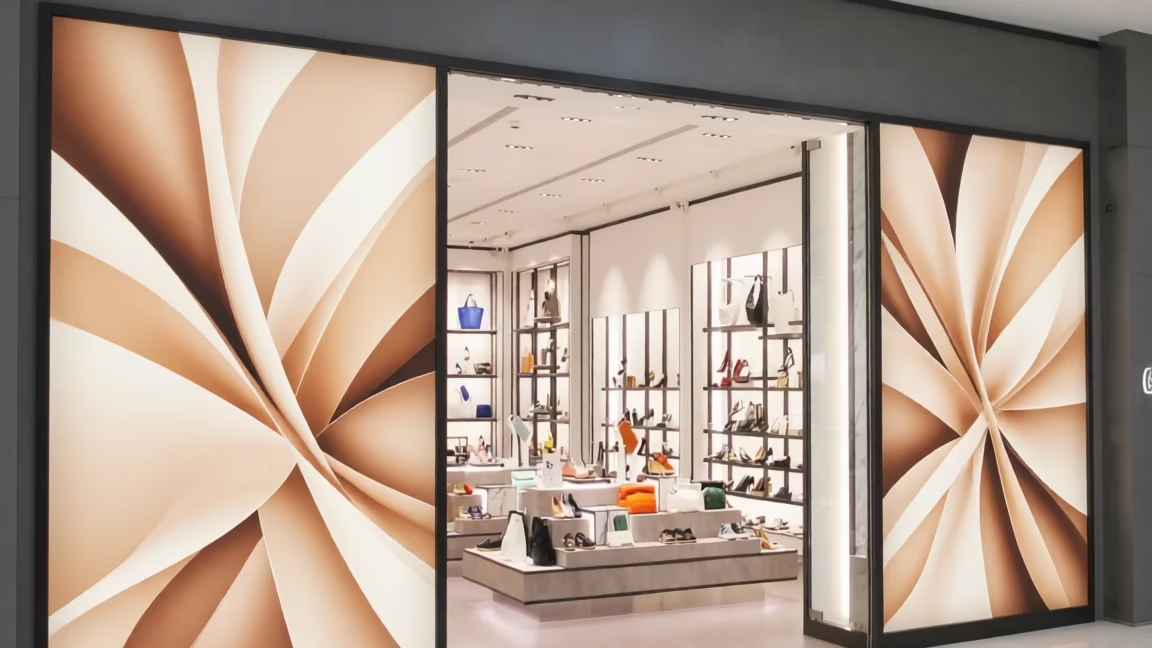
Eight placements where the 3–5m viewing band makes the 1.86mm class the smart buy:
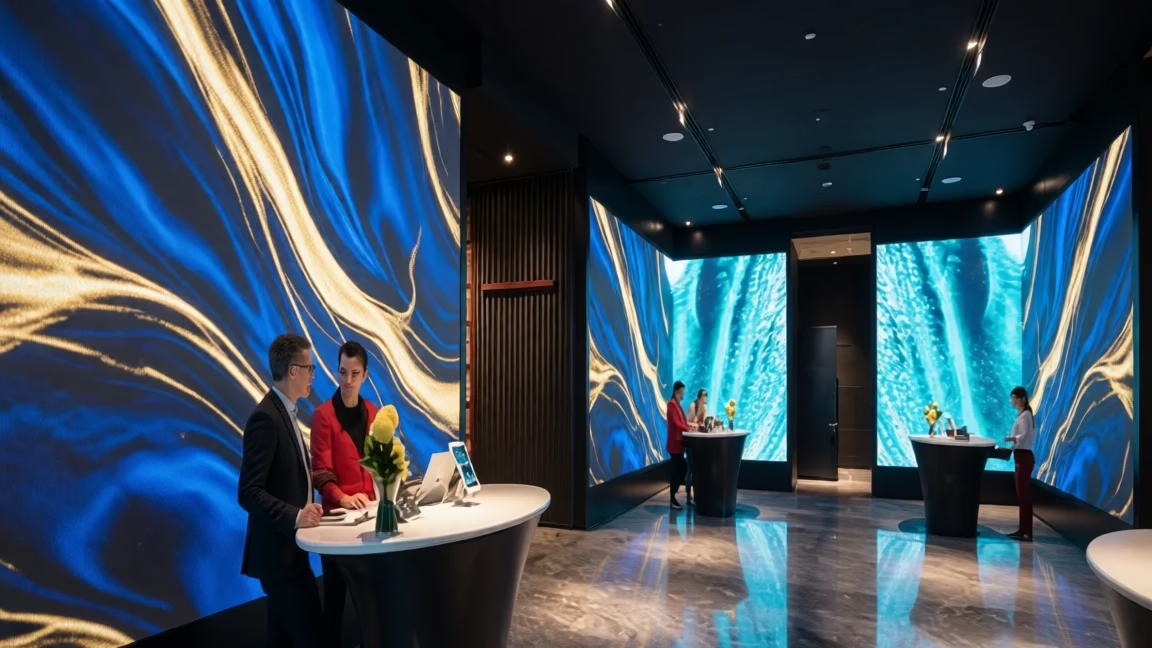
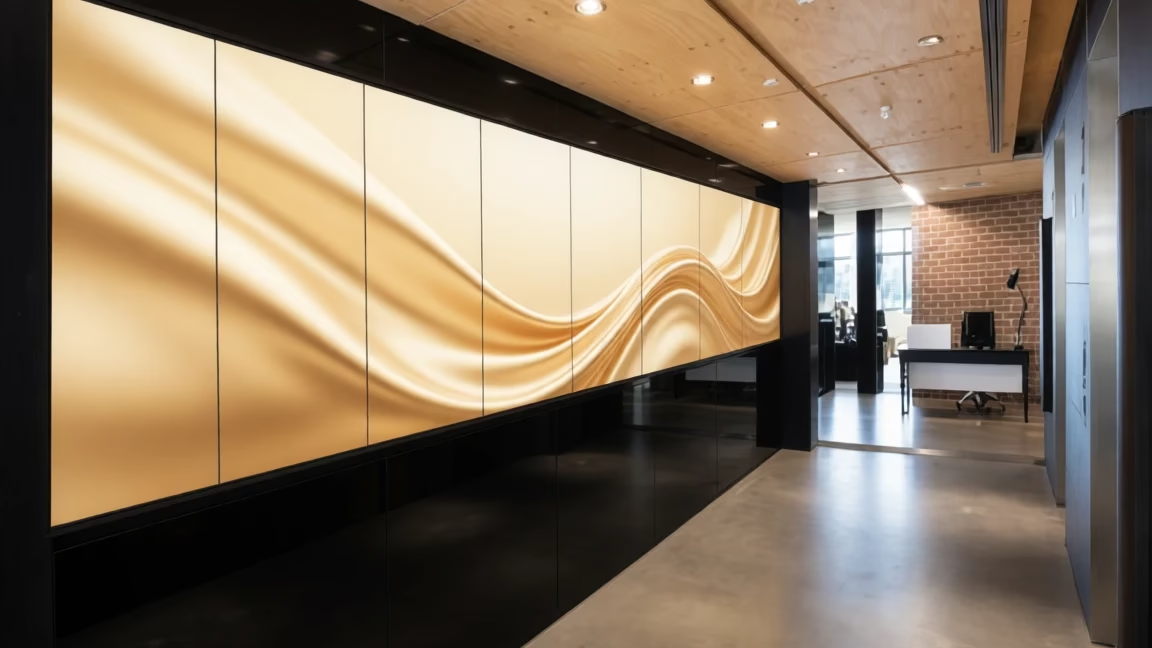

Projects
What Have Real P1.86 Indoor Fine Pitch LED Display Projects Looked Like?
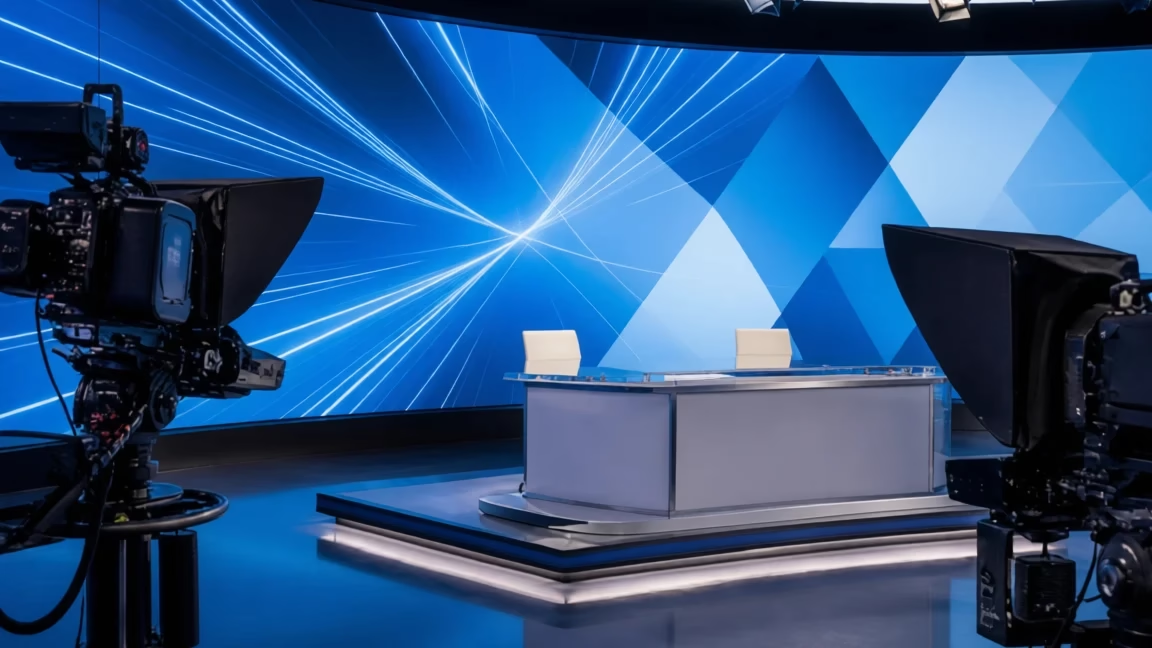
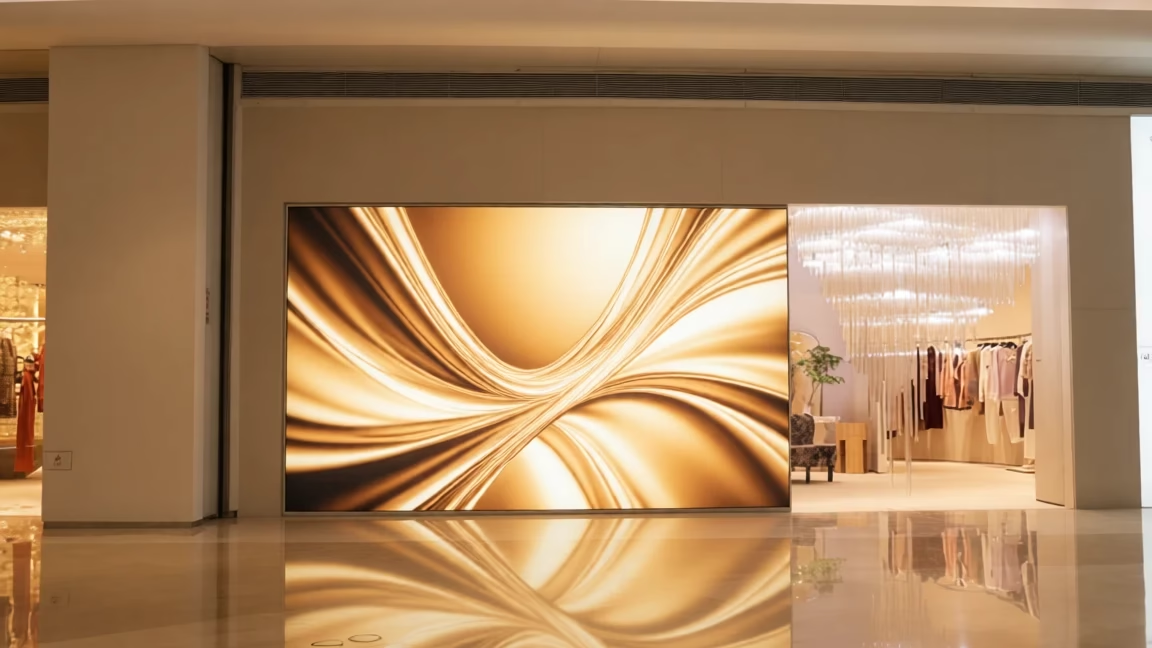
Reference placements for the class — briefing room, operations floor, studio and showroom. Named references available for your market on request:
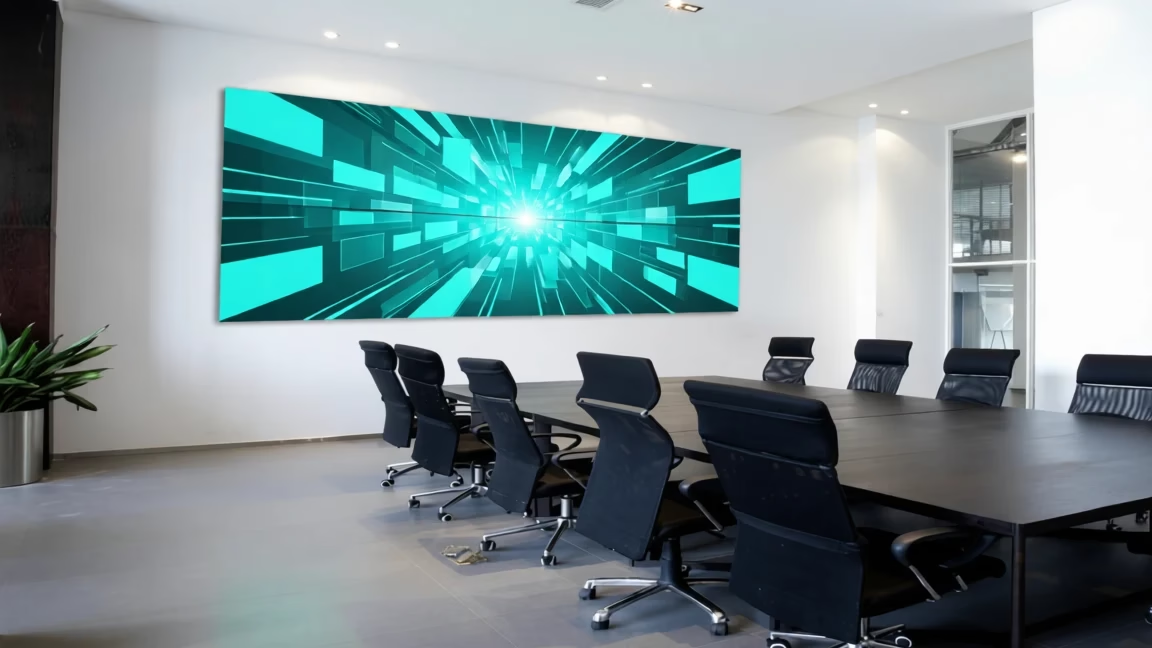
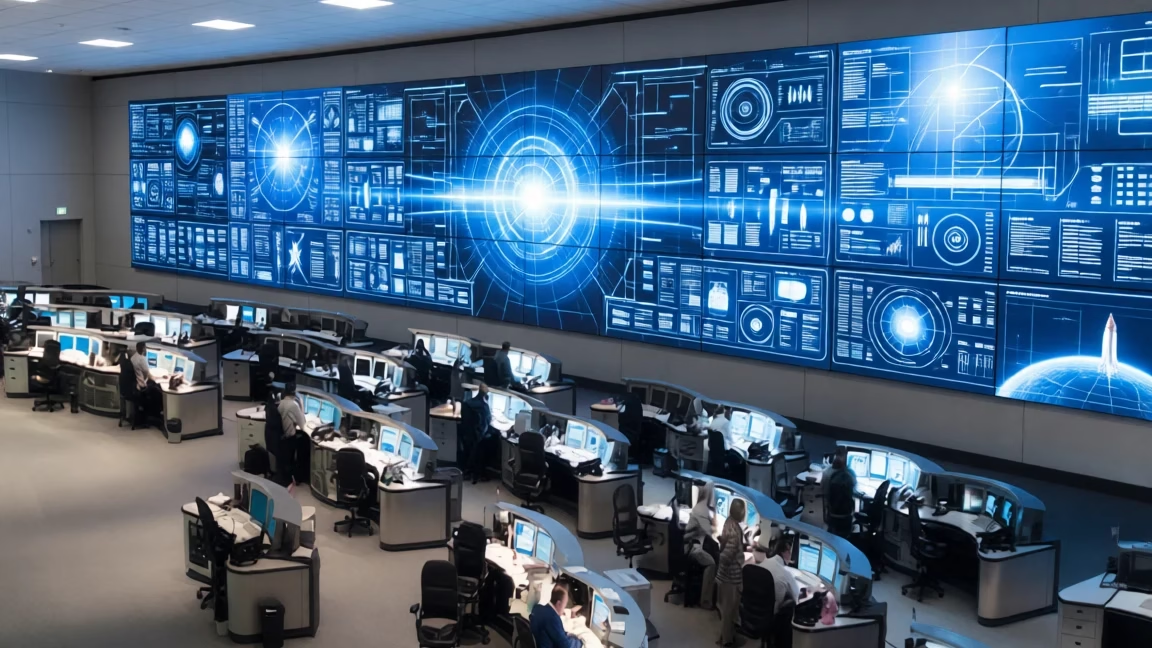
FAQ
P1.86 Indoor Fine Pitch LED Display: Frequently Asked Questions
What viewing distance does a P1.86 indoor fine pitch LED display need?
Put the nearest reader at 2.5 meters or beyond, and let the class work between 3 and 5 meters. Inside that band the wall resolves dashboards, decks and captions as a genuine work surface; closer than 2.5 meters the P1.53 class earns its premium, and past 5 meters P2.604 holds the same picture for less.
P1.86 or P1.953 — the pitches look almost identical, so which one?
Follow the duty, not the decimal. P1.86 is the denser wall — 288,900 px/㎡ against P1.953’s 262,144 — and it lives on the fixed-install platform: die-cast cabinets, front-only service, decade-long duty. P1.953 rides the rental cabinet family with flight cases and build-and-strike speed. A wall that never moves buys P1.86; a wall that travels buys P1.953.
Is the “1.86” name honest, or rounded like other pitches?
Honest. The mainstream board carries 172×86 pixels across 320×160mm, and the arithmetic lands exactly: 320÷172 = 1.860mm. Several “1.5-class” names on the market round a coarser grid down — so when quotes compete, ask for the pixel grid on the board rather than the pitch on the brochure.
Will the wall flicker on camera or in a lecture capture?
No. The class runs 3840Hz refresh, far past where phones and broadcast cameras catch banding or scanning bars. The ten-second field test: slow-motion mode on a phone camera, pointed at a running wall — a clean frame means the scan and receiving cards are doing their job.
Gold wire or copper-alloy wire inside the lamp — why does it change the quote?
The bond wire is the lamp’s tier. Gold-wire bonding supports the ≈800-nit rating and holds color calibration across years of long duty; copper-alloy wire trades some stability for price and suits moderate-hours rooms. Boards, drivers and correction stay identical — so two “800 nit” quotes can differ meaningfully until you ask what is inside the lamp.
How much power does a P1.86 indoor fine pitch LED display draw?
A mainstream board peaks near 15W — roughly 290W/㎡ at full white — with mixed content between 100 and 170W/㎡. A 10㎡ wall on 24/7 duty at 140W/㎡ uses about 12,300 kWh a year, near $1,200 on commercial tariffs. The 4.2V common-cathode build removes about a third of that, and scheduled night-time brightness trims more.
How is a P1.86 wall serviced once it hangs?
From the face, always — a vacuum lifter pulls any board in minutes, which is why these walls mount flush against structure with no rear walkway. Hold 3% spare boards and a matching receiving card on the shelf, and the usual faults — one dark board, drift on a module — close out the same day.
How much does a P1.86 indoor fine pitch LED display cost per square meter?
September 2026 market scans put a standard SMD1515 fixed wall — boards, die-cast cabinets, power, basic control — at $800–1,400 per square meter factory-direct, with board-only purchases at $30–55 per 320×160mm piece. GOB adds 10–15% and COB 40–60%; control runs $500–2,000 per project. Treat all of it as a market scan, not a quote.
Full Guide
Why Is P1.86 the Fixed-Wall Answer on the Sub-2mm Indoor Fine Pitch LED Display Ladder?
A P1.86 indoor fine pitch LED display occupies the spot on the ladder where fine pitch stops being a specialty purchase and starts being a facilities default: sub-2mm density, die-cast cabinet platform, front-only service, at a wall price that volume procurement can actually sign. This guide walks the two questions that decide the class — where its honest 1.860mm grid beats the neighboring names, and which hardware lines (wire, bins, faces, power) separate a good P1.86 wall from a mediocre one.
The name is the pitch: 172 pixels across 320 millimeters
Start with arithmetic that checks out. The mainstream board puts 172×86 = 14,792 dots on the 320×160mm format, and 320 divided by 172 lands on 1.860mm exactly — the density works out to about 288,900 pixels per square meter. That precision matters more than it looks. Several neighboring names round a coarser grid down into a finer-sounding class; here the marketing label and the physical grid agree, so a tender that says 1.86mm can be quoted without asterisks. The two smaller formats hold the same honesty — 107×80 on the 200×150mm plate (≈1.87mm) and 134×134 on the 250×250mm square (≈1.87mm) — with scan configurations fixed per order sheet because those grids are engineered, not catalog.
The viewing band follows the grid. At 288,900 px/㎡ the wall resolves clean text and video from about 2.5 meters out and holds it comfortably through 5 — the band where most briefing rooms, operations floors and showrooms actually place their seats. Closer than that, P1.53’s 422,500 px/㎡ earns its premium; past 5 meters, P2.604 delivers the same perceived picture and banks the difference. P1.86 owns the middle with the lightest bill in the fine-pitch family: a 3.4×1.9m wall carries more than Full HD of working resolution at the lowest power draw per square meter the class offers.
The crossover: P1.86 versus P1.953, settled by duty
Buyers meet both names in the same sub-2mm conversation and assume they are neighbors. The numbers say otherwise. P1.86 is the denser wall — 288,900 px/㎡ against P1.953’s 262,144 — yet the two classes are built for different lives. P1.86 hangs on the fixed-install platform: die-cast aluminum cabinets tuned for alignment, front-only service through a vacuum lifter, power and correction engineered for a wall that hangs for a decade. P1.953 rides the rental cabinet family: lighter boxes, fast lock-on, flight cases, build-and-strike speed — with the density toll paid for portability.
So the decision rarely turns on pixels at all. A wall that never moves buys P1.86 — more resolution on the platform designed to keep it hanging. A wall that tours twice a month buys P1.953, because rental ecosystems, spares on the shelf and one-hour installs are worth more to that business than 26,000 extra pixels. The comparison trips buyers only when they price the two on pixels per dollar; the honest frame is pixels per duty cycle.
Wire, bins, correction: what the spec sheet hides
Two walls with identical density can age differently, and the divergence hides in three lines. The bond wire first: gold-wire SMD1515 lamps take the ≈800-nit rating and keep their calibration through years of long duty, while copper-alloy-wire lamps trade some stability for price — fine for a meeting room used two hours a day, a false economy on a 24/7 operations floor. Then the bins: hard sorting on wavelength and brightness before assembly keeps one corner of the wall from drifting warm against the other. Then the correction: the receiver stores dot-level calibration — loaded at the factory, refreshed on site — and that stored data is what makes several hundred boards read as one canvas.
Refresh belongs in the purchase order by name, because it lives in the driver IC generation and the receiving card rather than the lamp. The 3840Hz standard here clears every camera artifact phones and broadcast rigs catch at slower scan rates. Before any wall ships we run three gates: a blacked-screen uniformity pass, a slow-motion phone capture to verify the scan, and an eight-hour burn hunting color drift — while the wall is still on our floor and ours to fix.
The face: SMD today, GOB and COB where the room argues
All three faces ship on every board in this collection, and the room picks the line. SMD1515 at base cost is the closed-room default — discrete lamps, deep blacks, minutes-long board swaps at the face. GOB pours a clear coat over the lamps and buys corridor, retail and exhibition durability for 10–15% over base. COB seals the face completely: nothing to dislodge, the flattest surface when a camera works close, and a 40–60% premium with bench-bound repairs. The right answer follows foot traffic, not fashion — a nightly-cleaned atrium and an untouched boardroom should never carry the same line item, and worth confirming with any supplier whose catalog shows only one face.
Power and the sealed room
Closed rooms feel less heat than the lamp count implies — small lamps, fast scan, and die-cast cabinets doubling as heat spreaders. A mainstream board peaks near 15W (about 290W/㎡ at full white), mixed content runs 100–170W/㎡, and a 10㎡ wall on 24/7 duty consumes roughly 12,300 kWh a year. The 4.2V common-cathode build removes about a third of that while keeping the heat out of the room, and scheduled night-time brightness trims the rest. Front-only service completes the indoor picture: boards pull from the face with a vacuum lifter, so the wall mounts flush against structure — the installation pattern that puts fine pitch into retrofitted rooms at all.
Budgeting a P1.86 indoor fine pitch LED display
September 2026 market scans put board-only purchases at $30–55 per 320×160mm piece — about $585–1,075/㎡ of boards — and complete standard walls at $800–1,400/㎡ factory-direct. Control runs $500–2,000 per project; local steel and installation add 20–30% of screen value. Two quiet lines repay themselves: 3% spare boards, which turn the first fault into a minutes-long swap, and one control family for the whole wall, because mixed sending and receiving hardware is the most expensive compatibility feature in the industry.
The 6-point buying checklist for a P1.86 indoor fine pitch LED display
- Fix the duty first — a wall that never moves is this class; a wall that tours belongs to the rental platform one rung over.
- Place the nearest seat — 3–5m keeps you here; inside 3m step to P1.53, past 5m let P2.604 keep the money.
- Name the wire tier — gold wire for long duty and the ≈800-nit rating; copper-alloy wire for moderate hours, stated in the quote.
- Match the face to traffic — SMD1515 sealed rooms, GOB touched walls, COB impact-prone and 24/7 critical faces.
- Write 3840Hz and the receiving-card generation into the order — refresh lives in the electronics, not the lamp.
- Contract face-only service and 3% spares — the vacuum lifter and the spare shelf turn faults into non-events.
Run the list in order and the sub-2mm decision reduces to arithmetic. A P1.86 indoor fine pitch LED display is not the densest wall on the shelf — it is the rung where honest naming, fixed-install engineering and the lightest bill in the family meet, and that is exactly where most procurement signatures land.
Related P1.86 Indoor Fine Pitch LED Display Resources
P1.53 Indoor Fine Pitch LED Display Collection →
P1.25 Indoor Flexible LED Display →
P1.53 Indoor Flexible LED Display →
P1.953 Indoor Rental LED Display Collection →
P2.604 Indoor Rental LED Display Collection →
LED Screen Calculator →
LED Display Power Supply Hub →
LED Control System Hub →
Pixel Pitch Explained →
Spec Your P1.86 Indoor Fine Pitch LED Display With Our Engineers
Tell us the room, the nearest seat and the target wall size. Your quote itemizes board tier, wire grade, encapsulation, scan configuration, cabinet format and the control rack — factory-direct, 3% spares included.
UnifyLED — LED screen manufacturer · unifyledscreen@gmail.com · Changsha / Shenzhen, China