
Fine-Pitch Indoor · Rental & Staging
P1.953 Indoor Rental LED Display Collection
One 250×250mm module — 128×128 pixels, 262,144 dots per square meter — seated in 7.5kg die-cast aluminum cabinets you can hang, stack and walk past. 600–800 nits for banquet halls, 1,000–1,200 nits for studio builds, magnetic front service for 3-second module swaps on show day.
Definition
What Is a P1.953 Indoor Rental LED Display?
Short answer: A P1.953 indoor rental LED display is a fine-pitch video wall built from 250×250mm modules — 128×128 pixels, 16,384 dots per module — seated in die-cast aluminum 500×500mm or 500×1000mm cabinets. At 262,144 pixels per square meter it resolves text and faces cleanly from roughly 2m, which is why it anchors banquet halls, product launches and broadcast stages where the closest viewer stands near the screen. Magnetic front service, a 7.5kg cabinet and optional GOB coating are what make it a rental product rather than a fixed-install panel.
A P1.953 indoor rental LED display is a near-view rental video wall whose LEDs sit 1.953mm apart — 512 pixels to the metre, 262,144 pixels in every square meter. The number that matters on a rental floor is not only resolution but handling: each 250×250mm module carries 16,384 pixels on a multi-layer fiberglass PCB at least 1.6mm thick, locks into a die-cast aluminum cabinet magnetically, and can be pulled from the front with a suction tool while the wall stays rigged. One cabinet holds 4 modules at 500×500mm or 8 at 500×1000mm, so a 6×3m wall is either 72 small cabinets or 36 large ones — the same pixels, two very different load-in plans.
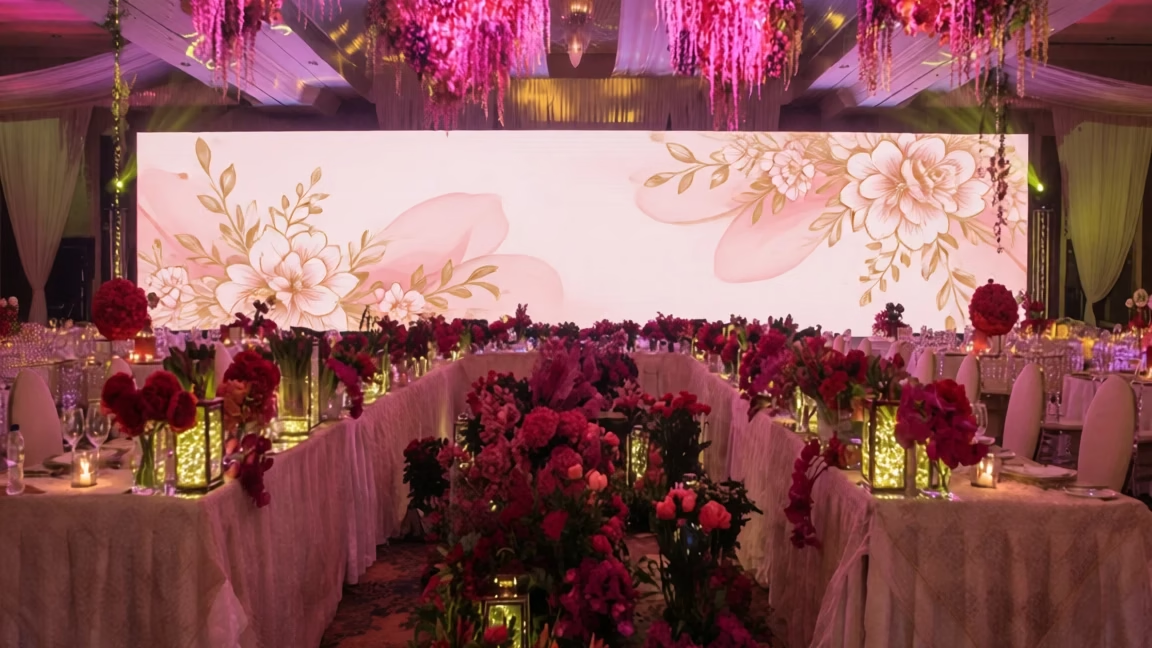
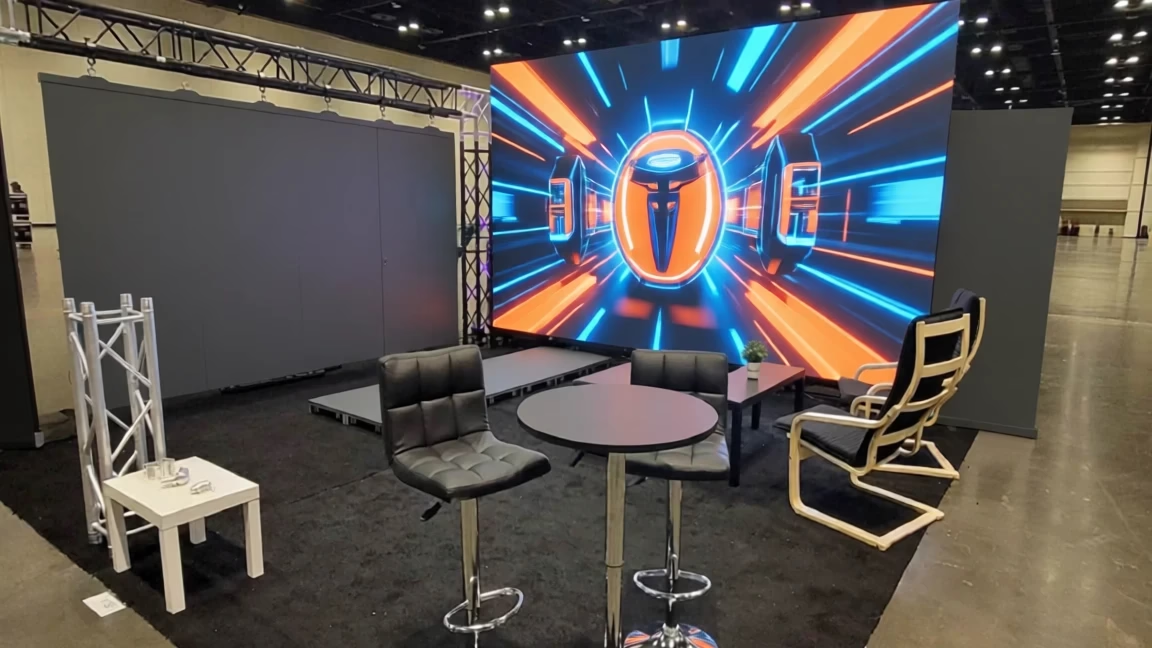
Viewing distance is the buying line. The minimum comfortable viewing distance is about 2m, and the pitch rewards audiences between 2 and 8m — wedding head tables, keynote stages, exhibition booths, TV frames. Below 2m the pixel grid starts to show; above that range a coarser pitch delivers the same perceived quality for less money. That is also why P1.953 sits between the fixed-install indoor modules at P1.5 and P1.8 and the outdoor rental range that starts at P2.5 outdoor — pixel pitch chooses the viewer, not the other way round.
Module & Cabinet Builds
Which Module and Cabinet Sizes Does a P1.953 Indoor Rental LED Display Use?
The collection runs one production module — 250×250mm — in two die-cast aluminum cabinets. The 500×500mm cabinet is the rental workhorse: about 7.5kg per box, four modules, one-hand carrying by the integrated handles. The 500×1000mm cabinet trades flexibility for speed: eight modules, about 15kg, half the lock count and half the rigging points per square meter, which is why it wins on fast large-area builds. Both cabinets accept the same module, so a fleet can mix them freely on one wall.

The 250×250mm Module
One module geometry across the collection: 128×128 pixels, 16,384 dots, pure-black SMD face mask. Sixteen modules build one square meter — four fill a 500×500mm cabinet, eight fill a 500×1000mm — and every module releases magnetically from the front.
500×500mm Die-Cast Cabinet — the Rental Standard
About 7.5kg per cabinet, four 250×250mm modules per box. The most-used format in rental fleets: it fits through standard doorways, stacks into odd room widths without half-cabinet workarounds, and lets one technician reposition a single box during load-in. Curved-lock options support inside and outside corners for creative stage sets.
| Parameter | Spec |
|---|---|
| Module Size | 250×250mm
|
| Pixel Resolution | 128×128 = 16,384 dots/module |
| Scan Mode | 1/32 scan (1/26 optional, ICN2053-class) |
| Driver IC Brands | Chipone (ICND series) / Macroblock (MBI series) |
| IC Count | 64 (high-refresh common-cathode) / 48 (standard high-refresh) |
| Lamp | SMD1515 / SMD1212 pure-black, gold-wire — Nationstar (Grade 1 premium) / MLS · KINGLIGHT (Grade 2 value) |
| Brightness | 600–800 nits base / 1,000–1,200 nits studio boost |
| Maintenance | Magnetic front service — suction-tool single-module swap in ~3 seconds; rear service standard |
| Cabinet | 500×500mm die-cast aluminum, ≈7.5kg, 4 modules/box, stack + rig |
| Uniformity | Strict binning + factory & on-site per-pixel calibration; optional GOB nano-coating |
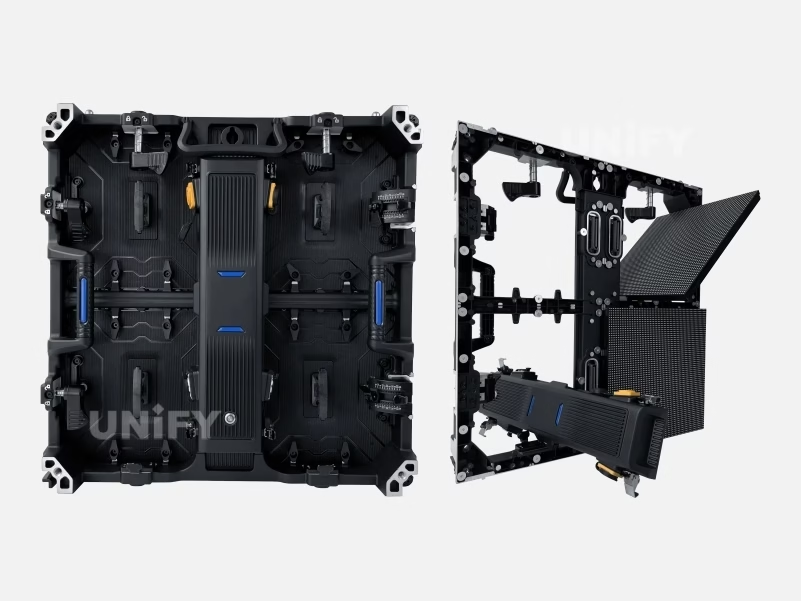
500×1000mm Die-Cast Cabinet — Fast Large-Area Builds
Eight modules, roughly 15kg, about 80mm deep. Doubling the box area halves the number of locks, cables and rigging points per square meter — a 6×3m wall is 36 cabinets instead of 72, which is why ground-stack truss runs and flown festival shapes lean on this format. It mixes freely with the 500×500mm cabinet on the same wall.
| Parameter | Spec |
|---|---|
| Module Size | 250×250mm |
| Pixel Resolution | 256×512 per cabinet (32,768 dots) |
| Scan Mode | 1/32 scan (1/26 optional, ICN2053-class) |
| Driver IC Brands | Chipone (ICND series) / Macroblock (MBI series) |
| IC Count | 128 (high-refresh common-cathode) / 96 (standard high-refresh) per cabinet |
| Lamp | SMD1515 / SMD1212 pure-black, gold-wire — Nationstar (Grade 1 premium) / MLS · KINGLIGHT (Grade 2 value) |
| Brightness | 600–800 nits base / 1,000–1,200 nits studio boost |
| Maintenance | Magnetic front service — suction-tool single-module swap in ~3 seconds; rear service standard |
| Cabinet | 500×1000mm die-cast aluminum, ≈15kg, 8 modules/box, ground stack or flown |
| Uniformity | Strict binning + factory & on-site per-pixel calibration; optional GOB nano-coating |
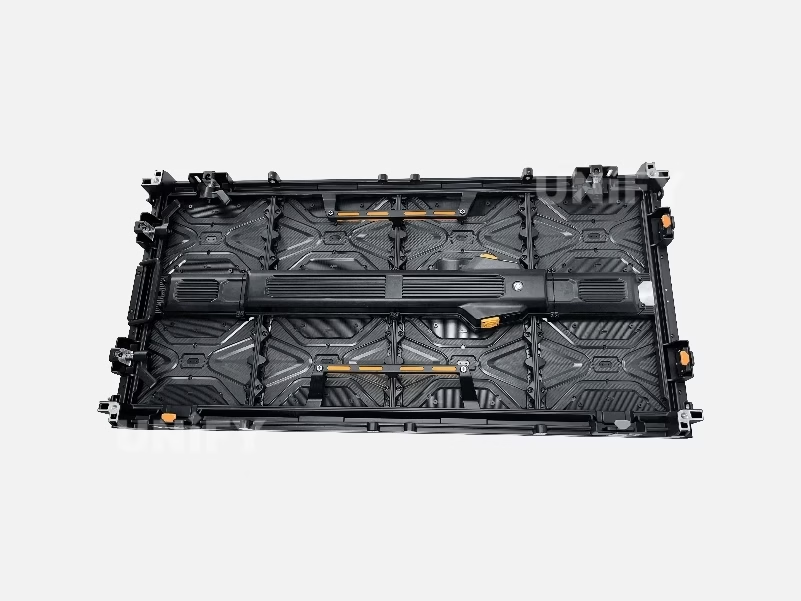
Build Quality
How Is Display Quality Built Into a P1.953 Indoor Rental LED Display?
Every module starts on a multi-layer fiberglass PCB at least 1.6mm thick — the board carries 16,384 LEDs, their driver ICs and the power traces for a common-cathode or 5V rail, so board grade decides whether the wall survives a hundred load-in cycles. Lamps are micro-SMD in two grades: SMD1515 and SMD1212 pure-black, both gold-wire bonded for color stability over years of duty cycles. The black lamp body is what keeps contrast high on a screen the audience stands two metres from — at this pitch the lamp itself is visible, so the blacker the package, the darker the off-state.
Grayscale depth follows the driver IC: 8-bit is legacy, 12-bit is standard, and 16-bit PWM comes with the high-refresh Chipone ICND series — the difference shows in low-brightness banquet scenes, where shallow grayscale steps band across dark footage. Two options sit on top of the base build. GOB nano-coating seals the module face under a transparent polymer layer, so a knocked-over cabinet or a dropped module keeps its lamps and solder joints intact — the rental fleet’s insurance policy. And every lamp is sorted for brightness and wavelength before assembly, then the finished wall is calibrated per-pixel with NovaStar or Colorlight equipment, in the factory and again on site.
Watch: 12-seam correction on a calibrated wall (NovaStar official)
Per-pixel and seam correction is what turns 16,384 LEDs per module into one continuous image. NovaStar’s own calibration run shows the batch process our engineers repeat on every P1.953 wall before it leaves the floor — and again after any module swap on site.
Power & Thermal
How Much Power Does a P1.953 Indoor Rental LED Display Use?
Two supply schemes ship with this collection. The standard build runs a 5V rail on conventional switching supplies. The upgrade is a 3.8–4.2V common-cathode drive: because the LED cathodes return to a lower rail, the driver dissipates less voltage as heat — factory figures run 30–40% lower consumption at the same brightness. In a sealed banquet hall with no HVAC headroom, that difference is measured in room temperature, not just in kilowatt-hours; see how the technology works on our common-cathode LED technology page.
| Supply Brand | Typical Rail | Role in the Cabinet |
|---|---|---|
| Chuanglian Power | 5V / 3.8–4.2V common-cathode | Rental-fleet standard; compact footprint for 500-series cabinets |
| MEAN WELL | 5V | Specifier-preferred option where brand approval is written into the tender |
| G-Energy | 5V / common-cathode | High-efficiency line for studio-boost brightness builds |
Power budget (262,144 px/㎡, SMD1515): market listings for P1.953 indoor rental walls quote 500–720 W/㎡ maximum and 250–360 W/㎡ average on a 5V rail (2026-09 market listing scan). With the 3.8–4.2V common-cathode drive our production sheets show roughly 150–250 W/㎡ average at 600–800 nits — a 6×3m wall then draws about 2.7–4.5kW running, which is a single 16A phase in most venues.
Both schemes run fanless. There is no fan noise on a recorded session and no filter to service between rentals — heat leaves through the die-cast aluminum shell itself.
Control Stack
Which Control Systems Drive a P1.953 Indoor Rental LED Display?
Rental walls run synchronous control: a sending unit and video processor output live video frame-by-frame over gigabit Ethernet to a receiving card in every cabinet. Four control brands and two video-processing houses cover every rental scenario — keep senders and receiving cards on one platform, because a NovaStar sender will not drive Colorlight receivers.
NovaStar

The broadcast-reference stack. A NovaStar controller such as the all-in-one VX600 pairs with per-cabinet receiving cards for 16-bit grayscale, 7680Hz-class refresh and per-pixel calibration — the combination broadcast crews ask for by name.
Colorlight
Strong on staging value: the Colorlight controller line covers sender boxes to all-in-one processors, with the same calibration pipeline and per-cabinet parameter configuration the rental floor needs.
Huidu

Three-in-one processors that pack sending, processing and playback into one flight-case unit — a compact Huidu controller build for corporate AV teams running their own events.
Mooncell

High-refresh receiving cards such as the Mooncell A10X drive fine-pitch walls at camera-safe refresh rates, and slot into any NovaStar-compatible sender architecture.
VDWALL

Video processing for the signal path in front of the wall: scaling, switching and SDI/HDMI input handling on the VDWALL processor line that rental houses already stock.
RGBlink

Multi-window processing and event switching — the RGBlink X3 multi-window processors put speaker notes beside camera feeds beside playback on one wall without a separate switcher.
Synchronous Signal Path for Broadcast and Livestream
On show day the processor takes the live program feed — from a broadcast truck, a streaming laptop, or a media server — and outputs to the wall with sub-frame latency, so the image on camera matches the image in the room. Genlock support keeps the wall locked to the camera chain and kills roll bars on recorded footage; input handling covers HDMI, DVI, SDI and fiber from the truck.
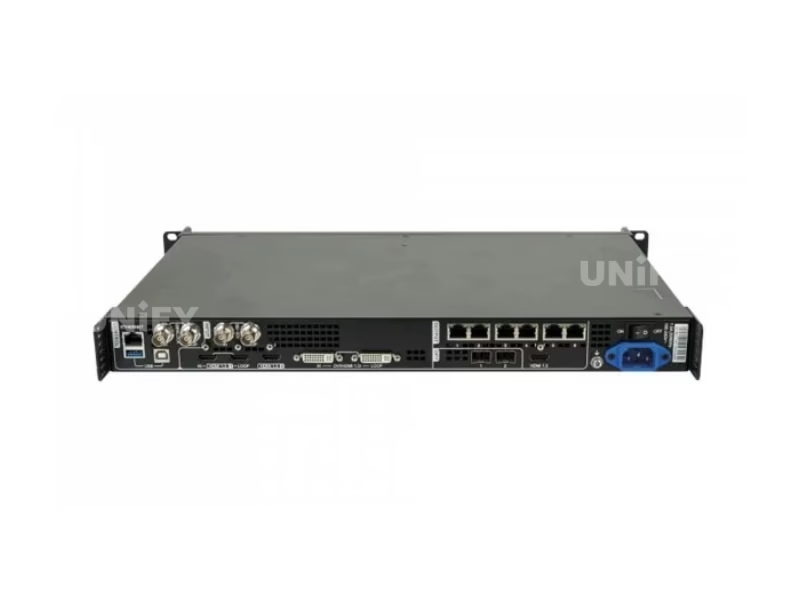
NovaStar VX600
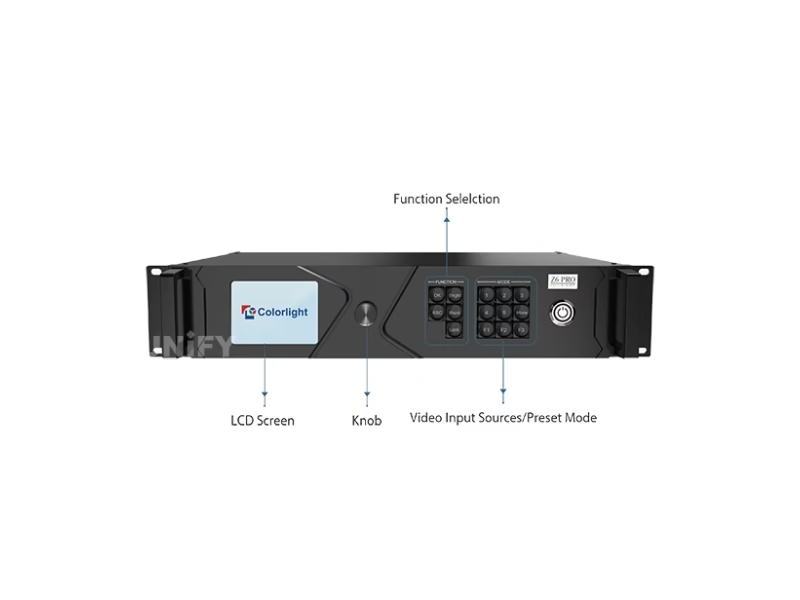
Colorlight Z6 PRO
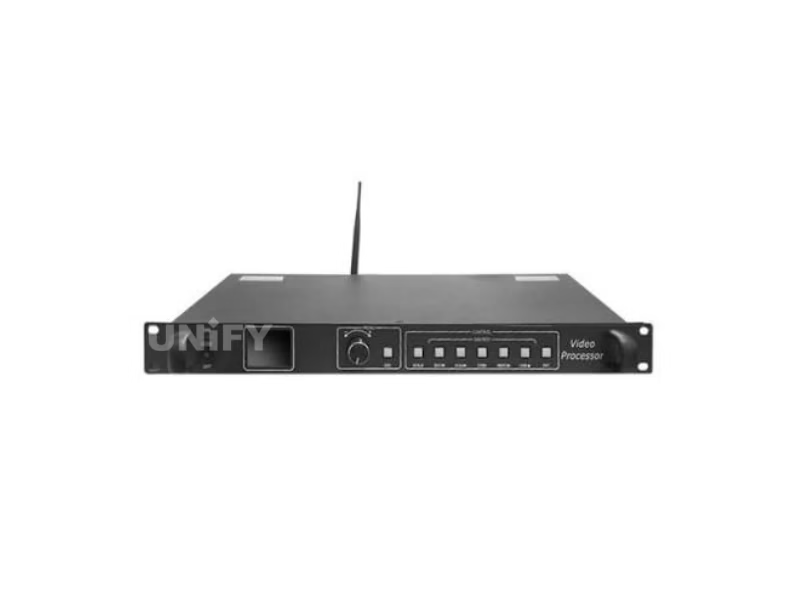
Huidu HD-VP410
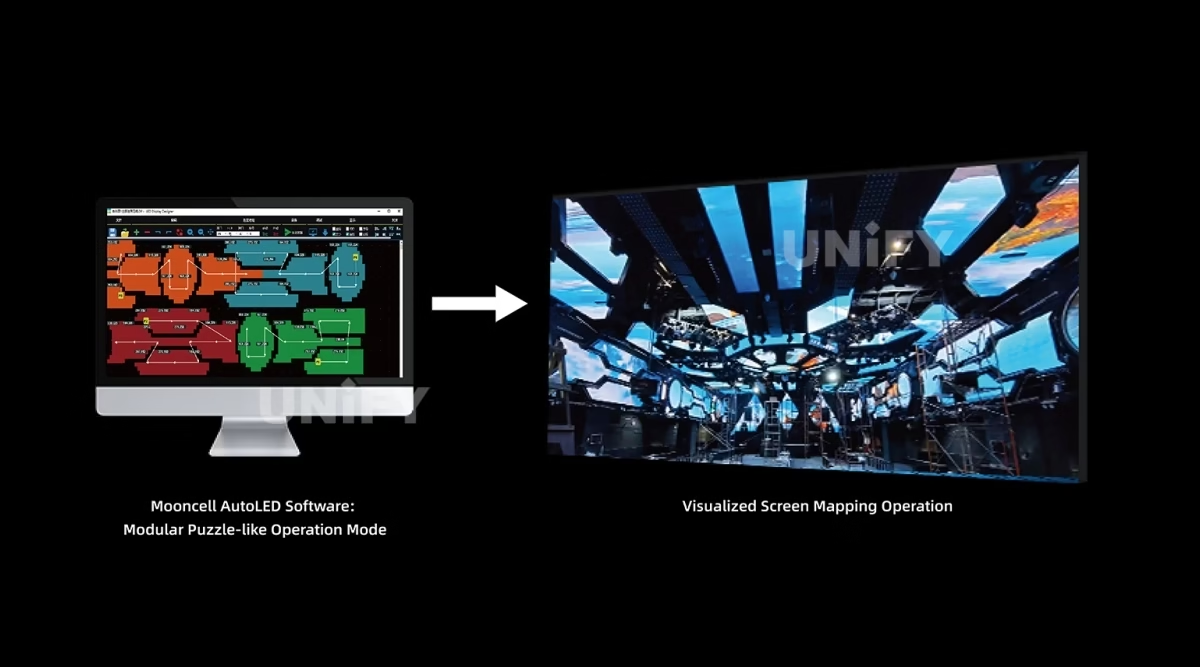
Mooncell A10X
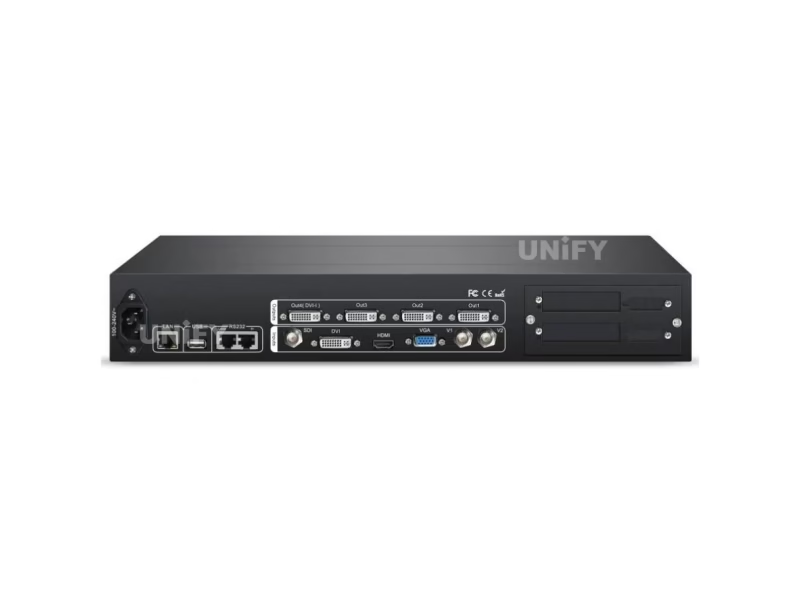
VDWALL LVP909
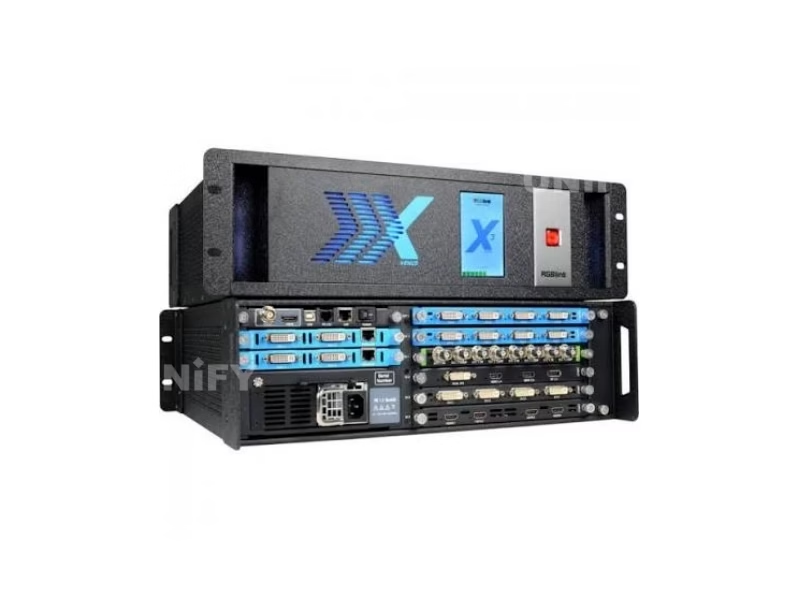
RGBlink X3
Comparison
P1.953 or P2.604 — Which Rental Pitch Fits Your Event?
Both pitches ride the same 250×250mm module and the same cabinet family, so the decision is about the closest viewer and the budget line, not about logistics. Three tables settle it.
1) Route by viewing distance first
| Closest Viewer | Right Product |
|---|---|
| Under 2m — control rooms, retail video walls | Fixed indoor fine pitch — P1.5 / P1.8 modules |
| 2–8m — banquets, keynotes, broadcast stages ✓ | This P1.953 indoor rental collection |
| Outdoors in daylight — even briefly | Sunlight-rated walls — P2.5 outdoor / P3 outdoor |
| Beyond 10m, budget first — arena backs, festivals | Coarser outdoor pitches — P4 / P5 outdoor |
2) P1.953 vs P2.604 on the same cabinet family
| Dimension | P1.953 (this page) | P2.604 |
|---|---|---|
| Pixel density | 262,144 px/㎡ | 147,456 px/㎡ |
| Native 1080p wall | 3.75 × 2.11m | 5.0 × 2.81m |
| Minimum viewing distance | ≈2m | ≈2.6m |
| Modules per ㎡ | 16 | 9 |
| Relative cost per ㎡ | Higher (≈1.8× the lamp count) | Lower |
| Pick it when | Cameras, head-table close-ups, ≤2.6m clearance | Mid-hall viewing with a tighter budget |
3) Where P1.953 sits in the pitch family
| Pixel Pitch | Pixel Density | Smallest 1080p Wall | Min Viewing Distance |
|---|---|---|---|
| P1.5 | 444,444 px/㎡ | 2.88 × 1.62m | 1.5m |
| P1.8 | 308,642 px/㎡ | 3.46 × 1.94m | 1.8m |
| P1.953 — this page | 262,144 px/㎡ | 3.75 × 2.11m | 2m |
| P2.5 outdoor | 160,000 px/㎡ | 4.80 × 2.70m | 2.5m |
| P3 outdoor | 111,111 px/㎡ | 5.76 × 3.24m | 3m |
| P4 outdoor | 62,500 px/㎡ | 7.68 × 4.32m | 4m |
| P5 outdoor | 40,000 px/㎡ | 9.60 × 5.40m | 5m |
| P6 outdoor | 27,778 px/㎡ | 11.52 × 6.48m | 6m |
| P8 outdoor | 15,625 px/㎡ | 15.36 × 8.64m | 8m |
| P10 outdoor | 10,000 px/㎡ | 19.20 × 10.80m | 10m |
Pricing
How Much Does a P1.953 Indoor Rental LED Display Cost?
Short answer: market listings for P1.953 indoor rental walls price at roughly $1,700–2,100 per square meter FOB (2026-09 market listing scan). At 16 modules per square meter that is about $105–131 per 250×250mm module before cabinet, power and control add-ons.
The spread inside that band is option-driven, and every driver is visible in the build:
- Lamp grade. Nationstar SMD1515/SMD1212 pure-black sits at the top of the band; MLS and KINGLIGHT equivalent-spec lamps move the module price down without changing geometry.
- Refresh tier. 3,840Hz standard refresh is base price; the 7,680Hz camera-safe tier adds the high-refresh ICND-class driver ICs — the 64-IC common-cathode build.
- Common-cathode drive. The 3.8–4.2V rail adds supply cost but pays back in venue power draw and sealed-hall heat load.
- GOB nano-coating. A per-module add-on that rental fleets recover through fewer dead-pixel returns after transport.
- Cabinet format. The 500×1000mm cabinet carries more modules per lock set, so large fast builds land lower per square meter than all-500×500 fleets.
Worked example: a 6×3m wall (18㎡) at band midpoint lands near $34,000 FOB — 72 modules in 18 of the 500×500mm cabinets, or 36 of the 500×1000mm ones. Ask us for the module-level quote and the LED screen calculator will sanity-check the count before you commit.
Applications
Where Does a P1.953 Indoor Rental LED Display Deliver the Most Value?
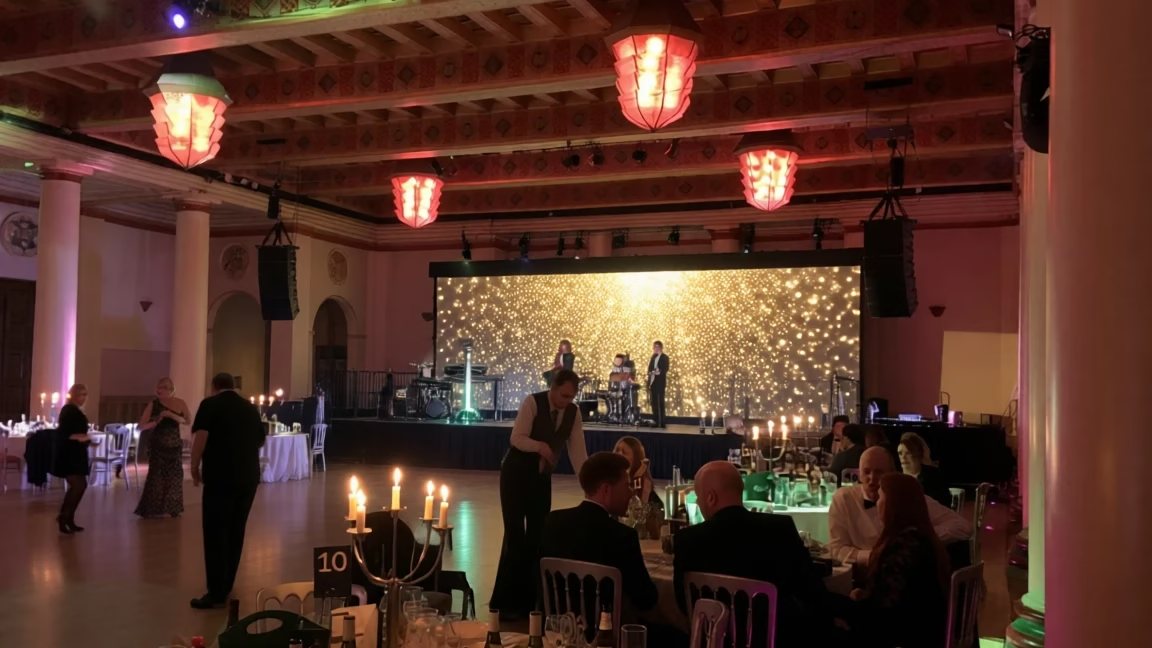
Every scene below has one thing in common: the closest viewer is within 2–8m and the content has to hold up at that range — faces, subtitles, live camera. That is the P1.953 band.




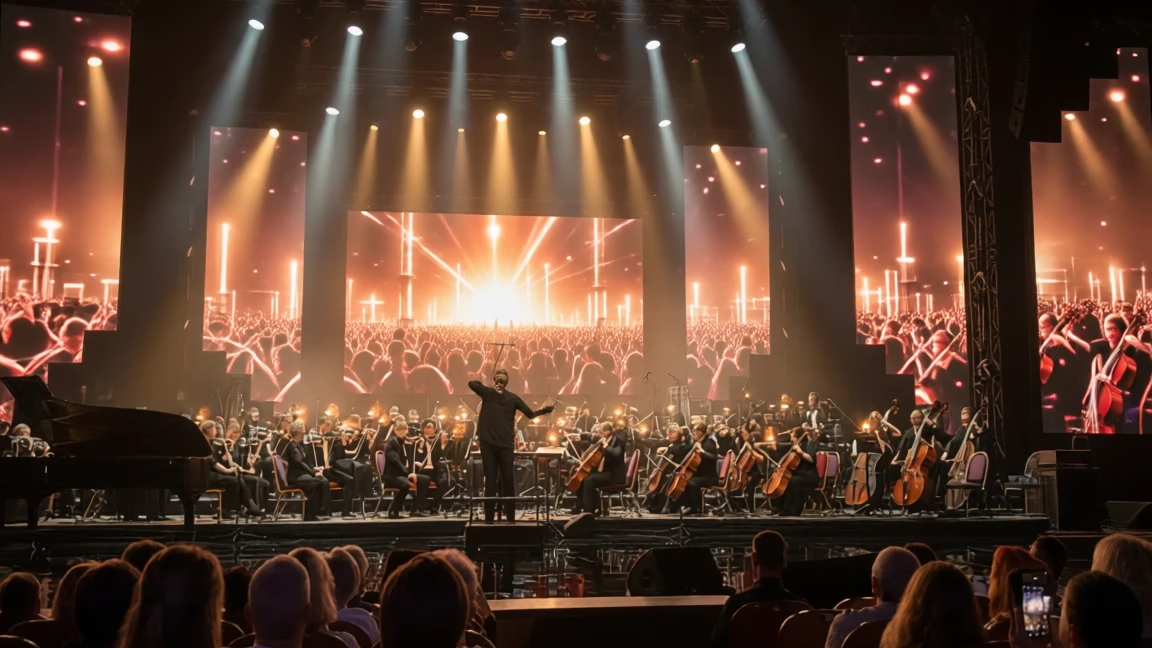
Reference Projects
What Have P1.953 Indoor Rental LED Display Builds Looked Like?
Reference configurations our production floor has shipped in this spec — typical rental package sizes with the cabinet mix our crews actually load:

Banquet Package
6 × 3m · 18㎡
72 × 250×250mm modules in 18 of the 500×500mm cabinets. 600–800 nits, common-cathode, 7,680Hz for the camera feed. Rigs as a single backdrop or splits into two 6×1.5m side walls.
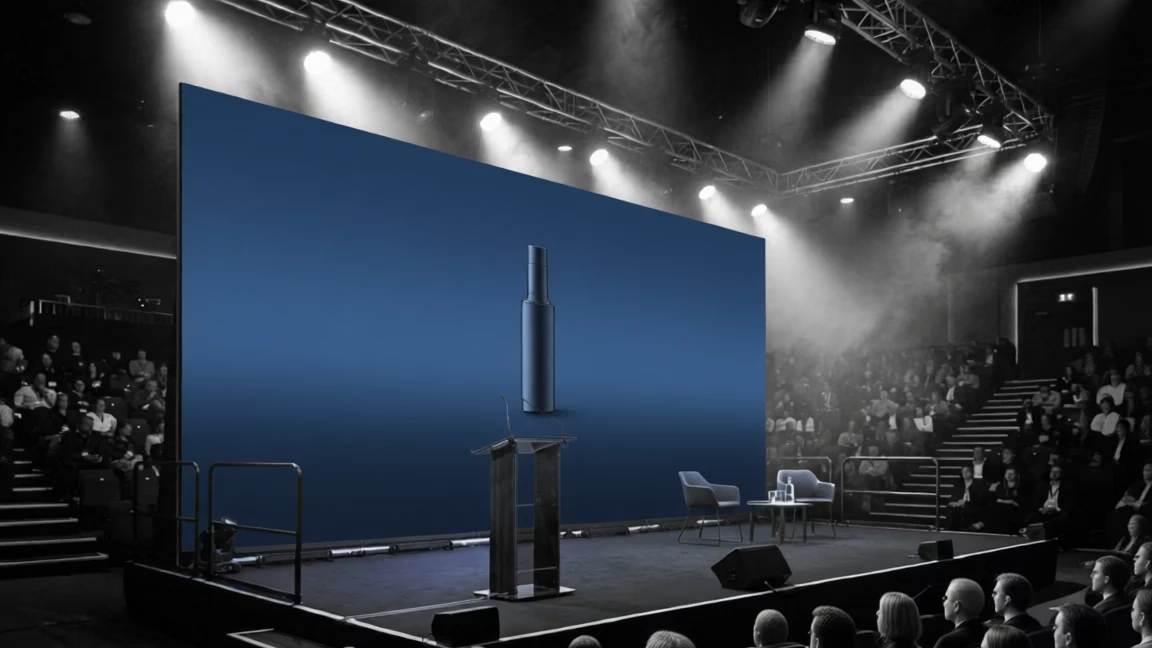
Keynote Package
8 × 4.5m · 36㎡
144 modules in 36 of the 500×1000mm cabinets — a 32-cabinet load-in per rigging crew-day at the faster format. 1,000–1,200 nits studio tier with genlocked processing.
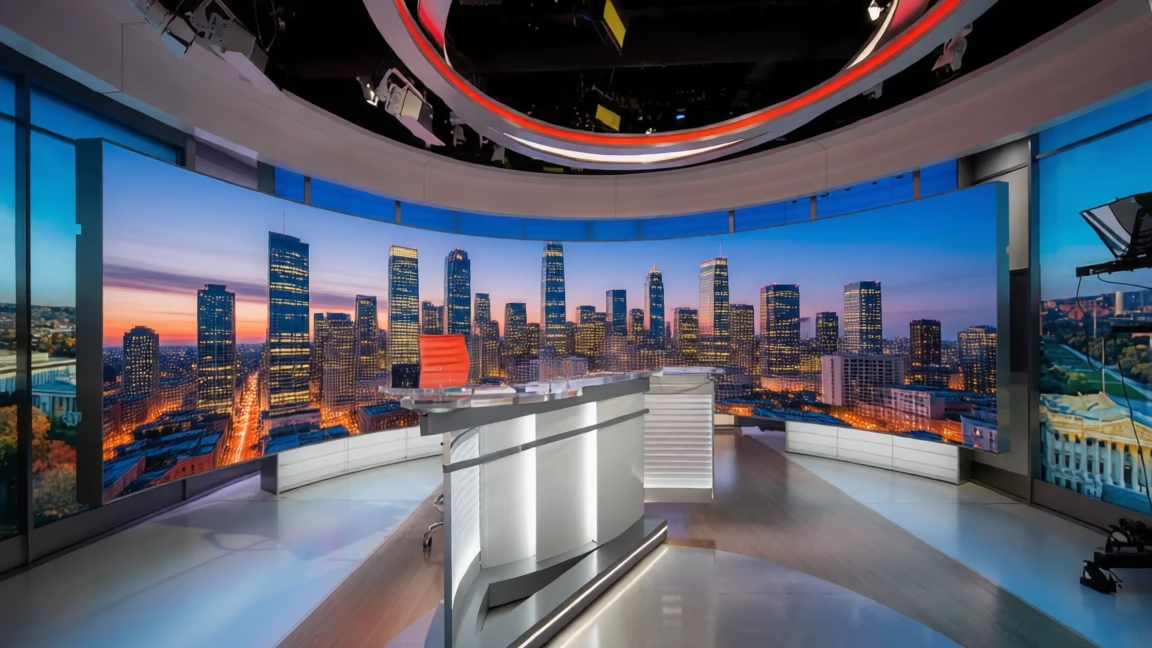
Broadcast Package
3.75 × 2.11m · Native 1080p
One-to-one 1920×1080 pixels in about 7.9㎡ — 32 of the 500×500mm cabinets. Content maps pixel-for-pixel with no processor scaling artifacts.

Conference Package
4 × 2.5m · 10㎡
40 modules in 10 of the 500×1000mm cabinets — a 4×2.5m backdrop that builds in a morning and clears after the closing keynote. 600–800 nits with common-cathode drive for hotel conference floors.
Named project case studies with site photography follow once client sign-offs clear — ask us for references in your region meanwhile.
FAQ
P1.953 Indoor Rental LED Display: Frequently Asked Questions
What viewing distance does a P1.953 indoor rental LED display need?
Plan for a minimum of about 2m and a sweet spot between 2 and 8m. At 1.953mm pixel pitch the LED structure resolves as a screen — not as dots — from roughly two metres out, which covers banquet head tables, keynote front rows and exhibition traffic. Beyond about 8m, a coarser pitch looks identical and costs less.
Why choose a 3.8–4.2V common-cathode build for an indoor rental wall?
Heat and power. Rental walls run inside sealed banquet halls and ballrooms where the HVAC is sized for people, not for a 500W-per-square-meter heater. Our production sheets show the common-cathode drive cutting average consumption 30–40% versus the 5V build at the same brightness — roughly 150–250 W/㎡ instead of 250–360 W/㎡ — which shows up as a cooler room and a smaller power drop.
Which refresh rate stops camera flicker on a P1.953 rental LED display?
Specify the 7,680Hz tier whenever cameras are involved — broadcast, livestream, even phone video of the stage. The standard 3,840Hz tier is flicker-free to the eye and safe for most shutter speeds, but 7,680Hz with the high-refresh Chipone driver ICs keeps scan lines out of footage at the short exposures and narrow shutters broadcast crews use.
How fast can a module be swapped during an event?
About three seconds per module with the magnetic front-service design. A technician presses a suction tool to the module face, pulls it free from the magnets — no screws, no rear access, no rig-down — and seats a replacement in the same frame. The wall keeps running; only that module’s region blinks out for the swap.
Do I need GOB coating on an indoor rental screen?
For a rental fleet, usually yes. GOB nano-coating seals the module face under a transparent polymer layer, so knocks during transport and load-in break against the coating instead of against lamp legs and solder joints. Fixed-install walls in guarded rooms skip it; screens that live in flight cases earn it back in avoided dead-pixel returns.
How many cabinets make a 1080p P1.953 wall?
A native 1920×1080 image on this pitch is 3.75 × 2.11m — about 7.9㎡, or 32 of the 500×500mm cabinets. Because 500mm cabinets build in half-metre steps, a wall that size is usually specified at 3.75 × 2.11m or trimmed to the nearest cabinet grid; the LED screen calculator works out the exact count for any target size.
500×500 or 500×1000 cabinets — which for my event?
500×500mm when the wall shape is irregular, the room is tight, or the crew is small — 7.5kg per box, four modules, the most flexible unit in the fleet. 500×1000mm when speed on a big, simple surface matters more — half the locks and rigging points per square meter. The two mix freely on one wall, so most fleets carry both.
How much does a P1.953 indoor rental LED display cost per square meter?
Market listings cluster around $1,700–2,100 per square meter FOB (2026-09 market listing scan), which is about $105–131 per 250×250mm module at 16 modules per square meter. Lamp grade, the 7,680Hz refresh tier, common-cathode drive and GOB coating move a specific quote inside that band — ask us for the module-level breakdown and it will read like the options list above.
Engineering Guide
How Do You Spec a P1.953 Indoor Rental LED Display for Banquet Halls and Broadcast Events?
The specification work on a P1.953 indoor rental LED display is mostly about people and rooms, not about LEDs. The pitch is fixed; the questions are who stands where, what the cameras will do, and what the building’s power and cooling will tolerate for eight hours. This guide walks the four decisions in the order our engineers ask them.
Start from the closest viewer, not the wall size
Rental briefs usually open with a screen size; they should open with a distance. Measure where the nearest guest, delegate or camera will stand. Under about 2m, this pitch is the coarse end of what still reads as clean video — a control-room wall would want P1.5 or P1.8 instead. Between 2 and 8m, P1.953 is in its element: 262,144 pixels per square meter resolve small text, subtitles and faces at that range with no visible structure. Past 8m, the audience cannot see the difference between this and a P2.6 or P2.9 wall, and the budget is better spent on screen area. The single most expensive specification error in event LED is paying fine-pitch money for an audience that never gets close — and the second most expensive is buying coarse pitch for a stage where the head table sits 2.5m from the screen.
Distance also sets brightness, and brightness on this collection is a two-tier choice rather than a dial. The 600–800 nits base tier is matched to banquet and ballroom light: warm, dimmable house lighting where a 1,500-nit wall would read as glare. The 1,000–1,200 nits boost tier exists for rooms with real ambient light — broadcast studios with key light spilling onto the set, exhibition halls with overhead metal halide, show floors where the booth competes with its neighbours. Both tiers run the same wall; the difference is drive current and the supply spec behind it.
Size the wall from content, then buy the cabinet grid that carries it
On this pitch the pixel grid is 512 dots per metre, and that number sizes everything. A native 1080p image — 1920×1080 — needs 3.75 × 2.11m. A 4K canvas needs 7.5 × 4.22m, which is why 4K native walls are rare in rental: 56 cabinets of the 500×500mm format and a venue to match. Most event content is built for 1080p delivery, so the practical brief is: pick the 1080p frame size that fits the room, then grow outward if the stage wants more width for scenery. A 6×3m wall shows 3072×1536 pixels — more than 1080p in both axes, which means the processor scales rather than the content, and the image stays sharp because the source resolution never exceeds the wall.
Then translate area into cabinets, because that is what the load-in crew lifts. One square meter is 16 modules. In the 500×500mm cabinet that is 4 modules and about 7.5kg per box — a 6×3m wall is 72 cabinets and roughly 540kg of aluminum. In the 500×1000mm format the same wall is 36 boxes at about 15kg each: half the lock count, half the data looms, half the rigging points. The long format wins on assembly speed; the small format wins on weight per lift and on fitting through doorways the long box may not. Fleets that carry both mix them on one wall — a long-box field with small-box columns filling the odd half-metre at the edge.
Run the power and heat numbers before the venue does
A 5V-rail P1.953 wall draws 500–720 W/㎡ at peak and 250–360 W/㎡ running (2026-09 market listing scan). On an 18㎡ wall that is a 6.5–13kW peak and a 4.5–6.5kW running load — worth a conversation with the venue electrician about phase balance, and worth a look at the dimmer-room question: every watt the wall draws indoors ends as heat in the room. The 3.8–4.2V common-cathode build exists for exactly this arithmetic. Because the LED return path sits on a lower rail, the driver burns less voltage as heat and the same brightness arrives for 30–40% less power: the 18㎡ wall settles near 2.7–4.5kW running. In a sealed ballroom over a six-hour event, that is the difference between a room that stays comfortable and one where the HVAC loses by the second hour. It is also a smaller generator or a single 16A phase where the venue is tight — see the drive principle on our common-cathode technology page.
Fanless construction closes the loop. Nothing on this collection moves air, so there is no fan note on a recorded session, no filter to clean between rentals, and no dust path into the cabinet. Heat leaves through the die-cast shell by design — which is also why the shell is aluminum rather than steel: the cabinet is the heatsink.
Design content for the two-metre viewer
A fine-pitch wall earns its price only if the content respects the distance. At 512 dots per metre, a character that is 40 pixels tall stands about 78mm high on the wall — legible at two metres, invisible from the back of a ballroom, which is why event graphics for P1.953 run larger type than the same slide projected on a 3-metre screen. Design decks and loops at the wall’s native pixel size rather than at 16:9 presentation templates: a 6×3m wall is 3072×1536, and artwork composed at that size uses the whole canvas instead of living inside black bars. Motion tolerates more than static text does — small type can move, small type cannot sit still.
Two content-side settings complete the picture. First, grayscale behavior at low brightness: banquet hours run the wall well below its light output ceiling, and the 16-bit driver tier is what keeps those dark scenes smooth instead of banding — content with true blacks shows the difference within the first minute. Second, camera-safety margins: when the crew shoots at narrow shutters, keep the wall out of the rolling-band zone by locking refresh and genlock in the processor rather than adjusting shutter angles at every camera position. Both settings travel with the control rack spec above — they are the reason the refresh tier and the processor are chosen together, not separately.
Spec the control rack for the cameras, and the spares for the floor
Synchronous control is the rental standard: a processor and sender output the live program feed frame-by-frame, and a receiving card in each cabinet drives its 8 or 4 modules. Choose the platform before the show, not during — a NovaStar sender drives NovaStar receiving cards, a Colorlight sender drives Colorlight cards, and the two do not interoperate. When cameras are on the call sheet, three line items matter: the 7,680Hz refresh tier with its 16-bit grayscale driver ICs; genlock through the video processor so the wall shares one clock with the camera chain; and a calibration pass with NovaStar or Colorlight equipment on site after the wall is rigged, because the last metre of truss flex moves modules by fractions that per-pixel correction then absorbs. The viewing distance guide and our engineers cover the rest of the checklist.
Spares are part of the spec, not an afterthought. Every collection order ships with 3% free spare modules — on an 18㎡ wall that is two full modules and change. With magnetic front service a swap is a 3-second suction-pull in front of the audience, and with GOB coating most of the knocks that would have caused a swap do not happen at all. That is the rental arithmetic in one line: fine pitch close enough to read, cool enough to sit through, fast enough to fix between segments.
The short version: a P1.953 indoor rental LED display is the pitch to specify when the closest viewer is 2–8m away, cameras are on the run sheet and the room is sealed — 262,144 pixels per square meter in 7.5kg die-cast cabinets, common-cathode drive for the heat load, 7,680Hz refresh for the broadcast feed and a 3-second magnetic module swap for show day. Send us the wall size and the room, and the quote comes back module-level with every one of these choices itemized.
Related P1.953 Indoor Rental LED Display Resources
500×1000mm Rental LED Display Collection →
Rental LED Display Solutions →
P2.5 Outdoor LED Display Collection →
P3 Outdoor LED Display Collection →
P2.5 Indoor LED Module →
LED Display Price Guide →
LED Screen Calculator →
Common-Cathode LED Technology →
LED Display Viewing Distance Guide →
Spec Your P1.953 Indoor Rental LED Display With Our Engineers
Send us the wall size, the closest viewing distance and the venue power. You get a module-level quote with lamp grade, refresh tier, common-cathode option, cabinet mix and control stack itemized — factory-direct, with 3% spare modules included.
UnifyLED — LED screen manufacturer · unifyledscreen@gmail.com · Changsha / Shenzhen, China
Browse our guides: P2.6 vs P3.91 Rental LED Screen