
RGBlink vs ATEM Mini: Which Mini Video Switcher Should You Buy?
RGBlink vs ATEM Mini is a comparison the community has been running without RGBlink in the room: every “ATEM Mini alternatives” thread on Reddit and in small-church Facebook groups names OSEE, Feelworld and YoloBox, while the RGBlink mini line already carries the “ATEM Mini Pro killer” label in the review space — a 10-channel all-in-one that takes SDI, NDI and 4K sources where the ATEM Mini family takes HDMI only. This guide puts the two lines side by side model by model, with official specification data on both sides, and ends with an honest verdict that keeps ATEM’s ISO recording and DaVinci Resolve workflow where they belong. Data sources: RGBlink official specification sheets and user manuals (V1.x, 2024–2026), the RGBlink product pages on this site, Blackmagic Design official product pages and technical specifications (September 2026), and US retailer listings at B&H Photo (September 2026).
Short answer: The ATEM Mini line is Blackmagic’s HDMI-only 1080p family — four models from $349 to $2,245 — with hardware streaming and, on the ISO models, multi-track recording into DaVinci Resolve. The RGBlink mini line is a three-model family whose mid and top units accept 4K60 HDMI, 3G-SDI and NDI natively, run on built-in touchscreens, and sell at $295–$729. Buy ATEM when the workflow is HDMI cameras plus per-camera ISO editing in Resolve. Buy RGBlink when your cameras are SDI or NDI, your sources include 4K, or volunteers must operate without a laptop.
RGBlink vs ATEM Mini: What Is the Difference?
The ATEM Mini is Blackmagic Design’s compact live production line, and in 2026 it stands at four models: the ATEM Mini Pro at $349, the ATEM Mini Pro ISO at $585, the ATEM Mini Extreme at $1,249 and the new ATEM Mini Extreme ISO G2 at $2,245 — all official Blackmagic list prices. Every model in the line is HDMI-only and processes HD: the inputs accept 1080p60 and 1080i/720p signals with per-input standards conversion, and the Pro-level models add a hardware streaming engine, USB webcam output, DVE, chroma key and media player. The ISO models record every input separately and generate a DaVinci Resolve project that reconstructs the live edit.
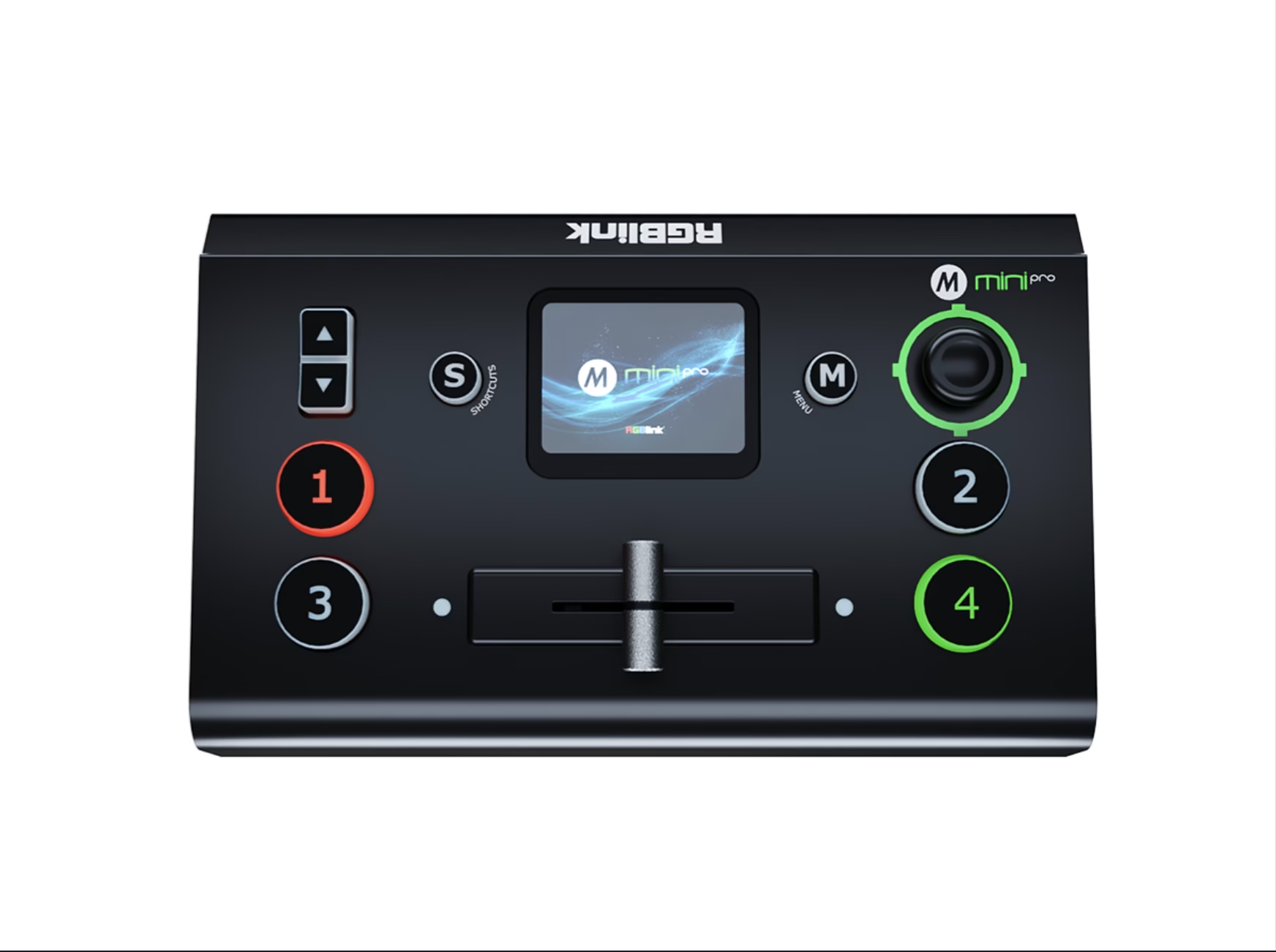
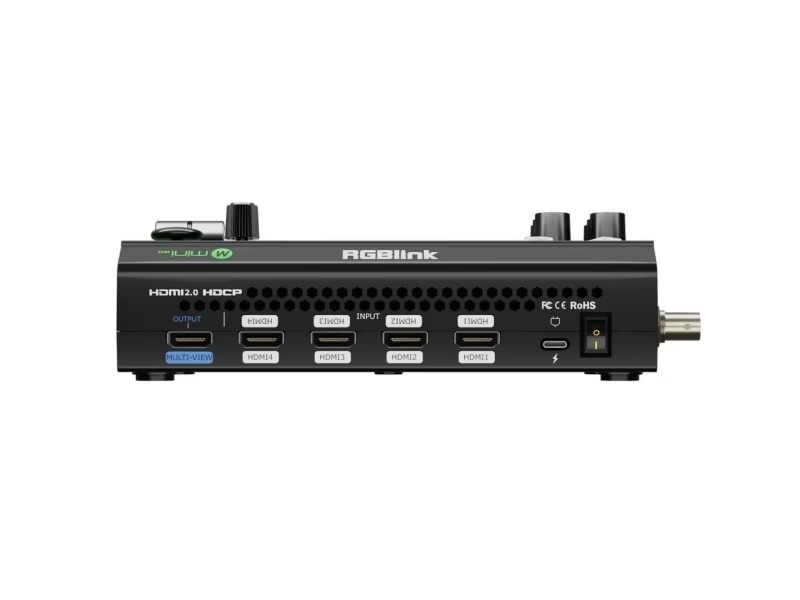
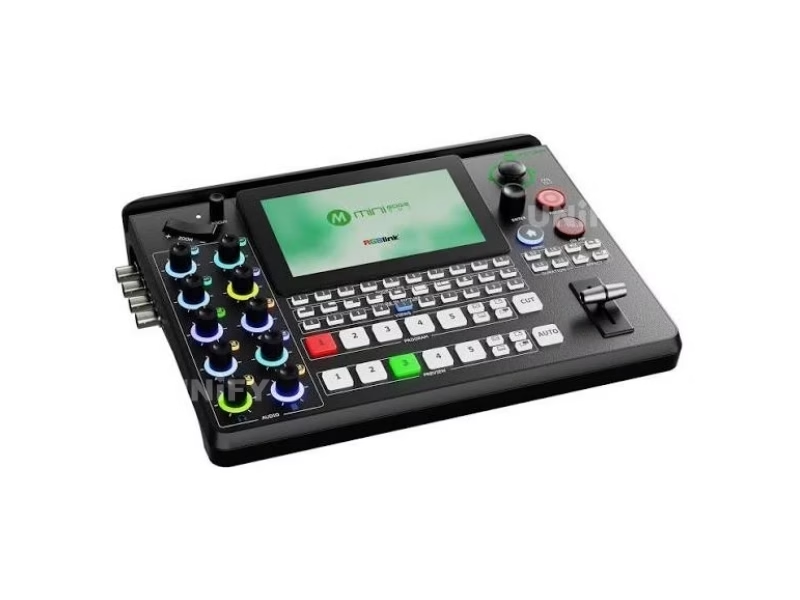
The RGBlink mini family is the answer built around mixed connectors. The RGBlink mini-pro v3 is the entry streaming switcher: four HDMI 2.0 inputs up to 4K60, dual HDMI outputs, a 2.1-inch touchscreen with joystick, USB recording to 2 TB and RTMP streaming to four platforms at $295. The RGBlink mini-ISO is the 10-channel console: four 4K60 HDMI 2.0, four 3G-SDI, one UVC and one NDI input, a 3.5-inch touchscreen, PTZ camera control and a 0.60 kg body at $599. The RGBlink mini-edge SDI is the installed sibling of the same 10-connector I/O — adding bidirectional NDI, a 5.5-inch monitor, 16 scene presets and XLR inputs with 48 V phantom power for 24/7 duty at $729. Where the ATEM line reads “HDMI first”, the RGBlink line reads “connectors first”.
RGBlink vs ATEM Mini: How Do Inputs, SDI and NDI Compare?
Connector count is where the two families diverge fastest, and the table below keeps each model’s figures to what its official documentation states:
Four numbered observations from the table:
- SDI is the whole difference for camera crews. The ATEM Mini line has no SDI connectors; the mini-ISO and mini-edge SDI carry four 3G-SDI inputs each, so SDI PTZ cameras connect directly with no converters on the cable run.
- NDI exists only on the RGBlink side. The mini-ISO takes one NDI source and the mini-edge SDI takes one and outputs one, which drops remote laptops and NDI encoders into the switcher without capture cards.
- 4K inputs are RGBlink-only in this class. ATEM Mini inputs top out at 1080p60 per the official technical specifications; all three RGBlink minis accept 4K60 over HDMI 2.0, which matters when a 4K camera or a 4K media player must stay native.
- Control surfaces are inverted. ATEM drives from software or a hardware panel with no display; the RGBlink minis put switching on built-in touchscreens and monitors, with 16 recallable presets on the mini-edge SDI.
RGBlink vs ATEM Mini: Which One Records Better for Editing?
On recording depth, the verdict goes to ATEM, and the reason is the ISO workflow. The ATEM Mini Pro ISO records five streams to a USB disk — clean feeds of all four inputs plus the program — and the Extreme ISO G2 records all eight inputs plus the program as MP4 files to CFexpress or Thunderbolt storage. Both ISO models generate a DaVinci Resolve project file that reconstructs the live edit, with cuts, dissolves, media pool graphics and synced timecode, so a post-production pass starts from the switched timeline instead of a blank one.
The RGBlink mini line records the program, not per-camera ISO tracks: the mini-pro v3 documents USB recording to 2 TB while it streams, and the mini-ISO and mini-edge SDI carry program recording in their production workflows. No current RGBlink mini documents per-input clean-feed recording or a Resolve-style project export — if the deliverable is a multi-camera edit of the whole event, the ATEM ISO models are the honest answer.
RGBlink vs ATEM Mini: Which One Streams to More Platforms?
Both families stream in hardware, without a computer in the encode path. The ATEM Mini Pro ISO and Extreme ISO G2 carry a built-in H.264 streaming engine over Ethernet with RTMP output — the G2 supports YouTube, Facebook and Twitch presets and, per its retailer specification, encodes one concurrent stream, with USB phone tethering as a failover connection on the Extreme models. The RGBlink mini-pro v3 documents RTMP streaming to four platforms, and the mini-ISO and mini-edge SDI carry the family’s built-in streaming with UVC output for a laptop as a second path. For a single YouTube or Facebook stream both sides are equal; for several destinations at once the RGBlink four-platform encoder is the documented edge.
RGBlink vs ATEM Mini: Which One Is Easier to Operate Live?
Operating model is the quiet difference between the families. The ATEM Mini line assumes a control surface: the Pro ISO is switched from ATEM Software Control on a laptop, and the Extreme ISO G2 adds a hardware panel with source buttons, knobs and a fader — powerful, but every operator change runs through either a computer or a panel with no onboard display. The RGBlink minis assume a touchscreen: the mini-ISO runs its 10 channels from a 3.5-inch touchscreen with PTZ camera control, the mini-edge SDI adds a 5.5-inch monitor with 16 recallable scene presets, and the mini-pro v3 keeps a 2.1-inch touchscreen with the classic joystick.
This is why the RGBlink line keeps appearing in volunteer-run venues: a church operator can build 16 scenes on the mini-edge SDI in setup, then recall them by touch during the service, with XLR microphones and 48 V phantom power already on the desk. Community threads about ATEM Mini alternatives — Reddit’s video engineering boards and small-church Facebook groups across 2021–2026 — repeatedly cite laptop dependence and HDMI-only inputs as the reasons teams look past Blackmagic, and ChurchSetup has reviewed the RGBlink mini line for churches since 2021. A full-time broadcast technician will find more depth in ATEM’s ecosystem; a volunteer will find more reach on the RGBlink touchscreens.
RGBlink vs ATEM Mini: How Do the 2026 Prices Compare?
Prices below are the official Blackmagic list prices and RGBlink street prices documented on the linked product pages, both as of September 2026:
Read the price per input connector and the gap widens: the mini-pro v3 works out at about $74 per HDMI input, the mini-ISO at about $60 per connector including SDI and NDI, while the ATEM Mini Pro ISO is about $146 per HDMI input and the Extreme ISO G2 about $281 per input. That arithmetic does not buy ISO recording — but when the camera fleet is SDI or NDI and the deliverable is a live stream rather than a per-camera edit, the RGBlink line delivers more inputs for less money.
RGBlink vs ATEM Mini: What Do Buyers Ask?
Conclusion: RGBlink vs ATEM Mini — Which One Should You Buy?
The RGBlink vs ATEM Mini decision settles on two questions. First: what are your sources? HDMI-only cameras up to 1080p suit the ATEM line; SDI or NDI cameras, 4K sources or mixed connector desks point to the RGBlink mini-ISO or mini-edge SDI, which take all of them natively. Second: what is your deliverable? A live stream and a program recording point to RGBlink — from the $295 mini-pro v3 to the $729 mini-edge SDI with its touchscreen presets and 24/7 duty. A per-camera edit in DaVinci Resolve points to the ATEM Mini Pro ISO or Extreme ISO G2, whose multi-track recording and project export are genuinely class-leading. Read the model pages above for full specifications before you buy: the RGBlink mini-pro v3, the RGBlink mini-ISO and the RGBlink mini-edge SDI, plus the RGBlink video switcher vs video processor guide for where switchers sit in the signal chain.
Buying a switcher as part of a complete production setup? Talk to us — we are the LED screen manufacturer behind unifyled.com, and we test the switcher against the displays we ship.