
P3 / P3.076 · Indoor Small Pitch
P3 Indoor LED Display Collection
Two honest boards, one 3mm-class collection: the market’s volume P3.076 on the 320×160mm format (105,625 px/㎡) and exact P3.0 on the 192×192mm and 192×96mm squares (111,111 px/㎡). Rigid hard-board builds, strong-magnet front service, SMD1515 or SMD2020 lamps — for halls and concourses read from 6–10 meters.
Definition
What Is a P3 Indoor LED Display?
Short answer: A P3 indoor LED display is a fixed indoor video wall built from rigid 3mm-class boards — 105,625 pixels per square meter on the volume P3.076 format, 111,111 on the exact-3.0 squares — for concourses, halls and retail spaces read from 6–10 meters. Three module formats cover the class, every mainstream cabinet services from the face on strong magnets, and SMD1515 or SMD2020 lamps set the tier. “P3” books two grids that the market mixes constantly; this page separates them so you buy the right one.
A P3 indoor LED display is the hard-board workhorse of the indoor small-pitch shelf: rigid 1.6mm fiberglass boards, iron or die-cast cabinets, and a lamp count low enough to price whole halls while staying past the grain threshold for every viewer beyond 6 meters. It is also the class with a naming split — most “P3” walls on the market are actually 3.076mm, because 104 pixels tile the 320mm board at exactly that pitch, while exact 3.0mm lives on the 192×192mm square family.
On the ladder it sits one band wider than the finer fixed classes. Inside 5 meters, the P2.5 indoor collection and the P2.0 fine pitch collection carry the detail; past 10 meters, the P3.91 rental class banks the difference. The same grid also runs outdoors on the P3 outdoor collection — same pitch, different life. Size any wall with the LED screen calculator.
The class carries two anchor figures: 105,625 pixels per square meter on the volume P3.076 board and 111,111 on the exact-3.0 squares. A 6×3.4m concourse wall resolves about 1,950×1,100 pixels on the volume board — Full-HD-class working canvas at the small-pitch family’s lightest bill.
Module Options
Which Module Sizes Does a P3 Indoor LED Display Use?
Three boards split the class into two ecosystems. Figures come from our production sheets, reviewed September 2026 — the exact-3.0 squares reconcile to the lamp (1/32 scan, 24 and 12 devices), while the volume P3.076 board’s 42-device set rides the production sheet. Lamp rows name SMD1515 or SMD2020 per build.
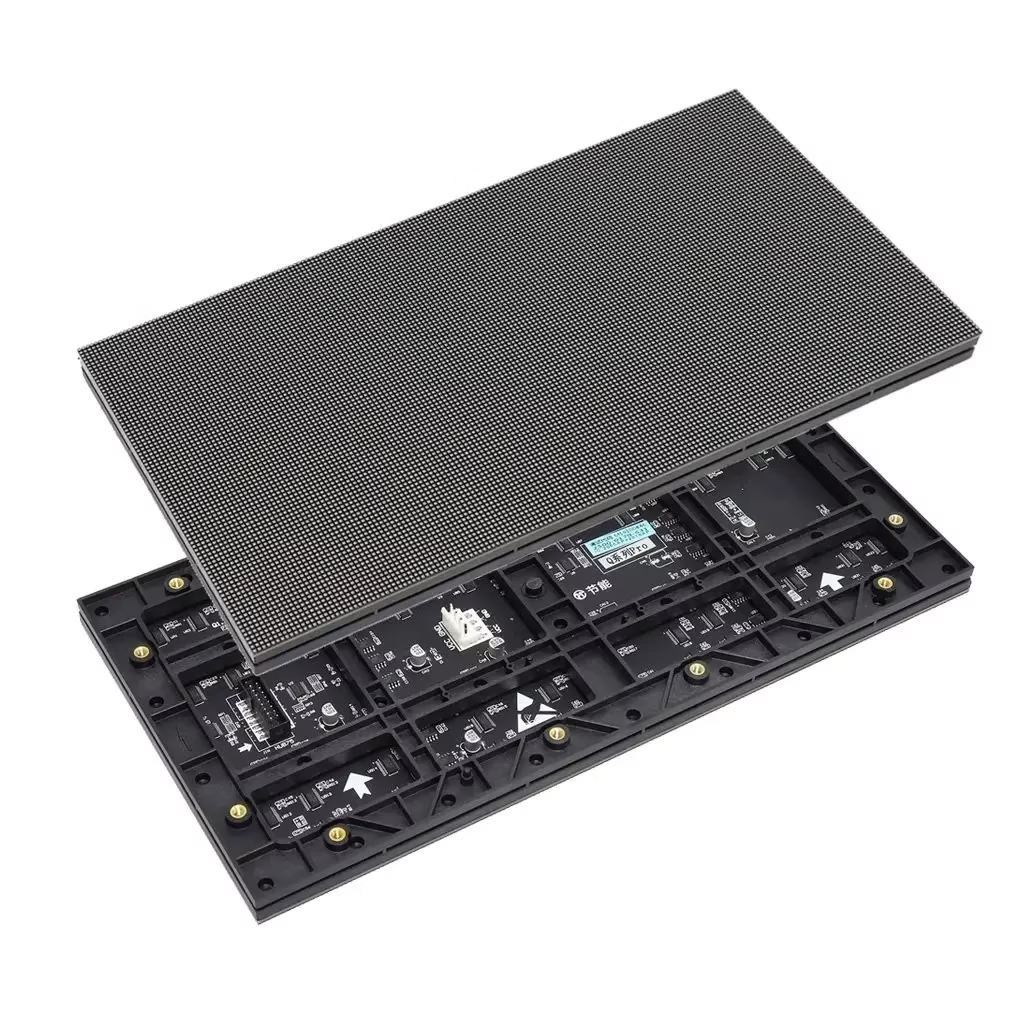
① 320×160mm — The P3.076 Volume Board
The board behind most “P3” walls: 104×52 = 5,408 dots at exactly 3.0769mm — 105,625 pixels per square meter — tiling the 640×640mm and 960×960mm cabinet family that dominates the volume market. 42 devices fitted per the production sheet; the lamp choice (SMD1515 or SMD2020) and refresh tier ride the order. Strong-magnet front service keeps every board a face-side swap away.
| Module size | 320×160mm |
| Pixel resolution | 104×52 = 5,408 dots (3.0769mm) |
| Scan mode | 1/26 scan |
| Driver IC brands | Chipone PWM driver family, 16-channel |
| ICs fitted (total) | 42 (per production sheet) |
| Lamp | SMD1515 or SMD2020 black-body · 高/普刷 at order |
| Brightness | 800–1,000 nits |
| Maintenance | Face-only service — magnet-backed modules lift straight out |
| Cabinets | 640×640mm (×8 boards, 208×208 px) · 960×960mm (×18, 312×312 px) |
| Uniformity | Strict wavelength & brightness binning + system-wide per-pixel correction |
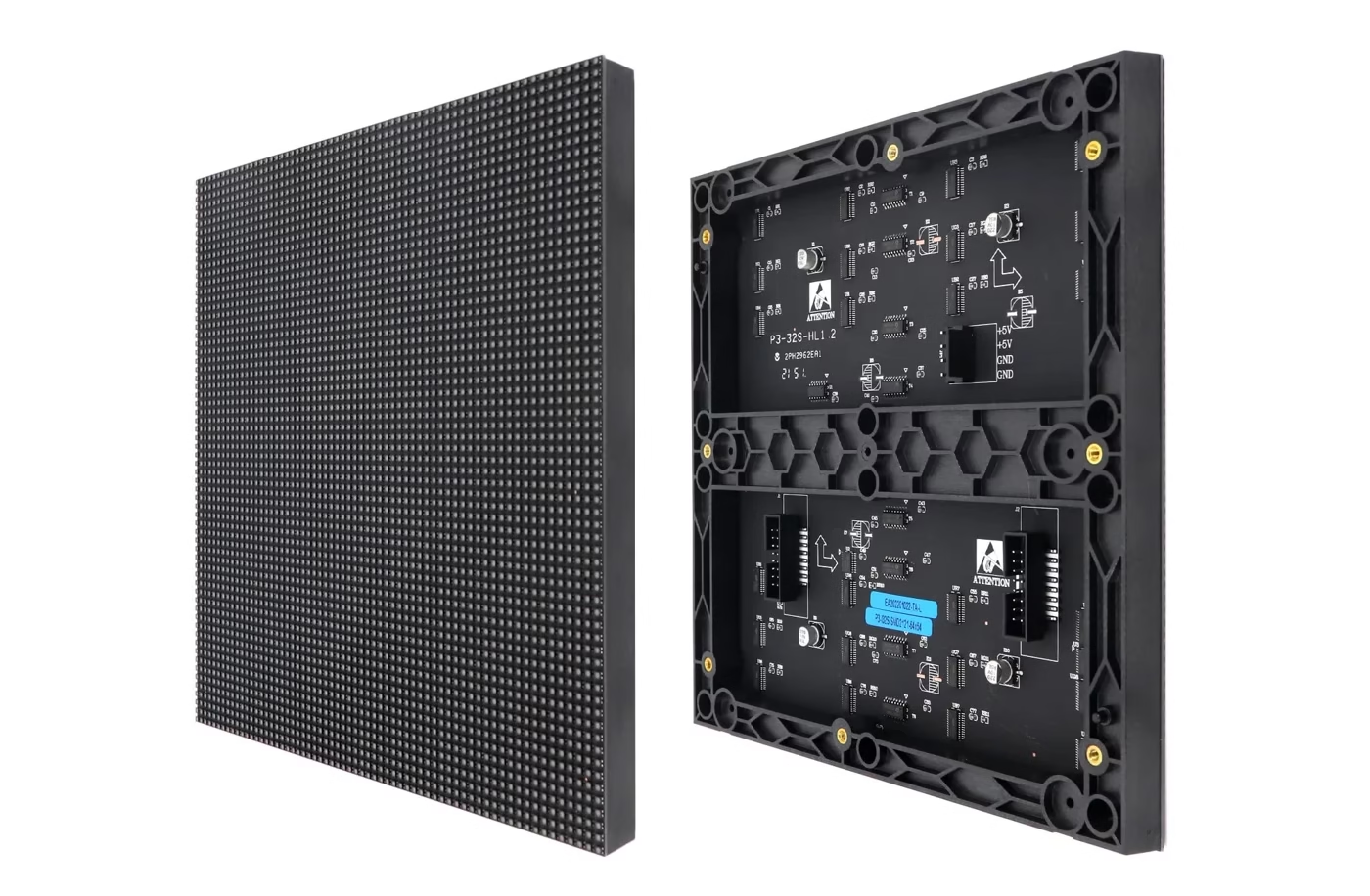
② 192×192mm — The Exact-P3.0 Square
The classic square that lands on 3.0mm exactly: 64×64 = 4,096 dots, 27 boards per square meter, on a 1/32 scan through 24 devices — reconciling to the lamp. Nine boards fill a 576×576mm cabinet (192×192 pixels) and sixteen fill a 768×768mm (256×256), the grids legacy installations and exact-3.0 tenders standardise on. Strong-magnet front service; regular-refresh ICs as built.
| Module size | 192×192mm |
| Pixel resolution | 64×64 = 4,096 dots (exact 3.0mm) |
| Scan mode | 1/32 scan |
| Driver IC brands | Chipone PWM driver family, 16-channel |
| ICs fitted (total) | 24 |
| Lamp | SMD1515 or SMD2020 black-body |
| Brightness | 800–1,000 nits |
| Maintenance | Face-only service — strong-magnet boards |
| Cabinets | 576×576mm (×9 boards, 192×192 px) · 768×768mm (×16, 256×256 px) |
| Uniformity | Strict wavelength & brightness binning + system-wide per-pixel correction |
③ 192×96mm — The Exact-P3.0 Half Square
The rare half-square that lands on 3.0mm exactly: 64×32 = 2,048 dots, one quarter of the ② plate, on a 1/32 scan through 12 devices — reconciling to the lamp. It exists for engineering fills: ticker strips, odd-width recesses and extension walls that must match an older exact-P3.0 field board-for-board. Cabinets are built to the project’s structure rather than a catalog grid, and this is the one format in the class offering front or rear maintenance per the install. Regular-refresh ICs as built.
| Module size | 192×96mm |
| Pixel resolution | 64×32 = 2,048 dots (exact 3.0mm) |
| Scan mode | 1/32 scan |
| Driver IC brands | Chipone PWM driver family, 16-channel |
| ICs fitted (total) | 12 |
| Lamp | SMD1515 or SMD2020 black-body |
| Brightness | 800–1,000 nits |
| Maintenance | Front or rear maintenance, per install structure |
| Cabinets | Built to project structure (engineered fills and extensions) |
| Uniformity | System-wide per-pixel correction; binning per production batch |
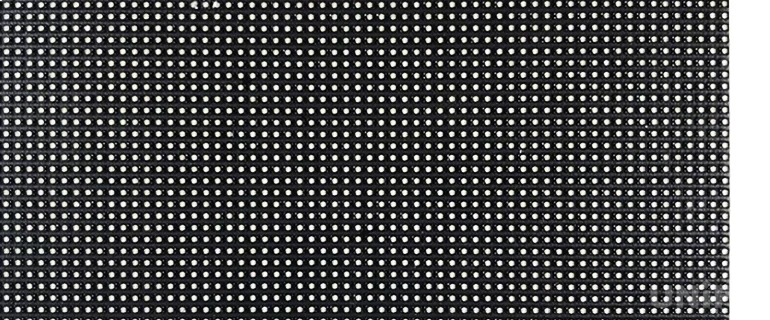
④ P3.076 or Exact P3.0 — Two Ecosystems, One Name
The same-naming split the 6mm outdoor class lives with, one shelf down. Most “P3” walls are the volume board; exact 3.0 is a separate ecosystem. Neither is better — they serve different walls:
P3.076 — the volume ecosystem
104×52 on the 320×160mm board tiles the 640×640mm and 960×960mm cabinets — the deepest spare bench and the volume price. 105,625 px/㎡. The default for new concourse, hall and retail walls.
Exact P3.0 — the square ecosystem
64×64 on the 192×192mm square tiles the 576×576mm and 768×768mm cabinets — 111,111 px/㎡. The buy when a drawing says 3.0mm, or when an extension must match an older exact-P3 field board-for-board.
Past roughly 6 meters the two are indistinguishable on a running wall — the 2.5% density gap sits inside the eye’s resolving limit at that distance. The decision is cabinet ecosystem and paperwork: “P3-class” takes the volume board; a drawing that says 3.0mm takes the square, board for board. The same grid also hangs outdoors — see the P3 outdoor collection for the weatherproof build of the same pitch.
Watch It Built
What Does a P3 Indoor LED Display Look Like in Real Spaces?
Board & Image Quality
How Is the Picture of a P3 Indoor LED Display Actually Built?
Boards in this class ride a 1.6mm rigid fiberglass plate. At 5,408 lamps on the mainstream board the solder count is moderate, but the flatness rule does not change: a plate that flexes reads as brightness ripple across a 6-meter sight line. Harness runs are pure copper on power and signal, and the class keeps a choice most pitches above it have retired — SMD1515 for the sharper camera-facing builds, SMD2020 as the mature volume lamp.
Two Lamps, One Tier Logic
SMD2020 is the mature volume build — deep blacks and steady behavior at the value price. SMD1515 sharpens the picture for camera-facing rooms and rides the high-refresh option. Both are black-body packages: contrast near 5000:1, a 160° cone, and binning paperwork either way.
Refresh at Order Time
The volume board offers regular or high-refresh scans; the exact-3.0 squares run regular ICs as built. Content-only concourses bank the budget on the regular tier; anywhere a camera points, name the high-refresh option — it lives in the driver generation and receiving card, not the lamp.
Binned Lamps, Corrected Wall
Lamps are strictly sorted on wavelength and brightness, then the system applies whole-wall per-pixel correction — loaded at the factory, refreshed at handover. That pairing is why a concourse wall built from hundreds of boards reads as one canvas, and both items ship on our quotes.
Encapsulation
SMD, GOB or COB — What Should the Face of a P3 Indoor LED Display Be?
At 3mm the lamps are large enough to shrug off ordinary contact, so the face question is lighter here than on the finer shelves — but it has not disappeared. All three builds ship on every board; traffic picks the line:
Ask three questions and it settles:
- Does anything touch the face? — cleaning crews, luggage, trolleys: GOB at minimum, COB for daily contact.
- How near do cameras work? — the high-refresh scan ends flicker at any distance; only sub-2m camera passes argue for COB.
- Where do repairs happen? — SMD and GOB mend at the wall in minutes; COB leaves for a bench, so the spares clause carries uptime.
Power
Which Power Supply Brands Does a P3 Indoor LED Display Use?
Production stocks two 5V switching-supply brands on this class: Chuanglian Power and MEAN WELL. A 5V 40A (200W) unit rides in every cabinet, so a fault dims one box while the rest of the wall keeps playing — and with the fewest lamps per square meter in the indoor family, a mainstream board tops out near 6W, about 117W/㎡ at full white.
Brand-level power catalogs: LED display power supply hub · Mean Well guide
Running cost: count on about 6W peak per mainstream board — near 117W/㎡ at full white — while ordinary content sits between 40 and 70W/㎡. Ten square meters around the clock at 55W/㎡ comes to roughly 4,800 kWh a year, close to $480 on commercial rates. Night scheduling trims it further; no indoor class bills lighter.
Control Stack
Which Control Systems Work With a P3 Indoor LED Display?
Six ecosystems connect to these boards — four control platforms plus two processor lines. Synchronous racks drive halls, concourses and facades live with whole-wall correction applied; asynchronous players push schedules and signage from the cloud. Keep one family across the wall and write the refresh tier into the order — it is produced by the driver generation and receiving card.

NovaStar
The reference the industry calibrates to — senders plus current receiving cards define whole-wall correction.
Best for: halls, concourses, premium facades
Colorlight
Dollars-to-performance — i-series receivers and processors run the volume board end to end.
Best for: volume programs on a budget

Huidu
Sync-plus-cloud in one box — the reason dual-mode boxes own the schedule-board niche.
Best for: schedule boards, unattended walls

Mooncell
The price challenger — networked players and processors aimed at fixed walls.
Best for: fixed walls on tight budgets

VDWALL
Road-worn processors — the LVP line carries wide concourse canvases reliably.
Best for: broad concourse canvases

RGBlink
Broadcast-side switchers — cameras, NDI streams and the wall through a single rack.
Best for: studios, live streams
Watch: synchronous mode explained (Huidu official)
Huidu demonstrates synchronous mode on its player boxes — the real-time path that keeps concourse and hall walls locked to the source.
Hardware we fit across the six ecosystems — NovaStar sender family · Colorlight X-series selection guide · Huidu dual-mode players · Mooncell processor family · VDWALL LVP series · RGBlink switcher family
How Far Should the Nearest Viewer Stand From a P3 Indoor LED Display?
Indoors, furniture sets the floor of the viewing range. Route the space first, then the budget:
P2.5, P3 or P3.91 — Reading the Indoor Volume Shelf Honestly
Three names cover the volume shelf: two fixed-install classes and one rental platform a step wider. The honest comparison:
Three takeaways that settle it:
- Distance first — 5 meters is the honest border: inside it P2.5 carries the detail, past 6 meters the 3mm class reads identically to every seat.
- The step wider is area — moving from P2.5 to P3 funds roughly 30–35% more wall on the same budget, and concourses reward area over density.
- Grid over gloss — 105,625 and 111,111 px/㎡ are both honest counts; compare the pixel grid and cabinet ecosystem, not the brochure name.
Fine Pitch LED or LCD Video Wall — Which Should a Concourse Buy?
Concourse and exhibition buyers price both, so here is the straight comparison:
The routing rule: wide concourse canvases, exhibition backwalls and any facade that needs one unbroken image — fine pitch LED wins, and at this pitch the premium over LCD mostly disappears on big walls. Small fixed-size walls on tight money — LCD still buys the picture. Ladder background: pixel pitch explained.
Price Transparency
How Much Does a P3 Indoor LED Display Cost?
Market reference ranges (board prices pulled from live listings, converted at 19.5 boards per square meter, then cross-checked against complete-wall quotes — September 2026 market listing scan):
For context: control hardware adds $500–2,000 a project; local steel and fitting take another fifth to a third of screen value. Within the board itself, LED chips and the driver set carry most of the cost — pitch fixes lamp count, so it remains the biggest single lever. Every figure is a scan, never a quote.
Applications
Where Does a P3 Indoor LED Display Deliver the Most Value?
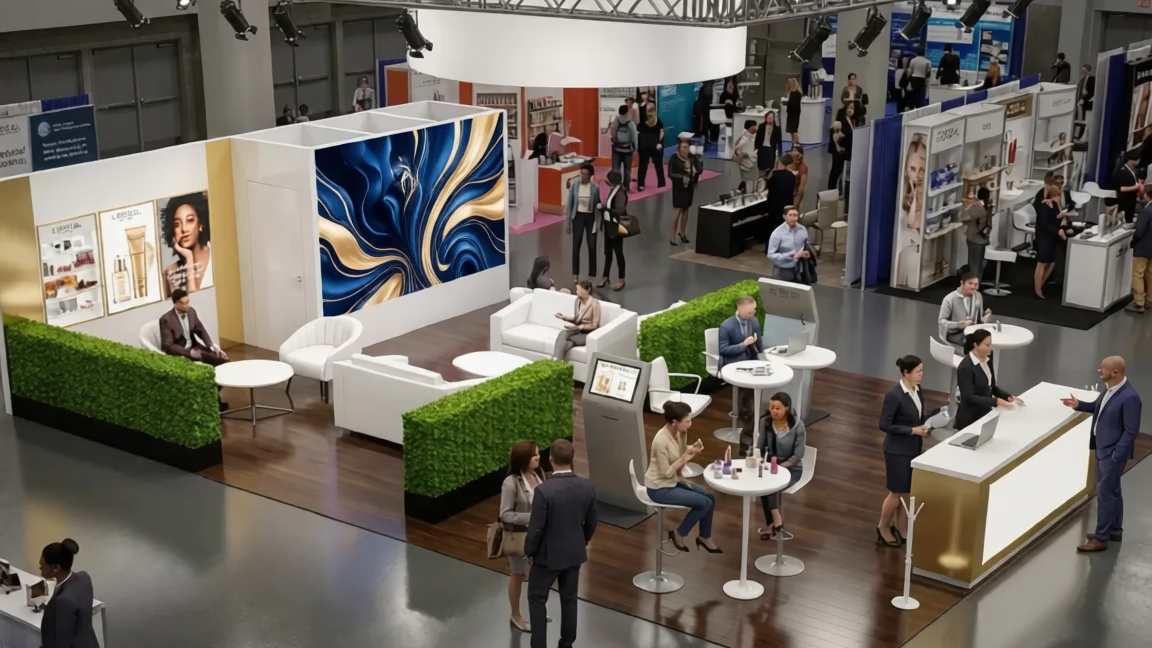
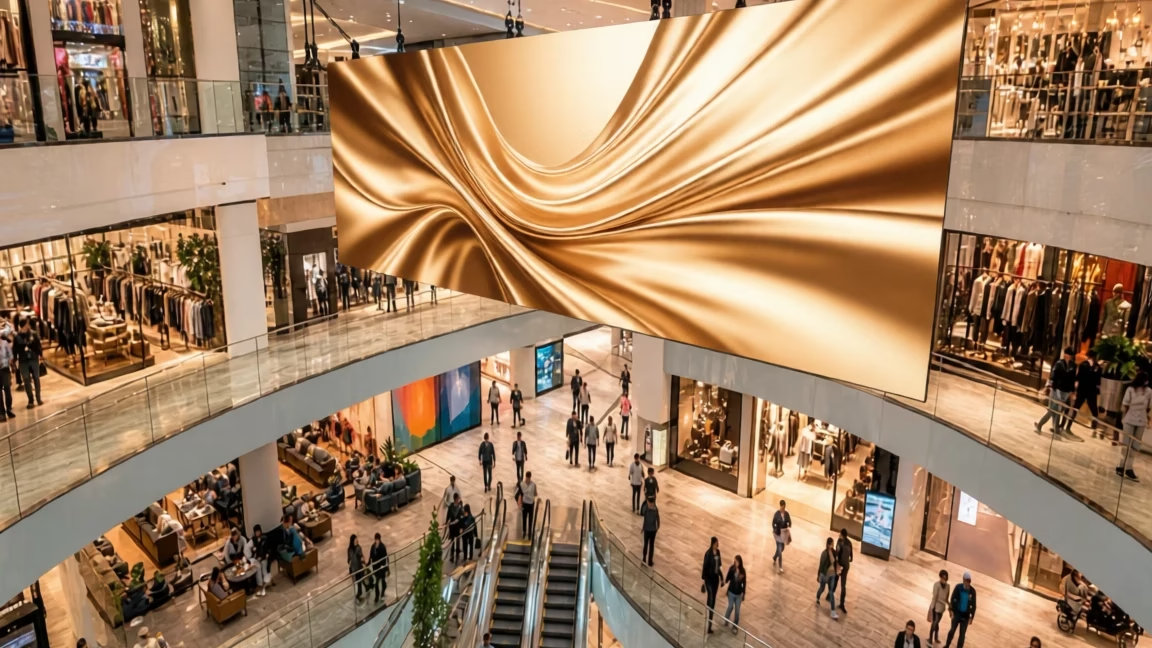
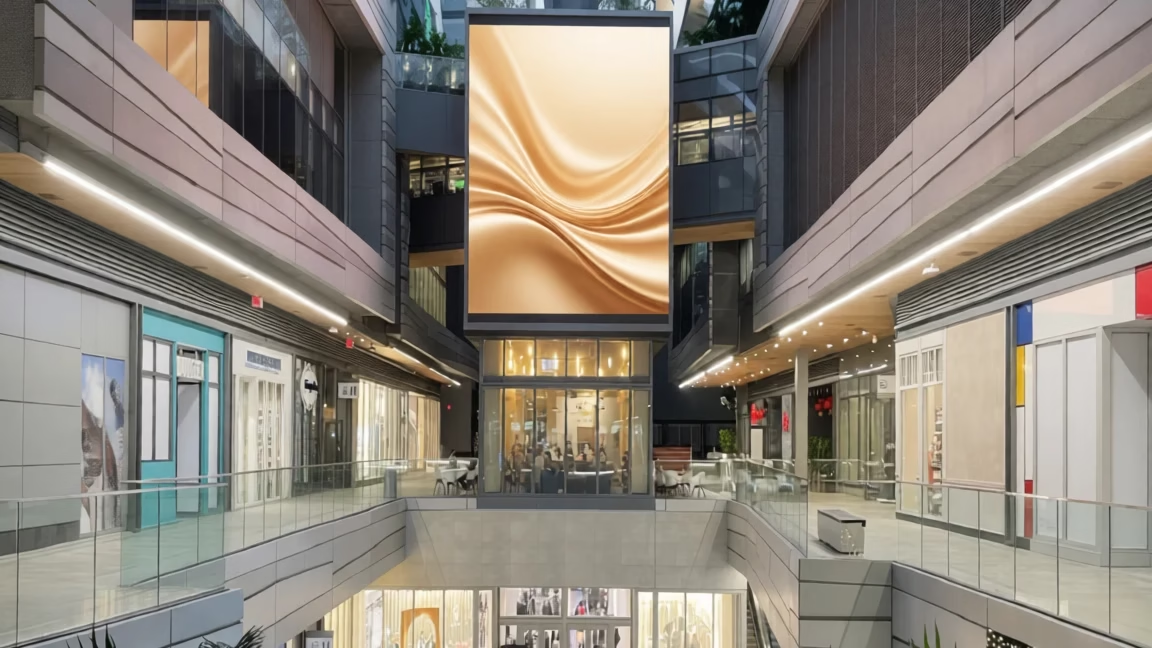
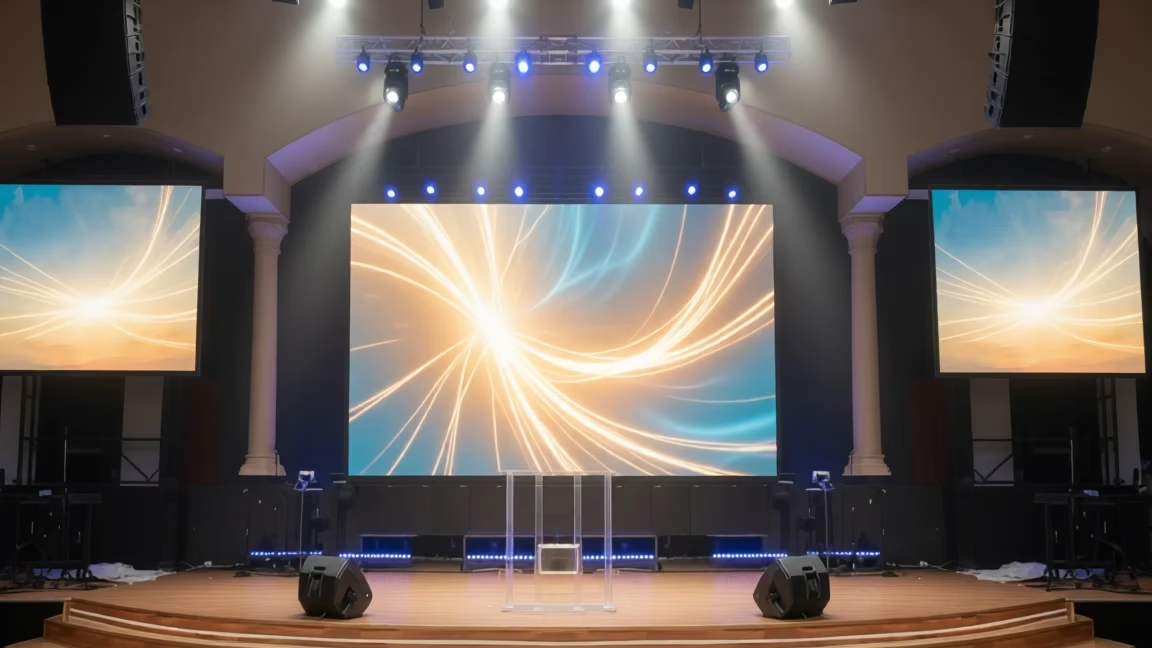
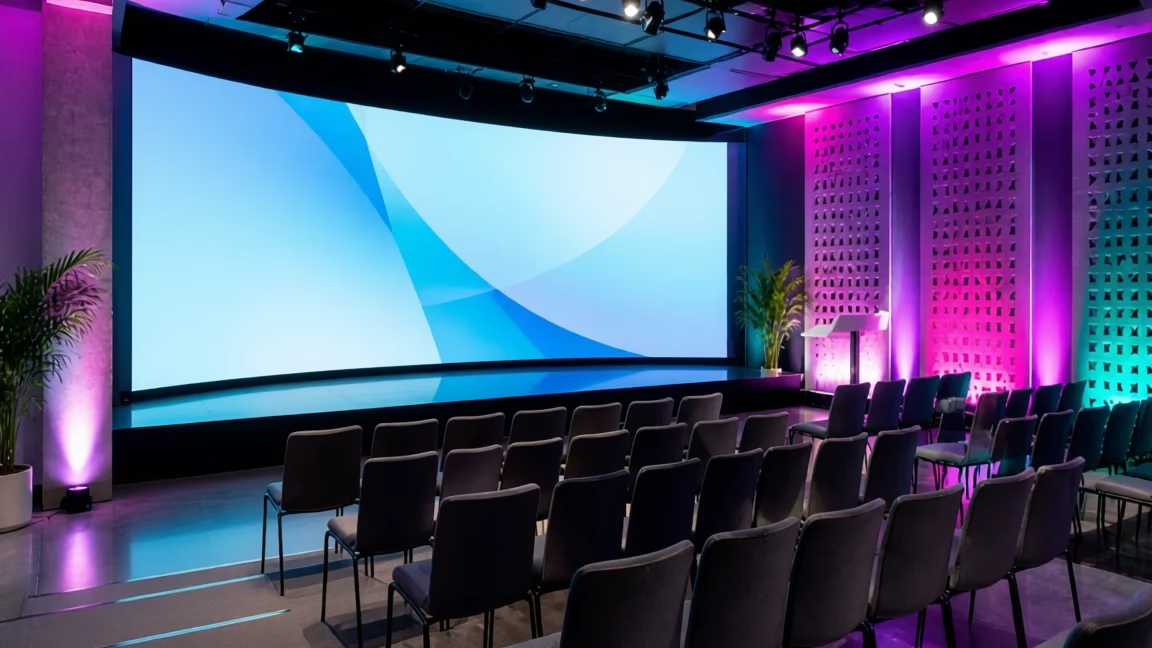
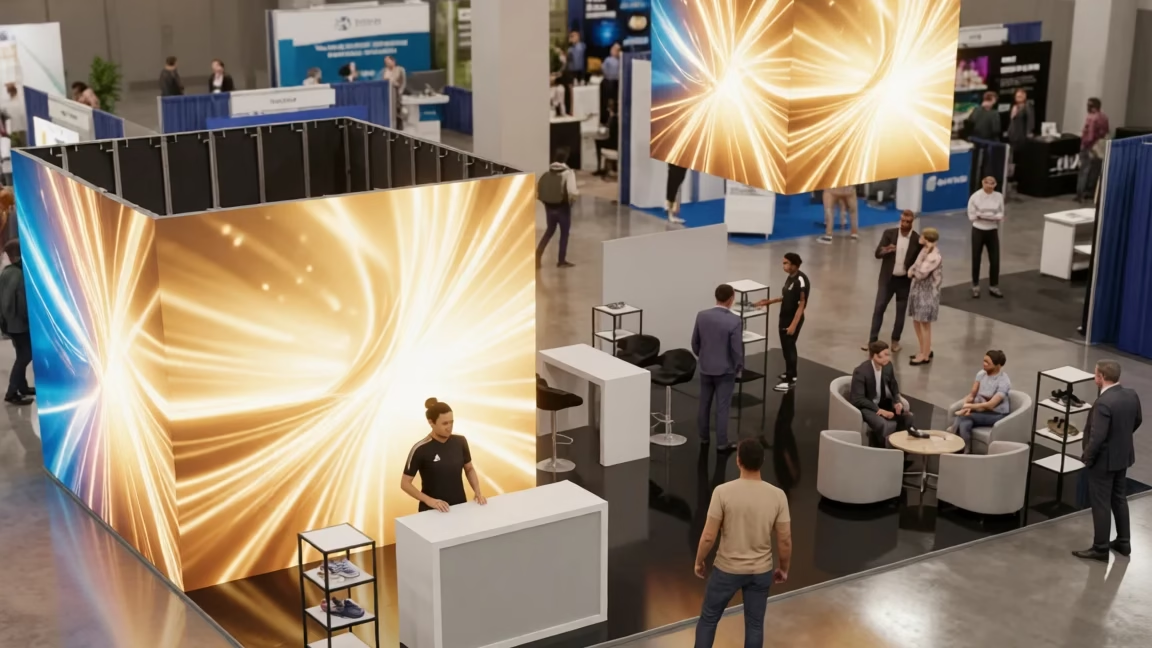
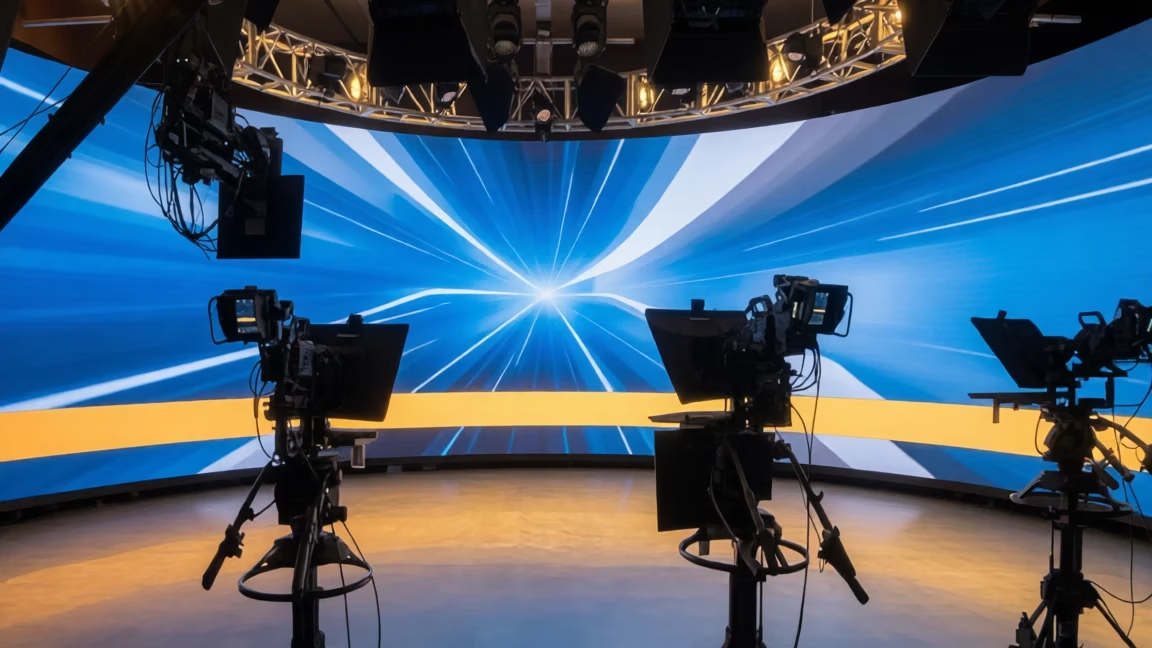
Eight placements where the 6–10m viewing band makes the 3mm class the smart buy:

Projects
What Have Real P3 Indoor LED Display Projects Looked Like?
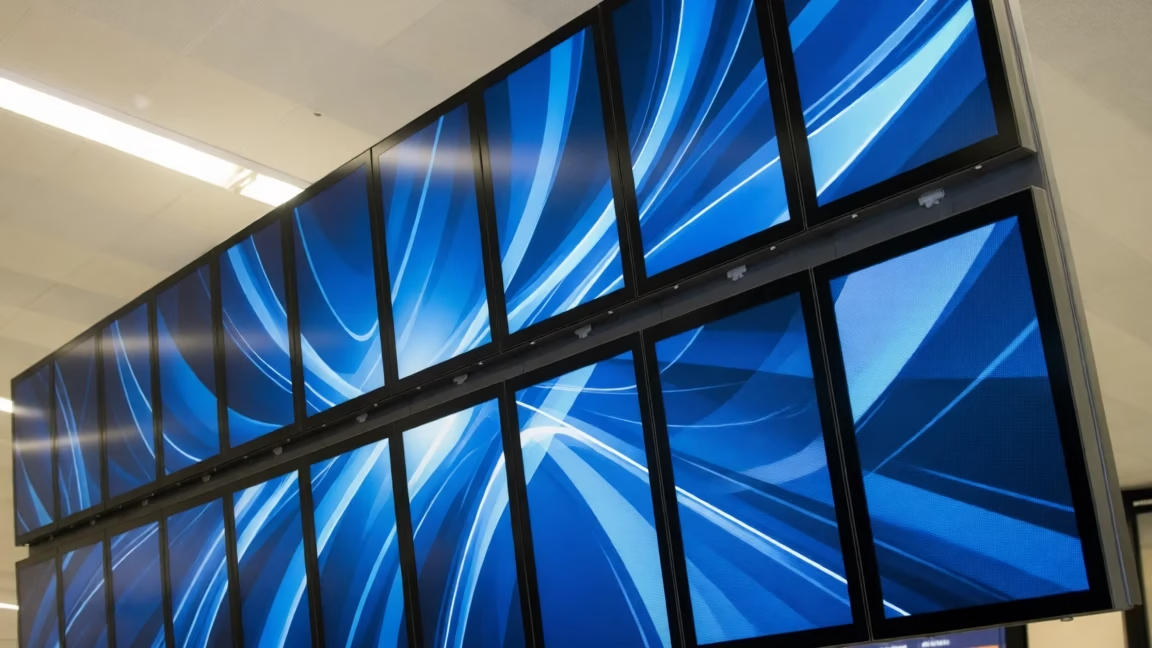
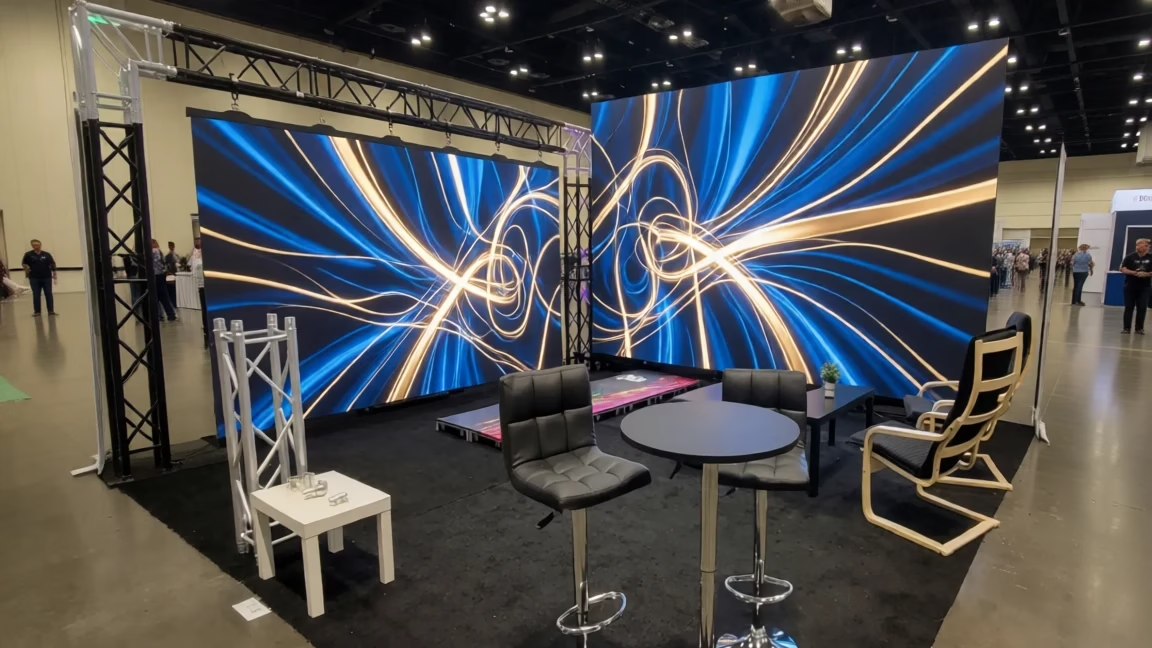
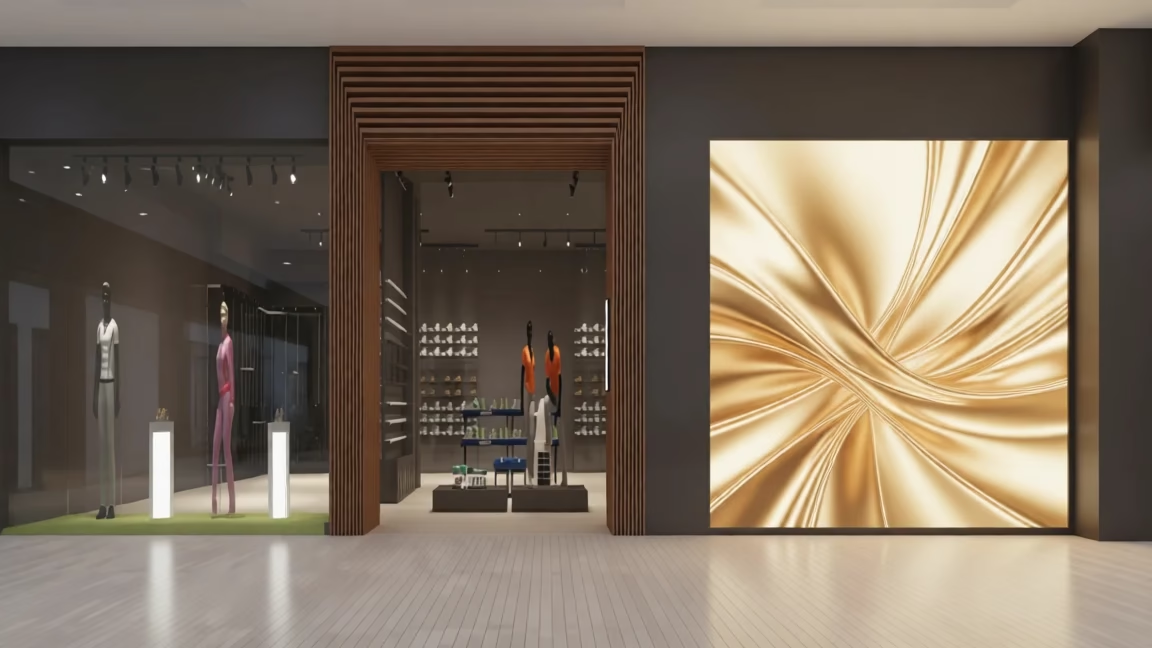
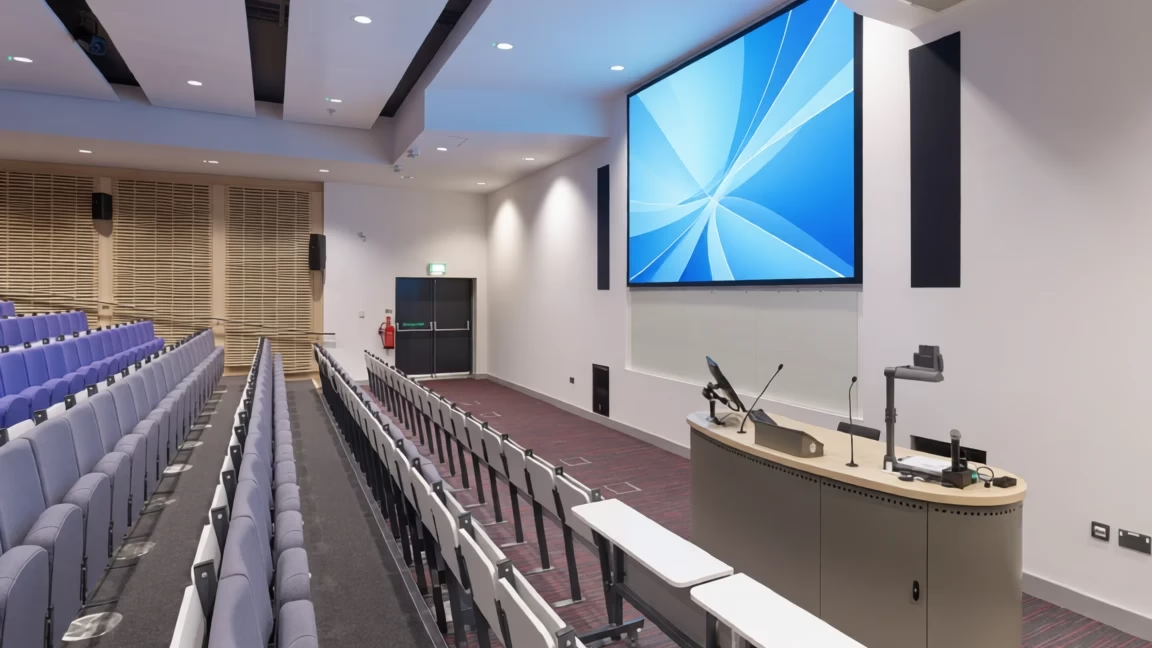
Reference placements for the class — concourse, exhibition, retail facade and studio. Named references available for your market on request:
FAQ
P3 Indoor LED Display: Frequently Asked Questions
What viewing distance does a P3 indoor LED display need?
Keep the nearest reader at 5 meters or beyond; the class works comfortably across 6–10 meters. There, schedules, brand films and video all read cleanly. Inside 5 meters the P2.5 class carries the detail, and past 10 meters the P3.91 rental class banks the difference.
Is “P3” really a 3mm pitch?
Depends which board. The market’s volume board lays 104×52 pixels across the 320×160mm format — exactly 3.0769mm, booked as “P3.076.” Exact 3.0mm lives on the 192×192mm square (64×64) and its 192×96mm half-square. Past 6 meters the two read identically; the choice is cabinet ecosystem and tender paperwork, which is exactly why the two are separated on this page.
P3.076 or exact P3.0 — which ecosystem should I buy?
A new wall with no legacy constraints buys the P3.076 volume board: the 640×640mm and 960×960mm cabinet family carries the deepest spare bench and the volume price. A drawing that says 3.0mm, or an extension matching an older exact-P3 field, takes the 192×192mm square board-for-board. The 192×96mm half-square exists for engineered fills between the two worlds.
Will the wall flicker on camera?
Not on the high-refresh build — name it in the order and the scan outruns every camera artifact phones and broadcast rigs catch. The regular-refresh tier serves content-only walls at the lighter price. The ten-second field test works here too: slow-motion mode on a phone pointed at a live wall tells you which tier you are looking at.
SMD1515 or SMD2020 — which lamp should I order?
SMD2020 is the mature volume lamp — deep blacks, steady behavior, the price leader. SMD1515 sharpens detail and rides the high-refresh builds for camera-facing walls. Boards, cabinets and correction stay the same either way, so the lamp plus refresh tier are the quote’s real variables.
How much power does a P3 indoor LED display draw?
A mainstream board peaks near 6W — about 117W/㎡ at full white — while ordinary content runs 40–70W/㎡. Ten square meters on 24/7 duty at 55W/㎡ uses roughly 4,800 kWh a year, near $480 on commercial rates. The lightest bill in the indoor small-pitch family, and night scheduling trims it further.
How is a P3 wall serviced once it hangs?
From the face, always — every mainstream module sits on strong magnets, so a board pulls out in seconds with no tools and no rear walkway. The 192×96mm half-square offers front or rear maintenance per the install structure. Shelf 3% spare boards and a matching receiving card, and routine faults close within the day.
How much does a P3 indoor LED display cost per square meter?
Per September 2026 market scans, a standard SMD fixed wall — boards, cabinets, power, basic control — lands between $250 and $450 per square meter factory-direct; boards alone trade at $6–10 per 320×160mm piece. High-refresh and GOB builds each add 10–15%; control runs $500–2,000 per project. Market scan, not a quote.
Full Guide
P3.076 or Exact P3.0 — Choosing Inside the Indoor P3 LED Display Class
A P3 indoor LED display is the pitch class that put small-pitch walls into ordinary buildings: concourses, exhibition halls, retail facades and worship spaces all run 3mm-class boards, because the class prices whole walls at LCD-adjacent money while keeping the seam-free canvas only direct-view LED delivers. This guide walks the class from both ends — the two-grid naming split that every buyer should understand before comparing quotes, and the hardware lines that separate a good P3 wall from a mediocre one.
Two grids share one name
The split is arithmetic. The volume board lays 104×52 = 5,408 dots across the 320×160mm format, and 320 divided by 104 lands on 3.0769mm — 105,625 pixels per square meter, booked everywhere as “P3.076.” Exact 3.0mm instead lives on the 192×192mm square, where 64×64 dots land the grid at 111,111 px/㎡, with a 192×96mm half-square as its engineered sibling. Both are honest products with different ecosystems: the 3.076 board tiles the 640×640mm and 960×960mm cabinet family that dominates the volume market, while the exact-3.0 squares ride the 576×576mm and 768×768mm grids that legacy installs and exact-spec tenders standardise on.
What the split never changes is the picture past six meters. At that distance the eye resolves neither the 2.5% density gap nor the grid difference; a running wall at 3.0769mm and one at 3.0mm read as the same canvas. The decision therefore moves to ecosystem and paperwork — volume price and spares on one side, exact-spec compliance and legacy matching on the other. Buyers who ask for the pixel grid before the brochure name avoid the entire trap.
The band: why 3mm owns 6–10 meters
Lamp count sets the band. At 105,625–111,111 px/㎡ the wall resolves clean schedules, brand films and live capture from about 6 meters and stays comfortable through 10 — the band where transport concourses, exhibition halls and retail facades actually place their audiences. One band tighter, P2.5’s 160,000 px/㎡ carries desk-side detail at a step up in price; one band wider, P3.91’s 65,536 px/㎡ banks the difference for rooms that read from 8 to 14 meters. P3 owns the volume middle, and the arithmetic explains why: each step wider in this region sheds roughly a third of the lamp count, and lamp count is the primary cost lever in the board.
The money shows it directly. Boards alone trade at $6–10 per 320×160mm piece — about $117–195/㎡ — and complete standard walls land at $250–450/㎡ factory-direct, the family’s lightest figure. On a big concourse that per-square-meter spread compounds fast: the same budget that buys 20 square meters of P2.5 buys 30 or more of P3, and a concourse rewards area before it rewards density.
Lamp, refresh, cabinet: the order-form decisions
Three choices ride the order form. The lamp: SMD2020 as the mature volume build, SMD1515 where cameras and detail lead. The refresh: regular scans for content-only walls, the high-refresh option wherever capture and streaming happen — produced by the driver generation and receiving card, so it travels by name. The cabinet: iron or die-cast boxes from the two ecosystems, with the 192×96mm half-square available as an engineered fill. None of the three changes the service model — mainstream boards pull from the face on strong magnets — which keeps the decision cheap to make and expensive to skip.
Quality still hides in three places: lamps graded on wavelength and brightness before assembly, dot-level calibration held in the receiver and refreshed on site, and the refresh tier written into the order. Three gates precede shipment — a dark-screen uniformity sweep, a slow-motion capture proving the scan, and a long soak watching for color drift — all on our floor.
The face: SMD today, GOB where trolleys roll
At 3mm the lamps are large enough to shrug off ordinary contact, so the face question is lighter than on the finer shelves. SMD at base cost is the closed-space default. GOB lays a clear coat and buys corridor, retail and exhibition durability for 10–15% over base — the right call wherever trolleys, luggage and cleaning crews cross the floor. COB closes the face completely at a 40–60% premium, which at this pitch rarely pays: the money usually buys more GOB-covered square meters instead. Traffic sorts the face, not fashion — and confirm the choice with any supplier whose catalog offers a single face.
Power and the big wall
The volume pitch is also the thrifty one. A mainstream board peaks near 6W — about 117W/㎡ at full white — with ordinary content running 40–70W/㎡, and ten square meters around the clock burn roughly 4,800 kWh a year. Each cabinet carries its own 5V 40A supply from Chuanglian Power or MEAN WELL, so failure domains stay cabinet-sized. Front-only service on strong magnets completes the picture: boards lift from the face in seconds, which is the installation pattern that lets hard-board walls mount flush against structure across retrofitted concourses and halls.
The 6-point buying checklist for a P3 indoor LED display
- Set the band first — 6–10m keeps you here; inside 5m step to P2.5, past 10m let the coarser classes keep the money.
- Pick the ecosystem — “P3-class” takes the 3.076 volume board; a 3.0mm drawing takes the exact square, board for board.
- Choose lamp and refresh together — SMD2020 regular for content walls; SMD1515 high-refresh wherever cameras point.
- GOB where trolleys roll — the 10–15% coat is cheap insurance on concourse and exhibition floors.
- Name the binning and correction in writing — the whole-wall correction file is what makes hundreds of boards read as one canvas.
- Contract magnet front service and 3% spares — the no-tool swap and the spare shelf turn faults into non-events.
Run the list in order and the class reduces to arithmetic. A P3 indoor LED display is not the finest wall on the shelf — it is the pitch that turns a small-pitch budget into the most square meters of working canvas, split across two honest ecosystems and priced for the buildings that actually buy it.
Related P3 Indoor LED Display Resources
P2.0 Indoor Fine Pitch LED Display Collection →
P3 Outdoor LED Display Collection →
P3.91 Indoor Rental LED Display Collection →
P2.604 Indoor Rental LED Display Collection →
LED Screen Calculator →
LED Display Power Supply Hub →
LED Control System Hub →
Pixel Pitch Explained →
Spec Your P3 Indoor LED Display With Our Engineers
Send the space, the nearest eye and the wall size you have in mind. The quote breaks out board ecosystem, lamp build, refresh tier, cabinet material and control rack — factory-direct, 3% spares included.
UnifyLED — LED screen manufacturer · unifyledscreen@gmail.com · Changsha / Shenzhen, China
Browse our guides: Indoor LED Display Buying Guide