
P10 Indoor LED Display Collection
The universal strip — the same 320×160mm board format indoors and out, on an exact 10.00mm grid at precisely 10,000 px/㎡. Lobby walls, fascia strips and giant-room canvases at the lightest price in the indoor family.
from our own lines
72h before shipping
one grid, two lives
service both ways
+ matching receiver
FOB / CIF quotes
What is a P10 indoor LED display?
A P10 indoor LED display is a fixed video wall built from 320×160mm universal strips that carry 32×16 = 512 lamps on an exact 10.00mm grid — precisely 10,000 pixels per square meter, the roundest density figure on the entire ladder. It is the workhorse of big-room signage: lobby welcome walls, fascia strips, concourse boards and giant-hall canvases, driven mostly by simple asynchronous players that update from a phone.
The 320×160mm footprint is the one board format the whole industry standardized on both sides of the weather line — the same strip runs a 5,500-nit twin on the P10 outdoor LED display mother page, one step coarser indoors sits the P8 indoor LED display collection. The pixel pitch guide maps the full ladder if the numbers are new.
What keeps the class on order sheets is duty fit, not resolution. Lobby walls welcome visitors on loops. Fascia strips run offers and wayfinding from an asynchronous player. Concourse boards post schedules nobody photographs up close. At 512 lamps per board and roughly twenty strips per square meter, every line of the bill — boards, power, control — lands at the bottom of the indoor family, and the 1,000–1,500 nits high-bright build holds up against lobby glass and bright atrium light where standard-brightness classes wash out.
One cabinet family covers the shelf: the 960×960mm frame in simple iron or profile-edge trim, holding eighteen strips (three across, six down) for 96×96 = 9,216 dots per box. Service runs both ways — screws from the back or boards pulled from the face — named on the order.
Whole-wall per-pixel calibration loaded in the factory carries uniformity, the same system the finer rungs use. The strip ratio assembles clean: three boards across make exactly 960mm, no cutting anywhere in the wall.
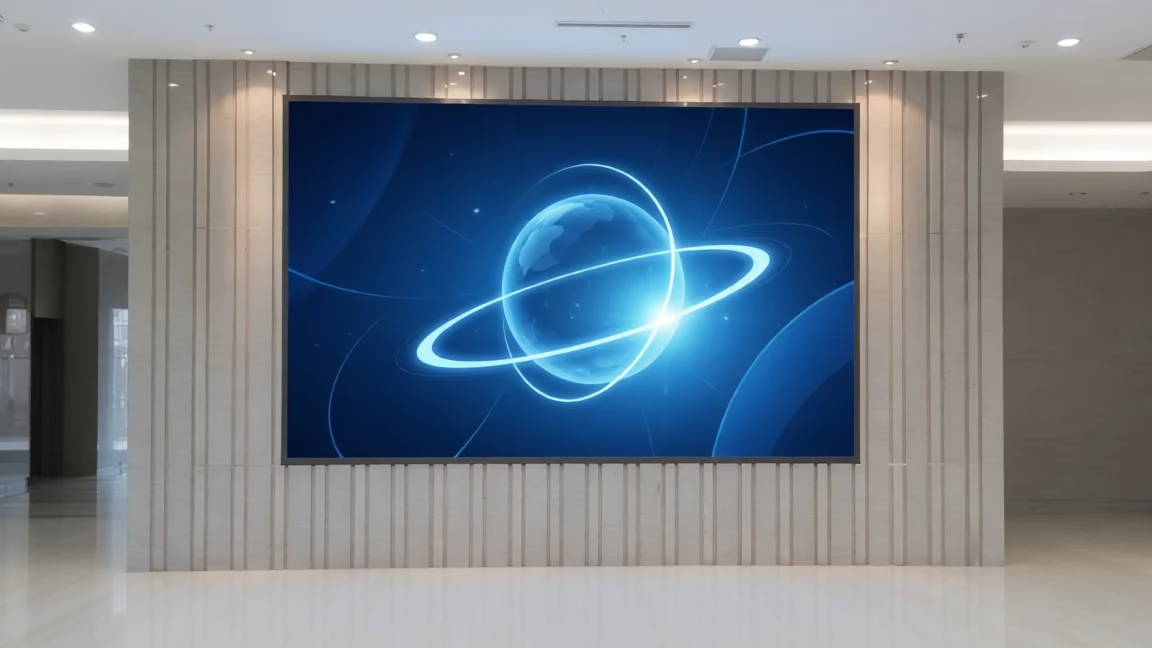
Which builds does a P10 indoor LED display come in?
One board, one cabinet family in two trims, one honest grid. Every build lands on exactly 10.00mm between lamp centers — density stays a clean 10,000 px/㎡ across the whole wall.
① The 320×160mm universal strip — 32×16 = 512 dots
The most-shipped board format in the industry. 512 SMD3528 lamps on a 1.6mm fiberglass plate, driven by eight or sixteen constant-current ICs at 1/8 scan — the IC pair ships as an order choice. At roughly twenty strips per square meter, boards alone trade at $1–2.5 a piece, and complete walls land between $75 and $125 per square meter factory-direct — the deepest price floor in the indoor family.
| Module size | 320 × 160 mm (universal strip, indoor + outdoor footprint) |
| Pixel resolution | 32 × 16 = 512 dots, pitch exactly 10.00mm → 10,000 px/㎡ |
| Scan mode | 1/8 scan |
| Driver IC | Standard 16-channel constant-current driver ICs |
| IC count | 8 or 16 per board (order choice, as quoted) |
| Lamp | SMD3528 black-face, ~5000:1 contrast |
| Brightness | 1,000–1,500 nits — high-bright indoor components |
| Maintenance | Front and rear service both supported — named on the order |
| Cabinet | 960×960mm, simple iron or profile-edge frame (3×6 boards) |
| Uniformity | Whole-wall per-pixel calibration loaded in the factory |
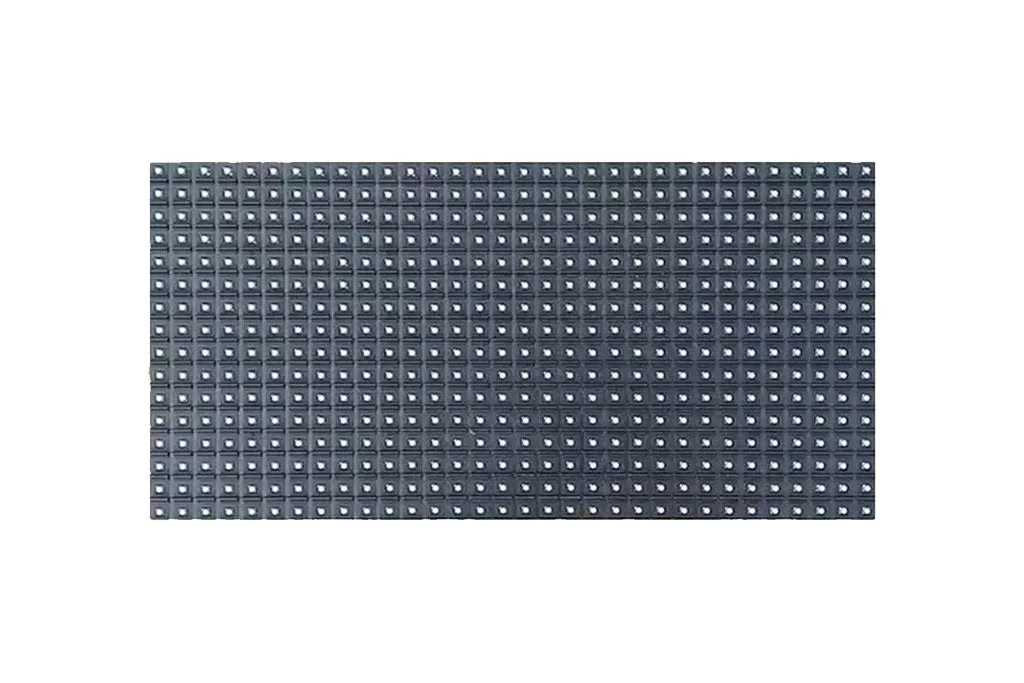
The high-bright 1,500-nit build suits lobby glass and sunlit atriums; standard 1,000-nits suits controlled halls.
② 960×960mm iron cabinet — 3×6 strips, 96×96 = 9,216 dots
The workhorse box. Eighteen strips fill one simple iron frame, the strip ratio means zero cutting anywhere, and a 9.6×4.8-meter lobby wall assembles from just eighty boxes. This is the cabinet most lobby and concourse programs buy — front or rear service both mount cleanly.
| Cabinet size | 960 × 960 mm, simple iron build |
| Modules per box | 3 × 6 = 18 strips |
| Resolution | 96 × 96 = 9,216 dots per box |
| Grid | Exact 10.00mm — no seam step between boxes |
| Service | Front and rear both supported |
| Best for | Lobby walls, concourse boards, fascia runs |
③ 960×960mm profile-frame cabinet — dressed edges for front-of-house
Same boards, same grid — the trim changes. Where the wall meets visitors at arm’s length, the profile-edge frame wraps the cabinet perimeter in a finished bezel, so the canvas reads as furniture rather than rigging. The honest trade: a modest premium per box for the dressed edge, zero change to the grid or the service path behind it.
| Cabinet size | 960 × 960 mm, profile-edge frame |
| Modules per box | 3 × 6 = 18 strips |
| Resolution | 96 × 96 = 9,216 dots per box — identical to the iron build |
| Grid | Exact 10.00mm — mixes freely with iron boxes in one wall |
| Service | Front magnets or rear screws, named on the order |
| Best for | Lobby welcome walls, reception backdrops, front-of-house runs |
What can a P10 indoor LED display show at 20–30 meters?
Six clips from our own channel show the class at work — welcome walls, mall media and giant-room canvases, updated from a phone.
How does a P10 indoor LED display hold its picture quality?
Whole-wall per-pixel calibration carries the uniformity job on this rung, the same system every finer class uses — loaded in the factory, refreshed at handover, stored in the receiving cards. With 512 lamps per board the lamp-to-lamp spread stays narrow, and the calibration file turns hundreds of strips into one canvas. Both the calibration pass and the 3% spare shelf are quote line items, verifiable on site.
The high-bright build is this class’s quiet advantage: 1,000–1,500 nits against the 800–1,200 of finer indoor rungs, specified for lobbies with floor-to-ceiling glass and atriums that wash out standard-brightness walls at midday. The SMD3528 lamp keeps a black face, so a switched-off wall still reads as deep charcoal, and contrast sits near 5000:1 against the inked board. The 160° cone keeps color steady for visitors approaching from the side, not just straight on.
Wiring runs pure copper to GB standard on power and signal — the substitution failures that plague cheap walls start in the jacket, not the datasheet. The standard drive refresh keeps welcome loops, schedules and offer strips clean on phones across the band, and the front-or-rear service choice means the wall can be maintained without touching the face even in furnished lobbies.
| Board | 1.6mm FR-4 fiberglass, inked face |
| Contrast | ≈5000:1 black-face SMD build |
| Brightness | 1,000–1,500 nits — high-bright indoor |
| Viewing cone | 160° horizontal / vertical |
| Uniformity | Whole-wall per-pixel calibration, factory-loaded |
How much power does a P10 indoor LED display use?
The lightest bill on the ladder, again by a step. Each strip board peaks near 1.5W — about 29W/㎡ at full white even on the high-bright build — and ordinary lobby content lands between 10 and 18W/㎡. Ten square meters running around the clock at 15W/㎡ draw roughly 1,300 kWh a year, near $130 on commercial rates. For welcome walls that never sleep, the gap compounds year after year.
| Supply brand | Unit in this class | Role |
|---|---|---|
| Chuanglian Power | 5V 40A (200W) | Volume build — one unit carries multiple cabinets at this density |
| MEAN WELL | 5V 40A (200W) | Specified on programs that name the supply brand |
| G-Energy | 5V 40A (200W) | The third rotation brand on this class — same footprint, same quote line |
At 29W/㎡ full white, one 200W supply often carries three 960 cabinets, which shrinks the failure domain and the spare shelf. All three brands share the mounting footprint, so the order names the brand and nothing else changes. Sizing curves live on the LED display power supply hub; brand pages start at MEAN WELL and the G-Energy section of the same hub.
Which control systems run a P10 indoor LED display?
Six ecosystems cover this class, more than any finer indoor rung — because the duty splits. Huidu and Colorlight asynchronous players own the simple strip-screen and lobby-wall duty: schedules, welcome loops and offers updated from a phone. NovaStar and Mooncell racks run the bigger canvases in real time with whole-wall correction. VDWALL and RGBlink processors sit between sources and wall where the program mixes cameras, presentations and media. Stay in one family per wall — mixing sender generations shows up as correction mismatches no field tuning hides.

The yardstick the market calibrates to — racks and receiving cards for the bigger canvases.
Sync plus cloud-async in one box — a natural fit for lobby and concourse duty.

The asynchronous specialist — strip screens and lobby walls updated from a phone.

The value rack line — real-time control with whole-wall correction on a budget.

Video processors for mixed-source programs — cameras, decks and media on one wall.

Broadcast-side switchers — one rack between sources and the wall.
Receiver and processor pages: NovaStar · Colorlight · Huidu · Mooncell · VDWALL · RGBlink · control hub
Huidu’s own A5 walk-through — the asynchronous box that owns strip-screen and lobby duty on this class. Configuration guides for all six ecosystems live on the controller pages above.
How do you route a giant room to the right pitch?
Measure where the nearest eye truly stands — then pick the rung:
| Nearest reader | Class | Why |
|---|---|---|
| 10–16 m | P5 indoor collection | Value floor for whole-hall canvases |
| 12–20 m | P6 indoor collection | Widest rung with front-service magnets standard |
| 16–26 m | P8 indoor collection | Rear-service simplicity for giant halls |
| 20–30 m | P10 indoor (this page) | Deepest price floor; lobby and strip duty standard |
| Past 30 m, weather in play | P10 outdoor mother page | The same strip at 5,500+ nits, IP65 front |
Three names decide most giant-room projects. The honest comparison:
| Row | P8 indoor | P10 indoor | P10 outdoor |
|---|---|---|---|
| Grid | 8.00mm · 15,625 px/㎡ | 10.00mm · 10,000 px/㎡ | 10.00mm · 10,000 px/㎡ |
| Band | 16–26 m | 20–30 m | 20–50 m, weatherproof |
| Brightness | 800–1,200 nits | 1,000–1,500 nits | 5,500+ nits, IP65 |
| Wall price | $90–150/㎡ | $75–125/㎡ | Outdoor build, quoted |
| Pick when | Nearest eye 16–20 m | Past 20 m, or async lobby/strip duty | The wall meets weather |
The weatherproof twin: P10 outdoor collection.
- The grid never moves. 10.00mm center-to-center on every strip — density stays exactly 10,000 px/㎡ wall-wide.
- The footprint crosses the weather line. Same 320×160mm board indoors and out — only the lamp, mask and brightness change.
- Async duty is native here. Strip screens and lobby walls run on phone-updated players; six control ecosystems cover the rest.
| Indoor hard-board ladder | Grid | Density | Band | Wall price |
|---|---|---|---|---|
| P4 indoor | 4.00mm | 62,500 px/㎡ | 8–15 m | $180–320 |
| P5 indoor | 5.00mm | 40,000 px/㎡ | 10–16 m | $130–220 |
| P6 indoor | 6.00mm | 27,778 px/㎡ | 12–20 m | $110–180 |
| P8 indoor | 8.00mm | 15,625 px/㎡ | 16–26 m | $90–150 |
| P10 indoor — this page | 10.00mm | 10,000 px/㎡ | 20–30 m | $75–125 |
What does a P10 indoor LED display cost?
September 2026 market listing scan: a standard SMD3528 fixed wall — boards, iron cabinets, power, basic control — trades at $75–125 per square meter factory-direct. Boards alone run $1–2.5 per 320×160mm piece, and control adds $500–2,000 per project. Every figure is a market scan, never a quote.
The band follows the board count. At 19.5 strips per square meter, board cost dominates the bill, and the IC choice moves it: eight ICs per board against sixteen at the same 1/8 scan trims a few dollars per square meter on volume programs. Trim is the second lever — the profile-edge frame trades a modest premium per box for dressed lobby-facing edges.
| Line item | Scan figure | Notes |
|---|---|---|
| Boards only | $1–2.5 / 320×160mm piece | Eight-IC floor; sixteen-IC adds the second driver set |
| Complete wall | $75–125 / ㎡ | Boards + iron cabinets + power + basic control |
| Control | $500–2,000 / project | Async player floors at the low end; racks at the high end |
| Spares | 3% + matching receiver | Quoted in, not added later |
Size the whole wall in one pass on the LED screen calculator.
Where does a P10 indoor LED display get used?
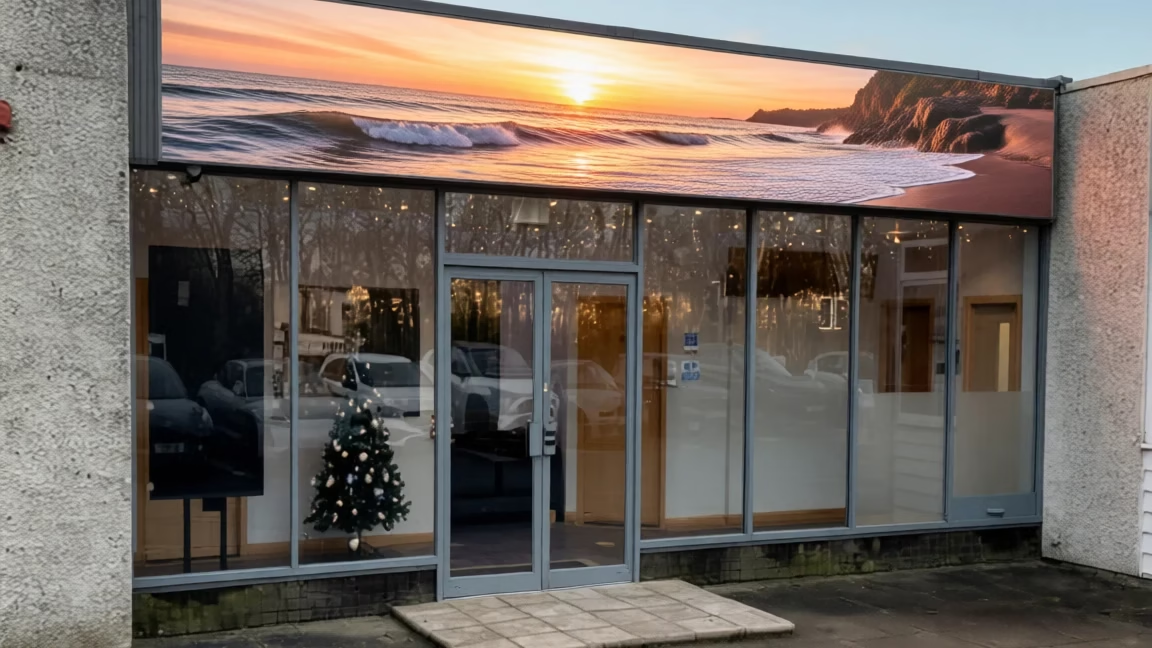
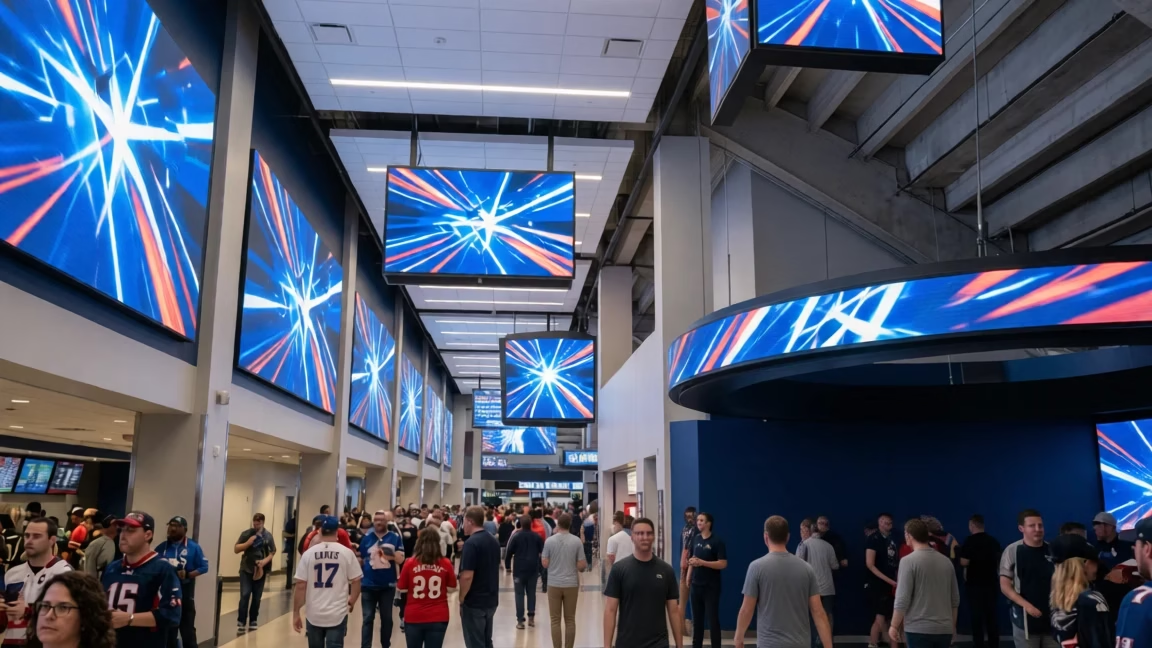
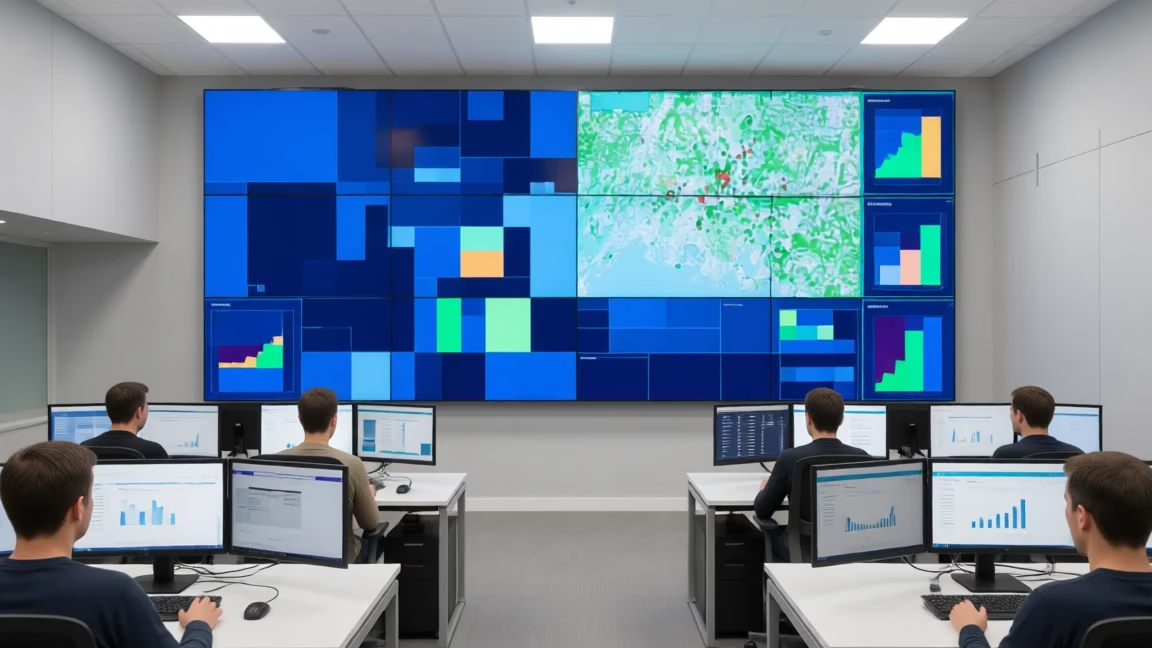
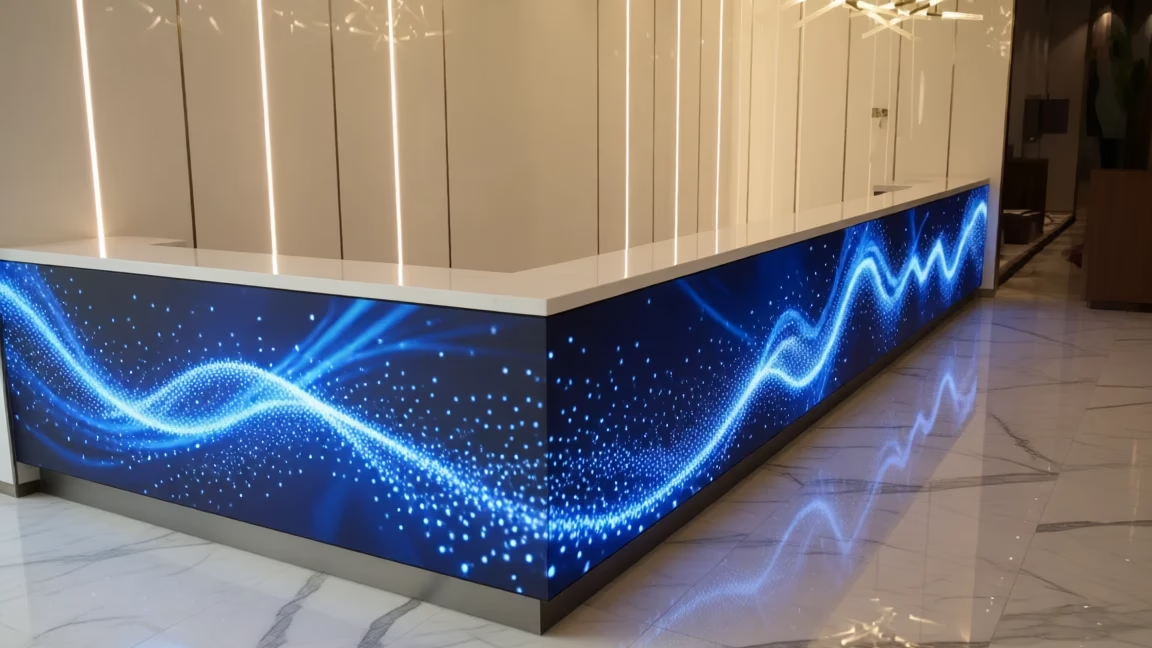
Eight placements cover the class. The pattern: welcome duty, strip signage and giant rooms — content that informs at a distance and updates from a phone.
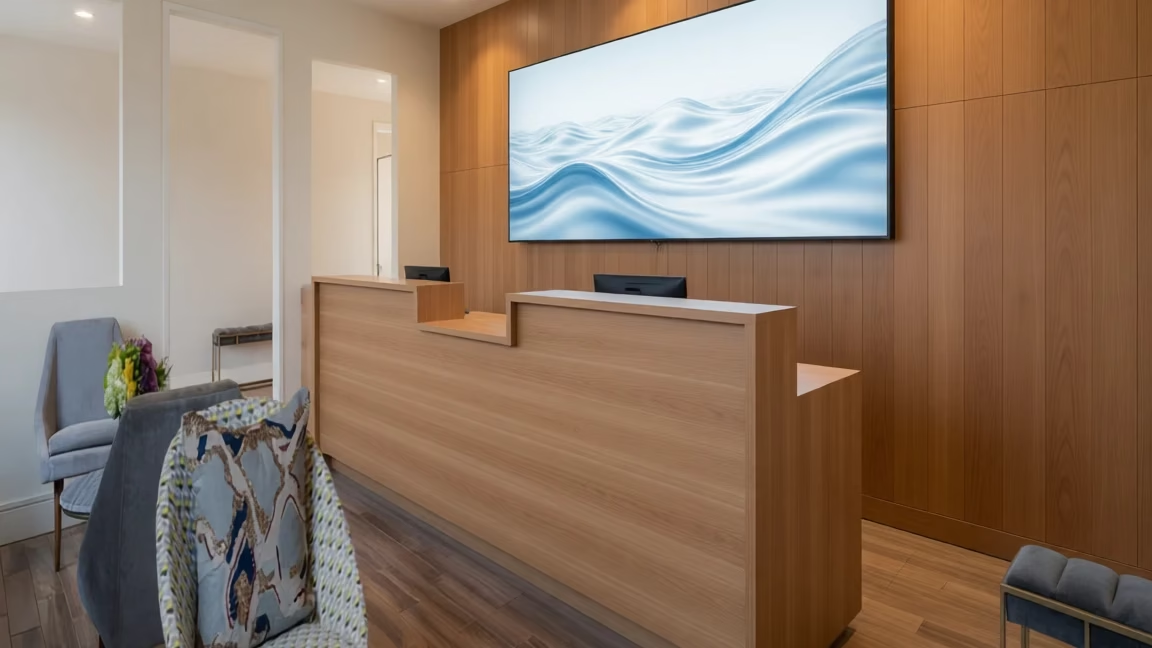
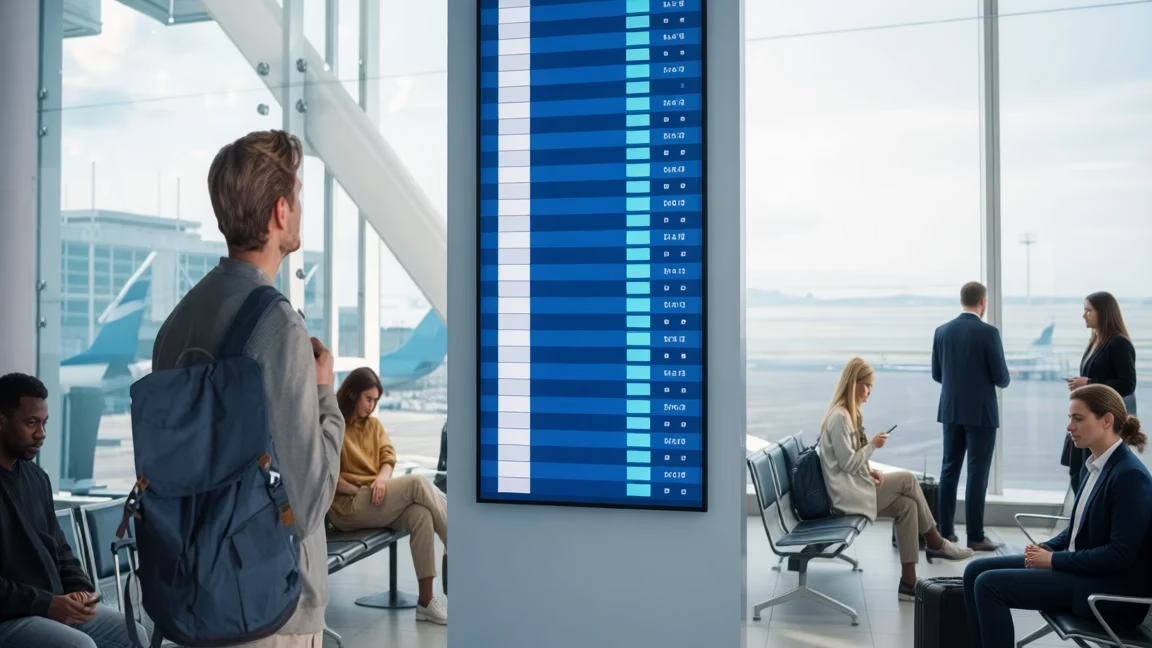
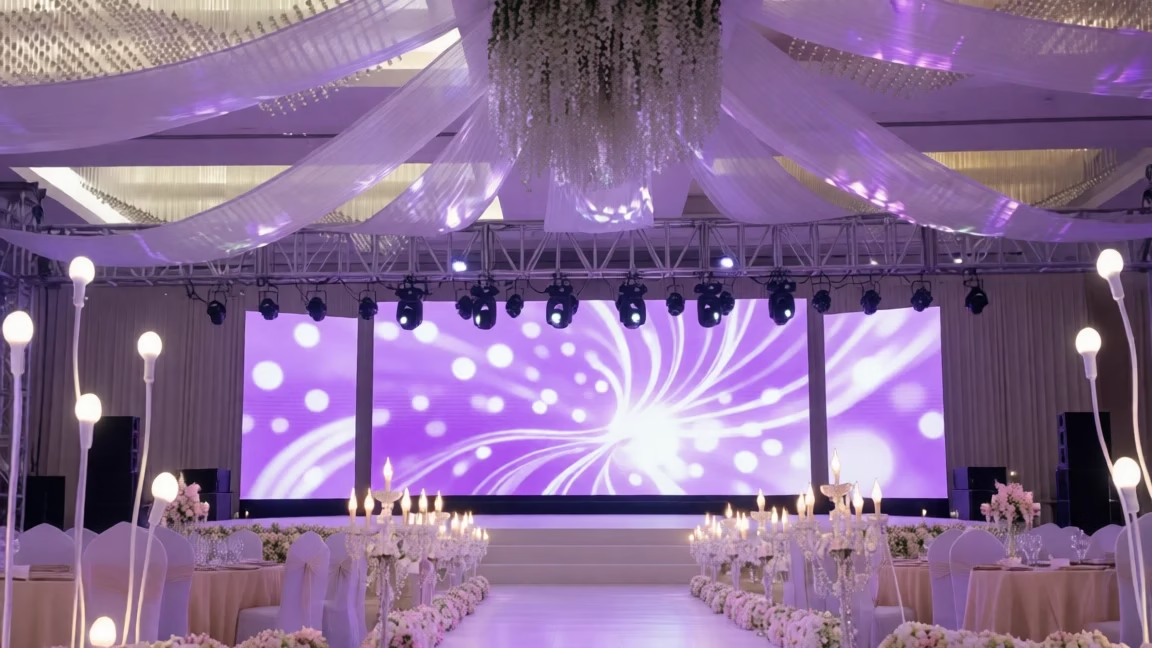
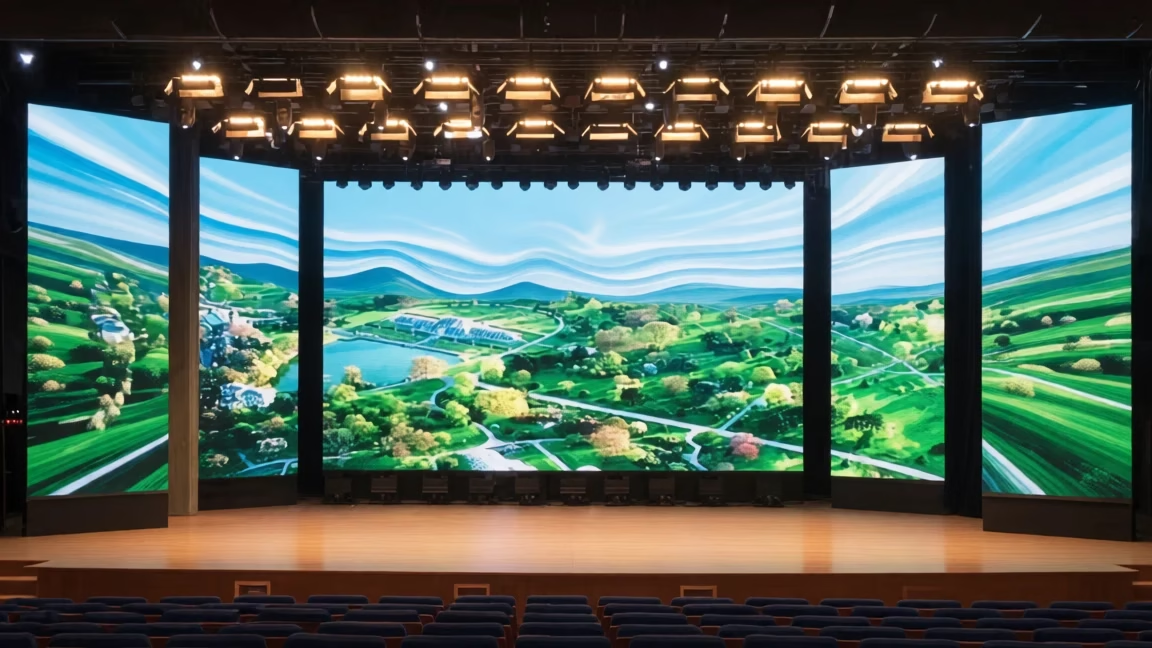
What have real P10 indoor LED display projects looked like?
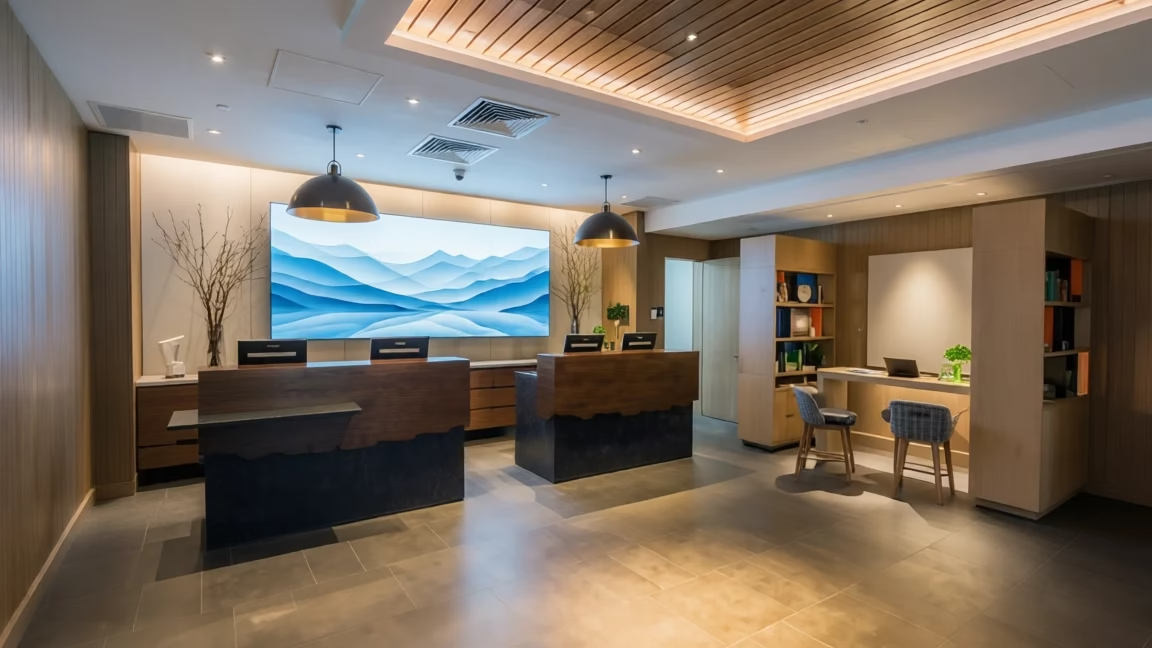
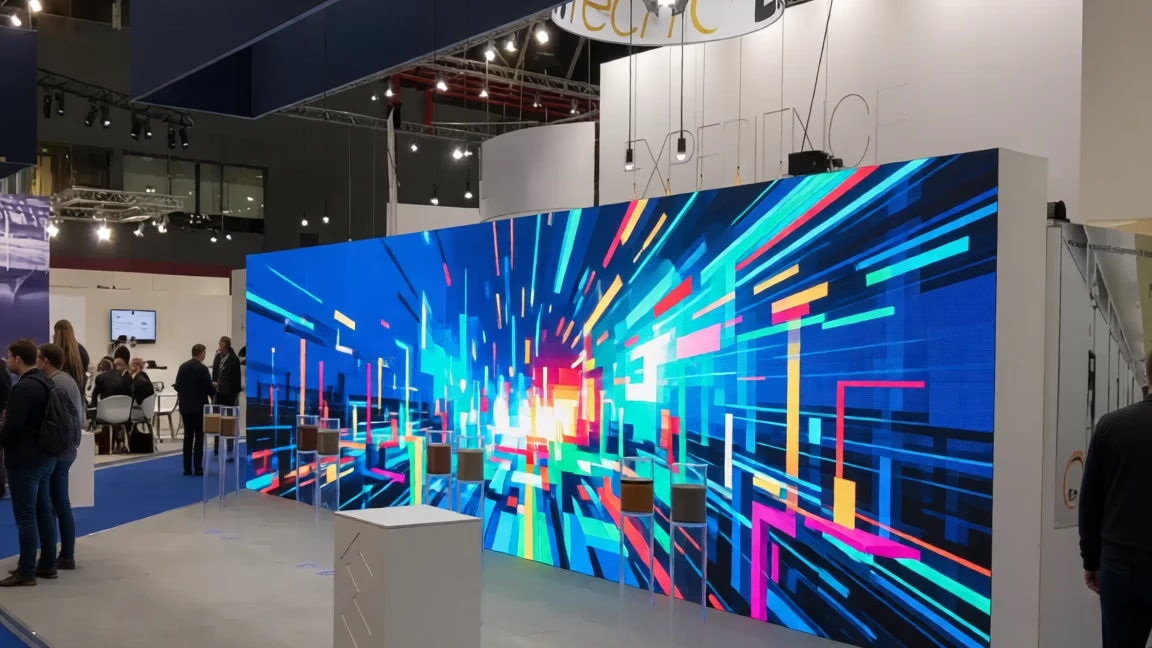
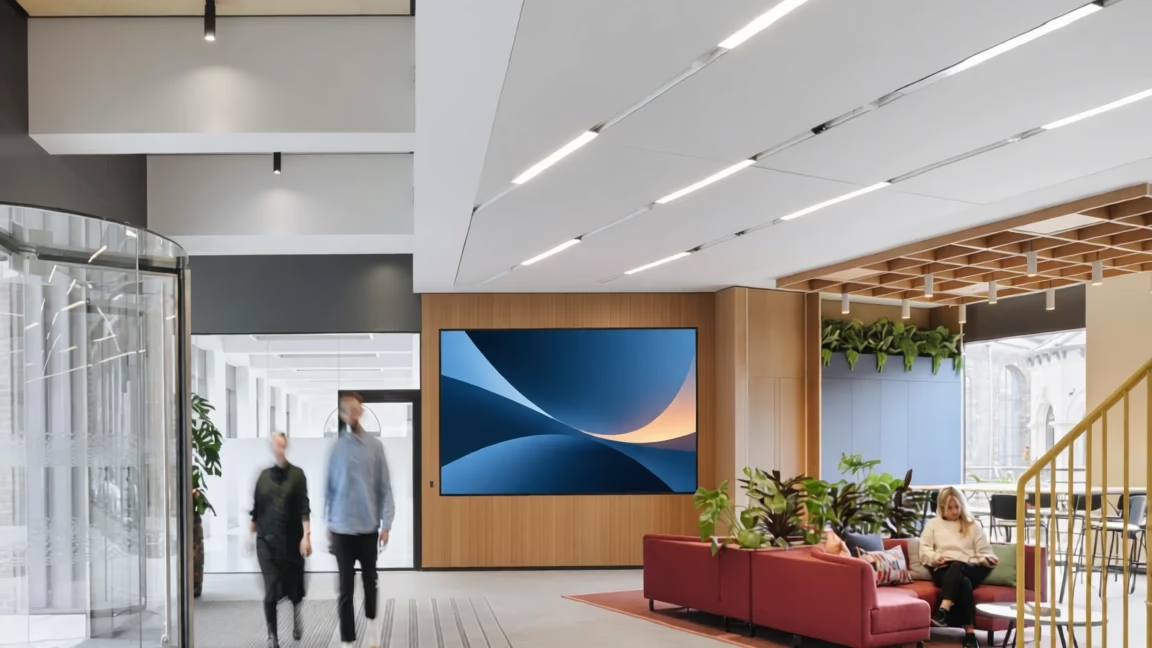
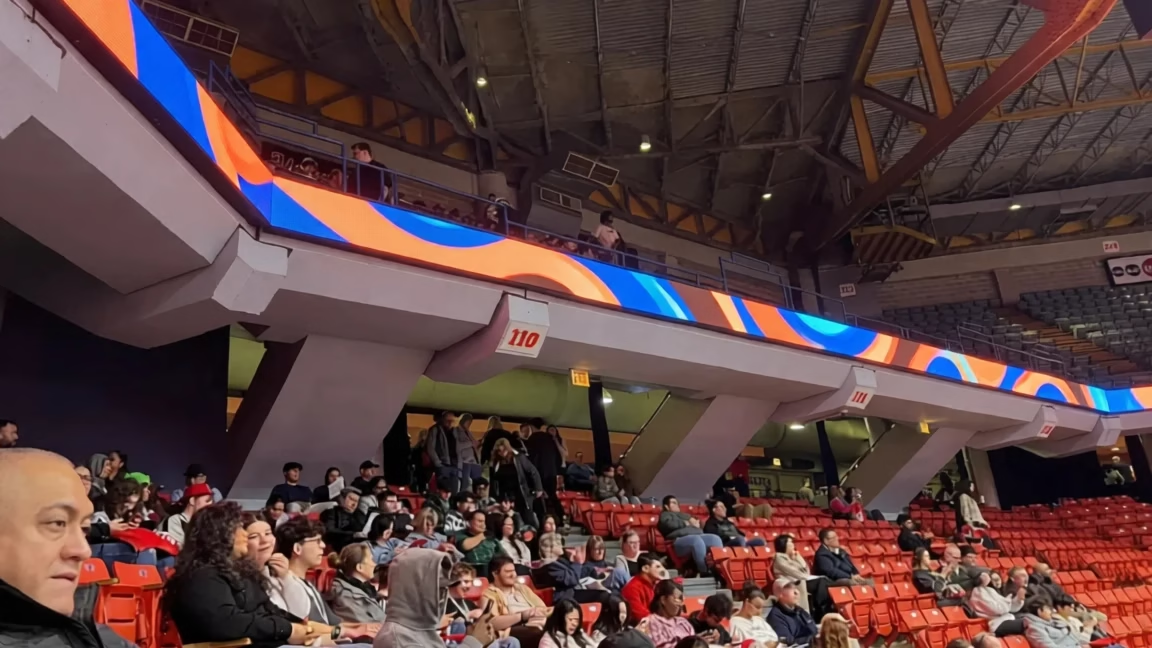
Reference placements matched to regional buying intent across Europe and America — the four scenarios where this class sells best.
P10 Indoor LED Display: Frequently Asked Questions
What viewing distance does a P10 indoor LED display need?
Video-first walls want the nearest reader at 20 meters or beyond, at home across 20–30 meters. Signage duty runs closer without complaint: fascia strips and lobby walls carry text comfortably from 8–10 meters because viewers read the layout, not fine detail. Inside 8 meters, step to P8 or P6.
P10 or P8 — how do I pick between the two?
Measure where the closest eye stands. Past 20 meters the 10mm grid shows the same perceived picture as P8’s 15,625 px/㎡, and the step wider converts into roughly a quarter to a third more wall on the same money. Between 16 and 20 meters P8 earns its premium; past 20, P10 is the honest answer — and for async strip or lobby duty, P10 usually wins on fit regardless of distance.
Is the 320×160mm board really the same indoors and outdoors?
The footprint and grid are identical — 32×16 lamps on a 10.00mm pitch, the one format the industry standardized on both sides of the weather line. What changes is everything exposed to the sky: the outdoor build carries SMD3535 lamps, a sealed mask and 5,500+ nits. Indoors you get the SMD3528 value build at a third of the price; see the P10 outdoor mother page for the weatherized twin.
Eight or sixteen driver ICs — which build should I order?
Both ship at 1/8 scan on this class, and both run the standard refresh. Eight ICs per board prices at the floor and suits simple async strip and lobby duty; sixteen ICs spread the drive load wider and suit walls that run long hours at high brightness. The quote lists both lines — volume programs default to eight.
Front or rear service — which maintenance path?
Both are supported on this class — it is one of the reasons lobbies like it. Rear screws suit walls with corridor access behind; front service pulls boards from the face where the wall sits flush against structure or furniture. Name the path on the order, and keep 3% spare boards plus a matching receiving card on the shelf — routine faults close the same day either way.
What does a P10 indoor LED display cost per square meter?
Per the September 2026 market scan, $75–125 per square meter factory-direct for a standard SMD3528 wall — boards, iron cabinets, power and basic control. Boards alone run $1–2.5 per piece, control adds $500–2,000 per project, and the profile-edge trim adds a modest premium per box. Scans, not quotes.
How long does a P10 indoor LED display last?
Lamps age to half brightness around 100,000 hours — decades at welcome-wall duty cycles. What ends walls early is heat and substituted parts: keep the cabinets ventilated, run content dimmer than full white (ordinary lobby content sits at 10–18W/㎡ anyway), and buy from the calibrated line. The 3% spare shelf handles random board failures long before the wall ages out.
What content suits a P10 indoor LED display best?
Layout content: welcome messages, schedules, offers, wayfinding, big-brand motion graphics. The class reads layout beautifully and fine detail not at all — that is the pitch working as designed. If the program needs close-up text or camera work, the finer rungs (P8 and up) are the honest recommendation, and we will say so on the quote.
Why is the P10 indoor LED display still the volume king?
The P10 indoor LED display is the widest rung on our indoor ladder and the hardest one to retire, because its duty list never shrank. One 320×160mm strip, 512 lamps, an exact 10.00mm grid, precisely 10,000 pixels per square meter — and a per-square-meter figure that undercuts the P8 floor by another twenty percent. Every lobby wall, fascia strip and concourse board that needs to inform rather than dazzle still lands here first.
What is inside a P10 indoor LED display module?
The strip is the industry’s common denominator. Sixteen rows of thirty-two SMD3528 lamps ride a 1.6mm fiberglass plate — 512 solder joints, the lightest load on the ladder. The 1/8 scan runs through eight or sixteen constant-current ICs depending on the order line, and at this lamp count the board runs cool even on the high-bright 1,500-nit build. Wiring is pure copper to GB standard, and whole-wall calibration does the uniformity job the finer classes split between lamp grading and correction. Nothing in the stack exists to impress a datasheet reader; every part exists to hold the figure down.
P10 or P8 — where does the money actually go?
The two collections share the SMD3528 heritage, the calibration pipeline and most of the control ecosystem; the grid is the real difference. P8’s 15,625 px/㎡ carries big-hall video from 16 meters. P10’s 10,000 px/㎡ concedes about a third of that density and recovers it as price: walls land at $75–125 against P8’s $90–150, boards run $1–2.5 a piece, and power drops to 29W/㎡ at full white. On a big canvas the step wider funds a quarter to a third more wall — and past twenty meters, area is the only thing the audience can see.
Where does a P10 indoor LED display earn its keep?
Four placements justify the rung. American hotel lobbies that want a welcome canvas behind the desk, updated from the manager’s phone. European trade-fair halls where the biggest possible backwall has to survive a booth budget. Dutch and German civic buildings that greet visitors over the reception desk with something better than a printed sign. And American arenas, where the bowl ribbon carries stats and sponsor loops season after season. One step further the same strip changes clothes entirely: past the weather line it runs at 5,500+ nits on the P10 outdoor LED display page — the only format in the catalog with that kind of double life.
What should you check before ordering a P10 indoor LED display?
Six items close a clean order:
- Set the duty first — async strip and lobby walls live here; camera-facing video walls belong two rungs finer.
- Name the IC count per line — eight ICs at the floor price, sixteen where long hours at brightness ask for it.
- Confirm the service path — front and rear both supported; furnished lobbies usually order front service.
- Pick the trim by audience distance — iron boxes for back-of-house runs, profile-edge frames where visitors stand close.
- Check the ambient light — the 1,500-nit high-bright build earns its premium against lobby glass; controlled halls can stay at 1,000.
- Put 3% spares and a receiver in the quote — the shelf that turns faults into non-events.
The bottom line
The P10 indoor LED display is not the sharpest wall we build — it is the one that says yes where every finer class says no: welcome walls, strip signage, giant rooms, tight budgets. One universal strip, one exact grid, the family’s deepest price floor, and a duty list that keeps growing. That arithmetic kept the class shipping for two decades, and it has not stopped.
Related P10 Indoor LED Display Reading
P8 Indoor LED Display Collection
15,625 px/㎡ on an exact 8.00mm grid — the rung for 16–26 meter halls.
P10 Outdoor LED Display
The weatherized twin of this exact strip — 5,500+ nits, IP65 front, same 10,000 px/㎡.
P8 Outdoor LED Display
The 8.00mm outdoor class for billboards and facades read past 25 meters.
More on the ladder: P6 indoor collection · P5 indoor collection · P6 outdoor collection · screen calculator · pixel pitch guide · power supply hub
Spec Your P10 Indoor LED Display
Send the room, the nearest seat and the wall size you have in mind. The quote itemizes IC count, cabinet trim, service path, power brand and the control rack — factory-direct, 3% spares included.
UNIFY LED · Changsha / Shenzhen, China · LED screen manufacturer
Browse our guides: Indoor LED Display Buying Guide