
P8 Indoor LED Display Collection
The long strip that built the industry — 256×128mm boards on an exact 8.00mm grid, 15,625 px/㎡, rear-service simplicity, and the deepest price floor of the indoor ladder. Made for giant halls that read from 16 meters.
from our own lines
72h before shipping
zero rounding
magnet front on request
+ matching receiver
FOB / CIF quotes
What is a P8 indoor LED display?
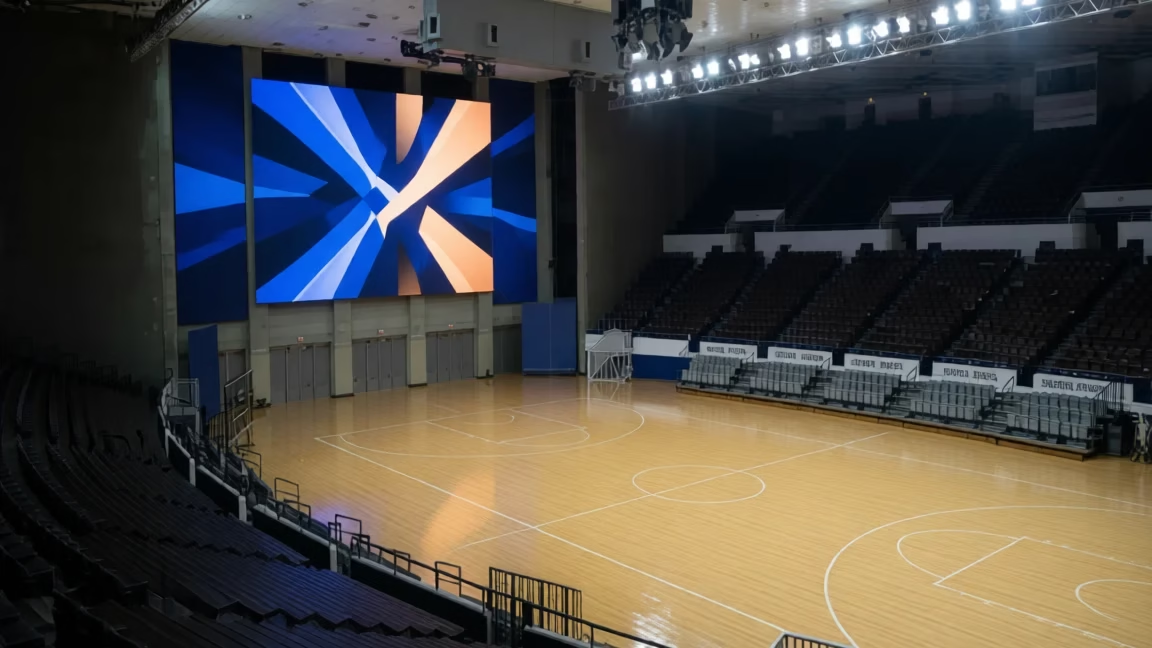
A P8 indoor LED display is a fixed video wall assembled from 256×128mm long-strip boards that carry 32×16 = 512 lamps on an exact 8.00mm grid — precisely 15,625 pixels per square meter, the cleanest density figure on the whole indoor ladder. It is the widest-spaced indoor class we build: made for arenas, expo halls, distribution hubs and megachurches where the nearest reader stands 16 meters away and the budget buys floor area first.
The class sits at the bottom rung of the indoor hard-board ladder — two steps wider than the P6 indoor LED display collection and far past the fine-pitch shelves that start the family. Outdoors the same grid runs a much brighter twin: the P8 outdoor LED display mother page covers the 5,500-nit IP65 build. If the pitch-to-distance mapping is new, the pixel pitch guide explains the full ladder in one read.
Why does a 20-year-old format still sell? Because the arithmetic never stopped working. At 512 lamps per board — less than a quarter of the lamps on a P6 square — solder count, driver count, power draw and price all drop together. The 2:1 strip ratio also assembles into clean cabinets with no cutting: three strips across make exactly 768mm, four make exactly 1024mm. Nothing about the format fights the building.
Two cabinet families cover the shelf: the 768×768mm box (eighteen strips, 3×6) and the 1024×768mm wide frame (twenty-four strips, 4×6). Both take the same board, the same SMD3528 lamp and the same standard drive — a hall can mix frames without a grid seam.
Service runs from the back by default: boards screw in from behind, which suits the walked corridors and risers that giant halls almost always have. A magnetic front-service option exists for the minority of walls that sit flush against structure — named on the order, priced honestly.
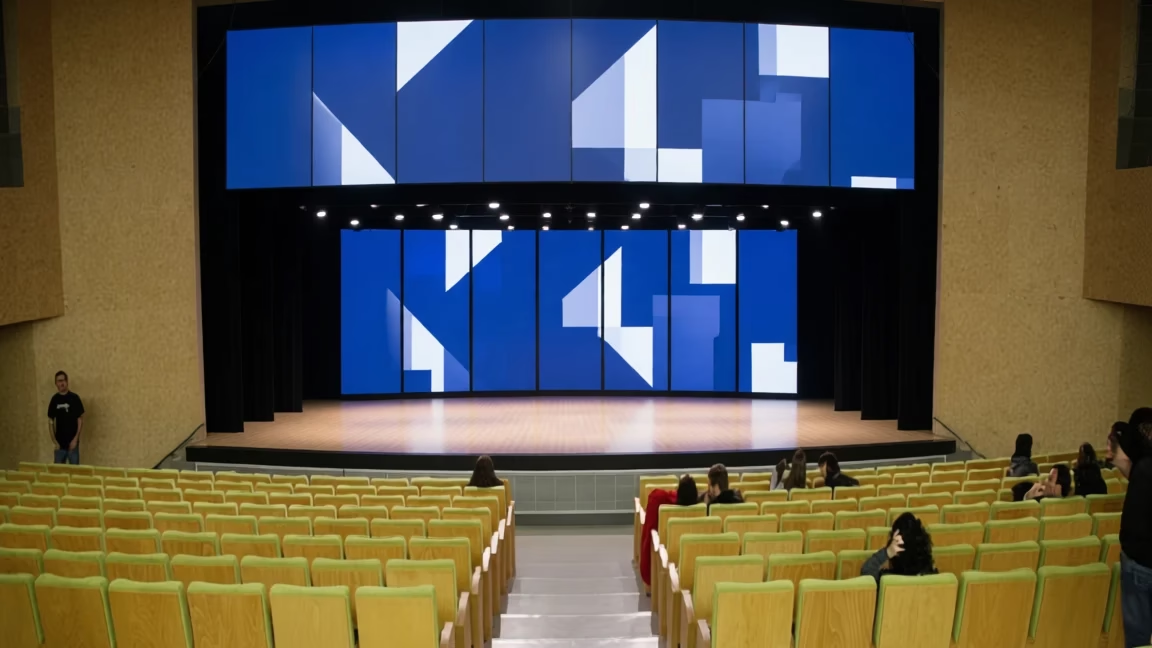
Which builds does a P8 indoor LED display come in?
One board, two cabinet frames, one honest grid. Every build lands on exactly 8.00mm between lamp centers, which is why density stays a clean 15,625 px/㎡ everywhere on the wall.
① The 256×128mm long strip — 32×16 = 512 dots
The board that started the industry. 512 SMD3528 lamps on a 1.6mm fiberglass plate, driven by eight ICs at 1/4 scan or sixteen at 1/8 — the scan pair ships as an order choice, not a datasheet mystery. At roughly thirty strips per square meter, boards alone trade at $1.5–3 a piece, and complete walls land between $90 and $150 per square meter factory-direct — the deepest price floor in the indoor family.
| Module size | 256 × 128 mm (classic long strip) |
| Pixel resolution | 32 × 16 = 512 dots, pitch exactly 8.00mm → 15,625 px/㎡ |
| Scan mode | 1/4 or 1/8 scan — named on the order |
| Driver IC | Standard 16-channel constant-current driver ICs |
| IC count | 8 per board at 1/4 scan · 16 at 1/8 scan (as quoted) |
| Lamp | SMD3528 black-face, ~5000:1 contrast |
| Brightness | 800–1,200 nits — content halls; higher bands by order |
| Maintenance | Screw rear-service standard; magnetic front-service on request |
| Cabinet | 768×768 (3×6 boards) and 1024×768 (4×6 boards), simple iron |
| Uniformity | Whole-wall per-pixel calibration loaded in the factory |
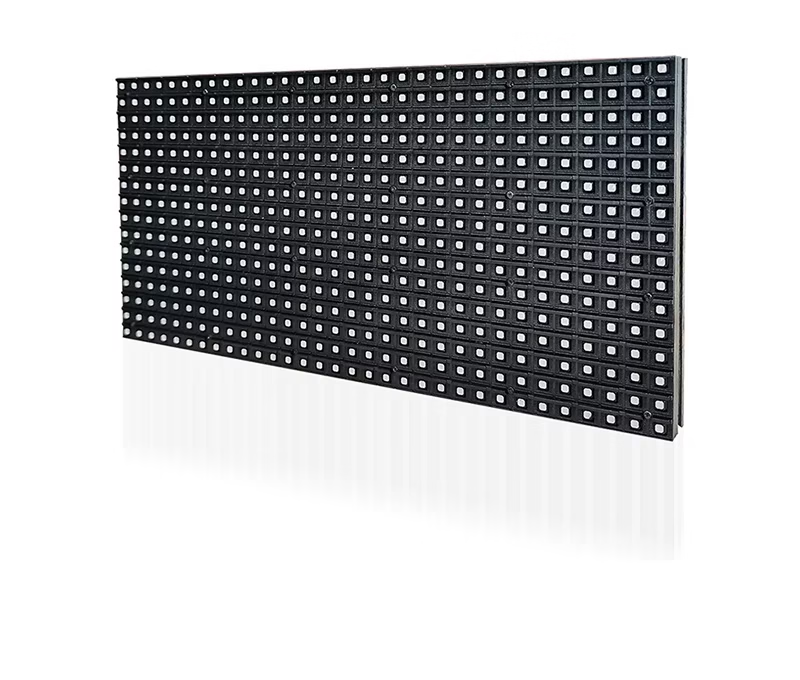
Scan choice prices the board: 1/4 scan carries eight ICs, 1/8 carries sixteen — the quote names both lines.
② 768×768mm volume cabinet — 3×6 strips, 96×96 = 9,216 dots
The workhorse box of the class. Eighteen long strips fill one simple iron frame that two hands carry, and the strip ratio means zero cutting anywhere in the wall. This is the cabinet most giant halls buy: light enough for one-person handling on the install line, priced so the whole wall — boards, boxes, power, basic control — stays under $150 per square meter factory-direct.
| Cabinet size | 768 × 768 mm, simple iron build |
| Modules per box | 3 × 6 = 18 strips |
| Resolution | 96 × 96 = 9,216 dots per box |
| Grid | Exact 8.00mm — no seam step between boxes |
| Service | Rear screws standard; magnet front on request |
| Best for | Volume programs, church lyric walls, expo halls |
③ 1024×768mm wide cabinet — 4×6 strips, 128×96 = 12,288 dots
For long stage backs and concourse runs. Twenty-four strips ride one wide frame, so a 16×5-meter canvas closes in 105 boxes and the joint count drops by a third versus the 768 build. Fewer joints mean fewer places for tolerance to stack — the reason long-wall programs default here.
| Cabinet size | 1024 × 768 mm, simple iron build |
| Modules per box | 4 × 6 = 24 strips |
| Resolution | 128 × 96 = 12,288 dots per box |
| Grid | Exact 8.00mm — identical pitch across both frames |
| Service | Rear screws standard; magnet front named on the order |
| Best for | Wide stage backs, concourse walls, hub boards |
What can a P8 indoor LED display show at 16–26 meters?
Six clips from our own channel show the class at work — big canvases in giant rooms, read from the far rows, serviced from the back.
How does a P8 indoor LED display hold its picture quality?
Quality on this rung is carried almost entirely by the calibration system — and that is by design. With 512 lamps per board, lamp-to-lamp variation across a whole wall stays small enough that whole-wall per-pixel correction, loaded in the factory and refreshed at handover, is what turns hundreds of strips into one canvas. The calibration file is a quote line item and a handover checklist row, both verifiable on site.
The SMD3528 lamp sits behind a black-face package, so a switched-off wall still reads as deep charcoal. Contrast runs near 5000:1 against the inked board, and the 160° cone keeps color steady for readers in the side sections of a wide hall. Grayscale rides the driver set — standard builds carry 8–12 bit — and the 1,920Hz standard drive keeps lyric walls, schedules and presentation decks clean on phones across the full 16–26 meter band.
Wiring stays plain on purpose: power and signal runs are pure copper to GB standard, because the failure modes that plague cheap walls — voltage sag at the far cabinet, ghosting on long runs — trace back to substituted wire more often than to anything on the datasheet. The rear-service design also keeps the face untouched: boards screw in from behind, no tools reach the lamp side, and the front stays factory-flat for the life of the wall.
| Board | 1.6mm FR-4 fiberglass, inked face |
| Contrast | ≈5000:1 black-face SMD build |
| Viewing cone | 160° horizontal / vertical |
| Refresh | 1,920Hz standard drive |
| Uniformity | Whole-wall per-pixel calibration, factory-loaded |
How much power does a P8 indoor LED display use?
The lowest bill on the ladder, again. Each strip board peaks near 1.5W — about 46W/㎡ at full white — and ordinary content lands between 12 and 22W/㎡. Ten square meters running around the clock at 20W/㎡ draw roughly 1,750 kWh a year, near $175 on commercial rates. For 24/7 duty boards, that gap compounds year after year.
| Supply brand | Unit in this class | Role |
|---|---|---|
| Chuanglian Power (创联) | 5V 40A (200W) | Volume build — one unit covers multiple cabinets at this density |
| MEAN WELL (明纬) | 5V 40A (200W) | Specified on programs that name the supply brand |
At 46W/㎡ full white, one 200W supply often carries two 768 cabinets or more, which shrinks the failure domain and the spare shelf. Sizing curves live on the LED display power supply hub; MEAN WELL units start at the MEAN WELL hub.
Which control systems run a P8 indoor LED display?
Two ecosystems cover the class, and duty cycle picks between them. NovaStar racks run event halls and auditoria in real time with whole-wall correction on the receiving cards; Colorlight players carry schedule and signage duty from the cloud, which is why dual-mode boxes dominate church and hub builds. Stay in one family end to end — mixing sender generations on one wall shows up as correction mismatches no field tuning hides.

The yardstick the market calibrates to — senders and receiving cards define whole-wall correction here.

Sync plus cloud-async in one box — the reason dual-mode players own schedule-driven duty.
Receiver and processor pages: NovaStar controllers · Colorlight controllers · control system hub
Colorlight’s own Intelligent Setting walk-through — one of the two ecosystems quoted on this class. Calibration and configuration guides live on the controller pages above.
How do you route a giant hall to the right pitch?
Measure where the nearest eye truly stands — in giant halls that number is bigger than most buyers guess — then pick the rung:
| Nearest reader | Class | Why |
|---|---|---|
| 8–15 m | P4 indoor collection | Detail carries; camera-friendly tier available |
| 10–16 m | P5 indoor collection | Value floor for whole-hall canvases |
| 12–20 m | P6 indoor collection | Widest rung with front-service magnets standard |
| 16–26 m | P8 indoor (this page) | Deepest price floor; rear-service simplicity |
| Past 26 m, weather in play | P10 outdoor collection | Indoor boards stop making sense past the weather line |
Three names decide most giant-hall projects. The honest comparison:
| Row | P6 indoor | P8 indoor | P8 outdoor |
|---|---|---|---|
| Grid | 6.00mm · 27,778 px/㎡ | 8.00mm · 15,625 px/㎡ | 8.00mm · 15,625 px/㎡ |
| Band | 12–20 m | 16–26 m | 16–40 m, weatherproof |
| Brightness | 800–1,200 nits | 800–1,200 nits | 5,500+ nits, IP65 |
| Wall price | $110–180/㎡ | $90–150/㎡ | Outdoor build, quoted |
| Pick when | Nearest eye 12–16 m | Nearest eye past 16 m, budget leads | The wall meets weather |
The weatherproof twin: P8 outdoor mother page.
- The grid never moves. 8.00mm center-to-center on every strip, both frames — density stays exactly 15,625 px/㎡ wall-wide.
- Scan is an order line. 1/4 scan with eight ICs or 1/8 scan with sixteen — the quote names both, the order decides.
- Service runs from the back. Rear screws are the standard path; magnet front exists for flush walls and costs what it costs.
| Indoor hard-board ladder | Grid | Density | Band | Wall price |
|---|---|---|---|---|
| P2.5 indoor | 2.50mm | 160,000 px/㎡ | 5–8 m | $400–700 |
| P4 indoor | 4.00mm | 62,500 px/㎡ | 8–15 m | $180–320 |
| P5 indoor | 5.00mm | 40,000 px/㎡ | 10–16 m | $130–220 |
| P6 indoor | 6.00mm | 27,778 px/㎡ | 12–20 m | $110–180 |
| P8 indoor — this page | 8.00mm | 15,625 px/㎡ | 16–26 m | $90–150 |
| P10 indoor collection | 10.00mm | 10,000 px/㎡ | 20–30 m | $75–125 |
What does a P8 indoor LED display cost?
September 2026 market listing scan: a standard SMD3528 fixed wall — boards, iron cabinets, power, basic control — trades at $90–150 per square meter factory-direct. Boards alone run $1.5–3 per 256×128mm piece, and control adds $500–2,000 per project. Every figure is a market scan, never a quote.
The band follows the board count. At 30.5 strips per square meter, board cost dominates the bill, and the scan choice moves it: 1/4 scan carries eight ICs per board against sixteen at 1/8, which shows up as a few dollars per square meter on volume programs. Structure is the second lever — the 768 iron box keeps the floor number, the 1024 wide frame trades a small premium for fewer joints.
| Line item | Scan figure | Notes |
|---|---|---|
| Boards only | $1.5–3 / 256×128mm piece | 1/4 scan floor; 1/8 adds the second IC set |
| Complete wall | $90–150 / ㎡ | Boards + iron cabinets + power + basic control |
| Control | $500–2,000 / project | Sender + receiving cards; processors quoted by canvas |
| Spares | 3% + matching receiver | Quoted in, not added later |
Size the whole wall in one pass on the LED screen calculator.
Where does a P8 indoor LED display get used?
Eight placements cover the class. The pattern: giant rooms, far rows, content that informs and gathers rather than dazzles.
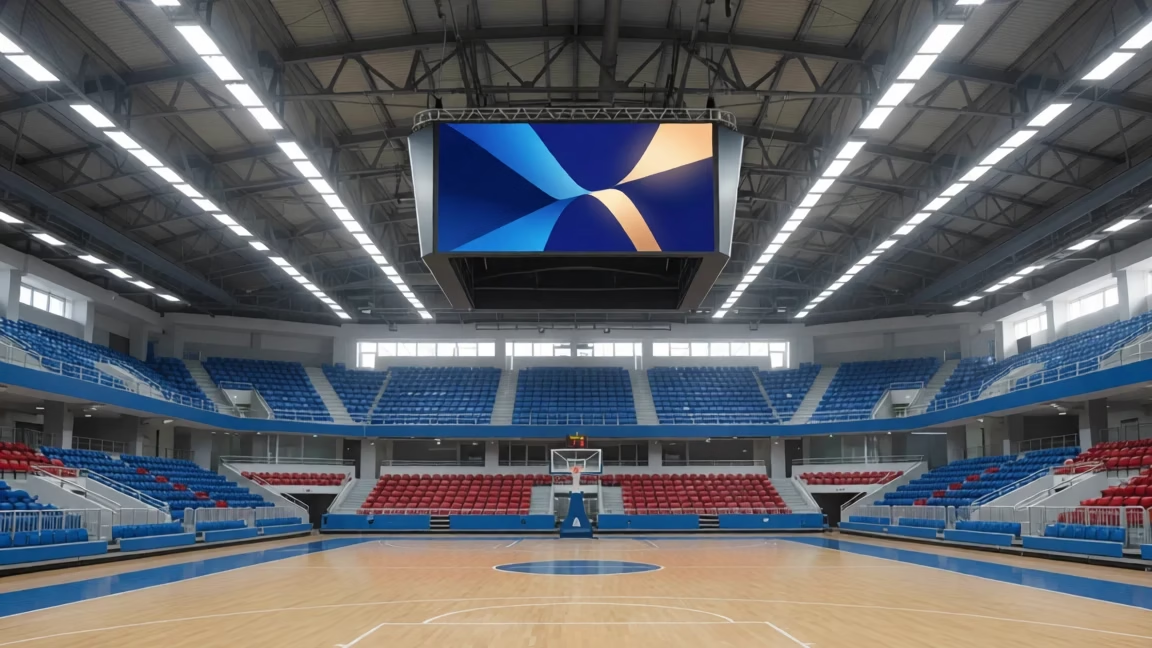
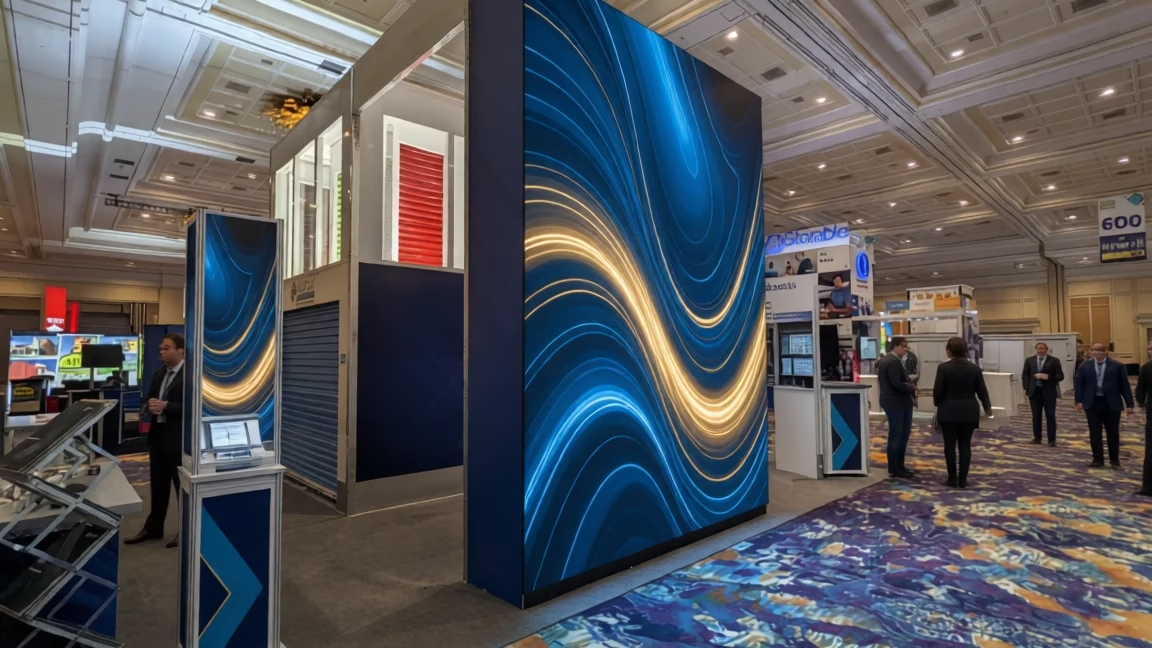
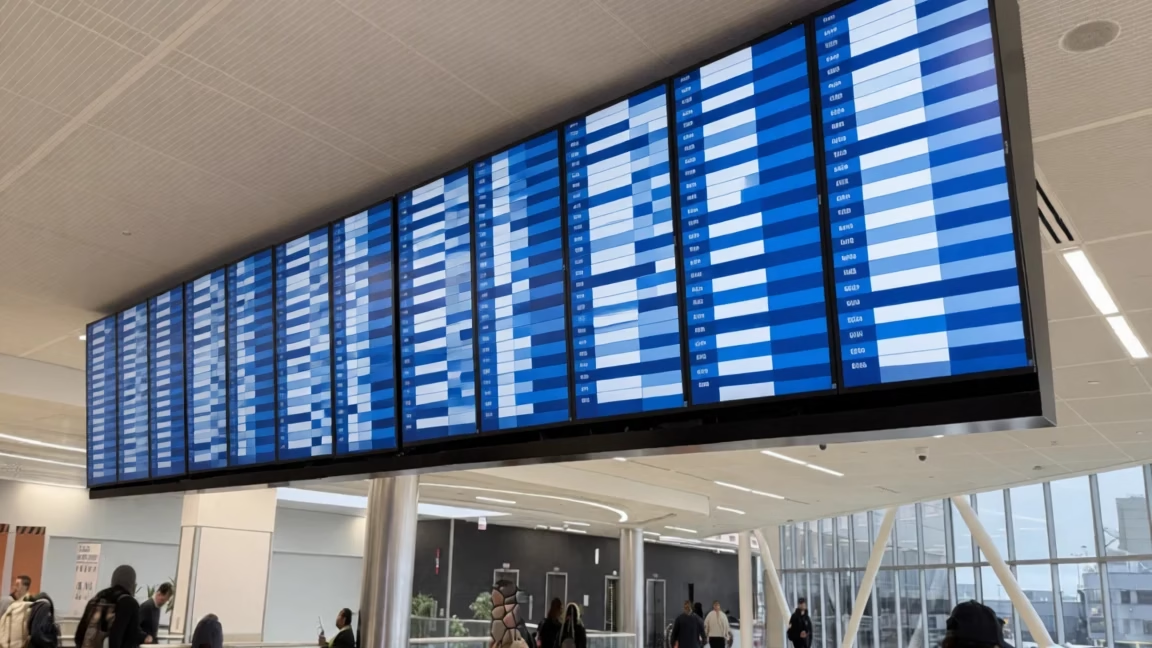
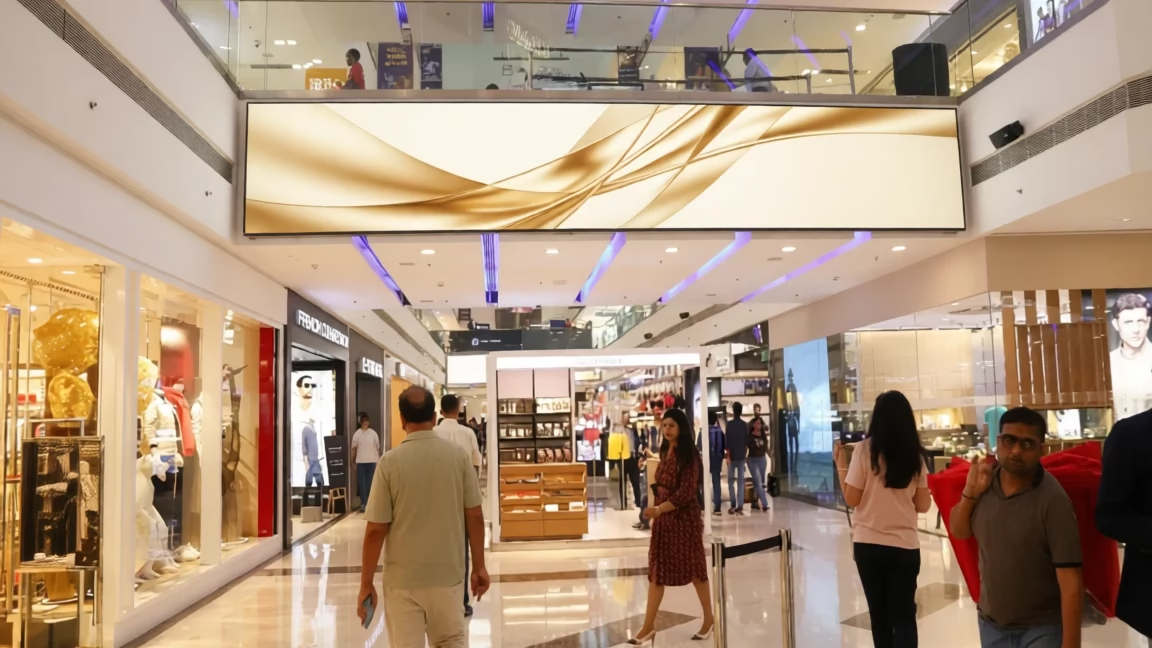
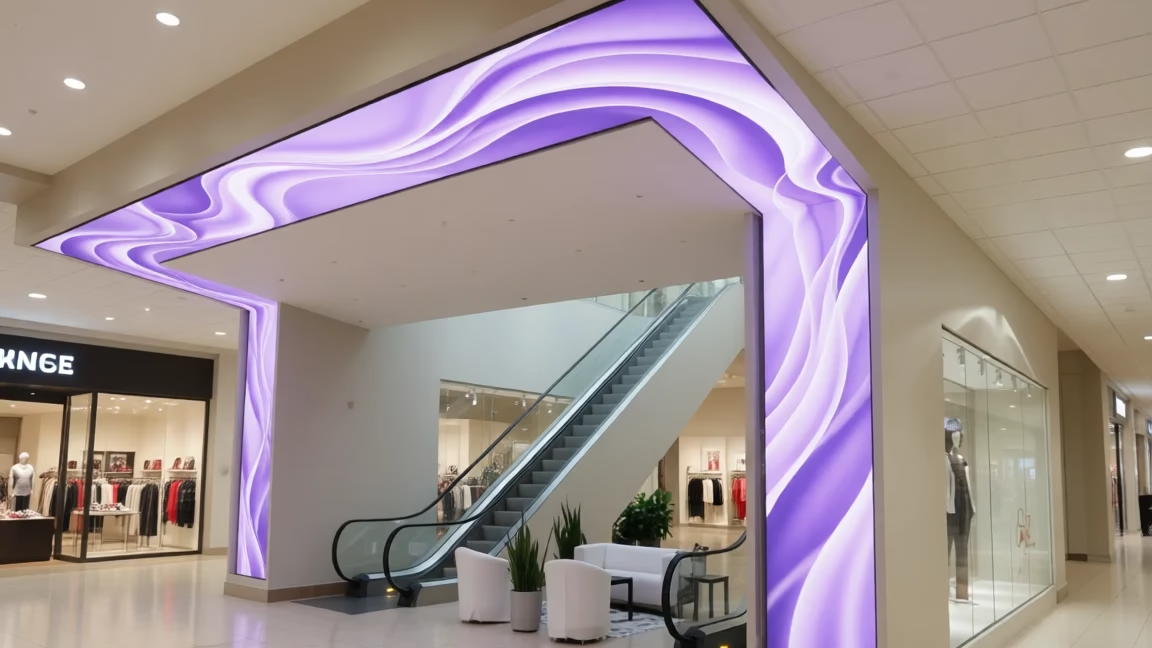

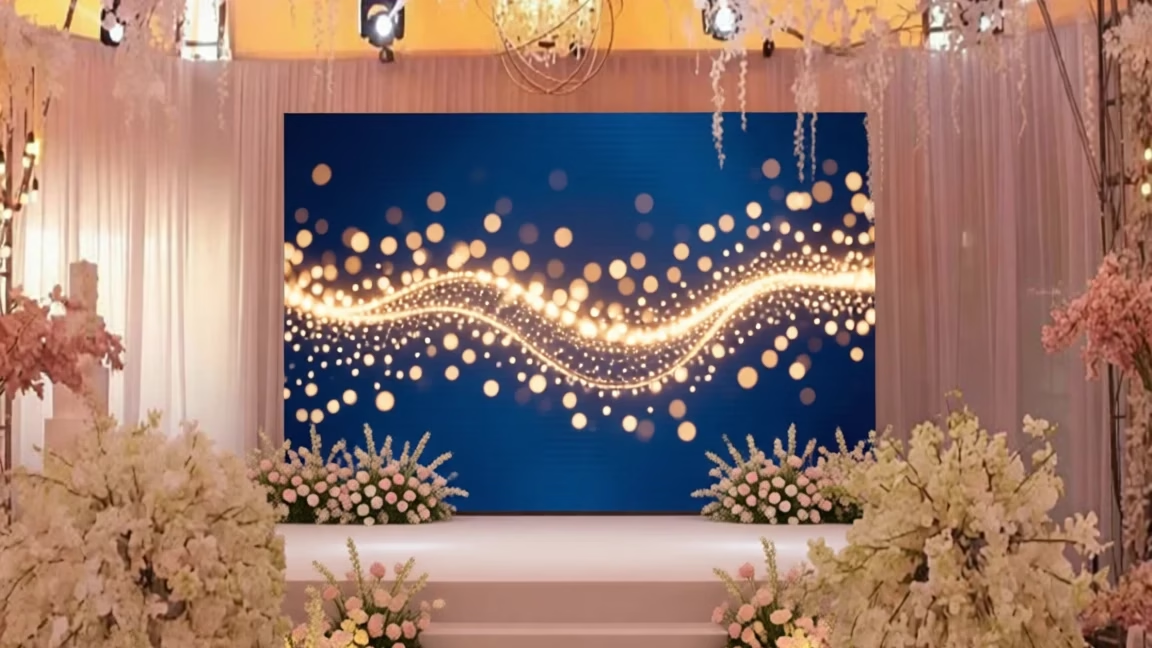
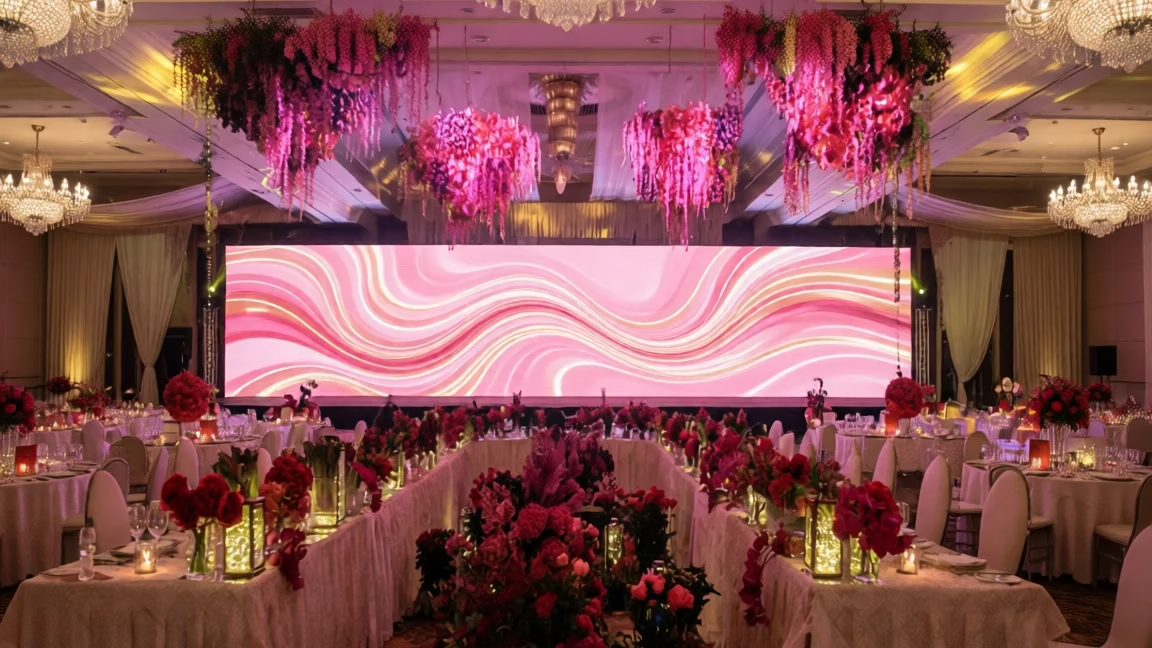
What have real P8 indoor LED display projects looked like?
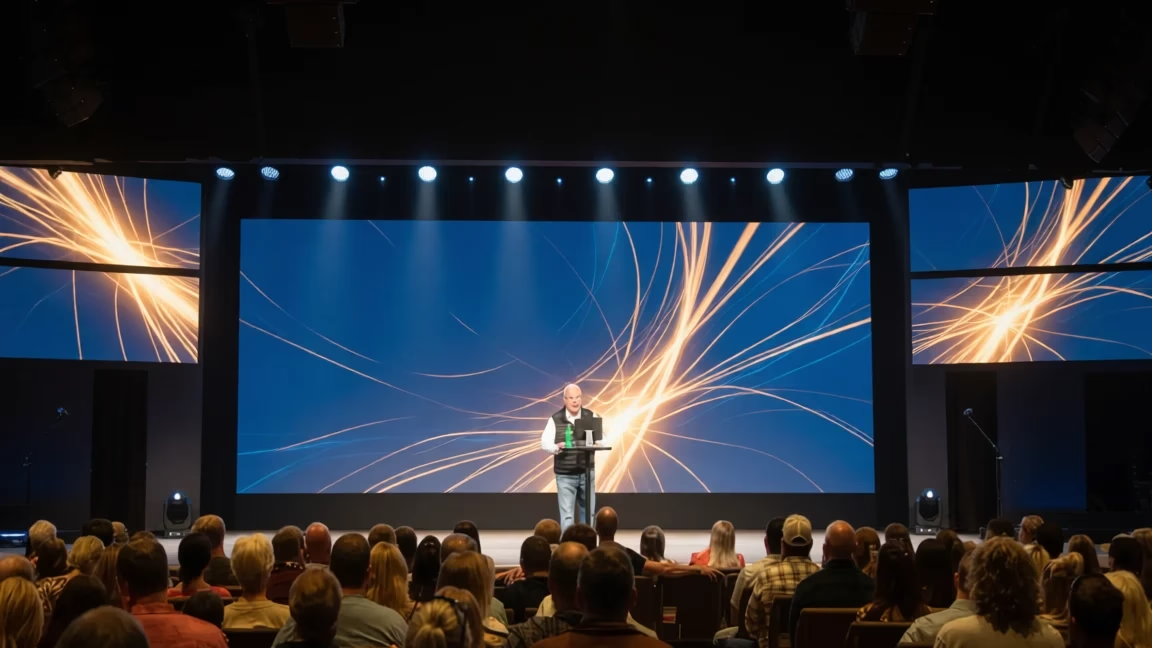
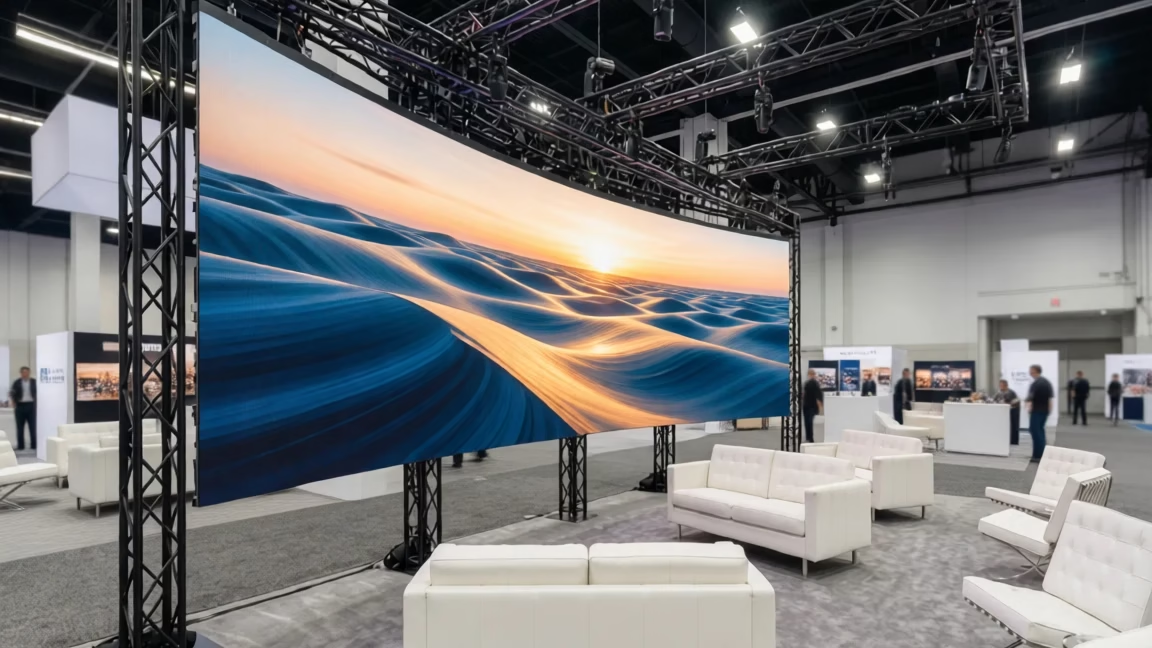
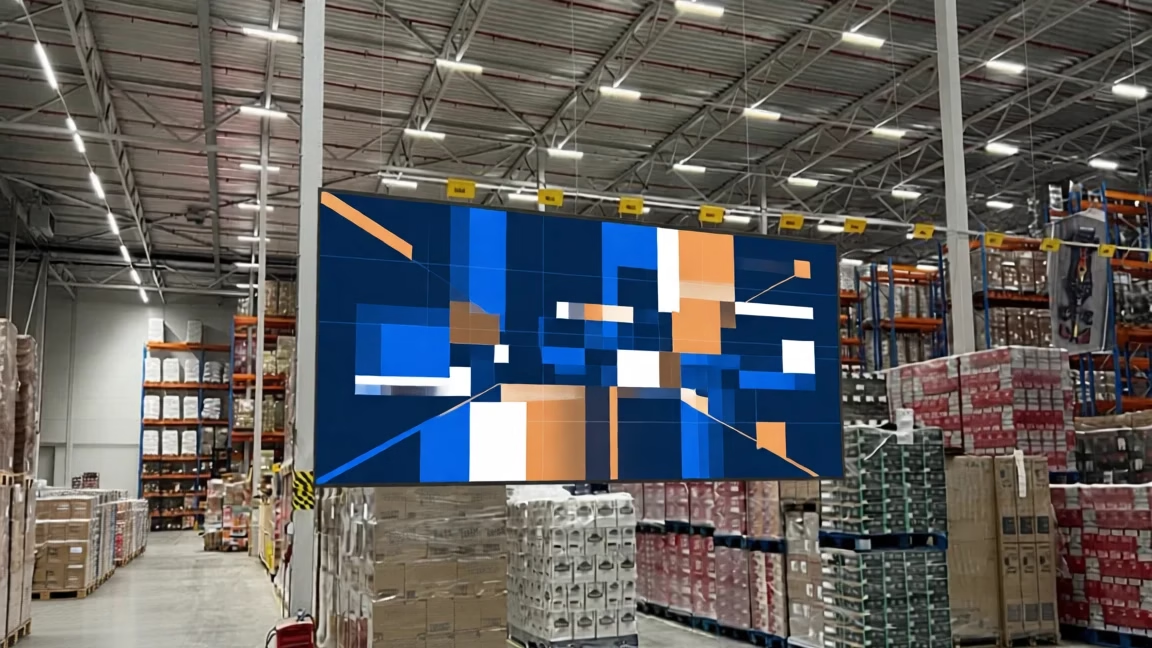
Reference placements matched to regional buying intent across Europe and America — the four scenarios where this class sells best.
P8 Indoor LED Display: Frequently Asked Questions
What viewing distance does a P8 indoor LED display need?
Put the nearest reader at 16 meters or beyond; the class is at home across 16–26 meters, where video, lyrics and schedules all read comfortably. Inside 16 meters the P6 class carries the detail — this rung exists for the far half of giant rooms.
P8 or P6 — how do I pick between the two?
Measure where the closest eye stands. Past 16 meters the 8mm grid shows the same perceived picture as P6’s 27,778 px/㎡, and the step wider converts into roughly a quarter to a third more wall on the same money. Between 12 and 16 meters, P6 earns its premium; past 16, P8 is the honest answer.
Is SMD3528 the only lamp option on a P8 indoor LED display?
Yes for this class — and that is a feature. The classic 3528 keeps the price floor where it is, stays in production for period-correct extensions of older fields, and matches the lamp already on the wall when a legacy P8 grows. Tighter-binned modern lamps belong to the P6 and finer shelves.
1/4 or 1/8 scan — which scan mode should I order?
Both ship on this class and both run the standard 1,920Hz drive. 1/4 scan carries eight driver ICs per board and prices at the floor; 1/8 scan carries sixteen and buys a lighter electrical load per scan line. Volume programs default to 1/4; walls with unusual duty name 1/8 on the order. The quote lists both lines so the choice is explicit.
Rear service or front magnets — which maintenance path?
Rear screws are the standard path on this class — boards come out from behind, which suits the corridors and risers giant halls almost always have. A magnetic front-service option exists for the minority of walls that sit flush against structure; name it on the order and it prices honestly. Either way, 3% spare boards and a matching receiving card close routine faults the same day.
What does a P8 indoor LED display cost per square meter?
Per the September 2026 market scan, $90–150 per square meter factory-direct for a standard SMD3528 wall — boards, iron cabinets, power and basic control. Boards alone run $1.5–3 per piece, control adds $500–2,000 per project. Scans, not quotes.
How long does a P8 indoor LED display last?
Lamps age to half brightness around 100,000 hours — decades at hall duty cycles. What ends walls early is heat and substituted parts: keep the iron cabinets ventilated, run content dimmer than full white (ordinary content sits at 12–22W/㎡ anyway), and buy from the calibrated line rather than the open market. The 3% spare shelf handles random board failures long before the wall ages out.
Can a P8 indoor LED display go outdoors?
Not this build — at 800–1,200 nits it is made for controlled indoor light. The same 8.00mm grid runs a weatherized twin at 5,500+ nits with an IP65 front: see the P8 outdoor mother page for billboards, facades and stadium duty. Same pitch, different life.
Why does the P8 indoor LED display class refuse to die?
The P8 indoor LED display is the oldest pitch on our indoor ladder and the hardest one to retire, because nothing finer has ever beaten its arithmetic. One 256×128mm strip, 512 lamps, an exact 8.00mm grid, 15,625 pixels per square meter — and a per-square-meter figure that undercuts the P6 floor by another twenty percent or so. When a hall measures sixteen meters to the nearest seat, no buyer has ever asked for more pixels there.
What is inside a P8 indoor LED display module?
The strip is a lesson in economy. Sixteen rows of thirty-two lamps ride a 1.6mm fiberglass plate — 512 solder joints where a P6 square carries two thousand. The scan pair lets the order choose eight driver ICs at 1/4 or sixteen at 1/8, and at this lamp count either path runs cool at full white. Wiring is pure copper to GB standard, and whole-wall calibration does the uniformity job the finer classes split between lamp grading and correction. Every part exists to hold the per-square-meter figure down — and it holds.
P8 or P6 — where does the money actually go?
The two collections share control ecosystems, correction pipeline and the same SMD3528 heritage; the grid is the real difference. P6’s 27,778 px/㎡ carries close-seat comfort from 12 meters. P8’s 15,625 px/㎡ concedes nearly half that density and recovers it as price: walls land at $90–150 against P6’s $110–180, boards run $1.5–3 a piece against $2–4, and power drops to 46W/㎡ at full white. On a big canvas the step wider funds a quarter to a third more wall — and past sixteen meters, area is the only thing the audience can see.
Where is a P8 indoor LED display the right call?
Four placements justify the rung. American megachurches that need main and side walls carrying lyrics to the back pews. European trade-fair halls where a canvas has to read across the aisle on a booth budget. Distribution hubs running shift boards around the clock, where 46W/㎡ compounds into real money. And college arenas, where a side-wall scoreboard reads past the far baseline season after season. One rung further the story changes: past the weather line, the same grid continues on the P8 outdoor LED display page, and the longest views belong to the P10 outdoor LED display collection.
What should you check before ordering a P8 indoor LED display?
Six items close a clean order:
- Set the band first — 16–26m keeps you here; inside 16m step to P6, past the weather line weigh the outdoor P8/P10 classes.
- Name the scan per line — 1/4 with eight ICs at the floor price, 1/8 with sixteen where duty asks for it.
- Pick the frame by wall shape — 768 boxes for volume programs, 1024×768 frames where joint count matters.
- Confirm the rear walkway — rear service needs corridor access; flush walls order the magnet-front option instead.
- Keep the wire honest — GB-standard copper on power and signal; the cheapest insurance in the build.
- Put 3% spares and a receiver in the quote — the shelf that turns faults into non-events.
The bottom line
The P8 indoor LED display is not the sharpest wall we build — it is the one that says yes where every finer class says no: giant rooms, long runs, tight budgets, old fields that deserve a clean extension. One strip, one exact grid, the family’s deepest price floor. That arithmetic kept the class selling for two decades, and nothing on the horizon changes it.
Related P8 Indoor LED Display Reading
P6 Indoor LED Display Collection
27,778 px/㎡ on an exact 6.00mm grid — the rung for 12–20 meter halls.
P8 Outdoor LED Display
The weatherized twin — 5,500+ nits, IP65 front, same 15,625 px/㎡.
P10 Outdoor LED Display
The longest-view class for billboards and facades read past 30 meters.
More on the ladder: P5 indoor collection · P4 indoor collection · P6 outdoor collection · screen calculator · pixel pitch guide · power supply hub
Spec Your P8 Indoor LED Display
Send the hall, the nearest seat and the wall size you have in mind. The quote itemizes scan mode, cabinet frame, service path, power brand and the control rack — factory-direct, 3% spares included.
UNIFY LED · Changsha / Shenzhen, China · LED screen manufacturer
Browse our guides: Indoor LED Display Buying Guide