
CIOE 2026 LED Display Recap: Micro LED Moves From Lab to Production Line
CIOE 2026 LED display coverage starts here, because the 27th China International Optoelectronic Exposition — held September 9–11, 2026 at the Shenzhen World Exhibition & Convention Center (Bao’an) — delivered the clearest public status check yet on how Micro LED moves from laboratory demos to volume production. The China International Optoelectronic Exposition (CIOE) is the world’s largest trade show for the optoelectronics supply chain, spanning optical communications, precision optics, lasers, infrared, sensing and — the part this recap tracks — new display technologies. This year the show ran jointly with two co-located events for the first time, and its display halls told a specific story: red Micro LED chips on 8-inch wafers, single-green light engines shipping in volume, 10,000-PPI-class micro-displays, and automotive cabins plus AR glasses named as the two exit routes to market.
Short answer: The 27th CIOE closed on September 11, 2026 with 260,000 ㎡ of exhibition space, 4,060+ exhibitors and 189,755 professional visitors across 98 concurrent forums (organizer figures). On the display side, the headline was industrialization: organizers summarized Micro LED as moving “from lab to production line,” with 8-inch red chip breakthroughs and single-green light engine modules entering volume delivery. Crystal Optech debuted a VHG waveguide plus Micro-LED multicolor solution, and a dedicated micro-display forum put LEDoS and OLEDoS yield and cost bottlenecks on the table. For commercial LED display buyers, the practical payoff arrives indirectly but surely: as transfer, inspection and packaging processes scale, fine-pitch product cost curves keep bending in buyers’ favor over the next 12–24 months.
What Was CIOE 2026? The Scale of the 27th Optoelectronics Expo
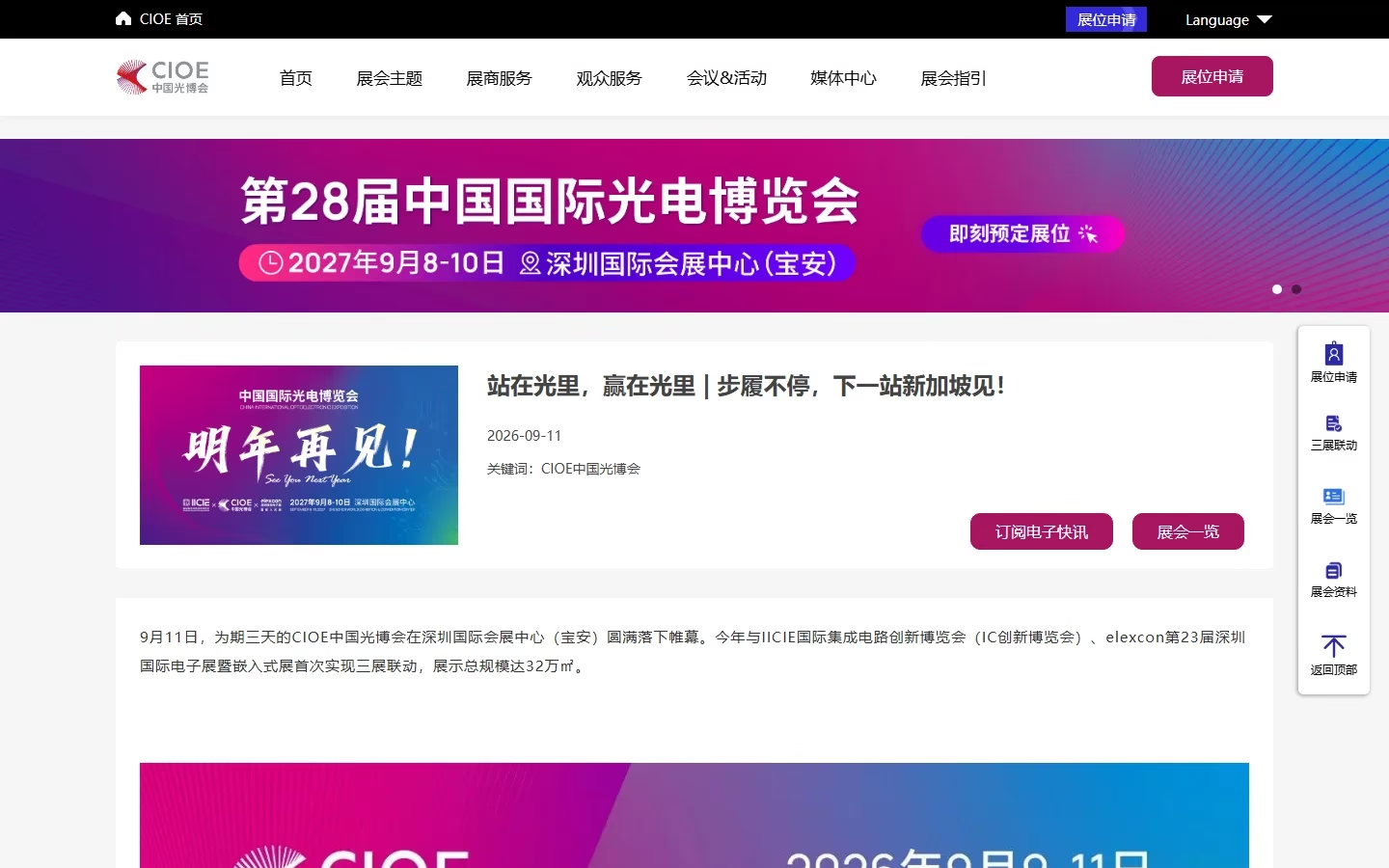
CIOE 2026 was the 27th edition of the Shenzhen-based exposition, and the first to run as a triple-show combination: CIOE itself, the IICIE International IC Innovation Expo (upgraded from the SEMI-e Shenzhen semiconductor show), and elexcon, the 23rd Shenzhen International Electronics Fair for embedded systems. The organizer’s closing report put the combined footprint at 320,000 ㎡. The show’s stated theme was “Light + AI,” and the day-two report described the floor as focusing on “AI-enabled optoelectronics” across materials, equipment and system solutions.
How large was the event in hard numbers? The organizer’s official 2026 figures, published on the CIOE site, are the safest citation set:
| Indicator | Figure | Source |
|---|---|---|
| Exhibition area (CIOE proper) | 260,000 ㎡ | CIOE organizer, 2026 post-show data |
| Exhibiting companies | 4,060+ | CIOE organizer, 2026 post-show data |
| Professional visitors | 189,755 | CIOE organizer, 2026 post-show data |
| Concurrent conferences and forums | 98 | CIOE organizer, 2026 post-show data |
| Combined footprint of the triple show | 320,000 ㎡ | CIOE closing report, Sept 11, 2026 |
| Visitors over three days (all three shows) | 325,810 | TrendForce recap published by CIOE, Sept 17, 2026 |
Four facts put those numbers in context:
- First-ever triple show. CIOE, IICIE and elexcon shared one venue, framing a single “optoelectronics + semiconductor” supply chain from chips to systems.
- Display is one of eight themed expositions. The new display section sits alongside information communication, precision optics, camera technology, laser and intelligent manufacturing, infrared and ultraviolet, intelligent sensing, and AR & VR.
- Upstream, not downstream. Unlike integrator-focused shows, CIOE’s display halls concentrate on panels, chips, materials and manufacturing equipment — the supply side of the LED display industry.
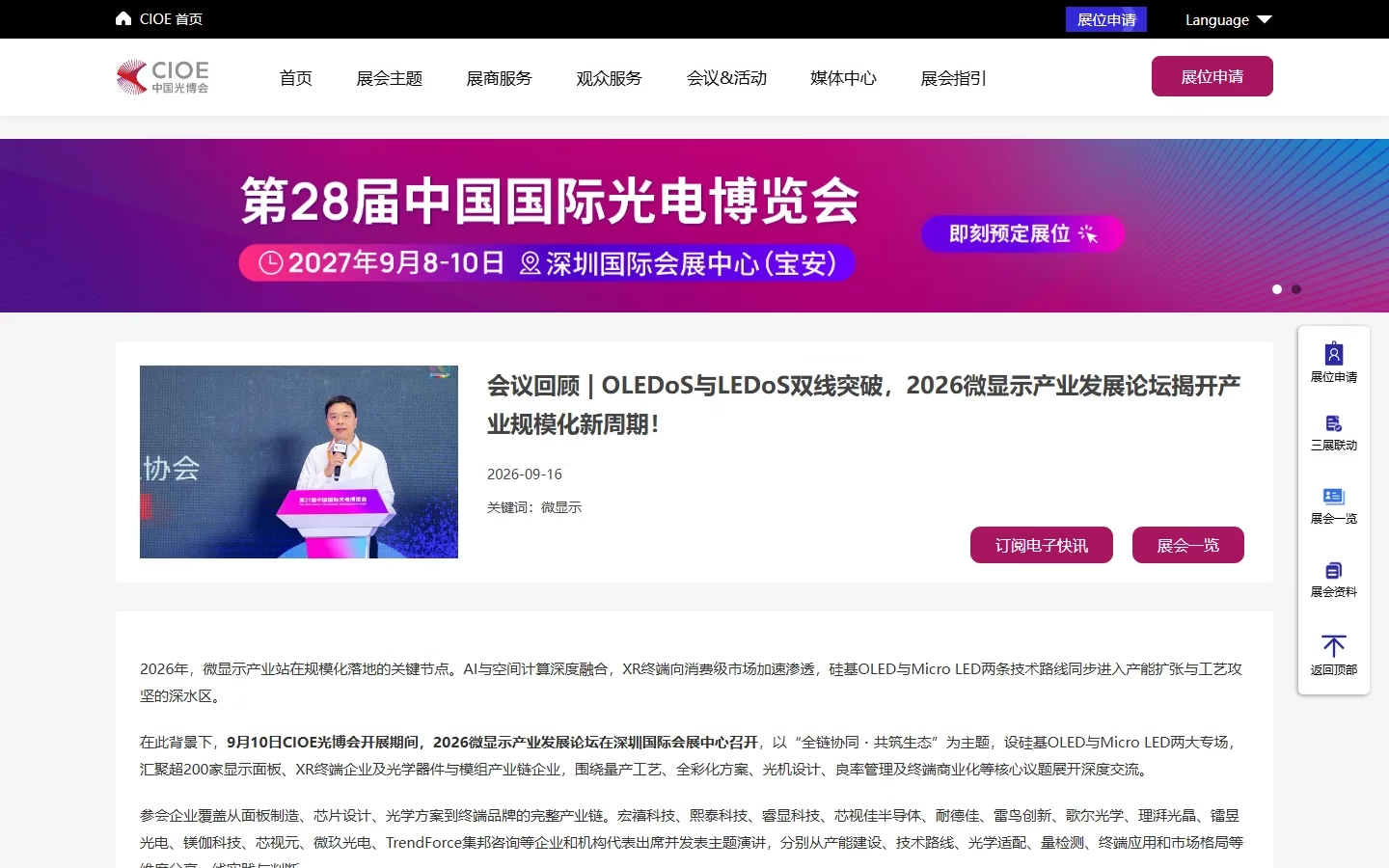
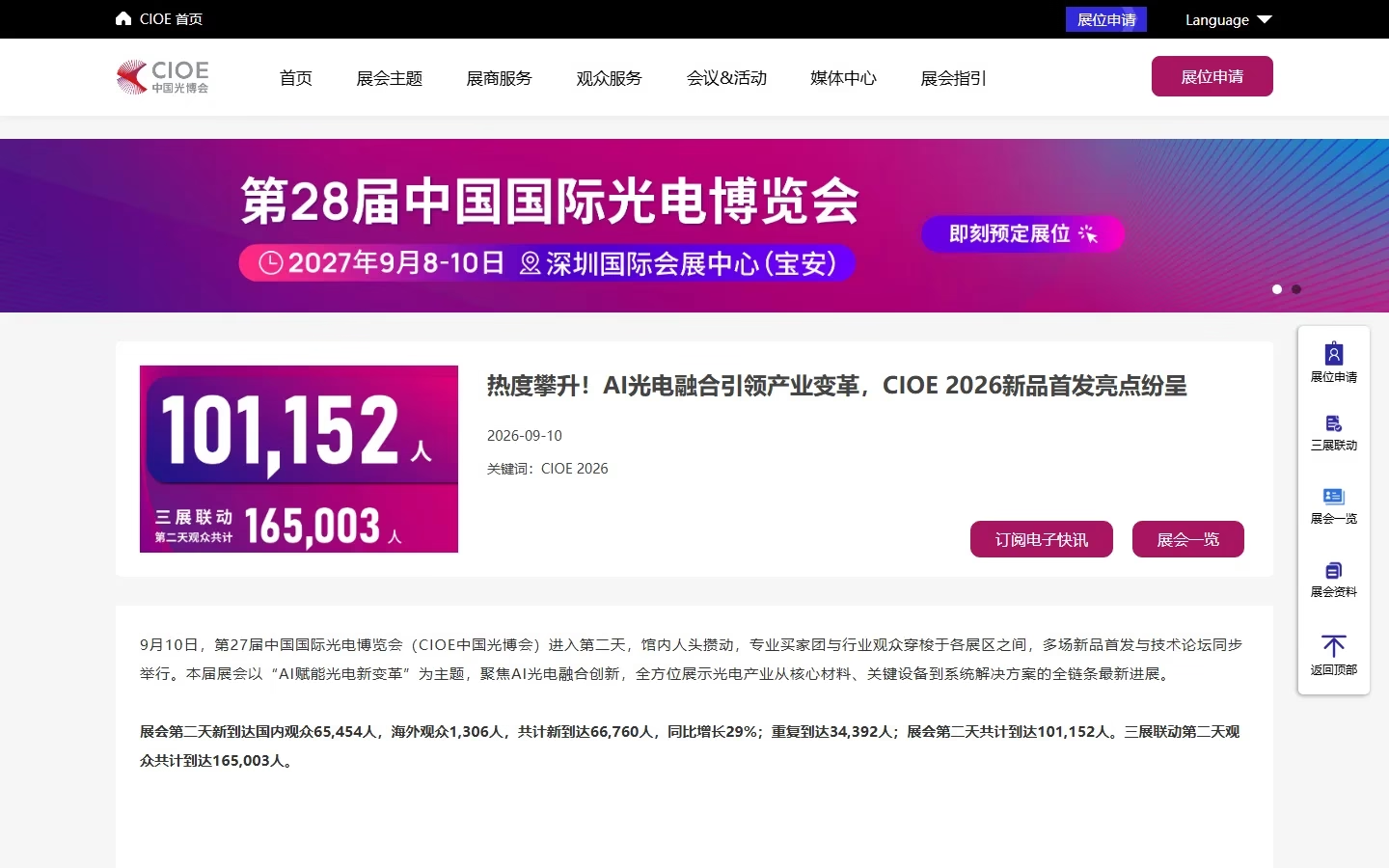
- Attendance set a record. The day-one report counted 101,741 entries on September 9 alone, with total attendance up 38% year over year (organizer figures).
How Did Micro LED Move From Lab to Production Line at CIOE 2026?
Micro LED is a display technology that uses microscopic inorganic light-emitting diodes, each an individually placed III–V chip, to form each sub-pixel of an image. At CIOE 2026 the organizer’s closing report described the technology’s status in unusually concrete terms: Micro LED is moving from laboratory demonstration to production lines, with breakthroughs in 8-inch red Micro LED chips, ultra-small-pixel-pitch micro-displays, and single-green light engine modules entering volume delivery, while automotive and AR near-eye display are cited as the core application directions.
That summary matched what exhibitors actually debuted. On day one, Crystal Optech (水晶光电) showed a multicolor display solution pairing a VHG volume-holographic waveguide with Micro LED — a global debut. Westlake Yanshan (西湖烟山) presented its “Weimang” (Micro-Gleam) light engine at the 10,000-PPI class. CHIPDISPLAY (&33455;屏半导体) made its CIOE debut with hybrid-bonding process lines for AR micro-displays, and Weijiu Optoelectronics (&24494;玖光电) showed a full-stack Micro-LED solution that appeared in both day-one and day-two reports. Day two added Biel Crystal (&20271;恩光学) with UTG ultra-thin glass, a 65-inch LCD spatial display from 智聚芯联, and AI+AR glasses from 蒙通智能 and 首镜科技.
Micro LED milestones shown on the CIOE 2026 floor
| Milestone | Company | Why it matters for display buyers |
|---|---|---|
| 8-inch red Micro LED chip breakthroughs (organizer trend summary) | Multiple supply chain players | Red is the hardest RGB color to make efficient at micro scale; larger wafers cut unit cost |
| Single-green light engines in volume delivery | Unnamed in organizer report; module suppliers | First RGB channel to reach volume production economics |
| 10,000-PPI-class “Weimang” light engine | Westlake Yanshan | Pixel density ceiling keeps rising for near-eye and premium applications |
| Hybrid bonding for AR micro-displays | CHIPDISPLAY (first CIOE appearance) | Bonding yield is a direct input to fine-pitch cost |
| Full-stack Micro-LED solution | Weijiu Optoelectronics | Vertical integration shortens the path from wafer to module |
| UTG ultra-thin glass | Biel Crystal | Carrier and cover materials for bendable and near-eye formats |
One chip-level spillover deserves a note: the TrendForce recap published by CIOE highlights a Micro LED CPO joint laboratory between 兆驰半导体 and Hunan Normal University, targeting trial production in 2028, plus a silicon-based GaN Micro LED light source from 晶湛半导体 with 1.6 GHz bandwidth and sub-1 pJ/bit energy per bit for short-reach optical interconnect. Micro LED is becoming a component for data communications as well as a display technology — which widens the industrial base funding the same epitaxy and transfer processes display makers depend on.
What Did the Micro-Display Forum Reveal About LEDoS and OLEDoS?
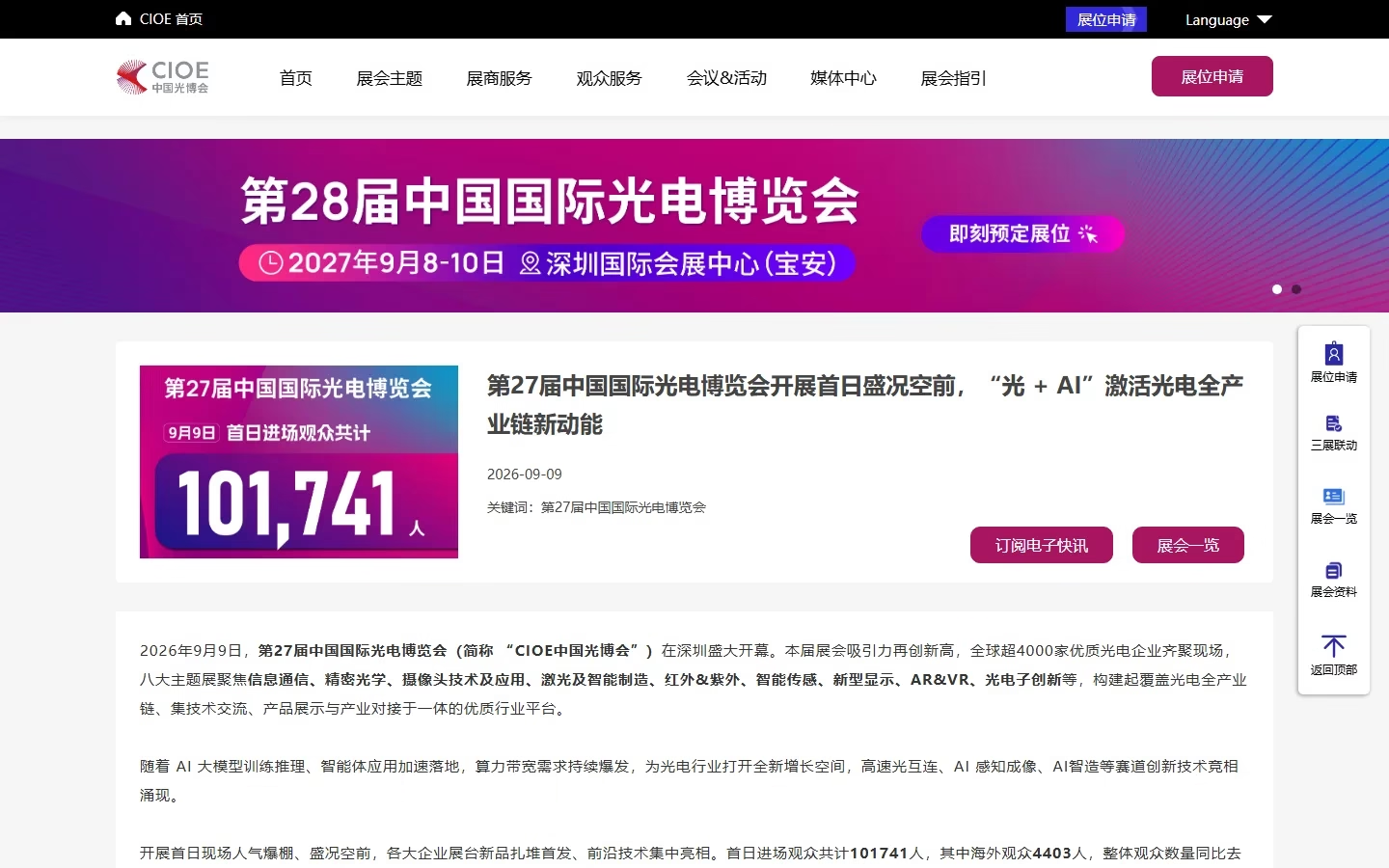
LEDoS is a micro-display approach that forms each pixel with self-emissive Micro LED pixels fabricated directly on, or transferred onto, a silicon CMOS backplane. OLEDoS is the rival approach that places organic light-emitting diodes on a silicon backplane. On September 10, the 2026 Micro-Display Industry Development Forum (“Full-Chain Collaboration, Building the Ecosystem Together”) ran both tracks side by side at the Shenzhen venue, with more than 200 supply chain companies attending and 13 speakers presenting.
On the OLEDoS side, the reported theme was capacity upgrading from 8-inch to 12-inch wafer lines. 宏祿科技 shared its 12-inch OLEDoS line construction and production ramp experience, while 煞泰科技, 睡显科技 and 芯视佳半导体 covered capacity planning and technology route evolution. Peng Jianfeng, deputy head of the China Video Industry Association, framed 2026 — the opening year of the 15th Five-Year Plan period — as a defining commercialization window, calling on the industry to break through yield, material and equipment bottlenecks.
On the LEDoS side, the quantum-dot route took the stage: Raysolve (&39242;昋) founder and CEO Zhuang Yongzhang presented the company’s quantum-dot full-color Micro LED light engine, built on a quantum-dot photolithography route. 歌尔光学 addressed the optical design challenges of Micro LED inside AR light engines, 理浒光晶 covered mass production of geometric optical waveguides for consumer AR glasses, and 镁伽科技 presented AI-based inspection and yield management. TrendForce senior research vice president Qiu Yubin closed with a market view on the commercialization inflection point for AR glasses.
The shared verdict, as reported by the organizer: mass-production yield, full-color conversion and cost control remain the common bottlenecks, and the industry’s task is crossing from “usable” to “good to use.” For buyers of mainstream large-format displays, why does a forum about near-eye micro-displays matter? Because the yield problems are shared. Mass transfer, bonding, inspection and repair processes developed for LEDoS panels are the same process families that fine-pitch direct-view products depend on. As those processes mature, the cost curve of COB LED display products — chip-on-board packaging that mounts bare LEDs directly onto the board — keeps improving, which is precisely the mechanism our COB price analysis documented earlier in 2026.
Why Are Automotive and AR the Exit Routes for Micro LED?
The organizer’s closing report named automotive and AR near-eye display as the two core application directions for Micro LED, and both had dedicated programming at the show. The automotive signal came through the 2026 Light + Smart Vehicle Innovation Technology Forum (September 10, co-hosted by CIOE and OE汽车), where eleven organizations presented, including Great Wall Motor, Valeo and ams OSRAM. The cockpit display agenda covered flexible curved transparent screens, hyperspectral imaging, eye-protection display systems and “magic window”-style interactive cabins — form factors that demand the high brightness, high reliability and irregular geometry that Micro LED pixel structures are built for.
The AR signal ran through the micro-display forum described above: waveguide-plus-light-engine architectures from Raysolve, 理浒光晶 and 歌尔光学, terminal-brand positioning from RayNeo (&38647;鸟创新), and the TrendForce commercialization inflection analysis. For the direct-view LED display industry, neither route is a replacement market. Both are volume factories for the same underlying technology: smaller pixels, higher brightness density, tighter binning and better inspection. That is capacity and know-how that eventually diffuses into fine-pitch commercial products — the same transmission pattern we tracked in the H1 2026 earnings roundup, where the equipment and packaging layer posted the sector’s steepest growth while screen makers competed on integration and verticals.
There is also a qualification angle. Automotive programs demand temperature cycling, vibration tolerance and long-hour brightness stability, and suppliers that certify against those standards tend to carry the same discipline into their commercial product lines. Buyers evaluating outdoor or vehicle-mounted LED displays can borrow a page from that playbook and ask which automotive-grade processes — binning, burn-in, conformal coating — have already migrated into the products they are quoting.
What Do CIOE 2026 LED Display Signals Mean for Display Buyers?
Strip away the expo language and the 27th CIOE leaves commercial display buyers with a short list of actionable readings:
| Signal from CIOE 2026 | Buyer action over the next 12–24 months |
|---|---|
| Micro LED transfer, bonding and inspection processes scaling toward production | Expect the fine-pitch and COB price curve to keep declining; time large fixed-installation purchases to the tender cycle rather than pre-buying |
| 8-inch red chip and single-green engine volume progress | Watch RGB cost parity milestones; treat current Micro LED commercial products as early-adopter priced |
| Automotive-grade qualification work (temperature, vibration, brightness density) | Ask outdoor and vehicle-mounted suppliers which automotive-grade processes have migrated into their product lines |
| Yield management and AI inspection presented as production tools | Question suppliers about defect-rate warranties and dead-pixel policies rather than headline pitch alone |
Context helps here. The application side of the LED display business — stadium installations like the World Cup 2026 LED display deployments, premium venues converting to LED cinema screens, and conference rooms standardizing on LED all-in-one displays — continues to generate the order flow that funds upstream capacity. The earnings data in our H1 2026 LED display industry roundup already showed the upstream capturing outsized profit growth. CIOE 2026 indicated where that capacity is being directed next.
If you are planning a procurement cycle in this window, it pays to work with a LED screen manufacturer that tracks the upstream supply chain closely enough to pass cost improvements through as they land, rather than waiting for technology transitions to settle before quoting.
Where Does the LED Display Industry Go Next After CIOE 2026?
The organizer already published the next stops. APE 2027 (Asia Photonics Expo) runs March 3–5, 2027 at the Sands Expo & Convention Centre in Singapore, where the three-show format — photonics, semiconductor and electronics — will repeat outside China for the first time (the 2026 edition drew 353 exhibitors and 5,586 professional visitors). The 28th CIOE returns to the Shenzhen World Exhibition & Convention Center on September 8–10, 2027, per the organizer’s current listings.
Between now and then, the markers to watch are the ones the 27th show put on the board: 8-inch red chip yield, single-green to full-RGB light engine conversion, hybrid bonding throughput, and the price quotes that follow. The CIOE 2026 LED display story, in one sentence, is that the upstream half of the industry has stopped debating whether Micro LED industrializes and started publishing the dates.
References & Sourced From: CIOE 2026 LED Display Coverage
- CIOE official site — 2026 post-show figures (260,000 ㎡, 4,060+ exhibitors, 189,755 professional visitors, 98 forums)
- CIOE day-one report, Sept 9, 2026 — attendance and day-one debuts
- CIOE day-two report, Sept 10, 2026 — new product launches and display debuts
- CIOE closing report, Sept 11, 2026 — triple-show scale and Micro LED trend summary
- 2026 Micro-Display Industry Development Forum recap, Sept 16, 2026 — LEDoS and OLEDoS tracks
- 2026 Light + Smart Vehicle Innovation Technology Forum recap, Sept 15, 2026
- TrendForce optical communication review published by CIOE, Sept 17, 2026 — 325,810 visitors, Micro LED CPO laboratory
- APE 2027 announcement, Sept 14, 2026 — Singapore, March 3–5, 2027