
How Do 3D Billboards Work? The Naked-Eye 3D LED Guide for 2026
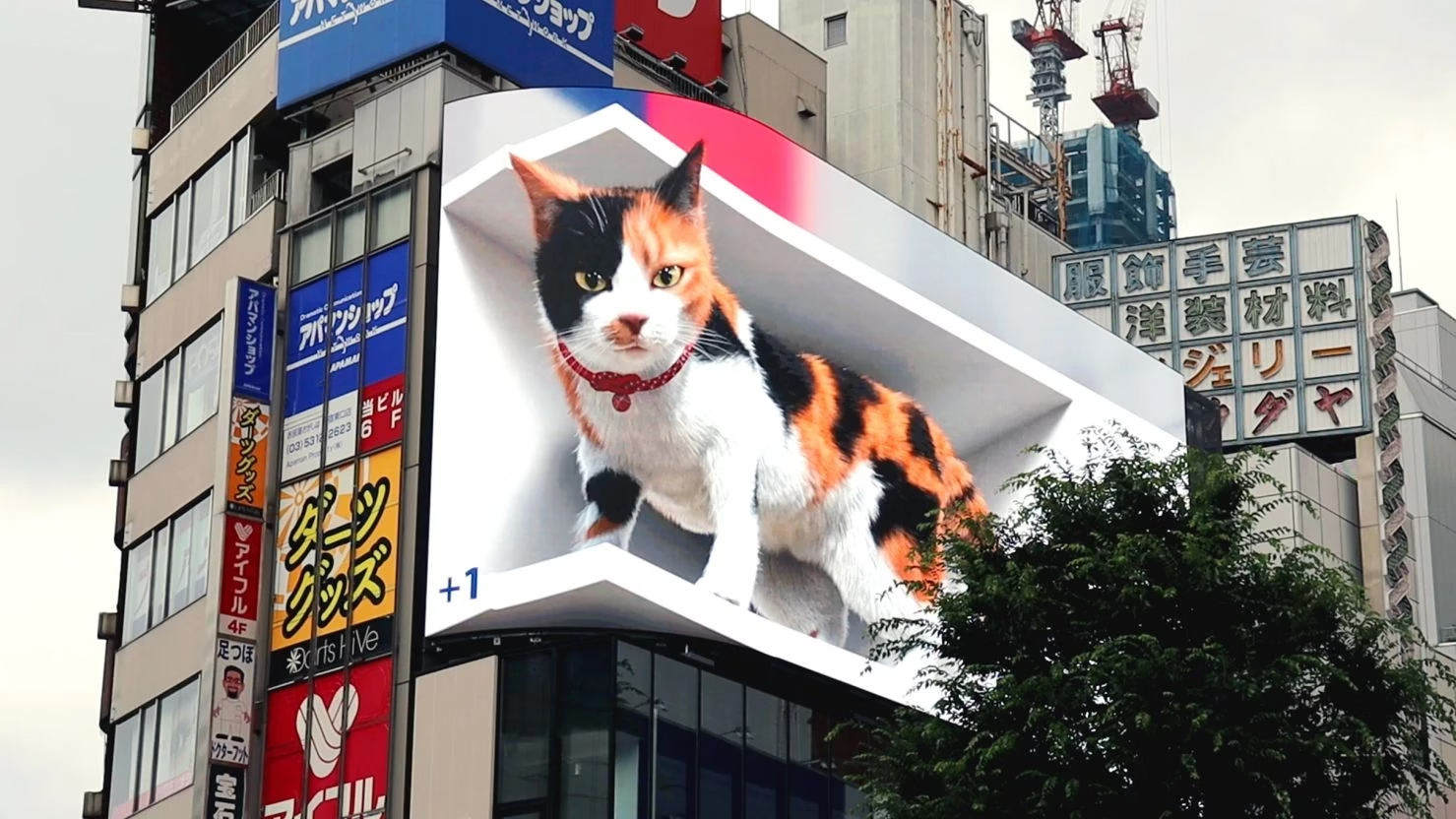
Quick answer: 3D billboards work without glasses by combining anamorphic content, a precisely chosen viewing angle, and a high-brightness LED screen. The content is rendered from the exact perspective of a viewer standing at one spot; when you stand there, your brain reads the distorted image as a solid object breaking out of the frame. The screen itself is a standard high-refresh outdoor LED wall — the 3D effect lives in the content and geometry, not in glasses or holograms.
Pedestrians stop, film, and share when a giant creature seems to climb out of a building. That reaction explains why brands pay a premium for 3D billboard placements: a single well-executed campaign routinely collects millions of organic social views on top of its street impressions. This guide explains how the effect works, where the landmark installations run, what the hardware and content actually cost, and how to produce a 3D billboard that earns the same reaction.
1. What Is a 3D Billboard?
A 3D billboard is a large-format LED advertising screen that plays specially rendered content designed to look three-dimensional to viewers standing at a specific angle — no glasses required. The industry calls the technique naked-eye 3D or anamorphic 3D, and the screens behind it are ordinary outdoor LED video walls built from cabinets, power supplies, and receiving cards.
Two distinctions keep this category honest. First, a 3D billboard is not a hologram: nothing floats in mid-air, and there is no projection into fog or film. The depth you see is an illusion painted on a flat (or curved) surface. Second, it is not stereoscopic 3D like cinema: IMAX 3D feeds each eye a different image through glasses, while a 3D billboard shows one image that looks wrong up close and looks three-dimensional from the sweet spot. (We cover the cinema comparison in our 3D vs IMAX guide.)
2. How Do 3D Billboards Work?
2.1 The Anamorphic Trick: How One Flat Image Becomes Depth
Anamorphic content is rendered from the exact viewpoint of a viewer standing at one spot; when you stand there, your brain reads the distorted image as a solid object breaking out of the frame. Technically, the studio builds a 3D model of the scene, places a virtual camera where the passer-by will stand, and renders the frame through that camera onto the screen’s plane. Everything that should stick out toward the viewer is drawn wider than the frame; everything that should recede is compressed. Your binocular vision and motion parallax do the rest — the same instinct that lets you judge the depth of a coffee cup fills in the missing dimension. Move a step sideways and the illusion should weaken, because your eyes no longer sit where the virtual camera sat; that sensitivity to position is the fingerprint of anamorphic content and the reason site measurement comes first in the production workflow.
2.2 The Viewing Angle: Where the Illusion Lives
The render is locked to one viewpoint, so the illusion lives inside a viewing zone — typically the spot where the screen faces oncoming foot traffic, 30–80 meters back for a large facade. Inside that zone the creature reaches toward you. Outside it, the image visibly stretches and the effect collapses; that distortion is normal, not a defect. This is why 3D billboards favor corners and junctions: two streets of traffic pass through the sweet spot instead of one.
2.3 Corner, Curved, or Flat: Which Screen Shapes Support the Effect?
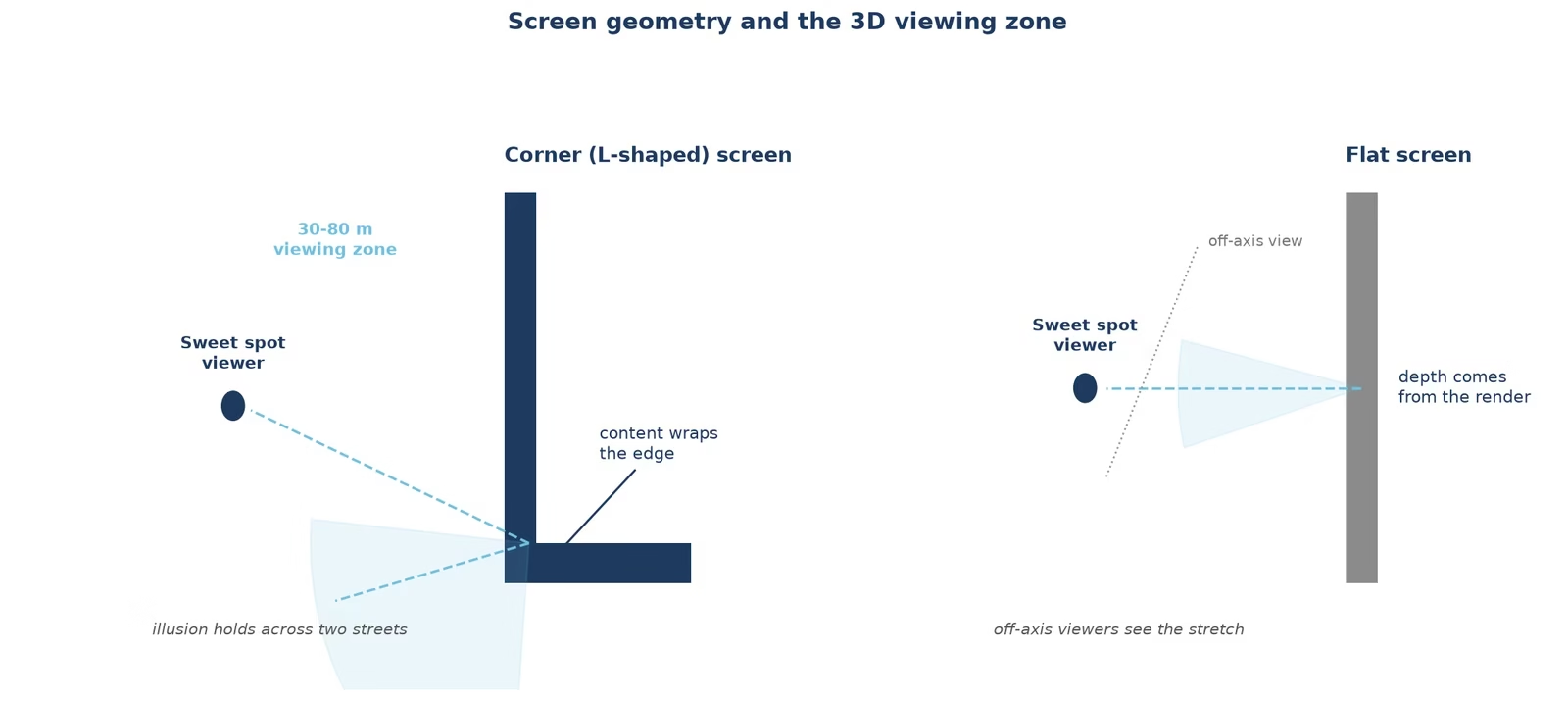
Three physical formats dominate, and each changes how the content is built:
- Corner (L-shaped) screens: two LED faces meet at a right angle, so content can wrap around the edge — an arm can reach “past” the corner. This is the Shinjuku-cat format and the strongest illusion.
- Curved screens: a gentle inward or outward bend replaces the hard corner, softening the perspective seam while keeping depth cues.
- Flat screens: depth comes entirely from rendering; no physical fold helps the trick, so content and viewing angle must be managed more carefully.
Flat screens work — the effect simply leans harder on the render. The clip below shows naked-eye 3D playing on a flat LED wall:
2.4 Why LED Hardware Specs Make or Break the Illusion
The content carries the trick, but the screen decides whether it survives daylight and cameras:
- Brightness: outdoor 3D billboards run 4,000–5,500+ nits so blacks stay dark in direct sun; a washed-out image flattens the depth cues instantly.
- Refresh rate: 1,920–3,840Hz keeps the wall flicker-free on smartphone cameras — and since the campaign’s real audience is online, camera-friendliness is the spec that multiplies reach.
- Pixel pitch: P6–P10 suits facade viewing from 30 meters; the finer the pitch, the closer the sweet spot can sit without visible pixel structure.
- Contrast: deep blacks make the “hole” in the frame read as a hole. Our 3D LED billboard for outdoor advertising pairs 5,000-nit-class modules with high-refresh driver ICs for exactly this reason.
3. Where Are the Most Famous 3D Billboard Examples?
- Cross Shinjuku Vision, Tokyo (2021): the giant 3D cat on a curved corner screen at Shinjuku station — roughly 19 by 9 meters — turned one billboard into a global tourist landmark, and Tokyo now anchors the category’s search demand.
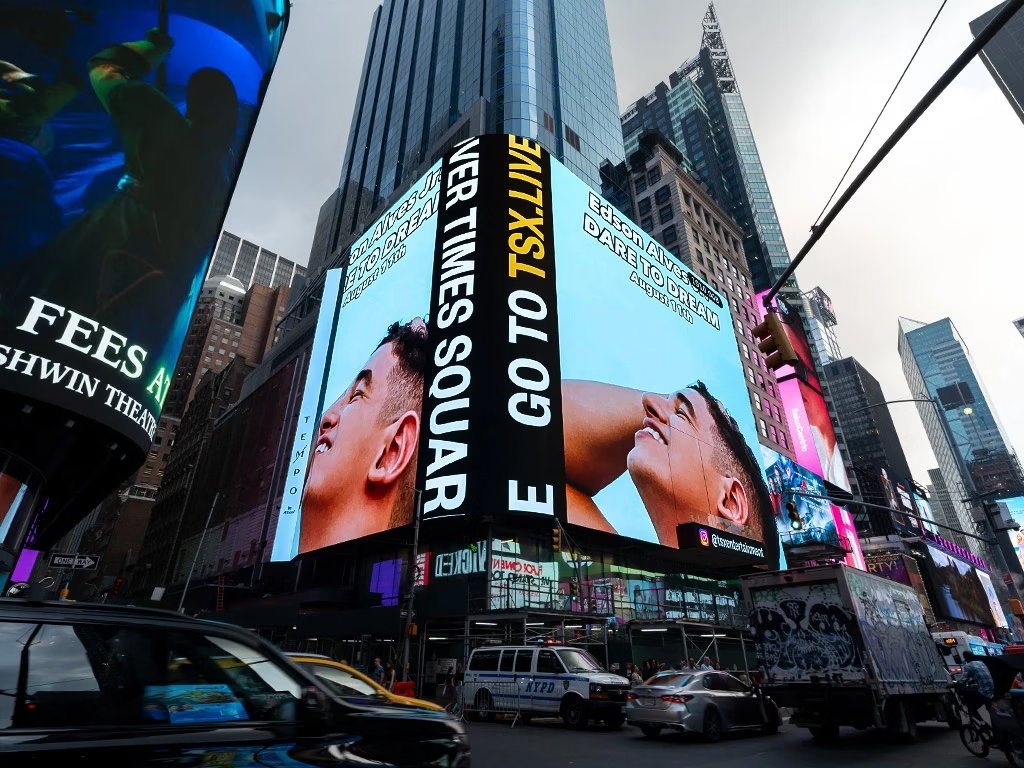
- TSX Broadway, Times Square, New York (2022): a wraparound LED facade of roughly 18,000 square feet that plays anamorphic content to one of the densest pedestrian junctions on earth.
- Nike anamorphic campaigns (2023–2024): Nike’s product-launch 3D spots across Tokyo and New York made the sneaker the protagonist breaking out of the frame.
- The Place, Beijing: a 250-meter ceiling screen running sky-themed 3D content — profiled in our world’s biggest LED screens ranking.
- Mexico City, 5×20 m curved wall: a Legidatech project showing curved naked-eye 3D in daily commercial use.
Watch the three landmark cases side by side:
The Cross Shinjuku Vision cat on its curved corner screen — NHK footage.
A Marvel anamorphic campaign running on the Times Square wraparound screen — by 3D content studio BCN Visuals.
Nike Japan’s own film of the Air Max 1 coming to life outside Shinjuku Station.
4. How Much Does a 3D Billboard Cost?
A 3D billboard budget has three layers, and the hardware follows the same price logic as any outdoor LED wall:
| Layer | What drives it | 2026 reference |
|---|---|---|
| LED hardware | Pixel pitch, size, brightness class | P10 $75–125/㎡ · P8 $90–150/㎡ · P6 $110–180/㎡ |
| Structure & geometry | Corner frames or curved steel add engineering | Quoted per project — corners cost more than flat walls |
| Anamorphic content | 3D modeling + camera-matched rendering per campaign | Quoted per spot; often rivals hardware cost on landmark builds |
Full price math for the flat-wall portion lives in our outdoor LED screen price breakdown. Two budget rules follow. First, rent screen time on an existing 3D billboard before building one — most brands should, because a landmark slot delivers the same filmed-in-Tokyo effect without the capital outlay, and one test campaign tells you whether the format moves your category. Second, if you do build, standardize the cabinet system and driver ICs so future content swaps never require re-engineering the wall; the geometry survey from day one should live with the screen’s documentation, because every future anamorphic render depends on it. For context on general outdoor advertising economics, see our outdoor advertising LED screen guide.
5. How to Make a 3D Billboard That Actually Works?
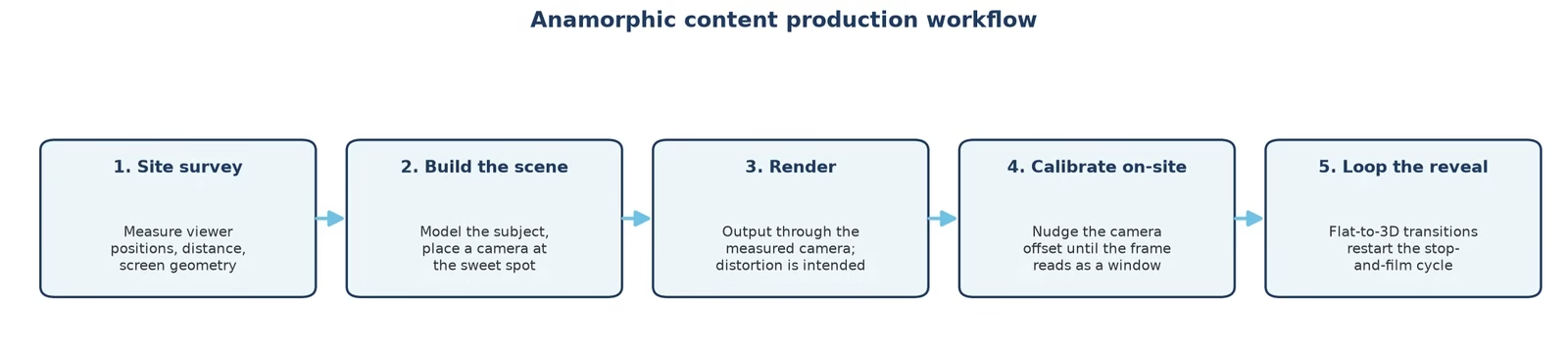
- Survey the site: record the exact viewer positions, distance, and the screen’s physical geometry — corners, curvature, height.
- Model the scene in 3D: build the product or character, then place a virtual camera at the measured sweet spot.
- Render through the measured camera: the output looks over-stretched on a desktop; that distortion is the point.
- Calibrate on-site: play the render and stand in the traffic flow; nudge the camera offset a few degrees until the edge of the frame reads as a window.
- Plan the loop around the reveal: flat-to-3D transitions reset the passer-by’s eye and restart the stop-and-film cycle.
A P8 outdoor 3D billboard in daily operation, for a sense of what the hardware looks like on the street:
A P8 outdoor 3D LED billboard running a campaign guide — Legidatech project footage.
The workflow is content production, not screen installation — which is why brands can rent a 3D-capable wall and commission only the render.
6. How Do You Measure 3D Billboard Effectiveness?
Treat one campaign as two audiences. Street impact shows up as dwell time near the sweet spot and pass-by counts from the site’s own sensors or a mobile-location panel. Online reach is the bigger multiplier: count organic reposts, combined hashtag views, and earned-media pickup, then attribute them to the window the spot ran. A practical scoreboard has four lines — street impressions from the media plan, dwell-time lift at the sweet spot versus the site baseline, organic video views of filmed clips, and branded-search volume in the campaign market — reviewed weekly, not monthly, because 3D creative spikes and decays faster than static out-of-home. Direct response applies mainly to retail-adjacent screens — QR codes break the illusion visually, so keep them on a flat end-frame rather than inside the 3D action.
7. 3D Billboard vs Traditional LED Billboard: Which One Fits the Campaign?
| Dimension | 3D (anamorphic) billboard | Traditional LED billboard |
|---|---|---|
| Content cost | High — every spot is a 3D production | Low — any video or still |
| Viewing zone | Locked to a sweet-spot angle | Readable from any angle |
| Social multiplication | Strong — built to be filmed | Rare |
| Best use | Launches, landmarks, brand films | Always-on availability and price messaging |
Three differences decide the choice:
- Purpose: 3D buys attention and shareability; a traditional wall sells location and frequency.
- Cadence: anamorphic content changes monthly or per campaign; traditional creative swaps in minutes.
- Site logic: the 3D sweet spot demands predictable traffic from one direction — a plain wall forgives any approach.
8. FAQs About 3D Billboards
What is a 3D billboard?
A large LED advertising screen playing anamorphic content that looks three-dimensional from a specific viewing angle, with no glasses required.
How do 3D billboards work without glasses?
The content is pre-rendered from one real-world viewpoint; standing there, your brain fuses the distorted perspective into depth. Cinema 3D feeds each eye a different image — a 3D billboard uses one image and your perception.
Do 3D billboards need special screens?
The screen is a standard outdoor LED wall; what matters is brightness class (4,000+ nits), high refresh (1,920–3,840Hz) for camera-friendliness, and — for the strongest effect — corner or curved geometry.
Why is Tokyo famous for 3D billboards?
The 2021 Cross Shinjuku Vision cat turned a station-side corner screen into a global landmark, and Japanese junctions concentrate the foot traffic that the viewing angle needs.
How much does a 3D billboard cost?
Three layers: LED hardware ($75–180/㎡ by pitch), corner or curved structure, and anamorphic content production quoted per campaign — which often rivals hardware on landmark builds.
Can any LED screen play 3D billboard content?
Technically yes — the file plays anywhere — but the illusion needs the content re-rendered for that screen’s geometry and viewing angle, or it reads as a stretched video.
Do 3D billboards work at night?
Better, actually: ambient light drops, so the same brightness class delivers deeper blacks and stronger depth cues; night is when the effect photographs best.
Where was the famous 3D cat billboard?
Shinjuku, Tokyo — the Cross Shinjuku Vision corner screen, launched in July 2021.
Are 3D billboards holograms?
No. Nothing floats in air; the depth is a perspective illusion rendered onto a physical LED surface.
How long does 3D billboard content take to produce?
A 15–30 second anamorphic spot is typically weeks of modeling, rendering, and on-site calibration — plan content lead time alongside the media booking.
9. Conclusion: Should Your Brand Rent a 3D Billboard?
3D billboards work by locking a render to a viewpoint, then letting high-brightness, high-refresh LED hardware keep the illusion alive in daylight and on camera. The format earns its premium when a launch deserves landmark-level attention; the rest of the year, a well-specced traditional LED wall carries availability messaging at a fraction of the content cost. If you are pricing a permanent outdoor wall that can play both, our team — an LED screen manufacturer with factory-direct pricing — specs 3D-ready LED billboards from P6 to P10 with camera-safe refresh as standard.