
RGBlink · VSP Series · Engineering LED Video Processor
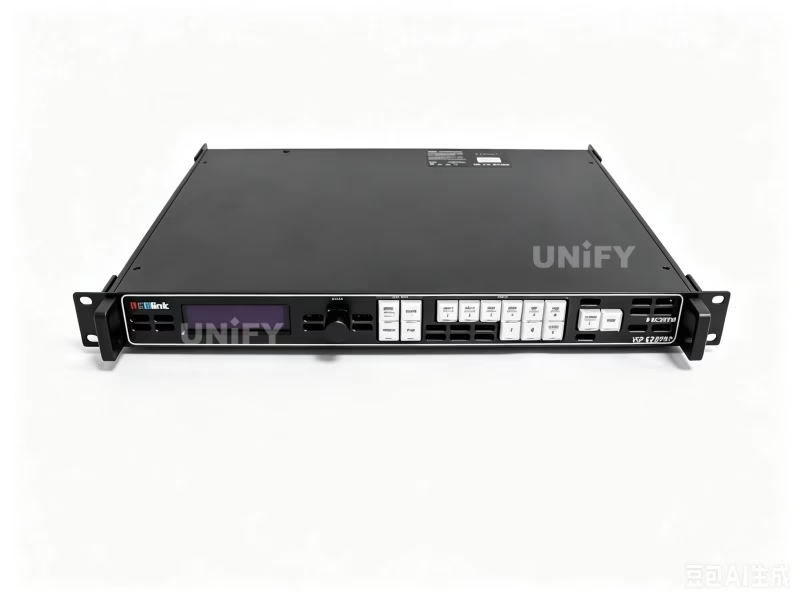
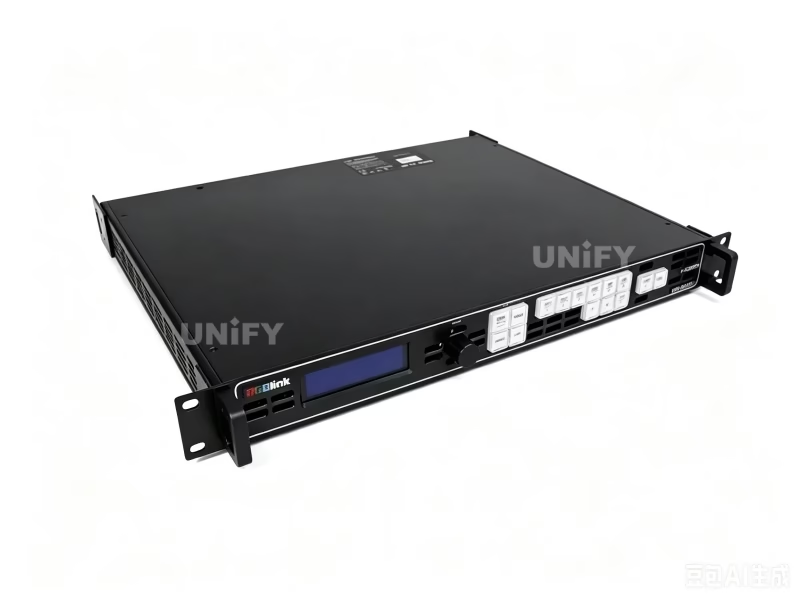
RGBLINK VSP 628PRO-WEB LED Video Scaler
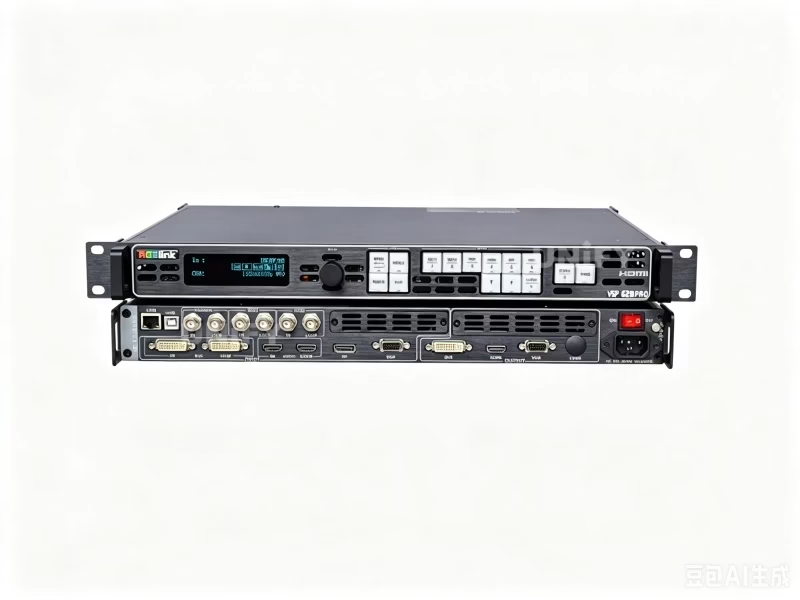
The RGBLINK VSP 628PRO-WEB LED Video Scaler is RGBlink’s engineering-class all-in-one video processor: any input to any output, four working modes (scaler, switcher, sender, split), a sender-card slot that drives LED receiving cards directly, 12-bit grayscale processing and genlock cascading — sold today as the VSP 628PRO (order code 100-0628-03-0).
Product Overview
What Is the RGBLINK VSP 628PRO-WEB LED Video Scaler?
The RGBLINK VSP 628PRO-WEB LED Video Scaler is RGBlink’s engineering-class all-in-one video processor — an advanced video scaler, scan converter, switcher and transcoder that converts any input signal format to any output signal format, sold today under the model name VSP 628PRO (order code 100-0628-03-0; the -WEB suffix names the earlier 100-0628-04-0 SKU that bundled the web-server control module, and modern units carry web control built in). It accepts composite, component, VGA, DVI, HDMI, DisplayPort and SD/HD/3G-SDI sources plus optional modules, drives dual independent output channels, and processes video at 12-bit grayscale with 1.5 frames of latency. Its defining architecture for LED work is the internal sender-card slot: a Linsn, NovaStar, Colorlight or Mooncell sending card installs in the processor, making the 628PRO a processor-plus-sender in one box that drives an LED wall’s receiving cards directly. Official data on this page comes from the VSP 628PRO User Manual V2.0 (RGBlink’s final document revision, August 2016) and current distributor specification sheets.
Short answer: The RGBLINK VSP 628PRO is an engineering LED video processor with four working modes — scaler, switcher, sender and split — in one chassis: inputs span genlock, dual SDI, DVI, HDMI, VGA and DisplayPort plus seven optional input modules (including a 4K DP 1.2 + HDMI module); outputs run dual independent channels over DVI, HDMI and VGA with optional fiber + SDI + HDBaseT, SDI or CVBS modules; the internal slot takes a Linsn/NovaStar/Colorlight/Mooncell sending card so the processor drives receiving cards directly; processing runs 12-bit grayscale at 1.5 frames of latency with PiP, DSK, logo capture, test patterns, EDID management and user-defined output resolution; genlock input cascades multiple units for synchronized large-wall splicing; control runs from the front-panel keypad, a Windows program over USB/Ethernet, the RGBlink app for Android/iOS, or the built-in web interface — at a $2,800 street price. The -WEB suffix on older listings names the 100-0628-04-0 SKU, which distributors have shipped as the standard 628PRO since 2015.
Position in the RGBlink catalog separates it from the switchers this site has reviewed. The mini-ISO, mini-edge SDI and mini-pro v3 are portable stream consoles; the RGBlink M1 NDI is a rack NDI switcher that outputs standard signals; the VSP 628PRO is the LED video processor itself — the box that takes signals and drives the wall, which is the stage of the chain this site documents in its LED video processor knowledge base. That is why its internal sender-card slot matters: a processor that hosts the sending card collapses the usual processor-plus-sender rack into one unit ahead of the receiving cards.
The VSP 628PRO is also an elder of the RGBlink line: first released December 2014, revised through ten manual editions to the V2.0 document of August 2016, and still sold and supported a decade later — a mature engineering instrument whose 12-bit processing and genlock cascading remain the arguments for it in 2026, and whose value is the field-verified stability of ten event seasons rather than a 2026 launch story. RGBlink’s XPOSE platform still lists VSP 628PRO support today.
Specifications
What Are the RGBLINK VSP 628PRO-WEB LED Video Scaler Specifications?
Data from the RGBlink VSP 628PRO User Manual V2.0 and current distributor specification sheets.
Processing, I/O & Control
Official Data Check
What Do Official VSP 628PRO Documents Say That Distributor Pages Get Wrong?
Five points deserve the official-document treatment on the VSP 628PRO. First, the model name: RGBlink’s User Manual V2.0 lists two order codes side by side — 100-0628-03-0 for the VSP 628PRO and 100-0628-04-0 for the VSP 628PRO-WEB, whose web-server module bundled the control interface. Distributors state plainly that the -WEB has been replaced by the standard 628PRO since 2015 and ship the current unit for -WEB orders; the modern 628PRO carries web control built into its firmware, so the -WEB suffix on a 2026 listing names history, not a different machine. Quotes should pin 100-0628-03-0.
Second, dimensions: the fuller distributor sheet lists 480 × 403 × 45 mm while an older listing prints 480 × 350 × 45 mm — rack and case planning should use the 480 × 403 mm envelope. Third, power: the manual and the fuller sheet agree on 45 W maximum under AC 85–264 V, while the older listing prints 25 W — 45 W is the figure for UPS and power budgeting. Fourth, documentation age: the V2.0 manual is dated August 2, 2016, the tenth revision of a document first released in December 2014; a buyer who reads the 2016 dates as abandonment should instead read the ten-year sales record and RGBlink’s continuing XPOSE support as the stability argument — this is a mature instrument, and this page does not present it as a 2026 product. Fifth, sender-card support: the manual names Linsn, NovaStar and Colorlight, and a current distributor sheet adds Mooncell — the sending-card ecosystem spans all four, each card sold separately.
LED Architecture
How Does the Sender-Card Slot Drive an LED Display Directly?
The architecture that separates the VSP 628PRO from every switcher on this site is the internal sender-card slot. In a conventional LED chain, a video processor scales and formats the program, a separate sending card converts it to the network signals, and receiving cards in each cabinet drive the modules. The 628PRO hosts the sending stage: the slot labeled “sender card/output option” takes a Linsn, NovaStar, Colorlight or Mooncell sending card, so the processor-plus-sender chain collapses into one box that drives the wall’s receiving cards directly — one unit in the rack instead of two, one configuration surface instead of two, and the output-option slot doubles as the sender bay when a fiber, SDI or CVBS output module is wanted instead.
For engineers the reading is a cost and integration statement. A wall whose receiving cards are Linsn, NovaStar, Colorlight or Mooncell ecosystem products keeps its native sending card inside the 628PRO — the sending-card selection follows the receiving-card ecosystem, and the processor does the scaling. This is the exact hardware stage our LED video processor guide describes, and it contrasts with the RGBlink M1 NDI: the M1 outputs standard 1080p signals and needs the display chain downstream; the 628PRO carries the sender and speaks directly to receiving cards. A large wall still scales by adding 628PROs or by a processor matrix, and genlock cascading keeps multiple units in sync for a spliced picture — the split-mode workflow for walls wider than one processor can drive.
Four Modes
What Are the Four Working Modes of the VSP 628PRO Scaler?
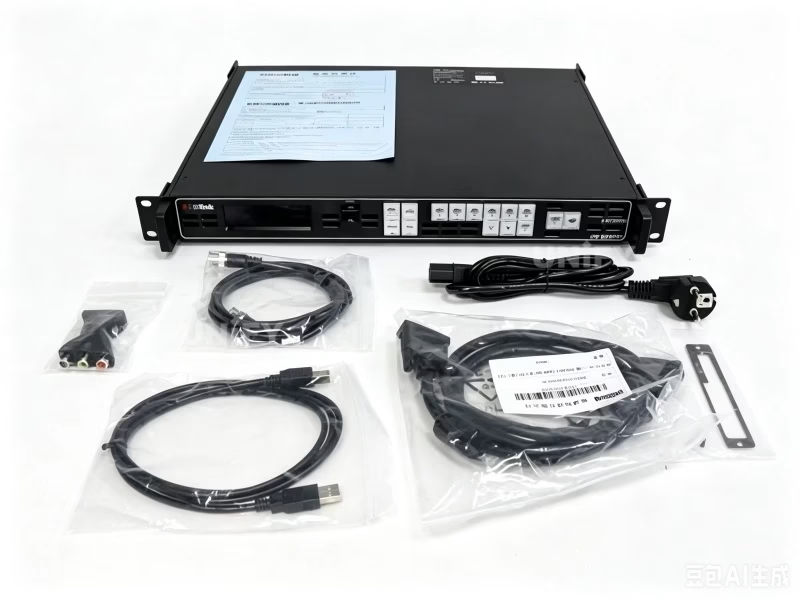
The VSP 628PRO packages four instruments in one controller, and the mode selection decides the job. Scaler mode converts any input format to any output format — a 480i legacy source to a 1080p60 wall feed, or a VESA computer resolution to a custom 2560×816 LED strip format — with the pixel engine handling the conversion. Switcher mode cuts and mixes between the connected sources with clean transitions, logo and DSK layers, and preview-style setup for the next take. Sender mode routes a single processed signal into the installed sending card for direct wall drive. Split mode divides the output for multi-processor walls, letting several 628PROs each carry a section of one large canvas under genlock sync. One processor, four operating systems — which is why the front panel offers quick numeric-key mode and scene recall.
The dual independent output channels multiply the modes: two channels can carry different content — a full-wall program on one, a preview or second zone on the other — or two signal formats of one picture for distribution. Each channel configures its own output resolution within the SMPTE and VESA tables, and user-defined custom formats cover the wall geometries standard tables miss, from tall portrait panels to wide 2560×816 LED bands.
Modules & Processing
What Modules and Picture Processing Does the VSP 628PRO Offer?
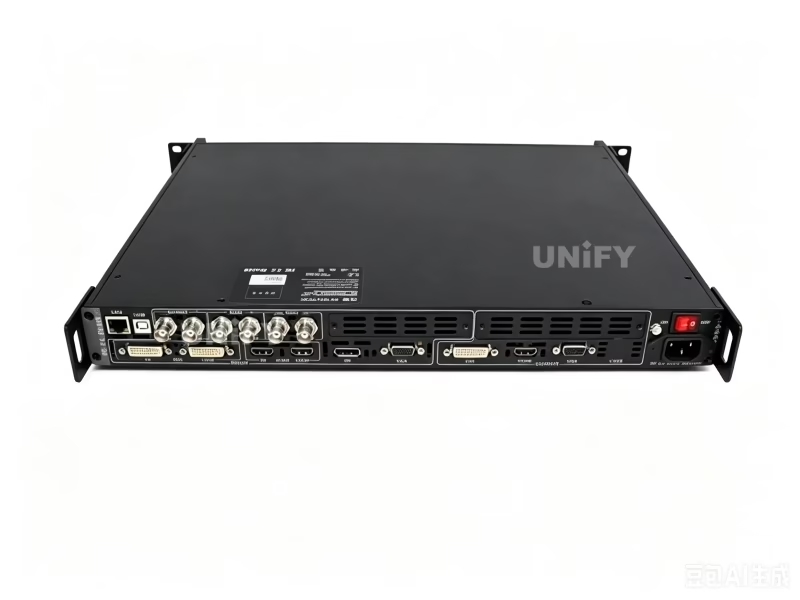
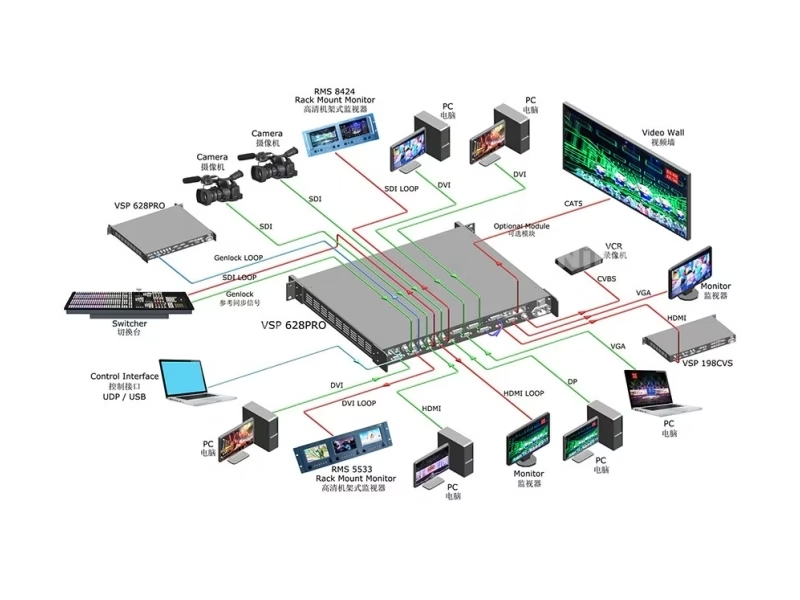
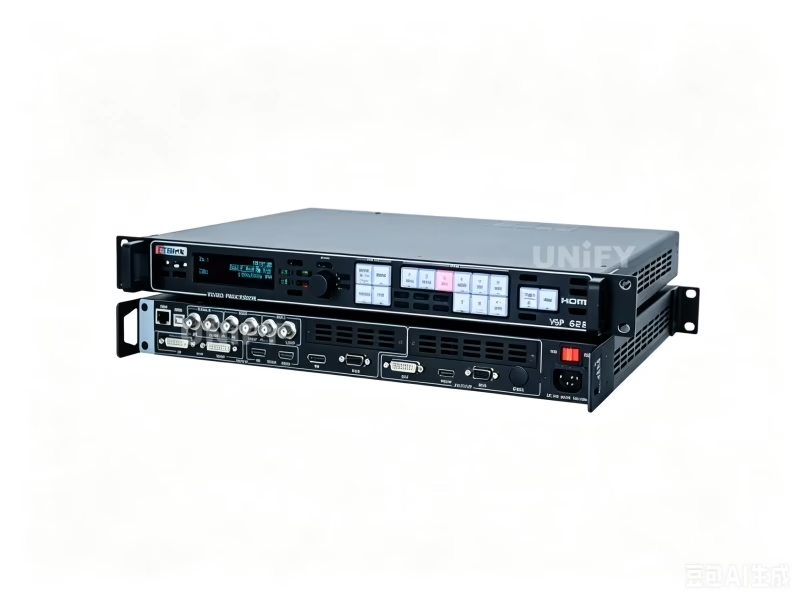
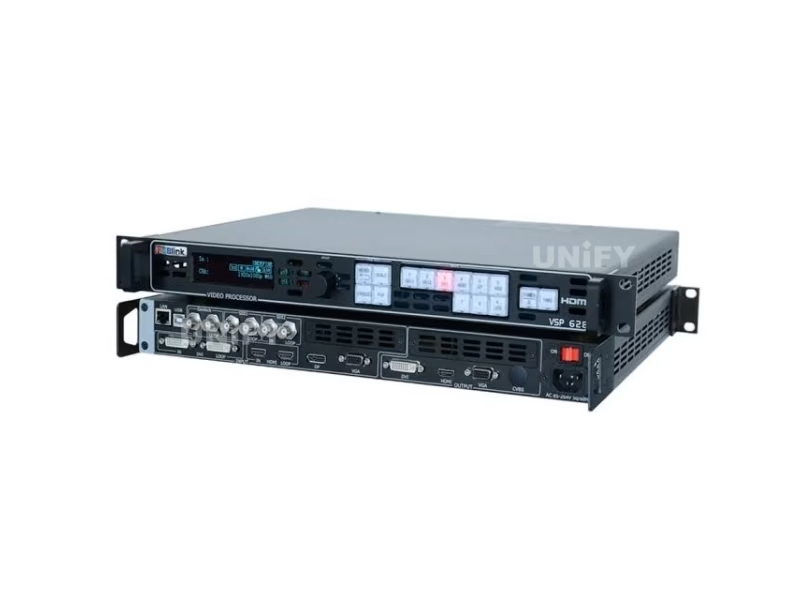
The 628PRO’s module system (order codes 190-0628-xx) extends both sides of the signal path. On input, the option slot takes dual CVBS, dual USB, dual VGA, dual HDMI, dual DVI or dual SDI-with-loop modules, and a 4K DisplayPort 1.2 module with DP loop and HDMI 1.4 brings a 4K source into the otherwise 1080p-era processor. On output, options add dual SDI, a CVBS composite feed, or a fiber + SDI + HDBaseT module for long-distance distribution to remote display zones. The standard rear panel already carries genlock with loop, dual SDI with loops, DVI with loop, HDMI with loop, VGA and DisplayPort on input, and DVI, HDMI and VGA on output — the loop-throughs keep downstream monitors and daisy chains fed without splitters.
Picture processing is where the engineering class shows. Twelve-bit grayscale processing carries the full gradient depth to the wall — the banding-free gray ramps that rental LED work is judged on. PiP windows overlay secondary sources; DSK layers key graphics; zoom, scale, shift and crop position any window; rotation and mirroring handle unconventional mounting; logo capture stores a static brand or channel mark; built-in test patterns replace a signal generator on site; EDID management and HDCP keep source negotiation predictable; signal backup switches to a standby source automatically; noise reduction cleans long-cable analog feeds; and the 1.5-frame video latency (0.9 frames minimum) keeps lip sync acceptable for live spoken content through the whole processor path.
Cascade & Control
How Do You Cascade and Control the VSP 628PRO Scaler?
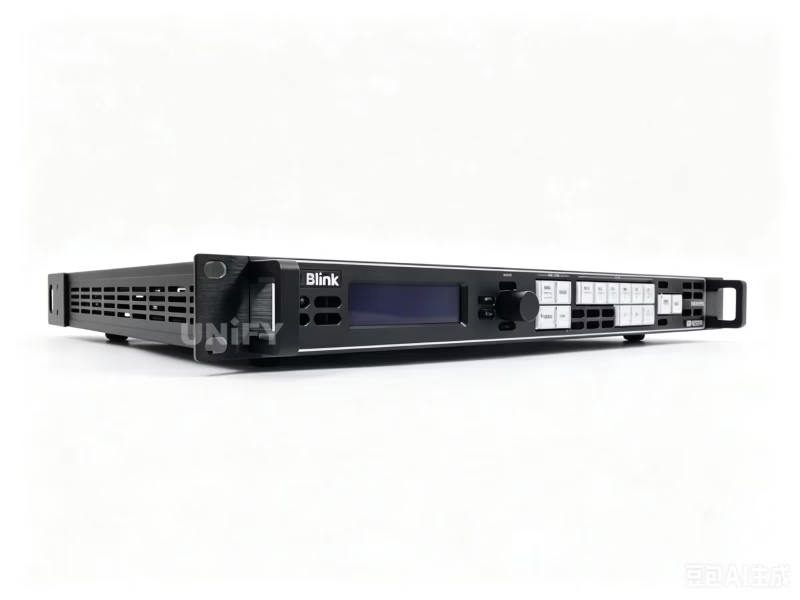
Large walls splice multiple processors, and the 628PRO’s genlock input is the splice tool: an external genlock reference keeps every unit locked to the same sync, so two processors driving two halves of one LED canvas deliver a synchronized whole picture — the manual documents exactly this two-display-one-wall workflow, and the genlock loop-through carries the reference to the next unit in the chain. Signal backup protects the spliced show: a configured standby source takes over if the primary fails, which matters more on a multi-processor wall than on any single display.
Remote control runs three paths. The Windows control program connects over USB-B or the RJ45 Ethernet port for full configuration — the software that setups and the RGBlink XPOSE platform support. The RGBlink app for Android and iOS drives the unit from a phone or tablet on the network. And the built-in web interface — the capability the old -WEB SKU bundled as hardware, now resident in firmware — serves browser control over the LAN. On the front panel, the numeric keypad sets scenes fast and the recall keys restore saved views between shows, which is the rental workflow: program the wall once, recall it at every load-in.
Where It Works
Where Does the RGBLINK VSP 628PRO LED Video Scaler Fit in LED-Fronted Work?
The rental-class processor behind 500×500 rental LED screens and stage LED walls: sender card inside, scenes recalled at load-in, genlock splicing for walls that outgrow one processor.
Fixed outdoor walls and venue screens — outdoor LED screens — where 12-bit processing and signal backup run unattended for years between service visits.
A sanctuary main wall plus overflow displays, fed by one processor with dual output channels and the church LED display stage downstream of the same scaler.
Any LED screen for events brief with mixed legacy and modern sources: CVBS and VGA from old decks beside HDMI and 4K DP, all resolved to one wall format by the scaler.
The processor is the middle of the LED signal chain this site documents end to end — sources, LED video processor, sending card, receiving cards — and the 628PRO is the hardware that merges the processor and sending stages for the walls below.
Comparison
VSP 628PRO, M1 NDI or the mini Family: Which RGBlink Unit Drives Your LED Wall?
RGBlink’s catalog now spans five products reviewed on this site, and the VSP 628PRO answers the question none of the others can: direct LED drive. The comparison table positions the processor against the family:
Against the portable mini line — mini-ISO $599, mini-edge SDI $729, mini-pro v3 $295 — the VSP 628PRO is a different instrument for a different stage: the mini units cut cameras for streams, the 628PRO formats and sends a wall. A complete LED event chain on this site can now be quoted end to end: switcher upstream, LED video processor (or the 628PRO doing that stage with its sender slot), and the screen from our rental or fixed ranges — the ecosystem story of this RGBlink review series.
Pricing
How Much Does a RGBLINK VSP 628PRO-WEB LED Video Scaler Cost?
Price transparency, stated plainly: the RGBLINK VSP 628PRO lists at $2,840.00 at a US reseller (regular price $3,500, in stock, September 2026) and at $2,799.00 at a China-based exporter under the -WEB SKU (which ships the standard 628PRO). The sending card is sold separately, and input/output modules (190-0628 family) price individually — a complete wall-processing kit quotes as host plus sender plus any modules. Factory-direct tiers for B2B buyers:
The value frame for a ten-year-old processor is the field record: the 628PRO has run a decade of rental and installed walls, its documents and firmware are stable, its modules remain orderable, and its 12-bit processing still meets the wall quality bar at roughly half the price of newer 4K-class processors from other vendors — for 1080p-era walls it remains the engineering choice. Genuine unit, 2-year warranty and CE/FCC compliance ship with every order; ask for a factory-direct quote with your sender-card and module list — we are the LED screen manufacturer behind unifyled.com.
FAQ
What Do Buyers Ask About the RGBLINK VSP 628PRO-WEB LED Video Scaler?
What Assurance Comes With the RGBLINK VSP 628PRO Scaler?
Every VSP 628PRO ships with RGBlink original packaging and compliance documentation.
Ready to Spec the VSP 628PRO for Your LED Wall?
Factory-direct pricing, genuine RGBlink stock, sender card fitted to your ecosystem and 2-year warranty.
unifyledscreen@gmail.com | +86-191-18802497
Technical Deep-Dive
What Should Engineers Know Before Buying the RGBLINK VSP 628PRO LED Video Scaler?
Published: September 2026 | 12 min read | UnifyLED Engineering Team
The RGBLINK VSP 628PRO LED Video Scaler is the engineering-class processor of RGBlink’s catalog — an all-in-one scaler, scan converter, switcher and transcoder whose sender-card slot drives LED receiving cards directly. This guide is written for engineers, integrators and procurement teams in 2026, using the VSP 628PRO User Manual V2.0 (August 2016, RGBlink’s final revision) and current distributor sheets as data sources, with the naming archaeology, the sending architecture and the buying math that distributor pages skip.
Chapter 1 — Definition and the -WEB Name
The RGBLINK VSP 628PRO is an engineering LED video processor: any input signal format converts to any output format; four working modes — scaler, switcher, sender and split — operate from one controller; an internal slot hosts a Linsn, NovaStar, Colorlight or Mooncell sending card so the processor drives the wall’s receiving cards directly; processing runs 12-bit grayscale at 1.5 frames of latency with PiP, DSK, logo capture, test patterns, EDID management and user-defined output resolution; genlock input cascades multiple units for spliced large walls; and control spans a front-panel keypad, a Windows program, a mobile app and a built-in web interface. It is the direct-drive stage of the LED chain this site documents in its LED video processor knowledge base.
The -WEB suffix is history worth naming. RGBlink’s manual lists two order codes: 100-0628-03-0 (VSP 628PRO) and 100-0628-04-0 (VSP 628PRO-WEB), the latter bundling a web-server module for browser control. A China-based exporter states it plainly on the -WEB listing — replaced by the standard 628PRO since 2015, and the current unit ships for -WEB orders — because the modern 628PRO carries web control resident in firmware. A 2026 listing that says 628PRO-WEB names the old SKU; the machine that arrives is the 628PRO, and quotes should pin 100-0628-03-0.
Chapter 2 — The Sender-Card Architecture
The sender-card slot is the architectural difference between the 628PRO and every switcher reviewed on this site. The standard LED chain runs processor, then sending card, then receiving cards; the 628PRO merges the first two stages, hosting the sending card in the slot that doubles as the output-option bay. The receiving-card ecosystem decides the sender: Linsn, NovaStar and Colorlight cards are named in the manual, and a current distributor sheet adds Mooncell — each card sold separately and installed in the processor, after which the unit speaks the wall’s native protocol directly. One rack unit instead of two, one configuration surface, and the sender bay swaps to a fiber, SDI or CVBS output module when the job wants distribution instead of direct drive.
The contrast with the RGBlink M1 NDI ($1,920) is the clearest category lesson in the catalog: the M1 is a production switcher that outputs standard 1080p signals and needs the display chain downstream; the 628PRO is the display chain’s processing stage and carries the sender itself. Productions that need camera switching choose the M1 or the mini line; walls that need formatting and direct drive choose the 628PRO. A large wall scales the 628PRO story with genlock: several processors, each driving a section, referenced to one sync source, delivering one spliced canvas — the split mode that the manual documents for two-display-one-wall layouts.
Chapter 3 — The Four Modes and Dual Outputs
Four working modes make the 628PRO four instruments. Scaler mode converts any input to any output — legacy 480i to a 1080p60 wall feed, a VESA computer resolution to a custom 2560×816 LED strip — through the pixel engine. Switcher mode cuts and mixes sources with clean transitions, logo and DSK layers, and preview-style setup. Sender mode routes the processed signal into the installed sending card for direct wall drive. Split mode divides the output across multiple processors under genlock for walls wider than one unit can carry. The front panel’s numeric keypad and scene recall switch modes and restore setups fast, which is the rental workflow: program at the shop, recall at load-in.
The dual independent output channels multiply the modes in practice: one channel drives the main wall while the second feeds an overflow display, a preview monitor or a second signal format of the same picture. Each channel sets its own output resolution within the SMPTE and VESA tables — 480i through 1080p60 on the broadcast side, 800×600 through 2560×816@60 and user-defined custom formats on the display side — which covers the tall portrait panels and wide LED bands that standard tables miss.
Chapter 4 — Modules, Processing and the Field Sheet
The 190-0628 module family extends the signal path on both sides. Input options add dual CVBS, dual USB, dual VGA, dual HDMI, dual DVI or dual SDI-with-loop modules, plus a 4K DisplayPort 1.2 module with DP loop and HDMI 1.4 — the only 4K entry into an otherwise 1080p-era processor, and the right answer for a 4K media server feeding a 1080p wall. Output options add dual SDI, CVBS composite or a fiber + SDI + HDBaseT module for long-distance distribution. The standard panel already carries genlock with loop, dual SDI with loops, DVI with loop, HDMI with loop, VGA and DisplayPort on input and DVI, HDMI and VGA on output, so downstream monitors and daisy chains stay fed without splitters.
Processing quality is the engineering argument. Twelve-bit grayscale carries gradient depth to the wall without banding — the standard rental LED work is judged on. PiP, DSK, zoom, scale, shift, crop, rotation, mirroring, logo capture and built-in test patterns cover the picture toolbox; EDID management and HDCP keep source negotiation predictable; signal backup switches to a standby source automatically — the feature that protects unattended venue walls; noise reduction cleans long analog cable runs; and the 1.5-frame latency (0.9 minimum) holds lip sync for live spoken content. Power draws 45 W maximum from AC 85–264 V, the unit weighs 3.7 kg in a 480 × 403 × 45 mm body, and the operating range is 0–45 °C at 10–85% RH.
Acceptance testing before a wall goes live follows a short checklist that exercises every claim in this chapter. Connect the widest mix of sources the venue will actually run — a legacy CVBS deck beside a 1080p HDMI camera and a computer on DVI — and confirm each resolves to the wall format in scaler mode without an external converter. Install the sending card matched to the receiving-card ecosystem and confirm sender mode drives the wall at the specified custom resolution; check a second output channel carries a different signal simultaneously. Shoot a test pattern and grade a gray ramp to confirm the 12-bit depth and the banding-free gradients. Time a cut and an auto transition to feel the 1.5-frame latency in a lip-sync context. Switch the genlock reference on and cascade a second unit if the wall splits, verifying the spliced picture holds frame lock across both. Save the whole setup as a scene and recall it after a power cycle — the ten-minute test that separates a commissioned wall from a service call later.
Chapter 5 — Control, Cascading and Operations
Remote control runs three paths. The Windows control program connects over USB-B or RJ45 Ethernet for full configuration, in the same XPOSE ecosystem RGBlink still lists for the VSP 628PRO today. The RGBlink app for Android and iOS drives the processor from a phone or tablet on the network. And the built-in web interface — the capability the old -WEB SKU bundled as hardware, now resident in firmware — serves browser control over the LAN. Operations on site stay fast through the numeric keypad and scene recall, and the manual’s workflows cover the practical tests: LED screen connection, saved views, custom formats and the two-display-one-wall split documented for multi-processor rooms.
Cascading is the large-wall operator’s chapter: the genlock input locks every processor to one reference, the loop-through carries sync to the next unit, and each processor carries its section of the canvas in split mode. Signal backup protects the spliced show — a configured standby source takes over on primary failure, which matters more across a multi-processor wall than on any single display. The field record behind these features runs to a decade: first release December 2014, ten manual revisions through August 2016, continuous sales since — an instrument whose operating manual reads as settled because the hardware has been settled for years, which is the stability an installed or rental fleet values.
Operations and upgrades follow the same settled pattern. Firmware and the Windows control program load over the USB-B port or the Ethernet interface, and the manual documents the upgrade path in its own chapter; the mobile app and the web interface keep day-to-day control on phones, tablets and browsers without opening the rack. Field service benefits from the module design: a failed input module swaps in the option slot without returning the processor, and the sender-card bay is the same kind of field replacement when a card fails mid-tour. Scene memory stores complete setups — input selections, modes, output formats, PiP and keying states — for recall at every load-in, which is the operating pattern that turns a mature processor into a rental fleet workhorse: the hardware is known, the software is stable, and the show files live in the unit rather than on a laptop that must be configured on site.
Chapter 6 — The Buying Math
The VSP 628PRO lists at $2,840 at a US reseller (regular price $3,500) and $2,799 at a China-based exporter under the -WEB SKU, both September 2026 — and the kit, not the host, is the budget. The sender card is sold separately and selected for the receiving-card ecosystem; 190-0628 input and output modules price individually; a multi-processor wall multiplies hosts and adds genlock distribution. At roughly half the price of newer 4K-class processors from other vendors, the 628PRO remains the engineering choice for 1080p-era walls whose quality bar is 12-bit gradients and whose operating budget favors a settled platform over a 2026 release cycle — the honest value frame for a mature instrument, and the reason this page does not dress it as a new product.
The chain it belongs to is the site’s core business: sources into a switcher, program into the processor stage, and the wall — a rental LED screen, a stage LED wall, an outdoor LED screen — downstream of the sender. The official documents are the reference for every number on this page, and where a distributor page differs — the dimensions, the power, the -WEB story — the RGBlink manual and the fuller sheets win.
One closing note on spares and support, because mature hardware deserves a mature logistics plan: the VSP 628PRO’s module family and sender-card bay keep the field-replaceable parts on a shelf — a spare input module, a spare sender card and a spare power entry cover the realistic failure surface of a fleet, and the settled firmware base means a swapped module inherits the show without a version dance. RGBlink’s continued XPOSE support and the module order codes in the manual keep the unit orderable a decade after release, which is the after-sales argument that fixed-install and rental buyers should weigh as heavily as the $2,800 list price when they compare against a newer platform with a shorter field record.
Conclusion
The RGBLINK VSP 628PRO LED Video Scaler is RGBlink’s engineering-class LED processor: any input to any output through four working modes, an internal sender-card slot that drives Linsn, NovaStar, Colorlight or Mooncell receiving cards directly, 12-bit grayscale at 1.5 frames of latency, dual output channels, genlock cascading and a full module family — in a 3.7 kg rack body at about $2,800. Sold as the VSP 628PRO since the -WEB SKU was absorbed in 2015, field-verified since 2014, it is the direct-drive processor to specify for 1080p-era walls that need the sending stage inside the same box.
Planning an LED wall with its processor and sender in one rack unit? Talk to us — we are the LED screen manufacturer behind unifyled.com, and processors, sending cards and screens ship together with 2-year warranty and engineering support.
Related Pages
Build the LED Signal Chain End to End
RGBlink mini-ISO 10-Channel All-in-One Switcher
RGBlink mini-edge SDI 10-Channel All-in-One Switcher
RGBlink mini-pro 3rd Generation mini Streaming Switcher
LED video processor
500×500 rental LED screen
Stage LED display R series
Outdoor LED screen
LED display configuration & debugging
English · 92 pages · August 2016 final revision · setup, modes, LED connection, WEB option, order codes 100-0628-03-0 / 04-0