
Mooncell · 2-in-1 Processor · Stage-Grade 20-Port Class
Mooncell MVB20E-G 2-in-1 LED Video Processor
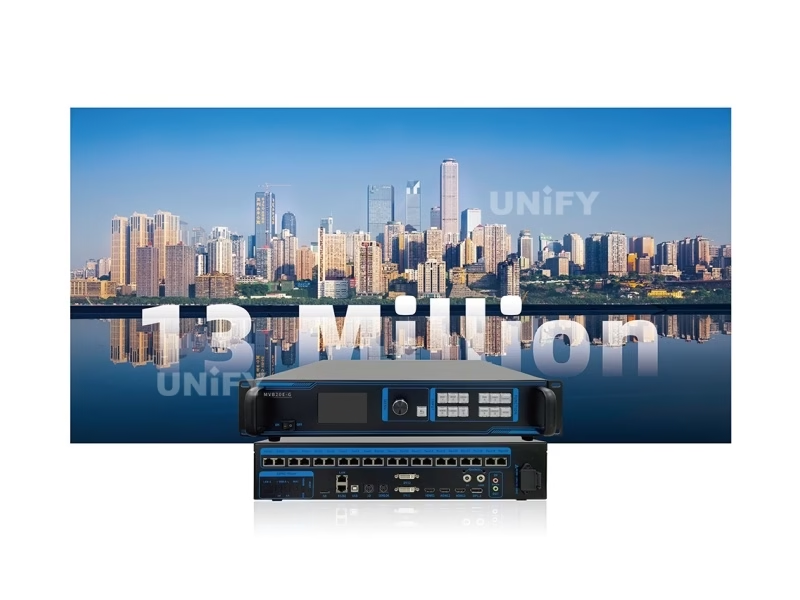
The Mooncell MVB20E-G 2-in-1 LED Video Processor is the stage-grade step in Mooncell’s processor family: 20 Gigabit outputs, a 13-million-pixel loading capacity, a 15360×15360 canvas, five simultaneous windows, ambient-light auto brightness and active 3D with Genlock.
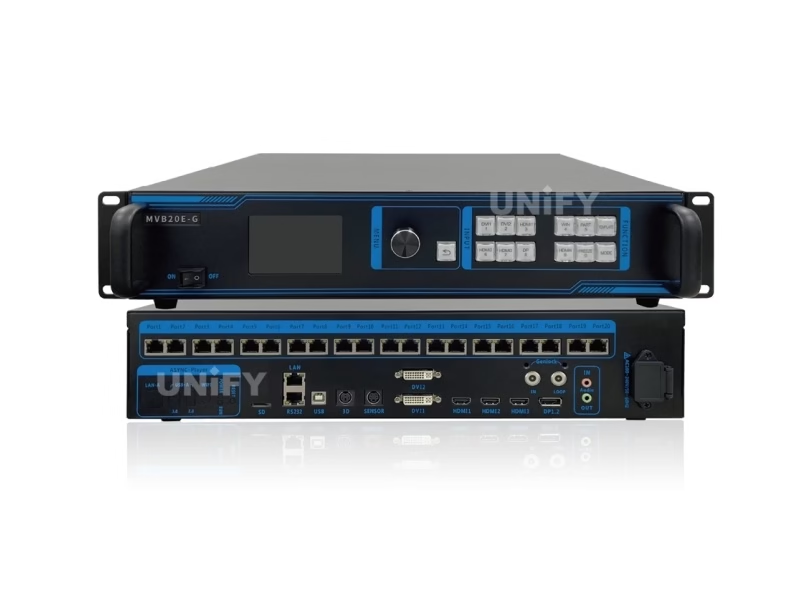
Product Overview
What Is the Mooncell MVB20E-G 2-in-1 LED Video Processor?
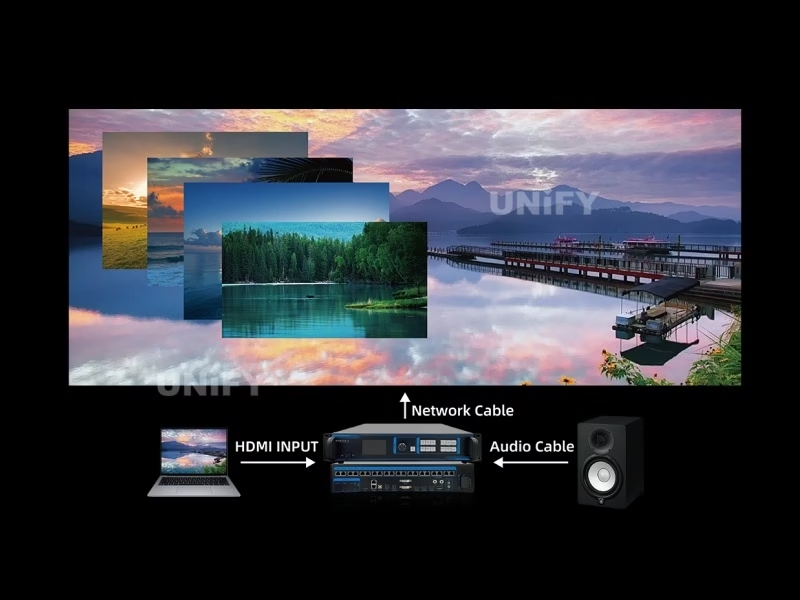
The Mooncell MVB20E-G 2-in-1 LED Video Processor is a video processor and sending controller in one unit, built for large stage and venue canvases: six inputs are processed and mixed into up to five simultaneous windows, and twenty Gigabit Ethernet outputs drive Mooncell receiving cards directly, up to 13 million pixels with a 15360×15360 canvas ceiling. The “G” marks the stage-grade configuration of the MVB20E — the ambient-light sensor, active 3D, Genlock and shutter-adaptive frame rate that touring and production rigs need. This page uses the official Mooncell MVB20E-G Specification V3.1 as its data source.
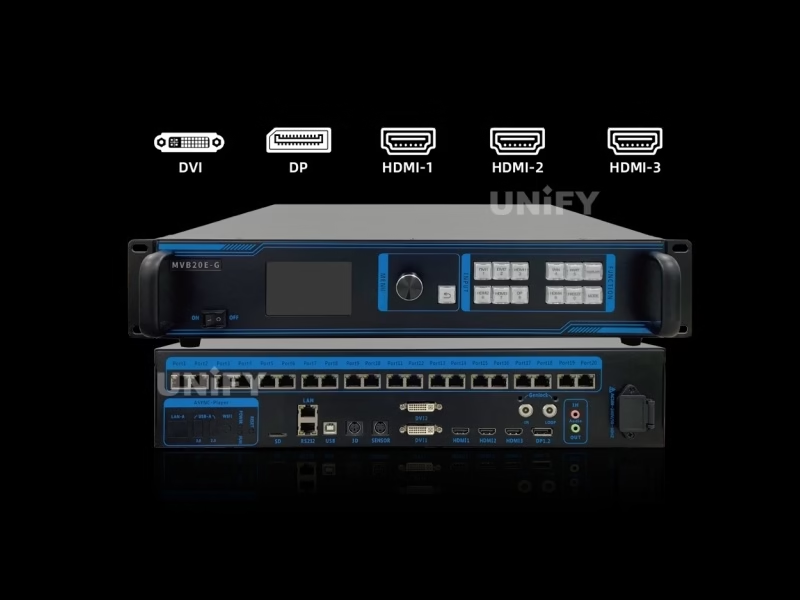
Short answer: The Mooncell MVB20E-G is a 2-in-1 LED video processor and sending controller with 6 inputs (HDMI 2.0, DP 1.2, 2× DVI, 2× HDMI 1.3), up to 5 simultaneous windows, 20 Gigabit Ethernet outputs, a 13-million-pixel loading capacity with a 15360×15360 canvas ceiling, ambient-light auto brightness, active 3D, Genlock, HDR, 10 scene templates and SD-card backup. It costs from roughly $1,243 in distributor listings and sits between the MVB12E (7.8M) and the M40 (26M) in the Mooncell family.
In the Mooncell lineup the MVB20E-G is the stage-grade middle: the Mooncell MVB4S Pro 2-in-1 LED Video Processor carries the 2.6M class, the Mooncell MVB12E 2-in-1 LED Video Processor the 7.8M class, this unit the 13M class, and the Mooncell M40 2-in-1 LED Video Processor the 26M flagship with fiber. On the playback side, the Mooncell C2 LED display control system serves scheduled content, and the LED video processor category page maps the wider class. The specification sheet: V3.0 first released January 2024, V3.1 April 2024 updating packaging details on the same hardware revision V1.0.0.
Specifications
What Are the Mooncell MVB20E-G 2-in-1 LED Video Processor Specifications?
Data from the official Mooncell MVB20E-G Specification V3.1 (April 2024; first revision V3.0, January 2024; hardware V1.0.0).
Video Inputs, Processing & Outputs
Control, Backup & Physical
Model Selection
Which Mooncell MVB20E-G Processor Do You Need: MVB4S Pro, MVB12E, MVB20E-G or M40?
Mooncell’s 2-in-1 family is a four-rung ladder. The MVB20E-G sits on the third rung — the stage-grade step where ambient-light sensing, 3D and Genlock join the loading math:
The 13M figure, verified: 20 network ports at the standard 655,360 pixels per port is 13,107,200 pixels — 13M, per the official V3.1 sheet. Some distributor listings state 10.4M; that figure does not match any official MVB20E-G configuration and would under-size a canvas by two full ports. Verify the loading figure against the V3.1 sheet, and ask the supplier to state the revision they quote.
The relationship with the M40 is worth stating plainly: the MVB20E-G (released January 2024) predates the M40 (June 2025) and carries no fiber ports — the M40 is the next rung for canvases above 13M or with long fiber runs. Both share the 11.98M floor above 8192 pixels of height, the single-port standard and the 2-in-1 architecture. Full detail on each sibling lives on its own page: MVB4S Pro, MVB12E and M40.
Sizing Guide
How Many Pixels Can the Mooncell MVB20E-G LED Video Processor Drive?
The MVB20E-G loads 13 million pixels with a symmetric 15360×15360 ceiling — the same in both dimensions, which suits stage screens that hang either orientation. The height rule from the official sheet: above 8192 pixels of load height, the total capacity reduces gradually but never below 11.98 million pixels — the same floor as the M40, verified across both sheets. Real canvas formats per pitch:
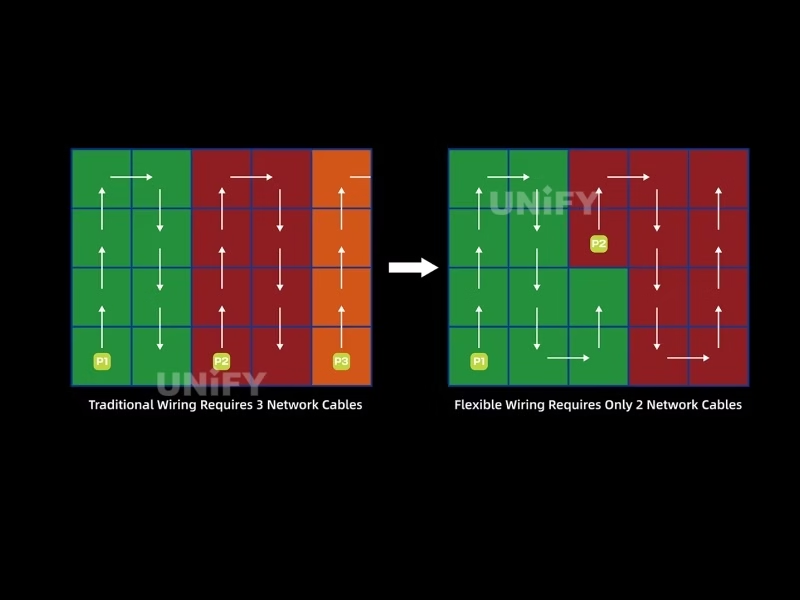
Reading the table: the width band shows the ceiling — one MVB20E-G drives a 46-meter P3 stage band. The tower row shows the height rule in action: a 15360-tall tower loads about 11.98M, not the headline 13M. Flexible wiring counts actual loaded pixels rather than the bounding rectangle, so irregular stage screens keep ports in service. The LED screen for events guide covers pitch and viewing distance before the canvas is locked.
Stage-Grade Features
What Makes the Mooncell MVB20E-G a Stage-Grade Processor?
Four features distinguish the “G” configuration from the rest of the 2-in-1 family — each one answers a real production problem:
Ambient-Light Auto Brightness
A SENSOR port takes an external light probe; the wall dims and brightens with the venue environment automatically — the fix for a stage that looks washed out at dawn and blinding at midnight.
Active 3D
A 3D transmitter interface drives active-shutter glasses — the attraction and cinematic-display feature no other unit in the family carries.
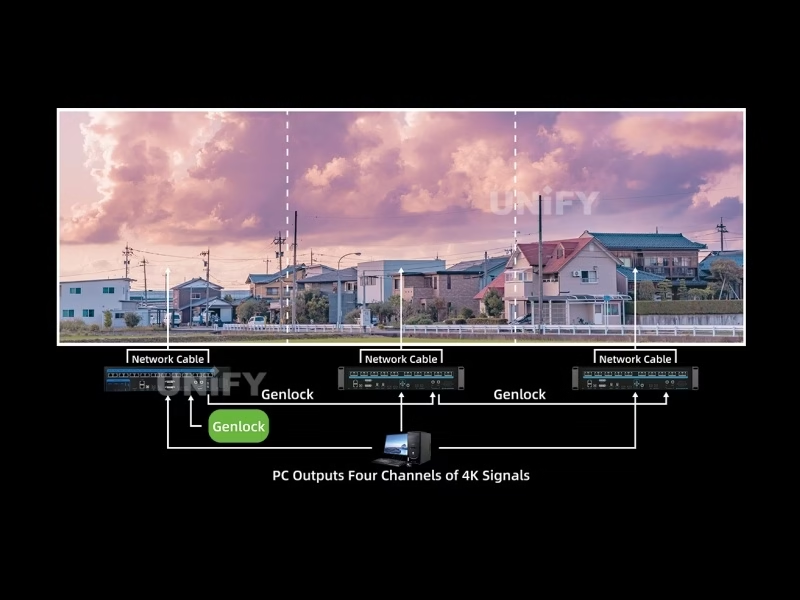
Genlock & Frame Adaption
Genlock with one input and one loop-through syncs multi-unit walls to broadcast reference; shutter adaptation and frame-rate matching keep cameras and screens in step.
HDR & Keying
HDR rendering with high color depth and wide gamut, plus the overlay and windowing that stage content needs — the processing side of the production package.
The operational layer completes the package: key lock stops mid-show changes, freeze holds the frame when a source drops, one-key black screen blanks the wall on cue, and the built-in HDMI4 playback-board input plays loop content without a separate player. The LED display system redundancy & backup guide frames the SD-card backup and restore in the reliability context.
Engineering Advantages
What Are the 6 Core Capabilities of the Mooncell MVB20E-G 2-in-1 LED Video Processor?
20 Ports, 13M Pixels
Twenty Gigabit outputs at the standard 655,360-pixel per-port load — the 13M class with a symmetric 15360×15360 ceiling in both dimensions.
Five Simultaneous Windows
1× 4K + 1× 2K, or 5× 2K windows from five source types — PIP inserts secondary windows into the 4K main, with overlay, roaming and arbitrary switching.
Ambient-Light Auto Brightness
The SENSOR port takes an external light probe and adjusts wall brightness to the venue environment — the stage-grade feature unique to the “G” in this family.
3D, Genlock & HDR
Active 3D with transmitter interface, Genlock in/loop-out for synchronized cascades, HDR rendering and shutter-adaptive frame rates — the production three.
10 Scenes & Timed Switching
Ten scene templates recall from the MODE key; the built-in clock switches scenes on schedule — set the show once and run it all night.
SD Backup & Built-In Player
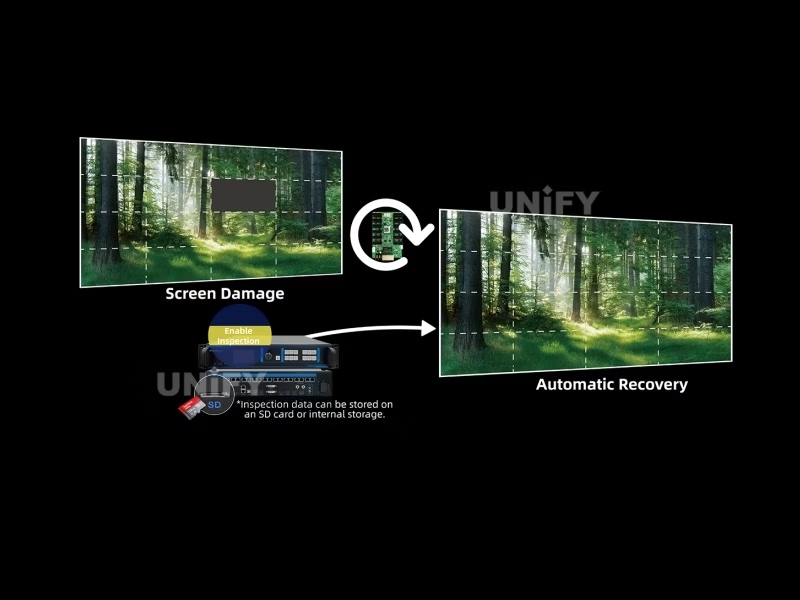
SD-card backup and restore plus internal-flash inspection keep configuration safe; the HDMI4 built-in playback board plays loops without a separate player.
Commissioning & Operation
How Do You Operate the Mooncell MVB20E-G 2-in-1 LED Video Processor on Site?
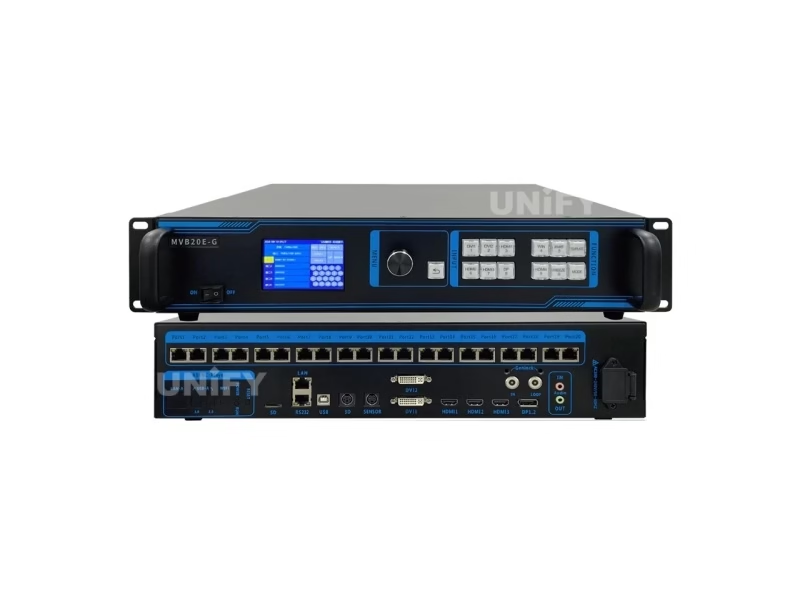
The MVB20E-G runs the same commissioning philosophy as the rest of the family: quick screen mapping configures the wall from the front panel without PC software — a touring rig reconfigures between venues in minutes. The front panel is built for show operation: LCD status, knob with return key, seven source keys (DVI1/DVI2/HDMI1/HDMI2/HDMI3/DP/HDMI4 built-in player) and the function row — WIN for layers, PART for partial/fullscreen, TEMPLATE for multi-window layouts, FREEZE, and MODE for scene recall. Control extends through LAN (100M), RS232 for central control and USB Type-B for the PC software with drag-and-drop window layout. The commissioning sequence around this class is documented in LED display configuration and system debugging and the fault patterns in basic debugging of LED displays.
Mooncell’s AutoLED walkthrough of smart LED-module configuration — the commissioning layer under the quick-map shortcut:
Mooncell Official — AutoLED smart configuration of a normal LED module
Applications
Where Is the Mooncell MVB20E-G 2-in-1 LED Video Processor Used?
Stages & Theatre
Five windows mix camera, playback and graphics; scene templates switch between acts; Genlock and frame adaptation keep multi-unit walls in step — the 13M class for touring rigs.
Exhibitions & Immersive
5D/6D immersive rooms and creative canvases run from the same processor; ambient-light auto brightness keeps immersive walls consistent as the hall lighting changes.
Bars & KTV
Timed scene switching runs the venue day; key lock keeps the configuration safe between shifts; the built-in player loops content without extra hardware.
Outdoor & Mixed Venues
The −20°C to 60°C working range is the widest in the family — outdoor festivals and mixed indoor-outdoor sites run without climate concerns — see LED screen for events.
Mooncell’s case footage for the immersive and entertainment classes this processor serves:
Mooncell Official — 5D immersive rooms case
Mooncell Official — KTV case sharing
Category Comparison
How Does the Mooncell MVB20E-G Compare to the Huidu VP Series?
At the 10M–15M level the MVB20E-G competes with the upper 2-in-1 processors of the other major brands. The Huidu VP range covers the same architecture — the Huidu HD-VP620 video processor and Huidu HD-VP830 video processor pages document that family — and the structural differences that decide a stage project:
The honest reading: the VP class wins where the project is already Huidu-standardized; the MVB20E-G wins on port count, the stage feature set and the wide working range. The ecosystem decision — which receiving cards the site already runs — is the first filter, because the processor drives its own brand’s cards exclusively.
Factory Strength
Why Buy the Mooncell MVB20E-G 2-in-1 LED Video Processor From an LED Display Factory?
A stage processor bought from a parts channel arrives as a box. Buying through a full-line LED screen manufacturer adds the three things a production project needs:
1. Verified hardware, verified numbers. Every MVB20E-G we supply is sourced through Mooncell’s authorized channel and tested on live LED modules before dispatch. The 13M-versus-10.4M confusion documented above is exactly the kind of spec drift an unverified channel can sell — we state the V3.1 figure on the quote.
2. Production-chain support. We pre-configure the receiving cards and, where the project allows, pre-store the wall configuration on the SD card before shipping — the unit arrives one quick-map away from a live wall. Our quality control of LED display process covers every batch.
3. Lifecycle economics. At 36W and 4.95 kg in a 2U chassis, the MVB20E-G is a small line in a production power budget. We back it with a 2-year warranty and spare units, and the control layer sits inside the LED screen lifespan math as a fixed cost.
B2B Procurement
How Much Does the Mooncell MVB20E-G 2-in-1 LED Video Processor Cost?
Price transparency, stated plainly: the MVB20E appears in third-party distributor listings from roughly $1,243 (reseller listings reviewed August 2026), before receiving hardware and the optional 3D transmitter and light probe. The spread across channels is volume and support terms, not hardware differences. Factory-direct tiers for B2B buyers:
Market context: the LED display control system market reached US$659 million in 2025 and is projected to grow at 13.6% CAGR to US$1.59 billion by 2032 (QYResearch, Global LED Display Control System Market Report), with stage and immersive demand as a growth driver. For the port-count steps around this unit see the MVB12E and M40 pages. Ask for a factory-direct quote at your quantity.
FAQ
What Do Buyers Ask About the Mooncell MVB20E-G 2-in-1 LED Video Processor?
What Assurance Comes With the Mooncell MVB20E-G 2-in-1 LED Video Processor?
Every MVB20E-G ships with Mooncell original packaging and compliance documentation.
Ready to Specify the Mooncell MVB20E-G 2-in-1 LED Video Processor?
Factory-direct pricing, genuine Mooncell stock, SD-card pre-loaded configuration and 2-year warranty.
unifyledscreen@gmail.com | +86-191-18802497
Technical Deep-Dive
What Should Engineers Know Before Buying the Mooncell MVB20E-G 2-in-1 LED Video Processor?
Published: August 2026 | 13 min read | UnifyLED Engineering Team
The Mooncell MVB20E-G 2-in-1 LED Video Processor is the unit the stage market asks for by accident: it gets quoted as a bigger MVB12E, and it is that — plus the four stage features the standard line does not carry. This guide is written for engineers and procurement teams specifying the 8M–13M class in 2026, using the official Mooncell MVB20E-G Specification V3.1 as the data source, with the loading math and the stage feature set that listing copy gets wrong.
Short answer: The Mooncell MVB20E-G is a 2-in-1 LED video processor and sending controller with 6 inputs, up to 5 simultaneous windows, 20 Gigabit Ethernet outputs, a 13M pixel loading capacity with a 15360×15360 canvas ceiling, ambient-light auto brightness, active 3D, Genlock, HDR, 10 scene templates and SD-card backup. It costs from roughly $1,243 in distributor listings and sits between the MVB12E (7.8M) and the M40 (26M) in the Mooncell family.
Chapter 1 — Definition: The Stage-Grade Middle Rung
The MVB20E-G is a synchronous video processor with the sending stage built in: six inputs are processed and mixed into up to five windows, and twenty Gigabit outputs transmit the composed canvas to Mooncell receiving cards. The 2-in-1 architecture is the same argument that carries the rest of the family — one chassis, one configuration surface — sized and equipped for production work. It is the synchronous side of the synchronous vs asynchronous LED control split: live video in, composed canvas out.
The “G” suffix is the story of this page. Mooncell’s public pages list the base MVB20E; the V3.1 specification sheet documents the -G variant, which adds the ambient-light sensor input, active 3D, Genlock and shutter-adaptive frame rates on top of the 20-port 13M platform. When a supplier quotes “MVB20E,” ask whether it is the -G stage configuration — the difference is four production features and the SD-card backup workflow. The revision history is short and stable: V3.0 January 2024, V3.1 April 2024 updating packaging details on the same hardware V1.0.0.
Chapter 2 — Loading: 13M, Verified
The MVB20E-G loads 13 million pixels across twenty ports: 20 × 655,360 = 13,107,200, per the official V3.1 sheet — the arithmetic is clean and verifiable. The 10.4M figure that appears on some distributor listings matches no official configuration; a canvas designed on it is under-sized by roughly two full ports. The canvas ceiling is symmetric — 15,360 pixels in width and in height — which suits stage screens hung in either orientation, and the height rule matches the M40: above 8192 pixels of load height the capacity reduces gradually but never below 11.98 million pixels.
Practical formats: a 15360×800 band (12.29M) is a 38.4 × 2.0 m wall at P2.5; a 3584×3584 square (12.85M) is 9.0 × 9.0 m; a 3840×3200 tall canvas (12.29M) covers the classic stage proportion. Flexible wiring counts actual loaded pixels rather than the bounding rectangle, so irregular stage screens keep ports in service. The LED screen for events guide covers the pitch and viewing-distance planning before the canvas is locked.
The input stage feeds the canvas at 4K class: HDMI 2.0 accepts 3840×2160@60Hz and ultra-wide 7680×1080@60Hz with custom resolutions to 7680 in either dimension; DP 1.2 takes 4K60; HDMI 1.3 and DVI handle 2304×1152-class sources with custom resolutions to 3840. EDID management tells each input the wall’s exact format, so a media server or camera chain outputs the canvas resolution directly — the pixel-to-pixel path that keeps stage graphics crisp at close range. Five windows from five source types is the mixing ceiling: one 4K window plus one 2K window, or five 2K windows, with PIP insertion, overlay, roaming and arbitrary switching between them.
Chapter 3 — The Stage Feature Set
Four features separate the -G from the rest of the family. Ambient-light auto brightness takes an external light probe on the SENSOR port and adjusts the wall to the venue environment — the feature a stage rig notices at 6 AM and 11 PM, when the same content needs different luminance. Active 3D with a transmitter interface opens the attraction and cinematic-display category. Genlock with one input and one loop-through syncs multi-unit walls to broadcast reference, and shutter adaptation with frame-rate matching keeps cameras and screens in step — the production sync package no other unit in the family carries. HDR rendering with high color depth and wide gamut completes the imaging side.
The working range is the quiet differentiator: −20°C to 60°C, the widest in the family, which covers outdoor festivals and mixed indoor-outdoor sites without climate concerns. The LED display system redundancy & backup guide frames the SD-card backup and restore as the reliability layer under the whole package.
The show-operation layer is where the stage features meet the panel. Ten scene templates recall from the MODE key, and the built-in clock switches scenes on schedule — a production that changes content per act programs the night once and runs it. Key lock stops accidental changes mid-show; freeze holds the frame when a source drops; one-key black screen blanks the wall on cue; the built-in HDMI4 playback-board input plays loops without a separate player. For a touring rig, that is the difference between a processor and a stagehand.
Chapter 4 — The Four-Rung Ladder
Mooncell’s 2-in-1 family is four loading classes on one architecture:
- MVB4S Pro — 2.6M, 4 ports. The quick-mapping entry class, documented on the MVB4S Pro page.
- MVB12E — 7.8M, 12 ports. The mid-size workhorse with SD-card storage, on the MVB12E page.
- MVB20E-G — 13M, 20 ports, stage features. This page — the rung where ambient light, 3D and Genlock join the loading math.
- M40 — 26M, 40 ports + fiber. The flagship with fiber options, on the M40 page.
The selector is the pixel count plus the feature set: walls up to 8M fit the MVB12E; 8M–13M — or any project needing 3D, Genlock or ambient-light control — fits the MVB20E-G; above 13M, or with long fiber runs, steps to the M40. The per-port standard is shared across all four, so receiving-card and cabling math carry over when a project grows across the ladder.
Chapter 5 — MVB20E vs MVB20E-G vs M40
Two comparisons confuse buyers. Against the base MVB20E: the -G is the stage configuration — the four production features above plus the SD-card workflow; the loading and port math are identical. Against the M40: the MVB20E-G predates it by eighteen months and carries no fiber ports; the M40 adds 40 ports, 4× 10G fiber, 6 windows and 16384-pixel ceilings for the 26M class. A project at 13M with no fiber runs is correctly specified with the MVB20E-G; a project that will grow past 13M or needs long fiber runs should start on the M40. Both share the 11.98M height floor and the quick-mapping philosophy.
Mooncell’s general case-sharing footage — the venue-class work this processor family drives:
Mooncell Official — LED case sharing
Chapter 6 — Operation: Panel, Software, Protocols
Quick screen mapping configures the wall from the front panel without PC software — the touring workflow that turns a venue changeover into minutes. The panel is built for show operation: LCD status, knob with return key, seven source keys including the HDMI4 built-in player, and the function row — WIN, PART, TEMPLATE, FREEZE, MODE. LAN (100M), RS232 and USB Type-B open the unit to control rooms and the PC software with drag-and-drop window layout. The commissioning sequence is documented in LED display configuration and system debugging and the fault patterns in basic debugging of LED displays.
Maintenance follows the family pattern with a production twist: the SD card stores the wall configuration for backup and restore, and internal-flash inspection patrols the screen parameters without re-debugging. A depot refreshes a returned unit from the SD card in minutes, and a touring rig that loses configuration at site restores from the card rather than re-commissioning from scratch — the recovery-not-recommission discipline that keeps production schedules intact.
Chapter 7 — Price and Total Cost of Ownership in 2026
The MVB20E appears in third-party distributor listings from roughly $1,243 (reseller listings reviewed August 2026), before receiving hardware and the optional 3D transmitter and light probe — about four and a half times the MVB12E’s $852-class entry for 1.7 times the canvas, with the stage feature set included. The spread across channels is volume and support terms, not hardware differences. We quote three tiers — sample (1–2 units), project (3–9 units, SD-card pre-loaded configuration with 3D/sensor option bundles) and volume (10+, factory-direct contract with a spare-unit program).
On the TCO side the numbers are small for the class: 36W rated power, a 4.95 kg 2U unit, no moving parts, and field maintenance that needs no network. The category context is the same one that carries the whole control layer: the LED display control system market reached US$659 million in 2025 and is projected to grow at 13.6% CAGR to US$1.59 billion by 2032 (QYResearch, Global LED Display Control System Market Report). The LED screen lifespan math treats the processor as the long-lived part: we warrant it for 2 years and stock spares for the project’s operating life.
A checklist for the purchase order: the processor with the -G configuration named, receiving cards sized to the per-port load (655,360 pixels per port), CAT5E/6 for the twenty network runs, and the SD card for configuration backup. A quote that names the model — MVB20E-G, not MVB20E — and the loading figure — 13M, not 10.4M — is a quote you can hold a supplier to, and holding the line on those two names is the cheapest way to keep a stage canvas honest.
Conclusion
The Mooncell MVB20E-G 2-in-1 LED Video Processor is the stage-grade rung of the Mooncell ladder: twenty ports, 13 million pixels, five windows, and the production feature set — ambient light, 3D, Genlock, HDR — that the standard line does not carry. Specify it with three numbers in hand — 13M, 15360×15360, and the 11.98M height floor — and with the -G suffix and the V3.1 revision written into the quote. Buy it through a verified LED screen manufacturer that pre-loads the configuration and backs the unit with warranty and spares, and the processor becomes the dependable middle of the production wall.
LED Control System Range
Which LED Control and Processing Products Should You Explore Next?
Video processors, control servers, sending controllers and free resources on UnifyLED.
Mooncell Series
2-in-1 Processors
Guides & Resources
Where Can You Download Mooncell MVB20E-G Resources?
The official Mooncell MVB20E-G Specification V3.1 — the data source for every figure on this page.