
Stadium Perimeter Series · ST1440 Wide Cabinet
1440x960mm Stadium LED Display — ST1440 Series
The ST1440 is the wide-cabinet perimeter LED platform for sports venues — a 1440×960mm aluminum cabinet that cuts a 300-meter perimeter from 313 cabinets to 209, with a covered top cable duct, soft EVA and rubber protection for athletes, IP65 sealing, a seven-position folding stand and common-cathode power.
The Wide-Cabinet Platform
What Is a 1440x960mm Stadium LED Display?
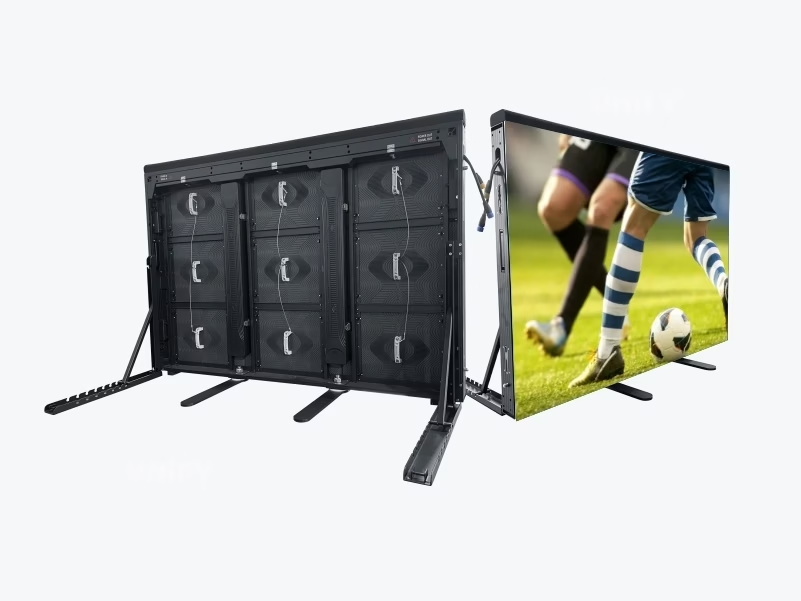
The 1440x960mm stadium LED display is the wide-cabinet perimeter standard of professional sports venues — a 1440×960mm die-cast aluminum profile cabinet that runs along pitch edges in long straight sections, carrying sponsor branding, live match content and event information to the stands and broadcast cameras at once. The ST1440 is the wide side of the ST platform: 1.5 times the run per cabinet of the ST960 960×960, with a covered top cable duct, EVA and rubber athlete protection, IP65 sealing and common-cathode power. For the category background, see LED stadium screen.
Short answer: a 1440×960 stadium LED display is the wide-cabinet member of the ST perimeter platform, and it earns its place on four decisions: 1.5× the run per cabinet (209 cabinets cover a 300-meter perimeter against 313 narrow cabinets), a covered top cable duct that hides wiring and keeps rain out of the connectors, soft EVA foam plus rubber masks for player collisions, and IP65 sealing for ground-level weather. Buy it for long straight runs; pair it with the 960mm cabinet for corners and short segments.
Legidatech LED screen — 5-min setup yes easy Install LED Sports Screen SP Series snap-fit panels
Engineering Features
What Problems Does the ST1440 1440×960 Stadium LED Screen Solve?
Eight failure modes of long-run pitchside screens — each engineered out of the cabinet:
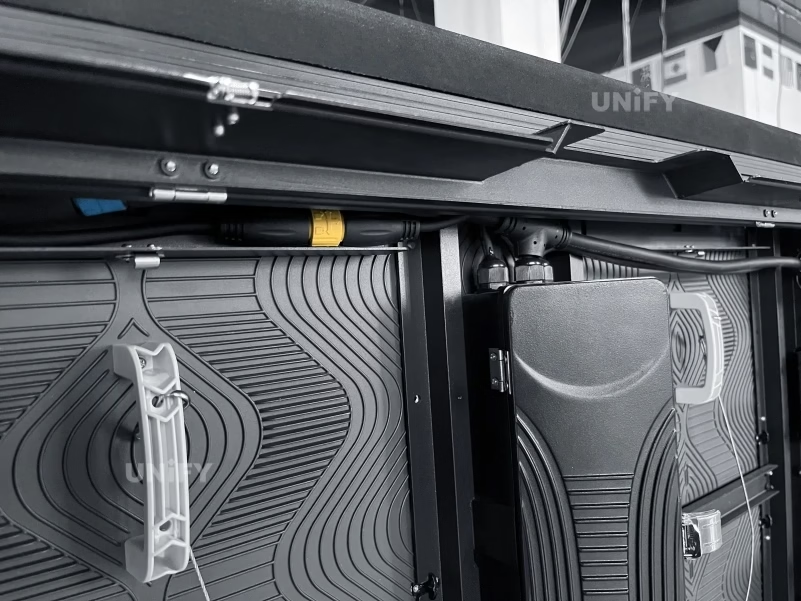
Covered Top Cable Duct
All power and data cables run through a covered channel along the cabinet top — no visible wiring, no rain reaching the connectors, no dust, animals or foot traffic near the lines.
Athlete Impact Safety
Soft EVA foam across the top edge and a rubber mask on the LED face absorb a full-speed collision — the impact ends with a replaced module, not an injured player.
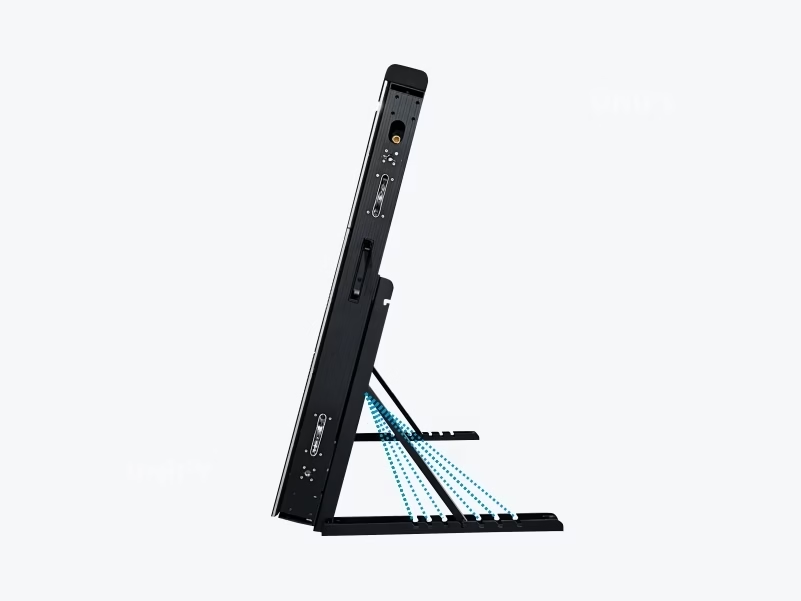
90°–120° Seven-Position Stand
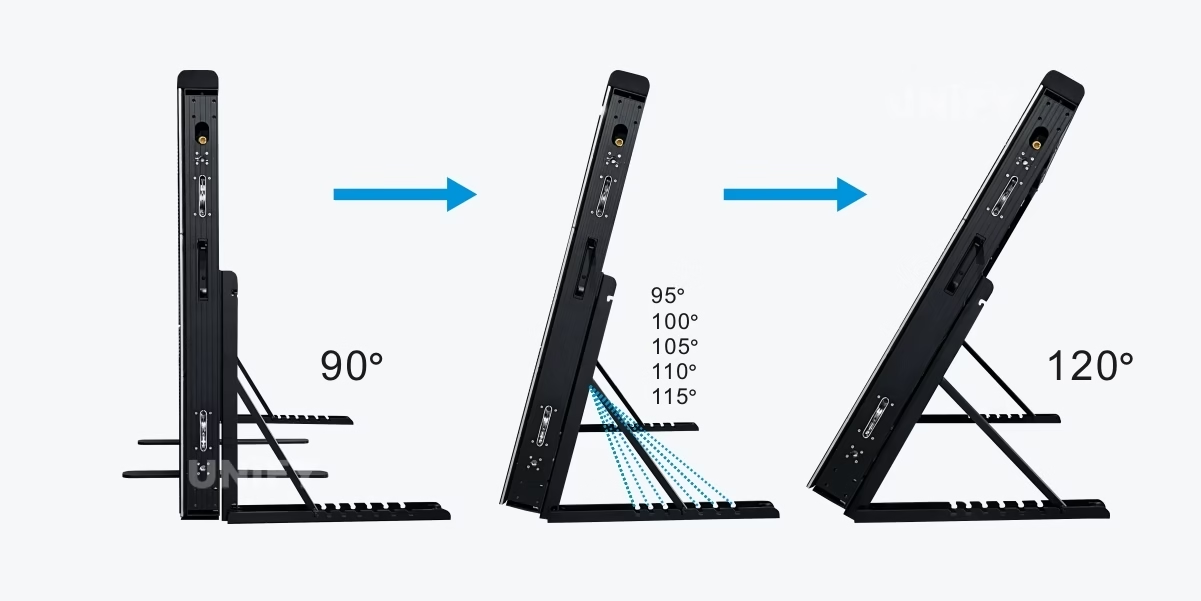
The folding base opens through 90° and locks at seven positions — aim every section at its own stands block or camera position, then fold flat for storage.
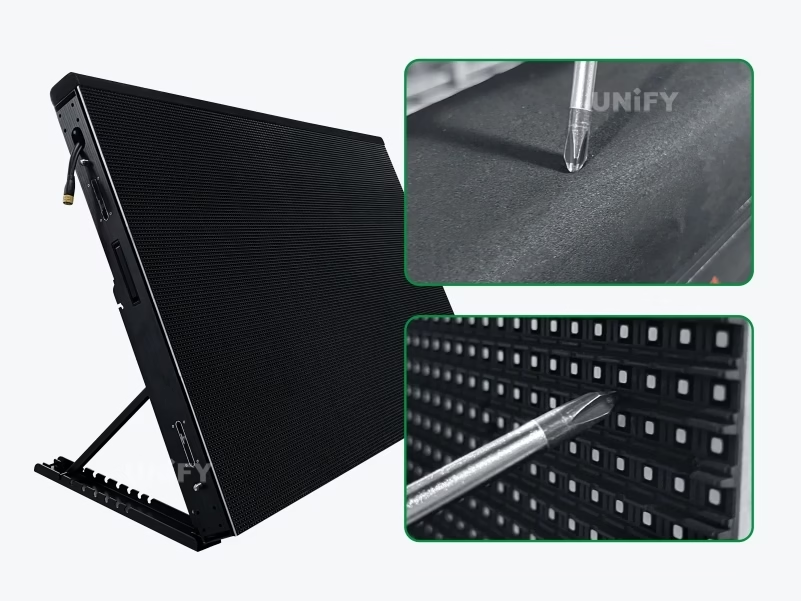
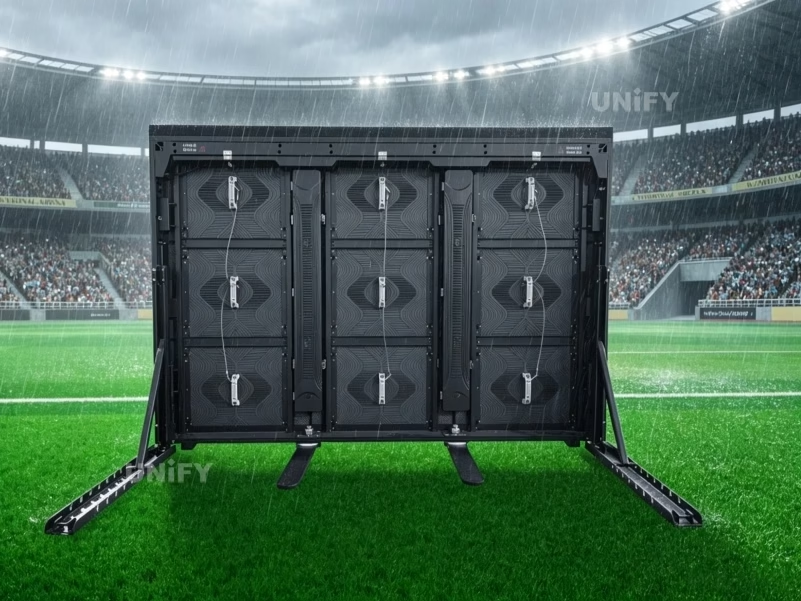
IP65 Front & Rear
Fully sealed against rain and dust on both faces — the cable duct and the sealing work as one system at ground level.
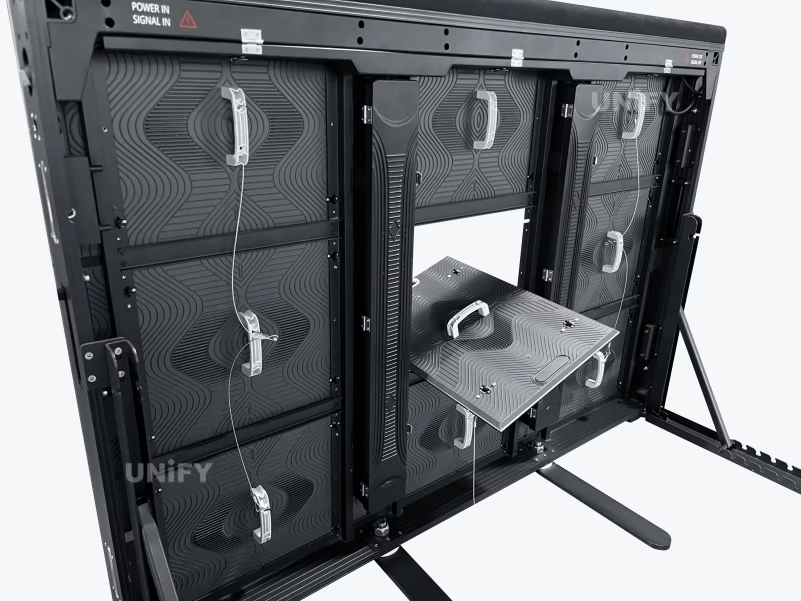
480×320 Latch Modules
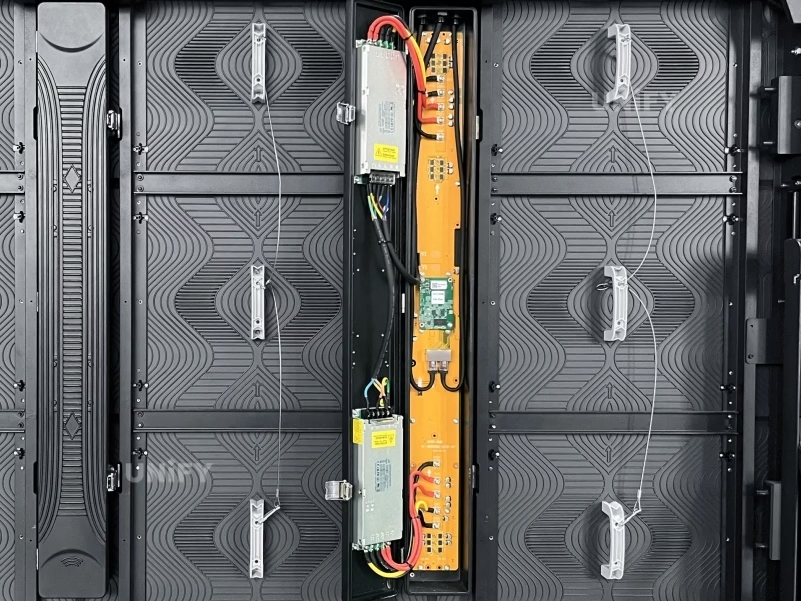
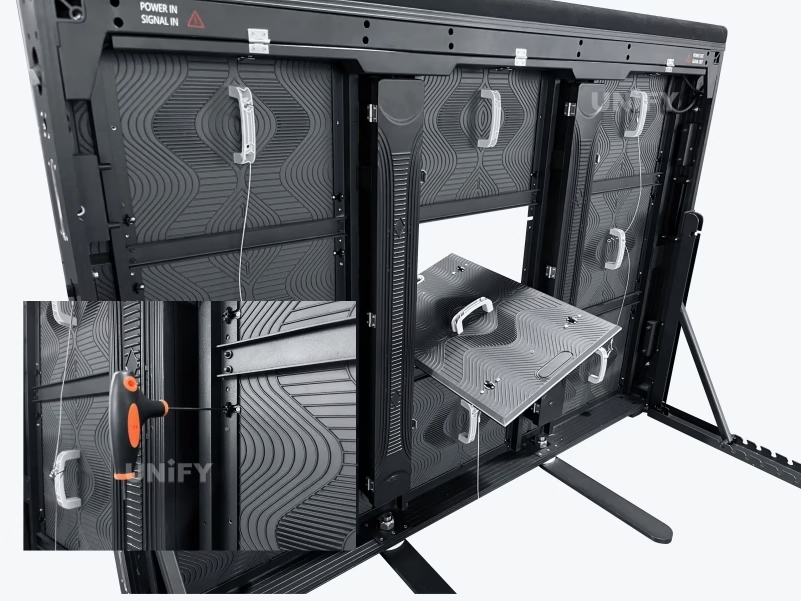
Each 480×320mm module carries a mechanical latch and handle — one technician swaps a module from front or rear in seconds, no tools.
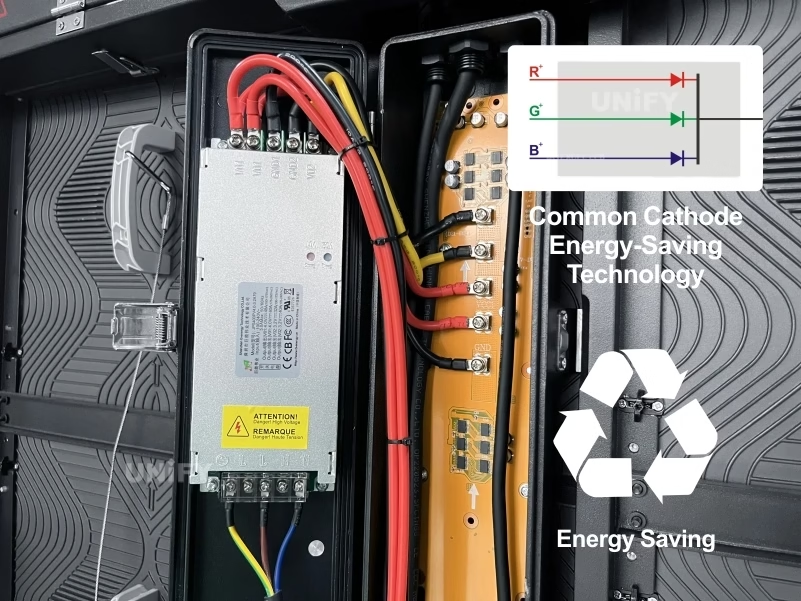
Common Cathode, -30% Power
CCT supplies each LED color at its own voltage — over 30% lower consumption and about 15°C cooler running than standard designs.
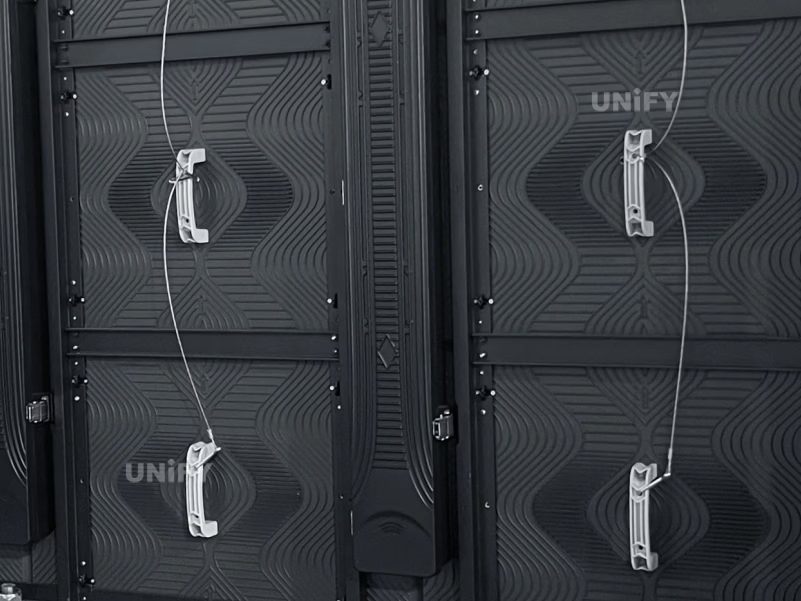
Steel Support & Locking Buckles
The steel ground supporter and locking buckles hold the 47kg wide cabinet vertical on uneven ground — steady through ball impacts and strong wind.
3840Hz Broadcast Refresh
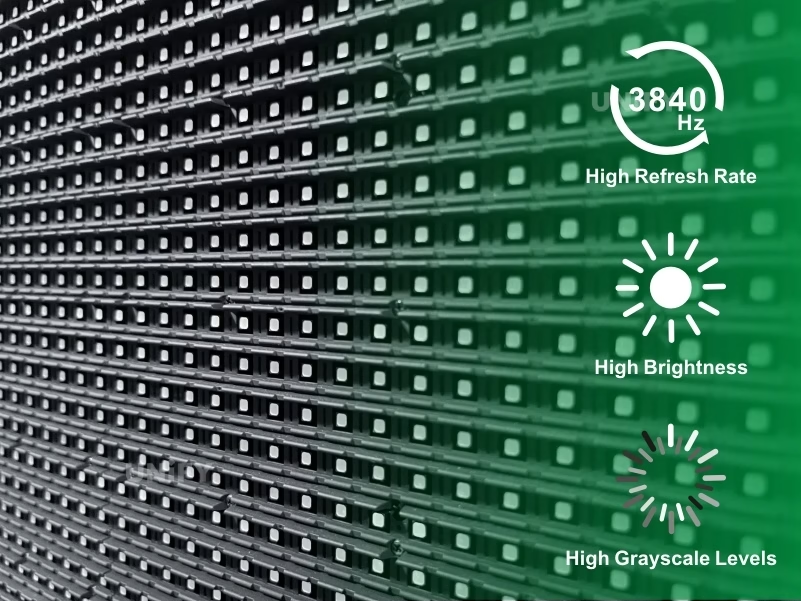
3840Hz refresh with 14–16-bit grayscale keeps the picture clean in slow-motion replays — no scan lines when the cameras go frame by frame.
Legidatech LED screen — Have you ever seen such a waterproof LED display test in USA
Wide-Cabinet Math
How Does the 1440×960 Wide Cabinet Cut the Stadium LED Cabinet Count?
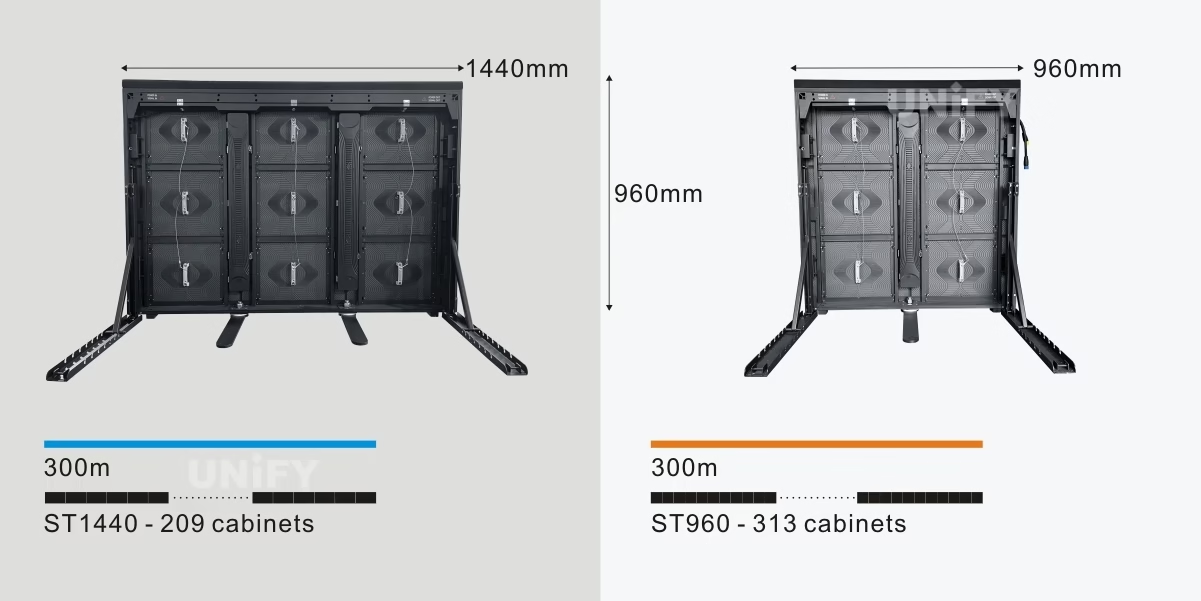
A perimeter run is a chain of cabinets, and every cabinet is a lock, a lift and a rigging point. At 1440mm wide, the ST1440 covers 1.5 times the run of a 960mm cabinet with the same chain link — which converts directly into crew hours and hardware on long straight sections:
Every saved cabinet saves its lock, its lift, its rigging point and its share of the install crew — roughly a third less hardware handling on the standard stadium run. On corners and short segments the arithmetic flips, which is exactly why the ST960 960×960 cabinet exists alongside it: the wide cabinet builds the straights, the narrow cabinet turns the corners.
Generation Comparison
How Does the ST1440 1440×960 Stadium LED Display Compare With ST960 and SP?
Three perimeter generations on one site — wide, narrow and legacy:
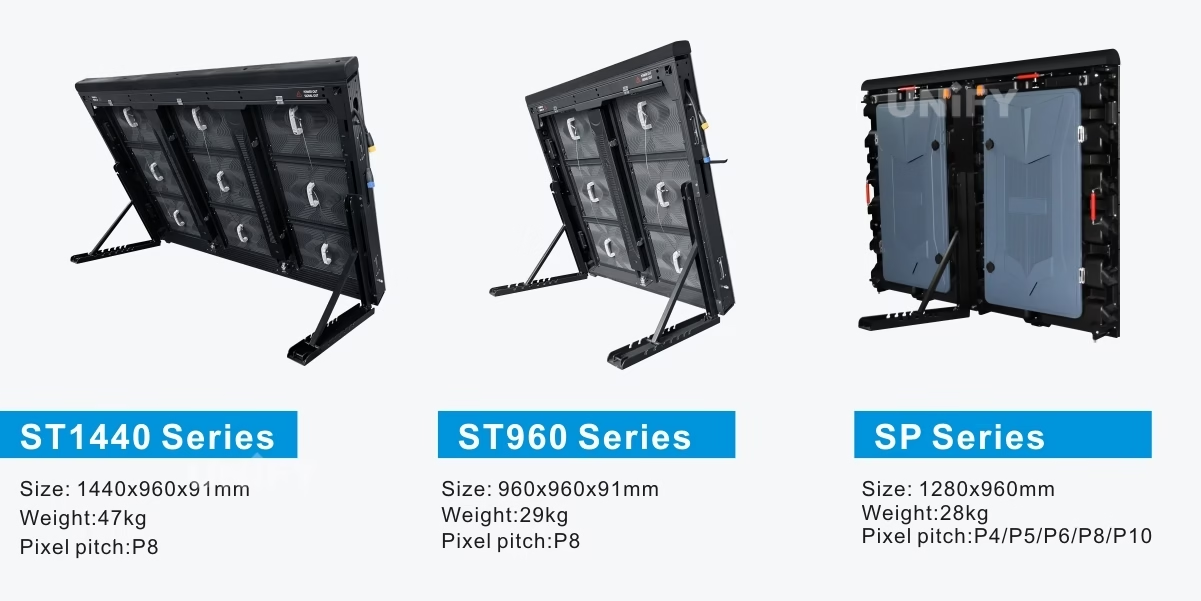
Four key differences between the ST1440 and its 960mm sibling decide which cabinet carries a given run:
- Width: 1440mm against 960mm — 1.5× the run per cabinet, so the chain has a third fewer links.
- Cabinet count: 209 against 313 on a 300m perimeter — 104 fewer locks, lifts and rigging points.
- Weight: 47kg against 29kg — the wide cabinet is a two-person lift, the narrow cabinet a one-person carry.
- Segment fit: 1.44m steps suit long straight runs; 0.96m steps suit tight corners, ramps and short segments — the pair covers a full stadium.
See the narrow cabinet’s page for the ST960 960×960 stadium LED display and the legacy SP series full range.
Specifications
What Are the ST1440 1440×960 Stadium LED Display Specifications?
The wide cabinet at venue-grade spec — verified ST1440 engineering data:
Product Details
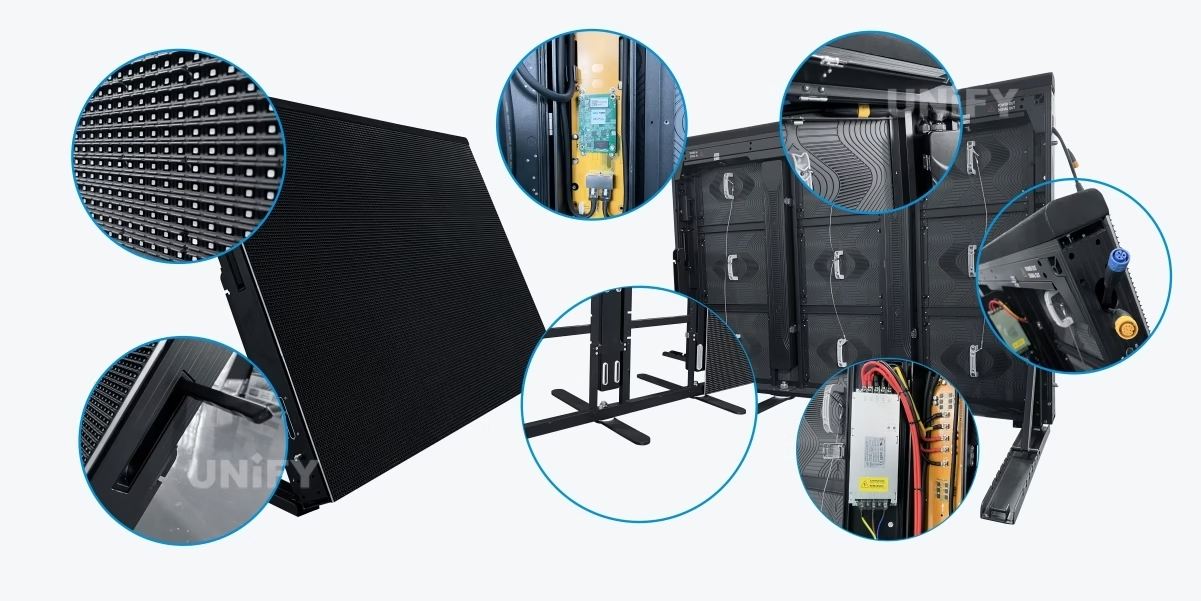
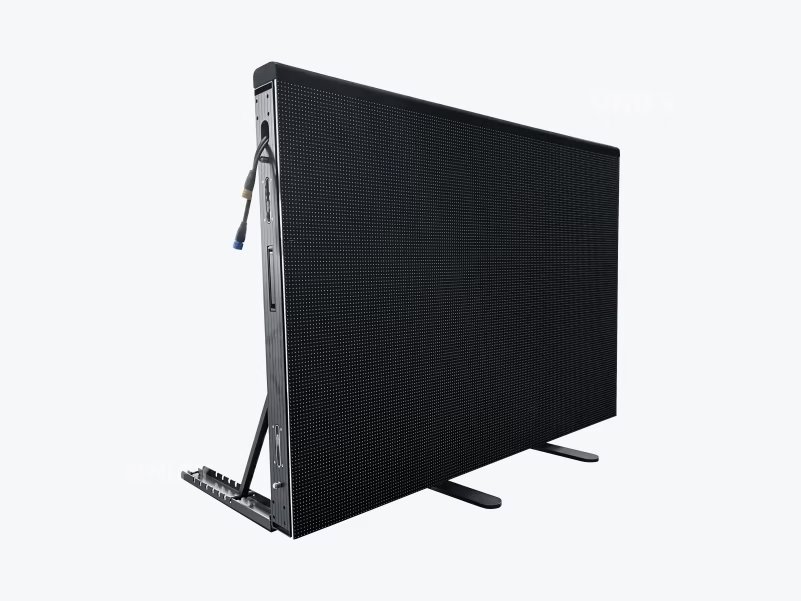
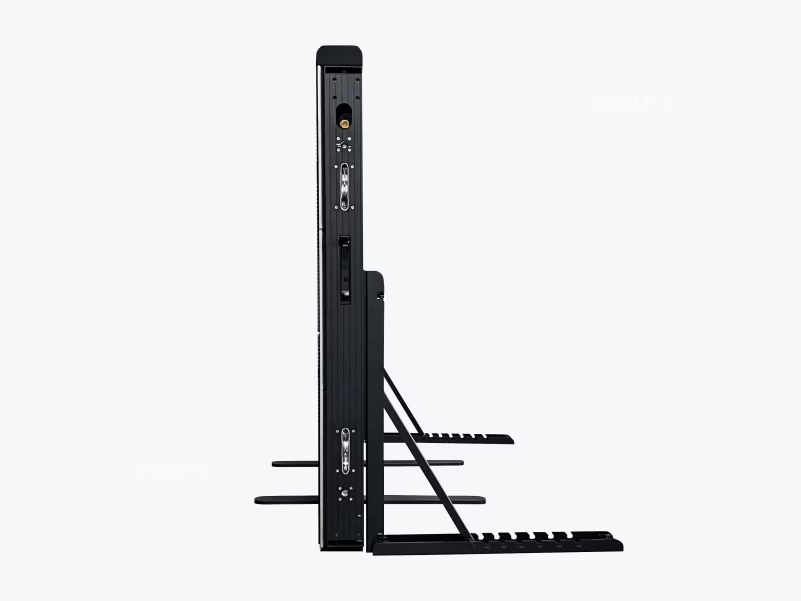
What Do the ST1440 1440×960 Stadium LED Display Details Look Like Up Close?
Factory detail photos — every lock, module and connector up close:
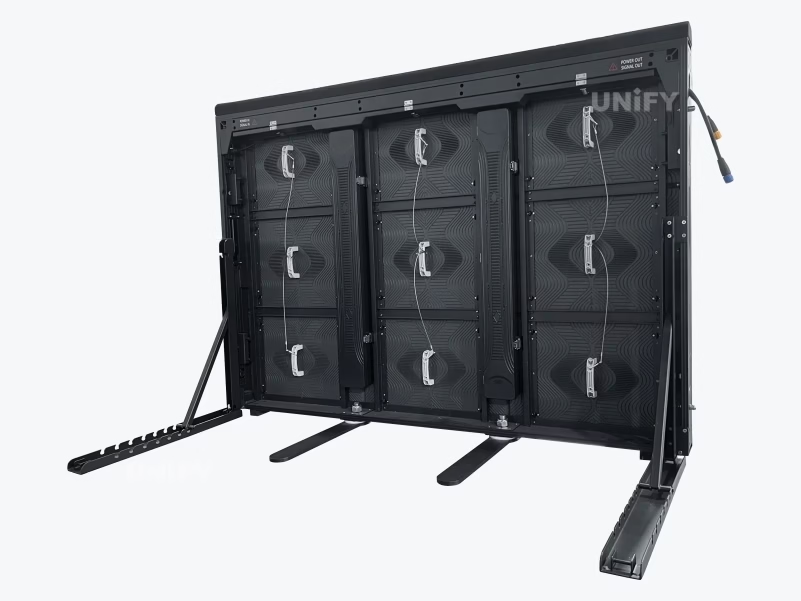
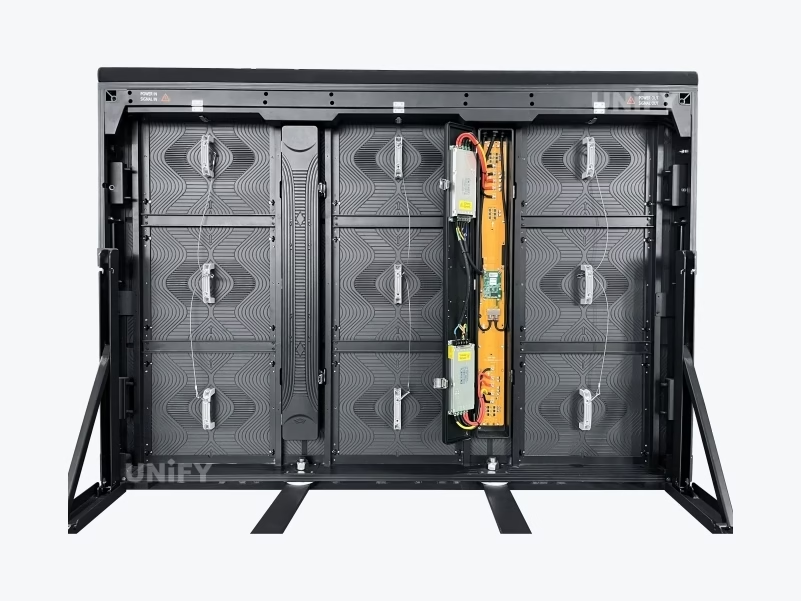
Aiming the Screen
How Does the 90°–120° Stand Aim the 1440×960 Stadium LED Panel?
The same seven-position folding platform as the ST960 — the base opens through 90° and locks at 90/95/100/105/110/115/120°: lower angles for pitch-level cameras and front rows, mid positions for the main stands, 115°–120° for VIP boxes and elevated broadcast platforms. The wide cabinet’s steel ground supporter and locking buckles hold the angle on uneven ground through the match, and the base folds flat for storage after the season.
Applications
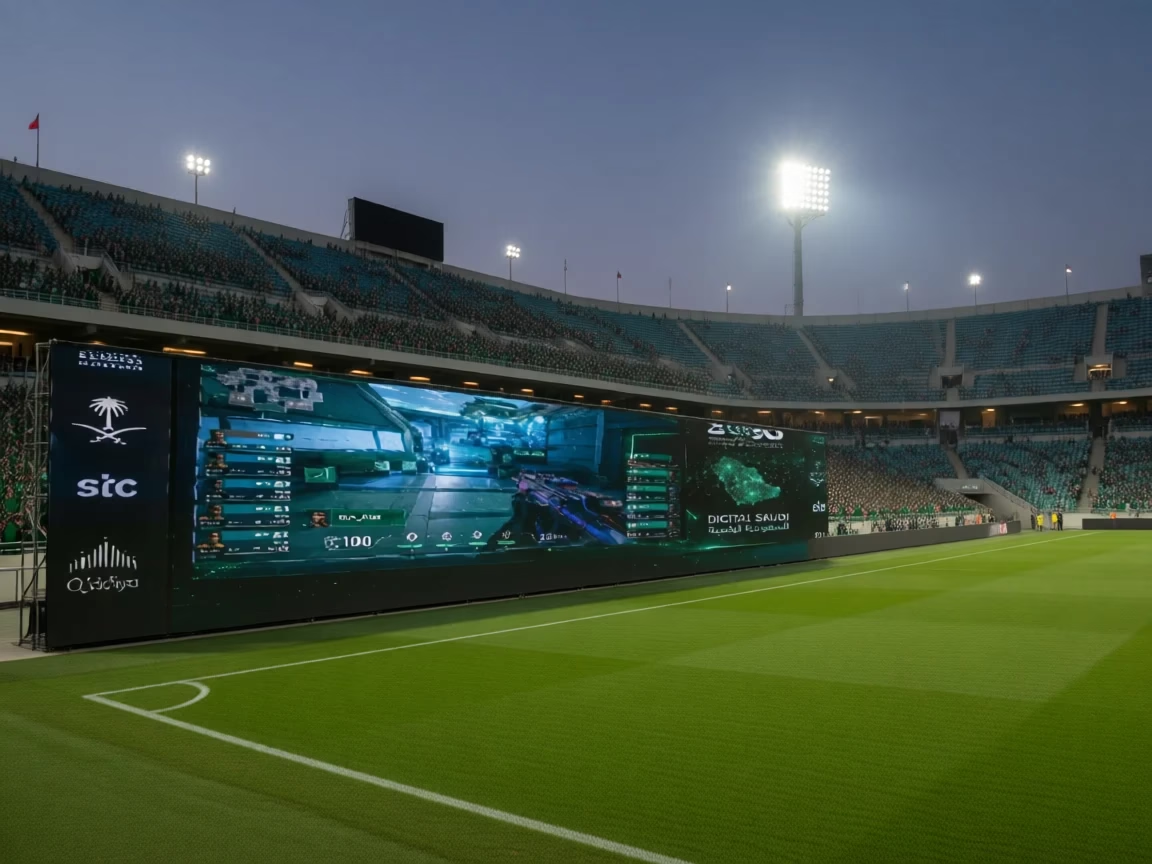
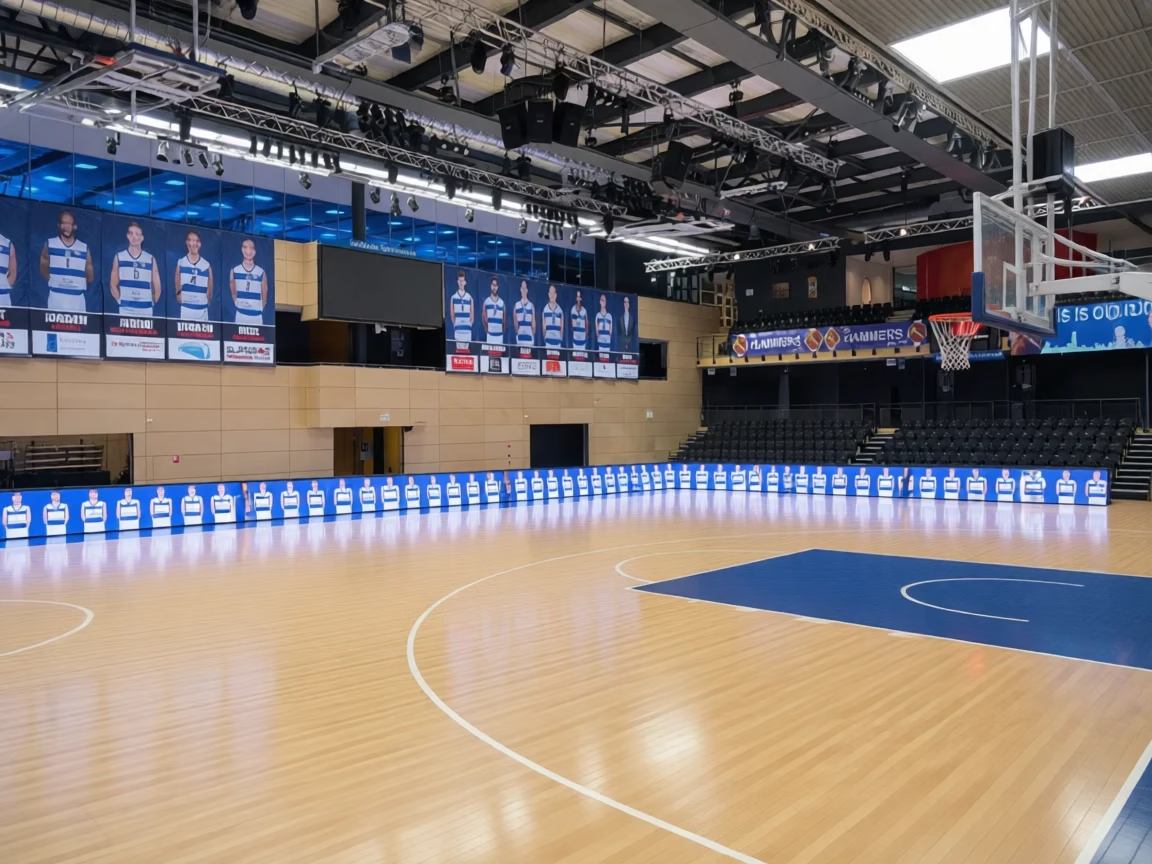
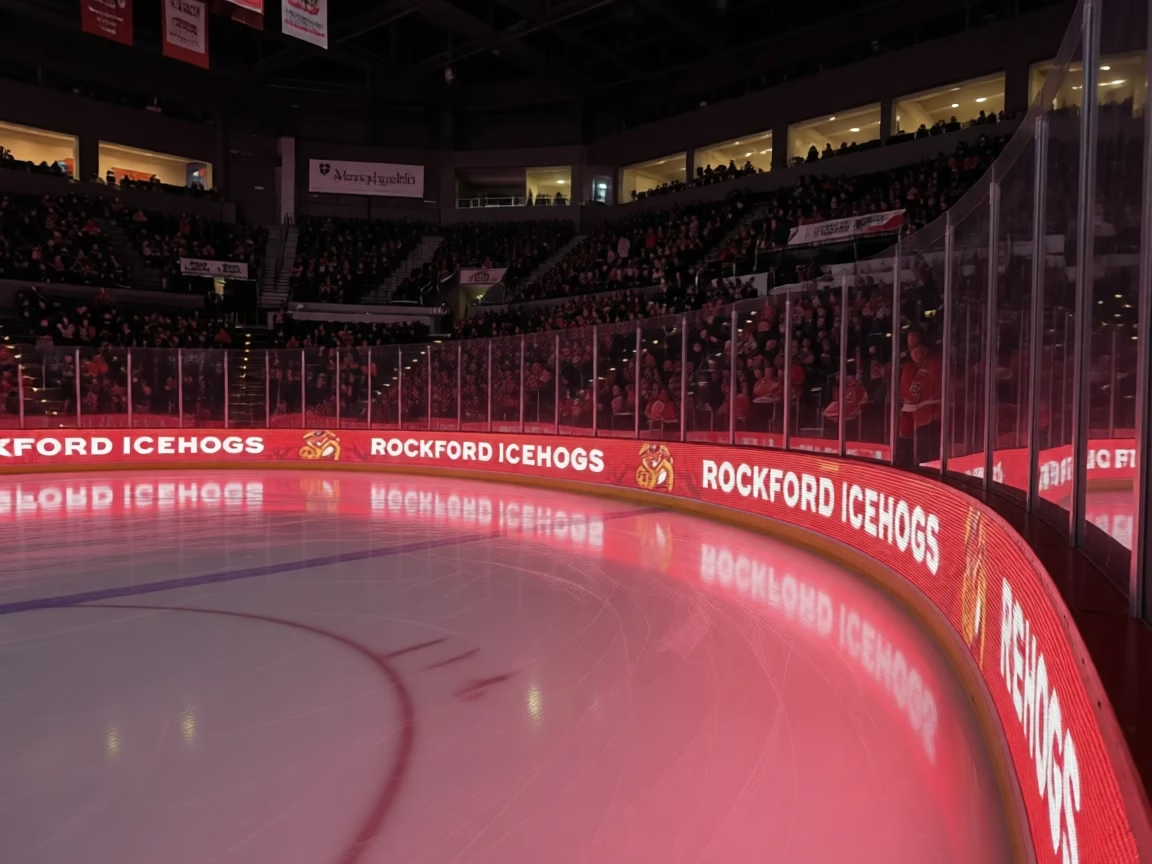
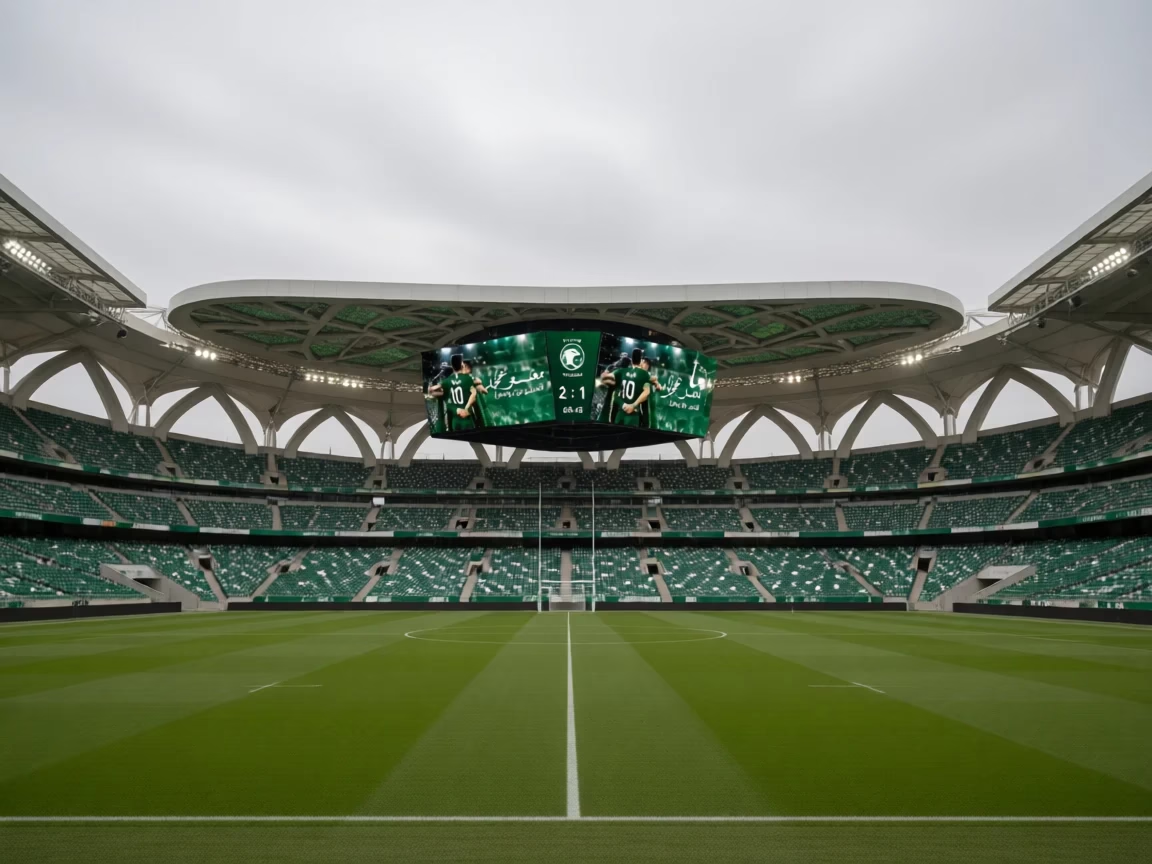
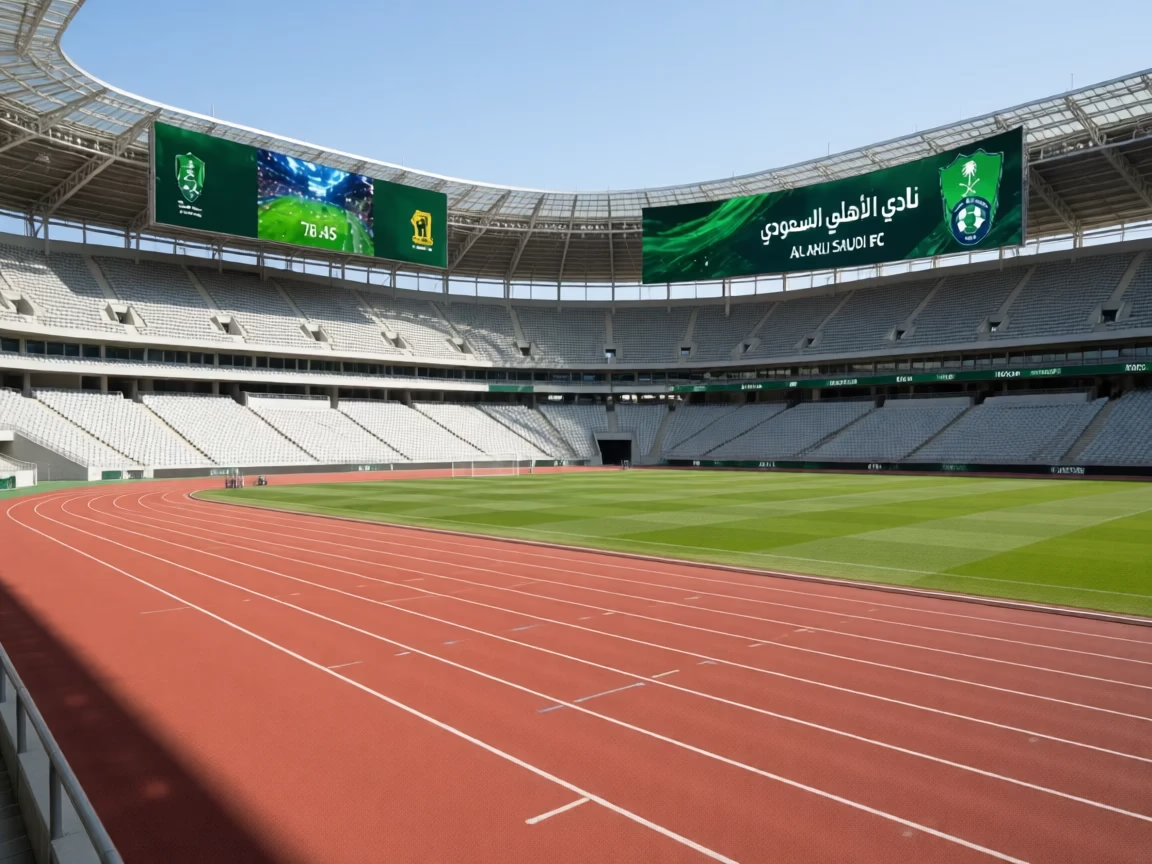
Where Do 1440×960 Stadium LED Displays Get Used?
Six venues where the wide cabinet is the standard call:
Video Demonstrations
What Does the 1440×960 Stadium LED Display Look Like in Action?
Pitch selection and dispatch checks on camera:
Case Studies
What Projects Use the ST1440 1440×960 Stadium LED Screen?
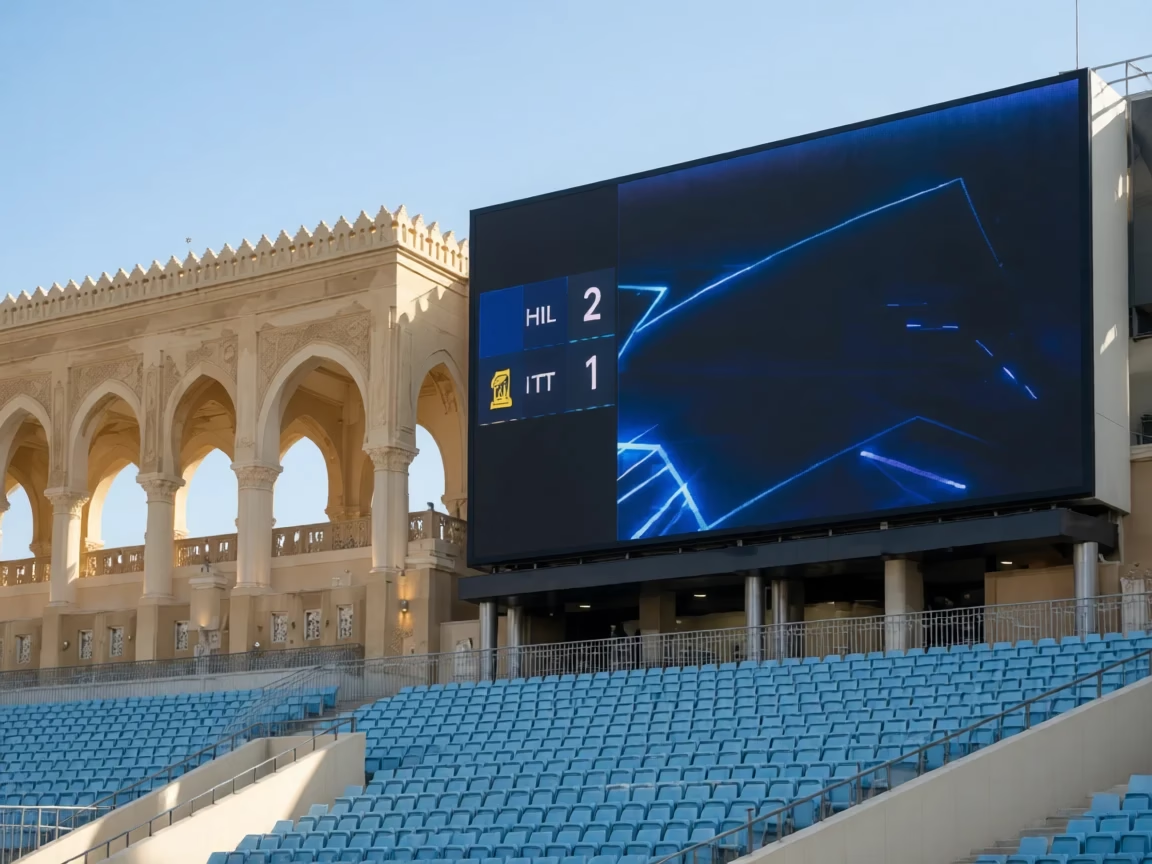
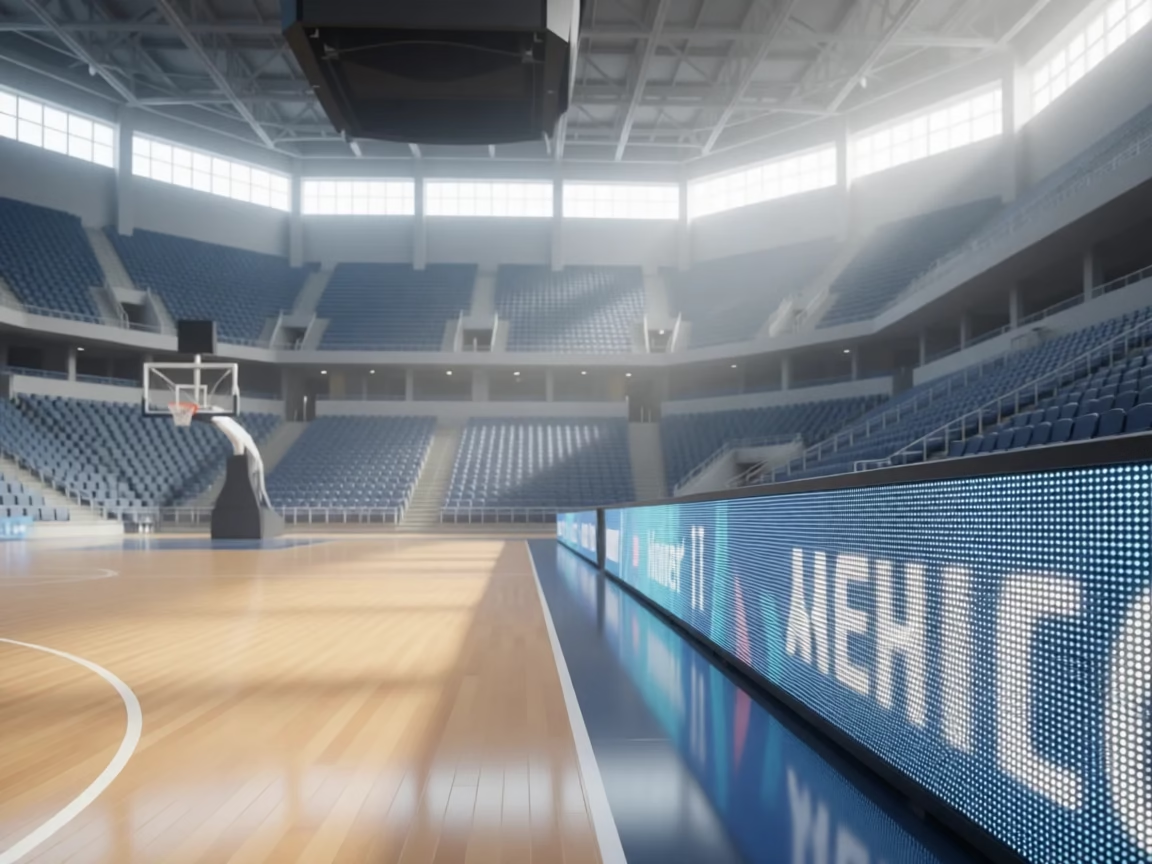
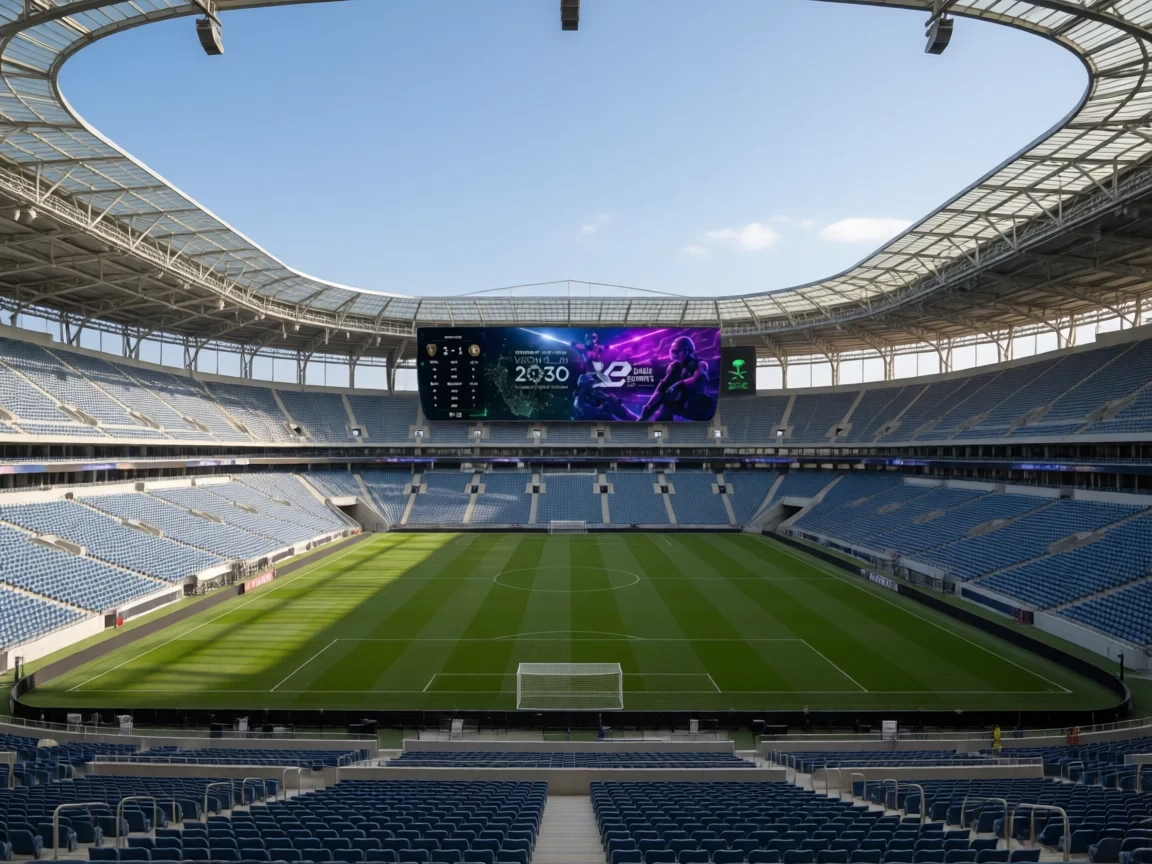
Field builds that show what the wide cabinet does on match day:
Legidatech LED screen — Sport LED display perimeter LED display case
FAQ
What Should You Ask Before Buying a 1440×960 Stadium LED Display?
Related
Where Can You Learn More About 1440×960 Stadium LED Screens?
Stadium & Outdoor Series
Collection Hubs
Factory Strength
Why Source Your 1440×960 Stadium LED Display From the Factory?
A perimeter screen is judged on match day. Every ST1440 panel leaves the line after a 72-hour aging run, spare modules ship from the same production batch, and the 12–24 hour response window covers the fixture list. As a full-line LED screen manufacturer, we supply the perimeter layout plan, control-system pairing and on-site commissioning with the screens. Visit our LED display factory page.
Legidatech LED screen — The R Series Rental Stage Display Undergoing Aging Test Site
Ready to Source Your 1440×960 Stadium LED Display?
Factory-direct ST1440 quotes with the perimeter layout plan and CCT savings model.
unifyledscreen@gmail.com | +86-191-18802497
Operator’s Guide
How Do Venue Operators Get the Most From a 1440×960 Stadium LED Display?
Published: August 2026 | 10 min read | UnifyLED Engineering Team
The wide cabinet is the perimeter’s logistics decision. Where the narrow cabinet wins corners, the 1440×960 wins distance — and this guide walks the operator’s math on the straights: cabinet counts, hidden wiring, two-person handling, and the power bill that a third fewer cabinets changes.
The audience for this page is the three people who share the bill: the venue manager who answers to the board, the technical director who answers to the broadcast truck, and the commercial director who answers to the sponsor roster. Each reads a different spec sheet — the first reads the cabinet count, the second reads the wiring and refresh, the third reads the power bill — and the 1440×960 stadium LED display is the format where all three sheets sit on one cabinet.
Short answer: a 1440×960 stadium LED display earns its keep on long straight perimeter runs, where four numbers decide the purchase: cabinet count (209 against 313 narrow cabinets on 300m), a covered top cable duct that hides the wiring and keeps the connectors dry, a two-person 47kg handling plan for setup day, and common-cathode power that shrinks the seasonal bill. Pair the wide cabinet with the 960mm cabinet for corners and short segments, and the venue covers every perimeter geometry with one platform.
Chapter 1 — The Cabinet-Count Math: What 1440×960 Stadium LED Width Buys
Perimeter installation is a chain-link problem. Cabinet count is a chain-length metric: every cabinet added brings a lock, a lift, a rigging point and its share of the crew’s clock. The ST1440’s 1440mm width covers 1.5 times the run of a 960mm cabinet with the same chain link — a 300-meter perimeter drops from 313 cabinets to 209, saving 104 locks, 104 lifts and 104 rigging points. On a 400-meter athletics track the saving reaches 139 cabinets. The wide cabinet is the format’s answer to the straight line, the same way the 960mm cabinet is its answer to the corner.
The arithmetic also compresses the setup window. Fewer cabinets means fewer case unloads, fewer join operations and fewer level checks, and the quick-lock design joins each pair in seconds. A crew that rigs 300 meters on wide cabinets walks the same distance, lifts a third less hardware and finishes earlier — which matters when the fixture list gives load-in a three-hour window.
The counting habit that keeps quotes honest: measure the actual perimeter with a wheel, divide by 1.44 for the straights and by 0.96 for corners and ramps, then add 2% spare. The mixed count is the purchase order — wide for the runs, narrow for the turns, one platform for both.
Transport follows the same third. A 300-meter run ships as 209 wide cabinets instead of 313 narrow ones — a third fewer cases, a third fewer truck slots, a third fewer forklift minutes. On a touring or season-shared venue the saving repeats every move, which is why venues with multiple sites standardize the wide cabinet on their long-run stock even when the corners stay narrow.
The spare-count habit closes the chapter: keep 2–3% spare modules and at least one spare stand assembly per site, because a bent stand leg is the one failure no module swap can fix mid-match. The wide cabinet’s parts are common with the 960mm platform, so one spare kit serves both sizes — another dividend of the shared ST family.
Inventory planning follows the same arithmetic for venues that run multiple perimeters. A fleet of 209 wide cabinets and 50 narrow cabinets covers a full 300-meter pitch with corner flexibility and a spare section; the same fleet splits into two 150-meter side runs for a multi-sport week, because every segment of the ST family joins the next with the same locks. The mixed fleet is the smallest inventory that covers the widest fixture list — the operational definition of venue asset utilization.
Chapter 2 — The Cable Duct: Field Wiring the 1440×960 Stadium LED Screen Never Shows
Pitchside wiring lives in the worst neighborhood on the site: rain, hose-down cleaning, boots, balls and rodents. The ST1440’s covered top cable duct is a wiring architecture that runs all power and data lines through a covered channel along the cabinet top — no visible cables from the audience side, no rain reaching the connectors, no dust or foot traffic near the lines. On a 300-meter run, the duct removes roughly 600 connection points from the weather and the crowd at once.
The field habit that protects the duct: after every strike or reposition, lift the duct covers on the first and last cabinet of each section and check the connector seating. The middle of a run rarely fails; the ends take the handling. A two-minute cover check beats a matchday ground fault search.
Compare the two wiring worlds on a rainy season schedule: an open-wire perimeter runs hundreds of exposed connectors through every downpour, and a single wet connection takes a section dark mid-match; the ducted run keeps the same connectors under a covered channel where standing water never reaches. The duct is not a cosmetic detail — it is the difference between a weather risk list and a weather answer, priced into the cabinet from day one.
Chapter 3 — Handling 47kg: The Two-Person Lift Geometry of the 1440×960 Stadium LED Cabinet
The wide cabinet’s honest cost is weight: 47kg against the narrow cabinet’s 29kg, which makes every lift a two-person job. The setup plan that absorbs it: assign lift teams in pairs, roll the folded stands into position first, and raise each cabinet onto its base before locking — the steel ground supporter and locking buckles take the load once the base is down, so the lift is a matter of feet, not overhead holds. On a 209-cabinet run the difference between a rehearsed two-person routine and an improvised one is measured in hours and backs.
The stand geometry does double duty here: the folding base opens through 90° and locks at seven positions from 90° to 120°, so the aiming pass happens at ground level before the cabinets are joined — no lifting a joined section to change its angle. Aim lower for pitch-level cameras and front rows, steeper for upper tiers and broadcast platforms, and lock every section before the first cabinet joins the next.
The storage and reuse dividend shows up after the season: the bases fold flat and a 300-meter run collapses into wheeled racks instead of a warehouse aisle. Venues that host multiple sports re-aim the same wide boards between fixtures — the seven positions make the re-aim a wrench job at ground level, not a rigging call. The wide cabinet’s setup weight is front-loaded into two-person lifts; everything after the lift is designed to be one-person work.
Chapter 4 — Pitchside Power: The Wide-Cabinet Electric Bill
Common cathode technology (CCT) is a power architecture that supplies each LED color channel at its own voltage, cutting consumption by over 30% against standard designs and running the cabinet about 15°C cooler. Worked example, with stated assumptions: a 300-meter perimeter on 209 wide cabinets covers 289m²; at the ST1440’s ≤186W/m² average, an 8-hour matchday draws about 430kWh against roughly 624kWh for a standard 270W/m² design — a saving near $29 per matchday at $0.15/kWh, or over $1,100 across a 40-match season before the lamp-life gain from cooler running. The figures move with local rates and schedules; the method holds everywhere.
Brightness scheduling stacks a second saving: a board running ≥6500 nits at noon needs a fraction of that under floodlights, and a controller-side night schedule trims the bill further while protecting the lamps. The 14–16-bit grayscale keeps sponsor colors smooth at reduced drive — the sponsor wall at 30% brightness still reads like the sponsor wall.
The per-cabinet reading of the same numbers: a wide cabinet covers 1.3824m², so at ≤186W/m² average it draws roughly 257W — about the draw of two office ceiling lights, running an entire perimeter segment of sponsor wall. The engineering difference behind the number is that CCT drives each color at its own voltage and burns less of the input as heat, which is why the saving and the cooler operating point arrive as a pair.
Chapter 5 — Buying the 1440×960 Stadium LED Display: Checks, Warranty and the Sample Board
The purchase closes on five lines: cabinet width against the perimeter’s straight-to-corner ratio, protection against the local weather (IP65 for ground-level boards), refresh against the broadcast contract (3840Hz), stand geometry against the seating layout, and the warranty’s actual repair path. Factory-direct orders should include spare modules from the same production batch, the perimeter layout plan, control-system pairing and a 3-year warranty that covers the outdoor duty cycle. A verified LED screen manufacturer ships the platform with the documentation to prove it.
Before committing, order one wide sample board and run the checks that matter on match day: lift it with two people across a mock run, tip the stand on uneven ground, open the cable duct and check the connector seating, swap a 480×320 module with a stopwatch, spray the cabinet face and check the seals, and record it at 240fps on a broadcast camera. One sample board costs less than the cheapest day of downtime it can prevent — and the sample’s documentation habit (batch numbers, test reports, layout plan) predicts how the full perimeter will be supported.
The control system is the last spec on the list and the first one blamed on site. The ST1440 platform runs the mainstream ecosystem — NovaStar controllers and other leading systems both drive the cabinet with standard receiving cards — and the live-match workflow (scoring feed, sponsor rotation, instant replay trigger) decides the processor tier. Lock the control spec at purchase and confirm the receiving-card pairing before shipping: swapping processor families mid-season is the most avoidable delay in stadium LED.
The seasonal service routine that keeps a 1440×960 stadium LED display earning: one visual sweep for collision damage after every fixture, one module test pattern before every matchday, one torque pass on the stand locks monthly, one cable-duct connector check before the rainy season, and one spare-kit inventory count at the season break. It is an hour of pitchside work that decides whether the board books its sponsors for next season.
Venues already running the earlier SP series generation have a practical upgrade path: the ST1440 adds the EVA top edge, the cable duct and the seven-position folding stand while keeping the perimeter format familiar to the rigging crew. Wide sections can replace long straight runs first, with the legacy boards rotating to the low-priority sections — the generations share the control ecosystem, so the upgrade is a procurement decision, not a system migration.
The financing habit rounds out the discipline: perimeter screens depreciate on a five-to-seven-year cycle, and the four decisions above — wide-cabinet count, covered wiring, two-person handling and CCT power — are what keep the board on the sponsor roster in season six. The screen that survives the tackle and the rain pays for the next one.
Conclusion: The 1440×960 Stadium LED Display Standard
The 1440×960 stadium LED display is the format sports venues converged on for the straights because it turns the perimeter into arithmetic: 1.5 meters of run per cabinet, a third fewer chain links on the standard pitch, one covered duct for the wiring, one folding stand for the geometry, and one common-cathode power system for the bill. The operator who specs those five numbers — and pairs the wide cabinet with the 960mm cabinet for the corners — runs the board that keeps its picture, its sponsors and its place in the broadcast through season six and beyond. The cabinet is the platform; the venue discipline is the season.
The venue that runs this arithmetic once re-runs it every season — on the fixture list, the sponsor roster and the maintenance budget — and finds the same answer: the wide cabinet on the straights, the narrow cabinet on the turns, and one spare kit for both. That is the whole of the perimeter decision, and the ST platform is built to make it.