
Outdoor Cabinet Collection · One Standard Size
960×960mm outdoor LED Cabinet Collection: 4 Series Compared
Four outdoor LED display series on the industry-standard 960×960mm outdoor LED Cabinet — A960 energy-saving flagship, OK aluminum billboard, B budget advertising and SP sports. Compared by material, weight, power, protection and price in one table.
Size Standard
What Is a 960×960mm outdoor LED Cabinet?
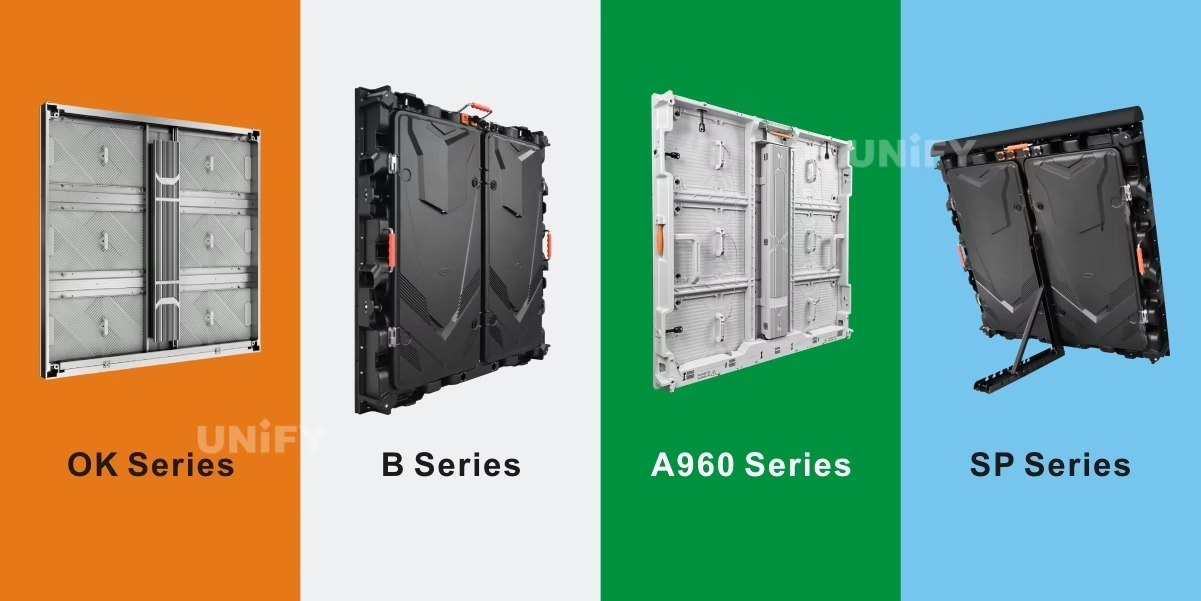
The 960×960mm outdoor LED Cabinet is the outdoor industry’s standard building block — a 0.92m² panel that combines with identical units into billboards, stadium screens and building facades. The format won because it divides cleanly into steel structure grids, pairs with the mainstream 320×160mm module, and keeps spare parts interchangeable across an entire fleet. We build four outdoor series on this one platform, so every series shares mounting, maintenance and supply-chain logic — only material, power and price decide which one fits a project. For the category background, see outdoor LED display.
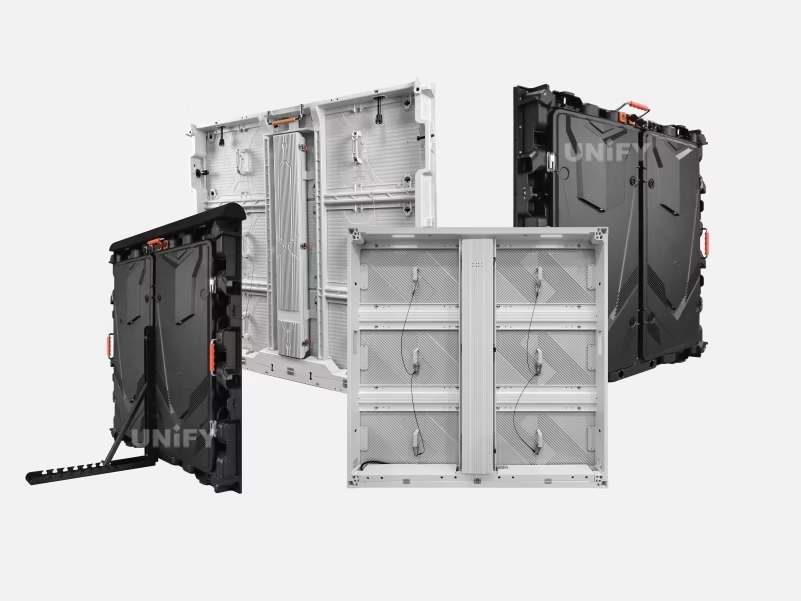
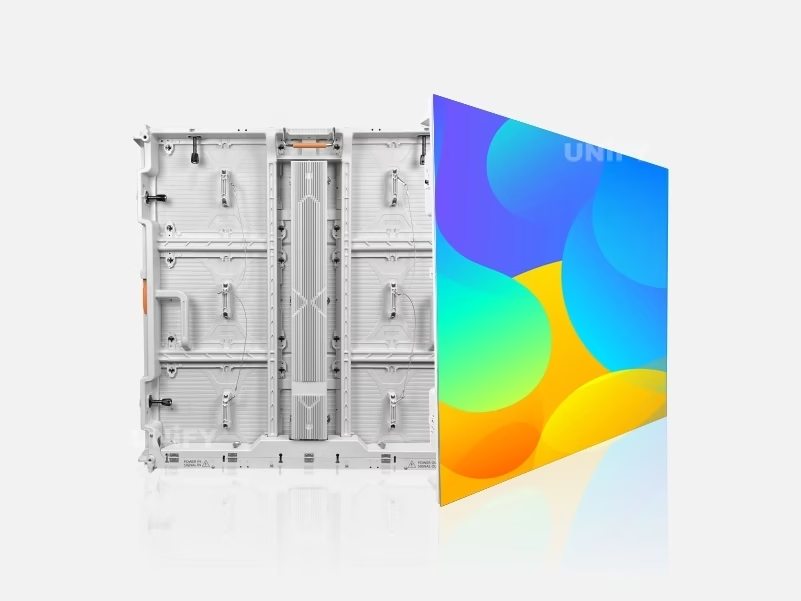
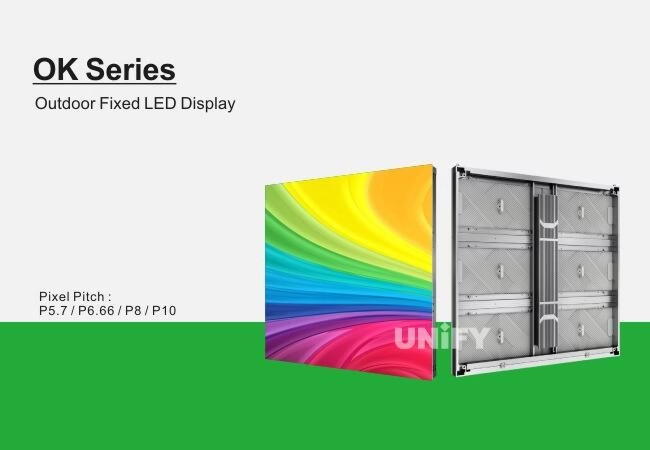
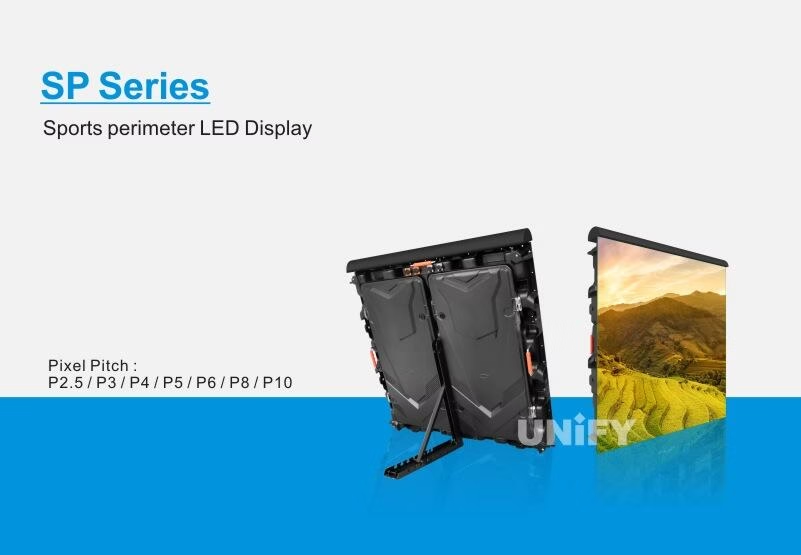
The four series at a glance: A960 is the energy-saving flagship (≤186W/m², IP66, five pitches); OK is the aluminum billboard workhorse; B is the budget aluminum-magnesium option; SP is the sports screen with 1280×960 perimeter variants.
Pain Points
Four Selection Problems a 960×960mm outdoor LED Cabinet Buyer Faces
Choosing between outdoor series goes wrong in four predictable ways — each answered by the comparison structure on this page:
Four Series, One Size — Which One?
Every series shares the 960×960mm platform, so the choice hides in the details. The comparison table below fixes one variable at a time — material, weight, power, protection — until only one series remains.
The Power Bill You Never Compared
Outdoor screens run 24/7, and a 100m² billboard at 250W/m² costs about $22,000–$26,000 a year in electricity. The A960’s ≤186W/m² average cuts that by roughly a quarter — the difference is in the table’s power row.
Price Without a Reference Point
$350–$900 per cabinet means nothing without knowing which material and tier a quote refers to. The price comparison section below anchors every series to its position — budget, workhorse or flagship.
Material Claims Nobody Verifies
“Magnesium” and “aluminum alloy” are marketing words unless the weight and flatness follow. The material guide below gives you the verification numbers — cabinet weight, thermal behavior and the failure modes each material avoids.
Get a dated quote that fixes these selection problems.
The Four Series
960×960mm outdoor LED Cabinet Series Overview
Four outdoor series, one cabinet platform:

Comparison
960×960mm outdoor LED Cabinet Comparison Table
Verified specifications:
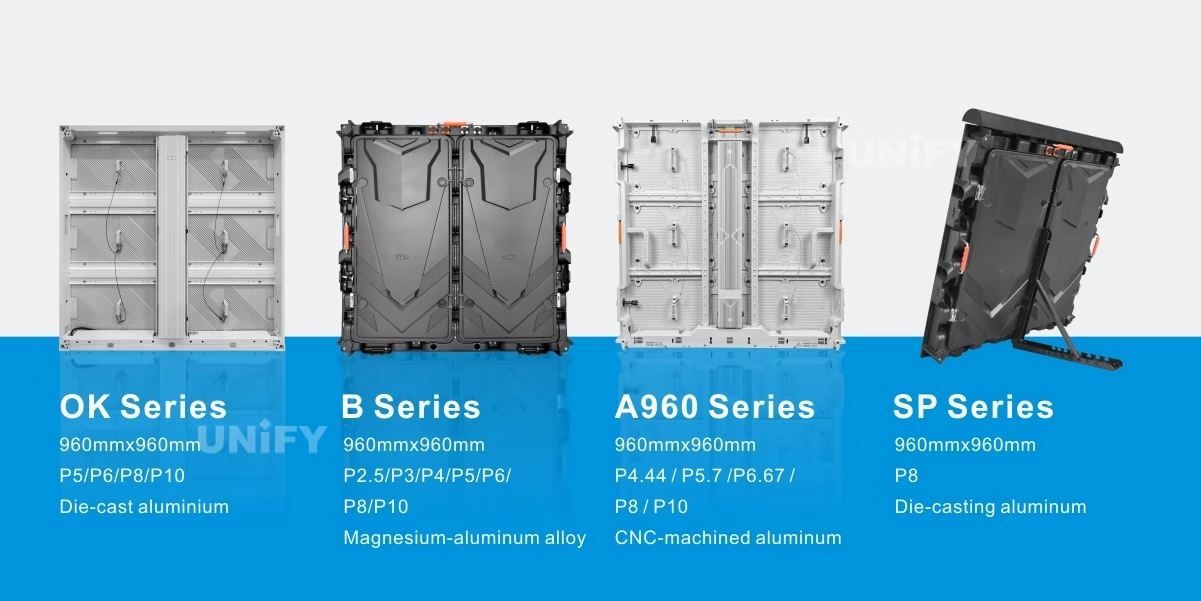
Figures sourced from each series’ specification page. The A960’s ≤186W/m² is the platform’s verified average-power figure; “30% saving” figures refer to the manufacturer’s stated comparison against conventional designs.
Price Positioning
960×960mm outdoor LED Cabinet Price Comparison
Market pricing for 960×960mm cabinets runs $350–$900 per cabinet. The four series occupy three price positions:
The price position follows the engineering position: the B trades refresh and power for entry cost, OK and SP balance performance against price, and the A960 spends its premium on the power bill that never stops arriving.
For the full cost breakdown including structure and commissioning, see outdoor LED screen price.
Materials
960×960mm outdoor LED Cabinet Materials: Aluminum, Magnesium & Iron
Cabinet material decides weight, heat dissipation and flatness — three costs that follow the screen for its entire life:
CNC-machined flatness that holds over years, the best heat conduction of the three materials, and 25–28kg per cabinet. The operating spec for warping-free seams and cool junctions — the choice when the screen must stay flat and the LEDs must stay cool.
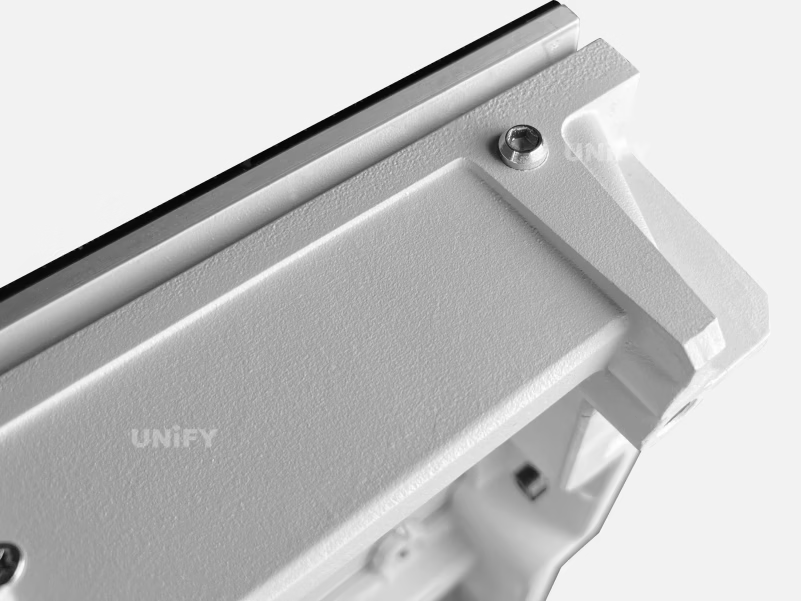
About 20kg lighter than iron structures at the same size — 28kg per cabinet — with good thermal behavior. The standard choice where structural loading and transport cost matter more than extreme flatness tolerance.
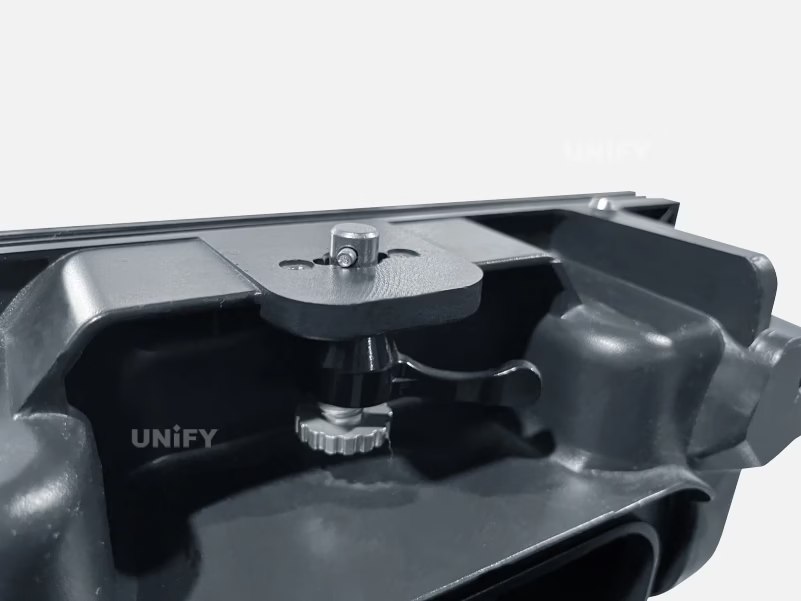
The legacy standard: cheapest per cabinet, heaviest at 45kg+, prone to warping and rust at welds. None of our current 960×960mm series uses iron — the weight penalty alone erases the price saving once structure and transport are counted.
Scenario Guide
Which 960×960mm outdoor LED Cabinet Fits Your Project?
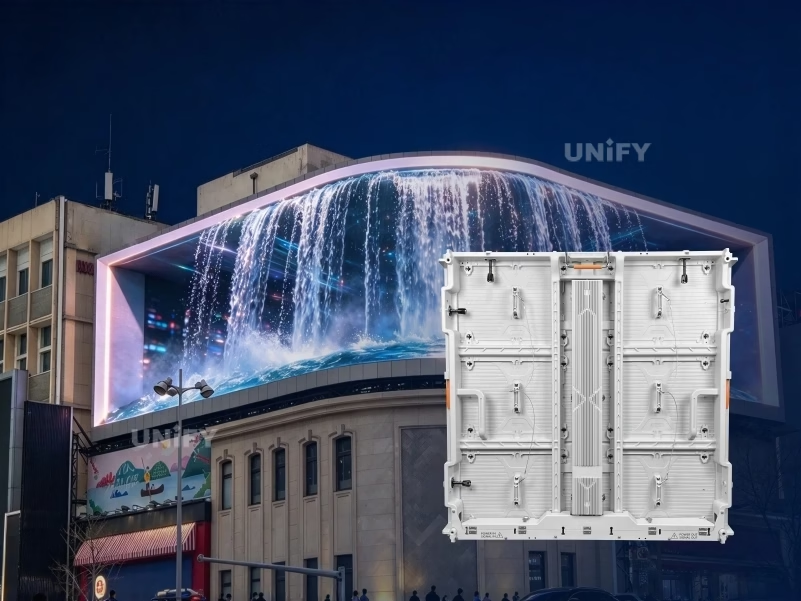
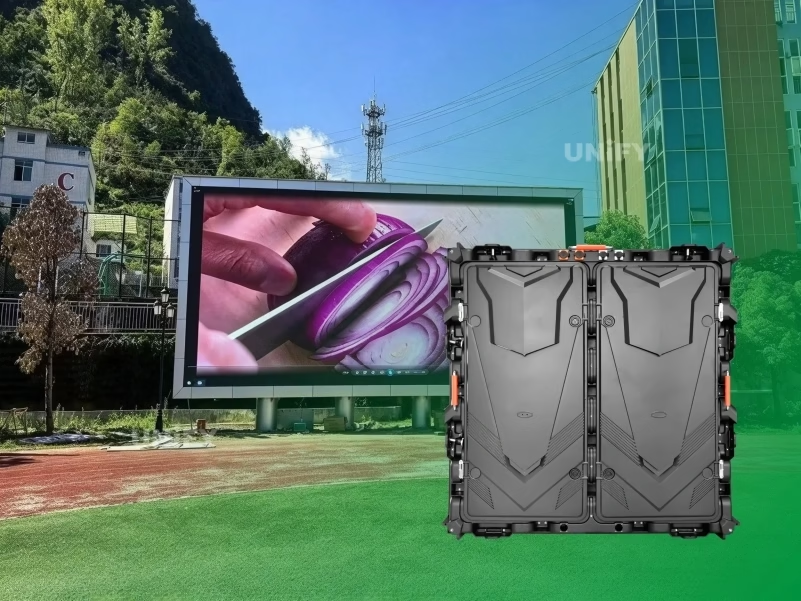
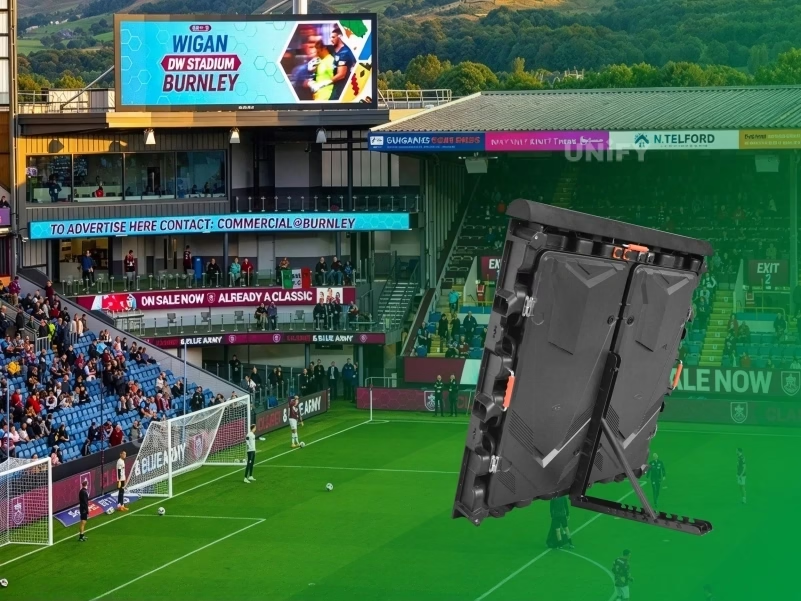
Building a 3D corner? The A960 and OK platforms support curved-corner splicing for 90° transitions. Project-level 3D consultation, content pipeline and structure design: 3D LED billboard solution.
Send the screen size — get the cabinet count and a dated quote.
Video Demonstrations
960×960mm outdoor LED Cabinet Video Demonstrations
Nine field videos covering the 960×960mm platform — energy measurement, installation, maintenance and series spotlights:
FAQ
960×960mm outdoor LED Cabinet FAQ
Question not covered? Get a direct answer with your quote.
Related Guides
Related Guides for 960×960mm outdoor LED Cabinet Projects
Buying & Pricing
Engineering
Operation
Showcase & Control
Factory Strength
Why Source Your 960×960mm outdoor LED Cabinet From an LED Display Factory
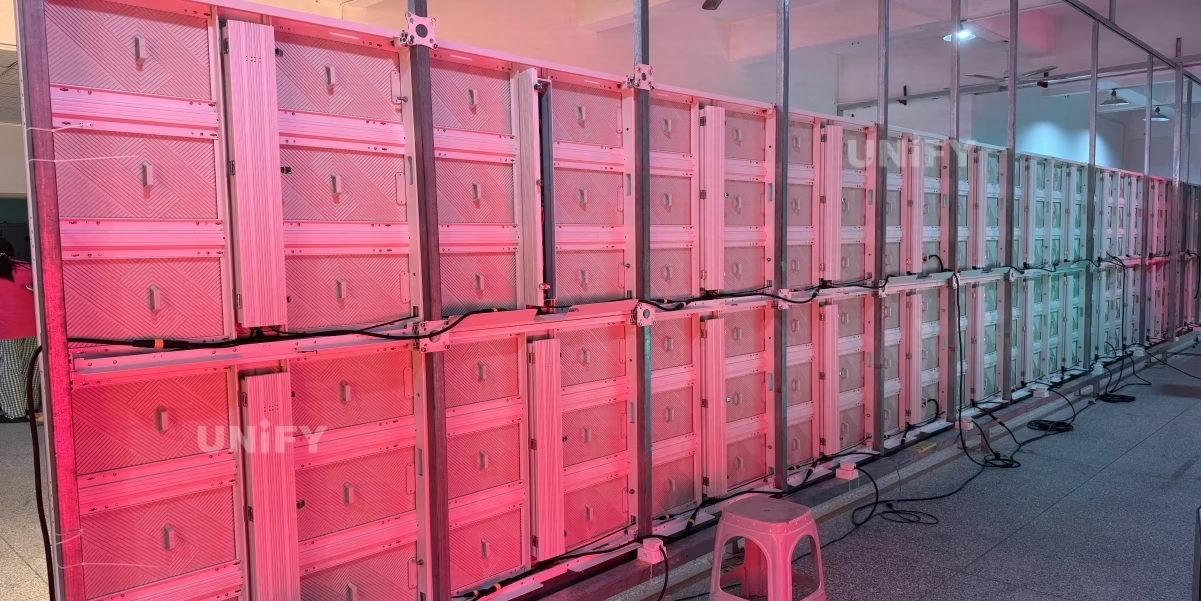
All four series leave one production line with the same three controls. Every batch runs a 72-hour factory aging test before dispatch; every series’ power consumption is verified per batch on the line; and spare modules ship from the same production batch as the screen — so a year-three replacement seats invisibly into a year-one wall. For outdoor screens, where a week of downtime costs more than a cabinet, those three controls are the difference between a supplier and a partner.
As a full-line LED screen manufacturer, we supply the structure design, electrical schedule and commissioning guidance with the cabinets — the specification ships as one package from one warranty chain. Visit our LED display factory and quality control of LED display pages.
Ready to Source Your 960×960mm outdoor LED Cabinet?
Factory-direct comparison quotes for all four series — A960, OK, B and SP.
unifyledscreen@gmail.com | +86-191-18802497
Buyer’s Guide
960×960mm outdoor LED Cabinet: Choosing the Right Series
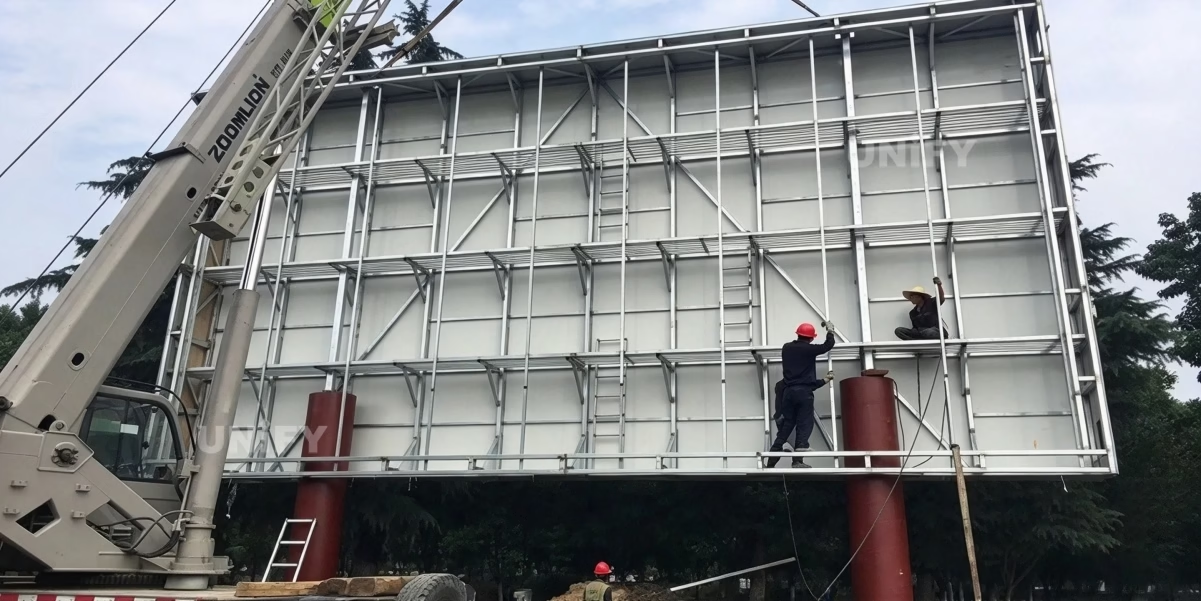
Published: August 2026 | 10 min read | UnifyLED Engineering Team
Outdoor LED projects converge on one cabinet size, and that convergence is information. When a buyer specifies 960×960mm, they are specifying the industry’s standard — which means every manufacturer competes on the same canvas, and the differences that matter are the ones inside the cabinet: material, power, protection and the engineering discipline behind them. This guide walks the four series we build on the 960×960mm platform and the decision path between them.
Chapter 1 — One Platform, Four Series: Where the Differences Hide
When all four series share one 960×960mm platform, the buyer’s work changes shape: size is no longer a variable, so the comparison narrows to three rows of the table above — material, power and protection — read in that order. Material first, because it fixes the weight and the thermal future of every cabinet on the wall. Power second, because it is the row that arrives as a monthly bill. Protection third, because it decides which weather the screen survives. Everything else in the table — pitch, brightness, refresh — follows from the project’s viewing distance and content plan rather than from the series choice itself.
That reading order exists because the three variables fail in that order in the field. A screen with the wrong material warps and rusts first; a screen with the wrong power figure bleeds cash for years without visible failure; a screen with the wrong protection fails on the first pressure wash. Pitch mistakes are visible immediately and cheap to regret; the three core rows fail slowly and expensively. The comparison table is ordered the same way — read it top to bottom, and the series shortlist usually collapses to one before the brightness row.
Module standardization is the size’s quiet engine. The 320×160mm module shared across all four series is the outdoor mainstream for a reason: control systems, power boxes and structural parts all assume it, and the moderate area keeps per-module replacement simple. A module swap on a 960×960 cabinet is four fasteners and a ribbon cable — the kind of repair a local technician completes from a single spare. The standardized module is what makes the standardized cabinet maintainable, not just manufacturable.
Fleet economics add a second layer. An operator running ten billboards across a city on one cabinet platform carries one spare population, one maintenance procedure and one technician training path. The 320×160mm module shared by all four series means a spare module fits every screen in the fleet regardless of series — a capability worth asking about at purchase, because batch-matched spares are what keep year-three repairs invisible. The standard size is a supply-chain decision as much as a product decision.
Chapter 2 — Material First: What the Cabinet Is Made Of
Cabinet material is the decision that quietly decides everything downstream. Die-cast aluminum — the A960 and OK platforms — carries CNC-machined flatness that holds over years of thermal cycling, and it conducts heat away from the LED junctions, which is where outdoor screens age. Aluminum-magnesium and magnesium — the B and SP platforms — shave the cabinet to 28kg with the strength to survive road transport and stadium mounting. Iron, the legacy standard at 45kg and up, still circulates at the low end of the market; its weight penalty erases its price saving once structure steel and installation labor are counted, and its welds are the first place rust starts. Our four series skip iron entirely.
The material choice maps to a project profile. Where flatness and longevity dominate — landmark billboards, facades with close viewing, 3D corners — die-cast aluminum is the operating specification. Where structural loading dominates — rooftop signs with weight limits, stadium perimeters — the magnesium class earns its premium. The comparison table above lays the four series side by side; the material row is the first filter, not the last.
The weight arithmetic deserves its own line. Twenty-eight kilograms per cabinet at 0.92m² means roughly 30kg per square meter of screen — a 100m² billboard loads its structure with about 3 tonnes of cabinet. The difference between a 28kg magnesium cabinet and a 45kg iron cabinet is 1.7 tonnes on the same structure — steel size, footing depth, crane capacity and installation crew hours all change with it. On rooftop and pole-mounted installations, that difference can disqualify a material before price ever enters the conversation.
Chapter 3 — Power: The Number That Pays Every Month
Electricity is the largest lifetime cost of an outdoor screen, and it is the figure most quotes bury. Conventional outdoor designs average 250–300W/m²; the A960’s common cathode electronics average ≤186W/m², and the OK platform’s energy-efficient driving system cuts about 30% against conventional designs. On a 100m² billboard running 24/7, the A960 saves roughly 56,000 kWh per year — $5,600–$6,700 at commercial tariffs, compounding for the screen’s life. The procurement habit that captures the saving: demand the average power figure in writing, not the maximum. Maximum power is a compliance number; average power is the bill. See LED display power consumption for the engineering behind both numbers.
Brightness interacts with power at the duty cycle: a screen specified at 6500 nits for a south-facing wall runs most days at 60–70% brightness, and the SP series automates this with environmental brightness sensing — the stadium screen dims itself for night events and pushes full output at noon. Fixed-setting screens leave that adjustment to the operator; either way, the average-power figure is the one to compare, because it is the one that arrives in the mail every month.
The refresh-rate row in the comparison table matters for two specific audiences. Broadcast cameras and phone footage — the two ways advertisers and stadium operators judge a screen — expose low refresh as scan lines and flicker, which is why the A960, OK and SP run 3840Hz class with the A960 reaching 7680Hz. The B series at ≥1920Hz is honest about its budget position: clean to the eye at distance, not the choice for broadcast-adjacent content. Refresh is the parameter that separates “looks good in person” from “looks good in every video of it.”
Chapter 4 — Protection and Maintenance: What the Field Demands
Protection ratings split the series on one question: where does the water come from? The A960 carries IP66 on both faces — the rating that survives pressure washing, monsoon horizontal rain and rooftop wind-driven spray, the three cases that end IP65 screens with marginal seals. The OK, B and SP platforms carry IP65 with sealed designs; the B adds triple-layer waterproofing as its budget answer. The distinction matters most on the rear face, which faces the wind on billboard structures — for the full rating system, see IP rating explained.
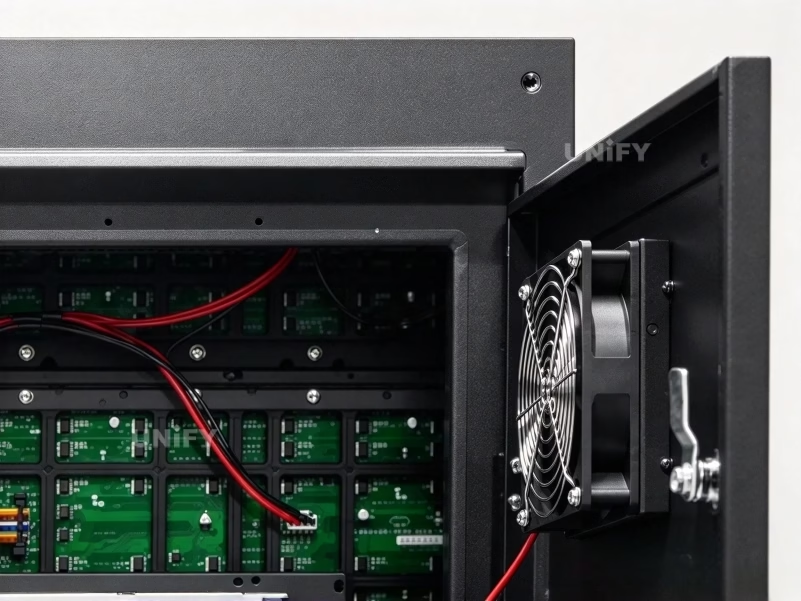
Maintenance design follows the same split. The A960 and SP support front and rear service with quick locks — one technician, no catwalk — while OK and B are engineered for low-maintenance fixed operation. The preventive schedule is mechanical either way: quarterly gasket inspection, annual lock lubrication, connector checks after storms, and the routine in LED screen maintenance keeps a screen on its 8–10 year service path. Temperature tolerance closes the loop: the A960’s –40°C to +60°C range covers cold-climate logistics, and the aluminum platforms avoid the rust failure mode that ends iron cabinets early — the two material decisions that quietly decide lifespan, per LED screen lifespan.
Chapter 5 — The Decision Path and the Buying Habit
The series choice reduces to three filters in order: scenario, material, power. Scenario first — advertising billboards choose OK or B by budget; stadiums and perimeters choose SP for the 1280×960 format and auto brightness; energy-critical and 3D projects choose the A960. Material second — die-cast aluminum for flatness and longevity, magnesium class for structural loading. Power third — when the screen runs 24/7, the average-power figure decides between series of similar price. Every path ends at the same buying habits: demand the average power in writing, state the pitch against the real viewing distance (the LED pixel pitch rule), and hold the warranty to its stated repair path.
Factory-direct sourcing completes the picture. One supplier covering all four series on the same platform ships structure drawings, spare modules from the same production batch and one support contact — which is what turns a four-series comparison into one purchase order instead of four negotiations. A verified LED screen manufacturer also carries the case history to back the spec sheet — LED screen cases shows the platform in the field.
Warranty and spares close the purchase the way the spec sheet opened it. Two years with a stated repair path — who pays the technician, who ships the part, how fast — is the practical baseline across the series. Spares follow the fleet rule: 3–5% of module count plus two full cabinets, ordered from the same production batch as the screen. The habits are unglamorous and they are the whole game: a screen’s economics are decided in the specification week, and its reputation is decided in the maintenance years that follow.
Conclusion
The 960×960mm outdoor LED Cabinet standardizes the hardware so the buyer’s attention lands where it belongs — on material, power and protection, the three variables that decide operating cost. Our four series answer the four most common outdoor profiles: the A960 for energy-critical installations, OK for cost-effective advertising, B for budget projects, SP for stadiums. Run the three filters, demand the average power in writing, and the cabinet choice stops being a gamble and becomes arithmetic — which is what a standard is for.