
Outdoor Fixed Installation · A1000 Series
1000x1000mm Outdoor LED Display — A1000 Series
The A1000 is a 1000×1000mm hollow aluminum profile display built for permanent outdoor advertising — 90° corner and curved splicing for naked-eye 3D, hard-connection flatness that holds for years, IP66 sealing, 8000:1 contrast and a common-cathode design that cuts electricity by 25%.
The Flagship Outdoor Cabinet
What Is a 1000x1000mm Outdoor LED Display?
The 1000x1000mm outdoor LED display is the large-format standard of fixed outdoor advertising — a one-square-meter cabinet built on a hollow aluminum profile chassis with die-cast aluminum modules, engineered for building corners, facades and plazas where the screen stays outside for a decade. The A1000 series takes the format further with 90° right-angle and curved splicing for naked-eye 3D, hard-connection flatness, IP66 sealing on both faces and common-cathode power design. For the category background, see outdoor LED display.
Short answer: a 1000×1000mm outdoor LED display is a one-square-meter aluminum-profile cabinet for permanent outdoor advertising, available in P2.97–P10.42. Buy the A1000 series when the project needs 90° corner or curved naked-eye 3D, front maintenance without a rear accessway, or a screen that stays flat and bright for years in harsh weather. Four numbers decide the purchase: contrast (8000:1), protection (IP66), operating range (-40°C to +60°C) and power (25% saving via common cathode).
Engineering Features
What Problems Does the A1000 1000×1000 Outdoor LED Display Solve?
Eight failure modes of fixed outdoor screens — each engineered out of the cabinet:
90° Corner & Curved 3D
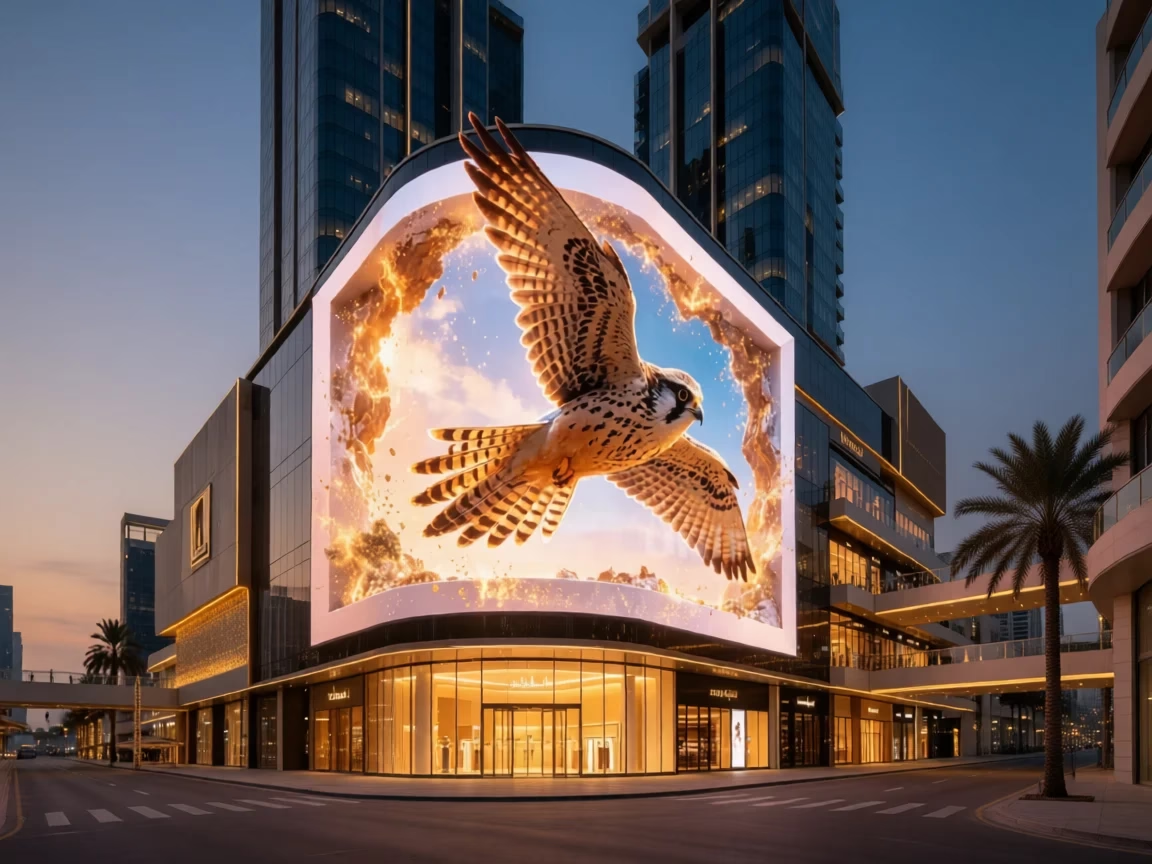
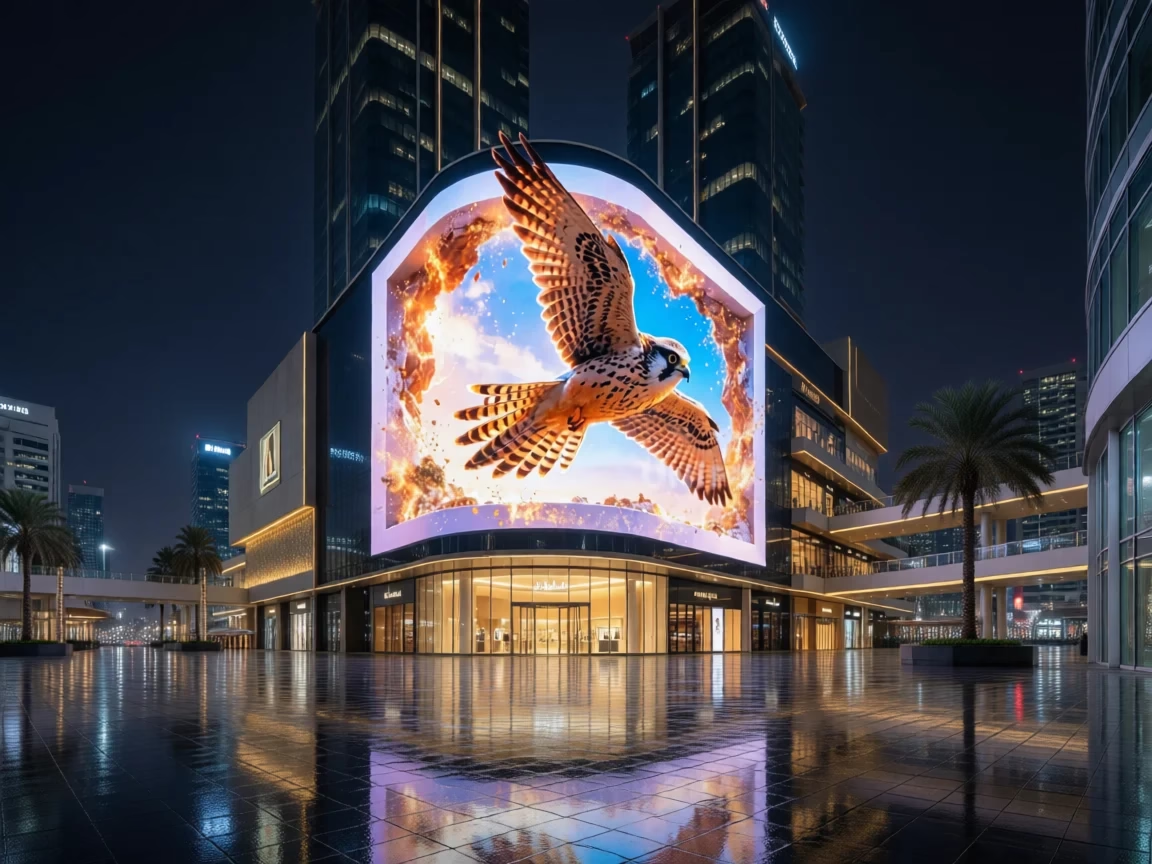
Right-angle splicing builds L-shaped corner screens; arc locks add concave and convex curves — the two ingredients of naked-eye 3D billboards on building corners.
Hard-Connection Flatness
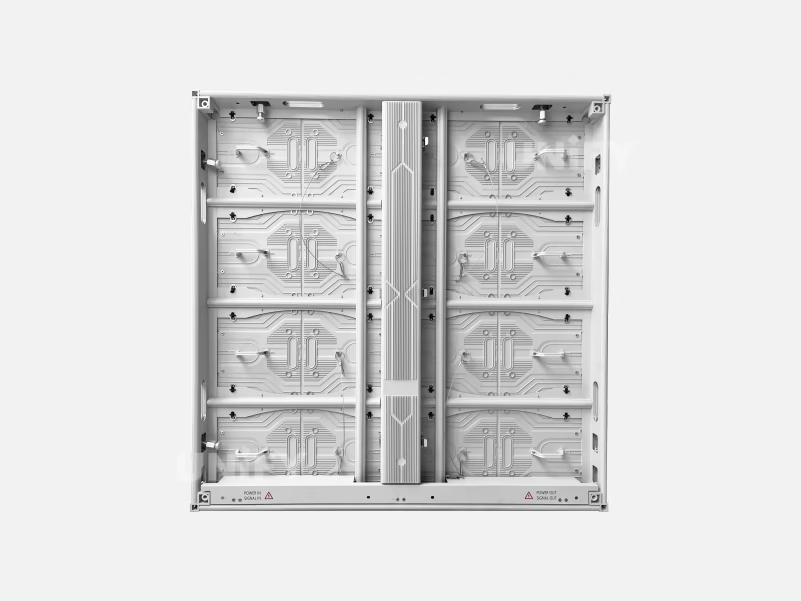
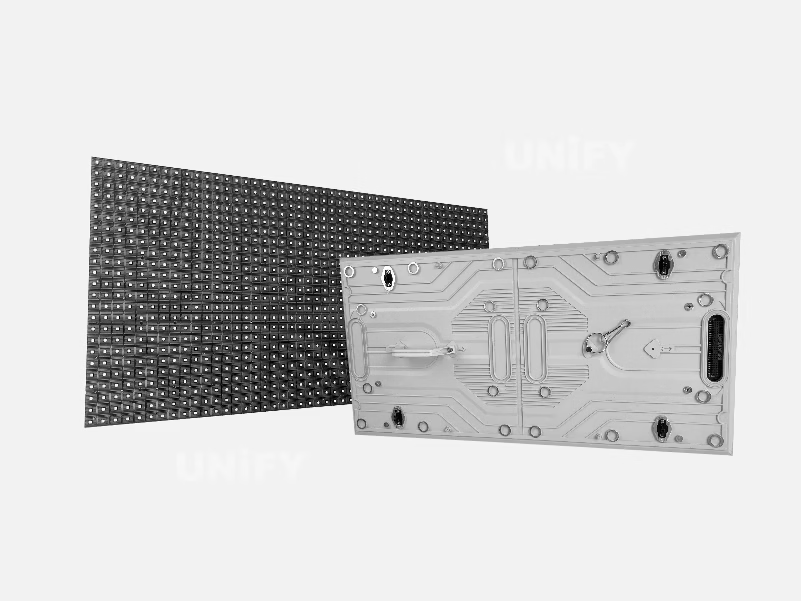
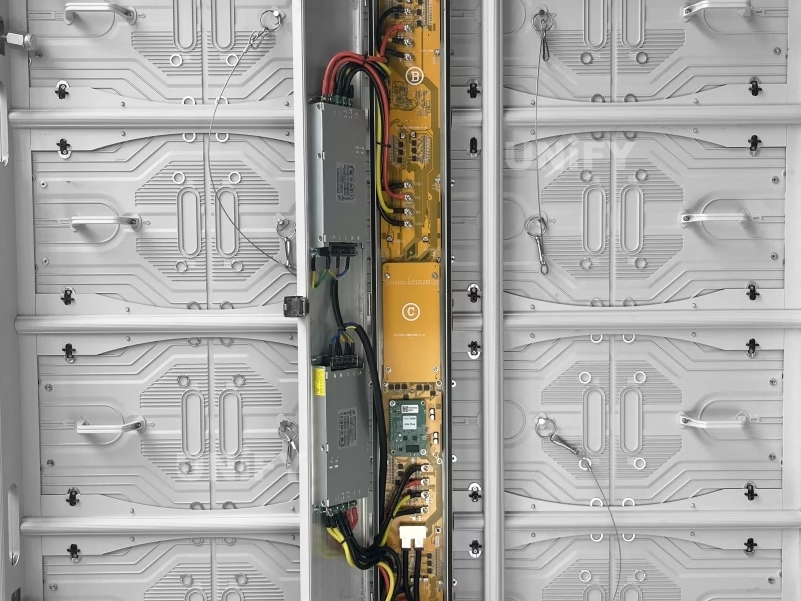
CNC-machined aluminum profiles with hard-connection modules keep the screen plane true through years of thermal cycling — no warped corners, no opening seams.
Common Cathode, -25% Power
CCT separates supply per LED color, cutting electricity 25% against conventional designs — the saving compounds monthly on a 24/7 billboard.
20% Cooler Cabinet
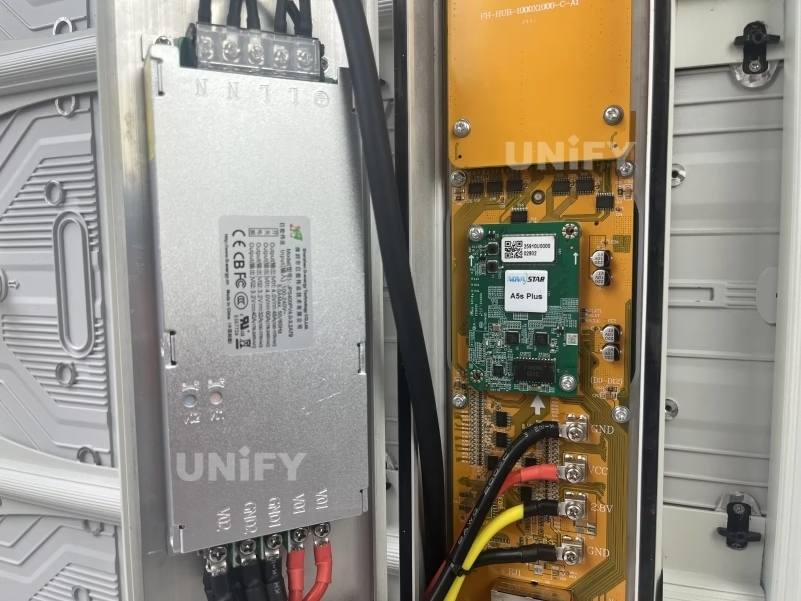
A hollow chassis for airflow, dual-layer power boxes and metal heatsinks on the receiving cards pull heat out — heat is what kills LEDs, and cooler LEDs live longer.
IP66 Front & Rear
Fully sealed architecture blocks rain, snow and coastal salt spray; rated for -40°C to +60°C — built for Iceland winters and Qatar summers alike.
Front Service, Butterfly Locks
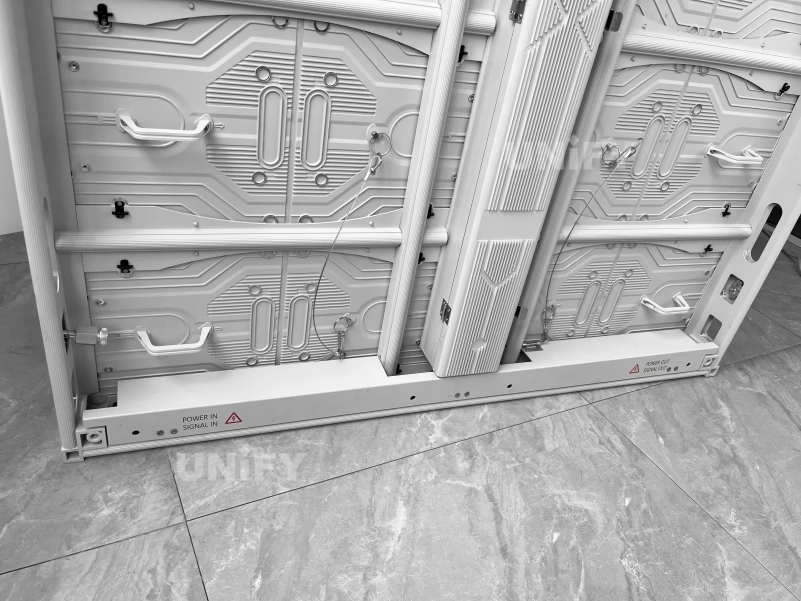
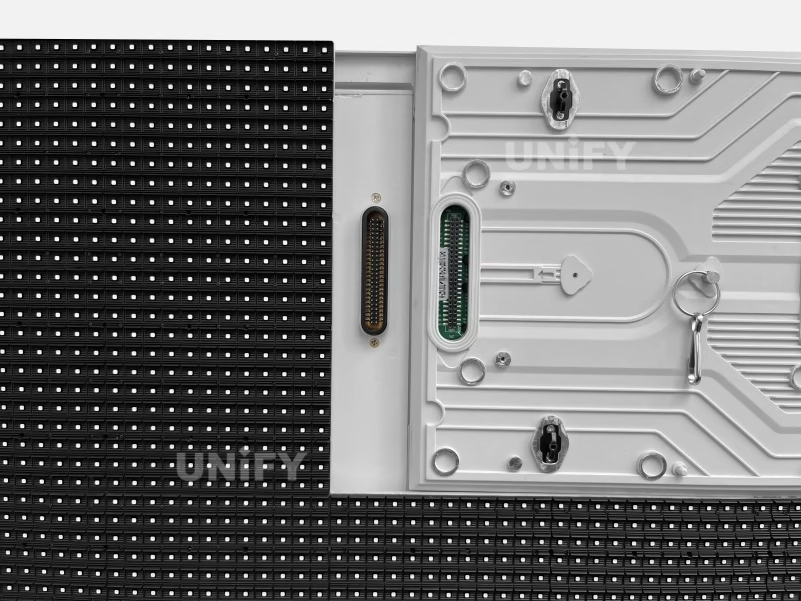
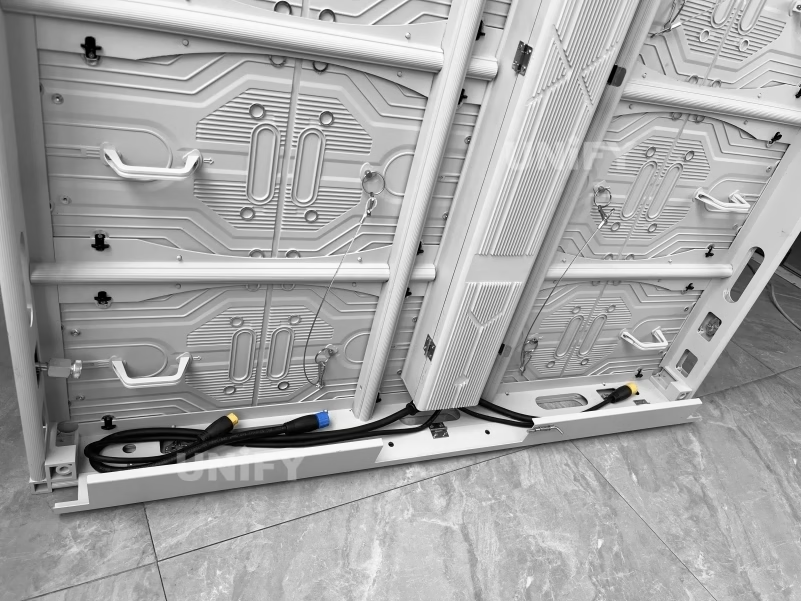
Modules come out from the front with butterfly locks — no rear accessway, no secondary steel structure, no crane for a corner-mounted module swap.
3840/7680Hz + 8000:1
High refresh keeps the picture clean on broadcast and phone cameras; the 8000:1 contrast with matte-black module masks keeps blacks black under direct sun.
Safety Ropes & Locks
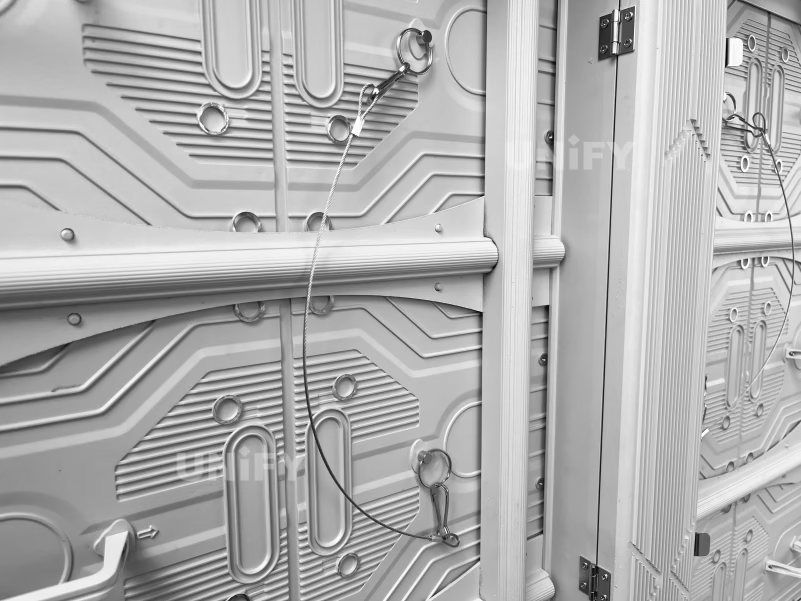
Module safety ropes and cabinet safety locks back up every connection — high-altitude maintenance is planned for, not improvised.
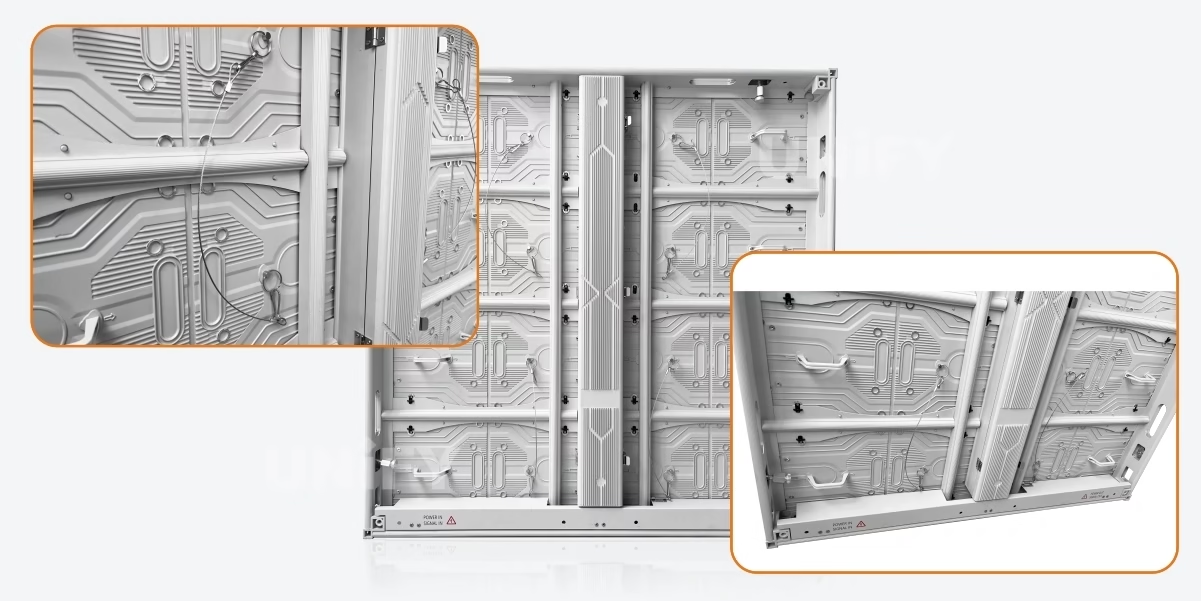
Hard-connection modules on CNC-machined aluminum profiles — the A1000 flatness guarantee
Inside the A1000 Cabinet — Engineering Details
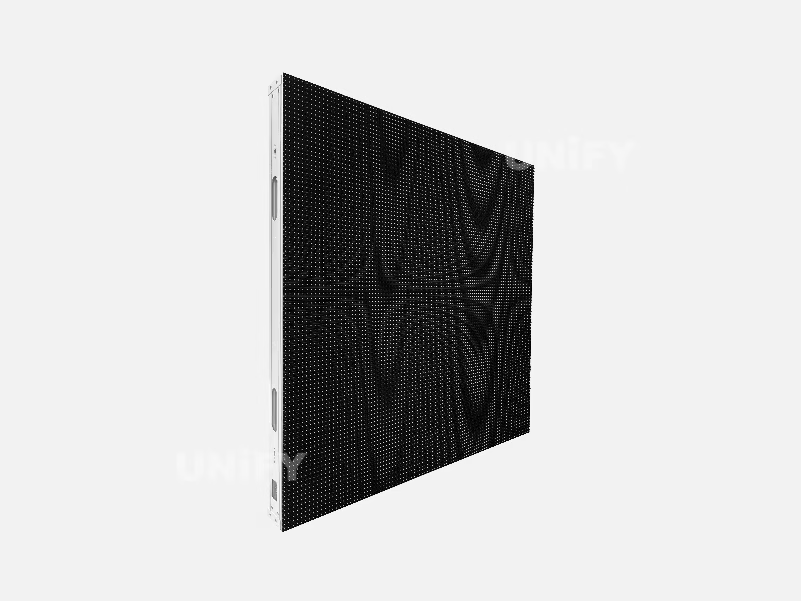
Every part of the 1000×1000mm cabinet, photographed from the production line:
Naked-Eye 3D
How Does the 1000×1000 Outdoor LED Display Build Naked-Eye 3D?
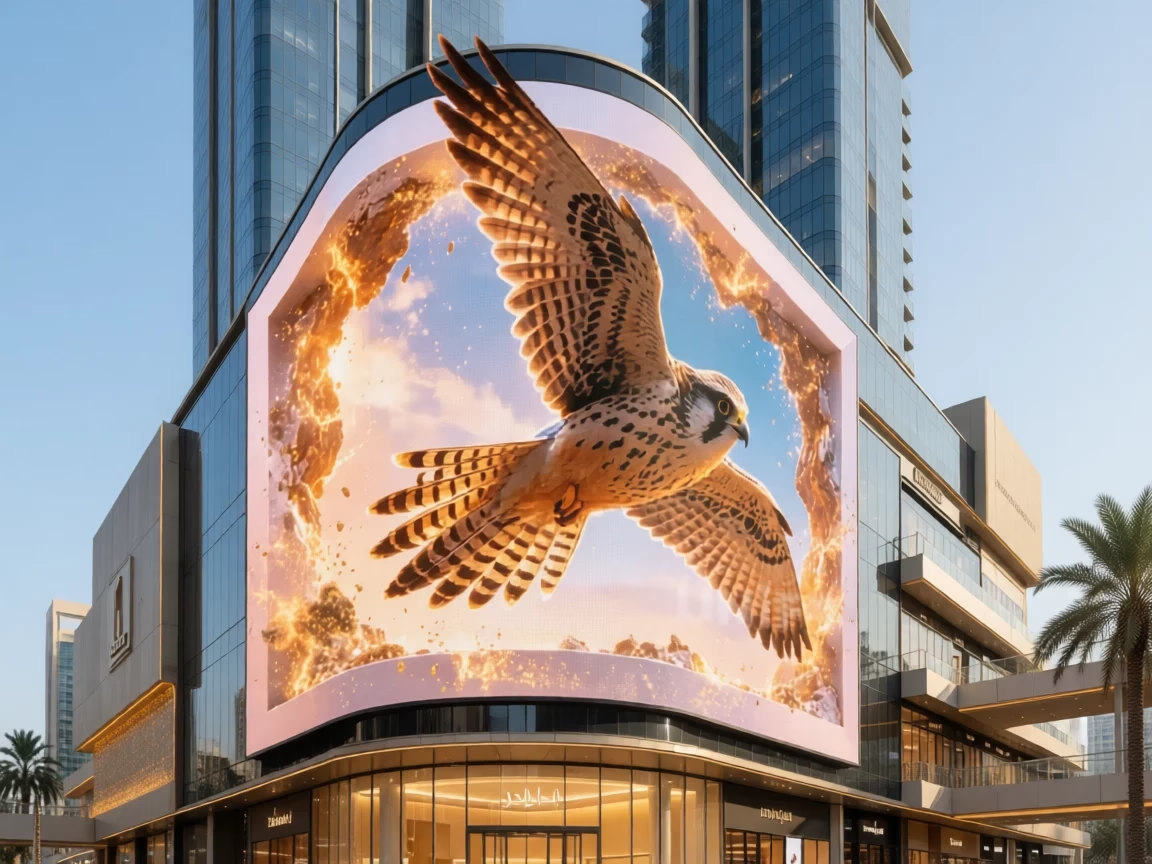
Naked-eye 3D is a splicing problem before it is a content problem. The A1000 cabinet joins at a true 90° corner and locks on arc rails for concave and convex curves — the two physical geometries that make a 3D illusion read correctly from street level. A flat screen with 3D content also works, which the second video below demonstrates.
The engineering truth for 3D projects: running naked-eye 3D content roughly doubles the playback server load and halves the per-receiving-card and network-cable pixel capacity. Plan the control system for the 3D content spec from day one — sizing the processor and cabling for flat content and adding 3D later is the most common corner-screen commissioning failure we see.
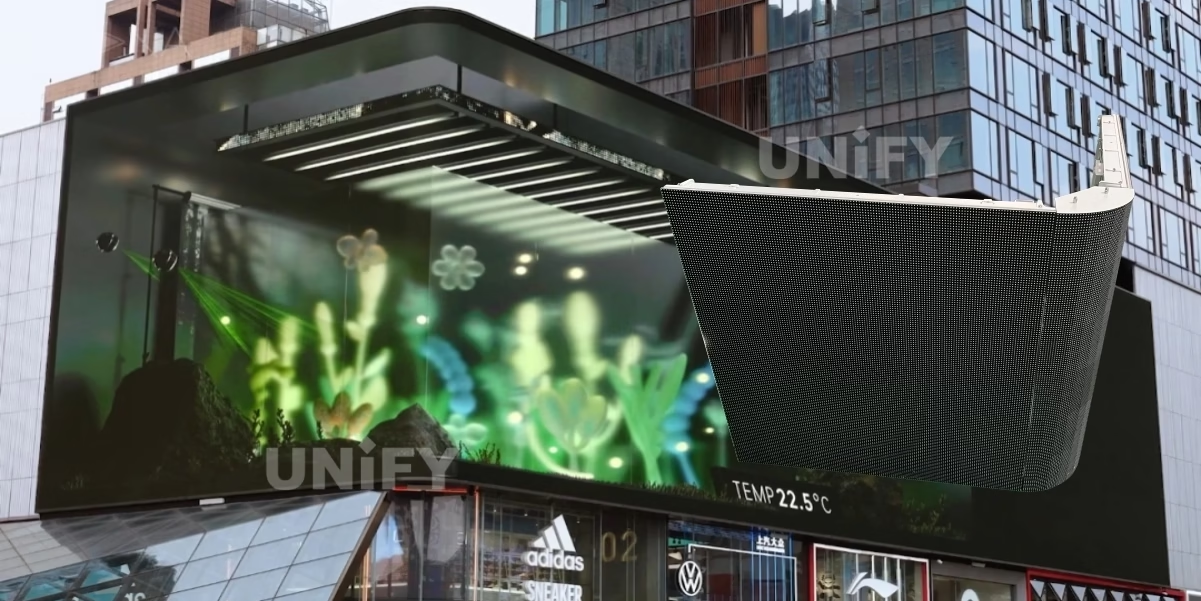
True 90° corner splicing and arc rails — the two geometries behind naked-eye 3D
Specifications
What Are the A1000 1000×1000 Outdoor LED Display Specifications?
Six pixel pitches on one cabinet platform — verified A1000 engineering data:
For pitch-to-viewing-distance selection, see LED pixel pitch.
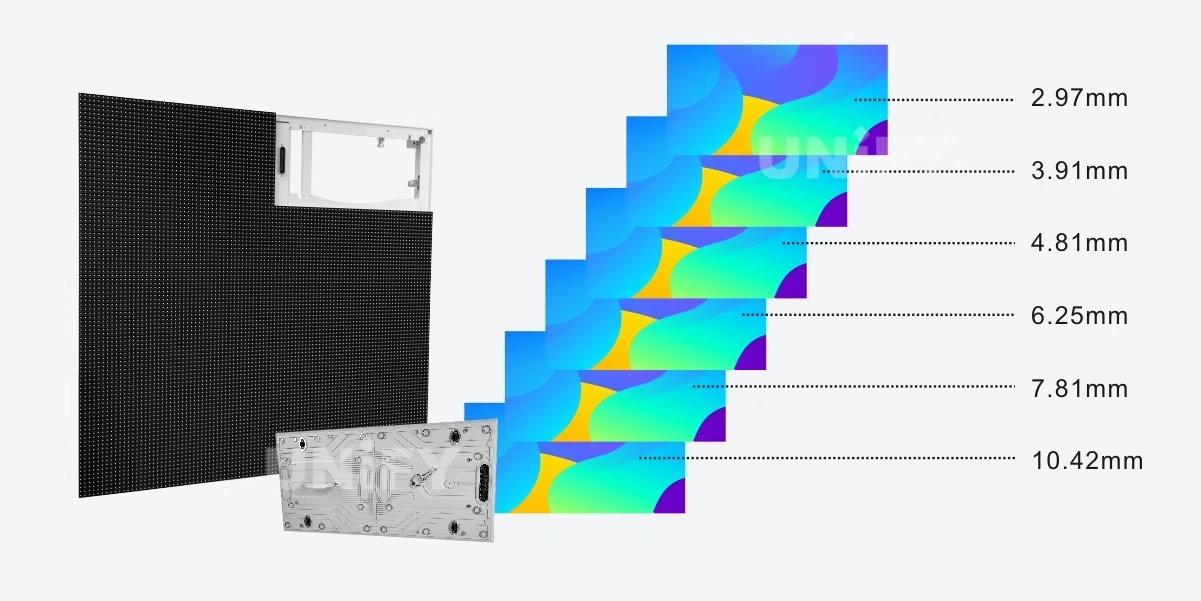
Six pitches (P2.97–P10.42) on one 1000×1000mm cabinet platform
Series Comparison
How Does the A1000 1000×1000 Outdoor LED Screen Compare With A960, OK and B?
Four outdoor fixed series on one site — the differences that decide the purchase:
Four key differences between the A1000 1000×1000 outdoor LED display and the 960×960 series:
- 3D capability: only the A1000 splices at 90° and on arc locks — A960, OK and B build flat billboards.
- Maintenance path: A1000 modules come out from the front on butterfly locks; B needs rear access with 12 screws per module.
- Weather sealing: A1000 and A960 seal at IP66; OK and B rate IP65.
- Format: 1000×1000 splits one square meter per cabinet with no fractions; 960×960 uses 0.92m² and fits 320×160 module ecosystems.
Compare the full outdoor lineup in the 960×960mm outdoor LED cabinet collection.
Pricing
How Much Does a 1000×1000 Outdoor LED Display Cost?
Linstar’s outdoor display pricing guide puts curved and custom 3D outdoor screens in the P4–P8 range at roughly $1,800–$2,500 per square meter, with the final figure moving on pixel pitch, brightness, cabinet design and total area. The A1000’s cost side deserves the same rigor as its price side: common cathode typically recovers its premium within 1–2 years of electricity savings on a 24/7 installation, and front maintenance removes the rear accessway from the construction budget entirely.
Send the screen size and pitch — get a dated A1000 quote with the 3D content plan.
Applications
Where Do 1000×1000 Outdoor LED Displays Get Used?
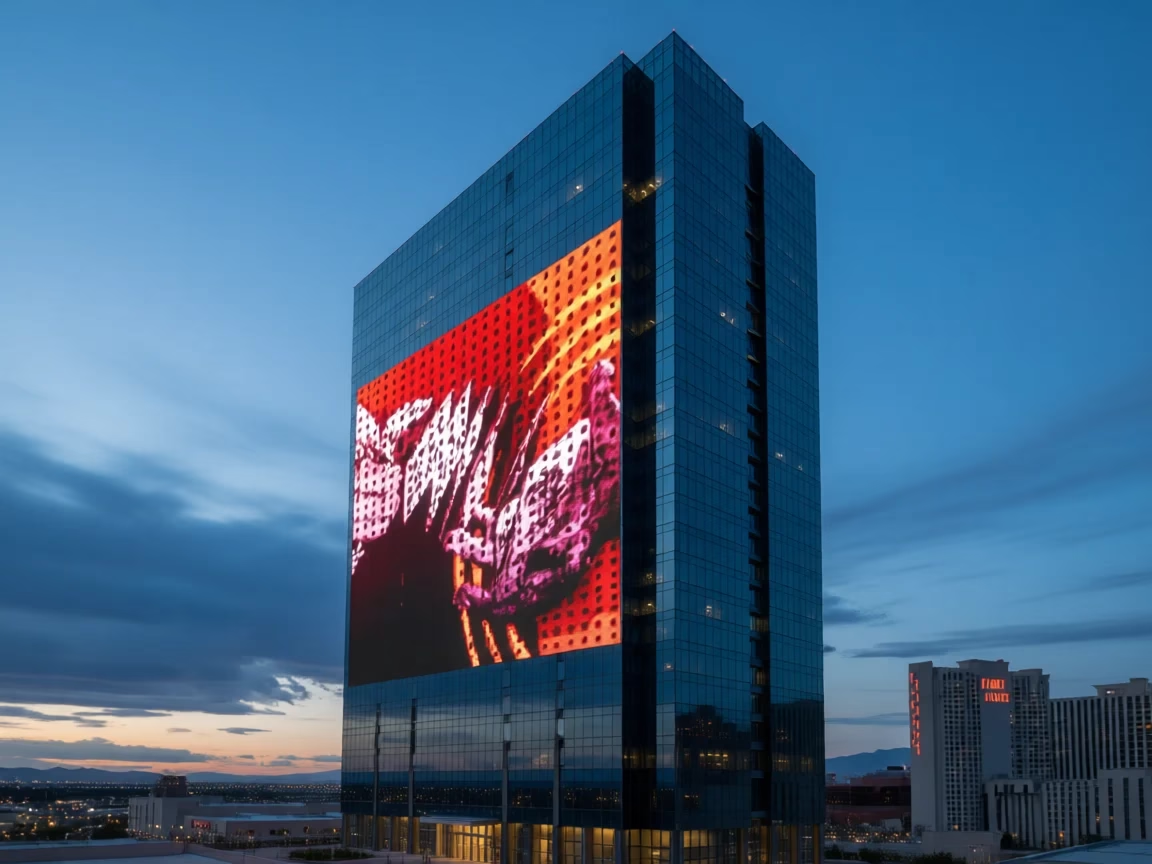
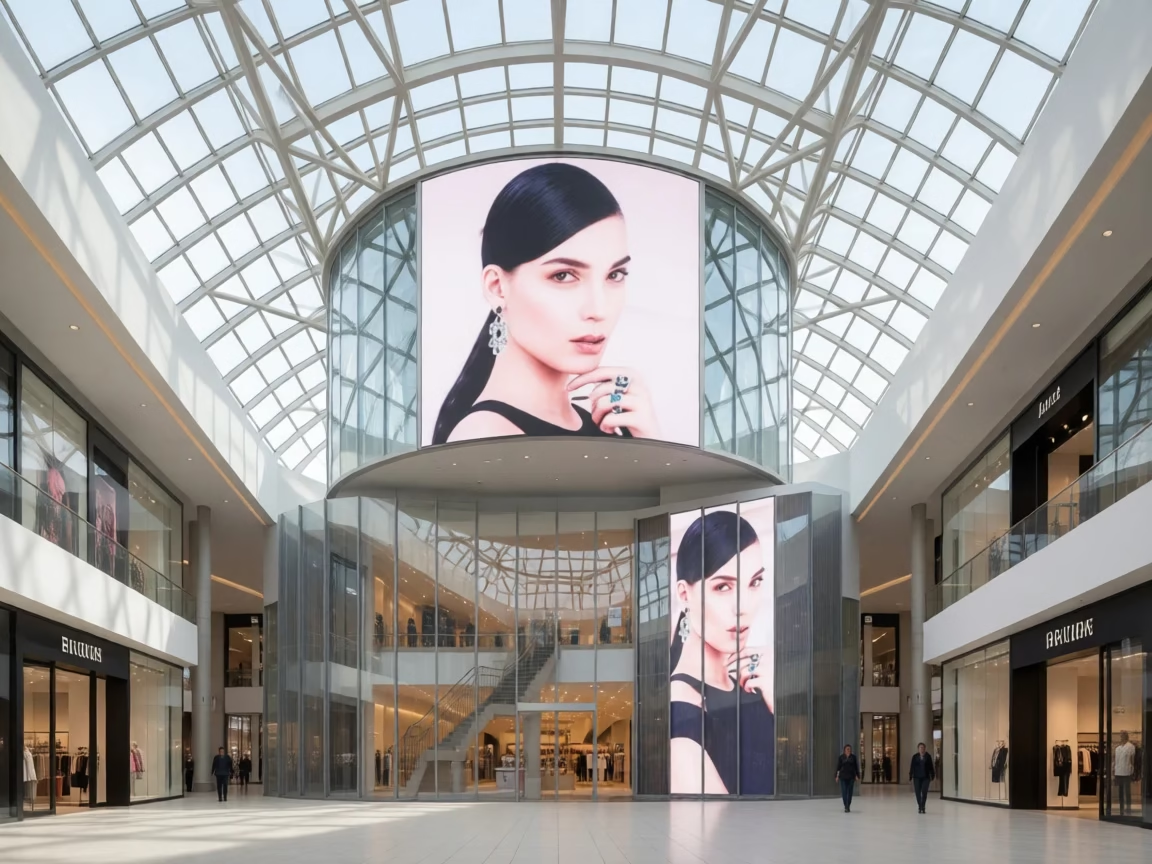
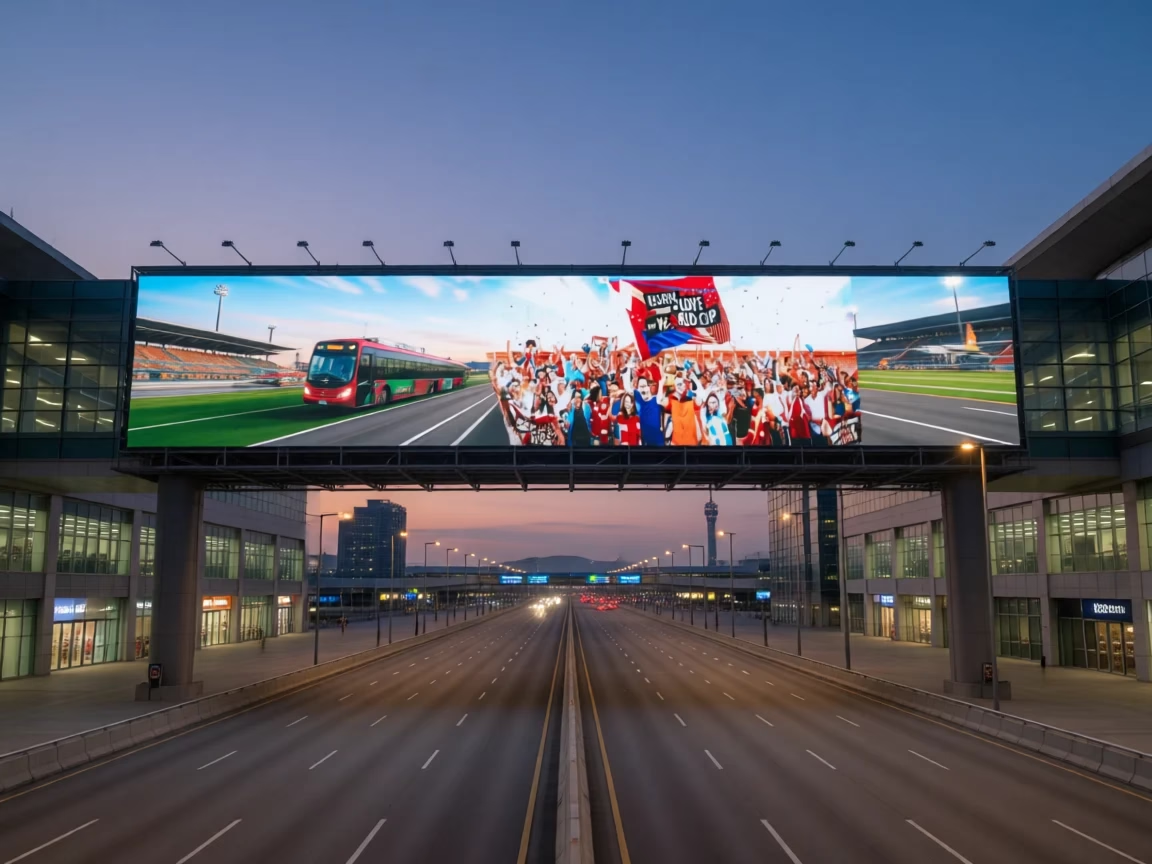
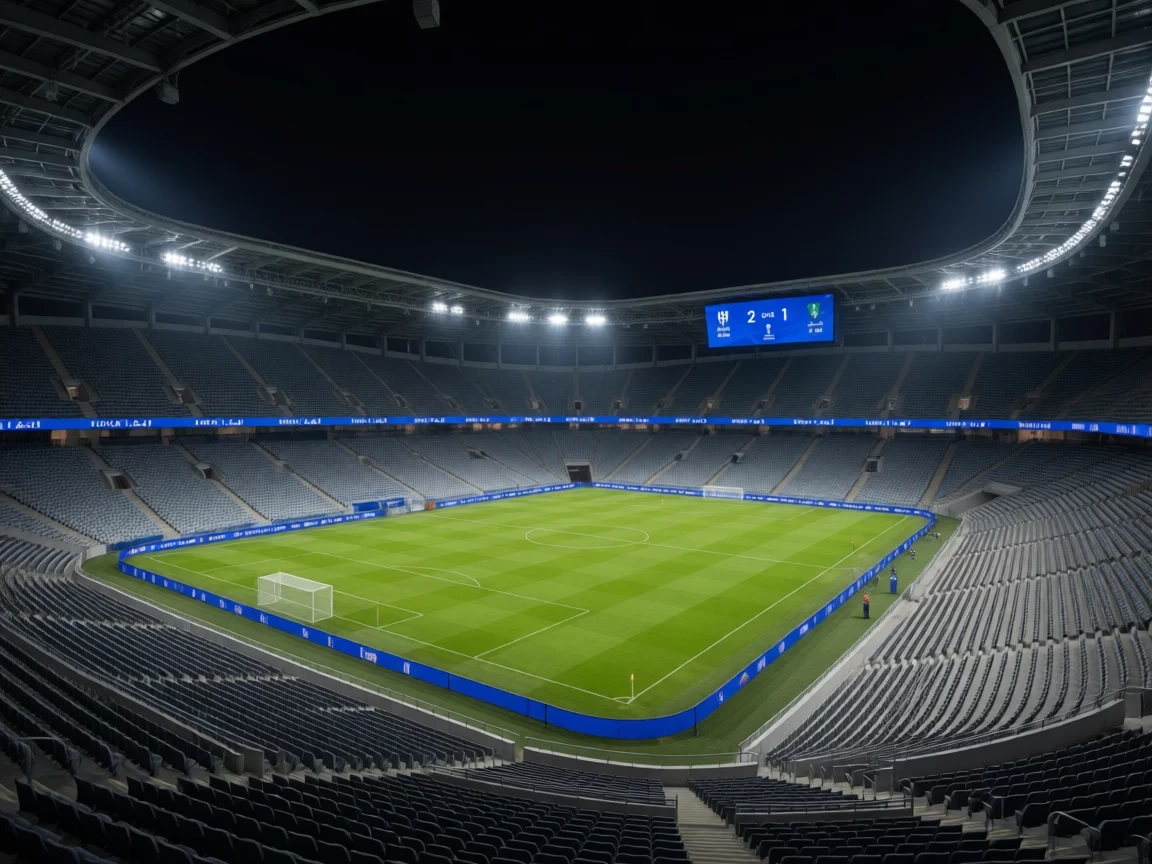
Six fixed-install venues where the one-square-meter cabinet is the standard call:
Video Demonstrations
What Does the 1000×1000 Outdoor LED Display Look Like in Action?
3D advertising screens in the field:
Case Studies
What Projects Use the A1000 1000×1000 Outdoor LED Screen?
Field builds that show what the cabinet does on the wall:


FAQ
What Should You Ask Before Buying a 1000×1000 Outdoor LED Display?
Related
Where Can You Learn More About 1000×1000 Outdoor LED Screens?
Outdoor Series
Collection Hubs
Engineering
Factory Strength
Why Source Your 1000×1000 Outdoor LED Display From the Factory?
A fixed outdoor screen is judged by its worst summer. Every A1000 panel leaves the line after a 72-hour aging run, spare modules ship from the same production batch, and the 12–24 hour response window covers a 24/7 advertising schedule. As a full-line LED screen manufacturer, we supply the structure drawings, 3D content plan and on-site commissioning with the screens. Visit our LED display factory page.
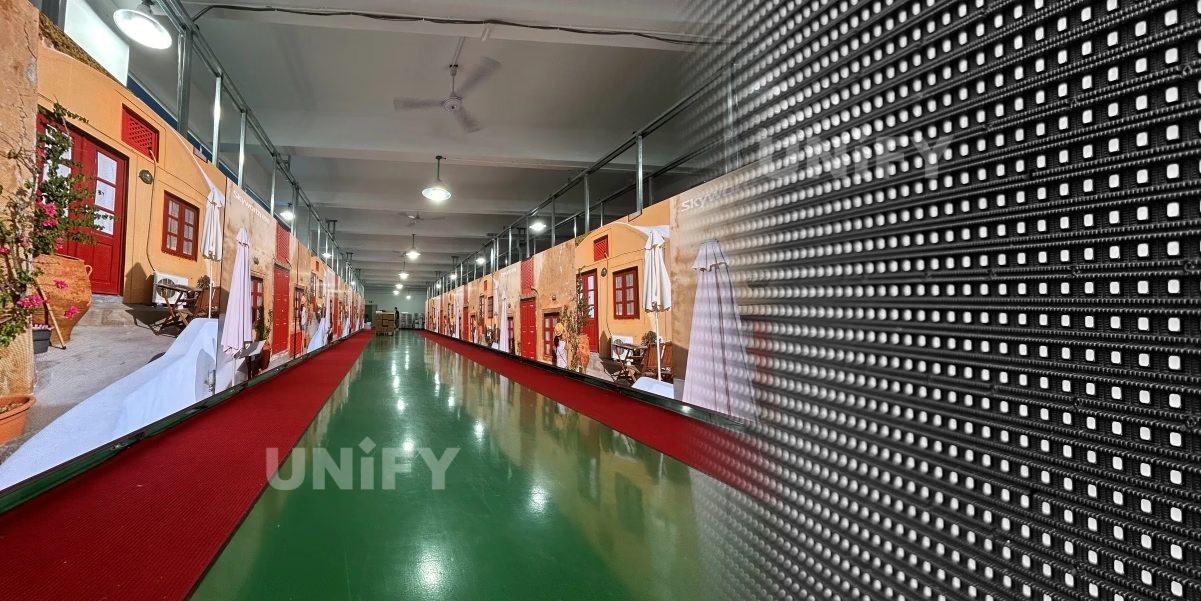
Every A1000 panel completes a 72-hour aging run before shipment
Ready to Source Your 1000×1000 Outdoor LED Display?
Factory-direct A1000 quotes with the 3D content plan, structure drawings and commissioning.
unifyledscreen@gmail.com | +86-191-18802497
Operator’s Guide
How Do Fixed-Install Operators Get the Most From a 1000×1000 Outdoor LED Display?
Published: August 2026 | 10 min read | UnifyLED Engineering Team
A fixed outdoor screen is a ten-year commitment bolted to a building. The 1000×1000 format concentrates that commitment into clean arithmetic — one square meter per cabinet, no fractions — but the difference between a screen that still looks flat and bright in year six and one that warps in year two is decided by four engineering choices made before the first cabinet ships. This guide walks those choices.
The audience for this page is the operator who writes the check: the advertising company that owns the structure, the AV integrator that services it, and the property developer who signs a ten-year media contract. Each of them measures the screen in different units — nits for the advertiser, crane bookings for the integrator, kilowatt-hours for the developer — and the 1000×1000 cabinet is the format where all three measurements meet on one hardware platform.
Short answer: a 1000×1000mm outdoor LED display earns its keep on four decisions: a hard-connection aluminum chassis so the screen stays flat, common-cathode power so the electricity bill shrinks by 25%, front service so maintenance never needs a rear walkway, and a control system sized for 3D content if the corner will carry naked-eye 3D. Get those four right and the screen ages on its own; get any one wrong and every maintenance call becomes a crane booking.
Chapter 1 — Flatness: Why the 1000×1000 Outdoor LED Display Warps, and Hard Connection Stops It
Thermal warping is the fixed-install failure most buyers never see coming. A black aluminum face on a summer roof cycles between roughly -10°C at dawn and 70°C at noon; every cycle moves the cabinet a fraction of a millimeter, and after five years of daily cycling, cheap cabinets with plastic bottom shells have moved enough to open visible seams between modules. Hard connection is a mounting architecture that replaces the plastic module shell’s float with CNC-machined aluminum profiles and rigid module seating, so thermal movement meets metal instead of plastic. The A1000 pairs it with positioning pins on every module and adjustable locks on every cabinet top edge, which keeps the residual gap adjustable instead of permanent.
The inspection habit that catches warping early: once a year, sight down the screen plane at a shallow angle at midday. A 0.5mm step between cabinets casts a shadow line under sunlight; the A1000’s adjustable top locks are designed for exactly that correction during routine maintenance rather than a rebuild. Budget the annual flatness check into the service contract, not the emergency fund.
Module format plays a quiet role in the same story. The A1000’s 500×250mm module puts eight modules in a cabinet, where the legacy 320×160mm format needs twenty — fewer module seams per square meter means fewer lines for thermal drift to open, and fewer edges to keep registered. The seam count is a spec that never appears in the datasheet and shows up on the wall in year five.
Chapter 2 — Power: The 1000×1000 Outdoor LED Screen’s Bill That Compounds Monthly
Electricity is the fixed screen’s second mortgage. Common cathode technology (CCT) is a power architecture that supplies each LED color at its own voltage, cutting the wasted heat of conventional designs and reducing consumption by about 25% at the same brightness. On a 100m² billboard running 18 hours a day, that percentage is real money every month — and manufacturer payback estimates put the CCT premium at 1–2 years on a 24/7 schedule. After the payback point, the saving converts directly to margin on the advertising contract.
The second half of the power story is heat, and heat is what kills LED lamps. The A1000’s hollow aluminum chassis works as an airflow channel, dual-layer power boxes conduct heat out of the electronics, and metal heatsinks sit on the receiving cards — the combination runs the cabinet about 20% cooler than conventional designs. LED lamp datasheets rate life at 100,000 hours, but that rating assumes a cool operating point; a screen running 20°C cooler approaches the rating instead of retiring early.
Worked example, with stated assumptions: a 100m² P10 billboard at the outdoor brightness tier draws roughly 300W/m² on average. Eighteen hours a day, 365 days a year, that is about 197,000 kWh annually; at a commercial rate of $0.15/kWh, the bill runs near $29,600. A 25% CCT saving removes roughly $7,400 from that bill each year — the arithmetic that makes the common-cathode premium a payback decision rather than a cost decision. The figures move with local rates and the actual brightness schedule, and the method holds everywhere.
Brightness scheduling stacks a second saving on top of CCT. A screen running 6500 nits at noon needs a fraction of that at 11 PM, and a controller-side schedule that drops night brightness to 30% can trim another meaningful slice of the bill while protecting the lamps — night overdrive is a common cause of accelerated aging on fixed screens. The A1000’s 14–16 bit grayscale keeps the picture smooth at reduced drive, so the night schedule costs no visible quality.
Chapter 3 — The 3D Decision: Corner, Curve or Flat for the 1000×1000 Outdoor LED Cabinet
Naked-eye 3D is the highest-value content a building can run, and the cabinet decides whether the building can run it. The A1000 splices at a true 90° corner and locks on arc rails for concave and convex curves; a flat screen can carry 3D content, but the illusion reads strongest when the geometry bends with the perspective. Three key differences separate a 3D-ready 1000×1000 outdoor LED wall from a flat billboard:
- Geometry: 90° corner and arc-lock splicing on the A1000 against flat-only mounting on standard billboard cabinets.
- Control load: 3D content roughly doubles the playback server load and halves per-receiving-card and cable capacity — the processor and cabling must be sized for the 3D spec from day one.
- Brightness headroom: corner screens catch sunlight from two directions, so the 6500-nit tier and the 8000:1 contrast earn their price on the street-facing faces.
The practical rule: if the site has a corner and the advertising contract values attention, spec the 90° corner now even if 3D content comes later — retrofitting a flat screen into a corner means buying the screens twice.
Curve geometry earns its place on facades that bend. Arc locks on the A1000 set the wall into concave and convex sections in the field, and a wave wall on a curved building front reads as one continuous screen from the street instead of a staircase of flat panels. Corner and curved faces also change the viewing arithmetic: a screen bent around a corner shows each face to a different approach road, which is why the 6500-nit tier and 160° viewing angle matter more on 3D sites than on flat ones.
Chapter 4 — Maintenance at Height: Front Service Math on the 1000×1000 Outdoor LED Screen
Maintenance cost is decided by the access path, and the access path is decided by the cabinet. Rear-service screens need a walkway behind the wall — secondary steel, safety railings and permanent square meters that return nothing. Front service is a maintenance architecture where modules and power supplies come out through the face of the screen, which lets the A1000 mount directly to the wall and turns the access cost into a service basket instead of a structure. Butterfly locks release a module in seconds; four positioning pins reseat it true; safety ropes back up every connection at height.
The spare-parts kit deserves its own line in every fixed-install purchase: spare modules, power supplies, receiving cards and locks from the same production batch, packed per site. A module down on a weekend billboard is a lost advertising day, and a same-batch spare restores color uniformity instantly — mixed-batch modules show a visible brightness step on close inspection. The kit costs less than one weekend of lost revenue.
The commissioning sequence that prevents most field failures: level the mounting plane with a laser before the first cabinet, hang the wall bottom-up so each row seats on the row below, torque every lock in the same pattern, then run the full-brightness test pattern for 72 hours with the controller on the production playlist. Problems that survive a 72-hour burn at full brightness are rare; problems that appear on week two are almost always a skipped step in this sequence.
The annual service routine that keeps a 1000×1000 outdoor LED screen earning: one visual flatness check down the plane at midday, one module-level test pattern sweep, one torque pass on the locks, one filter and drainage inspection, and one spare-kit inventory count. It is a morning’s work with a basket lift, and it is the difference between a screen that gets replaced in year seven and one that gets serviced into year ten.
Chapter 5 — Buying the 1000×1000 Outdoor LED Display: Price Anchors, Warranty and the Sample Order
Linstar’s outdoor pricing guide puts curved and custom 3D outdoor screens in the P4–P8 range at roughly $1,800–$2,500 per square meter, and the spread hides the real decision: pixel pitch, brightness tier, cabinet architecture and the warranty’s actual repair path. Factory-direct orders should include the 3D content plan, spare modules from the same batch, structure drawings and a 3-year warranty that covers the outdoor duty cycle. A verified LED screen manufacturer ships the platform with the documentation to prove it.
Before committing, order a two-cabinet sample and run the checks that matter on a fixed schedule: weight on a real scale, flatness with a straight edge, lock play after fifty joins, module swap time on a stopwatch, and a 72-hour burn on the bench with the brightness at the outdoor tier. The sample order also tests the supplier’s documentation habit — batch numbers, test reports and the structure drawing — which predicts how the full installation will be supported. One sample pair costs less than the cheapest day of downtime it can prevent.
Structure and wind load close the purchase. The A1000 at 25kg per cabinet is a wall-mounting format, but a 200m² screen still weighs five tonnes before the structure — the structure drawings, wind-load calculation and mounting certification belong in the factory quote, not in the installer’s best judgment. Screens above ground level catch wind like sails, and the difference between a certified mounting plan and an improvised one is the difference between an insurance claim and a routine permit.
The control system is the last spec on the list and the first one blamed on site. The A1000 platform runs the mainstream ecosystem — NovaStar controllers and Colorlight systems both drive the cabinet with standard receiving cards — and the 3D content spec decides the processor tier, as covered in Chapter 3. Lock the control spec at purchase: swapping processor families mid-installation is the most avoidable delay in outdoor LED, and the saving from a cheaper controller never covers one re-commissioning.
The financing habit rounds out the discipline: fixed outdoor screens depreciate on a five-to-seven-year cycle, and the four decisions above — flatness architecture, CCT power, front service and 3D-ready control — are what keep a screen earning in year six instead of scheduled for replacement. The hardware that survives the worst summer pays for the next one.
Conclusion: The 1000×1000 Outdoor LED Display Standard
The 1000×1000mm outdoor LED display is the format fixed-install advertising converged on because it turns a decade-long commitment into arithmetic: one square meter per cabinet, one hard-connection chassis, one common-cathode power system, one front service path, and one 3D-ready geometry when the site has a corner. The operator who specs those five numbers — and holds the annual flatness check and the same-batch spare kit — runs the screen that keeps its brightness, its flatness and its advertising contract through year six and beyond. The cabinet is the platform; the discipline is the decade.