
Rental Cabinet Collection · The Speed Standard
500*1000mm Rental LED Screen Collection
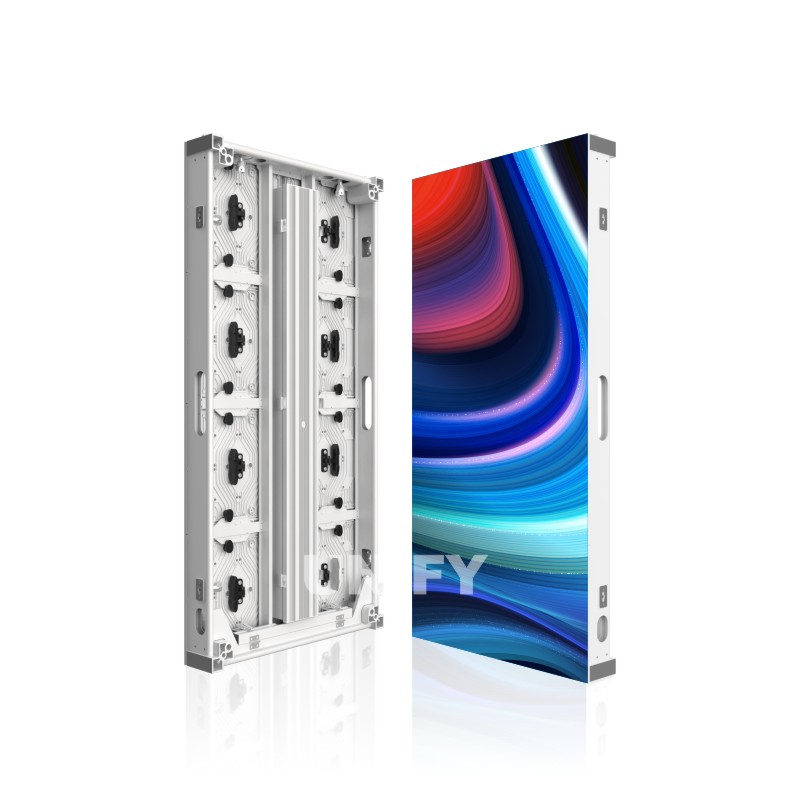
Six rental LED screen series on the 500×1000mm full-panel standard — half the cabinets, half the seams and roughly double the crew-day output of half-panel builds. Two panels make a square meter, mixed rows finish with 500×500, and the same locks curve to ±10° when the stage drawing says so.
The Full-Panel Standard
What Is a 500*1000mm Rental LED Screen?
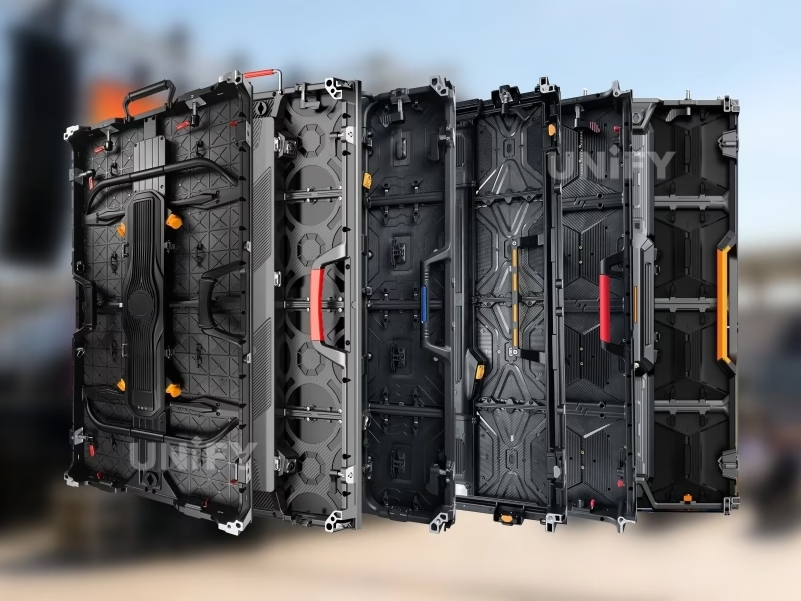
The 500*1000mm rental LED screen is the full-panel standard of the rental LED world — a double-size cabinet that halves the cabinet count, the seams and the load-in clock on every large wall. The format exists because big walls are built against a stopwatch: every panel joined is a lock, a lift and a rigging point, and a 500×1000 panel does double the wall with one of each. Two panels make exactly one square meter, and mixed rows with the 500×500 half-panel finish any wall height that ends in a half meter. For the category background, see rental LED display screen.
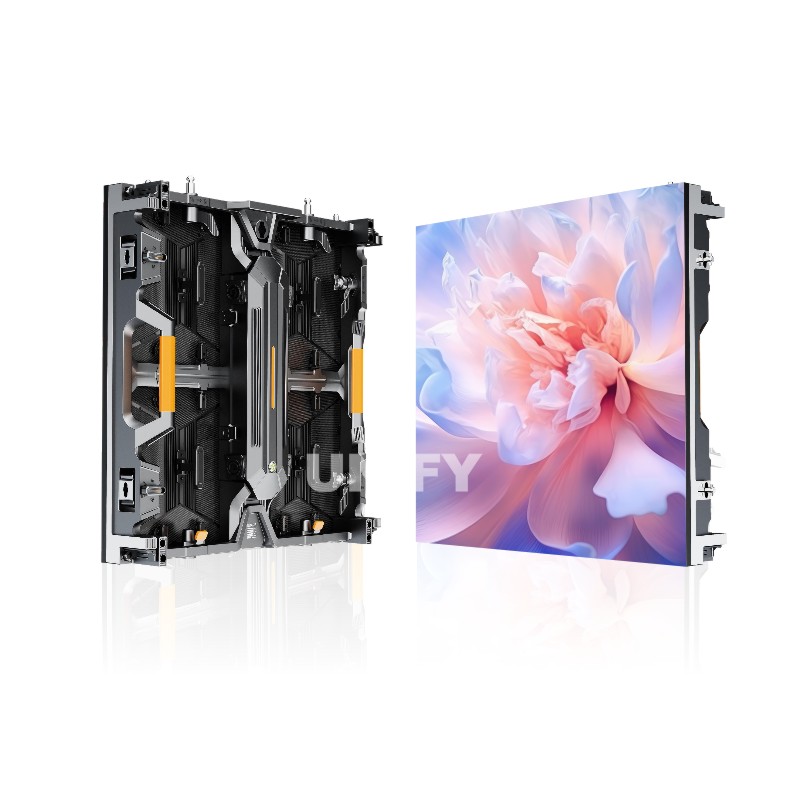
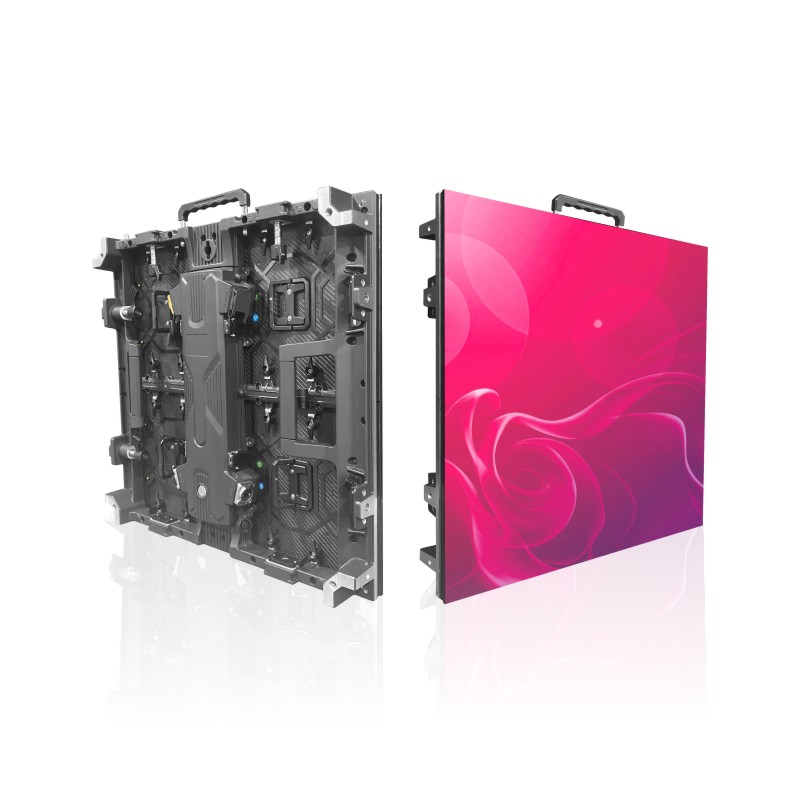
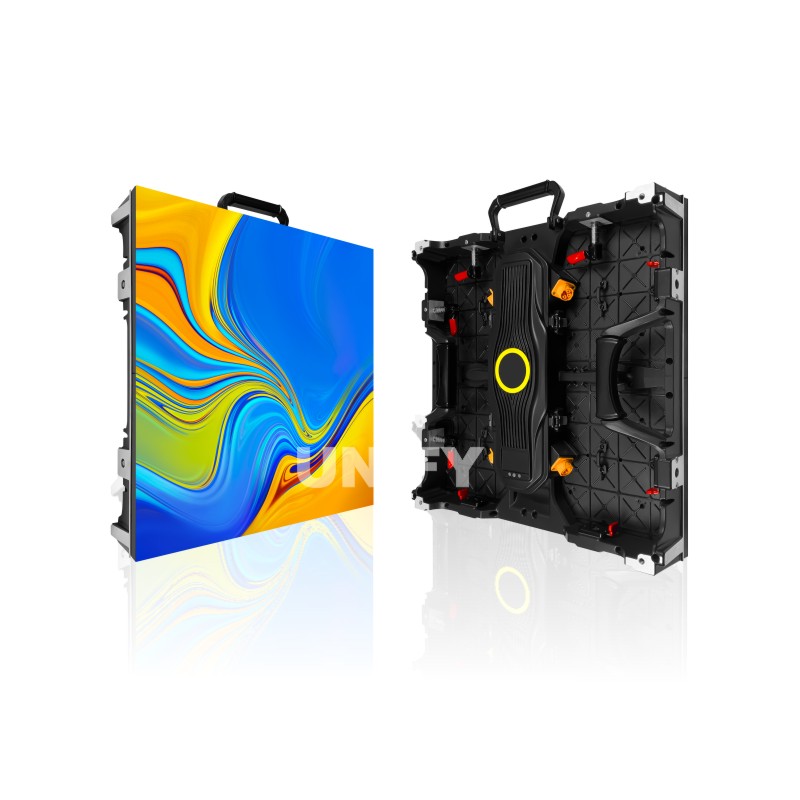
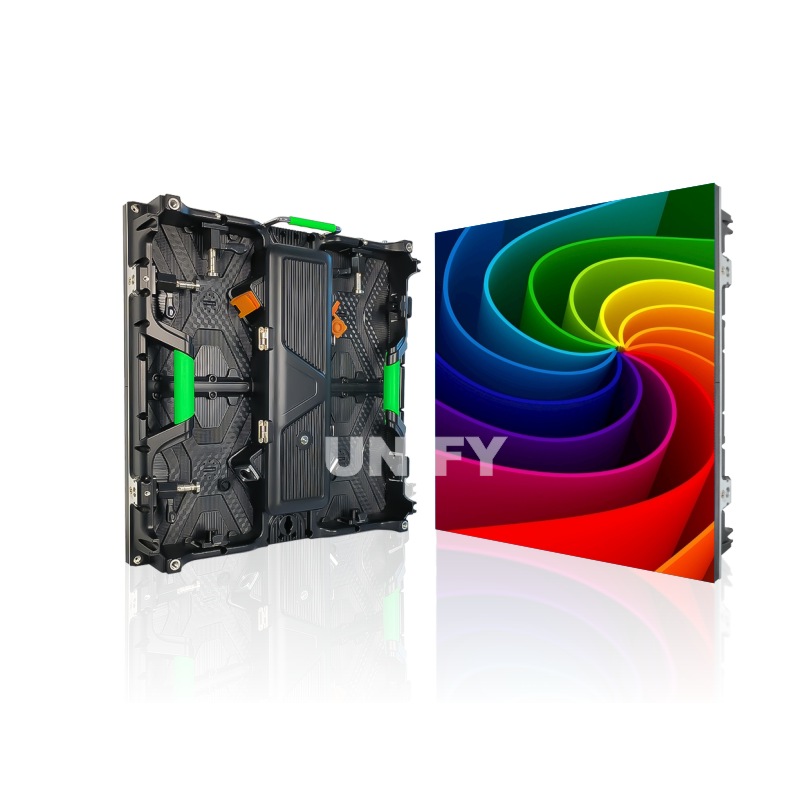
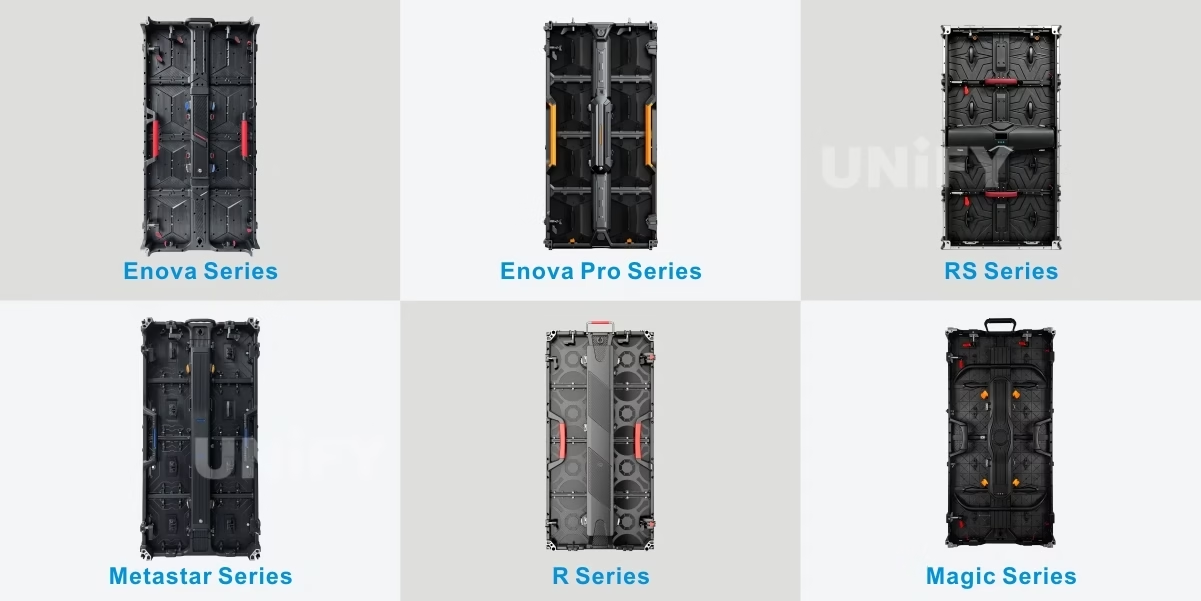
Six series on one platform: Enova and Enova Pro for magnetic-module stage walls, Metastar for dual indoor/outdoor touring, Magic for high-end indoor stages, R for ultra-thin fast builds, and RS for three-size creative layouts.
Sizing
How Do You Size a 500×1000 Rental LED Wall?
Two 500×1000 panels make exactly one square meter — large walls become mental arithmetic:
The rule that makes the math instant: a 500×1000 panel carries 128×256 pixels at P3.91 and 192×384 at P2.6. Multiply panels by those numbers and the resolution writes itself. Heights that end in a half meter finish with one row of 500×500 panels — same locks, same depth. For the full pitch-to-distance methodology, see LED pixel pitch.
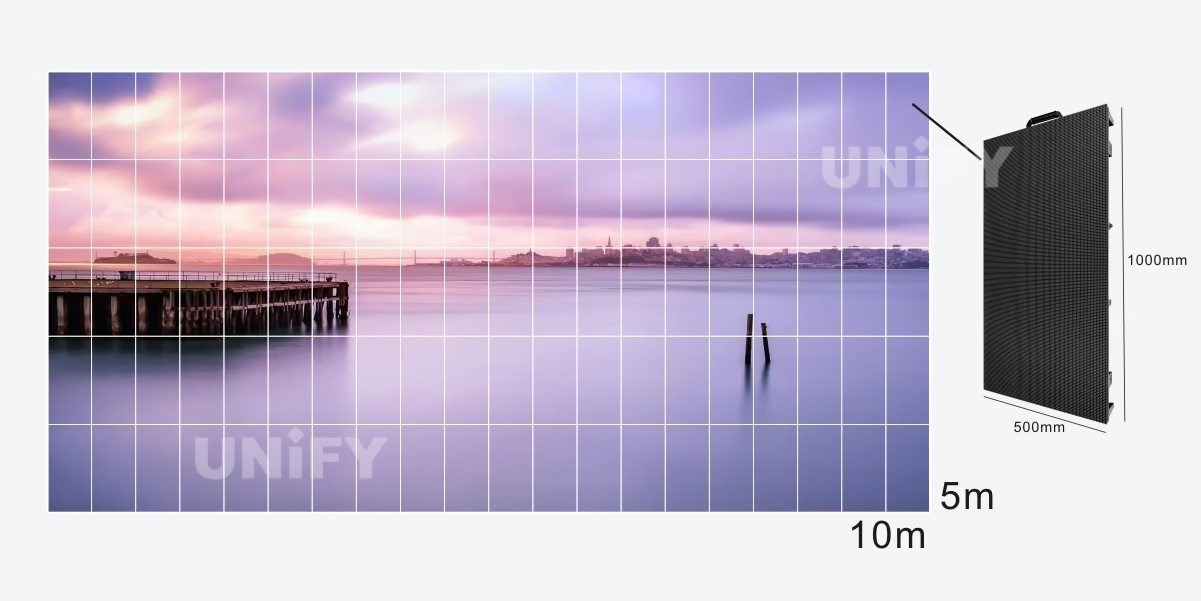
Send the wall size — get the cabinet count and a dated quote.
Pain Points
How Do 500×1000 Rental LED Panels Solve the 7 Rental Pain Points?
Seven operating problems decide a rental company’s margin on large walls — each answered by the full-panel platform on this page:
Load-In Hours Are Labor Cost
Rental crew field reports put a four-person team at 80–100m² per 8-hour day with 500×1000 panels — roughly double the half-panel rate. Half the locks, half the lifts, half the load-in window.
Seams Make a Wall Look Cheap
The same screen built on 500×1000 carries roughly half the seams of a half-panel wall — fewer cabinet lines breaking the picture, with CNC die-cast flatness at 0.1mm so the lines that remain stay tight.
Rigging Points Eat Truss Budget
Every cabinet wants a hanging point. Half the cabinets means half the rigging hardware, fewer truss lines and a lighter lift plan the venue engineer approves faster.
Wall Heights End in Half Meters
A 500×1000 panel climbs in 1m steps — and real walls end at 4.5m, 5.5m, 7.5m. One shared locking system lets 500×500 panels finish the half row, so the height problem is a mixing decision, not a redesign.
Truck Space Is Rent Too
Aviation cases carry six 500×1000 panels each, and a 10×5m wall ships as 100 panels instead of 200 — fewer cases, fewer truck loads, fewer forklift minutes per square meter of screen.
Creative Jobs You Cannot Quote
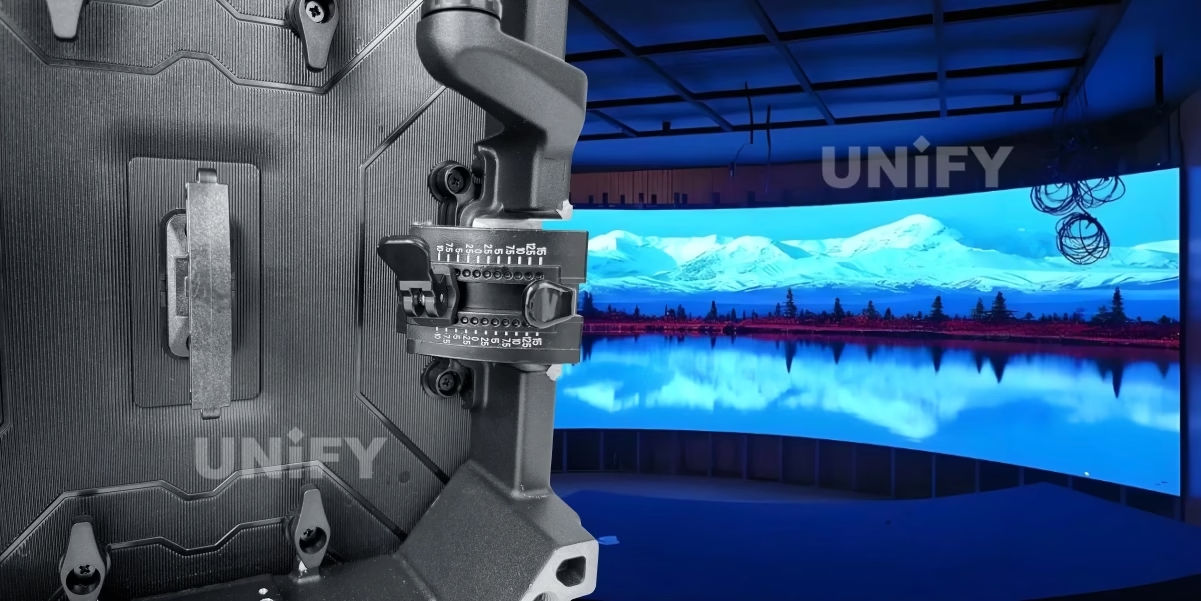
±10° arc locks curve the full panel in the field, and optional right-angle cabinets build corners and cubes. Some competitors push to ±15° — the section below shows where the difference matters.
Screen Math Errors Cost a Rebuild
Two 500×1000 panels make one square meter — a 10×5m wall is 20 panels wide by 5 high, 100 panels, no fractions. The sizing section above gives the standard layouts and resolutions.
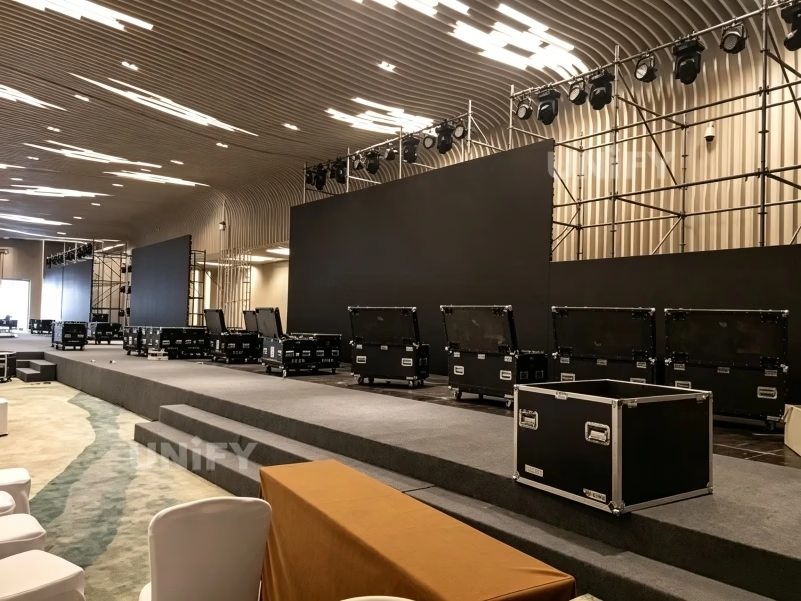
Get a dated quote that fixes these seven problems.
The Six Series
Which 500×1000mm Rental LED Screen Series Should You Choose?
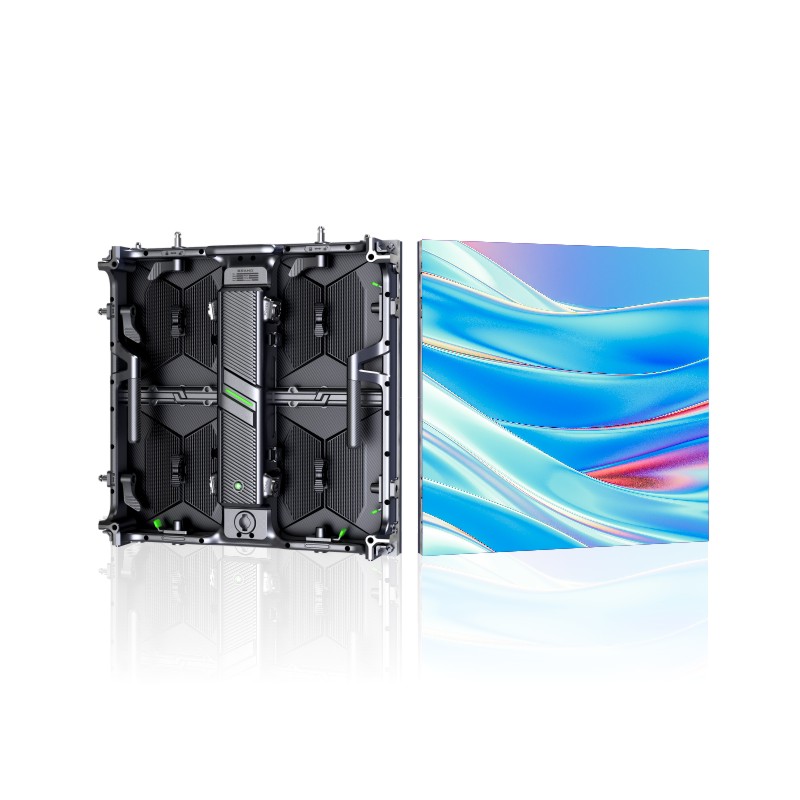
Six rental series, one full-panel platform:
Comparison
How Do the Six 500×1000 Rental LED Display Series Compare?
Verified specifications from each series’ product page:
Crew speed applies across all six series: rental crew field reports put a four-person team at 80–100m² per 8-hour day with 500×1000 panels — roughly double the half-panel rate. All six series share the same 500×500 + 500×1000 locking system, so mixing series on one wall is a logistics decision, not a compatibility problem.
Get all six series priced against your wall size.
Creative Setups
How Do 500×1000 Rental LED Panels Mix With 500×500 and Curve?
The full panel earns its place in three build modes:
The Half-Row Fix
Identical locking system and structural depth let 500×1000 and 500×500 panels join in the same wall — the full panels build the body, one row of half panels finishes any height that ends in a half meter. One inventory, every wall height.
±10° Curved Walls
Arc locks set the curve in the field — concave, convex and wave shapes for immersive stages. Some competitors advertise ±15°; beyond ±10° the module gap starts to show at close viewing distance, which is where the honest difference lives.
Corners, Ceilings & Brick Layouts
Optional right-angle cabinets build 90° corners and cubes; brick layouts offset the rows for dislocated shapes; reinforced mounts carry ceiling displays. The RS series adds a 500×750 middle size for custom proportions.
Video Demonstrations
What Does the 500×1000 Rental LED Screen Look Like in Action?
The full panel in the field — product overview, installation speed and mixed splicing:
Applications
Where Do 500×1000 Rental LED Screens Get Used?
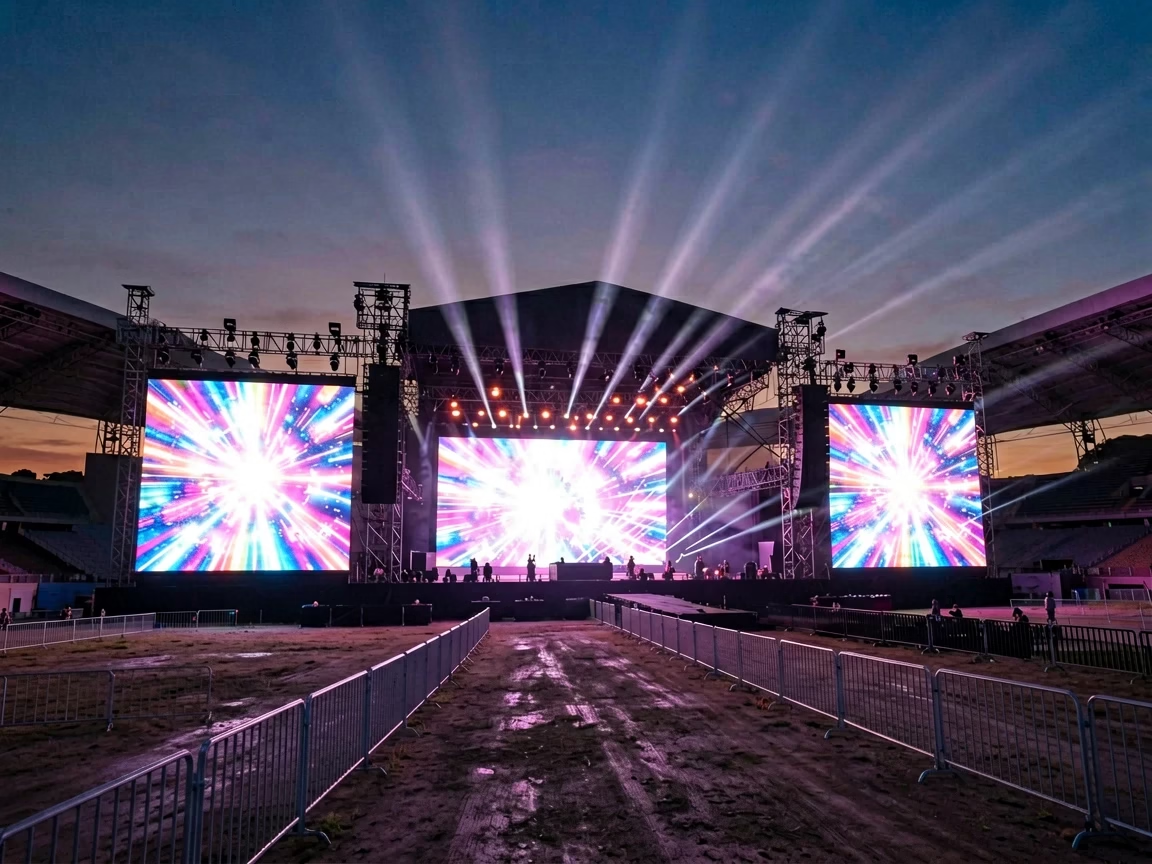
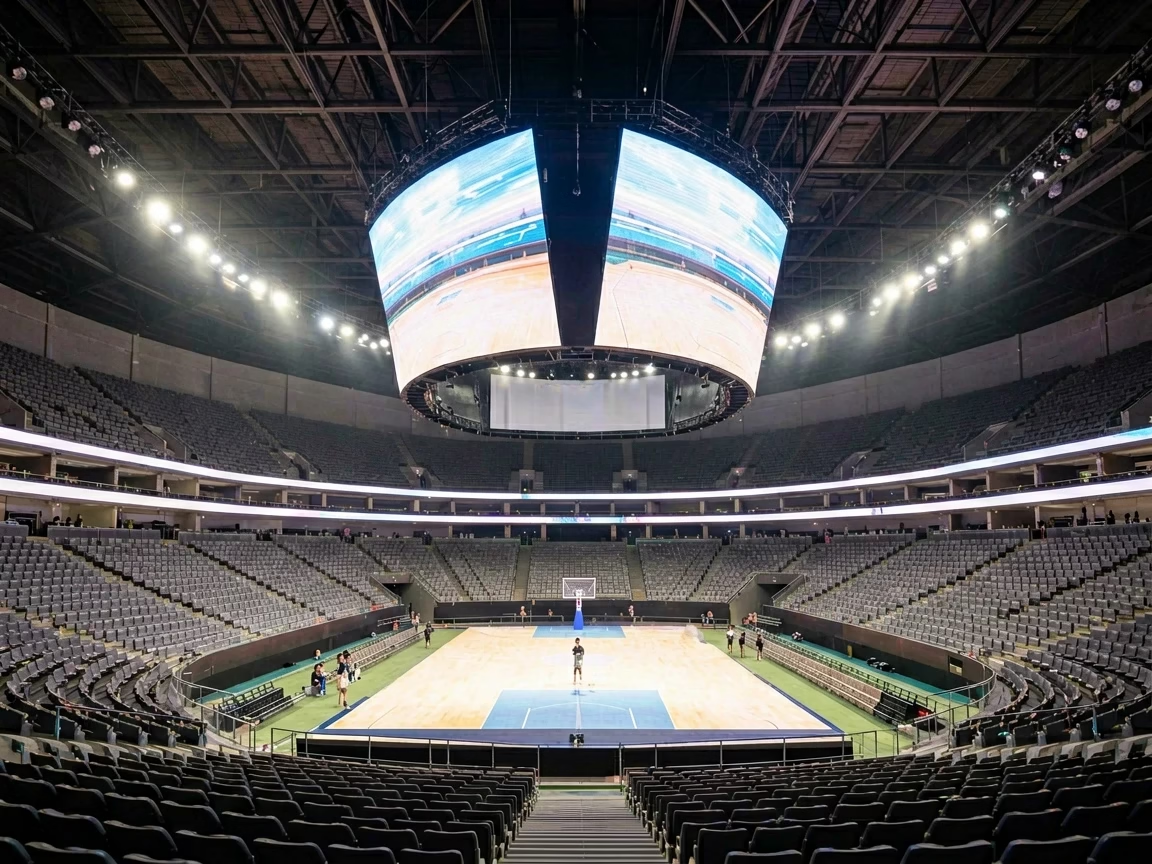
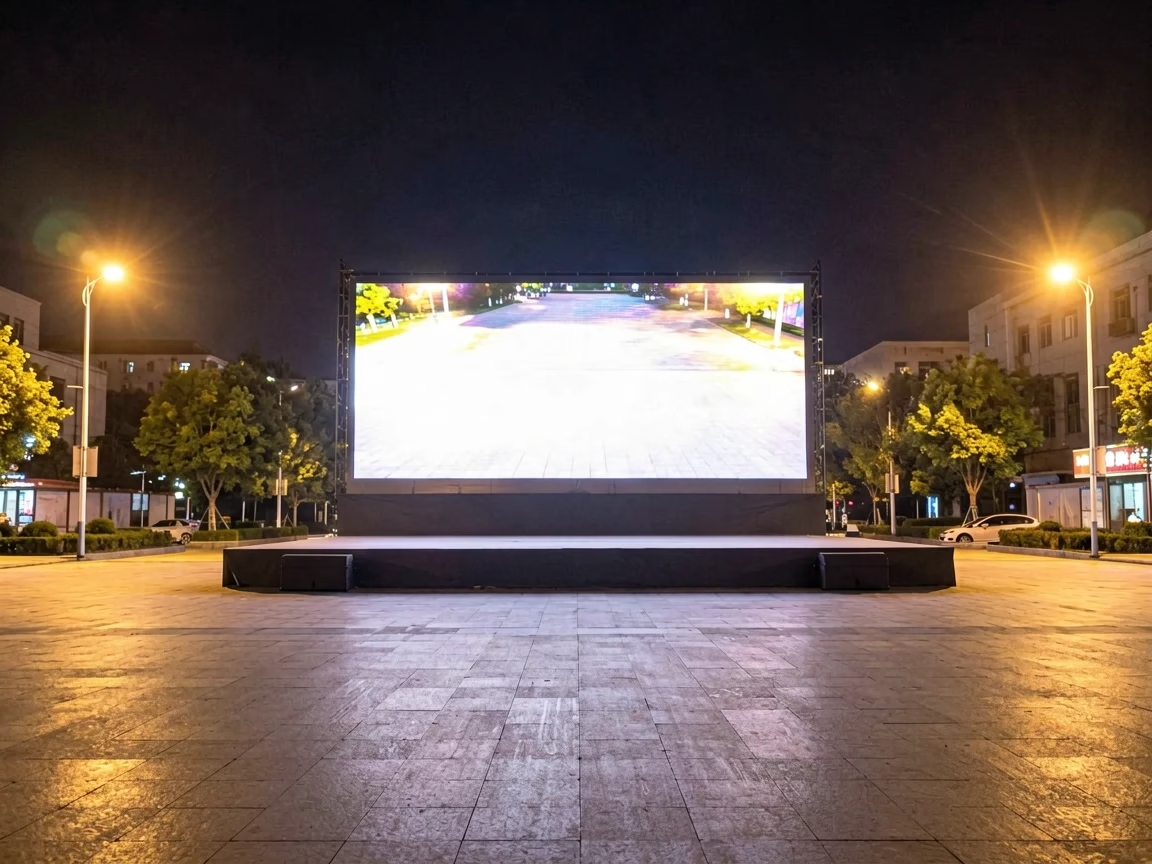
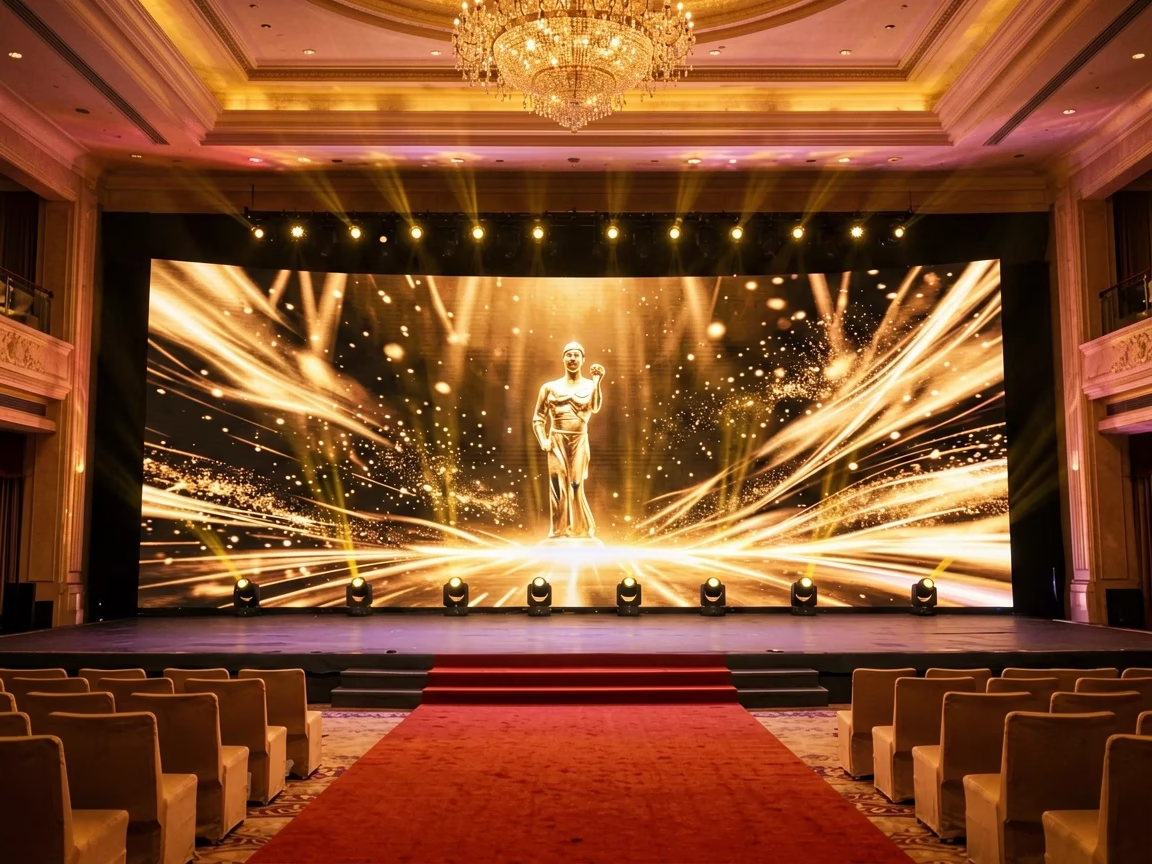
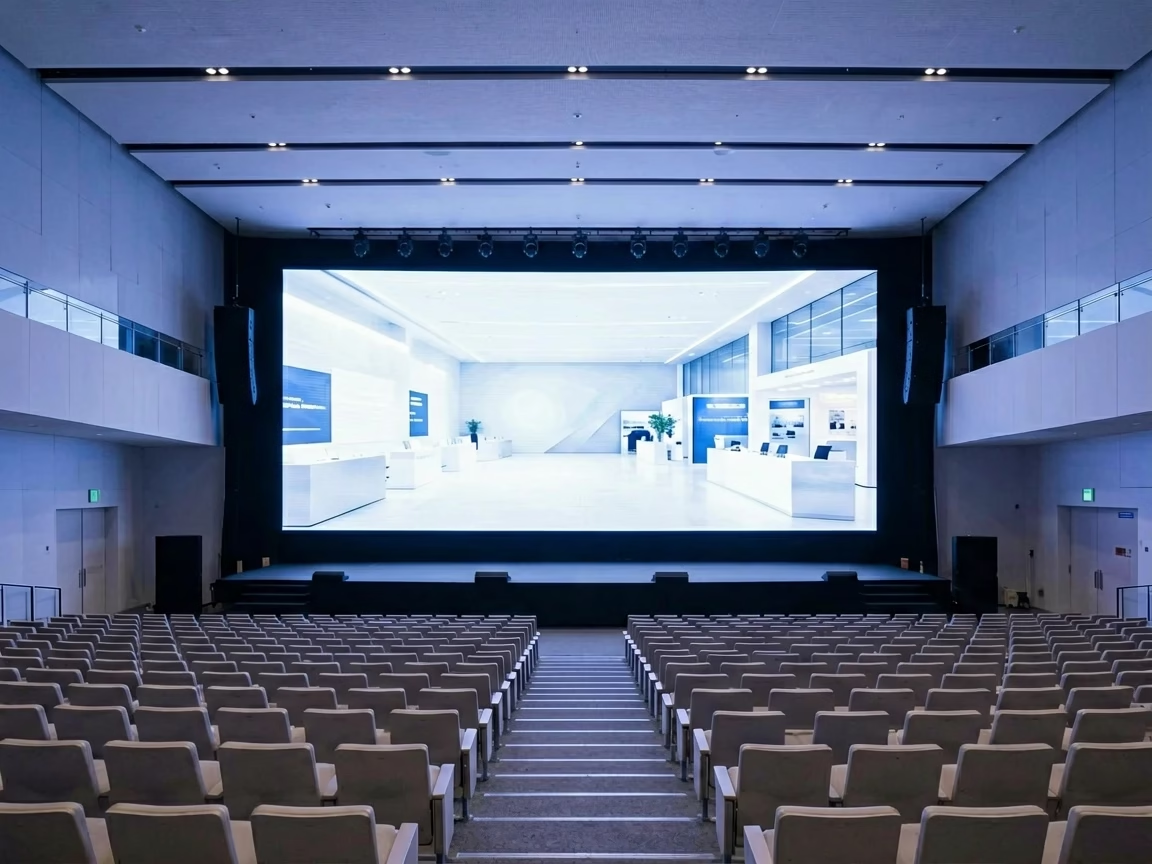
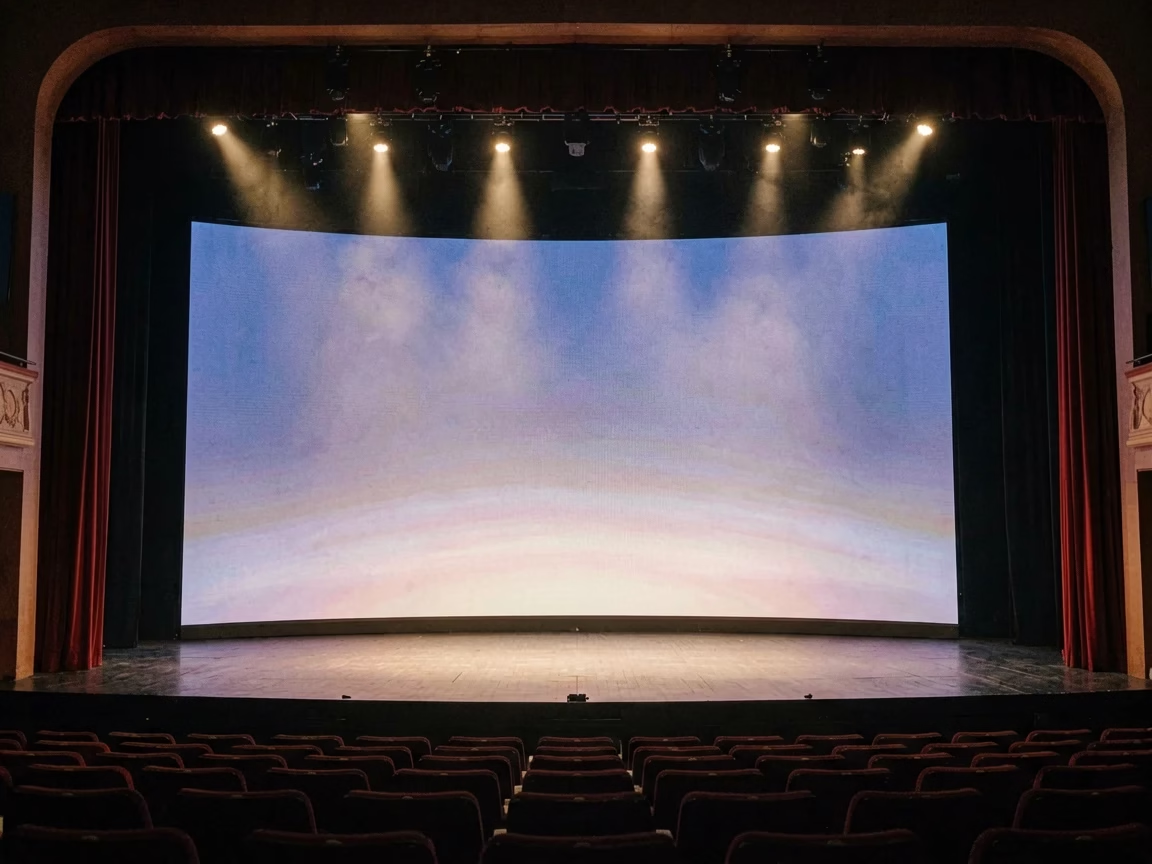
Six large-wall venues where the full panel is the standard rental call:
FAQ
What Should You Ask Before Buying a 500×1000 Rental LED Screen?
Question not covered? Get a direct answer with your quote.
Related
Where Can You Learn More About 500×1000 Rental LED Screens?
Rental Essentials
Engineering
Factory Strength
Why Source Your 500×1000 Rental LED Panels From the Factory?
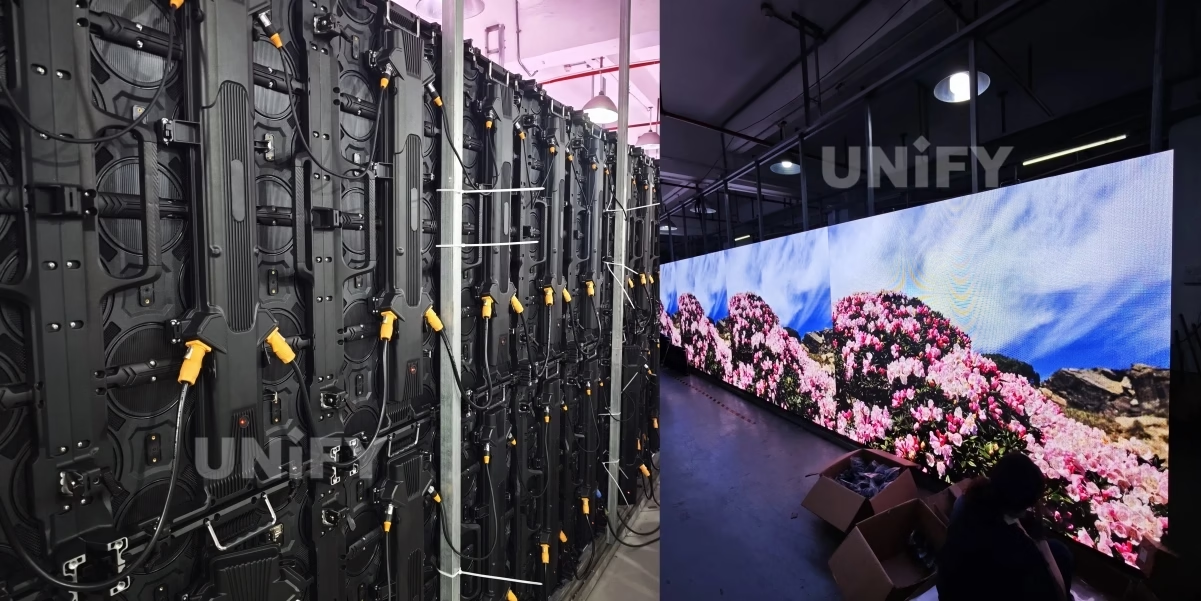
Rental equipment is judged by its worst night. Every panel leaves our line after a 72-hour aging run, spare modules ship from the same production batch, and the 12–24 hour response window covers the touring schedule — because a rental company’s reputation rides on the next show starting on time. As a full-line LED screen manufacturer, we supply flight-case guidance, spare-parts kits and on-site commissioning with the panels. Visit our LED display factory page.
Factory-direct quote with spare kits and commissioning.
Ready to Source Your 500×1000mm Rental LED Screen?
Factory-direct comparison quotes for all six series, with spare kits and commissioning.
unifyledscreen@gmail.com | +86-191-18802497
Operator’s Guide
How Do Rental Operators Get the Most From a 500*1000mm Rental LED Screen?
Published: August 2026 | 8 min read | UnifyLED Engineering Team
Rental LED is a logistics business that happens to sell pictures, and the 500×1000 panel is the format logistics chose. This guide walks the operator’s decision path on the full panel — the crew-day math, the seam count, the half-row problem, the rigging plan and the buying habits that keep a large-wall fleet earning.
Short answer: a 500×1000mm rental LED screen is the rental industry’s full-panel standard — a double-size cabinet that halves cabinet count, seams and rigging points on large walls, and roughly doubles crew-day output against half-panel builds. Standardize on it for stage backdrops and walls above roughly 20m²; keep 500×500 panels for half rows, creative shapes and small rooms; run both on one locking system. Buy on four criteria in order of money impact: crew-day rate, seam count and flatness, the mixed-size locking system, and the spare-parts and warranty path.
Chapter 1 — 500×1000 Rental LED Panel Speed: The Crew-Day Arithmetic
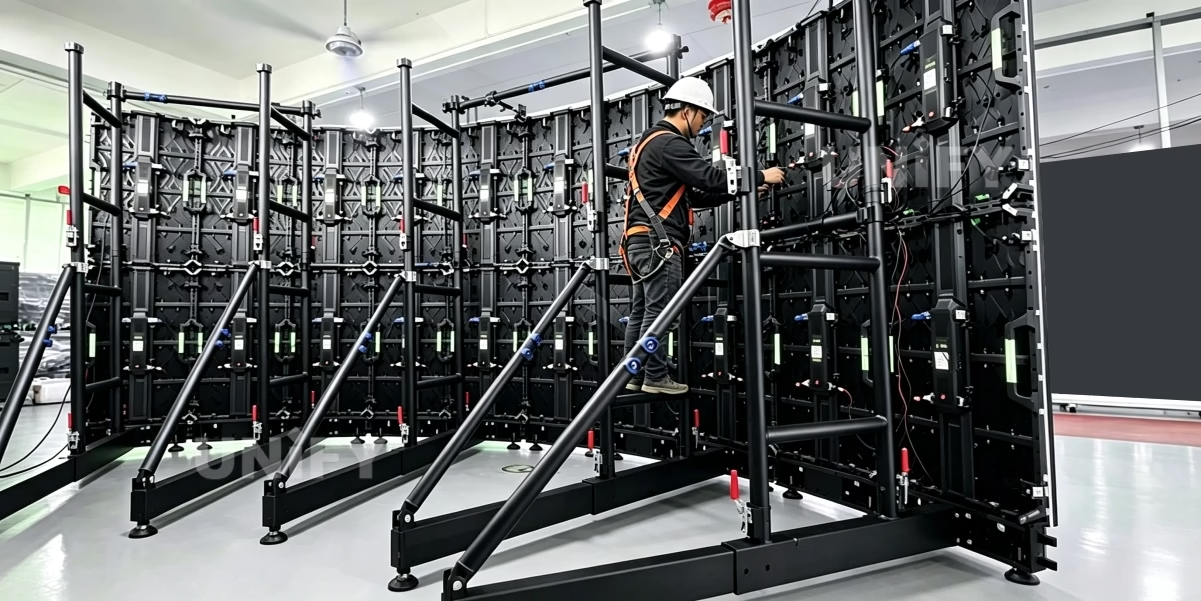
Crew speed is a panel-count problem. Rental crew field reports put a four-person team at 80–100m² per 8-hour day with 500×1000 panels against 40–50m² with half-panels, and the reason is mechanical: every lock, lift and rigging point covers twice the screen. A 10×5m wall is 100 full panels instead of 200 — 100 fewer locks to join, 100 fewer lifts to shoulder height, 100 fewer hanging points to rig. The load-in window is what clients negotiate, and the full panel buys the same wall in roughly half the window.
The speed also compounds on strike. Teardown runs the same arithmetic in reverse, and the crew that frees two hours on a double-header is the crew that gets paid for the third job. Rental operators measure this in cases per man-hour; the full panel simply carries more screen per case, per lift and per hour.
The honest trade-off lives in the same column: a full panel weighs 12.5–14kg on Linsn datasheets and 8.7–9.45kg on INFiLED spec sheets — heavier per unit than a half panel, and the lift becomes a two-person job. Operators running mixed fleets assign the full panels to the body of the wall and the half panels to the rows that need one-hand handling. Speed and weight are one decision, not two.
The floor rule that keeps fleets honest: below roughly 10–15m², the full panel’s speed advantage shrinks to nothing — a 2×3m wall is six panels either way, and the half panel’s one-hand handling wins the day. Above roughly 20m², the full panel’s count advantage compounds with every row added. Between the two, the mixed pair answers every quote, which is why the decision table belongs in every fleet review.
Chapter 2 — Mixing 500×1000 and 500×500 Rental LED Panels: The Half-Row Fix
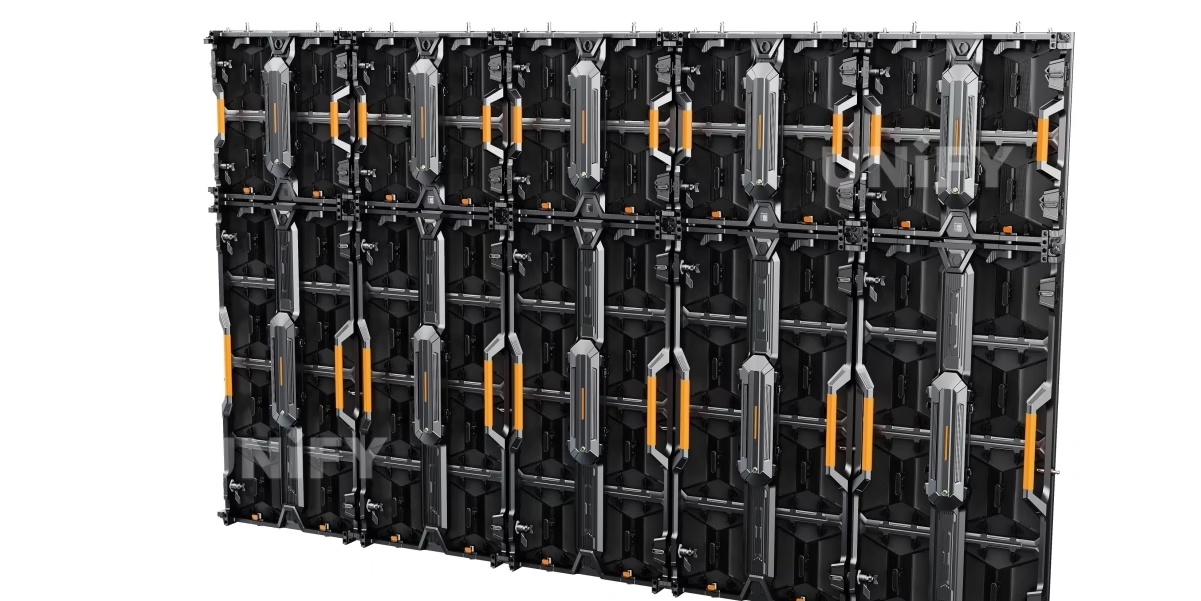
The full panel’s structural problem is the meter. A 500×1000 panel climbs in 1m steps, and real walls end at 4.5m, 5.5m and 7.5m — heights a full-panel-only fleet cannot land without leaving a gap or overshooting. Mixed splicing is a single locking system shared by 500×1000 and 500×500 cabinets, and it is the answer: the full panels build the body of the wall, one row of half panels finishes the half meter. The 8×4.5m 16:9 wall is the standard case — 64 full panels and one 16-panel half row, 80 cabinets total, landing 2048×1152 pixels at P3.91.
Four key differences between a 500×1000 and a 500×500 rental cabinet decide which size carries a given wall:
- Crew speed: 80–100m² against 40–50m² per four-person day — the full panel halves the lock, lift and rigging count.
- Seam count: roughly half the seams for the same area — fewer cabinet lines breaking the picture.
- Weight: 12.5–14kg against 7.2–7.5kg — the full panel is a two-person lift, the half panel a one-hand carry.
- Granularity: the half panel climbs in 500mm steps and builds cubes and tight curves; the full panel climbs in meters and wants the half panel for the remainder.
Inventory planning follows the same arithmetic. A fleet of 80 full panels and 16 half panels builds the standard 16:9 wall; the same 80 full panels split into two 5×4m breakout walls, and the 16 half panels finish every odd height in between. Rental companies that standardize on the mixed pair hold the smallest inventory that covers the widest quote range — the operational definition of asset utilization.
Chapter 3 — Seams and Flatness: Why the 500×1000 Rental LED Wall Reads Better
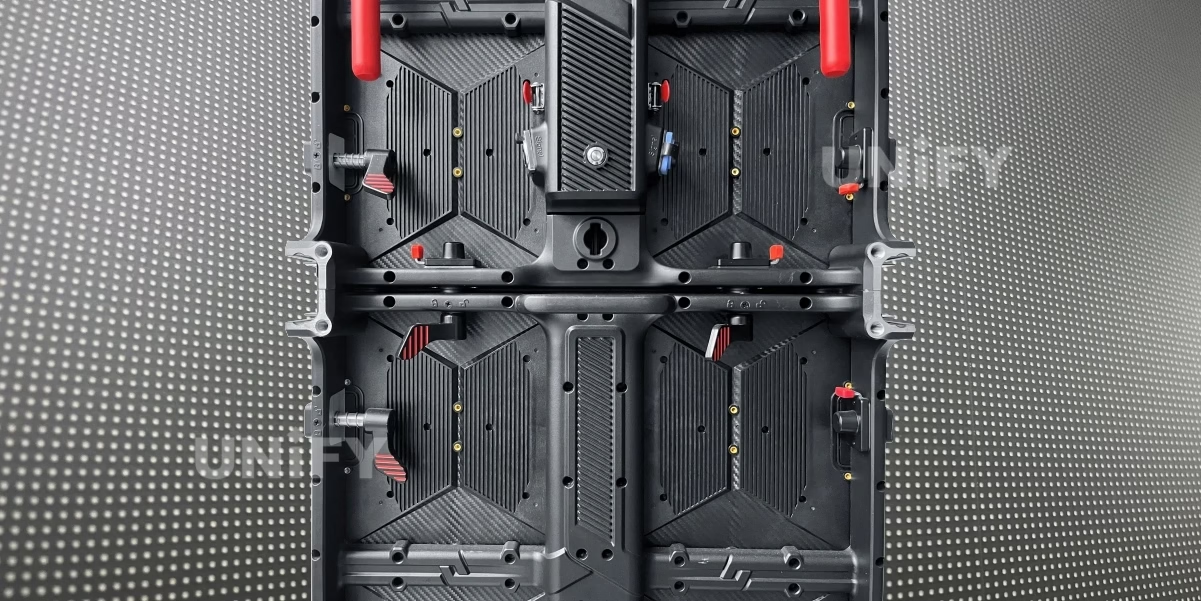
Cabinet lines are the strongest seams on a rental wall — module gaps are factory-set to fractions of a millimeter, while cabinet joins carry the weight of every build, strike and truck ride. The full panel halves the cabinet count and therefore halves the seams: a 10×5m wall carries roughly 175 cabinet joins on full panels against roughly 370 on half panels. Fewer lines breaking the picture reads as one continuous screen from the audience row, which is the visual difference clients actually pay for.
The seams that remain stay tight on engineering, not luck: CNC-machined die-cast chassis with flatness controlled to 0.1mm, positioning pins at both ends of every top edge, and double quick locks on the sides. Flatness is the seam you cannot see — a chassis out of plane by half a millimeter casts a shadow line across the wall under side lighting, which is why the 0.1mm figure belongs on the buying checklist, not in the brochure. After every strike, run the test pattern and check the two or three joins that take the most handling — the corner cabinets — before they become a visible line on the next show.
Chapter 4 — Rigging and Transport for the 500×1000 Rental LED Fleet
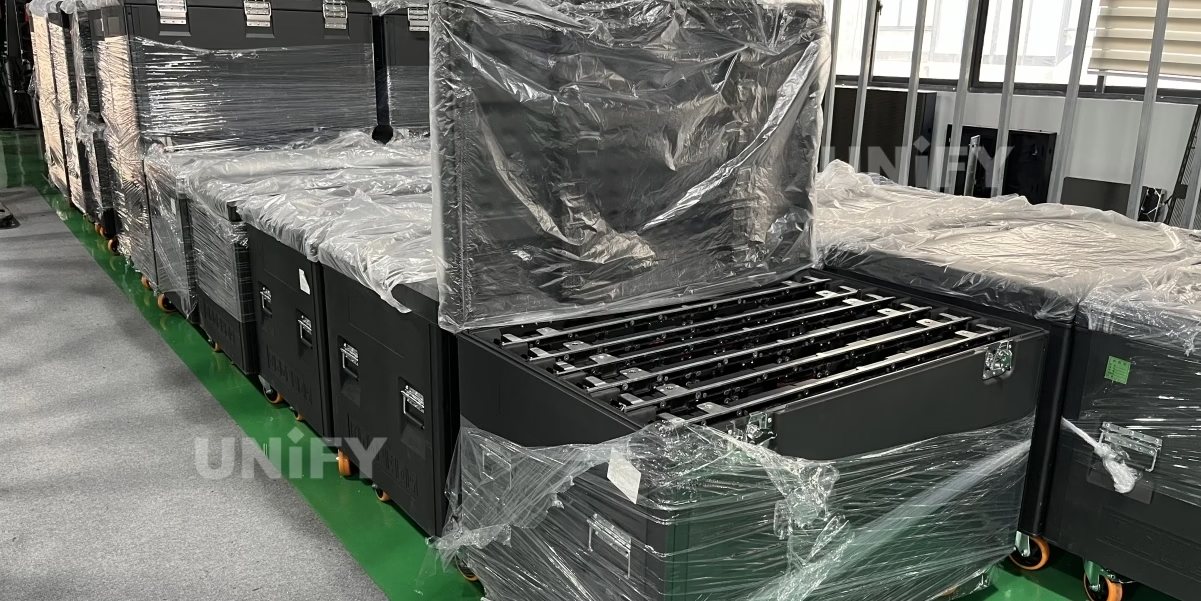
Rigging is where the full panel’s count advantage converts into approval speed. Half the cabinets means half the hanging points, fewer truss lines and a lighter load plan — and venue engineers approve lighter plans faster. Hanging capacity runs on the same logic: fewer, stronger points carry the wall, and the panel’s die-cast chassis is built for the repeated clamp, lift and strike of a touring schedule.
Transport follows the count. Aviation cases carry six 500×1000 panels each, and a 10×5m wall ships as 100 panels instead of 200 — fewer cases, fewer truck loads, fewer forklift minutes per square meter of screen. The packing habit that protects everything: same batch, same case, same truck — and the spare kit (modules, power supplies, locks, cables at 2–3% of fleet size) packed per flight case, so a panel down at 4 PM before doors is a call to the truck, not a repair.
Chapter 5 — Buying a 500×1000 Rental LED Fleet: Price, Warranty and the Sample Order
Per-square-meter quotes of $700–$1,150 in the market listings scanned in August 2026 put a 500×1000 panel at roughly $350–$575, with premium fine-pitch panels above that. The spread hides the real difference: LED encapsulation, true hardware refresh, chassis flatness, spare-parts support and the warranty’s actual repair path. Factory-direct orders should include spare modules from the same production batch, flight-case guidance and a 3-year warranty that covers touring use — the panel that survives the truck twice a week is the asset that pays for itself. A verified LED screen manufacturer ships the platform with the documentation to prove it.
Before committing to a series, order a two-panel sample and run the checks that matter on a touring schedule: weight on a real scale, lock play after fifty joins, module swap time on a stopwatch, flatness with a straight edge and a 24-hour burn on the bench. The sample order also tests the supplier’s documentation habit — packing lists, batch numbers and test reports — which predicts how the full fleet purchase will be supported. One sample pair costs less than the cheapest day of load-in it can prevent.
The financing habit rounds out the discipline: rental fleets depreciate on a three-to-five-year cycle, and the universal-module design stretches that cycle because pitch upgrades no longer mean cabinet replacements. A fleet bought at P3.91 that swaps to P2.6 modules in year three effectively buys a new premium product line for the cost of modules — the single biggest capital-efficiency lever in rental LED, and the reason module-mounting design belongs in the buying criteria next to crew speed and seam count.
Conclusion: The 500×1000 Rental LED Screen Standard
The 500×1000mm rental LED screen is the format the rental industry converged on for large walls because it turns the load-in clock into arithmetic: two panels to the square meter, half the cabinets, half the seams, double the crew-day output — with one row of 500×500 panels finishing every half meter the full panel cannot reach. The operator who runs the math on crew days, seams and rigging points — and holds the maintenance routine at show speed — turns the same panels into more quotes, more nights and more margin. The panel is the tool; the mixed fleet is the business.