IPS Display vs LED Display: 2026 Ultimate Comparison Guide
- Home
- »
- LED Display Technology
- »
- IPS Display vs LED Display: 2026 Ultimate Comparison Guide
Deciding between an IPS display vs LED display is crucial for anyone investing in high-quality visuals. While often presented as competitors, these terms describe different components: IPS relates to panel architecture, whereas LED defines the backlighting technology. Understanding this distinction is key to choosing a screen that meets your specific requirements. This guide demystifies the technical differences—exploring color accuracy, viewing angles, and energy efficiency—while providing a detailed comparison of their performance in creative work, gaming, and commercial advertising. By the end, you will know exactly which display technology delivers the best results for your project or profession.
Table of Contents
1. IPS Display vs LED Display: Demystifying the Concepts
When searching for the perfect screen, the debate of IPS display vs LED display often tops the list. However, to make an informed decision, one must first address a widespread industry misconception: these two terms do not describe the same category of technology.
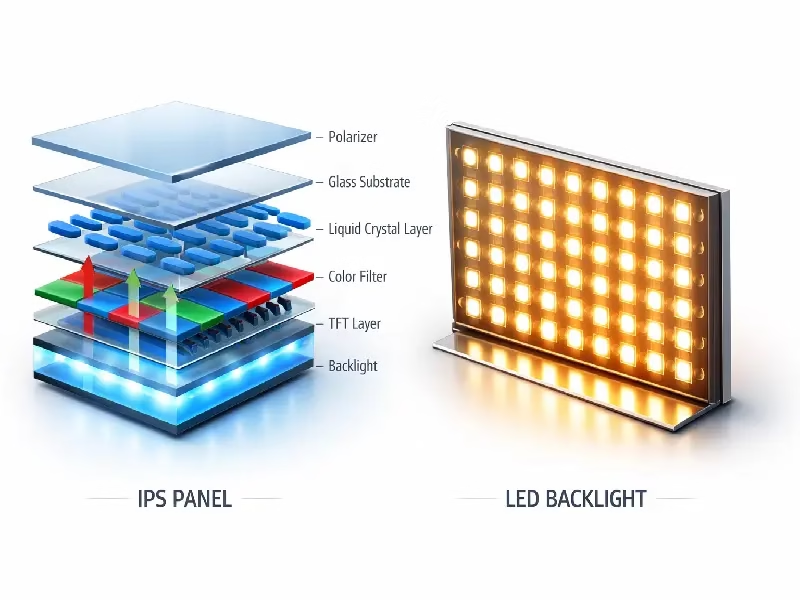
In the world of display engineering, IPS (In-Plane Switching) refers to how the liquid crystals are arranged within a panel, while LED (Light-Emitting Diode) typically refers to the backlighting system that illuminates that panel. In fact, the majority of modern high-performance screens are actually LED-backlit IPS displays.
What Is an IPS Display?
In-Plane Switching (IPS) was developed to solve the limitations of traditional LCDs, such as poor viewing angles and low-quality color reproduction. Unlike older TN (Twisted Nematic) panels, IPS aligns liquid crystals in a horizontal plane.
IPS screens are particularly famous for:
How wide are the viewing angles? Images remain vivid and consistent even when viewed from 178 degrees, preventing the “washed out” look from the side.
Why is it perfect for photo editing? IPS provides accurate colors and supports professional color gamuts like sRGB, making it the gold standard for graphic design and creative work.
Does it offer even brightness? Yes. The special design of IPS panels allows for better light control, ensuring the entire screen has the same brightness level for an improved viewing experience.
Whether for professional work or immersive gaming, IPS displays deliver the amazing details and color clarity that high-end users demand.
What Is an LED Display?
The term “LED Display” in the consumer market usually refers to an LCD screen that uses Light-Emitting Diodes as its backlight source, replacing the bulkier and less efficient CCFL (Cold Cathode Fluorescent Lamps) of the past.
For commercial and industrial sectors—areas where Unifyled excels—an LED display can also refer to Direct-view LED (dvLED), where the diodes themselves create the image without a liquid crystal layer.
Key strengths of LED technology include:
High Luminance: Capable of producing thousands of “nits,” making them visible even under direct sunlight.
Energy Efficiency: Consumes significantly less power than traditional lighting, reducing long-term operational costs.
Slim Form Factor: Allows for the creation of ultra-thin monitors and massive, seamless LED Video Walls.
By understanding that IPS defines the image quality and LED defines the brightness and efficiency, you can better evaluate which combination fits your specific environment—whether it’s a color-critical design studio or a high-impact retail storefront.
2. IPS vs LED Display: How Are They Different?
How do these technologies differ when put to the test? Understanding the nuances of IPS vs LED display performance will help you prioritize what matters most for your specific application. Here is a breakdown across six critical factors.
Viewing Angles: Why Consistency Matters
One of the most significant differences lies in how the image changes when viewed from the side.
IPS Displays: These are the undisputed winners. Thanks to the horizontal alignment of liquid crystals, IPS panels offer ultra-wide viewing angles of 178°. Whether you are presenting in a boardroom or gaming with friends, the colors and clarity remain consistent from almost any position.
LED Displays: While modern LED-backlit screens have improved, budget-friendly models (often using TN panels) can struggle. You may notice “color shifting” or a washed-out effect when looking from the side, which can be a drawback for collaborative work or public presentations.
Winner: IPS Display
Color Accuracy: The Professional Standard
Are true-to-life colors essential for your work?
IPS Displays: Photographers, graphic designers, and video editors rely on IPS because it provides the most accurate colors. By maintaining a consistent color temperature across the screen, IPS ensures that the “red” you see in your edit is the same “red” that gets printed.
LED Displays: While LED screens offer vibrant visuals, they may sometimes oversaturate colors to appear “brighter.” For general office work, this is fine, but for creative professionals, the precision of an IPS panel is unbeatable.
Winner: IPS Display
Brightness Levels: Dominating the Light
Brightness is measured in “nits,” and this is where LED technology truly shines.
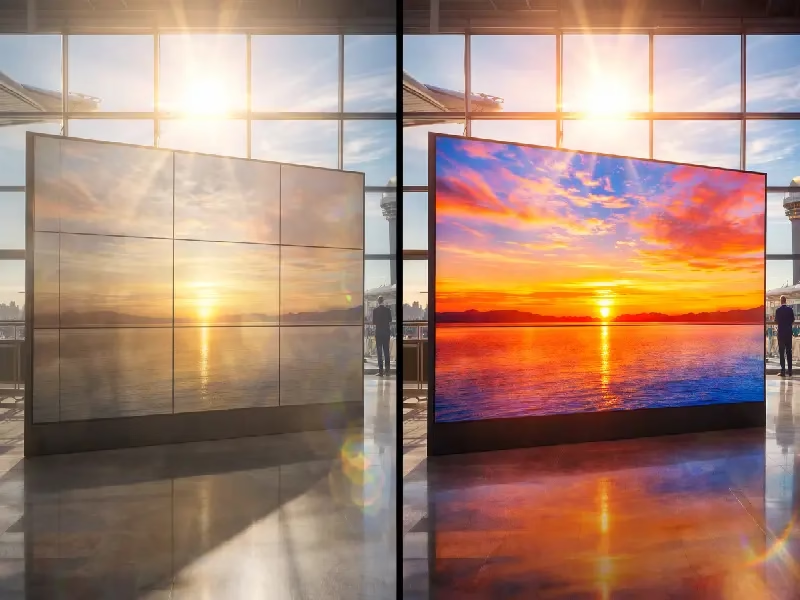
LED Displays: They are designed for high-impact visibility. High-end LED displays can reach thousands of nits, making them the only choice for outdoor use, digital signage, and well-lit retail environments. Even in direct sunlight, the image remains sharp and clear.
IPS Displays: While they provide decent brightness for indoor use, they generally cannot compete with the high-output capabilities of industrial LED panels.
Winner: LED Display
Energy Efficiency: Long-term Sustainability
In an era of rising energy costs, efficiency is a key factor for large-scale installations.
LED Displays: LED backlighting technology is inherently more energy-efficient than older display methods. For businesses running 24/7 video walls or advertising screens, choosing LED can lead to significant savings in electricity costs.
IPS Displays: Because the liquid crystals in an IPS panel require a constant backlight to be visible, they may consume slightly more power, depending on the brightness settings and the type of backlight used.
Winner: LED Display
Durability and Lifespan
How long will your investment last?
LED Displays: Built for endurance, industrial-grade LED modules (like those used in Unifyled’s rental screens) are designed to withstand heavy usage and rugged environments. Many LED displays are rated for up to 100,000 hours of operation.
IPS Displays: While durable for standard office or home use, they aren’t typically designed for the harsh conditions of outdoor advertising or frequent transport in rental scenarios.
Winner: LED Display
Price Point: Value vs. Performance
IPS Screens: These often carry a premium price tag, especially when paired with high resolutions (4K/8K) and professional color calibration.
LED Displays: The market offers a wide range of options. While high-end direct-view LED walls are a major investment, standard LED-backlit monitors provide a very affordable entry point for general users.
Winner: It depends on your budget and ROI requirements.
3. What Is Pros and Cons of IPS and LED Displays
To give you a clearer picture, we have summarized the advantages and disadvantages of each technology. Whether you are looking for a professional workstation monitor or a large-scale Commercial LED Display, this comparison table highlights what you need to know.
IPS vs LED: Performance Summary
| Feature Category | IPS Display (Panel Technology) | LED Display (Backlighting/Direct-View) |
| Main Pros | • Unrivaled Color Accuracy: Perfect for sRGB and DCI-P3 workflows. • Ultra-Wide Viewing Angles: No color shift at 178°. • Visual Consistency: Even brightness across the entire panel. | • High Luminance: Superior brightness for outdoor or high-glare areas. • Energy Efficiency: Significantly lower power consumption. • Seamless & Scalable: Ideal for large, bezel-less video walls. • Long Lifespan: Rated for 100,000+ hours. |
| Main Cons | • Higher Power Draw: Consumes more energy than standard LEDs. • Premium Price: Higher manufacturing costs for color-critical panels. • IPS Glow: Slight light leakage in dark room environments. | • Viewing Angle Limits: Lower-end models may experience color shifting. • Color Oversaturation: Budget versions may lack professional-grade precision. • Heat Dissipation: High-brightness outdoor units require cooling. |
| Best Used For | Graphic design, professional photography, video editing, and office productivity. | Retail signage, outdoor advertising, large event rentals, and high-impact branding. |
4. IPS Screen vs LED:Which Screen Is Better for Your Needs?
Now that we’ve covered the technical differences, let’s look at how IPS and LED displays perform in real-life scenarios. This will help you determine the best ROI for your specific project.
Is IPS or LED Better for Home & Gaming?
For Movies & Entertainment: IPS displays offer the best experience for family viewing. Thanks to the wide viewing angles, everyone on the couch sees the same vibrant colors without distortion.
For Gaming: Gamers often prefer IPS for its rich visuals. However, for high-brightness gaming in well-lit rooms, an LED-backlit screen with a high refresh rate is also an excellent choice.
Which Is the Best Choice for Professional Work?
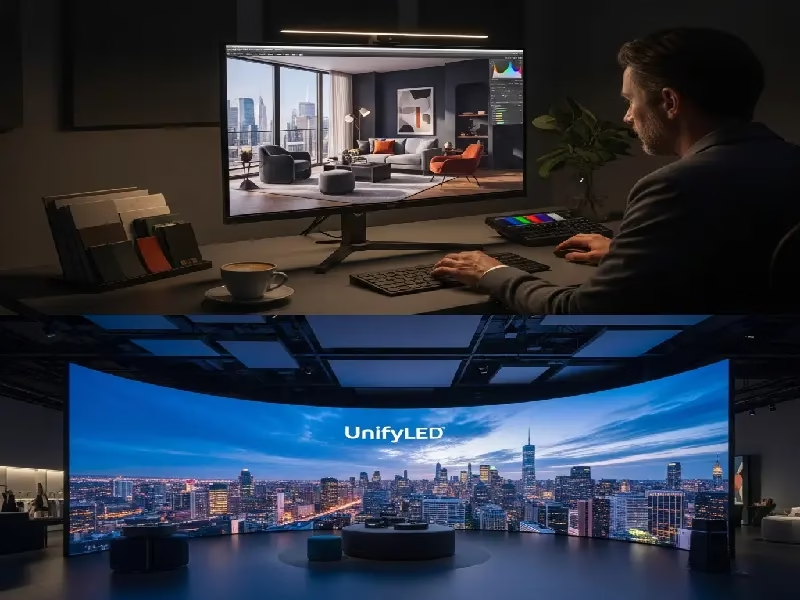
Graphic Design and Photo Editing: There is no substitute for IPS. When color precision is your top priority, IPS panels ensure your work looks consistent across all professional platforms.
General Office Productivity: LED displays are often the better value. They provide plenty of brightness for spreadsheets and emails while keeping energy costs low.
Why LED Dominates for Outdoor and Large-Scale Use?

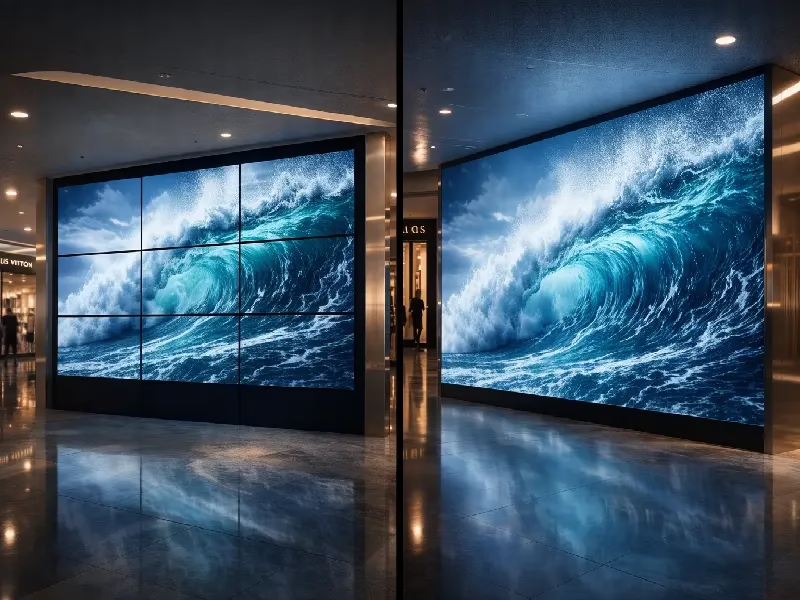
For any display larger than 100 inches or located outdoors, LED technology is the undisputed champion.
Outdoor Advertising: IPS screens simply lack the nits (brightness) to compete with sunlight. Outdoor LED Displays are engineered to be visible in broad daylight and are built to withstand weather elements.
Retail and Video Walls: For a truly immersive experience, LED video walls offer a seamless look without the distracting bezels (borders) found in tiled IPS monitors.
5. Conclusion
When choosing between an IPS display vs LED display, your decision should be driven by your specific environment and goals. Both technologies have their place in the modern visual landscape.
Choose an IPS Display if: You are a professional in photography, graphic design, or video editing. The unmatched color accuracy and consistent viewing angles ensure that your work looks identical from every perspective. It is also the top choice for high-end personal devices and collaborative office settings.
Choose an LED Display if: You need high impact, durability, and energy efficiency. For outdoor viewing, retail signage, or large-scale digital walls, LED technology provides the extreme brightness and seamless scalability that IPS cannot offer.
At Unifyled, we specialize in cutting-edge display solutions tailored to your needs. Whether you’re looking for high-refresh-rate rental screens, transparent displays, or customized retail solutions, we have the expertise to bring your vision to life.
6. FAQ: Everything You Need to Know About IPS and LED Screens
Yes, generally. IPS panels offer better brightness uniformity and wider viewing angles, which prevents your eyes from constantly adjusting to color shifts or "hot spots" on the screen. However, for maximum eye comfort during long working hours, ensure your display also features "Flicker-Free" technology and a "Low Blue Light" mode, regardless of whether it’s IPS or a standard LED-backlit panel.
IPS displays are generally considered better for the eyes during long working hours. This is because they offer superior brightness uniformity and reduce the color shifting that can cause eye strain. Additionally, many IPS panels are equipped with flicker-free technology and blue light filters to further protect your vision.
The main pain point for outdoor displays is glare and sunlight washout. Standard IPS screens rarely exceed 500-700 nits, making them unreadable in daylight. Direct-view LED displays (like those from Unifyled) can reach 5,000 to 10,000 nits, cutting through direct sunlight. Additionally, LED modules lack the liquid crystal layer that can turn black when exposed to extreme solar heat.
Generally, the lifespan of a monitor is determined by its backlighting system. Since most modern IPS monitors use LED backlighting, their lifespan is quite similar—typically ranging from 50,000 to 100,000 hours. However, industrial-grade Direct-view LED displays often feature more rugged components, making them more durable for 24/7 commercial use.
For most gamers, an IPS display is preferred due to its vibrant colors and improved motion clarity. While some older LED panels (like TN) offered faster response times, modern IPS technology has caught up, providing the perfect balance of visual beauty and speed. For high-action competitive gaming, look for an IPS screen with a high refresh rate.
For developers and coders, text sharpness is the priority. IPS panels are often preferred for programming because they offer better sub-pixel rendering and "IPS glow" is less distracting when working on white backgrounds. However, if you prefer "Dark Mode," a high-contrast LED-backlit VA panel or a Mini-LED might offer deeper blacks, though you may sacrifice some off-angle clarity.
"IPS Glow" is a common technical artifact where light appears to leak from the corners of the screen. While it's a characteristic of the technology, you can minimize it by reducing ambient light, lowering the monitor's brightness, or increasing your viewing distance. If you require true blacks for cinematic editing or dark-room gaming, a Premium LED Video Wall or OLED is a better alternative as they can turn pixels completely off.
While both are rated for roughly 50,000 to 100,000 hours, they fail differently. IPS panels may develop "yellowing" or "image retention" over time as the liquid crystals degrade. LED displays (specifically direct-view LEDs) are more modular; if a single diode or module fails, it can be replaced individually without discarding the entire screen, making LED a more sustainable ROI for long-term commercial installations.
Historically, gamers chose TN-LED panels for speed. However, Fast-IPS technology has revolutionized the market by offering 1ms response times combined with stunning color. If you play visually immersive games (like RPGs or Open-World titles), the vibrant color gamut of an IPS display is worth the investment. For purely competitive FPS gaming, look for "Fast-IPS" or high-refresh-rate LED-backlit models to avoid ghosting.