
P4.81 Rental LED Display Waterproofing: The Complete IP65 Protection & Maintenance Guide
Published: July 2026 | Reading time: 15 min | UnifyLED Engineering Team
For any rental company deploying outdoor LED screens, P4.81 rental LED display waterproofing is not a feature checkbox — it is the single most important determinant of fleet longevity, event reliability, and maintenance cost. A single water-ingress failure during a live concert or outdoor festival can destroy thousands of dollars in LED modules, trigger contract penalties for interrupted service, and damage the rental company’s reputation with event organizers who cannot afford technical failures. Unlike fixed outdoor installations that benefit from permanent weather shielding and controlled cable routing, outdoor rental LED screen protection must survive repeated assembly/disassembly cycles, transportation vibration, and connector wear — all while maintaining a watertight seal against rain, humidity, and pressure-washer cleaning. This guide provides the engineering analysis, testing protocols, and maintenance schedules that professional rental operations use to keep their weatherproof rental LED video wall inventory performing through any conditions.
The P4.81 pixel pitch is the global workhorse of outdoor rental — over 60% of outdoor rental LED deployments worldwide use P4.81 modules according to industry shipment data. Its 4.81mm pixel spacing delivers excellent visibility at 5–15 meter viewing distances while using larger, more robust SMD2727 LED packages that inherently tolerate higher drive currents and brighter output (5,000–6,000 nits) than finer-pitch alternatives. But the mechanical and environmental demands of rental deployment — where a single cabinet may be assembled and disassembled 50+ times per year across rain, dust, heat, and transport vibration — mean that waterproofing integrity must be actively maintained, not passively assumed. A brand-new P4.81 cabinet fresh from the LED screen manufacturer carries an IP65 rating verified at the factory. That same cabinet after 30 rental cycles carries whatever level of protection its last inspection and maintenance provided.
What Are IP Ratings for P4.81 Rental LED Display Waterproofing?
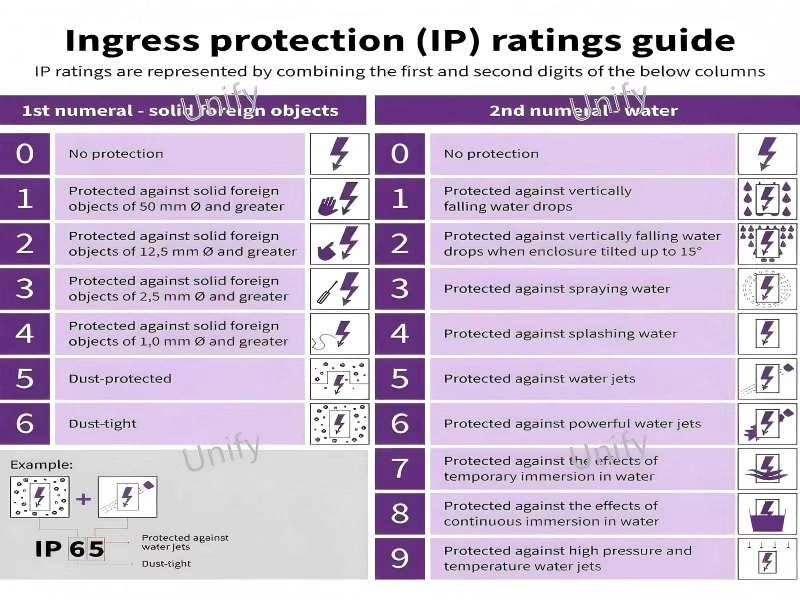
The IP (Ingress Protection) rating system, defined by IEC standard 60529, uses a two-digit code to quantify protection against solid particles (first digit) and liquid ingress (second digit). For P4.81 rental LED display waterproofing, understanding these digits is not academic — it directly determines whether your inventory can operate through a summer thunderstorm or must be struck and covered at the first sign of rain. The cost difference between an IP65-rated P4.81 rental cabinet and an IP54 alternative is typically $80–$120 per square meter — approximately 8–12% of the cabinet cost — but the operational difference is binary: IP65 screens continue running through heavy rain; IP54 screens must be powered down and covered.
1.1 IP65 Decoded — Dust Tight (6) + Water Jet Protection (5)
The first digit “6” means the enclosure is completely dust-tight — no ingress of dust under vacuum pressure testing per IEC 60529 Clause 13.4. For a rental P4.81 cabinet, this means the module-to-cabinet seal, cabinet door gaskets, and connector interfaces must prevent fine particulate ingress even after repeated assembly cycles. Dust ingress is not merely a cosmetic issue: accumulated dust on the PCB absorbs moisture from humid air, accelerating corrosion of solder joints and connector pins. The second digit “5” means protection against water jets (6.3mm nozzle, 12.5 L/min at 30 kPa) from any direction for at least 3 minutes. Critically, IP65 does not guarantee protection against immersion (that requires IP67/IP68) or high-pressure washing (which can exceed 8,000 kPa and defeat standard gaskets). For a comprehensive technical reference, see our IP rating guide.
1.2 IP54 vs IP65 vs IP67 — Which Rating Does Your P4.81 Rental Need?
1.3 Front IP65 vs Rear IP54 — Why the Asymmetry Exists
Virtually all P4.81 rental cabinets are rated IP65 on the front face (module side) and IP54 on the rear face (cabinet door side). This is not a design compromise — it is an intentional engineering trade-off. The front face bears direct rain, wind-driven water, and audience-facing visibility requirements; it must be fully sealed. The rear face, protected by the cabinet structure itself and typically oriented away from prevailing weather, requires only splash protection. More importantly, the rear cabinet door provides access for cable routing and receiving card maintenance — a fully IP65-rated rear door would require compression latches, double gaskets, and pressure-equalization valves that add cost, weight, and assembly time without meaningful operational benefit for most deployments. The exception: coastal or marine-environment installations where salt spray can reach the rear of the cabinet. In these cases, specify full IP65 rear-face protection and stainless-steel connector contacts.
How Does P4.81 Rental LED Display Waterproofing Work? A Technical Breakdown
The P4.81 outdoor LED display sealing system operates at three independent layers. If any one layer fails, water reaches the electronics. Understanding each layer’s failure mode is essential for effective inspection and maintenance. The UnifyLED waterproof test video below demonstrates factory-level verification procedures.
UnifyLED — UnifyLED — Rental Outdoor LED Display Waterproof Test Before Shipping
2.1 Module-Level Protection — Full Glue Potting Process
The first and most critical waterproofing layer is the full glue potting of the LED module PCB. In this process, a two-part silicone or epoxy compound is applied across the entire rear surface of the module PCB — covering all electronic components including LED driver ICs, resistors, capacitors, and solder joints — creating a permanent, airtight, and electrically insulating seal approximately 1.5–2.0mm thick. The potting compound must meet three requirements: dielectric strength ≥15 kV/mm (to prevent short circuits if water condenses on the surface), thermal conductivity ≥0.3 W/m·K (to allow heat dissipation from driver ICs), and adhesion strength sufficient to survive thermal cycling from –20°C to +60°C without delamination.
Cheaper P4.81 modules sometimes use conformal coating (a thin spray-on acrylic or silicone layer, typically 25–75μm) instead of full potting. Conformal coating provides adequate protection for indoor or light-splash environments but is insufficient for outdoor rental use — it can be scratched during module handling, degrades under UV exposure, and does not seal the edges of components where water can wick underneath via capillary action. Always verify that P4.81 rental modules use full potting, not conformal coating. See LED screen brightness for the impact of potting on thermal performance.
2.2 Cabinet-Level Protection — Gasket Compression & Silicone Seals
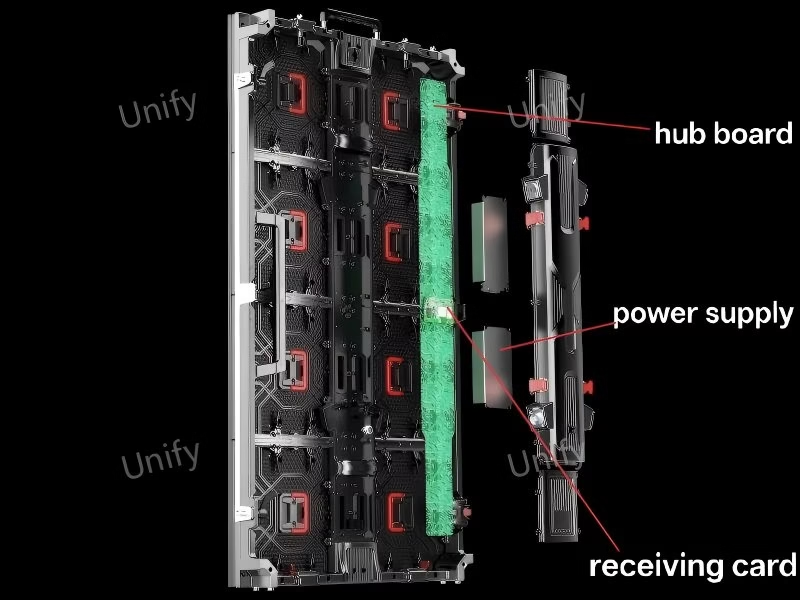
The second waterproofing layer is the rubber gasket system that seals the interface between the LED module and the cabinet frame, and between the cabinet door and the cabinet body. These gaskets are typically EPDM (ethylene propylene diene monomer) rubber — chosen for excellent UV resistance, compression set resistance, and wide temperature range (–40°C to +120°C). The gasket is compressed between the module’s rear flange and the cabinet’s front mounting surface when the module is seated and locked. Proper compression (typically 25–35% of gasket thickness) creates a watertight seal. The most common failure mode: after 30–50 assembly cycles, the EPDM gasket develops compression set — a permanent deformation where the rubber no longer rebounds to its original thickness when the module is removed. A gasket that has taken a compression set of more than 30% of its original thickness will not seal properly and must be replaced. Gasket inspection should be part of every 20-cycle maintenance routine (see Section 5).
2.3 Connector-Level Protection — Waterproof PowerCON & Signal Connectors
The third layer — and statistically the most frequent failure point in P4.81 outdoor LED display waterproofing — is the connector interface. Power and signal connections between cabinets and between modules must maintain watertight integrity even when disconnected and reconnected dozens of times. Professional P4.81 rental cabinets use IP65-rated PowerCON TRUE1 connectors for AC power (featuring integrated rubber sealing rings and twist-lock mechanisms that compress the seal upon mating) and waterproof RJ45 or etherCON connectors for signal (with threaded coupling rings and O-ring face seals). The connector’s waterproof rating applies only when properly mated — an unmated connector hanging loose in rain is an open water ingress path directly into the cabinet interior. During assembly, connect all cables before the final weather seal check. During disassembly, disconnect cables last and immediately cap unused connectors with waterproof blanking caps. For detailed installation procedures, see LED screen installation.
How to Test P4.81 Rental LED Display Waterproofing: Procedures & Checklist
Factory IP65 certification is a starting point — not a guarantee that holds after 30 rental cycles. Implementing a structured IP65 rental LED cabinet waterproof test protocol as part of your standard rental workflow is the only way to ensure field reliability. The following procedures reflect industry best practices adapted from the LED screen manufacturer quality control processes used in factory出货检验 (outgoing inspection).
3.1 Pre-Deployment Spray Test Protocol
Before every outdoor deployment — or at minimum, every 5 outdoor events — perform a controlled spray test on a statistically representative sample of cabinets (10% of total inventory, minimum 4 cabinets). Use a garden hose with a fan-spray nozzle at approximately 30–50 kPa pressure (typical municipal water pressure). Spray each cabinet face at a 45° angle from 1 meter distance for 60 seconds per face, covering all module seams, cabinet joints, and connector interfaces. After the test, open each cabinet door and inspect the interior with a flashlight for any water droplets, moisture, or dampness. Pay particular attention to the bottom edge of the cabinet interior — gravity will collect any ingress water there. If moisture is found, identify the ingress point before drying and resealing.
3.2 Post-Event Inspection — What to Check After Rain Exposure
After any event where the P4.81 rental wall experienced rain, perform these inspections during disassembly: (1) Check every module’s rear surface for water stains or mineral deposits — even dried water leaves visible residue. (2) Inspect all connector contacts for green/white corrosion — copper corrosion products indicate water reached the contact pins. (3) Verify gasket rebound — press a fingernail into each gasket; if the indentation remains visible after 5 seconds, the gasket has taken a compression set and must be replaced. (4) Check for standing water inside flight cases — water trapped in case foam will re-humidify cabinets during storage. For diagnostic guidance, see basic debugging of LED displays.
3.3 Common Water Ingress Failure Points
Based on field service data, the five most common P4.81 LED screen rain protection failure points — ranked by frequency — are: (1) module-to-cabinet gasket compression set (approximately 35% of cases), (2) unmated connector left uncapped during assembly (approximately 25%), (3) cabinet door gasket pinched or misaligned during closing (approximately 15%), (4) cracked module PCB from impact damage breaking the potting seal (approximately 15%), (5) silicone sealant degradation at cabinet corner joints from UV exposure and thermal cycling (approximately 10%). Address these in order during inspection. For preventative maintenance schedules, see LED screen maintenance.
When Should You Maintain P4.81 Rental LED Display Waterproofing? A Schedule Guide
A waterproof LED display gasket maintenance program integrated into your rental operations workflow is the only way to maintain IP65 integrity beyond the first year of service. The following schedule assumes a mid-volume rental operation deploying P4.81 inventory approximately 20–30 times per year.
The most expensive mistake in rental waterproofing maintenance is storing cabinets that appear dry externally but contain trapped moisture internally. A cabinet that was rained on during an event, superficially towel-dried, and packed into a closed flight case will develop condensation inside the case as temperature cycles. Over weeks of storage, that moisture corrodes connector pins, promotes mold growth on gaskets, and accelerates PCB oxidation. After any rain-exposed event, leave cabinets open in a dry, ventilated area for a minimum of 4 hours before packing into flight cases. For large inventories, a dedicated drying room with dehumidifier (target 35–45% RH) and circulating fans reduces drying time to 2 hours. For more on maintenance best practices, see LED screen maintenance.
What Are the Best Practices for P4.81 Rental LED Display Waterproofing?
Beyond scheduled maintenance, operational discipline during event deployment is what separates rental companies with 5-year fleet lifespans from those replacing modules annually. These outdoor P4.81 LED screen IP65 protection best practices are derived from rental operations deploying 500+ events per year.
5.1 Pre-Event Weather Assessment & Contingency Planning
Forty-eight hours before any outdoor deployment, check the venue-specific weather forecast. If the probability of precipitation exceeds 40% during event hours: (1) confirm that all cabinets scheduled for deployment have passed spray testing within their last 5 events, (2) pack spare gaskets and silicone sealant in the technical toolkit, (3) brief the on-site crew on the emergency rain protocol, (4) ensure waterproof connector caps are packed and accessible, (5) verify the ground-support or rigging structure includes provisions for a temporary rain canopy or tarp that can be deployed without disassembling the LED wall. The difference between a prepared crew and an unprepared one during an unexpected rain event is typically the difference between zero damage and 15–20% module loss. For event-specific preparation, see LED screen for events.
5.2 Emergency Rain Protection During Live Events
If rain begins during an active outdoor event with the P4.81 wall running: (1) Do not immediately power down — IP65-rated cabinets are designed to operate through rain; power cycling introduces thermal shock that can draw moisture into cooling cabinets through pressure differential. (2) Deploy the pre-positioned rain canopy or tarp to shield the top and sides of the wall, leaving the bottom edge open for ventilation. (3) Monitor the control system for any module reporting communication errors — a sudden communication loss on a single module during rain is the most common early indicator of water ingress. (4) After the rain subsides, inspect all module surfaces for pooled water — horizontal cabinet seams can trap water that slowly seeps past aging gaskets. (5) If the event continues through heavy or sustained rain (over 30 minutes at >5mm/hour), schedule a full post-event inspection per Section 4.2 before the next deployment — do not assume the cabinets survived without checking.

FAQ: P4.81 Rental LED Display Waterproofing – Common Questions
Why P4.81 Rental LED Display Waterproofing Determines Fleet Longevity
P4.81 rental LED display waterproofing is not a purchase-time specification — it is an ongoing operational discipline. A factory-fresh IP65 rating means nothing after 30 rental cycles if gaskets are not inspected, connectors are not capped, and wet cabinets are packed into flight cases without drying. The rental companies with the lowest per-event maintenance costs and longest fleet lifespans — those achieving 7–10 years from their P4.81 inventory — treat waterproofing as a scheduled maintenance function, not a passive assumption. They test 10% of their inventory before every outdoor event. They replace gaskets at 50 cycles regardless of visual condition. They invest in dehumidified drying rooms and silica gel desiccant protocols for storage. And they train every technician to recognize the five common failure points — gasket compression set, uncapped connectors, pinched door seals, cracked PCB potting, and degraded corner sealant — before they cause field failures.
The economics are straightforward: a single water-damaged P4.81 module costs $40–$80 to replace. A single event where rain forces a 30-minute screen shutdown costs $500–$2,500 in client compensation and reputational damage. A single cabinet with trapped moisture that corrodes over 6 months of storage can destroy $500–$800 in electronics before the next deployment reveals the damage. Against these costs, the annual maintenance investment — gaskets ($2–$4 per cabinet), silicone sealant ($15 per tube, covers 20 cabinets), desiccant packs ($0.50 each), and technician time (2 days per year for a 100-cabinet fleet) — totals approximately $500–$800 per year. The return on that investment: a fleet that survives 7 years instead of 3, and event reliability that builds client trust instead of eroding it. That is the business case for P4.81 outdoor rental LED display waterproofing.
Need IP65-Rated P4.81 Rental LED Displays?
UnifyLED provides P4.81 outdoor rental LED cabinets with full glue potting, EPDM gaskets, and IP65-certified connectors — factory-direct pricing, global delivery, and free waterproofing consultation.
legidatechled@gmail.com | +86-191-18802497