
Outdoor Waterproof LED Screen: Technical Guide for Buyers and Project Owners
- Home
- »
- LED Screen Buying Guides
- »
- Outdoor Waterproof LED Screen: Technical Guide for Buyers and Project Owners
Are you planning an outdoor display project but feeling overwhelmed by technical specifications? Choosing the right Outdoor Waterproof LED Screen is not just about brightness—it’s about ensuring long-term performance against rain, salt spray, and extreme temperatures. This comprehensive technical guide covers everything you need to know, from understanding IP65/IP67 ratings and energy-saving common cathode technology to mastering complex structural installation and maintenance. Whether you are an experienced integrator or a project owner, read on to discover how to make an informed purchasing decision and avoid common, costly mistakes. Your roadmap to a reliable outdoor display starts here.
Table of Contents
1. What is an Outdoor Waterproof LED Screen?
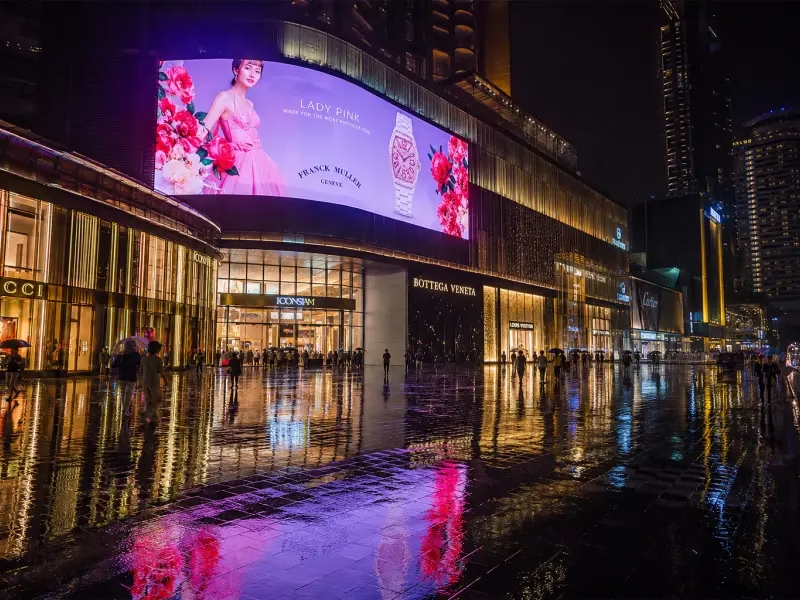
An outdoor waterproof LED screen is an advanced commercial digital display system specifically engineered to operate flawlessly under continuous exposure to harsh natural environments. Unlike standard consumer electronics, an exterior LED display is built to withstand extreme weather conditions year-round, including torrential rain, heavy snow, direct UV sunlight, and abrasive wind or sand. Today, these robust systems serve as the backbone of modern digital out-of-home (DOOH) advertising, stadium broadcasting, and architectural media facades.
The Core Difference: Indoor vs. Outdoor Displays
The fundamental difference between indoor and outdoor LED technology lies in their engineering priorities. While indoor displays typically focus on ultra-fine pixel pitches and extremely high refresh rates for close-up viewing, an outdoor setup faces a matter of physical survival.
For an outdoor LED video wall, waterproofing, dust-tight sealing, ultra-high brightness, and overall weather resistance are not just optional upgrades—they are the absolute lifeline of the equipment. Without strict protection mechanisms, internal components would quickly short-circuit or corrode when exposed to moisture. Therefore, a true weatherproof LED screen is meticulously designed from the internal PCB modules to the external die-cast cabinets, ensuring uninterrupted, 24/7 commercial performance regardless of the climate challenges.
2. Why "System-Level" Waterproofing is Non-Negotiable for Outdoor LED Screens
When evaluating outdoor displays, many buyers fall victim to a common misconception: they assume “waterproofing” simply means covering the front of the screen with a protective film or adding a glass shield. In reality, effective weather protection is never a single component—it is comprehensive system engineering designed from the outside in.
The Domino Effect of a Single Leaky Screw
A true outdoor display requires a fully integrated defense line. This ecosystem includes the heavily sealed waterproof LED module, the precision die-cast aluminum cabinet, high-polymer rubber gaskets, enclosed power supply units, and tightly sealed aviation-grade cable connectors.
Why is this holistic approach so critical? Because water and humidity are relentless. Even a single unsealed screw hole or a slightly degraded waterproof ring can allow moisture to seep in. Once inside, capillary action pulls the water across the printed circuit boards (PCBs). This instantly causes short circuits, massive clusters of dead pixels, or even a complete blackout. Such vulnerabilities drastically ruin overall outdoor LED screen reliability, leading to catastrophic project failures and astronomical maintenance costs.
Learning from Real-World AV Failures
The critical need for deep, system-level waterproofing is constantly echoed by industry professionals. If internal components are not individually treated to resist moisture, the results can be devastating. As one seasoned AV integrator recently shared on Reddit’s professional r/CommercialAV community:
“We installed a budget outdoor screen for a client near the coast. The specs claimed it was ‘waterproof’, but it lacked deep system-level sealing. Within 6 months, the salt fog and high humidity penetrated the cabinet and completely corroded the internal PCBs. We had to replace half the modules out of our own pocket. Never skimp on proper weatherproofing.”
<cite>— A verified AV Integrator on Reddit</cite>
This painful lesson perfectly illustrates why surface-level protection is never enough. To guarantee the longevity and ROI (Return on Investment) of your project, the display must rely on a systematic waterproof structure—such as thick potting glue on the front and heavy conformal coating on the rear PCBs—to actively block moisture, salt, and dust at every possible entry point.
3. Core Technical Specifications of Outdoor Waterproof LED Screens
To guarantee long-term stability and outstanding visual performance, selecting the right specifications is just as important as the structural design. Here are the four fundamental technical metrics every buyer must evaluate.
Ingress Protection (IP Rating): IP65 vs. IP67
Understanding the IP (Ingress Protection) rating is the first step in evaluating weather resistance. The rating consists of two numbers: the first digit indicates protection against solid objects (like dust), and the second digit represents protection against liquids (water).
According to the official IEC 60529 standard, an IP65 vs IP67 LED display presents distinct levels of environmental defense:
IP65 (The Industry Baseline): The standard guarantees that the screen is completely dust-tight (6) and protected against low-pressure water jets from any direction (5). This is the absolute minimum requirement for standard outdoor environments.
IP67 (For Extreme Environments): While sharing the same dust protection, an IP67 rating ensures the equipment can withstand temporary immersion in water (7). This makes it essential for coastal areas prone to typhoons, heavy hurricanes, or locations with severe horizontal rainstorms.
Brightness & Contrast Requirements
Unlike indoor displays, an outdoor screen must directly compete with ambient daylight and intense ultraviolet (UV) sunlight.
To ensure the content remains vivid and legible during peak noon hours, a high brightness outdoor LED screen is mandatory. Standard outdoor displays require a minimum brightness of 6,000 to 7,000 nits. However, for screens facing direct, unshaded sunlight (such as highway billboards or south-facing facades), securing premium LEDs capable of reaching 8,000 to 10,000 nits is highly recommended. Coupled with high-contrast masks and anti-glare louvers, this ensures the image doesn’t look washed out when viewed from a distance.
Power Consumption and Energy-Saving Technologies
Operating a massive digital billboard 24/7 can result in astronomical electricity bills. To solve the industry pain point of high power consumption, advanced manufacturers now utilize common cathode LED screen technology.
Unlike traditional displays that supply a uniform voltage to all chips (wasting excess energy as heat), common cathode technology separately supplies precise, lower voltages to the red, green, and blue diodes. This eliminates wasted power and dramatically reduces heat generation.
Industry data from authoritative research firms like TrendForce shows that as global energy costs rise, the demand for energy-efficient solutions in the DOOH (Digital Out-of-Home) market is surging. Utilizing an optimized energy-saving design can reduce operational electricity costs by up to 30%, significantly improving the overall ROI for advertisers.
4. How is the Waterproof Structure Achieved? (Internal Design Breakdown)
Achieving a true IP65 or IP67 rating requires a multi-layered mechanical and chemical defense system. It is not merely about sealing the outer box; the protection must penetrate every structural level, from the micro-components to the outer casing.
Here is the structural breakdown of a highly reliable outdoor display:
Module-Level Protection: Potting and Conformal Coating
The first line of defense is the LED module itself. On the front surface (where the LED diodes are located), manufacturers apply a high-density “potting” process (injecting waterproof glue between the pixels) to completely seal the diodes against water and physical impact.
On the rear side of the module, the Printed Circuit Board (PCB) and driving ICs are exposed. To protect them from condensation and salt spray, a premium conformal coating LED module is treated with a specialized chemical spray (often referred to as three-proof paint). This coating acts as an invisible armor, preventing moisture, dust, and corrosive salts from causing short circuits.
Cabinet-Level Sealing: Precision and Connectors
The physical housing of the display plays a critical role in weather resistance. Compared to traditional iron cabinets, a modern die-cast aluminum LED cabinet offers vastly superior waterproofing. The die-casting process creates a highly precise, seamless frame with minimal structural tolerance, leaving no gaps for water to enter.
Furthermore, traditional exposed cables are replaced with aviation-grade waterproof connectors. Both power and data cables utilize tight-locking mechanisms equipped with heavy-duty O-rings, ensuring zero water ingress even under severe rainstorms. You can explore our full range of outdoor LED display solutions to see how these precise structural designs protect against the elements.
Front vs. Rear Maintenance Waterproofing Differences
Standard rear-service cabinets achieve waterproofing by utilizing a sealed rear door with thick rubber gaskets. However, space constraints in many modern architectural projects make rear access impossible.
Designing a front maintenance outdoor LED screen poses a significant waterproofing challenge because the modules must be removable from the front without a sealed back door. To achieve a strict IP65 rating, advanced front-service screens utilize specialized rotary locking mechanisms (fast locks) and high-polymer sealing rubber rings. When a technician locks the module into place with a T-wrench, the fast locks compress the rubber ring tightly against the die-cast frame, creating a perfect vacuum seal without needing a rear cover. Discover how our front maintenance outdoor LED screen saves installation space and costs while maintaining top-tier protection.
5. Outdoor Installation and Environmental Adaptability
A high-quality display is only as good as its installation. Even the most durable LED screen will fail prematurely if the mounting structure or environmental management is overlooked. Proper planning for the specific installation site is the final, critical step in ensuring system longevity.
Steel Structure and Wind Load
When planning an outdoor LED screen installation, the supporting structure is just as vital as the display itself. In outdoor environments, the screen acts like a giant sail; therefore, the steel structure must be engineered to withstand local wind loads based on regional meteorological data.
Before installation, a professional structural survey is mandatory. This includes evaluating the wall integrity for facade mounts or calculating the sheer strength of columns for ground-mounted billboards. Engineers must incorporate safety redundancy to ensure that the structure does not just support the dead weight of the display, but also survives the extreme lateral pressure exerted during typhoons or gale-force winds.
Extreme Climate Standards and Testing
“Outdoor” is not a monolith—a screen installed in a humid coastal city faces vastly different threats than one in a dry, desert environment.
For coastal projects, corrosion is the primary enemy. LED modules must undergo rigorous environmental stress screening to prove their durability. Specifically, components must pass the ASTM B117 salt spray test to ensure the PCBs, connectors, and mounting hardware can resist oxidation. A salt spray test LED display is essentially a requirement for any project located within 5-10 kilometers of the ocean.
Conversely, in high-temperature regions like the Middle East, the challenge shifts to thermal management. The display must be capable of operating at peak performance without thermal throttling, requiring high-temperature resistant components and advanced housing materials that prevent the screen from warping under intense, direct sun exposure.
Drainage and Heat Dissipation
One of the most common mistakes in outdoor integration is confusing “waterproof” with “airtight.” If a screen is completely hermetically sealed, internal heat buildup will fry the electronics, and internal condensation will create water droplets on the back of the modules.
Effective heat dissipation outdoor LED design requires a delicate balance. The cabinet must be designed to allow hot air to escape via convection, often using intelligent fan systems or specialized cooling ducts, while simultaneously preventing rain from entering. Furthermore, drainage is non-negotiable. Every outdoor cabinet should include bottom-mounted drainage channels or “weep holes” to ensure that any water that might enter via condensation or extreme weather is immediately channeled out, keeping the electronics dry and cool 24/7.
6. Application Selection Guide: Choosing the Right Outdoor Waterproof LED Screen
Selecting the optimal display technology depends heavily on your specific environment and operational requirements. Not every screen is built for every job; understanding these nuances will help you balance performance, durability, and cost.
DOOH Advertising Billboards
For digital out-of-home (DOOH) advertising, stability and longevity are the top priorities. These screens often run 24/7, facing harsh weather and constant sunlight. You need a solution that features redundant power and data lines to prevent any downtime, as every hour of darkness equals lost advertising revenue. High energy efficiency is also crucial to keep operational costs low. You can view our LED advertising screen case studies to see how we have successfully deployed long-lasting displays for high-traffic billboard projects.
Sports Stadiums
Sports venues demand more than just weather resistance; they require safety and high-performance visual processing. A stadium perimeter LED display must feature a high refresh rate to prevent flickering during live camera broadcasts and slow-motion replays. Additionally, because the screen is often close to the playing field, a soft rubber protective mask and an anti-collision cabinet design are mandatory to protect both the screen from players and the players from injury upon impact.
Naked-eye 3D and Commercial Facades
For flagship architectural projects like naked-eye 3D displays or commercial building facades, the focus is on visual impact and structural seamlessness. These projects require high-contrast ratios and specialized high-precision corner modules to create a “wrap-around” effect that looks like a continuous, solid block. The display must be calibrated for a high level of color uniformity, ensuring the 3D depth-of-field illusion remains convincing regardless of the viewing angle.
Event and Stage Rental
Outdoor rental projects require an entirely different set of technical priorities: speed, modularity, and rapid assembly. These displays are built with fast-locking mechanisms and lightweight frames that allow a team of two to assemble a massive screen in hours rather than days. Because these screens are moved frequently, they need robust, shock-resistant cabinets that can survive transport without damaging the pixels. Discover how our modular solutions perform in temporary setups on our stage rental LED screen page and see why they are the preferred choice for touring events.
7. Outdoor Waterproof LED Screen Maintenance and Care Guidelines
Investing in a high-quality display is only the beginning. Regular, proactive outdoor LED screen maintenance is the most effective way to maximize your ROI, prevent unexpected downtime, and significantly extend the lifespan of your investment.
Rainy Season and Humidity Inspections
Even with a high IP rating, equipment that remains exposed to the elements for years should be inspected regularly, especially following the rainy season.
Visual Check: After a severe storm, conduct a visual inspection of the screen’s seams and edges. Look for any signs of internal fogging or condensation.
Drainage Verification: Ensure the bottom drainage channels or weep holes are clear of debris, dust, or insect nests that might have accumulated over time.
Cable Integrity: Periodically check the exterior aviation plugs and data cables for any signs of aging, cracks, or loose connections that could compromise the seal.
Proper Cleaning Techniques
One of the most frequent mistakes in outdoor screen care is using high-pressure water cleaning. Never use high-pressure water guns or commercial pressure washers directly on the LED screen surface. The force can drive water past the seals and damage the diodes.
Professional Cleaning: Use a soft-bristled brush or a professional-grade cleaning cloth dampened with a mild, non-corrosive cleaning agent to gently remove dust and bird droppings.
Avoid Harsh Chemicals: Do not use abrasive detergents or chemicals that may degrade the UV-resistant coating on the module masks.
Maintenance Frequency: Depending on the local environment (e.g., dusty or industrial areas), a bi-annual or quarterly cleaning schedule is recommended to maintain peak brightness and ensure proper heat dissipation.
Troubleshooting SOP: Handling Water Ingress and Failures
If you encounter a black screen, flickering, or suspect water ingress, follow these safety procedures immediately to prevent further electrical damage. When you need to repair waterproof LED display components, adhere to this standard SOP:
Immediate Power Cut: As soon as an anomaly is detected (like a block of dead pixels or a flashing segment), disconnect the power to that specific cabinet or the entire screen to prevent short circuits.
Inspect and Dry: If water is detected inside, do not attempt to turn the power back on. Remove the affected module, wipe it clean, and use a professional industrial dryer or dehumidifier to ensure it is completely dry.
Component Test: If a module or power supply has failed due to moisture, replace it with a spare unit from your onsite maintenance kit.
Seal Check: Before reinstalling, check the rubber sealing ring (gasket) on the module. If it is deformed or brittle, replace it immediately to restore the IP rating.
If the problem persists after replacing modules, it is recommended to contact your technical support team or the manufacturer directly to avoid damaging the internal signal processing board.
8. Certifications and Compliance for Outdoor Waterproof LED Screen Projects
In the international market, technical certifications are not just “nice-to-have” paperwork—they represent a mandatory “hard threshold” for business. Whether you are dealing with customs clearance, local government project approvals, or securing building insurance, demonstrating that your equipment meets recognized safety standards is non-negotiable.
Why Certification is a "Hard Threshold"
Beyond technical specifications, compliance acts as a verification of quality and safety. For an Outdoor Waterproof LED Screen, the electrical environment is exceptionally demanding. Compliance ensures that:
Customs Clearance: Many countries (especially in North America and the EU) strictly restrict the import of electronics that lack safety markings.
Project Acceptance: Local fire departments and building inspectors often require proof of compliance before granting a license for operation.
Safety & Liability: Certifications protect you from potential lawsuits or insurance claims in the event of electrical failures or fires.
Global Compliance Standards (UL, CE, FCC)
Different regions have distinct regulatory requirements. Understanding these is vital for any successful project procurement.
North American Standards (UL/ETL/FCC)
For the North American market, outdoor digital signage must comply with rigorous electrical and fire safety standards. When you source an UL certified outdoor LED screen, you are ensuring that the internal power supplies, cables, and materials have been independently tested to withstand extreme weather without posing fire risks. Additionally, compliance with FCC regulations is necessary to ensure the screen does not cause electromagnetic interference with other communication devices.
European and Global Standards (CE/RoHS)
For projects in Europe, the CE marking is mandatory, signifying that the product meets high safety, health, and environmental protection requirements. Utilizing a CE certified outdoor LED video wall is the baseline requirement for market access within the European Economic Area. Furthermore, compliance with the RoHS directive is critical, as it restricts the use of specific hazardous materials in electrical and electronic equipment, aligning your project with global environmental standards.
9. FAQs
This refers to how you access the internal components for repairs.
Rear Maintenance: The traditional way, requiring a service catwalk behind the screen. It is cheaper but requires space.
Front Maintenance: The modern solution where modules are removed from the front using a specialized tool. This is essential for wall-mounted projects where no rear access is possible.
Visibility in direct sunlight relies on three metrics: brightness (nits), contrast ratio, and anti-glare masks. You should aim for at least 7,000 nits for south-facing installations. Additionally, using high-contrast black masks and specific module surface treatments will prevent the screen from looking "washed out" even when the sun hits the display directly.
Traditional outdoor LED screens can be power-hungry, but modern technology has solved this. By choosing an energy-saving outdoor LED wall that utilizes common cathode technology, you can reduce power consumption by up to 30% compared to standard common anode displays. This not only lowers your monthly electricity bills but also significantly reduces the heat generated, extending the lifespan of the LED diodes.
10. Conclusion
Selecting the right Outdoor Waterproof LED Screen is a critical, long-term investment. While it is tempting to focus on the lowest initial quote, savvy project managers know that the true cost of a display includes maintenance, electricity consumption, and operational reliability over the next 5 to 10 years.
To ensure your project’s success, prioritize manufacturers who offer proven IP-rated protection, energy-efficient common cathode technology, and professional structural guidance. Working directly with a verified outdoor waterproof LED screen factory allows you to eliminate middleman markups while ensuring that every aspect of your hardware—from the modules to the cabling—meets international safety standards.
We specialize in developing a custom outdoor LED display solution that is tailored to your site’s specific wind loads, thermal challenges, and aesthetic requirements. Don’t settle for a “one-size-fits-all” product that may fail when the weather turns.
Ready to get started?
Whether you are in the initial planning phase or ready to move to procurement, our technical team is here to assist. Contact us to Get a customized quote and drawing for your project, and we will provide you with a comprehensive outdoor LED screen price quote and an ROI analysis to help you make the best decision for your business.
Related Posts
Outdoor Waterproof LED Screen: Technical Guide for Buyers and Project Owners
Outdoor Waterproof LED Screen: Technical Guide for Buyers and Project Owners Home Are you planning an outdoor display project but feeling overwhelmed by technical specifications? Choosing the right Outdoor Waterproof LED Screen is not just about brightness—it’s about ensuring long-term performance against rain, salt spray, and extreme temperatures. This comprehensive technical guide covers everything you need to
Maximize Ad Revenue: High-ROI LED Screen for Advertising Outdoor
Boost visibility with our LED Screen for Advertising Outdoor. High brightness, common cathode tech, and easy maintenance.
Outdoor LED Display Price Guide 2026: Cost Breakdown by Pixel Pitch (P2.5-P10)
Wondering about outdoor LED screen prices? From P2.9 rental to P10 billboards, check our detailed cost breakdown table (500−500−1500/sqm) and avoid hidden fees.
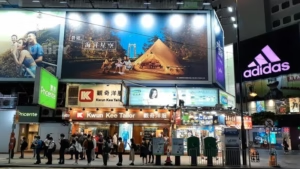
Outdoor LED Screen Solutions for Greater Visibility & ROI
Upgrade visibility with an outdoor LED screen. Perfect for ads, events, or stadiums—explore features, pricing, and smart choices today!