
Outdoor LED Screen Saudi Arabia: Buyer’s Guide to Types, Pricing, and Installation in 2026
- Home
- »
- LED Screen Buying Guides
- »
- Outdoor LED Screen Saudi Arabia: Buyer’s Guide to Types, Pricing, and Installation in 2026
The Saudi Arabian digital landscape is evolving rapidly under Vision 2030, creating a massive demand for high-performance visual solutions. However, the Kingdom’s extreme climate—characterized by 50°C summer heat and aggressive sandstorms—presents a unique challenge for standard hardware. To ensure your digital assets thrive rather than fail, you need more than a generic display; you need a specialized solution designed for the desert. As a leading LED screen manufacturer in Saudi Arabia, we have engineered technology specifically for these harsh conditions. In this guide, we explore the essential features required for a reliable outdoor LED screen Saudi Arabia project, helping you maximize your ROI and avoid costly maintenance traps.
Table of Contents
1. Why Outdoor LED Screen Saudi Arabia Is in High Demand in 2026
The Kingdom of Saudi Arabia is currently experiencing an unprecedented technological and architectural renaissance. As the nation modernizes at a breakneck pace, the outdoor LED screen Saudi Arabia market is projected to grow at a staggering CAGR (Compound Annual Growth Rate), becoming one of the most lucrative sectors in the Middle East. For investors, media agencies, and project contractors in 2026, the question is no longer whether to invest in digital displays, but rather how fast they can deploy them. But what exactly is driving this massive shift?
1.1 Vision 2030 and Digital Infrastructure Growth
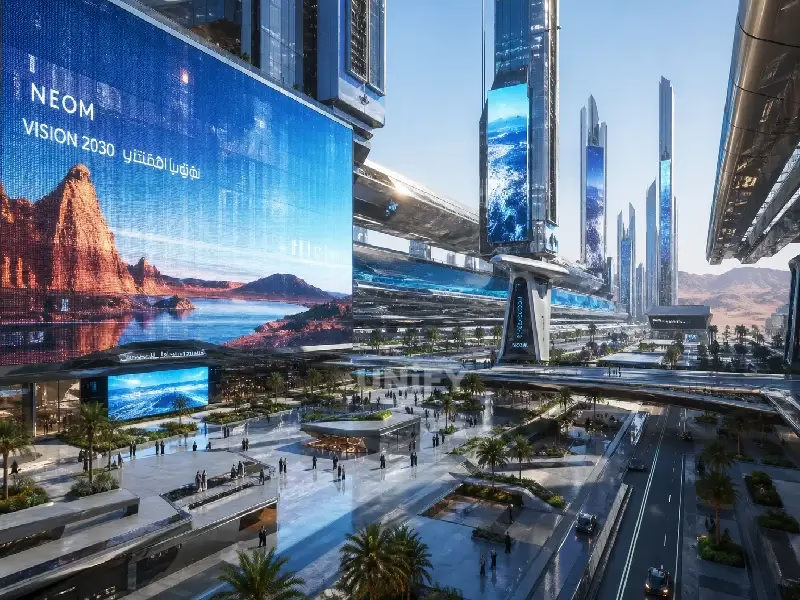
At the core of this transformation is Saudi Vision 2030. Mega-projects like NEOM, The Line, and Qiddiya are not just building roads and skyscrapers; they are building smart cities from the ground up. Because of this, we are witnessing exponential Saudi Arabia digital signage growth. Government municipalities are aggressively integrating massive outdoor LED video walls into their infrastructure to create interactive, visually stunning urban environments that reflect a modernized Kingdom.
1.2 Outdoor Advertising Expansion in Saudi Arabia
The traditional static vinyl billboard is officially dead. Driven by a rapidly expanding consumer economy, the Saudi Arabia outdoor advertising demand has skyrocketed. DOOH (Digital Out-of-Home) media agencies are pouring heavy investments into establishing high-brightness LED networks along major arteries, such as King Fahd Road in Riyadh and the coastal Corniche in Jeddah. Advertisers know that dynamic, 3D naked-eye content on giant screens delivers unparalleled ROI, fueling a continuous surge in the procurement of high-end outdoor displays.
1.3 Demand from Malls, Stadiums, and Public Spaces
Beyond smart cities and highway DOOH, the broader LED display market Saudi Arabia is being fiercely propelled by the sports and entertainment sectors. Luxury shopping malls are upgrading their exterior facades to capture foot traffic. More importantly, with the 2027 AFC Asian Cup just months away and the 2034 FIFA World Cup stadium constructions actively underway, billions of Riyals are currently allocated to equip venues with giant scoreboards and perimeter displays.
⚠️ The Crucial Catch: However, capturing this massive multi-billion Riyal opportunity comes with a deadly challenge. Sourcing a standard screen from global markets and installing it in Riyadh is a recipe for disaster. Why? Because the unforgiving Middle Eastern climate destroys standard electronics within months. To succeed, you must first understand the environmental threats.
2. What Makes Saudi Arabia a Special Market for Outdoor LED Screens
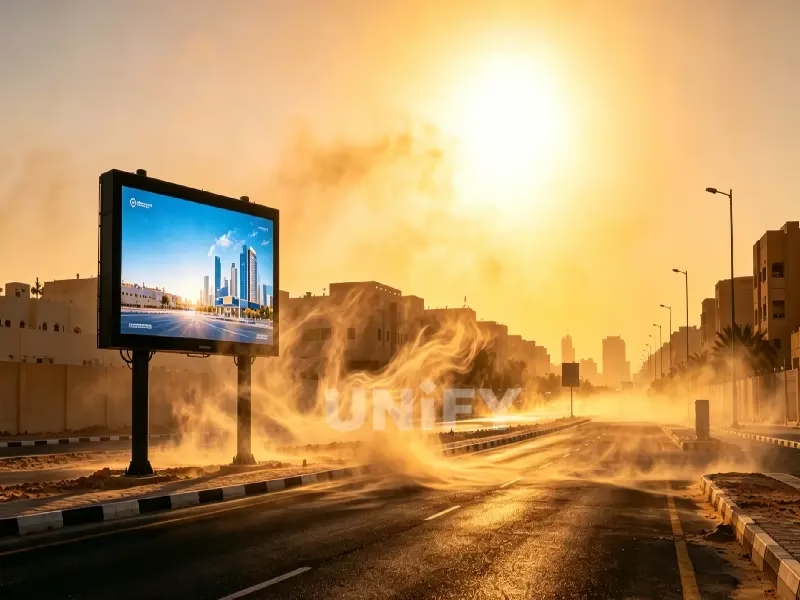
Many DOOH investors and project contractors make a fatal, million-Riyal mistake: they assume a standard outdoor display manufactured for European or Asian markets will work seamlessly in the Middle East. It will not. The Arabian Peninsula presents a uniquely hostile environment. To secure your investment, you must procure an outdoor LED screen for Saudi Arabia climate, specifically engineered to conquer the following four extreme challenges.
2.1 Extreme High-Temperature Conditions
- The Threat: 50°C+ Ambient / 80°C+ Internal Temperatures.
The most immediate threat to any electronic device in the KSA is the blistering heat. During the peak of summer in Riyadh, ambient temperatures regularly exceed 50°C (122°F). Under direct sun exposure, the black surface of an LED display absorbs heat, pushing internal cabinet temperatures to a catastrophic 80°C. - The Impact: For a standard screen, this results in thermal shutdown and massive “dead pixel” rates. While traditional solutions rely on heavy, power-hungry external air conditioners, these AC units drastically increase your steel structure costs and your monthly electricity bills.
2.2 Dust, Sandstorms (Haboobs), and Coastal Humidity
- The Threat: Micro-dust infiltration and Red Sea salt fog.
Saudi Arabia’s geography presents a dual threat. Inland cities face relentless sandstorms, while coastal hubs like Jeddah and Dammam suffer from extreme humidity and corrosive salt fog. - The Impact: Using a traditional LED cabinet equipped with cooling fans is a disastrous choice. The fans act like vacuum cleaners, sucking micro-dust and salt moisture directly onto the circuit boards, leading to inevitable short circuits. Deploying a fully sealed, fanless, and dustproof outdoor LED screen with anti-corrosion treatments is an absolute necessity. Only a true weatherproof LED display Saudi Arabia (IP65/IP68 rated) can survive this abrasive and corrosive assault.
2.3 Fierce Sunlight and Visibility Requirements
- The Threat: Extreme UV radiation and midday glare.
A digital billboard is financially worthless if your audience cannot see the advertisement during the day. The Arabian sun is exceptionally intense. - The Impact: A standard global outdoor screen outputs around 5,000 nits, which looks completely washed out in the Saudi desert noon. To capture highway traffic, you must deploy a custom high brightness LED screen for sunlight, pushing 7,000 to 10,000 nits. Furthermore, the screen must feature high-quality, UV-resistant plastic masks to prevent the modules from turning yellow and brittle after months of sun exposure.
2.4 24/7 Operating Hours and SASO Compliance Needs
- The Threat: Accelerated light decay and strict import regulations.
Vision 2030 smart city infrastructures and commercial advertising networks do not sleep. These screens run 24/7. Combining the extreme 50°C heat with continuous operation accelerates the “light decay” of cheap LED lamps. - The Impact: Because repairing a massive billboard on King Fahd Road requires expensive crane rentals, the local market demands front-access maintenance and premium raw materials. More importantly, to survive the environment and clear customs legally, the entire display system must meet strict SASO/SABER compliance standards—a hurdle that cheap, standard screens consistently fail to pass.
The Bottom Line: You cannot fight the Saudi climate with standard equipment. You need a specialized technological approach. Let’s explore the engineering secrets behind the screens that actually survive.
3. Engineering the Ultimate Outdoor LED Screen Saudi Arabia: Key Technologies
In a market as demanding as the KSA, “good enough” engineering is a recipe for failure. To survive the extreme environment, your digital billboard needs more than just a waterproof seal; it requires advanced, mission-critical architecture. As a premier outdoor LED screen Saudi Arabia manufacturer, we do not just assemble components—we engineer survival. Here are the three pillars of technology that set our displays apart from standard global models.
3.1 Common-Cathode Technology: The "Cold Screen" Revolution
Traditional LED displays use a common-anode driving method, which acts like a “dumb” power supply, dumping excessive voltage across all three LED colors (Red, Green, Blue). This creates massive, unnecessary heat waste.
- The Technology: Our displays utilize advanced common-cathode LED technology. This “Cold Screen” architecture delivers precise voltage independently to the red, green, and blue chips. By eliminating redundant voltage, we reduce internal heat generation by over 30% at the source.
- The B2B Advantage: This is a game-changer for Saudi investors. It allows for true air-conditioning-free operation even in peak summer. You no longer need to budget for heavy industrial AC units or the massive electricity bills they incur. You get a cooler, more stable screen that lasts years longer than standard industry alternatives.
3.2 Fully Enclosed Fanless Aluminum Chassis
In the Saudi market, your worst enemy is invisible: fine desert dust (Haboobs) and coastal salt fog. Traditional iron cabinets with ventilation fans are essentially “dust traps” that will eventually lead to short circuits.
- The Technology: We abandon the flawed fan-based architecture in favor of a fanless LED cabinet design constructed from premium, precision-engineered aluminum. Aluminum is a superior thermal conductor, allowing the entire cabinet to act as a massive heat sink, dissipating heat passively into the air. When paired with our IP68-rated nano-coating, the unit becomes a fully hermetic shield.
- The B2B Advantage: This design ensures that the internal electronics never touch the outside atmosphere. Whether your project is in the heart of the Riyadh desert or along the humid, salt-heavy coast of Jeddah, your circuit boards remain pristine, dry, and free from sand. It is the ultimate insurance policy for your asset’s longevity.
3.3 High-Brightness LED 10,000 Nits & Anti-UV Masks
Visibility is your revenue. If your digital billboard is not readable at 1:00 PM under the scorching Arabian sun, your advertising space has zero value to clients.
- The Technology: To dominate the intense daylight glare of the KSA, we equip our displays with High-brightness LED 10,000 nits modules. This extreme output cuts through direct sunlight with ease, ensuring high-contrast, vivid images at any time of day. Crucially, we use premium, UV-resistant silicon masks. Unlike cheap plastic covers that turn yellow, brittle, and crack within a few months of intense UV exposure, our masks maintain structural integrity and color accuracy for the long haul.
- The B2B Advantage: You are not just buying “brightness”; you are buying “guaranteed advertising uptime.” With 10,000-nit brilliance, your screen remains the center of attention on the highway, and with UV-resistant masks, it maintains a brand-new appearance for years, protecting your investment’s visual prestige.
4. Types of Outdoor LED Screen Saudi Arabia Buyers Commonly Choose
There is no “one-size-fits-all” solution in the Kingdom’s digital landscape. As a specialized outdoor LED screen Saudi Arabia manufacturer, we categorize our solutions not just by technical specs, but by the business objectives our clients aim to achieve. Whether you are building an iconic architectural landmark or organizing a high-octane music festival, here are the four primary screen types that savvy buyers consistently select.
4.1 Fixed Outdoor LED Screens (For Permanent Digital Landmarks)
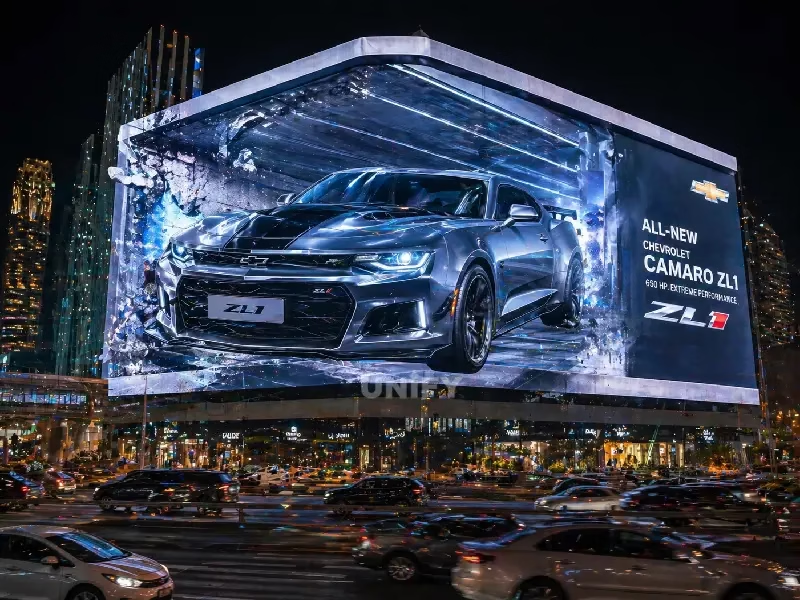
This is the “gold standard” for investors looking for long-term, passive advertising income or permanent brand presence.
- The Buyer’s Logic: Buyers choose this type when they own a high-traffic site, such as a major highway artery in Riyadh or a luxury shopping mall facade. They are investing in a 24/7 digital asset that generates revenue for years.
- Why it works: A fixed outdoor LED screen Saudi Arabia is built for extreme stability. These systems are anchored with heavy-duty steel structures, often featuring specialized power redundancy and lightning protection.
- Ideal for: Highway DOOH advertising networks, iconic building media facades, and permanent signage for large corporate headquarters.
4.2 Mobile LED Screens (For Roving Campaigns & Pop-up Ads)
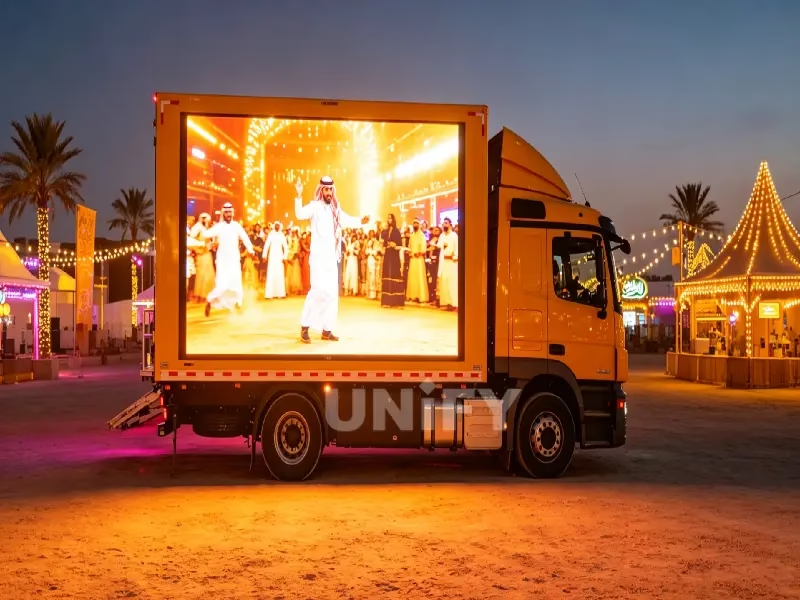
The Saudi market is vast, and sometimes, you need the screen to move to the audience, not the other way around.
- The Buyer’s Logic: Media agencies and retail brands choose mobile units when they want to maximize coverage across different districts of a city (e.g., covering different Riyadh neighborhoods in a single day) or target specific high-footfall areas during festivals.
- Why it works: A mobile LED screen Saudi Arabia—typically mounted on a heavy-duty truck or trailer—eliminates the need for permanent land leasing or complex structural permits. It is a “plug-and-play” powerhouse that allows for spontaneous brand activation anywhere the law permits.
- Ideal for: Product launches, political or social campaigns, roadshows, and rapid-response advertising during city-wide celebrations.
4.3 Rental LED Screens for Events (For High-Impact Spectacles)
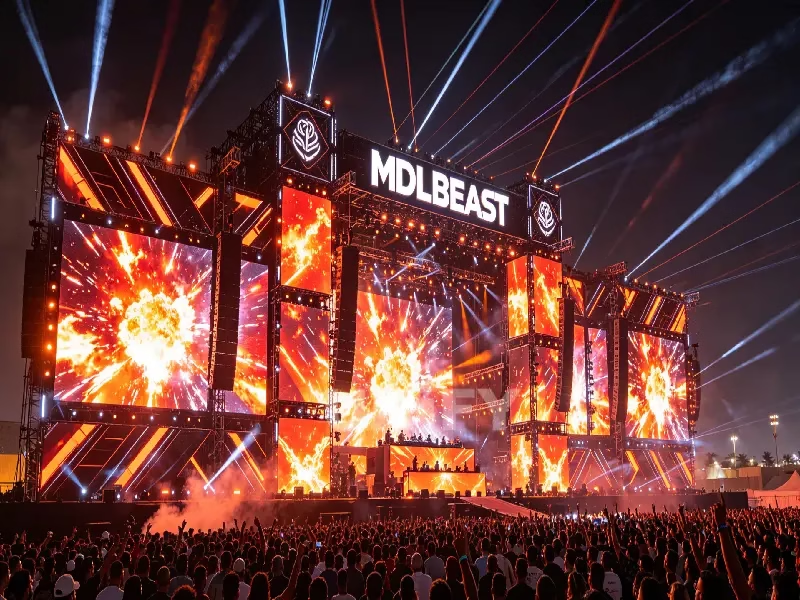
Saudi Arabia’s entertainment sector, led by events like the Riyadh Season and MDLBEAST, has created an explosive demand for rental solutions.
- The Buyer’s Logic: Event organizers, exhibition planners, and wedding designers select these for temporary, high-impact visuals. They prioritize ease of handling over permanent structural weight.
- Why it works: A premium rental LED screen for events is designed for agility. Featuring die-cast aluminum frames, one-second magnetic quick-locks, and modular anti-collision designs, these screens can be erected by a small team in hours and dismantled just as quickly.
- Ideal for: Concerts, luxury weddings, trade exhibitions, sports fan zones, and large-scale product announcements.
4.4 Creative and Shaped LED Screens (For Brand Iconography)
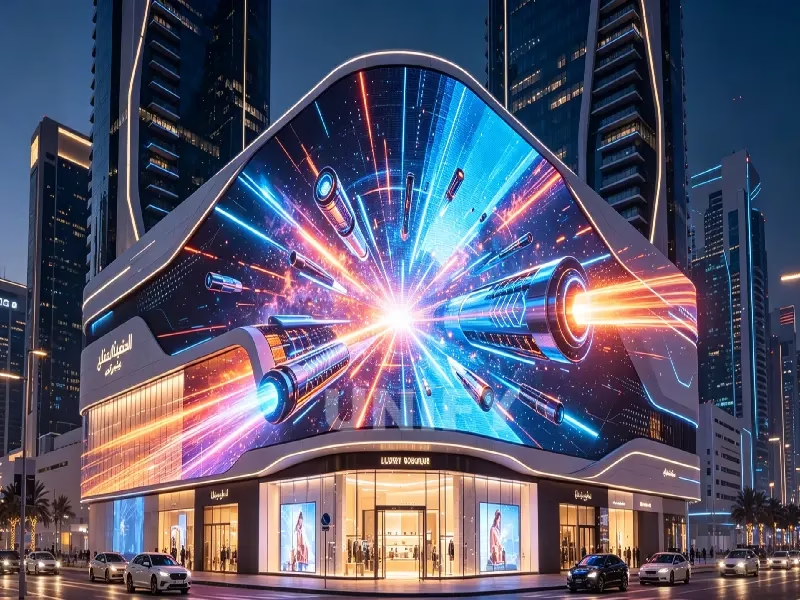
In the era of Vision 2030, standard rectangular screens are no longer enough to make a statement. Buyers are increasingly looking for visual innovation to define their brand.
- The Buyer’s Logic: High-end architectural firms and luxury brands choose custom-shaped displays to turn their buildings or lobbies into art installations. They want a “wow” factor that goes viral on social media.
- Why it works: A shaped LED display Saudi Arabia—including curved corner screens for naked-eye 3D, cylindrical column wraps, or transparent mesh LEDs—creates a seamless architectural integration that looks like part of the building itself, rather than an “add-on” screen.
- Ideal for: Iconic NEOM-style architectural landmarks, high-end retail flagship stores, luxury hospitality lobbies, and innovative public art installations.
5. Best Applications for Outdoor LED Screen Saudi Arabia
Choosing the right screen type is only half the battle. To truly maximize your investment, you need to understand where these displays perform best and why they are becoming the dominant visual medium in the Kingdom. As a leading LED manufacturer, we see these five application scenarios as the most profitable “gold mines” for digital signage investments today.
5.1 Billboard Advertising: The Digital Revolution
In the era of Saudi Vision 2030, static vinyl billboards are being phased out in favor of digital dynamic media.
- The Scenario: High-traffic highways, commercial arterials, and prime city-center spots are transforming into digital hubs.
- Why it works: An outdoor LED billboard Saudi Arabia enables advertisers to run multiple campaigns on a single asset, significantly increasing ROI. With 3D naked-eye content becoming the standard in Riyadh and Jeddah, these billboards have evolved from simple posters into high-impact landmarks that brands pay a premium to feature on.
5.2 Shopping Malls and Retail Centers
Saudi malls are more than just shopping destinations; they are the social heart of the city.
- The Scenario: Malls like Riyadh Park or the Red Sea Mall require high-visibility, sophisticated displays for their exterior facades and main atriums.
- Why it works: A high-quality LED screen for shopping mall usage serves as both a powerful marketing tool for the mall’s brands and a visual landmark that distinguishes the mall from its competitors. In the luxury retail sector, a sharp, crisp display signals “prestige” to high-end shoppers, making it an essential component of modern mall architecture.
5.3 Stadiums and Sports Venues
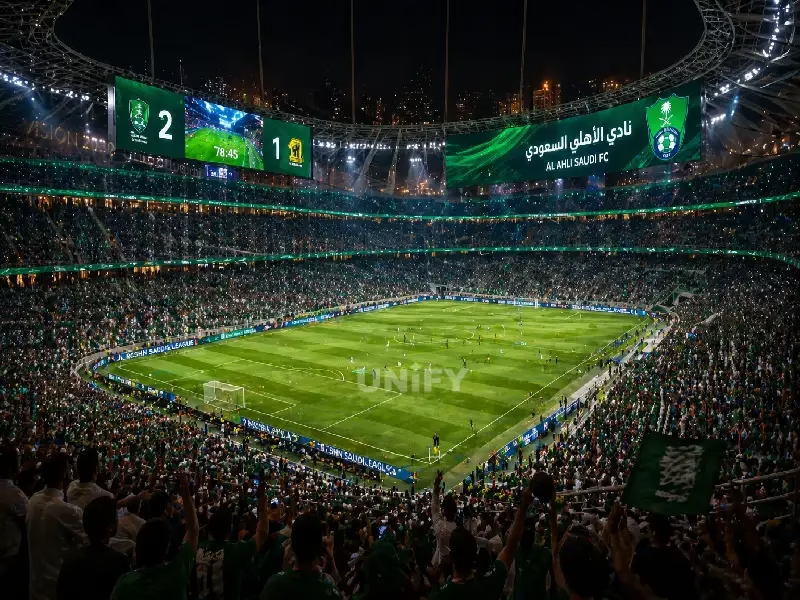
With the Kingdom set to host major global events, the demand for world-class sports technology is at an all-time high.
- The Scenario: From neighborhood sports clubs to the massive new arenas for the 2034 FIFA World Cup and 2027 AFC Asian Cup.
- Why it works: A professional stadium LED screen Saudi Arabia is not just for scores; it is for fan engagement. High-refresh-rate displays are required to ensure that live broadcasts are flicker-free on television, while perimeter LED boards allow for dynamic, synchronized advertising that increases sponsorship revenue for club owners.
5.4 Transportation Hubs
As Saudi Arabia expands its international connectivity, transportation hubs are becoming the “first impression” of the Kingdom.
- The Scenario: International airports, the expanding Riyadh Metro network, and high-speed train stations.
- Why it works: These are high-footfall areas where clarity is paramount. Screens are used for real-time flight information, wayfinding, and premium advertising. The hardware must be rugged enough to handle 24/7 operation and constant ambient crowd noise without visual distractions.
5.5 Government and City Information Projects
Smart city initiatives require seamless communication between the government and the public.
- The Scenario: Public plazas, city council buildings, and urban parks integrated into the “smart city” architecture of NEOM or The Line.
- Why it works: A public information LED screen serves as a vital bridge for city administration. Whether it is broadcasting emergency alerts, celebrating National Day, or displaying public service announcements, these screens offer a clean, professional, and instant communication channel that traditional media simply cannot match.
6. How to Choose the Right Outdoor LED Screen Saudi Arabia
Navigating technical specifications can be daunting. However, knowing how to choose outdoor LED screen hardware correctly is the difference between a high-performing digital asset and a depreciating liability. As an expert manufacturer, we have simplified the selection process into six critical parameters.
6.1 Pixel Pitch and Viewing Distance
The “P” value refers to the distance in millimeters between the center of two pixels.
- Why it matters: Choosing the wrong pixel pitch either wastes money (buying too high a resolution for a long distance) or ruins the visual experience (buying too low a resolution for a short distance).
- The Golden Rule: When evaluating pixel pitch for outdoor LED screen hardware, use the 1:1 rule: A P6 screen is ideal for viewing from 6 meters away; a P10 screen is perfect for 10 meters. If your audience is driving past on a highway, stick to P8 or P10 to maximize impact without overspending.
6.2 Brightness for Outdoor Visibility
In the Saudi climate, your screen is constantly fighting the sun.
- Why it matters: If your screen isn’t bright enough, it will look like a dark, grey blob during the day.
- The Actionable Guide: Follow our LED screen brightness guide: For screens facing direct sunlight, 8,000 to 10,000 nits is mandatory. If the screen is under a shaded walkway or canopy, 6,000 nits might suffice. Always insist on an automatic light sensor that adjusts brightness based on ambient conditions to avoid blinding drivers at night.
6.3 Waterproof and Dustproof Protection
This is the single most critical factor for project longevity in the Middle East.
- Why it matters: A screen without proper ingress protection will fail within months due to fine sand, humidity, and salt fog.
- The Standard: Never settle for anything less than a true IP65 or IP68 rating. A high-quality waterproof LED screen for outdoor use must have fully sealed modules and a fanless cabinet design. This ensures that the internal electronics are hermetically isolated from the harsh outside environment.
6.4 Heat Dissipation and Power Consumption
Heat is the enemy of electronics. Every degree you shave off the internal temperature extends the lifespan of your diodes.
- Why it matters: High-heat operation causes rapid “light decay.” Furthermore, Saudi electricity tariffs make power consumption a major operational expense.
- The Solution: Prioritize an energy efficient LED display that utilizes Common-Cathode technology. This reduces power consumption and heat output by up to 30%, which means you don’t need to spend thousands of Riyals on industrial AC cooling units.
6.5 Control System and Remote Management
You cannot be at the installation site 24/7 to change content.
- Why it matters: A modern DOOH network requires a centralized, cloud-based control system.
- The Actionable Guide: Ensure your system supports 4G/5G remote management, scheduled power on/off, and real-time monitoring of screen health (temperature, humidity, and brightness). This allows you to manage multiple billboard locations from a single laptop, drastically reducing operational costs.
6.6 Installation Structure and Maintenance Access
Maintenance in KSA is expensive due to high labor and machinery costs.
- Why it matters: If a screen goes dark, you need a solution that is fast and safe to repair.
- The Actionable Guide: For commercial billboards, always specify front-maintenance LED modules. This allows technicians to replace a faulty module from the front using a simple magnetic tool, eliminating the need for expensive rear-access catwalks or cherry-picker cranes.
7. Outdoor LED Screen Saudi Arabia Project Examples: Landmark Deployments
Evidence of past success is the ultimate trust signal in KSA’s B2B landscape. As a specialized outdoor LED screen Saudi Arabia manufacturer, we have analyzed and supported diverse installation scenarios across the Kingdom. Below are typical project scenarios at iconic locations that highlight how our technology translates into business success.
7.1 High-End Commercial Facade: Boulevard Riyadh City
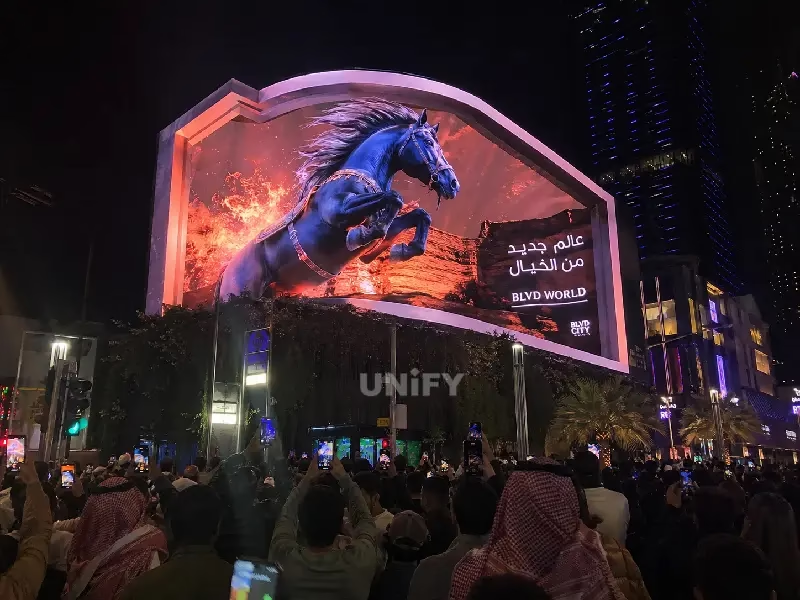
- The Scenario: A premier media agency required a high-impact, 3D-capable display at the heart of Boulevard Riyadh City—the epicenter of the Riyadh Season.
- Requirements: Ultra-fine pixel pitch for close-up viewing, 10,000-nits brightness to combat high-intensity spotlights, and front-maintenance design to avoid complex scaffolding in this crowded tourist hub.
- The Result: This Riyadh LED screen project achieved a “viral effect.” The screen remains the focal point for thousands of daily visitors, serving as a landmark that brands now pay a premium to feature on.
7.2 Iconic Roadside Advertising: King Abdullah Road, Jeddah
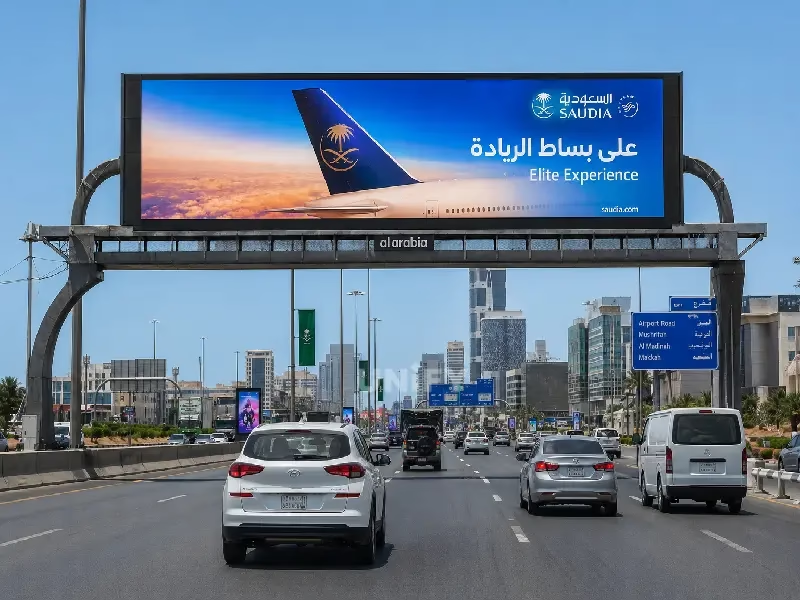
- The Scenario: A major DOOH (Digital Out-of-Home) operator needed to upgrade a billboard network along King Abdullah Road, one of Jeddah’s most vital arterial highways.
- Requirements: The primary challenges were the corrosive Red Sea salt fog and high humidity. The hardware needed extreme anti-corrosion treatment and IP68-rated protection.
- The Result: By installing a custom-engineered Jeddah outdoor LED display with specialized anti-corrosion casing and passive heat dissipation, the operator saw a 35% reduction in maintenance visits compared to their older fan-cooled units, significantly boosting their annual ROI.
7.3 Event & Sports Hub: Al-Khobar Corniche Area
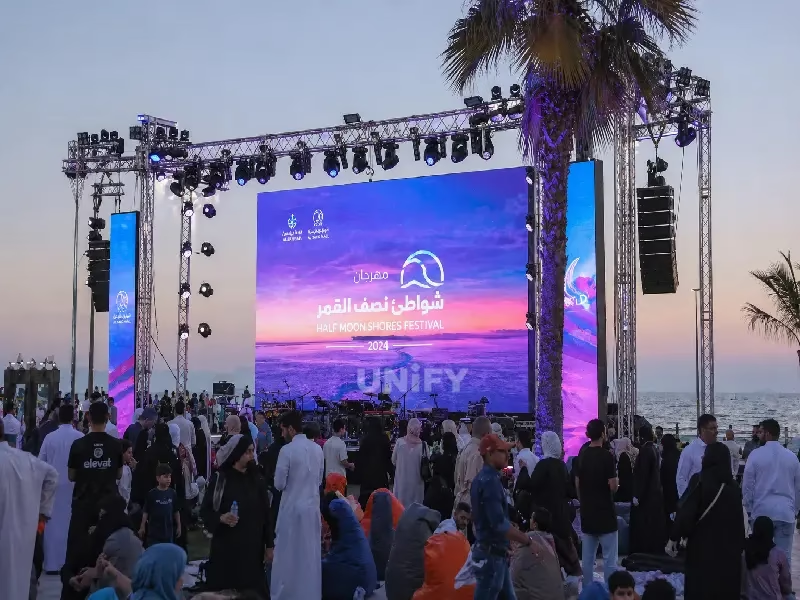
- The Scenario: An event organizer planning a seasonal festival near the Al-Khobar Corniche required a massive, temporary LED solution capable of handling intense dust and wind loads.
- Requirements: A rental solution that could be rigged in less than 24 hours, withstand the coastal sand, and provide a flicker-free visual experience for professional live-streaming.
- The Result: Our P3.91 LED display case study Saudi Arabia for this event demonstrated that with modular, anti-drop corner protection and high-speed locking mechanisms, professional-grade visual impact can be deployed safely and rapidly, even in challenging coastal conditions.
7.4 What Local Buyers Care About Most
Based on our project history at these landmarks, successful buyers in KSA consistently prioritize four factors:
- Regulatory Compliance: Any project in premium areas like NEOM, Riyadh, or Jeddah must pass strict local SASO/SABER certification requirements. Without this, your screen will not be permitted to operate.
- Localized After-Sales: You cannot wait 30 days for a module to be shipped from abroad. Having local technical support and a stockpile of spare parts is the difference between a profitable screen and a liability.
- Climate-Proofing: Whether it is the desert heat of Riyadh or the salt air of Jeddah, no project survives if the display uses traditional fans. Smart buyers always insist on “fanless/sealed” technology.
- Long-term ROI: Professional buyers in the Kingdom are shifting from “cheap/fragile” to “durable/low-maintenance,” viewing the display as a 5-to-10-year digital asset.
8. The Ultimate Outdoor LED Screen Saudi Arabia Buyer Checklist
Procuring an LED display is a significant capital investment. To ensure you aren’t just buying “hardware” but a long-term digital asset, we have compiled the definitive outdoor LED screen buying checklist. Follow this LED display procurement guide to ensure your project remains on time, within budget, and fully compliant with KSA regulations.
8.1 Technical Specifications to Confirm
Before finalizing your purchase, cross-check these non-negotiable specs. If the supplier cannot provide clear data on these, proceed with caution.
- Brightness & UV Protection: Does it hit 8,000–10,000 nits? Do the LED masks feature high-quality UV-resistant materials?
- Heat Dissipation: Ask for proof of common-cathode technology. Does the supplier provide a thermal test report showing stable performance at 50°C+ ambient temperature?
- Protection Rating: Is it certified IP65 or IP68? (Verify with third-party testing reports).
- Refresh Rate: Is the refresh rate at least 3840Hz? (Essential for flicker-free professional broadcasting).
- Energy Efficiency: Can the supplier provide a power consumption analysis? An energy efficient LED display will save you massive operational costs over the 5-year project lifecycle.
8.2 Documents and Support from Suppliers
In the Kingdom, documentation is as important as the hardware itself. Use this LED screen supplier checklist to ensure your project isn’t derailed by customs or technical issues.
- SASO/SABER Certification: Ask for the latest certificates. If they don’t have them, your screen will be stuck at the port, costing you daily storage fees.
- Structural CAD Drawings: Does the supplier provide professional steel structure drawings tailored for local wind loads in your specific city?
- Spare Parts Inventory: Ask for a detailed list of included spare parts (modules, power supplies, receiving cards). We recommend at least 3-5% spare parts for any project in the KSA.
- Warranty Terms: Ensure the warranty covers both parts and, if possible, provides a clear path for local technical support.
8.3 Questions to Ask Before Buying
When you reach out to vendors, use these questions to identify the professionals. This is the best way how to compare LED screen suppliers in a saturated market:
- “Can you show me a case study of a similar project you have done in Saudi Arabia or the Middle East?”
- “How does your cabinet design handle sand ingress during a haboob (sandstorm)?”
- “Do you provide localized installation guidance or on-site support for the final commissioning?”
- “What is your process for handling maintenance if a module fails in 2 years? Do you have a local spare parts warehouse?”
8.4 Comparison Table for Different Use Cases
Project Type | Recommended Pitch | Key Priority | Ideal Maintenance |
Highway Billboard | P8.0 – P10.0 | High Brightness | Rear/Rear-Catwalk |
Mall Facade | P3.0 – P5.0 | Visual Prestige | Front-Maintenance |
Sports Stadium | P5.0 – P8.0 | Refresh Rate | Rear-Access |
Rental Event | P2.9 – P3.9 | Weight & Speed | Quick-Lock/Magnet |
9. Installation and Maintenance for Outdoor LED Screen Saudi Arabia
Hardware quality is only half the battle. In the harsh Saudi climate, the long-term viability of your display depends on professional installation and proactive upkeep. As an expert outdoor LED screen Saudi Arabia provider, we provide this guide to ensure your investment delivers maximum uptime and ROI.
9.1 LED Display Installation Mistakes to Avoid
A professional installation is the foundation of asset longevity. Many project owners ignore critical engineering details that lead to premature failure. Avoid these common LED display installation mistakes:
- Neglecting Structural Integrity: The KSA experiences sudden, intense wind loads. Always ensure your steel structure is engineered with local wind-load calculations, not generic global standards.
- Poor Heat Dissipation Design: Even the best cold-screen tech needs room to breathe. Never install a screen flush against a wall without a proper ventilation gap or professional heat-exchange design.
- Ignoring Maintenance Accessibility: We frequently see installations that look beautiful but are impossible to service. Always prioritize front-maintenance designs to avoid the exorbitant costs of specialized machinery or scaffolding in busy urban districts like Riyadh or Jeddah.
- Inadequate Cable Management: Exposed wiring leads to UV damage and short circuits. Use professional-grade UV-resistant conduits and ensure all cable connections are hermetically sealed against sand ingress.
9.2 Daily Operation Tips
Consistent, smart operation can add years to your display’s lifespan.
- Remote Management: Utilize cloud-based control software to monitor your screen 24/7. This allows for real-time monitoring of cabinet temperatures, humidity levels, and power supply health.
- Intelligent Brightness Adjustment: Always activate the ambient light sensor. Running a display at 100% brightness at night not only wastes energy but is also a safety hazard for drivers and can trigger regulatory warnings from local municipalities.
- Dust & Debris Check: Conduct a visual inspection of the screen’s perimeter monthly. While a high-quality unit is dustproof, clearing away large accumulation of sand or debris from the base or frame ensures the structural integrity remains uncompromised.
9.3 Maintenance Schedule and Spare Parts
In the Saudi market, professional outdoor LED screen maintenance is “preventative,” not “reactive.”
- Preventative Schedule: Conduct a quarterly “Health Check.” Verify cable connections for signs of oxidation, check the structural tightness of the cabinets, and ensure the weatherproofing seals (gaskets) are intact, especially before the peak sandstorm season.
- The Importance of Spare Parts: Never operate without a stockpile. As a reliable outdoor LED screen service provider, we recommend keeping a “3% Spare Kit” on-site:
- Spare LED Modules: For quick pixel repairs.
- Spare Power Supplies: The first component to face stress in high temperatures.
- Spare Receiving Cards: To ensure the screen’s logic remains operational.
9.4 How to Reduce Long-Term Operating Cost
Optimizing your LED screen operating cost is about efficiency and smart engineering.
- Switch to Common-Cathode Tech: If you are still running older power-hungry screens, the electricity bill alone will eventually cost more than the hardware. Upgrading to “Cold Screen” technology reduces energy consumption by 30-40%, providing immediate savings on your electricity bill.
- Invest in Remote Diagnosis: The most expensive part of maintenance is sending a technical team to the site. Invest in hardware that allows for remote software-level troubleshooting, allowing you to identify the source of an issue (e.g., software glitch vs. hardware failure) from your laptop, saving thousands of Riyals in unnecessary travel and labor costs.
- Wide-Voltage Stability: Saudi power grids in some industrial or remote zones can experience fluctuations. Using wide-voltage-compatible power supplies ensures your screen stays stable and prevents damage during sudden grid surges.
10. Outdoor LED Screen Saudi Arabia Price and ROI
When budgeting for a digital display, the most dangerous mindset is focusing solely on the initial invoice. As an experienced outdoor LED screen Saudi Arabia manufacturer, we have analyzed hundreds of projects, and we consistently see that the most successful investments are those that prioritize “Total Cost of Ownership” (TCO) over the upfront purchase price.
10.1 What Affects the Price?
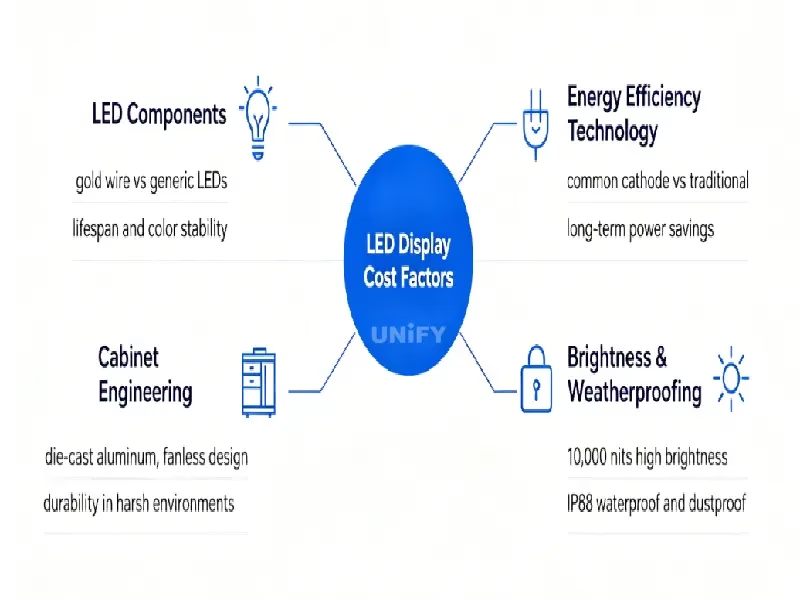
Discrepancies in quotes can be confusing. When you receive varying proposals, remember that these LED display cost factors are the primary drivers of price:
- LED Components: Are the diodes Nationstar gold-wire or generic alternatives? High-quality components dictate whether your screen maintains color accuracy for 5 years or degrades within 6 months.
- Energy Efficiency Technology: Common-cathode technology or advanced power systems may have a higher entry cost, but they offer significantly lower monthly electricity bills.
- Cabinet Engineering: A precision-engineered, fanless aluminum chassis is more expensive than an iron box with fans, but it is the only way to ensure the screen survives the KSA environment.
- Brightness & Weatherproofing: Achieving 10,000 nits while maintaining a high IP68 rating requires more advanced hardware and sealing processes, which impacts the final outdoor LED screen price Saudi Arabia.
10.2 How to Estimate Return on Investment (ROI)
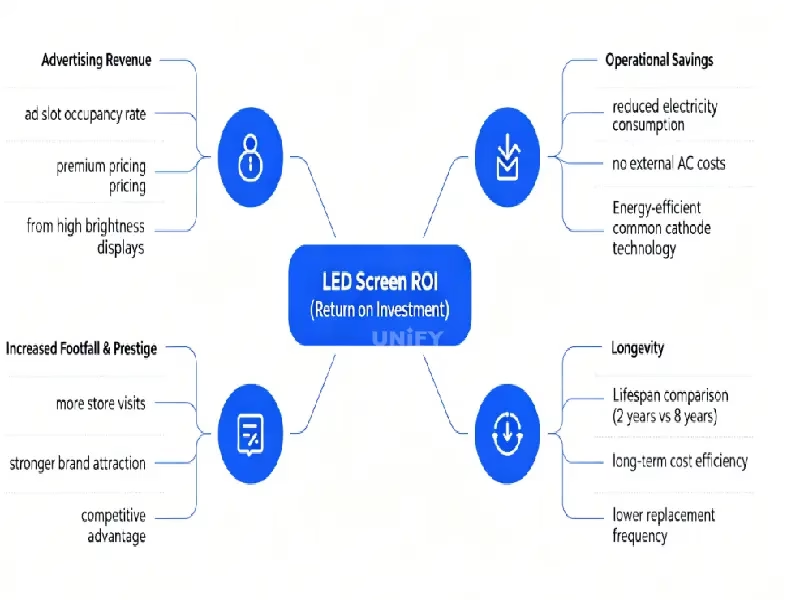
A digital billboard is not an expense; it is a revenue-generating machine. To calculate your LED screen ROI, you must look beyond the purchase price:
- Advertising Revenue: If you are a media owner, calculate the average occupancy rate of your ad slots. A high-brightness, crystal-clear display can command higher rental rates from premium brands.
- Operational Savings: Factor in the electricity cost reduction from cold-screen (common-cathode) technology and the total elimination of expensive, high-maintenance external AC units.
- Increased Footfall/Prestige: For retailers and mall owners, the ROI is measured by increased store visits and the “prestige factor” that draws shoppers to your property over competitors.
- Longevity: If a cheap screen lasts 2 years, but a premium screen lasts 8 years, the premium option is mathematically 4 times cheaper over the long run.
10.3 Why Low Price is Not Always the Best Option
In the Middle Eastern market, “cheap” is often the most expensive choice you can make. The cost of outdoor LED billboard ownership is heavily weighted by maintenance, not just purchase.
- The Hidden Trap of Cheap Quotes: A low-cost screen may use sub-par power supplies and unstable control systems. When these fail in the 50°C summer heat, you will face “Double Costs”: the cost of replacement hardware plus the exorbitant cost of cranes and labor to fix the display in the field.
- Reliability as a Business Asset: If your screen goes dark during a high-traffic event or an advertising campaign, you lose more than just repair money; you lose client trust and future contract revenue.
- Strategic Advice: Always treat your digital display as a 5-to-10-year asset. When comparing suppliers, ask for a 3-year performance guarantee, a proven case study, and a clear breakdown of TCO. A slightly higher upfront investment in specialized “KSA-climate” hardware is the smartest financial decision you can make.
11. Why Choose a Local Outdoor LED Screen Supplier in Saudi Arabia
Navigating large-scale digital projects in the Kingdom requires more than just high-quality hardware. It requires a partner who understands the bureaucratic, logistical, and environmental realities of the local market. For high-stakes Vision 2030 projects, partnering with a source that offers localized operations is the ultimate guarantee of project success.
Here is why sourcing from a specialized LED screen supplier Saudi Arabia with local delivery and engineering capabilities makes the most commercial sense:
11.1 Faster Delivery and On-Site Installation
Timing is everything in the fast-paced KSA commercial sector. Whether you are preparing a screen for the upcoming Riyadh Season or a massive retail opening, missing the deadline means losing money.
- The Advantage: Relying strictly on overseas shipments without local representation often leads to unpredictable customs delays at Jeddah or Dammam ports. By working with a brand that coordinates with a local LED display installer Saudi Arabia network, you eliminate site-survey guesswork. You receive localized CAD structural drawings, faster site deployment, and professional engineers who are already familiar with Saudi construction and safety regulations.
11.2 Better, Zero-Downtime After-Sales Support
As mentioned earlier, in the DOOH (Digital Out-of-Home) industry, a black screen means lost revenue and broken client trust.
- The Advantage: If a module fails on a highway billboard in Riyadh, you cannot afford to wait 2 to 4 weeks for a replacement part to clear customs. Choosing a partner that provides dedicated LED screen after-sales support with a local spare parts warehouse ensures that your system achieves maximum uptime. Technicians can be dispatched quickly or hot-swappable spares can be delivered within hours, keeping your digital asset profitable.
11.3 Local Climate and Compliance Experience
A standard display produced for global use will consistently fail to meet the rigorous standards of the Saudi market.
- The Advantage: A dedicated outdoor LED screen manufacturer with extensive experience in the Middle East does not need to guess what works. We already know the exact wind loads of the open desert, the corrosive impact of the Red Sea coast, and the precise documents needed to clear SASO/SABER compliance. We build screens specifically to conquer these elements, saving you from failed government inspections and rapid equipment degradation.
12. Frequently Asked Questions (FAQ) About Outdoor LED Screens in KSA
13. Conclusion
Investing in digital infrastructure within the Kingdom is a strategic move that aligns with the ambitious Vision 2030, but it is not without its challenges. As we have explored throughout this guide, the unforgiving environment—from the scorching 50°C heat in Riyadh to the abrasive sandstorms and coastal humidity—means that a standard display is simply not enough. Success requires a specialized approach that prioritizes common-cathode technology, fanless aluminum designs, and stringent SASO/SABER compliance.
Your digital signage is more than just hardware; it is a long-term, revenue-generating digital asset. Whether you are aiming to dominate the roadside with an iconic billboard or enhance a luxury retail space, choosing the right outdoor LED screen Saudi Arabia solution is the most critical decision you will make. By focusing on total cost of ownership, professional installation, and localized after-sales support, you ensure your project not only survives the desert climate but thrives in it.
Ready to start your Vision 2030 project with a proven industry leader? Contact us and send us your project details, and our experts will provide a custom 3D rendering and an ROI analysis.