
Mean Well UHP Series · Ultra-Thin 31 mm · Fanless · 8 Rails 4.2–55 V · Up to 95%
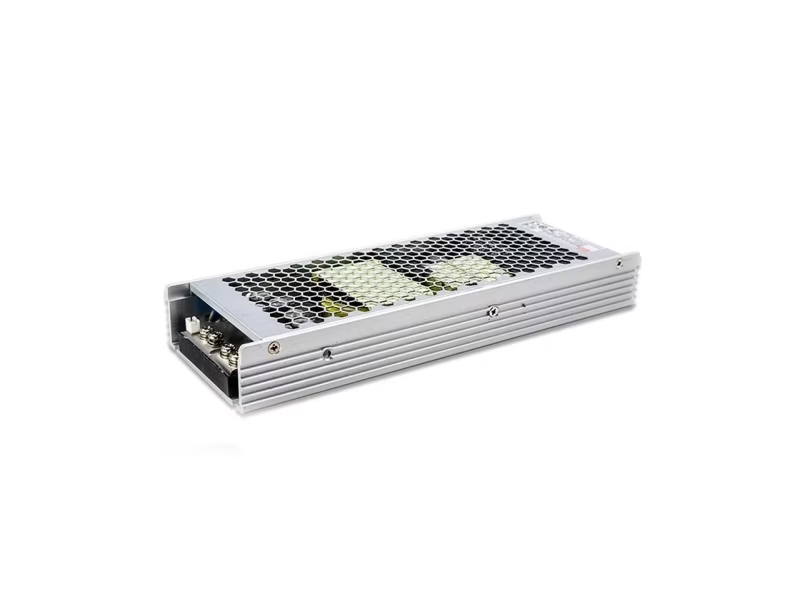
Mean Well UHP-500 Switching Power Supply
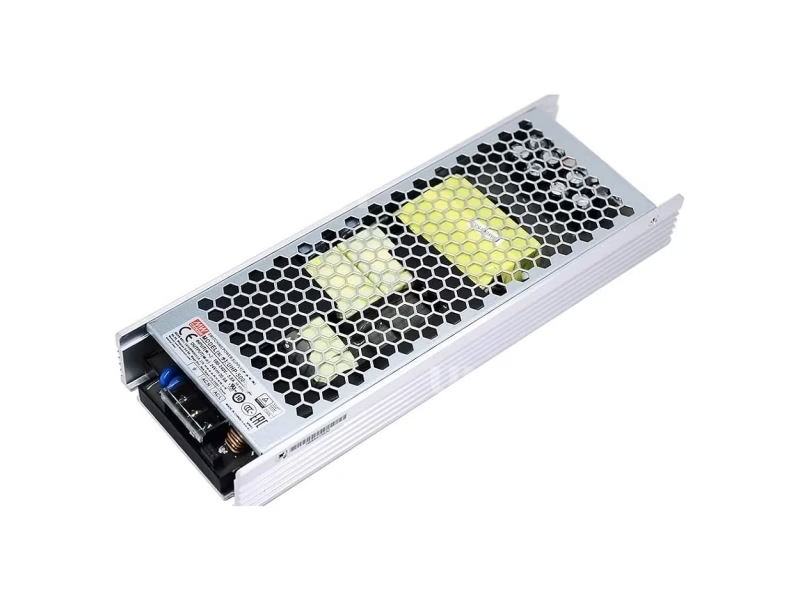
The Mean Well UHP-500 switching power supply is the top of the slim line: 500 W class in a 31 mm fanless aluminum profile, eight rails from 4.2 V to 55 V (the 5 V model carries 80 A / 400 W), efficiency up to 95%, a 90–264 VAC universal input with active PFC, and an R type that parallels two units for automatic redundancy.
📱 / WhatsApp: +86-191-18802497 · Shenzhen, China · GMT+8
500 W
Class output (12 V+ rails)
5 V / 80 A
400 W screen rail
95%
Peak efficiency, fanless
31 mm
Slim profile, no fan
2+1
Redundant parallel (R type)
Short answer
The Mean Well UHP-500 is a 500 W-class single-output slim-type AC/DC switching power supply with a 31 mm fanless aluminum profile, a 90–264 VAC universal input with built-in active PFC, and eight rails from 4.2 V to 55 V — the screen-relevant 5 V model carries 80 A / 400 W at 90% efficiency, and the 36–55 V rails reach 95%. It withstands 300 VAC surge input for 5 seconds, rides out 5 G vibration, passes EN 61000-6-2 heavy-industry immunity, and the R type adds a relay-contact DC OK signal rated 30 Vdc / 1 A plus two-unit redundant parallel operation. On the factory-specified 450 mm aluminum plate it runs full load to 50°C on air convection alone.
What Is the Mean Well UHP-500 Switching Power Supply?
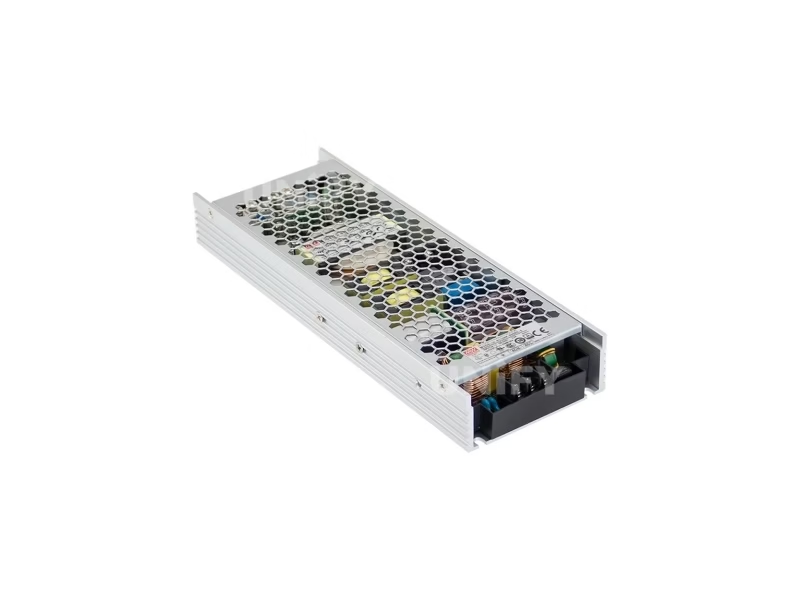
The Mean Well UHP-500 is a 500 W-class single-output enclosed AC/DC switching power supply (SMPS) that squeezes the series’ biggest transformer stage into the same 31 mm low-profile aluminum chassis as its siblings — cooled entirely by air convection, no fan, no filter. The series spans eight rails from 4.2 V to 55 V; the screen-relevant 5 V model delivers 80 A / 400 W, the 12 V-and-up rails reach 500.4 W, and the 55 V model is the factory’s Power Source Equipment pick for PoE. MEAN WELL lists LED display application among the series’ own use cases.
Pop the cover and the layout explains the thermal budget: the PFC and switching stages sit flat against the base, with the rectification and control PCBs stacked behind — every heat-generating part bonded toward the aluminum floor that a 450 mm plate turns into the heatsink:
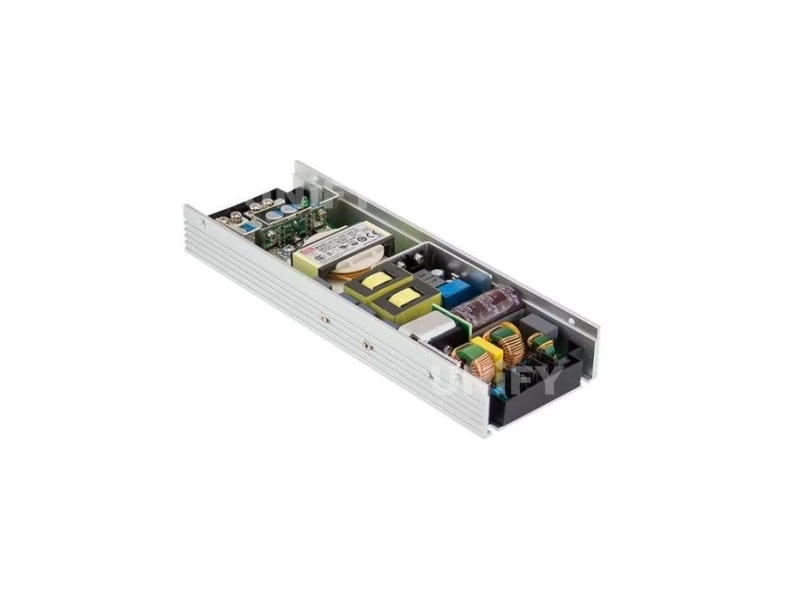
Within the Mean Well screen set, the UHP-500 closes the slim ladder that the UHP-200 and UHP-350 opened: same 31 mm recipe, 75% more power than the 350, and the highest efficiency figures we publish — 94.5–95% on the 24 V-and-up rails. It withstands a 300 VAC / 5-second surge, carries EN 61000-6-2 heavy-industry immunity at criterion A, and posts a dual-method MTBF of 1,264,100 hours minimum (Telcordia SR-332) plus 167,600 hours minimum (MIL-HDBK-217F, 25°C). The 232 × 81 × 31 mm case weighs 0.905 kg and carries UL 62368-1, TUV, EN 60335-1 (except 55 V), BIS and CCC approvals with a 3-year warranty.
320 W on the 5 V rail
A 64 A budget at the 80% rule — the biggest fanless 5 V rail on our power pages, in 31 mm of profile.
Up to 95% efficiency
The highest figures on any supply page we run — less waste heat for a fanless chassis to move.
R type redundancy
The UHP-500R parallels two units — one fails, the other takes over automatically and the screen stays lit.
Planning a screen’s full electrical side? Pair this page with the LED display power consumption guide, and for the control end of the same cabinet see the LED screen display control system catalog.
What Are the Mean Well UHP-500 Switching Power Supply Specifications?
Every figure below comes from the official Mean Well UHP-500 specification sheet (6 pages, revision dated 2025-08-01). The eight-rail table first, then the platform parameters:
| Model | Rail / current | Rated power | Adj. range | Tolerance | Ripple (max.) | Efficiency |
|---|---|---|---|---|---|---|
| UHP-500-4.2 | 4.2 V / 80 A | 336 W | 3.6–4.4 V | ±2.0% | 200 mVp-p | 89% |
| UHP-500-5 | 5 V / 80 A | 400 W | 4.5–5.5 V | ±2.0% | 200 mVp-p | 90% |
| UHP-500-12 | 12 V / 41.7 A | 500.4 W | 11.4–12.6 V | ±1.0% | 200 mVp-p | 94% |
| UHP-500-15 | 15 V / 33.4 A | 501 W | 14.3–15.8 V | ±1.0% | 200 mVp-p | 94% |
| UHP-500-24 | 24 V / 20.9 A | 501.6 W | 22.8–25.2 V | ±1.0% | 240 mVp-p | 94.5% |
| UHP-500-36 | 36 V / 13.9 A | 500.4 W | 34.2–37.8 V | ±1.0% | 360 mVp-p | 95% |
| UHP-500-48 | 48 V / 10.45 A | 501.6 W | 45.6–50.4 V | ±1.0% | 360 mVp-p | 95% |
| UHP-500-55 | 55 V / 8.9 A | 500 W | 45–58 V | ±1.0% | 500 mVp-p | 95% |
| Common to all eight rails | Value |
|---|---|
| Input voltage range | 90–264 VAC / 127–370 VDC, 47–63 Hz (nameplate: 100–240 V, 4.7 A) |
| Surge input tolerance | Withstands 300 VAC surge input for 5 seconds |
| Power factor | Active PFC: PF ≥ 0.95 at 230 VAC; PF ≥ 0.98 at 115 VAC, full load |
| Line / load regulation | ±0.5% line (4.2–5 V), ±0.3% (12 V+); ±1.0% load (4.2–5 V), ±0.5% (12 V+) |
| Setup / hold-up time | 1000 ms, 50 ms at 230 VAC and 115 VAC (550 ms setup for the 55 V model); hold-up 12 ms |
| AC current / inrush | 4.85 A at 115 VAC, 2.6 A at 230 VAC / cold start 30 A at 115 VAC, 60 A at 230 VAC (±10%) |
| Leakage current | <0.75 mA at 240 VAC |
| Protections | Overload 110–140%: hiccup mode, auto-recovery; OVP: shut down, re-power on to recover; OTP: shut down, auto-recovery; short circuit |
| R-type functions | DC OK relay contact (closed = PSU on/DC OK, open = off/fail; rating 30 Vdc / 1 A resistive); redundant operation: two units in parallel, automatic takeover, load ≤ one unit’s rated power |
| Vibration | 10–500 Hz, 5 G, 10 min per cycle, 60 min each along X, Y, Z axes |
| Working temperature | −30°C to +70°C by air convection, fanless (full load to 50°C with the aluminum plate); 20–95% RH; 3.5°C per 1000 m above 2000 m altitude, rated to 5000 m |
| MTBF | 1,264.1K hrs min. (Telcordia SR-332); 167.6K hrs min. (MIL-HDBK-217F, 25°C) |
| Dimensions / packing | 232 × 81 × 31 mm (Case 233D) / 0.905 kg, 16 pcs per carton |
| Safety / EMC | UL 62368-1, TUV BS EN/EN 62368-1, BS EN/EN 60335-1 (except 55 V), BS EN/EN 61558-1/-2-16, GB 4943.1, BSMI CNS 15598-1, BIS IS 13252 (model-dependent marking), EAC TP TC 004, RCM (voluntary); BS EN/EN 55032 / GB 9254.1 Class B, EN 55014, EN 61000-3-2/-3; immunity to EN 61000-4 suite, EN 61000-6-2 heavy-industry level, EN 55035 |
| Warranty | 3 years |
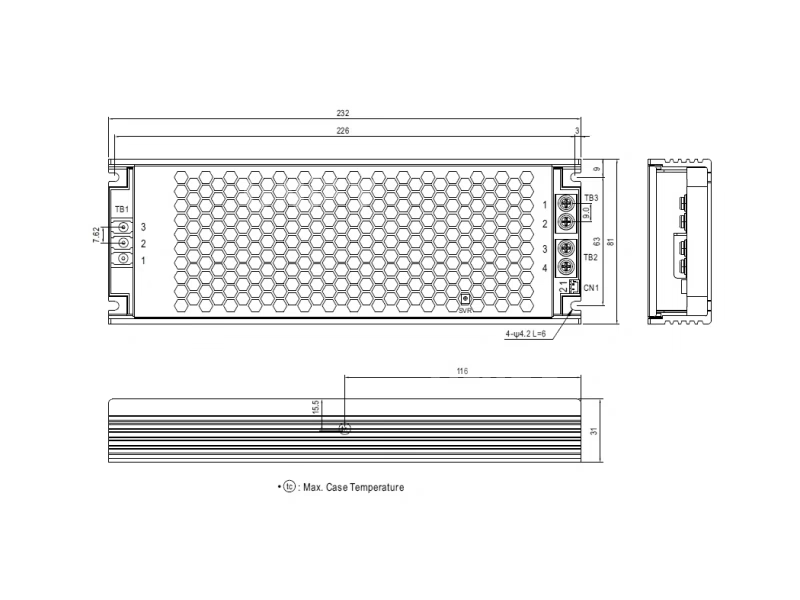
Factory mechanical drawing: 232 × 81 × 31 mm, Case 233D, TB1 and TB2/TB3 marked
Field notes before you buy
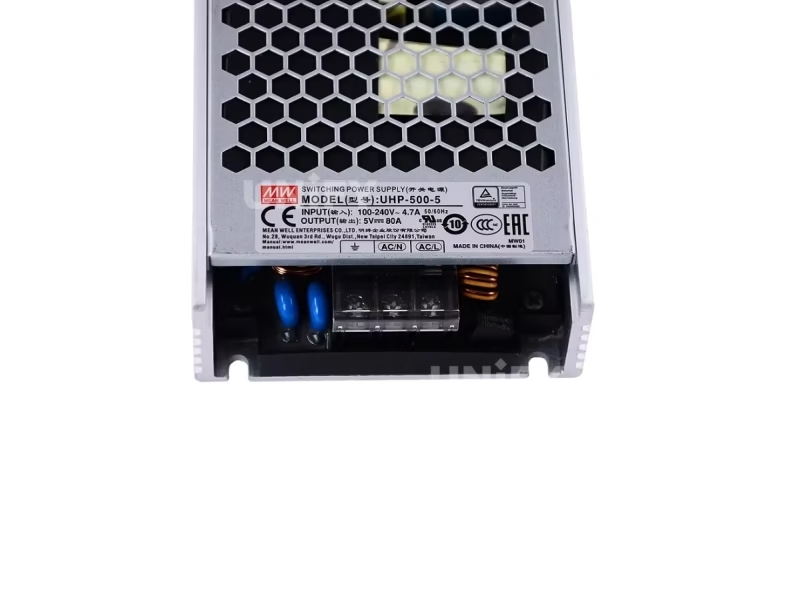
First, input range: the datasheet specifies 90–264 VAC while the production nameplate reads 100–240 V, 4.7 A (the 5 V model photographed below, built at MEAN WELL’s Shenzhen plant) — the factory curve gives full rated load from 110 VAC upward and roughly 80% at the 90 VAC floor. Second, the R type is a by-request build on this series (the 200 W and 350 W ship from stock) — plan the lead time when the redundancy function is on the bid. Third, the DC OK output graduated to a relay contact rated 30 Vdc / 1 A — heavier alarm loads than the 10 mA optocouplers below it in the series. Fourth, the 5 V rail’s 80 A comes at 90% efficiency while the 36–55 V rails hit 95% — match the rail to the load before sizing the count.
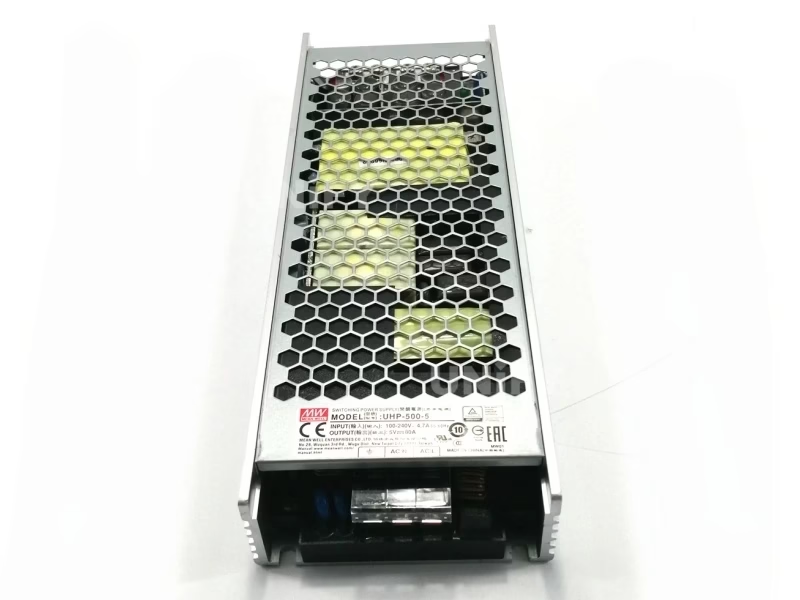
Production nameplate: INPUT 100–240 VAC, 4.7 A · OUTPUT 5 V, 80 A · MEAN WELL (Shenzhen) build
This is the series the factory’s own channel showcases — the ultra-thin, PFC-equipped platform this page documents at its 500 W top:
Which LED Display Loads Fit the Mean Well UHP-500 5 V Rail?
Apply the industry-standard 80% loading rule and the UHP-500-5 gives you the biggest fanless budget on our pages: 80 A × 80% = 64 A usable, 400 W × 80% = 320 W usable per unit.
Mapped onto typical loads (average draws under normal program material — full-white patterns run higher, so verify against your module datasheet):
| Typical load | Rail | Average draw | Per UHP-500 at 80% |
|---|---|---|---|
| Indoor P2.5 module (320 × 160 mm) | 5 V | ~10–15 W | ~21–32 modules |
| Dense slim bays (poster and thin-bezel cabinets) | 5 V | Per bay design | One unit per 320 W bay |
| 12 V signage and strip runs | 12 V | ~5–10 W per meter | ~32–64 m (41.7 A rail) |
| 24 V cooling and control banks | 24 V | ~5–10 W per fan | Inside the 320 W budget |
| PoE midspan / PSE feed | 55 V | Per PD budget | 500 W rail cap at 95% |
At the 90 VAC floor the factory static curve derates the unit to roughly 80% — re-run the budget if the site sits on a weak grid. For bays beyond 80 A on 5 V the step up is the Mean Well RSP-500 (90 A / 450 W) or the LRS-600 (100 A / 500 W), with the per-cabinet count logic in how many power supplies an LED screen needs.
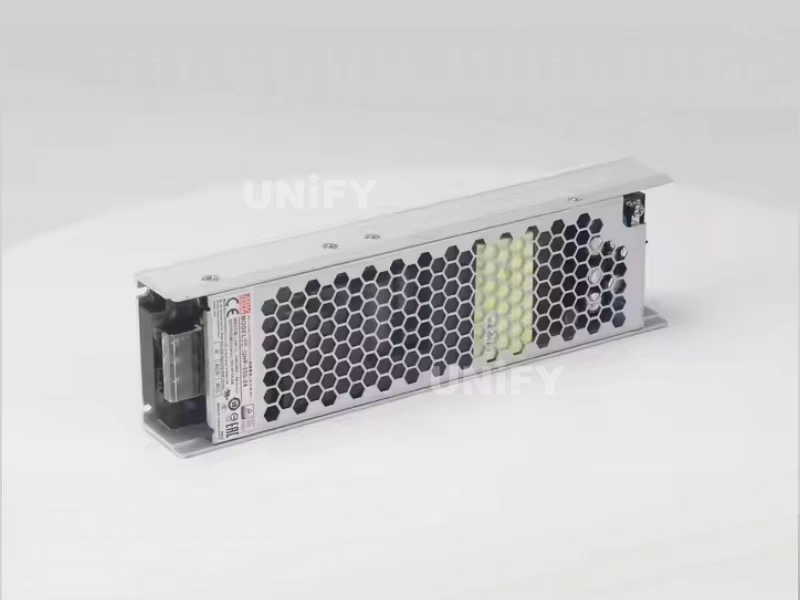
Why Does the Mean Well UHP-500 Need a 450 mm Aluminum Plate?
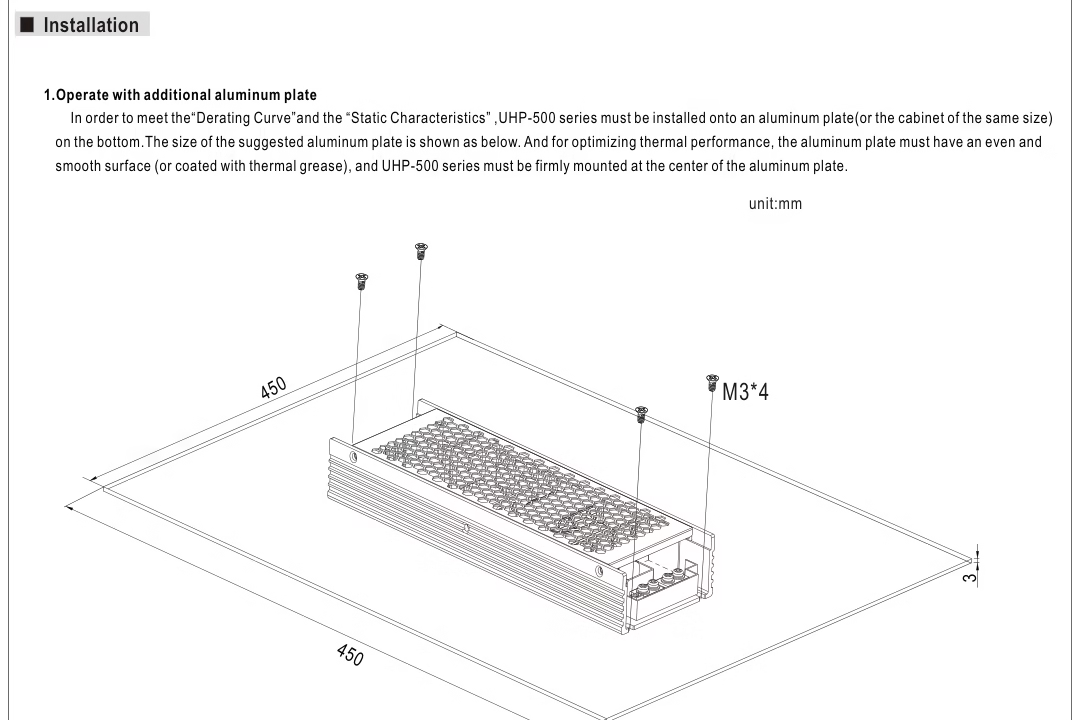
A 31 mm fanless chassis moving 500 W has exactly one heat path: conduction into whatever it sits on. The factory installation sheet is explicit — to meet the published derating curve, the UHP-500 must be installed onto an aluminum plate (or a cabinet plate of the same size) mounted under the unit:
Plate size and fixing
The suggested plate is 450 × 450 mm, 3 mm thick, fixed with four M3×4 screws — the same spread the 350 W sibling asks for, now dissipating half again the heat.
Surface condition
The plate face under the unit must be even and smooth, or coated with thermal grease — an uneven or anodized-only face adds degrees you have no fan to remove.
Position
The unit mounts firmly at the center of the plate — offset mounting strands the edges of the plate and shrinks the effective heat path.
The derating curves put numbers on it. With the plate, the 12 V and 15 V rails hold full load to 50°C and sag toward half load at 70°C, with the 4.2 V and 5 V rails sitting one tier lower. Without the plate, the factory curves turn down at just 45°C and converge toward 30–40% by 70°C — with 110 V grids and the 55 V model lowest. In a closed cabinet at 60°C, skipping a 3 mm plate costs you more than half the supply.
What Do the R Type’s Relay DC OK and Redundant Functions Add to the Mean Well UHP-500?
The base UHP-500 is a plain enclosed supply. Order the R build and two functions come built in — and the first one is a step up from the rest of the series:
DC OK relay contact
A dry relay contact reports the output state: closed means the PSU is on (DC OK), open means DC fail. Rated 30 Vdc / 1 A resistive — thirty times the current of the 10 mA optocouplers on the UHP-200 and UHP-350, so it can drive a contactor coil or a heavier alarm circuit directly. Wired on the CN1 header (DC COM1 / DC COM2, JST PHR-2, polarity-free).
Redundant parallel (2 units)
The R build’s redundancy logic lets two units share one bus: when one PSU cannot work, the other is enabled automatically and the load keeps running. Size the bus at or below one unit’s rated power — the second unit exists for takeover, not extra capacity.
Where it sits in the parallel map
Two-unit auto-takeover here; four-unit active sharing (3+1) on the Mean Well RSP-1000; and no paralleling at all on the rest of the RSP ladder. Note the R build is by request on this series — quote it with lead time.
How Does the Mean Well UHP-500 Survive Harsh Grids and Vibrations?
Three datasheet lines separate this slim supply from the usual indoor-rated crowd:
300 VAC surge, 5 seconds
The input tolerates 300 VAC for five seconds — generator step events, unstable industrial feeds, a mis-selected transformer tap. It is a survival window, not an operating range: continuous input still tops out at 264 VAC.
Heavy-industry immunity
EN 61000-6-2 immunity at heavy-industry level across the EN 61000-4 suite, plus EN 55035 — ESD, radiated and conducted RF, fast transients, surge, dips. Industrial-floor EMC without an external filter.
5 G vibration
Swept at 10–500 Hz, 5 G, one hour per axis — truck-parked screens, moving rigs and factory-floor mounts stop being a disqualifier.
The grid table, per the factory static-characteristics curve (full load from 110 VAC upward):
| Grid | Verdict on the UHP-500 |
|---|---|
| 220–240 V (EU, UK, Middle East, Asia, AU) | Full rated load; the nameplate’s design center (100–240 V) |
| 110–120 V (US, Canada, Japan, Taiwan) | Full rated load at 4.85 A AC input — no transformer caveat |
| 90–100 V (brownout-prone grids) | Runs at roughly 80% of rated per the factory curve — re-run the load budget |
One environment note: rated to 5000 m altitude with a 3.5°C-per-1000 m working-temperature derate above 2000 m — the whole series is fanless, so the high-altitude penalty stays gentle.
Mean Well UHP-500-5 vs RSP-500-5: Which High-Efficiency Supply Wins?
These two are the efficiency leads of their lines — and both already have full pages on this site:
| Parameter | Mean Well UHP-500-5 | Mean Well RSP-500-5 |
|---|---|---|
| Output | 5 V / 80 A / 400 W | 5 V / 90 A / 450 W |
| Efficiency (5 V rail) | 90% (36–55 V rails: 95%) | 84% |
| Profile | 232 × 81 × 31 mm, 0.905 kg, fanless | 230 × 127 × 40.5 mm, 1.3 kg, fan-managed |
| Rails | Eight, 4.2 V to 55 V | Eight, 3.3 V to 48 V |
| Hold-up time | 12 ms | 18 ms |
| Status output | DC OK relay contact, 30 Vdc / 1 A (R build) | Remote ON/OFF + 0.3 V remote sense on CN100 |
| Redundant option | UHP-500R: two units, auto-takeover (by request) | None — do not parallel |
| Surge headroom | 300 VAC input for 5 seconds | Not a published feature |
| MTBF | 1,264.1K h Telcordia + 167.6K h MIL | 1,372.4K h Telcordia + 187.9K h MIL |
| Warranty | 3 years | 3 years |
Read the table as two answers to the same bay. The UHP-500-5 wins efficiency (90% versus 84% on the rail means roughly 30% less waste heat), depth and the redundancy option; the RSP-500-5 wins raw current (90 A versus 80 A), hold-up time and adds remote ON/OFF with a 0.3 V sense window for long DC runs. If the bay is 31 mm deep or the tender asks for failover, the slim unit is the only answer; if the harness runs long or the load sits at 450 W, the fan-cooled unit takes it. Full detail lives on the Mean Well RSP-500 switching power supply page.
Where Does the Mean Well UHP-500 Fit the Mean Well Ladder?
The screen-relevant Mean Well set now covers every geometry a cabinet can ask for:
RSP-150 · 5 V 30 A
120 W budget, fanless, the single-bay entry.
RSP-200 · 5 V 40 A
160 W budget, fanless 1U, twelve rails.
RSP-320 · 5 V 60 A
240 W budget, speed-controlled fan.
RSP-500 · 5 V 90 A
360 W budget with remote sense.
RSP-1000 · 12 V 60 A
Kilowatt platform, parallel to 4000 W.
UHP-500 · 5 V 80 A
The 31 mm slim top: fanless, up to 95%, R-type redundancy.
The slim line runs below: the UHP-200 at 200 W in 26 mm and the UHP-350 at 300 W on the 5 V rail — this 500 W unit closes the ladder. The economy line runs its own — the LRS-600 at 100 A / 500 W with the fanless NEL-400 as the slim 80 A alternative.
How Do You Install and Wire the Mean Well UHP-500 Safely?
One AC block, two DC blocks and one signal header define the wiring workflow:
| Block / pin | Assignment |
|---|---|
| TB1 · 1 / 2 / 3 | AC/L · AC/N · FG (frame ground) — 5 Kgf-cm max |
| TB2 / TB3 · 1,2 / 3,4 | DC output −V / +V (MEL-400-02P) — 8 Kgf-cm max |
| CN1 · 1 / 2 | DC COM1 · DC COM2 (R type relay contact, JST PHR-2, polarity-free) |
1 · Mount on the aluminum plate
450 × 450 mm, 3 mm thick (or a cabinet plate of the same size), face smooth or greased, unit centered, four M3×4 screws. This step is what makes the derating curve true.
2 · Wire AC, DC and ground
Mains into TB1 (5 Kgf-cm), the module bus across TB2/TB3 (8 Kgf-cm), FG bonded to cabinet earth. Check polarity with a meter before the first power-up.
3 · Optional: DC OK wiring
On the R build, run the CN1 pair to the alarm or contactor circuit (relay contact, 30 Vdc / 1 A resistive) so the cabinet reports a dead rail — or drops a spare in — without an operator watching.
4 · Set the rail with +V ADJ
Trim at the load end under full load — the 5 V model adjusts 4.5–5.5 V, the 12 V model 11.4–12.6 V — then confirm each bay measures the same within a few tenths.
5 · Load-test
Run a full-white pattern for ten minutes, check the power LED stays lit, feel the plate for hot spots, then re-torque before closing the bay. Slim cabinets go up fast:
Two rules to respect
The aluminum plate is a requirement, not an accessory — without it the derating curves turn down at 45°C and cut the unit toward 30–40% load in a hot cabinet. And after an over-voltage trip the output latches off until the AC feed is cycled: find the upstream cause before restarting the screen.
When a unit does fail in the field, our LED display power supply diagnostics and replacement guide walks the test-and-swap workflow end to end.
What Problems Does a Failing Mean Well UHP-500 Power Supply Cause?
Power trouble wears disguises — check these three signatures before blaming a module or a control card:
Output pulses on and off
Hiccup mode is the overload signature: the unit pulses while the load exceeds 110–140%. Re-check the 80% budget before swapping parts; a latched OVP instead means a dead output until re-power.
Slim bay, weak rail in the heat
A UHP-500 on a thin standoff or painted plate derates from 45°C onward. If the bay browns out only on summer afternoons, the plate — not the supply — is the first suspect.
Flicker on camera or under load spikes
An overloaded rail dips for a frame at a time. Flicker that tracks bright content points at the supply first — re-run the 320 W budget before touching the modules.
How Much Does the Mean Well UHP-500 Cost?
The slim flagship prices above its own siblings and the fan-cooled classics alike: expect the single-unit authorized-distributor price to sit above the RSP-500’s class, with the exact figure moving by rail and by market — the mechanical premium buys the 31 mm profile at 500 W, the 95% efficiency figures, the surge window and the R-build option. Mean Well packs this series 16 pieces to a carton, and volume pricing for production quantities steps down from list.
Sample · 1–10 pcs
For repairs, prototypes and trial bays — shipped from stock with the nameplate you see above.
Project · 10–500 pcs
Whole-screen and fleet quantities with per-bay load math and the 450 mm plate mount designed into the cabinet.
Volume · 500+ pcs
Production-line pricing with container freight planning and batch date-code consistency.
Send the module types, modules-per-bay and total cabinet count, and the quote comes back with the load math attached — from an LED screen manufacturer that stocks the full chain from power to control.
Mean Well UHP-500 Switching Power Supply: Frequently Asked Questions
Can the UHP-500 run on a 110 V outlet in the US?
Yes. The 90–264 VAC universal input carries full rated load from 110 VAC upward (4.85 A AC input at 115 VAC); only the 90–100 V band asks for the roughly 20% derating the factory static curve shows. No step-up transformer is needed for US, Canadian or Japanese grids.
How many LED modules can one UHP-500-5 drive?
At the 80% loading rule: 320 W or 64 A usable on the 5 V rail. A typical indoor P2.5 module draws about 10–15 W of average program material, so one unit covers roughly 21–32 such modules — verify against your module datasheet and brightness profile.
What happens if I skip the 450 mm aluminum plate?
The unit runs, but it no longer meets the published derating curve: the factory without-plate curves turn down at just 45°C and converge toward 30–40% load by 70°C, with 110 V grids and the 55 V model lowest. The plate is a 450 × 450 mm, 3 mm aluminum sheet under the unit, smooth or greased, mounted centered with four M3×4 screws — or a cabinet wall of the same size doing the same job.
Can I parallel two UHP-500 units for redundancy?
Only the R build: the UHP-500R’s built-in redundancy function connects two units on one bus, and when one cannot work the other is enabled automatically. Keep the bus load at or below one unit’s rated power — the pair is for takeover, not extra capacity. Note the R build is by request on this series, so quote it with lead time. For bigger protected buses, the RSP-1000 parallels four units (3+1).
What does the DC OK relay contact do on the R build?
DC OK is a dry relay contact, isolated from the output: closed means the PSU is on, open means DC fail. It is rated 30 Vdc / 1 A resistive — thirty times the current of the optocoupler signals on the UHP-200 and UHP-350 — so it can drive a contactor coil or a heavier alarm circuit directly. Wire it on the CN1 header (DC COM1 / DC COM2, JST PHR-2, polarity-free).
What does “withstands 300 VAC surge input for 5 seconds” mean in practice?
Five-second surges up to 300 VAC — generator step events, unstable industrial feeds, a wrong transformer tap — pass through without damaging the unit, where ordinary 264 V-max supplies can fail. It is a survival window, not an operating range: continuous input still tops out at 264 VAC.
What warranty and service life does Mean Well publish?
A 3-year warranty with a dual-method MTBF: 1,264,100 hours minimum by Telcordia SR-332 plus 167,600 hours minimum by MIL-HDBK-217F at 25°C. Note the datasheet’s own line that the R type’s efficiency runs slightly below the blank type’s.
What is the 55 V model for?
The factory positions the UHP-500-55 (55 V / 8.9 A / 500 W at 95% efficiency) as Power Source Equipment for PoE — powering network-fed builds — and the wide 45–58 V adjustment also suits long-run distribution. It is the only rail on the series with a separate 550 ms setup-time note and the only one excluded from the EN 60335-1 approval.
Quote the Mean Well UHP-500 With the Load Math Done
Send your module types and cabinet count; we return per-bay power sizing and a matched quote from a LED screen manufacturer that ships worldwide.
📱 / WhatsApp: +86-191-18802497 · Shenzhen, China · GMT+8
More Mean Well Switching Power Supply and LED Display Power Resources
LED Display Power Supply (Mother Catalog)
The three-brand mother catalog: 27 model pages, 2026 price bands, architecture map and the 80% load math — start here.
Mean Well UHP-350 (5 V 60 A)
The slim step below: 300 W on the rail in the same 31 mm recipe.
Mean Well UHP-200 (5 V 40 A)
The slim entry: 200 W in a 26 mm profile with a 300 mm plate.
Mean Well RSP-500 (5 V 90 A)
The duel counterpart: 450 W with remote ON/OFF and 0.3 V sense on CN100.
Mean Well RSP-1000 (12 V 60 A)
The kilowatt platform: parallel to 4000 W (3+1) with a 5-year warranty.
Mean Well LRS-600 (500 W)
The economy ladder top: 5 V / 100 A / 500 W across seven rails.
Mean Well NEL-400 (400 W)
The slim 80 A alternative: 30 mm chassis with conformal coating standard.
LED Display Power Consumption
Screen-level power math: module draw, brightness settings, breaker sizing and cable gauges.
Power Supply Diagnostics & Replacement
Test a suspect supply, swap it inside a live screen, and root-cause repeat failures.