
Mean Well RSP Series · 12 Rails · 5V 60A 300W · Universal PFC · Speed-Controlled Fan
Mean Well RSP-320 Switching Power Supply
The Mean Well RSP-320 switching power supply pairs a 5 V / 60 A / 300 W rail (twelve rails from 2.5 to 48 V in the series) with an 88–264 VAC universal input, active PFC, a speed-controlled cooling fan and a 3-year warranty — the mid-weight, grid-agnostic workhorse of the Mean Well LED-screen power set.
📱 / WhatsApp: +86-191-18802497 · Shenzhen, China · GMT+8
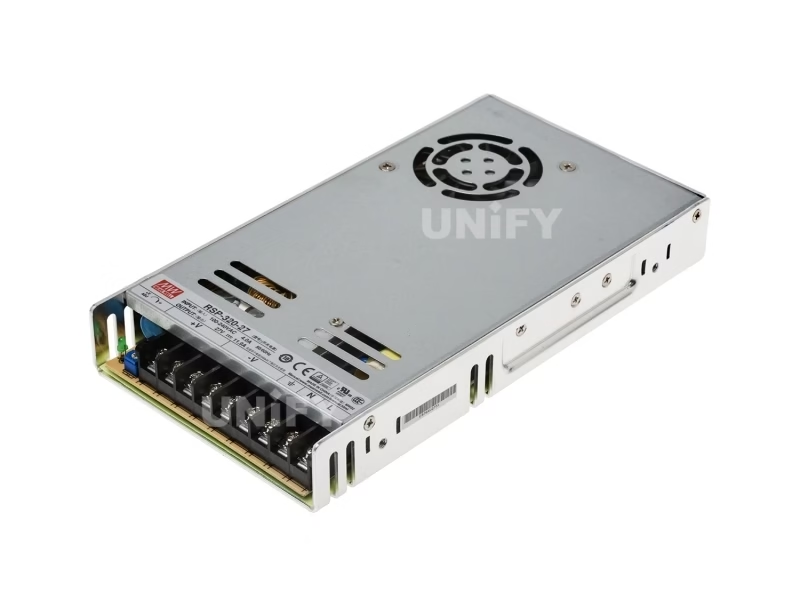
300 W
Rated output (5 V rail)
5 V / 60 A
DC output rail
88–264 VAC
Universal input + PFC
Speed Fan
Thermal-controlled cooling
3 Years
Warranty (1.83M h MTBF)
Short answer
The Mean Well RSP-320 is a 320 W-class switching power supply with an 88–264 VAC universal input and built-in active PFC. The 5 V model delivers 60 A (300 W); the series spans twelve rails from 2.5 V to 48 V in a 215 × 115 × 30 mm chassis cooled by a speed-controlled DC fan. Overload protection trips into self-recovering hiccup mode, the 3-year warranty and 1,826,400-hour Telcordia MTBF back the platform, and the 5 V rail goes head-to-head with the CZCL A-300AB-5 at exactly the same 60 A rating.
What Is the Mean Well RSP-320 Switching Power Supply?
The Mean Well RSP-320 is a 320 W single-output enclosed AC/DC switching power supply (SMPS) that converts an 88–264 VAC mains feed into one regulated DC rail. The series is the widest-rail line-up on this site: twelve outputs from 2.5 V to 48 V, with the screen-relevant 5 V model rated at 60 A / 300 W. Cooling comes from a built-in DC fan whose speed the unit controls thermally — quiet at light load, full airflow when the chassis heats — inside a 215 × 115 × 30 mm case weighing 0.9 kg.
The platform carries the RSP line’s compliance DNA: active PFC with power factor above 0.98 at 115 VAC, EN 61000-3-2 harmonic compliance, a UL 62368-1 / TUV / CCC / EAC / BSMI approval set, and a 3-year warranty backed by a dual-method MTBF of 1,826,400 hours minimum (Telcordia SR-332) plus 192,900 hours minimum (MIL-HDBK-217F, 25°C). Conformal coating is available as a build option for harsh sites — unlike the NEL-400, where it ships standard.
60 A on the 5 V rail
Double the RSP-150’s 30 A and an exact match for the CZCL A-300AB-5 — one unit feeds a dense 500 × 1000 mm indoor cabinet outright.
Smart thermal management
The fan-speed control block in the factory diagram spools the fan with heat, not with time — less noise at idle, full cooling at the +70°C ceiling.
Twelve rails, one chassis
2.5 V and 4 V rails sit below anything else in the Mean Well screen set — specialty low-voltage strings and common-cathode work stop requiring second-brand supplies.
Planning a screen’s full electrical side? Pair this page with the LED display power consumption guide, and for the control end of the same cabinet see the LED screen display control system catalog.
What Are the Mean Well RSP-320 Switching Power Supply Specifications?
Every figure below comes from the official Mean Well RSP-320 specification sheet (4 pages, revision dated 2025-01-10). The twelve-rail table first, then the platform parameters shared by every model:
| Model | Rail / current | Rated power | Tolerance | Ripple (max.) | Efficiency |
|---|---|---|---|---|---|
| RSP-320-2.5 | 2.5 V / 60 A | 150 W | ±2.0% | 100 mVp-p | 75.5% |
| RSP-320-3.3 | 3.3 V / 60 A | 198 W | ±2.0% | 100 mVp-p | 79.5% |
| RSP-320-4 | 4 V / 60 A | 240 W | ±2.0% | 100 mVp-p | 81% |
| RSP-320-5 | 5 V / 60 A | 300 W | ±2.0% | 150 mVp-p | 83% |
| RSP-320-7.5 | 7.5 V / 40 A | 300 W | ±2.0% | 150 mVp-p | 88% |
| RSP-320-12 | 12 V / 26.7 A | 320.4 W | ±1.0% | 150 mVp-p | 88% |
| RSP-320-13.5 | 13.5 V / 23.8 A | 321.3 W | ±1.0% | 150 mVp-p | 88% |
| RSP-320-15 | 15 V / 21.4 A | 321 W | ±1.0% | 150 mVp-p | 88.5% |
| RSP-320-24 | 24 V / 13.4 A | 321.6 W | ±1.0% | 150 mVp-p | 89% |
| RSP-320-27 | 27 V / 11.9 A | 321.3 W | ±1.0% | 200 mVp-p | 89% |
| RSP-320-36 | 36 V / 8.9 A | 320.4 W | ±1.0% | 220 mVp-p | 89.5% |
| RSP-320-48 | 48 V / 6.7 A | 321.6 W | ±1.0% | 240 mVp-p | 90% |
| Common to all twelve rails | Value |
|---|---|
| Input voltage range | 88–264 VAC / 124–370 VDC, 47–63 Hz (nameplate: 100–240 V, 4.0 A) |
| Power factor | Active PFC: PF > 0.95 at 230 VAC; PF > 0.98 at 115 VAC, full load |
| Line / load regulation | ±0.5% line (±0.3% on 13.5–48 V); ±1.5% load (2.5/3.3 V), ±1.0% (4–7.5 V), ±0.5% (12 V+) |
| Setup / hold-up time | 1500 ms / 3000 ms at 115 VAC; hold-up 8 ms at full load |
| Inrush / leakage current | 20 A at 115 VAC, 40 A at 230 VAC / <1 mA at 240 VAC |
| Protections | Overload 105–135%: hiccup mode, auto-recovery; OVP: shut down, re-power on to recover; OTP: shut down, auto-recovery; short circuit |
| Cooling | Built-in DC fan with fan speed control function |
| Working temperature | −30°C to +70°C with derating curve (full load to ~40°C); 20–90% RH |
| Withstand voltage | I/P-O/P 3 kVAC, I/P-FG 2 kVAC, O/P-FG 0.5 kVAC; isolation 100 MΩ |
| MTBF | 1,826.4K hrs min. (Telcordia SR-332); 192.9K hrs min. (MIL-HDBK-217F, 25°C) |
| Dimensions / packing | 215 × 115 × 30 mm (Case 207A) / 0.9 kg, 15 pcs per carton |
| Safety / EMC | UL 62368-1, TUV, EAC TP TC 004, CCC GB 4943.1, BSMI, AS/NZS 60950-1, IS 13252 (except 2.5/48 V), DEKRA EN 61558; EN 55032 Class B, EN 61000-3-2/-3, EN 55035 |
| Options / warranty | Optional conformal coating; 3 years warranty |
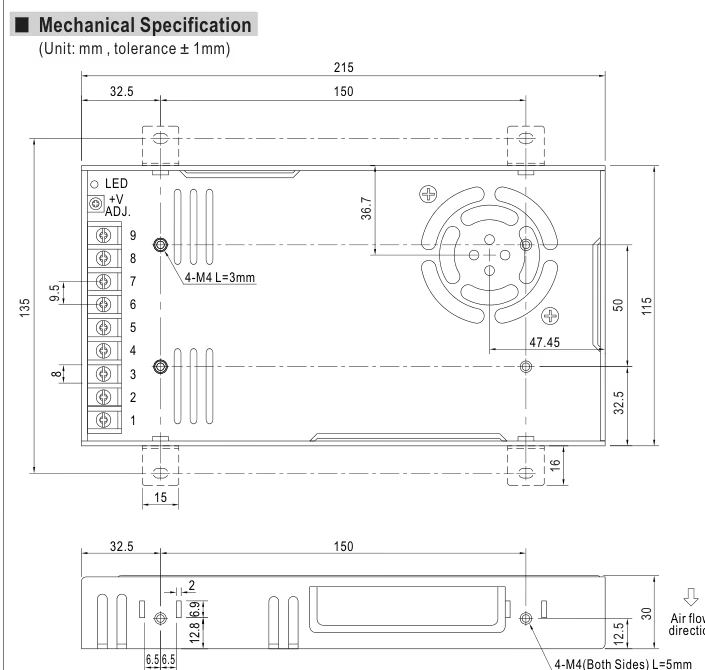
Factory mechanical drawing: 215 × 115 × 30 mm, Case 207A, 9-pin terminal, airflow direction marked
Three field notes before you buy
First, input range: the datasheet specifies 88–264 VAC while the production nameplate reads 100–240 V, 4.0 A (photo below) — the factory curve gives full rated load from 115 VAC upward and roughly 80% at the 88 V floor (Note 4). Second, hold-up time is 8 ms — shorter than the RSP-150’s 16 ms, so blackout-prone sites should plan a UPS rather than rely on ride-through. Third, the conformal coating is an option here, not the NEL-400’s standard fit — order it explicitly for coastal or dusty installs.
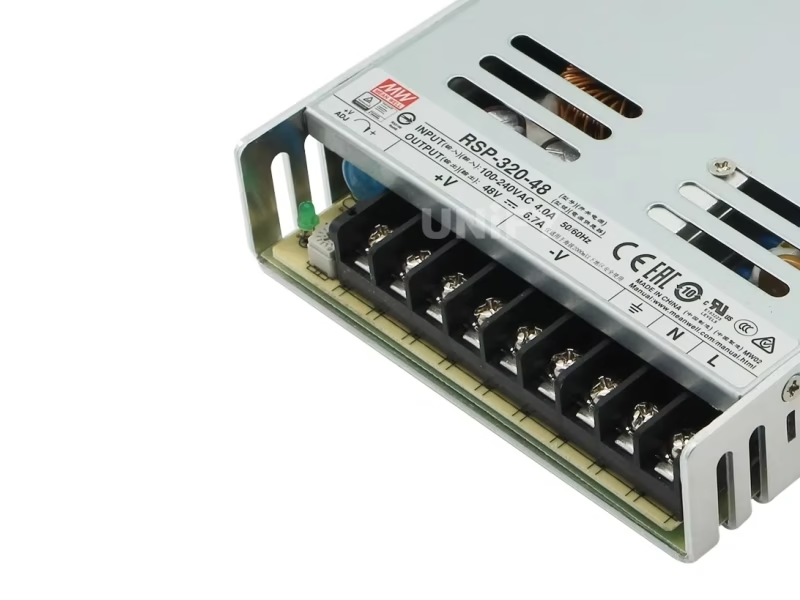
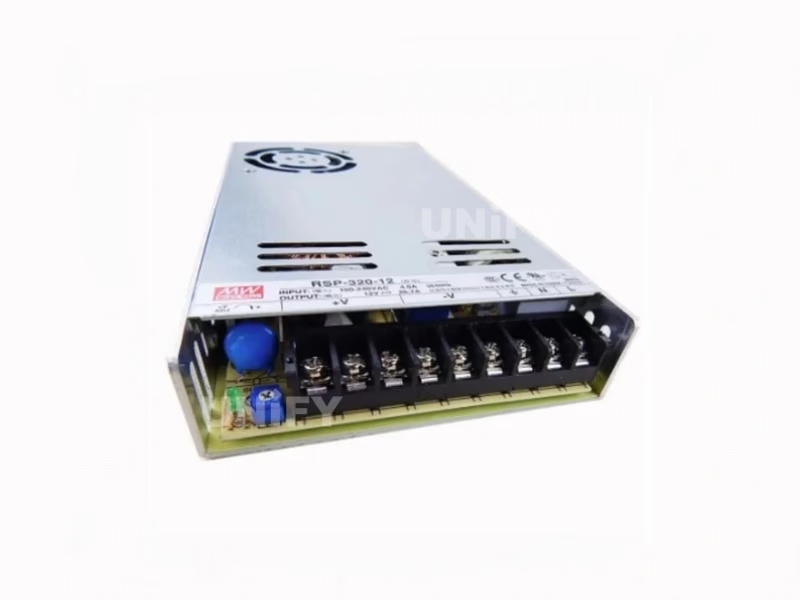
Production nameplate: INPUT 100–240 VAC, 4.0 A · OUTPUT 48 V, 6.7 A · cULus, EAC and CE marks
The published ripple figures follow the same factory measurement discipline as the rest of the range — here is Mean Well’s own method video, the same habit our bench applies before any batch ships:
How Many LED Modules Can the Mean Well RSP-320 5 V Rail Carry?
Apply the industry-standard 80% loading rule and the RSP-320-5 gives you two budgets:
Power budget
300 W × 80% = 240 W usable per unit
Current budget
60 A × 80% = 48 A usable per unit
Mapped onto typical modules (average draws under normal program material — full-white patterns run higher, so verify against your module datasheet):
| Typical load | Average draw | Max per RSP-320-5 at 240 W |
|---|---|---|
| Indoor P2.5 module (320 × 160 mm) | ~10–15 W | ~16–24 modules |
| Rental P3.91 module (250 × 250 mm) | ~15–20 W | ~12–16 modules |
| Outdoor P4.81 module (250 × 250 mm) | ~20–30 W | ~8–12 modules |
| Receiving card (Novastar / Colorlight class) | ~3–5 W | Shares the same 5 V rail |
One RSP-320-5 therefore carries a 500 × 1000 mm indoor cabinet outright; bigger bays step up to the 500 W LRS-600 or spread across units, with the full derating math in our power consumption walkthrough.
Why Does the Mean Well RSP-320 Control Its Fan Speed?
Most fan-cooled supplies run their fan flat out whenever the unit is on. The RSP-320 does not: the factory block diagram gives the fan its own fan speed control stage, so blade speed follows the chassis temperature rather than the power switch. The audible and mechanical consequences are worth more than the spec line suggests:
Quiet when idle
A display running dim content or standby playlists keeps the fan at low RPM — the difference matters in churches, studios and conference rooms.
Full cooling when it counts
At full white in a warm cabinet the fan spools to maximum, protecting the −30 to +70°C operating window (full load to ~40°C ambient on the single factory derating curve).
Longer fan life
Bearing hours scale with speed; a fan that idles low and spools on demand ages slower than one that runs flat-out for a decade — fewer mid-life swaps.
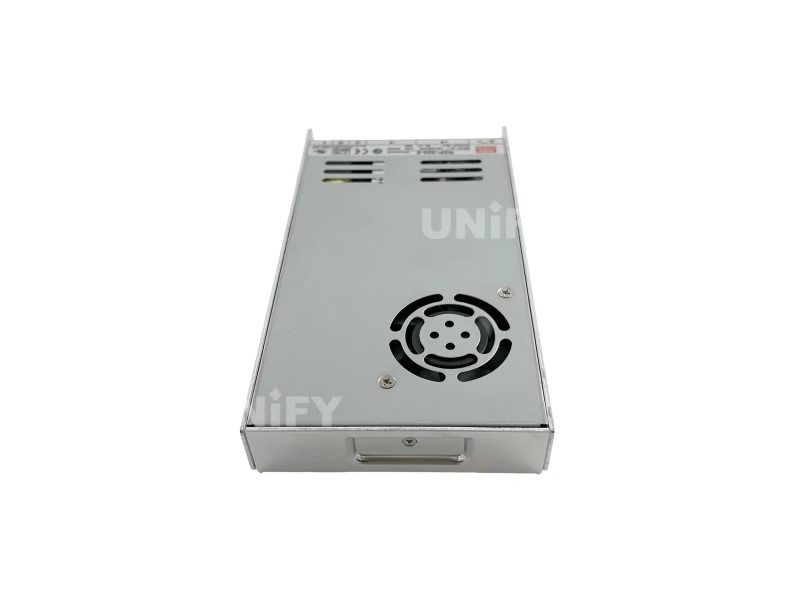
Keep the grille clear during scheduled screen service and listen at commissioning — a grinding fan at month three is a warranty conversation, not a normal sound.
Which Input Grids Can the Mean Well RSP-320 Run On?
Every common grid, with one derating rule attached. The 88–264 VAC window spans 110–120 V and 220–240 V networks alike, the active PFC holds power factor above 0.98 at 115 VAC, and the factory curve gives full rated load from 115 VAC upward:
| Grid | Verdict on the RSP-320 |
|---|---|
| 220–240 V (EU, UK, Middle East, Asia, AU) | Full rated load; the design center the nameplate quotes (100–240 V) |
| 110–120 V (US, Canada, Japan, Taiwan) | Full rated load at 115 V+ — no transformer caveat for these grids |
| 88–100 V (brownout-prone 100 V grids) | Runs, but derate the load to roughly 80% per the factory curve (Note 4) |
Altitude rating reaches 5,000 m (apply the 3.5°C per 1,000 m temperature derating above 2,000 m per Note 5), and the −30 to +70°C window keeps this chassis in the widest-temperature group on the site — with the caveat that its fan, not convection, carries the heat, so keep the intake path clear.
Which of the Twelve Mean Well RSP-320 Rails Fits Your Screen?
Every rail ships in the same chassis at the same universal input — only the DC bus changes:
LED screen bays: 5 V / 60 A
The RSP-320-5 feeds standard modules and receiving cards; a 240 W budget covers a dense indoor cabinet outright.
Sub-3 V specialty: 2.5 / 3.3 / 4 V
The 2.5 V / 60 A rail is the lowest on this site (below the NEL-400’s 2.8 V), serving specialty low-voltage strings; 3.3 V covers common-cathode work (read our common cathode LED technology explainer).
Signage and control: 7.5–48 V
Seven rails from 7.5 V to 48 V at ±1.0% tolerance cover strip signage, controllers and 24/48 V industrial buses up to 90% efficiency.
Mean Well RSP-320-5 vs CZCL A-300AB-5: Which 300 W, 60 A Supply Wins?
These two are the same electrical product from opposite engineering cultures — both deliver 5 V at 60 A / 300 W, and screens regularly mix them across cabinet rows:
- Input window: 88–264 VAC universal versus 176–264 VAC — only the RSP-320-5 plugs into a 110 V wall.
- Power factor: active PFC (PF > 0.98 at 115 V) with EN 61000-3-2 compliance versus no PFC stage.
- Fan behavior: thermal speed control on the RSP-320-5 versus a fixed-speed fan on the A-300AB-5.
- Protection style: both hiccup on overload, but the A-300AB-5 adds auto-recovering over-voltage while the RSP-320-5’s OVP latches until re-power.
- Documentation: dual-method MTBF (1.83M h Telcordia / 192.9K MIL-HDBK-217F) and a 3-year warranty versus a 2-year term.
| Parameter | Mean Well RSP-320-5 | CZCL A-300AB-5 |
|---|---|---|
| Output | 5 V / 60 A / 300 W | 5 V / 60 A / 300 W |
| Input window | 88–264 VAC universal (full load ≥115 VAC) | 176–264 VAC (220–240 V grids only) |
| PFC | Active, PF > 0.98 at 115 VAC | None |
| Cooling | Speed-controlled DC fan / 30 mm | Fixed-speed fan / 31.2 mm |
| Efficiency (5 V rail) | 83% | ≥86% |
| Working temperature | −30 to +70°C | −25 to +60°C |
| Warranty / MTBF | 3 years / 1,826.4K h Telcordia | 2 years / 200,000 h MIL-217 |
Full detail on the CZCL unit lives on the CZCL A-300AB-5 LED switching power page; trial one of each in the same cabinet and the grid and thermal differences will pick for you.
How Does the Mean Well RSP-320 Compare With the RSP-150?
Same series, same chassis family, same compliance DNA — the choice is current class and a handful of honest trade-offs:
| Parameter | RSP-320-5 | RSP-150-5 |
|---|---|---|
| Output | 5 V / 60 A / 300 W | 5 V / 30 A / 150 W |
| Cooling | Speed-controlled fan | Fanless convection |
| Overload protection | Hiccup mode, auto-recovery | Constant current limiting, auto-recovery |
| Hold-up time | 8 ms | 16 ms |
| Dimensions / weight | 215 × 115 × 30 mm / 0.9 kg | 199 × 99 × 30 mm / 0.6 kg |
Both share the universal 88–264 VAC-class input with active PFC, remote-family control thinking and the 3-year warranty. Read the full detail on the Mean Well RSP-150 switching power supply page; size the bay at 120 W with the RSP-150-5 or 240 W with the RSP-320-5 under the same 80% rule.
How Do You Install and Wire the Mean Well RSP-320 Safely?
The 9-pin terminal block and dual-side M4 mounts define the wiring workflow:
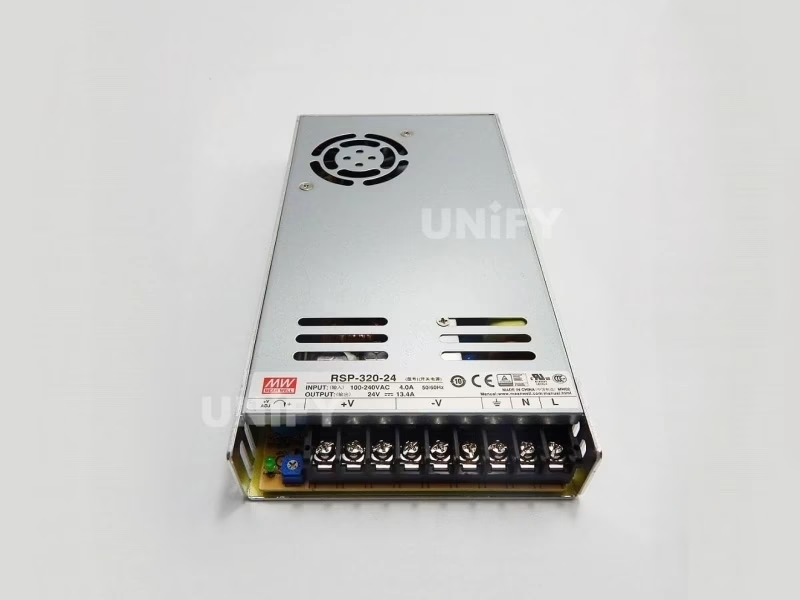
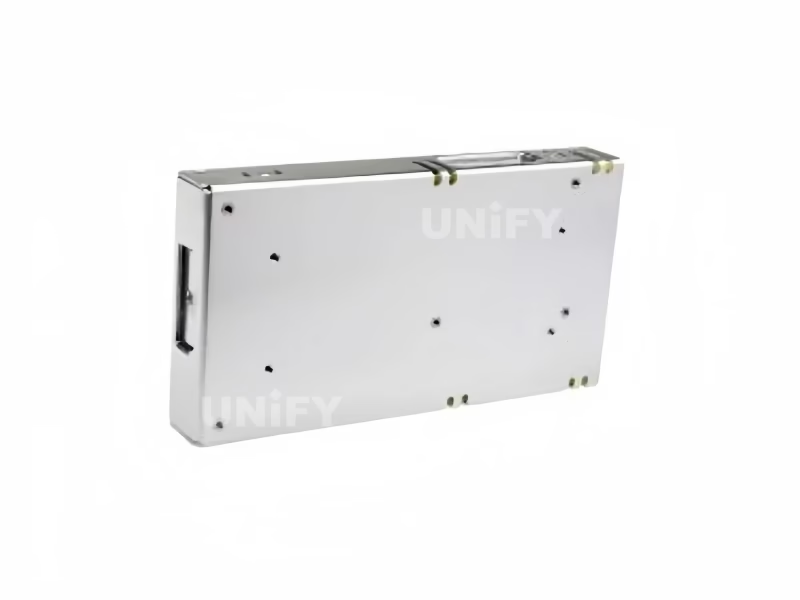
Top view with the 9-pin terminal block, and the rear flanges that take the M4 mounts
| Pin | Assignment |
|---|---|
| 1 / 2 | AC/L · AC/N |
| 3 | FG (frame ground) |
| 4–6 | DC output −V |
| 7–9 | DC output +V |
1 · Mount on both side flanges
Four M4 screws per side (L = 3 mm per the factory drawing) into the cabinet power-bay rails, with the marked airflow path facing the open bay.
2 · Wire AC, DC and ground
AC into pins 1–2, module and receiving-card bus across pins 7–9 (+V) and 4–6 (−V), FG bonded to cabinet earth. Check polarity with a meter before the first power-up.
3 · Set the rail with +V ADJ
Trim to 5.0 V (adjustable 4.5–5.5 V) at the far end of the DC bus under load, then confirm each cabinet measures the same within a few tenths.
4 · Mind the output capacitance limit
On the 2.5–15 V models the datasheet caps external output capacitance at 5,000 µF (Note 8) — oversized buffer banks on the DC bus can trip the start-up circuit.
5 · Load-test and listen
Run a full-white pattern for ten minutes, feel for hot spots, confirm the fan ramps smoothly and the LED indicator stays lit, then re-torque the terminals before closing the cabinet.
Do not parallel the outputs
The RSP-320 datasheet lists no current-sharing feature, so two paralleled units will not divide load evenly — one runs hot while the other idles. Split the bus by cabinet or step up to a single higher-rated supply. And remember the OVP latch: after an over-voltage trip, cycle the AC feed before restarting the screen.
When a unit does fail in the field, our LED display power supply diagnostics and replacement guide walks the test-and-swap workflow end to end.
What Problems Does a Failing Mean Well RSP-320 Power Supply Cause?
Power trouble wears disguises — check these three signatures before blaming a module or a control card:
Dim or uneven brightness, one cabinet
Aging output capacitors sag the rail under load; the cabinet’s corner looks tired while its neighbors shine. Full-white patterns make it obvious.
Flicker on camera or under load spikes
An overloaded or failing rail dips for a frame at a time. Flicker that tracks bright content points at the supply first.
Cabinet reboots or dead sections
Hiccup cycling reads as “random” dead cabinets; a latched OVP reads as dead-until-repower. Measure the rail during the dropout before replacing modules.
How Much Does the Mean Well RSP-320-5 Cost?
Authorized-distributor pricing sits at $54.90 for a single unit and $52.30 each at five-plus (Bravo Electro, observed September 2026), with TRC Electronics at $59.02 / $56.22. Volume pricing for screen-production quantities steps down from there — Mean Well packs this series 15 pieces to a carton.
Sample · 1–10 pcs
For repairs, prototypes and trial cabinets — shipped from stock with the cULus + EAC nameplate you see above.
Project · 10–500 pcs
Whole-screen and fleet quantities with per-cabinet load math, rail matching to your module datasheets, and the conformal-coating option where the site needs it.
Volume · 500+ pcs
Production-line pricing with container freight planning and batch date-code consistency.
Send the module types, modules-per-cabinet and total cabinet count, and the quote comes back with the load math attached — from an LED screen manufacturer that stocks the full chain from power to control.
Mean Well RSP-320 Switching Power Supply: Frequently Asked Questions
Can the RSP-320-5 run on a 110 V outlet in the US?
Yes. The 88–264 VAC universal input carries full rated load from 115 VAC upward; only an 88–100 V supply asks for the roughly 20% derating the factory curve specifies (Note 4). No step-up transformer is needed for US, Canadian or Japanese grids.
How many LED modules can one RSP-320-5 drive?
At the 80% loading rule: 240 W or 48 A usable. A typical indoor P2.5 module draws about 10–15 W of average program material, so one unit covers roughly 16–24 such modules plus the receiving card — verify against your module’s datasheet and brightness profile.
Is the RSP-320’s fan loud?
No — its speed follows the chassis temperature rather than the power switch. Dim content and standby playlists keep it at low RPM; full-white content in a warm cabinet spools it to maximum to protect the −30 to +70°C window.
What is the difference between the RSP-320-5 and the RSP-150-5?
Current class and protection style: 60 A with hiccup-mode overload versus 30 A with constant-current limiting, and an 8 ms hold-up versus 16 ms. Both share the universal PFC input and 3-year warranty; the RSP-320-5 is the cabinet-workhorse, the RSP-150-5 the compact 120 W-budget unit.
RSP-320-5 or CZCL A-300AB-5 for a 300 W bay?
Same 60 A rating, different strengths: the RSP-320-5 wins on input window (universal versus 176–264 VAC), PFC, fan control, MTBF paperwork and warranty; the A-300AB-5 wins on efficiency (≥86% versus 83%) and price. Match the choice to your grid and tender requirements.
What is the 2.5 V rail for?
At 2.5 V / 60 A / 150 W it is the lowest rail on this site — below the NEL-400’s 2.8 V — serving specialty low-voltage LED strings and custom common-cathode architectures. Never feed a low-voltage bus from a 5 V supply.
What warranty and service life does Mean Well publish?
A 3-year warranty with a dual-method MTBF: 1,826,400 hours minimum by Telcordia SR-332 plus 192,900 hours minimum by MIL-HDBK-217F at 25°C, and 100% burn-in before shipment.
Can I parallel two RSP-320 units for more current?
No. The datasheet lists no current-sharing feature, so paralleled units will not divide load evenly. Split the bus by cabinet or step up to a single higher-rated supply.
Quote the Mean Well RSP-320 With the Load Math Done
Send your module types and cabinet count; we return per-cabinet power sizing and a matched quote from a LED screen manufacturer that ships worldwide.
📱 / WhatsApp: +86-191-18802497 · Shenzhen, China · GMT+8
More Mean Well Switching Power Supply and LED Display Power Resources
LED Display Power Supply (Mother Catalog)
The three-brand mother catalog: 27 model pages, 2026 price bands, architecture map and the 80% load math — start here.
Mean Well UHP-350 (5 V 60 A slim)
The same 300 W from the slim line: 31 mm fanless profile, 450 mm plate mount and a 1.79M h Telcordia MTBF.
Mean Well RSP-1000 (1000 W)
The kilowatt step above: 12 V / 60 A rail with active current sharing up to 4000 W (3+1) — the family’s only parallel-capable unit, 5-year warranty.
Mean Well RSP-500 (450 W)
The step up: 5 V / 90 A / 450 W with CN100 remote sense, remote ON/OFF and 3-year warranty.
Mean Well RSP-150 (150 W)
The compact sibling: 5 V / 30 A, fanless convection, same universal PFC input and 3-year warranty.
Mean Well NEL-400 (400 W)
The screen-native sibling: 5 V / 80 A with conformal coating standard, fan-cooled 30 mm chassis.
LED Display Power Consumption
Screen-level power math: module draw, brightness settings, breaker sizing and cable gauges.
Power Supply Diagnostics & Replacement
Test a suspect supply, swap it inside a live screen, and root-cause repeat failures.