
Indoor vs Outdoor LED Displays: How to Choose the Right Type for Your Project
Ordering an indoor-rated LED display for a sun-exposed storefront window, or paying for IP65 waterproofing on a climate-controlled corporate lobby display — these are two of the most expensive specification errors in commercial AV procurement. The difference between indoor and outdoor LED displays is not a matter of degree but of engineering category. Indoor and outdoor displays use different LED encapsulation materials, different thermal management systems, different power supply specifications, and different structural designs — and a display designed for one environment will fail prematurely in the other.
This guide provides the engineering-level distinctions that B2B buyers, procurement managers, and system integrators need to specify the correct display type for any installation environment. As a LED screen manufacturer that produces both indoor and outdoor displays across the full specification range, we provide application-specific guidance based on real field data — not catalog generalizations.
Quick Decision Guide (30 seconds):
- Climate-controlled indoor space, no direct sunlight? → Indoor LED
- Outdoor exposure — rain, sun, dust, or temperature extremes? → Outdoor LED (IP65/IP54 minimum)
- Under a roof but open to humidity, indirect sun, or temperature swings? → Semi-Outdoor (GOB-treated or outdoor-lite)
What Are the Key Differences Between Indoor vs Outdoor LED Displays? 5 Factors Compared
The following specification comparison table provides the engineering baseline for evaluating any LED display quotation. When a supplier’s specification falls significantly outside these ranges for a given application, ask why — the answer will tell you whether you are dealing with genuine engineering optimization or cost-cutting compromise.
| Specification | Indoor LED Display | Outdoor LED Display |
|---|---|---|
| Brightness | 800–2,500 nits. 800–1,200 nits is sufficient for most indoor environments. Higher brightness available for window-front locations with direct sunlight. | 5,000–10,000+ nits. Minimum 5,000 nits for shaded outdoor; 8,000+ for direct sunlight. DIP LEDs are the only technology that reliably exceeds 10,000 nits. |
| Pixel Pitch Range | P0.6–P5. Fine pitch (P0.6–P2) dominates premium applications. Standard indoor range is P1.5–P3. Below P0.9 typically requires COB packaging. | P2.5–P20. P2.5–P4 is considered “fine pitch outdoor” for close-viewing applications. P10–P20 is standard for highway billboards and stadiums viewed from distance. |
| IP Rating (Ingress Protection) | IP20–IP31. No weatherproofing required in climate-controlled spaces. IP31 provides basic protection against accidental spills and cleaning. | IP65 front / IP54 rear (minimum). The front face must withstand water jets and dust. The rear must resist splashing water and dust ingress. Both ratings must be verified independently. |
| Power Consumption | 200–450W/m² (average). Lower brightness requirements and smaller temperature extremes mean less energy per square meter. Common cathode technology reduces this by an additional 15–25%. | 400–800W/m² (average). Higher brightness demands and active cooling systems (fans) increase consumption. Outdoor displays in hot climates may consume up to 1,000W/m² at maximum brightness. |
| Cabinet Material & Design | Die-cast aluminum (standard) or steel (budget). Precision-machined for ±0.1mm flatness. Weight: 25–45 kg/m². Front or rear service access. | Die-cast aluminum with anti-corrosion treatment (mandatory). Sealed gaskets at all joints. Pressure-equalizing breather vents to prevent internal condensation. Weight: 35–65 kg/m². Front service strongly preferred. |
| Maintenance Access | Front or rear service. Front service is standard for wall-mounted installations. Rear service is acceptable where a permanent access corridor exists behind the display. | Front service is the standard — rear access is often physically impossible for building-mounted or pole-mounted displays. All components must be replaceable from the front face. |
| Operating Temperature | 0°C to +40°C (typical). Passive cooling is sufficient for most indoor installations. Fan-assisted cooling may be added for high-brightness indoor displays. | -20°C to +50°C (standard); -40°C to +50°C with optional heating elements. Active cooling (fans or air conditioning) is mandatory. Displays in direct sunlight may require additional thermal management. |
| LED Encapsulation | Standard SMD or COB without UV stabilization. Indoor UV exposure is negligible — standard materials last the full mechanical life of the display. | UV-stabilized encapsulation is mandatory. Non-UV-stabilized materials yellow, crack, and lose transparency within 2–3 years. This is a common failure mode for outdoor displays built with indoor-grade components. |
| Typical Cost (per m²) | $600–$6,000+. Wide range driven by pixel pitch and packaging technology. SMD P2.5: ~$800–$1,200. COB P0.9: ~$3,000–$6,000. | $800–$4,000+. Higher base cost for weatherproofing, but typically larger pixel pitches keep per-pixel costs competitive. P10 DIP: ~$500–$800. P4 SMD outdoor: ~$1,200–$2,000. |
When Should You Choose Indoor LED Displays? Pixel Density & Image Quality Explained
Indoor LED displays operate in a forgiving environment — controlled temperature, no precipitation, minimal dust, and managed ambient light. This allows manufacturers to optimize for what matters most indoors: image quality at close viewing distances. The result is a product category where pixel pitch has shrunk from P6 (barely acceptable indoors) to P0.6 (rivaling OLED at close range) in roughly 15 years.
Key Indoor Applications and Their Typical Specifications
| Application | Recommended Pixel Pitch | Brightness | Key Specification Priority |
|---|---|---|---|
| Corporate Boardroom (86–130″) | P1.2–P1.8 | 800–1,000 nits | Front-service, slim profile, 3,840Hz refresh for video conferencing |
| Retail Digital Signage | P1.5–P2.5 | 1,000–1,500 nits | Higher brightness for window-front locations, 24/7 rated power supplies |
| Broadcast Studio | P0.9–P1.5 COB | 1,000–1,200 nits | Genlock, 3,840Hz+, COB for no-moiré on-camera performance |
| Control Room (24/7) | P0.6–P1.2 COB | 800 nits (reduced for operator comfort) | Redundant power supplies, zero burn-in, seamless surface |
| House of Worship Stage | P2.5–P3.9 | 1,500–2,000 nits | Stage-lighting tolerant brightness, IMAG-ready refresh rate |
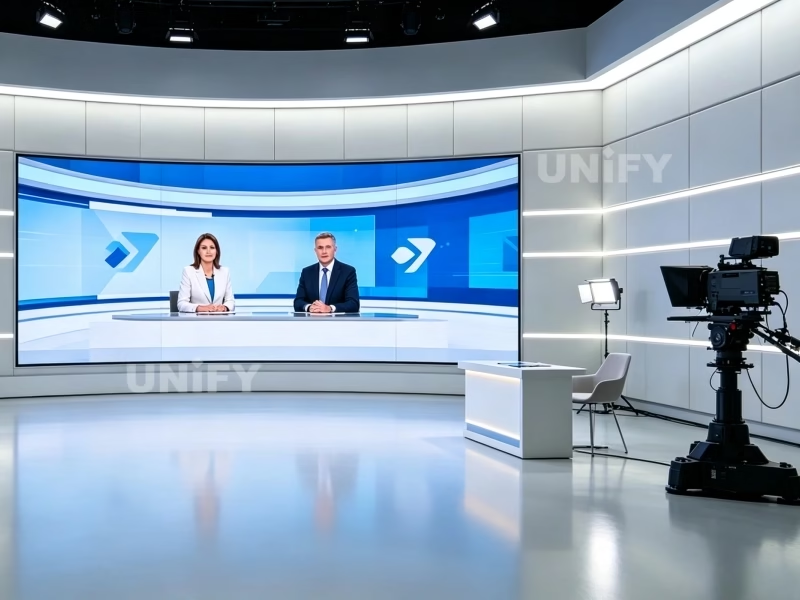
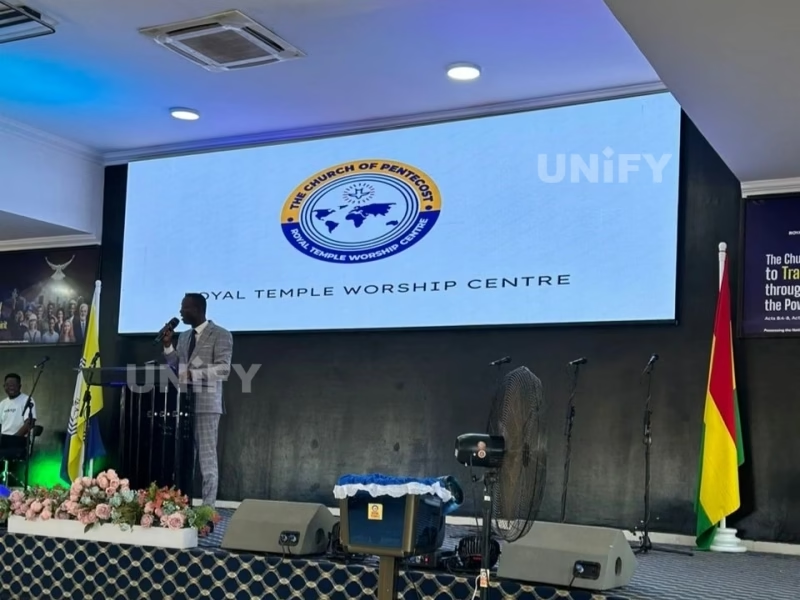
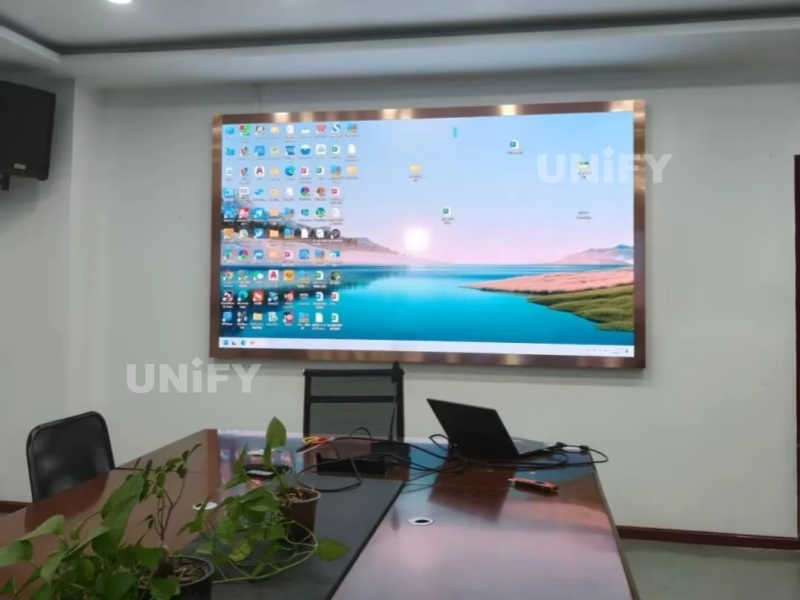
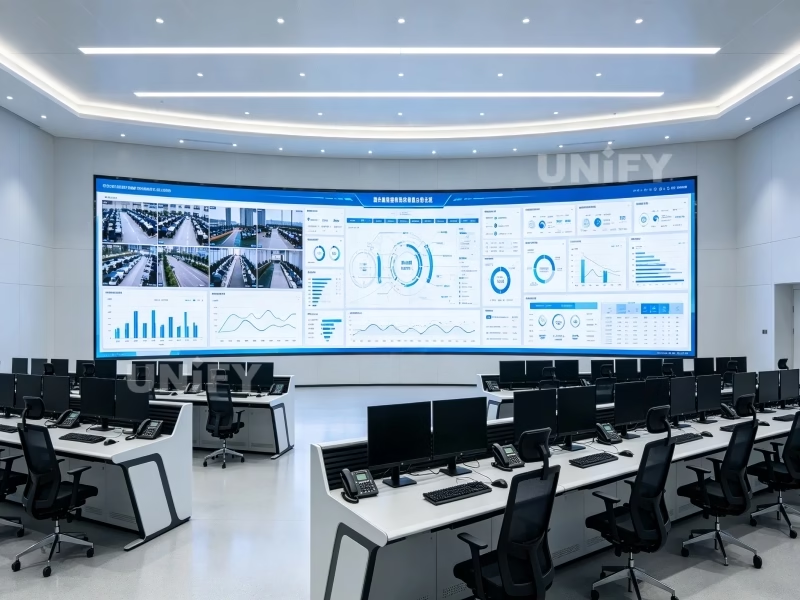
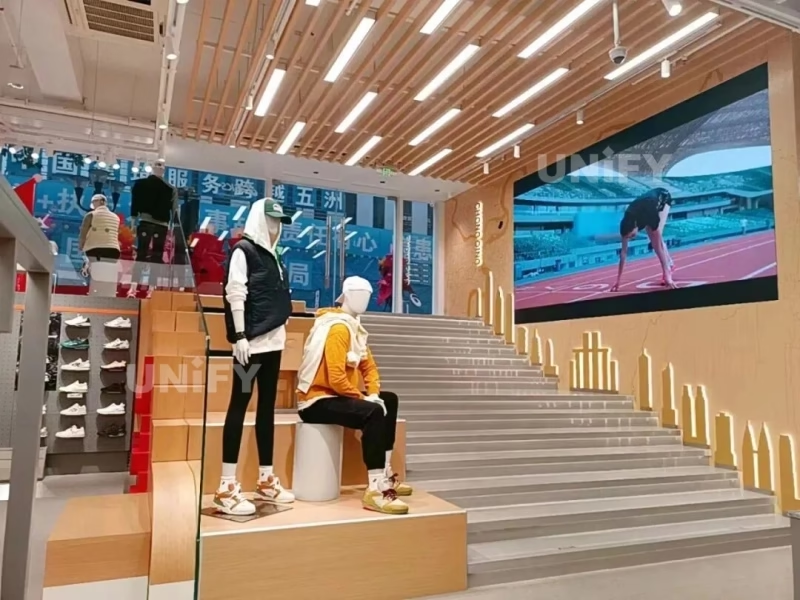
For buyers evaluating indoor LED displays, our indoor LED display buying guide provides a complete selection framework with detailed specification recommendations by room size and viewing distance.
Why Do Outdoor LED Displays Require Different Engineering? IP Rating, Brightness & Durability
An outdoor LED display does not face a single environmental threat — it faces five simultaneously, 365 days a year. Each threat drives a specific engineering response, and skipping any one of them creates a failure pathway that will manifest within the display’s first 1–3 years of operation.
The Five Environmental Threats and Their Engineering Responses
- Direct Sunlight → Extreme Brightness. An outdoor display needs 5,000+ nits minimum to be readable in direct sunlight. This is 5–10× brighter than an indoor display. The brightness must be achieved without overheating — requiring efficient LED chips, optimized driver ICs, and active thermal management. DIP LEDs remain the brightest option for the most demanding outdoor applications. See our LED screen brightness guide for ambient light measurement methods.
- Rain and Humidity → Sealed Enclosures. Water ingress is the #1 killer of outdoor LED displays. Every joint, seam, and connector entry point must be gasket-sealed. Cabinets must include pressure-equalizing breather vents — without these, daily temperature cycling creates a pumping effect that draws humid air into the cabinet through the smallest gaps, causing internal condensation that corrodes electronics from the inside. IP65 on the front face and IP54 on the rear is the minimum acceptable standard.
- Temperature Extremes → Thermal Management. An outdoor display in direct sunlight on a 40°C day can reach internal temperatures of 70°C+. At these temperatures, LED lifespan degrades exponentially, power supply efficiency drops, and thermal expansion can cause module misalignment. Active cooling (fans or air conditioning) is mandatory. In cold climates (-20°C and below), optional heating elements prevent LCD-like slow response and brittle material failure.
- Dust and Pollution → Filtration and Sealing. Dust accumulation on internal components acts as an insulating blanket, trapping heat and accelerating failure. In industrial or high-pollution environments, conductive dust can cause short circuits. IP6X (fully dust-tight) is the standard for the front face. Filters on ventilation intakes must be cleaned or replaced on a scheduled maintenance cycle.
- UV Radiation → Material Degradation. Ultraviolet radiation from sunlight breaks down the chemical bonds in LED encapsulation materials, plastic connectors, and cable insulation. Non-UV-stabilized materials yellow within 18–36 months, progressively dimming the display and shifting its color temperature toward yellow-green. UV-stabilized encapsulation and UV-resistant cabinet coatings are mandatory for any outdoor installation — not optional upgrades.
Critical Outdoor Display Verification Checklist
Before accepting an outdoor LED display quotation, verify these five items in writing:
- IP rating is specified separately for front AND rear — not a single “IP65” claim that only applies to the front face
- LED encapsulation material is explicitly identified as UV-stabilized with the supplier’s warranty period for UV degradation
- Cabinet includes pressure-equalizing breather vents — confirm by inspecting a sample cabinet or installation photo
- Power supplies are rated for the installation’s full temperature range — indoor-rated PSUs fail prematurely outdoors
- Anti-corrosion treatment is specified for all metal components — and for coastal installations (within 5km of saltwater), additional salt-spray protection is required
What About the Gray Zone? Indoor vs Outdoor LED Display Solutions for Semi-Outdoor Spaces
The term “semi-outdoor” has no formal engineering definition — no IEC or ISO standard defines it — yet it describes a real and common installation condition: under a roof or awning, protected from direct rain but exposed to ambient humidity, temperature fluctuations, indirect sunlight, and airborne dust. Examples include open-air shopping arcades, covered stadium concourses, railway platform displays under canopies, gas station forecourt signage, and drive-through menu boards.
For these applications, a full IP65 outdoor display may be over-engineered and unnecessarily expensive, while a standard indoor display will fail prematurely from humidity and temperature cycling. Three practical approaches:
- GOB (Glue-on-Board) treated SMD: Applies a transparent protective epoxy coating over standard SMD modules. Adds waterproofing, impact resistance, and dust protection. Roughly half the cost premium of a full outdoor-rated cabinet. The most common and cost-effective semi-outdoor solution. See SMD vs COB vs GOB.
- Outdoor-lite cabinet: Uses outdoor-rated PCBs and connectors in an indoor-style cabinet with basic weather sealing. IP31–IP43 rated. Suitable for fully covered outdoor areas with no risk of direct water exposure.
- Full outdoor display (if in doubt): If there is any chance of direct rain exposure, or if the display will operate in a coastal, industrial, or high-humidity environment, specify a full outdoor-rated display. The incremental cost is less than the cost of replacing a failed semi-outdoor display after 2–3 years.
How to Decide: Indoor vs Outdoor LED Display Application Matrix
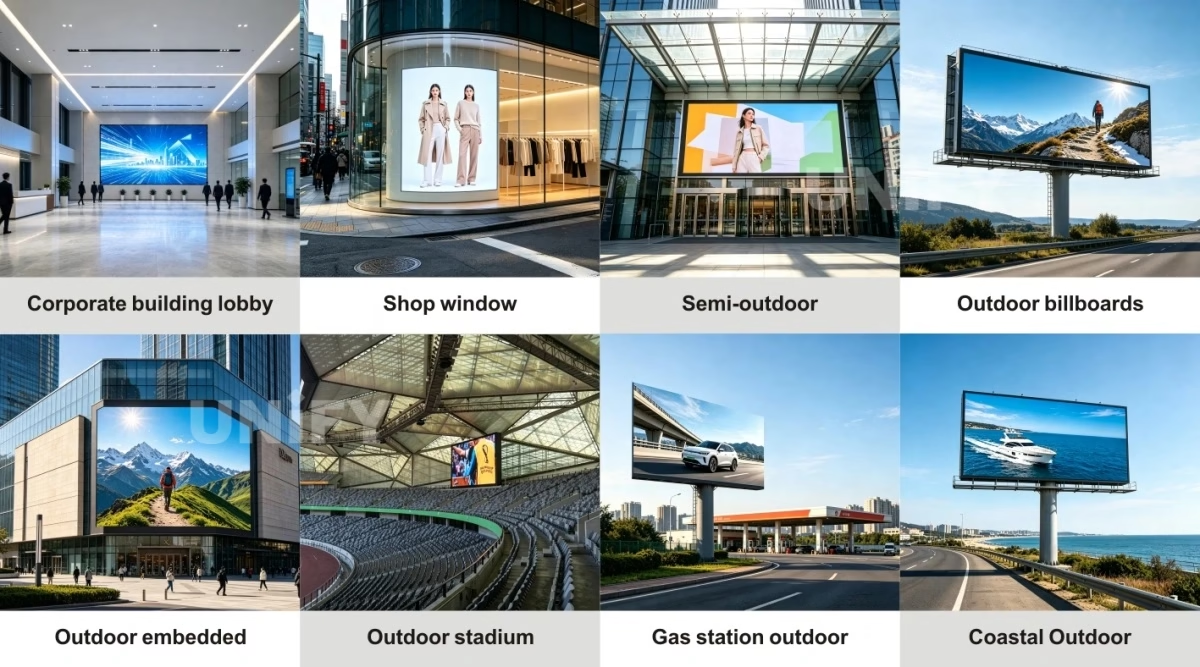
| Application Scenario | Best Choice | Why |
|---|---|---|
| Climate-controlled corporate lobby | Indoor LED | No environmental stress; prioritize image quality and fine pitch |
| Storefront window with direct sun | Indoor LED (high-brightness, 2,500+ nits) | Behind glass = indoor environment; need extra brightness for window reflections |
| Covered shopping arcade | GOB-treated SMD (semi-outdoor) | Protected from rain; GOB handles humidity and dust |
| Outdoor roadside billboard | Outdoor LED (IP65/IP54) | Full weather exposure; DIP or high-brightness SMD depending on viewing distance |
| Building façade (architectural integration) | Outdoor LED (IP65/IP54, front-service) | Full exposure + difficult access; front-service mandatory |
| Stadium concourse (covered) | GOB or outdoor-lite | Semi-protected; GOB adds impact resistance for crowd proximity |
| Gas station forecourt | Outdoor LED (IP65/IP54) | Direct sun + rain + vehicle emissions; full outdoor rating required |
| Coastal installation (within 5km of ocean) | Outdoor LED with salt-spray protection | Salt corrosion is aggressive; standard outdoor rating is not sufficient |
FAQ: Indoor vs Outdoor LED Display – Common Questions Answered
Yes, with conditions. The display needs 2,000–3,000 nits minimum to overcome window reflections and outdoor ambient light. It also needs adequate ventilation — sealed behind glass without airflow, an indoor display can overheat. Window-mounted displays are a specific product sub-category; standard indoor displays are not designed for this thermal environment and may require supplemental cooling.
P2.5 is the current practical minimum for outdoor LED displays in commercial production. Below P2.5, the pixel density requires LED spacing so tight that thermal management becomes extremely challenging under outdoor conditions. P2.5–P4 is considered “fine pitch outdoor” and is suitable for close-viewing applications such as retail windows and transit shelters. For highway billboards viewed from 20m+, P8–P16 is typical and perfectly adequate.
Yes — budget for approximately 2–3× the annual maintenance expenditure for an outdoor display versus an equivalent indoor display. Outdoor displays face dust accumulation requiring periodic cleaning, seal and gasket degradation requiring inspection and replacement every 3–5 years, and higher component stress from temperature cycling. Plan for quarterly preventive maintenance visits for outdoor displays versus semi-annual for indoor. The maintenance cost is predictable and should be factored into the total cost of ownership calculation — not treated as a surprise expense.
Moisture ingress will cause the first visible symptoms within 3–12 months — typically random pixel flickering, color shifts in humid weather, or dark patches after rain. Within 18–36 months, corrosion will cause permanent damage to PCB traces and connector contacts. The LED encapsulation — not UV-stabilized — will yellow and crack. The power supplies — not rated for temperature extremes — will fail. The display will not fail all at once; it will degrade progressively, becoming noticeably worse every few months until replacement is unavoidable.
Not in the way most buyers expect. Outdoor LED displays have a higher base cost per square meter (weatherproofing, brighter LEDs, heavier cabinets) but typically use larger pixel pitches, which means fewer LEDs per square meter — partially offsetting the environmental hardening cost. For a given display size, an outdoor P10 display will cost less than an indoor P1.5 display because the outdoor version has 44× fewer LEDs per square meter. The relevant comparison is not indoor vs outdoor pricing, but matching the right pixel pitch and environmental rating to your specific viewing distance and installation environment.
Why Indoor vs Outdoor LED Display Choice Is an Engineering Decision, Not a Marketing One
The choice between indoor and outdoor LED displays is not about which is “better” — it is about which is engineered for your specific installation environment. An indoor display in a climate-controlled lobby will deliver superb image quality for 10+ years with minimal maintenance. That same display mounted on an exterior wall will begin degrading within months. Conversely, paying for IP65 waterproofing and 8,000-nit brightness on a display that will never see daylight is wasted budget with no performance benefit.
Three principles to guide your specification:
- Match the environmental rating to the actual environment — not the datasheet maximum. Be honest about whether the installation location is truly indoor, and if there is any doubt about water or humidity exposure, specify the higher rating. The incremental cost of over-specifying environmental protection is always less than the cost of replacing a failed display.
- Verify the weakest link. An IP65 display with IP20 rear connectors. A UV-stabilized LED with non-UV-stabilized cable insulation. A temperature-rated power supply in a cabinet without adequate ventilation. Environmental protection is a system property — every component in the chain must be rated for the installation environment.
- Budget for maintenance appropriate to the environment. Outdoor displays require more frequent inspection and preventive maintenance than indoor displays. This is not a design flaw — it is an inherent consequence of operating electronics in an uncontrolled environment. Factor maintenance costs into the total cost of ownership from the beginning.
At UnifyLED, we help buyers specify the correct environmental rating for every installation — and we manufacture displays across the full range, from IP20 indoor fine-pitch to IP65 outdoor DIP. Contact our engineering team with your installation location details, and we will provide an honest assessment of the environmental rating your project requires.
Email: legidatechled@gmail.com | WhatsApp: +86-191-18802497
Get an Environmental Rating Assessment for Your Installation