
Six Key Advantages of LED Displays for Commercial Applications
When a procurement team evaluates display technology for a commercial installation, the decision ultimately hinges on which option delivers the best combination of visual impact, reliability, and return on investment. Across an increasingly wide range of applications — corporate lobbies, retail environments, control rooms, houses of worship, broadcast studios, and outdoor advertising — LED display technology has emerged as the preferred choice. This is not because LED is newer, but because it solves fundamental problems that limit competing technologies: LCD bezel interruption, projection’s ambient light vulnerability, and the maintenance burden of lamp-based systems.
This article examines the six engineering-level advantages that make LED displays the rational default for commercial applications above 100 inches. Each advantage is explained with quantifiable data points that B2B buyers can use to validate supplier claims and justify procurement decisions. As a LED screen manufacturer with production experience across the full technology spectrum, we provide practical, field-verified analysis — not marketing generalizations.
What Makes Seamless Scalability a Key LED Display Advantage for Commercial Spaces?
The Bezel Problem That LED Eliminates
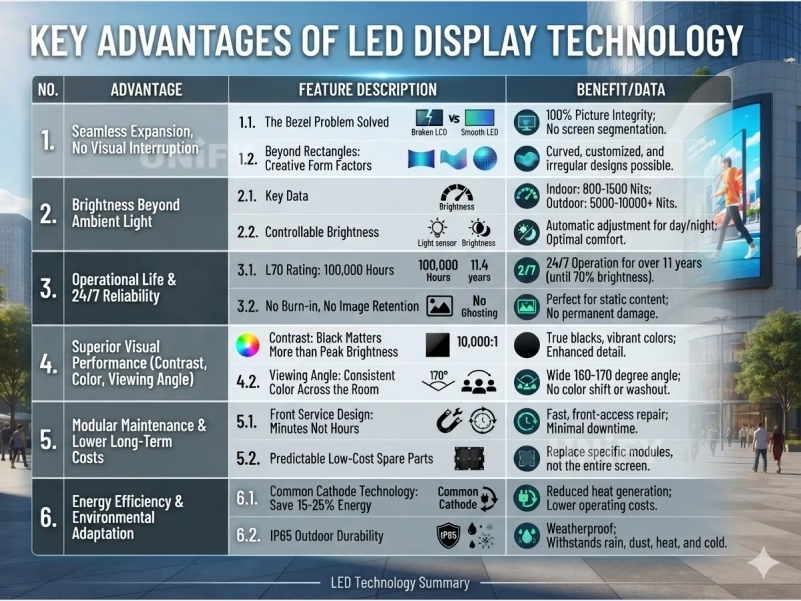
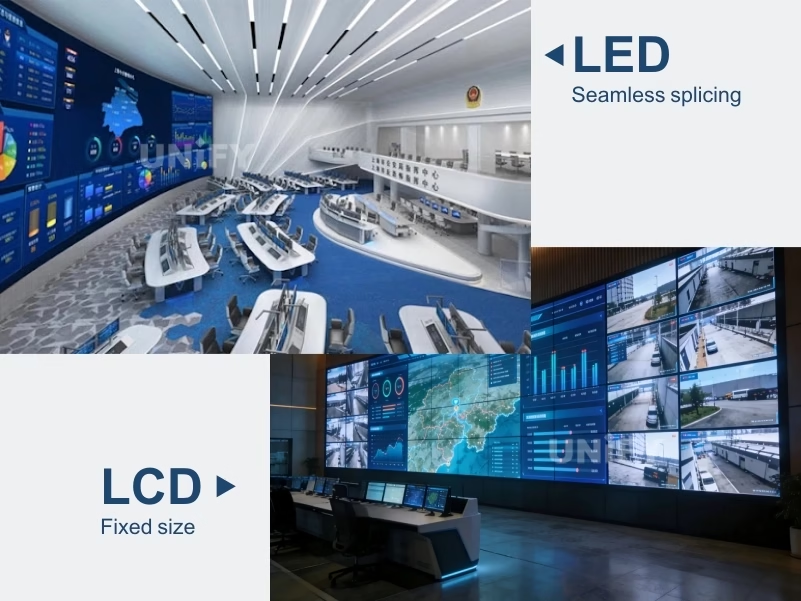
LCD video walls are built from fixed-size panels — typically 46″, 49″, or 55″ — each surrounded by a physical bezel. Even the best ultra-narrow bezel (UNB) panels leave a 0.44–0.88mm gap between adjacent screens. For content that crosses panel boundaries — maps, data visualizations, live video feeds, architectural renderings — these gaps create visible black lines that fragment the image. The cumulative bezel width of a 3×3 LCD wall is approximately 3.5–7mm of dead space cutting through the displayed content.
LED displays solve this at the architectural level. Each LED module (typically 250×250mm or 500×500mm) tiles directly against its neighbors with zero bezel. Modules are calibrated at the factory and assembled on-site into cabinets, which then tile together to form displays of virtually any size, shape, or aspect ratio. A 200-inch LED wall is exactly as seamless as a 100-inch one. This is the single most important differentiator for applications where image continuity matters — and the reason LED has become the standard for indoor LED display screens in premium commercial environments.
Beyond Rectangles: Creative Form Factors
LED’s modularity enables form factors that are physically impossible with LCD or projection: curved walls, cylindrical columns, irregular architectural shapes, floor displays, and ceiling installations. Flexible LED modules can bend to fit curved surfaces, and custom-shaped cabinets can be fabricated for unique architectural integrations. This design freedom has made LED the medium of choice for immersive brand experiences, museum exhibits, and architectural media façades.
Why Do LED Displays Outperform Other Screens with Superior Brightness in Ambient Light?
The Numbers That Matter
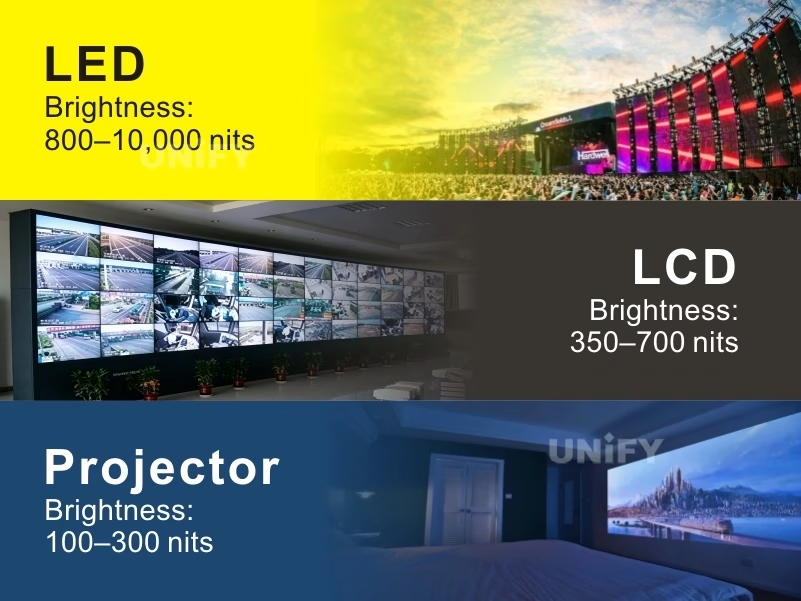
Commercial spaces are not dark rooms. Retail stores have overhead lighting at 500–1,000 lux. Airport terminals have floor-to-ceiling glass walls. Corporate lobbies combine natural daylight with interior lighting. In these environments, display brightness — measured in nits (cd/m²) — directly determines whether content is visible or washed out.
| Technology | Indoor Brightness | Outdoor Brightness | Usable in Direct Sunlight? |
|---|---|---|---|
| LED Display | 800–2,500 nits | 5,000–10,000+ nits | Yes |
| LCD Panel | 350–700 nits | N/A (indoor only) | No |
| Laser Projection | Equivalent to 100–300 nits on screen | N/A (dusk/night only) | No |
The gap is not marginal — LED is 3–10× brighter than LCD and 10–50× brighter than projection in effective screen brightness. For LED screens for outdoor advertising, there is no viable alternative technology. For indoor retail and corporate environments, LED’s brightness headroom means content remains vibrant and readable even when sunlight streams through windows or spotlights hit the display surface.
Brightness With Control
LED brightness is not just high — it is precisely controllable. Modern LED screen brightness systems support automatic ambient light sensors that adjust output in real time: full brightness during daylight hours, reduced brightness at night to avoid light pollution and save energy, and calibrated levels for broadcast camera compatibility.
How Long Do LED Displays Last? Understanding the 24/7 Reliability Advantage
L70 Ratings: What 100,000 Hours Actually Means
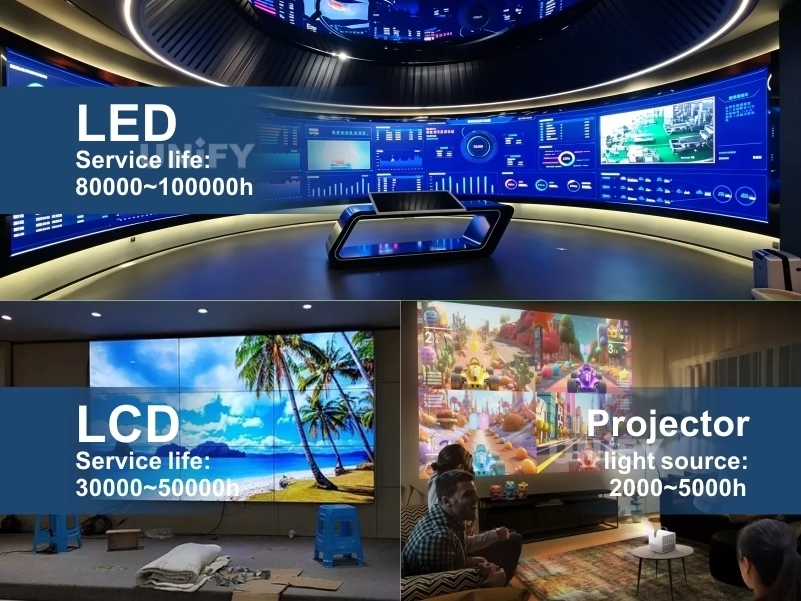
The industry-standard lifespan metric for LED displays is L70 — the number of operating hours before brightness degrades to 70% of the original specification. Quality LED displays from reputable manufacturers achieve L70 ratings of 80,000–100,000 hours. At 12 hours of daily operation, this translates to approximately 18–22 years before reaching the 70% brightness threshold. At 24/7 operation, it represents 9–11 years of continuous use.
By comparison, LCD backlights typically degrade to 70% brightness after 30,000–50,000 hours. Projector lamps require replacement every 2,000–5,000 hours (laser sources: 20,000+ hours). The practical implication for B2B buyers: an LED display installed today will likely outlast the building’s next renovation cycle. For more detail, see our comprehensive guide to LED screen lifespan factors.
No Burn-In, No Image Retention
Unlike OLED displays — which suffer permanent burn-in from static content — LED displays are immune to image retention. Each pixel is an inorganic semiconductor that does not degrade differently based on usage patterns. This makes LED the only safe choice for applications with static or semi-static content elements: control rooms with persistent UI elements, digital signage with logo watermarks, financial displays with constant data grids, and airport flight information boards that show the same layout for 18+ hours daily.
What Visual Performance Advantages Do LED Displays Offer — Contrast, Color, and Viewing Angle?
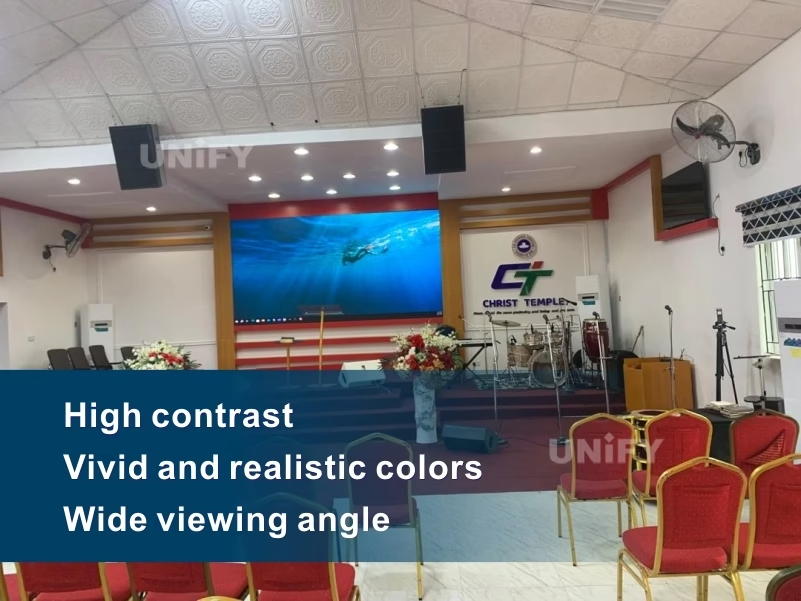
Contrast Ratio: Why Blacks Matter More Than Peak Brightness
Perceived image quality is determined more by contrast ratio than by peak brightness. LED displays — particularly COB (Chip-on-Board) variants — achieve contrast ratios of 10,000:1 or higher. The continuous black epoxy surface of a COB LED display absorbs ambient light rather than reflecting it, producing deep, detail-rich blacks that make images appear three-dimensional. SMD LED displays achieve 3,000:1–5,000:1 — still superior to the 1,000:1–3,000:1 typical of commercial LCD panels.
For B2B applications where image quality is commercially important — luxury retail where products must look their best, broadcast studios where on-camera appearance is critical, corporate flagship lobbies where brand perception is at stake — COB LED’s contrast advantage justifies its cost premium. See our COB LED screen specifications for contrast and color performance data.
Viewing Angle: Consistent Color Across the Room
LED displays maintain color accuracy and brightness at off-axis angles up to 160–170° horizontally and vertically. This is critical for wide rooms, retail environments where customers view from multiple angles, and event spaces where the audience is spread across a broad area. LCD panels exhibit more pronounced color shift and brightness falloff beyond 60–80° off-axis. Projection screens — particularly high-gain models designed to maximize brightness — often have very narrow effective viewing cones of 30–60°.
Why Is Modular Maintenance a Cost-Saving LED Display Advantage for Businesses?
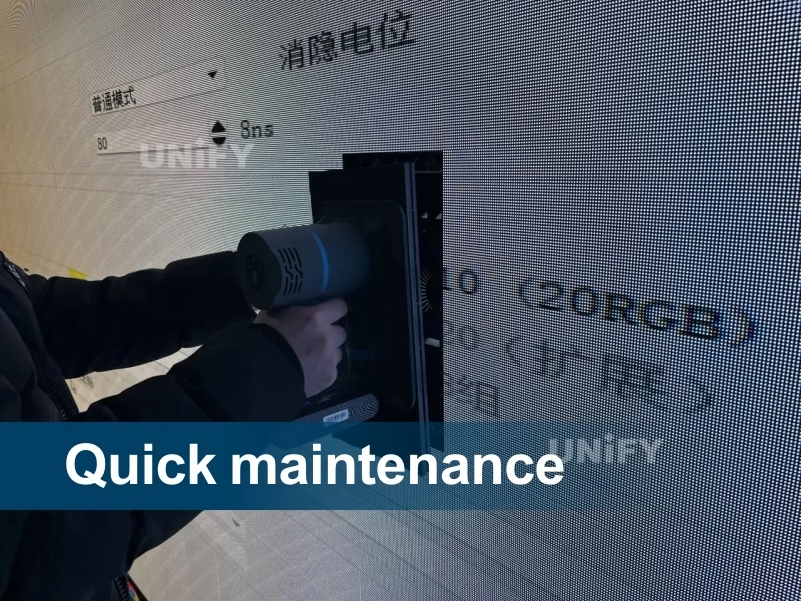
Front-Service Design: Minutes, Not Hours
Modern LED displays are designed for front-service access. Individual LED modules — typically 250×250mm — can be removed and replaced from the front using a magnetic tool, without disassembling the display structure or accessing the rear. A failed module replacement takes 2–5 minutes and requires no specialized skills beyond basic tool handling. This compares favorably with LCD video walls, where a failed panel often requires partial disassembly of the mounting structure, and with projection systems, where lamp replacement, filter cleaning, and geometric recalibration are recurring tasks requiring skilled technicians.
Predictable, Low-Cost Spare Parts
LED modules are standardized across product lines. A single spare module type can serve an entire installation, and modules from reputable manufacturers remain available for 5–10 years after the product’s introduction. The cost per spare module — typically $30–$150 for indoor SMD — is a fraction of the cost of an LCD replacement panel. For mission-critical installations, our guide to LED screen maintenance provides preventive maintenance schedules and spare-part planning frameworks.
How Do Energy Efficiency and Environmental Adaptability Become LED Display Advantages?
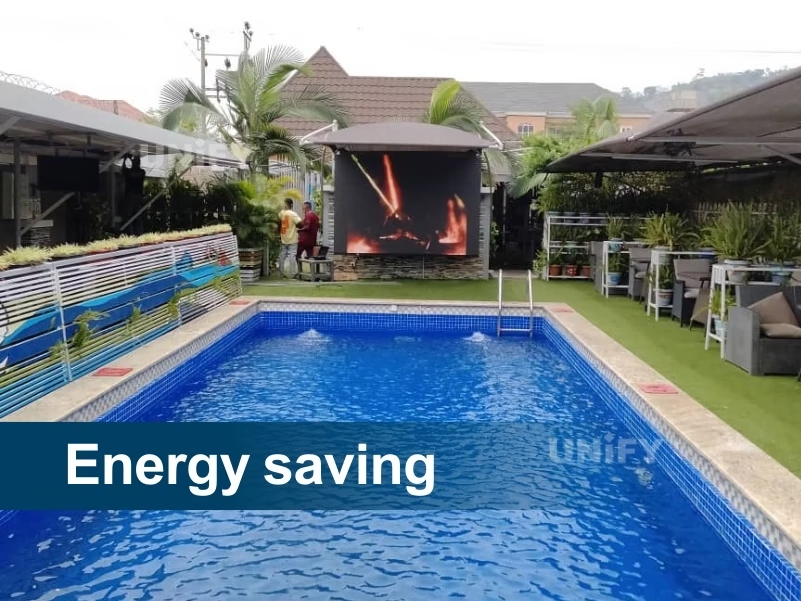
Common Cathode Technology: 15–25% Energy Savings
Traditional common-anode LED displays distribute power through a shared anode, resulting in voltage drop and wasted energy as heat. Common cathode technology — where each RGB color channel receives its own precisely regulated voltage — reduces power consumption by 15–25% while simultaneously lowering operating temperature. Lower temperature directly extends LED lifespan. For a 50m² display operating 12 hours daily, the annual energy savings can exceed $1,000–$3,000 depending on local electricity rates. Learn more about common cathode LED technology and its impact on TCO.
IP65-Rated Outdoor Durability
Outdoor-rated LED displays achieve IP65 (front) and IP54 (rear) protection — fully sealed against dust ingress and capable of withstanding water jets from any direction. Combined with operating temperature ranges of -20°C to +50°C (extendable to -40°C with optional heating elements), LED is the only display technology that can operate continuously outdoors in all weather conditions without protective enclosures that block the image. This is why outdoor digital billboards, stadium displays, and transportation signage are exclusively LED-based.
How Do LED Display Advantages Compare Against LCD and Projection Technology?
| Performance Dimension | LED Display | LCD Video Wall | Laser Projection |
|---|---|---|---|
| Seamless Scaling | Unlimited, zero bezels | Limited by panel bezels | Edge-blend possible |
| Brightness (nits) | 800–10,000+ | 350–1,500 | ~100–300 (on screen) |
| Lifespan (L70) | 80,000–100,000 hrs | 30,000–50,000 hrs | 20,000 hrs (laser source) |
| Burn-In Risk | None (inorganic LED) | Possible (image retention) | None |
| Contrast Ratio | 3,000:1–10,000:1+ | 1,000:1–5,000:1 | Screen-dependent |
| Viewing Angle | 160–170° | 60–89° (color shift) | 30–60° (high-gain screen) |
| Outdoor Capable | Yes (IP65 rated) | No | No |
| Field Maintenance | Front-service, 5 min/module | Panel replacement, hours | Lamp+calibration, skilled |
| Energy Efficiency | Common cathode: 15–25% savings | Moderate | Low (but lamp replacement cost) |
| Creative Form Factors | Curved, cylinder, custom shapes | Flat rectangles only | Flat or mapped surfaces |
Frequently Asked Questions About LED Display Advantages
Seamless scalability without bezels. A 200-inch LED wall displays images with zero visual interruption. A 200-inch LCD wall has visible grid lines every 47–55 inches where panels join. For applications where image continuity matters — broadcast, control rooms, premium retail, corporate flagships — this difference alone justifies choosing LED.
Yes. Outdoor-rated LED displays achieve 5,000–10,000+ nits — far exceeding the ~2,000 nits needed for readable content in direct sunlight. This is why LED is the only technology used for outdoor digital billboards, stadium screens, and transportation signage.
Remarkably little. There are no lamps to replace, no filters to clean, and no alignment to recalibrate. The primary maintenance action is occasional module replacement (2–5 minutes per module, front-service, no specialized skills). Most installations receive a preventive maintenance inspection once or twice per year, primarily to check power supplies and clean dust from ventilation paths.
Modern LED displays using common cathode technology consume 15–25% less electricity than equivalent common-anode designs. A typical indoor P2.5 LED display consumes approximately 200–350W/m² at standard brightness — comparable to 2–3 LCD panels of similar total area. Outdoor displays consume more (400–800W/m²) due to higher brightness requirements, but this is inherent to any outdoor-visible display technology.
For indoor applications under 100 inches, a single large-format LCD or 2×2 LCD video wall is typically more cost-effective than LED. LED becomes the better investment above approximately 110–120 inches, where seamless scaling and longer lifespan begin to outweigh the higher upfront cost. For outdoor storefront signage, LED is the only practical choice regardless of size.
SMD is the cost-effective choice for most commercial applications where viewers are 2+ meters from the screen. COB is worth the 2–3× premium for close viewing (under 2 meters), high-durability requirements, or premium image quality demands. See our SMD vs COB vs GOB comparison guide for a detailed breakdown.
Why Are LED Display Advantages the Default Choice for Commercial Screens Above 100 Inches?
The six advantages documented above — seamless scalability, ambient-light-defeating brightness, 100,000-hour lifespan, superior contrast and viewing angles, low-maintenance modular design, and energy efficiency — are not marketing claims. They are quantifiable engineering characteristics that explain why LED display technology has become the default choice for commercial applications above approximately 100 inches diagonal.
This does not mean LED is always the right answer. For a 75-inch conference room display in a controlled-lighting environment, a commercial LCD panel is entirely adequate and significantly less expensive. For a temporary event in a darkened ballroom, projection may be the pragmatic choice. But for the expanding range of commercial applications where image quality, reliability, and total cost of ownership are the decision drivers, LED is the technology against which alternatives are measured.
At UnifyLED, we help commercial buyers evaluate LED display options with engineering-based analysis — matching the right pixel pitch, packaging technology, and installation architecture to your specific requirements. Contact us for a no-obligation consultation.
Email: legidatechled@gmail.com | WhatsApp: +86-191-18802497