
3D vs IMAX: Key Differences Between IMAX 3D, RealD 3D, Dolby 3D, and LED Cinema Screens
- Home
- »
- LED Display Technology
- »
- 3D vs IMAX vs Dolby vs LED: The Ultimate Cinema Format Guide
TL;DR: The 30-Second Ticket Picker
Searching for the definitive 3D vs IMAX comparison? Don’t want to read the technical specs? Here is the quick answer for your next movie:
- Wear prescription glasses? Choose IMAX 2D. Avoid standard 3D glasses that dim the screen by 50% and cause headaches.
- Watching an epic blockbuster? Choose IMAX with Laser. You get the massive 1.43:1 aspect ratio and uncompressed audio.
- Watching an animated movie? Choose Standard 3D (RealD). CG animation pops beautifully without looking too muddy.
- Hate dark screens & dizziness? Find a theater with an LED cinema screen. These next-gen displays are 10x brighter than traditional projectors, killing motion sickness forever.
Why Your Choice Matters Today
With premium tickets often exceeding $25, choosing the wrong format ruins the film. If you’re tired of squinting at painfully dark projections, you need to know exactly what you are paying for.
Below, we settle the ultimate IMAX vs 3D debate once and for all. More importantly, as display industry experts, we will reveal why traditional projectors are dying, and how a modern LED display screen is solving every problem you’ve ever had with going to the movies.
Quick answer: 3D vs IMAX is not either-or — 3D is a depth technology, IMAX is a screen and projection format. Standard 3D can play on any auditorium screen, while IMAX refers to giant-format presentation (with or without 3D glasses). IMAX 3D combines both; RealD 3D competes on brightness and ticket price in standard theaters. Direct-view LED cinema screens now outperform all projector-based formats on brightness and contrast, which is why LED screen manufacturer showrooms demo 3D content on LED walls instead of projectors.
3D vs IMAX vs IMAX 3D vs RealD 3D: Quick Comparison Table
| Format | What it is | Typical screen | Glasses | 3D brightness (typical) |
|---|---|---|---|---|
| Standard 3D | Depth technology on any projector | Any auditorium screen | Polarized | 3.5–4.5 fL |
| IMAX (2D) | Giant-format presentation | 1.43:1 or 1.90:1 | None | N/A |
| IMAX 3D | IMAX format + dual-projector 3D | IMAX-certified giant screen | Polarized | 4.5–5.5 fL |
| RealD 3D | Circular-polarized 3D system | Standard screen, silver-gain option | Circular polarized | 3.5–4.5 fL |
| LED cinema | Direct-view LED wall, no projector | DCI-compliant LED cabinet wall | Polarized or active | Up to 88 fL peak (Samsung Onyx spec) |
Sources: SMPTE RP 431-2 screen-luminance practice (2D 14 fL reference, 3.5 fL 3D floor); IMAX with Laser product specifications; Samsung Onyx cinema LED specifications.
Table of Contents
1. What Is IMAX?
Before we dive into the ultimate difference between IMAX and 3D, we need to clear up a common consumer misconception. Many people searching for tickets often ask, “does IMAX mean 3D?” or “is IMAX always in 3D?“
The short answer is no. IMAX stands for Image Maximum. It is a proprietary system of high-resolution cameras, film formats, and massive theater construction. It is an overarching format, not just a 3D technology.
The Size Revolution: From 70mm to Laser Projection
Traditional cinemas use standard digital projectors that struggle to illuminate large screens. IMAX, however, built its legacy on massive 70mm analog film formats.
Today, modern IMAX theaters use either Xenon digital setups or the much-superior IMAX with Laser system. This next-generation system utilizes a dual-4K laser projection engine to deliver incredible brightness, contrast, and vivid colors. This high-brightness laser tech is extremely crucial when we later discuss the digital 3D vs IMAX debate, as it solves the “dark screen” problem plaguing standard cinemas.
The Magic of the Aspect Ratio (1.43:1 vs 1.90:1)
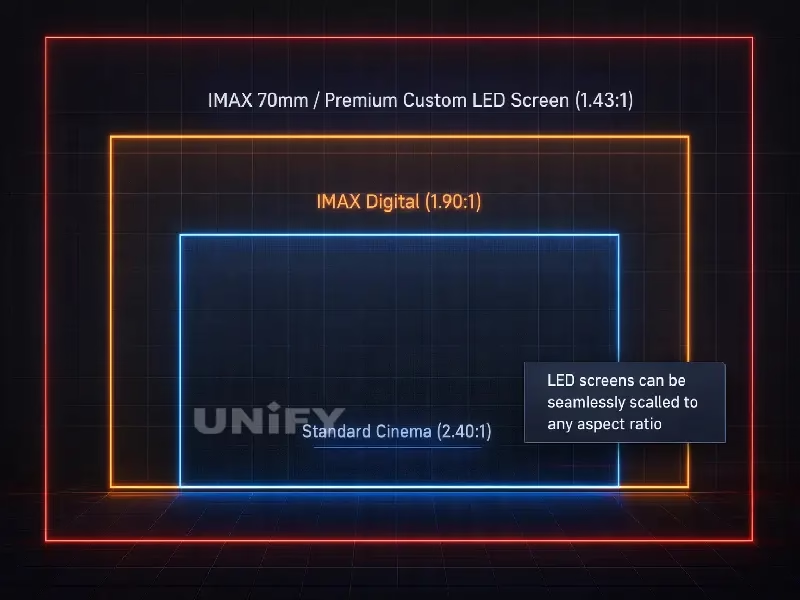
When people ask, “which is better IMAX or 3D?” they are often confusing two entirely different concepts. Standard cinemas crop movies to a 2.40:1 widescreen ratio (leaving black bars on the top and bottom).
IMAX cameras capture a taller image, expanding to a 1.90:1 or even a towering 1.43:1 aspect ratio. You literally see up to 26% more picture than standard theaters. Combined with their patented steep stadium seating (so no one blocks your view) and heart-pounding uncompressed audio, the physical immersion of IMAX is unmatched.
What Is IMAX 3D Technology?
IMAX 3D technology is a dual-projector stereoscopic system that records or renders each eye as a separate image, then projects both onto an IMAX-certified giant screen through a polarizing filter. In laser-equipped IMAX auditoriums, two 4K laser projectors feed left-eye and right-eye images independently, which preserves brightness that single-projector 3D loses to filter stacks. Audiences wear polarized glasses that pass the matching image to each eye; the brain fuses the pair into depth. Compared with standard 3D, IMAX 3D keeps a taller 1.43:1 or 1.90:1 image, a steeper seating geometry, and a higher foot-lambert target, so the picture loses less brightness when the 3D filters drop roughly half the projector light. The format is independent of the movie itself: films shot on IMAX film cameras or IMAX-certified digital cameras can be finished as IMAX 2D or IMAX 3D.
IMAX With Laser 3D vs IMAX Digital 3D: What Changed?
IMAX digital 3D ran on xenon lamp projectors, and its 3D presentations were the ones that earned the “dim IMAX” reputation. IMAX with Laser replaces the lamp with dual 4K laser heads, and per IMAX product specifications delivers roughly twice the contrast and a higher brightness ceiling than xenon-generation systems. In practice, an IMAX with Laser 3D ticket buys back much of the light that 3D glasses consume, while older digital IMAX 3D rooms vary widely by maintenance. If a listing says “IMAX with Laser 3D,” expect the brighter variant; plain “IMAX 3D” in a multiplex may still be a xenon digital room.
IMAX 2D vs IMAX 3D: What exactly is the difference?
So, what is IMAX 3D, and what is the difference between IMAX and IMAX 3D?
Simply put, IMAX 3D takes the massive scale, laser brightness, and seating geometry of a standard IMAX theater, and adds dual-lens projection to create stereoscopic depth.
If you are debating IMAX 2D vs IMAX 3D, here is the rule of thumb:
- IMAX 2D offers the absolute sharpest, brightest picture possible without requiring you to wear glasses.
- However, if the director intended for the film to have depth (like Avatar), you might ask: is IMAX 3D worth it? Absolutely. Because IMAX uses two powerful projectors simultaneously, the difference between IMAX 3D and standard theater 3D is night and day—IMAX compensates for the brightness usually lost when wearing 3D glasses.
(Wait, so how does standard 3D work? And what about RealD 3D? Let’s break that down next.)
2. What Is 3D Cinema?
To understand the difference between IMAX and 3D, we must first look at the tech behind the screen. Standard 3D is a stereoscopic process —it uses your brain’s ability to merge two slightly different images into one. However, the result often depends on the tech used: RealD 3D, Dolby 3D, or standard Digital 3D.
What Is a 3D Theater?
A 3D theater is any movie auditorium equipped to present stereoscopic films: a projector or direct-view screen, a 3D playback chain, and polarization-maintaining glasses for every seat. In practice, “3D theater” covers three setups. A standard digital 3D theater projects through a single xenon or laser projector with a filter wheel, the lowest-cost 3D ticket. An IMAX 3D theater adds the giant-screen geometry and dual-projector pipeline described above. An LED cinema theater replaces the projector with a direct-view LED wall, so each eye image is delivered at full panel brightness instead of being filtered down from a projection beam. Most multiplex listings do not separate these, which is why two “3D” tickets in the same mall can look so different.
Polarization: The Key to Depth
Most 3D cinemas use polarization. The projector sends out two images, and your 3D glasses filter them so each eye sees a unique perspective. This creates the “pop-out” effect. But here is the problem that drives people to search for “imax 3d vs reald 3d” or “reald 3d vs imax”: Standard 3D projection systems often struggle with ghosting (an annoying blur/crosstalk) and significantly reduced light levels.
The Real Battle: RealD 3D vs. IMAX 3D
RealD 3D vs IMAX 3D: Which 3D Format Wins?
RealD 3D is a circular-polarization 3D system installed on standard auditorium screens, and it is the format most moviegoers actually mean by “regular 3D.” RealD projects left- and right-eye frames through a switching polarizing filter, and the glasses separate the two images with circular polarization, which tolerates head tilt better than linear systems. IMAX 3D, by contrast, spends its budget on screen size and projector power: a bigger 1.43:1 or 1.90:1 image from a dual-projector pipeline in a certified auditorium.
Three differences decide RealD 3D vs IMAX 3D:
- Brightness: both formats sit near the SMPTE 3.5 fL 3D floor in well-maintained rooms, but IMAX with Laser 3D holds a higher ceiling on giant screens; a tired lamp projector in either format is the real dimness culprit.
- Screen scale: IMAX 3D fills peripheral vision with a taller image; RealD 3D looks identical on a 40-foot or an 80-foot screen.
- Price and availability: RealD 3D tickets typically run a few dollars over 2D, while IMAX 3D carries the format premium — and RealD rooms outnumber IMAX-certified auditoriums by a wide margin worldwide.
For action and animation where depth matters more than scale, RealD 3D is the value pick. For scenery-heavy spectacles shot with IMAX cameras, IMAX 3D justifies the premium. On brightness per dollar, neither beats a direct-view LED cinema screen: an LED wall presents 3D content at panel brightness — Samsung lists up to 88 fL peak on its Onyx cinema LED — with no filter wheel in the light path.
Is IMAX 3D Better Than Digital 3D?
If you are wondering “is IMAX 3d better than imax 2d” or “imax 3d vs 2d”, the answer depends on the film. For massive spectacles, the immersion of IMAX 3D is legendary. But for pure sharpness, IMAX 2D vs 3D usually leans toward 2D, as 3D glasses always filter some light.
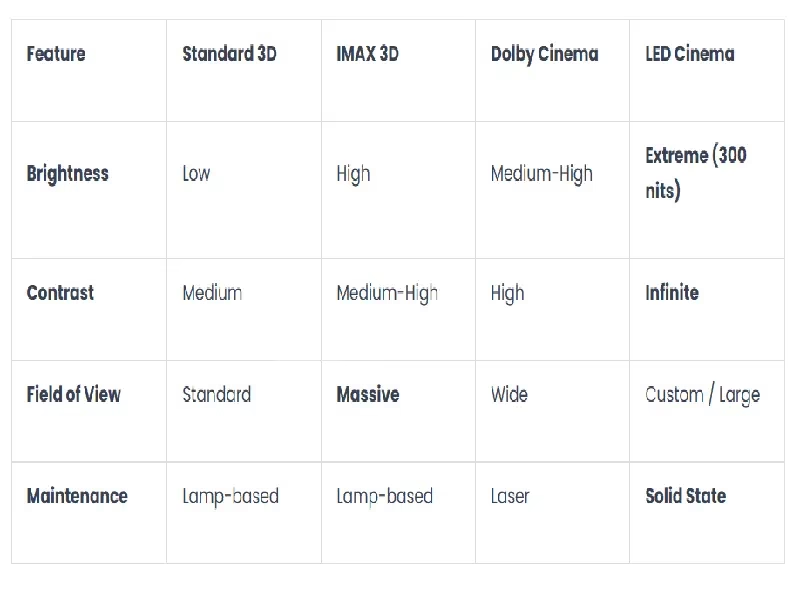
Furthermore, if you’re comparing “dolby cinema vs 3d” or “4dx vs imax 3d”, remember: Dolby Cinema offers superior contrast (blacks are blacker), while IMAX 3D offers the most expansive field of view.
3. IMAX 3D vs Standard 3D: Which One is Better?
If you are weighing imax 3d vs standard 3d, it helps to know that the “IMAX experience” isn’t just a bigger screen—it’s about light management. In a real d 3d vs imax 3d scenario, the standard 3D cinema often struggles because it relies on a single projector trying to light up a massive screen through polarized glasses.
The difference between imax and 3d movies in a standard hall is clear: IMAX 3D utilizes a dual-projector system. By layering two images, it compensates for the brightness loss. But is imax 3d good enough to eliminate all issues? Not entirely. While it is certainly superior to digital 3d vs imax setups in smaller cinemas, you are still bound by the limitations of projection technology.
4. Why Does 3D Make You Dizzy or Look "Too Dark"?
Many viewers often search, “why does 3d look so dark?” or “is imax 3d worth it if I get motion sickness?”
The Science of "Foot-Lamberts" (fL)
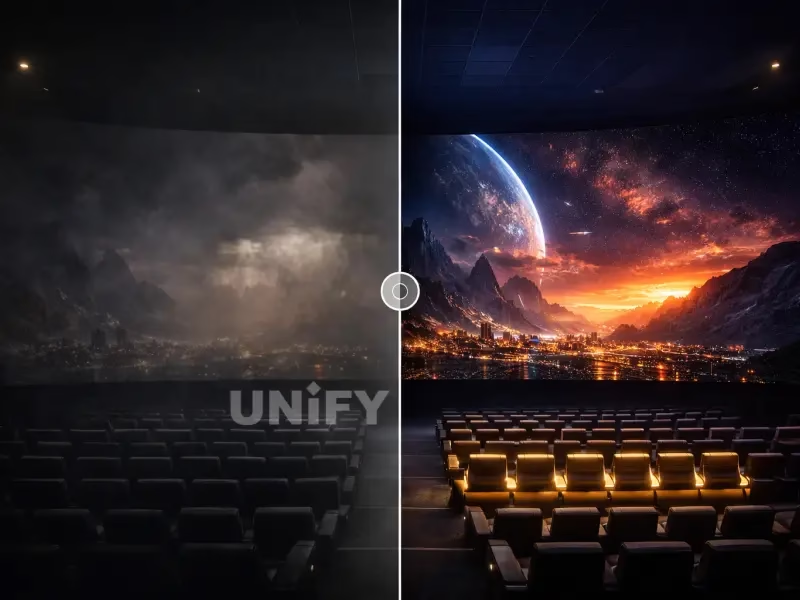
In professional cinema, brightness is measured in Foot-Lamberts (fL). A standard 2D movie is projected at roughly 14 fL. However, when you put on 3D glasses, the lenses act as light filters, cutting that brightness by up to 50-70%. You end up watching a movie at a mere 4-5 fL. Your brain, struggling to process this dim, filtered image while the screen flashes, often results in dizziness or headaches—a phenomenon common in imax 3d vs 4dx or reald 3d vs 4dx experiences where physical motion adds to the sensory overload.
The LED Disruption: Killing the "Dark Screen" Era
This brings us to the ultimate question in the imax 3d vs reald 3d debate: Why settle for projection at all?
As display experts, we’ve found that even the best laser IMAX projectors cannot match the emissive power of a Direct-View LED cinema screen. Because LED screens are self-illuminating, they don’t lose light through filters. They deliver consistent, high-brightness imagery that makes imax 3d vs 2d comparisons obsolete.
Whether you are comparing dolby cinema vs 3d or questioning is imax better than 3d, the answer is shifting: The future isn’t about better projectors—it’s about removing them entirely.
5. Beyond IMAX: Modern Alternatives You Should Know
The cinematic landscape is evolving faster than ever. If you’re comparing dolby cinema vs 3d or questioning if 4dx vs imax 3d is worth the premium, you need to look at what’s actually happening behind the screen.
Dolby Cinema: The Contrast King
Dolby Cinema is a dream for “purists.” By combining Dolby Vision (high-dynamic-range HDR) and Dolby Atmos (immersive 3D audio), it solves the contrast issues that plague traditional cinema. If you find imax 3d vs dolby cinema comparisons tricky, remember: IMAX gives you the size, but Dolby gives you the perfection of blacks.
4DX & ScreenX: Experience or Gimmick?
4DX vs imax 3d debates often center on motion. 4DX adds sensory effects (vibration, water, scent), while ScreenX utilizes side-wall projection for a 270-degree view. While they offer high engagement, they are often seen as “event cinema” rather than a true replacement for high-fidelity viewing.
Apple Vision Pro & VR: Is the Theater Dying?
As spatial computing (Apple Vision Pro) becomes mainstream, users are asking: “Do I even need a cinema?” While VR theaters offer massive personal screens, they lack the social immersion and physical scale of a real theater. However, they are forcing cinema owners to raise their game—if you can’t beat the “personal screen” at home, you have to offer an experience (like a large-format LED cinema) that the home simply cannot replicate.
6. The Death of the Projector: Enter Direct-View LED Cinema Screens
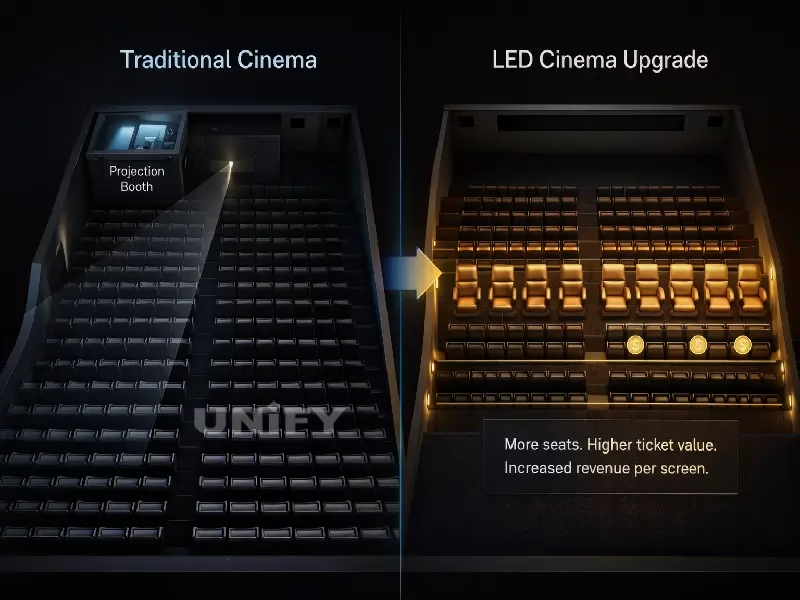
For a century, cinemas have relied on a central projector. This is the industry’s greatest bottleneck. Traditional projectors suffer from brightness decay, require light-proof projection booths, and force you to compromise on contrast.
Why Direct-View LED is the Ultimate "3D Fix"
As display experts, we have seen the shift: Direct-View LED cinema screens are rendering the traditional imax 3d vs 3d debate irrelevant.
- 300 Nits of Pure Brightness: Unlike projectors that filter light through lenses (losing 50% of the image quality), LED screens are emissive. They deliver a constant 300 nits, ending the “dim screen” fatigue and motion sickness associated with standard 3D.
- True Black Contrast: Because each pixel is an individual light source, you get absolute black. This contrast ratio makes imax vs led cinema look like a comparison between an old TV and a modern smartphone screen.
- Space & ROI Optimization: Traditional projection requires a massive booth that takes up valuable real estate. Removing the booth allows theaters to add 2–3 rows of premium, high-ticket seating. Furthermore, with no bulbs to replace and a massive lifespan, the long-term ROI (Return on Investment) for theater owners is unmatched.
The DCI Standard: Real-World Results
According to DCI (Digital Cinema Initiatives) compliance standards, LED cinema screens are the gold standard for future-proofing. One of our recent installations saw a 25% increase in audience satisfaction within three months of upgrading from traditional laser projection to a Direct-View LED wall. Audience comments were clear: “I finally don’t need to squint to see the details.”
7. FAQs
No. IMAX is a screen and projection format that runs both 2D and 3D. Films finished in IMAX 3D add the stereoscopic layer; IMAX 2D presents the same giant format without glasses, and many IMAX releases are 2D only.
IMAX 3D is the stronger pick when the movie was shot or formatted for IMAX cameras, because you get a taller image and a dual-projector brightness budget. Standard 3D or RealD 3D is the better value for films without IMAX formatting, since the premium buys depth rather than scale.
IMAX 3D technology is a dual-projector stereoscopic system: two 4K laser or xenon projectors carry separate left- and right-eye images onto an IMAX-certified screen through polarization filters, and polarized glasses route each image to the matching eye.
RealD 3D is a circular-polarization system on standard screens, priced a few dollars over 2D. IMAX 3D is a certified giant-screen format with dual projectors and a format premium. RealD wins on availability and price; IMAX 3D wins on scale and, with laser, on brightness ceiling.
IMAX 3D pricing stacks two premiums: the certified giant-screen auditorium and the 3D presentation layer with its glasses and dual-projector chain. Venues recover higher installation and licensing costs per seat, which is why IMAX 3D sits at the top of most cinema price ladders.
Both systems use polarized glasses, but the filters differ: IMAX 3D historically used linear polarization in film-era auditoriums and now ships circular-polarized glasses in laser rooms, while RealD 3D standardized on circular polarization. Glasses are not interchangeable between formats.
IMAX with Laser 3D is the laser-generation IMAX 3D system: dual 4K laser projectors replace xenon lamps, roughly doubling contrast per IMAX specifications and raising the brightness ceiling that 3D glasses consume. It is the variant to choose over plain IMAX 3D when both are listed.
Each format prioritizes a different dimension. IMAX 3D maximizes screen scale and field of view; Dolby Cinema maximizes contrast and black level with dual-laser projection and dark auditorium design. For spectacle and scale choose IMAX 3D; for contrast-critical films choose Dolby 3D.
IMAX is the presentation format: a giant certified screen, steep seating, and a high-resolution projection pipeline. IMAX 3D adds stereoscopic depth to that format with a dual-projector 3D chain and glasses. Every IMAX 3D screening is IMAX, but most IMAX screenings are 2D.
A 3D theater is an auditorium equipped for stereoscopic film: a projector or direct-view LED screen, a 3D playback chain, and polarization glasses for every seat. It covers standard digital 3D rooms, IMAX 3D auditoriums, and LED cinema screens that present 3D at panel brightness.
4DX adds motion seats and environmental effects to 3D projection, trading image scale for physical effects. IMAX 3D maximizes picture scale and brightness. For visual spectacle pick IMAX 3D; for a physical ride experience pick 4DX — they solve different demands.
3D glasses and filter wheels consume roughly half the projector light, so a presentation that starts near the SMPTE 3.5 fL 3D floor can fall below it when a lamp ages or filters degrade. Laser projection and direct-view LED screens hold 3D brightness because LED walls skip the filter stack entirely.
8. Conclusion
Ultimately, settling the 3D vs IMAX debate comes down to understanding the display technology powering your local theater. While IMAX continues to dominate the premium cinema space with its massive 1.43:1 aspect ratio and dual-laser projection, standard 3D formats often leave moviegoers with dim, filtered, and headache-inducing experiences. However, the entire cinema industry is on the verge of a visual revolution. By shifting away from traditional central projectors and embracing Direct-View LED cinema screens, theaters can finally deliver pure 300-nit brightness, infinite contrast, and distortion-free viewing. Whether you are navigating standard ticket options today or seeking out the latest LED-equipped theater, you now have the exact knowledge needed to ensure your next movie ticket is entirely worth the price.
Related Posts
How to Clean an LED Screen: The Commercial Owner’s Playbook
How to clean an LED screen the right way: safe products, a commercial SOP, cleaning frequency by environment, and the mistakes that kill walls.
Black Spots on LED Screens: Causes, Diagnosis, and Repairs That Last
Black spots on LED screens usually mean failed lamp beads, a dead module region, or moisture damage. Diagnose, fix, and prevent them with this guide.
How Does an LED Display Work? The Complete Technology Guide
How does an LED display work? The full signal chain from video source to driver IC, plus RGB color mixing, packaging types, pitch, and refresh rates.
Does LED Display Burn In? Causes, Fixes, and Prevention for LED Walls
Does LED display burn in? Learn how LED walls develop image retention, how to fix and calibrate it, and the 24/7 content habits that prevent screen burn.

How Do 3D Billboards Work? The Naked-Eye 3D LED Guide for 2026
How do 3D billboards work? A naked-eye 3D billboard uses anamorphic content, a chosen viewing angle, and high-brightness hardware. Costs, cases and steps.

CIOE 2026 LED Display Recap: Micro LED Moves From Lab to Production Line
CIOE 2026 LED display recap: Micro LED hits production lines — 8-inch red chips, 10,000-PPI engines, and what the 27th Shenzhen expo means for buyers.